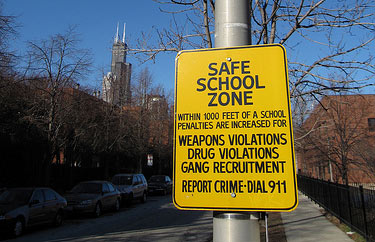
 With a week left in office, outgoing New Jersey Gov. Jon Corzine is leaving behind a string of smart criminal justice reforms. Late, I suppose, is better than never.
Corzine signed a bill on Tuesday that gives discretion back to judges in drug cases for people convicted of certain drug crimes in school zones. It’s a sweeping change, and one that was a long time coming. Now if other states could only follow Jersey’s lead.
Sentencing discretion is important in all types of cases, but it’s especially critical in these school-zone offenses, where studies have shown that broad-brush mandatory minimums completely fail to make schools safer or to prevent kids from buying drugs. The previous law included mandatory sentences of at least a year for marijuana offenses and three years for other drugs. With discretion, a judge can avoid a long sentence for a person caught with a small amount of a drug who happens to be 999 feet from a school. In many urban areas, as the great work of the Prison Policy Initiative has shown, almost everything is within 1,000 feet of a school.
Meanwhile, a judge can still choose to hand down a harsh sentence when evidence shows that a drug dealer was actually targeting middle schoolers as his customers. That kind of activity needs to be prevented, but we don’t need mandatory minimums to stop it. In fact, they don’t work.
The advocacy group Families Against Mandatory Minimums was one of many organizations working for several years to pass this law in New Jersey. Reacting to the passage of the bill, Deborah Fleischaker, the group’s director of state legislative affairs in New Jersey, said:
“Mandatory minimums in New Jersey have filled our prisons with drug addicts instead of drug kingpins, caused the erosion of faith in the fairness of the criminal justice system because of severe racial disparities, and wasted millions without protecting public safety. New Jersey’s decision to reform this law puts it squarely in the growing list of states embracing sentencing reforms that are both tough and smart on crime.”
I wrote yesterday’s about Corzine’s intent to sign medicinal marijuana legislation on his way out of office as well. It’s too bad that it still takes a lame duck to make sensible drug policy reform happen, but we’ll take it any way we can get it.
Photo: Joe M500