I’ve started listening to talk radio on my way to work – the conversation keeps my brain active during the gruelling stop-and-go traffic of London. Anyway, Tuesday’s news was one we had been waiting 18 months to hear — the worst recession to hit England since the 40s was finally over. What really surprised me was that we were the last of the Western nations to dig ourselves out of the global recession – I guess better late than never. While that is most certainly welcome news, most executives around the world are remaining cautious about throwing their doors wide open and spending with abandon. According to an annual PricewaterhouseCoopers report released earlier yesterday most of the firms they surveyed are planning on further reducing their costs while improving efficiency. And if you’re wondering, this survey was quite comprehensive – it included 1,198 chief executives from 52 countries and was conducted late last year.
And you know what? I think that is quite sensible.
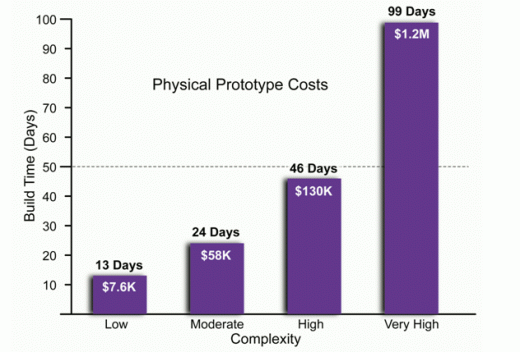
Where do you fit in in terms of your physical prototype testing? Source: Aberdeen Group.
Reducing costs and improving efficiency should be in our thoughts at all times regardless of the state of the economy. So what are some of ways we can reduce costs (as they relate to engineering)? For starters, we could reduce the costs associated with physical prototype testing by doing fewer of them. According to an Aberdeen Group study conducted in 2006, depending on the complexity of the product being designed, companies can spend anywhere between $8,000 and $1.2 million on creating and testing physical prototypes and this process can average between 13 and 99 days! Not an insignificant amount time or money. Now that was a couple of years ago so considering inflation I’m sure the cost has increased even more. BTW I should point out that I’m not advocating getting rid of physical prototype testing in its entirety or for all products … I’m just saying we could perhaps reduce the number of them and still ensure the appropriate safety and quality levels required.
How can we improve efficiency at the same time? While this may seem like an oxymoron, the way I read it is this: by improving efficiency, you can do more in the same time frame and you can do it using fewer resources. One of the ways we can achieve this objective, is to use simulation. By simulation I mean all kinds of simulation – be it stress analysis, fatigue or CFD. There are plenty of companies (of all shapes and sizes if I may add) that have not only met this two headed beast, but they have slain it: Encore Drill Bits, Azonix, and Voxdale.
In short, it is always good to exercise caution when spending funds. But if you are sitting on the bench wondering whether you should dip your toes in, then call a handful of vendors and ask them if they would let you evaluate their tool. BTW all vendors have a slick demo but the truth lies in whether they can take your geometry, prepare it for analysis and show you the results within a reasonable time frame. I’d say you’ve got nothing to lose by taking a closer look at the technology. You may even find a pretty cool tool that can not only pay for itself but make you even more competitive in a (still) tough economic climate.
Until next time,
Nazita