 It’s impossible to feel sorry for Paul Robinson, the California man whose rape conviction was upheld by the California Supreme Court late last month. But it’s still possible to fear the precedent the court set in his case, People v. Robinson. Under this precedent, California law enforcement officials can now sidestep statutes of limitations aimed at preventing stale prosecutions of old crimes, simply by issuing warrants against “John Doe” DNA profiles recovered from crime-scene evidence.
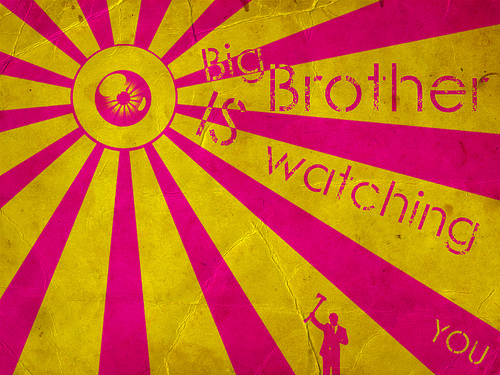
I can see how in individual cases, skirting these statutes through DNA database technology may seem fair. But in the long run, it’s a Big Brother move that erodes justice.
By invoking Big Brother, I don’t mean to suggest evil design on the part of law enforcement. I actually trust that prosecutors had good intentions when they filed felony charges against “John Doe” — the unknown attacker who raped Deborah L in August 1994. In the August 2000 indictment, John Doe was identified only as the owner the male DNA found in semen from Deborah L’s rape kit. Had charges not been filed against someone when they were, California’s six-year statute of limitations for rape would have prevented prosecution of anyone for the horrible crime. As it happened, a “cold hit” in the DNA database subsequently linked Robinson to Deborah L’s rape. Accordingly, he was convicted, and sentenced to 65 years in prison.
On appeal, Robinson argued that filing charges against a DNA profile was an unfair way to dodge the statute of limitations. Though the California Supreme Court disagreed, one justice, Carlos Moreno, offered a dissent that eloquently confronts the liberal dilemma Robinson’s case poses.
To begin with, Moreno admits that in Robinson’s case, justice was in some ways served. As he writes, Robinson was “guilty of heinous crimes,” and deserved his punishment. The problem is that the rule will apply to all crimes in which any DNA is recovered — not just from semen in rape cases. In other words, this John Doe gambit could keep prosecutions open indefinitely for any case in which a suspect potentially left hairs, blood, saliva, or sweat at the scene. To take the scenario further, prosecutions could be secured for car theft or burglary 20 or 30 years after the incident — simply on the strength of stray DNA evidence.
Not all crimes have statutes of limitations — murder is the most prominent example. But where they exist, limitations periods serve as bastions against prosecutions made unreliable by the passage of time (memories fade). Perhaps more importantly, limitation periods also force us to move on as a society; to look forward towards improving the future instead of constantly reliving the horrors of the past. As Justice Moreno noted in his dissent, to vindicate these deeper notions of justice, sometimes a society has to content itself with the basic principle inherent in all statutes of limitations — that sometimes, a guilty person will get away.
Catching every bad guy — and meting out punishment, no matter how overdue — is a natural law-and-order fantasy. And these days, DNA database technology makes that dream more possible than ever. After all, DNA databases promise a world where unflinchingly accurate identifications means we don’t ever need to forget who has wronged whom. All we need are bigger and bigger databases, and more and more DNA surveillance. Yet I worry this accuracy could damage the liberal idea that justice is more than just an eye for an eye. All this power to never forget could eventually destroy our ability to forgive. That’s when the law-and-order fantasy starts to look a lot more like a Big Brother-style nightmare.
Photo Credit: Kravera