
This post was generously contributed by Heidi Robb, a natural foods enthusiast with a penchant for wholesome real food. Heidi blogs about her life in recipes – one of the most visually stunning real food blogs I’ve ever happened across. With a personal history in the restaurant business, Heidi has transitioned into culinary media where she blends her passion for natural foods with a talent for writing and photography. I’m so thankful she shared her recipe for taramasalata – a beautiful dish featuring nutrient-dense fish roe and one of my favorite seasonings: smoked paprika. If you have a dish or a special post you’d like to share at Nourished Kitchen, please contact me. Blessings — Jenny

Omega-3: A Seasonal Savior
Figuring, if the Eskimo people could make it through long, frigid winter months of darkness without soul-weakening bouts of the blues, it was time to channel my inner Inuit and adopt a fat-enriched, omega-3 diet in hopes that my own seasonally sad spirit would benefit. Luckily, I like full-flavored fish, so it was easy to fill my cupboards, refrigerator and belly with omega-3 dense meal additions. Tins of sardines, mackerel, smoked oysters, anchovies and tuna went into the cupboard – simple lunches at the ready with just a pop of the tab and some grainy mustard, crackers and fresh vegetables. In the refrigerator were jars of pickled herring ready to enjoy as-is, or to enhance creamed style with a dollop of yogurt or creme fraîche and sliced onion, as well as a piece of bottarga (dried and cured roe of grey mullet) to grate on salads or pasta to give the salty umami punch I crave. And taramasalata. I was going through a jar of the creamy Greek-style carp roe delicacy at an alarming rate. On the run, I generously slather home made crisps with the pale pink stuff several times a day. Though tasting good and satisfying, I didn’t want to be eating so much soy oil (a major ingredient in the jarred product), and began easily making my own healthier version with a higher quality of oil and whole grain sourdough bread.
A couple of weeks ago I started noticing some true physical differences: my hair which is generally dry and frizzy during Cleveland’s arid winter was thick, shiny, healthy and growing full corkscrew curls. My skin appeared clear, lips moist and crack-free. In fact, a woman much younger than myself stopped me and asked what product I used on my face – how’s that for a seasonal lift! The exterior routine hadn’t varied, but the extra interior nutrition was giving me an entire body glow from the inside out. Most importantly, my mood has been mostly elevated and outlook positive, energy high and steady, and coping with unexpected stress – not a such an enormous deal. The couple of days I succumbed completely to collapse was justifiable exhaustion derived from a Herculean holiday work schedule. I fully and completely believe the daily additions of concentrated omega- 3 foods to my diet are what made the difference. February has been fabulous for the first time in years – you’ll get no carping from me.
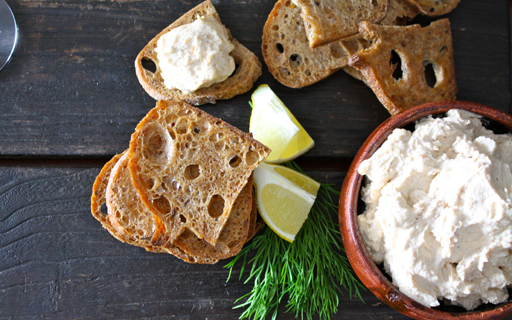
Taramasalata
Heidi Robb
Taramasalata: Ingredients
- 4 ounces crustless whole grain sourdough bread, soaked in water
- 1/2 cup tarama (carp roe available in jars)
- 2 – 4 tablespoons fresh lemon juice, or to taste
- 1/2 teaspoon smoked paprika (optional, if you enjoy a slightly smoky flavor)
- 1 large pastured egg yolk
- 1 1/2 cups good light olive oil (see sources)
- 1 1/2 tablespoons minced shallot
Taramasalata: Method
- Squeeze the water from the bread and place in the bowl of a food processor with the tarama.
- Process until combined.
- Add 2 tablespoons of the lemon juice and the optional smoked paprika and process to blend.
- Drop in the yolk and pulse to blend. Very slowly, drizzle in the olive oil and process until the mixture is whipped, light in color and creamy.
- Add in additional lemon juice to taste.
- At this point, if the mixture is too thick, add in some water, a little at a time until desired consistency is achieved.
- Remove mixture to a bowl and stir in the minced shallot.
- Keeps one week covered in the refrigerator.
YIELD: 2 1/2 cups
Wondering where your full feed went? Click here to learn why The Nourished Kitchenmoved to summary feeds. Don’t forget to find Nourished Kitchen on Facebook, Twitter, Flickr and
© Jenny for The Nourished Kitchen, 2010. |
Permalink |
Post tags: