Author: Jenny

  • Recipe: Mangoes and Sticky Rice

    Mangoes and sticky rice – oh how my heart swoons!  After a heated meal of Thai food – heightened by the bright flavors of kaffir lime, lemongrass and painfully hot chili peppers – nothing soothes the palate quite like a warm bowl of gently sweet and slightly salty mangoes and sticky rice. I like to serve this dish after a meal of coconut shrimp soup with chilies and lime or even on its own as a breakfast.  It satisfies like little else, and like many of the desserts featured at Nourished Kitchen, it is only mildly sweetened with natural and unrefined sweeteners.

    Mangoes and sticky rice is classically served with polished, refined white rice, but the dish’s nutrient profile can be improved by using sprouted or soaked brown rice without compromising the ultimate flavor or texture of the dish.  Like all grains, brown rice contains antinutrients which bind up minerals preventing their full absorption and the simple act of soaking or sprouting rice can improve the body’s ability to better absorb grain’s full complement of minerals – particularly zinc and iron. You can read more about soaking grain or learn the benefits of sprouted grain.  This recipe for mangoes and sticky rice is also rich in coconut oil – a remarkable and wholesome fat that’s rich in lauric acid – a fatty acid known for its antimicrobial activities and that is thought to boost the immune system.

    Mangoes and Sticky Rice

    Faintly sweet and slightly salty, mangoes and sticky rice is a classic Thai dessert – often served as a special treat at the end of the meal.  This beautiful combination of sweet-salty coconut milk and ripe mangoes nourishes the body and satisfies the tastebuds.  The sweet-salt flavor is essential to the true and classic flavors of this dish.  Don’t forget, if you like this and other recipes from Nourished Kitchen, please consider signing up for How to Cook Real Food – our new online cooking class.(…)
    Click here to read the rest of Recipe: Mangoes and Sticky Rice (351 words)


    Wondering where your full feed went? Click here to learn why The Nourished Kitchenmoved to summary feeds. Don’t forget to find Nourished Kitchen on Facebook, Twitter, Flickr and
    © Jenny for The Nourished Kitchen, 2010. |
    Permalink |

    Post tags: , , , , , , , , , , , , , , , , , , , ,

  • Video: Pestos and Fruit & Nut Snack Bars

    In this bonus lesson for How to Cook Real Food, the online cooking class hosted at Nourished Kitchen, you’ll receive a quick, sneak-peak into the cooking class through this brief video covering how to properly prepare nuts and seeds including recipes for a basic pesto sauce and a basic fruit and nut snack bar. Please note that videos in the online cooking class will be more comprehensive than the brief look at nuts and seeds you see below here.

    In this video and using these downloadable print materials.

    Preparing Nuts and Seeds Traditionally

    Nuts and seeds can be a powerfully nutritive food: rich in minerals, vitamins and antioxidants. However, as is the case with many foods, nuts and seeds are also potent sources of antinutrients: particularly food phytate which binds up minerals preventing their full absorption and enzyme inhibitors which makes them difficult to digest. Fortunately, the simple act of soaking nuts and seeds in slightly salty water overnight improves not only their digestibility but also the availability of minerals naturally found in these foods.(…)
    Click here to read the rest of Video: Pestos and Fruit & Nut Snack Bars (186 words)


    Wondering where your full feed went? Click here to learn why The Nourished Kitchenmoved to summary feeds. Don’t forget to find Nourished Kitchen on Facebook, Twitter, Flickr and
    © Jenny for The Nourished Kitchen, 2010. |
    Permalink |

    Post tags:

  • Recipe: Spiced Apple Sauce with Red Wine

    Spiced Apple Sauce, with its smooth texture and gentle, warm flavors, has made it to our kitchen table frequently in the last few months as we use up overwintered apples in preparation for the coming harvest.   Stewed in red wine and spices, the apples take on a lovely rosy color and a mild sweetness.  Like many of the best desserts, this applesauce can be made without any additional sweeteners and you’ll find it lacks the cloying sweetness found in store-bought varieties; indeed, without the addition of honey, sugar or other sweeteners the true flavor of the apples and spices can really shine, and for this reason it pairs beautifully with roast meats or served on its own.  (…)
    Click here to read the rest of Recipe: Spiced Apple Sauce with Red Wine (295 words)


    Wondering where your full feed went? Click here to learn why The Nourished Kitchenmoved to summary feeds. Don’t forget to find Nourished Kitchen on Facebook, Twitter, Flickr and
    © Jenny for The Nourished Kitchen, 2010. |
    Permalink |

    Post tags:

  • How to Cook Real Food: An Online Cooking Class

    Over the last few weeks, you may have noticed a distinct decline in the number of posts here at Nourished Kitchen.  Don’t worry, it’s because I’ve been busy – super busy – with an exciting new project: an online cooking class.  After hearing over and over again from readers who needed an simple, but thorough way to better incorporate local foods and back-to-basics, traditional cooking into their kitchens, I began work on How to Cook Real Food, which is scheduled to launch on June 1st.  If you’ve read Nourished Kitchen for any length of time, or participated in our recent 28-day challenge, you know what a great value I place on whole, traditional natural foods, but this knowledge has taken me several years to master, and it’s always a constant process of learning, evaluating and re-evaluating.

    The blog here at Nourished Kitchen offers a glimpse into my passion for real food and natural cooking – and a peek into the work my husband and I accomplish as farmers market managers, but as yet – aside from weekly recipes – there really hasn’t been an opportunity for me to truly reach out to readers and teach them the basic approaches that I take in cooking from scratch using the bounty of my local foodshed.  That’s why I’m so very excited about this new project – with an online, multimedia approach we will take a comprehensive and thorough look at learning how to cook traditional, real foods from scratch in ways that meet your family’s needs and preferences as well as the seasonal bounty and availability of foods in your area.(…)
    Click here to read the rest of How to Cook Real Food: An Online Cooking Class (594 words)


    Wondering where your full feed went? Click here to learn why The Nourished Kitchenmoved to summary feeds. Don’t forget to find Nourished Kitchen on Facebook, Twitter, Flickr and
    © Jenny for The Nourished Kitchen, 2010. |
    Permalink |

    Post tags: , , , , , , , , , , , , , , , , ,

  • Guest Post: The Messed Up Food Pyramid

    This is a guest post from Kelly of Kelly the Kitchen Kop, one of my favorite real food bloggers whose down-to-earth attitude and charming witticisms make healthy eating fun, informative and easy. Hope you enjoy it! And if you’d like to contribute to Nourished Kitchen, please contact me. — Jenny

    Thank you Jenny for allowing me to write a guest post for you on a topic that has me fuming.  The problem is, here probably isn’t the best place to post the rotten quality pictures I have to go with this post, on Jenny’s blog where her pictures are always crazy awesome!  (I have a good excuse, though. I snapped these from the bulletin board at my kids’ school the other day and thought at the time that I’d be using them on my own blog, where my readers are used to that sort of thing.)  The poor lady there with the after-school kids was stuck listening to my rant.  When I told her butter is good for her, she whispered apologetically, “Yeah, I eat a little now and then.”  I wanted to scream.  Due to THIS misinformation below, she and probably 95% of American adults all think the same old thing.  Maybe more?  What do you think?  In your daily life aren’t you constantly coming across very few people who know the truth about real food and healthy fats?  Maybe you’re still unsure yourself, and if so, that’s OK.  There’s so much conflicting information coming at us, it’s not easy knowing what to believe.

    What’s wrong with these pictures?

    Why are so many of us suffering from more diseases of all kinds, but especially Metabolic Syndrome?  Read Wikipedia’s definition:

    Metabolic syndrome is a combination of medical disorders that increase the risk of developing cardiovascular disease and diabetes.  It affects one in five people, and prevalence increases with age. Some studies estimate the prevalence in the USA to be up to 25% of the population.”(…)
    Click here to read the rest of Guest Post: The Messed Up Food Pyramid (668 words)


    Wondering where your full feed went? Click here to learn why The Nourished Kitchenmoved to summary feeds. Don’t forget to find Nourished Kitchen on Facebook, Twitter, Flickr and
    © Jenny for The Nourished Kitchen, 2010. |
    Permalink |

    Post tags: , , , , , , , , , , , , , , , , , , , , , , , ,

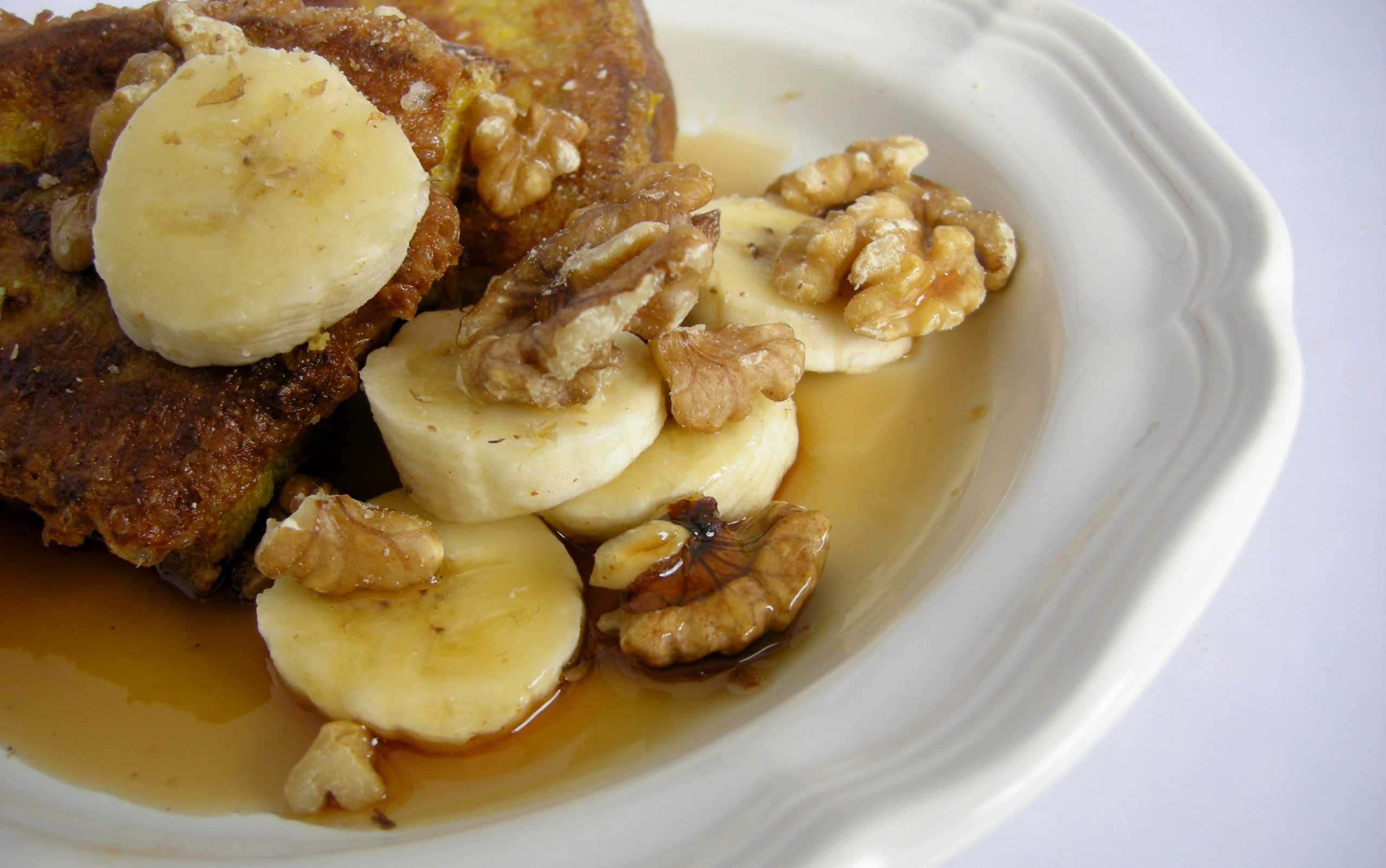
  • Sourdough French Toast with Maple and Cinnamon

    sourdough French toast

    French toast enjoys a wide and varied history,  and food history enthusiasts will find that the combination of beaten egg, day-old bread and good seasonings pop up in the traditional cooking of peoples across the globe, from Germany to Brazil, and is first referenced in Apicius – a collection of Roman recipes first recorded in the late 4th century.  And why not? It’s a perfect use for day-old bread, where its very staleness equates to an improved result.

    For us, sourdough French Toast is a compromise foods in many ways.  We don’t often consume sweeteners, natural or otherwise; after all, sweeteners were rarely used among populations thriving on their native, traditional diets outside of celebratory ritual1, but, from time to time, we indulge – and this recipe is no exception.  It’s wickedly indulgent – combining the richness of eggs and cream with the sweetness of maple syrup; moreover it’s a good source of manganese2 – a nutrient that plays a critical role in many biological functions but is particularly important in bone formation, healing and collagen formation.  Maple syrup, particularly the darker and cloudier syrups, offer some antioxidant activity3. That said, it is still a concentrated sweetener, natural as it may be, and should be used with a wise and thrifty hand.

    Sourdough French Toast: The Recipe(…)
    Click here to read the rest of Sourdough French Toast with Maple and Cinnamon (389 words)


    Wondering where your full feed went? Click here to learn why The Nourished Kitchenmoved to summary feeds. Don’t forget to find Nourished Kitchen on Facebook, Twitter, Flickr and
    © Jenny for The Nourished Kitchen, 2010. |
    Permalink |

    Post tags:

  • How to Make Raw Milk Yogurt

    raw milk yogurt

    Raw milk yogurt is a sort of holy grail for traditional foods enthusiasts, coupling the enzymatic and probiotic components of both fresh milk and fermentation in one glorious, creamy, lovely food.  Served over baked oatmeal or soaked oatmeal porridge, on its own or as a basis for savory dipping sauces, a good yogurt can find its way to nearly every meal if you let it.

    Raw milk yogurt, thanks to the effects of food enzymes, has a tendency to be a touch runnier than the stuff you find in grocery stores or what you might make in your own kitchen from boiled or pasteurized milk.  For this reason some of the very best raw yogurt is prepared using a combination of fresh cream and fresh milk rather than milk exclusively.  If you follow the fermentation process with straining, as you would for labneh, the resulting product would be even thicker and creamier and you could, in turn, use the accompanying whey in properly preparing grains and flours through soaking or even as an addition to your morning smoothie.

    In preparing a classic, or thermophilic, yogurt at home with raw milk, you do need to heat the milk slightly and culture it in a warmed environment.  We heat the milk only to 110° Fahrenheit (about 43° Celsius) which keeps food enzymes and naturally occurring beneficial bacteria intact and thriving. Other cultured dairy foods ferment at room temperature and can also be made with raw milk.  I also recommend culturing with Bulgarian or Greek starters which are available online (see sources) and which produce a rich, tangy and super creamy product.

    Raw Milk Yogurt Tutorial(…)
    Click here to read the rest of How to Make Raw Milk Yogurt (639 words)


    Wondering where your full feed went? Click here to learn why The Nourished Kitchenmoved to summary feeds. Don’t forget to find Nourished Kitchen on Facebook, Twitter, Flickr and
    © Jenny for The Nourished Kitchen, 2010. |
    Permalink |

    Post tags: , , , , , , , , , , , , , , , , , , , , , , ,

  • A Recipe: Kale & Potato Soup with Chorizo

    sopa caldo verde with potato, kale, chorizo and spanish smoked paprika

    Caldo verde – a Portuguese soup classically featuring kale, potatoes and chorizo swimming in a nourishing, mineral-rich stock – is a remarkable dish.  Richly flavored and deeply satisfying in a way only traditional peasant foods can manage, caldo verde is simple to prepare and a truly delightful addition to the supper table.  Like all dishes – particularly soups and stews – that have found there way into the repertoire of much-loved family cooks, caldo verde is versatile: some versions include white beans, others omit carrots, some include linguiça sausauge while others yet omit meat entirely.

    My version of caldo verde is generously seasoned, first by dried chili peppers and then by smoked Spanish paprika – a spice with a deep and beautiful smoky and spicy scent. The addition of this spices turns the broth a brilliant, dark red which contrasts dramatically with the deep green kale and the pale, creamy flesh of fingerling potatoes.  Find the smallest fingerling potatoes you can for this dish, for when prepared whole instead of chopped they add visual interest to the soup bowl making for a lovely, albeit rustic, presentation at the supper table.(…)
    Click here to read the rest of A Recipe: Kale & Potato Soup with Chorizo (583 words)


    Wondering where your full feed went? Click here to learn why The Nourished Kitchenmoved to summary feeds. Don’t forget to find Nourished Kitchen on Facebook, Twitter, Flickr and
    © Jenny for The Nourished Kitchen, 2010. |
    Permalink |

    Post tags: , , , , , , , , , , , , , , , , , , ,

  • I drink real milk: fresh, raw, local and full of fat.

    drink raw milkI drink raw milk.

    I drink fresh, raw milkReally fresh, really raw and always in season. In essence, I drink real milk.  I’ve waxed poetic about my love of fresh cream before, but now it’s milk’s turn.

    My milk is fresh, in season, grass-fed, full-fat and locally produced.  It is rich, and luscious and creamy and it is a living food, teeming with beneficial bacteria, food enzymes and naturally occurring vitamins and minerals.  It is not fortified; it doesn’t need to be – for every mineral, every vitamin contained in that cool glass of frothy white milk was placed there by nature as it is in all truly whole and unrefined foods.  Real milk – raw milk – doesn’t need fortification as vitamins, minerals and enzymes remains intact instead of broken, denatured and destroyed through heat processing by standard pasteurization or, worse yet, the extreme temperatures reached through ultra-high-temperature (UHT) pasteurization.

    Raw milk is a living food. It is dense in food enzymes and beneficial bacteria – two components of traditional diets that are severely lacking in the standard American diet in which foods have been subject to irradiation, pasteurization and other treatment.  Raw milk, like all raw foods, contains food enzymes – notably amylase, catalase, lactoperoxidase, lipase and phosphatase1. These food enzymes play important physiological functions in the human body; notably, they help our bodies to better digest our foods.  Amylase helps our bodies to digest carbohydrates, while lipase helps us to digest fats. Lactase, though not an actual component of milk itself, but a result of the presence of beneficial bacteria in raw milk, helps to digest lactose, or milk sugar.  Raw milk is also a good source of beneficial bacteria – which are critical to human health (learn more about beneficial bacteria and lactic acid fermentation).  (…)
    Click here to read the rest of I drink real milk: fresh, raw, local and full of fat. (832 words)


    Wondering where your full feed went? Click here to learn why The Nourished Kitchenmoved to summary feeds. Don’t forget to find Nourished Kitchen on Facebook, Twitter, Flickr and
    © Jenny for The Nourished Kitchen, 2010. |
    Permalink |

    Post tags: , , , , , , , , , , , , , , , , , , , , , ,

  • 10 Healthy, Nourishing School Lunches

    black bean soup

    School lunch has quickly become one of the most deplorable American meals – comprised of low-cost, commodity items like CAFO-raised beef, canned fruit and vegetables. Standard lunches of chocolate milk, overcooked peas and mealy french fries lack versatility in nutrients, flavor and, most importantly, they lack inspiration.  So, per reader request, I’ve put together a list of ten satisfying, flavorful and nourishing meals that can be easily packed in a lunchbox, thermos or bag along with a bottle of chilled milk, fresh cider, water kefir or even milk kefir. So print this post and pin it to your fridge in preparation for next week’s lunch plans, then share your favorite and healthiest school lunches.

    Day #1: Salmon Cakes

    Day #2: A Roast Beef Sandwich

  • Recipe: Miso-glazed Bok Choy

    bok choy recipe with miso and sesame seeds

    A good bok choy recipe can be difficult to find.  Too often bok choy recipes disguise the leafy green vegetable in heavy sauces or combine it with other, more strongly flavored vegetables so that bok choy’s unique, if subtle, characteristics are lost in the final dish.  When bok choy first becomes available, usually in the early spring but often in autumn as well, I prefer a recipe in which it is dressed simply and served on its own, without the addition of other vegetables. In this way, the cruciferous vegetable with its pale, elongated stalk and broad, verdant leaves can shine on its own – though paired with other subtle flavors which complement its sweet and slightly peppery undertones without competing against them.

    My favorite bok choy recipe combines miso, ginger, fish sauce and sesame seeds in a gentle glaze that seasons the vegetable without overpowering its subtle flavors.  Unlike many leafy green vegetables, bok choy is relatively low in oxalates – a compound with a strong chelating effect that contributes to kidney stones.  Though the effectis of oxalic acid extend far beyond kidney stones, indeed some evidence indicates they may play a role in vulvodynia and chronic fatigue syndrome; moreover, evidence indicates that autistic children experience improvement in their condition once dietary oxalates were limited1. Fortunately, oxalates are easily mitigated by light cooking which is why leafy greens and other vegetables high in oxalates, such as beets, should be cooked prior to serving.  A healthy intestinal tract fed on probiotic supplements and foods may also help to mitigate the effects of oxalate2, 3.(…)
    Click here to read the rest of Recipe: Miso-glazed Bok Choy (496 words)


    Wondering where your full feed went? Click here to learn why The Nourished Kitchenmoved to summary feeds. Don’t forget to find Nourished Kitchen on Facebook, Twitter, Flickr and
    © Jenny for The Nourished Kitchen, 2010. |
    Permalink |

    Post tags:

  • Soaking Grains, Beans and Legumes: Top 5 Reader Questions Answered

    soaked lentils

    Grains, beans, legumes, nuts and seeds can all add great value and variety to the diet, yet they contain antinutrients – particularly phytates and enzyme inhibitors – which detract from their nutritive value.  Traditionally, these foods were prepared in a manner to maximize nutrient density by mitigating the effects of these antinutrients.  Soaking these foods overnight seems to be an effective, traditional method of enhancing the nutrient profile of these foods, and it is one method consistently used among peoples who adhered to time-honored, traditional methods of preparing native, unprocessed foods.

    Focusing exclusively on traditional foods, all of the recipes featuring grains, beans and legumes at Nourished Kitchen call for either souring, soaking or sprouting. A few recipes consistently pop up.  How do you effectively soak grains, beans and legumes?  Do you need to soak almond flour? How do you find time to soak grains? Does phytic acid fight cancer?  Do you need to rinse your grains after soaking?

    1. How do I effectively soak grains, beans and legumes?

    Grains, beans and legumes contain phytic acid – an antinutrient which binds up minerals preventing your body from fully absorbing them. Phytic acid can be effectively mitigate through three different traditional processes: 1) sprouting, 2) soaking and 3) souring.  To effectively soak grains, beans and legumes you need four components: 1) liquid, 2) acidity, 3) warmth and 4) time.  Each different grain, legume and bean contains a different level of phytic acid, and also a different level of phytase (an enzyme that neutralizes phytic acid), for this reason they all require different amounts of soaking time; however, I don’t believe that cooking ought to be scientific or painstakingly methodical and, instead, believe that simple methods should suffice in most kitchens and for most people.(…)
    Click here to read the rest of Soaking Grains, Beans and Legumes: Top 5 Reader Questions Answered (819 words)


    Wondering where your full feed went? Click here to learn why The Nourished Kitchenmoved to summary feeds. Don’t forget to find Nourished Kitchen on Facebook, Twitter, Flickr and
    © Jenny for The Nourished Kitchen, 2010. |
    Permalink |

    Post tags:

  • Announcing: Best of Nourished Kitchen

    I’m excited to announce a new project: quarterly books featuring the very best from Nourished Kitchen’s posts, recipes and tutorials covering traditional, wholesome foods.  Published at the end of each season, the full-color paperback books cover not only the very best from the preceding season, but also many recipes and tutorials that have not been published at Nourished Kitchen.  This presents an excellent opportunity for you to pick up an easy-to-read guide to traditional foods, the current edition features twenty-five recipes (many unpublished), three articles covering food philosophy, choosing ingredients and feeding kids as well as several tutorials that, in simple step-by-step instructions, teach you how to render lard, soak beans and nuts, make yogurt cheese, make yogurt and brew water kefir.  You can even preview a few sample pages here.(…)
    Click here to read the rest of Announcing: Best of Nourished Kitchen (340 words)


    Wondering where your full feed went? Click here to learn why The Nourished Kitchenmoved to summary feeds. Don’t forget to find Nourished Kitchen on Facebook, Twitter, Flickr and
    © Jenny for The Nourished Kitchen, 2010. |
    Permalink |

    Post tags:
  • Recipe: Olive Oil Ice Cream with Blood Oranges

    olive oil ice cream

    Olive oil ice cream with blood oranges, inspired by these olive oil recipes, recently found its way to our kitchen with our first bottles of fresh, raw milk for the year.  In this recipe for olive oil ice cream, the inclusion of a good quality unrefined, extra virgin olive oil is essential.  The flavor of a good olive oil lingers, enhanced by fruity notes and an almost floral perfume.  It is fresh and vibrant.  Good quality olive oils are available in specialty food stores, health food stores and online (see sources).

    In my version of olive oil ice cream is further complemented by the inclusion of blood oranges, though any orange should do.  Blood oranges, with their customarily maroon-colored flesh, offer a unique flavor profile that is decidedly more complex than that of standard oranges. A good blood orange is tart, sweet and imbued by subtle floral notes which make it a nice pairing for olive oil – especially  in this recipe for olive oil ice cream. Now that winter has receded, blood oranges are at the end of their season, finding a good blood orange may prove challenging.  Indeed, the oranges at my store lacked the brilliant deep red flesh I’d hoped for and, instead, revealed an orange flesh speckled by dots of maroon.  Nevertheless, that classic blood orange flavor remained and flavor, after all, is the key to a good dish.  When selecting blood oranges for this olive oil ice cream, try to find those with the ruddiest rind as the redder the rind of the orange, the redder the flesh is likely to be.(…)
    Click here to read the rest of Recipe: Olive Oil Ice Cream with Blood Oranges (778 words)


    Wondering where your full feed went? Click here to learn why The Nourished Kitchenmoved to summary feeds. Don’t forget to find Nourished Kitchen on Facebook, Twitter, Flickr and
    © Jenny for The Nourished Kitchen, 2010. |
    Permalink |

    Post tags:

  • Recipe: Pesto Egg Salad

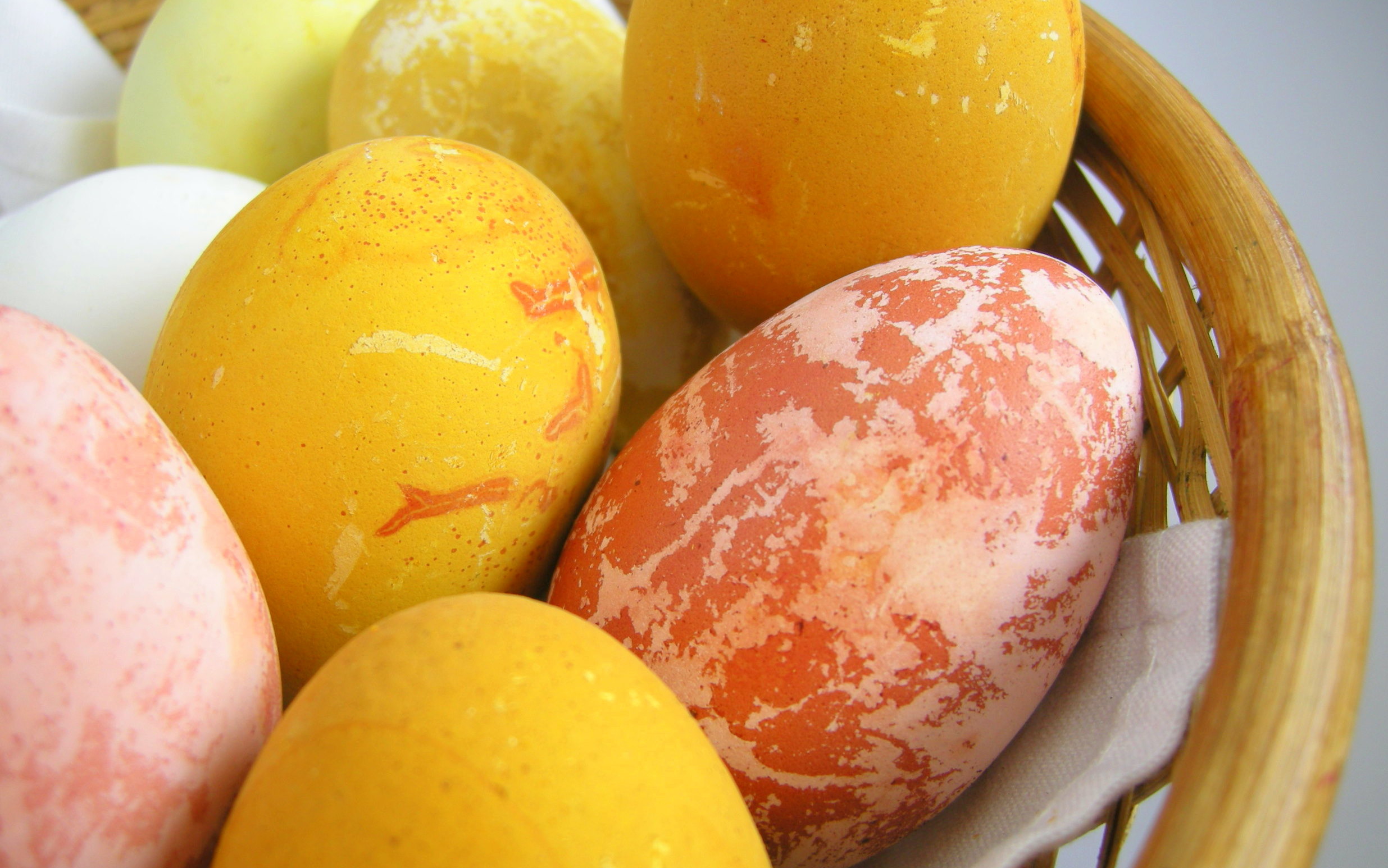
    naturally dyed easter eggs

    Pesto Egg Salad – herbaceous and garlicky – found its way to our kitchen table this weekend after my son and I took the time to boil and dye pasture-raised eggs for Easter.  We customarily receive two dozen eggs from our CSA, but those never seem to last the week and, sure enough, once Sunday arrived I looked in our egg basket only to find one pitifully lonesome egg remaining from last week’s CSA pick-up.

    We hopped on the bus and headed down to the local health food store.  Though most of the eggs that arrive in our CSA are brown, I’d hoped to pick up white eggs, knowing they’d absorb color more easily. It’s been a long time since we purchased eggs from the store, and I was pleasantly surprised to find only local, farm-fresh eggs available at the tiny store. We purchased a dozen, already colorful in speckled browns, brilliant white and faint grey-green.

    We arrived home and prepared our dye.  Combining spices, vegetables, water and vinegar in assorted pots on every burner on the stove.  Turmeric would yield a lovely gold.  Chili powder would yield a beautiful rusted orange.  Beets turned some eggs a pale pink.  Purple cabbage, I’d heard, would make for a beautiful and brilliant blue – but my ancient cabbage gave no color at all.  (…)
    Click here to read the rest of Recipe: Pesto Egg Salad (304 words)


    Wondering where your full feed went? Click here to learn why The Nourished Kitchenmoved to summary feeds. Don’t forget to find Nourished Kitchen on Facebook, Twitter, Flickr and
    © Jenny for The Nourished Kitchen, 2010. |
    Permalink |

    Post tags:

  • Clean Your Plate Recipe Challenge: Grass-fed Steaks

    Clean Your Plate Challenge

    This month, on the Clean Your Plate Challenge, we’re focusing on one of my very favorite foods: grass-fed steak. So, US Wellness Meats and Nourished Kitchen have teamed up on this months challenge – asking you to create a unique, wholesome recipe that highlights the beauty of grass-finished steaks – with a real focus on making the flavor of grass-finished meat stand out in its own right.

    And a belated  congratulations are in order to Devon who won the February’s Clean Your Plate Challenge which featured olive oil by Chaffin Family Orchards with her stunning, and unique recipe for dark chocolate-covered apricot and olive oil truffles.

    Clean Your Plate: Details & Participating

    • Our special ingredient for April’s Clean Your Plate Challenge is  grass-fed steak.
    • Create an original recipe that highlights and showcases grass-fed steakl.
    • Blog your entry and link here to the challenge, or if you don’t have a blog post your original recipe in the comments section of this post once you’ve blogged your entry add it to the Simply-Linked widget below no later than Friday, April 23rd at noon, mountain time.
    • If you don’t have a blog, add your recipe in the comments section of this post no later than Friday, April 23rd at noon, mountain time.
    • Your entry should be wholesome and healthy. That means you need to avoid: refined ingredients including white flours, refined vegetable fats, white sugars, soy-based meat and milk replacements.  If you have a question about whether an ingredient is “legal” for this challenge, just contact me.
    • Megan from US Wellness Meats and I will select three finalists and the voting will begin on Saturday, April 24th. We’ll notify participants of the finalists no later than Monday, April 26th by email and you’re free to lobby for your entry as much as suits you.
    • Voting will end on Friday, April 30th at noon, mountain time and we’ll announce the winner!
    • The winner will receive a Grass-fed London Broil Steak courtesy of US Wellness Meats, valued at $23.29 plus free shipping.

    The Prize and a Little about US Wellness Meats:

    Founded by lifelong farmer John Wood, U.S. Wellness Meats grew out of John’s realization that there was a unique way of raising cattle for a growing niche of U.S. consumers who were beginning to understand the health benefits of CLA and omega-3s from free-range meat.

    A fifth-generation farmer, John was used to thinking like his ancestors and his neighbors when it came to raising animals. In a nutshell, this old method meant growing the animal on pasture, feeding them grain in confinement for the final four months, and then selling them off to a big animal processor when it was time for them to be harvested. But with a little experimentation, he discovered the old method might not be the only method. In 1997, 1998 and 1999, John raised animals on a 100% forage diet and had the proof he needed: there was another way to get tender and exquisite-tasting beef, lamb, bison, goat and dairy products

    US Wellness Meats is awarding the winner of the recipe contest with what else but grass-fed steak! The winner will receive a grass-fed london broil steak valued at $23.29, plus shipping .

    Spread the Word:

    • Don’t forget to spread the word by blogging this contest, tweeting it and adding it to facebook!
    • Want to participate? Pick up a Clean Your Plate Challenge button:

    Post Your Recipe

    If you blog, add your very best grass-fed steak recipe below by the Simply-Linked widget. If you don’t blog, post your recipe in the comments.


    Wondering where your full feed went? Click here to learn why The Nourished Kitchenmoved to summary feeds. Don’t forget to find Nourished Kitchen on Facebook, Twitter, Flickr and © Jenny for The Nourished Kitchen, 2010. | Permalink |
    Post tags:

  • Recipe: Green Beans with Bacon and Shallots

    Green Beans with Bacon and Shallots

    Green beans with bacon will always find a place in my heart, and in my kitchen.  I remember, even as a very young girl, visiting my godparents in a tiny, drawn and weathered town on the outskirts of Tulsa, Oklahoma.  At dinner time, I’d sit at their table which, large as it was, never seemed to have enough room for all the boisterous, warm-hearted relatives who came for supper.   Sitting at the table, I’d eagerly await my godmother’s classic comfort food.  No potato was served without gravy. No strawberry served without cream. And, definitely, no green bean served without bacon.  In many ways, this recipe is an homage to her – my godmother who cared for me when I was very little, and in whose yard I hunted Easter eggs, and who nourished me at her table – green beans with bacon and all.

    As we endeavor to eat meals with plentiful servings of vegetables, and to always serve our vegetables with wholesome fat, this recipe for green beans with bacon and shallots appears at the supper table quite often – an accompaniment for classic meatloaf or roast chicken with herbs. Smoky and salty, pastured bacon provides a perfect foil to the sweet, crisp green beans while caramelized shallots bring the entire dish together; afterall, everything is better with caramelized shallots.(…)
    Click here to read the rest of Recipe: Green Beans with Bacon and Shallots (568 words)


    Wondering where your full feed went? Click here to learn why The Nourished Kitchenmoved to summary feeds. Don’t forget to find Nourished Kitchen on Facebook, Twitter, Flickr and
    © Jenny for The Nourished Kitchen, 2010. |
    Permalink |

    Post tags: , , , , , , , , , , , , , , ,

  • Baked Oatmeal with Dried Cranberries & Apricots

    baked oatmeal

    Baked oatmeal – a staple in our home on the weekends – nourishes our family, providing a much-loved alternative to soaked oatmeal porridge.  When my father, a man who rarely enjoys a home-cooked meal, comes to visit there is, inevitably, one imperative dish on the menu: baked oatmeal – all the better when it’s dotted with dried cranberries, apricots and nuts.  I could pan-fry a great steak or roast a chicken so savory and herbaceous it could bring tears to your eyes, but it is always baked oatmeal that must greet him on his visits.

    And why not?  Baked oatmeal is both deeply nutritive and deeply satisfying.  Steel cut oats are gently soaked overnight in water acidified by a touch of yogurt or fresh whey which helps to increase not only your body’s ability to better digest the grain, but also your body’s ability to better absorb its minerals.  Oats are rich in minerals, including phosphorus, magnesium, manganese, iron and zinc, but due to the effects of naturally occurring antinutrients found in whole grain, such as phytic acid, those minerals due your body little good unless oats are properly prepared as they are in this recipe.  Moreover, oats are a rich source of B vitamins including folate – that critical nutrient which is vital to reproductive health and the proper development of babies growing within their mothers’ wombs (read more about best sources for vitamins and minerals).(…)
    Click here to read the rest of Baked Oatmeal with Dried Cranberries & Apricots (556 words)


    Wondering where your full feed went? Click here to learn why The Nourished Kitchenmoved to summary feeds. Don’t forget to find Nourished Kitchen on Facebook, Twitter, Flickr and
    © Jenny for The Nourished Kitchen, 2010. |
    Permalink |

    Post tags: , , , , , , , , , , , , , ,

  • Weston A Price: Work & Findings on Traditional Foods

    weston a price - research

    Weston A Price's Photographs of Isolated Swiss Villagers.

    weston a price - africa photographs

    Weston A Price's Photographs of Isolated African Villagers who consumed traditional foods.

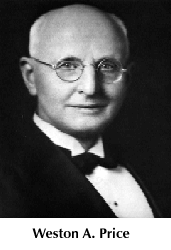
    Weston A Price, a Cleveland dentist who, when challenged by rampant tooth decay and the considerable physical degeneration of his patients, left his practice and traveled the world researching the dietary practices of peoples consuming processed foods and those consuming an unprocessed, native diet, and the non-profit nutritional advocacy group named in his honor – the Weston A Price Foundation – have heavily influenced the content and message at Nourished Kitchen.  As a Weston A Price enthusiast, it’s time I share more information about the man including how and why Weston A Price’s work has so heavily influenced me.

    Weston A Priceweston a price

    Weston A Price, a native of Canada, practiced dentistry in Cleveland, Ohio at the turn of the 20th century. A researcher at heart, Weston A Price served as the chairman for the research section of the American Dental Association for nearly a decade.  About the time that he began his work in dentistry, the American food system changed, and dramatically so; Weston A Price – confounded by patients riddled by rampant tooth decay, malformations of the palate and other health issues – witnessed the detriments of this shift in the standard American diet firsthand and, with his passion for research firmly in place, committed himself to determining just why and how the health of populations in industrialized societies degenerated so significantly in just a few decades.(…)
    Click here to read the rest of Weston A Price: Work & Findings on Traditional Foods (899 words)


    Wondering where your full feed went? Click here to learn why The Nourished Kitchenmoved to summary feeds. Don’t forget to find Nourished Kitchen on Facebook, Twitter, Flickr and
    © Jenny for The Nourished Kitchen, 2010. |
    Permalink |

    Post tags: , , ,

  • Recipe: Fried Chicken Livers with New Mexico Chilies

    Fried Chicken Livers

    Classic Comfort Food: Fried Chicken Livers with New Mexico Chillies

    Fried chicken livers.  The words, when rolled off the tongue, evoke images of farm life and of down-home country food. The clean, spicy intensity of New Mexico, or Anaheim, peppers provides the perfect foil for the salty, crunchy chicken livers with their rich, mineral-like flavor.  Growing up, my family would drive from Colorado through the extended monotony of the Kansas countryside until we reached my grandmother’s home in Oklahoma where we’d spend our summers.  A treat during these hot, humid Oklahoma summers would be a visit to Rex’s for fried chicken seasoned with jalapeños and served alongside Indian fried bread.  While this version varies considerably from the fastfood found at Rex’s, the essence of the dish remains the same.

    While liver, like many organ meats, is often avoided either out of fear of “toxins” or a general wish to avoid anything but muscle meat, it shouldn’t be.  Liver is deeply nutritive and a strikingly rich source of vitamins and minerals making it a nutritional powerhouse of sorts. Just a single ounce of pan-fried chicken livers contains 81% of the recommended daily value for vitamin A and 99% of your body’s daily requirement for vitamin B12; moreover, its rich in riboflavin, folate and the minerals iron and selenium1. It is, perhaps, for this reason that traditional peoples prized thriving on unprocessed foods native to their region prior to the advent of industrialized agriculture prized liver and other offal to such a great degree.  It is a sacred food, powerfully nutritive and deeply nourishing.  The key, as with all animal foods, is to ensure that the liver you feed your family comes from healthy chickens – those that have been raised on pasture with access to their natural diet which includes sprouts, grubs, kitchen scraps and a wide variety of foods.  Healthy animals produce healthy foods.

    You’ll find that, in addition to liver, this recipe makes use of whole grain, sprouted flour as well as freshly rendered pasture-raised lard.  Whole grain, though valuable, is also problematic.  You see, it contains phytic acid – an antinutrient that binds up valuable minerals, preventing your body from fully absorbing them.  There are three methods that effectively mitigate the effects of phytic acid: souring, soaking and sprouting.  Since both souring and soaking take several hours and sometimes full days, using sprouted grain flour eliminates the issues posed by regular whole grain flour.

    Just a single ounce of pan-fried chicken livers contains 81% of the recommended daily value for vitamin A and 99% of your body’s daily requirement for vitamin B12; moreover, its rich in riboflavin, folate and the minerals iron and selenium

    We also make use of freshly rendered lard from pasture-raised hogs – a fat that, despite its bad reputation, offers greater benefit than you might initially think.  Indeed, the most prominent fatty acid in lard is monounsaturated fat – the very same nutritive, healthy fat found in olive oil and avocado.  Indeed, monounsaturated fat comprises about 45% of the fat found in lard1.  Some evidence indicates that the consumption of monounsaturated fats may have the ability to lower LDL (bad) cholesterol while simultaneously raising HDL (good) cholesterol2. Furthermore, pasture-raised lard is one of the richest food sources of natural vitamin D – a nutrient that of which most US children3 and a great number of adults4 show an insufficiency or even deficiency.

    So while this dish may contain both liver and lard, know that with each savory and spiced bite you take, you’ll consume a powerfully rich combination of wholesome nutrients that play an important role in health: B vitamins, vitamin D and myriad minerals.

    Fried Chicken Livers with New Mexico Chilies

    Savory and pleasantly spiced by bright green chili peppers, these fried chicken livers are best served alongside a gravy made from mineral-rich chicken stock.  My son, just four, can eat an entire plate by himself. I served these once, as snack, and he begged his friends to try them – telling them, “You have to eat the whole chicken: livers, feet and all.”  It is good for you, so enjoy.

    Fried Chicken Livers: Ingredients

    • 1 quart fresh milk (see sources)
    • 1 pound pasture-raised chicken livers, trimmed and rinse of any sinew
    • lard or tallow, for frying (learn how to render lard)
    • 1 cup whole grain flour, preferably sprouted (see sources)
    • 1 New Mexico Chili pepper, seeded and minced
    • 1 clove garlic, minced
    • dash unrefined sea salt

    Fried Chicken Livers: Method
    1. Pour one quart fresh milk over one pound trimmed chicken livers.
    2. Move the chicken livers and fresh milk to the refrigerator and soak them for eight to twelve hours.
    3. After soaking livers in milk for at least eight hours, drain and rinse them.
    4. Chop them into bite-sized pieces as necessary and set aside.
    5. Heat lard or tallow in a cast iron skillet over medium heat.
    6. Stir flour, chili pepper, garlic and unrefined sea salt together in a bowl.
    7. Dredge chicken livers in the flour mixture.
    8. Gently fry the floured chicken livers in the hot fat until brown and cooked-through, about six or seven minutes.  Turn as neccessary.
    9. Serve hot.

    YIELD: 4 to 6 servings

    TIME: 20 to 30 minutes

    NOTE: I call for soaking chicken livers in milk because doing so improves their flavor.  If you are dairy-allergic or wish to avoid dairy for another reason, soaking in salt water or a solution of water and lemon juice should effect the same goal.

    1. NutritionData.com. 2.You Can Control Your Cholesterol. MerckSource. 3. Prevalence and Associations of 25-Hydroxyvitamin D Deficiency in US Children: NHANES 2001-2004. Pediatrics. 2009. 4. Demographic differences and trends of vitamin D insufficiency in the US population, 1988-2004. Archives of Internal Medicine. 2009 Mar 23;169(6):626-32


    Wondering where your full feed went? Click here to learn why The Nourished Kitchenmoved to summary feeds. Don’t forget to find Nourished Kitchen on Facebook, Twitter, Flickr and
    © Jenny for The Nourished Kitchen, 2010. |
    Permalink |

    Post tags: