Introduction:
VA SOL 1.20 requires that the student sort and classify concrete objects according to one or more attributes, including size, color, shape, and thickness. This mathematical concept is stimulated by the student’s exploration of their environment and most children begin to develop concepts related to sorting and patterns before they enter school. Recognition of similarities and differences as well as comparisons are essential components of children’s mathematical development. The focus of instruction at the primary level and the role of the teacher is to help students understand the classification process in which two or more attributes connect or differentiate sets.
The resources below are best used with students in the early elementary years, primarily first grade.
Text Annotations
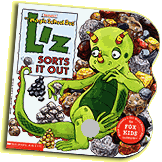
Liz Sorts It Out by Tracey West.
A book from a kid’s favorite, The Magic School Bus Series. In this book It’s Arnold’s turn to take care of Liz, the classes pet lizard for the weekend. Arnold decides to take Liz to a rock show however Arnold has so many rocks in his collection he can not decide which rocks to bring. Liz comes up with ideas and suggestions on how Arnold may sort his rocks in an effort to decide which to bring. This a good book to read aloud to the class and it is nice because it deals with sorting of objects other then buttons which appears to be the favorite sorting object of most of the books on this topic.
Sorting by Henry Arthur Pluckrose.
This book features colorful, vibrant photographs and clear concise text that is interactive with the reader. This book would be a great resource for a unit on sorting or to use as a review for a lesson on patterns. I would read this book aloud and show students each page. I would then reread the book although the second time I would ask students how they would sort the various items on each page.

Grandma’s Button Box by Linda Williams Aber. This book was such a fun lovely story for first grade students learning about sorting. The book tells the story of a young girl, Kelly who accidently drops her grandmother’s box of buttons over, scattering the buttons across the floor. Kelly and her cousins work furiously sorting the buttons, first by shape, then size, and finally by color in an effort to return the button box to the original condition their grandmother had it in. Ultimately the story reveals that the grandmother never had the buttons organized and she is quite grateful for the organization her grandkids bestowed upon the buttons. This is a great book to read prior to having students sort their own items by shape, size, and color, which is one of the games I used in my instructional resource set.

Sort It Out! By Barbara Mariconda.
A cute story about a pack rat who comes home with a cart full of stuff (a locket, a book, an umbrella, a pinecone, and many more random items) and is forced to sort it all out and put it away by his mother. The book describes the process Packy the rat used to sort all the items, including grouping things with like characteristics such as where they’re found, their color, shape, etc. The illustrations are really fun because they are brightly colored, large, and very clear and children of all ages will enjoy looking at each page.
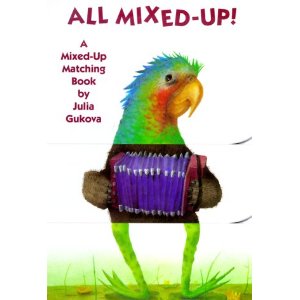
All Mixed Up! A Mixed-Up Matching Book by Julia Gukova. This book was serve a review prior to a lesson on sorting because a big component of sorting is matching. In order to sort by attribute students need to how to match up items and realize which items don’t match within a set. This book is wildly fun and is interactive for the reader therefore I think it might be best utilized as a book students read to themselves or within a small group as opposed to the teacher using this book for whole group instruction. In the book, readers have a mission to help Phineas the photographer organize his pictures that became “mixed-up” by a mischievous witch. The pictures feature different body parts (head, body, legs) of Phinea’s animal friends and the goal of the book is to match everyone up with their correct parts however, I think students will enjoy making up crazy creatures using different body parts from other animals (a warthogs head on an alligators body with zebra legs perhaps?) The book is only pictures following a brief introduction which makes it perfect for a first grade reading corner type of book in which the students explore various books.
Web Annotations:
This interactive game allows students to sort candy based on its shape. This game ties is nicely with lesson plans that incorporate the sorting of Halloween candy or other candies (jelly beans, M &Ms, or gummy bears). It is fun for students to play and gives audible directions which is nice and effective for first graders.
Allows students to practice sorting attribute blocks by color, shape, and size. A checking features gives the student feedback about the answer before the student can move on to a new question.
A fun interactive game that gives clear concise directions to students. The directions include sorting items into the appropriate columns depending on specific characteristics (happy/sad, red/blue, big/small, etc.). Features big font and fun sound effects, which makes it fun for young students!
A fun online game that has players choose which items are bigger and which are smaller while taking the player on a journey through an animal filled barnyard!
A website with option for students to choose from. Each option links to a different online game that requires student’s sort items by color.
Additional Resources
A great website for sorting ideas and “real life” manipulatives that could be used for sorting activities.
A website that features a fun song about sorting by size, color, and shape. Would be fun for kids to listen to and recite as they work with the concept of sorting.
A really neat interactive shape sorter game that the teacher can set up for students to use. Allows the user to set up specifications for sorting by a number of attributes. Also has a venn diagram for comparing and contrasting purposes.
A page about sorting sets and identifying what items don’t belong in a set.