Author: Natalia F.

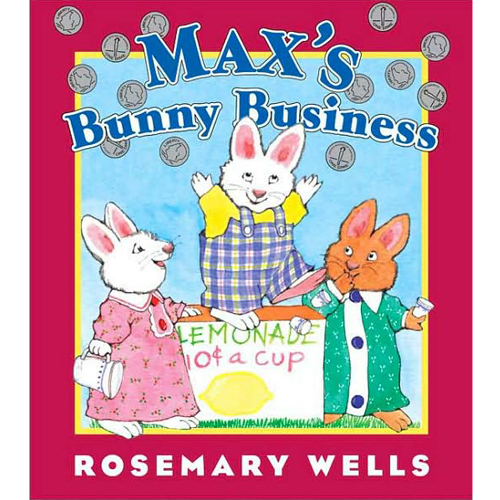
  • Teaching Economics with Children’s Literature: Max’s Bunny Business

     maxs_bunny_business.jpg

    Introduction

    Max’s Bunny Business is a very cute and fun way to help teach kids about buying things and earning money to pay for those things. This story follows Max the bunny and his friends as they scheme up ideas to earn enough money to buy a fire angle ring from their favorite store. Max and his friends do everything from selling lemonade to selling Halloween candy in an effort to earn enough money for the desired ring. However, a competition ends up occurring between Max and his friends when they don’t see eye to eye on business practices. As a result, only Max ends up with a fire angel ring because the store ran out of rings so this book could also help introduce the concept of supply and demand.

    Curriculum Connections

    This book could be used to satisfy VA SOLS K.7 (b). This strand requires that students recognize that people use money to purchase goods. This book would be fun to read prior to hosting an activity where students sell items to their classmates (using fake money of course!) or a classroom store is opened up. Another fun thing to do after reading this book would be to have students brainstorm different fun/odd jobs they could do to earn money.

    Additional Resources

    This website managed by Nick Jr. is all about the TV series Max & Ruby and the website features lots of online games, activity ideas, recipes, and TV clips. A great resource to accompany the book.

    This webpage features several coloring pages that feature Max & Ruby!

    This site provides lesson plans and activity ideas that incorporate the main characters from Max’s Bunny Business.

    General Information

    Book: Max’s Bunny Business
    Author: Rosemary Wells
    Illustrator:Rosemary Wells
    Publisher: Viking Juvenile
    Publishing date: May 15, 2008
    Pages: 32
    Grade range: K-2
    ISBN-10: 0670011053

  • Teaching Sorting Skills in First Grade

    Introduction:

     VA SOL 1.20 requires that the student sort and classify concrete objects according to one or more attributes, including size, color, shape, and thickness. This mathematical concept is stimulated by the student’s exploration of their environment and most children begin to develop concepts related to sorting and patterns before they enter school. Recognition of similarities and differences as well as comparisons are essential components of children’s mathematical development.  The focus of instruction at the primary level and the role of the teacher is to help students understand the classification process in which two or more attributes connect or differentiate sets.

    The resources below are best used with students in the early elementary years, primarily first grade.


    Text Annotations
     booklizsorts.gif

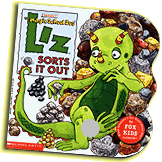
    Liz Sorts It Out by Tracey West.

    A book from a kid’s favorite, The Magic School Bus Series. In this book It’s Arnold’s turn to take care of Liz, the classes pet lizard for the weekend. Arnold decides to take Liz to a rock show however Arnold has so many rocks in his collection he can not decide which rocks to bring. Liz comes up with ideas and suggestions on how Arnold may sort his rocks in an effort to decide which to bring. This a good book to read aloud to the class and it is nice because it deals with sorting of objects other then buttons which appears to be the favorite sorting object of most of the books on this topic.
     9780516454580.jpg

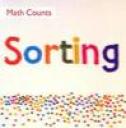
    Sorting by Henry Arthur Pluckrose.

    This book features colorful, vibrant photographs and clear concise text that is interactive with the reader. This book would be a great resource for a unit on sorting or to use as a review for a lesson on patterns. I would read this book aloud and show students each page. I would then reread the book although the second time I would ask students how they would sort the various items on each page.
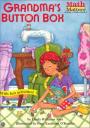
     grandmasbuttonbox.jpg

    Grandma’s Button Box by Linda Williams Aber. This book was such a fun lovely story for first grade students learning about sorting. The book tells the story of a young girl, Kelly who accidently drops her grandmother’s box of buttons over, scattering the buttons across the floor. Kelly and her cousins work furiously sorting the buttons, first by shape, then size, and finally by color in an effort to return the button box to the original condition their grandmother had it in. Ultimately the story reveals that the grandmother never had the buttons organized and she is quite grateful for the organization her grandkids bestowed upon the buttons. This is a great book to read prior to having students sort their own items by shape, size, and color, which is one of the games I used in my instructional resource set.
     sort_it_out.jpg

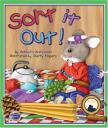
    Sort It Out! By Barbara Mariconda.

    A cute story about a pack rat who comes home with a cart full of stuff (a locket, a book, an umbrella, a pinecone, and many more random items) and is forced to sort it all out and put it away by his mother. The book describes the process Packy the rat used to sort all the items, including grouping things with like characteristics such as where they’re found, their color, shape, etc. The illustrations are really fun because they are brightly colored, large, and very clear and children of all ages will enjoy looking at each page.
     41xz9nmgfyl_sl500_aa300_.jpg

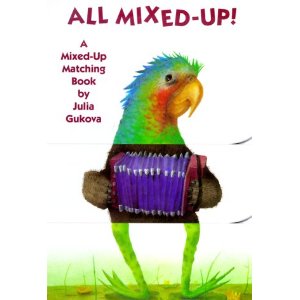
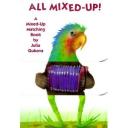
    All Mixed Up! A Mixed-Up Matching Book by Julia Gukova. This book was serve a review prior to a lesson on sorting because a big component of sorting is matching. In order to sort by attribute students need to how to match up items and realize which items don’t match within a set. This book is wildly fun and is interactive for the reader therefore I think it might be best utilized as a book students read to themselves or within a small group as opposed to the teacher using this book for whole group instruction. In the book, readers have a mission to help Phineas the photographer organize his pictures that became “mixed-up” by a mischievous witch. The pictures feature different body parts (head, body, legs) of Phinea’s animal friends and the goal of the book is to match everyone up with their correct parts however, I think students will enjoy making up crazy creatures using different body parts from other animals (a warthogs head on an alligators body with zebra legs perhaps?)  The book is only pictures following a brief introduction which makes it perfect for a first grade reading corner type of book in which the students explore various books.

    Web Annotations:

    Candy Sorting Game

    This interactive game allows students to sort candy based on its shape. This game ties is nicely with lesson plans that incorporate the sorting of Halloween candy or other candies (jelly beans, M &Ms, or gummy bears). It is fun for students to play and gives audible directions which is nice and effective for first graders.

    Online Attribute Blocks Game

    Allows students to practice sorting attribute blocks by color, shape, and size. A checking features gives the student feedback about the answer before the student can move on to a new question.

    SORT Game

    A fun interactive game that gives clear concise directions to students. The directions include sorting items into the appropriate columns depending on specific characteristics (happy/sad, red/blue, big/small, etc.). Features big font and fun sound effects, which makes it fun for young students!

    Size Sorting Game

    A fun online game that has players choose which items are bigger and which are smaller while taking the player on a journey through an animal filled barnyard!

    Sorting by Color!

    A website with option for students to choose from. Each option links to a different online game that requires student’s sort items by color.


    Additional Resources

    Sorting Ideas Webpage

    A great website for sorting ideas and “real life” manipulatives that could be used for sorting activities.

    Sorting Song

    A website that features a fun song about sorting by size, color, and shape. Would be fun for kids to listen to and recite as they work with the concept of sorting.

    Shape Sorter Online Activity

    A really neat interactive shape sorter game that the teacher can set up for students to use. Allows the user to set up specifications for sorting by a number of attributes. Also has a venn diagram for comparing and contrasting purposes.

    What doesn’t belong activity?

    A page about sorting sets and identifying what items don’t belong in a set.
  • Teaching Ancient Civilizations Using Children’s Literature: Ancient China

     295-71.jpg

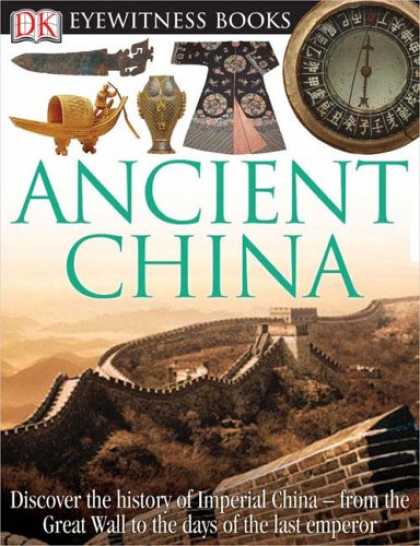
    Ancient China from Dorling Kindersly’s Eyewitness series is a wonderful guidebook that allows the reader to discover the history of Imperial China, from the Great Wall to the days of the last emperor. The book is very informative and highly engaging. It features wonderful photographs of scenery and artifacts by skilled photographers, Alan Hills & Geoff Brighling. This book is very comprehensive and covers 26 different sections on Ancient China which allows for days upon days of exploration for the reader.  The format of the book allows the reader to read as little or as much as they would like about Ancient China, as the reader does not have to read the book cover to cover to gather an adequate knowledge about the topic. The book is written in a fashion that helps take the reader through a virtual tour of China, with sections discussing it’s earliest beginnings to information about China’s emperors, to information about the lifestyle of the Chinese (food, traditions, livelihood, home life, dress, adornment, etc.). In addition to the amazing photographs the book’s content includes time lines,suggested internet resources, and a helpful glossary. This book would be an excellent read for the inquisitive mind and would be a great resource for teaching about ancient civilizations. Both teachers and students would find this book wonderful and interesting and I think this a good book for the upper elementary classroom. The book is written by Arthur Cotterell and is one of many published by the highly proclaimed Dorling Kindersly.

    Curriculum Connections
    Ancient China is a great and would be most approparite for VA SOL History 2.1 in which the student is expected to explain how the contributions of ancient China and Egypt have influenced the present world in terms of architecture, inventions, the calendar, and written language. Although some of the content and wording in the book may be too advanced for second graders the information can easily be relayed in a more age/grade appropriate manner by the teacher.

    Additional Resources

    • Great website for kids on Ancient China
    • Website full of Ancient China lesson plans (for teachers)
    • Website with tons of Chinese and Ancient China related coloring pages and other kid friendly activities
    • Teacher could hold a Chinese culture day, this website provides ideas and recipes for Chinese dishes

    Book: Eyewitness Books: Ancient China

    Author:Arthur Cotterell

    Illustrator: Photographs by Alan Hills & Geoff Brightling

    Publisher: Dorling Kindersley

    Publication Date: 2005

    Pages: 71 pages

    Grade Range: 2-6

    ISBN:
    10: 0-7566-1391-4

  • Teaching Civics with Children’s Literature: Liberty

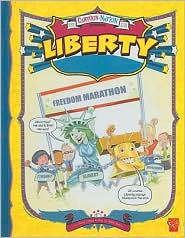
    37193691.JPG

    Cartoon Nation presents Liberty a book that contains tons of facts and information about the political philosophy concept of liberty. Since liberty identifies people’s rights and the ability to act according to one’s own will this book is a good one to use during instruction about civics. The book covers many facets of liberty including its origin in the United States, what it has meant throughout history (specifically focusing on liberty in the United States). There are several chapters with discussions of the development of our government’s understanding of liberty and information about other countries who lack a sense of liberty and the implications these countries and their people face as a result of severe government control (examples presented: Darfur, Sri Lanka, and China). The book concludes with a great section about what America would be like without liberty and that liberty should never be taken for granted. The book encourages the reader as citizens of the United States to make wise and good decisions and act appropriately as thanks to those who fought for our freedom and that acting within reason is an important way of ensuring that as we grow we will continue to be able to make decisions for ourselves.

    The book is written by Terry Collins and illustrated by Brian Bascle.

    Curriculum Connections

    This book can be used in the classroom during talk about citizenship, liberty, freedom, right, civics, or many other topics discussed in elementary social studies instruction. The book could satisfy many VA SOLs but I think this book would be best for grades 3-5 and I felt that is best aligned with VA SOL 3.10 and 3.12 for civics instruction. The book’s content covers all of these strands and many more additional points about liberty and American goverment matters.

    The student will recognize why government is necessary in the classroom, school, and community by
    a)    explaining the purpose of rules and laws;
    b)    explaining that the basic purposes of government are to make laws, carry out laws, and decide if laws have been broken;
    c)    explaining that government protects the rights and property of individuals.

    3.12    The student will recognize that Americans are a people of diverse ethnic origins, customs, and traditions, who are united by the basic principles of a republican form of government and respect for individual rights and freedoms.

    Additional Resources

    Great blog for kids all about liberty !

    Excellent kid-friendly interactive website about Liberty Kids!

    Awesome website published by the White House that has everything to do with being young citizens of the United States of America!

    General Information

    Book:  Liberty

    Author:  Terry Collins

    Illustrator:  Brian Bascle

    Publisher:  Capstone Press

    Publication Date:  2009

    Pages:  32

    Grade Range:  Grades 3-5

    ISBN:  978-1-4296-2340-7

  • Teaching Geography with Children’s Literature: What The World Eats

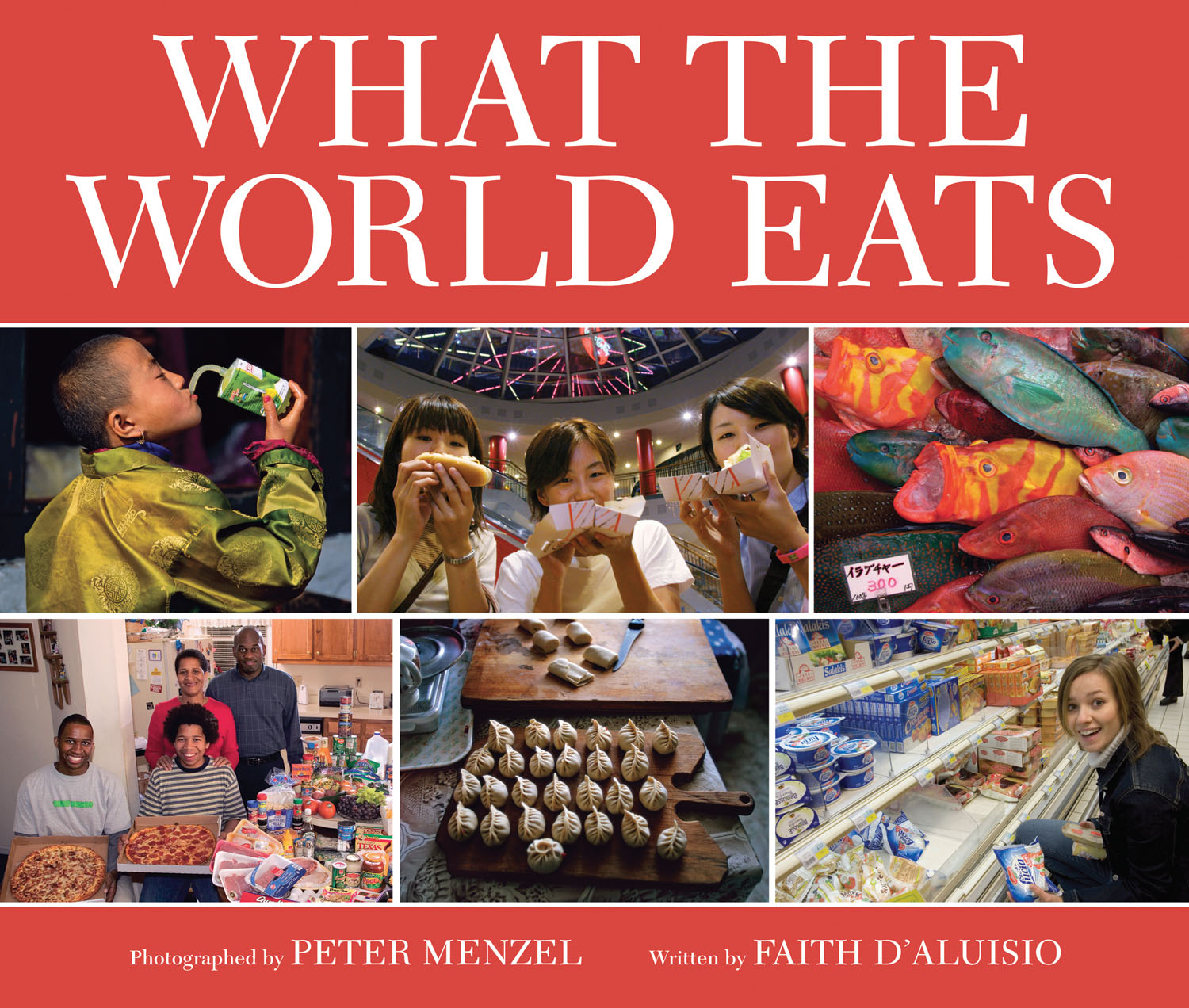
    whattheworldeats.jpg

     Introduction and Summary

    What The World Eats is a very informative factual book written by Faith D’Aluisio. The book provides a snapshot of what people around the world eat. It is a very enlightening book that really engages the reader and would be a wonderful tool to get students thinking. The book includes many maps including a world map which indicates all the countries profiled in the book and then smaller maps for each country that is profiled. The book provides facts about each of the locations and also stats about that particular area’s population and demogrpahic information. A native family is profiled for each country that is profiled and excellent, compelling photographsby Peter Menzel adorn each page. The profile includes information about the country, what the family eats, how they get their food, how much they spend on food, etc.

    Curriculum Connections

    This book would be great to use in a unit when students are learning about other countries and cultures. Because the book profiles so many different families in different countries studnets can ot only learn about other countries but also the people who inhabit those countries and get a look at their culture. This book could also be used to compare and contrast the United States of America and the American lifestyle with those of other countries, especially developing nations.

    In Virginia, this book would be a great resource to use with Virginia SOL standards WG 1 (e) and WG 4.

    Additional Resources

     1. The book includes recipes that each profile family selected to share with the readers. Teachers could select a few of these recipes and bring the dishes into school to share with the class.

     2. A great website providing lesson plans and activities for using food to dicuss cultures and countries.

    3.  This website provides an interactive World map that students can use to explore more about different countries.

    4. This is the website that accompanies the book!

    General Information

    Book: What The World Eats

    Author: Faith D’Aluisio

    Photographer: Peter Menzel

    Publisher: Tricycle Press

    Publication Date: 2008

    Pages: 160

    Grade Range: 5-8

    ISBN: 1582462461

  • Teaching Life Science with Children’s Literature: Forest Bright, Forest Night

    foest.jpg

    Jennifer Wards book, Forest Bright, Forest Night is an excellent resource to use when teaching life science to elementary age children.  The book uses a fun format with rhythmic text and gorgeous detailed illustrations by Jamichael Henterly. The illustrations will certainly capture the attention of children and adults alike!  Additionally,  Henterly cleverly “hid” animals throughout the pages which will also keep children entertained as they try to find these animals  while they read this book.

    Forest Bright, Forest Night covers all the activity that occurs in the forest from daybreak to nightfall which is wonderful for children who are learning about nocturnal and diurnal animals and also habitats and ecosystems in general. The book is like two books in one because Forest Bright focuses only on the animals that are awake during the day and each page covers different animals and how they spend their time. The stories of each animal are written with fun silly rhymes and are accompanied by the vivid colorful illustrations. Upon flipping the book over to Forest Night, the pages take on a darker appearance as they describe the many animals who are only active at night. This book does a nice job of showing that even when we are tucked away in our beds sleeping soundly, the forest never sleeps because certain animals only come out at night as opposed to those who are only out and about during the day.

    Curriculum Connections: 

    This book would be ideal for the lower elementary grades and would be a great reading resource for children who are learning about ecosystems and animals who share habitats. The book covers the forest habitat and the animals who call the forest home both during the day and at night, which is great for children who are learning about the differences between nocturnal and diurnal animals. This book satisfies several Virginia SOLs including VA SOL 2. 5 (a) & (b) and 2.8 (c). These  standards cover information ranging from how organisms are interrelated to how habitats change over time to the fact that plants provide homes and food for many different types of animals.

    Additional Resources:

    1) Excellent lesson plans to accompany Forest Bright, Forest Night.

    2)  Numerous printable coloring pages including many forest animals.

    3) USDA website with numerous forest related activities for children.

    4) Check out the U.S. National Park Service website for information about forest parks you can visit on field trips!

    General Information:

    Book: Forest Bright, Forest Night

    Author: Jennifer Ward

    Illustrator: Jamichael Henterly

    Publisher: Dawn Publications

    Publication Date: 2005

    Pages: 32 pages

    Grade Range: K-2nd

    ISBN: 1584690895

  • Teaching Earth Science With Children’s Literature: Rocks and Minerals

    http://www.cas.muohio.edu/scienceforohio/Rocks/images/EyewitnessRocks.jpg

    Rocks & Minerals from the Eyewitness series and written by Chris Pellant and R. Symes is a very informative and detail oriented guide book covering all aspects of rocks, crystals, gems, stones, and minerals. The book is filled with excellent graphics, photographs, and diagrams.  This book starts out with a great page on the Earth in general and how Earth was formed. The later chapters are broken down into the definition of rocks & minerals, how they are formed, and different types of rocks & minerals. The format of the book allows the reader to read as little or as much as they would like about rocks as the reader does not have to read the book cover to cover to gather an adequate knowledge of Earth Science topics. This book would be an excellent read for the inquisitive mind and would be a great addition to a reading corner or shelf.

    Curriculum Connections
    Rocks & Minerals is a great book to use to discuss Earth and its composition of different types of rocks. This book bares correlations to several Virginia SOLs including: VA Science SOL 4.8 which requires that the student will investigate and understand important Virginia natural resources, including minerals, rocks, ores, and energy sources. VA science SOL 5.7  which requires that the student will investigate and understand how the Earth’s surface is constantly changing. Key concepts include of this strand include the rock cycle including identification of rock types, Earth history and fossil evidence, the basic structure of the Earth’s interior, plate tectonics (earthquakes and volcanoes), and weathering and erosion.

    Additional Resources

    Fun and yummy activity to do in  correlation to a lesson on rocks!
    Additional kid friendly website with extra informative information.
    Earth’s dramatic creation lesson plan! Great resource for teaching on rocks & minerals and the creation of Earth!

    Book: Eyewitness Books: Rocks & Minerals
    Author: Chris Pellant & R. Symes
    Illustrator: Photographs
    Publisher: Dorling Kindersley
    Publication Date:
    2000
    Pages: 64 pages
    Grade Range: 3-5
    ISBN-10:
    0 394-89621-1

  • Teaching Physical Science With Children’s Literature: Force, Of Course

    Force, Of Course

    Author: Mary Leontovich

    Illustrator: James Cloutier

    Force, Of Course written by M. Leontovich is a physical science book for students with a focus on force & gravity.  The book begins with an introduction about what force is and the different types of force that exist. The book is then broken down into chapters, from Chapter 1-Chapter 10. Each chapter explains a different kind of force then has a few simple experiments that can be conducted as an example of that type of force. The book is written in a kid friendly manner but is also written from a scientific standpoint. The book is very comprehensive and includes safety tips and also a section on how to conduct experiments and what to do if they do not work. The illustrations that accompany the text are fun and also include little cartoon characters, which I think would help to keep the less then impressed by science students engaged in the reading.

    Curriculum Connections
    Force, Of Course is a great resource for children who are interested in learning (or required to learn about) more about the force element within the study of physical science. The fact that the book is filled with factual information but more importantly engaging and hands-on experiments makes it a great resource for a teacher to use with his/her students. Another neat facet of this book is the text bubbles/boxes throughout the pages that have the caption “Investigate Some More” that allow the reader to further investigate the different aspects of force through miniature experiments. A lot of the activities within these little boxes/bubbles are super easy and could easily be done at home. A fun idea to incorporate this book into the curriculum and also have the students learn more might be to assign the students one of the pages with a bubble on it and then have the children go home and conduct this activity/experiment. You could have the students record their findings in a science journal and then report them to the class. This would be a good way to have children conduct some basic science experiments on their own but also allow them to share their knowledge with their families and peers.

    I think this book would be ideal for grades 1-3 depending on the depth of material you (as a teacher) expect to cover. The content of this book best satisfies VA SOL 1.2    The student will investigate and understand that moving objects exhibit different kinds of motion, (a), (b), and (c).

    Additional Resources

    1) This handout would be ideal for a take home activity (homework) or something you could do with a class as a whole

    2) Super fun interactive website that is great for kids to explore to learn more about force

    3) This website is a great resource for finding more information along with activities and experiments having to do with force & motion. Would be great for parents, teachers, and children alike!

    Book: Force, Of Course
    Author:
    Mary Leontovich
    Illustrator: James Cloutier
    Publisher: Good Year Books
    Publication Date: 1995
    Pages: 42 pages
    Grade Range: 1-3
    ISBN:0-673-36213-2