
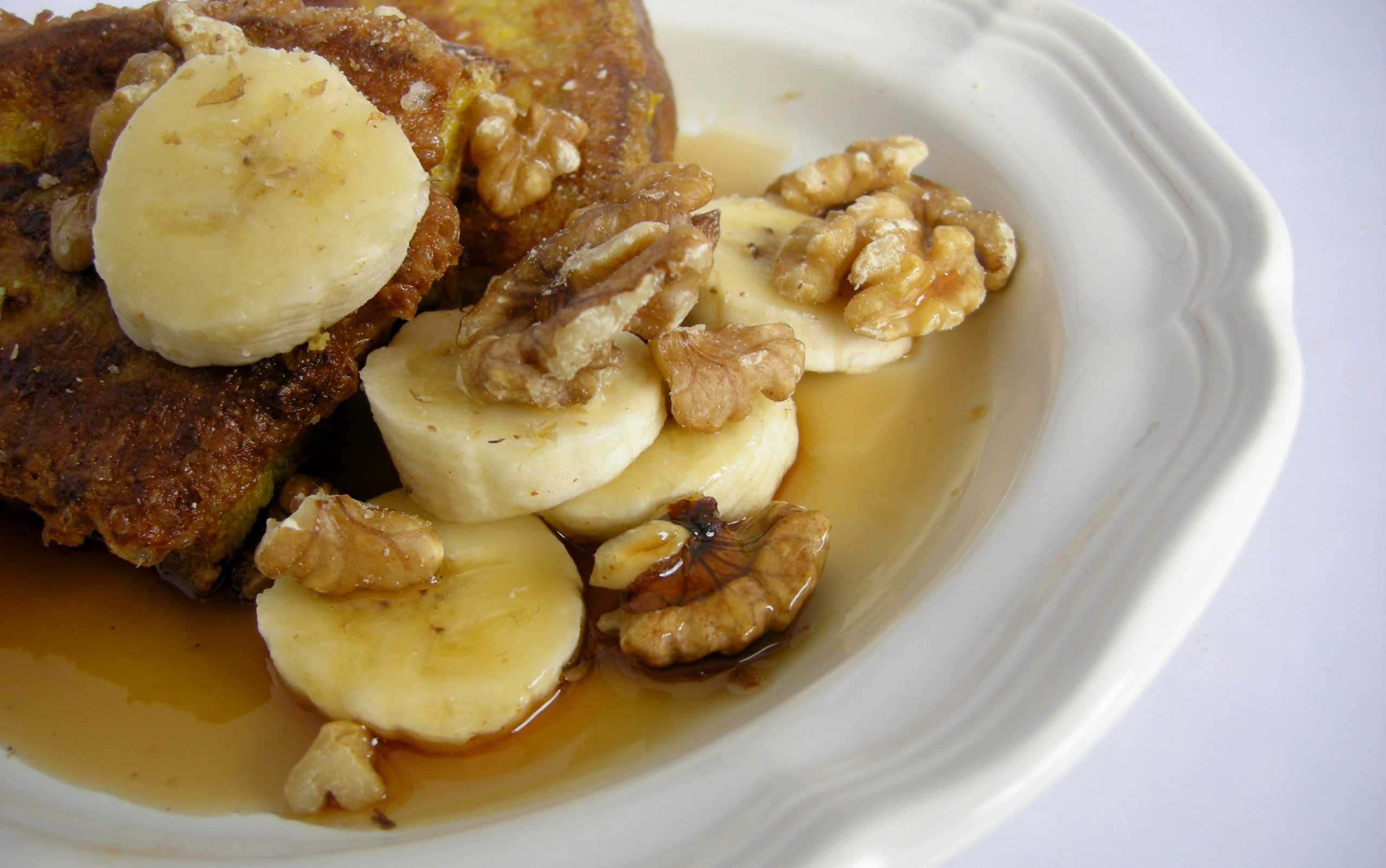
French toast enjoys a wide and varied history, and food history enthusiasts will find that the combination of beaten egg, day-old bread and good seasonings pop up in the traditional cooking of peoples across the globe, from Germany to Brazil, and is first referenced in Apicius – a collection of Roman recipes first recorded in the late 4th century. And why not? It’s a perfect use for day-old bread, where its very staleness equates to an improved result.
For us, sourdough French Toast is a compromise foods in many ways. We don’t often consume sweeteners, natural or otherwise; after all, sweeteners were rarely used among populations thriving on their native, traditional diets outside of celebratory ritual1, but, from time to time, we indulge – and this recipe is no exception. It’s wickedly indulgent – combining the richness of eggs and cream with the sweetness of maple syrup; moreover it’s a good source of manganese2 – a nutrient that plays a critical role in many biological functions but is particularly important in bone formation, healing and collagen formation. Maple syrup, particularly the darker and cloudier syrups, offer some antioxidant activity3. That said, it is still a concentrated sweetener, natural as it may be, and should be used with a wise and thrifty hand.
Sourdough French Toast: The Recipe(…)
Click here to read the rest of Sourdough French Toast with Maple and Cinnamon (389 words)
Wondering where your full feed went? Click here to learn why The Nourished Kitchenmoved to summary feeds. Don’t forget to find Nourished Kitchen on Facebook, Twitter, Flickr and
© Jenny for The Nourished Kitchen, 2010. |
Permalink |
Post tags: