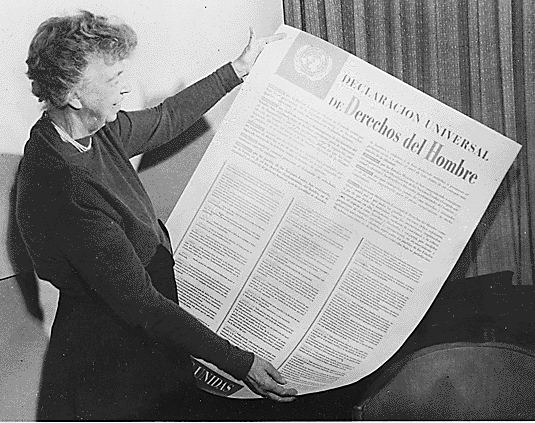
Today is International Human Rights Day, marking the 61st anniversary of the day the United Nations adopted the the Universal Declaration of Human Rights. The UDHR, while nonbinding, sets an aspirational standard for the way we treat one another around the world. The UDHR is the most translated document in the world, but it isn’t universally followed.
While there are many victories from this year and this decade to celebrate, there is plenty of work left to do. Here are five goals we can set to make sure human rights around the world gain more respect over the year ahead.
1. A reduction in the U.S. prison population — The long sentences and mandatory minimums we’ve relied on for decades in the United States are a human rights violation. They’re compounded by still more abuses of human rights — overcrowded prisons, solitary confinement, private prisons. I’ve written extensively here about the wake-up call our enormous prison system has received in this recession. There are better ways, and states are showing promising signs through the end of mandatory minimums and the success of alternatives to incarceration. From Massachusetts to Michigan to California to Hawaii, we saw progress in 2009. Next year must see a continued commitment to reducing our prison population and addressing the rights of prisoners, and criminal justice advocates need to keep pressure on to make it happen.
2. The American death penalty continues its decline in 2010 — This year saw the courageous abolition of the death penalty in New Mexico. Several states will be considering ending the practice of capital punishment in the year ahead, and the continued erosion of the death penalty map is a surefire way to bring about the end of executions in the US.
3. Japan abolishes the death penalty — Although Japan’s death row population has skyrocketed in recent years and the mental health and treatment of prisoners is extremely questionable, capital punishment in Japan could be on the way out. The appointment in September of an outspoken death penalty opponent as the country’s new Justice Minister has many hoping for a moratorium or outright abolition. This year saw Togo end the death penalty and Russia coming extremely close to abolition. Could Japan be next in 2010?
4. China embraces human rights — This is a bit of a longshot. China has thousands of people in secret prisons, it has admitted to harvesting organs from executed prisoners. Yesterday, Chinese officials said they intend to seek a 15-year sentence for Liu Xiaobo, an outspoken critic charged with subversion. But China has made big promises for 2010. By the end of the year, the country says it will end torture, guarantee fair trials, strictly control executions and provide open access to prisons to journalists. Will it happen?
5. Uganda rejects the death penalty for LGBT people — I wrote yesterday about the bill pending in Uganda to execute LGBT people with HIV and to throw thousands more in prison for life, simply for being gay (or even renting an apartment to an LGBT person). This is an atrocity and it must be stopped. The international community should immediately pressure Uganda to reject this measure, or human rights in the country will suffer a severe blow.
I focused on criminal justice related issues here, but other human rights must also be addressed in 2010.
Shannon Moriarty wrote Monday on the End Homelessness blog that the lack of shelter should be treated as a human rights violation. The fight for LGBT equal rights — in the US and abroad — had a rocky 2009, but the year ahead could promise huge strides if we commit to working for them. Delegates in Copenhagen as we speak are working for the most basic of global human rights – the water, the air and the land.
The year ahead will see advocates continue to seek rights in Darfur, in Iran, in Afghanistan and Iraq, in China, in Honduras and in the U.S. I could go on and on, there are of course too many crises and human rights issues to name. Many readers here work in these countless specialties doing important work — the dedication to causes by this site’s community is truly impressive.
But we can all do more in 2010. If you have one spare hour next year, use it to advance human rights in any way you choose.
Photo: Eleanor Roosevelt, one of the documents drafters, with the Spanish version.