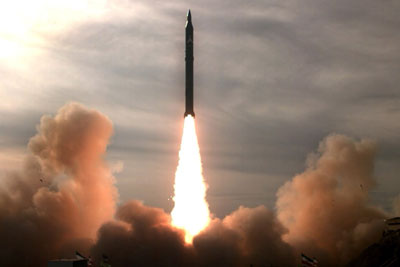
 </p>The Pentagons release of the <ahref="http://www.defense.gov/bmdr/BMDR%20as%20of%2026JAN10%200630_for%20web.pdf">Bal listic Missile Defense Review confirmed that North Korea could be able to deploy a nuclear-tipped ballistic missile capable of striking the United States within the next decade.
<ahref="http://www.washingtontimes.com/news/2010/feb/04/nuclear-missile-threats-to-us-mount//print/">The Washington Times reports that the review expressed serious concern over North Koreas two underground tests and its attempt to develop a long-range missile.
The Pentagons review also highlighted U.S. intelligences concerns about the Iranian nuclear program and their pursuit of long-range ballistic missiles. The report comes a day after Iran announced that it had launched a rocket into space, calling attention to the regimes serious efforts to gain this dangerous technology.<spanid="more-25894"></span>
The real concern is over how the United States can protect against such threats and ensure a credible deterrent to promote regional stability in the Middle East and East Asia. Secretary of Defense Robert Gates has requested $8.4 billion dollars for the Missile Defense Agency. The internal structure of this budget will serve to shift the U.S. missile defense posture away from defending against long-range missile attacks and toward countering short- and medium-range missiles. This plan is further outlined in the Ballistic Missile Defense Review Report.
Despite Irans nuclear ambitions and the intelligence estimates that North Korea could reach the U.S. with a missile within the decade, the Pentagon plan to deploy advanced variants of the SM-3 missiles will have some capability to knock out long-range missile warheads and will not be ready until 2020.
Regarding the canceled deployment of interceptors in Easter Europe, the Heritage Foundations Baker Spring <ahref="http://www.heritage.org/Research/BallisticMissileDefense/wm2624.cfm">writes, The plan sets up a false choice between long- and short-range defenses in terms of sequencing, when the U.S. needs to field defenses against both short-range and longer-range missiles immediately.