Author: Heritage

  • Morning Bell: Maintaining Our Dominant Military

    On 04.16.10 05:24 AM posted by Conn Carroll

    At the close of this week’s nuclear summit, President Barack Obama told a press conference: “Whether we like it or not, we remain a dominant military superpower, and when conflicts break out, one way or another we get pulled into them.”

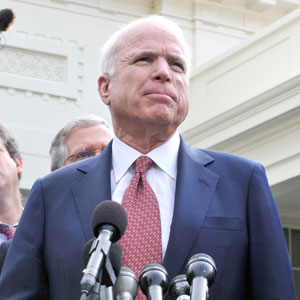
    Yesterday, Sen. John McCain (R-AZ) responded to these comments, calling President Obama’s remark a “direct contradiction to everything America believes in.” McCain went on to tell Fox News:

    That’s one of the more incredible statements I’ve ever heard a president of the United States make in modern times. We are the dominant superpower, and we’re the greatest force for good in the history of this country, and I thank God every day that we are a dominant superpower.

    Sensing trouble, the White House quickly set out to spin the President’s words with deputy national security adviser for strategic communications Ben Rhodes telling The Daily Caller: “He was saying we are the global superpower. Like it or not that means that we are going to have to play a role.” But notice what word is conspicuously absent from Rhodes recasting of the President’s remarks … “military.”

    Nobody doubts that President Obama wants the United States to play a leadership role on the world stage. You don’t get Nobel Peace Prizes for being an isolationist. But what is very much in doubt is President Obama’s commitment to maintaining our nation’s role as the world’s dominant military superpower.

    Assuming we will remain a dominant military power under this President is a bad assumption. Since becoming Commander in Chief, President Obama has ended production of the Air Force’s top fighter, the F-22; canceled missile defense installations in central Europe; cut the Army’s Future Combat System; made large cuts to the missile defense program; and recently announced an almost 20% cut in the dedicated forces they could allocate to respond to a weapons of mass destruction attack on U.S. soil.

    We are not burdened with military power—we have it for a reason. The Constitution calls for the federal government to “provide for the common defense.” The purpose of American power is to protect Americans – not act as the world’s policeman.

    If the President does not want to get dragged into conflict he should not pursue policies that increase the likelihood of war. His New START agreement signed last week with Russia not only clearly links our missile defense shield with Russian missile reduction, but it also limits our own conventional weapons capabilities as well. Obama’s New START will make the United States more vulnerable.

    You can do something to help stop Obama’s anti-military agenda. Today at 10 AM* Heritage Action for America will be hosting a live-chat to discuss the security implications of the New START and how you can prevent its ratification. Go to Heritage Action for America for more information today.

    Quick Hits:

    http://blog.heritage.org/2010/04/16/…nant-military/

  • The Obama Education Agenda Takes Shape

    On 04.16.10 05:26 AM posted by Jennifer Marshall

    The Obama Administration’s signature K-12 education program, Race to the Top, has gotten a lot of press in the last couple weeks with the announcement of first-round winners Tennessee and Delaware. But for all the hullabaloo and homework it’s created for states, Race to the Top represents only a small part of the overall K-12 education budget ($4.5 billion compared to $46.2 billion in 2010, not to mention $80 billion overall in K-12 funding from the 2009 stimulus bill) and functions outside the existent federal policy apparatus—essentially as the Secretary’s slush fund.

    Now the Obama administration’s plans for the legislative overhaul of its predecessor’s No Child Left Behind (NCLB) are emerging. The Department of Education recently released “A Blueprint for Reform.” As with Race to the Top, the blueprint has been couched in reform-minded terms–flexibility rather than compliance, turning around failing schools. But just as Race to the Top seems to let unions set the high-water mark for state reforms, the blueprint’s familiar liberal refrains raise questions about how far the Obama administration’s ideas will actually depart from the status quo.

    Spread the wealth goes to school: The blueprint talks quite a bit about “resource equity” among schools, which sounds a lot like liberals’ perennial goal of equalizing funding among schools. It even calls for the “equitable distribution” of effective teachers and principals:

    Over time, districts will be required to ensure that their high-poverty schools receive state and local funding levels (for personnel and relevant non-personnel expenditures) comparable to those received by their low-poverty schools.* … States will be asked to measure and report on resource disparities and develop a plan to tackle them.

    States will also be required to develop meaningful plans to ensure the equitable distribution of teachers and principals that receive at least an ‘effective’ rating.

    The trouble is we know that increased spending doesn’t equal increased achievement. Since 1989, federal education spending has tripled (in inflation-adjusted dollars). Yet education results have remained fairly flat over that time. Reading scores from the National Assessment of Educational Progress (NAEP) released last month once again showed little improvement despite massive education spending increases under both Presidents Bush and Obama.

    New push for national standards: The blueprint would make funding to states contingent on adoption of common standards, currently under design by the National Governors Association and the Council of Chief State School Officers. This would breach yet another wall of federalism, involving the federal government in curriculum issues.

    Beginning in 2015, formula funds will be available only to states that are implementing assessments based on college- and career-ready standards that are common to a significant number of states.

    Now comes word that the administration is also offering $350 million to a consortium of states to develop an assessment system tracking student mastery of common college- and career-ready standards.

    Washington should steer clear of the standards and testing business and instead set policies that lead to greater transparency for parents and other taxpayers about the information already delivered by state standards and testing along with the National Assessment of Educational Progress (NAEP). Parents and other taxpayers should not give up one of their most powerful tools for control of education to the federal government.

    Retreats on parental options: The Obama plan backs away from requirements that parents be allowed to choose other public schools or private tutoring when schools repeatedly failed. Empowering parents was a key theme of the Bush administration’s NCLB. The Obama draft does more to empower bureaucrats.

    As one example, the Obama administration wants to ramp up activities of the 600-employee Office of Civil Rights (OCR) at the Department of Education to address racial disparities in areas like disciplinary action and Advanced Placement courses. Last month Secretary Arne Duncan announced:

    In coming weeks and months, we will be issuing a series of guidance letters to school districts and postsecondary institutions that will address issues of fairness and equity. We will be announcing a number of compliance reviews to ensure that all students have access to educational opportunities…

    Educational opportunity should be a priority and the achievement gap is a problem. But rather than pursuing equalized inputs like funding (which hasn’t proven successful), why not empower parents of all races and income levels to choose a safe and effective school? The Obama administration could, for example, champion options like the D.C. Opportunity Scholarship Program. Instead, it’s remained silent as the D. C. scholarship students’ futures hang in the balance.

    Shows the problems with federal overreach in education: The federal government supplies about 10 percent of the funding that goes to local schools but is calling far more than its share of the policy shots. The Bush Administration’s No Child Left Behind (NCLB) was already a significant federal overreach. Now the Obama Administration is going to overhaul it and change the measuring stick. Rather than the NCLB requirement that all students show proficiency by 2014, the new requirement would be high school graduates meeting college and career-readiness standards by 2020. (Note that both plans push the due date outside their authoring administration’s tenure.)

    Plus, each new plan comes with a significant compliance burden: According to the Office of Management and Budget, NCLB has increased the annual paperwork burden on state and local communities by 7 million hours, or $140 million. The new blueprint would leave states, districts, and schools trying to catch up with this new plan for at least the next half decade—until a new president comes along with the next remake.

    100,000 American public schools shouldn’t become a political football. Instead, we need federal policies that allow those closest to students to make the decisions that work for them. Florida, for example, has implemented a set of reforms and Hispanic students are making significant strides—matching or outscoring the average of all students in 31 states on the recent NAEP results.

    At the federal level, the A-PLUS alternative to NCLB would allow states flexibility to put funding where local needs most demand it while maintaining true accountability through state-level testing and information reporting to parents to ensure transparency.

    http://blog.heritage.org/2010/04/16/…a-takes-shape/

  • Video of the Week: Three Reasons Why Public Sector Unions are Killing the Economy

    On 04.16.10 07:00 AM posted by Todd Thurman

    The folks over at Reason.tv have produced a great video explaining how public sector unions are stifling economic recovery. It notes that unionized workers already made more than their private sector counterparts before the recession and that the pay gap has only grown since then.

    Government jobs don’t create wealth because all the money they spend comes from tax dollars that are taken from another part of the economy. Government union jobs are not a net gain like a private sector jobs are.

    With the Obama Administration hiring more and more government workers and making it more and more difficult for private sector companies to survive, it could be a long time before our nation’s unemployment rate returns to normal

    California is an example of what not to do. Unions (because of the laws they worked to pass) have put California on the edge of bankruptcy and turned their bonds into junk bonds. The LA Times reported:

    Institutions such as mutual funds and insurance companies are more likely than individuals to focus on the state’s low credit rating, a byproduct of Sacramento’s ongoing budget woes. Standard & Poor’s and Moody’s Investors Service both give California the lowest rating of any of the 50 states — A and A2, respectively.

    This is due to the fact that public sector unions have forced California lawmakers to spend a certain amount of the budget on certain things (as the video points out, 40% of the budget just for education) which caused a budget crisis that lead the state to consider selling its landmarks.

    http://blog.heritage.org/2010/04/16/…g-the-economy/

  • Pencils Ready! Race to the Test Shows Federal Overreach in State Assessments

    On 04.16.10 08:00 AM posted by Sarah Torre

    As Race to the Top – the Obama administration’s $4.35 billion grant program designed to spur education reform – becomes a summer-long marathon for the remaining states that did not win grants in the first round of competition, the U.S. Department of Education has added an additional contest to the education grant Olympics. The Race to the Top Assessment (RTA) will provide $350 million to a consortium of states to develop an assessment system tracking student mastery of common college- and career-ready standards. While the prospect of additional funds might sound enticing to financially-strapped states, the federal strings attached to Race to the Top assessments could pull state and local education decisions out of communities and into the hands of Washington bureaucrats.

    Incentivizing the adoption of certain standards, even if not directly written by a federal entity, allows the federal government unprecedented sway over how states and local governments should choose curriculum guidelines. Picking up the tab for an accompanying assessment system of federally-incentivized standards only further validates a federal hand in local education decisions.

    The RTA application suggests that only one or two consortia, consisting of at least 15 states dedicated to adopting the Common Core, will win the coveted grant. The grant application also specifies that member states are legally bound to uphold and implement the assessment system and rules determined by their consortium and funded by the U.S. Department of Education. This will provide the federal government with one or two centralized bargaining partners, thereby increasing the possibility of federal control over education decisions, including definitions of curriculum standards, traditionally left to state and local entities.

    Pursuing this path would mean parents and taxpayers would give up one of their most powerful tools for control of education to the federal government. Rather than heading down this road, Washington should take the grant competition opportunity to promote reforms that bring innovation and school choice to local communities.

    In the perennial race to serve American families with a quality education, state and local governments don’t need federal red tape to further bind their hands. Given the freedom to respond to community needs and attempt innovative education reforms like voucher programs and virtual schooling, states and local governments can effectively provide educational quality and opportunity to parents and students.

    http://blog.heritage.org/2010/04/16/…e-assessments/

  • The Fog of Climate ?Science?

    On 04.16.10 09:00 AM posted by Allie Winegar Duzett

    In 2009, environmentalists were sure global warming was the reason California’s Bay Area fog was increasing.* Now they’re saying global warming is making the fog go away—indicating that the science may not be as “settled” as some seem to think.

    Gateway Pundit
    noted that in 2009, The San Francisco Chronicle claimed that “The Bay Area just had its foggiest May in 50 years. And thanks to global warming, it’s about to get even foggier.”* Yet, in 2010, The Telegraph has asserted that “the sight of Golden Gate Bridge towering above the fog will become increasing [sic] rare as climate change warms San Francisco bay.”

    The first article was written in May of 2009; the second, February of 2010.* When scientists start trying to explain how global warming is affecting our everyday life, their findings conflict drastically.* Both papers and claims are under a year old.* Which one do we trust?

    The issue isn’t whether or not global warming is happening: the issue is how much scientists really can know about how new climates will effect us. There are far more variables involved with climate change than any scientist in today’s world could hope to understand. Given the constantly evolving stances of climate scientists, we ought to be more careful when it comes to what we believe about climate change.

    As Heritage expert Dr. James Carafano explained in his 2009 testimony before the Environment and Public Works Committee, the global warming theory suffers the “folly of simplicity,” pointing out that in Jared Diamond’s study Collapse: How Societies Choose to Fail or Succeed, “Diamond lists a daunting 12 factors that historically contributed to the collapse of a society–and these are only the factors directly controlled by humans. It is worth noting,” Dr. Carafano went on, “that Diamond is able to detail how this myriad of forces and choices interacted with one another only through the hindsight gained through hundreds of years of historical and archeological research.”

    In other words, the complexity of human-environment causal relationships is such that it typically takes many years—centuries, even—to fully understand what causes what when it comes to humans interacting with the environment:

    History is in fact littered with case studies that suggest straight-line mapping of human-environment interaction is problematic,” Dr. Carafano testified.* “Anticipating with certainty how climate change will affect human progress is a march of folly.

    His points are only validated by the assumptions regarding the Bay Area’s fog today.* We cannot anticipate anything regarding climate change with certainty—and the “new” research is proving it.

    Allie Winegar Duzett currently is a member of the Young Leaders Program at the Heritage Foundation. For more information on interning at Heritage, please visit: http://www.heritage.org/About/Intern…rnship-Program

    http://blog.heritage.org/2010/04/16/…imate-science/

  • Tax Day Coincidence?

    On 04.15.10 02:00 PM posted by Conn Carroll

    The Associated Press reported last week: “Tax Day is a dreaded deadline for millions, but for nearly half of U.S. households it’s simply somebody else’s problem. About 47 percent will pay no federal income taxes at all for 2009. About 47 percent will pay no federal income taxes at all for 2009.”

    A new Gallup poll out this week finds that 45% of Americans believe “the amount of federal income tax you have to pay” are “about right.”

    47% of Americans pay no taxes and 45% believe what they pay is about right. What are the odds that these are the same Americans? No one ever said fundamental tax reform was going to be easy.

    http://blog.heritage.org/2010/04/15/…y-coincidence/

  • McCain Throws Down the VAT Gauntlet

    On 04.15.10 02:19 PM posted by J.D. Foster

    The capstone of President Obama’s the “Glut the Beast” strategy is to maneuver the country into accepting a massive new Value-Added Tax (VAT).* This as yet unannounced policy has been lurking in dark policy corners for months, with no word from the President.* Senator John McCain (R-AZ) has decided not to wait on Obama’s pleasure, and so has offered an amendment in the form of a Sense of the Senate Resolution to the bill pending on the floor of the Senate to extend Unemployment Insurance benefits.* The McCain resolution reads simply:

    It is the sense of the Senate that the Value Added Tax increase will cripple families on fixed income and only further push back America’s economic recovery.

    When they called the roll on the McCain amendment, 84 Senators stood with America’s families and Senator McCain against the VAT, while 13 made clear their intentions to soak the American taxpayer with a devastating new tax.** This vote was strikingly reminiscent of the 1995 Senate vote that sent the Kyoto Protocol on global warming to its well-deserved grave.

    The “Glut the Beast” strategy is beguilingly simple.* It starts with hiking federal spending as fast as possible.* On this, Obama and his allies have been notably successful.

    This federal spending surge has turned the unsustainable long-term fiscal picture about which so many have warned into a short-term fiscal disaster to which the President can speak gravely as though his policies were not the major cause.* In the face of this fiscal disaster he can even create a Debt Commission to buy time until he is ready to make his move.

    The next step is critical.* The President and his many allies must establish the spending is nothing new really, that it is inevitable, vital, an Act of God, anything but the consequence of their policies and strategy.** They thereby hope to create the belief that reversing the spending surge is impractical substantively and politically.* As Obama’s huge deficits must be tamed, and if spending cannot be cut as he implies, then taxes must increase.* And there comes the VAT to save the day.

    Enacting a VAT would be the crowning achievement as Obama and his congressional allies seek to recast the nation into a full state of dependency on Washington.* Nothing less is at stake.* If Americans have other ideas for the country’s future, then they need to challenge anyone running for office, anywhere in the country, to take a stand on the VAT just as John McCain’s colleagues did in the United State Senate.* As they do it will become apparent to all that the United States is not VAT country.

    http://blog.heritage.org/2010/04/15/…-vat-gauntlet/

  • New York Times Endorses Military Detention and Military Commissions, Sort Of

    On 04.15.10 11:00 AM posted by Cully Stimson

    </p>In today’s editorial titled “The K.S.M. Files,” the New York Times laments the good ‘ole days of 2009, when, in their words, “the United States was making progress toward cleaning up the mess President George W. Bush made with his detention policies. The Pentagon was working on closing the prison at Guantanamo Bay. The flawed military tribunals were improved, at least a bit. And the Justice Department announced that the accused mastermind of 9/11, Khalid Shaikh (sic) Mohammed, would be tried in federal court.”

    Setting nostalgia aside, and the fact that “messy” Bush detention policies have essentially been adopted by the Obama administration, and the fact that the Pentagon had been effectively working to close Guantanamo since 2006, it should not go unnoticed that the Times also hints at endorsing some the of the very policies they vehemently denounced during the Bush presidency.

    Devoted readers of only the Times could be excused for thinking that terrorists captured on the battlefield must be tried in federal court, or set free. The “try them or set them free” mantra, repeated zombie-like for eight years of the Bush administration, was the calling card for liberal papers like the Times.

    Fast forward to the Obama administration and today’s editorial, which states, “People captured in battle may, of course, be held as military prisoners.” My favorite part of that sentence is the “of course,” as if the notion of military detention is something that every reasonable person can agree on. It is, just not one the Times editorial page has embraced whole heartedly, until now. What changed?<spanid="more-31436"></span>

    And then there is the issue of military commissions, which the Times has consistently excoriated and denounced. According to the editorial, trying KSM in federal court is the right thing to do. It hasn’t happened, in their view, because of Republican “fear-mongering,” the administration’s blundering, and Democratic “not-in-my-backyardism.” If there was ever an example of how utterly tone deaf the elitist editors at the paper are to the will of the American people, this is it.

    After laying the blame regarding the KSM federal trial fiasco on Republicans (first), the administration, and Democrats, the Times then seems to suggest that a military commissions case against KSM is a viable option, stating, “Trying Mr. Mohammed in a military court is at least explainable by the attack on the Pentagon.”

    The use of the word “explainable” is, to say the least, perplexing. The Times has been against military commissions from day one, even after the rules were upgraded in the latter half of the Bush administration, and further modified in the Obama administration. This, despite the fact that the rules are fairer to terrorist defendants than the rules in the Hague’s international tribunals.

    So what gives? Is it possible that editors at the Times, ineluctably are coming to appreciate the actual nature of the conflict we’ve been in for eight years, and the fact that never in the history of our country have we given captured battle-field belligerents a federal trial, replete with American constitutional rights? Or, that someone on the editorial board actually read the actual rules of the military commissions, and came to the stark understanding that they are practical, constitutional, and comply with the Supreme Court’s ruling in Hamdan?

    Or, is it the fact that they want to provide aid and comfort to the very administration they endorsed?

    <ahref="http://corner.nationalreview.com/post/?q=NzQ0NTllZDZjNTNkYWU3NmRjM2ZjOWQxZTE0MzY3Y2I=">C ross-posted at <ahref="http://corner.nationalreview.com/">The Corner.

    http://blog.heritage.org/2010/04/15/…sions-sort-of/

  • Civil Society Does What Big Government Can’t

    On 04.15.10 11:30 AM posted by Ryan Messmore

    <ahref="http://blog.heritage.org/wp-content/uploads/SeekSocialJustice1002091.jpg"></p>Recovering drug addicts helped serve the meals at a recent conference in Naples, Fla., on addressing social breakdown. The men were participants in the Men’s Residence, a ministry of the Christian Care Center operated by <ahref="http://www.christiancarecenter.org/">First Baptist Church of Leesburg, Fla.
    Serving others proves to be an important part of how these men beat their addictions in a four-month program. When it comes to meeting serious needs, the difference is striking between First Baptist’s approach and that of <ahref="http://www.culture4freedom.com/economy-hits-home/ ">big government entitlement programs. In contrast to mere handouts, staff of the Men’s Residence help enrollees establish stable, drug-free lives by focusing on more than physical needs. They also address emotional and spiritual needs–which often drive such men to abuse alcohol and drugs in the first place.

    Those leading this ministry, as <ahref=" http://evangelicaloutpost.com/archives/2010/04/serving-the-needy-by-equipping-them-to-serve-others.html">I wrote in a guest commentary for Evangelical Outpost, understand that men are unlikely to kick their habits unless they can kick-start their own hearts.<spanid="more-31379"></span>

    Jay Walsh, director of the 30-bed Men’s Residence, points out it takes patience, mercy and tough love to help men overcome self-centered addictions and relate well with others. His program involves them in mentoring relationships, classes and Bible studies and assigns them daily in-house chores. The chores included serving meals at the church-sponsored conference I attended.

    The <ahref="http://www.heritage.org/Research/Reports/2008/08/The-Difference-One-Church-Can-Make">success of this comprehensive, relational approach is one reason The Heritage Foundation highlights First Baptist Church of Leesburg in a DVD-based study guide about how to address social breakdown. Called <ahref="http://www.seeksocialjustice.com/ ">“Seek Social Justice: Transforming Lives in Need,” the DVD, workbook and other resources show why families, churches, charities and other institutions of civil society are so powerful in meeting human need. They tend to be more creative, flexible, efficient and personally invested in others’ lives than government programs could ever be.

    And such one-to-one relationships can empower those at the end of their rope to step into perhaps the most transformational, fulfilling role there is: serving others.

    http://blog.heritage.org/2010/04/15/…can%e2%80%99t/

  • Side Effects: Get Ready to Wait for Your Health Care

    On 04.15.10 12:00 PM posted by Richard Sherwood

    <ahref="http://blog.heritage.org/tag/side-effects/"></p>Patience will be more than a virtue, under Obamacare.* It’ll be a necessity.* <ahref="http://abcnews.go.com/Health/HealthCare/health-care-bill-newly-insured-find-doctors/story?id=10211989">A recent article from ABC News outlines why Americans can expect longer and longer waits before they see a doctor.

    One reason is that there just won’t be enough doctors to get the job done.* ABC reports that 10 years from now, the United States will short 85,000 primary care and high-demand specialty physicians.* <ahref="http://abcnews.go.com/Health/HealthCare/health-care-bill-newly-insured-find-doctors/story?id=10211989&page=1">Says Dr. Kevin Pho, an internal medicine physician in New Hampshire, “I don’t think we have the primary care capacity to meet the influx of 35 million newly insured.”

    Expansion of health insurance coverage does not automatically translate into immediate access to care. When Massachusetts enacted its comprehensive statewide health reform in 2006, it dramatically reduced the number of uninsured and uncompensated care in Massachusetts hospitals, but the state was not ready to absorb the pent-up demand for primary care physicians. The result: *Since 2006, wait times have increased greatly.<spanid="more-31407"></span>

    ABC reports that patients wait, on average, 50 days to see a doctor in Boston.* That’s nearly double the next-longest wait time registered by a major American city—27 days in Philadelphia.

    Dr. Pho notes that some of his patients make the trek from Massachusetts to his New Hampshire office just to avoid the long waits in their home state.

    But Obamacare will make these problems worse. Why? Because the new law will add another federal layer of bureaucracy and its mind numbing rules and regulations to medical practice while reducing physician income. Not surprisingly, many physicians say they will<ahref="http://www.cnsnews.com/news/article/62812"> voluntarily leave the profession. The biggest change is the massive expansion of Medicaid. The Congressional Budget Office (CBO) reports that roughly half of the newly insured under Obamacare will be covered by Medicaid, a poorly performing welfare program. Medicaid pays physicians on average 56 percent of the payment they obtain under private insurance. Doctors anticipate more and more patients to be shifted onto Medicaid, even as physician reimbursements are lowered.* Some also fear Obamacare’s use of “comparative effectiveness research” will stifle medical innovation at the clinical level and pressure them to standardize medical treatments, rather than tailor them to the particular needs of each patient.

    Rather than rely on abysmal health care programs like Medicaid to expand health coverage, Congress could have relied on market-based approaches that let patients control their health spending and utilization, while forcing providers and plans to compete for their dollars. To learn more about this consumer-centered approach, <ahref="http://thf_media.s3.amazonaws.com/2008/pdf/bg2128.pdf">click here.

    http://blog.heritage.org/2010/04/15/…r-health-care/

  • Obama?s Troubling Nuclear Policies

    On 04.15.10 12:30 PM posted by Kim Holmes

    <ahref="http://blog.heritage.org/wp-content/uploads/START.jpg"></p>President Obama’s nuclear-weapons policy is finally taking shape. We now have the text of his “New START” treaty with Russia, the Nuclear Posture Review (NPR) and statements on fissile materials at the Nuclear Security Summit in Washington.

    But as the policy picture comes into focus, most of what we see is troubling.

    For starters, there is this irritating habit of wanting moral credit for wishful thinking. Mr. Obama has said his ultimate goal is “a world without nuclear weapons.” Nobody seriously believes this will happen, yet his administration solemnly links the treaty and the otherwise dour and serious NPR to this airy goal. With a wink and nod, they seem to think the masses (especially their supporters) will believe the hype, even though the experts know something very different.

    What the experts hope is that the new START treaty and the NPR will reduce the world’s reliance on nuclear weapons. But that laudable hope may be groundless, too.

    The administration says our greatest threats are Iran and terrorist acquisition of nuclear weapons — not Russia. Yet, the new treaty will do nothing to convince Iran or other rogue states and terrorists to follow our disarmament lead. Not only that, it increases the centrality of nuclear weapons in the U.S.-Russian strategic balance, playing right into Russia’s desire to be our “peer” competitor based largely on nuclear weapons.<spanid="more-31440"></span>

    The biggest problem with the new treaty is how lopsided it is in Russia’s favor. Because of financial constraints and outdated nuclear systems, Russias nuclear arsenal was already going down, especially its aging launchers and delivery systems. It would have likely been forced to make the reductions codified in this treaty whether or not the U.S. reduced its weapons.

    And yet if the treaty is ratified, we will have locked ourselves into reductions that cannot be changed. Were we ever to want to increase our nuclear arsenal — say, because China or some other country threatens us — doing so would put ourselves in violation of international law.

    The new START also will give better protection to Russians than Americans. Once it is fully in force, we have to cut 151 of our delivery vehicles and launchers, while Russia could actually add 134 and still be under the limit of 700. The only side that’s disarming on this score, then, will be the U.S.

    Yes, the Russians may have to cut 190 nuclear warheads; but even there, we are disadvantaged; we could have to cut 265 to get to the treaty’s limit of 1,550 (though warhead accounting rules for bombers make the actual numbers uncertain).

    This is not only unfair. It actually lessens Russia’s exposure to America’s nuclear weapons more than it reduces America’s exposure to Russia’s weapons.

    Who cares, you ask, since we know that our biggest threat is not from Russians, but from Iranians? Well, if that is so, then why are we making such a big deal of an arms agreement with the Russians as if the Cold War had never ended? Why are we constraining our nuclear options in other areas just to get this modest reduction from a country that the administration otherwise seems to believe is a “reset” strategic partner?

    On top of this, the START treaty includes language that Russia says it will use to limit our missile defenses. Nor will the treaty limit Russia’s huge arsenal of tactical nuclear weapons. So you can see how the goal of protecting Americans from real weapons — as opposed to the goal of reducing some vague global threat — gets short shrift.

    Perhaps the biggest long-term flaw in both this new treaty and the Nuclear Posture Review is that there is only an uncertain commitment to further nuclear modernization. Sens. John McCain and Jon Kyl called the Obama administration on this point in an April 8 statement, warning, “[W]e continue to believe it will be difficult for it [the new START treaty] to pass the Senate without the fully funded robust nuclear weapons modernization program required by section 1251 of the National Defense Authorization Act of 2010.”

    This concern is more than just about modernizing and testing new weapons to deter conflict. It’s about obeying the law. The president must submit a modernization plan when he sends the treaty to the Senate for consideration. We can judge then whether it meets the bill.

    It is certainly not a bad thing to reduce our reliance on nuclear weapons if we maintain the right force balance — with active missile defenses and the right conventional forces — and make a clear distinction between nations that favor liberty and those that favor aggression.

    It is simply wrong to blithely assert that just reducing nuclear weapons (especially when we are doing most of the cutting) is good for America and world peace.

    <ahref="http://www.washingtontimes.com/news/2010/apr/15/holmes-obamas-nuclear-policies-are-troubling/">Cross-posted at <ahref="http://www.washingtontimes.com/opinion/">The Washington Times op-ed page.

    http://blog.heritage.org/2010/04/15/…lear-policies/

  • Obamacare Taxes: Deep Impact

    On 04.15.10 01:00 PM posted by Vivek Rajasekhar

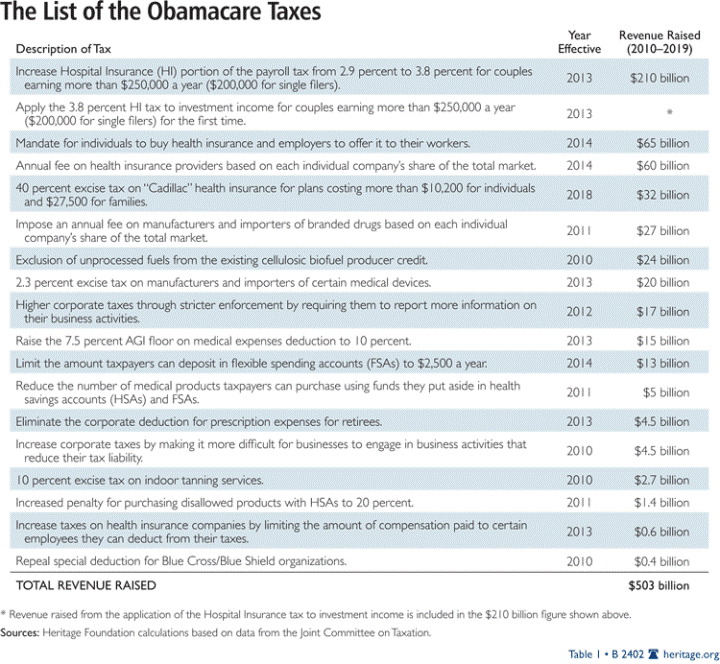
    During the 2008 presidential campaign, then-Senator Barack Obama pledged often and everywhere that Americans individuals making under $200,000 individually or families making under $250,000 would not see an increase in their taxes. However, by signing into law the Patient Protection and Affordable Care Act (PPACA) of 2010, President Barack Obama has officially turned his back on that promise. As the <ahref="http://www.heritage.org/Research/Reports/2010/04/Obamacare-Impact-on-Taxpayers">Heritage Foundation’s Senior Tax Policy Analyst Curtis Dubay points out, the impact of Obamacare on taxpayers will spread wide and cut deep. Overall, there are <ahref="http://www.heritage.org/Research/Reports/2010/04/%7E/media/Images/Reports/2010/b2402_table1_1/b2402_table1_2.ashx">18 new taxes slipped into this bill, raising $503 billion over a ten-year period to cement Democrats’ dubious claim of budget neutrality. Chief among these taxes are:

    • A 40 percent excise tax on health insurance plans
    • An increase in the Hospital Insurance (HI) portion of the payroll tax
    • Payroll taxes on investment
    • Mandates on individuals an businesses to purchase health insurance, enforced with penalties in the event of non-compliance

    In another move that smacks of politics as usual, Democrats have made sure these taxes and fees are not <ahref="http://www.heritage.org/Research/Reports/2010/04/%7E/media/Images/Reports/2010/b2402_chart1_1/b2402_chart1_2.ashx">implemented until after their re-election campaigns. Almost all of these provisions take effect after the 2010 midterm elections, and the vast majority will not occur until after the 2012 presidential campaign, insulating President Obama and Congressional Democrats from the resulting political pressure. <ahref="http://www.heritage.org/Research/Reports/2010/04/Obamacare-Impact-on-Taxpayers">The greatest increase occurs in 2013, when Obamacare tax revenues triple from $12 billion to $36 billion, ultimately increasing to $102 billion per year in 2019. See a fuller list below:<spanid="more-31424"></span>

    <ahref="http://blog.heritage.org/wp-content/uploads/ObamacareTaxes1.gif">

    Many of the new taxes will be targeted at medical device manufacturers, pharmaceutical companies, health insurance companies, and even <ahref="../2010/04/07/side-effects-new-tanning-tax-burns-business-owners">indoor tanning salons, all of which will be passed on to consumers in the form of higher prices.* Many large employers have already <ahref="http://online.wsj.com/article/SB10001424052748704100604575146002445136066.html?K EYWORDS=The+ObamaCare+Writedowns">gone public on how these new taxes will effect them, citing job losses, <ahref="../2010/04/07/side-effects-new-entitlement-compounds-debt-problems-of-existing-entitlement">decreases in offered benefits, or <ahref="../2010/03/30/side-effects-medical-devices-tax-will-costs-jobs">moving jobs overseas as the likely results. *Other provisions, such as restricting how much Americans can set aside in their health savings accounts and flexible savings accounts, will increase the amount paid in income taxes by low- and middle-income Americans.

    Enactment of the new health care law will prove a steep price to pay for taxpayers, even though Democrat legislators and the President have done their best to protect themselves from the electoral fallout. <ahref="http://www.heritage.org/Research/Reports/2010/04/Obamacare-Impact-on-Taxpayers">As Dubay explains:

    Over time, the hodgepodge of new taxes in effect now or in the future will substantially slow economic growth and affect taxpayers from all walks of life. This will become most apparent in lost wages and international competitiveness…

    These lost wages, largely out of the pockets of low- and middle-income families, represent a huge cost of this legislation that does not show up in any official tables, but this cost is every bit as real. It reduces families’ incomes just as surely as an income tax hike would and breaks the promise that President Obama made when he said he would not raise their taxes.

    Vivek Rajasekhar currently is a member of the Young Leaders Program at the Heritage Foundation. For more information on interning at Heritage, please visit: <ahref="http://www.heritage.org/About/Internships-Young-Leaders/The-Heritage-Foundation-Internship-Program">The Heritage Foundation Internship Program | The Heritage Foundation

    http://blog.heritage.org/2010/04/15/…s-deep-impact/

  • START Ratification: Transparency is Necessary

    On 04.15.10 09:00 AM posted by Dan Holler

    <ahref="http://blog.heritage.org/wp-content/uploads/constitution031210.jpg"></p>Americans always deserve a fully transparent and deliberative legislative process. The current Congress has thoroughly abused Senate and House rules. Furthermore, Congress breached the trust of the American people by passing Obamacare, which the American people vigorously opposed. Let us all hope that the ratification of the new START treaty follows a different path. Americans ought to have an opportunity to participate in the ratification debate, including open Congressional hearings, amendments and extended debate.

    Many Americans are rightly concerned the new START treaty will undermine our national security and, in the process, reject Ronald Reagan’s foreign policy principle of “Peace through Strength.” Thanks to the foresight of our Founding Fathers, the substance of the treaty will be thoroughly debated. Article 3, Section 2 of the U.S. Constitution states:<spanid="more-31385"></span>

    He [the President] shall have Power, by and with the Advice and Consent of the Senate, to make Treaties, provided two thirds of the Senators present concur;

    The new START treaty will not become the law of the land unless 67 senators vote in favor of the treaty. Our Constitution reserves a two-thirds requirement for only the most consequential of actions: impeachment, veto overrides, constitutional amendments, presidential succession, and treaties.

    The Founders clearly understood that entering into a treaty with a foreign nation was an extraordinary circumstance deserving of the utmost scrutiny. As such, the process for ratifying a treaty differs significantly from the regular legislative process. Understanding the process, as well as the substance, is essential when Americans participate in ratification process.

    The START treaty is likely to follow the below timeline:

    1. President signed the treaty (April 8, 2010);
    2. Treaty and supporting documents submitted to the Senate Foreign Relations Committee (expected in early May);
    3. Committee begins consideration of the treaty (mid-May);
    4. Committee reports the treaty to the full Senate – favorably, unfavorably or without action (June or July);
    5. Treaty is placed on the Senate’s Executive Calendar;
    6. Senate will move into Executive Session;
    7. Senate can amend the actual text of the treaty;
    8. Senate will then consider and vote on a resolution of ratification – the formal mechanism by which it provides “advice and consent” to the President; and finally,
    9. If 67 senators vote in favor of the resolution, the treaty may be exchanged with the Russian Federation and takes on the force of law as a ratified treaty.

    Before Americans can feel like members of the Foreign Relations Committee have addressed their concerns, the Committee must conduct a transparent hearing process. Treaty opponents should be given equal time to make the case against ratification. Conservatives should use every procedure in the Senate rulebook to slow walk the process, so the American people have time to understand the treaty and the potential consequences of its ratification.

    The nature of the treaty ratification process is very complex, even for the Senate. There are no expedited procedures in the Senate for treaty ratification, meaning full Senate consideration of a treaty could take more than a month. If proponents abuse the spirit of the rules and try to force the treaty through the Senate, the American people should push back.

    The START treaty could severely undermine missile defense, national security interests and American sovereignty. Any attempt to rush process or avoid discussing important details of the treaty should be resisted by all Senators who value the idea of maintaining a strong national defense to preserve America’s relative peace in the nuclear era.

    The bottom line is that this process needs to be transparent and far different from the strong arm tactics used to pass the President’s health care bill. Americans deserve to know if this treaty is good or bad for the country. Conservatives need assurances that this treaty will not weaken the framework and infrastructure President Obama’s predecessors put in place to keep America safe.

    http://blog.heritage.org/2010/04/15/…-is-necessary/

  • VIDEO: Tax Day By The Numbers

    On 04.15.10 09:30 AM posted by Brandon Stewart

    </p>Today is tax day, the day when taxes are due and Americans send in their money to the federal government. These taxes go to fund a government that is addicted to spending and borrowing and is in desperate need of reform. Our <ahref="http://www.youtube.com/watch?v=PHxDmjKIdsY">latest video reveals some of the numbers behind our tax policy to make the case for fundamental change.

    More and more people are becoming aware of the burden these taxes place on them and many Americans have had enough. Today tea parties across the country will be holding tax day protests to voice their concerns about the growing size of government and its impact on ordinary Americans. Use today, when more Americans are thinking about taxes than any other day of the year, to inform your friends, relatives and coworkers about the urgent need for a new direction.*Visit <ahref="http://www.heritage.org/Issues/Taxes">our tax page for free market solutions to return us to fiscal sanity.

    http://blog.heritage.org/2010/04/15/…y-the-numbers/

  • Bigger Businesses Pay Higher Wages

    On 04.15.10 10:00 AM posted by Jason Richwine

    <ahref="http://blog.heritage.org/wp-content/uploads/BigBusinessWages.jpg"></p>Looking for a raise during these tough economic times? You may want to try working for a larger company. Though largely unpublicized, the fact that wages rise with firm size is a well established result in labor economics. We might call this the “Big Business wage premium,” which exists even when we compare workers with the same observable skills and experience.

    Imagine that you work at a tiny business that employs fewer than 10 people. Now imagine a veritable clone of yourself—someone of the same race, gender, and marital status as you, working in the same occupation, living in the same area, and having the same education and experience. If your clone works at a business that employs between 10 and 24 people, then the clone likely makes $1.03 for every dollar that you earn. As we place your clone in larger and larger companies, the premium continues to grow. Businesses with over 1000 workers will pay your clone $1.16 for each dollar of your salary.

    The table below summarizes the impact of the Big Business wage premium. The second column takes a person making $50,000 annually at a small business and shows how the salary would rise if he moved to a bigger company. The third column shows the corresponding percentage gain in salary. A person who makes $50,000 at a small company has a counterpart with the same skill profile making $58,090 at a large company, an increase of 16.2 percent.<spanid="more-31392"></span>

    Why do bigger businesses pay more? Economists have advanced several theories, but no single answer exists. Perhaps workers tend to dislike the anonymity or lack of control at a large company, and they demand higher wages to work there as a consequence. Or maybe working at a small company is like an investment, with workers promised higher salaries as soon as the business takes off. It’s also possible that workers have more bargaining power when their potential employer needs to hire a large number of people.

    Whatever its cause, the existence of a Big Business wage premium is somewhat ironic. In today’s political climate, Big Business is often depicted as cold and uncaring—even villainous—while small businesses enjoy popularity as pillars of social responsibility. The fact that people can earn higher wages at Walmart compared to a local mom-and-pop store is not at all consistent with this view. When politicians support tax breaks and other perks for small businesses, they may think they are taking the side of “the little guy,” but they are implicitly favoring lower wages for workers.

    Of course, the real test of a company’s worth in a capitalist system is not how much it pays its employees, but whether it satisfies its customers. Firms should be free to set wages and prices as they see fit, and neither small nor large businesses should be favored by government policy. But perhaps knowing about the Big Business wage premium will give small business boosters, eager to dispense government largesse, some pause in the future.

    http://blog.heritage.org/2010/04/15/…-higher-wages/

  • Europe’s Record Shows VAT is No Solution to Debt

    On 04.15.10 10:32 AM posted by Kathryn Nix

    <ahref="http://blog.heritage.org/wp-content/uploads/empty-pockets.jpg"></p>The United States is on an unsustainable financial course, and everyone seems to know it.* As Heritage highlighted in our recently published <ahref="http://www.heritage.org/budgetchartbook">2010 Budget Chart Book, if nothing is done, federal obligations will reach heights that even enormous tax increases will be unable to reverse.* In 2010, the federal budget deficit will be <ahref="http://www.heritage.org/budgetchartbook/federal-budget-deficits">11 percent of GDP, and the federal debt is on course to continue to <ahref="http://www.heritage.org/budgetchartbook/national-debt-skyrocket">skyrocket.** <ahref="http://www.heritage.org/budgetchartbook/interest-spending">Interest payments on the debt in one month alone in 2009 exceeded yearly expenditures on several federal departments, including the Department of Labor and the Department of Agriculture.* And President Obama’s deficit will only magnify the impending crisis, creating an estimated budget deficit at the unprecedented level of <ahref="http://www.heritage.org/budgetchartbook/budget-create-deficits">7.8 percent.

    Federal Reserve Chairman Ben Bernanke echoed these concerns in a <ahref="http://www.federalreserve.gov/newsevents/testimony/bernanke20100414a.htm">testimony yesterday before the Joint Economic Committee.* Bernanke predicted that under current law, excluding improbable assumptions it makes about federal activity in years to come, the federal debt would reach 100 percent of GDP by the end of 2020.

    Reining in the federal government’s irresponsible spending is imperative not only to the stability and success of the United States, but also to the future of its economic prosperity.* <ahref="http://www.federalreserve.gov/newsevents/testimony/bernanke20100414a.htm">Said Bernanke, “maintaining the confidence of the public and financial markets requires that policymakers move decisively to set the federal budget on a trajectory toward sustainable fiscal balance. A credible plan for fiscal sustainability could yield substantial near-term benefits in terms of lower long-term interest rates and increased consumer and business confidence.”<spanid="more-31419"></span>

    So what exactly do our elected officials have planned to address these issues?* President Obama’s Bipartisan National Commission on Fiscal Responsibility will meet for the first time at the end of this month to begin its attempts to address the country’s fiscal woes.* However, one of the ideas supported by the President and his Administration is a Value-Added Tax (VAT), which would be disastrous for taxpayers and the economy.

    The U.S. has had a VAT among its plethora of taxes and for good reason. *But this revenue source is old news in Europe, allowing Americans the ability to scrutinize its effects.* <ahref="http://online.wsj.com/article/SB10001424052702304198004575172190620528592.html"> Reports the Wall Street Journal, “VATs were sold in Europe as a way to tax consumption, which in principle does less economic harm than taxing income, savings or investment. This sounds good, but in practice the VAT has rarely replaced the income tax, or even resulted in a lower income-tax rate.”

    The Journal goes on to say how the reality of a VAT is that rates often increase after implementation.* Denmark’s VAT started at 9 percent and rests now at 25 percent; Germany’s grew from 10 to 19 percent, and Italy’s from 12 to 20 percent.* These increases do nothing to curb federal spending—instead, they encourage more of it.* Moreover, experiences in Europe show that adding a VAT does not result in less federal borrowing.

    A VAT in the United States would not replace current taxes, but rather join their ranks.* This would be in addition to the tax increases and new taxes imposed already by the Obama Administration, including expiration of the Bush tax cuts for high-earners, an increase in the dividends tax rate, an increase in the capital gains tax rate, and a total of <ahref="http://www.heritage.org/Research/Reports/2010/04/Obamacare-Impact-on-Taxpayers">18 new taxes under the recently-passed health care bill.* Adding a VAT to Americans’ tax burden will choke economic growth in the United States.* Several <ahref="http://www.roadmap.republicans.budget.house.gov/plan">better routes for restoring federal fiscal responsibility already exist—the President’s deficit reduction commission should pursue these instead lest it become a tool to lock in President Obama’s big spending big government agenda – permanently

    http://blog.heritage.org/2010/04/15/…ution-to-debt/

  • Justice Stevens’s Record on Law Enforcement Issues

    On 04.15.10 08:00 AM posted by John Park

    <ahref="http://blog.heritage.org/wp-content/uploads/Stevens-John-Paul-10-4-12.jpg"></p>The argument that constitutionalists should not object if President Obama replaces a liberal justice with another liberal (for 30 more years?) is absurd for several reasons, including that such simple political labels don’t fit what most judges do. More to the point, while Justice Stevens’s decisions frequently disappointed those who understand that the original meaning of the Constitution is the only legitimate guide to its interpretation, there are some areas of law in which Justice Stevens departed from the more predictably activist views of Justices Brennan, Marshall, Souter and Ginsburg. My colleague highlighted <ahref="http://blog.heritage.org/2010/04/12/justice-stevens-voter-id-laws-and-the-future-of-the-supreme-court/">Stevens’s important ruling in the voter ID case, and this post explores another vital area of law.

    With respect to criminal law and procedure, Justice Stevens’s decisions were a mixed bag. He frequently ruled against the people’s interests with respect to death penalty and habeas corpus cases. Yet, at the arrest stage, Stevens wrote some notable opinions and cast votes in the search and seizure context that sided with law enforcement concerns and opposed justices who rarely saw a criminal defendant whose “rights” were not violated.<spanid="more-31399"></span>

    The heat and light associated with search and seizure issues have waned with time. In the 1960s, conservatives criticized the “liberal Warren Court” and its criminal law decisions. Richard Nixon ran for President as a law-and-order candidate, and, as members of the Warren Court departed, Chief Justice Burger and Justices Blackmun, Rehnquist, and Powell replaced them. Justice Stevens was nominated by President Ford, and, more significantly, he succeeded Justice Douglas. By the early 1980s, the Court’s composition was significantly different, and, in a number of cases, the Court found ways to limit some of the more serious rulings of the Warren Court. That was true in the search and seizure context, and issues like the scope of automobile searches and the degree to which police officers could rely on a judicially-issued search warrant.

    In Illinois v. Caballos (2005), for example, the Court held that the use of a well-trained narcotics-detection dog to sniff the exterior of a lawfully stopped vehicle does not violate the Fourth Amendment’s prohibition of unreasonable searches and seizures. Justice Stevens wrote the 6-2 opinion for the Court, with Justices Souter and Ginsburg in dissent, and Chief Justice Rehnquist not participating. He wrote, “A dog sniff conducted during a concededly lawful traffic stop that reveals no information other than the location of a substance that no individual has a right to possess does not violate the Fourth Amendment.”

    Justice Stevens also distinguished the decision in Kyllo v. United States (2001), in which the Court, with Justice Scalia writing the opinion, held that the use of thermal imaging technology to measure the heat emanating from a house was a search. Justice Stevens had written a dissent in the thermal imaging case, which was joined by Chief Justice Rehnquist and Justices O’Connor and Kennedy. In that dissent, Justice Stevens wrote that the thermal readings, which were produced by observing the exterior of the house, did not invade any constitutionally protected privacy interest.

    In the 1980s, Justice Stevens wrote opinions and cast votes in search and seizure cases that sometimes put him on the opposite side of Justices Brennan and Marshall. In Michigan v. Summers (1981), the Court, with Justice Stevens writing, held that police officers who were executing a warrant to search a citizen’s home were authorized to detain the occupants while the search was being conducted. He noted the interests of law enforcement in preventing flight and in controlling the situation to minimize the risk of harm. Justice Stewart, joined by Justices Brennan and Marshall, dissented. In United States v. Ross (1982), the Court, with Justice Stevens writing and Justice White, joined by Justices Brennan and Marshall, in dissent, the Court held that police officers who had lawfully stopped an automobile and had probable cause to search it could search the containers and packages within it that might contain the object of the search. Justice Stevens wrote that the officers could “conduct a search of the vehicle that is as thorough as a magistrate could authorize in a warrant ‘particularly describing the place to be searched.’”

    Finally, in California v. Ciraolo (1986), Justice Stevens joined the opinion of the Court written by Chief Justice Burger, in which the Court held that the warrantless aerial observation of the fenced-in backyard that was within the cartilage of a home was not an unreasonable search. Justice Stevens’s vote was critical, because the Court split 5-4 with Justices Brennan, Marshall, and Blackmun joining a dissent written by Justice Powell.

    Reasonable people may disagree with Justice Stevens’s views in these cases. In fact, Justice Scalia sometimes sided with the criminal defendant when Justice Stevens would not. The point is not so much that Justice Stevens was always right, but that he was not as uniformly hostile to law enforcement interests as Justices Brennan, Marshall, Souter, and Ginsburg seem to have been. Furthermore, much of the light and heat is gone from the search and seizure issue because of these very decisions he helped craft over the years.

    As Justice Stevens comes to the end of his tenure on the Court, it is worth reminding ourselves that there are some in the legal profession who seem less open minded or even hostile to law enforcement concerns. Most people may have forgotten the days of the Warren Court, but the Administration and the Senate would do so at our peril.

    http://blog.heritage.org/2010/04/15/…cement-issues/

  • China and the Nuclear Summit

    On 04.14.10 02:00 PM posted by Dean Cheng

    <ahref="http://blog.heritage.org/wp-content/uploads/Hu-Jintao-10-4-14.jpg"></p>While Chinese President Hu Jintao’s decision to attend the Nuclear Security Summit is being hailed as a sign of improving Sino-US relations, President Hu’s speech at the summit suggests that rough times still lie ahead. In his speech at the summit, President Hu apparently focused on the importance of honoring national commitments towards nuclear security, strengthening bilateral and multilateral cooperation, helping developing countries improve nuclear security, consolidating existing international legal measures, and demarcating the relationship between nuclear security and nuclear energy. None of these measures, in and of themselves, are objectionable, just as the goal of the summit, to keep nuclear weapons out of the hands of terrorist organizations, is laudable.

    The question is: Where’s the beef?

    When it comes to actually compelling Iran, a supporter of terrorist organizations, to abide by its obligations under the NPT, China has shown little stomach for the necessary measures. Similarly, one suspects that the Chinese will also fail to enforce sanctions against anyone else who fails to honor national commitments.

    <spanid="more-31332"></span>Where the Chinese proposals constitute an interesting revelation is the idea of consolidating the existing international conventions. These are The Convention on the Physical Protection of Nuclear Material and The International Convention for the Suppression of Acts of Nuclear Terrorism. This underscores the longstanding Chinese interest in having a role in the formulation of new international legal regimes.

    Unfortunately, if Chinese treatment of the UN Convention on the Law of the Sea is an indicator, China’s will be trying to manipulate the system solely for its own ends. Indeed, China’s idiosyncratic readings of how its Exclusive Economic Zones (EEZ) are measured and its right to access the Arctic suggest that the intent is not to promote international law, but to secure Chinese interests through the use of legal warfare or “lawfare.”

    Thus, while the Hu Jintao’s proposals may merit further study, said examinations should be undertaken with a careful eye towards loopholes and fuzzy language that the Chinese will exploit to the fullest.

    http://blog.heritage.org/2010/04/14/…uclear-summit/

  • As Border Security Deteriorates, Arizona Continues Its Push to Control Illegal Immigr

    On 04.14.10 09:54 AM posted by Matt Mayer

    </p>Just days after Arizona Governor Jan Brewer <ahref="http://www.realclearpolitics.com/video/2010/04/08/az_gov_brewer_on_the_border_its_out_of_control.htm l">stated that the Arizona border with Mexico was “out of control,” the Arizona legislature passed <ahref="http://online.wsj.com/article/SB10001424052702304604204575182721466632104.html?m od=WSJ_hpp_MIDDLENexttoWhatsNewsForth">legislation that would make it a violation of state law for individuals to be in Arizona without proper documentation. The bill would permit law enforcement personnel to stop and verify the documentation of anyone suspected of not being in Arizona legally. Importantly, this legislation does not rely upon the enforcement of federal immigration law, but makes it a criminal violation to be in Arizona without proper documentation. With the weakening of the Section 287(g) program by U.S. Department of Homeland Security Secretary (and former Arizona Governor) Janet Napolitano, this legislation will help Arizona exercise its traditional police powers over its jurisdiction more effectively.

    The legislation awaits signature by Governor Brewer. As Heritage argued in <ahref="http://www.heritage.org/Research/Reports/2009/08/Controlling-Illegal-Immigration-State-and-Local-Governments-Must-Do-More">Controlling Illegal Immigration: State and Local Governments Must Do More:<spanid="more-31291"></span>

    state and local governments did not cede their inherent police powers when the Constitution was ratified….[b]y passing interior enforcement legislation, states can have the authority to enforce their own laws dealing with illegal aliens and those who employ, house, or otherwise aid them….After all, it would make little sense if state and local governments were left powerless to deal with illegal aliens in their own jurisdictions. Absent a criminal violation, illegal aliens could openly flout their presence in cities and states across America.

    As the Supreme Court noted in Plyer v. Doe, 457 U.S. 202, 228 (1982), “Although the State has no direct interest in controlling entry into this country, that interest being one reserved by the Constitution to the Federal Government, unchecked unlawful migration might impair the State’s economy generally, or the State’s ability to provide some important service. Despite the exclusive federal control of this Nation’s borders, we cannot conclude that the States are without power to deter the influx of persons entering the United States against federal law, and whose numbers might have a discernible impact on traditional state concerns.”

    Arizona is flexing its federalist muscles to deal with a problem within the state. Let’s hope Governor Brewer defends the federalism principles contained in the Ninth and Tenth Amendments of the U.S. Constitution and signs the legislation.

    http://blog.heritage.org/2010/04/14/…l-immigration/

  • Obama: Read My Lips, No More Bailouts (But Let?s Keep $50 Billion Around Just in Cas

    On 04.14.10 11:40 AM posted by James Gattuso

    President Obama met today with members of Congress to jawbone them on the <ahref="http://banking.senate.gov/public/_files/ChairmansMark31510AYO10306_xmlFinancialReformLegis lationBill.pdf">pending financial reform bill. A key part of his message: “<ahref="http://www.whitehouse.gov/blog/2010/04/14/a-bipartisan-meeting-reforming-wall-street">we must end taxpayer bailouts.” Few statements are less controversial than that. Nobody wants to see more bailouts.

    But wait a second. Doesn’t the very legislation he’s plumping for — and which will soon be voted on in the Senate — itself provides for bailouts. When asked that by a reporter just before the meeting, the President <ahref="http://www.whitehouse.gov/the-press-office/remarks-president-meeting-with-bipartisan-congressional-leadership-discuss-financia">hedged, saying only “…I am absolutely confident that the bill that emerges is going to be a bill that prevents bailouts. That’s the goal.”

    Well, that goal, as it turns out, only survives up to page 134 of the 1,334 page Senate bill. On that page begins a section entitled “Funding for Orderly Liquidtion.” The text reads that the Federal Deposit Insurance Corporation, the designated federal receiver for failing financial firms, “may make available…funds for the orderly liquidation of [a] covered financial institution.”
    <spanid="more-31301"></span>
    Where are those funds to come from? Well, on page 272 the bill creates an “Orderly Resolution Fund” within the U.S. Treasury. The target size of this fund? Fifty billlion dollars.

    That sure looks like a bailout fund. Yet, the bill’s supporters deny it. Elizabeth Warren, a leading proponent of the plan, calls the idea that it perpetuates bailouts “<ahref="http://www.cbsnews.com/8301-503544_162-20002472-503544.html">just nuts.”

    The argument is that no funds could be provided to to compensate a firm’s shareholders. They would be forced to bear the cost of a firm’s failure, so it’s true they they aren’t being bailed out. But the failing firm’s other creditors would be eligible for a cash bailout. The situation is much like the scheme implemented for AIG in 2008, in which the largest beneficiaries weren’t stockholders, but rather <ahref="http://blog.heritage.org/2009/11/17/aig-did-geithner-give-away-the-farm/">other creditors, including foreign firms such as Deutsche Bank. Hardly a model to be emulated.

    The second line of defense is that, bailout or not, the funds are to come from fees on big banks, not from taxes. But that’s a distinction without a difference — whether it’s called a fee or a tax, the effect is the same. And the fact that it will be paid by “big banks” is hardly cause for relief. Like other taxes, these would certainly be <ahref="http://www.reuters.com/article/idUSN0411254920100305">passed on to consumers, who would ultimately pay the tab.

    President Obama should be congratulated for calling for an end to bailouts. Now he needs to find a plan that actually accomplishes that goal.

    <blockquote>

    http://blog.heritage.org/2010/04/14/…-just-in-case/