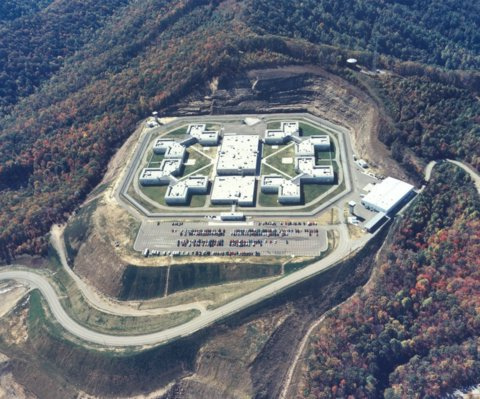
 Prisons and prisoners are often invisible to the general public, and governments do everything they can to keep it that way. We usually won’t raise a stink over something — or somebody — we can’t see.
For years, Nick Szuberla and his colleagues at Thousand Kites have worked tirelessly to bring prisoners’ stories to light through their radio shows and film projects. Now, they’re calling on all of us to help build a crowdsourced database of prison imagery — shining a light on the thousands of hidden, sprawling prisons and jails across our country.
Thousand Kites’ Incarceration Nation project asks the community of criminal justice reformers to post images of prisons — exteriors, interiors and aerial images — to create a image bank for bloggers, researchers, activists and interested members of the public to draw upon. It aims to use technology such as Google Earth to pinpoint prisons and remind us what these human warehouses look like. If you have an image to contribute, please visit the Thousand Kites sites and post it — this project will only be a success if we participate.
I discussed the project with Szuberla this week, and he told me that Incarceration Nation grew to fill a need for images of invisible spaces:
After several years of being chased of by corrections officials for filming exteriors, at one point we rented a helicopter to get images, we decided to begin using available technologies, Google Earth, to explore the criminal justice stories.
There are often strict regulations around film outside and certainly inside prisons. We believe that sunlight is the best sanitizer for human rights violations, and it is often not in a state’s interest to provide access. In Virginia, where we are based, they literally moved the prison gate back, from where you could film, as media scrutiny increased. Prisons are often in rural, hard to reach places. One reason for this is to support faltering rural economies, but the other is an out of sight, out of mind mentality.
The media isn’t only missing images of prisons — it’s also missing the prisoners: their faces, their homes, their daily lives rarely see the camera lens. Pete Brook, an occasional guest blogger here at change.org, helms the incredible blog Prison Photography to shine a light on the best photo projects focused on criminal justice and incarceration. Last week he wrote about Bob Gumpert’s moving photographs from inside San Francisco jails.
The Thousand Kites Incarceration Nation project and Prison Photography are two examples of the power of the Internet — a communication revolution mostly denied to prisoners — to transform the public perception of incarceration and the dialogue about reform. Technology like digital photography and Google Earth have put the tools in our hands to build a database like the one proposed by Thousand Kites. Now it’s up to you to make it happen.
Photo: Wallens Ridge State Prison in Virginia