 |
The psychic plague is a mental autoimmune disease. With autoimmune diseases, your body turns on itself. The body uses its biological defense arsenal to destroy its own tissue, resulting in terrifying conditions such as multiple sclerosis, pulmonary fibrosis, rheumatoid… |
Author: Serkadis
-
10 symptoms of the psychic plague that’s engulfing humanity
-
Mesquite flour: A nutritious, gluten-free substitute to white flour

Mesquite is a tree that is native to the Americas, especially the desert regions of northern Mexico, western South America, and southern United States. It is sturdy and drought-tolerant, and survives well in arid and semi-arid regions that receive little rainfall. Although… -
Traitors of Connecticut: A complete list of who voted for illegal, unconstitutional gun control in the ‘Constitution state’

There could not be more than a handful of Americans who were not sickened by the horrible shooting deaths of 20 six-year-old children and six adults in Newtown, Conn., in December by a crazed, drug-taking, mentally disturbed Adam Lanza. We are all humans. Most of us… -
Flu vaccine linked to high risk of narcolepsy in those under 30: study

Children are not the only ones at high risk of developing the chronic neurological disorder narcolepsy in conjunction with the pandemic swine flu vaccine Pandemrix, according to a new study. The latest among several in recent years to link the two, the new paper found… -
Free, natural way to lower heart, diabetes risk as much as running

What’s your excuse not to exercise? Can’t afford a gym membership? Think you are too old, too out of shape or too heavy to start running? New findings which researchers are describing as “surprising” should put some pep in your step when it comes to exercising — literally… -
The silver solution to shingles: An interview with Robert Scott Bell

Healthy Living recently interviewed renowned homeopath Robert Scott Bell, D.A. Hom., on the benefits of silver hydrosol and silver first aid gel for addressing the virus that causes shingles. While Robert acknowledges that there is a growing controversy as to the nature… -
More than 7,000 Oklahomans potentially exposed to hepatitis, HIV at dentist’s office

Allegations that a Tulsa, Oklahoma-based oral surgeon failed to maintain safe operating standards at his practice, and thus exposed thousands of patients to potentially-deadly diseases, have been confirmed more than a week after the Oklahoma Board of Dentistry (OBD)… -
Dateline TV producer tests her own urine for BPA and chemicals after changing daily habits, finds shocking results

A recent investigative report by NBC Dateline producer Andrea Canning has revealed some shocking new details about the pervasive nature of chemicals in both everyday consumer products and the general food supply. As relayed by ElephantJournal.com, using conventional… -
$700 million in Katrina money handed out to homeowners goes missing

Reports are now in that $700 million taxpayer dollars have gone missing in Louisiana. The money, given to homeowners in the wake of Hurricane Katrina, totaled one billion dollars. Seventy percent of that money has vanished. The new report, released from the inspector… -
Dark chocolate and pistachios: The power snack duo that fights inflammation and heart disease

Snacking on pistachios and dark chocolate for heart health? Hand them over! It’s hard to imagine a tastier duo. And the science confirming this is in for both snack treats individually. But it shouldn’t require further clinical research to grasp that combining them… -
Alert: Obama administration aiming to arrest local sheriffs who back Second Amendment

With new gun laws popping up all over the country, from Connecticut to Colorado, one cannot deny the country is dividing – some places trashing their rights and bowing to new orders, and other states standing up for personal liberty and responsibility. A civil war is… -
Six ways to maximize the healing powers of peppermint

The powerful and distinctive scent of peppermint may evoke pleasant childhood memories of candy canes and peppermint candy balls in some of us. But there’s more to peppermint than candy. Though used more than any other herb to create flavoring for gum and candy, peppermint… -
Acupuncture relieves COPD: Scientific research

Chronic obstructive pulmonary disease, commonly called COPD, has become the number three disease killer, behind cardiovascular disease and cancer. COPD is a progressive disease. It just gets worse, and mainstream medicine has no cure. Medical doctors usually recommend… -
Green cleaning tips: Don’t use lemon juice

The first step to green cleaning is to get rid of all the toxic stuff from under your sink. The chemical nightmare that is in many people’s cupboards is often highly toxic to humans and pets. Plus, you’d need a round of WHMIS training just to be sure you don’t mix the… -
Cuomo turns neighbors into spies for the state: $500 reward for turning in gun owners

In the former Soviet Union, so-called “political officers” spread throughout the country’s civilian and military communities were used to “monitor” (read spy) on the population at large, looking for any critics of or detractors from the party line. Violators were punished… -
Tiny wires could be a breakthrough for cheap solar panels
Chinese solar panel giants are in a bind — they’re churning out too many rock-bottom, commodity solar panels, and losing millions every day. In fact, most solar panel makers are currently laser focused on trying to boost the efficiency of their panels, so that they can sell them at higher prices and actually make some money. A Swedish startup called Sol Voltaics says it can help out.
 Sol Voltaics, which is discussing its product and funding for the first time this week, says it has developed a low cost way to make tiny nanowires out of the semiconductor gallium arsenide. The company turns these nanowires into an ink, which can be layered onto basic solar panels, and boost the efficiency of a standard panel by 25 percent.
The idea is that solar panel makers would want to buy this technology because they can sell the more efficient panels at a higher price, and raise their margins. In addition, the overall installed cost of the more efficient solar panels (they produce more power) could be lower by 15 to 20 percent.
Swedish solar innovation
Founded in 2008, Sol Voltaics won’t be producing its nanowire ink — called SolInk — at pilot scale until 2015, and commercial scale in 2016. But it’s already started to prove its technology works, and has had its nanowire cells certified by research firm Fraunhofer for an efficiency of 13.8 percent. This year the company is focused on demoing how its ink boosts efficiency on a larger scale, and in 2014 they’ll work on perfecting the equipment that its customers will use to cover panels with the ink.
With just 20 employees, Sol Voltaics has been operating in a relatively lean mode for a solar manufacturing company. To date the startup has raised just $11 million in funding from private and public funders and family offices, including Industrifonden, Foundation Asset Management, Scatec, Nano Future Invest AS, Nordic Innovation and Vinnova. The company hopes to raise another $10 to $20 million this year, and plans to cap all of its funding at $50 million by 2016.

Sol Voltaics has some well-known names in the solar and venture capital sectors. The company was founded by Lund University Professor Lars Samuelson who is an expert on the type of semiconductor that Sol Voltaics uses to make its nanowires. The company is led by Dave Epstein, who is a serial entrepreneur and former partner with Crosslink Capital, and Magnus Ryde, who was the former CEO of TSMC America, is Sol Voltaics Chairman.
How does it work?
Sol Voltaic’s innovation is that it’s figured out how to make tiny wires using the normally expensive but highly efficient semiconductor gallium arsenide. Solar scientists have spent years using gallium arsenide in various ways to make ultra-efficient solar cells, but the only way the material can be cheap enough to actually be used on a commercial scale is if it’s used in very small amounts — hence the nanotech wire part. But, again, in previous years the production of nanowires has also been relatively expensive.

The breakthrough came when Samuelson figured out a way to make the gallium arsenide nanowires in a gas phase instead of in a solid phase. Sol Voltaics calls this their aerotaxy process. Under the right conditions, in an air reactor, the company can grow these nanowires in seconds and store them in a liquid, producing a sort of ink.
Sol Voltaics wants to take this ink, and sell it to solar panel makers, alongside production equipment that they can use to layer the ink — inkjet style — onto their own solar panels. The nanowires in the ink act as guides for the light and concentrate it. The company says the capital expensive of the ink and machines add 1 to 2 cents per Watt for the panels.

Sol Voltaics is targeting Chinese and other global silicon solar makers that are struggling and producing many of their panels at a loss right now. Proving that the technology can help them out, and is worth the investment, will take quite a few key partners and demonstrations. The good thing, though, is that if one customer starts using it as a competitive advantage and it works, others will want to use it to keep up, too.
Some of these huge solar maker players will have to survive, and could adopt and invest in new technologies to do that. The ones that do survive, will see the continued solar panel market explode over the coming years. There was a record-breaking 3.3 gigawatts worth of solar panels — or 16 million individual solar panels — installed in the U.S. in 2012, making solar power the fastest-growing energy source domestically.

Related research and analysis from GigaOM Pro:
Subscriber content. Sign up for a free trial.- The race for cost-effective and efficient solar power
- The opportunities for the Internet and clean power
- A 2011 Green IT Forecast


-
HF389 (E911) and HF1686 (public fund investment incl fiber) on House Agenda for Tuesday 4/10
Thanks to Dave Minke for the heads up!! There’s a House Taxes Committee Meeting scheduled tomorrow (Tuesday April 10) at 12:30 that will include a couple of discussions that might be of interest to broadband folks.
- HF389 (Lesch) Collection of 911 fees from prepaid wireless telecommunications services and prepaid wireless E911 services provided for, broadband development grant program established, and money appropriated.
- HF1686 (Lenczewski) Public fund investments authorized, energy improvement repayment provided for, capital equipment financing requirements changed, and street reconstruction bond election requirements changed.
My plan is to attend the session to take notes and/or record discussion. Here’s more info on the agenda:
Meeting Time Note: We will recess at 2 p.m, then reconvene at 4 p.m. in room 10 and continue with the agenda until finished.
Chair: Rep. Ann Lenczewski
Bill(s) Added
Room: 10 State Office Building
Agenda: HF1724 (Davnie) A bill for an act relating to taxation; property; requiring a truth in taxation budget hearing; repealing requirement for notice of proposed property taxes
Informational Hearing on HF759 (Savick) Volunteer first responder credit provided.HF1593 (Persell) Manufactured homes clarified as dealer inventory.
HF1382 (Anzelc) Municipalities authorized to issue obligations without election for certain street improvements.
HF1341 (Schoen) Medical device sales and use tax exemption expanded.
HF1011 (Erhardt) Metropolitan area transit and paratransit capital expenditures additional financing provided for, and obligation issuance authorized.
HF745 (Erhardt) Municipalities authorized to establish street improvement districts and apportion street improvement fees within districts, adoption of street improvement plan required, and collection of fees authorized.
HF389 (Lesch) Collection of 911 fees from prepaid wireless telecommunications services and prepaid wireless E911 services provided for, broadband development grant program established, and money appropriated.
HF1659 (Fritz) Nursing homes and boarding care homes most purchases exempted from sales and use tax.
HF1686 (Lenczewski) Public fund investments authorized, energy improvement repayment provided for, capital equipment financing requirements changed, and street reconstruction bond election requirements changed.
HF1660 (Davids) Sales tax exemption expanded for complimentary meals and beverages and certain capital equipment used by restaurants. HF1675 (Barrett) Exempt property held for economic development permitted holding period increased.
HF1677 (Anderson) Purchases made by cities who did not receive a city aid payment in the previous calendar year exempted from sales and use tax.
-
The downsides of a gig: what other towns have learned after getting a gig
If you are even remotely interested in broadband, then you’re aware that Google Fiber is coming to Austin. I’ve confirmed it, local Austin news has confirmed it, a gigabit-touting organization has confirmed it, and Google may even have inadvertently confirmed it. It’s happening. Now the big questions are about the details. We’ll find that out tomorrow at the 11 a.m. CT press conference.
But after the city and Google answer the questions about where they plan to expand, if they will employ the same tactics as it did in Kansas City and other key details, here are a few ways concerned citizens and business leaders can pry a little deeper under the surface. Getting a gig is great, but as Kansas City and other gigabit towns can tell you, there’s a big learning curve.
As Google even pointed out during its launch in Kansas City, equipment and event services such as SpeedTest.net weren’t ready to support gigabit connections. Now Ookla, which runs Speedtest.net, can support a gig, but devices like laptops that don’t support 802.11a/c standards might not. Mike Farmer, the CEO of Leap2, a Kansas City, Kan., startup that has a gig, says that his current MacBook is a bottleneck because, unless he hard-wires it, it can’t support a gig.
Is there anybody out there?

Mike Farmer of Leap2 praising the Google Fiber box.
But he has a bigger problem as well. “I can watch seven simultaneous YouTube streams in 1080p high-def and Netflix, while still having 750 Mbps left over,” he told me. When I asked what he does with the remaining 750 Mbps, there is silence. And that’s one of the downsides.
The great thing about having a broadband connection is you are connected with billions of people around the world. But if you start building out gigabit-ready applications, or even applications that require 100 Mbps, you’re going to shrink your audience. The Fiber to the Home Council recently estimated that there are more than 640,000 North American households now receiving 100 Mbps service through a FTTH network. I’ve covered this before, but it bears repeating as Google plans to bring its gigabit service to Austin.
As Farmer says, “We have a car that goes 500 mph, but there’s only one road.” But Farmer and people in Chattanooga, Tenn. which is home to another gigabit network, have gotten together to discuss their plight and are planning to create a virtual co-working space using an always-on high-definition camera between their offices.
Farmer is part of a group of Kansas City startups renting a home in a residential area so they can play with Google Fiber. Venture capitalist Brad Feld bought a house in KC and set up an incubator program there too. However, the flip side of the entrepreneurial enthusiasm around Google Fiber is that others in town aren’t prepared for a gigabit connection.
How to handle the gigabit in civic institutions?
 Aaron Deacon, managing director at the KC Digital Drive, told me that schools, for example, are trying to understand and find money for the gear they would need to support a gigabit. He explained that Google provides a gigabit drop to the school, so then the question of how to deploy that technology throughout the build or buildings is left up to the administrators. Do they just provide a computer lab where the termination point is and hope for the best, or do they invest in gigabit capable Wi-Fi access points?
 These issues, from a lack of know-how to an inability to brainstorm applications, is the reason that U.S. Ignite was founded almost a year ago. the program aims to teach people what to do with a gigabit connection. The first lesson? It’s not just about speed. Jake Brewer, a spokesman with U.S. Ignite, says speed is only one aspect. Another is about giving neighborhoods the ability to control their broadband destiny.
What does a gigabit app even look like?
For example, the three things Ignite wants people thinking about is speed (upload and download), the local cloud and software-defined networking. Much like the deeply nerdy SDN stuff happening inside data centers, Brewer wants to add programmability and intelligence to the wide-area network. Advantages of this are many, from being able to easily reroute traffic on congested routes to being able to allocate network resources to a specific application to guarantee high-quality service.
As for that local cloud, it may be as simple as storing data closer to the end users or as complicated as creating a town that can harness its compute to double as a data center. For a list of awesome gigabit applications that Brewer and Ignite have helped devise, check out their post from last week.
And there’s the “downside” of getting a gig. Once you have it, the real work begins.

Related research and analysis from GigaOM Pro:
Subscriber content. Sign up for a free trial.- GigaOM Research highs and lows from CES 2013
- How HR can make the case for workforce analytics
- The 2013 task management tools market

-
5 million Americans cut cable’s cord
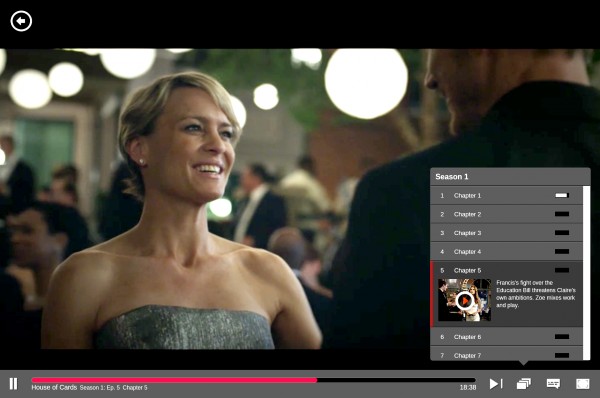
What interesting timing. The same day Ericsson agrees to buy Mediaroom from Microsoft, Nielsen releases fascinating report “Free to Move Between Screens“. The two things are strangely related. A decade ago, the IPTV division made more sense. Today, television habits are changing, something Microsoft brianiacs apparently recognize and others would be wise to do likewise. Nielsen hints at the future.
Consider where we are in just three years. Before iPad’s launch in April 2010, few US television networks (I don’t know that any) offered two-screen experiences. Now they’re commonplace, under the presumption millions of Americans sit with tablets in front of their boob tubes (and they do). HBO Go launched two months earlier. Go back six years, you have Amazon, Apple and Netflix streaming and Hulu’s launch. Along with the DVR’s rise in popularity, how Americans consume television programming dramatically changes.
Zero-TV Households
Among the changes underway: The slow, but steadily, increasing number of people cutting cable’s cord. Nielsen classifies cord-cutters as “Zero-TV” households. There are enough of them (5 million, up from 2 million six years ago), that Nielsen will begin tracking Zero-TV homes for its traditional ratings service starting in the Fall season.
The analyst firm isn’t solitary assessing the significance of this growing population. For example, HTC, which announced dismal quarterly results earlier today, will spend 40 percent of the One smartphone’s marketing budget on digital properties, taking away from TV-ad spending. “Seventy percent of our target audience consumes [TV] content online”, Erin McGee, HTC’s veep of North American marketing, tells AdWeek. Can you say cord cutters?
Three quarters of Zero-TV households have television sets, but two-thirds get content on other devices and 48 percent watch TV through subscription services, according to Nielsen. In the homes using other devices to view television programs:
- 37 percent PC
- 16 percent Internet TV
- 8 percent smartphone
- 6 percent tablet
Cord-cutting households tend to be younger — 44.4 percent under 35, while 43.7 percent of traditional TV homes are 55 or older and 64.5 percent are 45 or older.
Cost (36 percent) and lack of choice/interesting content (31 percent) rank as major reasons for breaking free from cable, IPTV or satellite providers.
Fox Freaks
While 5 million may not seem to be that high a number, it looms in context of changing habits, where consumers use other devices alongside TVs as first step to displacing or replacing them.
Some networks are increasingly antsy. The annual National Association of Broadcasters trade show is underway, and there New Corp. president Chase Carey threatened to move the Fox network to subscription cable should Aereo prevail in court proceedings permitting the streaming of Live TV broadcasts. Further in a statement, News Corp. explains:
We won’t just sit idle and allow our content to be actively stolen. It is clear that the broadcast business needs a dual revenue stream from both ad and subscription to be viable. We simply cannot provide the type of quality sports, news and entertainment content that we do from an ad supported only business model. We have no choice but to develop business solutions that ensure we continue to remain in the driver’s seat of our own destiny.
This the same company that put up so many Wall Street Journal paywalls and so exorbitantly raised subscription prices that I cancelled my renewal in 2011. That was a digital subscription. You don’t misread. I got my digital sub in 1996, long before most anyone did. Fifteen years gone just like that.
News Corp.’s reactionary stance surely reflects defensiveness and concern that the Internet could do to television what it has done to other media categories. Fox’s problem isn’t free streaming of its broadcasts, particularly if commercials, etc. remain in place, but services like Amazon, Hulu and Netflix — all which broadcast original programming — becoming full-fledged networks.
I’m In
I certainly could join those 5 million. Amazon and Netflix satisfy most of my family’s TV-viewing needs. If Google TV offered Hulu — and I’m strongly considering Roku to get it — we would probably cut the cord. Should HBO Go become a separate, reasonably-priced streamed service and other premiums follow, subscription TV simply wouldn’t make sense for us. But then again, sports and pay-per-view aren’t important to anyone in my household. They’re programming many other people want and that makes cord-cutting impractical for them.
The Wilcox clan rarely watches live TV anymore. We just record shows and skip the commercials. Why bother with any? Streaming services like Amazon and Netflix do away with the ads, Hulu offers far fewer than broadcast and rented or purchased programs have none anyway.
Surely the Microsoft brainiacs see this as a future trend, and one supporting future Xbox and Xbox Live content. Mediaroom made sense when Microsoft got into the IPTV market nearly 15 years ago. Telcos would be better off bundling Roku-like boxes than building out massive server, software and set-top box architecture to support traditional TV. Is that part of Ericsson’s plan? Time will tell.
Circling back to cord-cutters. Are you one?
-
Why saving the world with data means finding your inner CEO
If there’s one big problem with non-profit organizations, it’s this: they think too much like non-profit organizations and not enough like corporations. Helping people at the individual level and tackling large causes one issue at a time are great and necessary activities, but spending too many resources down in the weeds sometimes results in organizations not being able to see the entire swamp around them. Getting smarter about data analysis could help them get better at seeing the bigger picture.
If there’s one thing smart businesses know, it’s how to keep their eyes on the prize. They analyze everything they do against metrics — often called key performance indicators, or KPIs — that are in theory directly relevant to the company’s overall goals. Once a KPI has been established, it’s easier to assess the value of individual projects, features and other efforts in terms of how much they’re helping or hurting the overall business. KPIs also serve as a nice PR tool, as they give companies a chance to quantify non-bottom-line aspects of the business that the rest of the world can point to when assessing a company’s situation.
Think of things like daily active users for online gaming companies, eBay’s miles-per-gallon metrics for IT operations, or revenue per user at Facebook. DAUs up at Zynga? Hooray! Kilowatt hours per transaction up at eBay? Maybe its solar efforts aren’t paying off. You get the picture.
It’s this disparity in thinking between non-profits and corporations that the SumAll Foundation is trying to address. The foundation — a non-profit entity that’s part of cloud-analytics startup SumAll and funded with a portion of the company’s venture capital investment — is gathering data on specific issues and trying to raise awareness of the problems and highlight some possible solutions. In the process, it hopes to help the non-profits in those spaces understand why they should use data and how they can make the best use of it.
How do you quantify suffering?
KPIs are a critical part of foundation’s efforts. To non-profits, SumAll CEO Dane Atkinson said, helping one person might be a victory, but data can help them rally them around helping more people. It can be tricky to disassociate this type of thinking from revenue and try to quantify KPIs in different areas, SumAll Foundation’s Stefan Heeke added, but the results can be amazing when it’s done right.
In its first data-driven project on human trafficking, for example, SumAll settled upon cost-per-slave. This helped set a baseline for comparisons among countries and industries, as well as providing a benchmark to measure improvement against. And, Atkinson noted, the metric in this case is something that should resonate with people who take the time to read the entire infographic the foundation released: “You can buy a human for cheaper than you can buy a cow.”

A snippet of the foundation’s slavery infographic.
However, you can’t develop a meaningful KPI like cost-per-slave until you actually amass some good data and know what you’re working with. Atkinson called the current state of information on slavery “a data wreck,” noting that many organizations were using data from a graduate student’s report in order to estimate the number of slaves currently in the United States. The SumAll Foundation spent about 300 man-hours trying to track down quality data both within non-profit organizations and elsewhere and then cross-analyzing it to get accurate numbers.
This actually highlights another area where non-profits could use help: learning to leverage the data they do have in meaningful ways both internally and across the non-profit ecosystem. As it stands now, Atkinson said, the non-profit organizations he’s seen have been pretty bad at using the data collect in new or creative ways within their own walls, and even worse at sharing their data with other organizations fighting for similar causes.
You’re safe in assuming, then, that many non-profits aren’t even in a position to start thinking about big data techniques such as analyzing their data against external sources. However, Heeke said, this type of creative data sourcing is an important step when you’re trying to develop the most-relevant KPIs. Census data could be used to add color to a list of addresses, he explained, or social media or other web data could be valuable for detecting popular sentiment about particular issues or perhaps even detecting instances of an activity that’s difficult to track by conventional means.
Already, there are at least a handful of examples of how using these new types of data might help non-profits get a broader view of the problems they’re trying to solve. We’ve covered a university study that uncovered trends in bullying by analyzing tweets, as well as Google Flu Trends and Flu Near You as methods for crowdsourcing the intensity of flu season. Last week, news broke of Hatebase, a new project from the Sentinel Project that aims to crowdsource instances of hate speech in order to detect future instances of genocide.
More issues, more techniques, more results
Right now, the SumAll Foundation’s strategy is to put its own resources to bear on issues — future endeavors include the effects of social engagement on local theaters, the online behavior of pedophiles and something on the Syrian crisis — and share that data and some of the strategies with relevant organizations. And although an infographic was the tool of choice for the first project on slavery, Heeke said he’d like to do dashboards for issues where there’s frequent updates to the data, as well more calls to action such as petitions, donations and email-your-congressperson campaigns. Hopefully, he added, the non-profits the SumAll Foundation is working with will get inspired and start rethinking their approaches to data, as well.
The foundation’s efforts are already helping spur some change. SumAll’s Korey Lee said that non-profits working with government agencies to prosecute human traffickers are having an easier time convincing authorities to act because they’re able to put a price on human freedom within those countries. Additionally, the foundation found that many people enter into indentured servitude as a way to pay back debts, which suggests microloans might be an effective way for anyone donating money to make the most of their resources. Looking into the future, Heeke suggested the organization’s research into pedophilia might inspire gatekeeper institutions (e.g., Google, in this case) to take preemptive actions against certain telltale behaviors.
As laudable as the SumAll Foundation’s mission is, though, one organization can only do so much. This is why I wrote recently about the need for a data democracy in which everyone has the means to access and analyze, at least at a base level, the data that’s important to them or their causes. To the extent that data can help quantify and solve problems such as slavery, online predation or even climate change, anything that can help bring the people, data and technology together is a good thing.
Feature image courtesy of Shutterstock user Goran Bogicevic.

Related research and analysis from GigaOM Pro:
Subscriber content. Sign up for a free trial.- NewNet Q4: Platform mania and social commerce shakeout
- NewNet Q4: Platform mania and social commerce shakeout
- The Internet of things: creating tomorrow’s health care


