 |
Thirty years ago, Nancy Reagan launched her version of the war on drugs: “just say no.” She campaigned on that slogan all over America. She was lampooned as an idiot. Now, some researchers estimate that 60% of the Mexican economy would crash if the drug business… |
Author: Serkadis
-
Chemical warfare against the nation right under our noses
-
Studies reveal the effectiveness of medical hypnosis

My colleague, Chiara Marripodi, recently provided me some very interesting data on the effectiveness of hypnosis, as follows. It’s fascinating to consider the healing properties of what so many consider hocus pocus! The validity of therapeutic hypnosis as a complementary… -
Right on cue: 54.3 percent of Androids run Ice Cream Sandwich or Jelly Bean software
More than half of all Android devices tracked by Google are finally running Android 4.0 software or better. The company posted an update on Google+ as well as its dashboard that helps developers target certain device types for their apps. Based on the most recent period of tracking, 54.3 percent of Android devices hitting the Google Play store run either the Ice Cream Sandwich or Jelly Bean variants of Android software.
Google did make a slight change in how it tracks and counts such information, however. Per the company’s Google+ post:
We’ve updated the way we calculate our device dashboards to make them even more useful, and have also updated the data on screen distribution. Note that as a result of these adjustments, some slices in the pie charts have changed more than usual.
The new device dashboards are based on the devices of users who visit the Google Play Store (rather than devices that have checked-in to Google servers). As a result, the dashboards more accurately reflect the users most engaged in the Android and Google Play ecosystem—and thus most likely to download and use your apps.
This change makes sense from a developer’s standpoint: Instead of counting devices that “check in” — something that could be a simple as signing in or syncing through a Google service — devices that actually visit the Google Play store are counted. Those are the ones that developers are interested in, of course.

Since Android 4.0 was introduced in late 2011, it also makes sense for developers to be focused on writing software that supports Android 4.0 or better. I’m not saying Android 2.3 devices shouldn’t be supported any longer — they still account for 39.8 percent of all Androids — but they’re older devices that are likely to be upgraded soon through a new hardware purchase. Developers will get the most bang for buck by targeting Ice Cream Sandwich and Jelly Bean devices.
The hardware cycle refresh and momentum from handset makers to deliver Android 4.0 or better on new phones is partly why I said in October we’d hit this tipping point in four to six months. Lo and behold, six months later, that’s where we are.

Related research and analysis from GigaOM Pro:
Subscriber content. Sign up for a free trial.- Analyzing the wearable computing market
- CES 2012: a recap and analysis
- NewNet Q4: Platform mania and social commerce shakeout


-
New UCLA institute fosters unified approach to understanding and curing pediatric diseases
For more than 60 years, the faculty and staff at Mattel Children’s Hospital UCLA and the department of pediatrics at the David Geffen School of Medicine at UCLA have conducted pioneering research, delivered state-of-the-art patient care and expertly trained future pediatricians.Now, under the umbrella of the recently launched UCLA Children’s Discovery and Innovation Institute, these efforts will have an even bigger and broader impact. By bringing together pediatric physician–scientists and faculty experts from a variety of fields across the UCLA campus, the new institute will drive multidisciplinary research collaborations focused on children’s health and disease and will help speed the translation of groundbreaking pediatric research findings into clinical practice — locally, nationally and globally.“We are expanding our well-developed foundation to build a dynamic, interdisciplinary support system for our pediatric physician–scientists that fosters new avenues for innovation,” said Dr. Sherin Devaskar, physician-in-chief of Mattel Children’s Hospital UCLA and assistant vice chancellor for children’s health, who holds the Mattel Executive Endowed Chair in the UCLA Department of Pediatrics. “This new paradigm will lead to advancements that can improve the health of children faster and more efficiently.”The institute will pioneer advancements in pediatric medicine in four key research areas: the brain and behavior; nutrition and metabolism; cancer; and inflammation, infection and immunity. Efforts in each area will focus on prevention, screening and treatment, as well as providing training opportunities for the next generation of pediatricians and mentorship programs that enable younger physicians and scientists to learn from UCLA’s cadre of experts.Children are not “small adults,” pediatricians stress, and they experience illnesses and treatments differently than adults. The UCLA Children’s Discovery and Innovation Institute is in a unique position to collaborate with a wide variety of researchers across campus who have expertise not only in science and health but in the unique challenges young people face.“Interdisciplinary research as envisioned by the institute is fundamental to the discoveries that pave the way to major improvements in health,” said Dr. Eugene Washington, dean of the David Geffen School of Medicine at UCLA and vice chancellor for health sciences. “Having access to a variety of specialists and experts with different points of view can be invaluable in nurturing innovations that can ultimately benefit children around the world.”The institute will hold its inaugural fundraiser, the Kaleidoscope Ball, at the Beverly Hills Hotel on Wednesday, April 17. The sold-out event, hosted by actress Patricia Heaton, will honor philanthropists Heather and Steven Mnuchin and Cameron Cohen and musician and actor LL Cool J. Entertainment will include performances by special guests the Blue Sky Riders, Kenny Loggins, the Georgia Middleman and Gary Burr.The event will also showcase 10 custom dollhouses created by more than 20 of the most prominent, award-winning visionaries from the world of design and architecture. The dollhouses will be auctioned off, with 100 percent of the proceeds going to support the new institute.For more information on the UCLA Children’s Discovery and Innovation Institute, visit www.uclahealth.org/cdii.For more news, visit the UCLA Newsroom and follow us on Twitter. -
Who knew? Fiber is also good for a telco’s health
Fiber deployments aren’t just good for the consumers — for small to medium-sized telcos they are also good for the bottom line, resulting in an average operating savings of 20 percent. The data, which came from a Fiber to the Home Council survey issued Tuesday, also noted that the number of homes that can access fiber-to-the-home (FTTH) networks increased by 17.6 percent over a year ago to 22.7 million.
The number of households connected with FTTH now stands at 9.7 million, an increase of more than 20 percent over April 2012.

Most of the cost savings associated with FTTH deployments came from an end to costly maintenance and down time on telco networks, which one would expect if you are going from an aging DSL network to a newer network. However, offering fiber also enabled these smaller and mid-sized telcos to offer TV offerings as well as faster speeds, which enables them to compete against cable or satellite providers.

While in North America the lion’s share of fiber to the home deployments are deployed by Verizon’s massive FiOS build out and a similar (but smaller) Bell Aliant roll out in Canada, the survey notes that over 600 smaller ISPs have deployed fiber to the home in some or all of their footprints and about 100 municipalities have also built out networks. It also found that more than 640,000 North American households now get 100 Mbps service through a FTTH network, and many of those connections offer the same speeds for both uploads and downloads.
Google Fiber in Kansas City and EPB Chattanooga in Tennessee both got a shout out in the release accompanying the survey for their gigabit connections. And for those wondering why their ISP would spend the money to deploy fiber to the home, it’s clearly something customers are warming up to — there’s a 44.8 percent take rate in homes passed — a number that is on the rise.
The survey was conducted for the council by RVA LLC and involved more than 350 telecommunications providers across North America.

Related research and analysis from GigaOM Pro:
Subscriber content. Sign up for a free trial.- Netflix may suffer from limited mobility
- 12 tech leaders’ resolutions for 2012
- LTE changes everything; LTE changes nothing

-
Nokia’s next-generation flagship Lumia 950 possibly revealed in leaked photo

-
It’s about time! Microsoft’s consumer cloud calendar gets a new Outlook
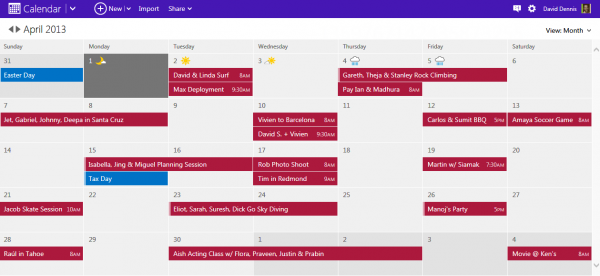
Windows Live Calendar (there’s supposed to officially be “Hotmail” in there) is dead — or soon will be. Today, Microsoft started rolling out the replacement for Outlook.com users. I’ve got the old one still, which is why the not-quite-lifeless-yet reference.
There’s some kind of aspirational, Apple-like promotion going on here. “The Outlook.com calendar has been entirely redesigned with a modern, intuitive interface that puts you in control of your schedule”, David Dennis, Microsoft’s Outlook.com Calendar principal program manager lead, beams. Yeah, baby, put me in control. Gimme the mouse clicker.
But there’s the disappointment of getting the old thing for some of us to contend with. “You can get started with any email address at Outlook.com Calendar as soon as your account is upgraded”, Dennis explains. Hey, that’s not me. You? This week, he promises everyone.
Seriously, if Dennis really wrote this whole post — not PR Borg — someone should promote him to writing all promotional copy for Office 365 and Outlook on the web. I count 29 uses of “you” and 21 of “your” in his blog post introduction. But it’s more than numbers of “you” and “your” but how they’re expressed to make, well, you feel empowered.
The subheads separating main text are great examples: “Across your modern smartphones and tablets”; “connected to what you care about”; and “you’re in control of sharing with friends and family”. The tone is clear: What the Outlook.com calendar will do for you. The best marketing convinces you that your life will be better for using product X, Y or Z.
Perhaps it will be — as long as you aren’t using an Android device. Dennis asserts that “connecting your calendar to your mobile device is easy”. But is it satisfying?
Google and Microsoft are in this scuffle over ActiveSync, which the search giant dropped. So at Google’s insistence, Microsoft agreed to adopt CalDAV, which Google then also dropped. As such, Android users wanting to sync Google and Outlook.com calendars are consigned to Hotmail Hell.
Outlook.com for Android is some popular app. Out of 5,659 reviews, 2,642 are one-star. PU. iPhone and Windows Phone users, you can stop laughing now.
-
For Facebook, it’s not about their phone; it’s about you and your phone
On Thursday this week, Facebook is holding a press event focused on its mobile efforts. The “see our new Home on Android” tagline on the press invite is a not-so-subtle reference for what to expect, which should be two specific items: One focused on hardware and one on software. After months of Facebook phone rumors, some will focus on the actual hardware, but that’s not the big picture: Facebook’s software on other phones will have the larger impact.
The only way I can see being proved wrong on that is if Facebook reserves some must-have, “killer feature” for a Facebook-branded phone. The chances of that, however, are somewhere between slim and none.
Why? Because it really doesn’t benefit Facebook much to have a dedicated phone that offers a marginally better social networking experience; it won’t be enough to sell the phone. That’s why any phone unveiled at Thursday’s event is likely to be a showcase for the new software, much like Google’s Nexus phones show off the latest and greatest Android software.
What will the hardware look like?
Early leaks of the Facebook software illustrate this point. The build.prop file in a reported software dump of the Facebook phone yielded these hardware specifications when Android Police looked through the data.
 It shows an HTC handset with what I’d call medium quality hardware components, not flagship-level parts: A dual-core chip — I’d expect a clock speed no higher than 1.5 GHz — with 1 GB of memory, 5 megapixel rear camera, 1.6 megapixel front camera, no expandable memory and a 4.3-inch display with 720p resolution. As for what the phone may look like, the relatively reliable @evleaks Twitter accounts shows this boring press render.
In other words: A bland phone with cutting edge parts from around 6 months ago or more and one that few current smartphone owners will buy. People entering the smartphone market could be interested, but with so many other hardware choices, I don’t see a big seller here.
Even with a killer feature, it would have to outweigh the phone’s limited hardware in people’s minds because hardware is a longer term investment; especially in the U.S. where most people keep the same phone for at least 18 to 24 months.
Software is an easier way to expand reach
That’s why software will be the star of the show on Thursday. It’s highly likely that whatever new Facebook software the company debuts — most likely in the form of a dedicated home screen or customized app launcher — will be available for most other recent Android phones as well as Facebook’s own handset.
That’s where the opportunity is for Facebook: on the roughly 1.4 million Android devices activated each day; not on a custom smartphone that will likely be outsold by an order of magnitude by Samsung’s Galaxy S4, the new HTC One handset or possibly even Google’s own Nexus smartphones.
Speaking of Google, there’s a very similar mobile strategy between it and Facebook, although the two are taking slightly different approaches. Google has pinned its mobile future on Android as an open source platform that anyone can use. But the major handset makers also license Google’s core apps and ecosystem: Think Gmail, Google Maps, Calendar and the Google Play store for media and applications. What does that give Google besides licensing revenues? Information about users, which can then be sold or used for targeted ads; the very same “currency” that Facebook is looking for in its own mobile strategy.
Google vs Facebook: Two titans with the same mobile business model
Facebook isn’t a complete operating system platform like Android is, however. Instead, it’s a set of core applications and functions that sit atop a mobile platform, or platforms as the case may be with iOS, Android, Windows Phone, BlackBerry and the web. The approach is different but the end result is the same: Facebook is gathering data for mobile ads and services that will make it money.
At the end of the day, both companies are doing battle for user engagement. The longer you use Google services during the day, the more information Google learns about you. The same holds true for Facebook, which wants you logged in, launching its apps, interacting with friends, posting pictures, chatting and even making free voice calls. You are the product, not the customer, so while Facebook may be investing in a dedicated Facebook phone, the bigger investment is in you, regardless of which Android phone you use.

Related research and analysis from GigaOM Pro:
Subscriber content. Sign up for a free trial.- Tablets wars: Apple is from Venus, Amazon is from Mars
- The future of mobile: a segment analysis by GigaOM Pro
- Analyzing the wearable computing market

-
Google Launches Quickoffice For Android, iPhone
Last June, Google acquired Quickoffice. In December, Google launched an iPad app. Google announced today that Quickoffice is now available for Android and iPhone.
“One of the easiest ways to share old files and collaborate with others is to convert them to Google Docs, Sheets and Slides,” writes product manager Mark Beaton in a blog post. “However, not everyone you work with has gone Google yet. So to help, Google Apps for Business can already edit Microsoft Office files using Quickoffice on an iPad, and starting today they can do the same on iPhone and Android devices. From Word to Excel to Powerpoint, you can make quick edits at the airport or from the back of a taxi and save and share everything in Google Drive.”
The app includes new “Shared With Me,” “Starred,” “Recent” and subfolders in a menu so you can easier find Drive files.

“And in case you didn’t know, iPad and iPhone users can open and edit Office files directly from the Drive app,” says Beaton. “Just open Drive and select the file, make edits using Quickoffice and save it back to Drive.”
The new apps are available in Google Play and the App Store.
-
Tesla to offer leasing option for Model S
Electric car maker Tesla Motors announced on Tuesday that it will offer a leasing option to future Model S customers. Tesla is working with Wells Fargo and US Bank to provide financing for 10 percent of the cost of a Model S, and following monthly payments, after 3 years customers who choose this option can sell the car back to Tesla at a predetermined price.
Tesla will guarantee the resale value of the three-year-old Model S (at the same price as a Mercedes S Class), and Tesla CEO Elon Musk said he will personally stand behind the guarantee. The monthly payment for the three-year term could be between $500 and $600 per month, and Tesla says the tax credit can cover the upfront cost in many markets. Already some are pointing out that it could be much higher than that.
Musk has been talking about the potential for leases for awhile. In the company’s earnings call last month Musk said that in 2014, “leasing will be a big factor” in the U.S., and will be a moderate part of revenue in 2013 in Europe.
Customers who accept the leasing deal can also decide to own the car after the three-year period. If customers want to keep the car after three years, they can continue to make the monthly payments and would own it around year five, Musk said on the call.
The financing option is sort of a hybrid between leasing and ownership, and Tesla describes it as “a new kind of financing product that combines the surety and comfort of ownership with all the advantages of a traditional lease.”
The leasing option is interesting because it could help more mainstream car buyers, and customers that don’t want to put down as much money upfront to purchase an electric car. Leasing deals have helped deliver solar panels on rooftops, and a third of the new solar panels installed in 2012 were owned by third parties.
We’ll update this with more information from the company’s call this afternoon.

Related research and analysis from GigaOM Pro:
Subscriber content. Sign up for a free trial.- The fourth quarter of 2012 in cleantech
- Cleantech and investment in 2013
- Electric vehicle outlook: 2012–2017

-
Leaked image reveals ‘HTC First’ smartphone, rumored to showcase deep Facebook integration

-
Facebook Ads Manager Gets Some Tracking Updates
Facebook announced some new updates to Ads Manager, which it says will make it easier for advertisers to see how they’re performing when it comes to specific goals and to calculate ROI.
“We know that marketers on Facebook have various goals,” Facebook says in a blog post. “Some might care about app installs, some might want new fans for their Page, and some might want to increase people’s interactions with their posts. We are now helping marketers better identify what user actions drive their specific advertising goals. When advertisers create their ads in the ad create tool, they can choose from any of the following advertising goals. Now Ads Manager will display the actions they care about most more prominently in their campaign summary page.”
“For example, if an advertiser says their advertising goal is ‘Get More Page Likes,’ the campaign summary page in Ads Manager will now show ‘Page Likes’ more prominently, and it will calculate ‘Cost per Page Like’ for your ads,” Facebook adds. “We’re giving advertisers the tools to more accurately track cost per action so they can better evaluate how their ads are performing against their goals and make appropriate optimization decisions.”
On the ROI front, Facebook will now more prominently (and automatically) show advertisers, who are running conversion tracking, the resulting conversions from ads they’re running to drive people to their sites. Additionally, “Cost per Conversion” will be shown for each ad. If the advertiser assigns a value to each conversion from the tracking pixel, Facebook will show the total conversion value fo all conversions for the ad.

The features are rolling out globally for all advertisers in the coming weeks.
-
Blandin Broadband eNews April 2013
 Minnesota Broadband Adoption up Six Percent; FTTH not as good
Connect Minnesota surveys show that broadband adoption in Minnesota is increasing; 78 percent of households subscribe to broadband service, up from 72 percent in 2011. Six percent may not sound like a lot, but in a steady market and a demographic that many have suggested will be difficult to coerce into adopting, it’s a welcome trend.http://wp.me/p3if7-2aW In terms of high end access, research from Broadband Communities Magazine indicates that 2-3 percent of Minnesota has access to fiber. That compares with 10 percent in South Dakota, 22 percent in North Dakota and a national average of 8 percent. http://wp.me/p3if7-2ax
Wired vs Wireless
A recent survey by Connect Minnesota indicates that 51 percent of adults in Minnesota use the Internet on their cell phones or subscribe to mobile wireless service for a laptop or tablet computer; that percentage is up from 39 percent last year. http://wp.me/p3if7-2bJ A recent Pew Internet and American Life report promotes the growing use of smartphones by teens; 78 percent of teens now have a cell phone, and almost half of those own smartphones. That translates into 37 percent of all teens who have smartphones, up from just 23 percent in 2011. http://wp.me/p3if7-2aZ A recent survey in Telecompetitor indicates that broadband users in the UK would give up mobility and video before losing their wired connection. http://wp.me/p3if7-2bU Other recent examples indicate that mobile works well for consumer activity, but perhaps less well for more engaged activities.http://wp.me/p3if7-2aQ
Telecommuting is Strong in Minnesota
Last month, telecommuting took a hit when both Best Buy and Yahoo decided to rein in telecommuting in their own businesses. A host of Minnesota locals have come to defend telecommuting, including Minnesota Telecom Alliance http://wp.me/p3if7-2bG, the Minneapolis Star Tribune http://wp.me/p3if7-2b5 and Fergus Falls Journal.http://wp.me/p3if7-2be
Libraries and Broadband
On March 21st, Connect2Compete launched EveryoneOn, a 3-year national public service campaign to promote digital literacy. The key message of the campaign is to encourage limited or non-Internet users to learn how to do “one thing better online”. Libraries have jumped on the opportunity making programs and materials available to everyone.http://wp.me/p3if7-2bz Tangentially, a library in Providence has begun to offer mobile hotspots for check-out, so patrons can try broadband at home. http://wp.me/p3if7-2bq
Broadband Means Better Economy in Rural Areas
The National Agricultural & Rural Development Policy Center released a report that indicates that low levels of adoption, providers and broadband availability were associated with lower median household income, higher levels of poverty and decreased numbers of firms and total employment. http://wp.me/p3if7-2bj
Update on Policy Broadband-Related Bills
There have been some interesting broadband discussions at the state and national levels. The TISP Forum early in the month included a lively discussion on policy.http://wp.me/p3if7-2av On a national level, the USDA is looking at changing the definition of rural, which may have an impact on future broadband funding and incentives.http://wp.me/p3if7-2aE Several specific bills have come up as well:
- Minnesota Telecommunications Regulations Bills (HF 985/SF 584) – The role of the state PUC is expected to diminish considerably by 2019 due to decisions made by the FCC; this bill sets out to transition to that change. http://wp.me/p3if7-2bQ The Minnesota Telecom Alliance recently hosted a conversation with FCC Commissioner Clyburn, which provided some insights into the FCC’s plans. http://wp.me/p3if7-2bO
- Minnesota Office of Broadband Development Bills (HF1255 / SF1128) – The bill would establish and fund an Office of Broadband Development to help coordinate broadband efforts in the state and create tools to help providers anticipate opportunities through practices such as Dig Once. http://wp.me/p3if7-2b8
- Minnesota E911 fee and the Telecommunication Access Minnesota fee (HF389/SF367) – The bill would extend the E911 fee and the Telecommunication Access Minnesota fee to prepaid wireless customers to establish a broadband development grant program.http://wp.me/p3if7-2aq
- The US Senate approved a bipartisan amendment introduced by Senator Al Franken to promote investment in broadband infrastructure for rural areas. The amendment does not indicate action, but an interest in broadband. http://wp.me/p3if7-2bC
- In March, Senator Amy Klobuchar said she would introduce a bill that would allow for cell phone unlocking. http://wp.me/p3if7-2ah
Local Broadband News
Eagan
Following Comcast’s recent rate hikes, the mayor of Eagan, MN, writes lawmakers and regulators asking for the right to rein in what the city’s residents pay for cable.http://wp.me/p3if7-2ajEly
Ely bans social media. Timing is key on this story posted on April 1. http://wp.me/p3if7-2c1Itasca County
Through MIRC funding, KOOTASCA Community Action brought computers and broadband connectivity to local Native American student families. They partnered with PCs for People and Paul Bunyan, the local broadband provider to make it happen. The free trial ended in January yet only 4 households have dropped their Internet service from Paul Bunyan Communications, which means an 84 percent retention rate. http://wp.me/p3if7-2b2Kanabec
The Kanebec Times picks up the story on the five county (Pine, Kanabec, Mille Lacs, Carlton and Aitkin) initiative to promote and expand broadband in the area. http://wp.me/p3if7-2bFA frustrated customer in the same area expresses frustration with incumbent providers who aren’t interested in expanding or upgrading their networks: http://wp.me/p3if7-2bt
Lac qui Parle County
LqP’s Computer Commuter is featured on KARE 11 as Minnesota’s only portal to the information highway that drives into town on one. http://wp.me/p3if7-2aHLake County The Republican leaders of the House Energy and Commerce Committee request information regarding Lake County’s (ARRA) BIP program funding. http://wp.me/p3if7-2bb
Minneapolis
Minneapolis is making a concerted effort to promote digital literacy over the next year. Their efforts started with a series of events on March 21. http://wp.me/p3if7-2bwMinneapolis Good Samaritan finds smartphone is a key to accessing information and getting things done. http://wp.me/p3if7-2c7
Google is reportedly testing a one-day product delivery service; Target is one of the merchants involved. http://wp.me/p3if7-2aK
Minnesota
Gov Tech announces their 2013 Top 25 Doers, Dreamers and Drivers list. Two Minnesotans on the list: Carolyn Parnell and Massoud Amin. http://wp.me/p3if7-2aNNorthern Minnesota
Mediacom Communications doubles the speeds of its broadband Internet service throughout its Northern Minnesota territory, including some communities in Carlton, Itasca, Lake, Pine and St Louis Counties. http://wp.me/p3if7-2bnEvents
April 10: Technology and Communications Conference (Minneapolis)http://tinyurl.com/7rawqvn
April 11-13: NTEN: Nonprofit Technology Conference (Minneapolis)http://www.nten.org/ntc
April 23: Minnesota Broadband Task Force (Twin Cities)http://tinyurl.com/7n2syt8
April 30: MHTA Spring Conference (Minneapolis) http://tinyurl.com/7t6oner
June 1-2: Civic Hack Day (various locations TBA) http://wp.me/p3if7-26t
Looking for more events? Check out TechDotMN’s calendar http://tech.mn/events/. Many events are based in the Twin Cities but it is a comprehensive list. (If you have an upcoming event, consider submitting it.)
 Stirring the Pot
A regional broadband event, a draft feasibility report and an email from a newly satisfied broadband consumer have me thinking about the path to achieving the Minnesota broadband goal.
Congratulations to the organizers of the East Central Broadband Summit. With 80 attendees and the active participation of many broadband providers, it was an exciting day of active conversation. The organizers are now following up on at least a couple of the priorities identified at the event and it will be interesting to see if the conversations begun at the Summit can lead to broadband solutions – wired, wireless or hybrid – in these five underserved communities.
Redwood County is now reviewing the feasibility study partially funded through the Blandin Foundation Robust Broadband Networks Feasibility Fund program. The study examines a couple of options for bringing Redwood County up to the state broadband standard. The study is unique in its significant assumption about the role of the area incumbent providers. Again, it will be interesting to see if study and discussion can lead to a broadband solution.
The email that I received was from a health professional who had contacted me more than a year ago about her frustration with a lack of broadband at her home in northeastern Minnesota. Thanks to the entrepreneurial folks at Laurentian Wireless, her situation has greatly improved.

-
Matt Cutts Answers A Good Question About Paid Link Penalties
The latest Webmaster Help video is once again about the topic of paid links, but this time it’s about the effects of a paid link penalty on an innocent site that happened to be linked to by a site that was caught selling links.
Matt Cutts responds to the following submitted question:
If some site that is linking to my site gets penalized for purchasing links, will my site get affected by that penalty?
“Normally what happens is when we find a site that’s selling links, we say, ‘Okay, this is a link seller,’” says Cutts. “It’s PageRank goes down by thirty percent, forty percent, fifty percent as a visible indicator that we’ve lost trust in that domain, and it typically loses its ability to send PageRank going forward.”
“So for example, suppose we have a selling site that is selling links to a buying site, and the selling site also happens to link to you,” he continues. “The sort of situation that might happen is we find out that that’s a link seller, and as a result, we just don’t trust the outgoing links from that site. So the most likely scenario is if there is a link-selling site, and they get caught for selling links, and they just happen to be linking to you, the value of that link that the site was providing, it just goes away. So it’s the sort of thing where maybe you were benefiting – getting a little bit of PageRank from that site. Now, since we don’t trust that site, you wouldn’t be getting that benefit.”
“So typically, it’s not the sort of thing where you get affected by that penalty in the sense that you get demoted or anything harsh like that,” says Cutts. “It’s just you no longer get the benefit of the link from that site because we don’t trust it anymore.”
Here’s another recent video in which Cutts talks about paid links.
-
Tesla, Fisker, and what could have been: A tale of two electric car startups
Watching the bifurcating trajectories of electric car makers Tesla Motors and Fisker Automotive is like witnessing two siblings grow up over the years, only
one becomes Prom Queen and the other drops out of high school. Was it nature or nurture? How did these companies turn out so differently? I’ve been following both startups over the last six years, and have a few ideas as to why these two, who had so many things (including executives) in common, turned out so very differently.The state of affairs
This week Tesla hit an all-time high of $46.68 per share, which is over two and a half times the company’s share price when it went public back in the summer of 2010. The stock boost follows Tesla’s announcement that it would be profitable (on both a GAAP and non-GAAP basis) for the first time ever for the first quarter of 2013, and would deliver 250 more of its Model S electric cars than expected.

While Tesla had already announced a solid
fourth quarter and fiscal year last month, the raised guidance calmed some Tesla naysayers, and started to convince many that Tesla could actually morph into a more mainstream and full-fledged auto maker.Tesla’s CEO Elon Musk also plans to make an announcement on Tuesday afternoon that could send Tesla’s stock even higher. Some speculate that Musk could be buying up more shares and putting his money where his mouth is in a very major way (as he put it on Twitter last week).
Fisker on the other hand, seems to be nearing the final sunset of its life. Last week media reports said that Fisker had hired a law firm to advise it on bankruptcy options. It owes a loan repayment to the Department of Energy this month, and is now cutting costs and furloughed its employees last week. The company hasn’t made a car since the summer of 2012.

Fisker’s potential bankruptcy news followed reports that its attempts to make deals with Chinese auto makers had fallen through, which seemed like the company’s last chance to find a deep-pocketed partner of investors. Fisker also announced last month that its celeb designer founder Henrik Fisker had resigned over internal disagreements. Let’s face it, the writing has been on the wall for months.
Cut from the same cloth
While Tesla and Fisker were founded about four years apart (Tesla first), the companies had similar aims from the beginning. Both companies wanted to build a sexy electric sports car that would be coveted as an awesome performance car, and would also happen to be electric. Before Fisker’s Karma and Tesla’s Roadster, the majority of electric cars being built were slow so-called neighborhood vehicles that had tiny ranges, snail-like speeds, and boxy designs. These neighborhood cars were for a niche audience only and didn’t inspire much excitement about electric cars.
Fisker and Tesla also had similar Silicon Valley DNA. Both companies were founded on the premise that a startup electric car maker, with backing from Valley venture capitalists, could use a cool car as a launching platform to become a more mainstream auto maker. Tesla was backed by Draper Fisher Jurvetson, DBL Investors, Elon Musk’s personal funds from his PayPal payout, Technology Partners, VantagePoint and others. Fisker was backed by Kleiner Perkins, NEA, Qatar Investment Authority, battery maker A123 Systems and then later thousands of wealthy individuals organized by now defunct broker Advanced Equities.

Tesla and Fisker also both received loans from the Department of Energy out of the exact same program. Tesla and Fisker were the only startups that received these loans, while the other funds went to large auto makers. Fisker wasn’t able to draw down on the majority of its loan, but it still received significant funds, while Tesla received its entire $465 million.
Fisker and Tesla also directly shared some things, though some people might have forgotten their connected past. In 2006 and 2007, Tesla actually hired Henrik Fisker and Bernhard Koehler (who later went on to found Fisker Automotive) to do design work for the body of Tesla’s sedan, later named the Model S. Tesla alleged that after working on the designs for Tesla, Fisker and Koehler left with trade secrets and started a competing company, Fisker Automotive. Tesla sued Fisker in the spring of 2008 for breach of contract.
The divergence
So what led each company to the brink of success or the brink of failure? First off, Tesla had about four years of technology development and experimentation with car building, and auto supplier sourcing, before Fisker began working on its Karma car.

Tesla ran into a variety of problems with delays and recalls of its first car — the Roadster. In particular, it relied heavily on some suppliers which didn’t deliver parts on time or delivered faulty parts. Tesla used these experiences and issues to — many years later — perfect the sourcing, manufacturing and testing of its second car, the Model S. Tesla then used its Department of Energy loan to fund production of the Model S. Tesla was able to spend many years experimenting with its few thousand early adopter customers and the Roadster before it took on the DOE loans and gained international attention through that spotlight.
Fisker encountered those same types of problems, with recalls and supplier issues, when it built its first Karma car. Developing a car as a startup is hard. But Fisker used part of the DOE loan to fund production of the Karma, and it emerged in the international spotlight before its car and car production were perfected. The company also had placed the cart well ahead of the horse, as it was often talking about its second car long before its first cars were functioning at an acceptable level. Fisker’s timing with the DOE loan was off from the beginning.

Tesla and Fisker also had very different approaches to technology development, which over the years made Tesla far more valuable than Fisker. Tesla spent a lot of money on developing the battery pack, battery management system, and power train. That core technology is what makes up the base of the Model S, and eventually the Model X.
Over the years Tesla has made revenue from selling this core technology to big automakers like Toyota and Daimler for development projects. Toyota is using it in its RAV-4 EV, and Daimler is using it in its EV Mercedes. Tesla has made hundreds of millions of dollars off of its development deals and has used these funds to push forward production of its cars.
Fisker, on the other hand, is a design firm first and foremost. Much of its core technology comes from other companies and suppliers. For the Karma, it had a long-term supply agreement deal with Quantum for the powertrain tech and software, and A123 Systems for the batteries. Fisker never had aims to sell its car tech to other companies.

The X-factor
Finally, Tesla wouldn’t be the same car company without its charismatic tour de force Elon Musk. Musk used his personal funds to carry Tesla through its difficult years in 2008 (at one point it had $9 million in the bank and Musk had to borrow money to make ends meet). And he is now likely doubling down on investing in Tesla’s stock. Musk is a visionary of the same ilk as Steve Jobs.
Fisker’s founder Henrik Fisker is a successful and well-known car designer, but didn’t have the same type of personal wealth that could single-handedly carry a company. He also clearly hit some hurdles moving from founder into management (which is very common in startups). Fisker stepped down as CEO a year ago, and resigned from the company last week over disagreements.

As you can see, it’s a few differences that seem to be minor details, but later in the life of the companies emerged as transformational characteristics. So what can other startups learn from this tale?
Focus on your core technology. Understand that timing is everything. And recognize that it takes strong vision and leadership to make it to the finish line.

Related research and analysis from GigaOM Pro:
Subscriber content. Sign up for a free trial.- Ups and downs for cleantech in Q1
- Tesla’s Model X could make the electric SUV a hit
- Green IT Q4: solar, subsidies and the outlook for EVs

-
SF-Based Watchmaker Xetum Releases New Racing-Themed Line, The Kendrick

Our favorite makers in the Bay area, Xetum, have just released their new line of Kendrick watches in time for racing season. The watches, designed in California and assembled in Switzerland, are fairly unique in the watch industry as Xetum is one of the few American watch brands – besides Bathys – to make it in a very competitive marketplace.
I pared down the elements on the dial to just a minimum, but made each feature bolder, from the hands, to the markings on the dial, to the numerals,” said founder Jeff Kuo. “To stay within the ‘instrument-style’ vein, I looked to automotive dashboards for inspiration. Not any one particular car or brand, but rather looking at dashboard instruments that made a strong statement, but in a subtle and nuanced way.”
Xetum traditionally sells watches with an embedded leather strap so these new Kendricks are a departure. The watches feature striped NATO nylon or solid rubber straps.
Watches are obviously an aged technology but Kuo has tried to bring the industry into the 21st century by selling his work online. He is, however, beginning to partner with retail stores, a move that would seem a little backward to some. However, given the hoity-toity nature of many watch shoppers, it’s obvious that opening a few industry doors can help Kuo spread the Xetum message.
“We have also realized that some of our customers want to see the product in person, and we have recently stepped up our efforts to selectively work with great retail partners to provide an in-store experience that is highly complementary with our online sales. Companies such as Warby Parker have done this through pop-up shops or in-store displays, and our approach has been instead to sell with a small number of like-minded retailers to offer a physical store presence,” he said.
The watches are available now and come in white, black, and light blue. The model we looked at, in blue, has a certain “faded” look to it akin to old Kodachromes and the nylon straps are much more durable than the leather models. They are, as expected, a bit on the expensive side: $995 for the NATO model. However, for the price you get an increasingly rare ETA 2824-2 inside a solid, handsome, and locally designed 40mm automatic watch.
-
Google Adds Janrain, Gigya As Google+ Sign-In Partners
Google announced today that it is adding some new integration options to Google+ Sign-in.
Google launched Google+ Sign-in in February as its latest answer to Facebook Connect and the Open Graph. Now, Google has added Janrain and Gigya to its roster of partners that are integrating Google+ Sign-in as part of their product suites.
In a post on its Google+ Developers blog, Google says, “This means that their customers will be able to: Add trusted authentication to their apps and sites, allow web users to automatically download their Android app, customize their app experience using Google+ profile info, enable users to share interactive posts with friends, and write app activities that only appear when they’re relevant.”
Janrain customer sites include: NPR, Universal Music Group sites (including LadyGaga.com, JustinBieberMusic.com, Eminem.com, etc.), and HSN. Gigya’s include American Idol and Food Network UK.
Google’s initial launch partners included: Banjo, BeautyFish, Fancy, Fibit, Flixster, The Guardian, OpenTable, Shazam, TuneIn and USA Today.
-
Yahoo Mail Gets Dropbox Integration
Yahoo has partnered with Dropbox to integrate Dropbox’s storage solution into Yahoo Mail.
“By bringing Dropbox to Yahoo! Mail, it’ll now be easier for you to send, receive, share and manage your attachments,” says Yahoo in a blog post.
Dropbox’s Joshua Jenkins says, “Email attachments can be tricky: they’ve got file size limits, you can’t keep them updated, and when you add people to a thread, attachments are the first to get left behind. he Yahoo! Mail team decided to fix this—by integrating with Dropbox!”
“Since this integration is Dropbox-powered, you can even send that big album of vacation pics without worrying about the 25 MB file limit,” he says. “Plus, it’s easy to save any photo, video, or doc in your Yahoo! Mail straight to your Dropbox, where you can get to it from anywhere.”
If you don’t already use Dropbox, you can click on any attachment in Yahoo Mail, select “Save All,” then “Save to Dropbox,” and it will give you instructions for setting up an account. Otherwise, you can just start using it.
You can send new attachments from Dropbox in Yahoo Mail by selecting the dropdown next to the paperclip icon, and hit “Share from Dropbox”. For large files, you can drag and drop the attachment into email, but send it through Dropbox.
The integration is available in English, French, German, Italian, and Spanish.
-
Will you buy Samsung Galaxy S4?
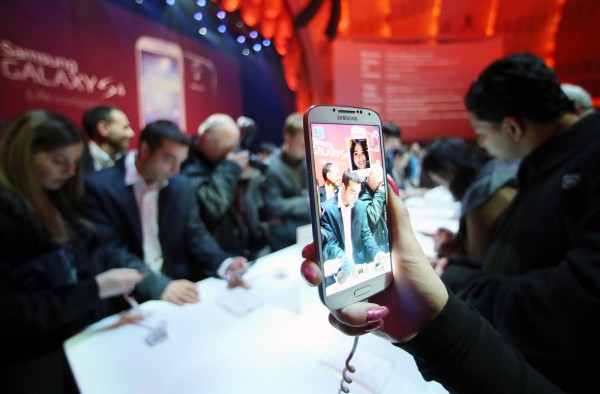
Now that some carriers have started taking preorders, time is to ask whether or not you will buy Samsung’s new flagship smartphone. The South Korean consumer electronics giant will offer the handset from 327 carriers in 155 countries, later this month.
Ian Fogg, IHS Screen Digest principal analyst, predicts that Galaxy S4 will be huge — extending Samsung’s “market lead from 4 to 11 percentage points over the next largest handset maker. Globally, Samsung will ship 29 percent of all mobile phones in 2013”.
He emphasizes: “Galaxy S4 will cement Samsung’s existing position as the leading mobile handset maker globally. This flagship smartphone will act as a halo device that will boost Samsung’s mobile brand and support sales of all of Samsung’s handsets at all price points.
Key Benefits
Galaxy S4 is a big upgrade in some respects, small in others. The phone’s screen jacks up to 5-inches and increases screen resolution to full HD. The physical design changes little from the S3, but software enhancements abound — and they, working with the eight sensors, are designed to make the phone more responsive to you.
Among the software features:
- Air Gesture lets users wave over the phone to manipulate some controls, such as choosing music or scrolling web pages. Related: Air Wave allows people to hover their fingers to manipulate the screen.
- Dual Video Call permits use of both cameras simultaneously so that the caller on the other end can see other people, say, at a party.
- Eraser removes unwanted objects (or people) from photos. Who hasn’t wanted to do that?
- Group Play lets S4 users share documents, music, games and more, even combining up to eight handsets to create a speaker system (using Share Music).
- S Health tracks some personal biological functions, such as calorie burn, heart rate and pulse and pulls them together into a mini report.
- S Translate is quite futuristic. Think Star Trek’s universal translator. The feature can translate 9 languages, including speech-to-text and text-to-speech capabilities. While the service needs a network connection for optimal use, there is basic vocabulary on device for basic translation.
- S Voice Car is a voice-activated system for using Galaxy S IV hands-free.
Fogg warns that “many of the features of the S4 overshoot current consumer needs”. Do they? That’s a question for you.
Specs Compared
Samsung’s smartphone should not be judged on features along but how they stack up to other tech-leading handsets. To help answer the question, I’ve prepared specs.
Galaxy S4: 5-inch Super AMOLED with 1920 x 1080 resolution and 441 pixels per inch; 1.9GHz quad-core or 1.6GHz dual quad-core processor; 2GB of RAM; 16GB, 32GB or 64GB storage (expandable up to 64GB with microSD card); 13-megapixel auto-focus rear-facing and 2MP front-facing cameras; 1080p video recording; 4G: LTE (Cat 3 100/50Mbps), HSPA+ 42Mbps (850/900/1900/2100 MHz); 2.5G GSM/ GPRS/EDGE (850/900/1800/1900 MHz);WiFi N/AC; GPS + GLONASS; NFC; Bluetooth 4; IR LED; MHL 2; accelerometer; barometer; gyroscope; geomagnetic, gesture, proximity, RGB light and temperature & humidity sensors; 2600 mAh removable battery; and Android 4.2.2 with TouchWiz UI. Measures 136.6 x 69.8 x 7.9 mm and weighs 130 grams. Prices and configurations vary by carrier. In the United States, AT&T starts preorders April 16 for $249.99, locked with 2-year commitment; specs undisclosed. T-Mobile: $99.99 upfront and $20/month for 24 months.
HTC One specs: 4.7-inch Super LCD3 display with 1920 x 1080 resolution and 468 ppi; 1.7GHz Qualcomm Snapdragon 600 quad-core processor; 2GB RAM; 32GB or 64GB storage; 4MP front-facing and 2.1MP rear-facing cameras; 1080p video recording; 4G: LTE (Asia 1800/2600 Mhz), EU (800/1800/2600 MHz), AT&T (700/850/AWS/1900 MHz), Sprint (1900 Mhz), T-mobile USA (1900 Mhz); HSPA/WCDMA (850/900/1900/2100 MHz); GSM/GPRS/EDGE (850/900/1800/1900 MHz); WiFi N; GPS + GLONASS; Bluetooth 4; NFC (carrier chooses); DLNA; ambient-light and proximity sensors; accelerometer; digital compass; gyroscope; 2300 mAh battery; Android 4.1.2 with HTC Sense. Measures 137.4 x 68.2 x 9.3 mm and weighs 143 grams. In the United States, AT&T and Sprint start sales April 19 for $199.99 for the 32GB model with 2-year contract. AT&T sells the 64GB One for $299.99. T-Mobile: $99.99 upfront and (presumably) $20/month for 24 months.
BlackBerry Z10: 4.2-inch touch display with 1280 x 768 resolution and 356 pp1; 1.5GHz dual-core processor; 2GB RAM; 16GB storage (expandable to 64GB with microSD card); 8MP auto-focus rearing-facing and 2MP fixed-focus front-facing cameras; 1080p video recording (rear camera), 720p (front); 4G: Quadband LTE 2, 5, 4, 17 (700/850/1700/1900 MHz), Triband HSPA+ 1, 2, 5/6 (850/1900/2100 MHz), Quadband HSPA+ 1, 2, 4, 5/6, (850/1700/1900/2100 MHz); Quadband EDGE (850/900/1800/1900 MHz, Verizon 4G: LTE Band-13 (700 MHz), CDMA Cell-band and PCS-band (800/1900 MHz), WCDMA Band-1 and Band-8 (2100/900 MHz); GSM/EDGE Quadbands (850/900/1800/1900 MHz); WiFi N; GPS; 4G mobile hotspot; Bluetooth 4; NFC; micro-HDMI; accelerometer; ambient light sensor; gyroscope; magnetometer; proximity sensor; 1850 mAh fixed battery; and blackBerry 10. Measures 130 x 65.6 x 9 mm and weighs 137.5 grams. T-Mobile sells off-contract for $99.99 upfront and $18/month for 24 months. AT&T and Verizon: $199.99.
Apple iPhone 5: 4-inch display with 1136 x 640 resolution, 326 ppi; Apple A6 dual-core processor; 1GB RAM; 16GB, 32GB or 64GB storage (depending on model); 8MP rear-facing and 1.2MP front-facing cameras; UMTS/HSDPA/HSUPA (850, 900, 1900, 2100 MHz), GSM/EDGE (850, 900, 1800, 1900 MHz), LTE (bands vary by carrier model and region); accelerometer; ambient-light sensor; gyroscope; GPS; proximity sensor; digital compass; Bluetooth; WiFi N; 1440 mAh fixed battery; carrier locked; iOS 6. Measures 123.8 x 58.6 x 7.6 mm and weighs 112 grams. With 2-year contract sells for: $199 (16GB), $299 (32GB), $399 (64GB). Carrier locked, but in United States not Verizon model. T-Mobile, starting April 12: $99.99 upfront and $20/month for 24 months.
Google Nexus 4: 4.7-inch display with 1280 x 768 pixel resolution, 320 ppi; Qualcomm Snapdragon S4 Pro processor; 2GB RAM; 8GB or 16GB storage (depending on model); 8-megapixel rear-facing and 1.3MP front-facing cameras; GSM/EDGE/GPRS (850, 900, 1800, 1900 MHz), 3G (850, 900, 1700, 1900, 2100 MHz), HSPA+ 21; WiFi N; wireless charging; Bluetooth; NFC; SlimPort HDMI; accelerometer; ambient-light sensor; barometer; compass; GPS; Gyroscope; microphone; 2100 mAh fixed battery; unlocked; Android 4.2. Measures 133.9 x 68.7 x 9.1 mm and weighs 139 grams. Sells unlocked and without contract commitment for $299 (8GB) or $349 (16GB), direct from Google.
Nokia Lumia 920: 4.5-inch display with 1280 by 768 resolution with 332 pixels per inch; 1.5GHz Qualcomm Snapdragon 4 dual-core processor; HSPA+ and LTE (no T-Mobile USA HSPA support); 1GB RAM; 32GB storage (and 7GB SkyDrive free); 8.7MP rear-facing camera (F/2 aperture, 26mm focal length and Carl Zeiss Tessar lens) with LED flash; front-facing camera; 1080p video at 30fps (back camera), 720p (front); NFC; Bluetooth 3.1; Assisted-GPS; WiFi N; WiFi Direct; WiFi Channel bonding; DLNA compatible; magnetometer; ambient-light, proximity and orientation sensors; 2,000 mAh fixed battery; and Windows Phone 8. Dimensions: 130.3 mm high by 70.8 mm wide by 10.7 mm thick; weighs 185 grams. Sells locked for $99.99 with 2-year contract from AT&T.
Early Reader Reaction
Some of you already have expressed strong sentiments about Galaxy S4 in previous BetaNews stories. Xuanlong: “Regardless of what people think of the Galaxy S IV, there’s no doubt that Samsung has pushed the envelope on both hardware and software. That’s a lot more than Apple can say these days”.
“This phone reminds me of the PC market”, Mark Bryant opines. “You get a lot of crapware on it which you usually delete first thing. Only you probably won’t be able to do with this phone”. He’s right.
Iain Simpson, commenting about the launch event: “Blah blah blah, same crap with a bunch of stolen shit included. Not impressed at all with Samsung”. Reader ladylust responds: “Wow talk about denial. Who did they steal from space aliens? If your referring to Apple — this phone makes the iPhone 5 look like a flip phone. Your kidding me right?”
ToeKneeC67 raises a good point:
Incredible specs for a mobile device, a smartphone. Most sites agree that it’s overkill, but specs sell. However, I ask, did we just hit the end? Just like the PC market, you hit a point of ‘good enough’. I think with these specs, anything put out next year won’t make much difference. When means the smartphone hardware race is dead, it’s all about software now. Which I also find funny, Apple calls their stuff i-AppName and now Samsung calls their stuff s-AppName. Still going to keep my Nexus 4. Really holding off until Windows Phone 9 ships.
Reader theboyr shares similar sentiments: “What I think we’ve all learned — the magic of smartphone advances has really hit a ceiling. There’s not much higher Android or iPhones can go in the platform alone for a phone…They can add software, but most of the software here is gimmicky and will be used by little amounts of people”.
Only one question remains: Will you buy Samsung Galaxy S4? Please take the poll above and expand in comments below.
Photo Credit: Samsung
-
Apple to begin producing next-generation iPhone this quarter


