Long-time Shenzhen-based electronics manufacturer Ben Dolgin-Gardner took a look around at what he was building and decided to make a bit of a difference. His idea, Coconut Cases, isn’t particularly unique – (RED) did it before him – but he’s in the right place at the right time to pull it off.
They have just launched an Indiegogo project to raise the first $50,000 for their project.
The idea is simple: every few months, the company will release a new iPhone case with a design from a cool, young designer. Because they are close to the action in Asia, they can make things quickly and turn around designs in a flash. You, the consumer, can pick up a new case every few months (or years) and a portion of the proceeds goes to a good cause.
The Coconut team includes two designers, Malcolm Russell and Steve Murray, and Dolgin-Gardner is the brains behind the manufacturing.
“I wanted to apply my energy to creating a brand which other people want to see succeed as much as I do. Coconut does this because it benefits new designers and worthy causes which people are happy to support,” said Dolgin-Gardner.
Making these things vs. churning out MP3 players makes Dolgin-Gardner feel better about his work. “Coconut is sold based on the quality of designs and virtue of what the brand does and stands for,” he said.
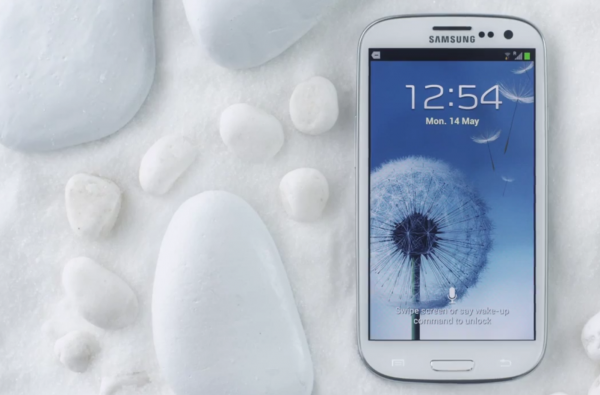
The company is making cases for multiple phones and is featuring designs from Dubai, Australia, and the United States. In short, they’re making the dirty business of hardware a little cleaner. Cases are about $30 each and come in multiple styles for iPhones and Samsung devices.
It’s hard to believe, but it’s been nearly 8 years since eBay acquired Shopping.com. After all that time, eBay has decided to rebrand the property as the eBay Commerce Network in a move the company says will “better reflect its evolution from a single-destination” site to a “robust commerce network”.
Consumers’ shopping habits have drastically changed since 1997, when Shopping.com first launched. Originally, buyers had fewer online options to research and ultimately buy their products. Today, consumers can access many more options, with the average shopper visiting 10.4 websites during their purchasing process.
To keep pace with the changing nature of buying and shopping, the eBay Commerce Network has evolved into an active commerce ad network capable of connecting retailers with buyers at any stage of the shopping experience – from awareness to purchase.
Kristy Troup, GM of the U.S. Business at the newly branded eBay Commerce Network, says, “We are committed to enhancing and scaling our network so that we can deliver new customers and drive meaningful sales by offering our merchants the broadest reach across the web at the right ROI. As an eBay company, we are focused on connecting buyers and sellers through relevant digital advertising.”
There are already 4,000 merchants working with the eBay Commerce Network. Merchants who partner with the network get placements on eBay, Bing and CNET, according to the announcement.
So far, the shopping.com homepage doesn’t have much in the way of new branding.
A number of solid reports have suggested that Apple is developing a smartwatch as it searches for new revenue streams in the increasingly competitive mobile market. While initial claims suggested the “iWatch” was still in the early stages of its development, some reports have pointed to a 2013 launch and now new evidence supporting that timeframe has emerged.
David Heckerman from Microsoft research recently discussed some examples of how machine learning is affecting genomics and changing the pace of scientific breakthroughs.
“Until recently, the wet lab has been a crucial component of every biologist,” Microsoft Research says. “Today’s advances in the production of massive amounts of data and the creation of machine-learning algorithms for processing that data are changing the face of biological science—making it possible to do real science without a wet lab.”
Microsoft just released the video Heckerman’s talk. It’s just over a half hour long:
How large can Samsung phones get? Bigger than 6-inches diagonally if SamMobile’s sources are correct. The site has a fairly good track record of sharing Samsung’s inner workings before the company itself does and on Tuesday it reported that two large new Galaxy phones are in the works.
So how likely is it that Samsung is going large with a Galaxy Mega line? I’d put the odds at better than 75 percent for a few reasons.
First, the company is already taking advantage of larger screen sizes with custom Android software such as the multi-app feature. Second, it now has full HD resolution on its phones: The Galaxy S 4 screen resolution is 1920 x 1080 with a whopping 441 pixels per inch.
It’s more likely that screens will increase in size to take advantage of the very high pixel density long before we see another jump in mobile screen resolution. And I don’t think its a coincidence that the Galaxy Note 3 was previously rumored to be 6.3-inches in size.
If SamMobile is correct, we may not have a long wait for these two smartphones that are borderline tablets: Both are expected by mid-2013, which is just three short months away.
Bill Gates is continuing to fund next-generation battery startups. On Tuesday, battery startup Aquion Energy announced that it is working on raising another round of $35 million, with a first close on that round from Bill Gates, as well Bright Capital, Gentry Venture Partners, and existing investors Kleiner Perkins and Foundation Capital.
Aquion Energy, based in Pittsburgh and founded in 2007, is using basic materials like sodium and water to build modular batteries that will be able to provide energy storage services for the power grid. The technology was developed out of Carnegie Mellon University by founder and chief technology officer Jay Whitacre.
The company’s battery pairs a carbon anode with a sodium-based cathode, and a water-based electrolyte shuttles ions between the two electrodes during charging and discharging. Many batteries have solvent-based electrolytes.
The purpose of using basic materials is to make a battery that is super low cost. That’s one reason why Aquion is focused on stationary applications, like the grid, where lower energy density can be an acceptable trade-off for lower costs and longer life. The battery can also withstand a wide range of temperatures without losing storage capacity, so could be installed alongside a solar installation without sapping a lot of energy for air conditioning to keep the batteries cool.
Aquion Energy has been planning on building a factory in Pennsylvania that could make its sodium batteries starting this year. About a year ago Aquion said it had leased a facility from the Regional Industrial Development Corporation in Westmoreland County, Pennsylvania, and the company hopes the factory could create 400 jobs by the end of 2015.
Such a factory could cost between $75 million and $80 million to build, so it’s likely this funding will go towards moving into production. In the summer of 2011 Aquion raised $20 million. The Department of Energy has also supported Aquion’s technology development with a $5 million stimulus grant.
Kleiner Perkins’ David Wells played a key role in helping incubate this technology. Whitacre and Wells started talking in late 2007 and a year later Kleiner sponsored an incubator at Carnegie Mellon for Whitacre to develop the tech. Following that, Whitacre spun off the venture and began to work on commercializing the battery.
Bill Gates has also invested in battery startup Ambri (formerly called Liquid Metal Battery), which like Aquion is building a grid battery and looking to begin production in the coming years. Gates has backed at least 5 battery startups, according to a talk he gave back in 2010.
Samsung’s (005930) Galaxy Note phablet lineup is about to see some serious new competition… from Samsung. According to a report from SamMobile, which has a good track record when reporting details about unannounced Samsung products, the South Korean vendor is developing two new supersized smartphones that will launch later this year. Unlike its current phablets, however, these new handsets will fall under Samsung’s popular Galaxy brand and therefore may not include some of the Notes’ more appealing features, such as S Pen stylus support. The Galaxy Mega 5.8 is rumored to feature a 5.8-inch display and it will reportedly launch in late May or early June. Then, the Galaxy Mega 6.3 will seemingly follow in mid to late June with a comically large 6.3-inch touchscreen.
France, the United Kingdom, Germany, Italy, Spain and the Netherlands have launched investigations into Google’s privacy practices after the company elected not to make changes following requests from these countries. Google faces possible fines and other action, depending on how these governments view Google’s policies and how they comply with the countries’ laws.
French privacy watchdog CNIL has been very vocal about Google’s policies since they went into effect last year. If you’ll recall, Google essentially consolidated the privacy policies of its various products into one central policy, which better allows it to share data from one of its products to the next, effectively turning Google into one main product, as opposed to a bunch of separate ones. Google’s policy does this without changing anything about how it shares data with third parties.
From March to October 2012, the Article 29 Working Party investigated into Google’s privacy policy with the aim of checking whether it met the requirements of the European Data Protection Directive (95/46/CE). In view of the findings of this analysis which was published on 26 October 2012, the EU Data protection authorities asked Google to comply with their recommendations within 4 months.
After this period has expired, Google has not implemented any significant compliance measures.
On 19 March 2013, representatives of Google Inc. were invited at their request to meet with the taskforce led by the CNIL and composed of data protection authorities of France, Germany, Italy, the Netherlands, Spain, and the United-Kingdom. Following this meeting, no change has been seen.
The article 29 working party’s analysis is finalized. It is now up to each national data protection authority to carry out further investigations according to the provisions of its national law transposing European legislation.
CNIL goes on to say that all the authorities composing the task force have launched actions.
Bitcoin is getting a lot of attention in the news this week with the value of a single Bitcoin surpassing $100, and the currency’s total value topping $1 billion. Naturally, a lot of questions are being asked.
Questions like: What is it? Is it the future of currency? How valuable can it get? How risky is it to use Bitcoin? One article even asks if “Bitcoin versus government” is the “new gun rights battle”.
First off, if you’re unfamiliar with the concept of Bitcoin, a brief explanation is probably in order. It’s a non-government-based, open source, P2P digital currency, in short. As Bitcoin.org explains, it’s also a protocol, and a software than enables instant P2P transactions, worldwide payments, low or zero processing fees and “much more”.
“Bitcoin uses peer to peer technology to operate with no central authority; managing transactions and issuing Bitcoins are carried out collectively by the network,” the site explains. “Through many of its unique properties, Bitcoin allows exciting uses that could not be covered by any previous payment systems.”
“As a new user, you only need to choose a wallet that you will install on your computer or on your mobile phone,” Bitcoin.org explains. “Once you have your wallet installed, it will generate your first Bitcoin address and you can create more whenever you need one. You can disclose one of your Bitcoin addresses to your friends so that they can pay you or vice versa, you can pay your friends if they give you their addresses. In fact, this is pretty similar to how email works. So all that is left to do at this point is to get some bitcoins and to keep them safe. In order to start using Bitcoin, you are not required to understand the technical details.”
There are reasons why Bitcoin might appeal to the non-geeky. As Business Insider’s Henry Blodget writes on Yahoo Finance, “The premise and promise of Bitcoin–the part that appeals to folks who don’t happen to be gold bugs or cryptography geeks–is that the current plan is for only a finite number of Bitcoins to be created. This is in direct contrast to standard government-issued currencies, which governments can always print more of. If the supply of Bitcoins remains finite, this should theoretically eliminate inflation, which is one of the biggest drawbacks of paper money.”
In turbulent worldwide economic times like these, this presents a pretty interesting concept.
In the wake of a “press avalanche” following a controversy in which Bitcoin was being used in drug transactions, Andresen said, “Where the first couple of mainstream articles about Bitcoin caught the attention of other reporters, who in turn also wrote about it, which then triggered even more press. That was both great and terrible for the project: great because it drew a lot more technical and business talent to look at Bitcoin and start Bitcoin-related projects, but terrible because when people realized that Bitcoin still has a lot of growing up to do, the speculative bubble popped.”
“I think it is very likely the same thing will happen again sometime in the next few years as other parts of the world discover Bitcoin or it is re-discovered in Europe and the U.S.,” he said. “I expect the wild price fluctuations to diminish over time as Bitcoin infrastructure grows up and speculators start to get a better idea of the real value of Bitcoin.”
Indeed, many have now seen the value. Not only has the Bitcoin’s value surpassed $100, but there is a huge list of online and real world businesses that currently accept Bitcoin here. Even that is not all inclusive, as it is noticeably missing reddit, which recently announced that it now accepts Bitcoin for reddit gold.
If you’re a small business interested in accepting Bitcoin yourself, you’d probably do well to start with this walkthrough.
“If you expect that the number of people interested in using Bitcoin is small, you might simply start by posting a sign or a note: ‘We Accept Bitcoin’, and ask people to contact you directly in order to make a payment,” it says. “Even if hardly anybody uses Bitcoin as a payment method, you’re helping Bitcoin in two ways: one, by increasing awareness, and two, by making your customers more willing to accept Bitcoin as payment from others in the future, because now they know somewhere they can spend it.”
For selling goods or services on a website, it says, you’ll want to use a Bitcoin merchant solution to accept the currency. You can usually opt to have Bitcoins converted to dollars or other currencies automatically. For brick and mortars, customers can pay with their mobile phone apps, so the guide recommends placing a QR code near your register, so customers can quickly scan and pay.
“I tell people to only invest time or money in Bitcoin that they can afford to lose,” Andresen said in the interview. “There are a lot of things that could possibly derail it, ranging from some fundamental flaw in the algorithm that everybody has missed to world-wide government regulation to some alternative rising up and replacing Bitcoin.”
He did note at the time that he finds these scenarios to be unlikely.
He also had some interesting things to say about potential digital currency competition: “I think to overcome Bitcoin’s head-start, an alternative will either have to have a large company or government backing it and marketing it. Or else, it will have to be radically better in some way. There seems to be a perception that Bitcoin is in a winner-take-all race against other currencies; either everybody in the world will be using it for all of their online purchases in 50 years or it will not exist. I think the online payment world will like our current world of currencies – different currencies used in different places. The online payments won’t be divided by geography, though it might be divided by language or culture or social network.”
“I think there will eventually be one dominant currency that is used for 80% of worldwide online transactions,” he predicted. “But I think there will always be alternatives. The most likely outcome in my lifetime, the next 40 years or so, is most people will use their national currencies when purchasing goods and services from other people in their own countries but will use something else for international payments.”
Questions about the security of Bitcoin are likely to run through many heads, particularly as we read about sites and businesses being hacked nearly every day. The Bitcoin stance on this is essentially that the security is in your hands just as the security of your physical wallet is. It’s up to you to take the precautions. It is recommended that you backup your wallet, encrypt your wallet, “be careful with online wallets,” and use an offline back up for savings. This is all discussed a bit more here.
“To steal your Bitcoins, thieves would have to break into both your computer or smartphone and your bank,” Andresen said in the interview. “And, it would be impossible for anybody at the bank to steal them without first breaking into your computer.”
There is a lot of speculation out there about what Bitcoin can truly become, and that’s not likely to change anytime soon. Andresen tweeted that he enjoys “appropriately skeptical but accurate articles,” like “How Bitcoin could destroy the state (and perhaps make me a bit of money)” at The Spectator. Here’s an excerpt from that to give you an idea of what he means:
So. The first thing you need to know about Bitcoin is that it’s a peer-to-peer, digitised crypto-currency. No, please, don’t stop reading. Just hold that one in your mind while we talk about the second and third things you need to know about Bitcoin, which are far more exciting. For example, you can buy drugs with it! I mean, sure, you can buy plenty of other stuff, too, but I’m really not sure anybody actually does. According to one study, Silk Road, the main ‘buy drugs with Bitcoin’ website, has a monthly turnover of around a million quid. And thirdly — you’ll like this one, you capitalist Spectator types — its value is rocketing. A month ago — out of interest, rather than a desire for heroin, Mum — I bought £100 of Bitcoin. Two weeks ago, like, I said, it was worth £157. Today, it’s worth £213. Interested yet?
Actually, the second and third things aren’t as important as I made out. Mnyeh, drugs, you can buy them anywhere. And, sure, Bitcoin is bullish at the moment, but the value notoriously bounces all over the place (in 2010 somebody spent 10,000 of them on a pizza, a sum which would today make that pizza worth £465,368). So, no, far more interesting than the drugs and riches is the core idea, which is this peer-to-peer crypto business. For the non-tech-savvy among us, this basically means it’s not quite like any other currency we’ll have ever used. It doesn’t have a central bank. Nobody is in charge. A Bitcoin is a thing that simply exists, like gold.
There is a hard limit on the amount of Bitcoins that can be created, and that’s 21 million. That number is expected to be reached in the year 2140. Is Bitcoin’s future bright enough to last that long? Do you accept Bitcoin payments? Do you plan to? Do you use the currency to make payments? Share your thoughts about this interesting digital money platform in the comments.
The new king of Android smartphones is set to begin rolling out in just two weeks, according to a new leak. SamMobile has a solid track record when issuing leaked details about Samsung (005930) devices, and the blog on Tuesday published what it claims to be a Galaxy S 4 shipping schedule for the first markets set to receive the new flagship smartphone.
The Hybrid Memory Cube consortium, a group that includes some of the largest memory manufacturers, has released a standard specification for the DRAM technology after 17 months in development. The goal of the consortium — and the spec — is to support a new form of computer chip that weds memory and processing in a dense cube structure that packs in more memory while consuming less power.
The resulting chips should find homes in high-performance computing, networking, gaming and other applications that require fast access to data stored in memory. And they should appear in physical products by the first half of next year. Eventually, this will have applications in cloud computing and even data analysis. According to the consortium, a single HMC offers a 15x performance increase and uses 70 percent less energy per bit when compared to today’s memory.
The chip industry is really good at making a CPU that does calculations faster, but it hasn’t been able to make memory chips fast and dense enough to feed the cores enough information to keep up with the CPU’s capabilities. So what chips are left with is a massively large brain that stands idle sometimes while it waits for information to come to it. That idle time burns power and reduces the overall performance of a computer — and it’s becoming a bigger deal as both power and performance are being pushed to the edge.
Since that story was written, the consortium — founded by Samsung and Micron — has grown to more than 100 companies. The members now include big name vendors and users such as ARM, IBM, Microsoft, SK Hynix and HP as well as many smaller and specialty chip firms. The details of the announcement today are about how other chips will connect with the hybrid memory cube.
The structure of the chip is very different from traditional densely-packed DRAM modules. It’s stacked, which is a common way chipmakers have tried to pack in more memory — but instead of stacking the DRAM and connecting it via interconnects on the outside of the chip, the HMC has holes through the module with nanowires connecting the memory modules.
This process, known as Through Silicon Vias or TSV is of growing interest in the industry as it slogs down the path of making 3-D chips. But anytime you change a core silicon element significantly you have to figure out a lot of things –from the hardware layer all the way up to the applications. Today’s spec details how things will shunt bits to and from the hybrid memory cube. From the release:
“The achieved specification provides an advanced, short-reach (SR) and ultra short-reach (USR) interconnection across physical layers (PHYs) for applications requiring tightly coupled or close-proximity memory support for FPGAs, ASICs and ASSPs, such as high-performance networking, and test and measurement. The next goal for the consortium is to further advance standards designed to increase data rate speeds for SR from 10, 12.5 and 15Gb/s up to 28Gb/s. Speeds for USR interconnections will be driven from 10 up to 15Gb/s. The next level of specification is projected to gain consortium agreement by the first quarter of 2014.”
In short, the HMC will support 10 gigabit per second data rates at a minimum for both when they are the same board (short reach) and when they are packed even more tightly (around two to three inches) and get faster over time. Wicked fast.
Pre-orders for both models begin on April 4, with general availability of the phones on April 19. Pre-ordering may make sense if you’re set on owning the HTC One because of a special offer that expires on April 18: AT&T is throwing in a free HTC Media Link HD wireless HDMI adaptor worth $90, so you can wirelessly share content from your phone to your HDTV.
As a reminder for what this year’s HTC One offers over the prior version, the LTE phone runs on a 1.7 GHz quad-core processor and has a 4.7-inch 1080p display. The handset is built with an aluminum unibody design, runs on Android with HTC Sense and has 2 GB of memory. A unique camera sensor with large pixel size is paired with an f/2 28 millimeter lens for capturing low-light images and video.
AT&T (T) on Tuesday announced that it will launch the HTC One on April 19th and pricing will start at $199.99. The carrier will sell two different versions of HTC’s (2498) new flagship smartphone, a 32GB version for $199.99 and a 64 GB model that will cost $299.99 with a two-year contract, and preorder availability will begin on April 4th. Key specs include a quad-core 1.7GHz processor, a 4.7-inch full HD display, 2GB of RAM and Android 4.2 Jelly Bean. BGR reviewed the HTC One earlier this week and said it was the best Android smartphone we’ve ever tested. AT&T’s full press release follows below.
What a difference a day makes. After being forced to issue a public apology for Apple’s Maps debacle late last year, Apple (AAPL) CEO Tim Cook on Monday issued an apology to Chinese consumers for what the state media deemed to be unfair local warranty policies that differed from Apple’s policies elsewhere. As reported by Reuters on Tuesday, Cook’s plea appears to have worked — the once critical government-run Chinese newspaper Global Times has issued a followup to earlier attacks stating that Apple is “worth respect compared with other American companies.” The Foreign Ministry also reportedly praised Apple for “conscientiously” responding to the media-driven outcry.
As previously reported, Google began showing a doodle in honor of naturalist and illustrator Maria Sibylla Merian in parts of the world where it was already April 2nd. Now that the date has changed in the rest of the world, including here in the U.S., the doodle has made it to a larger audience, putting Google in the spotlight once again after its day of April Fools’ jokes.
The doodle celebrates Merian’s birthday, as she was born on April 2nd, 1647 in Frankfurt, Germany. She died on January 13, 1717 in Amsterdam.
Here’s what Google’s Knowledge Graph result looks like for Merian:
Merian published three collections of engravings of plants before turning her studies to insects. According to Wikipedia’s history of her, she kept her own live specimens, and illustrated the metamorphosis stage in various species. As the article points out, this was at a time when insects were largely thought of as “beasts of the devil”.
If you click over to Google’s Image results, you can peruse a plethora of Merian’s beautiful illustrations.
The following is a republishing of an important article written by Dan Roberts from AmmoLand.com. It reveals the real truth about mass shootings that bureaucrats and lawmakers are choosing to sweep under the rug: psychiatric drugs. If you want to know the real reason…
The defense of the Bill of Rights will not be achieved by lying down and remaining passive. Freedom-hating gun grabbers have conspired in Connecticut to criminalize millions of law-abiding gun owners unless they submit to being fingerprinted and tracked in a government…
The growing resistance to the world’s supply of antibiotics is becoming a “catastrophic threat” that will manifest itself over the next 20 years, according to a new report from the British government.
Dame Sally Davies, Britain’s Chief Medical Officer, called for…
Only T-Mobile can save iPhone now. Apple’s U.S. market share, as measured by smartphone operating system, retreated in February, according to data Kantar Worldpanel ComTech released today. With the iPhone 5 initial release sales glow gone, and a rapidly saturating market for a product feature set now three models old, share isn’t sustainable. Meanwhile, Android gains — as does Windows Phone.
iPhone share, based on sales, fell to 43.5 percent for the three months ended in February. That’s down from 45.9 percent in January and from 47 percent a year earlier. By comparison Android is up — to 51.2 percent from 49.4 percent sequentially and 45.4 percent annually. By the same reckoning, Windows Phone rose to 4.1 percent from 3.2 percent and 2.7 percent share.
But there is more than cooling iPhone 5 sales at work here. “Last month we saw that Android’s increases were thanks to a large increase in Samsung sales within Sprint”, Mary-Ann Parlato, Kantar Worldpanel ComTech analyst, says. “This month, while the increases for Samsung are less pronounced, we’re still seeing an increase in uptake of the brand, which is now impacting on Sprint’s overall share in smartphone sales”.
Read that paragraph again. iPhone was supposed to save Sprint, as T-Mobile USA also hopes. With Samsung sales lift, Sprint’s U.S. smartphone sale share rose to 15 percent from 12.9 percent year over year. T-Mobile nicked up, to 9.8 percent from 9.1 percent. By comparison, AT&T smartphone sales share fell 3.7 points to 26.7 percent and Verizon by 1.1 points to 35 percent.
For AT&T, which is most dependent on iPhone, share dipped to 67.9 percent from 68.4 percent, while Android dramatically jumped — from 20.8 percent to 26.5 percent.
Sales data for all the carriers suggests some ebbing loyalty among existing iPhone users. Meanwhile, Samsung loyalty increases, however, largely at the expense of other Android phone makers rather than Apple.
“Of those who changed their phone over the last year to a Samsung smartphone, 19 per ent had previously owned a Samsung featurephone, 15 percent owned a HTC smartphone, 14 percent owned an LG featurephone, 10 percent owned a Samsung smartphone and 9 percent owned a BlackBerry”, Parlato says. “It’s apparent that Samsung is successful at capturing users from across the competitor set and not just gaining from their own loyalists”.
The data foreshadows much ahead. T-Mobile begins selling iPhone for the first time on April 12, which presumably will unleash unprecedented demand among existing customers. Meanwhile, new, compelling data plans offer iPhone users another carrier option. I just moved three lines to T-Mobile from AT&T for a monthly bill of $120 — unlimited text, talk and web. I downgraded the remaining two AT&T lines. For 550 minutes calling, unlimited texting and 3GB data for one line and 300MB data for the other, cost is pennies less than T-Mobile. The point: iPhone could get some sales lift during April and May.
Then there is Galaxy S4, which goes on sale later this month. AT&T starts taking preorders in 15 days. For the three months ended in February, Galaxy S III accounted for 52 percent of Samsung sales, followed by 21 percent for its predecessor and 5 percent for Galaxy Note II. The breakdown hints what to expect from the S4 but not whether there will perceptible increase in overall Samsung smartphone sales.
If you’re doing any sort of social-media application, you might want to take note of what Facebook just built. The company has created a benchmarking tool called LinkBench that measures the performance of databases tasked with serving graph-structured data, which, presumably, is the lifeblood of every startup around that’s concerned with who’s connected to whom.
Although, of all LinkBench’s features — and you can read all about them in a Facebook Engineer wall post from Monday morning — probably the biggest is that it’s open source and built to be extensible. One of the biggest problems with benchmarks overall is that they rarely align with actual production workloads inside the companies that are supposed to care about them. In this case, for example, a benchmark for measuring the performance of Facebook’s massive MySQL+memcached+Flashcache database architecture against its massive social graph and transaction activity would be all but worthless unless someone was just planning to rebuild Facebook.
I’ve written in the past that perhaps crowdsourced benchmarks are the wave of the future: essentially a compiled set of statistics and best practices as more companies test different database (or Hadoop) technologies on different hardware setups against different workloads and publish the results. Everything will of course vary by the exact details within any given environment, but it would be a good way to get a sense of how a particular stack might, or perhaps should, fare.
But an open source benchmark tuned for a specific use case — social graphs — by probably the world’s foremost expert on that use case is interesting, too. Anyone else trying to serve data from their own social graphs can benefit from some of LinkBench’s more-prominent features, such as its ability to generate “large synthetic social graphs,” while tuning it to the specifics of their own infrastructure. After all, it might be that your app has different requirement around reading versus writing data, and it’s very possible you’re not using MySQL, either.
Or maybe you are using MySQL and want to see how a newer database technology might handle your graph workload. That, by the way, is one of the reasons Facebook built LinkBench, according to this post.
At any rate, the social web is all about graphs, and database performance really matters for anyone trying to build a service that stays online and provides a pleasant user experience. Say what you want about Facebook, but its services perform, so the bar is set high for anyone trying to dethrone it or at least to build something than can attract an equally large and devout following.