 |
Spices can turn mundane bland foods into culinary delights, and that’s there primary use in our modern world. Some “foodies” recognize how they support health as well, sometimes as an antioxidant, an anti-inflammatory, anti-fungal, antimicrobial, or a combination of… |
Author: Serkadis
-
Use these six amazing spices to burn fat fast
-
Sunshine vitamin – A potent defense against deadly new tuberculosis strains

With antibiotic resistant tuberculosis superbugs on the rise around the world, natural remedies are increasingly important to combat the spread of this serious disease. Consuming adequate levels of vitamin D is crucial not only for a healthy immune system, but also to… -
When the whole world has drones, U.S. political leaders are likely to be targeted and assassinated

Today, U.S. political and military leaders may have the technological upper hand, as they say, in terms of emerging unmanned aerial vehicle (UAV) technology, but what happens when other nations around the world – and especially “competitor” nations – get them as well… -
Six common causes of bloating and how to fix them

Abdominal bloat. It can come immediately following a meal, a few hours after a meal, or even seemingly out of the blue. But one thing is for sure — bloat is not normal, and it can negatively affect your energy levels, your mood, and even your ability to effectively… -
Indoor urban vertical farming; the next gardening venture for survival and the new agriculture

Certain forward-thinking folks are reinventing farming as we know it. Indoor, organic urban farms growing food vertically using hydroponic and aquaponic principles, are sprouting around the country. The push for alternative methods of raising food follow in part, on… -
Top 10 excuses for Obama signing the Monsanto Protection Act
(NaturalNews)Yes, he signed HR 993. It was a bill funding the federal government. There was a rider in it. A Monsanto and biotech rider. The gist of the rider is: a dangerous ghoulish GMO food crop can’t be stopped by a court order. That crop can still be grown, harvested, and…
-
Six crucial lifestyle and diet changes to help conquer PMS

Sara Avant Stover, founder of The Way of the Happy Woman, has this to say about Premenstrual Syndrome: “PMS … -
Come April 4, Facebook gets a “new home on Android”
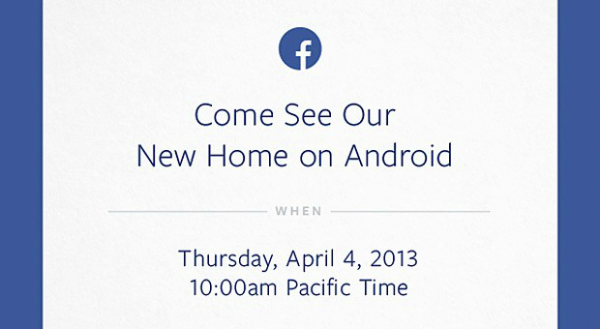
They say April showers bring May flowers. What will Facebook’s April 4 event bring? Late today the social network reportedly invited blogs and the news media to “come see our new home on Android”. I’m not on the social network’s guest list and can only report that based on those who got the invite, everything looks legit and tantalizing.
That’s because no one can resist speculating or claiming that some unnamed source — sorry, your buddy in the next bathroom shouldn’t count — promises debut of the long-rumored, oft-denied, ever-elusive and Google-gauging Facebook phone. Running Android! My God, the irony, the rumor wide-eyed profess. Hey, dudes, what if the new home is a tablet? Like Amazon does with Kindle. Or there’s no phone at all?
Oh, but the force of meme-will is the social smartphone. It’s what everyone will believe by the time Easter Monday passes, unless there is some snarky April Fool’s joke meantime, like: “Today Facebook agreed to acquire Microsoft, and Bill Gates-wannabe Mark Zuckerberg promised to fire Steve Ballmer as his first official act”.
For now the rumor rabble runs wild at the mouth, citing the not-to-be-named-and-shamed guy cleaning the toilet as source Facebook will launch an Android phone made by HTC. Ha! Could this be the real reason for the HTC One’s delay. The HTC Facebook One?
Tongues will wag, and it’s anyone’s guess, and lots of people will. I’ll wrap with none but wonder about April Facebook showers — raining down on competitors — bringing a May device, if any. Rumormongers cried wolf so many times, I’m ever the skeptic.
Thanks to Engadget, from which I lifted the invite above.
-
Amazon acquires Goodreads
 I guess reviews just aren’t enough. Social matters more. Late today Amazon and Goodreads reached a merger agreement, in a deal expected to close second quarter. The companies did not publicly disclose terms.
Goodreads is a recommendation service with social sharing capabilities. Founded in 2007, the the company claims 16 million members and 23 million reviews, but the magic comes from the social aspect. If you ever wanted to snoop in a friend’s bookshelf, Goodreads lets you do something just like that — recognizing reading recommendations from people you know can be more influential than professional reviewers and other strangers.
“Amazon and Goodreads share a passion for reinventing reading” Russ Grandinetti, Amazon vice president of Kindle Content, says. “Goodreads has helped change how we discover and discuss books and, with Kindle, Amazon has helped expand reading around the world. In addition, both Amazon and Goodreads have helped thousands of authors reach a wider audience and make a better living at their craft. Together we intend to build many new ways to delight readers and authors alike”.
Together is the key word. Goodreads is a potentially good fit for Amazon, depending, of course, on execution and puts the retail giant ahead of major competitors. Google has a big social network, which could be leveraged for selling ebooks from the Play store — but an asset for now largely wasted. Apple and Barnes & Noble have got what? Nothing really.
“Books, and the stories and ideas captured inside them, are part of our social fabric”, Goodreads CEO Otis Chandler, asserts. “People love to talk about ideas and share their passion for the stories they read”.
Amazon’s reach is, ah, good for Goodreads, and Chandler acknowledges this. “I’m incredibly excited about the opportunity to partner with Amazon and Kindle. We’re now going to be able to move faster in bringing the Goodreads experience to millions of readers around the world”.
We’ll see if he survives the transition, which often isn’t the case for CEOs of acquired companies. That said, Goodreads will remain in San Francisco rather than relocate to Seattle. So who knows about anyone’s future.
This has been a surprisingly busy few weeks for social recommendation acquisitions. On March 20, Yahoo announced plans to acquire Jybe, a startup specializing in personalized local entertainment recommendations — for books, restaurants, movies and such. Same day, Pinterest snatched up Livestar, another local recommendation startup.
-
When there’s no such thing as anonymous data, does privacy just mean security?
Anonymous data is one of the staples of the big data movement, but there’s a dark side.
In theory, data from mobile phones lets us do things like map traffic patterns, while web-behavior data can be a boon to researchers and others trying to make sense of how people conduct their online lives. The thing is, it’s damn hard to keep that data anonymous. Perhaps all we can hope for is to keep potentially sensitive data out of the wrong hands.
The latest proof of how hard it is to anonymize data came earlier this week, when a group of MIT researchers published a paper based on their analysis of 1.5 million cell phone traces over 15 months inside a “small European country.” A press release highlighting the paper’s publication nicely sums up the findings, which are somewhat startling:
“Researchers … found that just four points of reference, with fairly low spatial and temporal resolution, was enough to uniquely identify 95 percent of them.
“In other words, to extract the complete location information for a single person from an ‘anonymized’ data set of more than a million people, all you would need to do is place him or her within a couple of hundred yards of a cellphone transmitter, sometime over the course of an hour, four times in one year. A few Twitter posts would probably provide all the information you needed, if they contained specific information about the person’s whereabouts.”
And assuming you’re concerned about protecting privacy, it gets worse:
“[T]he probability of identifying someone goes down if the resolution of the measurements decreases, but less than you might think. Reporting the time of each measurement as imprecisely as sometime within a 15-hour span, or location as imprecisely as somewhere amid 15 adjacent cell towers, would still enable the unique identification of half the people in the sample data set.”
All it takes to get started is a few pieces of data against which to compare the anonymized mobile data. “For re-identification purposes,” the authors write in the paper, titled Unique in the Crowd: The Privacy Bounds of Human Mobility, “outside observations could come from any publicly available information, such as an individual’s home address, workplace address, or geo-localized tweets or pictures.”

Have data, can track. Source: Nature Scientific Reports
We’ve been down this road before

From the Netflix paper. Source: University of Texas
This news might ring a bell to anyone who follows the world of web data. After releasing anonymous user data as part of its Netflix Prize competition in 2007, researchers were able to de-anonymize it using publicly available movie reviews from IMDB. In 2006, AOL released a bounty of supposedly anonymous search data for research purposes, but it was quickly mirrored onto public web sites and people began picking individual searchers out of the sea of anonymous identification numbers.
There are plenty of non-digital examples, too. The Unique in the Crowd authors point to one case where a medical database was analyzed against a voter list to discover a governor’s health records. In a 2007 post for Wired, security expert Bruce Schneier cited a couple of analyses of census data, including one using 1990 census data and proving that 87 percent of Americans could be identified using just their ZIP code, sex and date of birth.
And then there are those fitness-tracking devices. At out Structure: Data conference last week, Central Intelligence Agency CTO Ira “Gus” Hunt gave the audience — the whole world, really — a scare by noting that it’s possible to identify someone based solely on his gait. That kind of information might not get people lining up for web-connected pedometers and other fitness devices.
Any type of de-anonymization is only exacerbated in an era of social media. The University of Texas researchers who decoded the Netflix data were able to speculate on individuals’ political positions, sexual orientation and other characteristics, but we now give that information away for free on sites like Facebook, Twitter, Foursquare, you name it. If you’re inclined to stalk someone, steal identities or engage in any other malicious undertaking, access to names, photos, interests, location, checkins and other information makes for a hearty personal-data stew, and it just takes one piece to get the rest.
A choice between privacy and a better world?
However, if we can get past the inherent privacy concerns, these types of anonymous, aggregate data sets can be incredibly valuable. Companies such as Google, Apple and INRIX are using smartphones and in-vehicle devices to map traffic patterns and how people move throughout cities in efforts to improve both commute times and urban planning. Social scientists accessing data from companies such as Google and Facebook could learn a lot about the intricacies of online behavior. And predictive analytics platforms such as Kaggle present an opportunity optimize everything from business processes to health care.

Source: INRIX
The holy grail of anonymous data lies in genomics and the hope that lots and lots of quality data will help researchers discover cures for diseases like cancer. Because of the relative uniqueness of each individual cancer case, researchers hope a massive pool of data on sequenced genomes will help them spot patterns and commonalities that no amount of traditional lab work will uncover.
Further complicating things is the fact that the companies delivering our favorite web services rely on our personal data to make money. Whether we like it or not, targeted advertising pays the bills for free services, and doing targeted advertising well requires a lot of personal data. One could argue that a major focus of the data science movement that has taken the world by storm is stitching together various pieces of anonymous data from across the web in order to create holistic images of consumers.
In fact, web companies have gotten so good at de-anonymizing data that the Federal Trade Commission has all but abandoned the term “personally identifiable information.” In a 2010 report on online privacy, the agency wrote that any guidelines it proposes will likely apply
“to those commercial entities that collect data that can be reasonably linked to a specific consumer, computer, or other device. This concept is supported by a wide cross-section of roundtable participants who stated that the traditional distinction between PII and non-PII continues to lose significance due to changes in technology and the ability to re-identify consumers from supposedly anonymous data.”
“Going forward,” the Unique in the Crowd authors conclude, “the importance of location data will only increase and knowing the bounds of individual’s privacy will be crucial in the design of both future policies and information technologies.” This rings equally true for every other type of personal data, especially given the relative ease with which they can be analyzed against each other to create a sum that greater than the whole of its parts.
One has to wonder, though, what types of policies and technologies will come about to keep data anonymous and available to the people who need it while still maintaining its utility. Privacy is important, but is it worth the opportunity costs of not trying to solve the types of problems that large, anonymous data sets are ideal for solving? If true anonymization is really that difficult, perhaps the best bet is just to double down on security and try to ensure that valuable data — anonymous or not — doesn’t get into the wrong hands.

Related research and analysis from GigaOM Pro:
Subscriber content. Sign up for a free trial.- Connected world: the consumer technology revolution
- Dissecting the data: 5 issues for our digital future
- NewNet Q4: Platform mania and social commerce shakeout


-
Content for cord cutters is going to get harder to find, industry executive predicts
While millions of cord cutters are eagerly awaiting their chance to subscribe to HBOGo, the CEO of the company that helps ensure that HBO’s over the top content looks good is skeptical about when that might happen. Darren Feher, the CEO of Conviva, thinks things will get worse for cord cutters before they get better.
Instead of watching Game of Thrones via an a la carte HBOGo subscription, they’ll face higher fees for content aggregators like Netflix and Hulu and will find more content inaccessible unless they have a pay TV subscription, he thinks. Even Hulu’s backers have toyed with making the site accessible only to those who have a pay TV subscription.
“The whole industry is doing a lot of experimentation in places and markets where they are trying to figure out what will work for the U.S. market,” said Feher, who prior to the top job at Conviva was the CTO of NBC-Universal responsible for activities such as streaming the Beijing Olympics. “But before that, in the next 12 months there will increasing pressure against cord cutters. The whole authentication thing, where you can’t watch content unless you have a cable sub, will be a mess for consumers.”
In short, while Nordic viewers get their HBOGo a la carte, those of us in the U.S. may have to wait, no matter how many webcomics and industry insiders demand it. Even vague suggestions from HBO executives are compromises that limit the experience to an app.
However, there’s a light at the end of the tunnel according to Feher. “Inevitability consumers will tell content creators what they want and the content guys will have to respond. There’s a whole upcoming generation of ‘cord nevers’ that the industry has to consider.”
For example he notes that while many in the industry expected online viewers of The Super Bowl to be lower that it was, given that it was a weekend, and people tend to have parties where they cluster around the big screen TV to watch it. Thus he, and others were surprised at how many online watchers there were and how many came from sites with an .edu address.
“No one brings a TV to college anymore, and so it’s logical to ask if they will ever want to watch outside of this way they’ve gotten used to,” said Feher. “But in the short term there will be a lot more pressure on aggregators like Netflix and Hulu, and the consumer will feel that in less content or higher prices.”
The challenge for the industry is complex, and is one where technology is pressuring business models designed for the old way of delivering television — multicast from one to many over a guaranteed and pay-TV-provider-controlled connection. The internet has made viewing content more of a one-to-one proposition and the rise in over the top services and multiple devices on which to watch the content has made the entire experience disjointed.
Conviva has stepped in to ensure video quality in this brave new world with software that parses a lot of data in the cloud and has software agents that make decisions about how to adapt the video in response to problems. If the internet is congested for example, it may route content via different route. If the video is buffering in your home because your Wi-Fi is wonky it may drop down to a lower bit rate.
But outside of technical solutions, Feher also thinks there’s a business model that will help content companies and broadcasters make money so they can avoid “trading analog dollars for digital pennies,” as NBC-Universal’s Jeff Zucker (and Feher’s former boss) has said. It may be a matter of charging people more money for HD streams or even more for 4K streams that require a whopping 25 Mbps connection. ISPs are trying to build this level of granularity into their billing systems and networks.
It might also be as simple as using the targeting abilities available in the digital world to better monetize a viewer by showing him or her more relevant advertising or charging different prices for a la carte content. Essentially he’s proposing that the data driven model we’re seeing drive success in other industries takes a stab at changing television. I hope the results are worth watching.

Related research and analysis from GigaOM Pro:
Subscriber content. Sign up for a free trial.- Connected Consumer Wrap-up: Q1 2009
- Controversy, courtrooms and the cloud in Q1
- Q4 Wrap-up: SOPA and the future of digital content

-
Google brings new compose message box to all Gmail users, like it or not
 Say, you know that new pop-up compose message box Google introduced last autumn. You don’t? Well, get ready. Gmail is giving the ditty to everyone, whether or not wanted. That’s what it looks like, in photo right.
“The new compose will be rolling out to everyone over the next few days”, Phil Sharp, Gmail product manager, says. I’ve used the thing since October, in a sort of love-hate thing. On a laptop working in Chrome — even better, on Chromebook Pixel — the new compose box is great. On Surface Pro, using Internet Explorer 10 from Modern UI, the thing is unusable. The box flicks up and down from the bottom of the screen.
We’re all guinea pigs in the Google lab, and Sharp praises our rodent brains: “In addition to telling us what you love about the new compose experience (like how much easier it is to multitask!) you’ve also been sending us helpful suggestions for what features you’d like to see added. As a result of your input, we’re now ready to introduce the new compose experience as the default for everyone. We’re looking forward to hearing what you think!”
I do appreciate the ability to compose a message and work in the inbox at the same time. It’s good to see Google catch up with email features I first used in the 1990s.
-
The $99 OUYA Console Will Make Its Retail Debut In The US, UK And Canada On June 4

Didn’t get a chance to back the ambitious OUYA Android game console to lock in your pre-order? Considering how much press the thing has gotten, you don’t have much excuse for missing that particular window, but never fear — OUYA intends to sell the $99 pint-sized gaming gadget through retail partners like Amazon, Gamestop, and Best Buy starting on June 4.
The folks at Engadget obtained the full press release, which goes on to note that Android gamers in the U.K. and Canada would be able to pick up an OUYA that same day. Of course by then most (if not all) of the people who shelled out money when the project was in its early stages will have already received their devices. The Verge points out that OUYA began passing shipping notifications to its users earlier today.
While the hardware inches ever closer to its mass-market release, there’s still a question of content to contend with. OUYA hasn’t provided much insight on how many game submissions it’s received since it began accepting them a few weeks back, though quite a few developers have already thrown their weight behind the little console that could.
Of course, there’s a tendency for some gamers to cling to proven hits from years gone by, which is why it comes as no surprise to see some developers taking up the task of making the OUYA a first-rate emulation device. It was revealed earlier this week that NES, SNES, and Nintendo 64 emulators would be available in OUYA’s storefront at launch. And emulator developer Robert Broglia confirmed yesterday that he plans to bring his existing Android emulators for consoles like the TurboGrafx-16 and Sega Saturn (!) to the OUYA before too long.
The OUYA’s journey from kooky idea to full-fledged product has been a long one, and it’s not over yet. Getting the device onto store shelves is certainly a milestone for the young company, but the true test lays in how run-of-the-mill consumers will react to it. Granted, its price point may give it a leg up on more prominent rivals like the Xbox 360, Wii U, or PlayStation 3, but we’ll soon see if the gamers of the world wind up warming to it.
-
PNNL scientist elected Fellow of the Microscopy Society of America
Nigel Browning, a physicist at the Department of Energy’s Pacific Northwest National Laboratory, has been elected a Fellow of the Microscopy Society of America.
The “Fellow” designation distinguishes senior MSA members who have made significant contributions to the advancement of the science. Browning was recognized for advancements in electron microscopy, a type of microscopy that allows scientists to see structures on the molecular level.
A scientific leader in the field, Browning has led a large-body of ground-breaking research since the early 1990s. In 2008, with colleagues from Lawrence Livermore National Laboratory, Browning received an R&D 100 award for developing dynamic transmission electron microscopy, or DTEM. This technology can focus on objects as small as a few nanometers and catch a moment in time to reveal what happens over about 15 billionths of a second. This high resolution in both time and space allows researchers to take snapshots of what happens during chemical reactions.
Browning joined PNNL in 2011 with a goal of making DTEM work at normal pressures and temperatures. Currently, it requires samples to be in a vacuum. In addition, he is exploring how to use DTEM to control how nanoparticles form and grow – a method that could lead to new and improved materials for use in energy applications.
A Fellow of the American Association for the Advancement of Science, Browning earned a bachelor’s degree in physics and mathematics from the University of Reading in the United Kingdom in 1988 and a doctorate in physics from the University of Cambridge in the United Kingdom in 1992.
The Microscopy Society of America (MSA), founded in 1942, is a non-profit organization dedicated to the promotion and advancement of the knowledge of the science and practice of all microscopic imaging, analysis and diffraction techniques useful for elucidating the ultrastructure and function of materials in diverse areas of biological, materials, medical and physical sciences. Further information can be obtained by visiting www.microscopy.org or by calling 1-800-538-3672.
-
Take 20 Minutes And Get Better At Google’s Enhanced Campaigns
Google has posted a new Hangout discussing how to upgrade to and use its new Enhanced Campaigns features in AdWords:
If you’re really serious about learning about Enhanced Campaigns, you should probably watch this webinar too.
-
DDoS attackers aren’t knockin’ on your door, they’re breaking it down
 What would the Thursday before Easter be without a good scare to keep network administrators awake at night. Perhaps IDC just mixed up the candy holidays thinking it’s Halloween. Whatever, the analyst firm warns of a troubling increase in enterprise distributed denial of service attacks and promises more are coming to you.
 Of course, the real motivation here is to scare businesses into exploring DDoS-protective solutions. IDC forecasts 18.2 percent growth rate in DDoS products and services through 2017, reaching $870 million. To be fair, there’s little dispute about rising DDoS risks.
The Spamhaus Project just finished a rocky week of “large-scale DDoS attack“. Another DDoS disrupted Wells Fargo’s website this week.
Last month, Gartner also warned of increased DDoS attacks, many targeting banks and often used as distractions to cover other criminal behavior.
Avivah Litan, Gartner vice president, warns about a “new level of sophistication in organized attacks against enterprises” and that “they will grow in sophistication and effectiveness” this year.
Payment provider Dwolla is under DDoS attack as I write. Site is inaccessible. “Yesterday afternoon, Dwolla’s service providers became the victim of a distributed denial of service event, resulting in limited or no availability to the website, Dwolla.com”, according to the company. “This advanced event, still persists today, and is preventing people from viewing the website and consequently accessing its services”.
Prolexic, one of those DDoS-protection providers IDC claims more enterprises will give money to, says that “fourth quarter of 2012 exhibited high levels of activity” of attacks against its “global client base”. That’s up 19 percent year over year and by 27.5 percent from Q3. Also quarter-on-quarter, there was a “67 percent increase in average attack duration to 32.2 hours from 19.2 hours”.
“As these attacks surged in prevalence and sophistication, organizations were often caught unaware”, Christian Christiansen, IDC veep, says about enterprise DDoS assaults last year. “Embedded capabilities were quickly overwhelmed and outages were readily apparent on the Web. This is driving the need for proactive solutions to protect customer’s infrastructure from current and future attacks”.
But wait, there’s a sales pitch. “With the number of high-profile attacks steadily increasing, the market for DDoS prevention solutions will surge”, John Grady, IDC research manager says “A defense-in-depth posture with a combination of on-premise equipment and cloud-based mitigation provides the best protection against advanced application and SSL-based attacks as well as large-scale volumetric attacks”.
Photo Credit: Fabio Berti/Shutterstock
-
Bikram Sex Scandal Gets The Taiwanese Animation Treatment
As you may have heard, there’s a sex scandal going on in the yoga community. Where there’s scandal, there’s usually NMA (Next Media Animation).
The Taiwanese animation firm has covered everything from the Maker’s Mark debacle to the firing of Groupon’s CEO with their own, unique spin.
In real life, a lawsuit was filed against Choudhury Bikram, founder of Bikram Yoga. A woman named Sarah Baughn alleges that Bikram sexually harassed and assaulted her during a yoga instructor training camp back in 2005.
The Bikram Yoga organization responded, calling these “false charges,” but Choudhury has not commented.
-
Naysayers be damned: Why I bought a Chromebook Pixel
Perception is a funny thing: Nearly every Google Chromebook Pixel review says the device is great, but it’s not for you. So is it not great or is it only great for certain people? Starting at $1,299, it’s certainly not cheap, but it’s not priced that differently from similar hardware; in fact its less expensive than laptops with comparable displays. The real issue seems to be that people aren’t ready for the web as a primary interface. I am – I have been for some time, actually — and after using a loaner Chromebook Pixel full-time for several weeks, I ordered my own.
The hardware is outstanding
The hardware is on par with, if not better than, the MacBook Air I owned prior. The design is industrial and pleasing with no extras to take away from the look and feel; no cooling vents are visible, for example. Just a few ports adorn the sides: a pair of USBs, a mini DisplayPort and a microSD card slot. The speakers are hidden under the keyboard and are among they best I’ve heard on a laptop. At 3.35 pounds, the Pixel is near the top end of weight that I’d want to carry around, but I don’t find it too heavy.
 Google did a great job with the keyboard and, in particular, the trackpad. The island keys are well laid out and this device is a joy to type on. The top row of special keys — Refresh, Full Screen, volume and brightness, for example — are harder to press, making them more like buttons, but that helps mitigate accidental key strikes. The etched glass trackpad is superb and supports multitouch gestures, such as two-fingered scrolling.
Then there’s the bright, pixel-packed screen that I can’t take my eyes off. Yes, the 2560 x 1700 resolution is similar to the Retina Displays found on Apple’s latest MacBook Pro laptops, but it just looks better to my eyes. I can’t be sure if it’s the default fonts, the way Chrome OS handles resolution doubling or what. I’ve made several side by side comparisons to my wife’s 15-inch MacBook Pro laptop with Retina Display and in every test, the Pixel simply looks better to me.
The Pixel’s display is also a touch screen although I don’t find myself using touch for interaction all that much. On occasional, I’ll dab at the screen to tap a button or a link, or to scroll a web page, but not often. I wish Google had introduced a non-touchscreen version for maybe $200 less as there’s little need for the feature at this time. That could change if Google brings support for touch-optimized Android apps, however.
Performance-wise, the device offers the fastest experience on the web I’ve seen yet. The 1.8 GHz Intel Core i5 processor paired with 4 GB of memory easily keep up with my all day usage requirements. The device boots in seconds and wakes instantaneously: You simply open it and get to work. The HD camera is outstanding for video chats. I do wish the 59 wHr battery lasted longer than 5 hours, however.
Let’s talk software and limitations
First, some clarification on the Chromebook Pixel can and can’t do since the most common misconception is that “it’s just a browser.” Yes, the Pixel runs Chrome OS, which uses the Chrome browser as its main interface. But that browser runs on a Linux kernel and that gives Google some opportunity to flesh out the experience a little more.
There’s a full-fledged File Manager that integrates local and cloud storage for example, as well as a standalone music player and video player; these all work offline. A basic photo editor is included. There’s support for Google Docs, which also works offline. There’s a Camera app for taking pictures, although I haven’t seen much use for it. Essentially, the basics of an operating system are here and sometimes, that’s all you need.
 In fact, I’d argue that less is more in this case: I’m far more focused when using the Pixel then when using a device with various third-party applications. It’s the same reason we opted not to get a navigation system in our Chevy Volt when we bought it in November: It was adding more buttons and complications that we simply didn’t want or need on our drive.
It’s true you can’t install native software apps on the Pixel. Is that a problem? For two reasons it isn’t, at least not for me. First, all of my work is done in a browser: Research, blog posts, online classes, social networking, email, and general content consumption. I’ve had no problems doing what I want on the Pixel, which includes watching online video from Amazon and Netflix, enjoying live out-of-market NHL games, writing dozens of articles, etc….
For the few times I’ve wanted to play a game that wasn’t web-based, I simply turned to a device I already have (and one you likely do too): a smartphone or a tablet. I’m getting my app fix from those devices now and using the Pixel for everything else.
Second, it’s easy to install another operating system on the Pixel. Using a simple set of instructions made available by David Schneider at Google, I run Linux as needed on the Pixel; at the same time I’m running Chrome OS!
From an end-user perspective, this is little different than running Windows in a virtual machine on a Mac; and it’s actually faster to set up. This allows me to install third-party apps as needed: Skype, Audacity, Gimp or whatever else that can’t be done on the web.
Can you live a web-based life?
Chances are that most of you already live in a browser too but there are still a few activities where you prefer a third-party app. But living the web life isn’t as bad as it sounds; in fact, it’s a far better experience than it was in the past. Back in 2008, I took a 60-day web challenge, bypassing all third-party apps (save the browser) and living to tell about it. In fact, I found it actually fun to find web-based solutions for my various needs and still do.
 That’s where Chrome web extensions come in today. I routinely use several on a daily basis as these mini-apps help overcome some browser limitations. The Any.DO extension manages and syncs my active tasks, a Pocket extension fires links to my offline reading list and Evernote’s Clearly extension removes the crap from a web page to let the content shine through. Extensions are only the beginning, however. Google is working on Native Client, an effort that will allow native code to run in the browser, as well as Packaged Apps, which it describes as:
“Just like web apps, packaged apps are written in HTML5, JavaScript, and CSS. But packaged apps look and behave like native apps, and they have native-like capabilities that are much more powerful than those available to web apps.”
It’s true that a future filled with apps using either of technologies is just that for now: A possible future. So the best way to see if you can live with just the web is simply to try it. Use your existing computer with just the browser for a week and find out. I think one needs to give it at least that much time because this isn’t a transition most can make in just a day. If it doesn’t work out, you’re no worse for wear, but if it does, maybe a Chromebook could meet your needs.
So: Wi-Fi or LTE?
After test driving the LTE model of the Chromebook Pixel, I opted to spend the extra $150 for that model. Instead of paying $1,299 for the Wi-Fi edition then, I ordered the $1,449 Pixel. The premium nets the integrated LTE radio, 100 MB of included LTE service each month with the option for pay-as-you-go broadband as needed, and 64 GB of local storage, which is double that of the cheaper model. Both devices benefit from 1 terabyte of Google Drive storage for three years and 12 free GoGo in-flight sessions.
 The LTE radio can sometimes take a good 15 seconds to grab a Verizon signal — particularly when waking the device — but overall, having integrated connectivity for the times when Wi-Fi can’t be found is worth it to me. My LTE smartphone uses AT&T’s network and can be a hotspot, so I essentially have three ways to keep the Pixel connected: Wi-Fi hotspots, AT&T’s LTE network from my phone (which is already paid for each month) and Verizon’s LTE network as a last resort add-on.
Without a doubt, $1,449 is a seemingly high price to pay. I’ve been using a $450 Chromebook for nearly a year so the question in my mind is: Does the Pixel represent a 3x boost in experience over my lower priced Chromebook? For me it does: It’s at least 3x as fast, includes mobile broadband connectivity, comes with 10 times the cloud storage and has a screen that looks magnitudes better.
It’s all about the future and change
When I think about the Pixel, I can’t help but be reminded of a key GigaOM mantra. “Broadband is the processor,” is one of the big themes my colleague Om Malik had when starting the blog back in 2006. Indeed, if it weren’t for broadband — first wired and later wireless — we wouldn’t have the portable computing products that are so popular and in widespread use today.
No platform I can think of exemplifies this thought any better: Using web technologies as a front-end interface is the heart and soul of Google’s Chromebook Pixel. And because I’ve embraced this thought, and the experience it brings, the Chromebook Pixel with LTE is the best device for how I work. It’s not for everyone – I’d never say otherwise — but it just might surprise you if you take one for a test drive.

Related research and analysis from GigaOM Pro:
Subscriber content. Sign up for a free trial.- Life After Chrome: What’s Next for Android
- Analyzing the wearable computing market
- How scribbling on an iPad makes your work life easier

-
The dark matter of the virtual world: resources
The Internet and mobile experiences of 2013 continue to become more beautiful, personal, contextual and better designed. Web design pioneer Pinterest has amped up its photos more than ever, while apps like Dark Sky continue to win over fans with simple, visual experiences.
At the same time the digital infrastructure underlying these sites and services also continues to mature. Webscale computing giants like Google, and Facebook are innovating around the actual servers, and the physical layout of the data centers, while cloud computing leaders like Amazon’s web services make sure the web and mobile apps can be built for more low cost than ever before.
But take it down another layer below the latest photo sharing app and the computing infrastructure and you’ll encounter the quiet workhorses that keep the Internet and its apps working and improving: resources. It’s mostly energy, but also water, as well as the rare materials used in things like batteries.
Data centers consume huge amounts of both energy and water, as does the production of the devices where we’re spending our virtual lives. These gadgets are also collectively consuming a growing amount of energy as they operate 24/7 and remain always on and always connected.

The production and use of these core resources has historically gotten little innovation, and drawn little excitement. But as the world starts to enter an era of increasingly constrained resources — as the population hits 9 billion by 2050 and the climate starts to change – it’ll be the resources that are supporting the virtual world that will be next to rise in prominence and will get a coming wave of innovation.
Quiet backbone
It’s because of the virtual nature of connected technology that resources have become so decoupled from digital services. Years ago our CD collections were stacked up on our walls in our living rooms, and our books across our shelves. Now our digital music collections are stored in Apple’s iCloud, or sit on Spotify’s servers and our books are compressed into our Kindles. The physical goods are hidden, and replaced with energy produced by a power plant and used to keep the data center running thousands of miles away, and energy produced at a power plant probably hundreds of miles away and piped to your outlet.

Grid energy, in the developed world, works like magic: unquestioned, and accepted. Go to a developing country where the grid is spotty or non existent and it’s another story. But when it works, you don’t even know where that energy is coming from and what source — natural gas, coal, nuclear or clean power, and from which plant? Who cares.
But energy being used by data centers, by connected devices and by the network itself is huge and growing. Data centers in the U.S. are estimated to consume 12 percent more energy every year due to the continued growth in construction, according to the National Data Center Energy Efficiency Information Program’s factsheet. While the largest data centers are becoming much more energy efficient, it’s the older and smaller data centers that are still highly inefficient and consuming large amounts of energy keeping the servers cool. Gadgets themselves consume energy both in production and in use, and while devices are getting more efficient, too, the growth in sheer volumes means collectively this will go up a lot over time.
Pressure points
The era of constrained resources is just beginning, so right now access to resources acts as sort of dark matter, quietly putting pressure in complex ways on how the virtual world operates. Behind the scenes, access to low cost energy and water dictates where the Internet giants are building their next data centers and where consumer electronics companies are manufacturing their next hit gadgets. In turn, where new power plants are being built in developing nations like China, is becoming dependent on where fresh water is available.
In places where there’s not a functioning grid, one of the biggest drivers behind building distributed electricity systems (like putting a solar panel on a village rooftop) is so people can charge up cell phones, enabling access to text and mobile services like payment systems.
As resources become more constrained — through depletion or legislation — these pressure points will become even more acute. It’s already happening in some regions. And forward-thinking companies are proactively getting ahead of that era.

Today Apple is looking to power 60 percent of the power for its Maiden, North Carolina, with clean power produced on site. It’s built the largest non-utility-owned solar system and the largest non-utility-owned fuel cell farm in the U.S. That’s a highly unusual move by an Internet company, and Apple did that because it wanted to pioneer and innovate for the sector and probably experiment with controlling its own energy production. Remember, it’s brand is dependent on being an early adopter.
But there will be a time, and many a place, where fossil fuel energy produced at a traditional power plant and used by a data center won’t be so cheap or accessible. In Europe, it’s regulation that’s driving that change. European data centers are being pushed to reduce their carbon emissions, and are having a hard time meeting those goals through efficiency and clean power.
Take that energy down to the micro level, and it’s the battery in the device that often times is the quiet influencing force that commands the form of the device. Slow innovation in batteries means the battery has been one of the least flexible pieces and also hasn’t change much in decades. Battery innovation will be particularly important for wearable computing as it will operate as both fashion and function.
As the pressure increases on these pain points, as resources become more constrained in various ways, more and more innovation will emerge around how resources are generated, consumed and stored. And might not be from the startups out there. The cleantech investing wave of the last five years still hasn’t produced many winners. But Apple and Google have already begun innovating around clean power for data centers.
And as more innovation occurs, more prominence will also come. Resources could start to move from being the dark matter behind the virtual world, to an important piece that can’t be ignored.

Related research and analysis from GigaOM Pro:
Subscriber content. Sign up for a free trial.- The fourth quarter of 2012 in cleantech
- The economics of clean-data-center innovation
- Locating data centers in an energy-constrained world


