Author: Serkadis

  • VIDEO & Remarks by First Lady Michelle Obama at Childhood Obesity Event

     
    First Lady Michelle Obama spoke this afternoon in Alexandria, Virginia at the YMCA of Alexandria at the Surgeon General’s Report. Here are her remarks courtesy of WhiteHouse.gov

    The White House

    Office of the First Lady

    For Immediate Release January 28, 2010 Remarks by the First Lady at Event on Surgeon General’s Report

    YMCA of Alexandria, Alexandria, Virginia

    1:36 P.M. EST

    MRS. OBAMA: As you know, from last night, I get embarrassed when people stand up and clap for me. (Laughter.) I don’t really know what to do.

    (Laughter.) Do I wave, do I — it’s like, please, just sit down, everyone. (Laughter.)

    Good afternoon. I’m thrilled to be here on the floor. (Laughter.) It’s a great floor. It’s kind of a warm floor, but it’s a good floor.

    Let me begin by thanking the new First Lady in the room, Maureen McDonnell. We are going to have a great time working together. She is already very engaged and supportive of these initiatives. And since she’s so close I am counting on her to work alongside on some of these issues. We’re going to see you in a month at the governors gala, whatever they call it, so be ready to dance. (Laughter.) And welcome aboard.

    MRS. McDONNELL: (Inaudible) — practice.

    MRS. OBAMA: A little practice, absolutely.

    Congressman Moran, again I want to thank you for all your work in this area. I look forward to working with you. Our staffs are already talking about some things that you’ve been working on for a very long time, so we’re grateful for your leadership and concern and focus.

    Mayor Euille, again you have been a host to me in your great city, and you’ve done wonderful work in this area. I had a terrific time addressing the National Conference of Mayors, and I got a very good response from your colleagues. I know that the mayors in this country stand ready to work on this issue. They are seeing the effects of what everyone on this floor has talked about, in terms of childhood obesity, and they’re ready to make some changes.

    Also, Dr. Palfrey, it is an honor for us to have you with us. As I’ve shared before, it was through our relationship with our pediatrician that we even began as a family to start thinking about these issues.

    And it’s our pediatricians and our medical community that are going to work side by side with families throughout the country. So we’re grateful for your support. I know that this is not a new issue for you, and I hope that our attention to it makes your job a little bit easier.

    I also want to thank all the folks at the Y for all you’re doing — Neil Nicoll, for your work as the national leader. But I know you know as a national leader the real work happens on the ground at these fine facilities all throughout the country. The Y has been a leader in ensuring that families and communities all over this country have access to places to play. Your mobile physical unit, your PhD unit, that came to the South Lawn helped me debut my hula-hooping skills. (Laughter.)

    But I think the Ys are showing that they are thinking towards the next stage, you know. The room that we were in is the next generation of what Ys can be. The mobile unit is something that I didn’t grow up with, but you’re keeping up with the changes in cultures and communities in a way that is going to make a huge impact to the work that we have to do in our nation.

    And finally I want to thank my buddy in crime, Secretary Sebelius, for her tremendous leadership and her tremendous friendship. We’re glad that you moved out of assisted living. (Laughter.) I know it’s hard — I know, I know, I’ll work on him. (Laughter.) But you can come over for dinner or something. (Laughter.) From your work with the CDC to the FDA, the Department of Health and Human Services is clearly at the forefront of addressing some of our greatest health issues, and it’s going to take their continued commitment. These grants that are coming out, we’ve been working with your department in getting them done. Your staff has been tremendous in moving very quickly on getting that money out, and I’m anxious to see what all that hard work leads to. So we are grateful not just to you but all of the thousands of people in your agency who make us all look very good.

    And finally I want to commend our new Surgeon General Dr. Benjamin who I finally got to meet. (Laughter.) Three months on the job and we’re already making you crazy, right? (Laughter.) But you’re doing a terrific job just jumping right in. The report is not only timely but it’s right on point. And your perspective, your new way of looking at this issue, is refreshing, and again it’s right on point. It’s presenting both the dangers of inaction, and a vision for health for this country. It’s an incredible step in a long journey that we’ll have to take. So we want to thank you for your important work.

    So as we’ve seen, the surge in obesity in this country is nothing short of a public health crisis, and it’s threatening our children, it’s threatening our families, and more importantly it’s threatening the future of this nation. Higher rates of obesity are directly linked, as you’ve heard, to higher rates of chronic illnesses like heart disease and cancer and diabetes. Even though type 2 diabetes is rare among young people, more than three quarters of those who have it are obese.

    In fact, the health consequences are so severe that as the Secretary said, medical experts have warned that our children are on track to be less healthy than we are. And there’s never been a generation of young people who are on track to be healthier than their parents — or less healthy than their parents.

    And truly, if we’re really honest with ourselves, it’s not hard to understand how this happens. I’ve tried to track this through my own life.

    In some cases, it’s access. Parents have told me — I’ve seen it myself

    – that they would love nothing more than to feed their kids more healthy foods, but if you don’t live anywhere near a place that sells fresh produce, it’s very hard to accomplish that goal.

    In other cases, the issue is just convenience. At the end of a long day

    – and more and more families are experiencing these long days with two parents working and busy schedules — you just get home and you’re tired and you pick up the phone and you order a pizza, or you go to that drive-thru. It’s just easier. Our modern-day life makes it very difficult for us to sit down and prepare that meal.

    And a lot of times it’s affordability. In these tough economic times, buying healthy foods unfortunately feels like a luxury for too many families. They just can’t afford it. We’ve seen stories, we’ve heard stories, of people who know that buying that large gallon of juice is cheaper than buying a gallon of milk. They can’t afford to make different choices.

    And then at schools and in our communities, oftentimes it’s budget cuts that make it more difficult. Recess and PE are gone for many kids in communities all across this country. Parks and playgrounds and after-school sports are few and far between in too many neighborhoods.

    And for most people, the cause is really a combination of all of these things. It’s no one particular thing. It’s everything cobbled together.

    And let’s face it: There are really just too many pressures on parents today.

    And I understand those pressures. I talk about this all the time. It’s easy to live healthy when you live in the White House and you have staff and people who are cooking for you and making sure that it’s balanced and colorful, because I had a hard time doing it before I lived in the White House, and that wasn’t so long ago. Barack and I were like any working couple. I was a working mom with a husband that was busy, so many times I was the one balancing that load and wrestling with many of those challenges. And there were plenty of times, I tell you, that you’d come home tired, you don’t want to hear the kids fuss, and popping something in the microwave or picking up a burger was just heaven. It was a Godsend.

    But we were fortunate enough to have a pediatrician, as I’ve mentioned, that kind of waved the red flag for me, as a mother, and basically cautioned me that I had to take a look at my own children’s BMI. Now, we went to our pediatrician all the time. I thought my kids were perfect — they are and always will be — (laughter) — but he warned that he was concerned that something was getting off balance, because fortunately he was a pediatrician that worked predominantly in an African American urban community, and he knew these trends existed, and he was watching very closely in his client population, his patient population.

    So again, in my eyes, my children were perfect. I didn’t see the changes. And that’s also part of the problem, or part of the challenge.

    It’s often hard to see changes in your own kids when you’re living with them day in and day out. As parents, we all know and will readily acknowledge broadly that kids in general — we will say we know they don’t eat right — right? — and we know they don’t get as much exercise as they should, generally. But we often simply don’t realize that those kids are our kids, and our kids could be in danger of becoming obese.

    We always think that only happens to someone else’s kid — and I was in that position. We all want desperately to make the best choices for our kids, but in this climate it’s hard to know what’s the right thing to do anymore.

    So even though I wasn’t exactly sure at that time what I was supposed to do with this information about my children’s BMI, I knew that I had to do something; that I had to lead our family to a different way.

    But the beauty was that for me over the course of a few months we started making really minor changes. And I share this story because the changes were so minor.

    We did things like, you know, limit TV time. My kids were already fairly active, but, you know, we cut TV time out during the week, and that helped increase activity, because they were just running up and down the stairs annoying me more. (Laughter.)

    We paid more attention to portion size. Didn’t make a big deal out of it, but just sort of said, listen to when you’re hungry, and when you’re full, stop.

    We reduced our intake of sugary drinks and instead encouraged our kids to drink more water. I just put water bottles in the lunch during the week, or we had low-fat milk. Again, didn’t make a big deal out of it

    – just made the change.

    We put more fruits and vegetables in our diets, again, trying to make for a colorful palate, but you’d slip some grapes in at breakfast time, and throw in an apple at lunch, and pester them about whether they actually ate the apple. (Laughter.) And then you try to balance it out with something at dinner time.

    I mean, it was really very minor stuff. But these small changes resulted in some really significant improvements. And I didn’t know it would. It was so significant that the next time we visited our pediatrician, he was amazed. He looked over the girls’ charts and he said, “What on Earth are you doing?” And I said, “Really, not much, not much.” And that’s the good news that we want to share with families, particularly for kids: Small changes can lead to big results. They’re not destined to this fate, and they’re not really in control what goes into their mouths, usually.

    So we know what has led to the obesity epidemic, you know. We know inside — I mean, we’re still learning — but we kind of know. And we know what we need to do to solve it. We just have to make the commitment to do it. We really — each and every one of us needs to make that commitment. We need to provide parents with better nutritional information so that they can make better choices. We need to give our kids healthier options at school, where many kids are getting most of their meals. We need to make sure they’re spending less time in front of the TV and playing videogames, and more time exercising and having fun and doing the work of children, which is play.

    But we also know that the solution can’t come from government alone.

    That’s something that we just have to remind ourselves. And for many, that’s a great relief. Everyone has to be willing to do their part to solve this problem, and everyone has to work together to turn this pattern around.

    And that’s exactly what we hope to do through an administration-wide initiative on child obesity that I’m going to be launching in the next couple of weeks, along with a number of important partners.

    We’re going to be bringing the federal government together, those resources in partnerships with business, non-profit and the foundation communities, all of whom are thrilled to be a part of this endeavor.

    It’s just been refreshing to see so many people recognizing that this is the time to step up and make some changes.

    We’re going to do a number of things — again, some of them small things. We want to create what we’re calling more healthy schools. And these are schools that are offering more nutritious meal options during the day. They’re providing nutritional information to children as part of the curriculum, and they’re ensuring that children are getting the increased exercise that we know that they need.

    But we also have to focus on increasing the amount of exercise outside of school, and no place — like the Y knows that we need to make these changes.

    We need to make healthy food options more affordable and accessible.

    And that’s going to be probably one of the toughest things that we need to do. And we need to do this in all communities: urban, rural, everywhere. People have to have the information, they have to have access in order to make healthy choices. There is nothing more frustrating that will frustrate a parent more than to say that you’ve got to buy more fruits and vegetables — but to still see the cost out of kilter and see those goals out of reach.

    So these are just some of the things that we hope to do through this initiative. But what we know is that we have to be ambitious; that the approach has to be ambitious. It can’t just be lockstep. It’s got to be something meaningful and powerful.

    And the other thing that I will say — and say again and again and again

    – this won’t be easy. So let’s begin with that. (Laughter.) This will not be easy and it won’t happen overnight. And it won’t happen simply because the First Lady has made it her priority. That in and of itself is not going to be enough. It’s going to take all of us. Thank God it’s not going to be solely up to me. (Laughter.) But it’s going to take all of us — parents, schools, communities — working together for a very long time, over a sustained period of time. Over generations of children will need to keep doing this.

    But I have every confidence, based on the level of energy that I’ve seen, based on the willingness of people to deal with this issue across party lines, the willingness of the business community to be a part of the solution. Every sign that we’ve seen over the course of moving to this rollout has been nothing but positive.

    And of course parents are ready and willing. We all want to make the best choices for our children. We just need to know how. And if we continue to do that, if we work with our physicians, if we work with our Surgeon General, if we’ve got the government, the federal government, working together, businesses ready to make the sacrifices, then we can tackle this problem. And we can do something really important for our kids. We can hand them the future that we know they’re going to need to be successful.

    So I am excited. And I look forward to working with all of you over the next years to make this not just a dream but to make this movement a reality.

    So thank you all for the work that you’ve done so far. And we have a lot more work to do. So thank you so much. (Applause.)

    END

    1:54 P.M. EST


    Post to Twitter Post to Plurk Post to Yahoo Buzz Post to Delicious Post to Digg Post to Facebook Post to MySpace Post to Ping.fm Post to Reddit Post to StumbleUpon

  • Is fusion success in sight?


    LLNL

    At the National Ignition Facility, the power of 192 lasers will be focused on a
    gold-plated cylinder like this one, containing a pea-sized pellet of fusion fuel.


    Experiments at the National Ignition Facility have given researchers confidence that they’ll achieve a milestone in nuclear fusion sometime this year.


    The tests involved blasting a cylinder the size of a pencil eraser, known as a “hohlraum,” with 192 laser beams and seeing whether researchers could tweak the energy to create the right kind of implosion. The results suggested that they could – and that the $3.5 billion blaster in California just might produce the world’s first controlled fusion reaction, with more energy coming out than going in.

    …(read more)

  • Next-generation Volkswagen Touareg seen in scale model images

    What you’re looking at here are images that show scale models of the new Volkswagen Touareg that will debut at the 2010 Geneva Motor Show in March. As you can see from the pictures, the next-generation Touareg takes design cues from the new Golf, Polo and the Scirocco.

    The new Volkswagen Touareg will be based on the Porsche Cayenne platform and will be significantly lighter as V-dub looks to increase fuel-efficiency of SUVs for everyday use.

    Insiders say that a third-row could be offered as an option to stay competitive with other rivals in the segment. The move will sit the next Volkswagen Touareg on a slightly longer wheelbase.

    Powertrain choices are said to include the current 3.6L V6 and 4.8L V8 units. Two revised turbodiesels are also in the works along with a hybrid version mated to a 3.0L V6.

    Next-Generation Volkswagen Touareg (Leaked Images):

    – By: Kap Shah

    Source: AutoCar


  • ZAMBIA: Let Local Councils Decide

    By Lewis Mwanangombe LUSAKA, Jan 28 (IPS) Four a.m. finds Idah Choolwe walking to find water. Every day during the dry season, she sets off before sunrise to where a slow trickle of brackish water rises in a dry river bed. Eight kilometres. Each way.

    Choolwe lives in Mankandya village in the Monze district of southern Zambia, a district without a strong river.

    Her village does not have a borehole and, despite having a local council, they have to wait for approval from national government before they can get one.

    Until then Choolwe and other women of this dry district have to remain careful when approaching this waterhole, as it is not only a lifeline for people and the cattle of surrounding villages, but also for thirsty wild animals such as hyenas, lions and the more deadly leopard.

    In Kandiana village in western Zambia, Bernadette Mulima is troubled by the unprotected, shallow well under a mango tree on the edge of the Barotse Flood Plain. It is constantly overflowing onto the little embankment she and others in the village built to keep out dogs, frogs, millipedes and cats.

    Due to climate change the Barotse Flood Plain is now waterlogged for nearly eight months of the year, instead of the five previously, and the abundance of water has resulted in the well being used by domestic animals such as dogs and cats as well as people. This village is also in need of a borehole and, just like the people of Mankandya, they have to wait for national government to approve one.

    Without knowing it the two women are faced with the same problem: they are both victims of climate change.

    But most importantly they are also victims of the over-concentration of administrative power and resources in Lusaka, where the national budget is formulated, adopted as a national instrument, and shared to the detriment of the majority who live in rural areas, and whose problems are far removed from the bureaucrats in Lusaka.

    For more than 45 years successive Zambian governments have declared their preparedness to cede administrative power to rural people under decentralisation policies. But neither Kenneth Kaunda, the first president, nor those that followed him have been able to give real power to the people.

    "If only the government can give us a borehole, then we would be relieved of this agony of sharing water with dangerous wild animals," Choolwe observes.

    Mulima of Mongu is not so charitable. She points an accusing finger at her councillor. "There are so many surprising things in our lifetime. But we know that our troubles would be cut in half if only this man they call councillor was hard working." She spits to the side with disgust. In her opinion the councillor is a let-down.

    She does not see that the councillor is merely a figurehead and a shadow of a leader, as his power has been taken away by Lusaka, where newly graduated technocrats hold powerful government office. They decide the fate of rural councils, and it is they who decide where a borehole should be sunk or a community market built, and by whom.

    Even the national budget is a product of technocrats, and the Zambian Parliament, despite the pomp and splendour of official opening ceremonies, is nothing more than a rubber stamp whose well-meaning proclamations and heated debates have no bearing on how the money is spent.

    It is for this reason that the cries of rural folk like Choolwe and Mulima have struck a chord with the nations giving development money to poor countries like Zambia, as well as with civil society organisations.

    Wateraid, a civil society organisation, is helping some dry areas of Southern Province get boreholes fitted with handpumps. Germany too, through its development arm the German Technical Cooperation bureau or GTZ, is helping rural areas acquire boreholes with handpumps.

    "Our challenge is to have people participate in the development process. If people can directly participate in matters that affect them at local level, then development will be meaningful to all of us," observes Eddie Mumba, council secretary of Chongwe Council on the outskirts of Lusaka.

    Mumba sees decentralisation, or devolution of power from Lusaka to the periphery, as the key by which Zambia can unlock the conundrum of development, and begin to tackle poverty and meet development targets.

    He argues that when Zambia is fully decentralised, with more powers given to local councils, people at local level will then say what they want and what is relevant to them. This would promote good governance.

    Elof Hangoma, administrative secretary at Mazabuka District Council in southern Zambia, agrees and points out that people know their own priorities best. If they are allowed by the central government to decide on projects they will own them, and give them more enduring characteristics.

    "Decentralisation, when it comes, will allow them to plan effectively," Hangoma said.

    Sanana Mbikusita-Lewanika, of the civil society organisation Caritas,in Mongu, is impatient for decentralisation. "Our people are crying for development. For us in rural areas the process of local government has not served the people well, because for every little decision they have to travel long distances to Lusaka," she said.

    Even within districts themselves, she added, people’s representatives, the councillors, had to travel long distances to the council chamber. Ordinary people wishing to undertake small projects like opening a village butchery had to walk to this far-off council chamber to fill in complicated government forms.

    "Even for a very basic request our people will always be required to walk long distances to the boma (administrative centre) to sort out the problem," she declared.

    Former Local Government and Housing minister Sylvia Masebo, who is also member of parliament for the semi-rural constituency of Chongwe, observes that the government of Rupiah Banda, that succeeded that of late President Levy Mwanawasa under whom she served, should work out a ‘clear roadmap’ on decentralisation, because even though Banda has in his time promised to implement it nothing has so far been seen.

    Masebo, a lone voice for greater devolution of power, notes that originally the plan for decentralisation was to have been approved this year, and then given to foreign governments to study and approve, since they too would provide money for the scheme. The impatience of Masebo is the agony of Choolwe and Mulima. It costs about 4,000 dollars to sink a borehole and fit it with a handpump. But because both the budget and its implementation are decided in Lusaka, there are no funds for these projects. Yet money for foreign travel by officials, and for by-elections that consolidate the gains of the ruling party, is always available, says Masebo.

    The result is that where funds for water and sanitation are provided, or for a rural road, the project money will be given to individuals who know powerful technocrats in Lusaka, and the money will disappear into thin air.

    In its work plan for 2002-2010, Wateraid observes that Zambia is already off-track in its ambitious plans of fulfilling the United Nations-declared millennium development goals (MDG) by 2015.

    Wateraid estimates that only about 35 million dollars has so far been spent on water and sanitation, which is 19 million dollars short of the U.N.’s MDG target.

    As Mulima and Choolwe painfully know, not only water and sanitation are giving them sleepless nights. Other headaches are the chronic lack of school places, severe shortage of medicine in rural clinics, and feeder roads which hardly exist, hindering progress from reaching their villages.

  • VIDEO: First Lady Michelle Obama Gets Embarrassed

    If you watched the State of the Union Address last night you saw President Obama acknowledge and thank the First Lady for spearheading a national movement to tackle childhood obesity. Seemed like a harmless thank you to me and modest response from Mrs Obama. However, after perusing the blogosphere it appears that some have taken issue with the President’s acknowledgement and the First Lady’s reaction. I won’t link to the haters blogs. It’s often a waste of time debating with the clueless. Here’s the video. MOWatchers let me know what you think.  

    Posted by Aminah Hanan

    Post to Twitter Post to Plurk Post to Yahoo Buzz Post to Delicious Post to Digg Post to Facebook Post to MySpace Post to Ping.fm Post to Reddit Post to StumbleUpon

  • Microsoft Earnings Saved By Windows 7, Its “Fastest-Selling Operating System in History” [Earnings]

    Microsoft made a record revenue numbers last quarter, but only its Windows division did substantially better than last year. In fact, practically every other aspect of Microsoft’s business did worse.

    Don’t get me wrong, revenue of $19 billion is extremely impressive. But other than the Server business—which was basically flat—all of the growth came from sales of Windows 7. And I’d be willing to bet that a large percentage of that growth came from netbooks. Bing must have been especially disappointing for Ballmer, with online advertising revenue actually decreasing 2% in the same time period when Google saw its revenue increase 17%.

    To date, Windows 7 has sold 60 million copies, making it the fastest-selling operating system in the company’s history. Of course, a large part of the reason for Windows 7’s success is that so many businesses and individuals decided to pass on Vista. Microsoft’s essentially been picking up two refresh cycle’s worth of business here.

    We’ll listen in on the earnings call, and will let you know if there are any more interesting details or fun Ballmerisms ahead.

    REDMOND, Wash. – Jan. 28, 2010 – Microsoft Corp. today announced record revenue of $19.02 billion for the second quarter ended Dec. 31, 2009, a 14% increase from the same period of the prior year. Operating income, net income and diluted earnings per share for the quarter were $8.51 billion, $6.66 billion and $0.74 per share, which represented increases of 43%, 60% and 57%, respectively, when compared with the prior year period.

    These financial results include the recognition of $1.71 billion of deferred revenue, an impact of $0.14 of diluted earnings per share, relating to the Windows 7 Upgrade Option Program and pre-sales of Windows 7 to OEMs and retailers before general availability. Adjusting for the deferred revenue recognition, second-quarter revenue totaled $17.31 billion, and diluted earnings per share totaled $0.60 per share.

    “Exceptional demand for Windows 7 led to the positive top-line growth for the company,” said Peter Klein, chief financial officer at Microsoft. “Our continuing commitment to managing costs allowed us to drive earnings performance ahead of the revenue growth.”

    Windows 7 and Windows Server 2008 R2 launched globally on October 22 as anticipated. Through the second quarter, Microsoft has sold over 60 million Windows 7 licenses making it the fastest selling operating system in history.

    “This is a record quarter for Windows units,” said Kevin Turner, chief operating officer at Microsoft. “We are thrilled by the consumer reception to Windows 7 and by business enthusiasm to adopt Windows 7.”

    Business Outlook

    Management will discuss second-quarter results and the company’s business outlook on a conference call and webcast at 2:30 p.m. PST (5:30 p.m. EST) today.

    In addition, Microsoft offers operating expense guidance of $26.2 billion to $26.5 billion, for the full year ending June 30, 2010.

    [Microsoft]


  • Can Climate Forecasts Still Be Trusted? by Gerald Traufetter, ABC News

    Article Tags: Gerald Traufetter

    The Siachen Glacier is home to the world’s highest crisis region. Here, at 6,000 meters (19,680 feet) above sea level, Indian and Pakistani soldiers face off, ensconced in heavily armed positions.

    The ongoing border dispute between the two nuclear powers has already claimed the lives of 4,000 men — most of them having died of exposure to the cold.

    Now the Himalayan glacier is also at the center of a scientific dispute. In its current report, the Intergovernmental Panel on Climate Change (IPCC) predicts that the glacier, which is 71 kilometers (44 miles) long, could disappear by 2035. It also predicts that the other 45,000 glaciers in the world’s highest mountain range will be virtually gone by then, with drastic consequences for billions of people in Asia, whose life depends on water that originates in the Himalayas. The IPCC report led environmental activists to sound the alarm about a drama that could be unfolding at the “world’s third pole.”

    Source: abcnews.go.com

    Read in full with comments »   


  • Boeing Commercial Airplanes leadership to focus on execution today and into the future

    Boeing (NYSE: BA) Commercial Airplanes President and Chief Executive Officer Jim Albaugh today announced organizational changes intended to strengthen the company’s focus on both performance and long-term strategy.

    “Our priorities for 2010 and beyond are clear,” Albaugh said.

    “We must execute on our 787 and 747-8 development programs; we must continue to perform on our ongoing production programs; and in this increasingly competitive world, we must develop a clear vision and roadmap for both the single-aisle and twin-aisle marketplaces.”

    In a move to strengthen processes, tools and functional excellence, Albaugh announced the following appointments:

    • Howard Chambers will lead a newly created Commercial Airplanes function, Program Management, which will focus on the development of program-management skills and drive enterprise-wide best practices throughout the organization. He most recently was vice president and deputy program manager, 787 Program.
    • Tim Copes was named vice president, Manufacturing and Quality, reporting to Ray Conner, vice president and general manager, Supply Chain Management and Operations. Copes most recently was president, Shared Services Group, for The Boeing Company.
    • John Cornish was named vice president, 787 Final Assembly, reporting to Scott Fancher, vice president and general manager, 787 Program. Cornish most recently led Commercial Airplanes’ Manufacturing and Quality organization.
    • Mike Delaney was named vice president, Engineering, Boeing Commercial Airplanes. He has extensive engineering experience with all five Commercial Airplanes programs, including spending the last two years as 787 chief project engineer.

    Albaugh also announced moves intended to strengthen execution of ongoing Boeing programs, including:

    • Dan da Silva was named vice president, Freighter Conversions, reporting to Dennis Floyd, vice president, Technical Services, Commercial Aviation Services. Da Silva most recently was vice president, Sales and Marketing, Commercial Aviation Services.
    • Stan Deal was named vice president, Supplier Management, reporting to Ray Conner, vice president and general manager of Supply Chain Management and Operations. Deal replaces Steve Schaffer, who will retire April 1 after 36 years with the company. Deal most recently was vice president, Sales, Asia-Pacific for Commercial Airplanes.
    • Elizabeth Lund will become vice president and general manager, 767 Program, reporting to Pat Shanahan, vice president and general manager, Airplane Programs. Lund most recently was vice president, Product Development.
    • Beverly Wyse was named vice president and general manager, 737 Program, also reporting to Shanahan. She replaces Mark Jenkins, who recently announced his retirement after 35 years at Boeing. Wyse most recently was vice president and general manager, 767 Program. She will continue to support the U.S. tanker program.

    Albaugh made further executive changes intended to stimulate future growth, saying in a message to employee message Thursday, “Defining Boeing’s airplane product strategy is critical to our future growth. We need a clear vision and roadmap for both our single-aisle and twin-aisle offerings for the future. Also, in the global environment in which we operate, we need a sharpened situational awareness of macro-economic and geopolitical realities”.

    • Nicole Piasecki will lead a new BCA Business Development function responsible for the overall integration of strategic planning and analysis critical to maintaining Boeing’s long-term competitiveness. She previously was president, Boeing Japan.
    • Mike Bair will lead a newly created Advanced 737 Product-Development team, which will be responsible for planning the future of Boeing’s single-aisle offering. Bair most recently was vice president, Business Strategy and Marketing, Commercial Airplanes.
    • Lars Andersen will lead a new Advanced 777 Product-Development team, which will be responsible for Boeing’s large twin-engine, twin-aisle airplane program. Andersen served in a number of key roles on the 777 program, culminating in seven years as vice president and program manager. He retired in 2007, and returns as a consultant.
    • Marlin Dailey, vice president, Sales, Commercial Airplanes, will lead an expanded team that also includes product marketing and market analysis.
    • John Wojick was named vice president, Sales, Asia Pacific, replacing Deal. Wojick most recently served as vice president, Sales, Leasing and Asset Management.

    Additionally, Albaugh announced the following moves:

    Mike Denton will become president, Boeing Japan, reporting to Boeing International President Shepherd Hill. Denton most recently was vice president, Engineering, Boeing Commercial Airplanes. He will relocate to Tokyo.

    Ray Conner, vice president and general manager, Supply Chain Management and Operations, now has full responsibility, accountability and authority for the entire Boeing Charleston site.

    “I have learned a lot during my first five months at BCA,” Albaugh said.

    “This is an outstanding team achieving great things together, and we ended 2009 with a strong quarter, exceeding our forecast for operating cash and profit. Today’s announced changes are intended to make the BCA team even stronger to meet current challenges and stay focused on the opportunities ahead.”

    MEDIA CONTACT:

    Jim Proulx, 206-766-1393
    Boeing Commercial Airplanes Communication
    [email protected]


  • Press Release: Lord Lawson calls for CRU Inquiry to be held in public from WUWT

    Article Tags: ClimateGate, Nigel Lawson, Press Release

    Image AttachmentLONDON, 28 January 2010 – Lord Lawson, the Chairman of the Global Warming Policy Foundation, has this week written to Sir Muir Russell about the terms of reference and the conduct of his Independent Inquiry into the allegations against the Climatic Research Unit (CRU) at the University of East Anglia.

    Lord Lawson said the terms of reference needed to be broadened to cover not just what occurred within the CRU but also the impact externally, including whether the CRU sought to deny opportunities to other scientists to publish dissenting views. The Inquiry should take evidence not just from the CRU but also from those who feel they or their work have been improperly treated or have had information unreasonably denied to them.

    Click source to read FULL Press Release from Nigel Lawson of the Global Warming Policy Foundation,

    Source: wattsupwiththat.com

    Read in full with comments »   


  • Hertz, Avis and Enterprise suspend rental of Toyotas affected by recalls

    Rental car companies Hertz and Enterprise announced yesterday that they will be joining Avis in temporarily halting rentals of Toyota vehicles affected by the recent recalls. Enterprise Holdings said that it will remove all Toyota and Pontiac Vibe vehicles under recall for sticking accelerator pedals from its North American fleet.

    “We recognize that these actions will inconvenience a number of our current rental customers and may impact the availability of vehicles in the coming weeks,” Matt Darrah, executive vice president of North American operations for Enterprise Holdings, said in a statement. “We are moving as quickly as possible to minimize any disruption to our customers.”

    Hertz said it will also suspend rentals of Toyotas that have been recalled and that the company is working with Toyota to make repairs as soon as possible.

    Avis Budget group said that it will pull 20,000 Toyota models until a fix is available.

    – By: Omar Rana

    Source: CNNMoney


  • Lake Co. man had front row seat for State of the Union address

    Winthrop Harbor resident Larry Daniels had an unusual view of the State of the Union address Wednesday night.

    As President Obama spoke, Daniels was seated in an upstairs gallery at the Capitol, just 14 seats away from first lady Michelle Obama.

    “We waved to each other,” Daniels, 20, said. “I wanted to shake her hand, but there were too many people.”

    Daniels attended the speech to Congress and the nation as a guest of Democratic U.S. Rep. Melissa Bean of Barrington. Each member of the House of Representatives and each senator was able to invite one guest to the annual speech.

    Daniels was chosen because he’s a volunteer with YouthBuild Lake County, a not-for-profit organization that teaches young adults from low-income families construction and trade skills and helps them complete their schooling.

    “The congresswoman had visited the YouthBuild program several times and was very impressed with the great work they’re doing in the community,” Bean spokesman Jonathan Lipman said.

    “We asked the program directors if they had any outstanding graduates from the 8th District who were giving back to the program and the community, and they immediately suggested we meet Larry.”

    Daniels received the invitation by phone on Friday.

    “I was kind of shocked,” he said. “I was honored.”

    He said his mother, Anette Moore, was jealous.

    Daniels was in Washington D.C. on Wednesday and Thursday. He did a bit of sightseeing, visiting the Lincoln Memorial, the national World War II and Korean War Veterans memorials and the Smithsonian National Air and Space Museum.

    “That was pretty fascinating,” he said.

    As for Obama’s address, Daniels said it was inspiring.

    “I think he covered (all) the bases Americans need to hear about,” Daniels said.

    Read the original article on DailyHerald.com.


  • Sen. Scott Brown: I’ll sometimes side with Democrats

    BOSTON — Sen. Scott Brown says he has already told Senate Republican leaders they won’t always be able to count on his vote.

    The man who staged an upset in last week’s Massachusetts Senate special election, in part by pledging to be the 41st GOP vote against President Barack Obama’s health care overhaul, told The Associated Press in an interview Thursday that he staked his claim in early conversations with Senate Minority Leader Mitch McConnell and Minority Whip Jon Kyl.

    “I already told them, you know, ‘I got here with the help of a close group of friends and very little help from anyone down there, so there’ll be issues when I’ll be with you and there are issues when I won’t be with you,’” Brown said Thursday during the half-hour interview.

    “So, I just need to look at each vote and then make a proper analysis and then decide.”

    Asked how McConnell and Kyl responded, Brown said, “They understood. They said, ‘You can probably do whatever you want, Scott. And, so, just let us know where your head’s at, and we’ll talk it through, and just keep us posted.’”

    The senator-elect did not elaborate on possible breaking points, though the Washington newcomer dismissed any suggestion he will relent once he starts working in the highly partisan capital.

    “That’s not pressure; pressure is what I’m going through right now,” said Brown. He cited his efforts to complete a transition in 2 1/2 weeks, compared with the normal 2 1/2 months for regularly elected senators, while preparing to surrender his responsibilities as a state senator, become a Beltway commuter and resume his triathlon training.

    He started Thursday with a one-hour bike ride and 1,500-meter swim.

    “I’m trying to do it very well and be balanced and still get my workouts in,” said Brown. “There’s nothing wrong with having good conversation and debating. We do it here in our own caucus, at a smaller level. … It’s just a different building, really.”

    Brown beat Democrat Martha Coakley to win the seat held for nearly a half-century by Sen. Edward M. Kennedy.

    The result rocked both the Democratic Party and the Obama administration, who viewed the seat as safe and Coakley as the pivotal 60th vote to preserve a Democratic supermajority in the Senate.

    Obama responded to the voter anger expressed in the election by retooling his administration’s focus from the health care overhaul to job creation. It was the focus on his State of the Union speech Wednesday night, which Brown watched.

    “I thought it was a good first step,” said Brown. “And I appreciated his sort of overtures to have more transparency and move involvement between the parties.”

    Yet the senator-elect said he was concerned some spending controls and other changes were not projected to take effect until 2011. He called for an immediate across-the-board tax cut and a reduction in payroll taxes.

    “We need to move now. People are hurting now. The economy is hurting now,” he said.

    Brown expects to be sworn in on Feb. 11, after all absentee ballots are counted and Massachusetts has certified the special election results. Until then, he is trying to function amid a whirlwind.

    His office has been besieged with job seekers. He is meeting next week with Education Secretary Arne Duncan as he tries to clarify his legislative priorities.

    Brown also is trying to determine how his election will affect his 30-year National Guard career.

    He said he will most likely be blocked from active duty with his military legal team, since as a U.S. senator, he would be a more valuable target for the enemy.

    Brown is speaking with generals in Washington about how to best fulfill his responsibilities, which include duty one weekend per month and two weeks per summer.

    “Maybe it’s talking to troops, maybe it’s working in the Pentagon,” he said. “It’s something I’ve been doing since I’ve been 19. I don’t know what I’d do without it, to be honest with you.”

    Brown also said he hopes to use his newfound celebrity to achieve one personal goal: meet cyclist Lance Armstrong.

    “I would love to go on a bike ride with Lance Armstrong, just for those few hours, just like to say hi, just to like hug him,” said Brown.

    Read the original article on DailyHerald.com.


  • Owner claims dog rescued by firefighters from swollen L.A. River

    Dog rescue

    Turns out Vernon is actually Spikey.

    The German shepherd mix rescued by firefighters last week from a swelling Los Angeles River has been claimed, animal control authorities said today.

    A family friend of an elderly Maywood woman went to the Southeast Area Animal Control Authority on Tuesday to claim the dog, whom firefighters had named Vernon, after the city where the dog was rescued.

    "And Vernon just went crazy, his tail flapping," said Aaron Reyes, director of operations. "We see it all the time: Gosh, he really knows this guy."

    Although animal control officials questioned why it took so long for the family to come forward to claim the dog, whose real name is Spikey, the friend said the owner speaks only Spanish and missed extensive TV coverage of the Jan. 22 rescue. A friend eventually pointed it out to them a few days later, Reyes said.

    "It didn’t get a lot of play on Spanish-language TV," he said.

    Animal control officials visited the Maywood home, checked the dog’s license and spoke with the owner. They also spoke with neighbors and learned that Spikey’s "brother," a yellow Labrador named Polo, was picked up by animal control the day after the rescue after being found walking down a street, Reyes said.

    The owner thinks her grandchildren may have left the backyard gate open, letting the dogs loose.
    Polo will be released to the owner once the backyard is cleaned up, Reyes said.

    Spikey is under quarantine until Tuesday because it bit the firefighter, Joe St. Georges, 50, who pulled him from the river.

    Many questioned the decision by firefighters to launch an airborne rescue operation to pluck the 3-year-old dog from the river, especially after the dog bit St. Georges in the hand.

    But many factors played a role in the decision to save the dog, said Steve Ruda, a spokesman for the Los Angeles Fire Department. One was the concern that someone would risk his or her life to save the dog.

    "If we did not do anything, there was potential for another human being to enter the river," Ruda said, citing national statistics showing that of 900 people who die in drownings each year, a third involve would-be rescuers.

    At least 50 firefighters responded to reports of the dog in the river during a heavy rainstorm. Firefighters stood on the steep, concrete banks, throwing life vests and float rings, hoping the dog would grab one.

    But mostly he walked along a pipe or ledge in the river, sometimes slipping. One firefighter got into the river and tried to catch it, but the dog took off. Soon the pipe was submerged.

    After an hour passed, officials decided to send an LAFD helicopter. As the aircraft moved into position overhead, the dog scrambled to the side of the river and tried to climb, only to slip each time.
    Next, St. Georges, a 25-year veteran, was lowered from the helicopter and wrestled with the frightened dog, lifting it to safety after the dog bit his hand.

    Ruda said Los Angles fire officials had received a request for help from the city of Vernon, which did not have the resources to pull off the rescue. One of the on-scene commanders also happened to oversee special operations for the LAFD, including swift-water air and urban search and rescue.

    Although the current was moving quickly, firefighters determined the water was not that deep, Ruda said. He said it also was an opportunity for rescuers to hone their skills. Even though firefighters train for such incidents, it’s no substitute for real-life conditions.

    "Any time we get a chance to practice our craft, it sharpens our skills," Ruda said. "They felt it was low risk and high return."

    Ruda said he hopes people realize the rescue was rooted in what firefighters consider their most important calling, saving lives.

    "It was an animal life," he said. "It is a life."

    — Raja Abdulrahim and Andrew Blankstein

    Photo: The dog that was rescued from the L.A. River. Credit: Mark Boster / Los Angeles Times

  • KENYA: Documenting Sexual Violence

    By Susan Anyangu-Amu NAIROBI, Jan 28 (IPS) The testimonies of women who survived sexual violence during post-election conflict in 2008 should be heard, say advocates. The magnitude of the crimes committed against women because of their gender must be recorded and prosecuted to prevent such violence from occurring again.

    "We have realised there is no political intention to ensure the perpetrators of gender-based and sexual violence are brought to book, says Patricia Nyaundi, executive director of the Federation of Women Lawyers Kenya (FIDA).

    In presenting its findings, the Waki Commission of Inquiry into the Post-Election Violence described rapes committed against women, children and some men; carried out by gangs of thugs, by neighbours and by the security forces. The Commission states that the evidence it collected represented a tiny fraction of the full extent of gender-based violence – just 31 women came forward with testimony of this nature.

    Tip of the iceberg

    Suffering in silence

    Her large dark eyes hold your gaze stare every time you look into her face.

    Jasmine Muyobe* (not her real name) recounts the tale of one night after the announcement of the disputed presidential poll results in Kenya in 2007. The single mother of four children spend the day terrified, behind closed doors in her house flinching at the gunshots that filled the air.

    "It was two days after the announcement of the presidential results and the violence was raging. I live near a slum and soon the chaos moved from the informal settlement into the suburbs. That evening someone knocked hard at my gate calling out my neighbour's name. I went to talk to the person and when he said he wanted to see my neighbour who was not around, I decided to open the gate," Muyobe says.

    But the stranger pushed the young mother back into her house and proceeded to rape her repeatedly all night long.

    "My children were asleep. They had no idea what was going on. Early the next morning, he left without a word as if nothing had happened.

    "From that day my life changed… I chose not to talk to anyone about the rape. A month later, in February 2007, I discovered I was pregnant and infected with HIV," Muyobe says.

    Almost two years after that fateful evening, Muyobe told her story to a group of journalists and representatives of human rights organisations documenting testimonies of women who survived sexual violence during the post-election violence. It is hoped this documentation will be part of healing for survivors, as well as creating a vivid and accurate record of gender-based crimes committed both for prosecution and for the historical memory of the country.

    A single facility, the Gender Violence Recovery Center at the Nairobi Women's Hospital, reported attending to over 650 cases of sexual violence during the chaos. Anecdotal evidence suggests thousands of other women across the country survived similar violence.

    FIDA is one of a group of organisations working to document gender-based and sexual violence in the aftermath of 2007 general elections as well as during other conflicts that have rocked Kenya, such as the Mount Elgon conflict where armed militia for months terrorised residents over land disputes. 

    "By documenting these testimonies, we are taking this opportunity to give women who underwent horrific ordeals a chance to tell their stories, to create historical evidence that this actually happened.

    "This kind of evidence will force this country to move from denial and accept what happened during that period," says Nyaundi.

    Amplifies distrubing trend

    "Violence against women has been systematic and entrenched in our society, but the post-election period saw an unprecedented number of women subjected to widespread sexual violence," says Rosemary Okello.

    "Many women were sexually assaulted, gang raped or sodomised. Many of these acts of sexual violence occurred in the presence of the women's spouses, children or parents causing trauma, humiliation and stress suffered by the survivors and their families."

    Okello is executive director of another partner in the documentary project, the African Woman and Child Feature Service (AWCFS), which promotes diversity, gender equity, social justice and development in Africa through media, training and research. Also participating are the NGOs Centre for Rights Education and Awareness and Women Fighting Against AIDS in Kenya.

    The documentation project is supported by the Urgent Action Fund (UAF-Africa), which has wide experience working in the Democratic Republic of Congo, Northern and North Eastern Uganda, Liberia and Zimbabwe, providing rapid response grants to women and human rights organisations.

    "Women survivors become guiltier than the perpetrators of the violence," says UAF executive director Jessica Nkuuhe.

    "The women fear to share what they have been through because they are afraid of stigma and being deserted by their families, especially their spouses. They thus shut down and unfortunately this ordeal eats at their very existence, giving rise to depression and eventually some lose the will to live and die miserable."

    Testimony part of healing

    Nkuuhe says the documentary project is an off-shoot of similar endeavours in northern and northeastern Uganda, Liberia and Zimbabwe through which survivors of sexual and gender-based violence have been able to share their experiences with each other.

    "We brought together survivors of sexual violence to a conference. Before that most of these women had kept their experiences silent. When they met other women who had been through similar horrific ordeals, they were able to open up and share. Sharing their stories provides an avenue for the survivors to seek help to heal after such a traumatising ordeal," Nkuuhe says.

    Kenyan member of parliament Millie Odhiambo says unless women speak out, sexual offences committed in times of conflict will go unpunished.

    As Kenya takes account of what happened in 2008 and prosecutes perpetrators, the gender-based violence dimension must be brought into focus.

    "As a country, we were not prepared for the level of gender-based and sexual violence that was witnessed. By documenting this, it shall provide a basis for our government to develop policies on preparedness to handle such scenarios. The evidence will also act as shock therapy for Kenya and we shall never forget what happened to these survivors," Odhiambo says.

    Prosecution

    Judy Waguma of AWCFS says despite the existence of legislation such as the Sexual Offences Act, there has been minimal prosecution of sexual offences during the post-election chaos.

    "During situations of crisis – as evidenced by the post-election violence – the government response to sexual violence is very limited, and it is usually the civil society organisations that have to step in to design and implement responses. Therefore there is a marked lack of access to justice for survivors of sexual violence."

    
Odhiambo says the project to document testimonies comes at an opportune time, ahead of the entry of International Criminal Court investigators who will carry out a fact-finding mission Kenya's post-election violence, after the government failed to act on findings and recommendations of the Waki Commission.

    ICC prosecutor Luis Moreno-Ocampo will be gathering evidence for prosecutions of those "most responsible" for the violence. The documentation project should be an important part of making sure responsibility for gender-based crimes is not neglected.

  • LTech: Moving Sharepoint To Google Apps

    ltech.jpgOn-premise applications like Sharepoint are becoming a target for cloud-based services. Up to now, customers could either start with Sharepoint, or an online alternative like Google Sites.

    But now we are seeing the emergence of services that help you migrate Sharepoint to Google Apps. LTech announced today that it is offering LTech CloudMove, a tool that automates moving documents to the cloud.

    Sponsor

    Still, companies aren’t always moving all of their assets to the cloud. Many are taking a hybrid approach, something both IBM and Microsoft see happening with clients.

    LTech’s CTO Ed Laczynski said the migration is part of a process that small businesses are undergoing. They start with migrating email, followed by a more complete shift to the cloud:

    “We are seeing a larger number of SMBs making the move to the cloud. The
    catalyst being the cost benefits provided. Email and collaboration is the
    initial first step but is often proceeded by the exploration of moving
    applications and infrastructure.”

    LTech CloudMove automatically connects Sharepoint to Google Apps, allowing for large migrations.

    Users start by providing their credentials for Google Apps.

    CloudMove2.JPG

    Then they choose what to upload.

    CloudMove3.JPG

    This is followed by choosing a repository for the documents.

    CloudMove5.JPG

    The service requires the Google Apps Premier or Education edition, and costs $10 per user per year. Here is a list of the other requirements:

    ltechrequirements-1.jpg

    Discuss


  • ‘Catcher in the Rye’ author J.D. Salinger dies

    NEW YORK — J.D. Salinger, the legendary author, youth hero and fugitive from fame whose “The Catcher in the Rye” shocked and inspired a world he increasingly shunned, has died.
    He was 91.

    Salinger died of natural causes at his home on Wednesday, the author’s son said in a statement from Salinger’s longtime literary representative, Harold Ober Agency.

    He had lived for decades in self-imposed isolation in the small, remote house in Cornish, N.H.

    “The Catcher in the Rye,” with its immortal teenage protagonist, the twisted, rebellious Holden Caulfield, came out in 1951, a time of anxious, Cold War conformity and the dawn of modern adolescence.

    The Book-of-the-Month Club, which made “Catcher” a featured selection, advised that for “anyone who has ever brought up a son” the novel will be “a source of wonder and delight — and concern.”

    Enraged by all the “phonies” who make “me so depressed I go crazy,” Holden soon became American literature’s most famous anti-hero since Huckleberry Finn.

    The novel’s sales are astonishing — more than 60 million copies worldwide — and its impact incalculable. Decades after publication, the book remains a defining expression of that most American of dreams: to never grow up.

    Salinger was writing for adults, but teenagers from all over identified with the novel’s themes of alienation, innocence and fantasy, not to mention the luck of having the last word.

    “Catcher” presents the world as an ever-so-unfair struggle between the goodness of young people and the corruption of elders, a message that only intensified with the oncoming generation gap.

    Novels from Evan Hunter’s “The Blackboard Jungle” to Curtis Sittenfeld’s “Prep,” movies from “Rebel Without a Cause” to “The Breakfast Club,” and countless rock ‘n’ roll songs echoed Salinger’s message of kids under siege.

    One of the great anti-heroes of the 1960s, Benjamin Braddock of “The Graduate,” was but a blander version of Salinger’s narrator.

    The cult of “Catcher” turned tragic in 1980 when crazed Beatles fan Mark David Chapman shot and killed John Lennon, citing Salinger’s novel as an inspiration and stating that “this extraordinary book holds many answers.”

    By the 21st century, Holden himself seemed relatively mild, but Salinger’s book remained a standard in school curriculums and was discussed on countless Web sites and a fan page on Facebook.

    Salinger’s other books don’t equal the influence or sales of “Catcher,” but they are still read, again and again, with great affection and intensity. Critics, at least briefly, rated Salinger as a more accomplished and daring short story writer than John Cheever.

    The collection “Nine Stories” features the classic “A Perfect Day for Bananafish,” the deadpan account of a suicidal Army veteran and the little girl he hopes, in vain, will save him.

    The novel “Franny and Zooey,” like “Catcher,” is a youthful, obsessively articulated quest for redemption, featuring a memorable argument between Zooey and his mother as he attempts to read in the bathtub.

    “Catcher,” narrated from a mental facility, begins with Holden recalling his expulsion from a Pennsylvania boarding school for failing four classes and for general apathy.

    He returns home to Manhattan, where his wanderings take him everywhere from a Times Square hotel to a rainy carousel ride with his kid sister, Phoebe, in Central Park. He decides he wants to escape to a cabin out West, but scorns questions about his future as just so much phoniness.

    “I mean how do you know what you’re going to do till you do it?” he reasons. “The answer is, you don’t. I think I am, but how do I know? I swear it’s a stupid question.”

    “The Catcher in the Rye” became both required and restricted reading, periodically banned by a school board or challenged by parents worried by its frank language and the irresistible chip on Holden’s shoulder.

    “I’m aware that a number of my friends will be saddened, or shocked, or shocked-saddened, over some of the chapters of ‘The Catcher in the Rye.’ Some of my best friends are children. In fact, all of my best friends are children,” Salinger wrote in 1955, in a short note for “20th Century Authors.”

    “It’s almost unbearable to me to realize that my book will be kept on a shelf out of their reach,” he added.

    Salinger also wrote the novellas “Raise High the Roof Beam, Carpenters” and “Seymour — An Introduction,” both featuring the neurotic, fictional Glass family that appeared in much of his work.

    His last published story, “Hapworth 16, 1928,” ran in The New Yorker in 1965. By then, he was increasingly viewed like a precocious child whose manner had soured from cute to insufferable. “Salinger was the greatest mind ever to stay in prep school,” Norman Mailer once commented.

    In 1997, it was announced that “Hapworth” would be reissued as a book — prompting a (negative) New York Times review. The book, in typical Salinger style, didn’t appear.

    In 1999, New Hampshire neighbor Jerry Burt said the author had told him years earlier that he had written at least 15 unpublished books kept locked in a safe at his home.

    “I love to write and I assure you I write regularly,” Salinger said in a brief interview with the Baton Rouge (La.) Advocate in 1980. “But I write for myself, for my own pleasure. And I want to be left alone to do it.”

    Jerome David Salinger was born Jan. 1, 1919, in New York City. His father was a wealthy importer of cheeses and meat and the family lived for years on Park Avenue.

    Like Holden, Salinger was an indifferent student with a history of trouble in various schools. He was sent to Valley Forge Military Academy at age 15, where he wrote at night by flashlight beneath the covers and eventually earned his only diploma. In 1940, he published his first fiction, “The Young Folks,” in Story magazine.

    He served in the Army from 1942 to 1946, carrying a typewriter with him most of the time, writing “whenever I can find the time and an unoccupied foxhole,” he told a friend.

    Returning to New York, the lean, dark-haired Salinger pursued an intense study of Zen Buddhism but also cut a gregarious figure in the bars of Greenwich Village, where he astonished acquaintances with his proficiency in rounding up dates.

    One drinking buddy, author A.E. Hotchner, would remember Salinger as the proud owner of an “ego of cast iron,” contemptuous of writers and writing schools, convinced that he was the best thing to happen to American letters since Herman Melville.

    Holden first appeared as a character in the story “Last Day of the Last Furlough,” published in 1944 in the Saturday Evening Post. Salinger’s stories ran in several magazines, especially The New Yorker, where excerpts from “Catcher” were published.

    The finished novel quickly became a best seller and early reviews were blueprints for the praise and condemnation to come. The New York Times found the book “an unusually brilliant first novel” and observed that Holden’s “delinquencies seem minor indeed when contrasted with the adult delinquencies with which he is confronted.”

    But the Christian Science Monitor was not charmed. “He is alive, human, preposterous, profane and pathetic beyond belief,” critic T. Morris Longstreth wrote of Holden.

    “Fortunately, there cannot be many of him yet. But one fears that a book like this given wide circulation may multiply his kind – as too easily happens when immortality and perversion are recounted by writers of talent whose work is countenanced in the name of art or good intention.”

    The world had come calling for Salinger, but Salinger was bolting the door. By 1952, he had migrated to Cornish. Three years later, he married Claire Douglas, with whom he had two children, Peggy and Matthew, before their 1967 divorce. (Salinger was also briefly married in the 1940s to a woman named Sylvia; little else is known about her.)

    Meanwhile, he refused interviews, instructing his agent not to forward fan mail and reportedly spending much of his time writing in a cement bunker. Sanity, apparently, could only come through seclusion.

    “I thought what I’d do was, I’d pretend I was one of those deaf-mutes,” Holden says in “Catcher.”

    “That way I wouldn’t have to have any … stupid useless conversations with anybody. If anybody wanted to tell me something, they’d have to write it on a piece of paper and shove it over to me. I’d build me a little cabin somewhere with the dough I made.”

    Although Salinger initially contemplated a theater production of “Catcher,” with the author himself playing Holden, he turned down numerous offers for film or stage rights, including requests from Billy Wilder and Elia Kazan. Bids from Steven Spielberg and Harvey Weinstein were also rejected.

    Salinger became famous for not wanting to be famous. In 1982, he sued a man who allegedly tried to sell a fictitious interview with the author to a national magazine. The impostor agreed to desist and Salinger dropped the suit.

    Five years later, another Salinger legal action resulted in an important decision by the U.S. Supreme Court. The high court refused to allow publication of an unauthorized biography, by Ian Hamilton, that quoted from the author’s unpublished letters.

    Salinger had copyrighted the letters when he learned about Hamilton’s book, which came out in a revised edition in 1988.

    In 2009, Salinger sued to halt publication of John David California’s “60 Years Later,” an unauthorized sequel to “Catcher” that imagined Holden in his 70s, misanthropic as ever.

    Against Salinger’s will, the curtain was parted in recent years. In 1998, author Joyce Maynard published her memoir “At Home in the World,” in which she detailed her eight-month affair with Salinger in the early 1970s, when she was less than half his age.

    She drew an unflattering picture of a controlling personality with eccentric eating habits, and described their problematic sex life.

    Salinger’s alleged adoration of children apparently did not extend to his own. In 2000, daughter Margaret Salinger’s “Dreamcatcher” portrayed the writer as an unpleasant recluse who drank his own urine and spoke in tongues.

    Margaret Salinger said she wrote the book because she was “absolutely determined not to repeat with my son what had been done with me.”

    Read the original article on DailyHerald.com.


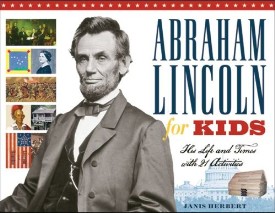
  • Teaching Civics with Children’s Literature: Abraham Lincoln for Kids

    Abe Lincoln

    Summary and Overview
    Who would have ever guessed that a homely looking, depressed and underestimated man who was self-educated and was born into major poverty would soon become the greatest President of all time? In Abraham Lincoln for Kids: His Life and Times with 21 Activities , author Janis Herbert does a phenomenal job in providing little bits and pieces of information about the man responsible for creating equal rights among slaves and uniting our country during the bloodiest of all wars that we have ever faced. Filled with fun and interesting facts and activities for students and teachers, this book is a must for all students who want to explore the life of Abraham Lincoln.

    Despite suffering major depression, Abraham Lincoln always provided a handshake for every one of his visitors and never hesitated to smile or laugh when around children, mostly his own. He even grew a beard at the request of a young girl who suggested it would get him more attention from the ladies and make him more handsome. He never hesitated to pay visits to the wounded soldiers in hospitals during the war and he always welcomed hundreds of visitors to the White House. Every time a person visited him, Lincoln always cracked a joke, making his visitors leave in a state of joy. Lincoln was a man on a mission and this book recounts his mission from beginning to end.

    Lincoln has been quoted more than any other president in U.S. history and this book lists several of his most famous quotes, including:

    “Don’t kneel to me. That is not right. You must kneel to God only, and thank Him for the liberty you will enjoy hereafter.”

    “Let us not be slandered from our duty by false accusations against us, nor frightened from it by menaces of destruction to the government nor of dungeons to ourselves. Let us have faith that right makes right, and in that faith, let us, to the end, dare to do our duty as we understand it!”

    “We begin by declaring that all men are created equal. But now from the beginning we have run down to the other declaration, that for some men to enslave others is a ’sacred right of self-government.’”

    Curriculum Connections:

    This book presents an enormous amount of information that adheres to Everyday Civics: Virginia Standards of Learning, Grade 2, Section 2: “Contributions of Abraham Lincoln.” It gives a vast amount of contributions that Abraham Lincoln made to the American Public during the 56 years he was here on Earth. It also incorporates bits and pieces from Virginia Standards of Learning, Grade 1, Sections 4, 5, 6 & 8, which are “Helping Others,” “Respect”, “Working Hard and Taking Responsibility” and “Honesty and Truthfulness,” in that order. Abraham Lincoln dedicated his whole life into showing people how important it is to treat others equally. His life was never easy; he was plagued by poverty, depression, death threats, etc. but he never gave up in his quest to achieve his desires and this book teaches to students just how much of a role model and hero Abraham Lincoln was.

    Additional Resources:

    http://www.showcase.netins.net/web/creative/lincoln.html This unique website provides unlimited amounts of information about Abraham Lincoln. An interesting facet of this website is entitled “Today in Lincoln’s Life,” which allows students to step back in time to the days of Abraham Lincoln.

    http://www.nationalgeographic.com/railroad Ever wondered what the slaves went through on their journey to freedom? With this website, students take a “journey” on the Underground Railroad as an escaped slave looking for freedom.

    http://www.pbskids.org/democracy PBS Kids special website that gives students a bundle of information about how the U.S. government actually works. Some of the activities allow students to “Be President for a Day” and learn tidbits of information about each one of the presidents.

    http://www.apples4theteacher.com/holidays/presidents-day/abraham-lincoln/  Filled with puzzles, photographs, games and stories featuring our greatest president, this website provides hours of nonstop entertainment for both teachers and students.

    General Information:

    Book: Abraham Lincoln for Kids: His Life and Times with 21 Activities

    Author: Janis Herbert

    Publisher: Chicago Review Press

    Publication Date: 2007

    Pages: 160

    Grade Range: 3-6

    ISBN: 978-1556526565

  • Department of Energy announces closing of $1.4 billion loan to Nissan to build Leaf EV in U.S.

    Energy Secretary Steven Chu announced has closed a $1.4 billion loan to Nissan North America, Inc. to support work on their Smyrna, Tenn. plant that will produce the Nissan LEAF; Nissan’s zero-emission, all-electric vehicle, and the lithium-ion batteries that will power them.

    The loan comes by way of a program that stems from Energy Independence and Security Act of 2007 by which Congress authorized $25 billion to accelerate the development of technology to increase U.S. energy independence. “Nissan is committed to zero-emission mobility. This loan, which will bring production of the Nissan LEAF to Tennessee, is a significant step in sustaining American jobs and American manufacturing.” said Scott Becker, senior vice president, Administration and Finance, Nissan North America.

    The loan will directly result in the creation of up to 1,300 jobs when the plant is operating at full capacity, which will mean the production of 150,000 vehicles and 200,000 battery packs per year.

    The Leaf is scheduled to hit showroom floors across Europe, Japan, and the United States in December of 2010.

    Click here for more news on the Nissan Leaf.

    Refresher: Power for the Nissan Leaf comes from a 107-hp electric-motor that runs on power supplied by lithium ion cells. On a full-charge, the Nissan Leaf allows for a driving range of 100 miles with a top speed of 87 mph. A full charge takes up to 8 hours on a standard 200V outlet. Buyers can opt for the DC 50kW quick-charger, which recharges the battery up to 80 percent in under 30 minutes.

    2010 Nissan Leaf EV:

    2010 Nissan LEAF EV 2010 Nissan LEAF EV 2010 Nissan LEAF EV 2010 Nissan LEAF EV

    DEPARTMENT OF ENERGY ANNOUNCES CLOSING OF LOAN AGREEMENT TO BRING PRODUCTION OF NISSAN LEAF, BATTERY TO NORTH AMERICA

    Loan used to modify Smyrna, Tenn., manufacturing plant for production in 2012

    Today, Secretary of Energy Steven Chu announced that the Department of Energy has closed a $1.4 billion loan agreement with Nissan North America, Inc. The loan will support the modification of Nissan’s Smyrna, Tenn., manufacturing plant to produce the Nissan LEAF, a zero-emission, all-electric vehicle, and the lithium-ion battery packs to power them.

    The loan, which originated through the Department’s loan guarantee program office, was issued as part of the Advanced Technology Vehicles Manufacturing Loan Program, a $25 billion program authorized by Congress as part of the Energy Independence and Security Act of 2007. The program is designed to accelerate the development of vehicles and technologies that increase U.S. energy independence, create cleaner means of transportation and stimulate the American economy. The loan was finalized after a rigorous financial and technical qualification process.

    “Nissan applauds the Department of Energy’s support of the development of innovative, advanced vehicle technologies and the creation of clean energy jobs,” said Scott Becker, senior vice president, Administration and Finance, Nissan North America. “Nissan is committed to zero-emission mobility. This loan, which will bring production of the Nissan LEAF to Tennessee, is a significant step in sustaining American jobs and American manufacturing.”

    The loan will result in the creation of up to 1,300 jobs when the plants are operating at full capacity. Modification of the Smyrna manufacturing plant, which will begin later this year, includes a new battery plant and changes in the existing structure for electric-vehicle assembly. When fully operational, the vehicle assembly plant will have the capacity to build 150,000 Nissan LEAF electric cars per year, and the new plant will have an annual capacity of 200,000 batteries.

    Nissan, along with its Alliance partner, Renault, is the only automaker committed to mass marketing all-electric vehicles on a global scale. Nissan LEAF, a five-passenger sedan, will be available for private and fleet customers. It is being launched in the U.S., Japan and Europe in December 2010. Nissan has spearheaded a holistic approach to zero-emission mobility by working with states, municipalities, utility companies and other partners, to prepare markets and infrastructure. Nissan has formed more than a dozen partnerships in the United States, in markets including State of Tennessee, the State of Oregon, Sonoma County and San Diego in California, Phoenix and Tucson, Ariz., Washington D.C., Seattle, Raleigh, N.C., and with Houston-based Reliant Energy.

    In North America, Nissan’s operations include automotive design, engineering, consumer and corporate financing, sales and marketing, distribution and manufacturing. Nissan is dedicated to improving the environment under the Nissan Green Program 2010, whose key priorities are reducing CO2 emissions, cutting other emissions and increasing recycling. More information on the Nissan LEAF and zero emissions can be found at www.nissanusa.com/leaf-electric-car.

    – By: Stephen Calogera


  • KENYA: Documenting Sexual Violence

    By Susan Anyangu-Amu NAIROBI, Jan 28 (IPS) The testimonies of women who survived sexual violence during post-election conflict in 2008 should be heard, say advocates. The magnitude of the crimes committed against women because of their gender must be recorded and prosecuted to prevent such violence from occurring again.

    "We have realised there is no political intention to ensure the perpetrators of gender-based and sexual violence are brought to book, says Patricia Nyaundi, executive director of the Federation of Women Lawyers Kenya (FIDA).

    In presenting its findings, the Waki Commission of Inquiry into the Post-Election Violence described rapes committed against women, children and some men; carried out by gangs of thugs, by neighbours and by the security forces. The Commission states that the evidence it collected represented a tiny fraction of the full extent of gender-based violence – just 31 women came forward with testimony of this nature.

    Tip of the iceberg

    A single facility, the Gender Violence Recovery Center at the Nairobi Women's Hospital, reported attending to over 650 cases of sexual violence during the chaos. Anecdotal evidence suggests thousands of other women across the country survived similar violence.

    FIDA is one of a group of organisations working to document gender-based and sexual violence in the aftermath of 2007 general elections as well as during other conflicts that have rocked Kenya, such as the Mount Elgon conflict where armed militia for months terrorised residents over land disputes. 

    "By documenting these testimonies, we are taking this opportunity to give women who underwent horrific ordeals a chance to tell their stories, to create historical evidence that this actually happened.

    "This kind of evidence will force this country to move from denial and accept what happened during that period," says Nyaundi.

    Amplifies distrubing trend

    "Violence against women has been systematic and entrenched in our society, but the post-election period saw an unprecedented number of women subjected to widespread sexual violence," says Rosemary Okello.

    "Many women were sexually assaulted, gang raped or sodomised. Many of these acts of sexual violence occurred in the presence of the women's spouses, children or parents causing trauma, humiliation and stress suffered by the survivors and their families."

    Okello is executive director of another partner in the documentary project, the African Woman and Child Feature Service (AWCFS), which promotes diversity, gender equity, social justice and development in Africa through media, training and research. Also participating are the NGOs Centre for Rights Education and Awareness and Women Fighting Against AIDS in Kenya.

    The documentation project is supported by the Urgent Action Fund (UAF-Africa), which has wide experience working in the Democratic Republic of Congo, Northern and North Eastern Uganda, Liberia and Zimbabwe, providing rapid response grants to women and human rights organisations.

    "Women survivors become guiltier than the perpetrators of the violence," says UAF executive director Jessica Nkuuhe.

    "The women fear to share what they have been through because they are afraid of stigma and being deserted by their families, especially their spouses. They thus shut down and unfortunately this ordeal eats at their very existence, giving rise to depression and eventually some lose the will to live and die miserable."

    Testimony part of healing

    Nkuuhe says the documentary project is an off-shoot of similar endeavours in northern and northeastern Uganda, Liberia and Zimbabwe through which survivors of sexual and gender-based violence have been able to share their experiences with each other.

    "We brought together survivors of sexual violence to a conference. Before that most of these women had kept their experiences silent. When they met other women who had been through similar horrific ordeals, they were able to open up and share. Sharing their stories provides an avenue for the survivors to seek help to heal after such a traumatising ordeal," Nkuuhe says.

    Kenyan member of parliament Millie Odhiambo says unless women speak out, sexual offences committed in times of conflict will go unpunished.

    As Kenya takes account of what happened in 2008 and prosecutes perpetrators, the gender-based violence dimension must be brought into focus.

    "As a country, we were not prepared for the level of gender-based and sexual violence that was witnessed. By documenting this, it shall provide a basis for our government to develop policies on preparedness to handle such scenarios. The evidence will also act as shock therapy for Kenya and we shall never forget what happened to these survivors," Odhiambo says.

    Prosecution

    Judy Waguma of AWCFS says despite the existence of legislation such as the Sexual Offences Act, there has been minimal prosecution of sexual offences during the post-election chaos.

    "During situations of crisis – as evidenced by the post-election violence – the government response to sexual violence is very limited, and it is usually the civil society organisations that have to step in to design and implement responses. Therefore there is a marked lack of access to justice for survivors of sexual violence."

    
Odhiambo says the project to document testimonies comes at an opportune time, ahead of the entry of International Criminal Court investigators who will carry out a fact-finding mission Kenya's post-election violence, after the government failed to act on findings and recommendations of the Waki Commission.

    ICC prosecutor Luis Moreno-Ocampo will be gathering evidence for prosecutions of those "most responsible" for the violence. The documentation project should be an important part of making sure responsibility for gender-based crimes is not neglected.

  • mocoNews Quick Hits 01.28.2010


    Blackberry Magnum

    »  Video demo of the touchscreen-Qwerty keyboard BlackBerry Magnum. [The Cellular Guru]

    »  Why a Zune phone wouldn’t be a big deal. [PC World]

    »  FCC will investigate the four major carriers’ and Google’s early termination policies. [Marketing Pilgrim]

    »  Classic space game Epic debuts on the iPhone. [Mobile Entertainment]