Author: Serkadis

  • China’s coal plants are squeezing its water supply

    There’s a looming water crisis coming for China’s water-hungry coal plants, according to a new report from Bloomberg New Energy Finance. Roughly sixty percent of China’s power plants (most of them running on coal) are located in Northern China, but only 20 percent of the country’s fresh water is found in the North.

    The mismatch is a problem on a variety of levels. The “big five” state-owned utilities that operate many of these power plants are financially exposed to the water constraint, particularly because the Chinese government has set a cap on the country’s growing water use. And making these coal plants consume less water with the standard technology could ironically decrease the plants’ power efficiencies and boost their carbon emissions.

    China power plants

    But the water constraint will only continue to grow unless the utilities do something about it. The report says that by 2030 the amount of water used by China’s power sector could grow to 124 billion cubic meters — or even 190 billion in an aggressive estimate — from 102 billion cubic meters in 2010, due a potential tripling of the country’s power plants. 190 billion cubic meters of water would constitute a quarter of the country’s capped water supply in 2030.

    The good news is there are some options for the utilities. They could build more of their future power plants outside of the North and particularly in some of the more wet regions. In addition, clean power like solar panels and wind turbines don’t require as much water resources, so these renewable technologies could start to look more competitive to utilities. These options could also be more attractive than retrofitting the plants to the more water efficient, but more power inefficient, kind which would cost them collectively $20 billion for 100 GW.

    There could also be next-generation technologies that could help solve this water, power plant problem in China, too. Are any of the cleantech companies out there working on innovative solutions that could help?

    As the world gets 9 billion people by 2050, and countries like China, Brazil and India start to consume more energy per capita, water will become an increasingly constrained resource. New water management, conservation, and recycling technologies will emerge to meet this challenge.

    Related research and analysis from GigaOM Pro:
    Subscriber content. Sign up for a free trial.

  • Thanks Google Keep! EverNote sees uptick in downloads, usage

    When I called Phil Libin, Evernote CEO earlier this morning to chat about Keep, in his typical matter-of-fact manner he explained that Google’s Keep app is both good and bad for his company. Bad, because he now has more competition in the market. And good because now more people are going to be aware of the overall category, which means more attention for Evernote.

    Evernote CEO Phil Libin

    Evernote CEO Phil Libin

    Libin reasons that just as the Weather App on iPhone helped jump start interest in other apps like the one from say the Weather Channel, Google Keep will push the interest higher in note-taking and clipping apps like Evernote. His arguments are backed by an uptick in downloads of the Android-version of Evernote since the Keep news came out last week.

    Libin wouldn’t offer any specific details (or numbers) except he acknowledged that when compared to a week ago downloads and usage are up – enough for him to notice. That said, he is of the belief that Keep wouldn’t have any impact on his company’s relationship with Google and its flourishing platform. Evernote is one of the more successful apps on most mobile platforms – iOS and Android included.

    Google Keep, is Google playing catch up with rivals such as Apple, Blackberry and Microsoft (a MSFT). Most expect Google to boost the number of stock apps on Android.

    Related: Sorry Google, Keep it to yourself & More on why I won’t use Google Keep: it’s not personal, it’s business.

    Related research and analysis from GigaOM Pro:
    Subscriber content. Sign up for a free trial.

  • Code Red! Windows Blue leaks

    That sure looks like the case, and how timely, too. Microsoft needs a little Windows excitement, given the sorry state of PC shipments and efforts to jump start Surface sales. We haven’t seen a good leak like this for awhile, and right now any buzz is beneficial. Even if this thing turns out to be fake, blogs and social shares are worth their weight in gold.

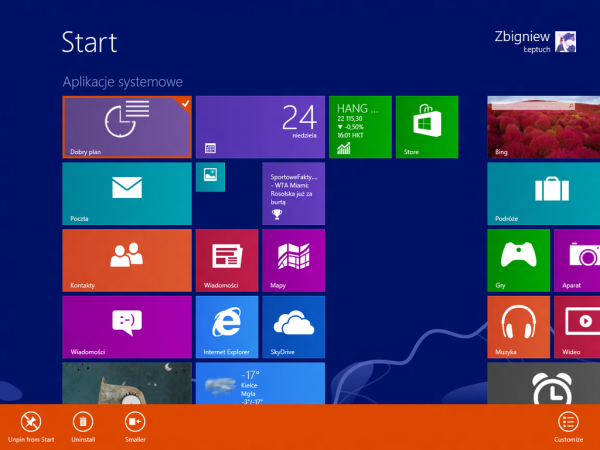
    Over at The Verge, Tom Warren offers a great rundown of features. WinBeta provides an intro video and (via Mary Jo Foley tip) there’s a Dropbox with screenshots. Briefly, the purported build, 9364, is nothing but — borrowing from the oft-overused Microsoftie term — goodness. There is increased emphasis on customization, answering user complaints that Modern UI provides too little, and even hints of Internet Explorer 11. More importantly, everything about Windows Blue suggests an accelerated OS development pace, which significance cannot be understated.

    Pick Up the Pace

    Situation is this: Google cranks out new Android, Chrome and Chrome OS updates at frenetic pace, along with a plethora of supporting services. Meanwhile, Microsoft development, by comparison, is more like IBM at the end of the mainframe era set against the PC. Microsoft really, really, really needs to pick up the pace.

    Look how far Google’s mobile OS and browser have come since their release in late 2008. Chrome, which is version 25 in little more than 4 years, had 37.09 percent global usage share at the end of February compared to 29.82 percent for Internet Explorer, according to StatCounter. Android smartphone share, based on actual sales, was 69.7 percent in fourth quarter, according to Gartner. Windows Mobile/Phone: 3 percent.

    Google has great brand engagement, in part because its products improve by seemingly daily pace and so many are indispensable. Look at the crazy furor over Google Reader, which use is limited mainly to bloggers, journalists and the Technorati (According to a Google Consumer Survey, 9.5 percent of respondents have ever “subscribed to an RSS feed or used an RSS reader like Google Reader”). The service is indispensable to some, nothing like the many of, say, search.

    Too Much Like Big Blue

    Microsoft is the new IBM. The company that caters to big business and doesn’t bring big ideas to market. Enterprises hate change, while consumers embrace it, which is one reason for the recent surge of people bringing their own devices to work rather than just using company-issued gear. Whose software runs these gadgets? Not Windows. Android and iOS are the main benefactors. Microsoft’s challenge is two-fold: Matching competitors’ pace and rebuilding brand excitement.

    Windows Blue could be a bold, next step. Microsoft’s long-standing strength is executing on long-term plans, whereas many public company competitors set quarterly goals that change too often. The Microsoft that released three versions of Internet Explorer in about 18 months during the late 1990s executed tactically while keeping long-term plans in place. The company needs to get back to form. Setting and achieving short-term goals can boost mindshare — that Microsoft actually innovates.

    As I’ve so often expressed, in business perception is everything. Look at Apple. Negative perceptions about Apple Maps, iPad mini and iPhone 5 contributed to falling stock price following September’s all time high (down 35.5 percent after Friday’s close). Meanwhile, after getting sacked during the late-2008 economic collapse, Google shares fly high — $811.26 on Friday, up from $262.43 in November 2008. Positive perception, bolstered by ongoing release of new things, makes shares attractive. In terms of sales, there is no real comparison. During calendar fourth quarter, Apple generated more than three times Google’s revenue for all 2012.

    Microsoft remains a tech giant, in terms of reach and actual financial performance, but the stock is a dog — and has been for more than a decade, rarely climbing above $30 a share. Perception is the problem.
    True Blue

    Windows Blue is an opportunity for Microsoft to show that it can keep pace with Google, and that’s no easy feat. The software giant must balance the preferences of the enterprise, which accounts for the majority of sales, against the need to move faster. Slow-moving big businesses abhor change. There, hosted-server apps and Office 365 can shift some of the dynamic by getting more businesses using software or services that Microsoft updates regularly, rather than relying on cautious IT departments to do upgrades.

    Windows remains the enigma, in a global market making smartphones and tablets buying priority over PCs. Microsoft has to do something fast. Given that most businesses recently migrated to Windows 7, anyway, adoption of the current operating system should be slow for some time or even its successor. Microsoft risks little then, with core customers, cranking out Windows Blue this year — and in process aligning all operating system development, including Windows Phone.

    Microsoft has got the right idea with touch and other natural-user-interface motifs. Having used, and really loving Surface Pro, the potential is clear: Windows can be the best NUI platform, second to none and making Android and iOS look like toys by comparison. Windows Blue is opportunity to push voice, touch and other NUI tech forward, while demonstrating the ability to rapidly release innovative products, too. Microsoft already does — look at Skype and SkyDrive updates, for example — but no one seems to notice in the mainstream media.

    I hope that today’s purported leak foreshadows that Windows Blue Developer Preview will release imminently, with official launch coming this year. Some advice to Microsoft: No more Service Packs! Call Windows Blue a new version and — damnit! — keep the code name as the official moniker.

  • ICYMI Podcasts: ChromeDroid and how can chaos theory relieve traffic jams?

    It was a light week of podcasts at the old GigaOM ranch this past week (we were kinda busy with our Structure:Data conference). But what we lacked in quantity we more than made up for with quality. Kevin Tofel’s call-in show touched on some great subjects like a potential Samsung watch and what will happen to Chrome and Android. Meanwhile, Stacey Higginbotham’s Internet of Things podcast features an in-depth talk with IBM’s VP of Innovation to talk about chaos theory and data.

    (Download the Call-in Show podcast)

    (Download the Internet of Things podcast)

    Related research and analysis from GigaOM Pro:
    Subscriber content. Sign up for a free trial.

  • Sony Patent Reveals Google Glass Competitor With A Head Mounted Display For Each Eye

    sony-glass-1

    Watch out, Google. A recently published patent application reveals that Sony’s head mounted display glasses are progressing down the evolutionary path rather nicely. What once amounted to just wide-eyed concepts, this latest patent filing, a continuation patent filed on November 14, 2012, shows that Sony, with perhaps a bit of inspiration for Google Glass, is nearing a practical model. And unlike Google’s take on HMDs, Sony’s has information displays for both eyes.

    This isn’t the first patent to reveal Sony’s HMD aspirations. A patent published in the summer of 2012 shows a futuristic device — it looks like something from a made-for-TV sci-fi movie. The device in that patent has two lens, not connected by a traditional bridge, with each lens acting also serving as a display. There are cameras and battery packs and the works. This is, after all, just a concept.

    Sony’s most recent patent is a more practical take on HMD glasses. They’re built on a traditional glasses frame in a sort of Google Glass fashion. The actual pop-up display sits behind the glasses’ lenses and, as previously mentioned, there are two displays along with ear buds mounted on little arms.

    The patent doesn’t reveal any information on the displayed content, but it does state it’s a 2D interface. The screens are also movable by several millimeters, allowing the wearing to fine tune the placement.

    Sony has long history with head mounted displays and augmented reality units including commercially available home entertainment devices like the HMZ-T2 Personal 3d Viewer. This recent filing is a continuation on patents filed in 2008 and 2009; Sony has been working on this particular device for a significant amount of time. A bunch of recent patent filings show the company is committed to these devices. Google is not alone in this space.

    The war for your eyes is about to take on a whole new meaning.

    This is a brand new market. There is enough room for Sony, Google and likely several companies quietly building their own head mounted displays. Each company has unique strengths. Google has the advantage of its all-knowing, always-connected services. Sony has been building world-class hardware for 50 years — and has a dynamic new CEO in Kazuo Hirai.

    Now about that bar in Seattle. They only banned Google’s model, right?

  • A Reliable Download Management Utility

    Download managers are applications used to grab files from the Internet and manage them with ease. Some of these utilities, such as Progressive Downloader, will also provide multi-threaded downloading, a feature that enables users to download files at increased speeds, since it allows the utility to grab them using multiple server connections.


    While … (read more)

  • Senate vote promotes investment in broadband infrastructure for rural areas

    According to Nebraska .TV

    U.S. Senators Deb Fischer (R-Neb.) and Al Franken (D-Minn.) announced that, early this morning, the United States Senate approved a bipartisan amendment they introduced to promote investment in broadband infrastructure for rural areas. …

    “Access to reliable Internet is critical to growing our economy. People living in rural parts of Minnesota are just as entitled to high quality Internet as those living in our cities and towns. Passing my bipartisan amendment will prioritize the expansion of broadband connectivity in rural areas, something that I will continue to work toward until every Minnesotan has broadband access,” said Franken.

    The amendment was offered by Senators Fischer and Franken to the Senate budget and was approved unanimously by voice vote.

    It’s a good sign – but according to Bloomberg, it sounds as if it’s mostly just that – a sign…

    The votes are mostly symbolic because they come in the form of amendments to the budget, which isn’t a bill and can’t be signed into law. It’s an internal agreement among lawmakers establishing the boundaries of their tax-and-spending debate for the coming fiscal year. Congress would have to pass separate legislation making any of the policy changes endorsed in the measure.

    Still, the amendment-vote tallies can provide a barometer of support among lawmakers for a specific proposal, which can either help to generate — or to kill — political momentum behind the idea.

  • Ashampoo WinOptimizer 10 – Review [GIVEAWAY]

    Ashampoo released WinOptimizer 10 at the beginning of the month, advertising new utilities and overall improvements.

    Installing Ashampoo WinOptimizer is a breeze, especially since the company has taken the toolbars out of the express installation process. Just before completing the process, you are prompted to set up an automatic cleaning schedule, whic… (read more)

  • Are Carrier Hotels Reliable Enough?

    John Savageau is a veteran of the telecom and data center industries, and has a unique understanding of the importance of big-city “carrier hotels” – the major data center hubs that tie networks together in the world’s most important business markets. Savageau, who spent many years at CoreSite, recently shared his thoughts on the dual role of carrier hotels, which operate as both commercial real estate and critical national infrastructure.

    “While MMRs have improved greatly during the past few years, the reality is we have a tremendous amount of national infrastructure being built into properties not designed for the telecom industry – infrastructure that will continue being more and more essential to our ability both as a nation, and as a member of the global economic and social community,” John writes. “The United States should view telecom and cloud computing as a utility, critical to the national infrastructure.  Standards that follow the same principles of roads, water, and electrical distribution must be applied to the telecom industry, including carrier hotels and other implementations contributing to the Fourth Utility.”

    Read more on The Future of Carrier Hotels and Mixed-Use Office Buildings on the Technology Innovations blog.


  • EneryoneOn – digital literacy programming at the library and beyond

    libraryI’m on a listserv for librarians – the following message was posted there. I wanted to share it here (with permission) for two reasons. One, it’s a great program. Two, it’s a great reminder to get your librarian involved in digital literacy programming. We’ve been showing patrons how to use computers and the online card catalog since the old shelves went away about 20 years ago. People come to librarians for help. Librarians are trained on how to help with digital and information literacy!

    Today, March 21st, Connect2Compete (C2C), http://connect2compete.org/, launches a 3-year national public service campaign to promote digital literacy called EveryoneOn, http://everyonone.org. The key message of the campaign is to encourage limited or non-Internet users to learn how to do “one thing better online”. Public libraries and their community partners are key to the success of this effort due to their demonstrated commitment to providing free access to the Internet as well as to improving people’s skills (e.g. using a mouse, applying for jobs online, creating email accounts, and so much more). While some libraries offer formal classes, all libraries offer public access computers and skilled assistance to patrons at point-of-use.

    EveryoneOn Campaign Materials:

    Libraries and community partners can begin using these campaign materials at any time via this Ad Council website for EveryoneOn, http://everyoneon.adcouncil.org/. Additional campaign materials for EveryoneOn, including logos, graphics and examples of public service announcements are expected to be made available later this month. Libraries and their community partners will have full access to these campaign materials to promote digital literacy in local communities.

    With some preliminary support from the Ad Council, the St. Paul Public Library did a Kickoff event today – 3-21 On! EveryoneOn.org Kickoff. Check their Facebook page for photos!

    EveryoneOn is designed to raise awareness of the importance of digital literacy skills – which libraries have embraced for years. This is a great opportunity to promote public libraries as a trusted and valuable provider of free public access technology and training as we strive to build stronger communities.

    Orientation:

    Libraries will be invited to view a webinar that will discuss EveryoneOn, including campaign toolkit materials and how they might be used.

    Training Locator Database:

    Connect2Compete is creating a Training Locator database with details about the services and resources the library and their community partners make available to help people learn digital literacy skills or access the Internet. Using information from the Institute of Museums and Library Services and the American Library Association, Connect2Compete has created a database of information about public libraries in the United States.

    The database will power a Training Locator tool for people interested in finding digital literacy training or public access computers in their area. A 1-800 phone number will also be available with this information for those without internet access.

    Important Notes to Minnesota Library Staff:

    1.Your help may be needed to update this database with information about what each library location/branch currently offers.

    2.We are advising Minnesota libraries to wait to update their entries until further notice. C2C had a tight launch timeframe, and they will be tweaking the data load for Minnesota libraries. While instructions and a link for updating the Training Locator database are on the Connect2Compete site, we suggest you wait to update Minnesota library entries until further notice from Minnesota State Library Services to avoid possible duplication of effort.

    3. Your help to promote the database will be needed in the future. At the moment, C2C is resolving known search problems. So, if you play with the Locator and encounter challenges, try again in a few days. C2C considers 3/21 a “soft launch” for EveryoneOn.

    Look for more information soon! If any questions, please contact Mary Ann Van Cura (651-582-8632 or [email protected]).

    Thanks!

    Nancy Walton, Director & State Librarian

  • The TechCrunch Gadgets Podcast: Smartwatches, Apple On The Defensive, And The Nook HD+

    Screen Shot 2013-03-22 at 5.39.40 PM

    We’re back! After a long hiatus, we’ve started up the TechCrunch Gadgets Podcast, our weekly review of everything hardware. We’ll be talking about hardware startups, flagship gadgets, and the wild and wooly worlds of Apple, Samsung, HTC, and all the rest.

    Featuring the TC Gadgets team, this weekly audio podcast will bring you the best we have to offer and comment on the news of the week.

    We’re looking for guests! If you’d like to be featured, me a line at [email protected]. We aim to make each of these about 20 minutes long – just right for a commute – and will bring on a rotating cast of TC writers.

    This week we talk smartwatches, Apple on the defensive, and the release of the Nook HD+. Enjoy!

    Click here to download an MP3 of this show.
    You can subscribe to the show via RSS. We’ll a direct iTunes link next week.

  • Stop whining about Google Reader

    This morning, in a Google+ post, Eli Fennell expressed something I felt for days: That the furor over Google Reader’s execution is way, way, way too much. I’ve written little about the service’s demise and actually have argued with colleagues in group chat about their trying to hold onto Reader or mimic the sorely, last-century user interface.

    My one quip, from a Thursday story: “You’ll never guess what you gave up Google Reader for? The tried-and-true makes way for a few, ah, experiments. Newest: Chrome World Wide Maze“. Gasp! Some people took that seriously. I meant it as indictment against all the stupid fuss about the RSS service’s July 1 retirement.

    I explained on Google+: “LOL. I’m not ‘desperate to somehow tie this to Reader’. Just the opposite. I intended to be brutally sarcastic. I’m aghast at how much fuss people are making about this whole Reader thing. The Chrome experiments obviously have nothing to do with Reader, which is why I made the reference. So much for my writing capabilities”. 

    People, please, shut the frak up. Fennell writes:

    I had expected the childish whining about Google Reader to have died down by now. Instead there has not only been an obnoxious volume of people continuing to post about it using nearly any excuse, but the tech media has become even worse, publishing an endless parade of “no one will use Keep because Google killed Reader” articles.

    GTFOI people, and stop thinking you’re so all-fire important that the vast majority of us care at all whether you decide to boycott future Google products like self-entitled spoiled little brats. You want to stop using Google products? Go for it. Just shut up about it and keep it to yourself.

    The Devil You Do

    The whining about Reader is ridiculous. I often wondered why so many other companies that had developed worthwhile RSS sync for their software abandoned for Google Reader. I used NetNewsWire (on Mac) and Newsgator (on Windows PC) long before Reader and when they provided their own sync services before adopting Google’s. I only came to use Reader because the other developers dropped their own sync services. They slept with devil. What should they or their users expect? Compassion? Behavior that isn’t about self-interest?

    Colleague Wayne Williams calls the July 1 execution a “blessing in disguise” and rightly observes that “Google has slowly been killing off Reader for a while”.

    I eventually switched to Feedly because the user interface is fresh, particularly on tablets, and found Google Reader sync to be somewhat convenient but not really necessary. I am simply stunned by the rush to makeover Feedly into a Google Reader UI-like clone. Geez Louse, what the frak is wrong with you people — my tech journalist peers worst of all? Change is good.

    Trust Whom?

    I’ve seen no blogs, news stories or social network shares that get the point: It’s amazing that Google kept Reader alive for so long. Think about it. The UI is terribly-dated, Google made no real improvements in years and feeds bypassing sites with advertisements defeat the company’s core source of revenue. That Google kept Reader alive at all is testament to customer and partner commitment. The search and information giant should have killed Reader long ago, from this perspective.

    Yet I read countless posts with people whining about how they can no longer trust Google, that they won’t adopt Keep and worry that any service they commit to using today might be gone tomorrow.

    Google gives away Reader for free. People complain Google takes away something they don’t pay for? Get a life. Suck it up.

    Of course you can’t trust Google. Everything the company produces is in a state of constant revision. Gmail stayed in beta for five years. The beta monikers are gone from most Google goodies, but refinement is a constant — as is public experimentation. You can love it or leave it, because you are a perpetual beta tester if using Google anything. That’s the price you pay for free software and services.

    I tell you this: When constant refinement stops that’s sure sign Product X is bound for the scrap heap. That’s when you want to jump to something else. Because Google will put aside that thing in favor of something else. Yesterday, colleague Alan Buckingham linked to timely Slate post: “The Google Graveyard“. The incomplete list shows 39 products or services axed by Google henchmen.

    Taste Freedom

    Reality is this: There’s a new sheriff in town. April 4 marks Larry Page’s second anniversary returning as CEO. From Day One, he swung the hatchet. Google Reader won’t be the last service killed past its prime. If there was a law against technology euthanasia, Page would have received multiple life sentences already. He’s a mercy killer, and doing Google Reader really puts you and a bunch of other RSS products out of misery. Even if no one sensed the pain of it.

    To the nearly 150,000 people signing the “Google: Keep Google Reader Running” petition, I say this: Suck it up. Stop complaining — and rejoice. Google just freed you from slavery. Don’t whine about freedom, use it!

    Reader’s dominance held back competition in the feeds space. Maybe RSS can evolve into something better now and become the truly useful tool envisioned in the last century. Google Reader’s UI isn’t contextually useful at all, particularly on smartphones and tablets. Don’t cling to Google slavery. Now is time to re-examine all the products important to your digital lifestyle — as Wayne is doing and writes about (now in two parts, here and here).

    Get a life, and stop whining about Google Reader!

    Photo Credit: Joe Wilcox

  • The real breakthrough of Google Glass: controlling the internet of things

    As the first apps start to come out for Google’s augmented reality glasses, we’re starting to see how viewing the world and consuming digital content could be transformed. You can capture photos and videos and send them to your friends with a simple gesture, or scan the New York Times headlines without moving a finger. But perhaps the real breakthrough app for Google Glass wouldn’t be about content consumption at all, but about control.

    This week the folks at Engadget dug up a patent around Google Glass using wireless connectivity to control connected devices in your home. The glasses could use any number of wireless methods — from RFID, to infrared, to Bluetooth to QR codes — to identify a connected device that could be manipulated, and then, presumably, to manipulate it.

    Picture arriving home from work, and the door of your house automatically unlocks to let you in as you walk up to it. Inside, your NPR app comes on the glasses screen and you can tune in or change the channel while you fiddle with turning on the connected sprinkler system for your lawn. Your Nest thermostat app then pops up on your Google Glass screen to let you know that you’ve been good this week and saved a lot of energy, but with a wink you override the conservation mode and crank up the heat.

    The scenario isn’t as crazy as it sounds and all the basic technology is there. There are mobile apps that already do all of these things. Essentially you’d just be moving the control function from the cell phone touch screen and your fingertips to the screen in front of your eye and either a facial gesture or hand movement. All devices in the home that would benefit from having connectivity and control are getting it, and there will be a variety of remotes that will control them — why not one on your face?

    Move outside of the home, and the world filled with the internet of things could be controlled, too. You could unlock your Zipcar with your Google Glass app, or start warming up your Tesla Model S electric car remotely before you take it for a spin.

    As Om suggested in his recent data Darwinism post, the biggest changes coming for the connected world won’t be about technology; they’ll be more about how philosophical, legislative, and political norms evolve in response to this new world. And using Google Glass as a way to be the master of the internet of things would have interesting implications for all of these areas.

    Getting the design, interface, architecture and ecosystem right for such a vision will no doubt be difficult. Mark Rolston, the chief creative officer at Frog Design, has noted the challenges inherent in designing interfaces in a world where devices are both trying to understand a user’s intent, and also test out new ways to interact with them, such as motion.

    But ultimately these are design issues, and designers will spend the next several years trying to humanize such an experience.

    Related research and analysis from GigaOM Pro:
    Subscriber content. Sign up for a free trial.

  • Top 5 Data Center Stories, Week of Jan. 23

    apple-maiden-aerial-solar-4

    An aerial view of one of Apple’s two major solar panel arrays in Maiden, North Carolina, which supply electricity to help support the power requirements for a nearby Apple data center. (Photo: Apple)

    For your weekend reading, here’s a recap of five noteworthy stories that appeared on Data Center Knowledge this past week. Enjoy!

    Squeezing More Efficiency Out of Microsoft’s Cloud – Squeezing more efficiency and density out of bleeding-edge facilities is the next phase in the data center arms race. It’s a process that Microsoft has undertaken with its Dublin data center, and other leading players will be pursuing as they seek to get more mileage out of new server farms that came online in the huge construction boom from 2007 to 2010.

    Apple Hits 100% Renewable Energy in its Data Centers – In the wake of pressure from the environmental group Greenpeace, Apple said Thursday that it has achieved 100 percent renewable energy at all of its data centers, including facilities in North Carolina, Oregon, California and Nevada.

    Bringing Colo to the Customer: Modular Gets Local – Colo has come to the customer. In a business park just minutes from its global headquarters, LexisNexis is housing racks of IT gear inside factory-built data center modules from IO. It’s an example of a new paradigm for enterprise data centers, in which pre-fabricated designs can create resilient Tier III facilities within 120 days at any location a customer chooses.

    Sabey Opens High-Rise Manhattan Data Tower – Some New Yorkers who look upon the huge Verizon high-rise at 375 Pearl Street have trouble seeing past its foreboding stone facade. The team at Sabey Data Centers saw it as a blank canvas: an opportunity to remake 1 million square feet of Manhattan real estate as a high-tech data hub.

    Old Gas Tower to Become Futuristic Data Center – In one of the more interesting retrofit projects we’ve seen, a Swedish ISP is planning to convert a huge former natural gas holding tank into a five-story data center. The developer is Bahnhof, which has gained notice for its unusual data center designs, including the “James Bond Villain” data center in a former nuclear bunker and a modular unit designed to look like a space station.

    Stay current on Data Center Knowledge’s data center news by subscribing to our RSS feed and daily e-mail updates, or by following us on Twitter or Facebook or join our LinkedIn Group – Data Center Knowledge.

  • Samsung reportedly in talks to sell eReader display panel unit to Amazon

    Samsung Liquivista Sale Amazon
    Samsung (005930) is the world’s largest flat display panel maker and two years ago, the company extended its reach with the acquisition of Netherlands-based Liquavista. The Dutch company manufactures display panels that utilize electrowetting technology and are commonly used in eReaders. As eReader popularity continues to decline, however, Bloomberg reports that Samsung already wants out and is in talks to sell Liquavista to Amazon (AMZN). Details of the negotiations were not reported, but Bloomberg claims Samsung paid less than $100 million when it purchased Liquavista two years ago.

  • 5 ways big data is going to blow your mind and change your world

    Some people say big data is wallowing in the trough of disillusionment, but that’s a limited worldview. If you only look at it like an IT issue it might be easy to see big data as little more than business intelligence on steroids. If you only see data science as a means to serving better ads, it might be easy to ask yourself what all the fuss is about.

    If you’re like me, though, all you see are the bright lights ahead. They might be some sort of data nirvana, or they might be a privacy-destroying 18-wheeler bearing down on us. They might be both. But we’re going to find out, and we’re we’re going to find out sooner rather than later.

    This is because there are small pockets of technologists who are letting their imaginations lead the way. In a suddenly cliché way of saying it, they’re aiming for 10x improvement rather than 10 percent improvement. They can do that because they now have a base set of analytic technologies and techniques that are well positioned to solve, with relatively little effort, whatever data problems are thrown their way.

    Here are some themes from our just-concluded Structure: Data conference that I think highlight the promise of data, but also the challenges that lie ahead.

    Man and machine unite

    Machine learning is already infiltrating nearly every aspect of our digital lives, but its ultimate promise will only be realized when it becomes more human. That doesn’t necessarily mean making machines think like human brains (although, granted, that’s a vision currently driving billions of research dollars), but just letting people better interact with the systems and models trying to discover the hidden patterns in everything around us.

    Whatever shape it takes, the results will be revolutionary. We’ll treat diseases once thought untreatable, tackle difficult socio-economic and cultural issues, and learn to experience the world around in entirely new ways. Maybe that consumer-experience scourge known as advertising might actually become helpful rather than annoying.

    That would really be something.

    Data science, or data intelligence?

    I’m not sure there needs to be a distinction between data science and data intelligence, but the latter does connote a grander goal. It’s about trying to solve meaningful problems rather than just serving ads; about trying to understand why things happen just as well as when they’ll happen. This means learning to work with smaller, messier data than we might like — certainly smaller and messier than the data sets underneath most of the massive web-company data science undertakings.

    But just think about being able to go beyond predictive models and into a world of preventative — or even professorial — models. If you know what I like, where I go and who my friends are, it might be fairly easy to predict what I want to buy. Figuring out how my decision to buy something might affect my overall well-being and then telling me why? That’s a little more difficult and a lot more beneficial.

    Telling stories with data

    Have you ever looked at a chart and wondered what the heck it was supposed to be telling you? Or downloaded a report of your Facebook activity only to ask yourself if all the disparate data points come together to paint a bigger picture? Or tried — and failed — to stop a terrorist before his movement to recruit an army of followers gained critical mass?

    A big problem with a lot data analysis right now is that it still treats data points as entities unto themselves, largely disconnected from those around them. However, data needs context in order to be really useful; it’s context that turns disparate data points into a story. Don’t just tell me how many steps I took today or the time of day I’m most active on Facebook, but tell me how that relates to the rest of my life.

    And don’t just tell me that someone said he wants to kill Americans. Rather, tell me a story about how much more frequently he’s saying it and how much more inciteful his words are becoming.

    The internet of things knows all

    The mobile phone in your pocket is tracking your every movement and can also monitor the sounds that are surrounding you. That fitness tracker you’re wearing is identifying you by how you walk. Your smart meter data shows when you’re home, when you’re away and when you’re in the shower. Sensors in everything from toothbrushes to cars are quantifying every aspect of our lives.

    This volume of data can still be a lot to deal with in terms of its volume, velocity and variety, and we’re still not quite sure what to do with it even if the right tools were in place. But all sorts of entrepreneurs, powerful institutions and intelligence agents have ideas. The technological pieces are coming along nicely, too. Just sayin’ …

    This semantic life

    The semantic web lives on; only it’s spreading well beyond our search engines and even our web browsers. Soon enough, we’ll be able to surface relevant content and people simply by highlighting passage of text in whatever we’re reading — web page or not — on any type of device. When we speak to our devices, they’ll not only know what we’re saying, but also what we really want even without the help of specific commands or keywords.

    That’s a powerful proposition in a world where we increasingly expect our interactions to be hands-free and our answers to come as fast as our questions. Of course, what’s powerful in the hands of consumers driving in their cars or sitting on their couches is even more powerful in the hands of doctors trying to diagnose difficult diseases or aid workers trying lend a helping hand in places where they don’t know the customs or even speak the language.

    Feature image courtesy of Shutterstock user GrandeDuc.

    Related research and analysis from GigaOM Pro:
    Subscriber content. Sign up for a free trial.

  • Rating the legacy of outgoing FCC Chairman Julius Genachowski

    After almost four years in the role, FCC Chairman Julius Genachowski said Friday that he was stepping down.During his four years as the head of the FCC, he failed to stop a stunning loss of regulatory authority as a result of a court case started by his predecessor, and made minuscule strides in boosting broadband competition. To top it off he also oversaw regulations that may further diminish the FCC’s authority as we head into the IP age.

    He did however, forge better connections between the tech industry and the FCC and managed to stop a merger that would have certainly hurt consumers. He also tried to make more wireless spectrum available — taking on the powerful broadcast industry to do so. But instead of listing his achievements and capitulations, I dug up a list that my colleague Om Malik and I wrote back in 2009 when he was named to the role.

    In the post we told him what he needed to focus on during his tenure. Now, it’s time to look back and see what he has accomplished.

    FCC Chairman Julis Genachowski

    FCC Chairman Julis Genachowski

    An internet bill of rights: While Genachowski did manage to pass a version of network neutrality regulations in 2010, he did so in a way that leaves those rules in doubt before a lawsuit that has been filed by Verizon and MetroPCS. Instead of addressing the idea that the FCC has no power to regulate things that occur on information services (basically anything that’s delivered via the internet) which surfaced after a court ruling in 2010, Genachowski’s FCC did nothing to try to strengthen its authority before passing those rules. Now, the case is before the same court of appeals that decided against it the first time around. Grade: C

    A focus on one key metric for all FCC decisions — namely returning the U.S. to the global forefront of Internet and mobile technology: On the mobile side, the chairman focused on LTE deployments and getting more airwaves for mobile broadband. And U.S. carriers have already deployed LTE networks ahead of many other countries. On the wireline side, it’s a bit mixed. Broadband caps and a lack of wide scale fiber to the home projects are keeping the U.S. far from the top in international rankings. According to the most recent (June 2012) OECD reports, the U.S. isn’t tops in terms of average or median advertised speeds. We were No. 1 in terms of connections, however. Grade: C+

    An emphasis on future technologies (mostly wireless) that boost marketplace competition: Here the FCC has done a lot, despite political and unexpected technical hindrances. Genachowski’s FCC attempted to create a wholesale 4G network using satellite airwaves only to see that idea flail as interference with GPS spectrum was discovered. He also stopped a merger between AT&T and T-Mobile that was not in consumers’ best interests while also pushing for more spectrum and setting in motion an incentive auction that could provide airwaves for the carriers as well as for unlicensed broadband. Grade: B

    spectrum

    Special incentives to attract new players (and not older companies) that bring broadband to the masses : Genachowski hasn’t done much here except issue press releases, but others have stepped up including Google and Gigabit Squared to bring gigabit fiber broadband to a few cities. Grade: B-

    Tax credits for widespread deployment of broadband speeds of upwards of 20 Mbps down and 10 Mbps up for less than $50 a month without caps: That’s not happening. Grade: F

    Better and more connectivity to office buildings, especially from newer players: While companies like Webpass or Sonic.net continue to deploy faster services in more places, business broadband wasn’t an issue the FCC has touched. Grade: F

    An IP-centric, rather than voice-centric, approach to reforming the Universal Service Fund: This is a thankless task, but the FCC has started on the road to an all-IP world first with universal service fund reforms as well as a current debate on how to make the transition to an all-IP world, as well as what rules the agency should enforce. Grade: B

    FCC Chairman Julius Genachowski.

    FCC Chairman Julius Genachowski.

    Policies that bring quality of service into the wireless agenda: Om envisioned this as something like penalties for dropped calls, but I’ll expand it to issues like Verizon’s phantom data charges and the fights between app makers, phone companies and carriers that tended to catch consumers in the middle. The FCC was actually pretty vocal in these cases, even if it only managed to draw attention to bad behavior. Grade: A

    An understanding that Google, and other web companies, are not the consumer’s friend, so their agenda shouldn’t automatically be trusted: Politics is a sport for big boys and Genachowski’s FCC was pretty transparent in pitting Google and other tech companies against the cable guys and the telcos and assuming that the resulting middle ground was an okay place for consumers. Grade: D

    Final summary

    All in all, Genachowski spent a lot of time on wireless, believing that to be an area where the FCC had room and regulatory authority to add capacity and improve competition. He was utterly neglectful on the wireline side, not doing much to strengthen competition, or even address issues such as caps and the virtual standstill on investment in rural areas. He also exits an agency that is weaker on the regulatory front than when he started and may end up weakening it further depending on the rulings in the network neutrality case.

    He did start the arduous process of reforming the telecommunications regulatory regime to reflect the IP-based future and tackled universal service fund reform. Without a successor named yet, it’s hard to say what the next priorities will be for the FCC, but bringing off a successful auction of airwaves taken from the broadcast industry will be on the agenda as will the issue of how to regulate (and transition to) an all-IP telecommunications network.

    Meanwhile, consumer issues such as the high cost of broadband, data caps and the eventual fate of network neutrality are all issues that may or may not change regardless of the new chair. The more things change, the more things still manage to stay the same.

    Related research and analysis from GigaOM Pro:
    Subscriber content. Sign up for a free trial.

  • Nilofer Merchant Talks At Google

    Nilofer Merchant, author of the bestselling 11 Rules for Creating Value in the #SocialEra (published by Harvard Business Review Press), recently did an @Google Talk, and the company posted the video today.

    Google explains, “In this talk, Merchant argues that ‘social’ is much more than ‘media.’ Smart companies are letting social become the backbone of their business models, increasing their speed and flexibility by pursuing openness and fluidity. Her thesis doesn’t just apply to companies but also people. Individuals connected together can now create in ways that once only organizations could. Today’s successful leaders don’t operate like the powerful ’800-pound gorillas’ of yesteryear – but instead act more like a herd of 800 gazelles, moving together across a savannah, outrunning the competition.”

    Enjoy.

  • Watch Google’s Latest Enhanced Campaigns Webinar

    Google has uploaded a new webinar about Enhanced Campaigns to YouTube. Advertisers with a half hour to spare would probably do well to check it out. This one specifically deals with Google Shopping and Enhanced Campaigns.

    Earlier this week, Google announced new ValueTrack parameters for Enhanced Campaigns.

  • Yahoo Kills Messenger In Yahoo Mail Classic

    Yahoo announced today in a help forum that it is shutting down Yahoo Messenger in Yahoo Mail Classic. The company writes:

    At Yahoo!, we’re focused on making your daily habits more inspiring and entertaining. That means we’re constantly reviewing our products and experiences and in some cases, have to make tough decisions to no longer support a product.

    After much thought, we have decided to shut down Messenger in Yahoo! Mail Classic by March 22, 2013. This means that you will no longer be able to send IMs to your contacts from Yahoo! Mail Classic.

    Yahoo suggests that you upgrade to the new Yahoo Mail, where Mesenger continues to be available or use the Yahoo Messenger client.

    (via Digital Trends)