
Author: Serkadis
-
Heavy Galaxy S 4 interest at major U.K retailer points to potentially massive launch
-
Google Opens Up Universal Analytics Access
Google announced today that it is inviting all Google Analytics users to use Universal Analytics, which it first announced in October for large enterprise and Premium customers and those who want to work with API.
“The new tools offered by Universal Analytics via the new Measurement Protocol (an API that enables you to send your data to Google Analytics) can help you measure the how people actually become and remain loyal customers,” Google said at the time.
According to Google, the benefits of using Universal Analytics to businesses are: understanding how customers interact with your business across many devices and touch-points, insights into the performance of your mobile apps, improvements in lead generation and ROI by incorporating offline/online interactions, and improved latency on their sites by reducing client-side demands.
The company shares this testimonial from PriceGrabber:
Universal Analytics can be implemented with the new analytics.js JavaScript for websites, Google’s iOS and Android SDKs for apps, and the Measurement Protocol for everything else. The developer guide is here.
-
BlackBerry Z10 sales may be better than expected, but shares still plummet

-
Ruling In AP/Meltwater Case Could Be Trouble For Search Engines
Search engines and fair use suffered a legal blow this week, as a judge sided with the Associated Press in its ongoing case against Meltwater, a service that scans news from around the world, and helps businesses track keywords and topics of interest.
Essentially, Meltwater’s service displays content with links and snippets in a similar format to Google News and other search engines and aggregators, which is why this case could have broader industry significance.
Last month, we saw newspapers like The New York Times, Gannet and McClatchy get on board with the AP.
Mike Masnick at TechDirt, who shares the court document, highlights a section where the court says:
“Next, Meltwater argues that the extent of its copying is justified because its purpose is to serve as a search engine. But, Meltwater has failed to show that it takes only that amount of material from AP’s articles that is necessary for it to function as a search engine. Indeed, the evidence is compellingly to the contrary.”
Masnick writes that the court “seems to think it knows how to run a search engine,” adding, “I’m curious. What is ‘the amount necessary to function as a search engine?’ One might reasonably suggest that a search engine would be wise to index everything. Yet the court here seems to be suggesting otherwise. I’m curious how many search engines the judge has built.”
“Basically, Meltwater points out that what it does is no different than a search engine, and the court says (without much basis) that it doesn’t think Meltwater really is a search engine, and thus these defenses don’t apply,” he adds. “But this is extremely troubling for actual search engines, because you can take each of the pieces out and then try to apply them to a basic search engine, and you’ll find that if this ruling stands, it makes being a search engine much more difficult as well.”
Meltwater will of course be appealing the judge’s decision. AFP quotes CEO Jorn Lyseggen as saying, “We’re disappointed by the court’s decision and we strongly disagree with it. We’re considering all of our options, but we look forward to having this decision reviewed by the Court of Appeals, which we are confident will see the case in a different way.”
-
Who will buy the BlackBerry Z10?
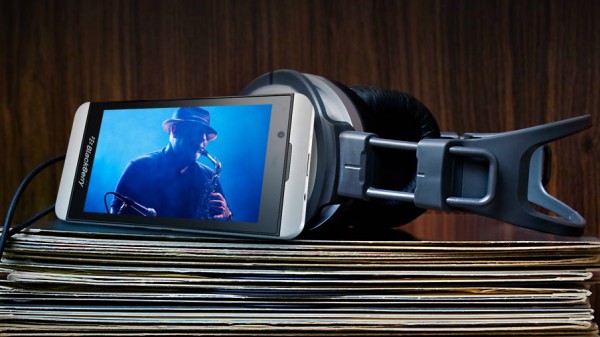
The question is top of my mind as the smartphone arrives in the United States today from AT&T and next week from T-Mobile and Verizon. Did I miss something, or is this an atypical debut? AT&T usually starts sales on Sundays. This is Friday, right? The phone, which launched January 30, could be yours today for around $200 with two-year contractual commitment.
Way back then I asked: “Will you buy BlackBerry Z10?” The responses aren’t as interesting as the lack of them. Less than 700 as I write, which is a surprisingly low number for one of my buying polls and for such a hotly-anticipated device. One-third of you say, yes, by the way, “as soon as available”, which for Americans is today. Nearly an equal number of respondents will buy immediately or within three months as won’t buy at all — around 43 percent for each.
AT&T sells BlackBerry Z10 for $199.99 with two-year contract, $449.99 with single-year commitment and $549.99 no contract or month to month. Obviously the carrier wants your money for 24 months. Verizon, which is accepting preorders (for March 28 availability), offers the Z10 for same longer-commitment price but more, $599.99, off-contract. All three carriers tout 4G LTE. Verizon’s network is largest, followed by AT&T, while T-Mobile is in processing of building out LTE.
BlackBerry Z10 specs: 4.2-inch touch display with 1280 x 768 resolution and 356 pixels per inch; 1.5GHz dual-core processor; 2GB RAM; 16GB storage (expandable to 64GB with microSD card); 8-megapixel auto-focus rearing-facing and 2MP fixed-focus front-facing cameras; 1080p video recording (rear camera), 720p (front); 4G: Quadband LTE 2, 5, 4, 17 (700/850/1700/1900 MHz), Triband HSPA+ 1, 2, 5/6 (850/1900/2100 MHz), Quadband HSPA+ 1, 2, 4, 5/6, (850/1700/1900/2100 MHz), Quadband EDGE (850/900/1800/1900 MHz); Verizon 4G: LTE Band-13 (700 MHz), CDMA Cell-band and PCS-band (800/1900 MHz), WCDMA Band-1 and Band-8 (2100/900 MHz), GSM/EDGE Quadbands (850/900/1800/1900 MHz); WiFi N; 4G mobile hotspot; Bluetooth 4; NFC; micro-HDMI; accelerometer; ambient light sensor; gyroscope; magnetometer; proximity sensor; 1850 mAh battery; and blackBerry 10. Measures 130 x 65.6 x 9 mm and weighs 137.5 grams.
Crappberry?
Yesterday, BlackBerry revealed reaching 100,000 mobile apps in its store. “Top brands and application providers are joining us every day and are seeing the benefits of being early supporters of the new platform”, Martyn Mallick, BlackBerry vice president, says. “We constantly hear from developers that the BlackBerry 10 tools are easy to build with and that we provide opportunities for app differentiation that they do not see on other platforms”.
While the number pales in comparison to Android or iOS, selection matters more. There, like Windows Phone, choices trouble — not so much for what’s missing but who isn’t supporting the platform. Facebook is available, but like Windows Phone, the app is homegrown, as is Google Talk. Instagram and pretty much anything Google are among the missing apps. Updated LinkedIn and Twitter apps arrived earlier this month.
Showcase developers are crucial to gaining support, particularly with Android and iOS combined smartphone sales share topping 90 percent, according to Gartner. BlackBerry now battles Microsoft for the role of third platform, and there’s not much share to share.
Sink or Swim
During fourth quarter, BlackBerry OS smartphone sales share was 3.5 percent, just barely ahead of Windows Phone/mobile. By comparison, Android and iOS had 69.7 percent and 20.9 percent share, respectively.
Three years ago, BlackBerry’s share of smartphones was 15.9 percent, according to IHS iSuppli. In 2012: 5.2 percent. For fourth quarter 2009, BlackBerry commanded 19.6 percent market share, putting it ahead of Apple (16 percent) and behind category leader Nokia (38.2 percent), according to IDC. Three years later, BlackBerry didn’t even make the top 5, with Apple in second place.
So question “Who will buy BlackBerry Z10?” is no small one. Flagship smartphone, along with BlackBerry 10 OS, in some ways represent the company’s last stand. It’s do or die time. Gartner forecasts BlackBerry 10 market share not reaching 5 percent by 2010. Then again, the smartphone market remains volatile and analysts have repeatedly proved wrong forecasting sales or shipments.
Loyalty Question
What BlackBerry commands is loyalty, particularly among some enterprise customers and even President of the United States. In late January I asked you: “Should Barack Obama stick with BlackBerry?” The majority of respondents say “he should upgrade to BlackBerry 10”. From the arguably small sample size, nearly 50 percent say the President should stay with the BlackBerry platform.
Gartner sees consumers as being more important and warns enterprises to “wait six months until it is clear that BB10 has proven successful in the consumer market”. That strikes me as putting BYOD — bring your own device — ahead of corporate IT needs, which include deciding whether to upgrade existing BlackBerries or switch platforms.
Platform switching is crucial for BlackBerry, whether keeping existing customers or gaining new ones. Smartphones are more than devices, or even platforms, they are anchors to digital lifestyles. The more people invest in one, the less likely they will switch to another. BlackBerry’s immediate need is to close the artery and stop bleeding loyal customers to Android and iOS.
Now that BlackBerry Z10 is really here, will you buy? Please take the original poll embedded above, if you haven’t already, and comment below.
-
More on why I won’t use Google Keep: it’s not personal, it’s business
My emotional response to Google Reader and the ensuing lack of trust in betting on Google’s applications has received many reactions. Marco Arment, who is the co-creator of Tumblr and the brainiac behind Instapaper, disagreed with my take on Google Keep in his widely read blog.
In this business, you can’t count on anything having longevity. To avoid new services that are likely to get shut down within a few years, you’d have to avoid every new tech product. Products and services lasting more than a few years are the exception, not the rule.
Fair enough! Except I didn’t say that.
This is what I said: It is hard to trust Google anymore to make rational and consumer centric decisions. I said — nuanced as it might be — that I don’t trust Google to introduce new apps and keep them around, because despite what the company says, these apps are not their main business. Their main business is advertising and search — regardless of whatever nonsense you might read. They will sacrifice anything and everything to keep those businesses intact. Sure, they embraced mobile advertising and mobile search, but that’s just the same business on a different device.
I am far more likely to believe in and use products that are the main focus of the company behind them. Online storage? Dropbox. Time-shifting web content? Pocket or Instapaper. Short form communication? Twitter. Baby pictures and wedding photos to make single people miserable (or happy for being single)? Facebook.
The point is that a company whose main focus is a specific service or a singular product, like Evernote, is far more likely to focus its energies to build a business around it and keep it around. And if in seven years (or seven months) they fail — hell, at least they went down trying.
Our company pays thousands of dollars for Google Apps and the reason we do is because it is a business for Google and it makes good business sense. I have no problem paying for Instapaper or Pocket or Dropbox or Skype or anything that helps me do my job. And if anything that starts out free (Dropbox did) and then wants me to pay for it (like Evernote), I don’t hesitate upgrading. Why? Because I want these guys to be around.
As the Google Reader example shows (and as Chris Wetherell told me in an interview), Google didn’t even try with Reader. It never gave us an option to pay, even though Google is willing to offer some paid services when it makes sense, like multiseat licenses for Google Apps.
As Marco said, in the end it’s always business. It’s just not Google’s business, so perhaps that is why we should shift our energies and attention to services whose business is the apps they want us to use.
That said, I don’t think Marco is that far off from my way of thinking. He wrote, “Investing too heavily in someone else’s proprietary system for too long rarely ends gracefully, but when it bites us, we have nobody to blame but ourselves.”
Isn’t that what I am saying? Albeit, with a lot more emotion?


Related research and analysis from GigaOM Pro:
Subscriber content. Sign up for a free trial.- Work media tools in 2012 and beyond
- Social media in Q1: commerce and discovery dominated
- Startup growth and the new recruiting ecosystem


-
BlackBerry CEO says Samsung’s smartphone security will never be ‘top-notch’ [updated]

-
HTC says flagship HTC One smartphone will launch in U.S. by end of April

-
As BlackBerry Z10 launches in U.S., BlackBerry CEO confirms even better phone on the horizon

-
The perils of Kickstarter: Fulfillment can be a pain
Kickstarter, and services like it, have changed how entrepreneurs fund and market their products, but as many young inventors have found, manufacturing and distribution are still a business governed by old rules. And while the manufacturing woes that can come with a widely successful Kickstarter project have been documented, it’s also worth delving into the trouble of fulfillment and distribution — namely, one you’ve made your widget, how do you get it out to customers?
It’s a topic that came up recently during a conversation with SparkFun, the retailer of DIY electronics kits headquartered in Boulder, Colo. While sitting at a table with Nathan Seidle, the CEO of SparkFun and Pete Dokter, the director of engineering, we discussed the impact of Kickstarter on the firm’s business. In general, Kickstarter is great marketing for the DIY movement that SparkFun is dependent on, and it is happy to supply boards for prototypes.
However, once you start talking about huge production runs of an electronic board for the next big widget, or even worse, fulfilling those orders, Seidle is leery.
He pointed to the MaKey MaKey campaign of 2011 as an example. The MaKey MaKey team, which was building a kit for would-be hardware hackers, worked with SparkFun ahead of the campaign to guarantee the production of the needed boards and for fulfillment. If the MaKey MaKey campaign was successful, SparkFun would manufacture and assemble the product and then ship it out.
What happened next was a nightmare for SparkFun, which to this day is still seeing at least two returns a week from the product. The problem wasn’t a bad product, but bad data. As Seidle puts it, Kickstarter doesn’t have checks in place to ensure people don’t enter the wrong address or make other mistakes when ordering a product.
The result was that about 40 percent of the data Kickstarter sent over on behalf of Makey MaKey needed clarification. That led to SparkFun’s customer service people trying to verify addresses — one example: is there a Houston, South Africa? — and it is still leading to returns. Seidle vowed to avoid that side of the business from this point forward.
Luckily a quick check among the people doing current and former Kickstarter projects shows that there are plenty of companies that will offer fulfillment for Kickstarter orders, and most entrepreneurs plan to use them. But it’s yet another sign of the holes we need to fill if we’re going to make the transition from the more traditional large-scale manufacturing process or the traditional funding models for a crowd sourced future.
It’s also a good idea to double and triple check your address when you enter it into Kickstarter.

Related research and analysis from GigaOM Pro:
Subscriber content. Sign up for a free trial.- GigaOM Research highs and lows from CES 2013
- Crowdfunding’s rapid growth and future opportunity
- Analyzing the wearable computing market

-
Mike Tyson Hoax: Roblé Can’t Believe It Made Page Six
Chef Roblé from Bravo’s Chef Roblé & Co. posted a series of Mike Tyson-related images on Instagram, which have drawn some attention, including from Iron Mike himself.
The series, which included some fake text messages from Tyson to Roblé, went like this:


The story was picked up by the New York Post’s Page Six, and Roblé tweeted that the whole thing was a joke, and that he can’t believe it made it there.
The Mike Tyson thing was a joke. I made it up. Can’t believe it made Page Six.
Case closed.
Cloudera Partners with T-Systems on Cloud Analytics

Enterprise Hadoop provider Cloudera announced a European partnership for delivering analytics as a service, and AMD’s SeaMicro has obtained CDH4 certification from Cloudera for its SM15000 server.
Cloudera and T-Systems Partner
Cloudera announced that it has reached a strategic agreement with European IT systems provider T-Systems to deliver cloud-based data analytics solutions based on Cloudera’s Platform for Big Data. T-Systems is Deutsche Telekom’s corporate customer arm. Cloudera Enterprise powered by Cloudera Impala RTQ for real time analytics, will provide the data management infrastructure layer, enabling native data integration, visualization and analysis at scale. T-Systems will integrate Cloudera with existing cloud computing infrastructure and deliver on its strategic vision to develop big data analytics solutions as a key element of its IT solutions portfolio.
“Our customers don’t want to have to worry about the hardware and software for big data,” says Christian Wirth, Vice President BI & Big Data at T-Systems. ”They don’t want technology, just a reliable service. We can offer precisely this — which is what makes our new offer with Cloudera so special.”
“We are excited to be working with T-Systems, one of Europe’s foremost IT service providers and a trusted global leader in cloud-based business solutions for the enterprise,” said Tim Stevens, Vice President of Business and Corporate Development at Cloudera. “Leaders choose leaders to partner with and this partnership is further validation that Cloudera is the big data solutions leader that enterprises trust. T-Systems’ unique cloud-based application of our Platform for Big Data will enable unparalleled scalability for data management and analytics and offer a great way for enterprises to more easily leverage the power of Hadoop.”
SeaMicro SM15000 certified for Cloudera Hadoop
AMD announced that the SeaMicro SM15000 server is now certified for CDH4, Cloudera’s Distribution Including Apache Hadoop Version 4. With up to 512 processor cores and over five petabytes of storage, the SM15000 is a power-efficient big data server platform. The SM15000 was released last year, featuring SeaMicro’s network fabric to extend beyond the chassis and connect directly to massive disk arrays – putting 5 petabytes of storage in a 10 rack unit system.
“The CDH4 certification assures our customers that the SM15000 completed and passed strict testing and performance requirements,” said Tim Stevens, VP of Business and Corporate Development at Cloudera. “Leveraging the deep domain expertise and expanding knowledge base offered by Cloudera and the greater Cloudera Connect partner ecosystem, AMD can enable its customers to bypass the complexity associated with deploying and managing Hadoop and put their data to immediate use. We’re committed to helping enterprises achieve the most from their big data initiatives, and we’re pleased that AMD has completed certification of the SM15000 on CDH4.”
What it’s like to ride in Google’s driverless car

Jon Hamm Rumor Has ‘The News’ Buzzing About His Penis
Jon Hamm, star of AMC’s Mad Men is currently in the spotlight, not because he’ll be back for two more seasons of Mad Men, but because rumor has it he has a big penis. Clearly, this is top news.
Apparently the Huffington Post is the authority on the subject. Google News lists its piece “Jon Hamm’s Private Parts Allegedly Cause A Frenzy On ‘Mad Men’ Set” as the “in-depth” go to source.

The “in-depth” Huffington Post piece points to the New York Daily News’ Confidential, which appears to be the source of the big Jon Hamm penis rumor (or is that Jon Hamm big penis rumor?), or at least the latest round of discussion about it. The article quotes:
“Mad Men” star Jon Hamm’s private parts are causing a stir. Again.
An AMC insider tells Confidenti@l that during filming of the sixth season of the hit show — when the ’60s-style clothing was a tight fit — Hamm was politely instructed by a staffer at the network to please wear underwear while shooting his scenes.
A source tells Confidential that with the season taking place in the 60s, the pants are “tight and leave very little to the imagination,” and that “Jon’s impressive anatomy is so distracting that they politely insisted on the underwear”.
Now that anatomy is the talk of the web, and it’s making the search trends.
Buzzfeed, “where journalism is heading,” has “15 Hilarious Tweets About Jon Hamm’s Penis“.
Just 15? Surely there are hundreds, if not thousands.
Oh, and in case you’re wondering about that amazing Jon Hamm picture above, check this out.
Frustrated for Broadband in Rural Minnesota: No Joy from Local Provider. Can Policy Help?
I am sharing the following email we received with permission from author Shauna Kreger…
I would like to say thank you for fighting for use in these small communities in rural Minnesota on Broadband. I am a college student on-line and have trouble doing my school work because I do not have broadband and cannot afford satellite. Satellite is not much better than dial-up ( but you probably already know that). I have tried for past four years to get broadband installed in my area with no luck. I am a quarter of a mile from the cut off of a broadband box. I wrote a letter to Qwest’s board three years ago explaining the benefits of broadband services for the rural communities and the benefits it would have on their company ethics. I also sent them detailed research on when North Western Bell put phone lines in around my area and how it paid for itself. To my disbelief I received an e-mail back from a female on the board stating “putting broadband services in at this time would not benefit Qwest”. I contact the company monthly asking for broadband and I am told I can not get it and there is no future plans for broadband installation in my area. School children need broadband these days to do their homework and their grades are suffering because there is no option. The phone company seems to be monopolizing the rural area of Pine, Kanebec, and other Northern Counties.
I thought about blocking out name of the provider but I figured there have been enough changes at Qwest to provide some distance. And Comcast’s Duane Ring said something very similar at an MHTA meeting in January…
How can we convince providers to expand their service? What prevents growth?
DR: All providers want more customers. It’s what we think about. How do you get a ROI? There’s nothing available now that makes a compelling business case in some areas. We’ve looked at various technologies. We will need a hybrid solution to reach unserved areas.
I heard similar frustration from users while I was touring communities across the state last month. So, while research I posted earlier this week indicates that adoption is where it’s at for closing the broadband gap I’d like to remind folks that access is still an issue too. Adoption is a goal that everyone loves – providers, users, community leaders… It feels good all the way around. The apple pie of broadband! And I wholeheartedly support adoption too.
Access is another issue because there is a gap between the goals based on perspective: most providers want to make money while customers (and community-oriented leaders) want to see service in areas even where the business case isn’t strong. Broadband proponents see broadband as an investment in the community. Many providers see it as an investment for stakeholders. (Note: there are local independent, coops and community providers that see investment in the community too!)
Addressing tough issues of access could be where the policymakers can have the greatest impact. It seems like encouragement (via tax incentives, public-private partnership or other options) is worth trying but at some point we may need to see stronger measures that require providers to address universal service and/or support community/municipal efforts to get the job.

iPhone 5S, low-end iPhone with no Retina display reportedly launching this summer

NVIDIA Conference: GPU Can Power Big Data Analytics
The 2013 GPU Technology Conference is underway in San Jose this week, and NVIDIA shared how it is taking on the top trends in IT with GPU-powered big data analysis, accelerated virtual desktops, and a visual computing appliance. The event conversation can be followed on Twitter hashtag #GTC13.
Keynoting at the beginning of the conference, NVIDIA (NVDA) CEO Jen-Hsun presented about breakthroughs in computer graphics and the NVIDIA GPU roadmap. He shared GPU computing examples and updated participants on remote graphics and product announcements. Jen-Hsun talked about the next two GPUs coming from NVIDIA: the Maxwell – with unified virtual memory for GPU operations to see the CPU memory and vice versa, and the Volta, which is energy efficient and has a new technology called stacked DRAM. Volta will address the problem of access to memory bandwidth. It will have DRAM on same silica sub-strate, and achieve one terabyte per second of bandwidth.
GPU-Powered Big Data Analytics
NVIDIA demonstrated several case studies for how GPUs are being used to tackle big data analytics and advanced search for both consumer and commercial applications. Companies such as Shazam, Salesforce.com and Cortexica use GPUs to process massive data sets and complex algorithms for audio search, big data analytics and image recognition. Top music application Shazam uses GPU accelerators to rapidly search and identify songs from its 27 million track database. Shazam is growing rapidly, with 10 million song searches a day and 2 million new users joining the service every week and its database doubling over the last year.
“GPUs enable us to handle our tremendous processing needs at a substantial cost savings, delivering twice the performance per dollar compared to a CPU-based system,” said Jason Titus, chief technology officer of Shazam Entertainment. “We are adding millions of video and foreign language audio tracks to our existing services, and GPU accelerators give us a way to achieve scalable growth.”
Visual Computing Appliance
NVIDIA introduced a visual computing appliance, enabling businesses to deliver ultra-fast GPU performance to any Windows, Linux or Mac client on their network. The GRID Visual Computing Appliance (VCA) is a GPU-based system runs complex applications like those from Adobe and Autodesk, sending their graphics over the network to be displayed on a client computer. With the click of an icon a virtual machine, called a workspace, can be created for a dedicated, high-performance GPU-based system. These workspaces can be added, deleted or reallocated as needed.
“NVIDIA GRID VCA is the first product to provide businesses with convenient, on-demand visual computing,” said Jen-Hsun Huang, co-founder and chief executive officer, NVIDIA. “Design firms, film studios and other businesses can now give their creative teams access to graphics-intensive applications with un-compromised performance, flexibility and simplicity.”
The 4U GRID VCA appliance houses 16 NVIDIA GPUs and GRID VGX software, providing NVDIA Quadro-class graphics performance for up to 16 concurrent users, with low-latency, high-resolution and maximum interactivity. The appliance will be available in the United States in May.
“We’ve had enormous success using remote GPU acceleration on our content-creation applications,” said James Fox, chief executive officer at Dawnrunner, a San Francisco-based film production company. “Thanks to NVIDIA GRID VCA, we don’t spend weeks configuring workstations and transcoding files and projects. Instead, we have more time to deliver a higher quality product for our customers. And we can take on new projects with tighter deadlines.”
Companies embrace NVIDIA GRID
NVIDIA announced that enterprises can deliver GPU-accelerated virtual desktops and professional graphics applications from the cloud to any device, anytime, anywhere. Dell, HP and IBM are offering NVIDIA GRID-based servers. Citrix, Microsoft and VMware are offering NVIDIA GRID-enabled software. The Dell PowerEdge R720, HP ProLiant WS460c and SL250, and IBM iDataPlex dx350 MR server contain the NVIDIA GRID K1 and K2 boards.
“Enterprises want to take advantage of the growing trends towards globalization and mobility by virtualizing desktops and applications so users can work from anywhere, anytime on any device — while enabling the company to secure its core IP,” said Bob Schultz, group vice president and general manager, Desktops and Apps at Citrix. “By leveraging NVIDIA GRID K1 and K2, combined with Citrix XenDesktop and Citrix XenApp with HDX technology, enterprises can deliver the most graphics-intensive applications to users who require rich, interactive experiences from any device.”
NVIDIA GRID enterprise solutions uses NVIDIA GRID VGX software, which unlocks the virtualization and remoting capabilities of NVIDIA GRID GPUs and is licensed by Citrix for use in XenDesktop, XenApp and XenServer; VMware for use in vSphere and Horizon View; and Microsoft for use in RemoteFX. The GRID K1 boards use four Kepler GPUs and 16GB of memory, and K2 boards use two higher-end Kepler GPUs and 8GB of memory.
“Enabling customers to virtualize their multiple workloads is a challenge Dell is committed to, and the NVIDIA GRID technology enables our solutions to be more powerful for design and graphics-intensive applications,” said Sally Stevens, vice president of Dell PowerEdge marketing. “Starting with the PowerEdge R720 server this month, and later including Dell Precision workstations and end-to-end Dell Desktop Virtualization Solutions (DVS) Enterprise stacks, Dell will offer a range of robust graphics-virtualized solutions, enabling new customer mobility and data security opportunities that accommodate a wide range of graphics performance requirements.”
To keep up with Big Data news, bookmark DCK’s Big Data Channel. To stay updated on virtualization, check out our Virtualization Channel.
Angry Birds Star Wars About To Get Cloud City Episode
Angry Birds Star Wars will soon get a Cloud City episode. Rovio teased the episode on YouTube:
No release date for the episode is given, but Rovio says to stay tuned for the official Cloud City gameplay trailer, coming to MTV and GameTrailers on Monday.
Fans recently saw the release of 22 “Escape From Hoth” levels.
Android Smart Watch In The Works [Report]
In recent months the rumors have been picking up that both Google and Apple are working on smart watches. A new report from the Financial Times indicates that Google is indeed working on one, and it has its Android unit developing it.
To be clear, this is still in going to have to be filed in the rumors department, and the report is careful to make note of that, but it does say:
While Glass is being created in its X Lab, home to experimental “moonshot” projects such as the self-driving car, Google’s smart watch is being developed by its Android unit, according to a person briefed on the project, to act as an extension to the smartphones using that operating system. The project is separate from Samsung’s efforts, the source said, although there is no indication of when it might launch.
Google has been going to great lengths to build buzz for its “moonshot” Glass concept, but if the Android team is working on a smart watch, such a device getting into consumers’ hands (or on their wrists, rather) in the near future seems like a real possibility – particularly with Apple (allegedly) and Samsung getting into the space. It looks like Sundar Pichai has quite a bit on his plate.
Two months ago, reports came out that Google was “actively exploring the idea of making its own smart watch,” and “looking at ways it might be able to market” it.
Google secured a patent for such a device last fall.
A smart watch would be one more device Google could sell in a retail store should it ever decide to open a chain.
The wait is finally over: BlackBerry Z10 now available in the U.S.


