Author: Serkadis

  • A Chinese solar giant goes bankrupt, and why that’s a good thing

    Once the world’s largest solar panel maker, Suntech Power, has finally been forced into bankruptcy. The company has been running out of cash for months, defaulted on a loan payment recently, and has now become the biggest casualty yet of the coming consolidation of the global solar industry.

    This week eight Chinese banks asked a court to find Suntech subsidiary Wuxi Suntech insolvent and to allow it to begin restructuring. Suntech responded to the court and said it would not object. The New York Times reported that the bankruptcy is “expected to lead to a takeover of the Wuxi operations by Wuxi Guolian, a financial conglomerate controlled by the city government of Wuxi.”

    The solar market has seen an oversupply of solar panels and plummeting prices for those panels for over two years now. Two thirds of solar cells are made in China, where the Chinese government has given Chinese solar makers access to large low cost loans. The oversupply and drop in prices has led to huge solar manufacturers like Q-Cells to startups like Solyndra and Abound Solar to file for bankruptcy.

    It's an American right to have solar

    Suntech solar panels

    Suntech may be the largest to date, but it won’t be the last solar maker to crash. As MIT Tech Review put it earlier this week: “hundreds of solar companies need to fail to help bring the supply of solar panels back in line with demand.”

    The weeding-out process will help slow the fall in solar panel prices and allow demand to rise back up again. Down the road the re-balancing will enable these companies to continue to invest in more efficient cells and new innovations, which will bring down the cost of solar through technology even more. Another 180 solar panel makers could reportedly disappear by 2015 due to consolidation.

    At the same time, Suntech’s woes partly come from a financial scandal. The company got in trouble with a fund it controlled that financed solar power plant development in Europe.

    Of course, it’s not all positive that Suntech has declared bankruptcy. As Ucilia Wang wrote for us last week:

    The drama presents an ugly turn for a company that was solid and took technology and market risks to grow. . . Chinese companies in general had been known more as mass producers rather than innovators. . . Suntech’s decline also leaves a depressing note in the efforts by the federal and local governments to expand solar manufacturing in the U.S.

    Related research and analysis from GigaOM Pro:
    Subscriber content. Sign up for a free trial.

  • Amazon Gives Publishers ‘Send To Kindle’ Button For Those Who Want To Read Content Later

    Amazon has launched a new “Send To Kindle” button for websites, so content can be sent to Kindle devices and the free Kindle apps for iPhone, iPad and Android phones and tablets.

    “Adding the Send to Kindle Button opens a website to millions of Kindle customers who can now enjoy the content on Kindle,” a spokesperson for Amazon tells WebProNews.

    “Readers often encounter news articles, blog posts and other content on the web that they want to read but don’t have time to do so immediately,” she adds. “The Send to Kindle Button lets people easily send that content to their Kindle so they can it read later.”

    Probably not good news for services like Instapaper.

    “Just send once and read everywhere on any Kindle device or free reading app,” the spokesperson says. “No more hunting around for that website or blog that caught your eye – just open your Kindle and all the content you sent is right there. The Send to Kindle Button is also great for readers who want to collect content from the web to use in work projects, school assignments, or hobbies.”

    The button can be found on Amazon’s site here. There is also one specifically for WordPress bloggers here.

    Users can add Send to Kindle apps to their browsers, desktops and Android apps as well. There is also an option to send by email.

  • Data science is not enough. We need data intelligence too

    For all our talk about big data saving the world and changing lives, it so far has had more impact and gotten more press for lessor achievements, according to Sean Gourley of Quid. Gourley spoke in New York City Wednesday at the Structure:Data 2013 conference on the difference between data science and data intelligence.

    Gourley illustrated this difference with children’s cereal. He pointed out that data science is used today for improving advertising, such as making better packaging and pricing strategies. Meanwhile, data intelligence could try to address the issue of child obesity.

    “The naive empiricism of data science goes for the low-hanging fruit: it measures what can be easily measured and changed,” Gourley said.

    Part of this is because of where the ideas of data science came from: Facebook and LinkedIn (lnkd). He noted that Facebook is the largest quantification society has ever seen, but it’s designed to put people in a pre-defined vector and test how to best advertise to them.

    However, data intelligence will solve big problems, such as how the number of troops we send to Iraq might change the nature of the conflict. Or it could solve strategic problems that don’t require a prediction, but rather require insights.

    He outlined the differences between data intelligence and data science for the audience. For example, data intelligence asks bigger questions and builds models to solve for them, as opposed to asking for predictions and equations. Data intelligence deals with messy, small data while data science handles big data.

    Check out the rest of our Structure:Data 2013 coverage here, and a video of the session follows below:


    Related research and analysis from GigaOM Pro:
    Subscriber content. Sign up for a free trial.

  • The Most Terrifying Mr. Rogers Video Ever Made

    Today is the birthday of famed children’s television host Fred Rogers, also known as Mr. Rogers. I just learned that his middle name was actually McFeely (according to Wikipedia and Google’s knowledge graph).

    Now, here’s possibly the most terrifying thing I’ve ever seen. Warning: you will be disturbed.

    Oh, what you find on YouTube.

  • Sword of the Stars: The Pit Review (PC)

    I have about 25 more bullets for my assault rifle and I get the feeling that I will not find many more for a while, so I resolve to use my trusty Marine blade to take out the enemies that stalk me throughout the level and keep the ammo in reserve for a really big and scary threat.

    I sprint through the rooms I have already explored, remembering h… (read more)

  • Better Broadband Means Better Economy in Rural Areas

    Yesterday Telecompetitor mentioned a new report by the National Agricultural & Rural Development Policy Center (NARDeP) Rural Broadband Availability and Adoption: Evidence, Policy Changes and Options. Here’s the info in a nutshell in terms of the connection between broadband and economic vitality:

    • Broadband and economic health are linked in rural areas (potentially in a causal direction):
      • Low levels of adoption, providers, and broadband availability were associated with lower median household income, higher levels of poverty, and decreased numbers of firms and total employment in 2011
      • Increases in broadband adoption between 2008 and 2010 resulted in higher levels of median household income and total employment for non-metro counties
      • Broadband adoption thresholds have more impact on changes in economic health indicators between 2001 and 2010 than do broadband availability thresholds in non-metro counties

    And some of the metro-rural differences:

    • The broadband adoption gap between metro and non-metro areas remained at 13 percentage points in both 2003 and 2010; however, this gap increased among low income, low education, and elderly
    • The most rural (non-core) counties experienced significant improvements in broadband adoption between 2008 and 2011
    • Traditional factors – income, education, age, race, and non-metro location – played a role in adopting broadband for both 2003 and 2010; low levels of providers had a negative impact on adoption while higher levels of broadband availability had a positive impact

    These findings agree with Jack Geller’s findings on the issue. He often shows using Roger’s Theory of Adoption curve. We’ve seen a broadband adoption increase at a good clip over the last few years – and the remaining non-adopters are laggards. They have lower incomes, lower levels of education, they are older, minorities in rural areas.

    adoption curve

    Jack also points out that in some ways this is a demographic that will take care of itself, the older demographic more quickly than the young. I think the NARDeP research might indicate that it’s worth the effort and investment to reach out to these folks – especially if the increases in household income and employment seen from 2008-2010 could transfer to these laggards as well. The most difficult thing will be convincing the non-adopters. As the research indicates…

    When asked their primary reason for not using broadband 40% of rural residents in 2003 said they didn’t need it. By 2010 that number had climbed to 47%.

    The NARDeP also makes some policy recommendations…

    • Draw broadband infrastructure to less economically robust regions lacking it (via programs such as the FCC’s Connect America Fund)
    • Focus adoption programs on populations with lower levels of income and education as well as racial/ethnic minorities; involving community anchor institutions is particularly important
    • Build on diffusion factors such as trialability, observability, compatability to expose nonadopters to the technology
    • Though wireless deployment is helpful, many of the productivity gains and economic advantages of broadband are limited through this technology
    • Support improved data gathering related to price / affordability (including bundles) and service quality (speed)

    Could turn out to be some good advice for Minnesota Legislators as they think about the Office of Broadband Development.

  • Galaxy S 4 could help Samsung ‘unseat Apple as king of innovation’

    Galaxy S 4 Innovation
    Expectations were high leading up to last week’s Galaxy S 4 unveiling and while no one was blown away by the handset’s design, a number of industry watchers believe Samsung (005930) delivered an impressive device that will carry the company’s momentum forward thanks to intriguing new software features. There are strong opinions on both sides of the argument regarding just how innovative Samsung’s next-generation flagship phone really is, but one recent report suggests the Galaxy S 4 could be the start of shift that sees Samsung “unseat Apple (AAPL) as king of innovation.”

    Continue reading…

  • It’s not you, LinkedIn is down — no up, down, up

    When I signed onto group chat this morning, my colleagues bantered about problems accessing LinkedIn. They couldn’t. I navigated to the site easily enough, but got this message when trying to log in: “An Error occurred during authorization, please try again later”. The social network’s Twitter feed confirms there are problems, but information is contradictory.

    About two hours ago: “We’re aware that the site is currently down, and our team is working on it right now. Stay tuned”. An hour later: “The issues you may have experienced with our site earlier have been cleared. Thanks for your patience”. But they weren’t fixed. At 9:21 am EDT: “Our site is currently experiencing some issues. Our team is continuing their work on this. Stay tuned”.

    I can access the main site but can’t log in. So problems persist, and they’re intermittent. Colleague Mihaita Bamburic couldn’t log in before I started this post, but at 10:38 am posted to BetaNews group chat: “It works now. But then again it did before, then went down again”.

    The cloud is great until it storms, eh? LinkedIn isn’t my primary social network, but I know many, many people who depend on the cloud service for business purposes, which means many of our readers.

    The reaction on Twitter surprises me. “If #LinkedIn is down, how will I know when an Anonymous IT Professional from South Africa views my profile???” Michael Ratty tweets. He jests, right? Lori B. doesn’t. She replies: “As a recruiter, my day is officially unproductive if this is the case”.

    Helen Piña: “As a digital marketer, I selfishly feel good knowing a website can tragically go down on anyone, even #LinkedIn”. Scott Stratten: “LinkedIn is down. Suddenly my life is devoid of MLM pitches and group spam. I feel empty”.

    At 10:44 am, LinkedIn tweeted: “Our site is now back up and running. Thank you for your patience”. I successfully logged in. And you?

    Photo Credit: olly/Shutterstock

  • Without human input augmentation, algorithms alone are making us dumber

    Are computer algorithms making you dumber? Yes, says Eric Berlow, founder of Vibrant Data Labs. Speaking at the GigaOM Structure: Data 2013 conference on Wednesday, Berlow offered several compelling examples of this phenomenon as well as an approach to augment algorithms with more human input.

    “There’s lots of content in the newspaper,” Berlow noted. “After viewing the most stories for a few weeks, I asked myself, where did all the news go?” Think back to the Presidential debates, Barlow said. If you focused solely on topics provided by news algorithms, you’d be reading nothing but stories about Big Bird and binders full of women.

    Amplifying crowd behavior is a start when it comes to managing societal data but we need to flip the approach, Berlow said. ”How do we harness and amplify our preferences to solve the world’s problems?”

    To do this, we need to find crowd-sourcing solutions that aren’t just the sum of parts, but are greater than the sum of parts. Photocity is a good example, according to Berlow. It takes user submitted 2D camera images and creates 3D images from them; a product that didn’t exist until the crowd’s data was assimilated.

    This leads to one of the biggest challenges of our time with data: The personal data problem, where you are both the customer and the product. How can we spark a new personal data economy?

    Through the WeTheData.org project, Berlow offers a suggestion, finding how all of our personal data is interconnected. By gathering human input first on approximately 90 personal data challenges and mapping this complexity, the project determined that the top problems emerging are digital access, digital trust, data literacy, platform openness.

    This may sound obvious in retrospect, Berlow said, but “so too was gravity after we discovered it. A human panel surfacing these four issues show that if we can solve these issues, many of the other 90 challenges will be improved as well. And now that the personal data economy problem is better defined, algorithms can be applied to focus on the biggest issues, not every single one.

    Check out the rest of our Structure:Data 2013 coverage here, and a video embed of the session follows below:


    Related research and analysis from GigaOM Pro:
    Subscriber content. Sign up for a free trial.

  • Demand Media Announces Domain Business HQ In Dublin

    Demand Media announced today that it is opening its largest international office in Dublin, which will serve as the company’s international headquarters for its domain business.

    Last month, the company announced that it intends to split its content and domain businesses apart.

    Demand Media’s international presence currently includes offices in Toronto, Buenos Aires and London. The company says the Dublin team is focused on preparing for the big new TLD push, which will come to market this year.

    “We are excited to expand our business into the thriving tech scene of Dublin,” said Demand Media EVP of emerging markets, Dave Panos. “At such an exhilarating time in the domain services industry with the upcoming launch of new TLDs, we are eager to recruit creative and high-energy professionals who are up to the challenge of taking the lead in the changing Internet landscape.”

    The Dublin operation will be led by the newly hired David Ryan from Electronic Arts.

    “With his experience creating efficiencies inside of large operations, identifying and participating in high-growth markets, and creating value within smaller start up environments, David Ryan is certain to lead our Demand Media Dublin team to success in a new market,” continued Panos. “Our ramped up efforts internationally further illustrate Demand Media’s commitment to this historic TLD launch.”

    Ryan served as senior director at EA.

    In other news, Demand Media announced on Tuesday that it has acquired e-learning content site Creativebug, which it says will cater to the Etsy and Pinterest crowds.

  • ‘NCAA Bracket’ Google Search Returns Bracket On Results Page

    Google has a new March Madness feature for basketball fans. When you search “NCAA Bracket” in Google, the search engine will return a bracket on the actual page, so you can see where all the teams are at in the tournament.

    Google’s Dan Vanderkam announced the feature in a tweet (via Search Engine Land):

    Here’s what it looks like:

    NCAA Bracket

    Google has offered March Madness tools in the past. Here’s what they did last year. And the year before that.

  • Yahoo May Buy Controlling Stake In Dailymotion [Report]

    According to the Wall Street Journal, Yahoo is in talks to buy a controlling stake in the popular video site Dailymotion, based on information from “people familiar with the talks.” The report says Yahoo’s in for as much as 75% of the company.

    Neither company is commenting on the alleged talks.

    Last year, Yahoo and Dailymotion struck a content syndication deal. At the time, Dailymotion VP, International Content, Daniel Adams, said that the site was getting 120 million unique monthly visitors.

    According to the Journal, citing comScore numbers, it’s the 12th-largest video site in the world by unique users, with 116 million in January.

    France Telecom currently has a 100% stake in Dailymotion.

  • BlackBerry 10 may have strayed too far from its roots

    BlackBerry 10 Security
    BlackBerry 10 is a stark departure from BlackBerry 7 and other aging versions of the BlackBerry (BBRY) operating system, which is a very good thing in most regards. But in one key area, the company may have strayed too far from its roots. The U.K.’s Communications-Electronics Security Group, which evaluates IT solutions and determines whether or not they may be used by the U.K. government, has decided that BlackBerry 10 is not safe for essential government work, The Guardian reported. Earlier versions of BlackBerry’s OS had received security clearance. The report claims this rejection could cost BlackBerry millions in lost revenue, even if rival devices don’t fill the void — with tens of thousands of handsets currently deployed, the U.K. government is one of BlackBerry’s biggest customers in the U.K.

    Continue reading…

  • Inside ViaWest’s Tier IV Data Center

    viawest-vegas-acgear

    ViaWest’s new Lone Mountain data center features a cooling system that can alternate between three methodologies, dependent upon weather conditions. The “Super-CRAC” unit in front managed a chilled water loop. (Photo: ViaWest)

    ViaWest recently opened the doors at its new Lone Mountain Data Center in north Las Vegas. The facility will offer 74,000 square feet of raised floor space within a 110,000 square foot building. The Lone Mountain facility is the first Tier IV designed colocation facility in North America, according to the Uptime Institute. Check out our photo feature, Closer Look: ViaWest’s Tier IV Las Vegas Data Center, for details.

  • Call in podcast: Samsung smartwatches and Galaxy S 4 features in Galaxy Note 2

    It’s another edition of the weekly call-in show where we answer your tech questions. We start off the show with some commentary on Samsung’s reported smartwatch and then answer questions about a merger between Chrome OS and Android, unsubsidized phones and software updates, Google Reader options and Galaxy S 4 features finding their way to the Galaxy Note 2.

    To be a part of the show, just call in and leave a voicemail at 262-KCTOFEL. If you do, we’ll play back the question on the show and answer it. Or you can tweet me at @kevinctofel on Twitter. Each week, I’ll answer as many questions as I can while keeping the podcast to a manageable amount of time: 20 to 30 minutes at most.

    This episode of GigaOM Podcast is brought to you by Squarespace – the best way create a modern and professional website, with all the features you need integrated into one platform. Every Squarespace website is mobile ready, and includes e-commerce, 24/7 customer support, and a free domain name. Start your free trial today, at squarsepace.com/gigaom.

    Show notes:
    Hosts: Chris Albrecht and Kevin C. Tofel

    • Is Samsung working on a smartwatch? Probably.
    • What might a merger of Chrome OS and Android look like?
    • Thoughts on Google Reader going away, along with some alternatives.
    • How many Galaxy S 4 functions could make their way into the Galaxy Note 2?

    (download this episode)

    Subscribe to RSS

    iTunes

    Stitcher Radio

    SELECT PREVIOUS EPISODES:

    Podcast: Facebook’s feedin’; Lean In’s meanin’; and everyone’s Hadoop-in

    IoT: When devices can talk, will they conspire against you?

    Call-in show: Why the “I’m leaving iPhone” trend?

    Internet of things Podcast – Almond+’s nutty idea: Making sensor connectivity a snap

    Yahoo’s WFH Boo-Boo

    PlayStation Snore?

    Podcast: Why the internet of things is cool and how Mobiplug is helping make it happen

    Related research and analysis from GigaOM Pro:
    Subscriber content. Sign up for a free trial.

  • Americans who received swine flu vaccines are at risk for paralysis disorders

    The federal government has once again been exposed for lying about the safety of the infamous swine flu vaccine, also known as H1N1. According to a new study published in the journal The Lancet, people who received the swine flu vaccine during the 2009-2010 pandemic…
  • Goodbye Yellow Brick Road, SMBs plan to spend much more on tablets than PCs

    Keeping with our ongoing “Ding, Dong, the PC’s dead” theme, NPD reports that businesses with 50 to 999 employees will spend more on technology this year. That’s good news for PC manufacturers but much, much better anyone selling tablets — or the ecosystem supporting them. SMBs are suddenly a bright light cast against vast darkness. Yesterday, IDC warned that PC shipments would fall double-digits during first quarter.
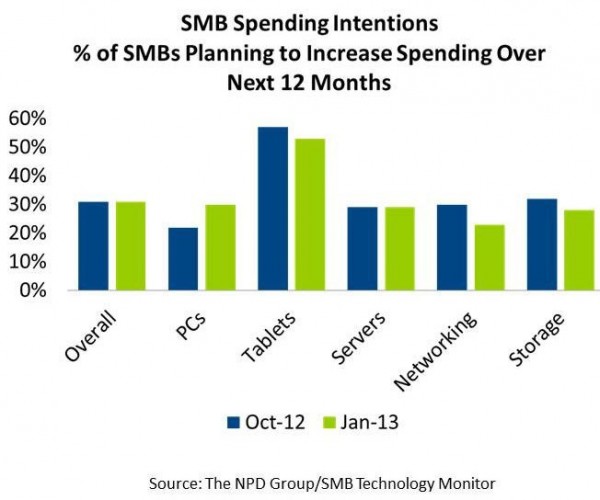
    Somebody is buying, at least. Thirty percent of SMBs surveyed by NPD plan to increase PC spending — that’s up from 22 percent just three months ago. Woot! Woot! “PCs are still a core part of the technology arsenal of the typical U.S. corporate employee and a regular rotation of new and upgraded equipment is part of best practices for most mid-sized U.S. businesses”, Stephen Baker, NPD’s vice president of industry analysis, says.

    “The increase in planned spending is likely a combination of the halo effect of new form factors and the upcoming end of official Microsoft support for the Windows XP operating system”, he emphasizes. Yes. Yes. Let’s discuss the form factor thing further. NPD also observes an uptick concurrent with tablet-buying interest (more on that next paragraph). What’s the big, new computer this year with strong small- or medium-business appeal? Surface Pro, baby.

    Nearly twice as many SMBs plan to spend more on tablets than on PCs. Surface Pro appeals to both segments, although NPD didn’t release specific device data. I surmise, of course. Meanwhile, iPad is by far the top-selling tablet.

    Cut differently, the numbers are unsettling. Overall, just 31 percent of SMBs plan to increase IT spending on anything, which is consistent with the previous three-month survey.

    “While a substantial number of mid-sized firms intend to raise their IT spending, it should be noted that almost 70 percent of companies are holding spending steady or decreasing their budgets”, Baker observes. “We continue to see steady spending as the norm during 2013 as cloud and storage requirements, increased penetration of tablets, and the need for a corporate PC refresh force firms to maintain spending levels, even if they are not planning on raising them”.

    Tablets exceed every other category by considerable margin (see chart).

    Dorothy hasn’t exactly dropped a house on the Wicked PC of the West — after all, SMB spending plans are up by 8 points in just three months. PCs are a necessity, but tablets can cost considerably less and offer more flexibility, particularly for smaller shops that need portability over performance.

    Ding! Dong!

    Photo Credit: Helder Almeida/Shutterstock

  • HTC confirms HTC One delay

    HTC One Release Date Delay
    HTC (2498) has a lot riding on its next-generation flagship HTC One smartphone, but the company confirmed on Tuesday that the handset’s launch has been delayed. Multiple HTC executives confirmed to The Wall Street Journal that the HTC One will not launch on schedule, citing component sourcing issues as the reason for the delay. “The company has a problem managing its component suppliers as it has changed its order forecasts drastically and frequently following last year’s unexpected slump in shipments,” an unnamed HTC executive told the Journal. “HTC has had difficulty in securing adequate camera components as it is no longer a tier-one customer.” HTC’s marketing chief Benjamin Ho added that HTC expects to start filling preorders by the end of March, with a wider launch to follow “as we approach April.”

  • Fergus Falls is all for Telecommuting

    Last week I wrote about telecommuting in Minnesota, mentioning the move by Yahoo and Best Buy to curb telecommuting in their own offices. I’m not surprised to see others chiming in too – especially in Fergus Falls, a place that has really focused on telecommuting as an economic development strategy. This week the Fergus Falls Journal has run a story on the local impact of telecommuting

    There are about 350 teleworkers in Fergus Falls, and the number is growing, according to Fergus Falls Economic Improvement Executive Director Harold Stanislawski. …

    Stanislawski said he has been in talks with major companies, such as Blue Cross Blue Shield, to expand job opportunities. But while the Twin Cities touts easing traffic congestion as one of the top benefits, Stanislawski puts new job creation at the top of the list. …

    A basic concern for employers is whether or not telecommuting employees will really be working. Stanislawski said research is overwhelming in proving that on average employee productivity actually increases with telecommuting.

    The article cites some of the same advantages I noted for workers – you get to be home for your family and you have access to jobs that may not reside in your zip code. I noted Fergus Fall in my original post too. They really have made a concerted effort to encourage telecommuting. This article mentions a local take on a job listing service designed to help get people telecommuting jobs…

    Mary Robertson reviews telecommuting opportunities for the Economic Improvement Commission’s Telework Initiative in Fergus Falls, and sends out opportunities weekly to those that have signed up for free.

    “We use flexjobs.com because it seems to have the most opportunities, but do encourage people to use minnesotaworks.net too,” Robertson said.

    Using search criteria to view all new jobs in Minnesota that allow telecommuting, Robertson pulled up 1,794 opportunities on her computer. While most were technical positions, there were several opportunities in marketing, writing, social media, sales and customer service.

    Robertson looks at each opportunity to see if it has restrictions, such as a whether a worker must be located in a certain state or area, but until a potential telecommuter contacts an employer, they won’t really know all of the requirements and restrictions.

    Robertson then sends out job listings to the email database.

  • Space invaders, save us from ourselves! Google adds animated-gif search

    When I first started using the web full time 19 years ago, few pages had movement. Then browsers supported animated gifts, which on many sites were gaudy things. You could count on them to add a touch of crass, no class, to any webpage. MySpace anyone? My disdain, and I’m not alone in this, for animated gifs goes back nearly two decades.

    Funny thing, the moving clips are in-style thanks to better authoring tools and social sharing. Many animated gifs are still gaudy, but who really minds getting one as a joke from friends. Now they’re easier to find using the planet’s most popular search engine.

    “Starting today, there’s an easier way to unearth those gems: when you do an image search, click on ‘Search tools’ below the search box, then select ‘Animated’ under the ‘Any type’ dropdown box”, according to Google.

    The search and information giant calls animated gifs the “de facto standard for short animations on the web”. Cough. Cough. Someone save us. But I must confess to having a good laugh (and wasting too much time) clicking “Grumpy Cat” animations from Google search. In December, I named the beast “Meme of the year” for 2012.

    Google does more: “We’ve also added a second handy filter: if you’re after the perfect picture of Easter basket clipart (goo.gl/XutAa) but must have one with a transparent background, simply select ‘Transparent’ under the ‘Any color’ dropdown box”.

    Well, Google search respects few copyrights anyway. So right now, alongside farting cats for your Facebook Wall, you can steal transparent gifs, too — and dress up your social network feed, Tumblr or other online presence.