 |
Teenagers are faced with a myriad of challenges while growing up, one of which is acne, which affects four out of five Americans between the ages of 12 and 24. Thankfully though, there are effective treatments available right now that work to combat acne and ultimately… |
Author: Serkadis
-
Is acne caused by a ‘bad’ strain of bacteria?
-
Cancer cases projected to skyrocket to one in two men in the future: How will you prevent it?

This is from a finding for future cancer rates in the UK. Currently, it is just under that risk rate, just under one for every two or 44 percent. It’s no surprise that the numbers are almost the same in the U.S. for both men and women. So what to do about it? Well… -
Google Chromebook goes international
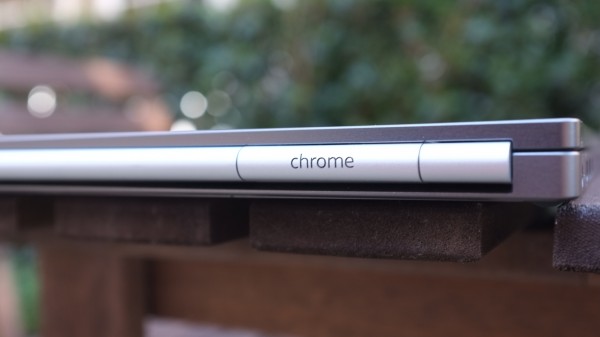
Early this morning, Google announced a massive expansion of Chromebook distribution, including new countries and more Best Buys in the United States.
“Starting Tuesday, the Acer, HP and Samsung Chromebooks will begin rolling out in Australia, Canada, France, Germany, Ireland and the Netherlands”, Caesar Sengupta, Google product management director, says. “To help improve computing for organizations, we’re rolling out Chromebooks to businesses and schools in these same countries as well”.
Over the next couple weeks, Google will double the number of U.S. Best Buy locations carrying Chromebooks to 1,000. The company sets up discrete displays inside the electronics stores, staffed by Google employees. Perhaps Chromebook Pixel will show up, finally, as the search and information giant indicated last month.
Future Think
Retail expansion comes days after an executive shakeup raised the operating system’s profile and speculation about its priority over, or perhaps merger with, Android. Andy Rubin left his position running operations for the green robot. Sundar Pichai, who is responsible for Chrome and Apps, added Android to his responsibilities.
I’m not with those calling for or expecting a merger of the operating systems. Rather, I see Chrome’s profile dramatically rising — and so Chrome OS with it. The browser, as development platform, can co-opt operating systems like iOS, OS X or Windows, while also fronting Chrome OS. The browser is more natural fit for Google services and anchors them anywhere. Where do you consume most Google services and where is the most advertising revenue generated? From the web.
By contrast, Android, while hugely popular, is constrained by OEM partners like Samsung. Google delivers fresh features to Chrome and Chrome OS users about every six weeks. Android updates are less frequent and carriers and device manufacturers logjam dispatch. For example, Jelly Bean, which released in July 2012, makes up just 25.5 percent of the devices accessing Google Play in the 14 days before March 5.
While Samsung ships the newest Android on Galaxy S IV, the operating system is heavily customized and the electronics giant controls branding and user experience. Google commands the browser, Chrome OS and the user experience around both. The point: Executive changes and today’s retail expansion are clear signs of Google’s commitment to Chrome OS, not just the browser.
PC and Tablet Alternative
Something else: The traditional Windows PC or Mac is in trouble. Yesterday, IDC warned that first-quarter shipments would be far worse than previously predicted, falling in the double-digits. This follows one of the worst holiday quarters on record, even though Windows 8 launched in late October. Microsoft’s new OS isn’t lifting PC sales, and even Macs suffer — missing analysts fourth-quarter consensus by more than one million units.
Google offers something different, yet familiar. With the exception of Pixel, most Chromebooks are affordably-priced and, not coincidentally, sell for what buyers might pay for tablets, which analysts contend displace PC sales. Prices start as low as $199, offering many benefits associated with tablets — long-battery life and near-instant-on capabilities, among them — but offering keyboard, desktop browser, Flash support and many other benefits uncommon to slates. Chrome is familiar to anyone using the browser elsewhere.
Critics charge that Chromebooks aren’t good enough, because the browser can’t compete with desktop software and the computers require a persistent Internet connection. But someone must be buying these machines. Otherwise, why expand distribution? I gave up using a traditional PC in May of last year for a Chromebook, which is more than enough to meet my needs.
Circling back to Google possibly putting Chrome and Chrome OS ahead of Android, remember that Pixel has a touchscreen. Why shouldn’t there be a Chrome OS tablet in the near future — a device that tightly fits in the Google Play content ecosystem?
If you are interested in buying a Chromebook, Google offers additional info for each new country: Australia, Canada, France, Germany, Ireland and the Netherlands.
Photo Credit: Joe Wilcox
-
In battle for Hadoop, MapR raises $30M
There’s a lot of positioning within the Hadoop community over who has the most contributors to Apache Hadoop and whose distribution is the most open source. Depending on the source, MapR might be singled out as the antithesis of what Hadoop should be. But MapR doesn’t mind the digs: The company is racking up customers and just closed a $30 million venture-capital investment that brings its total funding to $59 million since launching in 2011.
Because its roots are as an open-source project, some members of the Hadoop community are rightfully concerned about keeping it as open as possible. This gives customers more flexibility in moving from product to product, they argue, and could help prevent a technological splinter like what happened with Unix in the 1980s and significantly slowed the popular operating system’s uptake and rise to ubiquity.

MapR’s feature list
MapR catches some flak because it has made its name pushing a pair of Hadoop distributions (one free and one not) that are based on the company’s proprietary file system that it claims is significantly faster than the standard Hadoop Distributed File System that many of its competitors use. Last year, it announced a commercial version of the usually HDFS-based HBase database, currently in beta, that also includes many of MapR’s homegrown improvements around performance and reliability.
Although, according to MapR VP of Marketing Jack Norris, the criticisms of its semi-proprietary aren’t entirely fair. He told me during a recent call that there are more than a dozen open-source packages within the company’s Hadoop distribution, and noted that allowing data access via NFS is hardly a tool of vendor lock-in.
The company is also spearheading the Apache Drill project, an open-source re-envisioning of Google’s Dremel for SQL-like queries on Hadoop data. Tomer Shiran, MapR’s director of product management, will be discussing the project during a panel at our Structure: Data conference this week in New York.
But at the end of the day, MapR is a business and it’s doing what it can to make money in the new world of big data. If customers want features they can’t get from open-source versions of Hadoop, MapR will gladly supply them. In fact, he said, open source is “really not a core issue that comes up during the sales cycle.” (Norris took a more-defensive tone in a discussion about this topic last year: “No one can name the top 5 or 10 engineers on Oracle’s database,” he told me, “and no one really cares.”)
Norris points to a recent blog post from Gartner analyst Merv Adrian in defending his company’s position. Addressing the concern over open source and Hadoop — particularly as it relates to MapR and former OEM partner EMC — Adrian wrote: “Having some components of your solution stack provided by the open source community is a fact of life and a benefit for all. So are roads, but nobody accuses Fedex or your pizza delivery guy of being evil for using them without contributing some asphalt.”
But MapR could just as easily point to its customer list and partnerships to prove the effectiveness of its approach, at least. Norris said its customers in fields such as advertising and retail analyze data on more than 90 percent of the internet population monthly and more than a trillion dollars in transactions every year. (It’s pretty mum on naming customers, although Norris did cite ComScore and Ancestry.com as users.) Both Amazon Web Services and Google have partnered with MapR to boost Hadoop performance on their cloud platforms.
Still, Hadoop is still relatively young as a commercial technology and it’s very early on for Hadoop as an IT market all its own. What customers like now might not be what they like forever, and there’s plenty of competition for those workloads and dollars. When you look at its bigger, better-funded and better-known competitors such as Cloudera, Hortonworks, EMC Greenplum and now Intel, it’s easy to see just how tough a fight MapR has in front of it.
Norris isn’t sweating it, though. “The big major weakness that needs to be addressed [with Hadoop] is the dynamic read/write capability of HDFS,” he told me. As long as the other players keep relying on HDFS at the storage layer, MapR will at least have a strong point of differentiation.
Mayfield Fund led MapR’s latest investment round, and existing investors Lightspeed Venture Partners, NEA and Redpoint Ventures also participated.

Related research and analysis from GigaOM Pro:
Subscriber content. Sign up for a free trial.- How search can unlock the power of big data
- Scaling Hadoop clusters: the role of cluster management
- Infrastructure Q1: Cloud and big data woo enterprises


-
Gmail for Android gets a whole lot better
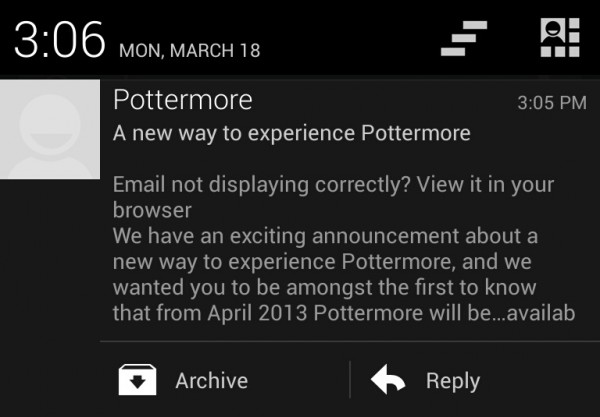
I’m no big fan of Gmail, which interface is overly-cluttered and uses arcane methods for managing messages. But I can tolerate the service on Android devices, where there are no annoying ads and more sensibly-presented core functions. Today, Google made Gmail for Android a little better, by way of the Notifications menu.
Small things often have big impact. Users can now reply or archive messages right from the Notifications bar — fast and furiously. For people like me who happen to procrastinate email, perhaps there is a future with an empty inbox and all communications current. There’s more.
“You can combine this with existing notification features like the ability to customize which messages you receive notifications for and set up different sounds for individual labels”, Andy Huang, Google software engineer, explains. “So if you filter and label all the messages from your mom, you could set a ringtone to let you know you received a new mail from her and then quickly reply — because we know what can happen when you ignore your mother!”
These features all require Android 4.1 or later. Google also improves search capabilities — for Android 4.0 or more.
“Finally a feature I have been waiting for!” Alex Garipian comments on the product page. The Galaxy Nexus user gives the app five stars. “Deleting emails from the notifications bar! Excellent work Gmail team!”
Jojo Sandoval wants more: “Still needs work! Option to delete one email? Improvement! What about in batch? What about empty the trash?…C’mon Google you act like you dont know how. Add the features!”
Adi Peshkess and Gabriel Lowe also would like a delete option.
These folks are more forgiving than me. Did I mention that I hate email in general? Google gets more blame than deserved.
Email is an anachronism. There was a time when the inbox demanded attention, being one of the fastest ways to communicate using text. Snail mail takes too long, and telegrams are only a little better. My tendency is to respond to people based on immediacy. A person walking up to me deserves the most-immediate response. I feel the same about someone texting or chatting — or even commenting on a social network post. Email, which delivers more junk than anything else, is a nuisance.
Today’s update really should get me doing more, since I can right then and there in the Notifications bar. But I agree, delete would be an even better option. Perhaps Google thinks too much of its spam filter — that most of the messages we get we want to do something with. I trash nine out of 10 messages. You?
-
Another report points to fall launch for Retina iPad mini

-
Gmail For Android Gets One-Tap Reply, Archiving From Notifications
Google has launched an update for Gmail for Android, which includes the ability to reply to and archive messages from notifications with a single tap.
Here’s what the feature looks like:

“You can combine this with existing notification features like the ability to customize which messages you receive notifications for and set up different sounds for individual labels,” Google software engineer Andy Huang says in a blog post. “So if you filter and label all the messages from your mom, you could set a ringtone to let you know you received a new mail from her and then quickly reply (because we know what can happen when you ignore your mother!).”
The feature is only available for Android 4.1 and up. The app also comes with better search suggestions and faster search, according to Google.
-
Change.org: It’s Not Just Bloggers And Techies Who Will Miss Google Reader
It didn’t take long after Google announced that it is killing off Google Reader to realize how much the product will be missed by quite a few people. Even the alternatives are having trouble keeping up with the demand from users.
Various petitions were immediately started, including some at Change.org. One of them is already nearing 130,000 supporters. There seems to be a common misconception that only journalists, bloggers, and techies are really using RSS anyway, but as signatures on the petitions indicate, that’s not necessarily the case.
“Looks like there’s a dark side to the Google Reader story,” a spokesperson from Change.org tells WebProNews. “People living under repressive regimes use the service to access information untouched by government censors. If Google Reader goes, they say, so will uncensored news and views from around the world.”
We saw some reports to this effect last week, specifically about Iran, but, Change.org is sharing some interesting stats about its signatures. For example, 75% of Google Reader petition signatures on Change.org came from outside the U.S. 12% of signatures came from people living within countries that Reporters Without Borders and/or the OpenNet Initiative report have active internet censorship by government forces, the spokesperson says.
“At least 2% of signatures came from people living in countries that Reporters Without Borders calls ‘Enemies of the Internet’ – a moniker earned ‘not just for their capacity to censor news and information online but also for their almost systematic repression of Internet users.’” she says.
Here are a few sample comments from the biggest petition:
“Google Reader is important as dinner to me. Since Great Fire Wall blocks infomations between China and others, Reader is the best way to get uncensored news.” – petition signer in China
“I can’t read some livejournal without googlereader, because it’s forbbiden in my country.” – petition signer in Kazakhstan
“Thats all I have in web world. through that I can use a lot of internet, I can have a little free internet, our government has banned a lot of sites, reader is our last chance…” – petition signer in Iran
“I’m a chinese, I can get news which is not censored without google reader .So please don’t close it!” – petition signer in China
“That’s the only possible way to read posts from blocked sites” – petition signer in Kazakhstan
“Google reader is my only Internet, guys.” – petition signer in Belarus
“Google Reader is essential for many Chinese Web users like me to circumvent Internet censorship here. Love the product. Please don’t let it go.” – petition signer in China
“There was a time that reader was my only way to keep my self update with the censored internet of Iran.” – petition signer in Iran
Feedly revealed on Friday that it had already signed up over 500,000 Google Reader users since Google made the announcement. And that was three days ago.
-
Software update enables LTE support on T-Mobile’s Galaxy Note 2. Nexus 4 next?
When T-Mobile officially lights up its nationwide LTE network later this month, it won’t just be new phones that can use it. Samsung’s Galaxy Note 2, which T-Mobile started selling to customers back in October, will boast fast LTE mobile broadband speeds too. How can that be? Early looks at the phone showed inactive LTE radio hardware inside and now T-Mobile is flipping the switch with a software update.
On Monday, the network operator published a support document stating that it is now pushing the update over the air to Galaxy Note 2 handsets. If a customer prefers, they can get the update with a PC by using the Samsung Kies program. The new software brings the 5.5-inch smartphone up to Android 4.1.2 and also enables support for the carrier’s LTE network.
T-Mobile is currently in the midst of an aggressive LTE rollout. While rivals Verizon and AT&T started LTE network upgrades over the past few years, T-Mobile instead built up its HSPA+ capabilities. While that sounds like a poor strategy, it may yet pay off. In areas without T-Mobile LTE coverage, most devices would then fall back to HSPA+ 42 service, which can be nearly as fast as LTE, depending on location.
 Regardless, T-Mobile is moving quickly to enable LTE service now, having started the effort within the past year. The company expects that its LTE infrastructure will provide service “in the vast majority of the top 50 markets and 20 MHz service in 75 percent of the top 25 markets.” New York City is surely among the first of the new LTE markets — joining Las Vegas and Kansas City — given that an eagle-eyed GigaOm reader accessed T-Mobile’s LTE network this past weekend there.
Maybe there’s LTE hope for the Nexus 4 after all? That device also supports LTE on the 1700 MHz band, which just happens to be what T-Mobile is using for fast mobile broadband as it moves HSPA+ service to a different frequency.

Related research and analysis from GigaOM Pro:
Subscriber content. Sign up for a free trial.- Carrier IQ and the continued erosion of operator trust
- The future of mobile: a segment analysis by GigaOM Pro
- U.S. Wireless Data Market: Q4 and Year-End 2008

-
And Here Are Etsy’s Stats For February
On Friday, Etsy released its “weather report” for January, showing that it had 1.67 billion page views on its site in January, compared to 1.53 billion page views in December. The site also saw $97.6 million worth of goods sold (after refunds and cancellations) during the month, which was 17.1% lower than December’s $117.8 million.
Other stats included: 4,482,545 items sold in January, 2,699,648 new items listed (14.2% higher than December’s 2,363,780), and 1,128,036 new members (21.8% lower than December’s 1,441,833).
Today, Etsy has released its report for February. Here are the stats for the month (which was three days shorter than January and a day shorter than February 2012, as the company points out):
- $94.7 million of goods (after refunds and cancellations) were sold by our community in February, 3% lower than January’s $97.6 million
- 4,215,169 items sold for the month, 6% lower than January’s 4,482,545
- 1,988,713 new items were listed in February, 26.3% lower than January’s 2,699,648
- 1,025,124 new members joined the Etsy community, 9.1% lower than January’s 1,128,036
- 1.49 billion page views were recorded on the site
Goods sold were up 62.4% year-over-year.
-
Apple expected to double dividend to $16 billion, among highest in U.S. history

-
Google Enhanced Campaigns Get New ValueTrack Parameters
Google announced today that it will be launching new ValueTrack features for advertisers using keyword level URLs, in the coming weeks. The company says these will help advertisers achieve specific conversion and ROI goals, and help ease the transition to Enhanced Campaigns.
They will do so, Google says, by directing users to device-specific landing pages at the keyword level and enabling measurement of the effectiveness of campaigns by device.
Specifically, Google has added the {ifnotmobile:[value]} parameter, which lets you replace [value] with the text that will show up in your URL when the user clicks the ad from a computer or tablet. They’re changing the parameter {ifmobile:[value]}, which will now insert the specified value into the URL only when the user clicks from a mobile device.
Google shares some examples for using these parameters in a blog post here.
“Advertisers are upgrading to enhanced campaigns and seeing strong results,” says AdWords senior product manager Karen Yao. “VivaStreet in France, the 4th largest free classified website in the world, upgraded all of their campaigns within the two weeks after launch. When they upgraded, they increased their mobile bid adjustment to 125% and saw overall conversions increase by 34%. After seeing the positive results, VivaStreet went on to increase their mobile bid adjustment to 140%. By using ValueTrack parameters, you can also direct users to device-specific content and measure the effect it has on conversions.”
Google posted an Enhanced Campaigns webinar today, discussing extensions and sitelinks:
Another webinar in this series is scheduled for March 21.
-
Next-gen biofuels making slow, slow, slow progress in 2013
In the time it takes to scale up the production of advanced biofuels — which use plant waste, not corn, for fuel — numerous web startups could launch, scale and exit. But for those biofuel companies that are still out there, toiling away at the difficult goal of producing next-gen biofuels that are competitive with gasoline at commercial scale, 2013 is proving to be a year of pivotal steps.
On Monday, KiOR, which was largely funded by Khosla Ventures before it went public, announced in its fourth quarter and annual year 2012 earnings that it has now shipped its first cellulosic diesel product from its factory in Columbus, Mississippi. The factory, which could make some 3 to 5 million gallons this year, converts wood chips into a diesel fuel that the company says can be used in current fossil fuel infrastructure.
Last week startup ZeaChem said that it started production of cellulosic chemicals and ethanol at a demonstration factory in Boardman, Oregon, which can produce about 250,000 gallons per year. Late last year, ag giant DuPont started construction on a cellulosic ethanol factory in Nevada, Iowa, which when completed in 2014 could produce 30 million gallons of fuel from corn stalks and leaves. For comparison sake, these are very small volumes in the grand scheme of the fossil fuel industry — the U.S. consumes some hundreds of billions of gallons of gas per year.
Regardless, these are signs of progress for an industry that has perpetually missed milestones and overestimated the amount of time it would take to move into commercial production. But these milestones are still steps on the way to a company producing these advanced biofuels at a scale and cost that is competitive with gasoline.
According to Bloomberg’s energy research arm New Energy Finance, ethanol made from plant waste could cost the same to produce as corn-based ethanol by 2016. Currently cellulosic ethanol costs 94 cents a liter to produce, or about 40 percent more than ethanol made from corn, says Bloomberg.
Despite these milestones, there are many more steps ahead. KiOR was expecting to ship its first cellulosic diesel late last year, and in the company’s earnings call CEO Fred Cannon apologized to investors for missing that target due to “unexpected startup issues.” KiOR also now needs to operate that factory at a steady state for another 9 months, and also buildout another factory in Natchez, Mississippi, which is supposed to produce three times what its Columbus facility will produce.
KiOR needs to finance the Natchez facility, and on that note, said on Monday that Khosla Ventures is willing to offer it another $50 million commitment and amend its previous loan agreement. ZeaChem is also looking to buildout a 25 million gallon factory per year next to its demonstration factory. DuPont is one of the company’s with the deepest pockets that is moving ahead and has been working on next-gen biofuels for a decade. Still, the process has taken DuPont longer than it had expected, the CEO told me recently.
But not everyone thinks building large biofuel factories is a smart move. Late last year oil giant BP cancelled its plans to build a next-gen biofuel factory in the U.S.

Related research and analysis from GigaOM Pro:
Subscriber content. Sign up for a free trial.- The perils of cleantech investing: KiOR and the long-term, high-risk view
- Financing the next generation of great cleantech ideas
- Opportunities for the future of batteries

-
Matt Cutts On Google’s Handling Of Single-Page Sites
Google has released its latest Webmaster Help video. This time, Matt Cutts discusses single-page sites, and how Google handles them. Specifically, he responds to the following user-submitted question:
What does Google think of single-page websites? They are becoming more complex and there are some great websites using only a single page (+lots of CSS and JavaScript) bringing the same user experience as a regular website with many subpages.
“Google has gotten better at handling javascript, and a lot of the time, if you’re doing some strange or unusual javascript interaction, or pinning some part of the page, or something like that, or having things fold in or fold out, we’re pretty good at being able to process that,” says Cutts. “In general, I would run a test first. I wouldn’t bet your SEO legacy on this one single page working well if the javascript or CSS is really obscure or maybe you’ve forgotten and blocked that out in robots.txt. But if you run the test, and you’re pretty happy with it, I don’t necessarily see a problem with that.”
“It’s a different convention,” he continues. “Sometimes it works. Maybe you get better conversions, maybe you don’t. It’s going to depend on what your particular area is, what the topic is, what kind of layout you come out with…but if it works for you, and for users to have that all on one page, for the most part, it should work for Google as well.”
On a semi-related topic, here’s what Cutts had to say about a year ago about blocking Google from javascript and CSS. Here, he talks about Google getting better at handling javascript.
-
Amazon Fee Hikes Could Spark More Interest In Google From Sellers
Third-party merchants selling goods on Amazon aren’t thrilled with recent fee hikes from the company that have been happening over the course of the past year or so. Nothing new there, but Reuters has an interesting report out today about how a growing number of sellers are exploring alternatives, including eBay, which has its own fair share of critics.
The report is gaining some attention in Amazon’s own seller forums. The reaction is a mix of criticism of the piece itself, some who think disgruntled sellers just aren’t doing their job well enough, and some agreement with various points made in the article.
Regardless, Amazon has raised fees, and cites rising costs (like those for fuel, for example) as the catalyst. While the report names other competitors like Walmart and eBay, author Alistair Barr suggests “Google may be the bigger threat” to Amazon, as it “already owns most of the necessary pieces, such as product search, listings and a payment service.”
“It began testing a same-day delivery service with retailers in recent weeks, sparking speculation it’s building a marketplace,” he notes. “A spokeswoman said Google is always working to improve the user experience, including shopping.”
Google, as you may know, recently switched to a pay-to-list model for Google Shopping, which is based on its product listing ads. So far, this seems to have been going quite well for Google, and for advertisers, as report after repot has come out talking up PLA performance. Soon, Bing, another Google rival, will also offer product listing ads.
Google and Amazon are direct competitors in a variety of areas, and a possible new service called Google Shopping Express could raise the stakes further. This is what Barr was referring to.
Google is also testing the B2B retail waters, don’t forget.
-
Neuroscientists present new guidelines for sports concussions
(Editors: Video interview of co-lead author Dr. Christopher Giza available upon request.)More than 1 million young and adult athletes in the U.S. suffer concussions each year. Until now, no consistent standards existed to guide coaches and physicians in evaluating and treating sports-related brain injuries.Today, the American Academy of Neurology released its first updated guidelines since 1997 for managing athletes with head injuries. Developed by researchers from UCLA and University of Michigan, the new recommendations are entirely science-based, resulting from four years of meticulous analysis of previous studies of sports-concussion patients.Published March 18 in the online edition of Neurology, the medical journal for the American Academy of Neurology, the new evidence-based guidelines have been endorsed by the National Football League Players Association, the Child Neurology Society, the National Association of Emergency Medical Service Physicians, the National Association of School Psychologists, the National Athletic Trainers Association and the Neurocritical Care Society.“Our top piece of advice is that one size does not fit all,” said co-lead author Dr. Christopher Giza, an associate professor of neurosurgery and pediatric neurology at the David Geffen School of Medicine at UCLA and Mattel Children’s Hospital UCLA. “Proper concussion management requires individualized assessment and treatment before making the decision to return an athlete to the game. There is no routine timeline for a safe return to play.”In the past, concussion evaluation relied on generic grading systems that featured set timelines for returning an athlete to the game. The new protocol recommends immediately removing players with suspected concussions from the game for evaluation by a licensed health care provider trained in concussion diagnosis. Athletes should only return to play after they are medication-free and have recovered from all acute symptoms, such as headache, nausea, vertigo and disorientation.Athletes of high school age and younger should be managed more conservatively, as evidence shows that they take longer to recover than college athletes.“Kids aren’t just little adults,” Giza stressed. “Evidence suggests that young brains may be more vulnerable to trauma and take longer to recover from concussions.”Giza and co-author Dr. Jeffrey Kutcher, an associate professor of neurology at the University of Michigan Medical School, spent thousands of hours tracking down and reviewing all available concussion research published through June 2012. They excluded studies that did not offer enough objective evidence on which to base recommendations, such as reports about individual patients or those grounded in expert opinion. Collaborating with experts in a broad range of specialties, the authors anonymously analyzed and graded the merit of each study’s findings before developing their recommendations.According to the newly issued guidelines:- Suffering one or more concussions increases an athlete’s risk for being diagnosed with another concussion.
- Athletes are at the greatest risk of being diagnosed with another concussion in the first 10 days after a brain injury.
- Of the sports evaluated in the studies, the risk of male concussion is greatest in football and rugby, followed by hockey and soccer. The risk of concussion for young women and girls is greatest in soccer and basketball.
- No clear evidence suggests that one type of football helmet offers the best protection against concussion. Helmets should fit properly and be well maintained.
- Licensed health professionals trained in treating concussions should examine the athlete for ongoing symptoms (especially headache and fogginess), a history of concussions and younger age. Each factor has been linked to a longer recovery time.
- Risk factors associated with chronic neurobehavioral impairment in professional athletes include prior concussion, longer exposure to the sport and carrying the ApoE4 gene.
- Concussion is a clinical diagnosis. Symptom checklists, the Standardized Assessment of Concussion, neuropsychological testing (paper-and-pencil and computerized) and the Balance Error Scoring System may be helpful in diagnosing and managing concussions but should not be used alone for making a diagnosis.
Signs and symptoms of a concussion include:- Headache and sensitivity to light and sound.
- Changes in reaction time, balance and coordination.
- Changes in memory, judgment, speech and sleep.
- Loss of consciousness or a “blackout” (happens in less than 10 percent of cases).
“When in doubt, sit it out,” Kutcher said. “Evaluation by a trained professional is extremely important after a concussion. If headaches or other symptoms return with exercise, immediately stop the activity and consult a doctor. You only get one brain; treat it well.”For more news, visit the UCLA Newsroom and follow us on Twitter. -
Google Flight Search Heads To More Countries
Google announced today that its Flight Search tool is launching in a handful of new countries, including: the UK, France, Italy, Spain and the Netherlands.
It was about a year ago when Flight Search first went international, adding flights from the U.S. to destinations around the world. The feature itself launched in Canada last summer, and now the expansion appears to be picking up.
“Starting today, you can use Flight Search to quickly find, compare and book flights originating from each of these countries to any airport in the world,” says Google product manager Noam Ben Haim. “You’ll also be able to search for flights from airports in these countries and see prices in your local currency. Additionally, you can conduct searches in 8 languages: English, French, Italian, Spanish, Basque, Catalan, Galician and Dutch — and see prices in your local currency.”

“Let’s say you’ve decided the Greek Isles are your vacation destination of choice, but you’re not sure which airport offers the most affordable fares. By typing ‘Greece’ as your destination, you’ll be able to quickly compare the cost of the different options, viewing live prices on the map,” he adds. “Likewise, if you’re looking to take the family to New York City but are unsure of the best time to go, you can click on our ‘Lowest fares’ icon to see which dates will get you the lowest fare.”
Google recently updated the Flight Search tool to let users search for regions – places in addition to airports.
-
An accelerator emerges as one of the most active cleantech VCs
Following a down year for cleantech venture capital investing, an accelerator is emerging as one of the more aggressive venture capital firms in cleantech. Greenstart, based in San Francisco, has decided to drop its accelerator program and has decided to act as a venture capital firm focused on early stage startups that work on cleanweb technologies, which are IT-based cleantech, like energy software, or web-based ride-sharing services.
Greenstart Managing Partner Mitch Lowe told me in a phone interview last week that Greenstart hopes to make 10 to 12 investments in early stage cleanweb companies in 2013, which he said in terms of the number of investments “sadly makes us one of the most active cleantech investors out there.” Greenstart has a small $7 million fund, half of which has been invested into 15 companies. Lowe says Greenstart will likely raise more money early next year for another fund.
Greenstart launched in the Spring of 2011, and since then has shifted its strategy a couple times. First, it dropped its focus on strictly cleantech startups — it’s original batch of startups included a biofuel company and a window efficiency coating company — and decided to only back cleanweb companies. Cleanweb is a term coined by investor Sunil Paul, to explain digital technologies that deal with managing resource constraints from energy to food to water.
Now Greenstart has dropped its accelerator model completely because the partners say the 3-month program wasn’t delivering the startups enough time, and it was too “one size fits all,” explained Lowe. Instead, Greenstart will work with the companies throughout their lifetime.
In addition, Greenstart is offering its companies in-house design services, and the fund now has 10 designers that will help startups build products, and design the user experience of their services. Increasingly venture firms have been launching design focuses and studios, as a way to work with designer founders, and to provides services to startups beyond just money.
Designer David Merkoski, who was formerly the Executive Creative Director at frog design in San Francisco, is leading Greenstart’s design studio. Merkoski tells me that Greenstart won’t just be helping startups with marketing and branding, but that they’ll be taking an IDEO-style approach to help startups think about their products and the experience of their users. IDEO is a two-decade-old design and consulting firm that pioneered “design thinking” as a method for product creation.
One thing that Greenstart won’t change is its focus on cleanweb companies, Lowe tells me, in response to my question of whether the theme of the fund could change down the road. Cleantech isn’t a hot area of investments in 2013, and in 2012 cleantech VC investments dropped by a third. But cleanweb investments are increasingly making up many of the cleantech investing happening these days, because the capital requirements are lower and the timelines to maturity are shorter (more like web and mobile companies).
But the firms that are still investing in cleantech hardware — like solar technologies, batteries and biofuels — see cleanweb as a move away from cleantech. Firms like Khosla Ventures, Lux Capital and Braemar Energy, which are some of the few still doing new early stage cleantech investing, aren’t being aggressive on cleanweb companies.
Whatever the definitions, expect to see cleantech and cleanweb investing continue to morph and evolve until the investors find something that works for them and the entrepreneurs that they back.

Related research and analysis from GigaOM Pro:
Subscriber content. Sign up for a free trial.- The fourth quarter of 2012 in cleantech
- Cleantech and investment in 2013
- The next generation of battery technology

-
Feedly Down As Demand From Google Reader Users Surges
As you probably know by now, Google announced last week that it is shutting down Google Reader. Meanwhile, a lot of users are experimenting with some of the alternatives, trying to find one their meets their news consumption needs. One of the more popular alternatives so far has been Feedly.
In fact, Feedly announced on Friday that over 500,000 Google Reader users had already joined Feedly over the previous 48 hours since Google’s announcements. Pretty impressive. In fact, it’s so impressive, it leads one to wonder why Google is turning its back on all of these people. But I won’t get into all of that again here.
I’ve been using Feedly a bit myself over the past few days. I don’t think it’s quite where it needs to be to replace Google Reader in my heart just yet, but it does seem to be a solid alternative. Unfortunately, that solidity appears to have crumbled a bit under the demand. The service is currently not running for at least some portion of its users (including myself).
I just returned from a brief break to find the service broken, and sure enough, a lot of people are mentioning this on Twitter as well.
On Friday, Feedly did note that keeping the site up is one of its priorities.
“Our main priorities over the next 30 days are 1) to keep the service up, 2) listen to new users for suggestions and 3) add features weekly,” Feedly said in a blog post. “To keep the service up, we 10x our bandwidth and added new servers”
So far, it likes there’s work to be done, but it’s not even been a week yet, so I think we can cut them some slack.
Update: It looks like it’s back up and running, at least for me. It will be interesting to see how Feedly continues to handle the demand. I’m sure a lot more will be checking the service out from now until July when Google Reader goes away.
-
Nothing can save Windows 8 now

Tell me if you can’t make the connection here. China is the world’s largest market for PCs and during 2012 passed the United States to claim the top spot in smartphones, too. About two thirds of all handsets going into China are smartphones, and there is a long-documented trend in emerging markets where people skip the PC and go right to mobiles as their first connected devices. Handset sales are way up and now IDC says PC shipments are way down going into the People’s Republic and will contribute to larger-than-expected decline in global personal computer shipments. You follow where this is going?
IDC says February PC shipments fell below forecasts. The analyst firm had expected a 7.7 percent year-over-year decline for first quarter but now predicts double-digit drop instead. China, which accounted for 21 percent of global PC shipments last year, is a major, but not the only, reason. The analyst firm identifies Chinese New Year, budgets cuts and anti-corruption campaigns as factors, while ignoring the most obvious: Shifting buying patterns.
From Bad to Worse
IDC is among the most-optimistic analyst firms with respect to Windows 8 leading to a PC rally later in the year. But today’s revised forecast feels more like denial, which wouldn’t be the first time. Analysts there also underplayed tablet competition after iPad launched and in less than the last 12 months revised tablet shipment forecasts upward four times — again, just last week.
“Based on our latest quarterly figures, global PC shipments were expected to decline by 7.7 percent in the first quarter as vendors and the supply chain work through the Windows 8 transition”, Loren Loverde, IDC program vice president, says. “However, our February monthly data suggest that we could see a drop touching double-digits in the first quarter and a mid-single-digit decline in the second quarter before we see any recovery in the second half of the year”.
That’s consistent with past positioning, but this is new: “Even getting to positive growth in the second half of 2013 will take some attractive new PC designs and more competitive pricing relative to tablets and other products”. In your dreams.
Two weeks ago, when IDC last revised PC shipment data, Loverde said: “Growth in emerging regions has slowed considerably, and we continue to see constrained PC demand as buyers favor other devices for their mobility and convenience features. We still don’t see tablets — with limited local storage, file system, lesser focus on traditional productivity, etc. — as functional competitors to PCs, but they are winning consumer dollars with mobility and consumer appeal nevertheless”.
As China Goes…
Unlike Europe or the United States, China is a market with lots of headroom for PC growth. Suddenly, the country is the canary in the coalmine — and it just flopped over. China leads a global trend towards devices that are even more personal. This is something American bloggers and journalists struggle to comprehend — that in many other markets people can and do use mobiles instead of PCs.
Why not? Mobile devices, particularly smartphones, are even more personal and increasingly much more powerful and useful than PCs. People carry cell phones most everywhere and use them to maintain personal and professional relationships. The smartphone’s smarts only make the device more personal, as people manage e-mail, financial accounts, music, personal communications, photos and videos, among other things. PCs are personal, too, but not nearly as much. How many people are so attached to their PCs they want to be buried with them? That’s not a new trend.
But Americans, living in the land of plenty, can use many more devices, and the PC is the most-established among them. Writers here often miss global trends. Think about it. Why are Asian manufacturers like HTC and Samsung rushing flagship smartphones to 5-inch screens — or more! These mobiles are huge, but they also increase the PC displacement, or replacement, utility of a more personal device that is most-likely carried most of the time. These manufacturers recognize where the global market is headed.
Rest in Peace
If you thought Microsoft was in trouble before, matters are much worse. If you didn’t think the company had problems, you should look again. Windows 8 is in deep do-do as the world goes mobile and Steve Ballmer and Company have got nothing to offer. Windows Phone 8 has little to no market share, which, by the way, isn’t growing in the emerging markets (China among them) where smartphone shipments soar.
PC shipments aren’t going to get better. Larger smartphones and smaller tablets will continue cannibalizing personal computer sales. China foreshadows an imminent future. Facts (with links to past reporting):
- Windows 8 failed to lift PC shipments during the holidays, which was the launch quarter.
- Windows 8/RT share of tablet shipments is expected to only be around 5 percent this year.
- Tablet shipments are forecast to exceed laptops for the first time ever before 2013 ends.
- Microsoft smartphone OS sales share was 3 percent during fourth quarter, which compares to 69.7 percent for leader Android.
- Last year IT organizations spent more on smartphones than PCs for the first time, about $300 billion and $233 billion, respectively.
Windows 8 was supposed to save the PC market. But roles are reversed. With about 80 percent of operating system revenue coming from personal computer sales, Microsoft’s options are limited. Short of divine intervention, nothing can save Windows 8 now.

