
Author: Serkadis
-
Former Apple exec: Apple is ‘losing the war of words’
-
Qi Confirms Upcoming Galaxy S4 Wireless Charging Accessories

It’s official: The Samsung Galaxy S4 will support Qi wireless charging but only through an optional backplate. When the Samsung Galaxy S4 launched last week, Engadget spied several Qi wireless charging accessories. This of course lead to wide-eyed speculation since Samsung had forgotten to mention this little tidbit during their elaborate dog and pony show. Thankfully Qi just took to the wires to clear the air.
From the press release,
The new Samsung Galaxy S4 uses the Qi wireless charging standard in its optional back battery cover and wireless charging pad accessories, as demonstrated at Samsung Unpacked 2013. The accessories are fully compatible with all Qi chargers and Qi-compatible phones.
No further details were given including release date and price. Still, just that little bit resolves the confusion surrounding the device.
This partnership, Samsung and Qi, comes as a bit of surprise. Samsung has long stood with Qualcomm as founding members of the Alliance for Wireless Power. This system uses over-the-air charging called A4WP. Digitimes first reported this switch last week before the S4′s unveiling. And since the two wireless platforms use different wavelengths, they’re incompatible.
Qi is currently used by products produced by Blackberry, ConvenientPower, Delphi Automotive Systems, Energizer, Haier Group, Hitachi Maxell HTC, Huawei, LG, Motorola, Nokia, Panasonic, Philips Electronics, Samsung, Sony, TDK Corporation, Texas Instruments, Toshiba, and Verizon Wireless. And they’re all compatible. Even the Nexus 4 charging orb could be used to charge an S4 equipped with a Qi backplate.
Now that Samsung’s latest superphone supports Qi, expect to see a wide-range of comptible hardware. Fire up your 3D printers, makers. It’s time to make some accessories.
[Image via Engadget]
-
BlackBerry CEO Expects 100,000 Apps To Be Available In Time For BlackBerry 10′s U.S. Debut

BlackBerry’s first BlackBerry 10 smartphone is about to make its official U.S. consumer debut in just a few days, and the long wait has seen the size of the platform’s app selection swell considerably. According to an interview with BlackBerry CEO Thorsten Heins conducted by the Australian Financial Review, Heins expects the BlackBerry World content portal to cross the 100,000 app mark in time for the company’s big Z10 smartphone launch later this week.
It’s a notable (if not entirely significant — there’s an argument for quality over quantity) milestone, and one that BlackBerry may be trying to highlight ahead of its fiscal Q4 2013 earnings release on March 28. That’s a sizable jump from the roughly 70,000 apps that debuted along with BlackBerry 10, but the platform still needs support from big-name developers and services if it wants to pose a credible threat to Apple and Google’s mobile hegemony.
Recent reports about Instagram and Netflix for instance painted a portrait of two companies that were hesitant to devote engineering resources to an unproven platform — granted, Instagram appears to be working on an Android port of its app, but the experience of Android apps running BB10 in general leaves something to be desired. The severity of the situation isn’t lost on Heins — he noted to Financial Review’s Paul Smith that BlackBerry is working to further talks with these sorts of prominent parties, and that some companies may be warming to BlackBerry 10.
“I think we are seeing the dynamic changing over time as they want to watch and see how BlackBerry 10 is making it in the market,” Heins pointed out. “They want ROI on their development dollars as well… it is our job to convince them that BB10 is a successful platform.”
Apparently, the process of proving BlackBerry 10 to be a successful platform involves a little smack talk. In a curious display of fighting up, Heins jabbed at Apple for taking the conservative route in fleshing out iOS. As he put it, the “rate of innovation is so high in our industry that if you don’t innovate at that speed you can be replaced pretty quickly,” before pointing out that the iOS interface is five years old. It’s a valid criticism to be sure, and BlackBerry 10 definitely sports some neat new UI flourishes, but let’s not forget that the company’s stock is worth a fraction of what it was five years ago. It’ll take more than talk to fix that.
-
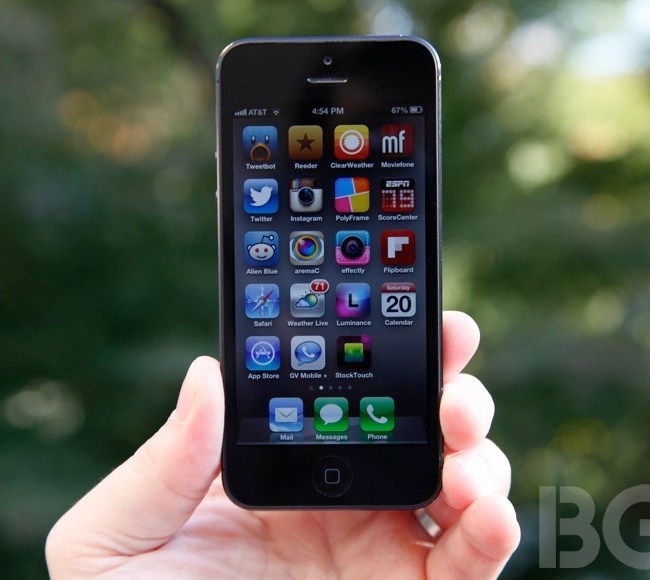
BlackBerry CEO: Apple stood still and now the iPhone has fallen behind
-
Galaxy S 4 said to help Samsung overtake Apple

-
The Walking Dead Soundtrack Hits iTunes, Amazon
AMC and Republic Records announced that the soundtrack to the hit television show The Walking Dead is now available for download at iTunes and Amazon.
Actually, this is only the first volume, indicating that more will be on the way. The track listing is as follows:
1. Jamie N Commons – “Lead Me Home”
2. Bear McCreary – “Main Title Theme Song” (UNKLE Remix)
3. Voxhaul Broadcast – “You Are The Wilderness”
4. Baby Bee – “Love Bug”
5. Fink – “Warm Shadow” (Dactyl Remix)
6. Of Monsters And Men – “Sinking Man”
7. Emily Kinney and Lauren Cohan (Beth & Maggie Greene)- “The Parting Glass”
8. Delta Spirit – “Running”“Already, three incendiary tracks from the album have been released: Emily Kinney and Lauren Cohan’s powerful folk elegy ‘The Parting Glass,’ Baby Bee’s guitar-heavy zombie blues jam ‘Love Bug,’ and Jamie N Commons’ soulful ‘Lead Me Home’,” AMC says in a blog post. “The full compilation includes previously unreleased material like ‘Sinking Man’ from multiplatinum-selling Icelandic alternative folk sensation Of Monsters and Men, an UNKLE remix of composer Bear McCreary’s ‘Main Title Theme Song,’ Delta Spirit’s ‘Running’ and more. Just like the show, the soundtrack remains a dynamic powerhouse replete with unforgettable moments.”
The soundtrack will hit stores on Tuesday, March 19.
More The Walking Dead fun here.
-
Minnesota Office of Broadband Development Bills – HF1255 / SF1128
Last Wednesday Legislators heard about bills to establish an office of broadband in both the House (1255) and Senate (1128). Unfortunately due to some time on jury duty, I wasn’t able to attend the sessions and the archives aren’t yet available online but I thought I’d at least look at both bills. (Both were discussed last week at the TISP Forum.)
The House Bill (1255) was introduced by Representative Johnson on March 5. The last action was March 14 – to do a committee report, pass it and send to Government Operations.
Here’s the short description: Office of Broadband Development established in the Department of Commerce and duties assigned; and Department of Transportation required to post a database on its website, and reports required.
Here are some details:
Fiber Database – A place where the Department of Transportation will post upcoming construction projects – updated annually. Details will include location, start and end dates, nature of construction. Local governments, utilities are encouraged to post info too. Providers may sign up to get updates. This shall reside on the Department of Transportation website.
I think this was already in the works. It seems like it might helpful to get buy in from a wider audience to encourage greater collaboration – but I understand that so long as broadband is a competitive commodity, not a utility, that probably won’t happen.
Reports – Increases current reporting requirements to include suggestions for policies as well as a report on the state of broadband expansion.
Definitions – They revert to the “FCC definition of broadband,” which is currently slower than the Minnesota Broadband goal. (FCC uses 4 Mbps down and 1 Mbps up; Minnesota is shooting for 10-20 Mbps down and 5-10 Mbps up.)
Office of Broadband Development – create an office at the Department of Commerce to become the go-to people for broadband in the state: perform broadband planning for the state, work with public and private parties to develop a standard access and use policy, encourage cost-effective broadband access and greater use of broadband, coordinate efforts to meet the 2015 broadband goals, keep an eye on what’s happening in other areas, on the federal level and look at security and redundancy.
Reporting – the annual reporting, currently the responsibility of the Broadband Task Force has been extended to include some analysis, predictive modeling and legislative updates. The bill also suggests a second report that, it sounds like, really sets out recommendations to improve access to and use of broadband – including training and reaching out to mobile users
Broadband Infrastructure Development – The office will strive to work with local government, department and agencies to create a smooth path to deploy fiber. Dig once is mentioned specifically.
The Senate Bill (SF1128) was introduced on March 7 by Senator Schmit. Last action was March 14, to pass as amended and re-refer to State and Local Government.
The Long Description: Establishing and providing for the office of broadband development in the department of commerce to improve broadband within the state; requiring the department of transportation (DOT) to post on the DOT web site a list of construction projects; requiring the office to coordinate broadband infrastructure development in collaboration with the departments of commerce and transportation; requiring an office report.
Here are some details: (Note the bills are quite similar, I’ll just try to call out the differences here.)
Office of Broadband Development – Again calls for the establishment of an office. The director here will be appointed by the Governor; other staff may be hired if necessary. Again the goals are similar but this version specifically calls out working with commissioners of Commerce, DEED and Transportation. (Ironically not a mention of a website in the first engrossment, although it is mentioned in the description.)
Appropriation – $500,000 for both 2014 & 2015.
It will be interesting to see what happens moving forward.

-
Will Google+ Get Its Own Version Of Facebook’s Ticker?
Google has applied for a patent for something that sounds an awful lot like Facebook’s ticker feature. While we can only speculate on Google’s plans, it seems likely that they’re thinking about a similar kind of functionality on Google+. And why not?
Bill Slawski at SEO By The Sea points to the patent filing for “Social Discovery of User Activity for Media Content”. Here’s the abstract:
Apects of the present disclosure provide techniques that may enable user activity information to be automatically generated and shared with other users of a social network. In one example, a method of automatically publishing, to one or more social network services, information about user activities regarding media content items includes receiving user activity information regarding a media content item, wherein a user is a member of one or more social network services, and the user activity information is generated in response to one or more activities taken by the user with respect to the media content item.
The method may also include receiving an indication of one or more users of the one or more social network services to whom the user activity information is to be made accessible, and automatically publishing the user activity information to the one or more social network services.
So, it sounds like you would see a lot more activity from Google+ users showing up in a feed than just the standard stream of updates you see today. Again, we can only speculate, but the Facebook-style separate feed (separate from the News Feed, that is) style would make more sense than a total replacement. This could appear off to the side, or simply as another option from a drop-down for the main stream.
Facebook itself, of course, is rolling out some design changes of its own. Interestingly, these seem to essentially kill off the ticker, or at least de-emphasize it a great deal.
You can read the full patent here.
-
‘Google Keep’ Spotted In The Wild
While many are still sore about Google killing off Google Reader, the company is busy pursuing other potential products. An Evernote-like service from Google called Google Keep has been spotted in the wild.
1E100 appears to be the first to have mentioned the product in a Google+ update. They found Google notes in the code of Google Drive pointing to an notes-like icon, then found a new Google Account Service named “Portal,” which when signed in, added a new service called “Google Keep,” though it has since been removed.
Android Police points to this hint about the service in an official Google+ post back in July. Notice the “Add to Google Keep” link in the second image.

When you're on the go, Instant Preview on mobile can help you find what you're looking for faster. Say that you're at the grocery store, searching for [cheese party ideas] and want to find a website that has photographs, as well as written tips, to give you inspiration. On the search results page, you can tap on the magnifying glass next to any search result to see a webpage preview. When you see a preview that you'd like to explore more, simply tap on it and you'll be taken directly to the website. This feature is available for Android (2.2+) and iOS (4.0+) devices across 38 languages.

 247
247  33 Powered by socialditto
Android Police was able to grab a screen cap of the desktop version of Google Keep before it was taken down (reports indicate an Android app is on the table as well).

Of course just because Google is working on something does not mean it will come to fruition. The company is constantly experimenting with and testing new ideas, but don’t be surprised if Google makes an announcement about this sometime in the near future.
-
Arena League For Tebow? Predators Make An Offer
Reports are coming out that New York Jets quarterback Tim Tebow has been offered a job by the Arena League’s Orlando Predators.
Politics and faith aside, Tebow has been a controversial figure in the NFL since his arrival to the league. While he managed to lead the Denver Broncos to the playoffs, his play has been a constant topic of debate in the sports world. Many have been very critical of his quarterback skills at the NFL level.
As Deadspin’s Greg Howard so elegantly puts it, “Tim Tebow is a bad quarterback. Tim Tebow is so bad that last year, he didn’t start a single game in place of another bad quarterback, Mark Sanchez, even though Sanchez was having an uncannily bad season. He is so bad that he is likely to be released from the New York Jets this offseason, and as of this writing, no one in the entire National Football League wants him on their roster, even though he has millions of fans across the country who consider him a good football quarterback, or at least a good Christian, and would invest hundreds or thousands of dollars to purchase his jersey and tickets to his games to show their support. This is not news.”
Even if no NFL team wants him, he may be able to find work at the Arena level. The Orlando Sentinel quotes Predators owner Brett Bouchy as saying:
“Tim would certainly want to first exhaust his opportunities in the NFL, but we’d love to have him. I think he would definitely improve as a quarterback in our league. Kurt Warner told me once that when he got back to the NFL after playing in the Arena League, the NFL game was like slow motion. Everything in the Arena League is just so much faster and quicker and predicated on accuracy. Whenever Tim is willing, we have a contract waiting for him to sign.”
If nothing else, Tebow’s celebrity status would help draw attention to the league itself, not to mention the Predators.
The New York Jets currently have five quarterbacks on their roster. According to ProFootballTalk, the team is still “looking at all possibilities” with Tebow.
-
Marathon Runner Dies After Barcelona Race
A runner died of a heart attack at the age of 47 in Barcelona on Sunday after competing in the big marathon.
The Associated Press (via ESPN) is reporting that the man died shortly after arriving at the hospital, after running in the race, but actually suffered the heart attack during the race.
Heatstroke was not mentioned in reports, but the incident comes just two days after a soldier died of heatstroke after competing in a marathon in Tel Aviv.
According to the Mayo Clinic, you are considered to have heatstroke when your body reaches 104 F (40 C) or higher. If not treated quickly enough, it can cause damage to the brain, heart, kidneys and muscles.
As far as Sunday’s actual race goes, it was a good day for Ethiopian runners. Results (via Ethiosports) were as follows:
Men’s Results:
1. Gezahgne Abera Hunde (Eth) 2:10: 17
2. Abraham Keter (Ken) 2:10 48
3. Linus Maiyo (Ken) 2:11 34
4. Aredom Tiumay Degefa (Eth) 2:12: 17
5. Jaume Leiva (Spa) 2:13 41Women’s Results:
1. Lemenen Berha Yachem (Eth) 2:34: 39
2. Bosho Amelework Fikadu (Eth) 2:35: 53
3. Mogaka Irene (Ken) 2:38 46
4. Joasia Zakrzewsky (GBr) 2:43 50
5. Lou Collins (VST) 2:57: 34This was the 33rd Barcelona Marathon. The deceased runner reportedly crossed the finish line.
-
Apple reportedly begins move away from Samsung as A7 production nears

-
Fungal chemicals kill cancer cells

A family of chemicals naturally produced by fungi are phenomenally effective at killing human cancer cells, according to a study conducted by researchers from the Massachusetts Institute of Technology, the University of Illinois at Urbana-Champaign and published in the… -
It’s not a ‘haircut’ – it’s THEFT when governments loot your private bank accounts

This use of the term “haircut” to describe government theft of private banking accounts has got to stop. It’s not a haircut, it’s outright thievery. When a person breaks into your home with a gun and steals your jewelry or cash, do we call that a “haircut?” Of course… -
Virginia government prosecutes homeowner with criminal charges for backyard chickens that produce organic eggs

An ongoing debate over the rights of homeowners to raise and keep their own chickens may soon gain an audience in the Virgina Supreme Court. Attorneys at the Rutherford Institute have filed a Petition for Appeal on behalf of Virginia Beach resident Tracy Gugal-Okroy… -
Texas bill to allow government hacks to trespass onto private property without warrant

Legislation currently and quietly making its way through the Texas State Senate threatens to overtly trample the personal property rights of Lone Star State residents in the name of protecting public health. If passed, Senate Bill 186 would allow government officials… -
Industry Perspectives Focus on Efficiency
Efficiency in the data center was the common theme for this week’s Industry Perspectives columns. From increasing your efficiency through more effective storage, monitoring such as eBay’s new monitoring dashboard, selection of the right drives to be more compatible with compute and storage, consolidation of the data center to the move to use water more efficiently, all the guest articles from industry experts can be used to guide you towards improving efficiency in these aspects of data center operation. Enjoy reading!
Reducing the Storage Footprint & Power Use in Your Data Center – When space is tight and storage costs are mounting, deduplication is a method to squeeze more out of current data center space, according to Eric Bassier of Quantum.
Why eBay’s Digital Service Efficiency Changes the Game – eBay has provided a role model, which is organized around common metric, to optimize the overall effectiveness of IT, and has openly disclosed the metrics and indicators used to do it. This is a step forward in transparency, writes Winston Saunders of Intel.
Six Tips for Selecting HDD and SSD Drives – Today selecting the right drives can be a challenge, says Gary Watson of Nexsan. This article offers six tips for navigating through this complexity to help you pick the right solutions for your needs.
Consolidation: Shrinking Our Way to Data Center 3.0 – Like everything in the IT industry, there is no magic solution to all situations. However, the trend toward shrinking, just-in-time, data center deployments is growing, and becoming a significant option in the arsenal of data center operators, writes Antonio Piraino of ScienceLogic.
Do You Know the Hydro-Footprint Of Your Data Center? – The complex relationship between water and energy use in the data center is outlined in this column by Ron Voukum of JE Dunn and Harold Simmons of United Metal Products.
-
Uber, Data Darwinism and the future of work
A year ago, I hosted a small conclave of fellow (early) explorers of the post-html Internet. And while we are not of the SnapChat generation, most of us grew up connected. There were some who helped build the gear that runs the post-1999 Internet, and some who built the space ships. A neuroscientists who studies mobile and online behaviors, a digital musican and a music enterprenuer; data nerds, visual designers and an infrastructure wizard who streams happiness one stream at a time. And then there was me, who starts the day connected and ends it connected.
Connectendess — which is state of always being connected to the Internet and thus to people, things, life, work, commerce, love, hate and anger – is the single thought that dominates my mind, and it defines how I view everything, how I evaluate everything. It is my telescope and it us my microscope. I don’t see the world in silos called mobile, broadband, browser, app or television. Instead, it is all about being in the state of connectedness. I wanted to pick their brain about how the state of connectedness was going to change the future and redefine society itself.
While there were dozens of takeaways from the day-long idea fest, here’s what has stayed front-and-center in my mind: the challenges of the connected future are less technical and more legislative, political and philsophical. The shift from a generation that started our un-connected to one that is growing up connected will result in conflicts, disruption and eventually the redrawing of our societal expectations. The human race has experienced these shifts before — just not at the speed and scale of this shift.
The coming intellectual and societal upheaval brought on by the state of connectedness is aptly reflected in the recent fracas between Uber, a San Francisco-based personal transportation platform, and the freelance army of drivers who man its cars. They were protesting what they thought was unfair treatment by the company. ”They’re running a sweatshop with an app. They don’t have the balls to come down and talk to us,” Raj Alazzeh, a driver with SF Best Limo and a spokesperson for the drivers, told Liz Gannes. “Uber chooses to call us partners for their tax benefit. If they called us employees, they’d have to cover us all.”
Follow-up stories including comments by Uber co-founder and CEO Travis Kalanick seem to indicate that the protesters are drivers whose accounts were deactivated because of passenger feedback. It is easy to understand Travis’ standpoint – our customers don’t like these drivers, so we are cutting them out. And I can understand the drivers’ point of view: They have never been rated and discarded like this before, and are rightfully angry.
Are we ready for a Quantified Society
However, if you look at the story from the context of just Uber, then you will miss the real narrative. This isn’t the last time we will hear about it — there are more Uber-like companies with on-demand workforce. There have been incidents on AirBnB.
That last comment by Alazzeh resonated with me because it encapsulates what work will be in the future and what the next evolution of labor unrest could be. And it also highlights a problem we have not thought about just yet: data-darwinism.
In the industrial era, labor unrest came when the workers felt that the owners were profitting wrongfully from them. I wonder if in the connected age, we are going to see labor unrest when folks are unceremoniously dropped from the on-demand labor pool.
What are the labor laws in a world where workforce is on demand? And an even bigger question is how are we as a society going to create rules, when data, feedback and, most importantly, reputation are part an always-shifting equation? (Reputation, by the way, is going to be the key metric of the future, Quora founder and Facebook CTO Adam D’Angelo told me in an interview.)
At present we rank photos, rate restaurants, like or dislike brands, retweet things we love. But if this idea of collaborative consumption takes hold — and I have no reason to think it won’t — we will be building a quantified society. We will be ranking real humans. The freelance workers — like the Uber drivers and Postmates couriers — are getting quantified. The best ones will continue to do well, but what about the others, the victims of this data darwinism? Do they have any protection or any rights?
I admit I don’t have any answers. And while I am as much of a techno-optimist as the next blogger, I don’t even know where to start. I do think it is important for us to start talking about what the etiquette of a connected and a quantified society will be.
I will use myself as an example. I would say, on most days, that I live up to my idea of a normal online citizen — living online like I do offline. I try not to talk about my family. I am an active Uber user. And I take every opportunity to provide feedback. But I don’t take the ratings system lightly, regardless of whether I’m giving someone one star or three stars or five stars.
Just as I am not shy about awarding five stars for timeliness and quality of service, I am happy to chastise, too. And I do the same for every service I typically use — Postmates or TaskRabbit or AirBnB or Exec. What if I give someone a wrong ranking? Given how often we are likely to rank and rate in the future, will wrong ratings even bring about any sense of guilt?
It is the 21st century. We are more narcissistic and more self-absorbed. Does human decency and sense of fair play shift to the online realm as well? It’s hard to know. I mean, we have seen some of the nicest people in real life turn into a baboon’s backside once they are online and are anonymous. Authenticity in a world where we are trying to play a role in a movie starring us takes on a entirely different hue.

Related research and analysis from GigaOM Pro:
Subscriber content. Sign up for a free trial.- 12 tech leaders’ resolutions for 2012
- Connected world: the consumer technology revolution
- How consumer media will change in 2013


-
Samsung Galaxy S 4 is better than you think

I was wrong about the Galaxy S 4. Last week, I asserted that brand sentiments had changed enough here — given Samsung’s rising popularity, Apple’s image problems and high-profile iPhone-to-Android switchers — that the South Korean electronics giant could launch the S 4 in the United States. Nope. Reception among bloggers, journalists and the Technorati is largely ice cold. Most first-takes I see call the handset a S 3s and no better than iPhone 5. Idiots.
If Steve Jobs was still alive and introduced a Star Trek-like universal translator for iPhone, there would be cries: “Apple does it again”. Tell me what’s not innovative about translation from, say, English to Chinese or Japanese to French. In real time. On your phone. Or text-to-speech and speech-to-text translation capabilities? Imagine Jobs demonstrating the “Eraser” feature by taking a photo and jokingly removing marketing executive Phil Schiller from the photo. He could demonstrate dual-mode video by initiating a call with Schiller that includes members of the audience, which I promise would roar and clap.
There’s No Magic without a Magician
But Jobs is no longer with us. Apple and not Samsung created these amazing software/cloud services features. The South Korean company doesn’t have a spokesman of Jobs’ caliber, while cultural etiqutette demands the stilted JK Shin, speaking in a foreign language, deliver the key intro. If Samsung marketers had any sense, Galaxy S IV would have introduced itself, by Shin speaking in Korean and the phone translating. Now that would have had impact.
Still, Samsung did something amazingly right in S 4’s unveiling (live stream archive), which is unsurprisingly lost on the bloggers and journalists writing about the smartphone. The launch focused on benefits, rather than features, which was the whole point of the different scenarios acted live from Radio City Music Hall.
Samsung rightly focused on what the phone can do for you rather than hardware features, something Apple often did under Jobs. Now iPhone launches focus too much on hardware specs and, doing so, look too much like competing devices. You don’t feel the innovation, something Samsung tried to convey about Galaxy S IV.
Tech Elitists aren’t Smarter than You
Based on the demos, Galaxy S IV is an amazing smartphone, jam-packed with lots of promising innovations — mostly software and supporting cloud services. Conveying S 4’s benefits, Samsung has three problems:
1. Presentation. For all the pomp and pace of the launch event — hell, with actors and live orchestra performing — S 4’s special qualities didn’t come through enough. Samsung needed what Apple used to have — a masterful marketer standing on stage performing magic tricks, by making benefits come to life in the most aspirational way.
People buy products that make them feel good, about themselves or their future. During the best product launches Jobs made the audience feel like their lives would be better for purchasing the new thing and, occasionally if in the zone, got those watching feeling their lives would be worse should they not buy.
2. Pack mentality. Jobs’ magical touch is widely-known as the “reality-distortion field“. The afterglow of a keynote carried through in the stories written about new products — luster lost without him, based on cooler reception to more recent Apple product announcements.
Make no mistake, there is peer influence among tech writers, which you can measure yourself by doing a few Google News searches. If the first stories praise, the ones that follow tend to have the same tone. Sadly, too many bloggers or journalists look to what others write and deliberately or subconsciously tailor tone accordingly. Haven’t you noticed how many stories about tech this or that are similar?
Samsung’s “Unpacked” event had no Jobs-like after-glow, even though innovation and benefits are oh-so Apple-like — and even more. The first stories, coming from the U.S. market, where iPhone is the most popular smartphone, and widely-used by bloggers and reporters, set more of a negative tone. The majority that followed simply echoed criticisms. Too few writers broke from the mob, dared to stand apart, risked being wrong. They formed opinions based on that of others. Shameful. But commonplace.
3. Unrealistic expectations. Strangely, Samsung is like Apple in another way, although twisted. Rumor and hype set expectations high, and that’s a problem Apple encountered many times, too. As such, many early blogs, news stories or product previews say the S 4 falls short, but based more on expectations set by rumors than any meaningful measure.
Unsurprisingly, too many writers fixate on form factor (like Galaxy S III but larger) and hardware specs, while ignoring the stunning software and services benefits. Tech writers obsessed about speeds and feeds often don’t have the right priorities. They don’t use products like you do. They’re fussy and entitled. You’re smarter than they are. You’re who Samsung sells smartphones to. Tech elitists are gatekeepers to early information, because they have access and you don’t.
“Life Companion” is a Development Philosophy
The people who get Galaxy S IV, really do, by understanding the pervasive design philosophy. “The S 4 demonstrates extensive innovation by Samsung”, Ian Fogg, IHS Screen Digest principal analyst, opines. He focuses on something I also see, not just from this handset but its predecessor.
Two characteristics define Samsung’s design philosophy, which sets it apart from every other handset manufacturer on the planet — and that includes Apple: Context and humanness. I’ll start with the latter, looking back to my analysis of Galaxy S III following its launch last year.
Recapping, the original iPhone stood apart from all other mobiles, not just smart ones, for its humanness. Touch, and its intimacy, and the way the handset responded to your proximity gave it a human quality. Suddenly the phone wasn’t an inanimate object but more living thing. Apple extended humanness with each new model. Siri is best representation in iPhone 4S and 5.
The S3 extends this responsiveness, by, for example: the front camera detecting whether you are looking at the phone and keeps the screen lit. How many times has your display gone dark while reading a website or ebook? The phone also can automatically turn on, if recognizing your face. Another example: You’re in the middle of texting someone and decide to call instead. Lifting the phone to your face places a call to the recipient.
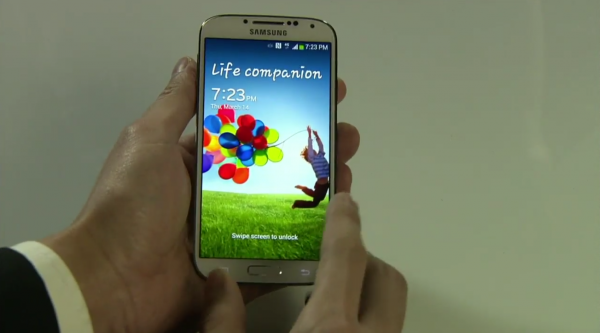
Those are last model’s features and all designed to make the phone more responsive to you — more human-like. Samsung carries the design philosophy forward. Galaxy S 4 packs eight different sensors and uses them to make the phone highly responsive. Wearing gloves or have chocolate on your hands? Wave instead of touch. Watching a movie and turn your eyes away? Playback stops until you look at the screen again. But this responsiveness is much more.
“The reason for Samsung’s choice of Galaxy S 4 tagline, ‘Life companion’ is because the word ‘mobile’ in mobile phone is highly misleading”, Fogg explains. “Smartphones are most importantly about personal experiences, not mobile ones. Many of the new features that Samsung is adding into the S 4 are about the immediate vicinity and even inside the home, and not focused on really mobile life”. Stated differently: The phone is highly contextual.
I have repeatedly asserted that Jobs was wrong to call this the post-PC era. We live in the contextual cloud computing era, where software and connected services matter more than the devices. Samsung’s emphasis on “personal experiences” is dead-on right. The South Korean vendor is surprisingly focused on software and services, which I wouldn’t have expected from a hardware manufacturer. Galaxy S IV adapts based on context.
Want to share the party with a distant friend? Use both cameras for the video call. Want to check your messages while driving? Let the S 4 read them to you. Snapped a great picture of your kids at the park and some guy in a trench coat in the background makes a face? Remove him immediately. You’re with school friends at the park and want to party but have no speakers? Connect each smartphone and use them as a single 5.1-speaker system.
Context is about adaptability. At home, you want to play music on your fancy speakers. At the park, when you don’t have them, the multiple-S 4 speaker is good enough — in that context. At the office, you might read and respond to your messages on the PC. In the car, your hands need to be on the wheel, so you have the phone read them.
Samsung’s software and services design approach is all about making the smartphone more human, more responsive, more contextually relevant and more like a personal assistant.
Most every story written about Galaxy S IV so ignores these key benefits, which can change people’s lives. I’m appalled by the writers complaining about the lack of innovation here. Many of the most-obvious benefits are like science fiction, which ironically is what most stories slamming the S 4 are: fiction.
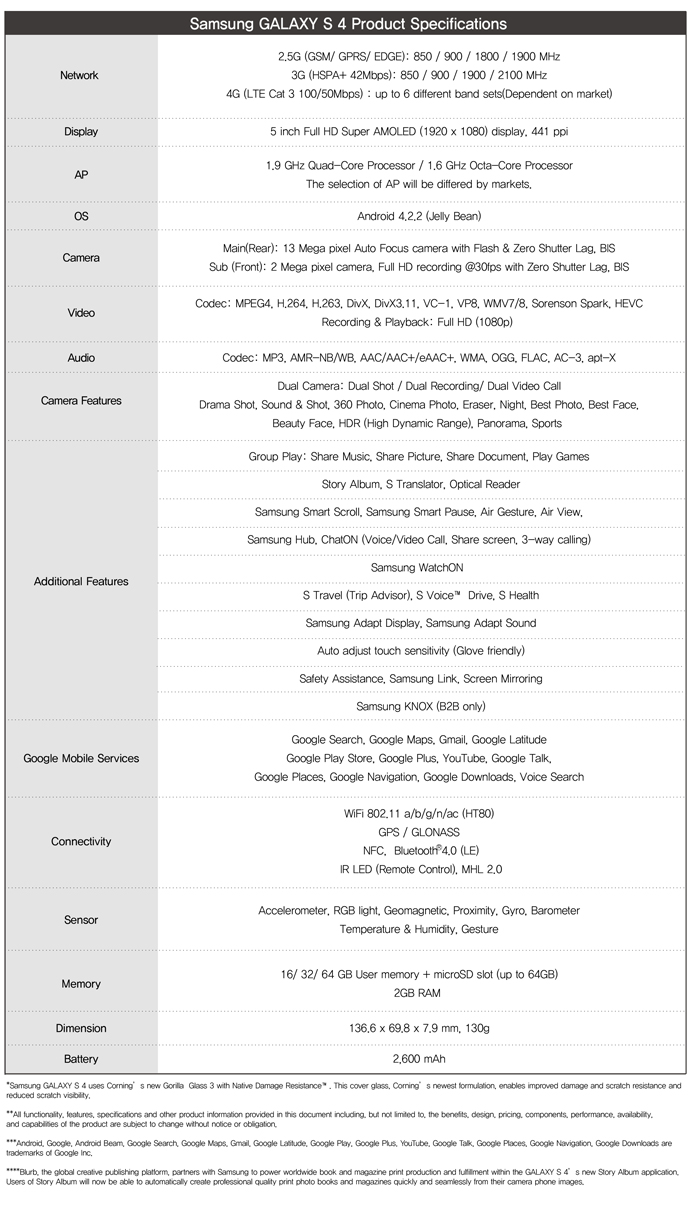
Photo Credit: Samsung
-
Statwing wants to make your data — and armchair quarterback — dreams come true
There’s nothing quite like getting settling into the couch on Sunday afternoon (or morning on west coast), cracking open a beer and yelling at a football coach who gets paid millions of dollars a year to do his job. After all, the guy’s clearly an idiot. Who would run it up the middle on third down and eight? And why does the team still punt the ball all the time? You never punt in Madden NFL, and you win all the time.
You probably think I’m being sarcastic, but I’m not. Statistically speaking, football teams should go for it more often, they shouldn’t run on third and long and they’re almost certainly better off going for two-point conversions. The guys behind Statwing laid it all out in a blog post on Monday. What’s more, they’ve uploaded an entire data set of NFL statistics to their service that users can play around with for free to analyze a huge number of occurrences and correlations.

From the blog. One of countless analyses available with the data set.
It’s all about democratizing data
Statwing, you might recall, is one of the “data for dummies” tools I highlighted in a January post about advanced analytics tools so simple anyone can use them. Right now, it’s one of the simplest there is. Here’s how I described Statwing then — although it actually performs more types of analyses:
“You upload data, check the variables you’re concerned with, and it plots their relationship. (It also can describe the variables by highlighting the sample size, minimum, maximum, mean, median and standard deviation.) Graphs are accompanied by explanations as to how strong the correlation is based on various statistical metrics, as well as the results of a linear regression model.”

Greg Laughlin (courtesy of his Twitter profile).
The ease of use is by design, says Statwing co-founder Greg Laughlin. “There’s a general zeitgeist that people should care about data now,” he told me during a recent call, but they don’t always know to get started or really even see how all the hype around data relates to them. Early on its existence, Statwing is trying to answer both of those concerns by building an easy-to-use service that also happens to teach users about statistics, and by offering up some interesting data sets for people to play around with.
The latter part is easy, but valuable. Data sets like the NFL data or one about the Titanic’s passengers let other people into the data game and get them thinking statistically. They get people saying, “‘Oh, I grok that. I see how this interesting, I see how this is useful,’” Laughlin explained.
Building a data-analysis service that’s actually usable by mere mortals is a bit tougher. At its core, Statwing relies on a rules engine that considers the type of data uploaded and the types of variables (a maximum of two right now) a user wants to relate to each other. It can handle between 10 and 15 different analyses right now depending on how one defines them, Laughlin said, but at any rate they’re the ones used most often.
He credits Cloudera co-founder and Chief Scientist Jeff Hammerbacher (with whom, along with Greylock’s DJ Patil, I’ll be doing a fireside chat at Structure: Data on Thursday) with helping Statwing decide to make the rules engine the service’s core.
That has been a wise decision because it lets lay users get what they need out of the service without worrying about the underlying functions. Statwing has users that never click the “advanced” tab that shows the statistical breakdown, Laughlin said. They just use the service, essentially, as a faster way of making charts than using Microsoft Excel, and the headline stating whether or not there’s a statistically significant relationship is all the info they need.
“That’s really exciting for us,” Laughlin said. “… It’s giving them the power of stats without them having to think about it.”

Just one view of how Statwing presents results.
Paying the bills with bigger users
Of course, a startup can’t survive on free and unsophisticated users alone, so Statwing is ramping up its money-making efforts. For example, it has “just turned on the paywall in a really light way” by “maybe” charging really heavy users, Laughlin said. In the future, though, Statwing wants to add support for more variables and larger data sets (there’s a 5MB limit right now), and perhaps build in some predictive analytics.
“That kind of analysis is really powerful, really extensible,” he noted.
As the service grows, Laughlin sees the ideal paying user being someone who currently has to use statistical-analysis software like SPSS or R, but who doesn’t really go beyond the basic functions. That type of user has real business need for the software, he explained, but they don’t need all the complexity and arcane statistics dressing that comes along with that that type of product.
Some people don’t want advanced analytics democratized, Laughlin added, because they think people can’t ask the right questions. On the contrary, Statwing’s theory is that most people just struggle with the logistics of cleaning and formatting data and then knowing the terminology associated with the business questions they want to ask.
Back to football …
But forget business users — when will football coaches start caring about statistics?! Maybe not any time soon. Laughlin said a friend of his who works on the MIT Sloan Sports Analytics Conference sees a lot of interest in analytics from the higher levels in sports organizations, but noted that anecdotal evidence suggests most coaches aren’t too interested in letting data influence their decisions too heavily.
Think of a situation like fourth down and goal on the two-yard-line as akin to a CIO choosing between Oracle and some new whizbang database. Nobody ever got fired for buying Oracle, and nobody ever got fired for kicking a field goal.

Related research and analysis from GigaOM Pro:
Subscriber content. Sign up for a free trial.- A near-term outlook for big data
- NewNet Q4: Platform mania and social commerce shakeout
- NewNet Q4: Platform mania and social commerce shakeout


