
Author: Serkadis
-
E Ink shows off Android phone that lasts a week per charge
-
Is Chromebook Pixel worth spending $1,299? (first-impressions review)
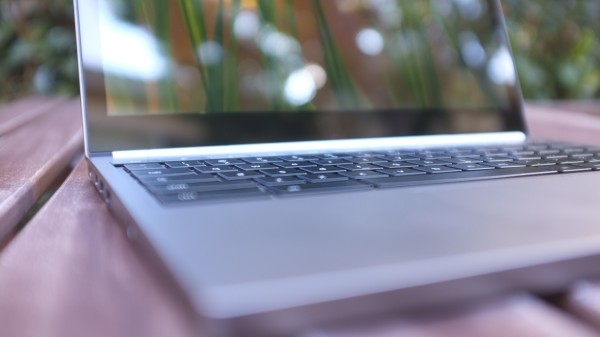
First in a series. Chromebook Pixel is an enigma. A misfit. Some critics call it a miscalculation — that Google created a pretty kit that offers too little value for the high price. For sure, $1,299, or $1,449 for the model with LTE, is more than most people pay. According to NPD, the average selling price of laptops at US retail was $640 in January.
But some people do pay more. Apple laptops start at $999 and, according to NPD, the ASP was $1,419 last month. Unquestionably, I see Chromebook Pixel as priced against Macs, and after using Google’s laptop see it targeted at the same professionals who value Apple notebooks. The question any potential buyer should ask: Is Pixel worth spending as much as Google asks? I will answer that question in several parts — this initial review is first.
Part one focuses on price and basics — what you get for what you pay for and is it a good investment. Part two will address usage scenarios. What is Chromebook Pixel good for and can it really replace a computer running OS X or Windows 8. For the price, Google’s portable had better, right?
What is Pixel Like
Chromebook Pixel is the first computer ever designed and sold by Google. Few newcomers get so much right, with respect to the overall package. The Chrome OS laptop is, from a hardware and operating system perspective, finely balanced. Performance is generally smooth and the ergonomics excellent.
Chromebook Pixel differs from other Chrome OS laptops in a key aspect: It is meant to be used as a primary computer. Design, processor, touchscreen and price say Pixel is the machine used everyday, all day long.
To that end, Chromebok Pixel must be able to replace something else. As a hardware and OS kit, the laptop is easily agile and competitive. However, apps are more uncertain, such a big topic, and one many people will struggle to understand, that they necessitate the aforementioned second-part review. I may not post for another week. I’ve only had Chromebook Pixel for six days, which isn’t enough time to to adequately address usage scenarios.
Specs. The configuration is impressive for Chromebooks, although some components comparatively less than some lower-cost laptops: 12.85-inch touchscreen, 2560 x 1700 resolution, 239 pixels per inch; 1.8GHz Core i5 processor; Intel HD graphics 4000; 4GB DDR3 RAM; 32GB or 64GB of storage; HD WebCam; backlit keyboard; dual-band WiFi 802.11 a/b/g/n 2×2; 4G LTE (on one model); Bluetooth 3.0; mini-display port; two USB ports; Chrome OS. Measures: 297.7 x 224.6 x 16.2 mm. Weighs: 1.52 kg (3.35 pounds). Cost: $1,299 (32GB WiFi); $1,449 (64GB WiFi/4G LTE). 1TB Google Drive storage is included free, for three years.
The key advantages are resolution and touchscreen — and LTE when spending more. No Mac comes with a touchscreen, although some Windows machines do. But no Windows laptop in this size or price class offers nearly as much resolution, which exceeds MacBook Pro 13 inch. The closest competitor for touch and resolution is Microsoft Surface Pro.
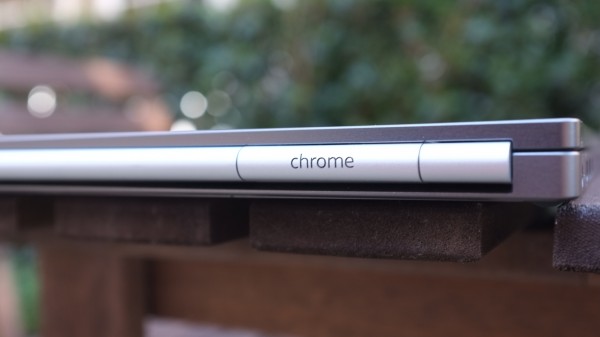
Design. By overall appearance and features, Chromebook Pixel clearly looks like a MacBook Pro competitor, and everything about the computer is premium. There’s no sense of cheapness or skimping anywhere. The smoky grey anodized aluminum shell is solid, making Pixel feel rugged — tank-like — in the hands.
The design is a bit industrial for my tastes, and I’ve expressed similar sentiments in the past about other devices Google sells, such as Nexus One and Galaxy Nexus. Chromebook Pixel is beautiful but boxy, an impression the screen dimensions contribute to.
The screen. The display dominates the device landscape and feels larger than others of similar horizontal measure. That’s because Google chose a 3:2 ratio rather than 16:9. So the screen is higher, rather than wider, which is better for viewing webpages (hey, they do scroll down). Pixel’s display is more squarish than rectangular. I expected to be put off by the 3:2 ratio, but now rather like it.
Anyone with enough cash to spring for MacBook Pro with Retina Display knows: High resolution matters. Once you go there, you can’t easily go back. Pixel’s 2560 x 1700 is an indescribable delight — a real feast for the eyes. Seeing is the only way to appreciate the screen. My productivity is way up if for no other reason. Reading and writing are a joy now.
Text is crisp and digital content vibrant, with rich contrast. Viewing angles are superb, and the screen isn’t overly reflective. The display is bright, 400 nit, same as Surface Pro, and makes the $249 Samsung ARM Chromebook’s 200-nit seem like a candle to light bulb.
Touch. Pixel’s touchscreen sets it apart from other portables in this size, price and screen-resolution class. The screen is more than reasonably responsive to touch, even when tapping smaller objects like browser tabs. But scrolling is nowhere near as smooth as a tablet. There’s some jerkiness, too, in some apps. Google can resolve this problem by way of software updates, as the hardware looks plenty solid to me.
That said, I am not yet convinced a laptop needs a touchscreen. I experienced small bouts of Gorilla arm using Pixel — and also Surface Pro. Basically the arm aches from reaching up to touch the screen. It’s all about physics and the angles involved.
The touchscreen’s big value lives up to the laptop name. I find touch most useful when Chromebook Pixel is in my lap. Also, I am less likely to develop Gorilla arm. There’s a big difference reaching down to touch rather than up.
Overall, the value is hard to argue, say, over MacBook Pro, which costs $200 more without touch. As I’ll explain in part two, touch done right is game-changer. Apple has nothing, while Microsoft is further along with user interface on Surface Pro.

Keyboard. The chiclet keys are a bit noisy for my tastes, as is the touchpad, but typing is smooth with great tactile response.
The backlit keyboard is much, much more subdued than MacBook Air or Pro. I find the illumination to be just enough, rather than overly-glaring (granted Apple lets users turn down the intensity).
Battery life. I have only done one real test, today, and barely got four hours, simply while writing and researching, with about one-dozen tabs open. I expected at least 30 minutes more. I will update this section within a few days, conducting tests again. I also haven’t yet done a good 4G LTE test, so more to come there, too.
Setup. If you can use Chrome, Chromebook is easy. Connect to the WiFi of your choice and log into your Google Account. That’s it. Everything syncs, including web apps, and you’re ready to go.
Performance. As expressed above, overall performance is smooth, much more so than either the Samsung Series 3 or Series 5 550 Chromebooks. Pixel feels like a traditional computer in most every way that matters. “Oh, I’m doing everything in the cloud? Who would have guessed?”
Late last night, I used Peacekeper running in guest mode; the laptop runs Chrome OS 25.0.1364.87 from the stable channel. There are lots of people who value benchmarks. I’m not really among them. But I posted numbers for the Samsung Series 3 and 550 Chromebooks last year, and I know some potential buyers will want the numbers. Chromebook Pixel scored 3847, which compares to 2245 for the Series 5 550 (also run last night).
Something annoys me and might other people, and it’s about software. To prevent out-of-memory crashes, Chrome OS basically shuts down browser tabs perceived to be idle. This behavior is a real usability problem on the ARM model, which only has 2GB RAM. I didn’t expect this behavior with 4 gigs.
That said, tab refreshing isn’t as disruptive as on the ARM Chromebook. There, with Google Music set to stream via HTML5 rather than use Flash, song play often just stops because Chrome OS essentially flushes the tab. I have yet to see this happen on Chromebook Pixel, even with lots of other tabs open.
I find that sites using, or perhaps abusing, Flash affect memory management the most. Just a few of the bad ones open, Chrome OS swaps around tab activity. You will lose work if this happens, as it has for me sometimes writing Google+ posts — once so far on Pixel, which isn’t bad, compared to the problems I had with the $249 model.

Audio and video. Chromebook Pixel produces great sound, whether from the speakers (which I believe are under the keyboard), or through those externally attached (mine are Bose Companion 5). Even streamed music tickles the eardrums.
Video playback is excellent and largely freeze-frame-free. But services giving video worthy of the screen are too scarce. Netflix offers no controls for setting or seeing the video quality, but it doesn’t look like 1080p to me, although pretty good. Hulu streams in HD, whatever that means. That’s 480p, right? Amazon makes a HD connection, and the stream looks 1080p enough to me.
I really had hoped to test video from Google Play, but the service won’t play my purchased content. I instead get preview windows with options to purchase or rent. Frak you, too, Google DRM.
Measuring Success
Now comes the harder topic for most people. Price.
Google’s marketing tagline for Chromebooks is “For everyone“. Pixel is not, for the price. But Ian Betteridge has the right idea, by taking a category perspective: “Up until now, Chromebook wasn’t ‘for everyone’”, he comments to one of my Google+ posts. Betteridge also has Chromebook Pixel. “For people like me, who value high-end, well designed hardware with great screens, there was no Chromebook that fitted the bill. Now there is. ‘Everyone’ doesn’t just mean ‘only people who want cheap plastic machines’”.
The category is for everyone, when including Pixel. Looked at that way, if only Googlers, developers and a handful of others buy Chromebook Pixel, it can be called a success. Because most people won’t spend that much money anyway. That’s the point I keep coming to in my evaluation. What Google presents is a great computer for people who are willing to spend 1,300 or 1,500 bucks — and who might otherwise choose an Apple or Sony instead. Chromebook as a category is “for everyone”, but Pixel is just for a few. Any evaluation of price and performance should be for them, which might not be you.
Googlers, many of whom until now carried MacBook Airs or Pros, really have another option — and running an operating system their company develops. Anyone considering a “premium” laptop, or what NPD calls those selling for $1,000 or more, is a potential customer. Then there are coders.
Developer Calvin Prewitt received his computer yesterday and says that “Chromebook Pixel meets expectations, which were high” He calls it an “incredible device” and say that “Chrome OS will improve in the near term, but easy to love right now. The price is easy to overcome if you will use the 1TB of Google Drive storage. Otherwise, it is logical to have reservations”.

I’ve thought long and hard about that 1TB of free storage during my evaluation. Critics call the offer nothing more than a Pixel price-justifying maneuver that costs Google nothing. I don’t buy that explanation.
What if “For what’s next” is all about giving Chromebook Pixel owners storage they will use — for creating digital content, photos and videos? I explain the reasoning and offer proof points in my post earlier today about the release of the 500px Chrome app. Suffice to say, that Google has big plans for high resolution and touch. More on this in the next, unexpectedly-written subhead.
Seeing Pixel for what it is
While writing this post, a link to the New York Times review popped up in my Google+ feed. I generally make a point of not reading others’ reviews before writing mine. But being nearly finished anyway, I peaked, expecting to read David Pogue panning the laptop — oh, and he does. Pogue doesn’t get it, like many other people considering Pixel’s merits.
“The screamingly obvious argument against the Chromebook Pixel boils down to two words: MacBook Air”, he writes. “The Air costs $100 less. It weighs 12 percent less and has four times as much built-in storage, 128 gigabytes vs. the Chromebook’s 32…Above all, the Air, or a similar ultralight Windows laptop, runs real desktop software — Photoshop, Quicken, iTunes, games — that the Chromebook can only dream about”.
That’s the problem with reviewers who don’t see past features and ignore benefits. I can’t emphasize enough about Chromebook Pixel: The laptop embodies a design philosophy that captures Google’s culture DNA and vision for the digital lifestyle of the contextual cloud computing era.
True innovation isn’t improving what you have but releasing what you don’t know you need. That’s the vision driving Chromebook Pixel, like iPad, which also received cool, early reception (me among the fools). Comparisons to the existing way are meaningless in this context. People like Pogue have to think differently.

If you look at Chromebook Pixel from the viewpoint of existing applications like Photoshop you will never buy one. Because the value proposition is different and one that changes — in part because Google’s business is all about continually improving products rather than releasing big platform upgrades every few years. Chrome OS improves with age. It’s a fine wine. For example, the Series 5 550 Peacekeeper benchmark on Chrome OS 21 was 1848 but 2245 on stable channel 25.
Chromebook Pixel promises to change the computing paradigm — all those cheap Chrome OS models are but Trojan Horses. The primary cost is hardware, up front, that is used for years, while software is minimal investment, or free. That’s reverse the commodity model that exists right now, where, particularly for businesses, PC hardware investment is less (well, except for Macs), and software and cost maintaining it is so much more.
Anyone considering spending $1,499 or $1,699 on MacBook Pro 13-inch with Retina Display should consider Chromebook Pixel — not for what it does but for what it will do. Google’s laptop isn’t for everyone, not even most anyone, because most people will never spend more than $1,000 on a laptop. But for those who will…
I’ll make a stronger cause for and against Pixel when writing about usage scenarios.
Photo Credits: Joe Wilcox
-
Can evil data scientists fool us all with the world’s best spam?
While most of the concern over web security has to do with criminal activity such as cyberterrorism, state secrets and hacktivism, there’s a far more annoying threat lurking beneath the surface. It’s a new generation of spam that does away with brute force email barrages in favor of fake online personas so real that people — and, more importantly, email and web-service spam filters — can’t tell they’re fake. Done right, these fake identities could influence everything from app downloads to e-commerce to elections.
It’s called influence manipulation. And, as data scientist Joseph Turian said during a presentation at the O’Reilly Strata conference on Wednesday, “It’s a pretty serious issue and it’s also pretty hard to catch.” (Turian will also be moderating a panel on next-generation databases at our Structure: Data conference in New York next month, but I’m sure he’ll gladly talk black-hat data science if you catch him in the hall.)

Joseph Turian at GigaOM RoadMap 2012 (c) 2012 Pinar Ozger [email protected]
It’s hard to catch because influence manipulation, which Turian also calls black-hat data science, is really just white-hat (or good) data science techniques inversed and pointed toward a nefarious purpose. So, whereas as white-hat data scientists try to uncover unnatural networks of links created to game Google’s PageRank algorithm, Turian explained, black hats will try to build artificial networks so good they look real. If someone wants to send lots and lots of undetectable spam, it’s just a matter of analyzing enough language to create messages that look less like a machine wrote them and more like a stupid human wrote them — because most spam filters try not to penalize users who just don’t write well.
During a one-on-one conversation later in the day, Turian told me he did a lot of work on language modeling as part of his Ph.D. work, and that the same techniques used for language evaluation — something like sentiment analysis, for example — can also be used for language generation. Marketing startups such as DataPop and BloomReach are already using some presumably similar techniques to create personalized online ads and web pages on the fly.
Does evil lurk among our data scientists?

Not evil. Source: hilarymason.com
But are there actually so-called black-hat data scientists among us, using their mastery of statistics to influence our opinions or make us buy Cialis? Turian quoted Bit.ly data scientist Hilary Mason, who he said asks of all her work, “What’s the most evil thing that can be done with this?” We can assume she’s just trying to avoid a mini-Sarah Winchester situation, but others might not be so ethical. (Turian already classifies as “gray hat” certain well-known companies that play fast and loose with user data.)
After all, Turian noted in his presentation, Greylock’s D.J. Patil has called being a data scientist the sexiest job of the 21st century, comparing it with Wall Street quants in the 1980s. And where there’s opportunity, there will always be people trying to cash in on it by any means necessary. Real-life Gordon Gekkos came to make quants almost universally reviled, and a few bad apples could certainly find their way into the data science bunch.
Turian assured me he isn’t one of them. “[I]f I did [this] I’d be riding around in a Rolls Royce,” he joked during our hallway conversation.
Define “good enough”
Maybe, maybe not. If all you’re trying to do is improve search rankings, mediocre bots might work in the same way that “legit” content-generation services like Chirpsy and Servio work, he noted. Marketers don’t necessarily care how good a tweet or article is as long as it’s positive and says their company’s name a lot.
But in order to be successful in the world of online influence manipulation, fake personas and their messages have to be really good. Lutz Finger, co-founder of Fisheye Analytics, laid out some interesting statistics during another conference talk that highlight how difficult it is to really influence someone. According to the studies he cited, 7 percent of people’s twitter followers are actually spambots; 30 percent of social media users are deceived by spambots and chatbots; and 20 percent of social media users accept friend requests from unknown people, 51 percent of which are not human.
Presently, though, the charlatans are not very good. Finger said that when it comes to “astroturfing” — the practice of creating fake grassroots movements to influence opinions — the hit ratio on email spams is about 12.5 million to 1. In order to create an astroturf movement on the scale of the anti-SOPA movement in 2011, every person on earth would have to receive the same spam message 8 times. The number might be even higher on an already-noisy platform like Twitter.
That, he noted, makes spambot @peace_karen25′s (a now defunct spambot) 10,000 pre-election tweets seem pretty inconsequential.
However, he explained, spammers are getting smarter and are working on some of the black-hat data science techniques that Turian warns about. Next-generation bots will be better at gaining trust (attractive females with familiar names are most likely to have their fake friend requests accepted), and they’ll act more real by mixing improved chatbot technologies and analytics to figure out how people speak and what to say in what circumstances. Once they have your trust, these bots can make introductions to more bots and people will be more likely to accept those requests, too.
Even if it’s difficult to change someone’s mind on issues like global warming or politics, Finger said well-timed messages could affect individual decisions. At the time someone is ready to buy something on Amazon.com, for example, he’s open to messages about that product, perhaps in the form of product reviews. Maybe someone waiting in line at the polling place and still sitting on the fence is open to suggestions, too.
And it’s possible the bar to convincing people — especially teens — to act really isn’t that high at all. In his talk, Turian highlighted teenage social media maven Acacia Brinley Clark and her single tweet that led to an app called Pheed becoming one of the most-downloaded apps in Apple’s App Store last week. After reading the rest of her Twitter feed, he said, (only half-jokingly, I think) it took quite a bit of research to convince him she’s a real person.

Her 120,000-plus followers don’t seem to share the skepticism, but they certainly seem willing to follow her lead.

Related research and analysis from GigaOM Pro:
Subscriber content. Sign up for a free trial.- Connected world: the consumer technology revolution
- Why the next front in big data might be psychological
- Listening platforms: finding the value in social media data


-
500px foreshadows Chromebook Pixel’s future

Today, 500px launched a new Chrome web app that, while available for browsers running on OS X or Windows, brings something extra to Chrome OS: Touch natively-supported and optimized for Chromebook Pixel. Take a look, because this little ditty is the computer’s future and hints what Google means by the “For what’s next” marketing tagline.
Chromebook Pixel is Google’s pricey — $1,299 or $1,449 laptop running Chrome OS. Pixel’s naysayers — and, whoa, there are many — gripe about a high-priced browser PC that is useless offline and for which there are no real programs. But that’s not so. Developers can, as Google has done, create “packaged” web apps that can run when disconnected from the Internet. The 500px Chrome app is one of them. Then there is the functionality fine-tuned to Chrome Pixel’s magnificent 2560 x 1700 resolution touchscreen. If you can understand 500px, you might grok Google’s plans for truly making the Chrome OS flagship truly competitive with Mac notebooks.
I’m wrapping up first part of my Chromebook Pixel review, and to get this far something needed to be desperately answered: Who is the laptop for? Is it worth spending as much as 1,500 bucks? I got hung up usage scenarios, which are vastly different from this computer as primary than Mac or Windows portables. I repeatedly came back to question: Why does Chromebook Pixel have a high-resolution touchscreen? Because you really don’t need either the pixel density or touch to view the web or consumer web apps.
The answer, or hint of it, is in Google’s “For what’s next” marketing tagline, which if taken literally means there is more to come. Surely that something is to take advantage of the high-resolution touch screen. Yesterday, François Beaufort, who revealed Chromebook Pixel’s existence before the public announcement, leaked yet something else: Google+ Photo. Google+ already is a popular photographer hangout.
Photos
Today, along comes 500px, which worked closely with Google developing the web app. “Chromebook Pixel is an amazing device, it’s very easy for developers to create an outstanding user experience”, Oleg Gutsol, 500px founder and CEO, says. “Working with Chrome OS and the Google team behind it was a real pleasure and we hope that our users like the end result. 500px for Chrome brings our photographers yet another high quality way to showcase their work”.
Something else to think about, and this points to Chromebok Pixel as a photographer’s tool — the 3:2 aspect ratio. While better for the web than 16:9, there’s more: “Most camera sensors are 3:2 ratio”, Scott Stephens comments to one of my Google+ posts. “When I look at photos from my DSLR on my Pixel, it’s very satisfying to have no cropping whatsoever”.
For those people complaining there’s no Photoshop for Chromebook, well, hell, there might be something as good or better coming from Google or another partner.
“Remember, Google bought Nik Software, who has created wonderful plug-ins for Photoshop and Lightroom”, Kevin Gault comments to the same G+ post. “So the question here could be what does Google have planned using their knowledge of photography for a killer app for the Pixel at I/O. One can wonder and it really makes the Pixel more enticing. Even with that thought in mind and depending on reviews, I could pick up a Pixel with the promise of a brighter future of viable professional quality apps”.
Because Chromebook Pixel is “For what’s next”.
Video
If photography, why not video? Today Vimeo, added 500+ filters for changing how videos look. The enhancement is yet another proof point about how much can be done in the cloud. Google owns YouTube, which already offers some online editing capabilities. By supporting Chromebook Pixel, a video editor could put touch and resolution to work.
Once you cover photos and videos, two of the major reasons many people choose Macs, Pixel starts to look lots more exciting — and primed for the kind of professionals willing to pay $1,299 or $1,449 for a laptop.
Consider something else: Chromebook Pixel comes with 1TB Google Drive storage for 3 years. Critics call the offer nothing more than a Pixel price-justifying maneuver that costs Google nothing. But what if “For what’s next” is all about giving Chromebook Pixel owners storage they will use — for creating digital content, such as photos and videos?
Think about it.
Then there is the name, Chromebook Pixel, which connotations are bigger than the screen. Again think photos and videos. How many of you measure megapixels before buying that shooter?
Circling back, the 500px web app delights the senses — well, touch and sight, anyway — and I can’t help but want to lick the screen.
-
The Chubby vWand Stylus Can Bring NFC Support To Non-NFC Smartphones And Tablets

NFC has always struck me as one of those things that everyone says is going to get really big next year, and the growing number of smartphones and tablets that come bearing support for the standard is proof that at least a few people care about it. But what if you want to experience the NFC lifestyle but your gadget(s) of choice don’t play nice with it? Enter Spain-based Sistel Networks, and its vWand stylus.
Put very simply, the vWand is part capacitive stylus, part Bluetooth-friendly NFC adapter — once it’s linked up to your tablet or smartphone of choice via Bluetooth you’ll have a pen that’s capable of reading from and writing data to NFC elements.
The vWand is a chubby little thing, but it’s not overly heavy thanks to its lightweight, plasticky (but comfortable) body. A pair of LEDs ride high on the vWand’s shaft to let the user know when it’s on and ready to scan, and a more-than-adequate chunky capacitive nib (not entirely unlike the end of Wacom’s Bamboo Stylus) allowed me to doodle to my heart’s content in Paper for a few moments. The real magic happens on the other end though — tapping the vWand’s butt to a set of preset NFC tags at the vWand booth prompted the connected Android tablet to fire up the messaging app, bring up the dialer, or load particular web pages.
As neat as the vWand concept sounds, chances are you won’t be linking this up to your iPad or Galaxy Note anytime soon. At this stage it’s meant mostly as a b2b device, and Sistel Networks is looking to pick up traction in a slew of fields ranging from healthcare (think doctors scanning NFC-enabled wristbands or something) to retail and logistics though company representatives didn’t completely rule out the notion that consumers would one day be able to buy one too. In fairness, the vWand certainly makes sense as a tool to be used in those lines of business, but that doesn’t keep me from wanting one just to muck around with.
-
Groupon CEO Andrew Mason Is Being Replaced
Groupon just announced that CEO Andrew Mason will no longer remain CEO of the company, which he founded. The company reported massively disappointing financial results on Wednesday, and the board has finally had enough.
Groupon Executive Chairman Eric Lefkofsky and Vice Chairman Ted Leonsis have been appointed to a newly created “Office of the Chief Executive,” effective immediately. They will serve in this role until they find a replacement for Mason. The search has already commenced.
“On behalf of the entire Groupon Board, I want to thank Andrew for his leadership, his creativity and his deep loyalty to Groupon. As a founder, Andrew helped invent the daily deals space, leading Groupon to become one of the fastest growing companies in history,” said Lefkofsky.
“Groupon will continue to invest in growth, and we are confident that with our deep management team and market-leading position, the company is well positioned for the future,” said Leonsis.
The company is careful to note that guidance outlined in its announcement on Wednesday remains unchanged.
Frankly, it was only a matter of time until the company ousted Mason. Rumors were already swirling late last year that it was about to happen. They managed to pretty much stifle the rumors until this week.
Mason tweeted out a message to Groupon employees:
For Groupon Employees: https://t.co/WRQlwN56Q0 (Apparently, sharing oranges is necessary but insufficient #leadership)
The link in his tweet is having some issues for some. Here’s the full text of the letter:
People of Groupon,
After four and a half intense and wonderful years as CEO of Groupon, I’ve decided that I’d like to spend more time with my family. Just kidding – I was fired today. If you’re wondering why… you haven’t been paying attention. From controversial metrics in our S1 to our material weakness to two quarters of missing our own expectations and a stock price that’s hovering around one quarter of our listing price, the events of the last year and a half speak for themselves. As CEO, I am accountable.
You are doing amazing things at Groupon, and you deserve the outside world to give you a second chance. I’m getting in the way of that. A fresh CEO earns you that chance. The board is aligned behind the strategy we’ve shared over the last few months, and I’ve never seen you working together more effectively as a global company – it’s time to give Groupon a relief valve from the public noise.
For those who are concerned about me, please don’t be – I love Groupon, and I’m terribly proud of what we’ve created. I’m OK with having failed at this part of the journey. If Groupon was Battletoads, it would be like I made it all the way to the Terra Tubes without dying on my first ever play through. I am so lucky to have had the opportunity to take the company this far with all of you. I’ll now take some time to decompress (FYI I’m looking for a good fat camp to lose my Groupon 40, if anyone has a suggestion), and then maybe I’ll figure out how to channel this experience into something productive.
If there’s one piece of wisdom that this simple pilgrim would like to impart upon you: have the courage to start with the customer. My biggest regrets are the moments that I let a lack of data override my intuition on what’s best for our customers. This leadership change gives you some breathing room to break bad habits and deliver sustainable customer happiness – don’t waste the opportunity!
I will miss you terribly.
Love,
AndrewAlso, he tweeted this yesterday:
Three oranges in a meeting with four of us? No question – I give my oranges to the others. #leadership
image: Stanford Business (YouTube)
-
Facebook Officially Announces Atlas Acquisition
We’ve known for quite some time, at least based on rumor, that Facebook would acquire the Atlas ad platform from Microsoft. The rumors heated up this week, and today, the company has finally made the official announcement.
“We’re focused on improving marketers’ ability to measure how well their ads perform and believe this acquisition will allow marketers greater ability to measure the ROI of their ads for all their digital media spend,” a spokesperson tells WebProNews. “Ultimately, Atlas’s powerful platform, combined with Facebook partners Nielsen and Datalogix, will help advertisers compare their Facebook campaigns to the rest of their ad spend across the web on desktop and mobile.”
“Today’s marketing environment is much more complex than it was just a few short years ago,” says Brian Boland, Facebook’s Director of Product Marketing. “Marketers and agencies struggle to understand how their efforts across different channels complement and strengthen each other. Consequently, they are forced to adopt siloed marketing strategies for each channel, leading to poor and inconsistent end-user experiences.”
“This challenge also provides an opportunity,” he adds. “If marketers and agencies can get a holistic view of campaign performance, they will be able to do a much better job of making sure the right messages get in front of the right people at the right time. Atlas has built capabilities that allow for this kind of measurement, and enhancing these systems will give marketers a deeper understanding of effectiveness and lead to better digital advertising experiences for consumers.”
As Boland points out, a lot of marketers that advertise on Facebook are already using Atlas, so it’s familiar territory. It’s been an approved partner for measurement since June.
Atlas clients won’t see any change in service, according to Facebook, who say it will continue to invest in the platform. The company says it does intend to scale its back-end measurement systems and enhance its current suite of tools on desktop and mobile, and plans to make improvements to the user interface and functionality.
Terms of the deal were not disclosed.
-
John Battelle Going Back To CEO Role At Federated Media
Federated Media Publishing announced today that Deanna Brown is stepping down as CEO. Founder John Battelle ,who has been in an Executive Chairman role since handing over the CEO reins to Brown in early 2011, is reprising his role as chief executive.
Battelle wrote about the decision on his blog. Following is just a snippet:
So when Deanna told me earlier this year that she wanted – in a thoughtful and appropriate manner – to move on and do something smaller and more directly related to content creation, I immediately understood. As I said above – it’s alright to step away when the time feels right. We spent a month or more thinking about who might be best to replace her. FMP is a unique company – straddling the two fastest-growing sectors of the digital marketing world: Native content marketing, and programmatic platforms. There aren’t many executives who are fluent in both, and who also might be a cultural fit for a company as storied as this one.
And then it hit me – quite literally in mid-sentence while on a Board call. Why the hell don’t I simply step back in? I love this company, I am passionate about the Independent Web, and to be honest, I see a huge opportunity in front of us. What am I, nuts? Why didn’t I think of it the moment Deanna told me of her decision?
Under Brown, Federated Media grew its network to outrank Yahoo, AOL and Microsoft in audience reach, the company says, citing comScore data.
Battelle founded Federated Media in 2005.
-
SoloPower looking more and more like Solyndra
It’s an easy comparison to make. Solar startup SoloPower is developing a solar material similar to the now defunct infamous Solyndra, and like Solyndra its also got federal and state incentives as well as venture capital funding. But now SoloPower is beginning to struggle like Solyndra, too, and according to the Oregonian has done layoffs, is restructuring, and even renegotiated its loan with the Department of Energy. SoloPower confirmed the layoffs.
SoloPower said in late September 2012 that it had started up its large factory in Portland, Oregon. SoloPower CEO Tim Harris told us at the time that he expected the company to produce 20 MW – maybe 30 MW — of solar panels per year by the end of 2012 and ship 2 to 5MW of solar panels during the fourth quarter. In SoloPower’s confirmation of the layoffs this week, the company says it “will begin commercial shipments to customers this month.”
But according to The Oregonian, SoloPower is looking to sell millions of equipment from its headquarters in San Jose, Calif., it’s seen the departure of high-level executives like the CTO in recent weeks, and the managing director of SoloPower’s lead investor Hudson Clean Energy Partners recently resigned. These are all worrisome signs for a startup that has raised over $200 million in funding. The factory originally was supposed to be 400 MW factory and cost $350 million.
SoloPower was awarded a $197 million federal loan guarantee to help it build out the factory. That’s the same program that funded Solyndra.

Related research and analysis from GigaOM Pro:
Subscriber content. Sign up for a free trial.- After Solyndra: analyzing the solar industry
- The fourth quarter of 2012 in cleantech
- Cleantech and investment in 2013

-
4.5-inch polycarbonate iPhone rumored for 2014 launch

-
Court: Google Can’t Be Forced To Filter Every Uploaded Video
Back in 2006, a video was uploaded to YouTube featuring a group of school kids bullying an autistic child. Three Google executives – David Drummond, Peter Fleischer and George Reyes – were convicted in 2010 by a judge in Milan on grounds of “failure to comply with the Italian privacy code,” though Google said it removed the video after being notified, and worked with Italian authorities to help ID he person responsible for uploading it.
“In essence this ruling means that employees of hosting platforms like Google Video are criminally responsible for content that users upload,” wrote Matt Sucherman, Google VP and Deputy General Counsel – Europe, Middle East and Africa at the time. “We will appeal this astonishing decision because the Google employees on trial had nothing to do with the video in question.”
Fast forward to this past December when the decision was overturned, and the execs were acquitted. Details of the ruling have now been made public, as Reuters reports, saying that the court ruled “Internet platforms like Google cannot be forced to filter every video uploaded by users without endangering freedom of thought and their own functionality.”
Had the decision gone the other way, it could have had huge ramifications for the web, social media and user-generated sites. How many executives want to risk going to prison because of something a total stranger uploaded to their site? How many executives of such services would already be in danger of facing such action?
So, yeah, we’ll chalk this one up as a win for the Internet.
-
CNIL: Google Will Be Called Upon In ‘Coming Weeks’ For Privacy Action
Earlier this month, French privacy watchdog CNIL was pressing Google on privacy changes again, putting out a statement saying it was determined to act and pursue investigations.
At the time, Google shared the following statement (via TechCrunch):
“Our privacy policy respects European law and allows us to create simpler, more effective services. We have engaged fully with the CNIL throughout this process, and we’ll continue to do so going forward.”
Now, The Telegraph is reporting that CNIL said Google will be called to appear in “the coming weeks” and could face “repressive action” if failing to give “precise and effective” responses to its privacy recommendations.
This is all related to the big privacy policy consolidation that Google implemented last year, which makes it possible for the company to use data from one of its services to improve the experience of its other services. I’m sure you recall the story.
In October, CNIL announced recommendations for clearer information for people regarding the policy, and for Google to give users more control over the combination of data from its various services.
Friday will mark one year since the new policy went into pace.
-
The New Dyson AM05 Is The Darth Vader Of Space Heaters

Beautiful design and utility are, in many ways, paramount when it comes to home electronics. That’s why I was really impressed by the the new AM05 space heater/cooler from Dyson. It’s a completely quiet, blade-less system that comes in a black and nickel color scheme that looks like it fell off of Boba Fett’s Slave 1.
The AM05 is the successor to the AM04 and is 33% more powerful. It has a stock simple remote control, a nice front temperature readout, and a tilting head. In short, it’s a Dyson product – a little expensive ($399 for a fan is wild), a little weird, and a lot high tech.
I tested the device a bit over the past few days and it works a treat. Setting the heater in my cold attic filled the room up with hot air immediately and it looks and feels far safer than similar heaters. This is a fan I’d trust, say, in the kids’ room.
Why is this on TechCrunch? There are a few companies with both design and technology chops. Sonos comes to mind as does Apple. Bang & Olufsen are also in that category. But I think what’s most important about a company like Dyson is that they took commodity hardware and made it alluring. Who hasn’t gone to Target and looked at some off-brand vacuum and stacked it up against the surprisingly expensive yet strangely beautiful Dyson. I like when Dyson makes new stuff because it proves that there are people out there still thinking about the future of things that suck and blow.
-
From ink to batteries, startup Vorbeck gets creative with the next silicon: graphene
Graphene has been called tomorrow’s silicon because of its conductive properties, cheap price and attractive traits like being strong and thin. But one of the problems is that because using graphene in electronics is so new –- it was first made less than a decade ago by University of Manchester researchers – there’s not a ton of ways to make the stuff commercially at scale yet.
But a startup out of Jessup, Maryland, called Vorbeck Materials, is one of the leaders in both producing graphene, and also dreaming up products, from batteries to wearables, that can be made using the so-called miracle material. Vorbeck was founded in 2006 to commercialize a proprietary graphene material developed by Princeton chemical engineers Ilhan Aksay and Robert Prud’homme, and the company has a ton-scale factory churning out graphene in Jessup.
There’s a bit of a graphene gold rush happening right now, with a flurry of patents being filed, and Lux Research estimates that graphene will grow from a paultry 9 million market in 2012 to a $126 million in 2020 — that’s a compound annual growth rate of 40 percent. At the Department of Energy’s ARPA-E Summit this week, I got a chance to check out four novel products that Vorbeck worked on in conjunction with partners.
Graphene ink

In 2009 Vorbeck commercialized its graphene ink, called Vor-ink, which the company says was the world’s first commercial graphene-based product. In the photo above the paper has been printed with the ink, and can conduct an electrical charge. Vorbeck’s Director of Development Christy Martin told me that the paper is really durable and demonstrated by crumpling it up into a little ball.
Graphene-based battery

Graphene can also be used as an additive in batteries to make them have a higher energy density (amount of energy they can store), boost the charge rate, and increase the cycle life. In conjunction with Princeton and the Pacific Northwest National Laboratory, Vorbeck has been working on graphene-based battery technology. The ARPA-E awarded Vorbeck a $1.5 million grant to develop a lithium sulfur battery for hybrid vehicles.
Graphene in wearables

This messenger bag uses Vorbeck’s graphene ink to enable an embedded electronic in the strap. Mobile devices can be charged and an embedded indicator light can show when gadgets are charging and to turn on and off an safety bike light. Vorbeck launched and showed off the bag at the Consumer Electronics Show.

Graphene security packaging
Vorbeck worked with packaging company MWV to create a graphene-based package for products that need an embedded security system. Picture the security systems places like Walgreens uses now for products: razors behind glass or clamped down with plastic sensors. But with the graphene package a sensor can detect when the package has been moved, taken out of the building or even cut open. Graphene is cheap enough that it adds just a couple of pennies to the packaging cost, said Martin. Home Depots and CVS stores in some areas of the east coast are already using this packaging.

A close up of the embedded graphene under the surface of the outer layer of the Vorbeck packaging.

Vorbeck has raised at least $4.7 million in funding, and has less than 50 employees. Lux Research says that Vorbeck, along with XG Sciences, are the leading graphene startups, but also says there’s a wave of new graphene startups emerging including Graphene Technologies, Grafoid, National Nanomaterials, Xolve, and Haydale.

Related research and analysis from GigaOM Pro:
Subscriber content. Sign up for a free trial.- The fourth quarter of 2012 in cleantech
- Cleantech and investment in 2013
- The next generation of battery technology

-
AOL’s MapQuest Launches Travel Blogging Feature
AOL has launched MapQuest Travel Blogs for the web and iOS (via a dedicated app). The feature lets users create blogs of their trips with photos, stories, reviews, etc. According to the company, the Travel Blogs will automatically map out your entire trip.
“Free travel blogs are the perfect way for you to seamlessly capture all of your memories from your journeys and share your adventures with friends and family,” says MapQuest’s Anke Corbin. “It’s easy to set-up and add photos, stories and more, making it possible for everyone to create their very own travel blog!”
The offering, of course, includes features to let you share your stuff on social networks or with automatic email updates. The iOS app features offline access.
Additionally, you can read journals from other people, which might be just as helpful while you’re traveling as keeping your own. There are privacy settings that allow you to share with only who you want to.
“Travel Blogs is not just a tool to help users document their recent day trip up the coast or two week cross-country excursion,” says AOL’s Brian McMahon. “As part of our library of over 24,000 blogs from Everlater, now part of the MapQuest family, our goal is to help give people valuable and authentic stories that inspire them to set out on their own adventure.”
No word on a possible Android launch.
-
Dell, Riverbed Announce Virtual Desktop Solutions
Dell and Riverbed announce Virtual Desktop Infrastructure (VDI) solutions with VMware, as the VMware Partner Exchange conference took place this week in Las Vegas.
Dell and VMware optimize solution for desktop virtualization. Dell and VMware announced Dell DVS Enterprise – Active System 800, a pre-integrated system specifically designed for VMware-based VDI workloads. Dell’s Active System serves as the foundation for its Desktop Virtualiztaion Solutions (DVS) portfolio for provisioning DVI workloads. DVS Enterprise – Active System 800 with VMware Horizon View 5.2 combines Dell server, storage, networking, thin clients and infrastructure management software into a pre-integrated system to provide general purpose virtualized resource pools for virtual desktops. In addition, a full suite of consulting, deployment and support services are available to ease integration and ensure robust operation of the system once deployed.
“Dell and VMware have intensified our strategic partnership for end-to-end computing,” said Maryam Alexandrian, executive director of worldwide sales, channels and field marketing, Dell Cloud Client Computing. “Together we are deepening our engagement with our channel partners, accelerating our joint engineering and solution collaboration, and investing in go-to-market initiatives to address opportunities in the mid-market.”
Riverbed strengthens VMware alliance.
Riverbed (RVBD) announced the availability of solutions developed in collaboration with VMware that can provide a reliable and consistent desktop virtualization end user experience in those organizations that deploy VMware Horizon View 5.2. Riverbed Granite has achieved VMware Ready status, to help organizations to overcome the challenges of wide area networks (WAN)s, such as limited bandwidth, latency, and unforeseeable outages when delivering virtual desktops to remote locations. A new Stingray Traffic Manager gives a fine-grained application-level control and high availability for end-users that require constant access to desktops, applications and data from any device or location.
“By deepening our partnership with VMware, we give enterprises the ability to provide end users a seamless experience when accessing their desktop, applications and data regardless of location,” said Venugopal Pai, vice president, Global Alliances and Business Development at Riverbed. ”Simultaneously, we are enabling enterprises to benefit from greater control and flexibility in distributed organizations.”
-
Promises, promises — more stores will sell Microsoft Surface
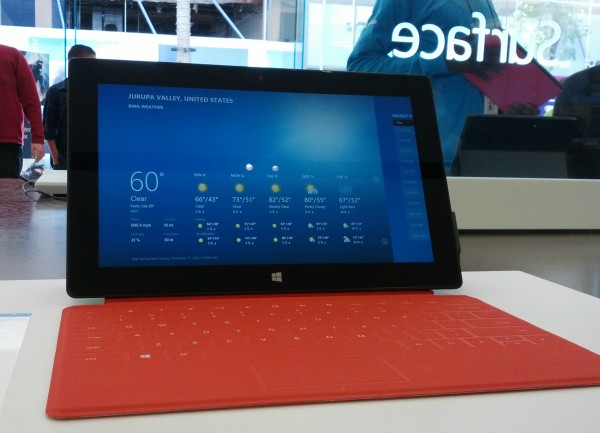
The biggest problem with Microsoft Surface is you probably can’t buy it. The model running Windows RT is available in just 20 countries, and Pro even fewer (say, how do you like them Canada and United States). Today, Microsoft promised expansion into new geographies starting in late March, and, get this, taking several months. I can’t imagine why tell us all now, other than perhaps to remind everyone that Surface exists and to keep those wanting one hanging on instead of buying something else.
Surface RT is currently available online or in stores: Australia, Austria, Belgium, Canada, China, Denmark, Finland, France, Germany, Hong Kong, Ireland, Italy, Luxembourg, the Netherlands, Norway, Portugal, Spain, Sweden and Switzerland, United Kingdom and United States. Microsoft added 13 on February 14. The months long expansion will bring the tablet to Japan, Mexico, New Zealand, Russia, Singapore and Taiwan.
Microsoft also promises to offer Surface Pro more places, but be prepared to wait. In a blog statement: “We are focused on meeting demand in current markets for Surface Pro and are working super hard to get new inventory into retail but recognize demand exists in other countries as well. We are committed to working with our retail partners to ensure we are delivering a great experience in the above mentioned countries for our customers”.
The software giant struggles to meet demand for Surface Pro 128GB, which is once again sold out at Microsoft Store. Best Buy has units, at least according to the online ordering section of the website.
Microsoft promises: “We are happy to be able to tell you that Surface Pro will be heading to Australia, China, France, Germany, Hong Kong, New Zealand and the United Kingdom in the coming months. We will follow-up with another blog post with more details”.
But — there’s too often a but — Surface RT and Pro are only available from brick-and-mortar stores in just a few countries, and that situation won’t change soon. In most countries, buyers will initially have Microsoft’s online store as their only option — so expansion is even slower than today’s declaration of intent suggests.
I quite like Surface Pro and perhaps you would, too, if you could buy it. Please check out my review. Some readers express great satisfaction, if you’re wondering whether waiting for availability in your country is a good idea.
Jesse Livermore:
The surface pro is a wonderful device. I have been married to my beautiful iPad 4 but since I bought the Pro, it has become my new mistress. The Surface is, indeed, a very well built device. Its build quality is on par with the iPad. It feels like the proverbial bank vault.The surface Pro is unbelievably fast — faster than my HP laptop.
It is also very fluid, unlike Android, and is rock steady reliable. It is so beautiful and powerful and since it is a full-blown computer, it has actually replaced my laptop. Unless I need a large screen, in which case I’ll use my new Dell One 27 Win 8 desktop, the Surface Pro has become my computer of choice. There is really not too much to complain about as I feel the Pro is nearly perfect. It would replace my iPad if it had a 4G connection. The Pro is a true computer replacement in the form of a stunning tablet.
Reader rcadams “just got my new Surface Pro” two weeks ago, “and I’m totally in love. Talk about a usable tablet. BTW, I’ve had iPad, iPhone, android tablets. Probably upgrade way to often, but finally I’ve found something that is more then a toy. Something solid, has power. Battery isn’t an issue at all. Would I like more sure why not. But what I really wish they would have done is make a place for the pen to slide into. I can see me losing the pens”.
Photo Credit: Joe Wilcox
-
Judge who slammed Apple during patent trial hired by Samsung

-
YouTube For iOS Gets “Send To TV” Feature
YouTube just pushed an update to its iOS app adding the “send to TV” feature, which lets users pair their mobile phones with connected TVs.
The feature was launched on Android in November, and at CES, the company announced it would be coming to more devices.
YouTube announced the iOS update on Google+ this afternoon:

Have an iPhone or iPad and a Google TV? You can now play and control videos from your YouTube app for iOS on your TV, like a remote control for YouTube. Anyone on the same WiFi can join in to control the video or add videos to a playlist (Harlem Shake marathon anyone?). This automatic pairing feature is also available on the YouTube app for Android, and it’s coming to more TVs this year from LG, Sony, Panasonic and others. Check out youtube.com/yt/sendtotv to see how it works.

The “send to TV” feature is now available for iOS and Android, and on select connected TVs. The PS3 and Xbox have manual paring options. The feature is also coming to devices from Bang & Olufsen, LG, Panasonic and Sony, as well as Philips, Samsung, Sharp, Toshiba, Vizio, Western Digital and others later this year. YouTube is currently available on over 400 million devices. Over 25% of video viewing on YouTube comes from mobile devices.
-
Matt Cutts Talks Location And ccTLDs
In Google’s latest Webmaster Help video, Matt Cutts discusses location and ccTLDs. Specifically, he responds to the following user-submitted question:
We have a vanity domain (http://ran.ge) that unfortunately isn’t one of the generic TLDs, which means we can’t set our geographic target in Webmaster Tools. Is there any way to still target our proper location?
“We’ve seen this trend – as the domain name space gets a little more exhausted in .com, people get creative, and so Matt Mullenweg at WordPress grabbed ma.tt, for example, which is a really creative URL, but something that people don’t think about is: what is .tt? Or what is .ge?” says Cutts. “It’s Georgia, you know, there’s a lot of startups that have been using .io, which is the TLD for the Indian Ocean, I believe. So you have to think hard about is it the case that this is going to be known as an international area? If your’e just using .es because you can find some cool word that ends in .es, most people using that domain are targeting Spain. So that is our assumption – that you’re targeting Spain.”
He says that some people want .li to be associated with Long Island, but it’s really associated with Lichtenstein, and that’s how Google views it.
“In some sense, it comes down to a little bit of a call about when a domain becomes truly generic. When it becomes appropriate for the entire world. So .co, which used to be, I think, Columbia, might be more generic now, where everybody’s using it as if it is another .com, but some domains, I would put some thought into. Just because it’s a cool URL, a lot of the times we’re going to be looking at it and thinking, ‘Hmm, this is actually related more to Lichtenstein that it is to Long Island, and so even though people want to do a Long Island business, we’re more likely to think that it’s in Lichtenstein.”
He goes on to suggest that you post on Webmaster forums and “rally your case,” and do a blog post that says, “.iO is mostly startups, and this should not be related to this country…” Still, he says, Google has to look at the data and look at the domains that are in use, and make a judgment call.


 72
72  3
3