Author: Serkadis

  • Here’s A Quick Look At The Next Episode Of The Walking Dead

    The Walking Dead returned to television on Sunday night, and while reaction to the episode itself has been mixed, many fans are just glad it’s back.

    AMC has uploaded a preview of next week’s episode to YouTube, so in case last night’s wasn’t enough to get you ready, here you go:

    For a behind the scenes look at last night’s episode (actually a couple of looks), check this out (beware of spoilers).

    More The Walking Dead fun here.

  • Apple Smart Watch On The Way, Say Reports

    Apple is working on a “smart watch” according to various reports. There have been rumors in the past that the company was doing so, but now we’re seeing it reported by the likes of The New York Times and The Wall Street Journal. The former reports:

    In its headquarters in Cupertino, Calif., Apple is experimenting with wristwatch-like devices made of curved glass, according to people familiar with the company’s explorations, who spoke on the condition that they not be named because they are not allowed to publicly discuss unreleased products. Such a watch would operate on Apple’s iOS platform, two people said, and stand apart from competitors based on the company’s understanding of how such glass can curve around the human body.

    The latter says:

    The company has discussed such a device with its major manufacturing partner Hon Hai Precision Industry Co., one of these people said, as part of explorations of potentially large product categories beyond the smartphone and tablet.

    TechCrunch speculates that the device will use glass from Conrning, makers of the Gorilla Glass used in the iPhone.

    The smart watch space might be the next one where we see the big players in smartphones and tablets extend their rivalry. Google is reportedly already thinking about marketing its own smart watch, and has already secured a related patent.

  • Twitter Pays Homage To Whitney Houston On The Anniversary Of Her Death

    It’s hard to believe it’s been a whole year already, but today marks the anniversary of the death of Whitney Houston, arguably one of the most shocking celebrity deaths of 2012. The Twitterverse is making sure everyone remembers the singer, as many of its patrons pay homage to her, and celebrate her memory in various ways.

    As the Grammy Awards are once again a big topic of discussion today, here’s a look back at what Twitter was saying about last year’s ceremony, which included a famous performance of Jennifer Hudson singing Houston’s version of “I Will Always Love You”.

    And here’s a look back at the Twitter discussion that took place during Houston’s televised funeral.

  • iPod’s end draws near

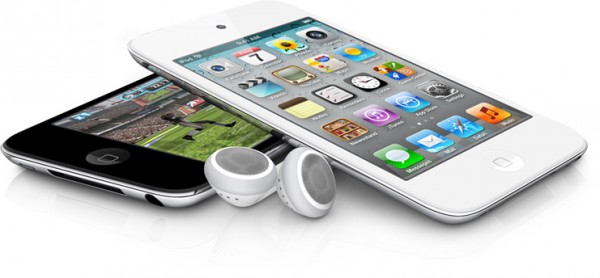
    Debate is fierce about whether smartphones and tablets cannibalize PC sales. Surely, we can all agree that these device subsume dedicated MP3 players. Top-selling iPod is product in declining demand, while today NPD puts hard numbers behind changing music-listening habits. Which reminds me, I promised to set up my wife’s Rdio account over the weekend. We got a family plan a few days back. She’ll stream on Google Nexus 4 or 10 and download some tracks for offline ear-banging.

    She’s not alone. Fifty-six of U.S. smartphone users listen to music on the device — 40 percent for tablets, according to NPD. I’m in the latter category on Nexus 7. Consumption is up, with 54 percent of smartphone music listeners doing more than a year ago and 39 percent tuning in at least once a day.

    Again, on smartphones, Internet Radio is most popular among music listeners (65 percent) — about the same as tablets. Sixty-percent of smartphone listeners, and 49 percent of tablets owners, use their own music (presumably ripped from CDs rather than ripped off from file-sharing sites). Subscription services like Spotify: 30 percent on smartphones.

    “With both local music storage and the ability to connect to any number of online music services, tablets and smartphones are actually contributing to a net increase in their owner’s use of internet radio and personal music collections”, Ben Arnold, NPD’s director of industry analysis, says.

    When Apple cofounder Steve Jobs introduced iPhone in January 2007, he pitched a combo device, with music playback being one benefit. As iPhone, and now iPad, sales rise, iPod falls. During fiscal first quarter 2007, iPod accounted for 48 percent of Apple revenue. Six years later: 5 percent compared to 71 percent for iPhone and iPad combined. That said, sequential sales grew in the triple digits in fiscal Q1 2013. iPod is by no means dead, but NPD’s data shows just how dramatically music habits are changing.

    Change doesn’t stop there. “We are seeing sales growth in products that compliment playback on mobile devices, particularly those that feature wireless local streaming”, Arnold says. It’s the big trend. Wireless headphone sales grew 34 percent year over year in 2012, while wireless speaker sales tripled. Bluetooth models accounted for 28 percent of soundbar sales — jump from 6 percent a year earlier.

    “Products that enhance listening like streaming speakers and soundbars with Bluetooth and even premium headphones have experienced tremendous growth over the past year is evidence that consumers aren’t only satisfied with music on-the-go, they increasingly want to use these devices for a better in-home music experience”, Arnold says.

    I don’t use a soundbar, but likely will buy wireless speakers this year to put in different rooms in our apartment. And you?

  • Don’t Expect Google To Fund Publishers All Over The World

    Earlier this month, Google announced an agreement with publishers in France, which involves Google creating a €60 million fund called the DIgital Publishing Innovation Fund to “help support transformative digital publishing initiatives for French readers.” The agreement came after a lengthy battle with publishers who wish to be paid for the privilege of search engines to link (with snippets) to their content. It’s a similar mindset to that of publishers all over the world.

    Reuters called the agreement “a deal on payment of media links”. That’s certainly what it feels like. Google Executive Chairman Eric Schmidt explained the deal:

    First, Google has agreed to create a €60 million Digital Publishing Innovation Fund to help support transformative digital publishing initiatives for French readers. Second, Google will deepen our partnership with French publishers to help increase their online revenues using our advertising technology.

    This exciting announcement builds on the commitments we made in 2011 to increase our investment in France—including our Cultural Institute in Paris to help preserve amazing cultural treasures such as the Dead Sea Scrolls. These agreements show that through business and technology partnerships we can help stimulate digital innovation for the benefit of consumers, our partners and the wider web.

    From the sound of it, however, we shouldn’t expect this to set a precedent for how we’re going to see Google operate around the globe. For one, in Germany (where Google has been facing a simliar battle), publishers aren’t all that interested in a deal like the one in France, as it would be a Google-specific “solution” to their problem, and wouldn’t apply to other search engines.

    For that matter, Google is not looking to enter similar agreements with publishers in other countries. TechCrunch reports that Google has no plans to create “digital innovation” funds for publishers outside of France. The publication shares this statement from a Google spokesperson:

    “While we are always happy to talk to publishers about additional ideas for driving traffic, engagement, and monetization, we are not currently looking to create a fund outside France.”

    Google did reach an agreement with publishers in Belgium in December, following six years of litigation, but it did not involve one of these funds. Rather, as part of that agreement, Google said it would advertise its services on publishers’ media, and publishers would optimize their use of AdWords. Google would also work with Belgian French-language publishers to “help increase publishers’ revenue,” collaborating on ways to make money with Paywalls and subscriptions, and with AdSense and the Ad Exchange. Google would also work with Belgian publishers to implement Google+ social tools and launch YouTube channels.

    When Google announced that deal, it said it would like to come to similar terms with publishers around the world, so we may be seeing more of this type of “solution,” rather than Google just funding publishers. As we’re seeing, each country’s publishers has a unique view of the situation, and it doesn’t look like we’re going to see a worldwide standard.

    In Brazil, publishers have gone so far as to simply pull out of Google News.

  • Tony Romo Plays Golf, Twitter Makes Fun Of His Football Skills

    Dallas Cowboys quarterback Tony Romo has been golfing over the weekend at Pebble Beach, and reportedly (along with his partner) lost a lead during the final day of the Pro-Am.

    Some NFL fans see a familiar pattern.

    “So apparently, Thursday, Friday and Saturday are golf’s regular season, and Sunday is its playoffs,” writes Darin Gantt at NBC’s ProFootballTalk.

    Romo’s taking a lot more abuse than that on Twitter.

    That’s a small sampling. Unfortunately for poor Tony, we’re not seeing many stick up for his football abilities in the current Twitter conversation. Twitter can be so cruel.

  • Carly Rae Jepsen’s YouTube Smash Fails To Win Her A Grammy

    It’s official. Massive Internet popularity does not win you a Grammy. That’s what Carly Rae Jepsen learned on Sunday night, as her viral hit song Call Me Maybe failed to win her an award.

    She’ll probably be able to continue to sleep at night, as the song earned her two nominations: Song of the Year and Best Pop Solo Performance.

    As of the time of this writing, Call Me Maybe has over 402 million YouTube views. It has about a million and a half likes. And that doesn’t even begin to count all of the parodies and covers that have saturated the the biggest video site on the Internet.

    Song of the Year winner “We Are Young” only has over 167 million YouTube views (about 800,000 likes).

    View all nominees and winners here.

  • The Walking Dead: AMC Posts Behind-The-Scenes Videos Of Last Night’s Episode

    The Walking Dead is finally back. The show returned to AMC after taking a couple months off, and now the network has uploaded a couple of new videos, giving fans an inside look at the mid-season premiere.

    Don’t watch them if you haven’t watched the episode yet, as the do contain spoilers.

    More The Walking Dead fun here.

  • President Obama To Do A Google+ Hangout On Thursday

    Members of the Obama administration have been regularly talking in Google+ Hangouts in recent weeks, and this week, President Obama himself will participate in one.

    The hangout will come two days after Obama delivers the State of the Union address on Tuesday, when he will discuss the agenda for his second term in office.

    Recently, Vice President Joe Biden participated in a Hangout, discussing gun violence. More recently, Domestic Policy Director Cecilia Munoz discussed immigration reform.

    “Much like the Fireside Hangouts held by Vice President Biden and Domestic Policy Director Cecilia Munoz over the past few weeks, the President’s Fireside Hangout will include a group of people who regularly discuss important issues of the day online,” explains Google+ Politics’ Ramya Raghavan. “During the conversation, the selected participants will ask the President their own questions—but we’d also like to hear from you before the Hangout.”

    Submit questions here.

    The State of the Union address will be streamed live on YouTube, as will the Republican response from Senator Marco Rubio.

  • Inflatable Robots And More Discussed At Google Event [Solve for X]

    Google hosted its Solve for X Event last week, and has now released the presentations.

    Solve for X is a gathering of scientists, entrepreneurs, and innovators, who come together to present “moonshot” proposals, as Google calls them. These are ideas aimed at solving big problems in the world. It’s kind of TED Talks-esque.

    Last year’s presentations discussed drug delivery, imaging the mind’s eye, collaborative science, resource reclamation, etc. You can view some of those here.

    Here are some of the new ones on topics like replacing plastics, sustainable meat, inflatable robots, economic energy storage, space exploration, malaria eradication, and Alzheimer’s diagnostics:

    “One of the reasons we created Solve for X was to provide a collaborative forum to celebrate and help innovators who are in the process of attempting to bring radically innovative solutions to reality—attempting moonshots,” say Solve for X creators/co-hosts Megan Smith and Astro Teller. “Moonshots aim to make something 10x better, not just 10 percent. We need many more of us to take on and support moonshots if we are to solve the seemingly intractable problems we face in the world. To do that, we need to better celebrate the audacity of the attempt itself—at the start and in process.”

    Google has updated some features on SolveForX.com, including the ability to submit moonshots, “join and declare your X” and watch more ideas from other partners.

  • Shervin Pishevar is leaving Menlo VC to start Sherpa, a startup foundry

    shervin-pishevar-MenloVentures_0485_72High profile entrepreneur Shervin Pishevar has carved out a big slice of attention in Silicon Valley. When he is not hobnobbing with Presidents and crown princes, Pishevar, who co-founded Webs.com and Social Gaming Network, is busy talking up companies he has invested in on behalf of Sandhill Road firm, Menlo Ventures.

    We heard about Pishevar’s exit a few days ago and since then have independently confirmed with two sources that he is leaving the firm he joined as a managing director in 2011. Shervin confirmed his exit. He will stay on an adviser to Menlo and is going to join Uber as a strategic adviser. In addition, he plans to start a new company — Sherpa, which is a combination of startup foundry and a fund.

    He explained that Sherpa is a company helping to build other companies, and it will be working with large corporations and other founders to come up with ideas. He declined to offer any details except that he is partnering with Scott Stanford, a Goldman Sachs investment banker, for this new project.

    During his tenure at Menlo, Pishevar had invested in companies such as Uber, Fab, Getaround and Cinemagram. Pishevar is one of the most liked people in the entrepreneur community. He was an angel investor in about three dozen companies before joining Menlo Ventures in 2011.

    Related research and analysis from GigaOM Pro:
    Subscriber content. Sign up for a free trial.

  • How battery improvements will revolutionize the design of the electric car

    Tesla could have never created the Model S — it’s second-generation electric car that won Motor Trend’s car of the year award for 2012 — with battery technology from a few decades ago, said Tesla’s CTO and co-founder J.B. Straubel at the Cleantech Investor Summit last week. He explained, “The type of vehicle we can create is fundamentally different every time that tech [batteries] moves a little forward.”

    While battery innovation appears gradual, the incremental leaps add up over time. Battery innovation is improving around 5 to 8 percent per year, which can deliver a doubling in core performance metrics every ten years, which is ultimately really “revolutionary” said Straubel. Because of the large size and heavy physical weight of batteries involved with electric cars, the impact of battery innovation on the design of the car can be even more significant than Moore’s Law has on some computing products, added Straubel.

    For car design, “It’s almost as if the properties of steel were improving at a rate of 5 to 8 percent per year,” said Straubel.

    Tesla Model S

    The new design and engineering of the Model S has been Tesla’s differentiator, and it is what the company is hoping will help it move into profitability and success as a more mainstream auto maker down the road. The car is one of the first electric cars in the world that was designed from the ground up as electric. In contrast most auto makers that have built electric cars have taken an existing traditional gas-powered car and put batteries in it.

    The Model S, in comparison, has placed the battery along the bottom of the car, so that it doesn’t take up seating and storage space, and also so that the car has a low center of gravity and is more aerodynamic. The Tesla Roadster (it’s first car) and the Nissan LEAF are based on the bodies of gas-powered cars.

    Shai Agassi, the founder and former CEO of Better Place, also touted the importance of the rate of battery innovation during his talk at the Cleantech Investor Summit. He said the energy density of batteries goes up 15 percent every 18 months; the cost per kilowatt hour goes down 15 percent every 18 months; the life cycles of the batteries (how many times it can charge and recharge) goes up 15 percent every 18 months; and the cost per lifecycle-mile does down 50 percent every 18 months. “If you don’t like the margins in this [electric car] business just wait 12 months,” said Agassi.

    The crucial factor for both Tesla and Better Place will be surviving in an early market place as these improvements emerge. As with all startups, timing and execution will be key.

    Related research and analysis from GigaOM Pro:
    Subscriber content. Sign up for a free trial.

  • MobileTechRoundup podcast 290: Scoring a 128 GB Surface Pro

    MoTR 290 is 51:50 minutes long and is a 32 MB file in MP3 format.

    CLICK HERE to download the file and listen directly.


    HOSTS: Matthew Miller (Seattle) and Kevin C. Tofel (Philadelphia)

    TOPICS:

    • Hunt for the Surface Pro and first impressions
    • One week in with the BlackBerry Z10
    • Coda One 3-in-1 bluetooth handset. How come there aren’t more of these? Great for voice conversations on a tablet.
    • HP jumps in the Chromebook game: $329 for a Pavilion with 14-inch screen
    CONTACT US: Email us or leave us a voicemail on our SkypeLine!

    SUBSCRIBE: Use this RSS feed with your favorite podcatcher or click this link to add us to iTunes

    Related research and analysis from GigaOM Pro:
    Subscriber content. Sign up for a free trial.

  • Solving the Sequester: The Facts

    With less than three weeks before devastating, across the board cuts – the so-called "sequester" – are slated to hit, affecting our national security, job creation and economic growth, we must make sure we are having a debate over how to deal with these looming deadlines that is based on facts- not myths being spread by some Congressional Republicans who would rather see these cuts hit than ask the wealthiest and big corporations to pay a little bit more. 

    First, the notion that President Obama hasn't put forward a solution to deal with these looming cuts is false. In the fall of 2011, the President put forward a proposal to the Supercommittee for the specific purpose of laying out his vision to resolve the sequester and reduce our deficit by over $4 trillion dollars in a balanced way- by cutting spending, finding savings in entitlement programs and asking the wealthiest to pay their fair share. That proposal would have completely turned off the sequester while further reducing our deficit and ensuring we could still invest in the things we need to grow our economy and create jobs.  That same approach was presented to Congress in the President's budget last year.  And the President's last offer to Speaker Boehner in December remains on the table- an offer that meets the Republicans halfway on spending and on revenues, and would permanently turn off the sequester and put us on a fiscally sustainable path.

    We should have a debate over how to best reduce the deficit. But with only three weeks until these indiscriminate cuts hit, Congress should find a short term package to give themselves a little more time to find a solution to permanently turn off the sequester. That package should have balance and include spending cuts and revenues.

    read more

  • Surface sells out!

    So much for the naysayers panning Microsoft’s flagship tablet, or (wrongly) calling it woefully overpriced (but inferior) iPad. The first Surface Pro shipment sold out — well, just about — and only within a few hours, too. I called a half-dozen West Coast Microsoft Stores Saturday evening. None have either model. The online shop is sold out of the 128GB slate, but you can still get the 64 gigger. Stock checks at Best Buy and Staples also reveal sell-outs.

    “They cleaned us out!” one California MS Store employee tells me Saturday night. Another says his shop stocked out in a couple of hours. No one would say how much inventory was available, but one person says, “Plenty!” Clearly not plenty enough. The question now: How long will those who want Surface Pro wait? One staffer says he expects more tablets Tuesday. No one else has timeframe.

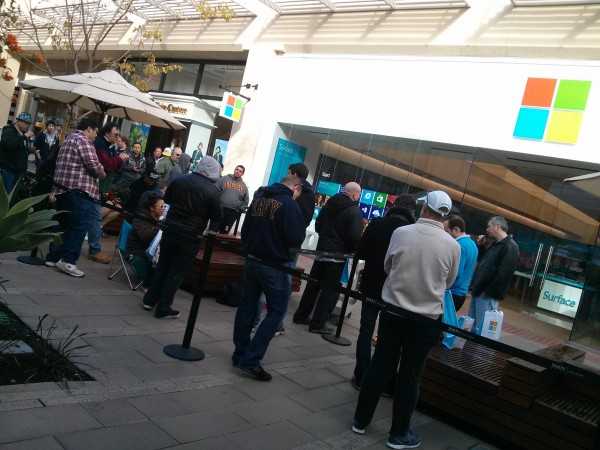
    Early February 9, I wondered what to expect after going to the San Diego store, which opened at 10 am local time to a line of about 50. When I snapped the photo above, only about 30 people waited — and what a stereotypical geek group, too. Many looked like they had just time-traveled from 1978 and coding alongside Microsoft cofounder Bill Gates. After months of catcalls deriding Windows 8 or Surface RT, these buyers paid their revenge — four businesses down from Apple Store. As did others across Canada and the United States.

    Perhaps BetaNews poll “Will you buy Microsoft Surface Pro?” captures a trend. Among the more than 2,000 respondents (so far), only 16 percent definitively say they won’t purchase the tablet. A stunning 45 percent say “as soon as available”, which is now — that is if anyone can reasonably call two countries “available”.

    Microsoft manufactures two Surfaces, its first commercially available personal computers. One, running Windows RT and using ARM architecture, competes with iPad. The other is x86-based Windows 8 Pro and competes with MacBook Air. For the big lowdown, see my first-impressions review and followup asking “Should you buy Surface Pro?

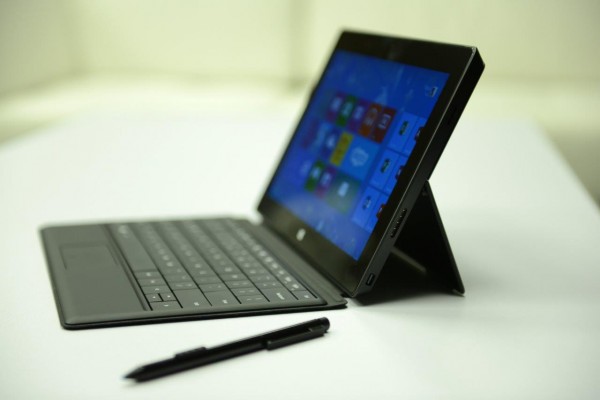
    Surface Pro specs: 10.6-inch ClearType HD Display with 1920 by 1080 resolution; 1.7GHz Intel Core i5 processor and HD 4000 graphics; 4GB RAM; 64GB or 128GB storage; 720p front- and rear-facing cameras (meaning they’re for video more than photos); accelerometer; ambient-light sensor; compass; gyroscope; Wi-Fi A/N; Bluetooth 4; USB 3; Windows Pro 8. Dimensions and weight: 10.81 x 6.81 x 0.53 inches and just under 2 pounds. Price: $899 (64GB); $999 (128GB).

    Surface is unlike any other slate currently available: tablet, laptop and sketchboard (there’s stylus and touch). Whether sales are sustainable or even meaningful is anyone’s guess, until (hopefully not if) Microsoft releases sales numbers.

    For now I request feedback. If you bought Surface Pro, do tell us all which model and share your reaction. Trust me, lots of people want to know.

    Photo Credit: Joe Wilcox

  • The man behind Google Docs is now trying to reinvent the web app at Box

    When Sam Schillace first crossed paths with Box Founder and CEO Aaron Levie in 2006, it didn’t exactly go how Levie expected. Box wanted to buy Schillace’s document-collaboration startup called Writely, but shortly after discussing it, the team at Writely went dark. A few days later, Levie got to hear from the press that Google had purchased Writely instead.

    The rest, as they say, is history. Writely went on to become the foundation the foundation of Google Docs. Schillace went on to lead just about every product that falls under the Google Apps umbrella, leave for a stint to launch a new company, then come back as a member of the Google Ventures team. Box, well, it’s flush with cash and set for a 2014 IPO.

    Sam Schillace (Credit: Google Ventures)

    Sam Schillace (Credit: Google Ventures)

    But although their paths diverged, Schillace and Levie would find each other again. In 2011, while still with Google Ventures, Schillace joined Box’s technical advisory board along with then-Facebook VP Jonathan Heiliger, LinkedIn SVP Kevin Scott, then-Flipboard CTO Arthur van Hoff and some other notable Silicon Valley names. (Schillace calls himself “the dumb guy to make all the other guys seem even smarter.”) It was good camaraderie and a lot of fun, Schillace said, and “once a quarter they’d bring all their really hard technical problems to you.”

    Then, in mid-2012, Box COO Dan Levin asked Schillace to come on as the company’s vice president of engineering. He actually didn’t want to take the job initially, but when he realized the decision was really between continuing to have conversations with the smart people around him — both on the advisory board and within Box itself — he knew what he had to do. ”I really liked the people and I really liked the team,” Schillace told me.

    He officially joined the company in August 2012, and is now bringing his considerable expertise to bear on Box’s very pressing technical challenges. With crushing data volumes and millions of users, Schillace explained, “There’s a little bit of a success disaster we’re having to deal with here.”

    Laying the groundwork at Google

    It’s a good thing Schillace has some experience dealing with some difficult issues, in both technology and business. When he started Writely, even his co-founders thought it was a stupid idea; web browsers then were so primitive. There was no documentation, no standardization (even around how they handled HTML), and browsers were slow and underpowered. The only solution was to “just poke at the browser until it behaves,” Schillace joked.

    “The crown jewel of hard problems … is around collaboration,” he explained. Although the Google Docs team eventually rebuilt Writely as a native word processor, Schillace and Writely co-founder Steve Newman didn’t have that luxury. Because the browsers all behaved differently, they had to write some “hairy” logic to merge changes on the server and then send it back down to the user in a format that particular browser could understand. Sometimes, they’d run into what Schillace calls “edit fights,” where a browser would actually fight itself.

    “It was totally Wild West,” he said. “We had to invent a lot of stuff even to get it to even work a little.”

    Credit: Google

    Credit: Google

    Schillace also knows how to overcome, or at least manage, the non-technical issues that come as a company grows from a small team into something much, much larger. When he started at Google, his team was about 40 people. By the time he left, it had grown to 600.

    But despite its size, Schillace said, Docs was never a huge priority at Google because of its minimal effect on the company’s bottom line.

    “The only reason we managed to make Docs happen in the first place, really, was Eric Schmidt was such a big supporter and we were kind of tyrants because we were so feral and so much in the startup mentality,” he acknowledged.

    Hellbent on earning every dollar possible from their contracts, Schillace and his team worried much more about continuous execution than about following the rules. “Every once in a while we’d get in trouble and Eric would protect us and get us out of it,” he said. “We just sort of shoved through it and made it happen.”

    Fast-forward a few years and there’s “not a lot of room for the feral programmer at Google anymore,” Schillace explained. Because the company is so big, everything you do is under extreme scrutiny and it becomes impossible to recover from even small mistakes (e.g., Wave and Buzz) because there’s so much exposure. And as part of such a large company working on such large projects, it can become hard for individuals to stand out or to see the direct effects of their work.

    Building a better Box …

    Box, Schillace said, feels a lot like Google did when he first came on board there. It’s a big enough company (with nearly 700 employees) that everyone is doing real work, but not so big that all the problems have been solved. He thinks there’s a good two to four years of really fun stuff to work on, and the company can bring in smart people from places like Facebook and Google to help find the solutions.

    For Schillace personally, Box’s size also fits in with his current state of mind: He’s done with the emotional roller coaster of startups after spending more than 20 years building them. “When you’re initially a programmer, you learn to program with 10 fingers,” he said. “And then maybe if you go to management you learn to program with 10 people. And then if you go to the level of management that I’m at, you get to program with 10 teams of people.”

    But works that’s “fun” isn’t necessarily work that’s easy. Technologically, he said, the hardest problems at Box are dealing with the company’s scale. From a data volume perspective, it’s growing at 10 percent a month, which means it’s doubling roughly every seven months and growing by about a factor of four every year. Box’s storage capacity is into the multiple petabytes now, Schillace said.

    On the infrastructure side, that means Box is always working on the next generation storage of scale-out storage architecture. It takes between 6 and 12 months to build one, he explained, but they only last about 18 to 24 months.

    In the case of Box, though, its focus on real-time collaboration means mere storage capacity isn’t enough when designing a database. That’s why Schillace’s team ends up building a lot of its own technology to deal with the company’s unique needs. It’s able to buy a few things off the shelf and use some available open source tools, but, as Schillace said, “every company has its own set of tradeoffs you have to make, so you basically end up having to build this stuff yourself.”

    And as Box signs up more deals with companies that have tens of thousands of users — sometimes more — it has to make changes around caching and metadata to account for that many people potentially sharing a folder or a document. ”That does strange things to your product,” Schillace explained. “… All complicated by the fact that everything’s moving all the time.”

    A sample of Box's large-enterprise users.

    A sample of Box’s large-enterprise users.

    “The other technical problem is, ‘what’s the next generation of the web app itself,’” he noted. “Where do we go with that and what does that need to be in order to be successful?” At Box, for example, the user interface is starting to show signs of stress because of the number of users, meaning its search has to become more functional and certain pop-up menus and lists are getting too big to present.

    … and re-imagining content for the mobile world

    But even beyond building out Box’s current product to handle the company’s scale, a bigger challenge might be figuring out how to build a collaboration application in the age of powerful mobile devices and cloud computing. Schillace said he’s very proud of Google Apps (the couple of times a week he still gets thanked for it probably doesn’t hurt the pride), but it was essentially just a matter of building traditional office applications of the desktop world for the web, and he thinks Google’s anti-desktop dogma is a bit simplistic.

    “The interesting challenge is to have one foot in many worlds at once,” Schillace said — mobile, web and desktop, consumer and enterprise. ”We’re just at the beginning of this tidal wave of enterprise going from on-premise to the cloud … . I think all the boundaries and functionalities of that stack are still up for grabs.”

    A debate at Box, he said, is whether to build a full suite of editing applications a la Google Docs, or whether that’s “chasing the last war.” Rather Schillace is inclined to look at what a company like Evernote is doing to enable creation and collaboration “outside of that paradigm of word processor, spreadsheet, presentation.”

    hero_evernoteAll of this speaks to the evolution of documents. They used to be more like artifacts — things like properly formatted business letters with high latency, high transaction costs and “all this artifice around the structure of the document,” Schillace explained. Then the web came, reducing the focus on formatting and adding a collaborative element, but keeping in place a certain level or linearity. With the advent of Evernote and the erstwhile Google Wave, documents have become more abstract, mixing images, text, communications, web pages and whatever else onto a digital canvass.

    “Underlying all of this, what’s really going on is the business interaction you want to have,” Schillace said. “The point of the document is you usually either record something for yourself or to have an interaction with another human being. And I think we can gradually start peeling away layers of artifice and try to get down to the raw core of that interaction.”

    He thinks mobile devices with their small screens, portability and omnipresence in our lives might present the biggest challenge for achieving this goal. Users probably need a native way of interacting with documents that doesn’t involve opening a Word document and trying to read and edit it on a tiny keyboard. The right test, according to Schillace, might be if a co-worker has a question, “could I answer it while I was standing in line at the store in 30 seconds?”

    If someone is going to hit a homerun with the ideal mobile collaboration experience, building it probably won’t come easy and might not look too much like anything we’ve seen before. If there’s one thing Schillace has learned building six startups over 23 years, it’s that good entrepreneurs spot obvious, but futuristic opportunities and start building, knowing they “personally are going to suffer an enormous amount of pain because the world is not ready.”

    “The really radical stuff always looks stupid and crazy, ” Schillace said, “but the real disruptions always look like that.”

    Related research and analysis from GigaOM Pro:
    Subscriber content. Sign up for a free trial.

  • Android this week: Project Shield packs a punch; Optimus G Pro goes big; RunKeeper revamped

    This week didn’t bring any new pricing or availability details for Nvidia’s Project Shield, however the portable gaming device was featured in a new video. The Android-based handheld, designed and built around the company’s new Tegra 4 chip, pairs a 5-inch 720p touchscreen display with gaming controls similar to an Xbox 360 controller.

    At the end of the week, Nvidia showed off the Real Boxing game title on Project Shield, focusing on in-game lighting, graphics and general game play:

    Nvidia plans a continuing series of Project Shield videos, which will help to keep interest high. But regardless of how excited the Android and gaming communities could be based on demonstrations, success is likely to come down to the handheld’s price. I’m still hoping to see Project Shield debut at $250 or less, but many in the industry that I’ve spoken to expect a price at or north of $300.

    LG Optimus G ProIf Project Shield isn’t big enough for you, perhaps the LG Optimus G Pro is: Phone Arena captured an image of the phone and  compiled a list of specifications of this handset with 5.5-inch display.

    That’s as large as my Samsung Galaxy Note 2 phone, but LG is one-upping Samsung: The Optimus G Pro is expected to have a full HD screen with 1920 x 1080 resolution. Additional specs include a quad-core 1.7 GHz processor, 2 GB of memory, 13 megapixel camera 32 GB of internal storage and high-capacity 3,140 mAh battery. I’d expect the phone to run all day (and then some) on a single charge, even with the higher resolution display.

    Unlike the Optimus G Pro, I can’t run all day. When I do run, though, I tend to use mobile apps or a smartwatch to track my exercise. This week, RunKeeper for Android got a refresh that improves on what I think was already a great app.

    RunKeeper version 3 for Android has a new look and feel because the team used Google’s Android development guidelines for the redesign. The software also adds some new features including in-activity splits, a tab to view your personal goals and stats, improved audio cues in workouts and workout reminders. Many of these functions were already available in RunKeeper for iOS so it’s good to see the Android version catch up in this functionality race.

    Related research and analysis from GigaOM Pro:
    Subscriber content. Sign up for a free trial.

  • Should you buy Microsoft Surface Pro?

    Microsoft’s flagship tablet running Window 8 Pro goes on sale in Canada and the United States on February 9. The device is the most-important released to date running the operating system, for what it seeks to accomplish and means for Microsoft. Critics call Windows RT a failure (I disagree). Distribution is the problem, if any, and that’s easily remedied.

    Still, RT badmouthing puts Pro perceptions in a bad spot. Microsoft’s public relations team responded by getting devices out to reviewers and setting an embargo of 9 pm EST February 5. So four days before launch, a bunch of reviews exploded across the InterWebs around the same time. Younger reviewers from trendier tech tabloids tend to talk up Surface Pro while older fogies and those from more consumer pubs are more hesitant. I’m among the few old farts who get Surface and what Microsoft strives to achieve here. Then, again, I’ve covered the company for a long time.

    Some Basics

    I’ve used Surface Pro for about a week now as my primary PC and generally like the device. Hardware is top-notch and the design makes me feel good. I enjoy working on Surface and being seen with the slate at the local Internet café. Modern UI is a visual delight, generating happy-producing endorphins. But Surface Pro is quirky, too, much more than RT because of Windows 8 Pro and the amount of time users will spend moving from Desktop to Modern UI and back again. I discuss these attributes and others in my first-impressions review.

    By the way, don’t discount joy as a reason for buying a product. Apple doesn’t and makes beaucoup bucks selling pretty devices. Microsoft finally gives you opportunity to feel good about using Windows.

    Surface Pro specs. 10.6-inch ClearType HD Display with 1920 by 1080 resolution; 1.7GHz Intel Core i5 processor and HD 4000 graphics; 4GB RAM; 64GB or 128GB storage; 720p front- and rear-facing cameras (meaning they’re for video more than photos); accelerometer; ambient-light sensor; compass; gyroscope; Wi-Fi A/N; Bluetooth 4; USB 3; Windows Pro 8. Dimensions and weight: 10.81 x 6.81 x 0.53 inches and just under 2 pounds. Price: $899 (64GB); $999 (128GB).

    I recommend the 128GB model, which comes with about 90GB free space compared to 23GB for the other. Some advice to Microsoft: Copy Google and give Surface Pro buyers free cloud storage. Chromebook buyers get 100GB for 2 years, free. Surface Pro users deserve that much SkyDrive. It’s a low-cost add with high value, particularly for anyone buying the 64GB model.

    Three for One

    Surface Pro is unlike any Windows machine you’ve seen before. Its a tablet, touchscreen laptop and sketchboard, all wrapped up as one. I didn’t discuss these distinct and overlapping functions in my review, saving them for here.

    How well they work, or don’t, is crucial to evaluating the device. Core features and pricing put Suface Pro in competition with Windows ultrabooks or MacBook Air. Surface Pro sells for $899 or $999, without Touch or Type Cover, in line with $999 MacBook Air. Android and iOS tablets, as well as Surface RT, cater to a different audience, starting around $500.

    Do not look at Surface Pro like iPad. Apple’s slate does not and cannot compete with Microsoft’s. MacBook Air can. Anything you read on the web about Pro being an over-priced iPad is misinformation.

    The point: If you are shopping for a tablet that is affordable and generally good for running apps and consuming web content and playing casual games, Surface Pro isn’t for you. I recommend iPad 4 or Google Nexus 10 first, for their high-resolution screens and better choice of apps. Or Windows RT, which is great value with one of two style keyboard covers. However, if you’re shopping for a new notebook, a tablet that does more or the best Windows 8 experience, Surface Pro should be on your shopping list.

    Feel the Difference

    As a tablet, Surface Pro is an odd duck. Microsoft chose 10.6 inches for screen size. Typically slates this class are 9.7 inches (Apple and Sony) or 10.1 inches (Samsung). The size is well chosen. Displays 11.6 inches are more typical for Windows slates, and they’re awkward to handle for an length of time. The dimensions have no balance in the hands. By comparison, Surface Pro is comfortable enough to hold for extended periods, although it’s longer and narrower in portrait mode than I prefer.

    Something else: The display technology isn’t the same as other touch devices in this size or price class. Surface Pro has a digitized screen that supports touch and stylus, and with remarkable accuracy for both. You must understand: Surface Pro is not a version 1 product. Microsoft has built devices like this in-house for more than 12 years. Cofounder Bill Gates introduced the Tablet PC concept in 2001, and the first third-party commercial devices debuted a year later. Along the way, Microsoft built reference designs for its developers and OEM partners, so there is maturity here that you feel in the precession of touch or stylus.

    Tablet PC bombed rather than be the bomb for lots of reasons — disappointing device designs and over-dependence on the pen among them. Apple pushed past both with iPad, creating a handsome device and immersive software/services consumption experience. They say the pen is mightier than the sword, but not more than touch. The finger extends you.

    The point: Surface Pro supports pen and touch, and ships with a stylus. This makes the device as much drawing board as tablet or touchscreen laptop.

    Now comes the controversial topic: Use as a laptop. Surface Pro packs a built-in kickstand that combined with Touch or Type Cover easily converts the tablet into a notebook with touchscreen. Unlike Surface RT, which includes one of the keyboard covers for the price of some models, Pro doesn’t; buyers pay separately, which adds $129.99 to the base price.

    Several other reviewers complain kickstand and keyboard aren’t good enough, because they’re awkward to near impossible to use in the lap. That’s short-sighted perspective. At night, I sometimes sit the slate on my lap and work. While the default on-screen keyboard is too large for my tastes, typing more than satisfies. The high-resolution, precision-touch display changes everything. I can type just about as well on-screen as off, Microsoft’s keyboard is so responsive. No Android tablet or iPad that I’ve used compares.

    The point: Surface Po is a true laptop, in the sense it lays in your lap and provides great typing experience. Don’t forget other touch capabilities and the stylus. Reviewers hung up on kickstand and keyboard cover lap limitations miss the potential. Open your minds, people!

    Key Questions

    Surface Pro’s biggest shortcomings and also benefits are all about Windows 8. The first Q any prospective buyer should ask: Do I want Windows 8? If the answer is “No”, this device isn’t for you. There are other touchscreen tablets, such as the Samsung Series 7 slate (which costs hundreds more than Surface Pro), that run Windows 7.

    Next question: Do I need to run software you own? For many businesses the answer will be “Yes”. Users can install legacy hardware on Surface Pro, but they can’t on RT. This about change in system architecture — x86 versus ARM. If the answer is “No”, and might be for consumers or small businesses, compare both Surfaces side by side and consider RT instead for the savings. Screen resolution and storage capacity are lesser, but quality construction, overall design, kickstand and support for keyboard covers are the same. Stylus is out, but free copy of Office (Home and Student) is in.

    Another: Is Windows 8, meaning non-Pro, good enough? The answer is likely not for most companies but yes for some consumers or small businesses. There are other, OEM tablets running Intel processors that therefore offer the benefit of installing software you already own. For example, Dell sells the Latitude 10 tablet, running Windows 8, starting at $499. Screen resolution (1366 x 768), processor (1.8GHz Intel Atom) and storage (32GB) are all less. But the tablet is $400 cheaper and Windows 8 Pro is just an extra $24.50. Point: There are options, not that I would recommend them if you can afford Surface Pro.

    Overall, my Surface Pro gripes are about Windows. Stability and performance are excellent, but there are some usability gotchas going from Desktop to Modern UI and some real limitations to the newer motif. But software Microsoft can make better over time, if hardware’s enough — and it is.

    Only you can answer the question the headline poses. I’ll close with this: I think most new computers buyers, and even many looking at tablets, should strongly consider Surface Pro.

  • Report: Yandex Surpasses Bing In Search Queries

    According to a report from Search Engine Watch, citing numbers from comScore, Yandex is now bigger than Bing in terms of worldwide monthly search queries.

    Search Engine Watch’s Michael Bonfils says Microsoft sites processed 4.477 billion queries while Yandex processed 4.844 billion in November and December. That would make Microsoft (and Bing) number five. The top three are Google, Baidu and Yahoo.

    Last month, Yandex seemed poised to make a mark here in the U.S. (or at least attempt it), but the company’s plans were spoiled by Facebook. Yandex launched an app called Wonder, which was a new take on social search and relied heavily on Facebook data. Facebook deemed it a competitor (particularly since it had just launched its own social search offering in Graph Search), and cut the app off. It’s against Facebook’s terms to use Facebook’s data in a competing service.

    Facebook’s Graph Search could, however, actually help Bing if it gains traction. Bing provides the web results, which are the default when Facebook doesn’t have the appropriate data for a query. Graph Search is still in early beta, and is still slowly rolling out to users.

  • Microsoft posting points to universal apps between Windows Phone 8, Windows 8

    After building up the number of applications for Windows Phone 8, Microsoft’s next step could be to get them on Windows 8 tablets and computers. While the two platforms are meant for different device types, they do share many core components. Thanks to a recent Microsoft job posting, it looks like app unification between Microsoft’s phone and PC platforms is coming sooner rather than later.

    Mary Jo Foley spotted the Feb. 7 posting and notes that the development platform for the two is similar, although not quite the same. But the company is surely looking for improved platform sharing based on the posting:

    “Are you excited about Windows Phone? Are you passionate about delivering the best possible experience to the developer community? Do you wish the code you write for Windows Store apps would just work on the Windows Phone and vice versa? If so, then this is the role for you! We are the team leading the charge to bring much of the WinRT API surface and the .NET Windows Store profile to the Phone.

    We are looking for a highly motivated and technically strong SDET to help our team bring together the Windows Store and Phone development platforms.”

    The end result would be to vastly decrease the effort that developers need to support both Microsoft platforms. Windows RT running on ARM-based chips throws a small wrench in the works, but as we’ve already seen on some Android devices using Intel chips, it’s not a major obstacle with the right tool set.

    Windows 8 Start ScreenDevelopers wouldn’t be the only beneficiaries of course. Windows Phone 8 users that have favorite apps could extend that experience to a Windows 8 tablet, laptop or desktop.

    If done right, the initiative could not only boost the available apps for Windows 8, but make such devices more appealing to Windows Phone 8 owners. And it may even sell some Windows Phones if Windows 8 users want a buy once, run everywhere Microsoft app experience.

    Related research and analysis from GigaOM Pro:
    Subscriber content. Sign up for a free trial.