Author: Serkadis

  • Apple has a really BIG iPhone problem

    Sales growth comes from the wrong places: iPhone 4 and China.

    IDC and Strategy Analytics have released fourth-quarter phone shipments, which at first glance look good for Apple. While competitively behind Samsung, the fruit-logo company continues to gain smartphone market share — in fourth quarter, respectively, 29 percent and 21.8 percent, according to IDC. But gains largely come from older models, particularly iPhone 4, despite the newest handset shipping in volume during the quarter. This demand says much about iPhone’s perceived value, its successor’s appeal and future carrier subsidies and the margins Apple gets from them.

    Old Yeller

    In the short term, iPhone is a monstrous money machine. Revenue rose to $30.67 billion in fourth quarter from $16.25 billion three months earlier. Average selling price perked to $640 from $624 sequentially but, annually, fell from $643. The larger concern is the next couple quarters, following iPhone 5’s initial sales glow and increasing demand for the two older models.

    “iPhone 4 was actually in constraint for the entire quarter and sales remained strong, and so that’s helped sales progress across the quarter”, says Apple CEO Tim Cook, speaking on the quarterly conference call this week.

    For the call’s last question, Deutsche Bank analyst Chris Whitmore asks: “In context of your iPhone business given the strength you are seeing at the low end of your product line the iPhone 4 being stocked out during the quarter…there seems to be a lot of demand at lower price points for the iPhone, why not get more aggressive at lower price bands and move down market in the iPhone business?” For that, Cook deflects and doesn’t directly answer.

    But Whitmore asks what everyone should about iPhone. Carriers pay Apple much less for iPhone 4 and 4S than 5. Using the full price consumers pay for unlocked devices as guide: $450, $549 and $649, respectively, for base models. iPhone 5 32GB is $749 and 64GB is $849.

    As volumes for older models increase, Apple’s take per phone goes down — by nearly $200 comparing iPhone 4 to 5. I’ll explain what that means in context of China and its impact on ASPs in a few paragraphs.

    Pride and Prejudice

    Carriers use subsidies to insulate buyers, offering iPhone 4 for free and 4S for $99. Those prices also determine iPhone’s perceived value to consumers, which for many is zero — they are unwilling to pay anything. That scenario creates several problems for Apple:

    1. Lower average margins per phone sold
    2. Shorter sales bursts for newer iPhone releases
    3. Newer models being perceived as being better enough
    4. Signs that the smartphone market is rapidly saturating
    5. Stiffer competition from low-cost Androids and Windows Phones

    Still, any new model sells, and surely iPhone 5 did during fourth quarter. But there is increasing evidence that a sizable number of ongoing new sales go to existing customers, a market that inevitably must saturate faster than the overall smartphone segment.

    The China Syndrome

    Then there is China, which accounted for 13 percent of all Apple revenues during Q4. Referring to sales following iPhone 5’s release, “we saw our highest growth in China and it was into the triple digits, which was higher than the market there”, Cook says. More broadly: “It’s clear that China it’s already our second largest region as you can see from the data that we have given you and it’s clear, there is a lot of potential there”.

    During the quarter, Apple opened four new stores there bringing the total to 11. New stores and new handsets are huge events in China that bring big sales — the majority of which are iPhones more than any other devices. Based on Cook’s comments during Tuesday’s conference call, two regions — China and the United States — accounted for an overwhelming number of iPhone 5 sales, despite availability in 100 geographies. In the United States, the smartphone market is rapidly saturating. In China, beyond a class of wealthier buyers, there is huge competition from Samsung and increasing pressure from home-grown companies like ZTE.

    My contention: U.S. market saturation, increasing demand for free devices and crippling competition in China will clip iPhone margins over the next four quarters. How much, or even how little, depends on what Apple and competitors do. Samsung is the competitor to watch. In fourth quarter 2011, Apple actually shipped more smartphones than Samsung — 23 million and 22.5 million, respectively. A year later, Samsung shipments rose 76 percent, with 63.7 million smartphones to Apple’s 47.8 million, according to IDC.

    Raging Bull

    Samsung’s Q4 earnings results, announced today, reveal much. The South Korean electronics giant reported revenue of about $52.45 billion and $6.55 billion profit. Mobile division revenue was $25.35 billion, and Samsung credits success largely to two devices — Galaxy S III and Galaxy Note II. Interestingly, Samsung mobile ASPs are rising, even as Apple’s dip before presumed fall. Meanwhile, the iPhone’s rival makes handsets of different sizes and prices, which analyst data shows winning customers across the globe — particularly markets once dominated by Nokia, China among them. Samsung credits sales to emerging markets as a bright point for the quarter.

    Then this: In its earnings release, Samsung warns that 2012’s smartphone growth would be “pacified” this year. “Demand for smartphones in developed countries is expected to decelerate, while their emerging counterparts will see their markets escalate with the introduction of more affordable smartphones and a bigger appetite for tablet PCs throughout the year”. You think such dramatic change won’t affect iPhone?

    Again, we return to changing market conditions taking a bite out of iPhone margins. There Toni Sacconaghi, Sanford Bernstein analyst, asks Cook the right question: “Is holding share in the smartphone market in 2013 a priority for Apple, yes or no and why? And realistically how does Apple hold share given that the market segment and price point that you play in is expected to grow a lot slower and you have pretty dominant share in that high end”.

    Cook sidesteps the answer by talking about Apple’s focus on making the “best products”. The market will demand his response.

    Photo Credit: Verizon

  • AMC Posts Another Quick Glimpse Of Upcoming Walking Dead Season Remainder

    Earlier this week, a new trailer for the upcoming remainder of The Walking Dead Season 3 hit the web. Today, AMC has uploaded another 30-second spot. This one’s all about the cast (no zombies).

    The show returns February 10. In the meantime, why not play around with AMC’s “Dead Yourself” app and turn yourself into a zombie.

    More The Walking Dead fun here.

  • Powerball Jackpot Up To $130 Million

    The Powerball Jackpot is now up to $130 Million, with the next drawing scheduled for Saturday night. As you may know, Powerball drawings are held each Wednesday and Saturday.

    Wednesday’s winning numbers were 11,12,24,43,45 Powerball: 9. There were no jackpot winners. There were no $2 million Match 5 Power Play winners, but there was one winner of the $1 million Match 5 prize in North Carolina.

    There were a total number of 571,595 winners for the day, winning non-jackpot prizes totaling $5,198,875.

    Odds of winning the jackpot, according to the Multi-State Lottery Association, are 1 in 175,223,510.

    As is commonplace, plenty of people are talking about the Powerball drawing on Twitter:

  • Just In Time For The Weekend, We Present The DIY LEGO Pancake Bot

    screen-shot-2013-01-25-at-10-53-21-am

    If you only watch one video today, it should be this one. You will discover that it is footage of a DIY LEGO pancake maker which is, in my expert opinion, the best thing to come out of Norway since the fjords. Created by Miguel Valenzuela, an American maker abroad, the project has been around for a few years but this video shows us how the project works in detail, further proving that the nascent robotic-pancake-making scene is a cultural juggernaut waiting to explode.

    The project uses LEGO and a ketchup bottle to squirt and cook pancake batter on a built-in griddle. While it is not able to feed us directly using a robotic arm, I definitely see a future for this sort of device in the homes of the catastrophically DIY-oriented, because I’d personally be afraid to trust LEGO to cook my pancakes for me.

    If you want to make your own pancake bot, simply head over here and see Miguel’s step-by-step instructions or view this video again and again, marveling at how amazing those pancakes must taste on a hungover Sunday morning.

    They’re looking to go to Maker Faire in San Francisco this year and they’re looking for donations so please be generous.

    via Make

  • Friday Funny: Up, Up and Away!

    Happy Friday! Since it’s Friday, that means it’s time for our caption contest, with cartoons drawn by Diane Alber, our favorite data center cartoonist! Please visit Diane’s website Kip and Gary for more of her data center humor.

    This time, Kip is getting airborne. Diane writes: “I love the movie ‘Up’ and the constant use of the word ‘cloud’ inspired this next comic. Kip finally wanted to see what this whole ‘cloud’ thing was about. ”

    balloon-470

    Click link for larger image!

    The caption contest works like this: We provide the cartoon and you, our readers, submit the captions. We then choose finalists and the readers vote for their favorite funniest suggestion. Scroll down and add your suggestion in the comments below.

    Hearty congratulations are extended to Carlos Cebrian for the winning caption – “Are you sure this is what Green Data Center means?” – for “Hitting the Links.”

    For the previous cartoons on DCK, see our Humor Channel.

    Share your captions in the comment section below!

  • Hyve Brings Facebook’s Servers to Your Racks

    Hyve-Model-1500

    Here’s a look at Hyve Solutions’ model 1500 server, which adopts the Open Compute 2.0 “Windmill” two-wide server design to a 19-inch rack (Photo: Colleen Miller)

    You’ve probably heard of Facebook’s custom server designs, which were unveiled when the company opened its first data center and launched the Open Compute project in 2011. You may be less familiar with Hyve Solutions, but the Fremont, Calif. company has been a significant player in building server hardware for Facebook. Hyve is a business unit of Synnex Corporation, which does contract assembly work for OEMs and large end users, and is part of a growing ecosystem of original design manufacturers and custom server specialists that have supported Facebook. Hyve has taken the lead in developing products based on Open Compute designs, so that other companies can begin to take advantage of some of the latest innovations in open hardware. At the recent Open Compute Summit in Santa Clara, Steve Ichinaga and Howard Cohen from the Hyve team gave Data Center Knowledge a look at hardware optimized for existing 19-inch racks, as well as the 21-inch wide Open Rack standard.

    For additional video on data centers, check out our DCK video archive and the Data Center Videos channel on YouTube.

  • Groupon’s Breadcrumb Launches AirLift Emergency Parts Replacement

    Groupon announced today that its Breadcrumb POS service has a new overnight emergency parts replacement plan called AirLift, which will will let restaurants and bars using the Breadcrumb iPad POS system pay an extra $100 per terminal purchased for this extra service.

    AirLift, Groupon says, protects businesses for two years, by getting them back up and running with parts replacement for accidental damage and hardware defects.The plan protects expensive equipment against things like cracked screens and water damage. The accidental damage claims do require a $50 deductible. Breadcrumb already provides a one year free coverage plan for basic manufacturing defects.

    Breadcrumb founder Seth Harris says, “Breadcrumb is more than an iPad POS app. We’re committed to providing our food and beverage clients with the equipment, infrastructure and 24/7 support they need for a critical piece of their business.”

    The AirLift plan offers overnight shipping on replacement parts for no additional cost, and covers all parts under the same warranty agreement, with the ability to replace the same part multiple times.

    Groupon acquired Breadcrumb last May, and then launched its Breadcrumb POS system in October.

  • This mirror with sensors points to a new connected future. Here is why

    sensor-mirror-01A mirror with sensors is a signpost of a future where all devices, however mundane and dumb, can use sensors, connectivity and software smarts to turn the mundane into magical. I had that thought earlier this morning when I came across this Sensor Mirror made by simplehuman, a Los Angeles company that is known for making trash cans, soap pumps and sundry other stuff for your kitchen and the bathroom.

    Our sensor mirror lights up automatically as your face approaches. Its tru-lux light system simulates natural sunlight, allowing you to see full color variation, so you’ll know when your makeup is color-correct and flawless.

    Sure, the $200 mirror has a whole lot of features like LED lights and a USB charger, but what I find exciting is what could be done. If simplehuman added a low-power Wi-Fi chip to this mirror they could turn this mirror into an object of daily engagement. About two years ago, I wrote this piece, “Why the future of hardware is services.”

    To me, services are a way for hardware owners to increase engagement with their gadgets. When I first got Sonos, I listened to my own library of music. Then I signed up for Internet radio stations, and lately, I’ve been testing Spotify’s streaming service. Result? It’s now playing in the background, pretty much all the time. I think in our device-infested and attention-deprived lives, services — if built well — foster constant and ongoing engagement.

    sensor-mirror-02

    The mirror could connect to the internet and it could also talk to an app that is installed on your iPhone or Android device. The sensor can “sense” your face and instantly offer recommendations (or make-up tips) based on how you look on a given day or evening. Those tips could come from make-up professionals.

    For guys, it could just be — dude, you missed shaving that bit in your cleft — notice that could turn them into fanatical fans of the mirror. I know I would love to be reminded that I missed a spot.

    The fact is that by offering a uniquely/hyper personal experience, simplehuman can go from being an invisible brand to one that is center stage in our minds. Think of it this way — connectivity and sensors allow us  to turn any large-scale platform into a personal one.

    Call me crazy, by when we add a dash of connectivity to those omnipresent sensors then interesting and/or magical things can happen.

  • Cisco Leaves The Consumer Networking Market After Selling Linksys Brand To Belkin

    cisco

    It’s been a weird decade for Cisco. After being a dot-com darling in the late 90s (everyone wanted a few Cisco routers for their door-to-door pet food delivery services), the company tried its hand at consumer products with the Flip video camera series and, a little while later, Linksys routers. It seems, then, that Cisco’s grand consumer experiment is over.

    The terms of the sale are undisclosed but it should close in March of this year. Belkin has been taking a harder look at networking hardware for the past few years while still maintaining their ties to the computer accessory market that defined the company for years. Their current crop of routers are aimed at home users so Linksys could give Belkin a bit of an edge in the home/small office market.

    What’s more interesting, however, is where Cisco hopes to go now that the company has divested itself of all consumer products. Consumer electronics are a horrible business. The margins are low and demand fluctuates depending on what comes out of Cupertino or Redmond. In short, there’s very little incentive to sell hardware to consumers when they’re fickle, hungry for Zappos-esque “You screwed up so give me free stuff” support, and rarely, if ever, upgrade their PCs and peripherals. What electronics manufacturer wants to waste his time with consumers when IT clients sign a nice contract and pay on time?

    But the consumer market is leading the IT market. The story in CE these days is BYOD – I get emails about it nearly every day – and IT managers used to dropping a few thousand on fleet laptops now have to contend with people bringing in iPads, Surfaces, MacBooks, and their own mini-routers. It’s a maddening situation, to be sure.

    Big iron isn’t the watchword anymore. Buying a Cisco router for a small home office barely makes sense and, increasingly, it makes even less sense for a bigger office. That is not to say that IT infrastructure isn’t lucrative – it’s just not as lucrative.

    Belkin should be able to do good things with Linksys. Cisco clearly couldn’t.

  • StumbleUpon Subreddit Is Banned, But It Doesn’t Have To Be

    Apparently there’s not a lot of interest in StumbleUpon community on reddit, but perhaps that’s because the Stumbleupon subreddit, at /r/stumblupon has been banned.

    It’s nothing new. The subreddit has actually been banned for quite some time, and if anyone cares enough, they can probably get it going again. So, in hopes that this article reaches the hardcore StumbleUpon users, this is a message to you. Just because it’s banned, doesn’t mean it can’t be re-created.

    A reddit spokesperson tells WebProNews, “The subreddit was created a couple years back and nothing was ever done with it. It got automatically banned by our spam system, and no one has asked for it since.”

    StumbleUpon subreddit

    “People can request control of banned and/or dormant subreddits in /r/redditrequest,” he says. “/r/stumbleupon would be handled exactly the same as any other banned/dormant subreddit.”

    In other words, if you want to start a reddit community about StumbleUpon, go for it. There is a form here, which will allow you to request control of the subreddit.

    It’s entirely possible that there is no interest in a StumbleUpon subreddit, but it is interesting that there is an active to semi-active subreddit for most other social sites on the web. You’ll find subreddits for Facebook and Twitter, of course, as well as for Tumblr, Pinterest, LinkedIn, Digg, Myspace, etc.

    The StumbleUpon subreddit has apparently been banned for two years. StumbleUpon has gone through a lot of changes in that time, so even if there was zero interest back then, who knows at this point? I wonder how much interest there would be if there wasn’t a big “banned” message on the destination. Most people that happen to stumble upon this subreddit in the first place (who may have been interested if there was something there) probably won’t take the time to actually request control of it and get the community started. If someone were to take it on, would there be enough interest to generate enough content to sustain a small community?

    StumbleUpon, while it has plenty of social elements, isn’t the most social of social services. Reddit has only gained popularity in the time since the subreddit was banned. Perhaps it would make a good place for StumbleUpon users (of which there are still many) to talk about StumbleUpon. There are still StumbleUpon stories being submitted to reddit. Most aren’t getting many upvotes, but they’re coming from different users. Perhaps they would do better if they were in a StumbleUpon subreddit.

  • Stephen King Publishes “Guns” Essay As Kindle Single

    Best-selling author Stephen King has written a personal essay called “Guns,” and has published it exclusively as a Kindle Single in Amazon’s Kindle Store. Amazon made the announcement this morning.

    King said of the essay, “I think the issue of an America awash in guns is one every citizen has to think about. If this helps provoke constructive debate, I’ve done my job. Once I finished writing ‘Guns’ I wanted it published quickly, and Kindle Singles provided an excellent fit.”

    “It’s exciting to offer a way for a brilliant writer like King to publish quickly, and to reach a large audience of loyal readers and new customers,” said David Blum, editor of Kindle Singles. “King finished this essay last Friday morning, and by that night we had accepted it and scheduled for publication today.”

    The essay begins:

    Here’s how it shakes out.
    First there’s a shooting. Few of the trigger-pullers are middle-aged, and practically none are old. Some are young men; many are just boys. The Jonesboro, Arkansas, school shooters were 13 and 11.

    There is a longer preview available if you want to sample it. The essay can be found here for $.99 (along with the preview).

    While King is known best for his often epic fiction, he is certainly no stranger to non-fiction, and this is simply his latest slice of it. In addition to his works like Danse Macabre and On Writing, he has contributed numerous articles to Entertainment Weekly, to name a few.

  • Facebook Blocks Yandex’s New Wonder App (And Twitter’s Vine) From Data

    On Thursday, Russian search company Yandex launched a new social search app for the iPhone, called Wonder. The app relied on Facebook, Twitter, Instagram, Foursquare, iTunes and Last.fm data. Unfortunately for Yandex, Facebook pulled access to its data, which was kind of a key feature.

    In fact, Facebook has been putting the kibosh on a number of apps it sees as potential competitors when it comes to API access, as Josh Constine at TechCrunch reports, citing Twitter’s new Vine video app and Voxer as other casualties, as both were cut off from Facebook’s Find Friends API, which lets apps give users access to their Facebook friends.

    Facebook’s Platform policy says, “Competing social networks: (a) You may not use Facebook Platform to export user data into a competing social network without our permission; (b) Apps on Facebook may not integrate, link to, promote, distribute, or redirect to any app on any other competing social network.”

    It also says, “You must not include data obtained from us in any search engine or directory without our written permission.” Constine shares a statement it receive from Yandex before Facebook even blocked its access:

    We note that Yandex is not in violation of Facebook Platform Policies providing for restriction to use data obtained from Facebook in a search engine or directory for the reason that Wonder is not a search engine or a directory. Our application is a personal assistant that helps browse and organize information that is exclusively available to and associated with relevant account of the relevant user in various social networks and services.

    On the contrary, [a] search engine is conventionally understood as an information location tool which automatically indexes tens of thousands of publicly available websites, fetches information with unrestricted access and is freely accessible to any Internet user. In addition, we would like to note that Wonder requests [a] user for specific permission to access each portion of information available to the user through a social network or services and never accesses information or data which is beyond the consent, availability for or extent of permission expressly granted by the application user. It is further to be noted, that the application does not perform any automated operations, unless these are specifically permitted by the user.

    Clearly, Yandex saw this as a potential problem, and launched anyway, but based on the nature of the app, and how it is coinciding with the roll-out of Facebook’s own Graph Search, it’s no surprise that Facebook would view it as a competitor.

    The companies are reportedly in talks about how to proceed with the app, but if Facebook doesn’t budge, it’s not going to make Wonder nearly as attractive to users as it may have been otherwise (and the jury was still out on that anyway). Apparently, Wonder can still operate with the other aforementioned networks’ data (for now), and that even includes Facebook’s Instagram. The real social data, as we all know, however, is in Facebook itself.

  • Data Center Power Loss Hits NJ Government Sites

    Web sites for state agencies in New Jersey were knocked offline Thursday afternoon by a power loss at a data center, disrupting access to state services and causes motor vehicles offices statewide to close early, according to multiple media reports.

    The outage caused “disruptions across many state departments and agencies frequently used by the public,” according to the state Treasury Department, which manages information technology. “The source of the outage has been identified and is now being addressed by the staff and contractors of the State Office of Information Technology, who will work continuously until the problems are addressed,” the Treasury statement added.

    The outage began at about 2 p.m., and state web sites returned to service by about 8 p.m. and appear to be operating fine this morning. The web sites are hosted in facilities operated by the NJ Office of Information Technology near Trenton, N.J.

  • Data Center Links: Limelight Appoints New CEO

    Here’s our review of some of this week’s noteworthy links for the data center industry:

    Limelight appoints new CEO.  Limelight Networks (LLNW) announced the appointment of Robert Lento as chief executive officer, effective immediately. Mr. Lento has been serving as the Company’s Interim CEO since November 2012. With over 30 years of experience Lento spent 14 years at Convergys, serving a decade as the senior sales executive. Lento will be joining Limelight’s board of directors. Former CEO Jeff Lunsford is stepping down as board member and chairman. ”Over the past two months I’ve had the opportunity to work closely with our board and many of our employees,” said Lento. “I’m extremely impressed with the people, products, and services we offer in the market. I’m excited about our future and proud to be part of Limelight Networks.”

    Nirvanix announced that its cloud storage services offering will be available in the Intel AppUp SMB Service, a subscription-based service built on the Intel Hybrid Cloud Platform. MSPs (Managed Service Provider) can nowNirvanix adds cloud storage to Intel AppUp SMB Service. offer their SME and SMB customers enterprise-level cloud storage services for on-demand, secure storage, specifically designed for backup, archiving, and recovery of business data anytime, anywhere, from any device. Leveraging the integrated and easy-to-install solution comprised of Nirvanix CloudNAS gateway software and the Intel Hybrid Cloud Platform, customers can start backing up and archiving data to the Nirvanix cloud in minutes. ”SMB customers are looking for cost-effective ways to manage exploding data growth. With the Intel AppUp SMB Service, we are providing MSPs with industry-proven solutions they can offer their customers,” said Bridget Karlin, General Manager at Intel. “Adding solutions like the Nirvanix service allows us to enable MSPs to offer leading enterprise-class cloud storage as part of their SMB customers’ Intel AppUp SMB Service subscription. This gives customers on-demand, secure, usage-based storage capacity for backup and archiving applications.”

    Nimblestorage selected by Virtacore for cloud services.  Nimble Storage announced that Virtacore Systems, a leading cloud services provider that specializes in virtual infrastructure solutions utilizing VMware, has made the Nimble Storage CS-Series a core element of their cloud infrastructure framework. Using the high-performing Nimble Storage CS-Series, Virtacore expanded their Cloud Services offering to include large databases and performance-oriented workloads including Business Intelligence, Oracle and SQL Server based transactional databases—expanding opportunities for growth. “Nimble Storage is committed to building successful partnerships with the service provider community and helping them succeed,” said Suresh Vasudevan, CEO, Nimble Storage. ”Virtacore is a great use case on how the SmartStack ecosystem delivers highly scalable and efficient to deliver ROI.”

  • Why are Windows 8 sales so good when PC shipments are so bad?

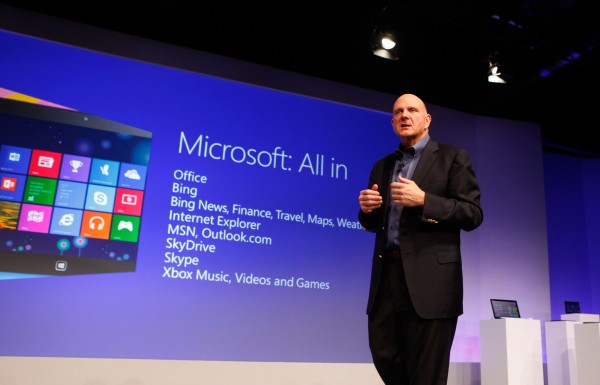
    All signs pointed to another disappointing quarter for Microsoft’s Windows division. But, instead, with fiscal second-quarter results announced today, revenue rose 24 percent year over year. Meanwhile, PC shipments are down 6.4 percent during same time period, according to IDC, which doesn’t seemingly reconcile with Windows OEM revenue rising 17 percent. What’s up with that?

    There is sense behind the numbers, which forebode potential trouble ahead the next couple quarters, unless PC shipments pick up or Microsoft hits a big home run with Surface Pro, which goes on sale February 9. Simply stated: The company got big lift by selling cheap Windows Pro upgrades, something that ends January 31. OEM increase is byproduct of PC makers stocking the shelves with new models. Neither is sustainable, raising question: Will Windows 8 be a one-hit wonder? Meaning: One quarter of sales greatness?

    Microsoft reported Windows & Windows Live revenue of $5.88 billion, which benefited from a $622 million deferral. Year over year growth was 24 percent with the deferral, 11 percent without it. From real-world sales then, that’s $5.26 billion. Biggest sales growth came from outside the typical PC ecosystem. “Non-OEM revenue grew over 40 percent, driven by Windows 8 upgrades, sales of Surface and double-digit growth in volume licensing”, Chris Suh, head of Microsoft investor relations, says, during today’s earnings conference call.

    Grand Opening Sale

    Let’s focus on those upgrades first. There are three kinds, all to Windows 8 Pro:

    • $14.99 — for people buying Windows 7 PCs from June 2 to January 31
    • $39.99 — online, direct-from-Microsoft
    • $69.99 — retail packaging with DVD

    The pricing is the lowest Microsoft has ever offered for the Professional product. Heck, the non-pro version isn’t even yet available for sale, outside the OEM version. The lesser Windows 8 goes on sale next week.

    Come February, Windows 8 pricing jacks up big time, presenting a hefty barrier to retail sales, which tend to be strongest during the first few months anyway. But I suggest, given Windows great quarter set against PC declines, those discount upgrades matter big time, and last day is January 31.

    A day later, Windows Pro upgrade will sell for $199.99, a 400-percent increase over the $39.99 deal and 186 percent from the other one. I can easily imagine these perceived price increases suddenly stopping most upgrades. I say perceived since actual Windows 8 and Pro pricing is same as the comparable previous versions. What’s different is how little pay now.

    Question: How does the revenue distribute? In past quarters, Microsoft execs said that OEM sales account for 75 percent of Windows revenue. I must assume higher for the holiday quarter, given sluggish PC sales and low-cost retail upgrades. Microsoft boasts 60 million Windows 8 licenses sold. If you divide that number into $5.26 billion, you get average selling price of $87.64.

    But, technically, Microsoft started selling Windows 8 to some businesses before the quarter started. So while the company would have you believe 60 million since October, the sales period is more like August. Something else: Some smidgen of the Windows & Windows Live division revenue comes from other stuff. I started to cut the numbers various ways but decided it’s unnecessary this late in the day to make the point — that prices go up as much as 400 percent at retail, which is sure to slow license sales.

    Slam the Brakes

    But brakes don’t just stop there. Calendar first quarter is typically slowest for PC sales. For Microsoft what matters is new shipments into the channel, because that’s when license revenue goes on the books. Many years ago, different accounting meant Microsoft didn’t get paid until the PC sold. Now the money comes up front, but not if OEMs don’t build systems to ship.

    The “Who Wants to be a Millionaire?” question: How much PC inventory remains unsold from the holidays? If channels are full, as I expect they are, Microsoft sells fewer Windows 8 licenses during first quarter.

    You see where this is going right?

    There’s still a month of cheap Windows 8 upgrades on the books and, honestly, Microsoft should jack up prices to normal levels. If retail sales will fall off anyway, maximizing margins is the better approach. Timing is the question. Is Microsoft acting too soon, or just right?

    The answer to the question means much. Microsoft is about to launch Office 2013, and there is a longstanding pattern of at least some sales tie to Windows. Many businesses will upgrade Office and OS at the same time. Some consumers, too. That could be good for PC sales, but retail is opportunity. If Mr. Small Business is going to get Office 2013 and Windows 8 Pro anyway, let him pay 200 bucks instead of $40 or $70. From that perspective, Microsoft could make more from the Office glow by ditching cheap Windows upgrades. Surely some bean counter inside the company with access to numbers I don’t has crunched them.

    Then there is Surface Pro, which if successful could open exciting new revenue source for Microsoft.

    So the answer to the question is low-cost upgrades and PC channel stocking. As for the one-hit wonder, there’s still chance that calendar first quarter will be a reprise. Not a No. 1 smash, perhaps, but at least placing on the charts.

  • Verizon Said To Be Getting A Flagship Nokia Windows Phone (Codenamed “Laser”) Of Its Own

    lumia 900-10

    Don’t get me wrong, HTC’s Windows Phone 8X is great and all, but the rest of Verizon Wireless’ Windows Phone lineup (think the Nokia Lumia 822 and Samsung’s ATIV Odyssey) is a bit lacking in the oomph department.

    If a new report from The Verge’s Tom Warren holds true though, that may not be the case for too much longer. According to sources within Verizon, the carrier is gearing up to release a flagship Nokia Windows Phone with a spec sheet similar to the Lumia 920.

    There’s precious little other information about this device aside from the fact that it’s apparently codenamed “Laser,” and that Verizon reportedly plans to throw its considerable weight behind the device (unlike the case with the ATIV Odyssey, the poor thing). What exactly that means for Verizon is still unclear, but I can hazard a guess or two.

    I chatted with a high-level Nokia representative at Microsoft’s San Francisco Windows Phone 8 event who told me that strong retail partnerships with the country’s carriers was a priority for the Finnish company. That said, it wouldn’t be a shock to see Verizon retail workers getting some extended hands-on time with a forthcoming Windows Phone; after all, an informed retail sales force is key to Nokia moving units to those who don’t spend their days feverishly scouring tech blogs. AT&T also spends a considerable chunk of change on advertising the Lumia 900 when that was the hot new Windows Phone, and Verizon may well be doing the same (the fact that Microsoft is said to be chipping in some funds for advertising certainly doesn’t hurt).

    Oh, and just in case you were hoping against hope that the Laser name actually sticks, you can probably stop now. The moniker was used for a Pantech dumbphone not too long ago, which means the chances of strolling into your local Verizon store and picking up a hot new Laser are pretty slim.

  • Hey Android Gamers, OUYA Has Heard Your Anguished Cries And Modified Its Controller

    ouya-controller

    The team behind the OUYA Android game console clearly paid a lot of attention to its looks — they nabbed Yves Behar to design the thing, after all — but not every component has passed muster with the masses. Thankfully, after hearing some discontent from early backers and developers, OUYA has taken some crucial feedback about the console’s controller seriously and has decided to make some changes.

    According to recent post on the official OUYA blog, the console’s controller will no longer sport those flat, disc-like d-pads — they’ve been replaced by a more standard cross-shaped affair that should look familiar to anyone to who’s done so much as glance a console controller in the last 20 years. The controller’s dual analog sticks have undergone a bit of a makeover too, as they now feature a grippier finish for increased precision, and the small touchpad nestled in the center of the controller has had its sensitivity bumped up to boot. Throw in some slightly-shifted left and right triggers and a battery door that isn’t as much of a hassle to open, and you’ve got yourself the makings of a half-decent controller.

    Sure, some of these may seem like minor tweaks, but any avid gamer could tell you about the importance of fit, finish, and feel when it comes to a device they’re going to be clutching for hours. And hey, by reacting to feedback early enough in the development process, OUYA (with any luck) doesn’t have to deal with the wide-scale blowback from an underwhelming controller the way Microsoft did with its original, roasted ham-sized Xbox controller. It’s heartening to see that OUYA’s community-first approach to this whole undertaking wasn’t just limited to its means of raising money — hopefully the final product will be just as thoughtful when it starts shipping to the rest of us later this year.

  • Belkin To Acquire Linksys From Cisco

    Cisco announced today in a blog post that Belkin will acquire Cisco’s Home Networking Business Unit and its leading brand, Linksys. Cisco had been rumored to be looking to get rid of Linksys, and now it appears it has found a buyer.

    Cisco VP, Head of Corporate Business Development, Hilton Romanski writes:

    Linksys is a strong and enduring brand with a talented team that has helped revolutionize the way we experience the world from our homes through a wide range of home routing and networking solutions with innovative software features that enable anytime, anywhere access and control of the home network and its connected devices.

    Combined, Belkin and Linksys will create a world-class consumer networking technology provider with complementary innovation and engineering strategies. Linksys will enhance Belkin’s capabilities to meet the needs of OEMs, as well as provide access to a large user base. Belkin and Cisco intend to pursue a strategic relationship focused on a variety of initiatives including retail distribution, strategic marketing and products for the service provider market.

    Belkin shortly thereafter put out a press release announcing the acquisition intent, but did not disclose the terms.

    Belkin CEO Chet Pipkin says, “We’re very excited about this announcement. Our two organizations share many core beliefs – we have similar beginnings and share a passion for meeting the real needs of our customers through the strengths of an entrepreneurial culture. Belkin’s ultimate goal is to be the global leader in the connected home and wireless networking space and this acquisition is an important step to realizing that vision.”

    Cisco announced its own intent to acquire Intucell earlier this week.

  • Google’s Site Reliability Team: Ask Them Anything!

    The Google Site Reliability Team is currently taking questions over at Reddit. “We make Google’s websites work. Ask Us Anything!”  Participants include Site Reliability Engineers Kripa Krishnan, Cody Smith, Dave O’Connor and John Collins.

    Among the questions: When was the last time Google’s main page was down? “Home page outages almost never affect all users simultaneously,” Smith writes. “There are many different systems involved in simply connecting users to Google, and most incidents happen outside of our network. We do occasionally have network outages, which are regional, e.g. a few states or countries. We also occasionally introduce language-specific bugs, e.g. garbling CJK. As far as I can recall, the last global outage was back in 2005.”

    They’ll be wrapping up soon, but readers interested in wading through the AMA will find some interesting insights into how Google manages web reliability.

  • Report: Google “Actively” Thinking About Marketing A Smart Watch

    One day in the near future, you may be wearing a Google watch to go with your Google Glass while you sit in your Google driverless car.

    According to a report this morning from Business Insider, Google is “actively exploring the idea of making its own smart watch,” and is “looking at ways it might be able to market” it. The report cites “a source briefed on the plans”.

    Google secured a patent last fall for such a device, but now, if this story holds water, the company may actually be working on such a device, as opposed to just holding the patent for patent’s sake. Here’s the abstract:

    A smart-watch can include a wristband, a base, and a flip up portion. The base can be coupled to the wristband and include a housing, a processor, a wireless transceiver, and a tactile user interface. The wireless transceiver can be configured to connect to a wireless network. The tactile user interface can be configured to provide interaction between a user and the smart-watch. The flip up portion can be displaceable between an open position exposing the base and a closed position concealing the base. Further, the flip up portion can include: a top display exposed when the flip up portion is in the closed position, and an inside display opposite the top display. The inside display can be concealed when the flip up portion is in the closed position and be exposed when the flip up portion is in the open position.

    Smart Watch

    It’s hard to imagine a watch taking the place of today’s smartphones and their nice big screens. You aren’t going to want to play Madden or watch YouTube videos on a watch, the way you do on your phone, unless we’re talking about a phone sized watch, which just seems ridiculous. Combined with a smart Glass, like Google Glass, however, there might be more reason to use it, depending on if that Glass is able to meet all of the user’s needs on its own. Then, of course there are people who will have no interest in wearing such a device on their face to begin with.

    Devices like Glass and Smart Watches aren’t likely to gain the mass market appeal that smart phones have managed to get, in my opinion. That doesn’t mean devices like these won’t find their niches.

    Apple has also been said to be “exploring development” of a smart watch.