Author: Serkadis

  • The Nexus One: A Non-Story

    Over the weekend the rumors of a Google Phone were confirmed in the guise of the whimsically named Nexus One. It’s an unbranded HTC-made carrier-unlocked handset running Android 2.0, and it looks lovely. And already articles have popped-up examining its various (rumored) features and, naturally, pondering when we can buy one for ourselves.

    Why is the first thought we have when we see a new mobile phone whether we should consider switching?

    Admit it — when you look at a friend’s mobile phone you automatically run through a series of questions in the back of your mind. My standard set include “Does it look good?” and “Does it have a nice UI?” (Of course, certain conditions, if met, automatically remove the phone from consideration; such as “Oh, it’s a clamshell…” and “What are those hard nobbly plasticky things? Keys, you say?”)

    We do the same with desktop computers. In an airport lounge or coffee shop I feel a certain sort of infallible pride when cracking open my MacBook. After all, everyone knows those are great machines, right? Yet I still look at the other machines around me and run through my mental checklist. It’s crazy how insecure I am, how much I need to be sure my laptop doesn’t suck.

    Operating Systems, too, get the same appraisal. We can’t help it. Every new release of Mac OS X gets compared with the latest version of Windows. There’s every good reason to do this if you regularly use both platforms. If you only Tweet, update Facebook or watch hilarious kittens on YouTube, what does it matter that the paltform you don’t own and don’t need just got an upgrade?

    Of course, Geeks will always do this comparison of technologies — it’s in our DNA, we can’t help ourselves. But there’s a problem; our technophilic tendencies leak over into the world of the Normals.

    Is Y the New X?

    We use our iPhones and Kindles to scan the tech press and follow geek–lists on Twitter, while Normals, on the other hand, read dead-tree newspapers and don’t know what Twitter is. But look at the so-called “Technology” columns in those newspapers (you know, where sidebars helpfully explain the meaning of words like “touchscreen” and “3G”) and you’ll notice that they’re forever comparing gadgets, computers, OS’s and websites. Trust me, no daily newspaper “technology” columnist genuinely believes their readers care about the differences between Twitter and BrightKite. Less so the differences between Snow Leopard and Windows 7. Strangely, that doesn’t stop them writing about it.

    They’re just reading select blogs in the tech community and writing their own carbon copy equivalents of what they find there. It’s to be expected, for here in Geektown technology comparions are part of the landscape. But we are taking it too far. Particularly in asking that assinine question, “Is Y the new X?”

    The Nexus One is generating a lot of (quite unnecessary) buzz and if you haven’t already stumbled upon the YX question, you very soon will — “Is the Nexus the real iPhone killer?”

    I say it’s nonsense. In time we’ll see detailed teardowns of the Nexus, and while geeks will compare its screen and processor to other handsets, mainstream media hacks will salivate over the possibility that here, finally, at last! we have a phone to beat the iPhone. It’s a silly pursuit.

    The Nexus One. A handsome phone, but not an iPhone Killer. (Image by Engadget)

    It took almost three years, but manufacturers are fast catching-up to the iPhone. Bewildering, however, the press coverage of smartphones — driven to hysteria in 2007 with the launch of the iPhone — is almost entirely focused on finding an iPhone killer. It’s the same false-dichotomy we would ridicule if, say, Nissan’s next family five-door were hailed as “the Ford killer.” Ridiculous, right? After all, they’re both essentially just cars. Strip away the optional GPS and gravity-defying cup-holders and they both have the same basic innards. This is true of the latest smartphones. They’re basically the same. True, smartphones used to be terrible, but that’s only because manufacturers were committed to cheap and easy business models and customers didn’t know they could demand something better. Apple decided to do something about that. It was a one-time shift in the mobile industry that will not happen again. The only phone that’s going to replace the iPhone is — predictably enough — the next iPhone. I can’t believe intelligent, insightful journalists and editors keep missing that point.

    For every smartphone owner on the planet I’d wager there are a dozen more people with a dumb “feature” phone. Those people will never go out of their way to buy smartphones, but as the latest technology becomes cheaper, smaller and easier to manufacture, it will find its way into all handsets. One day, all phones will be smart. And most people will get there never caring which handset came first, was better than some other handset, or was considered a “killer.”

    It doesn’t matter if it’s Mac vs. Windows, Bing vs. Google or iPhone vs. Android. Breathless reports along the lines of “X is here, and Y should be worried…” are almost always just white noise.

    The Nexus One is a non-story. I wonder how long it will take everyone else to realize that.


  • After Dropping, Credit Card Charge-Offs Are Back On The Rise

    creditcard10.jpg

    After some signs that consumers were starting to catch up on their credit card bills, charge-offs are back on the rise!

    Reuters: Capital One Financial Corp and Discover Financial Services reported that credit-card charge-offs rose in November — a sign that consumers remain under stress.

    In a regulatory filing on Tuesday, Capital One said the annualized net charge-off rate — debts the company believes it will never collect — for U.S. credit cards rose to 9.60 percent in November from 9.04 percent in October.

    In another regulatory filing, Discover said its charge-off rate rose to 8.98 percent from 8.54 percent after two months of declines.

    JPMorgan’s charge-offs are up as well.

    Join the conversation about this story »

    See Also:

  • Ignorant Americans Cutting Back On Spending More Than Investing

    americangothic.jpg

    After suffering $12 trillion in losses to their investment portfolio over the past two years, you might think that Americans would be hesitant to keep pouring money into the markets.

    Couple that with the fact that many Americans completely missed the stunning rally of 2009 and the signs that we might be headed for massive inflation that could wipe out many investment gains. This should be a recipe for Americans spending their dollars instead of risking them to inflation or further declines in buying power.

    But that’s not what’s happening at all. A survey from IBM last month found that a larger percentage Americans are surprisingly cutting back on spending than on investing in their portfolios. The poll found that 27% of investors are contributing less, while 35% plan to spend less on holiday gifts and travel. Fourteen percent plan to increase investing, and 8% plan to spend more on holiday shopping.

    “The consumer buying behavior has fundamentally changed,” IBM research Suzanne Duncan said, according to a Dow Jones report. “They have become longer-term in orientation, both with how they view retailers and their financial providers.”

    What’s behind this enthusiasm for investing? Much of it may just be ignorance. The survey found that investors don’t know much about basic finance despite increased attention to financial news. Only half of those polled knew that Ben Bernanke is the chairman of the Federal Reserve.

    These findings are in keeping with long standing research showing that investors are ignorant to a startling degree. They mirror the broader findings that researchers have uncovered about widespread public ignorance. Although some solipsistic media types will likely say that journalists are to blame for not educating the public, the truth is probably that many people are simply ineducable.  What’s more, they overestimate the own knowledge, which means they aren’t rationally ignorant. They are ignorant of their ignorance. It’s ignorance all the way down.

    Instead of knowledge about finance, investors and consumers use a far more personal set of heuristics to make decisions. Investors don’t know or care much about the financial stability of their brokers or the performance of their investments. They make decisions on the relationship they have with a firm and their broker

    Similarly, consumers make purchase decisions based on relationships with retailers rather than a deep knowledge about products.

    This will no doubt frustrate those who are enthusiastic about investor education or consumer advocacy. But reality often frustrates plans to improve people.

    Join the conversation about this story »

    See Also:

  • KILL RATS WITHOUT POISON (Dec, 1936)

    KILL RATS WITHOUT POISON

    This proven exterminator won’t kill Livestock, Pets or Poultry—Gets Rats Every Time. K-R-O is made from Red Squill, a raticide recommended by U.S. Dept. Agr. (Bul. 1533). Ready-Mixed, 35c and $1.00; Powder, 75c. All Druggists. Results or Your Money Back. K-R-O Company, Springfield, O.

    K-R-O KILLS RATS ONLY

    No tags for this post.


  • Daimler Starts Production on 200 Mercedes B-Class F-Cell Vehicles

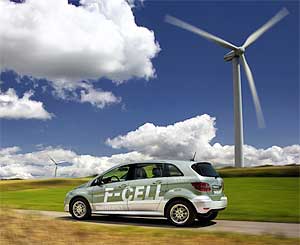
    Daimler B-Class F-CellIn August 2009 I had talked about how Daimler had stated that they would be starting serial production of their Mercedes-Benz B-Class F-Cell hydrogen fuel cell vehicles this year. Now, promises of building fuel cell cars have been a dime a dozen over the years but Daimler has made good on its promise by starting production on the first 200 FCVs on December 14, 2009.

    The Mercedes B-Class F-Cell will be the first fuel cell vehicle to go into serial production. Sure, General Motors is in the process of building 200 FCV test cars for their Project Driveway program. And, sure again, Honda is in the process of building 200 Clarity vehicles for lease at $600 per month for 3 years with an uncertain future after that.

    But, Daimler has decided to go full steam ahead with their hydrogen car, beating the 2015 timeframe that many other automakers have given for the serial production of their FCVs. In September 2009, I had talked about how Daimler and seven other large companies had signed on to the H2 Mobility Plan for Germany in erecting hydrogen fueling stations for the upcoming cars that will be rolling out.

    The Mercedes B-Class F-Cells will likely be rolling out in Germany first, with a few going to California as well, which already has some semblance of a Hydrogen Highway fueling system in place. The Daimler B-Class F-Cell uses a next generation fuel cell, a 10,000 psi compressed hydrogen tank and has a range of around 250 miles.

    There has been no word yet on the price of the Daimler FCV when it rolls off the production line in 2010. If Daimler wants the B-Class F-Cell to be a success, which they surely do, they will need to make it affordable and serviceable locally.

  • Stakeholder News: 07-13 Dec

    Pre-Budget Report
    The Disability Alliance launched their ‘Tackling Disability Poverty’ manifesto to coincide with the Pre-Budget Report. (09 Dec)

    In their response to the Pre-Budget Report, Mencap have expressed disappointment with the lack of long-term funding to support people with learning disabilities. (09 Dec)

    Age Concern and Help the Aged have responded to the Pre-Budget Report, calling for protection of care services as a necessity. (10 Dec)

    Crossroads and The Princess Royal Trust for Carers have criticised the lack of an additional Christmas payment for carers in the Pre-Budget Report. (10 Dec)

    The English Community Care Association has stated that the Pre-Budget Report fails on the criteria of outcomes and value for money. (10 Dec)

    Care
    Carers UK has welcomed the Department of Work and Pensions’ plan to support carers in paid work. (07 Dec)

    Counsel and Care have announced that their annual conference in January 2010 will focus on how high-quality and personalised care can be delivered most effectively. (09 Dec)

    Carers UK have called for clarification from the Government, with the Second Reading of the Personal Care at Home Bill, over how it will work and how it will help carers. (11 Dec)

    General
    Alzheimer’s Society has responded to research into developing a drug that could protect against the disease, calling for greater funding for dementia research. (11 Dec)

  • Windows Mobile installed base in US grew 5% in 8 months, is 600% more than Android’s

    ussmartphoneinstalledbase

    Comscore has released some numbers for the US smartphone market that makes for some interesting reading. The numbers, which reflect devices owned by users rather than market share, shows that Windows Mobile still has a pretty significant installed base of around 7 million smartphones in US, only moderately less than the 9 million iPhones in the US and that Apple only overtook Windows Mobile in the last 2 months, after the introduction of the iPhone 3GS and the cheaper iPhone 3G.

    This is of course not reflected in the attitude of the blogosphere, who has relegated the OS to irrelevance ages ago.

    Another indicated that mindshare seems to have little to do with market share is that Android installed base is only around 1 million, with Windows Mobile installed base 7 times larger. Even Symbian has a larger share in US than Android, and unexpectedly between July and October 2009 grew its installed base by 24%, compared to only 14% for Android. 

    Also not reflected by the blogosphere is that the real king of the US smartphone world is RIM’s Blackberry, with 41% of the installed base, and more that 50% growth over the last 8 months.  This indicated clearly that there are more than one route to market success, and ones that do not just rely on iTunes integration and 100 000 apps.

    The Windows Mobile installed base itself saw 5% growth over the 8 months.  Obviously this is much less that the 42% the market itself grew, it is still highly significant that the current generation of devices in the US, such as the Touch Pro 2 continue to win converts.

    Spare a thought for Palm, who’s webOS sales and installed base were not large enough to break out.

    See the raw data here.

    Share/Bookmark

  • Mercedes-Benz SLS goes from zero to gold in seconds for Dubai show

    Filed under: , , , ,


    2011 Mercedes-Benz SLS AMG “desert gold” edition – Click above for high-res image gallery

    Over the past several years, we’ve seen no end of photos of high-end cars with bright chrome and gold finishes coming out of the Middle East and Russia. Until now, none of those have come that way from an automaker’s paint shop. However, you just knew that couldn’t last, and alas, Mercedes-Benz has created a special version of its new SLS AMG supercar for the 2009 Dubai Motor Show.

    Fortunately, Mercedes has decided to forgo the shiny route and applied a matte gold finish dubbed “AMG Desert Gold” to the gull-winged SLS. The badging and trim bits like the three-pointed star also go from the usual chrome or silver to a deep back look, as do the wheels. The overall appearance is actually quite much easier on the eyes than the mirror-finished gold appliques we are used to seeing. At this point the show car is a one-off, but Mercedes has said that if there is enough interest (read enough checks with sufficient zeros) the desert gold paint will be offered through the AMG PERFORMANCE STUDIO program.

    Joining the gold SLS on the Dubai stand is a special 30th anniversary “Edition 79” G55 AMG KOMPRESSOR SUV. This one gets a matte grey finish that is normally only offered on the SLS. The Edition 79 comes with a 507-hp supercharged V8 under the hood for quick blasts across the sand. In proper high-end limited edition fashion, only 79 examples of this old school Benz will be built with all of them headed to the mid-East.

    [Source: Mercedes-Benz]

    Continue reading Mercedes-Benz SLS goes from zero to gold in seconds for Dubai show

    Mercedes-Benz SLS goes from zero to gold in seconds for Dubai show originally appeared on Autoblog on Tue, 15 Dec 2009 10:58:00 EST. Please see our terms for use of feeds.

    Permalink | Email this | Comments

  • Obat Setengah Resep

    Resep. Sumber gambar: getty images Pernahkah kita mendengar seseorang membeli obat di Apotik sebanyak setengah dari jumlah yang tertera dalam resep dokter ? Ungkapan “nebus obat separo” atau “nebus obat setengah”, boleh jadi mengandung dua pengertian. Pertama, mungkin pasien beranggapan obat yang diberikan oleh dokter terlalu banyak. Kedua, mungkin harga obat dalam resep terlalu mahal. Atau tidak cukup uang untuk membeli semua obat yang tertulis dalam resep saat ambil obat di apotik. Menurut pengakuan pasien, alasan terbanyak adalah faktor kedua, yakni: obat mahal banget.

    Lantas, bagaimana reaksi dokter ketika mengetahui pasiennya hanya “nebus obat setengah” dari yang diresepkan ketika si pasien berobat lagi ?

    Beragam ! Ada dokter yang mengganti resep dengan obat merk lain atau dengan obat generik tanpa mengorbankan fungsi dan kualitas obat. Ada yang berujar bahwa sebenarnya harga obat tidak semahal perkiraannya. Ada yang berusaha mencari tahu ke apotik. Ada pula yang bereaksi tidak menyenangkan sembari berkata: “ harga obat memang mahal, mau sembuh apa tidak ?” 

    SALAH SIAPA ?

    Menanggapi fenomena “nebus obat setengah resep” tidak cukup dengan menyalahkan pasien dan dokter secara sepihak. Di luar itu masih ada pihak lain terkait pelayanan medis, yakni apotik dan produsen obat. Dengan kata lain, fenomena “nebus obat setengah resep” yang disebabkan mahalnya harga obat, merupakan lingkaran nan kompleks. Pada artikel ini, kita akan sedikit menguak dari sisi si empunya kompetensi penulis resep, yaitu dokter.

    OBAT IRASIONAL DAN MAIN MATA

    Mengacu pada pedoman Badan Kesehatan Dunia (WHO) pada 1987, pemakaian obat yang rasional adalah yang memenuhi kriteria sebagai berikut:

    1. Digunakan sesuai dengan indikasi penyakit
    2. Tersedia setiap saat dengan harga yang terjangkau masyarakat luas
    3. Diberikan dengan dosis yang tepat
    4. Diberikan dalam interval waktu yang tepat
    5. Lama pemberiannya tepat
    6. Obat yang diberikan harus efektif, aman, dan mutunya terjamin.

    Faktanya, masih banyak pemberian obat irasional, terutama terkait “indikasi”. Sudah menjadi rahasia umum bahwa sebagian dokter memberikan obat kepada pasien tidak melulu berdasarkan “indikasi penyakit”, tapi terselip “indikasi lain”. Apa saja “indikasi lain” di balik indikasi penyakit ? Bentuk dan nilai nominalnya beragam, diantaranya:  bonus, kredit nota (CN), kontrak peresepan, uang transport, persentase resep, dan masih banyak lagi istilah yang digunakan sebagai bentuk main mata antara produsen obat dan dokter.

    Pelbagai bentuk  “kerja sama” antara dokter dan produsen obat, semuanya dibebankan kepada pasien. Ujung-ujungnya bisa ditebak, yakni harga obat makin melambung. Belum lagi adanya kecenderungan dokter meresepkan obat mahal, dan bahkan ada yang terang-terangan mengarahkan pasien untuk membeli obat di apotik tertentu.

    Beberapa teman sejawat bertutur: “ gimana mas, kita gak minta tapi dikasih, masa mau ditolak ”. Yaaaaa, tolak aja. Apa sulitnya bilang tidak. Toh uang begituan gak bakalan bikin kaya. Malah membuat dokter berada pada posisi bak hamba sahaya yang dikendalikan pihak lain.

    dr. Djoko Santoso, SpPD K-GH PhD dalam artikelnya yang dimuat di beberapa koran, berjudul Terjerat Pemakaian Obat Irasional, menyebutkan bahwa harga obat di Indonesia tergolong paling mahal di kawasan Asia Pasifik. Pada paragraf kedua, beliau menuliskan:

    Hasil penelitian Health Action International (HAI) Penang pada 1995 terhadap 22 jenis obat yang paling banyak digunakan di 29 negara Asia Pasifik membuktikan bahwa harga obat di negeri kita tercinta ini memang yang termahal di kawasan ASEAN. Pemicunya, pemakaian obat di Indonesia tergolong tidak rasional.

    UPAYA JALAN KELUAR

    Banyak artikel telah ditulis para ahli guna mereduksi mahalnya harga obat di Indonesia. Undang-undang dan peraturanpun telah dibuat untuk mengendalikan harga obat agar terjangkau tanpa mengurangi kualitasnya. Apa daya, tanpa langkah nyata yang sungguh-sungguh dan berkesinambungan, segala upaya menurunkan harga obat hanyalah angan-angan belaka.

    Bagi kita para dokter, upaya ikut membantu mengendalikan harga obat dapat dilakukan dengan mudah, yakni dengan memberikan obat rasional dan yang tak kalah penting adalah tidak menerima pemberian dari pihak manapun yang berpotensi melambungkan harga obat.

    Semoga bermanfaat.

    :: :: :: posting menggunakan WLW :: :: ::

    Tag Technorati: {grup-tag},,,,

    Posted in Artikel, Health, Informasi, Kedokteran, Kesehatan, Opini, Renungan Tagged: Apotik, Dokter, Obat, Resep

  • 12 Huge Takeover Deals That Will Happen In 2010

    Washington Post CEO Katherine Weymouth

    24/7 Wall Street places its bets on 12 2010 mega-deals.

    “There are no transactions on this list that do not make immediate strategic sense. Some of the companies are weak enough so that a buyout will be necessary for them to remain viable businesses. Each deal was rated on a scale of 1 to 10 with 10 being the transactions most likely to close and 1 representing the least likely…”

    See the deals >

    Join the conversation about this story »

    See Also:

  • Apple Approves Video Recording App for iPhone 2G and 3G

    If you’ve been reconsidering your position as a jailbreaker thanks to recent security threats or Apple’s strong disapproval, there’s now one more reason to consider going legit. Apple just approved a new app that allows iPhones other than the 3GS to record video. That’s right, both your iPhone 3G and even the older 2G model can now shoot video, without jailbreak.

    The app will cost you 99 cents, which is kind of aggravating, since this is basically a straightforward admission on Apple’s part that the only limitation heretofore that had prevented the older devices from shooting video was a software limitation, which it could’ve easily resolved itself. iVideoCamera (iTunes link), the app in question, is a third-party program, but at least Apple didn’t kill it from the start, I suppose, and it is still cheaper than upgrading to a 3GS.

    iVideoCamera is far from perfect, though, and it has other limitations which are much more noteworthy than its cost. Video can only be shot at a maximum rate of around three frames per second, for instance, which is 10 times less than the 3GS’ 30-frames-per-second capability. As you might imagine, video quality is not the best.

    Add to that the fact that the resolution of recordings likewise suffers compared with that of video recorded natively on the 3GS. Resolution is 160×213, paltry compared with the 640×480 SD-quality video shot by the 3GS. Also, you can only shoot clips up to a maximum of one minute in length. Thankfully, Laan Labs, the developer of iVideoCamera, is more than upfront about the limitations of its software, so this is definitely a case where the onus falls on the buyer.

    Nor is it all bad news. iVideoCamera has some solid strengths, too, like the ability to share video to multiple sources quickly and easily. Like with the iPhone 3GS, 3G and 2G users who are shooting with iVideoCamera can export their recordings to YouTube, and in fact get more sharing options, including Facebook and Vimeo posting. Twitter integration is said to be coming soon. Future updates are also said to be bringing frame rate and resolution quality improvements.

    Even if this particular app isn’t outstanding right now, this approval sets a terrific precedent for App Store policy. If iVideoCamera is allowed access, then in theory there’s nothing stopping Cycorder from coming in from the cold, so to speak, and being offered through legit channels. Cycorder is capable of a maximum of 15 frames per second, and records at a resolution of 384×288, so iPhone 2G and 3G owners might not have to wait long before a decently able video app makes its way into their upgrade-reluctant hands.


  • So who flew to Copenhagen this week?

    I have a fond little memory from one of the early multi-candidate debates in the last US election campaign. It was on prime-time TV: there were still about a dozen or so candidates in the running, including Obama and Hillary Clinton, each was standing behind a podium, and as the topic of climate change came up they were asked en masse: “So, who didn’t fly here today in a private plane, raise your hand?” The delegates all sheepishly kept their hands down but one – I forget which – raised his. “I came in yesterday,” he explained. (laughter)

    So to the Copenhagen climate change summit, and all the luminaries and dignitaries and celebrities landing at København airport, many of them in private jets.

    copenhagen summit So who flew to Copenhagen this week?

    http://www.cph.dk/CPH/DK/MAIN

    This tells us something about the future, and what it says is: ‘needs must.’ What are they going to do, row a boat to Copenhagen? Scale that up and you have the real, actual future. People will fly. In fact the entire new global middle class of billions will fly. And they will heat their homes. And they will eat meat, and so on. And any even remotely democratic system that tries to take away this will be out on its ear.

    But we will of course move to cleaner, renewable, sustainable systems. How fast this happens depends essentially on money, which in turn depends on political will, which in turn depends on public concern. Money is required to fund new energy technology research, and — the core issue of Copenhagen this week — it is needed to buy off industrializing countries.

    There’s no doubt that climate change (manmade or not) is real, and a real danger. But when scientists and academics are worried about it that means little in terms of changes to human practices. When the public gets concerned — as they now are — we get the possibility of fundamental change. This is true of the future generally, not just climate and the environment.

    Between the public sentiment and the money lies political will. Essentially the political will of post-industrial economies on the one side, who find it politically easy, relatively, to pay the price of emissions constraints vs. that of developing economies which will be choked economically and therefore politically by those constraints.

    Inequality

    Correlating degrees warming with ecological and therefore social upheaval is important. But to think that is what the argument is about is to miss the point. The point is global inequality and its future, and how developing economies are not going to allow emissions constraints to further entrench it.

    The future goes always to the most powerful side. That’s what power is for: determining the future. The sides are both strong in this dispute, so this battle will not be won or lost in Copenhagen this week. We are still in its early stages. The effects of climate change are incremental (unlike, say, nuclear holocaust) meaning there is plenty of room for postponement even if the planet can’t and won’t ultimately take it. And those who would occupy the moral high ground have burned public and private jet fuel to be there to do it, and will no doubt indulge in a bit of Smørrebrød and Frikadeller too. Needs must.

    So expect the political clock to remain stuck as it has been for a while now, at ‘5 minutes to midnight,’ while the issue smolders slowly without definitive resolution — until technology advances get human energy, finally, off fossil fuels and the problem works its way out of environmental and human systems.

    Post to Twitter Tweet This Post

  • The Christmas Retail Rally Could Be Toast

    Shown below is a retail proxy, the Retail HLDRs Exchange Traded Fund (RTH). It's outperformed the S&P500 on a three month basis. Yet Best Buy's (BBY) warning today, that revenue will be driven by lower-ticket items in the fourth quarter, could mean that the pre-Christmas retail rally shown below is toast.

    Note how Best Buy dropped a nasty 7% on just these decent earnings. A lot of holiday cheer is already priced-in.

    bby

    Join the conversation about this story »

    See Also:

  • More Bulk Store Buying: Costco and Volvo team up to sell cars

    Filed under: ,

    2010 Volvo XC60 – Click above for high-res image gallery

    It’s the holiday season and that means shopping and deal-finding is at a premium. A trip to warehouse stores Costco or Sam’s Club will likely net you some tidy deals on anything from eggs and Hot Pockets to a Jacuzzi or even a casket. Even carmakers are getting in on the dealmaking, as a recent promotion with Mitsubishi and Sam’s can attest. Not to be outdone, Costco is also getting in on the act.

    The warehouse store and Sweden’s Volvo are collaborating on a promotion for the XC60, XC70 and XC90 that includes discounts and a $500 Costco card which comes six-to-eight weeks after purchase. Customers who purchase an XC60 from Costco also get Volvo employee pricing. Buyers of the XC70 and XC90 will receive an additional $500 off. The deals being offered through Costco are in addition to any dealer incentive programs that are currently available.

    We find it rather amusing that the promotion is only for Volvo crossovers – and yet it makes complete sense at the same time. Shopping at Costco practically necessitates driving a large vehicle while a quick glance at any warehouse store parking lot reveals a sea of trucks, SUVs and minivans. At least Volvo appears to be properly targeting Costco’s customer base.

    Photos by Chris Paukert / Copyright (C)2009 Weblogs, Inc.
    [Source: Costco]

    More Bulk Store Buying: Costco and Volvo team up to sell cars originally appeared on Autoblog on Tue, 15 Dec 2009 10:32:00 EST. Please see our terms for use of feeds.

    Read | Permalink | Email this | Comments

  • ASCAP Now Demanding License From Venues That Let People Play Guitar Hero

    We’ve been detailing how the various collection societies around the globe have been trotting out all sorts of dubious reasoning to try to get more people to pay up for a license. In the US, ASCAP has been particularly ridiculous, seeking public performance licenses for (legally licensed) ringtones as well as the 30-second previews you find on music download stores like iTunes. ASCAP has already succeeded in forcing YouTube to pay up as well. Of course, the end result has actually been harming many up and coming songwriters and musicians, as more and more venues are choosing to forego music entirely, because it’s just not worth having to pay up the fees that ASCAP charges.

    In the latest overreach, sent in by reader faceless, ASCAP is demanding a licensing fee from a venue that has the video game Guitar Hero for people to play. While the venue does sometimes have live musicians, it has purposely chosen to only allow original music (no covers) from artists and songwriters not covered by ASCAP, to avoid having to pay the fee. As the venue owner notes, it’s ridiculous to think that the venue should have to pay for a license just to let people play Guitar Hero, saying, “patrons are paying for the entertainment of the game not for the listening value of the music.” But, of course, that’s not how ASCAP views any of these things, insisting that the value itself comes from the music, and thus the songwriters must absolutely be paid. Of course, this isn’t the first time ASCAP has come down hard on music video games. Earlier this year, it insisted that the video game companies themselves should pay performance licensing fees as well — so in this case it looks like they’re trying to double or triple dip.

    Of course, the most likely end result? The venue will drop the game, and fewer people will hear the music. This harms everyone — the songwriters, the musicians, ASCAP and the venue. But ASCAP seems to think it’s the right move. This is why more and more musicians are recognizing that what’s good for ASCAP is not good for songwriters.

    Permalink | Comments | Email This Story


  • Google Chrome Now the Number Three Browser Worldwide

    The recent beta launch for Mac and Linux seems to have had the desired effect and has pushed Google Chrome usage quite a bit from November. In fact, the launch seems to have increased Chrome’s market share by about 10 percent making it the third most popular browser in the world, marginally squeezing out Safari which moves to the fourth place.

    According to numbers by Net Applications Google Chrome is now at number three with 4.4 percent of the market, hardly something to brag about but still a 0.4 percentage points jump from November. The 4.4 percent market share was observed for the December 6 to 12 week and was based on data collected from 160 million users and 40,000 sites. For the same week Apple’s Safari, still mainly used only on Macs, only managed to attract 4.37 percent of the users enough to slip behind Chrome in market share.

    Even more interesting are the numbers broken down by platform, Google Chrome was used by 1.3 percent of Macs for the week in December, up from just 0.32 percent in November. This can be easily explained as Chrome was only available as an unstable dev channel release up till now on Mac. The rise was made at the expense of both Safari, which dominates the platform even more authoritative than Internet Explorer on Windows, and Firefox.

    On Linux though, … (read more)

  • Best Buys Sees A Stingy Consumer This Christmas

    Best Buy shares are tanking despite beating estimates. Maybe it was this:

    “The company believes its improved revenue outlook for the fiscal fourth quarter will primarily be driven by categories in the domestic segment with lower gross profit rates such as notebook computers and entry price-point televisions across all screen sizes. As a result, the company anticipates a lower fiscal fourth quarter gross profit rate than previously expected.”

    bby

    bby

    See Best Buy’s earnings release here.

    Join the conversation about this story »

    See Also:

  • In the Media: 07-13 Dec

    Comment on Big Care Debate
    The Sunday Express reports that the Government is facing a backbench revolt over the impact that the Personal Care at Home Bill might have for AA and DLA.  (13 Dec)

    General Care
    Financial Times reports that the Royal Bank of Scotland, which is set to become the single largest shareholder in Four Seasons, has given up its voting rights in the organisation. (07 Dec)

    In a letter to The Times, the ADASS President Jenny Owen writes that the Care Quality Commission’s recent report found the best overall performance for adult social services since records began. (09 Dec)

    A feature in The Daily Telegraph reports on the growing number of middle-aged couples forming the ‘sandwich generation’, who care for both elderly parents and children. (09 Dec)

  • The Chinese Nuclear Market Is Going To Be Huge

    Nuclear China Chart

    China’s electricity generation plan is  rooted in coal, but a substantial amount of its new power in the future will be nuclear, as pressure mounts all over the world for the Asian behemoth to reduce its greenhouse gasses.

    Just look at how much capacity is currently planned.

    Frank Holmes at Seeking Alpha: From an investment perspective, this shows massive potential opportunity both in terms of infrastructure and natural resources, including uranium. Some analysts say the price of uranium, while soft now, could double over the next couple of years in recognition of future market tightness.

    China has uranium reserves within its borders and it is aggressively lining up supplies in Central Asia, Africa and Australia to make up any shortfall.

    Continue reading here.

    Join the conversation about this story »

    See Also:

  • How Many Different Kinds Of Santa Are There?

    Around the world, there are a surprising number Christmas holiday gift bringers, and not all of them are jolly old elves transported by overworked reindeer.

    Christkind


    For some, Christmas presents are delivered by the Christkind, or Christ Child. This diminutive gift bringer is a described as being a sprite-like child, often with angel wings and blonde curls. I don’t know about you, but this sounds suspiciously like Cupid is moonlighting over the holidays.

    Children never quite manage to lay eyes on the Christkind, parents and other adults will always tell the kids that he was there a moment before they came into the room. Most often seen (or not seen) delivering gifts to children in the Czech Republic, Italy, Germany, Switzerland, Hungary, Austria and parts of Brazil.

    The Three Magi, or Three Kings


    Apparently after delivering their presents to a baby in a manger, these three wise men were without a job. Deciding they liked the delivery business, they have been bringing presents to children ever since.

    As part of the Christian celebration of the twelve days of Christmas, the Magi are celebrated on the last day, known as Epiphany. The largest celebrations occur in the Spanish speaking countries, where the Three Kings get letters from children and fulfill their wishes by bringing them gifts on the night before Epiphany.  

    Riding their camels, they visit the houses of every child in one night, which means they must get their high speed camels from the same place that supplies Santa with his flying reindeer. The children prepare a drink for each of the Magi, and food and drink for the camels, for this is the only night of the year that the animals actually eat.  If I ate at every house I stopped at, I wouldn’t eat for a year either!

    Ded Moroz


    Slavonic countries often celebrate the New Year with the coming of Ded Moroz, or Father Frost.

    He is an old man with a long white beard and a white or blue fur coat, fur hat and high boots.  He carries a magical staff and drives a troika, a sled pulled by three horses. He travels with Snegurochka, the Snow Maiden who is his granddaughter and helps him deliver his toys and treats, likely while making sure he doesn’t eat more cookies than the Mrs Ded Moroz said he could have this year.

    He brings his gifts to the New Year Tree and gives them out to the children, sometimes leaving them beneath the tree in their homes, but often arriving at large organized celebrations and handed the gifts out to each child in person.

    Julemanden – The Yule Man


    On December 24th Danish children are visited by the Yule Man, a figure much like the traditional Father Christmas, save that he lives in Greenland instead of the North Pole and far prefers rice pudding to cookies and milk.

    Time, the internet and the influence of corporate advertising have helped to morph Julemanden into something very similar to the modern day Santa Claus, including his tendency to appear in Coca-Cola commercials.

    He is traditionally assisted by the nisser or tomte, an elf of  Scandinavian origins whose red cap and beard are as distinctive as his diminutive size. In some lands it is the tomte who brings gifts to farmers and other rural dwellers, each tomte having their own farm that they watched over and either helped or hindered, depending on how they are treated.

    Both elf and Yule Man enjoy their gift of rice pudding, if any child dares to skimp on this small gift, they must be prepared for the nisser to get impish and get up to tricks to show their displeasure.

    La Befana


    In Italy the New Year is celebrated with a visit from La Befana, an old lady who rides a broomstick as she flies from house to house.  Her shawl and dress are covered in soot from flying down chimneys, and she carries a sack filled with presents and candy for the children of the house. Despite her appearance, she is no witch, merely a woman without much fashion sense.

    On January 6th she makes her rounds, filling good children’s socks with candy and other goodies and leaving lumps of coal for the wicked ones. Nearly every child gets a blackened candy, a warning from La Befana that she knows they were naughty at least once in the past year.  A bit of a neat freak, La Befana often sweeps up the floor before she leaves, and enjoys the small glass of wine and delicacies the families leave for her at each house.

    Children are warned that if you see La Befana she’ll thump you with her broomstick, because she does not wish to be seen.

    Yule Lads


    In Iceland the gift delivering business is seen to be the thirteen Yule Lads, who arrive one per night on the 13 days leading up to Christmas Eve. They bring small trinkets, toys  and other gifts and stuff them in the shoes children leave in their windows. A truly rotten child will get a potato in their shoe instead of a present.

    The lads are pranksters and tricksters as well as gift bringers, each one of them having their own special brand of mischief they get up to in the two weeks they stay in town; much like your own relatives as they descend on your house for the holidays. They are said to be the sons of the mountain dwelling trolls Grýla and Leppalúði. They wear late medieval style Icelandic clothing, and are sometimes seen in the company of the Yuletide Cat; a beast that is infamous for eating children who do not manage to get new clothes in time for the Christmas season.

    Sinterklaas


    The Netherlands and Belgium have their own gift bringer, one who visits the homes of children on December 5 each year, which happens to be on Saint Nicholas’ Eve.  Stories of Saint Nicholas are considered to be the basis on which Sinterklaas and his more modern counterpart, Santa Claus, were created.

    Sinterklaas is from Spain and rides from roof to roof on a white horse wearing a long red cape and a mitre hat.  His outfit is much like a bishop’s dress and he carries a long golden staff.  Under his arm is the terrible important and somewhat massive book that chronicles each child and whether they have been good or bad.  He is often accompanied by Zwarte Piet, (Black Pete), who helps deliver the gifts and carries the bag containing candy and gifts for the good children and a willow wand called a “roe” to spank the bratty ones.  Older legends mention that Sinterklass would take truly naughty children back to Spain with him for further punishment, making him the scariest of the holiday gift bringers by far, and the only one in violation of child welfare laws.