 |
Despite his gun control rhetoric, President Obama has been the best thing for the gun industry since the early first-term days of President Bill Clinton and his “assault weapons ban.” According to the most recent data from the FBI, there have been 72,005,482 background… |
Author: Serkadis
-
46,000 guns purchased every day while Obama in office
-
Desperate to stop superbug infections, hospitals are now turning to robotic UV sterilizers
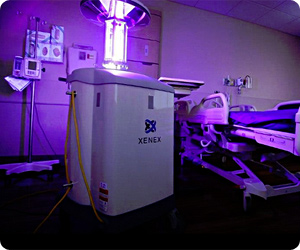
They kill at least 100,000 people every single year, and the collective medical costs associated with treating people who contract them tops $30 billion a year, according to U.S. Centers for Disease Control and Prevention (CDC) statistics. But hospital “superbugs” have… -
Black bean broth: Treatment for arthritis, gout and joint pain

Treatments for arthritis and gout, such as home remedies like black bean broth, offer antioxidant protection, lower uric acid levels, reduce pain and inflammation, and should be made part of your home remedy arsenal. Anecdotal evidence shows that the broth of cooked… -
Immigration amnesty bill would instantly put millions on welfare

At a time when the U.S. government is spending a trillion dollars more a year than it takes in, it makes no sense at all for our elected leaders to be considering any legislation that adds to the federal deficit, which is already more than 100 percent of our entire gross… -
Lipstick found to contain alarmingly high levels of aluminum, cadmium and lead

A popular cosmetic product since time immemorial, lipstick has long been used by women in many diverse cultures to accentuate their femininity and emanate their own unique expressions of elegance and style to the outside world. But a new study released by the University… -
Tiny flying insect drones now a reality: See the video of controlled flight
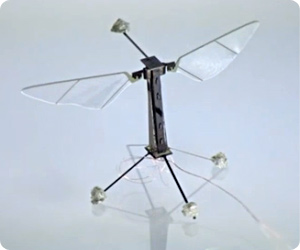
It’s been more than a decade in the making, but now Harvard University researchers have developed a tiny flying drone that is barely larger than a quarter. Robotics researchers at the Ivy League school have achieved a first, reports Forbes: the creation of robotic… -
Six ways Ayurvedic medicine can change your life

China has their ancient medicine, Traditional Chinese Medicine (TCM), and India has its ancient medical version called Ayurveda. Both go back 5,000 years or more. This article focuses on Ayurveda. Good Ayurveda practitioners can determine potential health problems… -
Flatulence-free belly: Six foods for a happy belly

If you are suffering from flatulence or bloating due to too much gas in your stomach, you are in the right place because this article will give you some examples of foods that are less likely to cause flatulence. It does not only make you feel uncomfortable, but it can… -
Are children being zombified?

A conscious parent may be described as one who would like to raise a child who is fully alive to their choices to live free, intelligent, healthy lives, in tune with themselves and connected to nature. Compare that conscious parental aspiration to these proven facts… -
Texas power company collects $500 million in ‘taxes’ that don’t exist

Millions of people living in the Dallas-Forth Worth Metroplex region of North Texas have basically been getting ripped off on their electric bills since at least 2008, and very few of them are the wiser, according to new reports. A federally-mandated utility tax levied… -
Psychological crossroad of an unhappy life
(NaturalNews)There is a point at which a life becomes unsatisfying. Regardless of the reasons, a person begins to place too much emphasis on: what already exists; and what he believes. That may sound like a strange thing to say. There is nothing automatically wrong with…
-
Do antidepressants in pregnancy cause autism?
(NaturalNews)Two recent studies have shown an association between antidepressant use during pregnancy and an increased risk of autism in children. The risk of having an autistic child was doubled by the use of antidepressants taken during pregnancy. A large Swedish study published…
-
Fabrication power to the People! Why no government can stop the 3D printing revolution
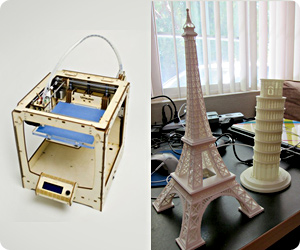
The 3D printing revolution has arrived, and it’s freaking out governments around the world because distributed, non-centralized fabrication technology threatens their monopolistic controls over physical objects. For a few thousand dollars, anyone can purchase a 3D printer… -
Chancellor Block comments on Laboratory of Neuro Imaging
Chancellor Gene Block issued this statement on May 9, 2013.UCLA’s Laboratory of Neuro Imaging (LONI) has been an international pioneer in enhancing the understanding of human brain structure and function. I am proud of UCLA’s role in supporting the lab’s many positive impacts so, naturally, I was disappointed to learn that the lab plans to end its affiliation with the campus. I want to stress, though, that the exceptional drive and ingenuity of our faculty, staff and students and the quality of our research infrastructure ensures our continued strength, especially in the field of neuroscience. UCLA is among the world’s great research enterprises, testing boundaries and producing new knowledge on a daily basis, and the departure of one lab will not diminish our impact. -
Natural gas van maker, backed by T. Boone Pickens and U.S. government, shuts down
Fisker isn’t the only auto startup to struggle after receiving a loan from the Department of Energy’s auto program. Vehicle Production Group, or VPG, which was making natural gas-powered vans for disabled passengers, has shut down and has yet to pay back any of its $50 million loan, according to USA Today.
The CEO of VPG, John Walsh, tells the paper that the company quietly stopped production last October after making 2,500 of its MV-1 vans, and was forced to lay off all of its staff, and shut its offices after running out of funds. The company raised around $400 million from investors including T. Boone Pickens, natural gas distributor Clean Energy Fuel Corp., Perseus, and Three Seasons Capital.

VPG was the last of five companies to receive funds from the Department of Energy’s Advanced Technology Vehicle Manufacturing Program; the company won the conditional loan in November 2010. The other auto loan winners included Nissan, Ford, Tesla and Fisker. Fisker has struggled heavily in recent months, and the DOE seized funds from a reserve account in anticipation that Fisker would default on its first loan payment.
The ATVM program was created in 2007 and funded by Congress in 2008 and offered loans for companies making vehicles in the U.S. that had better mileage or reduced dependency on foreign oil. The ATVM program has now essentially been frozen for a couple years, and the DOE says that despite the fact that it has $16.6 billion remaining in the fund and seven applications pending, it will not award any more loans.

Founded in 2006, VPG had been producing both gas-powered and natural gas-powered versions of a wheel-chair accessible six-passenger van that featured a door that can open 36 inches wide and an interior height of nearly 60 inches. The company sold the van for taxi and company fleets. The base model that runs on gasoline started at $39,000, and the natural gas version came in around $48,000.
The company seemed to be scaling in early 2012, when we covered them, but Walsh tells USA Today that the company needed more money to continue operations and was unable to raise it. The struggles of Fisker, Solyndra and others have made the environment for fund raising for alternative transportation and clean power difficult.
At one point VPG had planned to make 22,000 vans a year, and create 900 jobs.Walsh tells the paper that the company has not declared bankruptcy yet and is in discussions with two potential acquirers.

Related research and analysis from GigaOM Pro:
Subscriber content. Sign up for a free trial.- Key steps for successful renewable-energy permitting
- The fourth quarter of 2012 in cleantech
- Cleantech and investment in 2013


-
The YouTube free ride is OVER

YouTube opened to the public in November 2005, and Google paid $1.6 billion for the service 11 months later. The video-sharing site is the quintessential freebee. No longer. Today Google announced the launch of the first pay-for channels, which is rather strange coming from the company which business model is about profiting from valuable content given away free wrapped with search keywords and advertising. Welcome to the new Internet, with paywalls rising everywhere. To play, you must pay.
In a statement Google says there are “1 million channels generating revenue on YouTube, and one of the most frequent requests we hear from these creators behind them is for more flexibility in monetizing and distributing content”. That revenue largely comes from the in-video advertisements. Now you’ll pay, too — as little as 99 cents per month. Here’s something: From the sampling I made today, subscription liberates you from advertising, which is something to cheer about.
Standard Definition
YouTube lists 53 paid channels, none of which I have ever watched. Some of the programs that might interest me are available elsewhere (e.g., Netflix). Google spotlights Sesame Street and UFC in its announcement, but the kids channel isn’t available from the official list. The PBS program will stream full episodes; the other channel offers classic fights. UFC is $5.99 per month. Uh-oh, I only see 480p in my browser. What the frak?
British TV is a personal fav. Acorn offers a smidgen of shows for $4.99 per month. I wouldn’t pay for the current selection, which includes some programs already available as part of my Netflix subscription. But that might change as the channel adds more shows. BigStar Movies is another channel, also $4.99 a month or $34.99 per year. Neither channel is HD in my browser test.
HereTV offers some HD content, and you pay to get it: $7.99/month, or $67.99 per year. Pets.TV is a more modest $1.99 monthly, but again no HD that I see, just 480p like the first two. The channel is also available with six others for $9.99/month. PrimeZone Sports isn’t available in my country. Yours? SCREAMPIX delivers horror movies for $2.99 a month — at least the price isn’t too scary. I love the sections. Who wouldn’t want to watch a flick from “Students Making Bad Decisions”, eh? Sigh, more 480p.
Do you know how much quality, free HD content there is on YouTube?
Bad Formats
I tried to bring up the channels on Google TV, but couldn’t easily find them, which means I didn’t. All the pay-fors are available as 14-day trials. What the hell, I signed up for Acorn. That put the channel in my YouTube “Subscriptions” list on Google TV, but frak me, trying to watch brought up “playback error, unsupported video format”. Oh, yeah? Hey, I still have Nexus Q hanging about, so I accessed YouTube on my HTC One and tried to watch any program. Oh my. Phone displayed “error while playing the video on Nexus Q”, while on the telly I saw “unsupported video format”.

Well, that kind of blows my real interest in the paid channels: Cutting the cord — ditching AT&T U-verse (cable for most people). But right now YouTube won’t play paid on my TV and chokes up 480p on yea ol Chromebook. The programs do look damn good on the Android phone using the YouTube app, though. Still, I’ll use the 14-day Acorn trial to watch, if nothing else, three-part program “The Norman Conquests”. The trial is worth your time just for that. Based on a play that during its theater run people watched for three nights, TV adaption of “The Norman Conquests” is a riot. I can’t believe Acorn carries it (Netflix doesn’t).
I want to be enthusiastic about YouTube pay channels, because they represent the model I want: A la carte, pay for what you want to watch. But no-HD and no-TV are deal breakers for me. Besides, I worry that some of the best content available for free now will go pay sometime soon. If there’s too much competing paid a la carte content — from services you never heard of before — people won’t pay because it’s too much trouble managing all the subscriptions.
Fierce Debate
The whole concept generated lively and long debate in our newsroom late today.
“I’m reluctant actually”, Mihaita Bamburic says. “YouTube is known for providing free to watch videos. This creates a mental dilemma for me, and likely I am not the only one”. As newspapers and magazines have learned, charging for something once free isn’t easy. YouTube is all about free content. Will people actually pay?

“But they will still offer the other stuff, same as always”, Alan Buckingham says of YouTube. Mihaita stands by his contention about confusion. I agree there.
Still, “I assume this is great news for content creators”, Mihaita asserts. “Definitely a shift on how we define pay per view content, usually associated with TV channels in my mind”.
I told them both: “If content is better and can replace cable, sign me up. I’d rather give money directly to content providers I choose than those the cable company picks”. But YouTube paid isn’t there yet.
-
Two UCLA faculty elected to National Academy of Sciences
Two professors from the David Geffen School of Medicine at UCLA have been elected by their peers to the prestigious National Academy of Sciences in recognition of their distinguished and continuing achievements in original research.Election to the academy is considered one of the highest honors presented to scientists in the U.S.; its membership includes Albert Einstein, Robert Oppenheimer, Thomas Edison, Orville Wright and Alexander Graham Bell.The UCLA professors are among 84 new members of the academy from across the U.S. and 21 foreign associates from 14 countries. Their election brings the number of current UCLA academy members to 43. The new UCLA members are:Dr. Edward De Robertis, Norman Sprague Professor of Biological Chemistry and a Howard Hughes Medical Institute investigator. De Robertis is a member of the Pontifical Academy of Sciences and the Latin American Academy of Sciences, as well as a fellow of the American Academy of Arts and Sciences. His research focuses on the way that cells communicate with each other.De Robertis’ isolation of genes that control head-to-tail and back-to-belly patterning in early frog and mouse embryos led to the discovery that all animals’ development is controlled by an ancient genetic toolkit. In particular, he carried out the molecular dissection of the process of embryonic induction, in which groups of cells called “organizers” control tissue differentiation. This work is aimed at understanding cell signaling, a fundamental problem in stem cell biology and cancer. De Robertis has been a member of the Jonsson Comprehensive Cancer Center at UCLA since 1985.Ernest Wright, distinguished professor of physiology and Sherman M. Mellinkoff Distinguished Professor in Medicine. Wright was named a fellow of the British Royal Society in 2005, an honor considered one of the highest accolades a scientist can achieve next to the Nobel Prize, and in 2006 he was elected to the German Academy of Sciences Leopoldina. His research focuses on the structure, function and genetics of membrane transport proteins, which act as the gatekeepers for the body by carrying essential molecules in and out of cells.Research in Wright’s laboratory on the cloning and function of glucose transporters has already led to the development of new drugs to control diabetes.The National Academy of Sciences rolls currently list 2,179 active academy members, and 437 foreign associates.The National Academy of Sciences was established in 1863 by a congressional act of incorporation signed by Abraham Lincoln that calls on the academy to act as an official adviser to the federal government, upon request, in any matter of science or technology. The academy is a private organization of scientists and engineers dedicated to the advancement of science and its use for the general welfare.The David Geffen School of Medicine at UCLA has more than 2,000 full-time faculty members, almost 1,300 residents, more than 750 medical students, and almost 400 Ph.D. candidates, and ranks in the top tier of research institutions funded by the National Institutes of Health.For more news, visit the UCLA Newsroom and follow us on Twitter. -
Mobile app developed at UCLA helps women choose birth control method
A new, free iPad application developed at UCLA helps women navigate through the sometimes confusing process of selecting a birth control method using medically accurate information. The easy-to-use app highlights the most effective types of birth control and reveals potential side effects and risks associated with each option.The app, called Plan A Birth Control or Plan ABC, is designed to help a woman prepare for her visit with a contraception counselor or an OB-GYN. It was developed by Dr. Aparna Sridhar, a clinical fellow in family planning in the UCLA Department of Obstetrics and Gynecology.“Women using the app will be better informed and already have a baseline knowledge about what they’re looking for when they see their doctors,” said Sridhar, who is completing her master’s degree at the UCLA Fielding School of Public Health. “That way, doctors may need less time to explain the different birth control methods, and can spend more time focused on a more narrow discussion tailored to the individual patient and her particular needs.”Available in iTunes, the app lists the top 10 forms of reversible birth control from most to least effective, ranging from the IUD to hormonal treatments to the female condom. Sridhar drew the content for Plan ABC from respected family-planning websites and vetted it for accuracy. One of her goals in creating the app was to ensure that women could easily access the most current, medically correct information, because much of the information on the Internet is either unreliable or dated, she said.Once a user selects a type of birth control from the app, questions appear that help the woman decide if that method is right for her. For example, smokers and women over 35 are advised to consider a type of contraception other than the birth control pill, because of the risk of complications.“The app tells a woman everything she needs to know about the form of birth control she chooses — a photo, how it works, how to use it, how it’s inserted, its efficacy and any side effects or warning signs that something may be wrong,” Sridhar said.Sridhar created the app in about three months as part of her fellowship research project. Development costs were funded in part by a grant from the Society of Family Planning. Now, Sridhar is conducting a study to measure how women’s knowledge of birth control methods is related to the differences in their contraception choice.“If the study finds that the app is as effective as seeing a birth control counselor or physician, then we can make it available in waiting rooms and save both time and money by using our human resources to handle issues that a piece of software can’t,” she said, adding that the app could eventually be accessible through kiosks in physician’s waiting rooms.Dr. Angela Chen, an associate clinical professor of obstetrics and gynecology at UCLA and chief of family planning services, said the app helps women actively engage in their own health decisions.“We anticipate that this will translate into better adherence to health commitments,” Chen said. “Witnessing the app being used by our patients over the past several months, I already see the benefit in terms of time saved by the clinicians. It makes our job much easier, and patients seem to enjoy navigating the app and engaging in a multi-dimensional learning experience about birth control.”For more news, visit the UCLA Newsroom and follow us on Twitter. -
Twitter Has Acquired Ubalo, According to Ubalo
While Twitter has not confirmed the news itself, the company has apparently acquired Ubalo, a “scalable computation” startup.
The news appears to have been broken by TechCrunch, and Ubalo has posted the following message on its homepage:
We’ve got some exciting news: The Ubalo team is joining Twitter. In early 2011, we started Ubalo to make large-scale computing easier and more accessible to a technical audience, and we’ve had a great time working with our partners and customers on a number of interesting products. When we met the infrastructure folks at Twitter, we realized that it’s a company with brilliant people, strong momentum, exciting challenges and a promising future. We quickly became enthusiastic about the possibility of collaborating with them and the impact we could have there.
A few days ago, Twitter agreed to acquire our technology and we agreed to join their staff. We look forward to working with Twitter in the years to come.
Thanks for your support and interest in Ubalo!
TechCrunch says Twitter declined to “officially” comment on the deal.
We’ve got some exciting news: The Ubalo team is joining Twitter. Read more: ubalo.com.
— Ubalo, Inc. (@ubalo) May 9, 2013
-
Google Shows Weird Experiment On YouTube Search Results
Some people (including myself and others around me) are seeing a weird message at the top of YouTube search results pages. It says: “Experiment: There may be confidential content in your search results. Please do not share outside Google.”

It is unclear what this experiment is exactly, but as reddit user tk338 suggests, “This is mere speculation, but it looks like something only employees should be seeing. Someone could have changed some privileges or something accidentally? In which case a privacy breach for Google!”
Another user suggests that it could have something to do with new social media tie-ins.
We’ve reached out to Google, and will update if we hear back.