Harmonix has confirmed that they are not planning to support any additional contents for Green Day: Rock Band due to the nature of how the tracks are incorporated into the upcoming music game.
Author: Serkadis
-
Harmonix: No DLC for Green Day: Rock Band
-
Co0kie Home Tab 1.7 Demoed and Amazing
The cookie home tab mod has been the best way to customize your home tab for quite a long time, but we did not know it could do all this. The new cookie home tab had a revamp design, the slide indicator was relocated, it allows you to completely mod your home tab, and now has a lock screen. The new features are very elegant and brings a truly revolutionary change in the Sense world, because a mod has never accomplish this much modifications that it actually allows you to change your layout, I am very impressed with the results, and I am sure HTC would be proud.
New features:
-(new) move, add, remove and customize home tab items
-(new) 6 clock layouts (including analog) for lock and home screens
-(new) able to show 2 or 3 quick links rows in main view
-(new) notification bar (2 styles) with missed calls, sms and email icons
-(new) customizable lockscreen with 3 unlock slider choices (Manila, WM6.5, HD Mini styles)
-(new) more than 3 quick links pages (3×3 gets up to 6 pages, 4×4 – 5, 4×5 – 4, and 5×5 is limited to 3)
-(new) retractable slider
-(new) parameter support for button program links
-(new) automatic VGA mode detection
-(new) added voicemail notification button
-(changed) position of more appointments indicator arrow
-(changed) adjusted 3×3 quick links layout
-(fixed) exchange policies related issue
-(fixed) bug with appointment range set to 1
-(fixed) miscellaneous smaller bugs
-(updated) CHTEditor with new menus for 1.7
-
2010 Ferrari Challenge at MMP: The sights and sounds of the Ferrari 599XX
Filed under: Motorsports, Videos, Ferrari, Racing

Ferrari 599XX at Miller Motorsports Park – Click above for high-res image galleryWithout a doubt, the highlight of our trip to Miller Motorsports Park for the Ferrari Challenge this past weekend was seeing the brand new 599XX on track. This is only the second and last time the cars will be in North America for 2010, so it was a special treat to see the cars driven in anger. We gushed earlier about how beautiful the cars look in person, but there’s nothing like seeing a 599XX fly down the front straight then hearing the transaxle pull off successive downshifts before the car dives into turn one.
Audio and visuals aside, part of the intrigue of
 watching the 599XX is knowing how much incredible technology is in the car. For example, there are fans in the back of the car that pull air from the underside and out of ducts near the taillights to increase downforce. How much? The 599XX produces 1,389 pounds of downforce at 186 mph, and after looking through our photos we could actually see the rear spoiler at work, turbulent air swirling up behind the car. There are nine different traction control settings, the 6.0-liter V12 can rev to 9,000 rpm and the new sequential gearbox can bang off shifts in a mere 60 milliseconds.
 Of course, we knew we could never get away with just showing you photos (which we have plenty of in the gallery below). So we brought out a video camera to capture some footage of the 599XX on track. Turn up the volume and follow the jump to enjoy the wail of a Ferrari V12.
Photos by Drew Phillips / Copyright (C)2010 Weblogs, Inc.
Continue reading 2010 Ferrari Challenge at MMP: The sights and sounds of the Ferrari 599XX
2010 Ferrari Challenge at MMP: The sights and sounds of the Ferrari 599XX originally appeared on Autoblog on Tue, 13 Apr 2010 19:58:00 EST. Please see our terms for use of feeds.
-
Don’t Dig Up the Past!
Another piece from Tom Fiske… Enjoy…
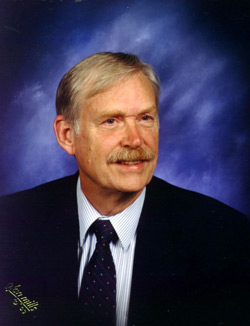 Maybe it’s just my family that has problems, but probably not. I just know that I have been warned not to dig up the past by very serious cousins – on more than one occasion and on more than one family line. Of course, reasons were not offered (that would ruin the fun of making the warning).
 I have never agreed to stop turning over rocks and looking under them. I just couldn’t agree when I did not know what was hidden there waiting for me to find. In fact, I was spurred on by such warnings.
Of course I found ugly things, especially surrounding the reputations of those who were murdered. That is because it was necessary to blacken the names of those who were about to die. You see, if a murderer went to trial, it was helpful to have killed a bad guy. Juries understand bad guys. Lawyers love to try the victims instead of the perpetrators. Researchers have to learn to overlook purposeful blackening of names, especially when the victim was involved in a worthy purpose such as interfering with the KKK.
Do you know how the KKK was tracked down in rural areas in 1874? The deputy US Marshall went to retail shops and found out who was selling white sheets. And then he found out who was buying those sheets. Killers who hide under white sheets in the cover of night probably are not good judges of character, and when they are the ones spreading the stories about someone else, you can take those stories with a grain of salt.
When I began researching, I didn’t know who in my family was a good guy and who was not. I just dug until I found the facts. If I found evil people, that is what I reported. If I found good people (or, “just not bad” people), I would report that as well. Mainly, I found what type of enemies an ancestor had. By learning about his enemies, I could get a grasp on my ancestor’s character.
But I will admit that I tend to think the best of someone until I learn differently. After all, saints and sinners abound in this world and have done so for thousands of years. There seem to have been more sinners than saints, making the search for holy folks take a little longer than the search for us ordinary types.
Now that I mention it, I do not recall anyone in my family who could qualify as a saint. There were a few ministers and one who was both a doctor and a minister. He was in St. Charles, MO in 1809-1811 when the biggest quakes in the US hit the Midwest and I don’t know if he uttered one cuss word. That might qualify him for sainthood. I didn’t look at him as a saint, however, but as an entrepreneur. Because he was both a doctor and a preacher, he made money when people were coming and going. He was a smart man, but not necessarily a saint.
And there was my cousin Jefferson Davis Grover (b. 1861and named for a Southern Saint) who was described by female cousins as the “handsomest man in the world.” He died in 1925 in rather odd circumstances as told by his third wife. He would not be a candidate for sainthood, either, unless you listened to his girlfriends.
There was a cousin, once, whom family members talked about in quiet whispers. It seems her mother was not married to her father, but everyone knew about her birth. Of course, she was properly ostracized. I have tried to locate this cousin who in my mind had no control over what her parents did. I always felt she was treated rather shabbily. She seems to want nothing to do with the rest of us for some reason. I can’t say I blame her. To the best of my knowledge she has not taken a shot at any of us. Maybe she is more of a saint than any of us realize.
Digging up the past is fun, as long as no one is hurt by it. To this day, I have no idea why my cousins advised that I not research the family. Maybe they heard something I missed. Most likely they believed something that on the truth scale, ran between zero and one-half – or maybe, just maybe – it made them feel important to be the sharer of family secrets.
-
Daily U-Turn: What you missed on 4.13.10


Quick Spin: Ariel Atom 3 is awesomeness that defies all classification
We take the Atom for a spin to intimately understand how Ariel’s produces the purest driving experience ever crafted by man.

Quick Spin: 2010 Plug-in Prius prototype is just like your mother’s Toyota hybrid, but better
The plug-in Prius won’t be hitting dealers for another year and a half, but we take out Toyota’s latest prototype to see how the automaker’s new fuel miser is progressing.

McLaren boss calls Veyron “junk,” claims Top Gear race with F1 staged
Ron Dennis doesn’t say much, but when he does, people listen. This time, his soft-spoken wrath is aimed at the Bugatti Veyron and the blokes from Top Gear.
Also of interest:
- Consumer Reports puts Lexus GX on “Do Not Buy” list due to rollover fears
- BMW M3 Sedan may not live to see another generation
- Senator to investigate GM’s handling of Hummer deal
- Video: Race-spec Mini E laps Nürburgring
- Geely set to reveal modified Rolls-Royce aping limousine in Beijing
Browse our archive of Daily U-Turn posts or subscribe to the RSS feed
Daily U-Turn: What you missed on 4.13.10 originally appeared on Autoblog on Tue, 13 Apr 2010 19:20:00 EST. Please see our terms for use of feeds.
-
What Is So Special About A Movie’s Theatrical Release?
The complexities of Hollywood economics are something of a mystery to most Hollywood outsiders who don’t understand how the money flows from movie-goers to the producers, movie distributors and the studios behind major films. Despite a ton of reporting (and even some studies) focusing on ticket sales at the box office, Edward Jay Epstein points out that box office revenues are far from being the bread-and-butter of Hollywood:
Box office sales no longer play nearly as important a role. And yet newspapers, as if unable to comprehend the change, continue to breathlessly report these numbers every week, often on their front pages. With few exceptions, this anachronistic ritual is what passes for reporting on the business of Hollywood.
So what is the actual business model for Hollywood movies? Epstein notes that only about a tenth of the total revenues for the major movie studios comes from American theaters — and the lion’s share of revenue comes from licensing deals in the form of DVD sales, TV broadcasting rights and all sorts of other distribution deals. It’s no wonder, then, that the industry is so anchored to intellectual property rights and so focused on doing anything to preserve its lucrative licensing business.
We’ve seen a lot of alternative proposals for making money from movies, but if the box office sales are really just a fraction of the movie industry’s revenues, why are theatrical releases made out to be such a big deal? Perhaps instead of delaying the release of movies to home theaters, certain movies should be released to Netflix/RedBox/Blockbuster first — and then only the titles that have enough demand for the big screen should make it to a theatrical release. Obviously, there’s the argument that if an audience could watch a movie at home for ~$1, there would be no reason to pay $10 to see the same movie in the theater. But that assumes there is nothing special about seeing a movie on the big screen.
Given the example of how Paranormal Activity only screened in nationwide cities after fans demanded it, offering movies that people actually want to see in theaters may be a better way of filling seats. Or maybe there really is no reason to go to movie theaters anymore.
Permalink | Comments | Email This Story
-
Toyota temporarily halts sales of Lexus GX 460 after Consumer Reports’ findings

Following a report by Consumer Reports 2010 Lexus GX 460 SUV has an increased risk of the vehicle rolling over during a turn, Toyota has decided to temporarily halt sales of the large luxury SUV.
“For more than 20 years, Lexus has made customer safety and satisfaction our highest priorities,” Toyota said in a statement. “We are taking the situation with the GX 460 very seriously and are determined to identify and correct the issue Consumer Reports identified. At this time we have asked our dealers to temporarily suspend sales of the 2010 GX 460.”
Consumer Reports said that it found the problem during one of its tests and urged car shoppers to not purchase the SUV until the problem has been fixed – it gave the Lexus GX 460 a rating of “Don’t Buy: Safety Risk,”
“For any customer who has purchased a 2010 GX 460 and is concerned about driving their vehicle, we will provide a loaner car until a remedy is available,” Toyota said. “As always, Lexus is committed to providing our customers with outstanding products and service.”
– By: Omar Rana
-
Toyota issues stop sale on 2010 GX 460 [*Updated w/video]
Filed under: SUV, Recalls, Safety, Videos, Lexus, Luxury
 2010 Lexus GX460 – Click above for high-res image gallery
It seems Toyota’s learned a few things from its recent spate of recalls – react quickly, react decisively and repeatedly reassure customers that their safety is a top priority.
To that end, Toyota has issued a stop sale on the 2010 Lexus GX 460 after Consumer Reports deemed the SUV a safety risk earlier today and added the ‘ute to its “Do Not Buy” list.
According to Toyota, the automaker is investigating CR‘s claims and using the consumer pub’s testing methodology to determine how the SUV’s emergency handling can be improved. Furthermore, any 2010 GX 460 owner concerned about their vehicle’s safety will be provided a loaner vehicle from Lexus until the automaker can find a solution. Full details in the press release after the jump.
*UPDATE: CR video footage of the GX 460 in testing available after the jump.
Gallery: First Drive: 2010 Lexus GX460


[Source: Consumer Reports]
Continue reading Toyota issues stop sale on 2010 GX 460 [*Updated w/video]
Toyota issues stop sale on 2010 GX 460 [*Updated w/video] originally appeared on Autoblog on Tue, 13 Apr 2010 18:58:00 EST. Please see our terms for use of feeds.
-
Video: Motor Trend pits 2011 Mustang V6 against 2010 Genesis Coupe, 2010 Camaro RS, 2010 Challenger SE

After putting the 2011 Ford Mustang GT against the 2010 Camaro SS and the 2010 Dodge Challenger SRT8, Motor Trend got its hands on the 2011 Ford Mustang V6 and decided to compare it against its competitors including the 2010 Hyundai Genesis 3.8, 2010 Chevrolet Camaro RS and the 2010 Dodge Challenger SE.
Click here to get prices on the 2011 Ford Mustang.
Wondering who takes first place (hint take a close look at the image above)? Watch the video after the jump.
Click here to get prices on the 2010 Hyundai Genesis.
Hit the jump for the video.
Refresher: The 2011 Ford Mustang V6 is powered by the 3.7L V6 Ti-VCT making 305-hp and 280 lb-ft. The 2011 Ford Mustang GT is powered by a 5.0L 4-valve Twin Independent Variable Camshaft Timing (Ti-VCT) V8 engine producing 412-hp with a peak torque of 390 lb-ft. Transmission choices for both models include a 6-speed automatic with a 6-speed manual offered as standard.
– By: Omar Rana
Source: Motor Trend
-
Bioscience Development Alive and Well
One of Downtown’s most unheralded successes in recent years is the growth and expansion of the Phoenix Biomedical Campus located northeast of Fifth Street and Van Buren.
The campus is currently comprised of the Translational Genomics Research Institute (TGEN), Arizona Biomedical Collaborative (ABC), and three restored historic buildings on the north side of Van Buren that make up the University of Arizona College of Medicine in Phoenix. All three have enjoyed success with TGEN having an estimated $77.4 million annual impact on the Arizona economy and the U of A Medical School increasing enrollment from 24 students to 120.
 Last month, the State Joint Committee on Capital Review gave the go-ahead to begin construction on the Health Sciences Education building to be located north of the northwest corner of Seventh Street and Van Buren (shown left). The approval came after months of waiting and a public support campaign of citizens who understood the importance of the building to the future of bioscience development in Downtown Phoenix.
For an understanding of the public support for the Health Sciences Education Building and its future economic impact, I invite you to read two letters to the editor published last month by the Arizona Republic: Medical wonders at the heart of Arizona’s future and Health-sciences building to mean more doctors, jobs.
Construction on the $187 million, 268,000-square foot building is expected to begin shortly.
In recent months, we have seen a flurry of activity and news coming from TGEN. Partnerships have been formed with entities around the world including a recently announced local effort to partner with John C. Lincoln’s Breast Health Research Center to provide tumor samples for research. The stellar work at TGEN is not only reflected in partnerships with some of the biggest names in the bioscience industry but also in funding. The non-profit biomedical research institute has attracted more than $18 million in grants from the National Institute of Health in the first few months of 2010. Recent awards have included large contributions from Safeway, the Life Foundation and Stand Up To Cancer. For more information on TGEN please visit their Web site: TGEN.
Bioscience development in Downtown Phoenix was considered a longshot just a few years ago, but the investment is already paying off. Keep an eye on the Phoenix Biomedical Campus – good things are in store.
-
Saddle Up! 2011 Ford Mustang configurator comes online
Filed under: Car Buying, Convertible, Coupe, Performance, Ford

They can keep their retail therapy, we have configurator therapy. It soaks up just as much time, you can get your “help” in your jammies, and provided you don’t go through with a purchase, it’s much, much cheaper.
Ford’s 2011 Mustang configurator is now up and taking virtual orders, and to go along with the pony car’s movin’-on-up attitude, there are some increasingly swanky options. But remember, the challenge isn’t just to see how expensive you can make the car, it’s how expensive you can make the car you’d actually want to buy. The best part about it: everybody wins. And did we mention it’s free?
Gallery: First Drive: 2011 Ford Mustang GT


Photos by Drew Phillips / Copyright (C)2010 Weblogs, Inc.
[Source: Ford]Saddle Up! 2011 Ford Mustang configurator comes online originally appeared on Autoblog on Tue, 13 Apr 2010 18:29:00 EST. Please see our terms for use of feeds.
Read | Permalink | Email this | Comments
-
Ford vehicles’ resale value up 23 percent over 2009

FoMoCo’s focus on quality is paying off as the automaker announced today that the resale value of its vehicles grew 23 percent in the past year alone, outpacing the industry average by 4 percentage points. Ford said that warranty repair rates on its vehicles have declined by an average of more than 40 percent globally in the past three years.
The Dearborn automaker said that Ford, Lincoln and Mercury vehicles’ initial quality in the U.S. has improved for five straight year and that vehicles now have the fewest number of defects of any full-line manufacturer.
Click here for prices on the 2010 Ford Taurus.
For example, on average, the redesigned 2010 Ford Taurus is selling 50 percent higher at auction than the 2009 Taurus after one year in service. Similarly, the 2010 Ford Fusion V6 was up 26 percent at auction than the 2009 model after one year in service.
“Wholesale price performance was extremely strong throughout 2009, and during this period Ford, Lincoln and Mercury products matched or exceeded the performance of the overall market,” said Tom Webb, chief economist, Manheim Consulting, the world’s largest provider of automotive remarketing services. “And, in 2010, Ford products have outperformed the overall market, especially in the increasingly important segments of compact cars, midsize cars and crossover vehicles.”
Click here for our review of the 2010 Ford Taurus SHO.
– By: Omar Rana
-
BMW working on hydrogen fuel-cell hybrid drivetrain for 2014

BMW has announced that it is testing a new hydrogen fuel-cell hybrid powertrain that could be used by the next-generation Mini and the front-wheel-drive BMW vehicles planned for 2014. The system combines a front-wheel-drive architecture, a hydrogen fuel-cell system, an electric-motor and a small gasoline engine.
Engineers say that the system is designed to allow compact vehicles to travel emissions-free in city areas. The company has already built functioning prototypes based on 1-Series hatchbacks converted to a front-wheel-drive architecture.
Power comes from a gasoline engine, a 5 kW (7-hp) hydrogen fuel-cell drivetrain and an 82 kW (110-hp) electric-motor.
The hydrogen fuel-cell system, which can fit in BMW and Mini models that are at least four meters long, has yet to be given the green light by BMW executives. The company still needs to make sure that hydrogen fuel-pumps will be available in most large city areas.
Follow the jump for the press release.
BMW 1-Series Hydrogen Fuel-Cell Hybrid Prototype:


Press Release:
The future of sheer driving pleasure.
Efficient Dynamics – from research to road.
The Efficient Dynamics development strategy provides the BMW Group with the world’s most efficient programme for reducing consumption and emission values in road traffic. The development of power systems with optimised efficiency, smart energy management in the vehicle, and aerodynamic measures form the key supporting aspects of this strategy, complementing lightweight construction throughout. BMW Forschung und Technik GmbH has made significant progress in all these areas since the company was established and the results have been channelled into the series development of many different new models.
Intensive fundamental research has also been carried out in the context of the development of innovative and alternative propulsion systems. The spectrum of research ranges from new concepts for the classic internal combustion engine, through hybrid technology and the deployment of hydrogen as a fuel in the vehicle, to electro-mobility. This demonstrates that research covers all the areas that today form the mainstays of the Efficient Dynamics development strategy.
In celebration of its 25th landmark birthday, BMW Forschung und Technik GmbH premiered the results of two projects designed to highlight innovative ways of significantly reducing consumption and emission values. These projects relate to a research vehicle with fuel-cell hybrid technology and a concept for using hydrogen technology by a device known as a reformer. The reformer facilitates strategic optimisation of the emission characteristics of internal combustion engines. These two projects offer solutions that are closely associated with the needs of drivers operating in everyday road conditions. The fuel-cell hybrid vehicle was designed with the objective of emission-free mobility in city traffic. The reformer technology allows significantly optimised emission values during the warming-up phase of the engine.
Fuel-cell hybrid technology for emission-free mobility in city traffic.
The fuel-cell hybrid vehicle launched by BMW Forschung und Technik GmbH offers a highly innovative form of hybrid technology developed within the framework of Efficient Dynamics. Moreover, the prototype developed on the basis of a BMW 1 Series car presents an innovative approach to the use of hydrogen as a fuel. The research vehicle has a four-cylinder petrol engine and an electric motor, as well as a small fuel cell in the form of an Auxiliary Power Unit (APU). The combination of an internal combustion engine with a fuel cell creates the possibility of using both drive technologies, each with optimised efficiency. Hydrogen offers the advantages of conventional fast refuelling and a long range. The size of the fuel cell means it is ideal for use at low speeds, whereas the performance benefits of the internal combustion engine come into their own when the vehicle has to cover long distances at higher speed, delivering the masterly overall performance so typical of BMW. In city traffic, the electrical energy generated by the APU is continuously supplied to high- performance capacitors (supercaps) which have outstanding high power density and cycle robustness. These supercaps cover the performance peaks for acceleration and taking off at traffic lights. The electric motor assumes the function of a generator during coasting and braking phases and feeds electrical energy back to the supercaps. This regenerative braking energy is then available for the subsequent acceleration phases and further reduces consumption. The objective of the researchers in the next stage of expansion is to increase the range provided by electric motive power to several hundred kilometres in city traffic.
All drive components were configured as optimised packages in the 3-door BMW 1 Series. The APU is positioned under the engine bonnet together with the internal combustion engine, the electric motor takes the place of the rear axle differential and drives the rear wheels. An output of 82 kW and a high torque that engages right from a standing start deliver the sporty handling typical of BMW. The supercapacitor battery instead of the gearbox and conventional drive train is mounted in the central tunnel. The force of the 88 kW petrol engine acts on the front wheels. A reduced petrol tank leaves space for the hydrogen tank. This configuration means that no constraints are placed on the interior space of the research vehicle by contrast with the series model. The standard five seats are provided. Moreover, the weight of the fuel-cell hybrid vehicle is only just above the value for a corresponding series model.
BMW has been developing fuel-cell technology since 1997.
The low-temperature PEM (Polymer Electrolyte Membrane) fuel-cell technology has been researched and developed at BMW since 1997. Right from the beginning, the research concentrated on application as an APU with comparatively compact dimensions and a maximally low weight. The hydrogen concept vehicle BMW 750hL presented as early as 2000 had a fuel cell as a source of on-board electricity. The researchers believed that using the small fuel cell for the supply of on-board electricity was the most cost- effective scenario in conjunction with the internal combustion engine for launching the technology.
Meanwhile, BMW Forschung und Technik GmbH is already bringing the fourth generation of APU units on stream. Apart from the increase in service life under automobile load cycles to the current level of 5000 hours, the complexity of the system has gradually been reduced and a robust fuel-cell unit has been created. This simple system effectively operates at ambient pressure and achieves an efficiency of 58 percent for the system over a broad performance spectrum. The special design enables rapid changes in load, such as those occurring during the APU application, from virtually idle to full loading within the space of five milliseconds.
One of the most important issues relating to introduction of the low-temperature PEM fuel cell is the capability to start under frosty conditions after a long period without use at temperatures below freezing. An ingenious cell design means the external moistening of the gases can be omitted so that the system is in a position to supply the vehicle with energy after a period of only 30 seconds. Intensive tests, in some cases on extremely steep gradients, demonstrated that there was no degradation after several hundred frost starts. This confirms that the technology is ready for use in vehicles on
the road.APU supplies the on-board power – and also provides drive energy for the first time.
The APU supplies the energy necessary for the on-board power supply in the fuel-cell hybrid vehicle, as was already the case in the BMW 750hL. All the units consuming electricity can be supplied in this manner, without having to tap the power of the internal combustion engine. This energy management concept also allows sophisticated comfort features to be displayed. For example, the fuel-cell hybrid vehicle can be fitted with an effective system providing air-conditioning while standing still and it offers virtually unlimited, emission-free energy supply for infotainment applications. The ongoing advance of the small fuel cell also achieves a premiere by using electricity generated from hydrogen for forward propulsion. The combination of the APU (providing a small but continuous output) and the back-up storage in the supercaps (delivering high outputs over a short period) achieves a highly efficient yet marketable drive system, specially designed for city trips.
Reformer technology: fewer emissions during cold start.
The BMW Group possesses unique know-how in the use of hydrogen. The projects based on this technology being pursued by BMW Forschung und Technik GmbH include the use of hydrogen in internal combustion engines as well as its application in a fuel cell. Hydrogen can also be used with the aim of optimising the emission behaviour of conventional petrol and diesel engines. BMW Forschung und Technik GmbH presents a particularly effective solution in this area in the form of reformer technology in an otherwise standard 5-door BMW 1 Series.
The ambitious emission limits mean that the initial seconds after a cold start present a particularly difficult scenario, because catalytic converters only achieve maximum effect after they have been heated to a specific temperature. The reformer technology intervenes precisely at this point and significantly reduces the level of engine out emissions that are generated during a cold start.
Synthesis gas obtained from liquid fuel is free of residues.
Reformer technology can be used in petrol and diesel engines. The system comprises a mixing zone, an injection valve, a spark plug and a special catalytic converter where fuel is partially oxidised with a limited supply of oxygen. The catalytic process that is initiated in this way selectively splits hydrocarbon chains (CxHy) to generate a synthesis gas with a proportion of approximately 21 percent hydrogen and approximately 24 percent carbon monoxide. This synthesis gas is then supplied to the conventional intake manifold of the engine by selectively delivering it into the cylinders via air assisted injection valves. This mixture can completely replace conventional fuel while the engine and catalyst system is warming up. Since the gas mixture burns with virtually no residues, the critical phase for emission behaviour immediately after a cold start is transformed by reformer technology into a particularly clean operating mode. The lower efficiency of the reforming process is the only disadvantage of using the synthesis gas generated from fuel compared with continuous operation of the internal combustion engine. When combustion of the gas occurs, 15 to 20 percent of the original fuel-energy content is converted into heat. However, this side effect is particularly useful during the warming-up phase. The heat generated in the reformer heats up the engine faster than during operation with petrol or diesel fuel for the increase in engine efficiency as a result of a reduction in frictional losses and complete and very stable combustion.
The reformer system presented in the research vehicle is currently equivalent to the status of a prototype. However, series development is still precluded by the need to reduce the size of the components and the weight of currently some five kilograms to a maximum of one and a half kilos, while optimising the characteristic properties of the system at the same time. Once these requirements have been met, the system could also be used to replace the auxiliary heater currently used in diesel engines or for regenerating the particle filter and for selective catalytic reduction (SCR catalysis) of nitrogen oxides NOx). The expense for the exhaust treatment used to date is then reduced accordingly.
Hybrid concepts: More efficiency, more driving pleasure – right from the start.
BMW Forschung and Technik GmbH has carried out intensive and fundamental research in order to lay the foundations for many of the standard efficiency enhancement technologies used in BMW automobiles today. Comprehensive, thorough and wide-ranging research at an early stage makes a significant contribution to the outstanding know-how of the BMW Group in the area of drive technology. The BMW ActiveHybrid technology available in BMW series vehicles today also owes its unique qualities not least to the experience in this area gathered by researchers over a period spanning more than 15 years.
The BMW ActiveHybrid 7 and the BMW ActiveHybrid X6 are the first two models of the brand available in 2010 to use a combination of internal combustion engine and electric motor. Each model deploys a unique platform of BMW ActiveHybrid technology while also presenting a characteristic homogeneity: BMW ActiveHybrid presents tangibly enhanced dynamic driving accompanied by significantly reduced consumption and emission values. This twin-track advance is manifested in the BMW EfficientDynamics development strategy, and from the start it shaped the ground-breaking work carried out by BMW Forschung und Technik GmbH in hybrid technology. Hybrid technology in the style of BMW advances efficiency and intensifies driving pleasure.
Development of hybrid technology since the 1990s.
The hybrid concept car based on the BMW 5 Series and developed in 1994 already facilitated fully electric and hence emission-free driving with characteristic features optimised for city traffic. The car’s power-unit technology configured as a parallel hybrid drive combined an 83 kW four- cylinder petrol engine with an electric drive that develops peak output of 26 kW and a maximum torque of 165 newton metres. This research vehicle was already designed as a Full Hybrid, in other words it permits emission-free driving only using the electric drive in city traffic. The energy stored in a nickel metal hydride battery with a capacitance of 3.5 kilowatt hours was sufficient to power the car over a range of eleven kilometres in purely electric drive mode. An Auto Start Stop function was also integrated which switches the internal combustion engine off automatically when the car is stationary at junctions or standing in traffic jams outside suburban areas, in order to prevent unnecessary fuel consumption during the idle phase. Today, hybrid technology in the BMW 5 Series is more relevant to the modern world than ever before. It is well on the way to series maturity, as demonstrated at the Geneva Motor Show in 2010 when the BMW Concept 5 Series ActiveHybrid was featured and bore impressive testimony to the technology.
Within the space of just one year, the researchers had developed another hybrid concept vehicle and yet again extended the range of the vehicle solely under electric power. The BMW 3 Series with serial hybrid technology was also primarily intended for city traffic and was able to travel a distance of 38 kilometres using a sodium nickel chloride battery with the internal combustion engine switched off. The drive train is comprised of an internal combustion engine using petrol as a fuel and two synchronised electric motors. One of them provides the propulsion generating a peak output of 35 kW, and the other motor with maximum output of 32 kW carries out the function of a generator within the system. This research vehicle was also equipped with an Auto Start Stop function.
Researchers presented a hybrid vehicle based on the first generation of the BMW X5 in 2001, and they thus demonstrated the progress that had so far been made in the area of drive and energy-storage technology by the start of the new millennium. This study combined an eight-cylinder petrol engine and an asynchronous electric motor to generate a maximum combined torque of 1000 newton metres at 1000 min-1. The most important additional innovation was the use of the double-layer capacitors known as supercaps, which are deployed to store energy with a particularly high capacitance of 650 kWs. In addition to highlighting efficiency benefits, this research vehicle also gave a particularly impressive demonstration of the potential of hybrid technology for bringing about a significant increase in driving dynamics.
The BMW Concept X3 EfficientDynamics consistently progressed development of supercaps integrated in the side sills. The technology was presented at the Frankfurt Motor Show in 2005. The specialists at BMW Forschung und Technik GmbH were also able to present new solutions for integrating the internal combustion engine and electric motor. The electric motor with a maximum output of 60 kW installed in the BMW Concept X3 EfficientDynamics was integrated in a compact active transmission together with the power electronics. The range of the electric power unit could be expanded using the option of an additional nickel metal-hydride battery. The hybrid technology was again used to optimise efficiency as well as to intensify the driver’s level of driving dynamics. The precisely synchronised interaction of the six-cylinder in-line petrol engine with direct injection and the electric motor achieved enhanced fuel efficiency amounting to some 20 percent. A torque of 600 newton metres generated by the two drive sources was available to power particularly dynamic acceleration manoeuvres. This powered the BMW Concept X3 EfficientDynamics from a standing start to 100 km/h in just 6.7 seconds and enabled the car to achieve a top speed of 235 km/h.
Option for the future, available now owing to intensive research: hydrogen as fuel.
Over the long term, the BMW Group is also committed to using hydrogen as a fuel in vehicles. The use of hydrogen produced with assistance from renewable energy sources offers the option of future emission-free mobility. The capability of this power-unit technology for everyday use has already been demonstrated with the BMW Hydrogen 7. This car passed through the complete series development process before being manufactured as a limited series. The world’s first hydrogen-powered luxury saloon for use under everyday conditions is powered by a bivalent twelve-cylinder internal combustion engine and has been made available to selected customers worldwide. Meanwhile, the model produced as a limited series of 100 vehicles has covered at total of more than four million kilometres across the world. On the way to the BMW Hydrogen 7, the specialists at BMW Group Research and Technology set up a large number of research projects and concept vehicles, leading to a much better understanding of hydrogen technology and the framework conditions for use in the automobile. A precursor to the BMW Hydrogen 7 was presented in 2000 as the BMW 750hL and used as a shuttle vehicle at the EXPO2000 World Exhibition in Hanover. The BMW 750hL then drove more than 170 000 kilometres in a practical test during the “Clean Energy World Tour”.
Other pioneering achievements were provided by the BMW H2R hydrogen record vehicle. In September 2004, the model powered by a twelve-cylinder engine set up nine international records for hydrogen-powered vehicles with an internal combustion engine at the BMW test track in Miramas, France. The 210 kW/286 hp engine achieved a top speed of more than 300 km/h.
Other innovations in hydrogen technology being driven forward by BMW Forschung und Technik GmbH include a variably shaped tank with optimised weight for storing hydrogen in the vehicle. The free-form tank made of carbon-fibre reinforced plastic and developed jointly with partners from the aerospace industry is used to store liquid hydrogen. The variable shape enables the fuel tank to be integrated flexibly within a range of different vehicle concepts. The weight of the tank has been reduced to one third of the weight of an equivalent conventional cylindrical tank. When filled with around 10 kilograms of hydrogen, the free-form tank integrated in an appropriate vehicle would permit a range of more than 500 kilometres.
Because the infrastructure of fuelling stations will not be starting with complete coverage to permit hydrogen to be used as a single source, bivalent engines provide an initial solution. These engines can run on hydrogen and petrol. BMW Forschung und Technik GmbH has successfully confirmed the potential of the monovalent combustion process as regards output and efficiency – for example with the H2R. This process is optimised without compromise for hydrogen.
The particularly powerful hydrogen-powered four-cylinder cryogenic engine was developed in a joint project between BMW Forschung und Technik GmbH and BMW M GmbH. This engine is based on the four-cylinder engine of the BMW M3 first generation, although it is already fitted with components from the advanced development of one of the two cylinder banks of the V8 engine currently incorporated in the latest M3. A special feature of this drive unit is the mixture formation for super-chilled hydrogen developed by the researchers during the course of this project. On the test rig, the engine achieved a specific output of 67 kW per litre of displacement and set a benchmark for hydrogen-powered aspirated engines.
Another example of the intensive basic research in the area of drive systems is provided by the modular single-cylinder hydrogen engine developed especially for thermodynamic analyses. The HyICE research project sponsored by the European Commission developed a hydrogen-powered engine with the typical geometry of an Otto engine between 2004 and 2007, which generates a specific output of 100 kW per litre of displacement. Another version designed with the geometry typical of a diesel engine was developed between 2007 and 2009, and this power unit has a particularly favourable efficiency. An effective efficiency of 43 percent achieved the level of advanced diesel engines and was virtually free of pollutants.
– By: Omar Rana
Source: BMW (via WCF, AutoCar)
-
Video: Hennessey Venom GT road testing in England

Hennessey Performance Engineering has finally released a video of its Hennessey Venom GT in action. The video shows the Venom GT testing in Britain near Silverstone and it sounds amazing. Check out the video after the jump.
Click here for our original post on the Hennessey Venom GT.
Refresher: Weighing in less than 2,400 pounds, the Hennessey Venom GT is powered by GM’s supercharged 6.2L LS9 V8, which has been modified to produce 725-hp. Hennessey will also offer 1,000-hp and 1,200-hp twin-turbo V8 engine variants. Mated to a Ricardo 6-speed gearbox, the Venom GT is capable of hitting 0-60 mph in 2.2 seconds and will keep going until it hits 262 mph.
Hennessey Venom GT:


Hennessey Venom GT:
– By: Kap Shah
-
Bill Ford has no plans to return to the position of CEO at FoMoCo

Bill Ford Jr., Chairman of FoMoCo, has no plans to return to the job of Chief Executive Officer in the future. In an interview with Reuters, Bill said that if he has his way, Alan Mulally will put off his own retirement until the middle of next decade.
He said that when the job for CEO of Ford does open up, he is pretty confident that he won’t be called again, because unlike in 2001 when he was CEO, the company now has a bunch of managers who will be ready to fill Mulally’s shoes.
“No, I don’t see myself going back ever,” Bill said. “You never say never, but it would be hard to envision the circumstances.”
Click here for prices on the 2010 Ford Fusion.
Bill, 52, is pretty happy with the company founded by his great grandfather. FoMoCo has finally found its way back to profitability and is the only Big 3 domestic automaker that didn’t ask the Obama administration for federal funding to survive.
“I take great pleasure in the fact that Ford has not only survived, but really is being held in such high regard now around the country and around the globe,” he said.
– By: Stephen Calogera
Source: Reuters
-
IEA Members Describe the Real Effects of the Education Funding Crisis
Over 100 IEA members and grassroots political activists met at the Roundhouse Restaurant in Aurora on April 8, 2010. The event was one of many “Back Home Lobby Day” activities throughout the state in continuing efforts to show legislators, through examples, how cuts in education funding are devastating Illinois school districts.
-
IEA Regions 3 and 7 Host Legislative Dinner
School funding, pension issues and layoffs in the schools topped the agenda Wednesday evening as IEA Regions 3 and 7 hosted their third annual legislative dinner for members.
The forum featured six of the area’s legislators who fielded questions and shared their perspectives about the budget crisis and other issues facing the state.
-
Here’s Exactly What’s Going To Happen When Bernanke Appears On The Hill Tomorrow

Here’s an important heads up.
Tomorrow at 10:00 AM Ben Bernanke will attending a hearing on “The Economic Outlook.”
There’s always some nervousness before he speaks (will he all of the sudden sound more hawkish?).
Let us give you a preview of some things that might come up:
- On the deficit, Bernanke will say it’s a serious issue, but that it’s too soon to do anything about it. At some point it will have to be dealt with. You know, after everyone that’s in office now is out office.
- On entitlements, Bernanke will say they have to be fixed. At some point.
- That may involve some discussion or raising taxes (not his problem).
- He’ll say the economy is strong…
- But not so strong that we’re out of the woods yet (this will be the money line, when stocks will go nuts, because investors will know that this is a code word low rates).
- If Ron Paul is there, that will produce something YouTube-worthy.
Join the conversation about this story »
-
‘Ferris Bueller’s Day Off’ Ferrari up for auction but Broderick says it’s not a real Ferrari

If you were a big fan of the 1980s, then there is no way you don’t know the movie Ferris Bueller’s Day Off. The most famous scene from the movie was when Alan Ruck (known as Cameron Frye in the movie) beat the hell out of a Ferrari California Spyder, which hurt the feelings of many enthusiasts around the world. Well, worry not, because the only way Paramount Pictures allowed Ruck to beat the hell out of a Ferrari was simple: it wasn’t a Ferrari.
The car was really a MG that was topped with a fiberglass Ferrari body to look like the real thing.
The current owner of the car, Bonhams of London, is now ready to sell it. Bonhams expects the car to go for about $40,000 to $54,000 according to its online catalog.
Click here to get prices on the 2010 Ferrari California.
Nonetheless, Matthew Broderick, who played Ferris in the movie, recently told New York Magazine that he will not be bidding on the car. Why?
“It was a kit car. We had a real Ferrari that we looked at in the garage, but when we drove, it was not real, and that’s what this is. My memory of that car is that it often didn’t start. That’s all I remember – which I probably shouldn’t say; I don’t want to bring the price down. But, uh, it was unreliable, that car.”
– By: Kap Shah
Source: DriveOn
-
Autoblog Podcast #174 – AOL Autos’ Reilly Brennan stops by
Filed under: Podcasts, Audi, Chevrolet, Ford, Jeep, Mercedes-Benz, Mini, Nissan, Ferrari
 Click above for the Autoblog Podcast in iTunes, RSS or listen now!
Chris Shunk, Sam Abuelsamid, Chris Paukert and Dan Roth are joined by Reilly Brennan of AOL Autos. After discussing what’s in the Autoblog Garage, attention turns to the Ferrari 599 GTO, the ongoing Chevrolet Camaro-Ford Mustang V6 cage match, wacky interior awards from Ward’s Auto, Audi beating Mercedes in the most recent sales numbers, and the Daimler-Renault/Nissan tie-up. We hit some questions and then skedaddle just under the hour and twenty mark.
Autoblog Podcast #174: with Reilly Brennan from AOL Autos
In the Autoblog Garage:Audi A4 Avant
Jeep Grand Cherokee Limited
Mini John Cooper Works Cabrio
Ford Escape Hybrid
Mercedes CL550 4MaticNews:
Ferrari 599 GTO
Mustang/Camaro V6 smackdown
Ward’s Auto interior awards
Audi outsells Mercedes
Daimler and Renault/Nissan dealHosts:
Chris Shunk, Chris Paukert, Dan Roth, Sam AbuelsamidGuest:
Reilly Brennan of AOL AutosRuntime: 1:18:02
Get the podcast:
[iTunes] Subscribe to the Autoblog Podcast in iTunes
[RSS] Add the Joystiq Podcast feed to your RSS aggregator
[MP3] Download the MP3 directly
Feedback:
Email: Podcast at Autoblog dot com
Voicemail: 734-288-8POD (734-288-8763)
Review the show in iTunes and take our survey
Autoblog Podcast #174 – AOL Autos’ Reilly Brennan stops by originally appeared on Autoblog on Tue, 13 Apr 2010 16:21:00 EST. Please see our terms for use of feeds.
Read | Permalink | Email this | Comments


