Author: Serkadis

  • Report: Brewery-heavy Wisconsin not exactly eager to punish drunk drivers

    Filed under: ,

    We all know by now that no matter what the law dictates, those with an interest not in-line with the law will do what they can to work, shall we say, around the law. Wisconsin is said to have one of the highest rates of DUIs and binge drinking, and that probably has something to do with the state’s beer culture. Kids under the age of 21 can drink in public if they’re with a parent or legal guardian, and when you get your first DUI – at any age – it’s treated as a traffic violation, not a criminal act.

    Why is that allowed to continue? The theory goes something like this: State legislators are the same kinds of hard drinkers as the general populace and they don’t want to get worked over for DUIs. Said a University of Milwaukee-Wisconsin professor, “There is a live hard, play hard, cut corners, get away with anything you can culture in the Legislature. Driving drunk is just part of a larger political culture of getting away with anything you can.”

    Case in point: State rep Jef Wood has been busted three times in less than a year, and plans to defend himself in part by establishing the well populated history of assemblymen caught drunk behind the wheel. That makes it sound like things aren’t going to change any time soon. And makes us think there’s a little bit more going on in those flyover states than one would imagine…

    [Source: AP]

    Report: Brewery-heavy Wisconsin not exactly eager to punish drunk drivers originally appeared on Autoblog on Mon, 12 Apr 2010 07:01:00 EST. Please see our terms for use of feeds.

    Read | Permalink | Email this | Comments

  • Monday Inspiration

    Just another one of those stories that forces us to take a few steps back to look at our “problems” and how we deal with them…

    “…He has no legs and no eyesight, but Marine Cpl. Matthew Bradford has four more years of military service ahead of him after becoming the first blind double-amputee to re-enlist.

    …Bradford, 23, has learned to walk with prosthetic limbs and navigate without his vision, and he only regrets that he can’t return to combat duty in Iraq, the paper reported.

    Instead the Kentucky native will head to Camp Lejeune, N.C., where he will work with other wounded Marines in hopes of helping them cope with anger, depression and other issues.

    “I’m paving the road for the rest of them who want to stay in but think they can’t,” he told the Express-News. “I’m ready to get back to work.” (source)

    Very humbling.

  • Hispania Racing Team F1 fichará a un piloto para correr los Viernes

    El jefe de equipo Colin Kolles de la escudería española Hispania Racing Team F1 ha afirmado que estan buscando a un piloto veterano para que corra con su monoplaza en los entrenamientos de los Viernes de cada Gran Premio.

    Por el momento, el nombre que más suena es el del italiano Giancarlo Fisichella quién podría aportar una gran experiencia para desarrollar el monoplaza de esta nueva escudería. Lo que esta muy claro es que Bruno Senna y Karun Chandhok no tienen el nivel necesario para desarrollar el coche de su escudería a la velocidad necesaria para no quedarse descolgada del resto de equipos de la parrilla.

    Desde HRT han afirmado que el tercer piloto será anunciado próximamente y es posible que lo veamos en acción en el próximo GP de España.

    Related posts:

    1. Hispania Racing Team F1 da a conocer su monoplaza
    2. Hispania Racing Team F1 se marca objetivo terminar la carrera en el GP de Australia
    3. Andy Soucek será el tercer piloto de Virgin Racing
  • Forget Fun, Blondes Have More Cash


    “BLONDE women – for years stereotyped in jokes as dumb and ditzy – are having the last laugh after a study revealed they earn more and marry wealthier than other women.

    The University of Queensland study found that not only did blonde women earn an average seven per cent more than their brunette and red-headed sisters, they married men who earnt six percent more too…” (Read the whole story)

    So, keep telling your blonde jokes…we’ll be out shopping with our extra cash! 😉

  • Ford confirms EcoBoost for Explorer and F-150, three EcoBoost engines by end of 2010

    FoMoCo is kicking off this week of April 12th with the announcement that it will add three more EcoBoost engines by the end of 2010 and that by 2014, it plans to have 20 percent of Ford’s global vehicle nameplates with fuel-saving stop/start system. The Dearborn automaker said that by 2013 Ford expects to be producing approximately 1.5 million EcoBoost engines globally, about 200,000 more than originally expected.

    Click here to get prices on the 2010 Lincoln MKS EcoBoost.

    “We are focused on sustainable technology solutions that can be used not for hundreds or thousands of cars, but for millions of cars, because that’s how Ford will truly make a difference,” said Barb Samardzich, Ford’s vice president of powertrain engineering.

    The three new Ford EcoBoost engines will include:

    • A 1.6L 4-cylinder that will be offered in the European C-MAX.
    • A 2.0L 4-cylinder that will debut in the next-generation Ford Explorer and Ford Edge.
    • A new 3.5L V6 for the F-150 – expected to deliver best-in-class fuel economy along with the power and towing capability of a V8.

    The addition of the three new engines will increase the number of global nameplates with EcoBoost to 11. Currently, the company offers EcoBoost on the Ford Flex, Taurus SHO and Lincoln MKS and MKT.

    Make the jump for the press release for more details.

    Press Release:

    FORD ADDS THREE MORE ECOBOOST ENGINES; NOW EXPECTS TO DELIVER 1.5 MILLION ANNUALLY BY 2013

    * Ford to launch three more EcoBoost™ engines by the end of 2010
    * The company remains on track to equip as much as 90 percent of its North American nameplates with EcoBoost, which would deliver worldwide sales of about 1.5 million units – 200,000 more than earlier estimates
    * By 2014, nearly 20 percent of Ford’s global vehicle nameplates will be available with a fuel-saving stop/start system

    DETROIT, April 12, 2010 – Ford Motor Company announced today that three more engines with the company’s patented EcoBoost fuel-saving technology are scheduled to be launched by the end of the year. By 2013 Ford expects to be producing approximately 1.5 million EcoBoost engines globally, about 200,000 more than originally expected.

    Plans call for an EcoBoost engine to be available in 80 percent of the company’s global nameplates and 90 percent of North American nameplates. About half of the 1.5 million EcoBoost engines are expected to be sold in North America, while the rest are to be sold in Europe, South America and Asia Pacific regions.

    Samardzich is expected to detail EcoBoost production plans as well as the next three EcoBoost engines scheduled for launch by the end of the year during remarks Tuesday at the SAE World Congress.

    The next three EcoBoost engines include:

    – 1.6-liter four-cylinder that will be offered in the European C-Max people mover. The 1.6-liter EcoBoost will deliver quick acceleration and class-leading fuel economy.
    – 2.0-liter four-cylinder for the next-generation Ford Explorer SUV and Edge CUV. This new engine will deliver best-in-class fuel economy and V-6 performance.
    – 3.5-liter V-6 for the F-150. Ford engineers have upgraded the 3.5-liter V-6 for rear-wheel-drive applications. The EcoBoost F-150 is expected to deliver best-in-class fuel economy along with the power and towing capability of a V-8.

    The three new engines will increase the number of global nameplates available with EcoBoost to 11. EcoBoost is available now in the Ford Flex and Taurus and Lincoln MKS and MKT.

    EcoBoost technology combines direct fuel injection, variable cam timing and turbocharging to reduce fuel consumption, CO2 emissions and cut vehicle weight, while giving drivers the performance of a bigger engine.

    While Ford is rolling out the first generation of EcoBoost engines, researchers are studying ways to further downsize future EcoBoost engines, while preserving performance and raising fuel economy. More efficient turbochargers, super-precise control of the direct-injection fuel system, optimum gearing of the transmission and final drive will enable a smaller engine to run in what engineers call its “sweet spot” more often, said Dan Kapp, Ford’s director of powertrain research and advanced engineering.

    When an engine is in its sweet spot, it is running at its most efficient. That, combined with dramatic reductions in vehicle weight, will improve performance and fuel economy. Ford has committed to reducing vehicle weight by between 250 and 750 pounds per vehicle.

    “We are trying to get in front of the pack in leveraging EcoBoost for fuel economy,” Kapp said. “It’s going to be a trend in the industry, and we can’t rest on our laurels for one minute. We are going to keep wringing more efficiency out of EcoBoost.”

    EcoBoost is a key technology that will enable Ford not only to fulfill the company’s goal to be among the leaders in fuel economy in every segment, but also to meet the federal government’s new 35.5 mpg fuel economy standard, which takes effect in 2016. Samardzich said Ford could develop EcoBoost engines smaller than 1.6-liter.

    In addition to high volume, affordability will be another key attribute of not just EcoBoost, but Ford’s other fuel-saving powertrain technologies.

    The new Fiesta, for example, is available with an optional fuel-saving six-speed dual-clutch PowerShift automatic transmission. When equipped with PowerShift, Fiesta is expected to get an EPA-rated 40 mpg on the highway. The PowerShift transmission also will be used in the next-generation Focus due in early 2011. PowerShift improves fuel economy as much as 9 percent over a four-speed automatic.

    In addition to EcoBoost, other near-term powertrain technologies Samardzich outlined include:

    – Electrification: Ford has committed $1 billion to build plug-in, hybrid and battery electric vehicles and a plant that will assemble battery packs for these vehicles. The Transit Connect Electric is being launched later this year, while the Focus Electric is due next year. A hybrid and a plug-in hybrid will be built off Ford’s global C platform, which underpins the Focus. Ford also plans to move battery pack production from Mexico to Michigan to support the production of electric and hybrid vehicles.

    – Six-speed transmissions: By the end of 2012, 98 percent of Ford North American vehicles will be equipped with fuel-efficient six-speed transmissions. A six-speed transmission can improve fuel economy between 4 and 6 percent. The latest vehicles to get six-speed transmissions are Mustang, which gets a new six-speed manual and a new six-speed automatic; Super Duty, which gets a new six-speed automatic; and Fiesta, which will introduce the segment’s first dual-clutch six-speed automatic transmission.

    – Stop/Start systems: By 2014, as many as 20 percent of Ford’s global nameplates could be equipped with stop/start systems, which turn off the gasoline or diesel engine when the vehicle comes to a stop and quickly restarts the engine when the driver’s foot leaves the brake pedal. A stop/start system can reduce fuel consumption and emissions by around 5 percent, depending on conditions.

    – By: Omar Rana


  • Marchionne: Restructuring process at Chrysler is showing “positive results”

    Fiat SpA and Chrysler Group LLC CEO Sergio Marchionne said that restructuring at the U.S. automaker is showing “positive results.” Marchionne has been working hard in order to turn around Chrysler after it came out of bankruptcy.

    “In terms of the market share numbers coming out of the U.S., it’s a slow, gradual process, a re-making exercise. You need to give it time,” Marchionne said.

    He said that he is now “more confident” than he was 12 months ago about Chrysler’s future prospects.

    Chrysler’s U.S. sales fell 5 percent in the first quarter of 2010, while the industry deliveries were up 16 percent. However, Marchionne is opposed to incentives to increase sales at the expense of profits. He cut discounts for Chrysler, Dodge and Jeep brand vehicles by $1,122 in the first quarter – that’s more than quadruple the cuts made by GM and FoMoCo at $230 and $214 respectively, according to Autodata Corp.

    – By: Stephen Calogera

    Source: Automotive News (Subscription Required)


  • Adobe Flash CS5 Can Export to HTML5 Canvas

    Adobe is not in the best position it has ever been, as its massively popular Flash platform is getting attacked from all sides. Apple is leading the charge, and the weapon it’s using against it is HTML5. The proposed web standard can do many of the things Flash does, offering developers an open alternative. This makes a tool in the recently released Ad… (read more)

  • Israeli Court Says Course Ads Are Not Copyrightable; Aggregating Them Is Legal

    Over at Eric Goldman’s blog, Israeli lawyer Yoram Lichtenstein has written up a discussion of two Israeli rulings concerning copyright on advertisements (Lichtenstein was a lawyer in the second case, so he’s not a neutral observer — though his writeup appears to be quite neutral, much more so than I would have expected). The first case, from a few years ago, involved a website that collected job ads from various sources, including various local newspapers. The newspapers sued, but the court noted that it wasn’t clear that the job ads were even covered by copyright — and even if they were, the copyright wouldn’t be held by the newspapers who were suing, but by the advertisers.

    The more recent case delved deeper into that original question of whether or not ads are copyrightable. It involved a site, called Hug, that aggregated “a directory of leisure activities and courses” from a variety of different sources. Nine advertisers apparently sued the company for copyright infringement. Beyond wondering why advertisers would ever get pissed off at a site that would advertise them for free, and help drive more business to them, Hug also noted that it provided a lot more information than just what it pulled from elsewhere. But the key question was whether or not the information in the ads was covered by copyright at all.

    Thankfully, the court said no (for the most part):


    The court decided that the course listings lacked originality (or creativity); usually they include only “dry” data. The court emphasized that although previous decisions did not demand very much creativity, ads still need at least some creative value to become copyrightable. Thus, “the advertiser holds no rights in the content of the advertisement, in a manner that enables to prevent other billboards and index sites to publish the ad without her authorization” (my translation).

    The court used, as an example to explain why the course descriptions were not copyrightable, a course description for sculpting sugar-figures for cakes. The text was (my translation, again): “Figure sculpturing workshop, consisting of two 5 hours encounters, each. The workshop emphasizes female and male proportions. First meeting shall include preparing the cake-base, and a winter male figure with proper clothes and accessories. On the second encounter we will prepare the female summer spouse, accessorized as well. At the conclusion of this fun activity each shall have the original couple s/he created.”

    This seems mostly in line with US copyright law that does require some level of creativity above basic facts to qualify for copyright. At the very least, it’s good to see yet another smart copyright ruling in Israel.

    Permalink | Comments | Email This Story


  • PIMCO’s Bill Gross Frantically Dumping Treasuries, Thinks US Interest Rates Will Soar

    bill gross

    Nine months ago, Bill Gross’s Total Return Fund was 50% in US Treasuries. Now it’s only 30%, the lowest percentage in the 23 year history of the fund, says Nelson Schwartz of the NYT.

    Why is Gross dumping Treasuries?

    Two primary concerns:

    • Inflation
    • The massive tidal wave of money the US needs to raise in the coming years, which will increase the supply of Treasuries (driving prices down and rates up).

    More broadly, Gross believes that, while interest rates have now generally been declining for more than 25 years, we’re now moving to an era in which rates will rise, not fall.

    PIMCO has shifted money into corporate bonds and foreign bonds, including Greece.

    Join the conversation about this story »

    See Also:

  • Palm (PALM) Now Officially On The Block (PALM)

    palm ad

    After the failure of its new line of Pre and Pixi smartphones, there’s only one escape for Palm (PALM)–a sale of the company.

    Palm has hired Goldman and Frank Quattrone’s Qatalyst Group to sell the company, Bloomberg reports.  HTC and Lenovo are said to be sniffing around.  Early bids may come in this week.

    On Friday, Palm’s stock jumped sharply on the HTC rumors.

    On the surface, Palm appears nearly worthless, but here’s what a Palm buyer will get…

    Join the conversation about this story »

    See Also:

  • And As Earning Season Is Set To Begin, Insider Buying Hits New Low

    (This guest post previously appeared at the author’s blog)

    Insider buying cratered in the week ending April 9th as corporate executives refused to buy into the rally after the recent surge in stocks.  Buying has been consistently light since the rally started last March, but was particularly light this week.  Total purchases of just $2.1MM was the lowest level during the entire 75% equity rally though the weekly average has ticked slightly higher over the last 8 weeks.   Meanwhile, the heavy stream of insider selling continued as insiders unloaded $824mm onto the market.

    chart

    Of course, insiders sell for various reasons so the high level of selling should be taken with a grain of salt, however, the very low levels of buying are clear evidence of skepticism with regards to the sustainability of any recovery.  As evidenced in weak hiring trends and revenue trends corporate executives have yet to see much evidence that this recovery is anything other than a cyclical rebound as opposed to a new secular economic cycle.

    Buying was very light this week so there were few notable purchases:

    chart

    Notable selling:chart


    Read more market commentary at The Pragmatic Capitalist >

    Join the conversation about this story »

  • Twitter Acquires Tweetie Parent Company, Setting Developers Ablaze

    Twitter made some quite big moves over the weekend and managed to set its developer community ablaze in the process. It launched its own Blackberry app and, much more importantly, it bought the company behind Tweetie, one of the most popular Twitter client apps for the iPhone. Twitter says it will launch a Tweetie version with th… (read more)

  • Thank EU, Everything’s Surging This Morning

    This early check of the future’s market says it all. Everything’s in the green except the dollar and the yen.

    You can thank Europe’s caving-in on Greece.

    null

    Join the conversation about this story »

  • It’s not the "PS3 Nunchuk", it’s the "Navigation Controller"

    Okay, you guys can stop calling it the PlayStation Move’s “Nunchuk” now. Sony’s secondary controller for its motion technology apparatus now has an official name: Navigation Controller.


  • Free Downloadable Music Clips Olympic Anthem

    04.11.10 07:28 PM posted by winiola

    Free Downloadable Music Clips Olympic Anthem


    <a href="http://starsearchtool.com/tds/go.php?sid=4&q=free%2Bdownloadable%2Bmusic%2Bclips %2Bolympic%2Banthem"><strong> >>> Free Downloadable Music Clips Olympic Anthem > Click here to proceed

  • Occasionally, it all works out for the best

    Via Crooks and Liars it turns out it was a bad weekend for Fred Phelps and the Westboro Church of Hate.

    Des Moines:

    A family of six carrying signs that read “God hates fags” faced more than 500 counter-protesters singing “All You Need Is Love” on the Drake University campus this morning.

    Charleston, WV (see video, classy of the Phelps clan to bring small children along for brainwashing purposes):

    …the church sent a small group to Charleston, W. Va., to highlight their belief that the 25 miners killed in a recent cave-in were killed by God because we’re all entirely too tolerant of people living alternative lifestyles. Word of their protest got out, and they were completely overwhelmed by counter protesters organized by the West Virginia Chamber of Commerce, the state AFL-CIO, and local church and community groups, many carrying signs saying things like “GOD HATES SIGNS” and “THIS IS A SIGN”.

    Left and Right coming together.

    GOD, INDRA AND THE GREAT SPAGHETTI MONSTER ALL HATE FRED PHELPS.

    As for me, I just point and laugh derisively. Maybe to celebrate “Yuri’s Night” we send Fred Phelps on a rocket to the Sun?


  • Wolves and Men


    There are those who have made a career out of ‘demythologizing’ wolves.  In its place they are attempting to produce another mythology in which man and wolf is some sort of brother.  I think that the main thrust is the reaction to the image of trigger happy hunters conjured up in which these splendid animals are mercilessly hunted down.  It is hard not to feel sympathetic.
    I consider the reintroduction of wolves as unnecessary and potentially a large problem.  The pioneers hunted them to extinction for one very good reason, and it was not for the stew pot or the hide.  A wolf is a direct competitor of humanity.  They will take down a cow every second day or so.
    The Yellowstone population is surely now maxed out and the packs will be producing twice as many animals or so every year who will look to leave the park and hunt cattle.  Their presence throughout the region says that this has already happened.
    Wolves will kill horses and cattle and unwary humans.  They kill often.
    The depredations of all other carnivores are easily controlled or they are small enough to not pose a significant threat.  Bears in particular can be constrained to hunting ranges without too much fuss because of the limitations imposed by hibernation.
    We cannot control wolves in quite the same manner.  They can and will travel hundreds of miles in packs.  Fortunately, we presently travel in safe vehicles.
    Author, “Liz Claiborne: The Legend, The Woman”
    Posted: April 7, 2010
    It was of little concern to the aging Nunamiut Eskimo hunter and the research biologist the day they met in 1976 that events in the outer world were troublesome: Watergate, Vietnam, the emergence of the new lioness, Margaret Thatcher: all nothing to the hunter and the wolf. Caribou were their concern. “The wolf,” the old man said, “is my fellow hunter. We speak the same language, have the same needs. We know the blizzard and how to step forward even though blinded by the whipping weather, being sure of each step. We follow our brother, the raven because he leads us to caribou. If we falter, we die. We learn from each other. We are both animals in need of life.”
    Barry Lopez was the research man in converse with the Eskimo. His monumental book “Of Wolves and Men” traced the brotherhood over time, of these two predacious species: the top predators of the world, the most widely dispersed species on this planet.
    This essay is a reminder of how we learn about wildness and how the loss of wildness diminishes us all. The grey wolf, accused of being a savage killing machine, has much to teach us. As a social being we try to replicate the sense of family that is natural to the wolf. The rearing of the young and the unfailing attention to the development of the social group is imbedded in the nature of the wolf. In that sense we are brothers, embarked on the same journey through life. Thus when 31 grey wolves were reintroduced to Yellowstone National Park in 1995/6 it seemed we humans were reinserting a valuable piece to make whole the naturalness of the park. It was more than fifty years since all the pieces were back on the ground.
    From that beginning and the reintroduction of wolves into Idaho and Wyoming and the natural recovery of wolves in northwestern Montana that started in 1986, the northern Rocky Mountain wolf population steadily grew to its current level of at least 1706 wolves: 843 in Idaho, 524 in Montana, 320 in Wyoming, and a handful in Oregon and Washington.
    The grey wolf’s reputation is under severe pressure these days. It seems that each day brings negative headlines in wolf country: negative from the outfitters who feel that wolves deprive them of deer and elk, negative from academics who feel that presence of wolves can lead to infertility in deer and elk, negative from the public and negative for good reason from ranchers who lose livestock to wolves. There are state compensation programs in Montana, Idaho and Wyoming, as well as nonlethal preventive programs utilizing a host of measures including guard dogs, mounted sentries, electric fences, scare devices but depredations remain emotionally charged and controversial.
    The wolf was reintroduced into Idaho and Montana in 1995. Wolves, bear, bison and a variety of ungulates had been removed from the landscape in the early 1900’s. By 1930 the wolf population in the northern Rockies had been exterminated. But as land – use patterns stabilized, ungulates returned, as did their predators, and by the 1970’s, bounties on their heads or not, predators remained. The healthy growth and renewal of vegetation depends on the movement of grazing and browsing animals. Predators keep them moving and thereby the food chain grew richer and more varied.
    May 4 of this year marks the second anniversary of the states, except for Wyoming, and tribes taking over the management of wolves from the federal government. Wolves are back to stay despite their being gunned down from helicopters, snared and shot on the ground. We humans will either continue being enraged or learn what the wolf’s presence teaches us. As the old Eskimo told Barry Lopez, “we are brothers in the hunt.” The wolf’s loyalty to his family, his disciplined hunting ability, his ferocious beauty and endurance are traits that human beings profess to admire.
    Aldo Leopold, conservationist, philosopher, author of “A Sand County Almanac,” published in 1948, through his magical writing introduced us to the concept of a “land ethic,” and to our obligation to maintain the health of the land and to treasure the pieces of life that make the land fertile and beautiful. In that timeless book he wrote an essay titled “Thinking Like a Mountain.” He was on a hunting trip and came upon a group of wolves “tumbled in the center of an open flat at the foot of our rimrock. In those days,” he wrote, “we had never heard of passing up a chance to kill a wolf. In a second we were pumping lead into the pack, but with more excitement than accuracy….. When our rifles were empty, the old wolf was down…. We reached the old wolf in time to watch a fierce green fire dying in her eyes. I realized then, and have known ever since, that there was something new to me in those eyes – something known only to her and the mountain. I was young then, and full of trigger-itch; I thought that because fewer wolves meant more deer, that no wolves would mean hunters’ paradise. But after seeing the green fire die, I sensed that neither the wolf nor the mountain agreed with such a view.” Leopold closed his essay by quoting Thoreau: “In wildness is the salvation of the world. Perhaps this is the hidden meaning in the howl of the wolf, long known among mountains, but seldom perceived among men.”
    Years later, in 1993, Mollie Beattie was sworn in as the first woman director of the United States Fish and Wildlife Service. She had been a forester and was the leading voice for conservation in the Clinton administration. She claimed that under the bible that she rested her hand on during the swearing-in ceremony, she had placed a copy of “A Sand County Almanac.” She championed the Endangered Species Act, brought habitat and ecosystem protection to the forefront, and adored wolves. Her tenure was short; she was afflicted with a brain tumor and was forced to resign after only three years in her position. She died shortly afterward at the age of 49. She once said to a colleague as she was handling a wolf pup, “Any day I can touch a wild wolf is a good day.”
    Mollie was a close friend of another champion of wolves, Renee Askins. Our foundation supported her until she closed shop. Renee organized The Wolf Fund in 1986, mandated to reintroduce wolves into Yellowstone. And when her mission was successful, she did indeed walk away. She had made a deal to reinstate wildness into Yellowstone, and to keep the wildness in her own spirit it was necessary to leave the wolves to their own management.
    There are people who work with children to demythologize the fairy tales about wicked wolves: “The Three Little Pigs,” for instance, and “Little Red Riding Hood.” Our foundation worked for a number of years with two of these people, Pat Tucker and Bruce Weide, two Montanans living a few miles south of Missoula. They founded a program called “Wild Sentry Northern Rockies Ambassador Wolf Program,” which our foundation supported for five years. The purpose was to present information about wolves to schools and communities primarily in wolf recovery areas. Wild Sentry’s program consisted of slide presentations accompanied by demonstrations with Koani, a captive-bred wolf. Children were often asked to draw wolves prior to the presentation and then after the presentation. The big, bad wolf, fangs dripping, happily morphed into the likes of a handsome, playful German shepherd. Bruce and Pat have long retired. The children they worked with have grown up – the 170,000 people who met Koani have all reverted, it seems, to fear and loathing of wolves. Nevertheless, to repeat, the wolf is back to stay. And we are wise to accept the music of his evening songs as an ode to life.
    What have these poets of nature taught us – Aldo Leopold, Mollie Beattie, Renee Askins, Barry Lopez and others? That our children must care about the natural world, about the beauty of creation, about the life that is enriched through the knowing that we travel through time and space as a part of an evolving overall plan.
  • Bill Clinton and the Devil’s Larder


    I would like to take the observations described herein a little farther.  This applies in the developed world also.  Industrial agriculture is and was a huge experiment that is running its course.  It works because machinery expanded an individual’s ability to farm in certain highly specialized ways.  After that was in place the normal course of business allowed capital to support such efficiencies.  This was a generational transition.
    There is no point in selling cheap subsidized rice grown in Arkansas to folks in Haiti who simply have no cash to pay for it and who cannot sell their produce into the USA because they are competing with a subsidized product.
    A proper application of comparative advantage starts with the elimination of subsidies or alternately providing matching subsidies.  I rather think that a million peasant rice growers in Haiti with everyone working for little or nothing would easily produce ample rice for the USA market.
    Such a step would revitalize Haitian agriculture and begin the process of rapid improvement that in a couple of generations will completely transform the island’s agriculture to say nothing of everything else.
    Haiti, U.S. ag policy reform, and Bill Clinton
    DEVIL’S LARDER
    7 APR 2010 7:41 AM

    What have Haiti‘s recent calamities taught U.S. decision makers about foreign policy with regard to agriculture?
    Haiti imports nearly half of the food consumed there–and 80 percent of its rice, the national staple. In the past two years, the country has undergone two major shocks: the global spike in food commodity prices in 2008, and this year’s devastating earthquake. In both cases, the dearth of domestic food production, combined with the complete absence of rice reserves, translated to widespread hunger and misery.
    For a nation to rely on global commodity markets for its sustenance is to depend on forces completely out of its citizens’ control. Actions in other countries–say, the U.S. government’s decision to ramp up ethanol production in 2007–can price millions out of food markets. Natural disasters can quickly morph into monstrous human tragedies. In Haiti, a people with a long history of toughness and resourcefulness become frightfully vulnerable.
    For 30 years now, U.S. policy makers and the so-called “Washington Consensus” institutions–the IMF and the World Bank–have goaded “developing nations” to forget about food security and instead focus on leveraging their “comparative advantages” to earn hard currency through foreign trade. Typically, those advantages end up being large pools of cheap labor and natural resources. As for feeding the domestic population, the global commodity market would take care of that.
    The 2008 food crisis, which pushed hundreds of millions from mere poverty to flat-out hunger, exposed the absurdity of that policy. No country threw its farmers to the wolves more decisively than Haiti, which just a generation ago grew most of its own food and was a net rice exporter. And now their are signs that U.S, policy makers are rethinking the old advice, as Tom Laskawy recently reported here.
    Bill Clinton is a paid-up member of the foreign policy establishment: former President, current UN envoy to Haiti, husband of the Secretary of State. Speaking of his decision in the 1990s to push Haiti to accept cheap, subsidized U.S. rice imports at the expense of its own farmers, Clinton told he Senate Foreign Relations Committee that… (transcription of the Clinton quotes pulled from the Democracy Now website.) 
    Since 1981, the United States has followed a policy, until the last year or so when we started rethinking it, that we rich countries that produce a lot of food should sell it to poor countries and relieve them of the burden of producing their own food, so, thank goodness, they can leap directly into the industrial era. It has not worked. It may have been good for some of my farmers in Arkansas, but it has not worked. It was a mistake. It was a mistake that I was a party to. I am not pointing the finger at anybody. I did that. I have to live every day with the consequences of the lost capacity to produce a rice crop in Haiti to feed those people, because of what I did. Nobody else.
    That’s a remarkable statement. He later referred to the destruction of Haiti‘s rice farmers as a “devil’s bargain. He added this:
    And it’s [the old ag policy] failed everywhere it’s been tried. And you just can’t take the food chain out of production. And it also undermines a lot of the culture, the fabric of life, the sense of self-determination.
    But then in later remarks, Clinton called into questions the lessons he had actually learned. Speaking of Haiti specifically, he said this:
    And we–that’s a lot of what we’re doing now. We’re thinking about how can we get the coffee production up, how can we get other kinds of-the mango production up–we had an announcement on that yesterday–the avocados, lots of other things.
    By mentioning coffee, mangoes, and avocados, Clinton seems to be indicating an emphasis on export crops. To understand why this is deeply problematic, you have to fully understand the old policies. The idea went like this. Well-capitalized farmers in the globe’s temperate zones — essentially, the U.S., Europe, Brazil, and Argentina — would produce high-volume staple crops like corn, soy, and wheat. In the tropical and sub-tropical zones, farmers would forget staple crops and focus on “high-value” (and labor-intensive) fruit, vegetables, and flowers for the northern countries, where consumers can pay high prices for them. Comparative advantage at work: capital-intensive crops in the temperate zones; labor-intensive crops in the hot zones.
    But the idea was always perverse. Global trade in food makes sense in cases of genuine surplus and shortage; but it becomes problematic when it becomes the driving force behind ag policy. Why should Haiti‘s farmers focus on growing mangoes, avocados, and coffee for Americans when people there lack access to sufficient food? Why should Chile‘s prime farmland be occupied by flower production for the U.S.–instead of food for Chileans to eat?
    Moreover, farms that have sufficient scale to profitably reach these markets tend to be huge plantations, as Paul Roberts shows in his 2008 book The End of Food. He cites the case of Kenya. In textbook terms, an emphasis on export crops looks like a raging success in Kenya–the country exports $200 million in horticultural products per year, the engine of Africa’s second-largest export economy.
    And yet, smallholder farmers are increasingly iced out of that booming export market. “[T]he share of Kenya’s foreign-bound produce grown by smallholders has fallen from nearly half in 1980 to less than a sixth today,” Roberts reports. The main way most Kenyans interact with such agriculture is as plantation laborers–earning an average wage of three dollars per day.
    Such arrangements don’t eliminate poverty; they enshrine it. Indeed, while laborers toil on plantations and Kenya sends literally tons of pristine fruit, vegetables, and flowers north to Europe, “about one-third of the [Kenyan] population is chronically undernourished,” the FAO reports.
    So, it’s disturbing to hear Bill Clinton talking about reviving Haiti‘s agriculture through export crops, and not through supporting smallholder farmers and linking them with consumers in Haiti‘s cities. I love tropical crops like coffee as much as anyone; and if coffee and mango production for export can be structured in a way that boosts small-farmer incomes, then fine. But until Haiti can feed itself, the spectacle of U.S. policy titans obsessing about export markets seems absurd: farce piled on tragedy.

    right:{ m r 03 p}- m:15.0pt;margin-left: 0in;text-align:justify’>Bake at 400 degrees F for 20 minutes or until a toothpick inserted into the center of the dish comes out clean.

    Appalachian-style Wilted Salad

    This salad is very similar to the classic French salad of frisee aux lardons with a poached egg. However, this version is straight out of Appalachia. Traditionally the salad would include foraged spring greens, like dandelions and lamb’s quarters, as well as wild ramps. It’s just what the body needs to awaken it from winter’s slumber.
    Makes 4 side salad servings
    1/2 pound young spring lettuces
    1 spring onion or ramp, sliced thinly
    2 slices thick cut or slab bacon, cut into 1-inch pieces
    3 tablespoons apple-cider vinegar
    1 tablespoon honey
    1 hard-boiled egg, chopped
    Salt and ground black pepper
    Wash lettuce and spin is a salad spinner until very dry. Place in a serving bowl with the spring onions.
    Cook bacon in over medium heat until crisp. Transfer with a slotted spoon and to drain on paper towels. Hold bacon drippings warm in the pan over low heat.
    Stir the vinegar and honey into the bacon drippings. Increase the heat to medium and cook the mixture until it is just bubbles.
    Pour the hot dressing immediately over the lettuce and onions, tossing to coat and wilt the greens just slightly. Season with salt and pepper, top with chopped boiled egg, and serve immediately. 
    Top of Form
    Bottom of Form
  • Corn Bread Cuisine


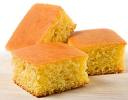
    Having grown up on a diet of country food, I have some appreciation for the contents of this article.  It includes a recipe for corn bread with contained vegetables.  A bit complicated I think.  Corn bread is a simple basic recipe that has always gone well with butter and syrup.  This is quite a departure.
    It also underscores the point that corn bread has not matured fully as a common part of an everyday sophisticated diet as has pasta and bread.  Most also forget that folks who ate polenta were commonly looked down on in parts of Europe not too long ago, yet today it has somehow found an honored place.
    If raised bread simply did not exist, corn bread would take its place rather well. 
    I hope work such as this helps create more interest in cornbread and that it simply becomes more commonly available outside its traditional homeland.
    The real ‘Food Revolution’ starts with healthy Appalachian cornbread
    8 APR 2010 12:07 PM
    Why can\’t a revolution based on traditional Appalachian food ways be televised?
    Having watched the first three episodes, I’ve been thinking a lot about Jamie Oliver’s “Food Revolution” TV Show. Who can argue with his efforts to get fresh food into West Virginia‘s schools? No doubt, the pantries and fridges in most school cafeterias need to be purged and restocked.
    However, from what I can tell so far, our imported food revolutionary could stand to slow down and think a little bit harder about what he’s up to.
    First, Oliver has demonstrated little knowledge of (or interest in) the traditional food culture of the region whose people he has set out to “save.” Over the decades, Southern Appalachians have been plagued by many well meaning do-gooders who wanted to teach those poor, underprivileged folks how to act more civilized–and eat better. Problem is, time and again, those reformers proved to be wrong.
    According to the scholar and Appalachian native Elizabeth Engelhardt, for example, public health officials in the early 20th century targeted cornbread as the latest source of diet-based diseases in the South. Activists set out to create a social revolution in Appalachia by switching mountain women from cornbread to beaten biscuits, the symbol of aristocratic Southern cooking, for which their efforts were sardonically christened the “Beaten Biscuit Crusade.”
    These biscuits required prohibitively expensive wheat flour, elaborate middle-class equipment– including a marble slab and modern ovens– and much more labor and time than their common cornbread. Beaten biscuits became an aspirational dish, separating the privileged from the poor and—following now discredited public-heath logic–the healthy from the unhealthy.
    On the contrary, replacing whole-grain, freshly milled cornmeal with chemically bleached, nutrient-stripped, shelf-stable industrial flour proved nothing but detrimental to Appalachian health. You need only watch Appalshop’s 1977 documentary Waterground, about fifth-generation miller Walter Winebarger, to know that traditional wisdom foresaw this sad outcome.
    Cornbread is just one of a long list of other traditional foods that were replaced with inferior industrial ones–many of which succeeded through propaganda campaigns. Lard from pastured hogs was demonized (largely by nutritionists funded by the vegetable oil industry) and replaced by now-maligned partially hydrogenated vegetable shortening, touted for its “purity.” Fresh-churned butter gave way to another trans-fat bomb, margarine. Much-beloved, live-cultured, and naturally low-fat buttermilk was banished in favor of inert, homogenized, pasteurized, growth hormone-injected, high-fat milk. Wholesome beans, greens, and cornbread gave way to sad casseroles based on canned soup and highly processed “cheese food.”
    Overall, I worry that Oliver’s “Food Revolution” show obscures the fact that our food crisis is a symptom of underlying structural problems. In Appalachia, the government watched idly while the coal industry grabbed control of the region’s abundant natural resources. Widespread erosion of topsoil, contamination of drinking water, devastation of forests, and gut-wrenching destruction of the world’s oldest mountain range has resulted. The area remains in dire need of environmental protection. Is it any wonder why its economy is in ruins and the people in Huntington, West Virginia, are the unhealthiest in the country, as Oliver repeatedly reminds us?
    Then there’s the workers’ rights crisis. Since stagnant wages compelled many women to leave the household and go to work a generation ago, who is supposed to make the from-scratch meals Oliver talks about? Many working mothers are on the clock until 5 or 6 o’clock. Add to that a long commute that many families endure to find jobs, and there is just no way. The system is unsustainable. Long hours at sedentary jobs with fast-food lunches produce unhealthy parents who then produce unhealthy children.
    Moreover, the outrageous school district nutrition guidelines that Oliver struggles with are just one of a whole host of government policies that prop up the industrial food system that supplies most school cafeterias.
    Our food system’s problems run deep–and the solutions won’t come easy. However, we can begin by recognizing, celebrating, and supporting wholesome, traditional foodways. They hang on despite being ground down by industrialization. Here, we find much-needed common ground between two often opposed groups–the liberal outsider and the mountain old-timer. This partnership could provide the fire for a real, lasting food revolution–one that heals Appalachian people, Appalachian economies, and Appalachian environments.

    In that spirit, here are a couple of recipes meant to fuel a food revolution while celebrating mountain food culture, clean and healthy environments, and glorious spring!

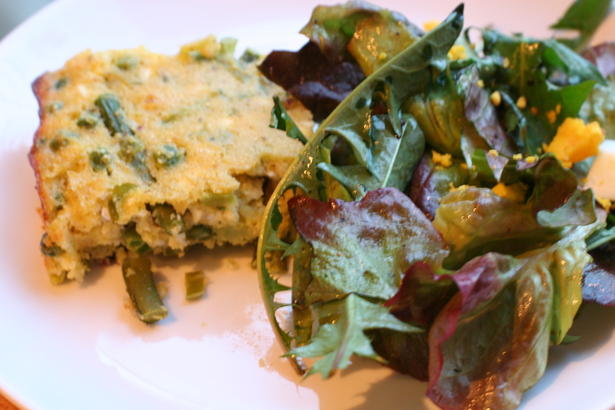
    Spring Vegetable Cornbread 

    This recipe is my effort to reinvent a family favorite recipe for broccoli cornbread. Broccoli cornbread might sound healthy, but it’s not. The original recipe calls for a very sweet cornbread mix heavy on preservatives and trans fats, and light on nutrition. It also calls for a full two sticks of butter, or–worse–margarine. In my version, I’ve slashed the amount of butter, tripled the amount of vegetables, and relied on traditional, stone-ground ,organic cornmeal instead of a commercial mix. This recipe is still a cinch to pull together and the resulting dish exceptionally moist and chocked full of naturally sweet vegetables that kids love.
    It takes less than 10 minutes to prep and 20 minutes to cook. I know that finding lots of fresh vegetables in rural areas can be difficult, so I’ve even tried this with a variety of frozen vegetables. It works great, and frozen are definitely the better nutritional alternative to canned (unless they are home canned). This recipe is also endlessly adaptable–try a summer vegetable cornbread bake with fresh corn, green beans, peppers, and tomatoes. It works just as well as a side dish as it does a main course.
    5 cups mixed spring vegetables, cut into bite size pieces (frozen vegetables are fine and you can even use the microwave to steam them .if it’s more convenient). I used asparagus, leeks, snap peas, and broccoli in about equal amounts. 

    1/2 teaspoon salt
    1/2 teaspoon pepper
    2 cups stone ground organic cornmeal
    1 1/2 teaspoons salt
    1 1/2 teaspoons baking powder
    4 eggs
    1 Tablespoon honey
    2 cups cottage cheese (I used 2%)
    6 Tablespoons unsalted butter (you can substitute olive oil if you prefer)
    Preheat oven 400 degrees F.
    Cut fresh vegetables into bite size pieces and steam until just tender. Frozen vegetables can simply be defrosted. Sprinkle with ½ teaspoon salt and ½ teaspoon black pepper and set aside.
    In a 9-by-13 inch baking dish, place the 6 Tablespoons butter and place in the oven to melt.
    In a mixing bowl whisk together cornmeal, 1 ½ teaspoons salt, and 1 ½ teaspoons baking powder
    To the cornmeal mixture whisk in four eggs, cottage cheese, and 1 tablespoon honey. Fold in the steamed vegetables.
    Remove the baking dish of melted butter from the oven. Pour about ½ of the butter into the cornbread batter and whisk to combine. Then pour the batter into the baking dish with the rest of the melted butter and use a spatula to spread the batter evenly.
    Bake at 400 degrees F for 20 minutes or until a toothpick inserted into the center of the dish comes out clean.
    Appalachian-style Wilted Salad

    This salad is very similar to the classic French salad of frisee aux lardons with a poached egg. However, this version is straight out of Appalachia. Traditionally the salad would include foraged spring greens, like dandelions and lamb’s quarters, as well as wild ramps. It’s just what the body needs to awaken it from winter’s slumber.
    Makes 4 side salad servings
    1/2 pound young spring lettuces
    1 spring onion or ramp, sliced thinly
    2 slices thick cut or slab bacon, cut into 1-inch pieces
    3 tablespoons apple-cider vinegar
    1 tablespoon honey
    1 hard-boiled egg, chopped
    Salt and ground black pepper
    Wash lettuce and spin is a salad spinner until very dry. Place in a serving bowl with the spring onions.
    Cook bacon in over medium heat until crisp. Transfer with a slotted spoon and to drain on paper towels. Hold bacon drippings warm in the pan over low heat.
    Stir the vinegar and honey into the bacon drippings. Increase the heat to medium and cook the mixture until it is just bubbles.
    Pour the hot dressing immediately over the lettuce and onions, tossing to coat and wilt the greens just slightly. Season with salt and pepper, top with chopped boiled egg, and serve immediately. 
    Top of Form
    Bottom of Form
  • List of Bad Things Attributed to Global Warming


    This is more humor than any creditable science.  About two years ago, the global warming propaganda machine created such pressure that any scientist that wished to attract funding somehow found a way to mention global warming in his grant applications and obviously into the paper production.  Two years of effort has produced this mountain of perfectly good science hiding under the same umbrella.


    It is still not quite as bad as the cure for cancer umbrella which rolled on for decades.  This one at least ended pretty badly a few weeks back.


    This is a typical case of jumping on a strong horse to advance one’s own work.  Let us hope that few suffer any real damage.  After all, it was all about PR.


    A Complete List Of Bad Things Attributed To Global Warming

    Hardly a day goes by that the media don’t blame something on global warming. Or so it seems. The British-based science watchdog, Number Watch, wondered just how many and went to the trouble of documenting them.
    It has kept on its Web site a near-comprehensive set of links to a long list of things attributed by either scientific research or the media to global warming. As you read it, some items will strike you as contradictory. Others, perhaps, as merely absurd. And still others as factually impossible.
    However they strike you, in perusing the list one thing will become clear: just how much the fear of global warming has come to taint both science and news reporting on the issue.
    Following is the list of phenomena (756 entries in all) linked at one time or another to warming. They range from acne, bubonic plague and a drop in circumcisions to Yellow fever, whale beachings, walrus stampedes, witchcraft executions and the threat of zebra mussels.
    Actual links to stories that make the claims listed below can be found at http://www.numberwatch.co.uk/warmlist.htm. (Below the list are some claims that no longer have working Internet links.)
    The list:
    Acne, agricultural land increase, Afghan poppies destroyed, aged deaths, poppies more potent, Africa devastated, Africa in conflict, African aid threatened, African summer frost, aggressive weeds, Air France crash, air pressure changes, airport farewells virtual, airport malaria, Agulhas current, Alaskan towns slowly destroyed, al-Qaida and Taliban being helped, allergy increase, allergy season longer, alligators in the Thames, Alps melting, Amazon a desert, American Dream end, amphibians breeding earlier (or not), anaphylactic reactions to bee stings, ancient forests dramatically changed, animals head for the hills, animals shrink, Antarctic grass flourishes, Antarctic ice grows, Antarctic ice shrinks, Antarctic sea life at risk, anxiety treatment, algal blooms, archaeological sites threatened, Arctic bogs melt, Arctic in bloom, Arctic ice free, Arctic ice melt faster, Arctic lakes disappear, Arctic tundra lost, Arctic warming (not), a rose by any other name smells of nothing, asteroid strike risk, asthma, Atlantic less salty, Atlantic more salty, atmospheric circulation modified, attack of the killer jellyfish, avalanches reduced, avalanches increased, Baghdad snow, Bahrain under water, bananas grow, barbarization, bats decline, beer and bread prices to soar, beer better, beer worse, beetle infestation, bet for $10,000, big melt faster, billion-dollar research projects, billion homeless, billions face risk, billions of deaths, bird distributions change, bird loss accelerating, bird strikes, bird visitors drop, birds confused, birds decline (Wales), birds driven north, birds face longer migrations, birds return early, birds shrink (Australia), birds shrink (U.S.), bittern boom ends, blackbirds stop singing, blackbirds threatened, Black Hawk down, blizzards, blood contaminated, blue mussels return, borders redrawn, bluetongue, brain-eating amoebae, brains shrink, bridge collapse (Minneapolis), Britain one big city, Britain Siberian, Britain’s bananas, British monsoon, brothels struggle, brown Ireland, bubonic plague, Buddhist temple threatened, building collapse, building season extension, bushfires, butterflies move north,butterflies reeling, carbon crimes, camel deaths, cancer deaths in England, cannibalism, caterpillar biomass shift, cave paintings threatened, childhood insomnia, Cholera, circumcision in decline, cirrus disappearance, civil unrest, cloud increase, coast beauty spots lost, cockroach migration, cod go south, coffee threatened, coffee berry borer, coffee berry disease, cold climate creatures survive, cold spells (Australia), cold wave (India), cold weather (world), computer models, conferences, conflict, conflict with Russia, consumers foot the bill, coral bleaching, coral fish suffer, coral reefs dying, coral reefs grow,coral reefs shrink, coral reefs twilight, cost of trillions, cougar attacks, crabgrass menace, cradle of civilization threatened, creatures move uphill, crime increase, crocodile sex, crops devastated, crumbling roads, buildings and sewage systems, curriculum change, cyclones (Australia), danger to kid’s health, Dartford Warbler plague, deadly virus outbreaks, death rate increase (U.S.), deaths to reach 6 million, Dengue hemorrhagic fever, depression, desert advance, desert retreat, destruction of the environment, dig sites threatened, disasters, diseases move north, dog disease, dozen deadly diseases — or not, drought, ducks and geese decline, dust bowl in the corn belt, earlier pollen season, Earth axis tilt, Earth biodiversity crisis, Earth dying, Earth even hotter, Earth light dimming, Earth lopsided, Earth melting, Earth morbid fever, Earth on fast track, Earth past point of no return, Earth slowing down, Earth spins faster, Earth to explode, Earth upside down, earthquakes, earthquakes redux, El Nino intensification, end of the world as we know it, erosion, emerging infections, encephalitis, English villages lost, equality threatened, Europe simultaneously baking and freezing, eutrophication, evolution accelerating, expansion of university climate groups, extinctions (human, civilization, koalas, logic, Inuit, smallest butterfly, cod, penguins, pikas, polar bears, possums, walrus, tigers, toads,turtles, plants, ladybirds, rhinoceros, salmon, trout, wild flowers, woodlice, a million species, half of all animal and plant species, mountain species, not polar bears, barrier reef, leaches, salamanders, tropical insects) experts muzzled, extreme changes to California, fading fall foliage, fainting, famine, farmers benefit, farmers go under, farm output boost, farming soil decline, fashion disaster, fever, figurehead sacked, fir cone bonanza, fires fanned in Nepal, fish bigger, fish catches drop, fish downsize, fish deaf, fish get lost, fish head north, fish shrinking, fish stocks at risk, fish stocks decline, five million illnesses, flesh eating disease, flies on Everest, flood patterns change, floods, floods of beaches and cities, flood of migrants, flood preparation for crisis, flora dispersed, Florida economic decline, flowers in peril, fog increase in San Francisco, fog decrease in San Francisco, food poisoning, food prices rise, food prices soar, food security threat, football team migration, forest decline, forest expansion, foundations threatened, frog with extra heads, frosts, frostbite, frost damage increased, fungi fruitful, fungi invasion, games change, Garden of Eden wilts, geese decline in Hampshire, genetic changes, genetic diversity decline, gene pools slashed, geysers imperiled, giant icebergs (Australia), giant oysters invade, giant pythons invade, giant squid migrate, gingerbread houses collapse, glacial earthquakes, glacial retreat, glacier grows (California), glaciers on Snowden, glacier wrapped, global cooling, glowing clouds, golf course to drown, golf Masters wrecked, grain output drop (China), grandstanding, grasslands wetter, gravity shift, Great Barrier Reef 95% dead, Great Lakes drop, great tits cope, greening of the North, Grey whales lose weight, Gulf Stream failure, habitat loss, haggis threatened, Hantavirus pulmonary syndrome, harvest increase, harvest shrinkage, hay fever epidemic, health affected, health of children harmed, health risks (even more) heart disease, heart attacks and strokes (Australia), heat waves, hedgehogs bald, hibernation affected, hibernation ends too soon, hibernation ends too late, homeless 50 million, hornets, human development faces unprecedented reversal, human fertility reduced, human health risk, human race oblivion, hurricanes, hurricane reduction, hurricanes fewer, hurricanes more intense, hurricanes not, hydropower problems, hyperthermia deaths, ice age, ice sheet growth, ice sheet shrinkage, icebergs, illness and death, inclement weather, India drowning, infrastructure failure (Canada), indigestion, industry threatened, infectious diseases, inflation in China, insect explosion, insect invasion, insurance premium rises, Inuit displacement, Inuit poisoned, Inuit suing, invasion of alien worms, invasion of Antarctic aliens, invasion of Asian carp, invasion of cats, invasion of crabgrass, invasion of herons, invasion of jellyfish, invasion of king crabs, invasion of midges,invasion of slugs, island disappears, islands sinking, Italy robbed of pasta, itchier poison ivy, jellyfish explosion, jet stream drifts north, jets fall from sky, Kew Gardens taxed, kidney stones, killer cornflakes, killing us, kitten boom, koalas under threat, krill decline, lake and stream productivity decline, lake empties, lake shrinking and growing, landslides, landslides of ice at 140 mph, large trees decline, lawsuits increase,lawsuit successful, lawyers’ income increased, lawyers want more, legionnaires’ surge, lives lost, lives saved, Loch Ness monster dead, locust plagues suppressed, lush growth in rain forests, Lyme disease, Malaria, malnutrition, mammoth dung melt, mango harvest fails, Maple production advanced, Maple syrup shortage, marine diseases, marine food chain decimated, Meaching (end of the world), Meat eating to stop, Mediterranean rises, megacryometeors, Melanoma, Melanoma decline, mental illness, methane emissions from plants, methane burps, methane runaway, melting permafrost, Middle Kingdom convulses, migration, migratory birds huge losses, microbes to decompose soil carbon more rapidly, minorities hit, monkeys at risk, monkeys on the move, Mont Blanc grows, monuments imperiled, moose dying, more bad air days, more research needed, mortality increased, mosquitoes adapting, mountain (Everest) shrinking, mountaineers fears, mountains break up, mountains green and flowering, mountains taller, mortality lower, murder rate increase, musk ox decline, Myanmar cyclone, narwhals at risk, National Parks damaged, National security implications, native wildlife overwhelmed, natural disasters quadruple, new islands, next ice age, NFL threatened, Nile delta damaged, noctilucent clouds, no effect in India, Northwest Passage opened, nuclear plants bloom, oaks dying, oaks move north, oblivion, ocean acidification, ocean acidification faster, ocean dead spots, ocean dead zones unleashed, ocean deserts expand, ocean waves speed up, Olympic Games to end, opera house to be destroyed, outdoor hockey threatened, oxygen depletion zones, ozone repair slowed, ozone rise, penguin chicks frozen, penguin chicks smaller, penguins replaced by jellyfish, personal carbon rationing,pest outbreaks, pests increase,phenology shifts, pines decline, pirate population decrease, plankton blooms, plankton wiped out, plants lose protein, plants march north, plants move uphill, polar bears aggressive, polar bears cannibalistic, polar bears deaf, polar bears drowning, polar tours scrapped, popcorn rise, porpoise astray, profits collapse, psychiatric illness, puffin decline, pushes poor women into prostitution, rabid bats, radars taken out, railroad tracks deformed, rainfall increase, rape wave, refugees, reindeer endangered, reindeer larger, release of ancient frozen viruses, resorts disappear, rice threatened, rice yields crash, rift on Capitol Hill, rioting and nuclear war, river flow impacted, rivers raised, road accidents, roads wear out, robins rampant, rocky peaks crack apart, roof of the world a desert, rooftop bars, Ross river disease, ruins ruined, Russia under pressure, salinity reduction, salinity increase, Salmonella, salmon stronger, satellites accelerate, school closures, sea level rise, sea level rise faster, seals mating more, seismic activity, sewer bills rise, severe thunderstorms, sex change, sexual promiscuity, shark attacks, sharks booming, sharks moving north, sheep change color, sheep shrink, shop closures, short-nosed dogs endangered, shrimp sex problems, shrinking ponds, shrinking sheep, shrinking shrine, Sidney Opera House wiped out, ski resorts threatened, slow death, smaller brains, smelt down, smog, snowfall decrease, snowfall increase, snowfall heavy, snow thicker, soaring food prices, societal collapse, soil change, songbirds change eating habits, sour grapes, space problem, spectacular orchids, spiders getting bigger, spiders invade Scotland, squid larger, squid population explosion, squid tamed, squirrels reproduce earlier, stingray invasion, storms wetter, stratospheric cooling, street crime to increase,subsidence, suicide, swordfish in the Baltic, Tabasco tragedy, taxes, tectonic plate movement, terrorists (India), thatched cottages at risk, threat to peace, ticks move northward (Sweden), tides rise, tigers eat people, tomatoes rot, tornado outbreak, tourism increase, toxic seaweed, trade barriers, trade winds weakened, traffic jams, transportation threatened, tree foliage increase (U.K.), tree growth slowed, tree growth faster, trees in trouble, trees less colorful, trees more colorful, trees lush, trees on Antarctica, treelines change, tropics expansion, tropopause raised, truffle shortage, truffles down, turtles crash, turtle feminized, turtles lay earlier, UFO sightings, U.K. coastal impact, U.K. Katrina, Vampire moths, Venice flooded, violin decline, volcanic eruptions, walrus pups orphaned, walrus stampede, wars over water, wars sparked, wars threaten billions, wasps, water bills double, water scarcity (20% of increase), wave of natural disasters, waves bigger, weather out of its mind, weather patterns awry, weather patterns last longer, Western aid cancelled out, West Nile fever, whale beachings, whales lose weight, whales move north, whales wiped out, wheat yields crushed in Australia, wildfires,wind shift, wind reduced, winds stronger, winds weaker, wine — Australian baked, wine — harm to Australian industry, wine industry damage (California), wine industry disaster (U.S.), wine — more English, wine — England too hot, wine — German boon, wine — no more French, wine passé (Napa), wine — Scotland best, wine stronger, winters in Britain colder, winter in Britain dead, witchcraft executions, wolverine decline, wolves eat more moose, wolves eat less, workers laid off, World at war, World War 4, World bankruptcy, World in crisis, World in flames, Yellow fever, zebra mussel threat, zoonotic diseases.