Author: Serkadis

  • Capsule Filters

    CP capsules are designed and manufactured by Critical Process for small flow and encapsulated disposable cartridge requirements. CP capsules are offered in a wide range of pleated and depth medias and offered in four grades; general, food / beverage, electronic and pharmaceutical. Each Capsule has been designed to hold the maximum amount of filter media that can be completely and effectively utilized in a capsule. CP capsules lower the cost of filtration and reduce the need for high cost metallic housings. They are well suited for liquids and gas applications with the same attention to quality, traceability, validation and testing.

    .

  • The New HygroFlex8 – The All-in-One Industrial Transmitter from Rotronic

    Bassersdorf (Switzerland), 22 March 2010 – The new HF8 humidity and temperature transmitters from Rotronic are ideal for fixed-installation applications requiring high precision measurements. Based on the new advanced AirChip3000 technology, the HygroFlex8 communicates with all HygroClip2 probe types which utilize Rotronic’s time tested sensors and are used in thousands of applications worldwide.

    Precision that is tough to beat
    Together with the digital HygroClip2 probes, the HygroFlex8 is one of the most versatile and precise humidity and temperature measuring instruments available on the market.
    With a measurement accuracy of 0.8% RH and 0.1ÚC, the instruments can measure humidity ranges from 0 to 100%RH and overall temperature ranges of -100 to 200ÚC depending on the type of probe being used. The latest AirChip3000 technology guarantees an automatic sensor test, drift compensation and every probe is temperature compensated with over 30,000 data points to maintain the highest possible accuracy over the entire measuring range.

    The ultimate transmitter in flexibility and configurability
    The HF8 has two probe inputs and the optional HW4 software allows users to configure the connected HygroClip2 or 3rd party analog probes exactly to their needs. Each HF8 has 4 analog outputs and 4 alarm relays programmable to any probe input and any probe parameter, including all psychrometric calculations such as dew point or wet-bulb. Audible and visual alarms can be activated as well. The data logging function on the HygroFlex8 allows recording of up to 20,000 data points with date and time stamp. Users can configure the logging intervals and download, store and graph the data with the HW4 software.

    Completely Networkable
    The optional digital outputs additionally enable connection to a network via Ethernet and Power over Ethernet (POE). All this complies with FDA CFR 21 part 11 and GAMP regulatory requirements when used with the HW4 software.

    The HygroFlex8 is a true “All-in-One” device suitable for use in nearly all industrial applications – in the pharmaceutical and food industries, automotive industry, BAS/HVAC and many others.

    You can find further detailed information about the new HygroFlex8 and all about humidity and temperature measurement at ROTRONIC at www.rotronic-humidity.com, by E-Mail [email protected] or by telephone at +41 44 838 11 44.

  • Direct and Permanent Marking of components on high-speed production lines.

    Reggiana Macchine Utensili is an Italian manufacturer leader in Permanent Marking Systems.

    The whole range of products includes controlled-percussion dot marking, laser marking and scratch marking, it is for sure one of the most comprehensive into the market.

    The Marking Machine mod. FIONDA is able to mark up to 15 char/sec and it has been conceived to be perfectly integrated in fully automated production lines.

    The powerful software can perfectly manage texts in line, arched, mirrored, serial numbers, production batches, date, clock, calendar, working shifts, logos and drawings, marking in continuous line, dot-matrix font, 2D Matrix and OCR codes.
    All systems can directly communicate thorough RS232, RS485, TCP/IP, from/to PLC and PC, it can receive from bar code readers, .txt files for automated cycle loop-repetition and via a wireless remote system.

    Reggiana Macchine Utensili is an experienced supplier to several market sectors:
    – Automotive, car industry, Industrial vehicles (manufactures of cars, motorcycles, buses, trains, trucks, planes, boats, etc.)
    – Automation and Robotic, (production and assembly lines, special machines, etc.)
    – Petrochemical, (Flanges, Pipes, Tubes, Valves, etc. )
    – Fluid and Power Transmission, (fluid controllers and distributors, gears, hydraulic components, etc)
    – Heavy Industry, (metal structures, billets, etc.)
    – Forging and Casting, (forged parts and components)
    – Medical and Biomedical, (surgical instruments, prosthesis, cosmetics, packaging, etc)
    – And many others.

    Reggiana Macchine Utensili: a solution for the traceability of your products.

  • NEW REMOTE DISPLAY UNITS EXPAND CAPABILITIES OF IMAGE SENSOR AND BARCODE READER

    iVU TG and iVu BCR from Banner Engineering can be set up without a PC

    Banner Engineering has introduced remote display versions to extend the capabilities of its iVu TG Image Sensor and iVu BCR Bar Code Reader. Designed for applications where the sensor must be placed in a difficult-to-reach location, the new units allow setup and inspection monitoring to be done at a remote control position.

    For example, the sensor could be located inside a machine or on an elevated conveyor, with the control unit placed adjacent to a central human-machine interface for easy operator access. One display unit can control and monitor multiple sensors, thus reducing overall cost.

    Applications for the new sensors are found in a wide range of industries, including automotive, packaging, material handling, pharmaceutical, plastics, electronics (PCB and assembly), appliances and metalworking.

    The iVu TG image sensor monitors parts for type, size, orientation, shape and location. It includes a match sensor to determine whether a pattern on the item being inspected matches a reference, an area sensor to detect presence or absence of a particular feature, and an area sensor that adjusts for motion.

    The iVu BCR reads all common linear and DataMatrix (ECC200) codes and includes the ability to read multiple codes of different types in the same image.

    With intuitive user interface and LCD touch-screen display, the sensors are easy to configure with no need for image processing expertise or an external PC. A USB 2.0 compliant host allows easy updating and diagnostics. They have IP67 rated housings for use in harsh industrial environments. Appropriate cables and mounting brackets are available for all applications.

    Single-unit models of both products with identical functionality are available for use where remote display is not needed.

    Banner Engineering is one of the world’s leading manufacturers of vision sensors, photoelectric and ultrasonic sensors, fiber optic assemblies, indicator lights, machine guarding systems, precision measurement and inspection systems and wireless network products. The company provides local application support worldwide.

  • Composite Laminated Shims

    We are a manufacturer and specialist of Custom Laminated Shims based in our own purpose built factory complex, just outside Paris, France with a North American subsidiary in Santa Monica, California and a German subsidiary in Cologne. LAMECO is an ISO 9001 and AS / EN / JISQ 9100 certified; family owned and operated premier quality manufacturing company which has been in business for over nearly 40 years. We have patented and developed five laminated materials and products among those:

    – Intercomposite®: composite Laminated Shims
    Intercomposite® is a synthetic material (glycol polyethylene terephthalate film) offering weight saving benefits (specific weight of 1.395); easily peelable by finger alone without tools; yet possessing higher compressive strength and equivalent thermal resistance to those of Aluminum (specific weight of 2.8).

    – X.Fiber®: high-resistance composite Laminated Shims
    LAMECO manufactures X.Fiber® to a unique proprietary method based on glass fibre technology. X.Fiber® is very light; up to six times lighter than Steels or Brass with higher thermal resistance and equivalent compressive strength! X.Fiber® can be peeled without tools and once peeled the sheets are reusable. This is LAMECO’s premium product– a world beater much sought after by the aviation industry.

    => X.Fiber® and Intercomposite® Shims provide forward-thinking manufacturers with a powerful competitive edge.

  • Customized Equipment for Laser Welding, Cutting, Wire stripping, Soldering

    Customers can choose from a menu of options to include the features they need for their laser workstation. By choosing one of our Standard Systems customers can reduce cost and ensure faster delivery.

    ILT systems are highly regarded for their reliability. ILT’s laser workstations are built with proven components and tested thoroughly before shipping which contributes to ILT’s outstanding up-time record. ILT has satisfied customers worldwide.

    Whether you need a workstation that is configured-to-order or engineered-to-order, your ILT station can include fully integrated features such as:

    Vision-assisted automation
    Parts handling
    Motion control
    Programmable Shield Gas
    Hermetic Leak Testing
    Nd:YAG, CO2 or Fiber lasers
    System / Process Statistics
    Basic / Advanced Data Management
    Remote Data Interface
    21CFR Part 11 solution

  • Digg to Kill Off the DiggBar, Unban Domains

    Digg is going through some big changes and, for once, they’re not related to the upcoming overhaul of the site, dubbed Digg v4. Cofounder and CEO Jay Adelson stepped down from his position on Monday without citing any real reasons. However, a growing disparity between him and Digg Founder and new CEO Kevin Rose may have been at least part of the reason… (read more)
  • Infamous Check Scanning Patents, That Senators Tried To Bury, Wins First Lawsuit

    A couple years ago, there was a really sleazy move by some Senators to try to exempt banks from lawsuits brought by a company called DataTreasury, who held a patent on a method for scanning checks. The only purpose for this legal change was so that banks could avoid having to deal with patent infringement threats and lawsuits for doing something as basic as automatically scanning their checks. What we couldn’t understand is why the Senators would single out two specific patents to be ignored, rather than trying to actually fix the patent system. Well, actually, it wasn’t hard to figure out: the Senators were trying to do the banks (the same ones they were about to bail out) a big favor — and doing real patent reform is difficult. Anyway, that story got some publicity and it forced the Senators to back down, so that specific “exemption” never made it through to being law.

    That said, it doesn’t mean that the patents in question was a particularly good patent. In fact, there’s a good argument that the patent is exceptionally broad, way beyond a reasonable level, and was the natural progression of where things were headed. Others have pointed out that, depending on what the Supreme Court rules in the Bilski case, this patent might soon get tossed under the new rules anyway. In the meantime, though, it hasn’t stopped DataTreasury from collecting $350 million from banks it has threatened, and, as Joe Mullin points out, the company has also won its first patent lawsuit, against US Bank, who will now have to pay somewhere between $27 million and $90 million (depending on how “willful” the infringement is considered). The decision came out of an East Texas jury, so perhaps it’s not surprising.

    Mullin’s article highlights how questionable a patent this is:


    Steve Bartlett, CEO of the bank lobbying group Financial Services Roundtable, says DataTreasury’s suit against U.S. Bancorp is a prime example of why business method patents need to be reined in. The patents don’t amount to an invention, Bartlett says, just a description of a common business practice–processing checks–that has changed over time, as have answering the phone and opening mail. To Bartlett, that such a patent can be used to extract large sums from banks shows how far the patent system has spun out of control.

    “This particular case involves check processing, which every bank in the nation has been doing for 200 years,” says Bartlett. “And yet [DataTreasury] somehow got a patent on it.”

    Furthermore, as the lawyers pointed out at the trial, there appears to be tremendous prior art on the patents in question — and the only way the company was able to secure the patents after they were initially rejected was to add a bit of encryption to it. Under the KSR test, it seems like that alone should invalidate the patents. Taking two known things — check scanning and encryption — and combining them shouldn’t be patentable. But that’s not how the patent system works, unfortunately. US Bank is planning to appeal, and the Supreme Court could help out quite a bit with a smart Bilski ruling (though that may be too much to hope for).

    Permalink | Comments | Email This Story


  • Discoveries at Tanis, and a need for sponsorship

    Tanis/ San el-Hagar website
    From Charlotte Lejeune
    [email protected]

    I have some news from the new lake of Mut, in Tanis (San el-hagar, Egypt).

    I belong to the Tanis French mission (MFFT). After many years looking for the lake at the Mut temple, it finally appeared. And even if I was not there to participate in the discovery, I am very happy it finally occurred.

    There is the link to our web site: .

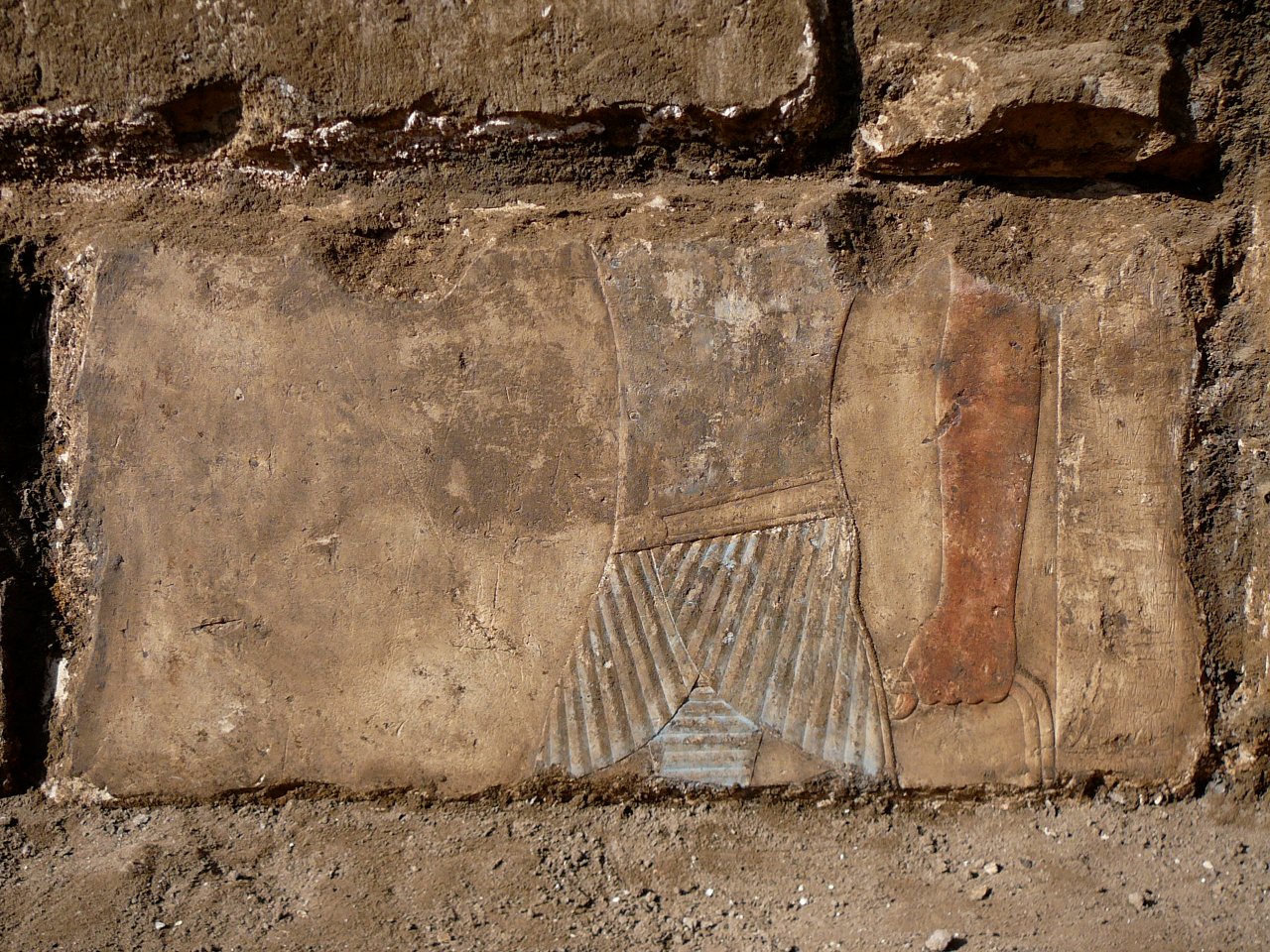
    We had our meeting a week ago, and our chief, Phillipe Brissaud, explained field issues we are facing dealing with the discovery of engraved and painted limestone blocks in the lake of Mut’s Temple. However, amongst all of these issues, there lies an even bigger problem, a lack of financial resources, a.k.a. sponsorship.

    This is the object of my mail today. Our website has been updated concerning the sponsorship of these blocks to help us excavate, study, and better protect them from the Delta climate.

    So far, only 20 of these blocks have been photographed; but we are expecting hundreds more as the excavation continues. You can find much about these blocks in our online report.

    We encourage you to forward this notice to all who might be interested.

  • Once again, camels and horses at the Pyramids

    Al Ahram Weekly (Zahi Hawass)

    The camel and horse touts in Giza are very upset with our new project to save the Pyramids. They do not understand what we are trying to do. Regrettably, many of them do things that harm tourists; I receive many letters from tourists claiming that they will never return to Egypt because of the way they were treated or harassed for money.

    I do not think that I need to elaborate much more, since one look at the pyramid site shows what kind of pollution the camels and horses cause. You see them everywhere, even inside the tombs and temples. We do not plan to hurt the animals. I honestly believe that this is what the camel and horse drivers think, and that is why they object to our plans.

    For example, I read an article in the Boston Globe written by a man and his wife about this problem. They met a horse driver whose family had been giving tours of Giza for more than three generations. He asked the man and his wife to send letters to the government praising his business, because he was concerned that the modernisation of the site of Giza would mean the end for him. He does not understand that we are trying to create a system that will benefit everyone. Currently, the stronger, wealthier families get all the business while the others do not. Some give tours to 10 tourists a day, while others do only a few.

    Before, the tourists did not have easy access to the stables. The modernisation of the Giza Plateau has benefited the horse and camel drivers. All the buses filled with tourists now enter from the Fayoum road. The tourists see the stables as soon as they exit the coaches, and this allows them to make an immediate decision whether or not to ride a horse or camel.

  • The True Story of Desert Explorer Laszlo Almasy

    Spiegel Online (By Matthias Schulz. Translated from the German by Christopher Sultan)

    Thanks Kat! I have a real fascination with the exploration activities of the Zerzura Club and the work of the Long Range Desert Group which followed. Almasy was a member of the informal Zerzura Club, a mainly British group searching, as a rather ambitious pass-time, for the so-called Lost City of Zerzura in the area of the Gilf Kebir. They never found a lost city but they did learn the lie of the land at the borders of Libya, much of which Pat Clayton mapped. During the Second World War the Hungarian Almasy served the Axis forces under Romel, and was responsible for smuggling Axis spies into Egypt using the knowledge of the Gilf area that he had learned in the pre-war period. Similarly, Ralph Bagnold used his own experiences to set up the Long Range Desert Group and patrol the Libyan borders. The film The English Patient used some of Almasy’s experiences (and his name) but the film was fictional. If anyone is interested in reading more about Almasy there’s a good book about him by John Bierman which I reviewed on the blog.

    During World War II, desert explorer Laszlo Almasy smuggled Nazi agents through the Sahara on an epic journey behind enemy lines. Now the true story of the man depicted in “The English Patient,” is coming to light.

    As a boy, the son of a Hungarian nobleman would often stare off into the distance from his birthplace, a castle in the Burgenland region of present-day Austria. He always longed for the unattainable.

    At 14, the boy built himself a glider to fly up to the sky, but it crashed.

    Then, in the 1930s, Laszlo Almasy set out to find the lost oasis of Zarzura. The mythical place is mentioned in Arabian treasure books and in the collection of stories known as “One Thousand and One Nights,” where it is referred to as “City of Brass.”

    The pioneer explored 2 million square kilometers (772,000 square miles) of the Sahara. He surveyed the land, drew maps and set foot in places in that sea of sand “that no human eye had seen.” In the remote Wadi Sura, he even stumbled upon painted dugouts from the Stone Age — a sensational find.

    But he never found Zarzura.

    There is no question that Almasy was a man who followed his desires. But who was this adventurer, flight instructor and Nazi agent, who the Bedouins reverently called Abu Ramla, or Father of the Sand?

  • They’re here, they’re beered, get used to it

    Recent polling on the ‘Teabagger’ movement has been released and there are two things that are quite evident.

    First, the movement is made up primarily of Republicans and people who think Jonah Goldberg is an intellectual.

    A Sunday poll — actually three national phone surveys of 1,000 registered voters — found that 17% of all polled, or more than 500, called themselves “part of the Tea Party movement.”

    …The Tea Party adherents broke down 28% independent, 17% Democrat and only 57% Republican.

    Zell Miller’s got a big family.

    Second, the movement is really unpopular with the public as a whole (ironically JUST as popular as “socialism”).

    …only 37% of Americans view Teabaggery favorably.

    But enough with the statistics, like a good teabagger, allow me to summarize in pictures rather than those commie “words”:

  • Octavian Augustus Named as Egyptian Pharaoh on Philae Victory Stele

    Heritage Key (Owen Jarus)

    A new translation of a Roman victory stele, erected in April 29 BC, shows Octavian Augustus’s name inscribed in a cartouche (an oblong enclosure that surrounds a pharaoh’s name) – an honour normally reserved for an Egyptian pharaoh.

    Octavian’s forces defeated Cleopatra and Mark Antony at the Battle of Actium in 31 BC. His forces captured Alexandria soon afterwards and Cleopatra committed suicide in 30 BC, marking the end of Egyptian rule.

    Historians believe that although Octavian ruled Egypt after the death of Cleopatra, he was never actually crowned as an Egyptian pharaoh.

    The stele was erected at a time when Octavian was still paying lip service to restoring the Roman Republic. He would not be named “Augustus” by the Roman Senate until 27 BC. In the years following that, he would gradually acquire more power.

  • Download Flash Player 10.1 RC with Hardware Acceleration

    Hardware acceleration for online content is just around the corner, as Adobe has barely released Flash Player 10.1 Release Candidate, which brings hardware-assisted video decoding and gaming. On supported platforms, this should translate into better performance and less CPU utilization, which is always a nice thing to get, but is especial… (read more)

  • Scientists use ‘naked scanners’ to probe mummies

    The Local

    German scientists have found a less controversial use for the “naked body scanners” being rolled out at European airports – investigating ancient Egyptian mummies.

    The high-frequency “terahertz” scanners can scan fragile mummies in a way that is less damaging than X-ray scanners, which can destroy precious DNA, the scientists say.

    Markus Walther and Andrea Bitzer from the Materials Research Centre at the University of Freiburg, have found that the terahertz rays can penetrate the cloth material used to wrap mummies and conveniently probe the dessicated body beneath.

  • It’s always tough parting with Mummy

    Suburban Chicago News (Denise Crosby)

    High School Mummy — not the musical — has moved from Naperville Central to North.

    And history teacher Jim Galanis admits — with a chuckle of course — he’s wound a little tight over this temporary transfer of “Butch,” Central’s beloved 2,000-year-old Egyptian artifact.

    “We just hope the crate doesn’t come back empty,” as part of some prank … “or that she doesn’t come back dressed in orange and blue,” says Galanis of Friday’s move that was necessary because of renovations that won’t be completed until fall.

    Describing this teacher’s relationship with Butch — donated to the school by a doctor in the ’40s, then rediscovered in a storage area in 1975 — as close would be an understatement. He and colleague Tom Henneberry have been her protector, advocate, lab partners, even chauffeur for more than two decades.

    In addition to turning her into a legendary part of the curriculum in Central’s history department, these two teachers helped Butch morph into a television star when National Geographic Channel featured her in a segment called “High School Mummy” in its “Mummy Road Show” series that aired in 2002.

  • Travel: On the warpath

    Egypt Today (Omar Mohsen)

    In the past century, Egypt was no stranger to war, whether as a nation confronting foreign enemies or as a proxy for colonial powers. Several of the sites where battles took place and pivotal events unfolded still stand today, making a great themed getaway for history buffs.

    With a bit of effort and imagination, those with a passion for the subject can recapture a bit of the thrill, intrigue and yes, heartbreak, of some of Egypt’s most notable military moments by visiting battle sites and war cemeteries. Some of the getaways make especially poignant trips for those with relatives who fought in the Second World War’s North Africa campaigns.

    Start your journey in Cairo, where a number of neighborhoods and the hotels within played host to British military and intelligence offices during the Second World War. Regrettably, many of these old bastions have been replaced by glitzy modern franchises, but back in the day they were the heart of international intrigue.

    Take yourself back to “Ash Wednesday,” July 1, 1942, when the British General Headquarters and British Embassy in Garden City blanketed Cairo streets in smoke and ash as they torched classified documents upon Germany’s Field Marshal Erwin Rommel’s entry into Egypt.

    Make sure to swing by the houseboats on the Nile banks as your tour continues. These relics pay homage to a time during the two world wars when Cairo was the cloak-and-dagger capital for spies on all sides. But it was in one such houseboat that two German spies, sent from Rommel’s ranks during WWII, attempted to set up a radio post that would deliver information on Allied men and material to the Axis forces near El Alamein. The scheme, codenamed Operation Salaam, fell apart, but before it did, it took on the air of a spy novel, with a bellydancer named Hekmat Fahmy helping the spies, as well as a young man from the Free Officers movement named Anwar El Sadat.

    From there, move on to the War Cemetery in Heliopolis, in which the remains of nearly 2,000 Allied soldiers from WWII are interred and a pavilion is dedicated to the unknown soldiers of WWI.

    For anyone interested in a less approachable modern legacy of the Second World War – unexploded ordinance, which still wounds and kills Bedouin who use the desert battlegrounds to plant olives and herd their animals, you may be interested in a summary of the situation on my Archaeology of Egypt’s Deserts blog.
  • More re overhaul of Luxor

    Reuters UK (Alexander Dziadosz)

    LUXOR, Egypt (Reuters) – In the dusty streets behind the pasha’s grand villa, bulldozers and forklifts are tearing into the city where Agatha Christie found inspiration and Howard Carter unearthed Tutankhamun.

    Egypt has already cleared out Luxor’s old bazaar, demolished thousands of homes and dozens of Belle Epoque buildings in a push to transform the site of the ancient capital Thebes into a huge open-air museum.

    Officials say the project will preserve temples and draw more tourists, but the work has outraged archaeologists and architects who say it has gutted Luxor’s more recent heritage.

    “They basically want to tear the whole thing down,” said one foreigner who lives in Luxor part of the year, agreeing to speak only if his name was not used.

    “They want it to be all asphalt and strip malls and shopping centres. That’s their idea of modern and progressive.”

    He pointed to the destruction of the 19th-century house of French archaeologist Georges Legrain, demolished to make way for a plaza outside Karnak temple, and plans to knock down the 150-year-old Pasha Andraos villa on the Nile boardwalk.

    While known mostly for temples and tombs, Luxor’s Victorian-era buildings and dusty alleyways have drawn Egyptologists, statesmen and writers for decades.

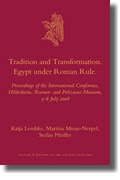
  • New Book: Tradition and Transformation. Egypt under Roman Rule

    Brill

    Book covers like this are always an indication that the book itself is going to cost a small fortune.

    In 30 BCE, Egypt became a province of the Roman empire. Alongside unbroken traditions—especially of the indigenous Egyptian population, but also among the Greek elite—major changes and slow processes of transformation can be observed. The multi-ethnical population was situated between new patterns of rule and traditional lifeways. This tension between change and permanence was investigated during the conference. The last decades have seen an increase in the interest in Roman Egypt with new research from different disciplines—Egyptology, Ancient History, Classical Archaeology, Epigraphy, and Papyrology—providing new insights into the written and archaeological sources, especially into settlement archaeology. Well-known scholars analysed the Egyptian temples, the structure and development of the administration beside archaeological, papyrological, art-historical and cult related questions.
  • Book Review: Hieroglyph Detective

    January Magazine (David Middleton)

    Picture this: you wake up deep inside a pyramid with only a single clue as to how you got there: there are hieroglyphs plainly visible on the wall but — alas! — you have no way to read them. What an Earth do you do?

    Well, if you’re lucky and had a bit of foresight before heading out on your locked-in-pyramid adventure, you will have packed a copy of Egyptologist Nigel Strudwick’s handy field guide Hieroglyph Detective: How to Decode the Sacred Language of the Ancient Egyptians (Chronicle Books). With an extra bit of luck, you’ll have had time to study it on the plane during your journey. Or the barge, as the case may be.

    And yes, of course: while most of us are quite unlikely to find ourselves awakening in a tomb, there is still a place in the world for this innovative and expertly creative little book. From the introduction:

    The aim of this book is to provide a practical, easy-to-follow guide to Egyptian hieroglyphics, giving readers sufficient grounding in the pictorial script to enable them to decipher for themselves some of the many inscriptions they will encounter while pursuing their interest in this fascinating civilization.