Author: Serkadis

  • Neighboring countries blame drought on China’s dams

    Greenwire: A massive drought isn’t just causing problems for farmers and townspeople in China. It has also created a public relations problem as neighbors are blaming the drought on China’s dams.

    Despite scientific evidence that low rainfall has caused the region’s worst drought in at least 50 years, countries along the Mekong River — including Thailand, Myanmar, Laos, Cambodia and Vietnam — have criticized China for building four dams along its portion of the 3,000-mile river. Those countries are meeting this weekend to discuss the drought, and Thailand promises to seek “more information, more cooperation and more coordination” from China, according to government spokesman Panitan Wattanayagorn.

    China has launched a media campaign to counter the dam accusations, including news conferences and seminar appearances. This is a blow to China’s bid to be more friendly in the region and could create roadblocks to plans to build more than 80 new hydropower projects along the Mekong and its tributaries.

    Jeremy Bird, the chief executive officer of the Mekong River Commission, said the river is volatile and has experienced droughts and floods throughout its history. He also noted that as water shortages have grown in recent weeks, China has released water from its dams to raise the river level. Bird believes even more dams in China could help by storing water to be released when smaller droughts occur.

    The drought has hit China and surrounding countries hard. Thailand officials say the water shortages have reached at least 14,000 villages and farmers are engaging in “water wars” to get enough sustenance for their crops (Thomas Fuller, New York Times, April 1). – JP

  • U.K. begins rebates for home green-energy projects

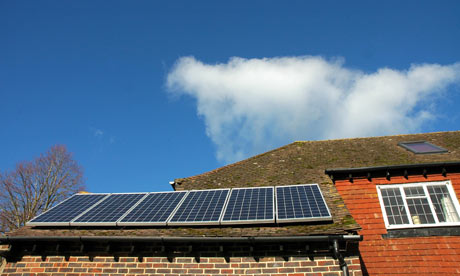
    Climatewire: The United Kingdom has started paying rebates of up to $1,500 per year for households that install small-scale renewable energy systems such as solar panels and wind turbines.

    Through the Clean Energy Cashback program, a typical 2.5-kilowatt solar installation will earn a household more than $1,350 in rebates per year while saving it more than $200 per year on electricity costs, according to government estimates. The government may introduce another program providing incentives for low-carbon home heating next April.

    Renewable energy company Solar Century said inquiries had multiplied fourfold since Ed Miliband, the United Kingdom’s energy and climate change secretary, announced the program in February. But homeowners may still be put off by the initial cost of renewable installations. The typical rooftop solar array costs upward of $15,000.

    Utility British Gas has started a Pay As You Save pilot program, allowing U.K. homeowners to gradually repay the cost of solar panels through monthly utility bills. The program will start with 500 households.

    “U.K. homes are responsible for over a fifth of U.K. emissions but by slashing energy waste, and fitting renewable electricity systems such as solar panels on our roofs and wind turbines in our gardens, they can be part of the solution to climate change,” said Andy Atkins, executive director of Friends of the Earth, in a statement (Lisa Bachelor, London Guardian, April 1). – GN

  • Espetacular BMW Vision Efficient Dynamics pode chegar em 2013

    BMW Vision Efficient Dynamics

    Lembram do exuberante conceito BMW Vision Efficient Dynamics, que foi apresentado no Salão do Automóvel de Frankfurt do ano passado? Os rumores na Europa são de que a companhia alemã devera realmente lança-lo pra competir com o esportivo Audi R8.

    De acordo com as especulações, o modelo hibrido não devera contar com o sistema hibrido apresentado anteriormente, composto por um motor a diesel de três cilindros e 1.5L associado a motores elétricos que juntos, disponibilizam uma potência de cerca de 356 cavalos. Ai invés disso, poderemos ter o BMW Vision Efficient Dynamics com um tradicional motor movido a gasolina, possivelmente o novíssimo V8 de 4.4L bi-turbo da companhia.

    Contudo, ainda é esperado que a BMW disponibilize uma versão elétrica ou hibrida do modelo, para não deixar o Mercedes-Benz SLS AMG elétrico sozinho nesse segmento quando for lançado.

    BMW EfficientDynamicsBMW EfficientDynamicsBMW EfficientDynamicsBMW EfficientDynamics

    E seguindo a onde de especulações, o modelo contaria com a adoção de materiais leves e de resistência com a intenção de maximizar seu desempenho. Além disso, ele receberia novas tecnologias ecologicamente corretas desenvolvidas pela BMW, com o intuito de reduzir os níveis de consumo e de emissão de poluentes.

    Caso realmente o BMW Vision Efficient Dynamics seja lançado, ele deverá estar disponível na Europa a partir de 2013.

    BMW EfficientDynamics
    BMW EfficientDynamicsBMW EfficientDynamicsBMW EfficientDynamicsBMW EfficientDynamicsBMW EfficientDynamicsBMW EfficientDynamicsBMW EfficientDynamics

    Fonte: AutoPortal


  • Analysts challenge Copenhagen-as-failure narrative

    Greenwire: Though many critics jumped to describe the climate change talks in Copenhagen as a bust because they did not produce a binding treaty on greenhouse gas emissions, several environmental groups and financial analysts have recently questioned that prevailing argument, pointing out that the high-profile negotiations prompted an unprecedented number of domestic policy shifts.

    The talks yielded more comprehensive commitments than the 1997 Kyoto Protocol, several groups have concluded. It was “no failure,” according to a March report by Deutsche Bank, which produces market research on clean energy investment. The report found that countries implemented 154 new domestic policies around the talks, which included representatives of 193 countries.

    The talks coincided with “the highest number of new government initiatives ever recorded … in a four-month period,” wrote Kevin Parker, the bank’s global head of asset management. “Copenhagen served to raise awareness of the problem all over the world, and that in turn forced governments to focus on the issue.”

    Nations agreed in Copenhagen to submit voluntary and nonbinding pledges to cut emissions by 2020. The agreement established international monitoring for the pledges and billions of dollars in aid to help the developing world reduce emissions and adapt to warmer climate.

    Environmental groups immediately criticized the outcome of the summit, saying it did not go far enough. Some groups, such as the Natural Resources Defense Council, have suggested that the talks were more useful than initially thought.

    “What we’re starting to learn,” said Joe Aldy, President Obama’s special assistant on energy and environment, “is, with this approach where we say to countries, ‘Come forward and … make public your emissions targets and actions,’ it is creating almost a positive dynamic now, where countries look at their peers and say, ‘Wait, I should do something’” (Jim Tankersley, Los Angeles Times, April 1). – GN

  • Oil Companies Scaling Back Hydrogen Production for Cars

    There is an article that caught my eye at sfbg.com that talks about the hydrogen powered AC Transit buses running in Northern California plus the new fuel cell buses on the way. But it’s not the buses that made me take notice nor is it the fact that AC Transit is starting to use solar power to create hydrogen from water for the buses.

    What caught my eye are two comments about oil companies scaling back their commitment to hydrogen and how we would replace the oil companies if need be.

    The article says, “But come September, Chevron will exit its collaboration with AC Transit, which will begin purchasing its hydrogen from a Linde plant in Southern California. Part of the reason is that the Chevron-designed system does not have the capacity to produce hydrogen for 12 buses. Industry watchers note that oil companies have scaled back initial forays into hydrogen, perhaps not wanting to facilitate the transition from fossil fuels.”

    Of course it is not in the oil companies best short term interests to facilitate the near term introduction of hydrogen cars. Oil makes money and installing a hydrogen infrastructure will cost money. It’s a matter of simple economics.

    But, if the oil companies don’t put up hydrogen fueling stations who will? In August 2008, I pitched the idea that perhaps the big industrial gas companies like Air Products, Linde, Air Liquide and even Praxair could be the ones to build the hydrogen refueling stations and compete with Big Oil.

    This sentiment is echoed by AC Transit long timer Jaimie Levin. The article states, “Levin is cautiously optimistic that it could be the gas companies like Linde and Praxair, and not the oil companies, that carry the hydrogen torch forward.”

    Right now it seems the most likely scenario will be a collaboration among the government entities and large specialty gas companies that make the hydrogen highway systems a reality one day. But, there could always be a breakthrough in technology, such as hydrogen on demand at the pump that brings a smaller player or players to the forefront. The field is basically open right now and it’s there for the taking if anyone has the NEXT BIG IDEA that will make a nationwide hydrogen network a reality.

  • Novo Polo já está a venda no Chile


    Em abril a Volkswagen iniciou a venda do Novo Polo no Chile, com uma única versão com motor 1.4i 16v com 85 cv de potência. O preço do carro está o equivalente a R$ 30.800, com uma vasta linha de itens de série.

    A versão Comfortline, que está sendo comercializada, possui como itens de série o ar condicionado, freios ABS com EBD, rodas de liga leve, airbag duplo, faróis de neblina, vidros escurecidos, sistema de som com MP3 e CD, e vidros elétricos.

    A Volks pretende lançar versões futuras do Novo Polo, mas não existem datas confirmadas. O valor do veículo citado no post é baseado no preço sugerido do carro no mercado chileno, que é de 9.100.000 pesos. Provavelmente haverá alterações ao entrar em território nacional, o que é totalmente lamentável como sempre esperado.

    Via | Carplace


  • MAZZONI S.R.L. AT ISSA INTERCLEAN: HALL 3 STAND 105

    Once more Mazzoni s.r.l. will be exhibitor at Issa Interclean in Amsterdam where it will show its own line of products: cold and hot water high pressure cleaners, petrol and battery sweepers and battery scrubbers.
    Mazzoni is one of the few manufacturers producing its own major internal components, for example boilers, electric motors (all with elastic coupling), pressure regulators, safety valves and electronic controls units.
    Its structure assures the constant monitoring of the critical points of production and allows a continuous improvement and a real respect of a very high quality.
    The new KB is a novelty amongst Mazzoni petrol engine high pressure cleaners.
    Available both at 15 litres / 200 bar and 18 litres / 200bar, is a compact and strong unit, with steel chassis designed to absorb the vibrations produced by the motor.
    Equipped with professional radial pump with three ceramic pistons and Honda motor, it has a low pressure detergent valve, gun, stainless steel lance, professional nozzle and 10 metres high pressure hose.
    It is ideal for high performance cleaning in areas where no power supply is available. It could be easily employed by food industry, building constructions, painters, decorators, and agricultural.
    Particularly recommended for sand blasting.

  • Cool and purge electronic control panels | STREAMTEK

    STREAMTEK Cabinet Panel Coolers for electronic control panels provide an affordable low cost way to both cool and purge electronic and electrical control panels by using compressed air.

    They can be installed in minutes through a standard electrical knockout and are have no moving parts! Choose from NEMA 12 and NEMA 4/4X coolers:

    NEMA 12 – For electronic control panels used in industrial environments where no direct spray hits the unit. The material of construction is stainless steel to withstand corrosive environments.

    NEMA 4/4X – For electronic control panels used in wash down type environments where direct spray/splash will come in contact with unit. Constructed of stainless steel for corrosive environments and food service.

  • NEW! airmate/pneumate

    Electronic, automatic tyre inflator for for testing and setting the tyre pressure.The pneumate has additional functions for use by tyre-fitters and in workshops.
    This electronic, automatic tyre inflator is a useful aid for testing and setting the tyre pressures on a car (max. pressure 5.5 bar) and a goods vehicle (max. pressure 10 bar)

    This inflator must not be used for inflating bicycle or other small tyres due to the danger of over-inflation.

    The inflator automatically inflates the tyre to the required pre-set pressure. It works quickly, precisely and reliably. The tyre pressure is shown on the large illuminated LCD display. Operation is intuitive and very easy thanks to the touch-sensitive controls. Suitable for indoor and outdoor use.

    The main location for use of the airmate is filling stations. The pneumate has additional functions for use by tyre-fitters and in workshops.

  • NEW! Low-Cost Differential Pressure Switch from Sensocon

    Sensocon, Inc., a leading manufacturer of differential pressure, air velocity, and flow products, announces the new Series 104 Low-Cost Differential Pressure Switch. The Series 104 is designed for low pressure applications and can monitor positive, negative, or differential pressure for air and compatible gases. The differential pressure switch has settings as low as 0.08 inches w.c. (20 Pascal) up to 4.0 inches w.c (996 Pascal) and is easy to adjust with a set point knob that indicates the pressure set point.

    The Series 104 Differential Pressure Switch is designed in an IP 54 housing and includes all of the necessary accessories for quick and complete mounting. The accessories include a mounting bracket, 6 ft of flexible tubing, and 2 static pressure fittings.

    The SENSOCON™ Series 104 Differential Pressure Switch is ideal for HVAC applications, but can also be used anywhere low differential pressure needs to be monitored. Applications further include monitoring filter status, duct static pressure, fan or blower pressure, paint booths, and room pressure, along with many others.

    For more information on the SENSOCON™ Series 104 Differential Pressure Switch, or other products from Sensocon, Inc., call: (863) 248-2800; or visit us on the web: www.sensocon.com; or contact us by email: [email protected]

  • Loop Power technology for the universal converter

    K121
    Universal Converter (mA, V, mV, Ohms, RTD, TC) isolated loop powered
    – Universal input thermocouple (J, K, R, S, T, B, E, N), EN 60584
    – RTD (Pt100, Pt500, Pt1000, Ni100) with 2/3/4 wires
    – Current -24mA…+24mA
    – Voltage -150mV…+150mV, -30V..+30V
    – Potentiometer 500 © -10 K©
    – Up to 1760 © resistor

    • Universal conversion solutions for all types of input signal
    • Electrical isolation of high quality with minimal wiring
    • The device is supplied over the 4-20mA signal output (loop powered)
    • Accuracy class 0.1%
    • 16-bit measurement conversion
    • Connection to PC via USB port for configuration, monitoring, simulation and diagnostics
    • Simplified programming with the kit and software S117P EASY LP

    Benefits:
    – Only 1 units for infinite applications
    – Less wiring (output & power supply utilize the same circuit)
    – It’s used to read different sensors types by a PLC analogue input card with built-in power supply (Active)

  • Handling glove

    REF 60139

    Handling glove, driver style with elastic wrist, grey water repellent split leather palm, interlock cotton back.

    Protective glove for light handling in a humid environment, exclusively against mechanical risks.

    Abrasion : 3 / 4
    Cut : 1 / 5
    Tear : 3 / 4
    Puncture : 3 / 4

    Dexterity : 5 / 5
    Water penetration : 4/4 (180 min)

  • MART TECH SERVICES

    FOR IMMEDIATE RELEASE
    (Free-Press-Release.com) January 4, 2010 — MART Tech Services announced today its alliance with Stingray Parts Washers. MART Tech is now providing all parts and service for the new StingRay Parts Washer line. Says General Manager Patrick Lahey “ The StingRay Parts Washers provide a good fit with our current support systems. Many of the parts and components are interchangeable with the MART Parts Washing machine that we have provided parts and service for in the past.”

  • Water Feature Dazzles Toronto Shoppers

    Many shopping centres have fountains with mechanical sprays and bubbling ponds. At the Don Mills Shopping Centre near Toronto, this has been taken several steps further with a stunningly choreographed water and light show. Designed & Engineered by Karajaal, a water experience company based in Saint-Sauveur, Quebec, the water feature at Don Mills is Canada’s first robotic fountain, and only the fourth in North America – and has, at its heart, a 22-axis motion control system using Control Techniques drives that was engineered by industrial automation specialists Rotalec.

    The goal was to create a unique water feature to complement the shops at Don Mills and inspire visitors to stay and return, so that they take in all of the facilities offered in this new urban village. The designers Karajaal were already long-term customers of Control Techniques / Rotalec for their standard fountain projects in which Control Techniques’ Commander SK AC drives were being used for pump control and thus the height of the water jets. This project was much more ambitious, with the requirement to handle not only 22-axes of movements, but also the programmed sequencing of 78 lights in and around the fountains.

    Karajaal chose Rotalec with Control Techniques for this project because of their high level of technical expertise to translate the artistic ambitions of the designers into reality. Karajaal specified a centralised system that was easy to program and configure using ‘Motion Perfect’ software, to create and modify motion profiles and to synchronise complex water/light-show sequences. The panel engineering, assembly and testing was carried out by Rotalec, a value-added Control Techniques partner, at their facilities in Montreal.

    Unlike typical fountains that are mechanically driven, the Don Mills 45×35-foot water feature uses innovative robotics and automation technology to choreograph water and light in fascinating ways. Each of the feature’s water elements is combined with lights and programmed to create movement and texture. Twice every hour, the water feature erupts into a four-minute spectacle. Sensors and pressure plates allow visitors to influence the choreography of water and light, creating a truly interactive experience.

  • Newell: Gordon Freeman to remain the same in next Half-Life

    Gordon Freeman is the quintessential silent hero: he never talks. He’d rather have his gravity gun or his trusty crowbar do all the talking for him, and Valve says that’s the way he’s gonna stay in the

  • Report: Ford helping small businesses get wrapped up with Transit Connect

    Filed under: , ,

    Ford Transit Connect Graphic Wraps – Click above for high-res image gallery

    Have you ever seen those commercial vehicles that are loaded up with high-quality graphics touting the company’s wares? Affective marketing to be sure, but aren’t those lavish graphics for big companies that can afford such extravagances? That may have been the case back in the day, but Ford is looking to sell Transit Connect transport vans while also giving small business owners the ability to spruce up their ride with cutting edge marketing.

    Ford has launched the website fordtransitconnectgraphics.com, which hooks up Transit Connect buyers with Blue Oval graphics partner Original Wraps, inc. For as little as $100 or as much as $3,500, Original Wraps can fit a massive wrap around any Transit Connect. Interested owners can upload images and company logos in tandem with templated graphics to the Ford Transit Connect Graphics website. When complete, the massive wraps can cover the front, sides and back of their little cargo van. Try adding obscene or copyrighted graphics to your Transit Connect through the site and risk losing your deposit.

    Ford has reportedly sold over 13,000 Transit Connect vans since the commercial van went on sale last year. A similar Ford graphics site was accessed by over 9,000 customers since it went live last November. Click on the gallery below or the image above to look at some of the graphic wrap samples Original Wraps has come up with so far.

    [Source: The Detroit News]

    Report: Ford helping small businesses get wrapped up with Transit Connect originally appeared on Autoblog on Mon, 05 Apr 2010 09:58:00 EST. Please see our terms for use of feeds.

    Read | Permalink | Email this | Comments

  • Keith McCullough: The Best Hope For The Poor Is To Buy Scratch-Off Tickets, The Rest Of Us Buy iPads

    Photos From iPad Lines Around The Country

    Keith McCullough has a beautiful rant this morning on the Fed’s ZIRP strategy, and the way it’s affecting the rich and poor differently.

    He calls this tomfoolery the craftily-titled “Piggy Banker Spread”:

    Hedgeye: After WWII, inflation has been a popular short-term market solution for easy money politicians. With the exception of the late 1970’s and early 1980’s, most of the revisionist economists advising Washington have been able to get away with pretty much anything on this front. The US government has changed the calculation for inflation 9 times since 1996, so we’ve pretty much made this popularity-fest permanent.

    If you are wealthy and fully invested right now, inflation has to be popular with you. The politicized Federal Reserve is keeping interest rates at an “emergency” rate of ZERO percent, so that the bankers get paid while savers in America pay the bill. We call this the Piggy Banker Spread and the US government underwrites it. At +285bps wide this morning (10-yr yield minus 2-yr), it is within 0.08% of its all-time widest spread ever. Oink, oink.

    If you are poor and fully committed right now, inflation is not popular with you. It’s your cost of living. You feel it at the pump. You feel it in your wallet. No matter where you go, there it is. Don’t even try thinking about saving either; you wouldn’t be making any money on those treasury bonds or cash-savings accounts anyway. So you may as well buy yourself another scratch bingo card and hope to live another day; the rest of us will buy iPads.

    Harsh words for America’s elite.

    Join the conversation about this story »

    See Also:

  • Sony Japan To Launch Exquisite DSC-W350D Cyber-Shot Camera With Rhinestones

    Sony Japan has detailed two new variants of the feature-rich DSC-W350 Cyber-shot camera. These variants, known as the DSC-W350D, are available in silver and pink and have rhinestones embedded on the front of the camera. Sony aimed to have the surface coating of the pink unit to shine like pink satin. There is also a special coating around the lens ring on the pink version, which is made of a transparent material that is supposed to look like crystal. The silver DSC-W350D aims to look a bit different than the usual dull silver cameras out there and has a “sophisticated rhinestone dot pattern” that provides a “simple and elegant design.” Apparently the ring around the lens on the silver version also is very shiny. Expect these to launch at a price of Y27,000 on April 23rd, and it hasn’t been confirmed outside of Japan.

    Sony also detailed two cases that will be available for sale when these cameras launch called the LCS-WJ. It has rhinestone decorations like the cameras and patterns that accent the metallic frame. Within the case, elegant patterns are embossed on the cloth to give it a truly unique and stylish appearance.

    The DSC-W350D features a 14.1 megapixel sensor, Carl Zeiss 4x optical zoom, 2.7″ LCD, iAuto, Smile Shutter, Face Detection, Optical SteadyShot, Sweep Panorama, and 720p HD movie recording.

    DSC-W350D
    ‰æ‘œ 009

    ‰æ‘œ 009
    ‰æ‘œ 112

    ‰æ‘œ 112
    ‰æ‘œ 026

    ‰æ‘œ 026
    ‰æ‘œ 110

    ‰æ‘œ 110

  • David Rosenberg: Here’s 7 Economic Stats You Shouldn’t Believe

    David Rosenberg of Gluskin-Sheff welcomes you back to work with seven economic datapoints requiring you to look behind the headlines.

    1. U.S. consumer spending in the first quarter is higher because the savings
    rate has slipped to 3.1% from 4.7% at the end of last year.  Organically,
    spending is actually doing quite poorly and that reflects the fact that
    wage-based incomes remain under pressure.  So, without that
    unsustainable decline in what is already a low personal savings rate,
    consumer spending in January would have actually contracted 0.4% and
    0.6% in February.  In other words, what we are seeing unfold right now is
    a ‘low quality’ consumer recovery in the U.S., not deserving of the P/E
    multiple expansion that the retailers have enjoyed in recent months.  A
    sector to clearly fade going forward is consumer discretionary.  

    2. On home prices, the seasonally adjusted data did indeed show an
    increase of 0.4% MoM (using the Case-Shiller Composite-10), but the raw
    data revealed a 0.2% dip — the fourth decline in a row!  Now it would be
    one thing if January was an unusually weak seasonal month for home
    prices deserving of an upward skew from the adjustment factors; however,
    from 1998 through to 2006, they rose in each and every January and by
    an average of 0.6%. But what happened is that home prices collapsed in
    each of the past three Januarys — by an average of 1.8%, or a 25%
    annual rate.  And, seasonal factors typically weigh the experience of the
    prior three years disproportionately so what looks like steady gains in
    housing prices may be little more than a statistical mirage.   

    Consumer confidence (Conference Board version) rose to 52.5 in March
    and yet again this was treated gleefully on the Street and in the media
    because it beat the consensus estimate.  But here is the reality: in
    recessions, this confidence index averages out to be 71.0, and in
    expansions, it averages 102.0.  What does that tell you?  

    4. The ISM index came out before the payroll numbers did and injected a big
    round of enthusiasm into the pro-cyclical camp.  The index did shoot up in
    March, to 59.6 from 56.5, and while many of the components were up,
    the prime reason for the increase was the eight-point surge in the
    inventory component, to 55.3.  Moreover, the orders-to-inventories ratio
    slid to a level suggesting that we could be in for a big pullback in the next
    few months.  Meanwhile, very little attention has been made to the
    construction spending data, which sagged 1.3% MoM in February with
    broad-based declines across sectors — and January’s 0.6% drop was
    revised to -1.4% (the fourth slippage in a row).

    5. Stock buybacks are widely (and erroneously) viewed as being a major
    fund-flow driver of the equity market, and many a pundit points to the
    37% QoQ jump (+98% from the 2009 lows) in buybacks as source of
    comfort.  But here’s the rub: The vast majority of companies are buying
    back their stock to avoid the dilutive effects of expiring stock options — of
    the 214 companies that did a buyback in Q4, only 50 resulted in share
    count reductions (see page B2 of the weekend WSJ).  Moreover, it really
    says something about the widespread excess capacity in the economy
    and poor perceived rates of return on new investments that companies
    would opt to deploy cash for buyback strategies at this presumed early
    stage of the business expansion.  If there is one trend that is indeed
    constructive — certainly for our income theme — it is that companies are
    beginning to pay out more of their retained earnings in the form of
    dividends — $5.1 billion in net dividend increases in Q1, the most since
    2007Q4 (but still down 21% from two years ago).  

    6. There seems to be this entrenched view now that the government can be
    expected to come in and resolve all the problems in the economy.  This
    view is deserving in some sense because not only did the Fed and the
    Treasury break the boundaries between the private and public economy
    this cycle to bail out the banks, auto sector and housing companies, but
    they have continued in these efforts despite a record $1.5 trillion deficit. 
    With no other goal, it would seem, than to allow the residential real estate
    market to clear at lower prices, the government now intends to
    permanently reduce the mortgage balance for all homeowners who are
    “under water” and unemployed homeowner mortgage borrowers are also
    going to be recipient of taxpayer assistance (but not the renter).  The
    problem ahead is that the bond market may no longer be in a cooperating
    mood to finance all this largesse.  With the 10-year yield now pressing
    against the 4% threshold, we have a crucial week ahead for the Obama
    team’s financing capacity as a further $82 billion of debt sales are being
    put to the market for added digestion.  

    Another source of concern for the bulls who continue to rely on
    government support for the recovery is the general population — the part
    of the public that took in a mortgage it could afford and never used the
    house as an ATM.  Resentment is starting to build as Uncle Sam is
    increasingly being viewed as Robin Hood at best, or the Artful Dodger at
    worst.  There were two great reads over the weekend pertaining to this
    theme of emerging class warfare — Tea Party Anger Reflects Mainstream
    Concerns on page A13 of the weekend WSJ and Help Paying Mortgages

    7. While everyone is treating the nonfarm payroll report as gospel, let’s keep
    in mind that the ADP count showed that private payrolls fell 23k,
    completely at odds with the Bureau of Labor Statistics (BLS), which claims
    that this metric was up 123k.  Now, we are not going to dismiss the BLS
    data at all, but wouldn’t it be nicer if both surveys said the same thing? 
    The ADP is a pretty simple concept — and does not have any “plug”
    factors to try and assume how many new businesses were created or
    destroyed in any given month.  Meanwhile, wages are now deflating and
    the 0.1% decline in March could be the thin edge of the wedge as the
    Gallup Daily tracking finds that 20.3% of the U.S. workforce was
    underemployed in March — a slight uptick from January and February. 

    Join the conversation about this story »

  • North Face Decides South Butt Lawsuit Is Not Worth Exploring

    The lawsuit between North Face and South Butt sure was entertaining (especially the filings by South Butt’s lawyer). However, with the North Face getting some pretty bad publicity over its tactics, which seemed to focus more on embarrassing the founder of the South Butt and his father, it looks like the North Face has realized this was one lawsuit not worth exploring.

    Late Friday, the two sides settled — and while the terms of the settlement appear to be under wraps, there’s no indication that the South Butt is going away any time soon:


    The most recent post on South Butt’s Facebook page, meawhile, states that founder Jimmy Winkelmann, a freshman biomedical engineering student at the University of Missouri, was “partying hard in Panama City with South Butt.” Watkins said the settlement did not prevent his client from handing out merchandise while in Florida on spring break.

    “Jimmy was down in Panama City having a great deal of fun, enjoying a number of young ladies who enjoyed themselves donning and sporting South Butt wear,” Watkins says. “He immediately returned to Panama City to give away many more T-shirts.”

    Just imagine how much better things would have worked out if the North Face hadn’t lawyered up over this, but had simply talked to the South Butt guys and worked out a friendly deal in the first place?

    Permalink | Comments | Email This Story