Author: Serkadis

  • Straight out of the 60s, the 1260s

    I know as a non-religious type (I’m agnostic because I just don’t care) I would be expected to feel some schadenfreude in the troubles of the Catholic Church. But the stories are too disturbing for that.

    The ultra-conservative clergy of the Church, epitomized by the current Pope have completely brought it on themselves.

    The child abuse scandal rocking the Catholic Church widened yesterday as a leading German bishop personally appointed by Pope Benedict was accused of ritually beating and punching children at a church-run home during the late 1970s and early 1980s.

    And like Church apologist and professional angry person Bill Donohue, this same Clergyman, Walter Mixa, said all the Church’s problems were about the "sexual revolution" (i.e. divorces and "the gay").

    But actually, as is usually the case, it’s about the power:

    "The children whose parents never visited the home were the ones who were beaten most," said one former resident

    Of course they were.

  • Global Deforestation Pace Slows


    In a way I should have anticipated this.  Poverty is declining and the demand for charcoal is beginning to reflect that.  Farmers are now able to manage woodlands better.  In two generations the whole problem of deforestation will be fully reversed.
    Good farmland is on the way to been properly capitalized and fully utilized.  Marginal farm land simply becomes uneconomic to operate.
    Recall that Eastern North America has been busily reforesting over the past decades.  I am not saying it was done well or even with much sensible planning, but it has been done.  The same holds true in Europe.  Modern equipment does not like poorly situated fields of marginal quality.
    In fact if you own a hillside covered with rocks, it is surely stupid to not put in a productive orchard or its like to grab and build soil.  The pictures I now see from China reflect just that attitude.
    We still have plenty to do but it is now likely that we are all going in the right direction.
    Global pace of deforestation slows: FAO
    by Staff Writers
    Rome (AFP) March 25, 2010

    The worldwide pace of deforestation has slowed down for the first time on record, the UN Food and Agriculture Organization (FAO) said on Thursday.

    On a total forest area of four billion hectares, the world lost 13 million hectares of forests per year between 2000 and 2010 — down from around 16 million in the 1990-2000 period, it said in a report.

    “For the first time, we are able to show that the rate of deforestation has decreased globally as a result of concerted efforts taken both at local and international level,” said Eduardo Rojas, assistant director general of FAO’s forestry department, in a statement.

    “New forests are being created. Either through the expansion of forests or more rapidly through the planting of trees” said Mette Loyche Wilkie, the Coordinator of the Assessment, at a press conference,
    Planted forests now account for about 7.0 percent of global forests, said Wilkie.

    Over the 10-year period, Asia which “registered a net gain of some 2.2 million hectares annually in the last decade, mainly because of large-scale afforestation programmes in China, India and Vietnam,” Rojas said.

    But Rojas warned: “The rate of deforestation is still very high in many countries and the area of primary forest — forests undisturbed by human activity — continues to decrease”.

    The highest annual losses were registered in South America, which lost four million hectares, and Africa, which lost 3.4 million hectares.

    Forest area remained stable in North and Central America, while in Europe it continued to expand, although at a slower rate than in the past.

    FAO also highlighted the fact the slowdown is helping to bring down carbon emissions.

    “A lower deforestation rate and the establishment of new forests have helped bring down the high level of carbon emissions from forests caused by deforestation and forest degradation,” said Wilkie.
  • Arctic Passage Open Without Ice Breakers First Time in History


    This item is several months old but it has a lot of new data.  It is also approaching another melt season and is timely for all that.
    It has finally become clear to me at least that the Arctic is following its own path driven by an increase in heat been injected into it through the ocean currents.  They are apparently twenty percent faster and I do not think we actually know when it all started.  The original speed measure would have been made back in 1958 or so and updates only this past decade I suspect.
    More heat kept the high Arctic warmer this year while the southern portion of North America got hammered with winter storms a la El Nino.
    I am expecting substantial ice losses this summer provided we can measure it.
    I am surprised that the North East Passage was considered clear these past four years save one.  The satellite pictures barely suggested this might be true if the pilot liked sailing about a lot of loose ice.  It may have been quite pushable with little if any multiyear ice.


    Arctic passage open without ice breakers first time in history
    September 6, 12:44 PMAtlanta Weather ExaminerKirk Melhuish

    Journal SCIENCE, AAAS Sept 4
    This year’s opening marks the fourth time in five years that the Northeast Passage has opened, and commercial shipping companies are taking note. Two German ships  recently are the first commercial voyage ever made through the Northeast Passage without the help of icebreakers. The Northeast Passage trims 4,500 miles off the 12,500-mile trip through the Suez Canal, yielding considerable savings in fuel. The voyage was not possible last year, because Russia had not yet worked out a permitting process. With Arctic sea ice expected to continue to decline in the coming decades, shipping traffic through the Northeast Passage will likely become commonplace most summers. The Northeast Passage has remained closed to navigation, except via assist by icebreakers, from 1553 to 2005. The results published in the American Association for the Advancement of Science suggest that prior to 2005, the last previous opening was the period 5,000 – 7,000 years ago, when the Earth’s orbital variations brought more sunlight to the Arctic in summer than at present. It is possible we’ll know better soon. A new technique that examines organic compounds left behind in Arctic sediments by diatoms that live in sea ice give hope that a detailed record of sea ice extent extending back to the end of the Ice Age 12,000 years ago may be possible (Belt et al., 2007). The researchers are studying sediments along the Northwest Passage in hopes of being able to determine when the Passage was last open. 
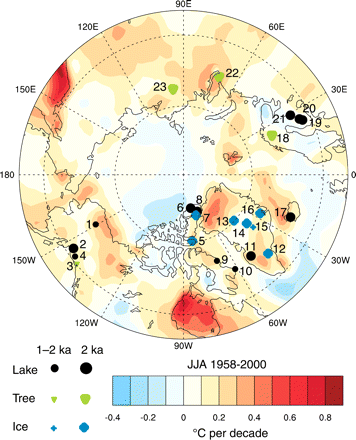
    The past decade was the warmest decade in the Arctic for the past 2,000 years, according to a study called “Recent Warming Reverses Long-Term Arctic Cooling” published in the journalScience.  Four of the five warmest decades in the past 2,000 years occurred between 1950 – 2000, despite the fact that summertime solar radiation in the Arctic has been steadily declining for the past 2,000 years. Previous efforts to reconstruct past climate in the Arctic extended back only 400 years, so the new study–which used lake sediments, glacier ice cores, and tree rings to look at past climate back to the time of Christ, decade by decade– is a major new milestone in our understanding of the Arctic climate. The researchers found that Arctic temperatures steadily declined between 1 A.D. and 1900 A.D., as would be expected due to a 26,000-year cycle in Earth’s orbit that brought less summer sunshine to the North Pole. Earth is now about 620,000 miles (1 million km) farther from the Sun in the Arctic summer than it was 2000 years ago. However, temperatures in the Arctic began to rise around the year 1900, and are now 1.4°C (2.5°F) warmer than they should be, based on the amount of sunlight that is currently falling in the Arctic in summer. “If it hadn’t been for the increase in human-produced greenhouse gases, summer temperatures in the Arctic should have cooled gradually over the last century,” According to Bette Otto-Bliesner, a co-author from the National Center for Atmospheric Research. 
    Arctic sea ice suffered another summer of significant melting in 2009, with August ice extent the third lowest on record, according to the National Snow and Ice Data Center. August ice extent was 19% below the 1979 – 2000 average, and only 2007 and 2008 saw more melting of Arctic sea ice. We’ve now had two straight years in the Arctic without a new record minimum in sea ice. However, this does not mean that the Arctic sea ice is recovering. The reduced melting in 2009 compared to 2007 and 2008 primarily resulted from a different atmospheric circulation pattern this summer. This pattern generated winds that transported ice toward the Siberian coast and discouraged export of ice out of the Arctic Ocean. The previous two summers, the prevailing wind pattern acted to transport more ice out of the Arctic through Fram Strait, along the east side of Greenland.
    At last December’s meeting of the American Geophysical Union, the world’s largest scientific conference on climate change, J.E. Kay of the National Center for Atmospheric Research showed that Arctic surface pressure in the summer of 2007 was the fourth highest since 1948, and cloud cover at Barrow, Alaska was the sixth lowest. This suggests that once every 10 – 20 years a “perfect storm” of weather conditions highly favorable for ice loss invades the Arctic. The last two times such conditions existed was 1977 and 1987, and it may be another ten or so years before weather conditions align properly to set a new record minimum.

    As a result of this summer’s melting, 
    the Northeast Passage, a notoriously ice-choked sea route along the northern Russia, is now clear of ice and open for navigation. Satellite analyses by the University of Illinois Polar Research Group and the National Snow and Ice Data Center show that the last remaining ice blockage along the north coast of Russia melted in late August, allowing navigation from Europe to Alaska in ice-free waters. Mariners have been attempting to sail the Northeast Passage since 1553, and it wasn’t until the record-breaking Arctic sea-ice melt year of 2005 that the Northeast Passage opened for ice-free navigation for the first time in recorded history. The fabled Northwest Passage through the Arctic waters of Canada has remained closed this summer, however.
    An atmospheric pressure pattern set up in late July that created winds that pushed old, thick ice into several of the channels of the Northwest Passage. Recent research by Stephen Howell at the University of Waterloo in Canada shows that whether the Northwest Passage clears depends less on how much melt occurs, and more on whether multi-year sea ice is pushed into the channels. Counter-intuitively, as the ice cover thins, ice may flow more easily into the channels, preventing the Northwest Passage from regularly opening in coming decades, if the prevailing winds set up to blow ice into the channels of the Passage. The Northwest Passage opened for the first time in recorded history in 2007, and again in 2008. Mariners have been attempting to find a route through the Northwest Passage since 1497. 
    WASHINGTON, Sept  (Reuters) – Climate-warming greenhouse gas emissions pushed Arctic temperatures in the last decade to the highest levels in at least 2,000 years, reversing a natural cooling trend that should have lasted four more millennia.

    Carbon dioxide and other gases generated by human activities overwhelmed a 21,000-year cycle linked to gradual changes in Earth’s orbit around the Sun, an international team of researchers reported on Thursday in the journal Science.

    “I think it really underscores how sensitive the Arctic is to climate change … and it’s really the place where you can see first what’s happening to the (climate) system and how the rest of the Earth will or might follow,” David Schneider, a co-author and a scientist with the U.S. National Center for Atmospheric Research said in a telephone interview.

    The big cool-down started about 7,000 years ago, and Arctic temperatures bottomed out during the so-called “Little Ice Age” that lasted from the 16th to the mid-19th centuries, dove-tailing with the start of the Industrial Revolution.


    This cooling trend was caused by a characteristic wobble in Earth’s orbit that very gradually pushed the Arctic away from the Sun during the northern summer. Earth is now about 620,000 miles (1 million km) farther from the Sun in the Arctic summer than it was 2000 years ago, said Darrell Kaufmann of Northern Arizona University.

    This cooling should have continued through the 20th and 21st centuries and beyond as the 21,000-year cycle played out. This latest research confirms that it hasn’t.

    “If it hadn’t been for the increase in human-produced greenhouse gases, summer temperatures in the Arctic should have cooled gradually over the last century,” Bette Otto-Bliesner, a co-author from the National Center for Atmospheric Research, said in a statement.

    What happens in the Arctic doesn’t stay there, since it is among the world’s biggest weather makers, sometimes called Earth’s air-conditioner. As Arctic sea ice melts in summer, it exposes the darker-colored ocean water, which absorbs sunlight instead of reflecting it, accelerating the warming effect.


    Arctic warming also affects land-based glaciers; if these melt, they would contribute to a global rise in sea levels.

    Warming in this area could also thaw frozen ground called permafrost, sending methane, a powerful greenhouse gas, into the atmosphere.

    Climate scientists have long known that Earth wobbles in its orbit, which affects how much sunlight reaches the Arctic in the summer. This is the first time a large-scale study has tracked decade-by-decade changes in Arctic summer temperatures this far back in time.

    To figure this out, researchers looked at natural archives of temperature — tree rings, ice cores and lake sediments — along with computer models, which tallied closely with the natural record.


    Average summer temperatures in the Arctic have increased by about 3 degrees F (1.66 degrees C) from what they would have been had the long-term cooling trend remained intact.
  • Final Fantasy XIV Online beta sign-ups now open

    The Beta sign up for Square Enix’s Final Fantasty XIV has been announced to commence soon. More exciting than a mere announcement, however, is the official opening of the Beta sign-ups.


  • Cold Fusion Featured at ACS 239th Meeting


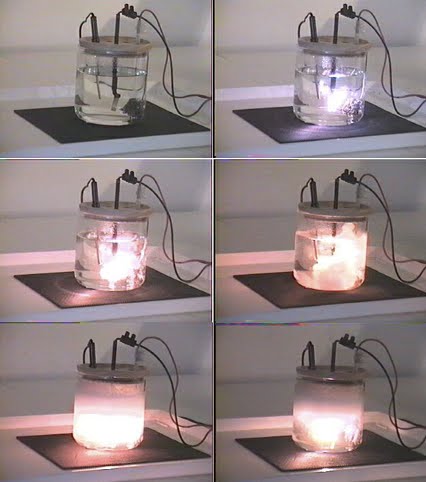
    The image is for illustrative purposes only and is not covered in the text.

    This gives us a taste of present work proceeding on so called cold fusion.  Again our increasing ability to operate at the atomic structure level is clearly emerging and allowing us to understand what might happen.
    When the original work came out twenty years ago, I was startled at the vehemence of the community against what was new and unusual empirical evidence supporting new processes at the level of atomic structure.  We simply did not know enough to have a creditable opinion.  Perhaps we still do not. But the present level of fine detail suggests that we have begun to ask the right questions.  It also suggests that we could get simply lucky.
    We are merely seeing today what could easily have been suspected a generation ago and were.  I am not particularly optimistic yet about all this.  I am seeing modest heat engines when we have great heat engines already.  Even the royal road to direct power may turn out to be a mouse.
    I am far more optimistic over the non radioactive bismuth fusion/fission energy cycle.  It is that piece of luck we needed and we are now seeing two confinement methods been swiftly advanced.  It is plausible many others will be seen.
    Cold fusion will need successful modeling of atomic structures with various alloys and voids to get a handle on the possibilities.  That promises to take a long time yet.
    At least this work is now available in all the best company.
    MARCH 22, 2010
    The process is created by purposely creating defects in the metal electrode of the cell. Deuterium atoms diffuse into the electrode material from the heavy water used in the electrolyte. The deuterium atoms “pile up” in the defect region and form a very dense state that in turn undergoes nuclear reactions—in this case like the original “cold fusion” reactions originally disclosed by Pons and Fleischmann.

    The cell generates more energy due to these energy releasing reactions than it consumes in the electrolysis process. Once further optimized and energy conversion elements, such as thermoelectric converters, are added, the cell could produce electricity. This would in effect represent a small “battery” that, due to its nuclear input power processes, could have much longer lifetimes than conventional batteries, Miley said.

    Miley’s research is focusing on nano-manufactured structures to achieve a high volumetric density of the trap sites


    There are several other large claims at the conference – 

    Tadahiko Mizuno (Hokkaido University, Japan) claims to have developed an unconventional cold fusion device that uses phenanthrene, a substance found in coal and oil, as a reactant. He reports on excess heat production and gamma radiation production from the device. Overall heat production is claimed to be over one hundred times more than any conceivable chemical reaction.

    Vladimir Vysotskii (Kiev National Shevchenko University, Ukraine) will present experimental evidence that bacteria can undergo a type of cold fusion process and could be used to dispose of nuclear waste. He will describe studies of nuclear transmutation of stable and radioactive isotopes in biological systems.


    George Miley Goal is to Produce Power


    We are aimed at a power-producing unit. We do this by creating nano voids within the metal lattice where we create deuterium clusters—a sub-lattice of tightly packed deuterium. To do that, we have to do nano manufacturing of material to create the places for it to react, and then we have to create the engineering necessary to control, get the heat out, and convert that to electrical output. 

    One thing that frustrates me to no end, is that I don’t know how to convert this energy directly. It looks like it will have to be a thermal conversion—that makes it not quite as easy as if I could get a direct conversion to electricity. If I produce heat and then convert, I’ll have to do some really clever elements to be competitive.


    Our low energy nuclear reaction research (LENR) has embedded ultra high density deuterium “clusters” (D cluster) in Palladium (Pd) thin films. These clusters approach metallic conditions, exhibiting super conducting properties. [1] They represent “nuclear reactive sites” needed for LENR. The resulting reactions are vigorous, giving the potential for a high power density cell. Clusters are achieved through electrochemically loading-unloading deuterium into a thin metal palladium film creating local defects which form a strong potential trap where deuterium condenses into “clusters” of ~100 atoms. Research now focuses on nano-manufactured structures to achieve a high volumetric density of these trap sites. Alternately condensed deuterium inverted Rydberg 2.3-pm deuteron spacing is being studied. [2] To initiate reactions in these ultra high density deuterium clusters, efficient ways are needed to excite the deuterium via a momentum pulse. One is through pulsed electrolysis to achieve high fluxes of deuterons hitting the clusters. [3] Another method uses ion bombardment from a pulsed plasma glow discharge. [4] Electron beam and laser irradiation represent other approaches to be explored
    Cold Fusion Moves Closer To Mainstream Acceptance
    by Staff Writers

    San Francisco CA (SPX) Mar 22, 2010
    A potential new energy source so controversial that people once regarded it as junk science is moving closer to acceptance by the mainstream scientific community. That’s the conclusion of the organizer of one of the largest scientific sessions on the topic – “coldfusion” – being held here for the next two days in the Moscone Center during the 239th National Meeting of the American Chemical Society (ACS).

    “Years ago, many scientists were afraid to speak about ‘cold fusion’ to a mainstream audience,” said Jan Marwan, Ph.D., the internationally known expert who organized the symposium. Marwan heads the research firm, Dr. Marwan Chemie in Berlin, Germany. Entitled “New Energy Technology,” the symposium will include nearly 50 presentations describing the latest discoveries on the topic.

    The presentations describe invention of an inexpensive new measuring device that could enable more labs to begin cold fusion research; indications that cold fusion may occur naturally in certain bacteria; progress toward a battery based on cold fusion; and a range of other topics. Marwan noted that many of the presentations suggest that cold fusion is real, with a potential to contribute to energy supplies in the 21st Century.

    “Now most of the scientists are no longer afraid and most of the cold fusion researchers are attracted to the ACS meeting,” Marwan said.

    “I’ve also noticed that the field is gaining new researchers from universities that had previously not pursued cold fusion research. More and more people are becoming interested in it. There’s still some resistance to this field.

    “But we just have to keep on as we have done so far, exploring cold fusion step by step, and that will make it a successful alternative energy source. With time and patience, I’m really optimistic we can do this!”

    The term “cold fusion” originated in 1989 when Martin Fleishmann and Stanley Pons claimed achieving nuclear fusion at room temperature with a simple, inexpensive tabletop device. That claim fomented an international sensation because nuclear fusion holds potential for providing the world with a virtually limitless new source of energy.

    Fuel for fusion comes from ordinary seawater, and estimates indicate that 1 gallon of seawater packs the energy equivalent of 16 gallons of gasoline at 100 percent efficiency for energy production. The claim also ignited scepticism, because conventional wisdom said that achieving fusion required multi-billion-dollar fusion reactors that operate at tens of millions of degrees Fahrenheit.

    When other scientists could not reproduce the Pons-Fleishmann results, research on cold fusion fell into disrepute. Humiliated by the scientific establishment, their reputations ruined, Pons and Fleishmann closed their labs, fled the country, and dropped out of sight. The handful of scientists who continued research avoided the term “cold fusion.”
    Instead, they used the term “low energy nuclear reactions (LENR).” Research papers at the ACS symposium openly refer to “cold fusion” and some describe cold fusion as the “Fleishmann-Pons Effect” in honor of the pioneers, Marwan noted.

    “The field is now experiencing a rebirth in research efforts and interest, with evidence suggesting that cold fusion may be a reality.” Marwan said. He noted, for instance, that the number of presentations on the topic at ACS National Meetings has quadrupled since 2007.
    Among the reports scheduled for the symposium are:

    + Michael McKubre, Ph.D., of SRI International in Menlo Park, Calif., provides an overview of cold fusion research. McKubre will discuss current knowledge in the field and explain why some doubts exist in the broader scientific community. He will also discuss recent experimental work performed at SRI. McKubre will focus on fusion, heat production and nuclear products. [3pm, Monday March 22, Cyril Magnin ]

    + George Miley, Ph.D., reports on progress toward a new type of battery that works through a new cold fusion process and has a longer life than conventional batteries. The battery consists of a special type of electrolytic cell that operates at low temperature. The process involves purposely creating defects in the metal electrode of the cell. Miley is a professor at the University of Illinois in Urbana and director of its Fusion Studies Lab. [11am, Sunday March 21, Cyril Magnin I]

    + Melvin Miles, Ph.D., describes development of the first inexpensive instrument for reliably identifying the hallmark of cold fusion reactions: Production of excess heat from tabletop fusion devices now in use. Current “calorimeters,” devices that measure excess heat, tend to be too complicated and inefficient for reliable use. The new calorimeter could boost the quality of research and open the field to scores of new scientists in university, government, and private labs, Miles suggests. He is with Dixie State College in St. George, Utah. [2.30pm, Sunday March 21, Cyril Magnin I]
    + Vladimir Vysotskii, Ph.D., presents surprising experimental evidence thatbacteria can undergo a type of cold fusion process and could be used to dispose of nuclear waste. He will describe studies of nuclear transmutation – the transformation of one element into another – of stable and radioactive isotopes in biological systems. Vysotskii is a scientist with Kiev National Shevchenko University in Kiev, Ukraine. [11.20am, Monday March 22, Cyril Magnin I].

    + Tadahiko Mizuno, Ph.D., discusses an unconventional cold fusion device that uses phenanthrene, a substance found in coal and oil, as a reactant. He reports on excess heat production and gamma radiation production from the device. “Overall heat production exceeded any conceivable chemical reaction by two orders of magnitude,” Mizuno noted. He is with Hokkaido University in Japan, and wrote the book Nuclear Transmutation: The Reality of Cold Fusion. [3pm, Sunday March 21, Cyril Magnin I]

    + Peter Hagelstein, Ph.D., describes new theoretical models to help explain excess heat production in cold fusion, one of the most controversial aspects of the field. He notes that in a nuclear reaction, one would expect that the energy produced would appear as kinetic energy in the products, but in the Fleischmann-Pons experiment there do not appear energetic particles in amounts consistent with the energy observed. His simple models help explain the observed energy changes, including the type and quantity of energy produced. Hagelstein is with the Massachusetts Institute of Technology. [10.20am, Sunday March 21, Cyril Magnin I].

    + Xing Zhong Li, Ph.D., presents research demonstrating that cold fusion can occur without the production of strong nuclear radiation. He is developing a cold fusion reactor that demonstrates this principle. Li is a scientist with Tsinghua University in Beijing, China. [9.10am, Sunday March 21, Cyril Magnin I].
  • Wastewater Industry: Caprari VSD Frequency converter

    Thanks to a vast range of standard and optional functions, the VLT® AQUA Drive frequency converter helps to cut down on the running costs of water treatment systems by regulating the start-up speed of the machines.

    This prevents the flow rate from fluctuating, allowing the pressure to be kept under precise control, avoiding pressure surges and reducing leaks.

    energy saving smaller sized installations water pumping and treatment
    fast installation built-in RFI filters. Power: 4 – 450 kW Frequency: 50 and 60 Hz

  • Disney Lawyers Chose Not To Sue You For Posting Your Disney World Vacation Videos… But They Could!

    In a world where so much that you see and hear on a daily basis is covered by copyright, it certainly makes it difficult to just film people walking around, like on a vacation, and post it to the internet. It becomes even more difficult when that vacation happens to be in a theme park, which is chock full of characters and content protected by copyright and trademark laws. Copycense points us to an attempt by the site WalletPop to find out the legality of posting your Disney vacation family videos to YouTube and basically gets back nothing close to a reasonable answer. The short version is that Disney’s lawyers basically have the option to sue, but realize it’s probably a bad decision in most cases. But they certainly don’t encourage it, and you could see circumstances under which they might actually sue.

    Of course, some will immediately claim that there’s no real issue here, given that Disney has chosen not to sue. But just the very liability is a bit scary. What if you film too much of a ride? Or part of the ride has music or videos playing the background that might lead to legal threats? It certainly does create something of a chilling effect.

    Permalink | Comments | Email This Story


  • Siberian Primate DNA


    This is getting a bit of coverage so a bit of comment is in order.  Our ancient forbears were all mostly omnivores and successful.  It means a lot of speciation took place over the available million years or so.  Many good niches were occupied, both biological and geographic.  Many of these niches were inflexible and in direct conflict once Homo Sapiens Sapiens arose.
    Neanderthals are an excellent example.  They hunted the same large game we did and we surely operated in larger bands.  We surely hunted them.  They were stronger and better adapted but then so is the lion and bear who really have no chance in the long run.
    Hominids could survive only in niches which modern man did not desire.  I think he did in many such locales for a long time until he was hunted out.  We always hunted everywhere.  Hominids had no ability to reproduce fast enough to stay ahead of predation.
    I do think that woodlands do hold likely populations of specially adapted hominids who simply actively avoid us and who are nocturnal in habit.  There is certainly plenty of conforming observations supporting the idea, but it will require an expensive trapping program possibly over several seasons to flush specimens out.
    Before we are finished we will have many fossil primates to investigate.
    No Bones about It: Ancient DNA from Siberia Hints at Previously Unknown Human Relative
    For the first time, researchers describe a new type of human ancestor on the basis of DNA rather than anatomy
    By Kate Wong   March 24, 2010
     SIBERIAN SURPRISE: DNA retrieved from a fossil found in Denisova Cave, located in the Altai Mountains, belongs to a previously unknown form of human. The excavation field camp is visible in this view from above the cave.
    For much of the past five million to seven million years over which humans have been evolving, multiple species of our forebears co-existed. But eventually the other lineages went extinct, leaving only our own, Homo sapiens, to rule Earth. Scientists long thought that by 40,000 years ago H. sapiens shared the planet with only one other human species, or hominin: the Neandertals. In recent years, however, evidence of a more happening hominin scene at that time has emerged. Indications that H. erectus might have persisted on the Indonesian island of Java until 25,000 years ago have surfaced. And then there’s H. floresiensis—the mini human species commonly referred to as the hobbits—which lived on Flores, another island in the Indonesian archipelago, as recently as 17,000 years ago.
    Now researchers writing in the journal Nature report that they have found a fifth kind of hominin that may have overlapped with these species. (Scientific American is part of Nature Publishing Group.) But unlike all the other known members of the human family, which investigators have described on the basis of the morphological characteristics of their bones, the new hominin has been identified solely on the basis of its DNA.
    Johannes Krause and Svante Pääbo of the Max Planck Institute for Evolutionary Anthropology in Leipzig, Germany, and their colleagues obtained the DNA from a fossilized pinky finger bone found at Denisova Cave in the Altai Mountains of southern Siberia. The species was impossible to determine from the shape and size of the bone—it simply did not contain any diagnostic morphological traits. But there were good reasons to believe it came from a Neandertal or an early modern human. For one, the bone was recovered from a stratigraphic layer of the cave dated to between 50,000 and 30,000 years ago that contained artifacts belonging to the so-called Middle Paleolithic and Upper Paleolithic industries associated with these two groups. For another, Neandertals and modern humans were the only hominins known to have lived in this region during that time period. But the DNA the team extracted from the Denisova pinky bone turned out to be markedly different from DNA sequences previously obtained from early modern humans and Neandertals.
    The researchers focused on a type of DNA known as mitochondrial DNA (mtDNA). Mitochondria are the power plants of the cell, and they have their own DNA that is separate from that housed in the cell nucleus and is passed down from mother to offspring. Because each cell has thousands of mitochondria, but only a single nucleus, mitochondrial DNA is much more abundant than nuclear DNA and is therefore more likely than the latter to be preserved in fossilized bone. To date, scientists have sequenced the mitochondrial genomes of both Neandertal and early modern human individuals, and the sequences for the two groups are quite distinctive.
    Comparing the order of the genetic “letters”—or base-pairs, as they are termed—making up the Denisova mtDNA with the sequences of modern day humans and an early modern human, Krause and his collaborators found that the Denisova mtDNA differed from humans today in nearly twice as many letter positions as Neandertal mtDNAs do. Further analysis indicated that the most recent common mtDNA ancestor of the Denisova individual, Neandertals and modern humans dates to around a million years ago (making it twice as old as the most recent common mtDNA ancestor of Neandertals and moderns).
    This divergence date, the team says, indicates that the Denisova mtDNA is distinct from that of the H. erectus population that left Africa 1.9 million years ago, and also from that of the Neandertal ancestor H. heidelbergensis, which branched off from the lineage leading to modern humans around 466,000 years ago. As such, the researchers contend the Denisova mtDNA reveals a previously unrecognized migration out of Africa by a hitherto unknown group of hominins. (The team is holding off on giving the creature a formal name for now, but informally they refer to it as X-woman.)
    “The data that they provide is certainly of the nature to arrive at the conclusions that they do,” comments Stephan Schuster of The Pennsylvania State University, who worked on the recent sequencing of Archbishop Desmond Tutu’s nuclear genome as well as the nuclear genome sequencing of a woolly mammoth. “All the detected sequence differences clearly indicate that this is a novel variant of a [hominin].”
    Paleoanthropologist Ian Tattersall of the American Museum of Natural History in New York City noted that the finding should not necessarily come as a surprise. “We know the fossil record is far from complete, but what we have already shows that the [hominin] evolutionary bush is quite luxuriantly branching,” he remarks. “One more branch is not something that ought to give us indigestion.”
    The association of the mystery hominin with those Middle and Upper Paleolithic artifacts is peculiar though, because elsewhere in Eurasia they have only turned up with Neandertal and modern human remains. Krause notes that it is possible that the pinky bone originated in an older, deeper layer of the cave sediments and over time got mixed in with the overlying artifacts. Thus far, however, there is no evidence for extensive perturbation. Another possibility, he says, is that the finger bone is that of an early modern human who carried an ancient mtDNA as a result of interbreeding between his or her ancestors and this previously unknown hominin group.
    But other experts are not so sure about the team’s interpretation of their data. “I don’t know—and nobody else does—how many base-pair changes make a new species,” says Erik Trinkaus of Washington University in Saint Louis, an authority on Neandertals and early modern humans. “I would like to have more than the number of mtDNA base pair differences to go on.”
    “The result doesn’t mean that they’ve found a new species, and I don’t believe it requires a separate pre-Neandertal migration out of Africa,” argues John Hawks of the University of Wisconsin–Madison, whose research focuses on human genetic evolution. “Those explanations are both compatible with the result, but I don’t think the data require them yet.” Hawks notes that the history of an mtDNA sequence—which is just a tiny fraction of a person’s total DNA—does not necessarily reflect the history of a species.
    A comparably distinctive nuclear genome sequence would significantly strengthen the claim that the Denisova mtDNA represents a previously unknown type of hominin. To that end, Krause and Pääbo are launching a Denisova genome project to obtain a full nuclear genome sequence from the bone that yielded the novel mtDNA. Comparisons of this genome with the full genome sequence they have obtained for the Neandertal as well as with the genomes of people living today could yield insights into the genetic changes that defined H. sapiens. “At the end we get more information about the big question [of] what makes humans humans,” Krause reflects.
    Meanwhile, paleoanthropologists are eager for more fossils to confirm the DNA-based claim. With luck, continued excavation at Denisova cave this summer will turn up additional remains—and put a face on this long-lost relative.
  • Cliff Bleszinski to unveil new game at Jimmy Fallon’s show

    He’s denied time and again that he’s developing a new horror title. On Thursday night, we will finally know what exactly is cooking in Cliff Bleszinski’s kitchen as he reveals his new game on TV. And not

  • Square Enix’s "new" Action RPG is Trine

    So what’s the big news regarding Square Enix’s “secret” PS3 Action RPG? Turns out it’s not so “new” after all, since we already know Trine on PSN. The new thing about it: its renaming to Trine: The

  • Motion Picture Academy Threatens Costume Shop For Offering An Oscar Costume

    The Motion Picture Academy is notorious not just for its incredibly aggressive stance when it comes to copyright, but also to trademarks — especially when it comes to the Academy Awards, better known as The Oscars. I’ve heard stories of them threatening/suing people for holding Oscars parties with mock Oscar statues. So it comes as little surprise to see the following story, sent in by Lawrence D’Oliveiro, that the Academy is threatening a small costume shop in New Zealand for daring to offer costumes that look like the Oscar statue. As if they don’t have anything better to be focusing on? The Academy and misguided trademark lawyers will of course chime in and insist that they must do this or risk the statue becoming “generic” such that the trademark goes away, but it still seems like a bullying approach. Why not just work with the shop to offer a “licensed” version? It’s not like having such costumes around the world causes any actual harm to The Oscars. In fact, it helps to promote them…

    Permalink | Comments | Email This Story


  • Serac innovates with a breakthrough in H2O2 packaging decontamination.

    While packaging sterilization by means of hydrogen peroxide vapor (H2O2) is widely used in food processing, Serac Group has reached a new milestone in this process. In partnership with the Product Technology Center of Nestlé Group in Switzerland, researchers have made progress on two key areas: controlling the concentration of H2O2 and uniformity of treatment in each package.

    Unlike other processes, Serac has opted for an expert solution where hot air and H2O2 are mixed in a single point in a vaporizer (patented). This choice of technology presents a real interest in terms of efficiency since it offers the advantage of perfect uniformity of treatment in all the containers and better control of decontamination parameters.

    The concentration of active components in the system is continuously and accurately monitored by a probe (patented) which guarantees the effectiveness and the duplication of the decontamination process for each container.

    The control system of the machine offers full traceability of all parameters of the decontamination
    process and stops the machine when a parameter is outside the tolerance limits.

    Another advantage to this new process: dried residues generated during the evaporation of hydrogen
    peroxide remain confined within the vaporizer, which greatly facilitates cleaning.

    Finally, this solution presents a real economical and ecological interest because it uses a very small amount of H2O2 and consumes no water.

    This new process was recently used on milk bottles and on cold-filled sauces particularly sensitive to certain molds. Several applications have also been made for the treatment of aluminum and plastic caps. The Nova machines (Serac group) for fresh products and desserts in preformed cups are also equipped with these new developments.

  • UPCAP, a revolution in the aseptic capping market

    After having examined the new Serac UPCAP aseptic screw-capping system, all specialist agree that something big has changed in this sector.

    First of all it is the “look” of the machine which surprises. No more imposing housing covering the container circulation path and supporting the mechanical screw-capping elements. The machine appears lighter and simpler than ever before.
    Why this revolution? Because this screw capper has been specifically designed for use in an aseptic environment. The term “aseptic” means elimination of all risks of contamination. It is exactly for this reason that the UPCAP screw-capping technology is so innovative.

    First principle: Avoid the risks of contamination by limiting as far as possible the presence of equipment inside the aseptic zone. This is why only the essential capping elements are kept inside the aseptic zone and all other elements moved outside.
    Mechanical elements such as cams, actuators, guides, drive motors and electronic systems are located under the machine frame in a non-sterile zone. The technician is therefore able to easily work on these elements without risking a loss of sterility. Production is not interrupted and productivity is maintained.

    Second principle: Favour the conditions of hygiene for all screw-capping elements inside the aseptic zone.
    In order to ensure that no particles, resulting from machine operation, attain the sterile zone of the container neck, the number of elements remaining above the container neck is kept to a minimum. The guide and sliding elements are located under the container shoulders. Only the spindle head, with a minimum surface, is located above the cap.
    Furthermore, the clamp holding the container, as well as the top carrousel plate have large openings to allow passage of the sterile air laminar flow inside the aseptic enclosure and thus enable it to retain its unidirectional characteristic. This feature also facilitates cleaning and decontamination.

    UPCAP, is the first screw-capping system specifically designed to optimise capping operations in an aseptic environment. The result is a machine which is fundamentally different and innovative in its choice of techniques.

  • drilling rig FRASTE FS 500

    We are pleased to talk to you of one drilling rig FRASTE FS 500 (40 Ton pulling capacity) mounted on 4 axles truck carrier, that we have recently delivered to a customer of ours in France
    This new and very impressive machine is the result of latest FRASTE technical developments and customer particular needs, and we are glad to describe you here below its main characteristics:

    FRASTE FS 500 mounted on 4 axles Renault Kerax Type 450.32 8×4 truck carrier supplied by the customer – powered by truck’s engine by PTO (Power-take-off) device.
    Max. width mm 2500 – GTW 41000 kg.

    – Four built-in in the frame hydraulic telescopic stabilizers with mechanical locks.
    – Pull up capacity 40000 kg.
    – Pull down capacity 22000 kg.
    – Drilling mast for mm 6000 drill pipes.
    – Mast extension, hinged type with 14,5 mt clearance from traveling block and
    clamp table for Range 2 casings lowering.
    – Hoist winch with travelling block with 40 ton pulling capacity.
    – Digital display placed on main control panel for winch/block weight control.
    – Mast safety ties with steel cables.
    – Safety ladder mounted on the mast with safety hook and belt.
    – R41D100 – 3 – speeds rotary head . ** NEW **
    With 150 mm inner passage injection swivel for direct and reverse circulation,
    with following gears of rotation speed and torque:
    – 1st speed: 0 ÷ 2600 daNm 0 ÷ 38 rpm
    – 2nd speed: 0 ÷ 1300 daNm 0 ÷ 75 rpm
    – 3rd speed: 0 ÷ 650 daNm 0 ÷150 rpm
    – Duplex action piston mud pump type Ballerini 7 ½” x 10”.
    Max delivery 2260 lt/1′ – max pressure from 21 to 40 bar.
    – Jib boom with hydraulic rotation +/- 180° mounted on the mast head with
    telescopic arm.
    – Double clamp Ø 80 ÷ 520 mm with hydraulic side opening system for
    1000 mm free passage.

    This machine will mainly work for deep water well drilling, with direct and reverse mud circulation as well as DTHH drilling with separate compressor.

    Although the considerable dimensions and capacity of this machine, thanks to its special design is still easily mobile and fast in set up, ready for working in less than one hour in the job site.

  • HN70 MILLING CHUCKS FOR ALLOYED MATERIALS

    Using a magnetic chuck for milling gives many advantages: quick clamping of the piece, 5-sided machining in a single setup, high holding force, no maintenance.
    On the other hand, in case of alloyed steel materials to be machined (typically molds) may occur a “glue” effect of the piece on the magnet, causing difficulties to remove it at the end of processing.
    Usually the piece is detached from the magnet using “brute force”, with the risks of damage.
    Furthermore, it is often necessary to insert it in a demagnetizer to remove halos of “residual magnetism.”

    Tecnomagnete has solved these problems by applying its patented NUFLUX patented system in a milling chuck, with unique characteristics and performance: the model Quad Extra HN70.
    This is a special high-density polar version, consisting of poles in size 70x70mm, each one able to generate a force of 350 daN.
    Designed for machining alloyed materials (typically molds), HN chucks activate the NUFLUX system on every demagnetization cycle, to completely remove any residual magnetism from the workpiece.
    The use of demagnetizers is no longer necessary.
    HN chucks are also standard fitted with special “conical” polar extensions, designed to optimize the concentration of magnetic flux, doubling the specific force per cm2 of polar area in contact with the workpiece.
    Standard supplied in combination with the control unit ST 210R, available with voltages from 200 to 480V, as well with a power controller on 8 levels for precise adjustment of the magnetic force accordingly to the characteristics of piece to be clamped.

  • Compact pressure sensor for applications in robotics and handling.

    A breath of fresh air in pneumatics.

    * Slanted display for good readability and handling.
    * Two-colour display for indication of the switching status.
    * Easy installation using integrated mounting holes and accessories.
    * Two programmable switching outputs or one switching and diagnostic output.
    * Pressure range -1…1 bar or -1…10 bar.

    PQ pressure sensor – for pneumatic applications
    The new pressure sensors of the PQ series are based on a piezoresistive measuring element and are distinguished by an extremely compact housing and a wide range of possible applications. The units precisely measure the pressure in the negative pressure and overpressure range in pneumatic applications. The silicon measuring cell is insensitive to liquids (e.g. condensed water) and deposits that might occur in the system.

    Technical details
    The silicon measuring cell used guarantees a high overload resistance as well as an accuracy of ± 0.5 %. The sensor can be programmed using two pushbuttons. The two-colour, four-digit display makes the system pressure visible from a distance in normal operation.

  • I 400 Programmable weighing indicator

    The I400 Programmable Indicator provides a unique and innovative solution to the integration of weight measurement in any industrial process.

    Its modular design is built around the CAN OPEN field bus. The I400 is made of three main components:
    – A weight TRANSMITTER located near the weight sensor that ensures
    the immediate digitization of the signal avoiding any electromagnetic disturbances.
    – A graphic TERMINAL connected to one or several TRANSMITTERS.
    – A communication device to field buses : DeviceNET, Profibus and
    Ethernet (TCP/ip), MODBUS…

    Optional additional features: I/0 connections, RS 232, RS422/485 and USB ports, 4-20mA analogue outputs, USB key for data storage and product traceability

    The I400 programmable indicator allows the integration of all CAN Open compatible components or equipment: remote I/O’s, frequency inverters, servo valves…

    The metrological performance of the I400 programmable indicator complies with the most stringent industrial processes in terms of speed, multirange capabilities, signal filtering performance.

    All components of the I400 programmable indicator can be installed within ATEX hazardous areas with a possible connection to peripherals located outside the hazardous area.

    Provided with a software package compliant with IEC 1131 standard, the I400 programmable indicator offers standard PRECIA-MOLEN application software and allows PLC programmers to easily create their own application.

  • New 1/4” (6mm) Diameter Series Hall Effect Speed Sensors by SENSORONIX!

    This Sensor measures the distortion of magnetic field created by a ferrous target.

    Hall-Effect Zero speed sensors provide very precise measurements of target rotation even at zero speed which makes the Hall- Effect zero speed sensors ideal for speed measurements.

    Supply Voltage: 4.5 to 24 VDC
    Supply Current: 10 mA Max
    Output Signal: Square Wave, NPN, 4.7K pull-up Resistor
    4.7K pull-up Resistor
    Output Current: 20 mA Sink
    Target Wheel: One tooth or slots to 32 pitch gear
    Airgap: 0.100” with 8 pitch gear
    Operating Temp. Range: -40 to 125 pC
    Frequency: 0-15 KHZ
    Protection: Reverse Polarity Protection

  • Drilling deep holes in aluminium up to 40 x D

    At the HAM, Andreas Maier Carbide Tool Factory, the technical advancement continues in the true sense of the word: The series of deep hole twist drill bits introduced several years ago is now in its third generation.
    Where single lip deep hole bits or straight fluted deep hole bits were previously used as a rule for applications such as cylinder blocks, cylinder heads, pump housings, steering elements, oil pumps, housings for ABS or fluid systems, this situation has changed significantly within a very short time, according to the company. On the one hand, according to HAM, these solid carbide deep hole twist drills allow drilling feed rates to be increased by up to 200%, leading to a drastic reduction of the processing time. On the other hand a special carbide alloy, the special geometry and the so-called aluminium speed coating guarantee extremely good processing results with adequate surfaces.

    Moreover, in comparison to previous deep hole drilling tools, the service life has been increased by 30%. A further advantage is the optimized chip groove geometry, which provides exceptionally good chip transport. The specially rounded cutting edges and tip geometry with a tip angle of 137° as well as double lands guarantee stabile, smooth and precision processing. Moreover the aluminium speed coating prevents formation of droplets. This makes it possible to drill holes to a depth of 40 x D infinitely without intermediate chip removal, which significantly reduces composite processing times.

    Line of solid carbide deep hole bits expanded

    The cutting values for processing a cylinder head with a 7.5t mm diameter drill and a hole depth of 210 mm clearly show the increase in productivity possible with the new solid carbide deep hole drill bits: Cutting speed 150 m/min (previous version 120 m/min), spindle speed 6370 RPM (5100 RPM), feed rate 0.4 mm/R (0.3 mm/R). The drilling processing time for 1000 parts is 1.36 h in comparison to 2.29 h previously, which means a time savings of 55.8 minutes. This is the reason HAM is expanding its product line to include solid carbide deep hole drill bits for up to 40 × D in aluminium. Tools are now available in diameters from 3 to 12 mm for drilling steel up to 40 × D as well as for aluminium with diameters greater than 15 mm, also up to 40 × D.

  • U TURN TRUCK is a spinning platform. No maneuvering area necessary

    • Turn around safely without backing up
    • Use your current maneuvering areas to expand your sales area.
    • Position the truck towards different unloading docks
    • Unload a truck weighing over 50 tons and 59 feet long in an area smaller than 4,300 sq ft.
    • U-turns for 59 feet long and 50 ton trucks are daily hassles.
    • U TURN TRUCK is as easy as pushing a button
    • U TURN TRUCK is patented and passed safety checks.