Author: Serkadis

  • Teaching Geography with Children’s Literature: We’re Riding on a Caravan

    wereridingonacaravancover.jpg

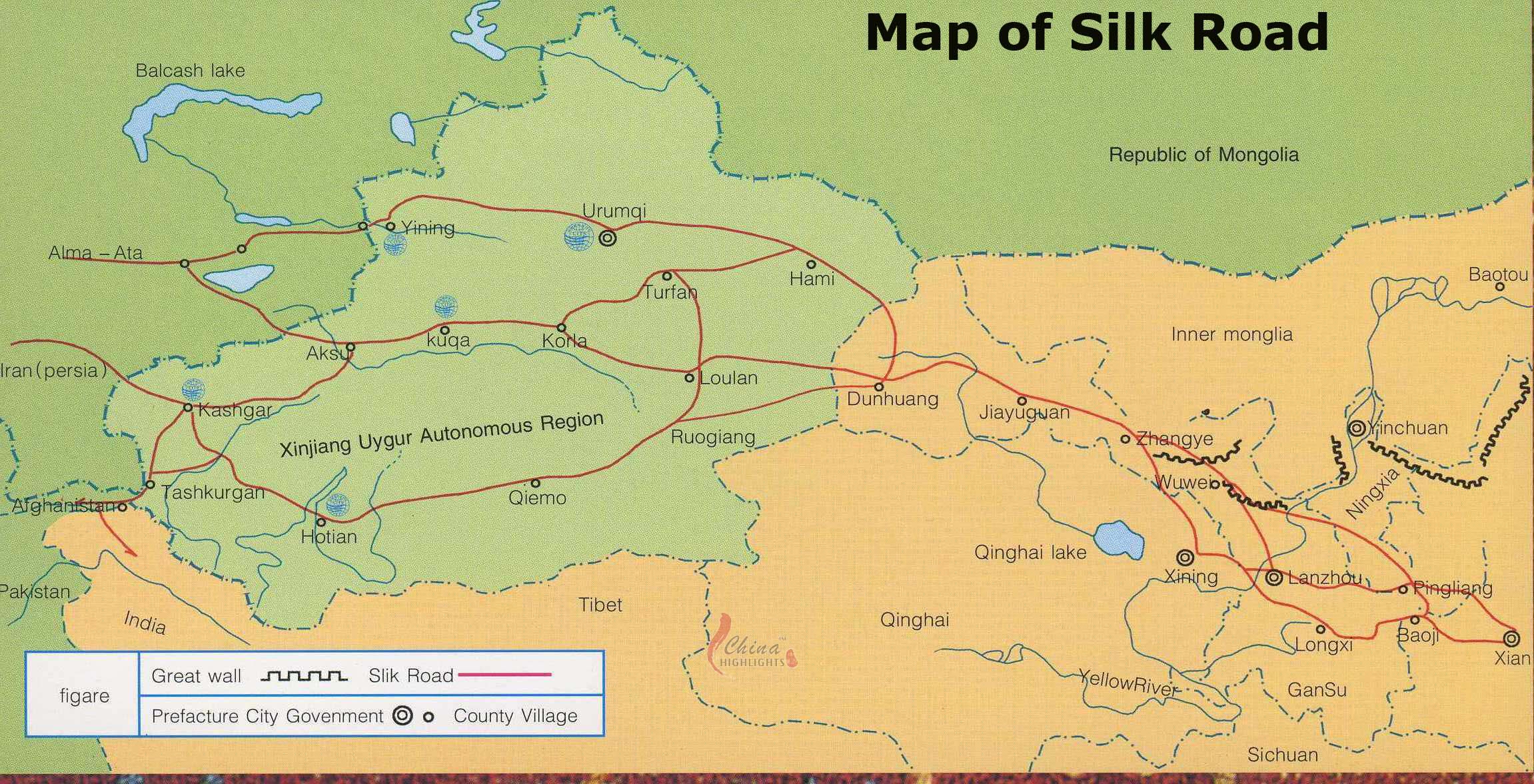
    We’re Riding on a Caravan is written by Laurie Krebs and illustrated by Helen Cann.  This book chronicles the journey a family makes along the silk road in China.  As the family travels from Xi’an to Kashgar over the course of a year they make many stops to trade in places such Lanzhou and Turpan.  Throughout their travels the family trades silk for the many items they are going to need to survive their passage on the silk road.  The final pages of the book provide the reader with a map of the silk road, a story about the origins of silk and brief history of the silk road.

    Curriculum Connections

    We’re Riding on a Caravan is a great book to teach students about how far people used to have to travel to get the goods they needed and desired.  This book can be used to reinforce a lesson about maps (K.4) and understanding the relationship between the environment and the culture of ancient China (2.4).  It can also be used has an opener to lessons about about American journeys similar to the silk road such as the Oregon trail.

    Additional Resources 

    • The Silk Road Project this site offers some interactive curriculum and music from the silk road
    • Map of the Silk Road clear and easy to read map of the silk road.
    • Making silk this site offers a detailed description about the making and history of silk and how it has not changed for hundreds of years.

    Book: We’re Riding on a Caravan
    Author: Laurie Krebs
    Illustrator: Helen Cann
    Publisher: Barefoot Books
    Publication Date: 2005
    Pages: 28 pages
    Grade Range: 1-3
    ISBN: 1-84148-343-5

  • GP de Australia 2010, agenda del evento

    Este fin de semana volveremos a disfrutar de la máxima categoría del motor. Vuelve la Fórmula 1 y esta vez lo hará en el GP de Australia. En el circuito de Melbourne los frenos y los motores serán los más castigados. Además, debemos de tener en cuenta que es un circuito en el que por estadística es muy probable que tengan que salir los coches de seguridad.

    GP de Australia

    Poco más podemos contaros de este Gran Premio que no sepais. Aun así, podremos ver si Ferrari continua con su particular egemonia y si Red Bull consigue solucionar sus problemas de motor (¿consumo de gasolina?).

    A continuación os dejo con los horarios del evento para que no os perdais ni un minuto. Os recuerdo que son horarios para la peninsula ibérica:

    Viernes 27 de marzo

    Sábado 28 de marzo

    • 04.00 h. Entrenamientos libres 3
    • 07.00 h. Sesión de clasificación
    • 12:20 h. Repetición libres 3
    • 13:30 h. Repetición de la sesión de clasificación

    Domingo 29 de marzo

    • 06.00 h. Previo
    • 08.00 h. Carrera GP de Australia
    • 12:00 h. Repetición del previo
    • 14:00 h. Repetición del GP de Australia

    Related posts:

    1. GP de Bahrain 2010, agenda del evento
    2. GP de Brasil, agenda del evento
    3. GP de Abu Dhabi, agenda del evento
  • Mental Health Assessment of Older Adults

    Course Description:

    This course provides an introduction to mental health assessment of older adults with a service learning component.

    Course Objectives:

    • To arraign knowledge and experience using select assessments to evaluate mental health functioning in older adults.
    • To obtain a basic understanding of mental health and ethical concerns in geriatric care.
    • To learn about the services provided and mental health issues addressed by a community-based non-profit agency.
    • To acquire experience with isolated or homebound elders by providing reassurance and safety telephone calls in a supervised environment.

    Required Text:

    J. J. Gallo, H. R. Bogner, T. Fulmer, G. J. Paveza (2006) Handbook of Geriatric Assessment. Sudbury, Massachusetts: Jones and Bartlett Publishers.

    Online Syllabus and Course Notes

    The syllabus and selected notes for the class will be posted online through the University of South Florida BlackBoard system. To access the online syllabus and course notes, go to the My USF webpage (http://my.usf.edu). In order to log into My USF, you must get a Netid account. This is done from the welcome page and requires the identification number on your student id card. In addition to accessing course notes, you can also view your class grades, and send emails about course materials, etc. Course Requirements:

    The course grade will be based on the following: Grading Scale:

    • ElderNet Service Learning Project 35% A = 94 – 100
    • Completion of Values History 15% A- = 90 – 93
    • GDS/MMSE Reports 20% B + = 87 – 89
    • Final Exam 30% B = 84 – 86
    • B- = 80 – 83
    • C+ = 77 – 79
    • C = 74 – 76
    • C- = 70 – 73
    • D+ = 67 – 69
    • D = 64 – 66
    • D- = 60 – 63
    • F = below 60

    Course Outline:
    Date Topic Chapter

    Week 1 Course Overview, Service Learning 1, 3
    1/15 Introduction to ElderNet and the Crisis Center

    Week 2 ElderNet Training
    1/22 NOTE: Class this week will be held at One Crisis Center Plaza, Tampa, Florida 33613 (located off of Bearss Avenue)

    Week 3 Evaluating and Promoting Cognitive Health 10, 12
    1/29 Functional and Behavioral Health 14, 18

    Week 4 How to Understand a Neuropsychological Report Handouts
    2/5 (Mood, Personality, Cognition)

    Week 5 Assessment of Depression 8
    2/12 Description of MMSE and GDS Assignment

    Week 6 Assessment of Anxiety/Agitation 8
    2/19

    Week 7 Assessment of Expressive and Receptive Language 9
    2/26 Dr. Kathryn Kieffer

    Week 8 Assessment of Dementia/Delirium – Part I 7
    3/5 (Class Presentations)

    Week 9 No Class ******************************Spring Break
    3/12

    Week 10 Assessment of Dementia – Part II
    3/19 GDS/MMSE PAPERS DUE/Class Presentations

    Week 11 Screening and Assessment of Alcohol/Drug Problems Handouts
    3/26 Dr. Larry Dupree

    Week 12 Assessing Suicide Risk, Elder Abuse, and Violence 6
    4/2

    Week 13 Crisis Assessment and Intervention with Older Adults 2, 20
    4/9

    Week 14 Driving 4
    4/16 Trail Making A & B (Materials supplied in class)

    Week 15 Assessment of Capacity 5
    4/23 Advance Directives, Competency Discuss Completed Values History on Pages 70 – 75

    Week 16 Sleep, Sex, and Final Exam Review page 304
    4/30 ELDERNET PAPERS DUE/ Class Presentations pages 339 – 340
    5/7 Final Exam (30 multiple choice questions)

    REQUIRED ASSIGNMENTS
    1. ElderNet Service Learning Project
    Students may elect to serve as an Elder Net telephone caller OR complete a needs assessment for ElderNet. ElderNet assignment options will be discussed in detail the first day of class. ASSIGNMENT OPTION 1: Students will be required to complete a minimum of one 4 hour time block each week at a set time agreed upon between the student and ElderNet staff. Students who provide ElderNet telephone calling services to older adults will be required to write a 2 to 3 page paper describing either their 1) most challenging experience with an ElderNet client and how they resolved or addressed the issue or 2) the most important thing they learned as an ElderNet caller. Students will be required to complete a minimum of one four-hour time block each week at a time agreed upon between the student and ElderNet staff. Students will also present their paper as a class presentation. ASSIGNMENT OPTION 2: Students will be required to conduct a needs assessment for ElderNet. The specific area to be assessed will be determined by ElderNet staff, but project will require a literature search, review of the literature, assessment of community needs, and interviews with key stakeholders. A 10 to 15 page paper will be written that includes a 1 page description of the problem, 1 to 2 page background statement, 1 to 2 page description of the public health significance, 1 to 2 pages description of the methods used to conduct the needs assessment, 2 to 3 pages of results, 4 to 7 pages of recommendations, and a 1 to 2 page conclusion. On the due date, your ElderNet paper must be submitted as a hardcopy in class.

    2. GDS Administration and Report
    Students will administer the 30-item Geriatric Depression Scale (GDS) to two (2) people and write 1 brief report. The report should be 2 to 3 pages in length (1 to 1.5 pages per screened individual) and describe the administration process, items endorsed, interpretation of the cut score, and referral question. This assignment will be discussed in detail during the week four class. On the due date, your GDS paper must be submitted as a hardcopy in class.

    3. MMSE Administration and Report
    Students will administer the 30-item Mini Mental State Exam (MMSE) to two (2) people and write 1 brief report. The report should be 2 to 3 pages in length (1 to 1.5 pages per screened individual) and describe the administration process, items failed, interpretation of the cut score, and referral question. This assignment will be discussed in detail during the week four class. On the due date, your MMSE paper must be submitted as a hardcopy in class.

    4. Values History
    Students will complete the Values History on pages 70 to 75 in the textbook. Students will discuss the importance of obtaining a values history when competing an advance directive.

    USF Criteria for Service Learning:

    • Collaborating with the Crisis Center to provide ElderNet support telephone calls will provide students with the opportunity to become knowledgeable of the community needs of older adults as well as the social services available to address their needs. This will also assist the community agency with providing a much needed service within their limited resource base.
    • Through partnering with the ElderNet service, students will have the opportunity to interact with older adults, assess the psychosocial issues they face, and address some of the ethical issues that arise when working with older clients. At the start of the semester all students will receive 4 hours of training from ElderNet staff.
    • Students will be required to complete either a 1) reflection assignment based on their experience as an ElderNet volunteer who makes weekly reassurance and safety telephone calls to community dwelling elders or 2) a research paper that addresses issues of importance to ElderNet services. If students volunteer at ElderNet, they will complete a reflection assignment. Students who choose not to volunteer will complete an alternative assignment designed to also benefit the ElderNet program.
    • Volunteer students who make weekly telephone calls will be asked to complete a block of four hours of time at the ElderNet program each week. This is the standard time shift required weekly for volunteers.
    • Student grades will reflect both their required coursework as well as their service-learning at the Crisis Center as outlined in the course syllabus grading requirements.

    Work with Community Agency:

    • The USF course Mental Health Assessment of Older Adults will work with the Crisis Center of Tampa to provide support calls to older adults through the ElderNet program.

    Student Participation:

    • Students will have the option to either volunteer four hours each week at the Crisis Center and write a reflection paper about their experience at the end of the semester or write a more comprehensive research paper that will contribute to the goals and mission of the Crisis Center.
  • Teaching Physical Science with Children’s Literature: A Color Sampler

    a-color-sampler.jpg

    A Color Sampler written by Kathleen Westray describes how to create colors by using primary colors, secondary colors and intermediate colors.  The twelve colors that make up the color wheel (primary, secondary and intermediate colors) can be mixed to make up hundreds of other colors.  An example would be if someone wanted to create the color citron, green and red would be added together. The book describes how to make the color black and shows how adding black and white can change a color.  The book plays with color showing how a color will look lighter against a dark shade and lighter when placed against white. This visuals in this book help to support the color creations.  Colors that go well together are called complementary colors; they are created when a color is matched with a color directly across from it on the color wheel.  
    “Color is everywhere, and everything has color. The variety of color is endless…and this is just a sampler”.

    Curriculum Connections

    This would be a great book for an early elementary school student.  It shows a color swatch of each color along with the written word.  A Color Sampler would be a great book to introduce students to colors and how colors are made (K.4 a). The book also shows what happens when black (darkens) or white (lightens) an existing color. The book plays with shapes and colors by showing how a color can look darker or lighter depending on the location of each color or shape.

    Additional Resources

    Students can play Mix and Paint with Curious George from PBS Kids. Students can pick which picture they would like to paint and then with the help of Curious George they can create colors from white, red, blue and yellow. It makes learning about color creations fun!

    Teachers or parents can print off color pages from Kids Color Pages with over one thousand categories to pick from. This would also be a great way to bring in material from other subject areas.

    Mixing colors is a great lesson plan for teachers.  In this hands-on activity students can mix colors with shaving cream in a Ziploc bag and watch the color change. After the colors have been mixed, students can then paint with the new color they just made.

    Book: A Color Sampler
    Author: Kathleen Westray
    Illustrator: N/A
    Publisher: Ticknor & Fields
    Publication Date: 1993
    Pages: 28
    Grade Range: k-5
    ISBN: 0-395-65940-X

  • How-to Guide: Standing at Work

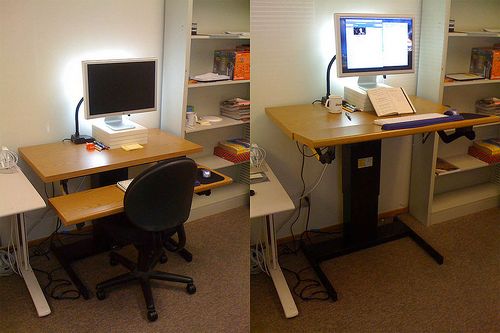
    StandingDeskBesides stuff like tribal warfare, cannibalism, and high infant mortality, it seems like most any divergence from our ancestral norms is ultimately detrimental, or at least problematic. Nutrition is an obvious one, along with sunlight, sleep, and exercise. The mainstream media is even beginning to question the superiority of modern footwear. And then there’s the seemingly simple act of sitting down in a chair. It seems harmless, but as I discussed last year and a recent NY Times piece mentioned last month, sitting for extended periods of time is strongly linked with increased mortality and metabolic syndrome, regardless of how much exercise a sitter gets.

    The chair is a bit like wheat, actually: a relative novelty to which we aren’t physiologically adapted that has become a cultural staple nonetheless. For at least eight hours each day, we twist our bodies into weird Tetris blocks with poor posture and sit, for the most part unmoving, on chairs. When you stop and think about it, sitting down in a chair for extended periods of time seems a little silly. I mean, it’s not even all that comfortable (isn’t that why we distort our bodies with terrible posture – to make sitting more comfortable?). We aren’t “designed” to sit in chairs. We’re certainly meant to stand, but we sit in chairs because we designed them to fit our anatomy, and I somehow doubt that whoever came up with the chair was thinking about long-term effects on our physiology.

    Acutely, sitting weakens our muscles, especially in the legs and the hips. When you sit, your glutes are totally inactive. They aren’t being used. They’re stretched out. It’s just one big static stretch, all day long, which weakens them. Strong, engaged glutes are required for effective, natural movement. Running, walking, lifting weights – if you’re doing any of this with weak, inactive glutes from excessive sitting, you’re an injury waiting to happen. Sitting also causes permanent hip flexion. It shortens your hip flexors and makes them tight. Without good hip mobility and strength, your ability to perform the compound lower body lifts, let alone just walk around and perform day-to-day motions, is going to be severely compromised.

    Besides, is sitting really all that comfortable? What are we trying to avoid here, really?

    Most people just don’t know any better. Sitting down is part of our culture. Try going on a first date at a nice restaurant and waving off the chair. Try being that weird guy that stands in the movie theater, or that chronically unemployed applicant who refuses to sit down for the job interview. That guy is weird because he’s rare; he doesn’t even really exist. Sitting down is about the most uncontroversial societal expectation out there. You could have massive drag-out verbal fights over tipping or saying “bless you” or holding the door open for people, but sitting down in a chair has the wind of consensus at its back.

    Which is why lobbying your boss for a stand-up workstation might be tricky, perhaps trickier even than convincing management to let you nap on the job. There’s nothing particularly objectionable about standing – it probably comes off as a bit weird or wacky – but it does require structural changes to your workstation, and changes can be expensive or time-consuming. Many of the larger companies have ergonomics teams dedicated to helping employees sit and work well. Asking them for assistance might work, but whatever you do a new desk is going to be installed and feathers will be ruffled. Sure, if they’re going to ask you to work a full day at a computer, they probably owe it to you to provide a standing workstation, but it’s not a perfect world. People will see your fancy new standing workstation as an extravagance.

    “Why can’t he just sit/eat normal food/wear shoes like everyone else?”

    If your boss offers resistance, you have a couple options. First, bring the data. Send an email, print out copies, whatever – just create a compendium of powerful references showing the dangers of sitting for hours on end. I’ve thrown a little something together for just such an endeavor:

    Australian study (PDF) reveals sedentarism/sitting at work leads to more sitting at home, and eventually obesity. You want a healthy, vibrant workforce, don’t you?

    New Zealand study shows that workers who sat for long periods of time were more likely to get deep vein thrombosis.

    Excessive sitting was linked to negative metabolic and cardiovascular effects in another study.

    One doctor even compared sitting to smoking cigarettes in terms of negative health effects.

    Here’s that NY Times piece once again.

    To round everything up, healthy employees are productive employees. Healthier employees incur lower health care costs. They miss fewer workdays. They work better, harder, and smarter when they’re at work. And workers with standing workstations are more energetic and more focused (no crippling back pain to worry about). They also take fewer breaks than sitters (PDF), which, once again, leads to greater productivity.

    If your boss seems amenable, and you’re feeling cocky, slip in this final link.

    Still, jobs are scarce, and employees hold few real bargaining chips these days. Your boss or your department may still balk at any additional short-term costs, even in the face of all that evidence. If that’s the case, I suggest you take matters into your own hands. Build your own. Even if your company won’t spring for a standing workstation conversion, I doubt they’ll complain if you handle it yourself.

    A standing workstation doesn’t have to be fancy; it just has to work.

    When I work from home, for example, and I feel like standing, I just put my laptop on a stack of hardcovers sitting on the counter.

    If you like to work out of cafes, you’re in luck. I find that most people in coffee shops avoid the tall tables at all costs, instead opting for cushy chairs or plush sofas, so they’re generally available. Just push the tall chair aside and work standing. Tall café tables tend to be the perfect height for standing and working.

    If you’re a laptop user at work, a bunch of books from the corporate library (no one reads those – c’mon) stacked up could work in a pinch.

    You could spring for one of the official standing workstations in the link above, but that’s unnecessary. I’d recommend doing what this woman did and spend $20 to build your own. She essentially bought a light baker’s rack that fit on her desk, attached some no-slip shelf paper to the bottom of the laptop, and was done with it. If you have a desktop computer, you’re going to need more room, but you don’t really need a dedicated “standing workstation.” You simply need a reliable surface at the proper height.

    Whatever method you choose, just make sure you’re actually comfortable working in the position. You shouldn’t be hunched over, bent at the waist, or straining with your arms to reach the workstation. You shouldn’t be leaning on the desk for support. Standing up to work is about comfort in addition to health, and you defeat the purpose if you have to strain to make it work. Before you buy anything, test out different workstation heights. Measure the one that works and keep that measurement handy when you’re shopping or building.

    If I make standing to work seem like a panacea, I don’t mean to, because there are potential problems. The Canadian Centre for Occupational Health and Safety caution against prolonged static standing, which can increase the chances of “sore feet, swelling of the legs, varicose veins, general muscular fatigue, lower back pain, and stiffness.” (Check your posture if that’s the case!) But the problem isn’t standing, really; it’s standing and never moving, which probably isn’t all that different from sitting and never moving (the symptoms of both are almost identical). I’m not worried about MDA readers being inactive while standing, though. You guys’ll probably be busting out random burpees and lunges in between TPS reports and video-conferences.

    Anyone use a standing workstation currently? Got any tips for newbies looking to convert? Let everyone know in the comments section!

    rKnight Flickr Photo (CC)

    Get Free Health Tips, Recipes and Workouts Delivered to Your Inbox

    Related posts:

    1. You Might Want to Sit Down for This
    2. Definitive Guide: The Primal Blueprint
    3. How to Guide: Making the Switch to Primal Living in 6 Easy Steps

  • Video: Corvette Racing’s uncharacteristic pit-car crash at Sebring

    Filed under: , ,


    Click above to watch the video after the jump

    There are plenty of top-notch competitors in the American Le Mans Series looking to knock you out of contention, especially in this year’s hyper-competitive GT2 class. So it’s important not to hurt your own chances with bonehead mistakes. The Pratt & Miller Corvette Racing team knows this all too well after its own #4 C6.R GT2 collided with the #3 car early in this weekend’s season opening 12 Hours of Sebring endurance race.

    We’re not talking about a poorly timed maneuver during the heat of the race, folks. Instead, Jan Magnussen in the #3 car began leaving his pit box after an unscheduled stop to repair a power steering hose when Emmanuel Collard in the #4 Vette came out of nowhere and slammed into his side. The #4 car immediately went behind pit wall for repairs, but since the #3 car was already leaving the pits, it was forced to limp around an entire lap with a flat front tire before returning for repairs. The collision effectively took both Corvettes out of contention for a podium spot, though they did manage to finish the race in 8th and 9th place.

    The mistake by Corvette Racing is all the more difficult to wrap our heads around considering how dominant this team has been in ALMS racing. That, however, was before the team switched classes from GT1 to GT2 in mid-2009. The going has been rough since then, including a particularly violent crash at Laguna Seca in last season’s final race. Nevertheless, when they aren’t bouncing their cars off walls (or each other), the Corvettes remain contenders to watch.

    Hit the jump to view the video of this weekend’s incident for yourself.

    [Source: YouTube]

    Continue reading Video: Corvette Racing’s uncharacteristic pit-car crash at Sebring

    Video: Corvette Racing’s uncharacteristic pit-car crash at Sebring originally appeared on Autoblog on Tue, 23 Mar 2010 11:32:00 EST. Please see our terms for use of feeds.

    Read | Permalink | Email this | Comments

  • Urban Life and Culture

    COURSE DESCRIPTION AND PURPOSE

    This applied anthropology course is a cross-cultural study of urbanization, urbanism, and human problems associated with metropolitan environments. Major emphasis is given to the ethnography of city life and its relationship to the practical applications of urban research, especially in the contexts of globalization and neoliberalism. Selected readings from recent, book-length urban ethnographies written by anthropologists will be used as models for presenting coherent and readable syntheses of theory, methods, and analysis of various urban issues and experiences of urban life. Documentary videos carefully selected to illustrate the diversity of urban life and culture will also be viewed and critically analyzed. Integral to the goals of this course is a 15-hour service-learning component, which will provide the fieldwork context for students to conduct their own urban ethnographic research in the Tampa Bay area. Reading assignments, learning assessments, and service-learning projects will be used to allow students to develop an array of knowledge, skills, and understandings necessary for doing applied urban anthropology and community engaged research.

    The discipline of anthropology uses global, comparative, and historical perspectives to study the biological and cultural diversity of human beings in all times and places. Ethnographic fieldwork methods, including participant observation and conversational interviews, allow anthropologists to understand the experiences and perspectives of real people as they go about living and making meaning out of their everyday lives in specific social worlds that have been produced, and are reproduced, through particular economic systems and political structures of power and governance. Anthropologists traditionally lived in and studied small scale societies in faraway places, but as the world is becoming increasingly urbanized and globalized, more anthropologists are turning their attention to the study of the political, economic, historical, and social complexities of contemporary urban life and culture in major metropolitan areas, in which the forces of globalization and localization have a concentrated impact.

    Processes of ever-expanding and intensifying movements of people, means of production, goods, money, ideologies, ideas, information, images, and media across national borders, as well as the political restructuring of globally interconnected economies under neoliberal principles, have resulted in rapidly changing migratory and urban demographic patterns; more frequent interaction in local contexts between people from different social and cultural backgrounds; the concentration of wealth in middle class suburbs, gated communities, and the fortified enclaves of the upper class elite; and the spread of poverty and misery among marginalized ethnoracial populations and exploited classes of laborers living in inner city ghettos and sprawling urban slums. By using anthropological perspectives, critical theory, and ethnographic fieldwork methods, urban anthropologists can study how the forces of globalizing capitalism and neoliberalism are impacting human life and culture in the built environments of urban places and spaces. Additionally, urban anthropologists can analyze the extent to which political organizing and activism among marginalized populations in localized urban contexts can create viable and socially transformative alternatives to the dominant forms of spatialized governance and inequality. More importantly, applied urban anthropologists can work with local community organizations as well as with national and transnational social movements to develop and implement programs, projects, and policies that address urban problems from a social justice perspective and aim to decrease the social disparities and inequalities produced by particular urban configurations of local and global power and class stratification.

    This course will survey recent ethnographic research on the topics most relevant to understanding urban life and culture in the neoliberal and globalizing world of today:

    • ethnohistorical approaches to urban ethnic relations;
    • the politics and cultures of public spaces and places;
    • gentrification, housing, and neoliberal urban development;
    • architecture, urban design, and everyday socio-cultural life;
    • blackness, whiteness, and class stratification in urban contexts;
    • fear and security, urban crime, and class segregation;
    • indigenous peoples, citizenship, and urban organizing;
    • rural to urban migration and socio-political marginalization;
    • children and youth living in a street situation;
    • immigrant labor, urban poverty, and transnational spaces;
    • urban spatialization of memory and heritage; and
    • environmental racism and urban activism.

    As a service-learning course, students will be required to do service with a nonprofit organization, school, or government agency in the Tampa Bay area. Service-learning is a philosophy of education that asserts that students can achieve course learning goals and retain course content in more profound and lasting ways through experiential learning in real world contexts. Service-learning typically takes place in the context of charitable community development work or a social change project. Service-learning benefits the community and is directly linked to course curriculum, content, and goals. It entails ongoing self-reflection exercises through which students reflect on the social context of the learning process, analyze their own relationships to other people and the world, challenge their own assumptions about social problems and issues, and cultivate a more committed sense of civic responsibility and ethical sense of personal agency. This course fosters service-learning for social justice rather than for mere charity or “doing good” for its own sake. Students will be encouraged to actively pursue social justice service-learning projects that aim to: increase critical awareness of forms of oppression; understand the economic and political causes of social inequalities and problems; strive to reduce disparities and resolve social problems through theoretically informed actions deliberated with community partners; increase democratic participation in political decision making; give value to multiple perspectives and cultural diversity; and combat prejudice and negative stereotypes about human differences. As such, social justice service-learning supports students in realizing their own role as potential or actual agents of positive social transformation and in reducing the extent to which they contribute to the social reproduction of oppression and inequality.

    COURSE GOALS, OBJECTIVES, AND EXPECTATIONS

    This course emphasizes critical thinking and inquiry. In keeping with the learning objectives of the Foundations of Knowledge and Learning Core Curriculum at USF, this course emphasizes inquiry as the means of developing complex intellectual skills that enable students to become critical thinkers, concerned citizens, successful professionals, and reflective people who throughout their lives are aware of, understand, and engage with the complexities and challenges that our global realities require.
    Students who successfully complete all course requirements will:

    • gain a solid understanding of the basic concepts, issues, and perspectives of urban anthropology;
    • develop a general understanding of anthropological theories and methods of producing knowledge;
    • become familiar with outstanding examples of recent ethnographies of urban life and culture written by anthropologists;
    • learn what anthropologists can contribute to the study of urbanization, urbanism, urban life and culture by conducting ethnographic field research in the context of a service-learning project with a local nonprofit organization, school, or government agency concerned with urban issues; and
    • learn how to use anthropological approaches, theories, concepts, and research methods to describe, explain, and propose recommendations for solving urban problems.

    The objectives and expectations for this course meet many learning objectives identified in USF’s Foundations of Knowledge and Learning Core Curriculum. Through the assigned readings and videos, learning assessments, writing assignments, classroom discussions, and fieldwork activities, students will have opportunities to demonstrate:

    • a critical understanding of the local and global economic and political processes that historically influence and define human differences, cultural diversity, and social disparities in urban contexts;
    • a critical understanding of how such differences, diversity, and disparities have influenced the relative rights and responsibilities (e.g., issues of social justice, discrimination, and exploitation) accorded to individuals and groups within urban contexts, and how the decisions and actions of individuals and groups in positions of power can affect the everyday urban lives of millions of people;
    • a critical understanding of the theories that can explain how these differences might affect the ways in which an individual or a group experiences and interprets the urban world, as well as how their resulting decisions and actions might affect urban and natural environments; and
    • a critical understanding of local and global processes that reveal culturally different ways of pursuing a meaningful life, and of how such differences affect urban environments.

    Students in this course will be expected to:

    • analyze cultural beliefs and make sound judgments about the evidence (or lack thereof) that supports them;
    • write well-organized, well-developed essays that reflect appropriate use of language;
    • deliver well-organized, well-developed oral presentations that reflect appropriate use of language and technology consistent with assignment objectives;
    • improve critical thinking and analytical abilities, including the capacities to engage in inductive and deductive thinking and quantitative reasoning, and to construct sound arguments;
    • demonstrate an understanding of how theories and models are used as unifying principles that help us understand natural, social, and organizational phenomena, make predictions, and solve problems;
    • improve information literacy skills including: identifying appropriate questions, problems, or issues; determining appropriate sources of information; locating and evaluating necessary information; and analyzing, synthesizing, and applying the knowledge gained; and
    • pursue intellectual development that emphasizes active involvement in the learning process.

    Students will also be expected to meet the following service-learning objectives:

    • learn how to develop respectful, meaningful, collaborative, and mutually beneficial partnerships with community groups and members;
    • understand the service-learning experience in the context of the larger social issues being studied though this course;
    • demonstrate the ability to transfer knowledge between the classroom and service-learning setting;
    • develop critical self-reflection as a means of analyzing the efficacy and potential of personal and group agency; and
    • cultivate a more committed sense of civic responsibility and ethical sense of personal agency.

    COURSE CONTENT AND REQUIRED READINGS

    The content of this course consists primarily of (1) introductory and selected narrative chapters from recent ethnographies that provide in-depth anthropological study of particular urban issues in cities around the globe, (2) short journal articles on specific topics relevant to understanding urban issues in Tampa, FL, and (3) supplementary material presented by the Instructor during class lectures and discussions. Students are also required to search for and read research literature relevant to their service-learning based ethnographic fieldwork projects (see below). Additional readings may be assigned based on student interest and requests.

    The ethnographic readings are available online through Blackboard (see below). The authors of these readings are all professional anthropologists. These readings were chosen based on narrative readability and the inclusion of multiple voices and perspectives of real people from differing urban contexts. Additionally, these selected readings are taken from ethnographies that were published during the last ten years and that describe, explain, and understand urban life and culture within the context of globalization and neoliberalism. All other assigned readings are also available online through Blackboard.

    Students are required to have completed all assigned readings by the date indicated on the course schedule. Bring the day’s assigned readings and your notes from the readings to class so that you will be prepared for the discussion or activities that the readings may involve.

    ANTHROPOLOGICAL VIDEOS

    The objective of watching anthropological videos is to offer you a way to “experience” other cultures and the work of anthropologists without the expense of actually having to take you on a global field trip. The videos are an integral part of this course, and you are expected to watch the videos carefully, attentively, and critically. Some videos will elaborate on the topics we cover in readings and presentations; others will enhance your understanding of urban anthropology by introducing new material.

    We will watch a video or several video clips almost every class meeting, and it is your responsibility to attend class in order to see the videos when they are shown. A list and schedule of the videos is available on Blackboard under “Videos.” Many of the videos are available online or in Media Resources located on the 1st floor of the library. You therefore have the opportunity to watch a video more than once.

    ATTENDANCE AND PARTICIPATION

    The purpose of our class discussions is to provide you with opportunities to practice critical thinking in peer group settings, to engage you in issue-centered exercises and problems, and to construct a friendly, dialogical space in which the multiple perspectives you each bring to the class can be expressed. Given the diversity of the USF student population, but depending on the backgrounds of individual students who enroll in this course, each class meeting will provide structured opportunities for critical discussion and reflection among students from different cultural, “racial,” ethnic, class, and gender backgrounds. In each class meeting, we will be challenged to examine our own opinions and perspectives regarding the differences and similarities between urban lives and cultures, and asked to account for these differences and similarities by applying anthropological concepts, understandings, and explanations.

    The success of each class meeting depends on your active participation. You should come to class prepared to participate in discussions by having completed the assigned readings, fieldwork activities, and service-learning. Arrive promptly at or before 12:30 pm and do not leave early. You must attend every class meeting. Exceptions will be made only for health or other major emergencies.

    Attendance will be taken each class meeting. This means that there is a total of 30 class meetings for which you will be awarded 5 points each meeting for attendance and participation, for a total of 150 points. Attendance and participation count for 10% of your final grade. Students who anticipate the necessity of being absent from class due to a major religious observance must present a written notice to the Instructor by the end of the second week of the semester.

    READINGS BLOGS

    In order to prepare for class discussions on Mondays, you will submit a 250-word paragraph of written text prior to each Monday class meeting. These paragraphs will be submitted via Blackboard as blog entries and will be based on the ethnographic readings, which are selections from book-length urban ethnographies and are intended to offer a comparative, cross-cultural perspective from which to view urban issues and aspects of urban life across the globe. More detailed instructions about the ethnographic readings blogs can be found on the Blackboard course site. Each student will submit 6 ethnographic readings blogs. Each blog is worth 25 points for a total of 150 points (or 10% of your final grade). There are 12 ethnographic readings in total.

    Students will be divided into two groups at the beginning of the semester. The two groups will alternate each week in submitting blog entries so that every student in both groups does a total of 6 blogs, one every other week. All students in both groups will be equally responsible for participating in seminar-style discussions about the readings during Monday classes.
    In order to prepare for class discussions on Wednesdays, you will submit a 250-word paragraph of written text prior to each Wednesday class meeting. These paragraphs will be submitted via Blackboard as blog entries and will be based on the journal articles on specific topics relevant to understanding urban issues in Tampa. More detailed instructions about the journal article blogs can be found on the Blackboard course site. Each student will submit 6 journal article blogs. Each blog is worth 25 points for a total of 150 points (or 10% of your final grade). There are 12 journal article readings in total.

    Students will be divided into two groups at the beginning of the semester. The two groups will alternate each week in submitting blog entries so that every student in both groups does a total of 6 blogs, one every other week. All students in both groups will be equally responsible for participating in seminar-style discussions about the readings during Wednesday classes.

    SERVICE-LEARNING

    This course requires that you spend time outside of class conducting urban ethnographic field research in the context of service-learning with a locally operating nonprofit organization, school, or governmental agency concerned with some issue regarding urban life and culture. This can be done with an organization near the USF campus or in the Tampa Bay area, although students will be encouraged to do service-learning with an organization in the Sulphur Springs neighborhood, which is about a fifteen minute drive from the USF campus. There are 15 service-learning hours required. You will do service-learning at least one hour a week beginning with the week of January 25 and ending with the week of April 19th; during three of these weeks you will need to do at least two hours of service in order to accumulate all 15 hours. Service-learning hours will be logged in Blackboard on a weekly basis. Each hour is worth 10 points for a total of 150 points (or 10% of your final grade).

    You are permitted—indeed, encouraged—to work together on the urban ethnographic research project with other students if they are also working with you at the same service-learning site. The final product of your research will be a deliverable (see below) that you will present to your community partner.

    COMMUNITY PARTNERS, COMMUNITY ENGAGEMENT, AND COMMUNITY BASED RESEARCH

    You will be strongly encouraged, though not required, to do service-learning in Sulphur Springs, a neighborhood close to the USF campus and in which the Instructor and his faculty mentor Dr. Susan Greenbaum have been conducting research and other projects for a number of years (Dr. Greenbaum since 1999, the Instructor since 2007). Other USF faculty and students have also been conducting research, offering service-learning courses, operating nonprofit organizations, and directing or advising various kinds of community based projects in Sulphur Springs. This involvement includes Dr. Antoinette Jackson (Anthropology), Robin Jones (Geography), and others, who have developed community engaged partnerships with a variety of organizations, schools, and agencies in Sulphur Springs over the years. The long-term community engagement of these faculty have created ongoing community based research projects in which students can easily participate in a more structured, coherent way and with stronger implications for social action. A descriptive inventory of organizations, schools, and agencies operating in Sulphur Springs will be provided at the beginning of the semester. Furthermore, the Instructor will send out a “request for proposals” to all these entities prior to the commencement of the semester, soliciting proposals for service-learning opportunities and community based research projects.

    The Instructor serves as executive director of one of these organizations, the Moses House, and has several service-learning research projects already set up for teams of students to work on. Students who do service with the Moses House will conduct research projects on housing and neighborhood life issues affecting families and children living in Sulphur Springs, especially families who have been relocated to Sulphur Springs following the demolition of Tampa Public Housing complexes in East Tampa and elsewhere. Students will develop community engaged research projects on specific topics of concern that have already been identified by residents of Sulphur Springs. Some of the specific problems that will be addressed include landlord absenteeism, housing conditions, affordable housing, mortgage foreclosures, and various issues surrounding youth recreational and cultural activities in the neighborhood. These projects will be conducted in Sulphur Springs, and students will work in teams with Moses House youth participants to conduct ethnographic research that explores the housing and neighborhood life issues mentioned above. Service activities include collaborating with the Moses House president on the conceptualization and execution of research projects, developing mentoring relationships with at-risk youth, and teaching ethnographic research methods and anthropological concepts to Moses House youth researchers. Service-learning activity meetings will be held at the North Tampa Community Center and the Sulphur Springs Resource Center. The research and service-learning that will be done through this project will be documented through various forms of digital media, including photography, video, and blogs. In addition, this project will form part of the basis of a video documentary about housing conditions and neighborhood life in Sulphur Springs.

    FIELDWORK JOURNAL BLOGS (NOTES AND REFLECTIONS)

    During your service-learning, you will inevitably meet and talk with members of different social classes and ethnic backgrounds about the urban issues that are affecting their everyday lives. By listening to the multiple voices and perspectives of real people from particular urban contexts, you will be better able to describe, explain, and understand the diversity of urban life and culture. The purpose of the fieldwork journal blogs are for you to demonstrate how specific topics, issues, and aspects of urban life and culture that you learn about through service-learning can be understood anthropologically by applying some of the relevant anthropological knowledge, perspectives, theories, and methods you learn about through the course content and readings. For the fieldwork journal blogs, you will (1) record descriptive observations about the social, organizational, and urban contexts in which you do your service-learning and research, (2) write critical reflections on what you are learning through open-ended conversational interviews and focused observations, and (3) analyze the connections between the course content and what you learn through your fieldwork research and service-learning.

    Your fieldwork blogs will be more interesting and visually appealing if you include photographic images. Therefore, if possible, keep a photographic record of your service-learning and field research activities, and post selected images with your fieldwork notes.

    There are 12 fieldwork blogs. The first fieldwork blog is due the week of January 25 and the last one is due the week of April 21. Each is worth 37.5 points for a total of 450 points (or 30% of your final grade). More detailed instructions about the fieldwork notes and reflections blogs can be found on the Blackboard course site.

    DELIVERABLE TO COMMUNITY PARTNER

    At the conclusion of your community based research project, which will be conducted at your service-learning site, your community partner will be expecting you to deliver a final product (or “deliverable”). By the third or fourth week of your service-learning, you should negotiate with your community partners about what your deliverable to them will be. Agree to a deliverable that is realistic and actually doable within a three month time span. Do not be overly ambitious and do not promise to “save the world.” If you work as a student group, you ought to be able to offer more than if you were working as an individual. Your deliverable may take a number of different forms or formats, and it may include an action plan or require that your community partners, future service-learning students, or future volunteers continue some aspects of the project beyond the end of the semester. The Instructor will provide guidance about community partner deliverables throughout the semester.

    The deliverable is worth 225 points (or 15% of your final grade) and will be peer-evaluated, that is, graded by your own classmates. More detailed instructions about the final product for your community partner can be found on the Blackboard course site.

    IN-CLASS FINAL PRESENTATION

    During the last week of the semester, students will share highlights from their research projects and deliverables. This will give students the opportunity to learn about, and learn from, the community based research projects conducted by their classmates. The in-class presentation of highlights from research projects and deliverables is worth 75 points (or 5% of your final grade).

    COMMUNITY PRESENTATION

    At the end of the semester, students will participate in a public event in which they present their research findings to the community. The location, date, and time of the community presentation will be announced during the semester as soon as the details have been confirmed. The community presentation is worth 75 points (or 5% of your final grade).

    COURSE REFLECTIONS FINAL ESSAY

    The final exam for this course is a self-reflection essay (4-5 double-spaced pages or 1000-1250 words). The objectives of the final reflective essay are for you to review, summarize, and reflect on what you have learned about urban applied anthropology during the course of the semester by doing service-learning based field research. The final essay is therefore part course summary and part critical reflection, and its purpose is twofold: (1) it allows you to demonstrate that you comprehend the “big picture” regarding anthropological approaches to understanding the diversity of urban life and culture, and (2) it allows you to demonstrate that you can critically reflect on the significance of the contexts and processes involved in your own experiential learning. The course reflections final essay should include a short synopsis of the research findings from your service-learning fieldwork project and explain how what you learned through this course helped you to arrive at those results.

    Specific guidelines regarding the format and requirements for the final reflective essay will be distributed during the semester. One component of the final paper assignment is to review your class notes and blog postings (on the readings and your fieldwork) from the entire semester, so be sure to keep these. The final reflective essay is worth 75 points (or 5% of your final grade).

    MONDAY WEDNESDAY
    January 11

    • introduction to course
    • introduction to urban anthropology January 13
    • “I read the syllabus” assignment due
    • community partners in Sulphur Springs
    • service-learning and community based research
    • student service-learning and research groups

    January 18

    • NO CLASS: Martin Luther King, Jr. Holiday

    January 20

    • read Hathaway & Kuzin (2007), “Engaging Ethnography: Student Engagement as a Means for Creating Change” prior to class
    • post a blog on Hathaway & Kuzin (2007) by 11:00 am
    • discuss readings
    • discuss preparations for service-learning and fieldwork

    January 25

    Ethnohistorical Approaches to Urban Ethnic Relations

    • read introduction and selected chapters from More than Black: Afro-Cubans in Tampa by Susan D. Greenbaum prior to class
    • post a blog on More than Black by 11:00 am
    • discuss More than Black readings during class

    January 27

    • make initial contact with community partner and begin service-learning
    • post a fieldwork journal blog on initial meeting with community partner by 4:00 pm
    • ethnographer self-awareness exercise due by 11:00 am
    • discuss ethnographer self-awareness exercise

    February 1

    Politics and Cultures of Public Spaces and Places

    • read introduction and selected chapters from On the Plaza: The Politics of Public Space and Culture by Setha M. Low prior to class
    • post a blog on On the Plaza by 11:00 am
    • discuss On the Plaza readings during class

    February 3

    • read Beckett & Herbert (2009a), “Toward Banishment: The Transformation of Urban Social Control” and (2009b), “The Social Geographies of Banishment” (chapters 2 and 3 from Banished: The New Social Control in Urban America)
    • post a blog on Beckett & Herbert (2009a; 2009b) by 11:00 am
    • post a fieldwork journal blog by 11:00 am
    • discuss readings, service-learning, and fieldwork during class

    February 8

    Gentrification, Housing, and Neoliberal Urban Development

    • read introduction and selected chapters from Barrio Dreams: Puerto Ricans, Latinos, and the Neoliberal City by Arlene M. Dávila prior to class
    • post a blog on Barrio Dreams by 11:00 am
    • discuss Barrio Dreams readings during class

    February 10

    • read Greenbaum et al. (2008), “Deconcentration and Social Capital: Contradictions of a Poverty Alleviation Policy” and Greenbaum (2008), “Poverty and the Willful Destruction of Social Capital: Displacement and Dispossession in African American Communities” prior to class
    • post a blog on Greenbaum et al. (2008) and Greenbaum (2008) by 11:00 am
    • post a fieldwork journal blog by 11:00 am
    • discuss readings, service-learning, and fieldwork during class

    February 15

    Architecture, Urban Design, and Everyday Socio-Cultural Life

    • read introduction and selected chapters from The Modernist City: An Anthropological Critique of Brasília by James Holston prior to class
    • post a blog on The Modernist City by 11:00 am
    • discuss The Modernist City readings during class

    February 17

    • read Ruiz (2007), “Sulphur Springs Community Profile and Land Analysis” and Patton (2004), “Multiple Worlds on Oakland’s Streets: Social Practice and the Built Environment” prior to class
    • post a blog on Ruiz (2007) and Patton (2004) by 11:00 am
    • post a fieldwork journal blog by 11:00 am
    • discuss readings, service-learning, and fieldwork during class
    • begin negotiating deliverable to community partner

    February 22

    Blackness and Class Stratification in Urban Contexts

    • read introduction and selected chapters from Catching Hell in the City of Angels: Life and Meanings of Blackness in South Central Los Angeles by João H. Costa Vargas prior to class
    • post a blog on Catching Hell in the City of Angels by 11:00 am
    • discuss Catching Hell in the City of Angels readings during class

    February 24

    • read Wellman (2009), “Reconfiguring the Color Line: Racializing Inner-City Youth and Rearticulating Class Hierarchy in Black America”
    • post a blog on Wellman (2009) by 11:00 am
    • post a fieldwork journal blog by 11:00 am
    • discuss readings, service-learning, and fieldwork during class

    March 1

    Whiteness and Class Stratification in Urban Contexts

    • read introduction and selected chapters from Racial Situations: Class Predicaments of Whiteness in Detroit by John Hartigan prior to class
    • post a blog on Racial Situations by 11:00 am
    • discuss Racial Situations readings during class

    March 3

    • read Low (2009), “Maintaining Whiteness: The Fear of Others and Niceness”
    • post a blog on Low (2009) by 11:00 am
    • post a fieldwork journal blog by 11:00 am
    • discuss readings, service-learning, and fieldwork during class

    March 8

    • NO CLASS: Spring Break

    March 10

    • NO CLASS: Spring Break

    March 15

    Fear, Urban Crime, and Class Segregation

    • read introduction and selected chapters from City of Walls: Crime, Segregation, and Citizenship in São Paulo by Teresa P. R. Caldeira prior to class
    • post a blog on City of Walls by 11:00 am
    • discuss City of Walls readings during class

    March 17

    • read Macek (2006), selected chapters from Urban Nightmares: The Media, the Right, and the Moral Panic Over the City prior to class
    • post a blog on Macek (2006) by 11:00 am
    • post a fieldwork journal blog by 11:00 am
    • discuss readings, service-learning, and fieldwork during class

    March 22

    Indigenous Peoples, Citizenship, and Urban Organizing

    • read introduction and selected chapters from El Alto, Rebel City: Self and Citizenship in Andean Bolivia by Sian Lazar prior to class
    • post a blog on El Alto, Rebel City by 11:00 am
    • discuss El Alto, Rebel City readings during class

    March 24

    • NO CLASS MEETING: Instructor will be at the Society for Applied Anthropology Annual Meeting
    • post a fieldwork journal blog by 11:00 am

    March 29

    Children and Youth Living in a Street Situation

    • read introduction and selected chapters from Sleeping Rough in Port-au-Prince: An Ethnography of Street Children and Violence in Haiti by J. Christopher Kovats-Bernat prior to class
    • post a blog on Sleeping Rough by 11:00 am
    • discuss Sleeping Rough readings during class

    March 31

    • read Lyon-Callo (2004a) and (2004b), “Medicalizing Homelessness” and “Shelter Statistics and the Silencing of Systemic Concerns” (chapters 2 and 3 from Inequality, Poverty, and Neoliberal Governance: Activist Ethnography in the Homeless Sheltering Industry) prior to class
    • post a blog on Lyon-Callo (2004a; 2004b)
    • post a fieldwork journal blog
    • discuss readings, service-learning, and fieldwork during class

    April 5

    Immigrant Labor, Urban Poverty, and Transnational Spaces

    • read introduction and selected chapters from Janitors, Street Vendors, and Activists: The Lives of Mexican Immigrants in Silicon Valley by Christian Zlolniski prior to class
    • post a blog on Janitors, Street Vendors, and Activists by 11:00 am
    • discuss Janitors, Street Vendors, and Activists readings during class

    April 7

    • read Williams (2004), “Pummeling the Poor” (chapter 5 from Debt for Sale: A Social History of the Credit Trap) and Lyon-Callo & Hyatt (2003), “The Neoliberal State and the Depoliticization Of Poverty: Activist Anthropology And ‘Ethnography From Below’” prior to class
    • post a blog on Williams (2004) and Lyon-Callo & Hyatt (2003) by 11:00 am
    • post a fieldwork journal blog by 11:00 am
    • discuss readings, service-learning, and fieldwork during class

    April 12

    Urban Spatialization of Memory and Heritage

    • read introduction and selected chapters from The Politics of Heritage from Madras to Chennai by Mary Elizabeth Hancock prior to class
    • post a blog on The Politics of Heritage by 11:00 am
    • discuss The Politics of Heritage readings during class

    April 14

    • read Greenbaum et al. (1998), “Central Avenue Legacies: African American Heritage in Tampa, Florida,” Jackson (2009), “Conducting Heritage Research and Practicing Heritage Resource Management on a Community Level—Negotiating Contested Historicity,” and Jackson (2010), “Changing Ideas about Heritage and Heritage Management in Historically Segregated Communities,” prior to class
    • post a blog on Greenbaum et al. (1998), Jackson (2009), and Jackson (2010) by 11:00 am
    • post a fieldwork journal blog by 11:00 am
    • discuss readings, service-learning, and fieldwork during class

    April 19

    Environmental Racism and Urban Activism

    • read introduction and selected chapters from Polluted Promises: Environmental Racism and the Search for Justice in a Southern Town by Melissa Checker prior to class
    • post a blog on Polluted Promises by 11:00 am
    • discuss Polluted Promises readings during class

    April 21

    • read and Rodriguez (2003), “Invoking Fannie Lou Hamer: Research, Ethnography and Activism in Low-Income Communities” and Schensul (2005), “Strengthening Communities through Research Partnerships for Social Change: Perspectives from the Institute for Community Research” prior to class
    • post a blog on Rodriguez (2003) and Schensul (2005) by 11:00 am
    • post a fieldwork journal blog by 11:00 am
    • discuss readings, service-learning, and fieldwork during class
    • end service-learning

    April 26

    • final presentations

    April 28

    • final presentations

    May 3

    May 5

    • COURSE REFLECTIONS ESSAY DUE BY 5:00 PM
  • Meanwhile, The Housing Market Continues To Roll Over…

    From Calculated Risk: Existing Home Sales Decline In February

    The NAR reports: February Existing-Home Sales Ease with Mixed Conditions Around the Country

    Existing-home, which are finalized transactions that include single-family, townhomes, condominiums and co-ops, slipped 0.6 percent nationally to a seasonally adjusted annual rate of 5.02 million units in February from 5.05 million in January, but are 7.0 percent higher than the 4.69 million-unit pace in February 2009.

    Total housing inventory at the end of February rose 9.5 percent to 3.59 million existing homes available for sale, which represents an 8.6-month supply at the current sales pace, up from a 7.8-month supply in January. Raw unsold inventory is 5.5 percent below a year ago.

    Existing Home Sales Click on graph for larger image in new window.

    This graph shows existing home sales, on a Seasonally Adjusted Annual Rate (SAAR) basis since 1993.

    Sales in February 2010 (5.02 million SAAR) were 0.6% lower than last month, and were 7.0% higher than February 2009 (4.69 million SAAR).

    Sales surged last November when many first-time homebuyers rushed to beat the initial expiration of the tax credit. There will probably be another increase in May and June this year, although that will be probably be smaller than the November increase. Note: existing home sales are counted at closing, so even though contracts must be signed in April to qualify for the tax credit, buyers have until June 30th to close.

    Existing Home InventoryThe second graph shows nationwide inventory for existing homes.

    According to the NAR, inventory increased to 3.59 million in February from 3.27 million in January. The all time record high was 4.57 million homes for sale in July 2008.

    Inventory is not seasonally adjusted and there is a clear seasonal pattern – inventory should increase further in the spring.

    Existing Home Sales Months of SupplyThe last graph shows the ‘months of supply’ metric.

    Months of supply increased to 8.6 months in February.

    A normal market has under 6 months of supply, so this is high – and probably excludes some substantial shadow inventory.


    ________________________

    Earlier the NAR released the existing home sales data for February; here are a couple more graphs …

    Existing Home Sales NSA Click on graph for larger image in new window.

    This graph shows NSA monthly existing home sales for 2005 through 2010 (see Red columns for 2010).

    Sales (NSA) in February 2010 were 7.9% higher than in February 2009, and 3.2% lower than in February 2008.

    We will probably see an increase in sales in May and June because of the tax credit, however I expect to see existing home sales below last year later this year.

    The second graph shows the Year-over-year change in reported existing home inventory.

    Year-over-year Inventory There was a rapid increase in inventory in the 2nd half of 2005 (that helped me call the peak of the bubble), and the YoY inventory has been decreasing for the last 19 months. However the YoY decline is getting smaller – even with a large reported inventory (and probably more shadow inventory). This is something to watch.

    This slow decline in the inventory is especially concerning with 8.6 months of supply in February – well above normal.

    Read more analysis at Calculated Risk >

    Join the conversation about this story »

  • Hispania Racing Team F1 se marca objetivo terminar la carrera en el GP de Australia

    Después de una primera actuación en la Fórmula 1 de lo más improvisada, la escudería Hispania Racing Team F1 se marca objetivo terminar la carrera en el GP de Australia que tendrá lugar este próximo fin de semana. 

    Hispania Racing Team F1 en el GP de Bahrain

    Durante el pasado GP de Bahrain, ninguno de sus pilotos pudo terminar la carrera, Karun Chandhock debido a un accidente y Bruno Senna por un fallo en el motor a mitad de la carrera. Aun asi, la escudería pudo comprobar de primera mano que su mecánica esta preparada para usarse en la máxima categoría ya que aguanto las altas temperaturas y la polvareda de Bahrain.

    Además, curiosante, Hispania Racing Team F1 es uno de los equipos con más velocidad punta de la parrilla asi que en los circuitos donde dicho aspecto es muy importante pueden lograr una posición muy decente en la clasificación.

    Related posts:

    1. Hispania Racing Team F1 da a conocer su monoplaza
    2. El deposito de gasolina de Virgin Racing no les permite terminar una carrera
    3. GP de Australia 2010, agenda del evento
  • New jobs on the Job Board and web design firms on Sortfolio

    View all of the jobs and internships at the 37signals Job Board.

    Design Jobs

    Facebook is looking for a Communication Design Manager in Palo Alto, CA.

    OkCupid.com is looking for a Web Developer & User Experience Specialist in New York, NY.

    Amazon is looking for a Senior User Experience Designer, RCX in Seattle, WA.

    FOLIOfn is looking for a Design Lead in McLean, VA.

    View all Design Job listings.

    Programming Jobs

    Barnes&Noble.com is looking for a Front End JavaScript Developer/Ninja in New York City, NY.

    Yammer is looking for a Software Engineer – Sr. Web Application Developer in San Francisco, CA.

    JibJab Media is looking for a Software Engineer in Venice, CA.

    University of Colorado Denver is looking for a Web Developer (Client-Side) in Denver, CO.

    View all Programmer Job listings.

    Sortfolio Web Designers

    Creative Media Alliance is headquartered in Seattle and has a typical project budget of $25,000-$50,000.

    COPIOUS is headquartered in Portland and has a typical project budget of $25,000-$50,000.

    Blueprint Design Studio is headquartered in Chicago and has a typical project budget of $3,000-$10,000.

    Bit Zesty is headquartered in London and has a typical project budget of $10,000-$25,000.

    View all Sortfolio listings.

  • One of Starbreeze’s collaborations with EA canned


    Chronicles of Riddick developer Starbreeze signed a two-game collaborative deal with publisher EA a while back. The developer today announced that one of these projects have already been canned.

  • Geek Review: Phone Halo for BlackBerry

    So an interesting package arrived on my desk while I was away on holiday a couple weeks ago. While this is not exactly an unexpected event (I get promo stuff all the time and I LOVE it!), what I found when I opened the package was.

    Before I get into what was in the package, first a little back story.
    (more…)

  • Social Networking Rants Against Exes Turning Up In Court

    For many people, it’s natural to treat social networking platforms as being the equivalent of just talking — rather than being any sort of formal written communication. Of course, the big difference is that everything you type can be accurately saved forever — and, potentially, used against you in court. Obviously what people say out loud can also be used in court, but in an argument between, say, a broken up couple, a yelling fight just becomes a screaming match. In the social networking world, it can become evidence. Two recent stories highlight this. The first, from Eric Goldman, is the “disturbingly humorous” transcript from the court concerning a blog post about a woman’s ex-husband:

    BY [DEFENSE]: … Prior to Au-April 22nd, 2008 had you ever expressed or communicated in any way that you wanted your ex to die a slow painful death?

    A I believe you’re referring to my “My Space” …

    Q I’m not-I-no, I’m not referring to anything. I’m just asking you a simple question: if you’d ever expressed or communicated in any way that you wanted your ex-husband, Mr. Embry, to die a slow painful death?

    A I see it right there on your desk.

    Q Okay.

    A It’s my “My Space” blog.

    Q Okay, did you say it?

    A I typed it.

    Q Okay. But the answer is, did you say it? I mean is that your communication.

    A I typed it.

    Q Okay. And did you ever express um, or communicate in any way that you wanted to be present and dance the cha-cha around his slow painful death?

    A It’s all there in the blog.

    Q Okay. The answer’s a simple yes or no. You said it; you’ve communicated it some way, did you?

    A If you want to put that blog there, I …

    Q I’m just asking you a simple question.

    BY COURT: Ma’am, will ya just answer the question yes or no?

    A Yes, I did.

    Q Did you ever refer to Mr. Embry or communicate in any way that he was a worthless bag of monkey shit?

    A Yes.

    Q Did you ever refer to him as dog piss?

    A Yes.

    Q Did you ever refer to him as a worm puke stale crusty moldy inhuman horrible human oxygen sucking moron?

    A Yes.

    Q Did you ever communicate the desire, that because he’s older and more stupid than you, he will die way before you do?

    A I believe I said please assure me that it was possible that he would pass before me.”

    ___

    The state’s attorney redirects with this understated summary:

    “BY [STATE]: Ms. Embry, is it fair-fair to say that you’re not very fond of your former husband?

    A No, I am not fond of him at all.”

    The second such story takes place in the UK, where a 29-year-old man has been fined for the message he sent his ex-girlfriend on Facebook. The court won’t reveal what was in the note, but apparently it was judged to be “grossly offensive or of an indecent, obscene, or menacing character.”

    Perhaps this is just a sign of our litigious times, but it does seem like there’s a bit of a clash going on between how people view social networking (as a communication system, like talking, where you can make extreme statements in the heat of the moment) when they communicate, and how it’s then used in courts — as more of an “official statement of record.”

    Permalink | Comments | Email This Story


  • Hedgeye: Get Ready For More Turbulence After The Big EU Meeting This Week

    One of Hedgeye’s analysts, Matthew Hedrick, today points out the ongoing problems associated with the hot topic of the month: Greece.

    If you thought the problems in Europe were simmering down a bit, think again. :

    Hedgeye: Ahead of European leaders meeting in Brussels this Thursday and Friday for an EU Summit, the media frenzy continues to beg for guidance on how Europe and/or the international community will respond to Greece’s sovereign debt issues.  However, if German Chancellor Angela Merkel has her way—and she recently said there’s no need for EU leaders to make any “concrete decisions” on Greek aid at the Summit—we’d expect to see continued volatility in markets deemed to have sovereign debt l issues, and carry-over weakness in the EUR versus the USD.   

    The second chart below of Greece’s 10YR bond yield and Greek 5YR CDS prices demonstrates that heightened fears surrounding Greece (and the PIIGS) persist, even post PM Papandreou’s global road show to garner economic support earlier in the month.  You’ll note that we covered our tactical short position in Spain (via the etf EWP) at an oversold level on 3/22, which coincided with a lower high in Greece’s 10YR yield.

    hedgeye greek 5yr CDS chart

    Join the conversation about this story »

    See Also:

  • Here’s Why Andy Xie’s Latest Claim About Chinese Real Estate Is A Bombshell

    andy xie

    Earlier we pointed you to Andy Xie’s claim that despite the tightening going on in Beijing, the Chinese real estate bubble would persist due to the actions of local governments.

    That’s a good story, but let’s revisit the real bombshell:

    Local governments have been using bank loans to resettle residents, and resettlement costs have skyrocketed since those being moved need enough compensation to buy properties at today’s prices. Unless property prices rise considerably, local governments will end up losing money, which they cannot afford. Such resettlements played an important role in supporting demand for property last year. The overwhelming majority of end-user purchases probably came from resettled residents who used their compensation cash for down payments. Resettlement compensation is the biggest transfer of wealth from the government to the household sector since the privatization of low-cost public housing a decade ago.

    Sound familiar?

    Not only are prices going through the roof, but, as was the case with the US housing bubble, there are basically no downpayments. Well.. there are, the downpayments are being subsidized with “resettlement” money rather than saved money, which is a big deal.

    Yesterday, GMO’s edward Chancellor identified the 10 red flags you need to watch for in China. Put this one on your list.  The red flags continue to mount.

    And don’t miss Why Shanghai real estate is the most obvious bubble ever >

    Join the conversation about this story »

    See Also:

  • Call for Nominations: 2010 IARSLCE Research, Early Career Research, and Dissertation Awards

    Call for Nominations: 2010 IARSLCE Research, Early Career Research, and Dissertation Awards

    2010 IARSLCE Annual Conference
    International Perspectives: Crossing Boundaries through Research
    Indianapolis, IN

    Co-hosted by Indiana University-Purdue University Indianapolis and Indiana Campus Compact

    The International Association for Research on Service Learning and Community Engagement would like to announce a Call for Nominations for three awards, to be presented at the 2010 IARSLCE Conference in Indianapolis, IN. Please see our Conferences and Awards Page for complete nomination information.

    • The Research Award recognizes any researcher who has a distinguished record of research and scholarly contributions on service-learning and community engagement.
    • The Early Career Research Award recognizes outstanding early career contributions to scholarship on service-learning and community engagement.
    • The Dissertation Award recognizes a dissertation that advances research on service-learning and/or community engagement through rigorous and innovative inquiry. .

    Complete applications for the Research and Early Career Research Awards must be received by April 30th, 2010. Complete applications for the Dissertation Award are due by June 30, 2010. The award recipient will be notified in early June. The award recipient receives an invitation to make a presentation at the annual IARSLCE conference, a plaque (to be presented at the conference), and a monetary award in the form of complimentary IARSLCE conference registration and accommodation.

  • 10 Public Companies That Are Toast Without Google (GOOG)

    Chinese people build a shrine to Google

    Wall Street has lots of stock indexes.  Everyone knows the NASDAQ and Dow Jones Industrials, but there are hundreds of other indexes for almost every sector and capitalization. 

    With that in mind, I offer the Google Dependency Index, which is composed of a list of public companies that essentially find themselves completely at the mercy of Google. 

    I put this list together mostly as an exercise to quantify just how important Google was to the direct financial performance of other public Internet companies and I have to say that after going through the exercise it has convinced me that Google A) is actually even more powerful than people perceive it to be B) there will inevitably be a backlash against this power.

    I should note that this is not an exhaustive list because to a certain degree almost every public Internet company is dependent on Google to some extent, but this list contains examples of companies that arguably have the most significant exposure to Google. 

    So without further ado here is the Google Dependency Index >

    Note: The first five are Direct Dependents  (Companies that actually get cash from Google). The next five are Sub-Sector Indirect Dependents (Companies that depend on Google for traffic, but not direct revenues).

    This post originally appeared at Bill Burnham’s blog and is reprinted here with his permission. This is not investment advice, just some observations about how damn powerful Google has really become. The thoughts and opinions on in this post are mine and mine alone and not affiliated in any way with Inductive Capital LP, San Andreas Capital LLC, or any other company I am involved with. Nothing written in this blog should be considered investment, tax, legal,financial or any other kind of advice. These writings, misinformed as they may be, are just my personal opinions.

    Join the conversation about this story »

    See Also:

  • Immersion Seminars, Academic Program Director

    Center for Social Concerns, University of Notre Dame

    The Center for Social Concerns at the University of Notre Dame invites applications for a full-time position directing core Social Concerns Seminars, the Center’s one-credit experiential and service-learning courses that take place nationally and internationally, built around immersion experiences over breaks. The successful candidate would be responsible for the overall design, implementation, and evaluation of these seminars. Roster may include such seminars as Cultural Diversity: Latino Community Organizing for Violence Prevention; Washington D.C: Healthcare; Washington D.C.: Sustainable Development; L’Arche Seminar in Disabilities Studies; Migrant Experiences; Gospel of Life; or the Appalachia Seminar. The exact seminars will be determined annually with the director and relevant CSC faculty and staff, based on such factors as the director’s interests and expertise, student interest, and budgetary limits and opportunities. Through these Seminars, students examine social issues from interdisciplinary perspectives, read relevant documents from the Catholic social tradition, and take an active role in building a learning community.

    MA or higher degree (in education, theology, psychology, sociology, anthropology, American studies, peace studies, non-profit administration, leadership studies, college student personal development, urban studies or other related field), demonstrated excellence in teaching at the college or university level, evidence of a strong commitment to community-based learning, and relevant experience are required. The candidate must have proven success in leadership positions and strong interpersonal skills in order to work collaboratively with an array of diverse constituencies.

    Notre Dame offers highly competitive salary and benefits. Information about Notre Dame, including our mission statement, is available at: http://www.nd.edu . See Center for Social Concerns website for more on our diverse programs and courses http://www.centerforsocialconcerns.nd.edu . For consideration, please upload required materials to the job site listed below. Direct questions to Connie Snyder Mick, Ph.D., Assistant Director, Center for Social Concerns, at cmick {at} nd(.)edu. Deadline: Wednesday, April 7, 2010.

    Please visit http://ND.jobs and apply to Job # 10131. The University of Notre Dame is committed to diversity in its staff, faculty, and student body. As such, we strongly encourage applications from members of minority groups, women, veterans, individuals with disabilities, and others who will enhance our community. The University of Notre Dame, an international Catholic research university, is an equal opportunity employer.

  • iPhone 4G Without AT&T?

    For those of you who are just unimpressed with sub-4G speeds on your iPhones (or those who do not wish to upgrade to a new device), consider the Sierra Wireless Overdrive 4G WiFi hotspot by Sprint. Though coverage is not the best at the moment, Sprint continues to make inroads in expanding its network and the device is an interesting alternative to those who are frustrated with AT&T’s congested network.

    Basically, this is a mobile router that taps into Sprint’s network and creates a local Wi-Fi hotspot for your device, thereby surpassing the technical limitations of the 3G chipset (or lack there of if you happen to have an older iPhone). The tradeoff is that you would still need an AT&T plan for phone features as the Wi-Fi merely supplements the data side. It’s also pricey, weighing in at $99.99 after $250 in discounts and rebates. The monthly plan at $59.99 per month includes unlimited 4G usage (with an ever increasing network) and 3G coverage at 5GB per month.

    It’s also interesting to note that Sprint’s iteration of 4G is based on WiMax, which translates to a peak download speed of 10 megabits per second and an average speed of 3-6 megabits per second.

    The great news is that this technology is also compatible with the iPad. Though it’s still a $30 premium over AT&T’s unlimited data plan (theirs at $29.99 a month), the speed difference may be of enough value to users. The Overdrive Mobile Hotspot also supports up to five simultaneous users, providing additional benefit and potential cost savings to users with multiple devices.

    Look below for a commercial of Sprint advertising this as a great way to get 4G on the iPhone. Had a chance to check it out? Would you prefer Sprint over AT&T? Do you think these companies charge too much for subpar service?

  • First Ferrari 458 Italia auctioned off to benefit Haiti

    Filed under: , , , ,

    Ferrari 458 Italia – Click above for high-res image gallery

    Last week the Ferrari 458 Italia made its debut on North American soil at a party hosted by the Italian automaker in Southern California. The guest list was limited to celebrities and Ferrari’s top clients, all of whom got their first peek at Ferrari’s F430 replacement.

    As part of the event, the very first 458 Italia designated for the U.S. was auctioned off for charity to the highest bidder with 100% of the proceeds going to benefit Haiti through the CMBB (Catholic Medical Mission Board) and the William J. Clinton Foundation. The guests were in a particularly giving mood, and a top bid of $530,000 took the car home. In addition to the 458 Italia, Ferndando Alonso’s F1 racing suit and two Scuderia Ferrari team member trips to the Canadian Grand Prix in June raised an additional $72,000.

    There’s still no word on when the common folk will get to see the 458 Italia here in the United States. Ferrari will not be among the exhibitors at the New York Auto Show, but we fully expect Ferrari to bring the cars to Monterey during the Pebble Beach weekend. Until then you’ll just have to settle for the high-res gallery below.

    [Source: Ferrari]

    Continue reading First Ferrari 458 Italia auctioned off to benefit Haiti

    First Ferrari 458 Italia auctioned off to benefit Haiti originally appeared on Autoblog on Tue, 23 Mar 2010 10:30:00 EST. Please see our terms for use of feeds.

    Permalink | Email this | Comments