Internet connections are getting faster and faster, though at a slower pace than some might like, but so do file sizes. With HD cameras at very affordable prices, video sizes have increased significantly since the early days of YouTube and it’s not just videos, users handle much more data and much bigger files on a day-to-day basis. Getting those file… (read more)
Author: Serkadis
-
The Google Data APIs Can Now Resume Uploads
-
Why Real Programmers Don’t Take The USPTO Seriously: Doubly-Linked List Patented
 This post is part of the IT Innovation series, sponsored by Sun & Intel. Read more at ITInnovation.com.
Of course, the content of this post consists entirely of the thoughts and opinions of the author.It’s pretty difficult to find software engineers who take the patent system seriously. There are a few, but it’s still pretty difficult. For the most part, they recognize that code is just a tool: you can make it do all sorts of things, given enough time and resources, but that doesn’t mean that doing any particular thing in code is an “invention” that no one else should be able to do. And then, sometimes, they discover that something pretty basic and old has suddenly been given a patent. Brad Feld discusses his discovery that doubly linked lists were apparently patented in 2006 (patent number 7,028,023):
The prior art was extremely thin, only went back to 1995, and didn’t mention that entire computer languages have been created around the list as a core data structure. One of my first Pascal programming exercises in high school (in 1981 — on an Apple II using USDC Pascal) was to write a series of operations on lists, including both linked and doubly-linked lists (I always thought it was funny they were called “doubly-linked” instead of “double-linked” lists.) Anyone who ever graduated from MIT and took 6.001 learned to love all varieties of the linked list, including the doubly-linked one. That was 1984 for me by the way.Ironically, Wikipedia had great entries — with source code no less — about both linked lists and doubly-linked lists. The linked list history goes back to 2001, well before the patent was filed.
Another day, another reason to question why software is patentable at all — and to question who approves these kinds of patents.
Permalink | Comments | Email This Story
-
80% of BMW 1-Series owners think they are driving a front-wheel-drive car

It’s a bit mind-boggling to us how someone can buy a car and not know whether or not its front-wheel-drive or rear-wheel-drive. Well, according to BMW, 80 percent of BMW 1-Series owners believe that they are driving a front-wheel-drive car.
Yes, we are not kidding and that means only 20 percent of BMW 1-Series owners actually know what their car is worth.
BMW CEO Norbert Reithofer shared the statistic during a call with analysts following the release of the company’s 2009 financial results last week.
Click here to get prices on the 2010 BMW 1-Series.
Either way, we’re guessing BMW’s recent announcement of offering entry-level front-wheel-drive vehicles shouldn’t cause to much of a dilemma amongst some of its customers – enthusiasts on the other hand may be a bit annoyed.
– By: Kap Shah
Source: Automotive News (Subscription Required)
-
Tie ce-ti iese?
Tie ce-ti iese? Cati dintre voi nu ati auzit, cel putin odata, intrebarea asta ? O intrebare care ilustreaza atat de multe calitati in interlocutor : egoism, interes in tot ceea ce face, lipsa unei pasiuni reale, un scop ascuns in tot ceea ce face …
O intrebare care strica, de cele mai multe ori, conversatia !
Scopul intrebarii ? Cati bani castigi din ceea ce faci. De parca totul s-ar rezuma la bani.De fiecare data cand ma apuc sa fac ceva (orice) : un curs, un sport, un eveniment, o promovare, sunt intrebat : “Tie ce-ti iese?”
Timp de 2 ani am fost membru intr-o organizatie studenteasca, mai pe scurt voluntar. Care era intrebarea fatala pe buzele prietenilor mei ?
Mie ce-mi iese … Nu mi-a iesit nimic ! Eventual ochii din orbite. Cum sa scoti bani din voluntariat ?
Ce-i drept am invatat multe : cum sa organizez un eveniment, cum sa promovez un eveniment, marketing, management, project management, am o cunoscut o gramada de oameni, am calatorit prin tara, am fost la foarte multe chefuri, mi-am “slefuit” calitatile de dj …
Dar nu am castigat bani ! Dimpotriva, am cheltuit foarte multi !La un moment dat am inceput sa fac parasutism. Intrebarea fatala apare ! “Tie ce-ti iese?” In niciun caz bani !!! De fapt, trebuie sa cheltui foarte mult pentru a practica acest sport. Asta nu inseamna ca fac parasutism degeaba : e o pasiune (foarte mare!), o experienta unica si de neuitat, un vis din copilarie, am cunoscut foarte multi oameni, o modalitate de a-ti petrece timpul liber (intr-un mod foarte interesant), adrenalina …
Societatea asta nu face altceva decat sa ne rapeasca si cele mai mici placeri din viata. Totul trebuie sa se rezume la doua lucruri : bani si sex!
Din fericire nu toti se rezuma la aceste doua lucruri. Nu spune nimeni ca nu sunt importante. Pentru a face orice in lumea asta ai nevoie de bani . Sexul este o mare placere din aceasta viata. Insa nu este singura !
Asa ca data viitoare cand nu va puteti abtine sa puneti aceasta intrebare, ganditi-va mai bine ! Unii oameni fac anumite lucruri doar pentru ca aduce un plus vietii lor : placere, distractie, amintiri de neuitat, experiente unice … ! Pentru ei, banii, pot fi uneori ultima grija !Trimite si prietenilor:


Related posts:
-
YouTube Captions Get Translations
 YouTube has recently enabled automatic captions for videos, which allow owners to add subtitles to their clips and users to see a written account of what is being said. Google is working on releasing the technology in as many languages as possible, but, for now, it is only available in English. Fortunately, Google already has the technology to translate written… (read more)
 -
Google Earth to Be Available in Cuba, Iran and Sudan
 Google Earth may finally be coming to people in Cuba, Iran and Sudan after having been blocked, along with any other US software downloads, in those countries as part of a trade embargo for the past couple of years. The US lifted the restrictions earlier this month, but the mapping software still isn’t available in those countries, as Google c… (read more)
 -
Google Maps Gets Experimental Hotel Pricing Feature
 Google has launched a new, experimental feature on Google Maps, which lists hotel prices for related searches. It is only available to a handful of people and the information is rather limited at the moment, but, after a testing period, Google plans to expand it further. Once the feature is mature enough to be introduced at a wider scale, it s… (read more)
 -
Concurs
 Dupa cum va spuneam, de aproximativ doua luni scriu si pe CeRecomand.ro . Toate recomandarile mele le veti gasi in principal acolo (tot ce tine de sport, locatii preferate, restaurante, jocuri, etc.) !
Acum, CeRecomand.ro te invita la un concurs. Premiul acestui concurs este un telefon mobil Wind Duo 3200 Glow. Tot ce trebuie sa faci, este sa lasi un comentariu despre o intamplare jenanta/inedita legata de telefonul mobil in acest articol : Castiga un telefon Win Duo 3200 Glow !
Reguli de participare :
1. Cea mai jenanta/inedita intamplare primita va castiga ! Decizia va fi subiectiva ! (luata de catre staff-ul CeRecomand)
2. Lasa o adresa de e-mail valida, pentru a putea fi contactat in cazul in care castigi
3. Nu puteti spune mai multe povesti. Alegeti-o pe cea mai potrivita !Mai multe detalii despre telefon gasiti : AICI .
Succes !
Trimite si prietenilor:
Related posts:
-
Google's New Approach to China
 As it was widely expected, Google has updated its stance on China yesterday. Unsurprisingly, it was forced to leave China. It hasn’t shut down Google.cn altogether, but it now redirects users to Google.com.hk, its Hong Kong search portal from where it can serve uncensored results. Reports from inside China say the Hong Kong site is already being filtered with cert… (read more)
 -
Egypt Says No More Mobile Skype Calls
Egypt has apparently decided that it doesn’t like the idea of people making mobile phone calls that it can’t track and/or that the state-owned telco can’t make money off of. So it’s banning all mobile VoIP calls. Apparently “fixed” VoIP calls are okay, which gets a bit confusing:
“The ban is on Skype on mobile internet, not on fixed, and this is due to the fact it is against the law since it bypasses the legal gateway,” said Amr Badawy, the executive president of the National Telecommunication Regulatory Authority (NTRA).Under Egyptian law, international calls must pass through a network controlled by majority state-owned Telecom Egypt, which this week reported disappointing earnings.
But what is the difference between the “mobile internet” and the “fixed internet” in real terms? If I use a laptop on a 3G connection… is that fixed or mobile? If I use a mobile phone on a WiFi connection connected to a DSL line, is that fixed or mobile? This just seems like a way to try to boost profits for the state owned telco with arbitrary rules.
Permalink | Comments | Email This Story
-
Meet the Republicans

Paul Broun: Should have followed Morganna the kissing bandit
Lost over the last few days in a deluge of imbecilic comments by the
John Birch Society and the Council of Conservative CitizensRepublicans, was this completely over-the-top and unintentionally hilarious statement of Georgia Republican Paul Broun:If ObamaCare passes, that free insurance card that’s in people’s pockets is gonna be as worthless as a Confederate dollar after the War Between The States — the Great War of Yankee Aggression.
“The Great War of Yankee Aggression”? Really, that’s how you are still referring to it? Who the hell is this guy, Theodore Bilbo? (worst hobbit ever — even the Sackville Bagginses hated that guy [ed. “NERD!”])But if nothing else, Broun has a history of profound thoughts…
While watching an NFL game, Broun became entranced by a “gentleman with this big type hair wig on” holding a “John 3:16” sign. “As I sat there in my office that fall trying to figure out life, I picked up the Bible and read John 3:16,” Broun said. He suddenly transformed into a true believer, a cadre of the Christian right.
Anyone who grew up in the 70s and 80s and watched sports remembers that guy.
And, as Digby noted a while ago, that ubiquitous guy in the wig with the John 3:16 banner — is now doing life in prison on multiple kidnapping and terrorism convictions.
So he certainly makes an inspirational symbol for a Republican Paul Broun.
-
Wind Changes Associated with Arctic Sea Ice Losses
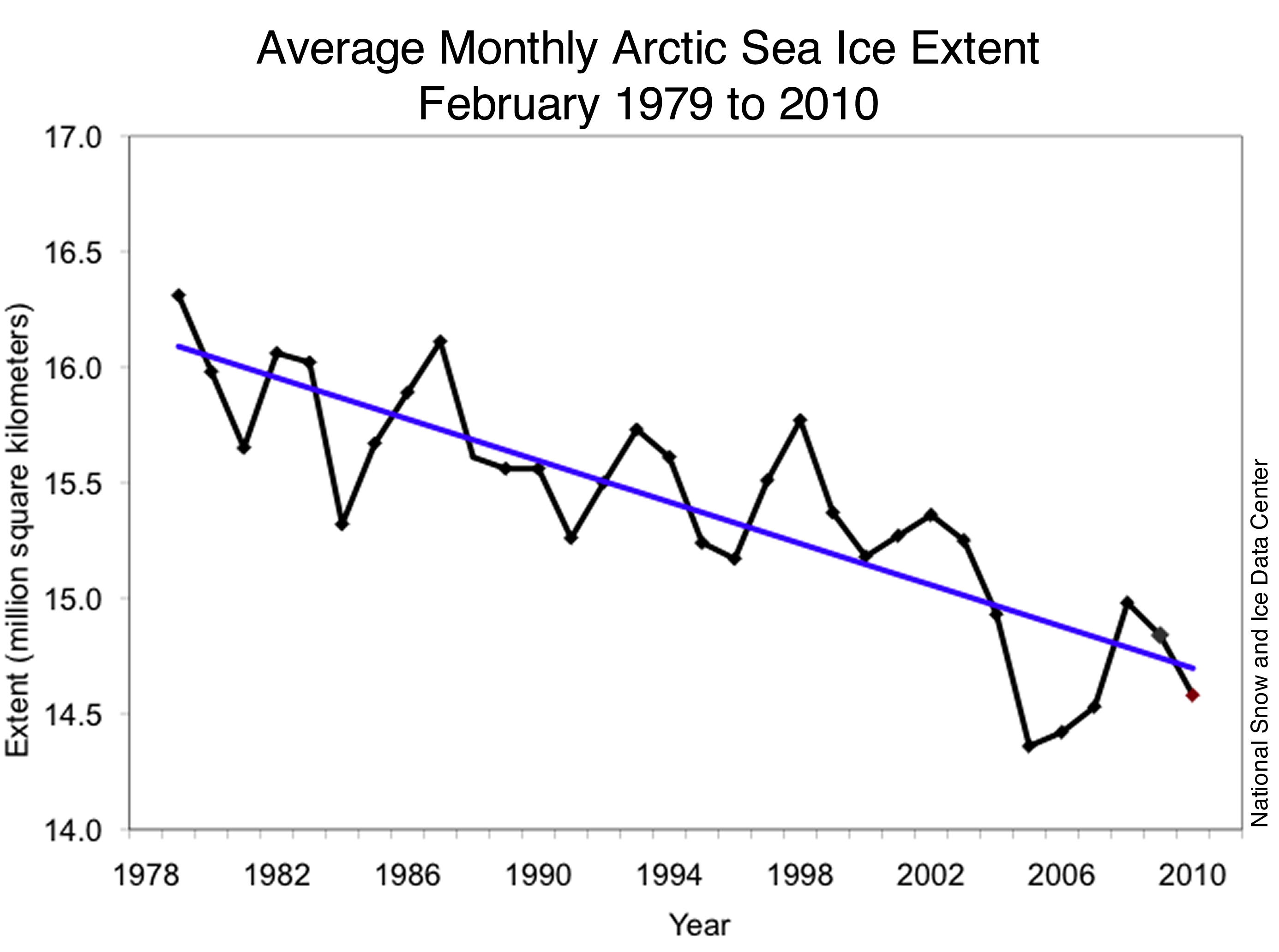
 The first question to ask is whether this can be the whole answer for the decadal decline in total Arctic sea ice. The switch itself took place at least forty years ago and the ice base has been rotting out ever since. There is little reason to not argue that the changing ice is contributing to slightly stronger wind regimes as naturally follows even slightly warmer conditions.I find it more convincing to assign motive rights to changes in the ocean itself which on average will be almost negligible but properly targeted can be very powerful. An increase in the volume of warmer water into the Arctic for the past forty or so years would do the job nicely, yet be unnoticeable in theI recall that the top few meters carry as much heat as the whole atmosphere. I do not recall the exact number but it is shockingly low. Enough to note that that small part is underlain by another couple of hundred meters of the ocean’s surface layer containing an ocean of additional heat. It takes very little ocean to change the climate anywhere but particularly in theWhat makes the winds irrelevant and certainly a result of changing ocean conditions is that multiyear ice is not apparently accumulating and building up in the best locales. That means that the underlying water is no longer assisting.Winds or not, we are presently in the final stages of a massive collapse of the Arctic sea ice. In fact this winter was astounding. We entered it with the remaining sea ice largely rotten and collapsing almost everywhere observed. While the southern part of the continent got hammered with lower that expected temperatures and the snow to go with it, theThis means that ice recovery will have been far weaker than normal. All of which suggests we could get a spectacular collapse of the surface area of the ice this year. Summer warming will then be added to Arctic waters and will likely help sustain an ice free Arctic Sea afterwards.Of course,Wind contributing to Arctic sea ice loss, study findsNew research does not question climate change is also melting ice in theArctic sea ice as seen from Nasa satellites. Photograph: HO/AFP/Getty ImagesMuch of the record breaking loss of ice in the Arctic ocean in recent years is down to the region’s swirling winds and is not a direct result of global warming, a new study reveals.Ice blown out of the region by Arctic winds can explain around one-third of the steep downward trend in sea ice extent in the region since 1979, the scientists say.The study does not question that global warming is also melting ice in the Arctic, but it could raise doubts about high-profile claims that the region has passed a climate “tipping point” that could see ice loss sharply accelerate in coming years.The new findings also help to explain the massive loss of Arctic ice seen in the summers of 2007-08, which prompted suggestions that the summertime Arctic Ocean could be ice-free withing a decade. About half of the variation in maximum ice loss each September is down to changes in wind patterns, the study says.Masayo Ogi, a scientist with the Japan Agency for Marine-Earth Science and Technology in Yokohama, and her colleagues, looked at records of how winds have behaved across theThey found that changes in wind patterns, such as summertime winds that blow clockwise around theWriting in a paper to be published in the journal Geophysical Research Letters, the scientists suggest these winds have blown large amounts of Arctic ice south through the Fram Strait, which passes between Greenland and the Norwegian islands of Svalbard, and leads to the warmer waters of the north Atlantic. These winds have increased recently, which could help explain the apparent acceleration in ice loss.“Wind-induced, year-to-year differences in the rate of flow of ice toward and throughOgi said this was the first time the Arctic winds have been analysed in such a way.“Both winter and summer winds could blow ice out of the Arctic [through] theA number of other factors were also responsible for ice loss, including warming of the air and ocean, she added.According to the National Snow and Ice Data Centre inby Staff Writers
Canada jumps into spring after having recorded the mildest and driest winter on record, EnvironmentThe agency, which has compiled data from 1948, determined the average temperature throughout the country was four degrees Celsius (seven degrees Fahrenheit) above normal, said meteorologist Andre Cantin.Cantin said the country also saw 20 percent less precipitation than normal, also a record.El Nino, the climate pattern in the Pacific Ocean that influences global weather, was likely responsible for the freakish weather, according to Cantin, who noted that changes in climate may also have played a role.The unusual winter wreaked havoc at the Winter Olympics at venues nearSome Arctic areas were warmer and the north of -
Autism’s Extraordinary Perception
 This is the first insight on autism that I have seen that begins to make sense to me. I became familiar with autistic individuals at an institution I worked at forty years ago and soon understood that this was not a case of mechanical impairment, but rather a case of circuitry impairment. This item suggests the possibility of over responsive circuitry. That certainly better fits the observational situation.It is possible with great effort to communicate with such a child, but requires dedication and lots of time. Not surprisingly, when not provided the child does not get necessary emotional support and for that reason autistic children have also been thought of as emotionally disturbed.This informs us that the perceptional interference prevents emotional development that must be overcome first. Successes occur usually because a parent has been there 24/7 to support the child.The data suggest enhanced focus overcoming other inputs. There is nothing wrong with this particular talent. What is obviously wrong is that the individual is unable to control or shape the impulse in order to manage his environment both social and physical.This flaw appears to be minor in practice and not actually debilitating at all if it could be turned off and on. I suspect that it could be turned off and that the individual turns immediately to a normal life. It may be caused by a physical flaw or affected by a simple targeted imbalance. Let us hope this leads to clearer thinking by researchers. The loss is too great.Extraordinary PerceptionWe think of people with autism as having a deficit in cognitive processing—but their distractibility could also result from having enhanced perceptual capabilitiesBy Wray HerbertWhen Pulitzer Prize–winning music critic Tim Page was in second grade, he and his classmates went on a field trip to“Well, we went toPage received an unsatisfactory grade on his essay. What’s more, his irate teacher scrawled in red across the top of the essay: “See me!” As he recalls in his new memoir Parallel Play (Doubleday, 2009), such incidents were not uncommon in his childhood, and he knew why he was being scolded: “I had noticed the wrong things.”A Question of Focus
The subtitle of Page’s memoir is Growing Up with Undiagnosed Asperger’s, and indeed Page didn’t learn until age 45 that he suffers from what is called autism spectrum disorder, or ASD. ASD is usually defined by impairments in social interaction and communication, but many people with autism and Asperger’s syndrome (in which symptoms are milder) also tend to fixate on and remember seemingly irrelevant information in their world. Their attention seems to be awry, or to use Page’s words, they notice the wrong things.But why? What’s going on in the autistic mind that makes the details of bus routes infinitely fascinating? Why are people like Page so easily distracted from the main act? Psychologists at University College London think that it might be a mistake to consider such distractibility as simply a deficit. To the contrary, Anna Remington and John Swettenham and their colleagues speculate that people with ASD might have a greater than normal capacity for perception, so that what appears as irrelevant distraction is really a cognitive bonus. They decided to test the idea in the lab.Selective Attention
Remington and Swettenham studied a group of people with autism spectrum disorder, most of whom had Asperger’s, along with normal controls. They asked all the subjects to look at a computer screen, which displayed various combinations of letters and dots forming a ring. The subjects were instructed to very rapidly determine if the letters N or X were present in the ring and then hit the corresponding key on the keyboard. Some of the circles—those with more letters—were more difficult to process than others. There were also other letters floating outside the circle, but the subjects were specifically instructed to ignore those letters. Those floating letters were the laboratory equivalent of an irrelevant distraction in the real world.The psychologists were measuring perceptual capacity—that is why they varied the complexity of the task. As expected, everyone was slower at the task when the ring contained more letters. The researchers were also measuring distractibility. When a letter outside the ring was one of the target letters (N or X), the subjects often took a longer time finding the N or X in the ring—indicating they were distracted by the presence of a target letter in the location that they were supposed to ignore.The psychologists reasoned that as long as the subjects’ total perceptual capacity was not exhausted, they would also process the irrelevant, distracting letters within their visual field. Once they had surpassed their perceptual capacity—once the ring of letters was sufficiently complex—irrelevant processing would stop. So if ASD subjects in fact have greater processing capacity, then they should process more distracting information even as the main task becomes increasingly complex.Seeing the Bigger Picture
And that is exactly what they found. As the researchers reported online in the journal Psychological Science, although there was no difference among subjects in either reaction time or accuracy on the main task, those with ASD processed the irrelevant letters while solving much more complex problems. Their reaction times indicated that they were still noticing when the extra letter was an N or X, while also finding the target letter in the ring with the same speed and accuracy as the normal controls. Put another way, they weren’t ignoring the main task, nor were they distracted away from it. Instead they were completing their work and moving on, using their untapped capacity.But here’s the rub. Although this increased distractibility may be a talent rather than a deficit, the psychologists point out, it nonetheless can have detrimental consequences in real-life situations. Just ask Tim Page about his uncanny facility for bus routes. -
Marine Reserves Restore Food Chains
 This is extremely important. As I have often posted, fishery management must revolve around the establishment of biological reserves in which the full range of natural biota is well established.Integrating such a system with the fishery is painless because the fishery relies on surplus fish to migrate into harvesting areas. My first instinct was to apply small reserves with large perimeter fisheries. This is likely exactly backwards. It is likely better to simply produce twenty percent set asides for the fishery allowing the remainder to become biologically fecund over decades and continually producing an excess pouring into the set asides.This spells out how long it takes to reach a satisfactory result. And if you want to really get a headache, try to decide what should happen to the sea otter. Google this blog for a prior item.Marine Reserves Mend Food Chains Link By Linkby Staff Writers
Canberra, Australia (SPX) Mar 17, 2010
Conservation managers need to take a long-term view when assessing the value of marine protected areas, according to a paper in the Proceedings of the National Academy of Sciences of the United States of America.The paper, ‘Decadal trends in marine reserves reveal differential rates of change in direct and indirect effects’, was written by an international team of authors led by Russ Babcock of the CSIRO Wealth from Oceans Flagship. It is the first paper to summarise the results from the most significant published long-term studies of temperate and tropical marine reserves.The team examined ecological data from coastal marine reserves in New Zealand, Australia, California, the Philippines and Kenya that had been in place for 10 years or more and were monitored before and after protection.“As marine reserves gain favour worldwide, stakeholders want to know how rapidly changes will occur after protection, but the changes are sometimes surprising and difficult to predict,” Dr Babcock says.“Our study suggests it will take decades to observe, predict, and validate the full implications of marine reserves because many of the processes we need to understand operate on these timescales.”Dr Babcock says most studies to date have focused on the restoration of fished species (higher predators) without considering the cascading effects on prey such as small fish, invertebrates, algae and corals.“We found that while the direct effects of protection on fished species are rapid, initially occurring within five years, it takes 13 years on average to detect the indirect effects on the broader ecosystem.“For example, in temperate reef systems, the recovery of lobsters and large fish can increase predation on sea urchins, causing reduced grazing and recovery of kelp forests.”A co-author of the paper, Neville Barrett of the Tasmanian Aquaculture and Fisheries Institute, says marine reserves show different timeframes for different types of recovery.“It takes a while for primary, secondary and tertiary effects to occur,” Dr Barrett says. “In some areas we are still seeing changes 20, 30, and 40 years post-protection.“For a large predatory fish such as the blue groper which lives 70-80 years and grows to 1.5 metres, five years of protection is hardly anything. It’s only grown 30-40 centimetres in that time. Then it can take another 20 or 30 years for the effects of protection to occur at the next level of the food chain.“A conservation manager may expect ecosystem recovery in five years, but in many places this won’t be the case. It’s not an inappropriate management plan; you might need to wait 20 years to see the full range of positive effects.”Dr Babcock says long-term monitoring of marine reserves shows that populations of fished species are more stable in reserves than in fished areas. This makes them an important tool for conservation and restoration.“Protected areas also offer a valuable research tool, providing unique insights into the function of marine ecosystems and the effects of human activities.” -
Military Procurement Reform
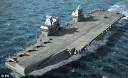 I have found it disturbing for many years that theCertainly, specific actions do need to be questioned.We have a naval procurement machine that is awesome and faces no creditable navel threat whatsoever. It is in the position of the British navy between Napoleon and the emergence of German power. In fact it is able to sink all the world’s navies in an afternoon. Its sole present mission is to be able to act in support of an ally. And in today’s diplomatic environment, that means trying to figure out which ally to support.More importantly everyone is quite happy to let theFuture treats are not in the cards for the reason of costs alone. NeitherThen we come to the joys of aircraft procurement. Our planes have not faced a creditable threat since the shutting down of the communist enterprise. No one is even trying to match our present capability. Much more damaging the technology has reached the point in which combat aircraft are better without the onboard pilot and his life support. In fact all airborne threats are missile systems that are obviously more nimble. The pilot needs to be sitting at a control station over the horizon and immune to attack. The days of saddling up a hot jet engine are over.We have no treat and the best move now is to convert to remote controlled fighters which are potentially easier to work with. Our present drone technology has shaken out rather nicely and has already taken the actual lead in the anti terrorism war. Pilots are no longer invited to spend massive amounts of fuel for a few minutes of on target time.What I am saying is that the expensive parts of the Navy and Air Force are actually built out beyond creditable need and the new air force fighter capability is already obsolete before it even gets built. It is very timely to establish a global integrated treaty organization that includes everyone possible similar to NATO. Its purpose would be to share command responsibilities and integrate capabilities and also reduce the over build of capability that has largely fallen on theTheI make no comment on land forces and their tail of lift capacity. That sector is actually late to the technological procurement party and still has plenty to do. However, historically the other two arms have always been about procurement of the next best thing, while land forces tended to be almost an afterthought. That appears to now be over since we are involved in plenty of combat today. Once again we discover that the Navy and Air force are ill suited to tackle a chap with a weapon and a bad attitude.TheThe Top Five Questions We Should Ask the PentagonWhen it comes to our nation’s military affairs, ignorance is not bliss. What’s remarkable then, given the permanent state of war in which we find ourselves, is how many Americans seem content not to know.There are many reasons for this state of affairs. Our civilian leaders encourage us to be deferential toward our latest commander/savior, whether Tommy Franks in 2003, David Petraeus in 2007, or Stanley McChrystal in 2010. Our media employs retired officers, most of them multi-starred generals, in a search for expertise that ends in an unconditional surrender to military agendas. A cloud of secrecy and “black budgets” combine to obscure military matters, ranging from global strategy to war goals to weapons procurement. The taxpayer, forced to pony up about one trillion dollars yearly to fund our military, national security infrastructure, and wars, is sent a simple message: stay clear and leave it to the experts in uniform.The powerlessness of ordinary Americans in military matters is no accident. Recall the one-word reply — “So?” — Dick Cheney offered in March 2008, when asked to comment on popular opposition to the war inTime forIf military power is the church at which we worship and the Pentagon is our AmericanThink about this: last year, our country held innumerable public hearings on health-care reform. Congress continues to fight about it. It’s constant news. There’s a debate alive in the land. All this for a program that, in ten years, will cost the American people as much as defense and homeland security cost in a single year.Yet runaway defense budgets get passed each year without a single “town hall” meeting, next to no media coverage, and virtually no debate in Congress. Indeed, you’d think each Pentagon budget was an ex cathedra pronouncement, given the way Congress genuflects before them and Americans accept them without so much as a peep of protest.Those “Crazy” KiwisImagine, for a moment, if Pentagon officials, supposedly toiling in our name, actually condescended to ask us for our thoughts. What do we think about global military strategy, garrisoning the planet, the ways in which our forces are structured, and how, where, and for what they should be deployed abroad?Sound crazy? Here in theIn case you haven’t noticed, here in the1. Our military is supposed to be a means to an end: national security. Due to its immense size and colossal budget, has our military not become an end as well as means?2. In World War II, Americans could explain “Why We Fight” in part because the government provided a clear and compelling rationale for war. Why are the goals of today’s wars so opaque to most Americans?3. If our military provides us with our way of “nation building” abroad, won’t countries and peoples be more likely to copy our military ways and weaponry than our democratic teachings?5. Why does “support our troops” seemingly end when they leave the service, leading us to tolerate such inequities as an unemployment rate of 21% for young veterans?Keep in mind that there are 10, 20, 30 more questions where those five came from — and our military badly needs to hear and respond to them all.Every recruit is taught to stretch, to go the extra mile, to push until you can go no further. Our military needs some stretching and push-back: this time, from us. Unfortunately, most of us don’t think our opinions matter when it comes to our military — unless, that is, they consist solely of slavish adoration. The fact is most of us are detached from military affairs precisely because we know in our hearts that the Pentagon serves its own needs, that it may be interested in listening in on us, but certainly not in listening to us.Challenge theKiwis have the reputation of being practical types with an admirable dash of humility, and I like to think that their Ministry of Defence solicits the views of its citizenry not just because it’s required by statute, but because their officials don’t believe they have a monopoly on good ideas.Perhaps the MoD recognizes as well the difficulty military professionals have in thinking outside the box. Despite its gargantuan size and its endless advisory committees and boards, our Department of Defense is, in essence, a well-insulated church of likeminded believers, administered by tightly-wound power-brokers. It sees the world only as an arena of, and for, conflict. Wherever it looks, even within its own ranks, it sees rivals and enemies. It cannot help dividing the world into believers and heretics, friends and foes.And it’s true that the world is a dangerous place. The problem is: the Pentagon is part of that danger. Our military has grown so strong and so dominates our government, including its foreign policy and even aspects of our culture, that there’s no effective counterweight to its closeted, conflict-centered style of thinking.In fact, the Pentagon’s heft gives new meaning to the term “full spectrum dominance” and helps explain the lack of change in war policy since the 2008 elections. A vote that constituted an unmistakable call to end our wars in Iraq and Afghanistan — and so lessen the military’s influence — has led only to fresh war “surges” and mushrooming Pentagon budgets. And yet, as the Pentagon charges forward, debate is nearly nonexistent and Congress can muster just 65 votes for a resolution to curtail the endless conflict inIt’s shameful that only a so-called far left congressman like Dennis Kucinich has enough sense (and guts) to insist on Congressional debate about our forever-war inLet’s face it, all of this represents a long-term sea change in American consciousness. Sadly, the old idea of the citizen army is dead, and because of this, most of us lack any direct connection to the military (and seemingly could care less). In the name of safety, security, and solidarity, we’ve buttoned our lips. We worship, but don’t partake.Centuries from now, historians will look back on American history and wonder how so many gave away so much to so few. It should be our right to have a say in what defines the “defense” of our country. That right has been surrendered to the few. Our future may depend on genuine input from the many.How about it? Are you ready to challenge the Pentagon church militant? Or are you content to mouth the usual catechism, while continuing to dump billions each week into the collection basket?Citizens of courage will surely choose the path of challenge.William J. Astore is a retired lieutenant colonel (USAF) and TomDispatch regular. He currently teaches history at theCopyright 2010 William J. Astore
 -
Ron Paul: Obamacare will Damage Doctor-Patient Relationship
Obamacare will further damage the doctor-patient relationship, and if it were a good program, it wouldn’t have to be imposed by force.
Channel: Fox Business
Date: 03/22/2010Transcript coming soon

Related posts:
- National Bankruptcy will Repeal Obamacare Ron Paul tells it like it is: There is no…
- Ron Paul and Lew Rockwell discuss Obamacare, Swine Flu and Big Government Last week Ron Paul sat down with his old friend…
- The People Are Catching On That The Government Is Bankrupt Ron Paul was interviewed on MSNBC’s Morning Joe this morning….
-
Cablevision Buying Blogs… Will It Lock Them Up Behind A Paywall Too?
While Cablevision may be fairly innovative in delivering broadband services, its foray into the content business has been a bit of a disaster. As you may recall, Cablevision bought the local newspaper, Newsday, two years ago. Going in to the deal, the company admitted that it didn’t know much about the business, but planned to talk to newspaper experts. As we noted at the time, that seemed like a bad idea, because it was “newspaper experts” who were driving newspapers into the ground. True to form, Cablevision decided the best thing to do with Newsday was to spend $4 million redesigning and putting up a paywall that drove away some writers and convinced 35 people to sign up in its first three months. Yes, 35. Of course, Cablevision insisted that the goal was really about reducing churn by offering the newspaper website to Cablevision cable TV and broadband subscribers, but it still seems like a pretty big failure all around.
So it’s a bit surprising to hear that Cablevision is apparently trying to expand in the content business by buying the blog network Gothamist, which has a series of city-focused local blogs. The deal is relatively cheap, but it makes you wonder what Cablevision is planning to do with that content. First of all, most of the blogs in the network cover cities where Cablevision has no presence at all. The only exception is Gothamist itself, which focuses on New York City — even as Cablevision is more focused on neighboring Long Island. Is Cablevision now going to put up a paywall around the blogs to?
On the whole, it looks like Cablevision is just confused about the online content business, and buying some blogs doesn’t seem likely to clear that up any time soon.
Permalink | Comments | Email This Story
-
DS homebrew game – Pokemon Battle v0.4
Here is the latest version of blabla’s Pokemon Battle, a homebrew RPG game for the Nintendo DS based on the popular anime series. Check out what’s new in the latest release after the jump.
Download: -
Rand Paul’s “Give Me Liberty!” Money Bomb

Endorsed by Ron PaulRon Paul’s son Rand Paul is running for the U.S. Senate in Kentucky. His supporters organized a one-day mass donation event (money bomb) for March 23. Thousands of online participants went to Rand’s site at RandPaul2010.com and contributed more than $260,000 in 24 hours!
A few days earlier, Ron Paul had sent out the following letter in support of Rand’s money bomb:
Dear Friend,
My son Rand is running a great campaign in Kentucky. Through hard work and your support, he is winning! We have a real chance to send the most principled, limited government leader to the United States Senate in a generation.
But now, he needs you more than ever.
The big government establishment has turned on their fundraising machine to try and defeat Rand. According to media reports, Rand’s challenger has raised hundreds of thousands of dollars in the past several weeks. The sources? Disgusting! PAC’s, special interests and the banking industry – all of whom are opening up their wallets for Rand’s opponent.
Remember when AIG took billions of taxpayer bailout dollars not once, but twice? Well, I have it on good information that AIG’s chief lobbyist just held a high dollar, big money fundraiser for Rand’s rival. I am sure you can figure out why.
Rand has shrewdly purchased all the television airtime he needs from mid-April through his May 18th Primary. The commercials are produced, the voter data is being assembled and a tremendous turnout machine is being put in place.
Rand’s career politician opponent is lashing out – he has turned on an attack machine of vicious distortions and outright lies. Rand is working hard to knock them back and fight for our principles.
But, Rand does not have enough money to stay on TV and fight off the establishments smear tactics over the next few weeks. Unless he gets a substantial infusion of cash, he will not be able to purchase airtime from March 24 through mid April. And with all of his opponent’s lies and fear mongering, he needs your help to stay on Kentucky statewide television during this critical time.
On Tuesday, March 23, the grassroots have organized a Money Bomb for Rand. If we have a successful day, Rand will be able to purchase the airtime he needs for the next few weeks and fund the last several mail pieces he will need down the stretch. You can donate directly at Rand’s website, www.RandPaul2010.com.
We need you more than ever. I dearly hope I can count on your support. We have a tremendous opportunity, and if we come together on March 23, I know we can win.
In Liberty,
Ron Paul
P.S. Please view this video Rand’s team put together, and forward it to your friends and family. Every single person’s contribution counts, and anything you can do to spread the message is greatly appreciated!
Related posts:
- Rand Paul’s Tea Party and Money Bomb Endorsed by Ron Paul Ron Paul’s son Rand Paul…
- Rand Paul Money Bomb The Rand Paul Money Bomb has arrived! Today is…
- Join the Rand Paul for Senate Money Bomb – August 20th, 2009 August 20th Rand Paul Money Bomb – Please Pledge Now…
-
Pop Your Top & Help Homeless Animals! Bonus Giveaway from Ex-Boyfriend

In honor of April’s Prevention to Cruelty of Animals Month, the folks over at Ex-boyfriend have created these hip bottle opener key chains for a fundraiser. Now through April 17, 100% of the proceeds from sales of the new key chains will be donated to the Maryland SPCA.
The key chain bottle openers sell for $6.50 each and are available with some of the most popular Ex-Boyfriend designs, including Fuzz Aldrin, DJ Kitty, and Pirate Kitty. And if you order just the key chain, shipping is free.
BONUS GIVEAWAY!
One lucky reader will win an Ex-Boyfriend key chain bottle opener in the design of their choice. Please leave a comment on this post to enter. The winner will be chosen in a random drawing on March 30. One entry per person. This giveaway is open to readers everywhere.