Videos on Wikipedia have been an option for some time now but so far adoption has been pretty slow and the vast majority of Wikipedia entries don’t have any video files associated. This is the reason why the Open Video Alliance and other parties are launching a campaign, called “Let’s Get Video on Wikipedia,” to promote the fea… (read more)
Author: Serkadis
-
Wikipedia Videos About to Get a Bigger Push with New Campaign
-
Report: Mitsubishi ASX obliterates first month sales goal in Japan
Filed under: New York Auto Show, Japan, Crossover, Mitsubishi
 2011 Mitsubishi ASX/Outlander Sport – Click above for high-res image gallery
What’s popular in the Japanese home market isn’t always an indicator of worldwide success; check out their obsession with dogs, for instance. On the other hand, the reason Mitsubishi’s ASX has pulled down three-and-a-half times the automaker’s hoped-for monthly sales in its first four weeks on the market is probably not related to quirkiness.
Tax breaks, plus the ASX’s manageable size and just-right equipment level are universal ways to connect with buyers anywhere, and that’s what’s likely fueled the initial success. North American buyers will get the ASX badged as the Outlander Sport, and it will debut at the New York Auto Show. Interestingly, JDM buyers are nutso for the high-level “G” trim; 75 percent of orders are for the zootiest version. It’s not yet clear what the trim levels are going to be for the U.S. market, other than the understanding that Mitsubishi’s 2.0 liter MIVEC engine will be standard equipment. With skittish buyers and a still-lagging economy in the States, it could be a perfect time for a Goldilocks-grade mini-ute, especially for Mitsubishi, a company that has lost a lot of ground in the sales race over the last few years.
Gallery: Geneva 2010: Mitsubishi ASX


Photos by Drew Phillips / Copyright (C)2010 Weblogs, Inc.
[Source: Automobile]Report: Mitsubishi ASX obliterates first month sales goal in Japan originally appeared on Autoblog on Thu, 18 Mar 2010 10:31:00 EST. Please see our terms for use of feeds.
Read | Permalink | Email this | Comments
-
Apple: Our Screens Don’t Need No Protecting

If you’re of the camp that believes your iPhone or iPod touch’s screen needs some kind of additional protective layer to prevent it from getting damaged, you may want to head to the Apple store soonish to stock up on said accessories. In the very near future, you might not be able to find them, at least not through Apple’s official channels, according to sources speaking to Macworld.
The sources, who are described as Apple accessory makers who want to remain anonymous for fear of arousing Cupertino’s ire, maintain that Apple has informed them it will no longer be carrying any films or covers aimed at protecting iPhone screens from dust or scratches, or even those that claim to prevent glare and ensure privacy.
If the sources are correct, all of these types of accessories will be pulled from the Apple Store, both in its online and physical retail incarnations, as will any other accessories that stick to the surface of Apple devices. The blanket ban on anything adhesive makes sense, since these apparently have a very high return rate because of the difficulty in applying them properly.
The ban on films that “protect” the screen also makes a good deal of sense, mostly because that’s a ludicrous claim to begin with. It’s like being sold insurance against possible gryphon attack. It’s just not going to do anything, besides maybe instill a false sense of security. Think about it: do you buy protective films for your eyeglasses?
Because it’s the same exact thing. Or maybe even more ridiculous, depending on the quality of your glasses. Apple’s iPhone and iPod touch screens are made of optical glass, which is the most scratch-resistant glass in existence. I personally have owned two iPhones and two iPod touches, none of which have ever borne any kind of screen protection. I’ve dropped them all countless times, and even kept them in pockets with change and other knick-knacks, and the screens are pristine. The back cases? Not so much.
I’m not advising against due diligence here. Generally speaking, I keep my iPhone in a pocket designated for it alone, or with a pack of gum or something else non-abrasive, though sometimes I forget and throw it in with my keys. Still, keeping it loose in a bag of sand probably isn’t a great idea.
But Apple’s doing a great service to customers with this move, even if that what’s motivated it to begin with. The absence of screen protectors on Apple Store shelves should hopefully go a long way toward curbing unnecessary accessory purchases. Unless you shop at Best Buy, in which case you’ll probably come home with three screen protectors and a product service plan.

-
New York will spend $100 million to help trim data center energy waste
From Green Right Now Reports

Image: NYSERDA
New York State’s Industrial and Process Efficiency program will provide over $100 million over the next two years to help data centers and manufacturers control energy costs and improve competitiveness, the New York State Energy Research and Development Authority (NYSERDA) announced this week.
Funding will go to energy studies and capital improvements designed to increase energy efficiency and reduce waste.
Already, NYSERDA has awarded three companies — Clough Harbour & Associates (Albany), Energy & Resource Solutions (New York), and Willdan Energy Solutions (New York) — approximately $2 million each to identify cost-effective energy savings options and educate businesses on available funding.
“New York is a great place to do business, and our funds will help leverage New York’s benefits as a business location while making the businesses that are here more competitive in the marketplace,” said Francis J. Murray, Jr., President and CEO of NYSERDA.
Last year, NYSERDA invested approximately $4 million to improve energy efficiency in the manufacturing and data center industries. According to the agency, those efforts reduced energy consumption by nearly 41 million kilowatt hours of electricity—the equivalent of supplying nearly 6,300 single family homes with electricity for an entire year.
New York has the nation’s second largest concentration of data centers. Recent studies conducted by Lawrence Berkley National Laboratory and the U.S. Environmental Protection Agency found that New York data centers spend nearly $600 million per year on energy costs and projected that their energy consumption could double in three to five years.
-
Issues in Nonprofit Administration
Course Description
Effective management and leadership in the nonprofit sector requires both an understanding of the basic principles of nonprofit organization and associated management challenges (covered in PAFF 551) and familiarity with current debates that are changing how they operate (PAFF 552).
The purpose of PAFF 552 is to introduce students to a range of challenges facing nonprofit organizations and to identify approaches that nonprofit practitioners and academics have proposed for addressing those challenges.
PAFF 552 is an “Issues” course, intended to introduce students to a range of topics. This year, as last year, I have organized the course to address the role philanthropy plays in the nonprofit sector. The course has a central service learning component, the distribution of grants to local nonprofit organizations, with funding from Campus Compact/Fidelity Charitable Gift Fund, South Central New York Community Foundation and fundraising by students and alumni.
The course will involve close collaboration with the Social Work course, Advanced Social Work Practice with Communities, which also meets on Tuesday afternoons. The two classes will meet together periodically for discussions and presentations by outside speakers. One team assignment and organization site visits will involve members of both classes working together. In addition grantmaking decisions will be a shared process involving both classes.
Course Goals
- To review the role of nonprofit organizations in the United States and the context within which they operate (theoretical explanations for nonprofit organizations, tax and legal setting, etc).
- To introduce students to various forms of institutional philanthropy, how they operate and their strengths and limitations.
- To review strategies and concerns related to grant making, including accountability, performance measurement, capacity building and relevant data analysis.
- To introduce students to innovative approaches to nonprofit work, emphasizing marketization and social entrepreneurship.
- To expose students to similarities and differences in the approach to nonprofit organizations in social work and public administration.
Course Knowledge & Skill Objectives
Upon successful completion of PAFF 552, students should be able to:
- Discuss theories that explain the reason for a nonprofit sector and the implications of those theories for management;
- Demonstrate critical thinking and writing skills;
- Identify current and historic approaches to philanthropy, their strengths and weaknesses and their impact on nonprofit organizations.
- Assess what information is useful in evaluating nonprofit organizations and requests for funding, with particular attention to accountability, capacity and data analysis.
- Identify emerging debates in philanthropy and nonprofit management and relevant sources of information about them.
- Identify and discuss differences in approaches to nonprofit organizations in social work and public administration.
I have organized the course content to cover this material in several blocks or units:
Week 1-2: Nonprofit Sector Role and Context and the Philanthropy Incubator
Weeks 2-6: Philanthropy, its Institutional Mechanisms, Strategy
Weeks 6-10: Management Issues in Philanthropy and Nonprofit Organizations.
Weeks 11-14 Emerging Approaches to Philanthropy and Nonprofit WorkCourse Timeline
The distribution of funds to local nonprofit organizations is central to this course. To complete the process of assessing organizations and making grants requires careful adherence to deadlines. I have summarized below key course milestones:
Timeline for Key Philanthropy Incubator Milestones
- Feb 9: Focus Area Selected
- Feb 23: Draft RFP
- March 2: Finalize and Distribute RFP
- March 23: RFP Due, Final Proposal Evaluation Rubric Developed
- April 6: Initial Review of Applications
- April 6-20 Site Visits
- April 20 Funding Decisions
- May 4 Awards Ceremony
Required Texts
I require two books for purchase. Other reading will be available through the BU library (e-journals), on electronic reserve, from websites (links provided) or handed out.
Texts for Purchase:
Fleishman, J. (2007). The Foundation, A Great American Secret: How Private Wealth is Changing the World (Paperback Ed.). New York: Public Affairs
Frumkin, P. (2006). Strategic Philanthropy. Chicago: University of Chicago Press:
Discussion expectations:
In pursuit of critical thinking, students are strongly encouraged to adhere to the following principles:
- Recognize the difference between reason and emotion, thinking and feeling;
- Build arguments with evidence, not feelings.
- Realize that reason and critical thought are necessary inside and outside of the classroom.
Given these principles, the goal for this class is to emphasize civil discourse, establish fact-based viewpoints, and engage in focused discussions, rather than win arguments or engage in verbal altercations.
Assignments
1) Class Participation (20 points)
Because students must work together in this class to accomplish a collective goal, class participation in this class is a more significant portion of your final grade than in other courses I teach. Participation is essential for creating an effective grants program.
Reading assigned material and participating in class discussion is central to success in this course. Readings are to be completed in preparation for class on the date listed. These are to be read by ALL students. The readings will serve as the starting point for lecture, discussion, the application of concepts, and the practice of essential skills. Readings and assignments have been selected to introduce students to issues in philanthropy that will make it possible for students to act as effective grantmakers. Students are expected to come to class having read the assigned readings and prepared to discuss those readings. Students may be called upon to lead discussions or explain sections of the readings without prior warning.
Class participation will be evaluated based on the contribution you make to class sessions and the work of the Philanthropy Incubator. I will assign participation grades at four points during the semester (after weeks 4, 8, 10 and at the end of the semester).
2) Team Work (30 points total—15 team, 15 individual)
Students will work in teams across classes. The teams will be responsible for the major elements of the Philanthropy Incubator project: choosing a focus, designing an RFP, establishing criteria for evaluating proposals, conducting and reporting on site visits and analyzing proposals. Team members will receive both individual and team grades. Each team member will be responsible for one component of the team project; however, the full team will have responsibility for providing input and feedback to that team as he/she develops that element.
At each point in the semester when one of the components is due and the class must make a decision about its grantmaking process, three teams will present their recommendations (I expect there will be six to seven total teams). Teams that do not present will be asked to respond to the team presentations, adding any ideas that are substantially different from those presented. Each team will be responsible for two formal presentations over the course of the semester.
At the end of the semester students will assess the contribution of their team members to the work of the group and determine the distribution of five points of the other team members’ grade.
Team work will involve the following components:
- Each member of the team will be responsible for making recommendations for one elements of the Philanthropy Incubator. (15 points):
- Focus Area Recommendation. Develop a recommendation for the area on which the Philanthropy Incubator should focus. Use data about community needs to make your recommendation. (Due February 9th)
- Request for Proposal. Design an RFP for the Philanthropy Incubator; provide a rationale to accompany it that explains your choices. (Due February 23rd)
- Evaluation Tools. Develop a rubric for evaluating proposals. Provide a rationale to accompany that explains your choices. (Due March 23rd)
- Site Visit Report. Provide an analytic report about what you learned on your visit(s) to grant applicants. (Due April 20).
- Analyses of Final Proposals. (10 points). Each group will be assigned a set of final proposals to review and analyze. (Due April 20th)
- Team Participation (5 points)
3. Course Reflection Papers (50 points)
Every week, students will be responsible for a one-to-two page, single-spaced reflection on the reading for the week. Questions for the reflection will be posted the week before. Reflection papers will be due at the beginning of each class session.
To generate a dialogue about course issues, I have set up a course blog. The address for the blog is: http://buphilanthropyincubator.blogspot.com. Students will be responsible for posting all or parts of their reflections on the course blog, This blog is private and only available to students in PAFF 552, SW525, CCPA faculty and administrators and selected stakeholders (such as project funders). I will enter your names as blog authors to allow you to post.
Students may post on the blog at ANY time; however, you must post to the blog at least three times during the semester. In addition, ALL students must comment on the blog at least once a week. I will provide you with a posting schedule at the second week of class. If you are scheduled to post on the blog, you must make your post by the Saturday before class to provide other students with the opportunity to respond to your post.
I intend the reflection papers to provide you with an opportunity to engage with the course reading material and reflect on how those concepts relate to the issues we discuss in class. Your primary sources for your reflection papers are course readings, discussions, presentations from outside speakers, and if appropriate other scholarly writing or current events related to philanthropy and the nonprofit sector. I will evaluate reflection papers based on how well they address the reflection question, their engagement with the course reading, the use of evidence (based on experience, data or other reading) to support arguments and how well they demonstrate the ability to apply theoretical concepts to the practical work of nonprofit organizations and philanthropy.
Class Schedule, Reading and Assignments
Date Topic Reading P.I. Milestone or Class Assignment Possible Speaker
Jan 26 Nonprofit Sector Overview
Philanthropy Incubator Overview
Public Administration/ Social Work Values and Ethics Students4Giving Materials
Review Students4Giving Application, available under course materials on BlackBoard.Review Fidelity charitable gift fund website: www.charitablegift.org
“The Nonprofit Sector in Brief.” Use hyperlink or available at: http://www.urban.org/UploadedPDF/411664_facts_and_figures.pdf
Read: The Looking Glass World of Nonprofit Money: Managing in For-Profits Shadow Universe, Clara Miller, http://www.nonprofitfinancefund.org/docs/The%20Looking%20Glass%20World%20of%20Nonprofit%20Money.pdf
Fleishman, Chapter 2: The Third Great Force: America’s Civic Sector
Recommended (for students who have not had PAFF 551):
Salamon, Nonprofit Sector Overview (on e-reserve). List of Eligible Grantees
Feb 2 What is philanthropy?
Landscape of American Philanthropy
Selecting a Focus Area Frumkin, Introduction
Fleishman, Introduction and Preface
Video: The Grantmakers Role: http://www.grantcraft.org/index.cfm?fuseaction=Page.viewPage&pageID=608
Shared Reading/Discussion: Scanning the Landscape: Finding Out What’s Going on. Available at: http://www.grantcraft.org/index.cfm?pageId=627. (Free registration required.)
Feb 9 Role of Philanthropy
Selecting a Focus Area
Frumkin, Chapter 1Fleishman, Chapters 1, 3
Focus Area SelectedFeb 16 Institutional Philanthropy
Foundations
United Way Complete foundation tutorial “Foundations today” available (with free registration) at the Foundation Center (www.foundationcenter.org):After registration, access tutorial at: http://foundationcenter.org/getstarted/tutorials/ft_tutorial/
Boris, E. (1998). Foundations. In J. Shafritz (Ed.), International Encyclopedia of Public Policy and Administration (pp. 928-935). Boulder, CO: Westview.
Frumkin, Chapters 2-3
Ostrower, F. Limited Life Foundations: Motivations, Experiences and Strategies. Available at the Urban Institute website: http://www.urban.org/UploadedPDF/411836_limitedlifefoundations.pdf
Feb 23 Strategy and Effectiveness in Philanthropy
Fleishman, Chapters 4-6
Frumkin, Chapters 4-5Center for Effective Philanthropy Beyond the Rhetoric: Foundation Strategy, at http://strategy.effectivephilanthropy.org
Using Competitions & RFPs, available at: http://www.grantcraft.org/index.cfm?pageId=631 (registration required).
Draft RFP
March 2 Emerging Forms of Philanthropy and Approaches to Strategy
Donor Advised Funds, Giving Circles Frumkin, Chapters 6-8
Review “Giving Circles Network” website (www.givingcircles.org), particularly “About Us,” “Knowledge Center” and “Giving Circle Central.”
“Donors Turn to Giving Circles as Economy Drops,” available at: http://www.npr.org/templates/story/story.php?storyId=104151828
Review Fidelity charitable gift fund website: www.charitablegift.org
Kramer, M. (2009). Catalytic Philanthropy. Stanford Social Innovation Review, 7(4), 30-35
RFP Finalized and DistributedMarch 9 Accountability
Fleishman, Chapter 9BBB/Wise Giving Alliance Standards
Review the assessment for two to three nonprofit organizations. Select at least one that does not meet the standardsMinnesota Council of Nonprofits Standards of Excellence
Recommended:
Benjamin, L. (2008). How accountability requirements shape nonprofit practice. Nonprofit and Voluntary Sector Quarterly, 37(2), 201-223.March 16 Organizational Data Analysis and Grant Making
Review Charity Navigator website. (www.charitynavigator.org) and article “Six Questions to ask Charities Before Donating,” available at: http://www.charitynavigator.org/index.cfm?bay=content.view&cpid=28
Charity Navigator: Methodology (all navigation bar elements) Available at: http://www.charitynavigator.org/index.cfm?bay=content.view&cpid=33
Tuckman, H. & Chang, C. (1991). A methodology for measuring the financial vulnerability of charitable nonprofit organizations. Nonprofit and Voluntary Sector Quarterly, 20, 445-460.
Greenlee, J. & Trussel, J. (2000). Predicting the financial vulnerability of charitable organizations. Nonprofit Management and Leadership, 11(2), 199-210
Lammers, J. (2003). Know your ratios? Everyone ELSE does. Nonprofit Quarterly, 10 (1), 34-39.
“Five Questions for Tom Pollak” available at: http://www.urban.org/toolkit/fivequestions/TPollak.cfm
March 23 Performance Measurement and Effectiveness in Philanthropy and Nonprofit Organizations
Frumkin, Chapter 10Fleishman, Chapter 15
Herman, R. & Renz, D. (2008). Advancing nonprofit organizational effectiveness research and theory: Nine theses. Nonprofit Management and Leadership, 18(4), 399-415.
Easterling, D. (2000). Using outcome evaluation to guide grant making: Theory, reality and possibilities. Nonprofit and Voluntary Sector Quarterly, 29, 482-486.
Carson, E. (2000). On foundations and outcome evaluation. Nonprofit and Voluntary Sector Quarterly, 29, 479-481.
Campbell, D. “Provider Perceptions of Feedback Practices in Nonprofit Human Service Organizations.” (On Blackboard). Proposals Due
Criteria for Evaluation Presented and Discussed
March 30 No Class: Spring Break
April 6 Making Site Visits
Collaborative Decision Making “Developing a Site Visit Program,” available at https://www.cof.org/templates/311.cfm?itemNumber=16027
“Why We’re Sold on Site Visits,” available at: http://www.cof.org/files/Documents/Family_Foundations/Site%20Visit%20Companion/Why_We’re_Sold_on_Site_Visits.pdf
“The Truth About Site Visits,” MN Council on Foundations, available at: http://www.mcf.org/Mcf/forum/1999/sitevisit.htm
Site Visit Worksheet: available at: http://www.cof.org/files/Documents/WebNotebook/July2003/Grants/Sample_Site_Visit_Worksheet.pdf
Sample Site Visit Evaluation: http://www.cof.org/templates/311.cfm?ItemNumber=16518
Sample Site Visit Checklist:
Available at: http://www.cof.org/templates/311.cfm?ItemNumber=16517
Initial Evaluation of ProposalsProposed sample site visit evaluation forms.
Site Visits Assigned
April 13 Social Enterprise and Innovation in the Nonprofit Sector Eikenberry, A. (2009). Refusing the Market: A Democratic Discourse for Voluntary and Nonprofit Organizations. Nonprofit and Voluntary Sector Quarterly, 38(4), 564-581.
Phills, J., Deiglmeier, K., & Miller, D. (2008). Rediscovering Social Innovation. Stanford Social Innovation Review, available at: http://www.ssireview.org/articles/entry/rediscovering_social_innovation
Review the Rockefeller Foundation’s Initiative: Advancing Innovation Processes to Solve Social Problems. Available at: http://www.rockefellerfoundation.org/what-we-do/current-work/advancing-innovation-processes-solve
Select and listen to two Social Innovation Podcasts
“Scaling a Social Enterprise through Crowdsourcing” available at: http://sic.conversationsnetwork.org/series/socialEntrepreneurship.html
“Patient Capital and the Solution to Poverty” available at: http://sic.conversationsnetwork.org/series/philanthropy.html
April 20 Site Visit Reports and Analyses
Collaborative Decision Making Award Decisions Completed
April 27 Debates and Discourse in Philanthropy
White House Social Innovation Fund. Review draft “Notice of Funding Availability,” on reserve.Philanthropy Blog Analysis. Select two of the blogs listed earlier in the syllabus and read through the posts from January 1 through this class day. Come prepared to discuss: a) What are the primary concerns of this blogger over the recent four months and how have readers responded; b) How does that content related to the issues we’ve discussed in this class; c) How do you evaluate the arguments made by the blogger and his/her respondents?
May 4 Dinner and Reflection Awards Ceremony
-
Investing in Social Change: The Practice of Philanthropy
Introduction
Philanthropy – “giving away money” – sounds attractive and simple. But the very acts of contributing and receiving resources affect dynamics and relationships among all involved, and philanthropic strategies often require trade-offs between competing goals. It’s a field that is hard to do it well, if one is truly interested in addressing complex social issues and facilitating significant and sustainable impact.The serious philanthropist must think and work strategically —building a deep understanding of the specific social issues of interest and community context and dynamics, identifying the highest potential leverage points and relevant resources, building relationships with a range of stakeholders, negotiating the intersections between donor interests and community need, balancing innovation and experience, understanding legal issues, creating a robust investment strategy with clear goals and aligned actions, considering long-term exit strategies, designing and implementing impact evaluations, assessing potential partner organizations and plans, and monitoring and supporting grantee organizations.
This course will engage students in the conceptual frameworks and research regarding philanthropy, social change, and organizational dynamics; as well as concrete practice in designing and implementing a philanthropic strategy. Students will work in teams to investigate a particular community concern, design an investment strategy, recommend the investment of grant dollars, and set up the means to evaluate the outcomes of that investment.
Course Goals
- Engage in the sociological, social, cultural/moral, organizational, political, strategic, and other dynamics of social change and philanthropy.
- Build students’ understanding of how to engage with a local community, including cultural context and diversity, community-defined needs, relationships, and capacity.
- Deepen students’ understanding of a particular content area and its expression in the community (e.g., education, health care, poverty, etc.).
- Develop skills in designing, implementing, and articulating strategies and initiatives and measuring the impact of those strategies; and practice the basic tools and processes of philanthropy.
- Further students’ ability to synthesize theory and practice, and integrate academic knowledge and community experience.
Course Requirements/ Criteria for Success
- Class attendance, participation, and leadership
- Full engagement in and contribution to one of two issue teams
- Full participation in community visits as scheduled
- Integration of content from readings into class discussion and assignments
- Rigorous completion of assignments listed below
Assignments and grading
Your course grade will be determined through the following items, with relative weighting as shown.
Individual work
- Class presentation and participation (15%). At least once during the semester, you will be asked to open the class with a 10 min. analysis of the reading assignment and its relevance to the work of the class.
- Individual paper on impact of $10,000 in funding (10%).
- Final individual reflective essay (10%): three page paper showing evidence of learning from the course, taking one of the following forms:
- Reflection on the assumptions you brought into the class—how did your thinking change as a result of the readings, discussion, and grant work?
- Reflection back on the RFP that was developed—what worked, what you would do differently
- Examine what you have learned about philanthropy from the standpoint of nonprofit community-based agencies. What new insights have you gained from the class? What pros and cons can you identify to seeking money from foundations?
Team work
- Best practices presentation (5%)
- Team paper (20%): synthesizing the research base on the social issue the team is investigating and its context in Providence—how is the issue being addressed and by whom, and what are the gaps in terms of programs, policies, etc. You might think of this as a briefing paper on the issue, which would frame the strategy your team will take (approx. 10 pages).
- • Team-based grant strategy (40%):
- logic model—description of goals to be addressed, research base informing the strategy components, specific types of actions to be funded, intermediate outcomes, and long-term outcomes;
- “request for proposals,” with structure and content modeled on best practices identified by the team;
- list of organizations to be invited to apply, or plan to communicate funding opportunity;
- evaluation plan to measure impact of grants to be made;
- “board” presentations at mid-semester and end of semester;
- “diarist” role reflecting on the work of your team.
Required Texts
- Fleishman, Joel L. The Foundation: A Great American Secret. New York: Public Affairs, 2007.
- Frumkin, Peter. Strategic Giving: The Art and Science of Philanthropy. Chicago: University of Chicago Press, 2006.
- Healy, Kieran. Last Best Gifts: Altruism and the Market for Human Blood and Organs. Chicago: University of Chicago Press, 2006.
- King, Samantha. Pink Ribbons, Inc.: Breast Cancer and the Politics of Philanthropy. Minneapolis: University of Minnesota Press, 2006
- Other readings as assigned.
Note: Specific class schedule may subject to change based on guest speaker availability.
Overview of philanthropy, strategy, and local context
Thurs., Sept. 10 – First class meeting
Lecture/discussion: Course overview and expectations; History and landscape of philanthropy
Tues., Sept. 15
Lecture/discussion: Philanthropic strategy development and logic modelsReadings:
• The Foundation, chapters 1-6
• Strategic Giving, chapter 6 (Logic Models)
• Bernholz, Lucy. “Flying Over Philanthropy,” Stanford Social Innovation Review, January 8, 2008. http://www.ssireview.org/opinion/entry/802/ (LINK/OCRA)
• Foundation Center. “Foundation Giving Trends,” http://foundationcenter.org/gainknowledge/research/nationaltrends.html (LINK/OCRA)Assignment: Group best practices assignment: look at foundation guidelines, RFPs, principles, and compare across the range of philanthropic types – private, family, community, large corporate, government, social entrepreneur/”new philanthropy.” Each group will present their findings at the next meeting (5-7 mins. each).
Thurs., Sept. 17
Lecture/discussion: Discussion of foundation best practicesReadings:
- The Foundation, chapters 10-11
- Porter, Michael E. and Mark R. Kramer, “Philanthropy’s New Agenda: Creating Value,” Harvard Business Review, November-December 1999 (OCRA)
- Singer, Peter. “What Is a Human Life Worth,” New York Times Magazine, December 17, 2006, http://www.nytimes.com/2006/12/17/magazine/17charity.t.html (LINK/OCRA)
Tues., Sept. 22
Community visit: Making Connections ProvidenceAssignments — to be discussed:
- Team Research Paper, due October 1
- Individual Paper on ‘What can $10,000 do?’ due September 29
Thurs. Sept. 24
Lecture/discussion: Demographics, issues and dynamics in ProvidenceReadings:
- Mayor’s Poverty, Work, and Opportunity Task Force report (OCRA)
- Providence Plan website, www.provplan.org (LINK)
- RI Kids Count 2009 Factbook (OCRA)
Tues., Sept. 29
Individual Paper DueLecture/discussion: Nonprofit capacity building and impact
Readings:
- McKinsey & Company. Effective Capacity Building in Nonprofit Organizations. Reston, VA: Venture Philanthropy Partners, 2001 (familiarize yourself with their capacity framework and capacity assessment grid). http://www.vppartners.org/learning/reports/capacity/full_rpt.pdf (LINK/OCRA)
- “Organizational Development,” Chapter 3 in R.J. Chaskin, P. Brown, S. Venkatesh and A. Vidal (eds.), Building Community Capacity. Aldine de Gruyter, 2001, pp. 61-91 (GOOGLE BOOKS/OCRA)
- Huang, Judy, Phil Buchanan, and Ellie Buteau. In Search of Impact. Cambridge: Center for Effective Philanthropy, 2006 http://www.effectivephilanthropy.org/images/pdfs/CEP_In_Search_of_Impact.pdf (LINK/OCRA)
Assignment: Logic model/RFP, due October 6.
Thurs., Oct. 1
First Draft of Team Paper DueLecture/discussion: Measurement and Evaluation
Readings:
- Urban Institute Outcome Indicators Project, http://www.urban.org/center/cnp/Projects/outcomeindicators.cfm (LINK/OCRA)
- Kramer, Mark R. Measuring Innovation: Evaluation in the Field of Social Entrepreneurship. Boston: FSG, 2005, http://www.fsg-impact.org/app/content/ideas/item/353 (LINK/OCRA)
- Institute of Education Sciences, National Center for Education Evaluation and Regional Assistance. Random Assignment in Program Evaluation and Intervention Research: Questions and Answers. Washington, DC: U.S. Department of Education, 2003. (OCRA)
Tues., Oct. 6
Lecture/Discussion: Class presentation of logic models and RFPs
Revise for Thursday class presentations.Thurs., Oct. 8
Board Presentation of Logic Models and RFPsFri., Oct. 9
Grantmaking Note: RFPs issued – proposals due back to teams Nov. 6.National context, trends, and approaches
Tues., Oct. 13
Discussion: National trends and highlights; media coverage and disclosureReadings:
- Ten Questions for Philanthropy, SSIR Blog, http://www.ssireview.org/opinion/entry/ten_questions_for_philanthropy/ (LINK)
- Reich, Rob, “A Failure of Philanthropy,” Stanford Social Innovation Review, 2005 (OCRA)
Thurs., Oct. 15
Lecture/discussion: Philanthropic impact through policyReadings:
- Greene, Jay P., Comments from American Enterprise Institute conference, “With the Best of Intentions: Lessons Learned in K-12 Education Philanthropy,” April 25, 2005. (TBD)
- Young, Dennis R. “Complementary, Supplementary, or Adversarial? Nonprofit-Government Relations.” Pp. 37-79 in E.T. Boris and C.E. Steuerle (eds.), Nonprofits & Government Collaboration & Conflict. The Urban Institute Press, 2006. (GOOGLE BOOKS/OCRA)
Tues., Oct. 20
Final version of Team Paper dueCommunity visit to Making Connections Providence
Thurs., Oct.22
Lecture/discussion: Philanthropy and ActivismReadings:
- •King, Samantha. Pink Ribbons, Inc.: Breast Cancer and the Politics of Philanthropy. Minneapolis: University of Minnesota Press, 2006 (BOOK)
Tues., Oct. 27
Lecture/discussion: Community foundations: community voice, transparency, and impactReadings:
- The Foundation, chapters 9 and 13
- The Panel on the Nonprofit Sector’s “Principles for Good Governance and Ethical Practice: A Guide for Charities and Foundations” – reference edition. http://www.nonprofitpanel.org/ (LINK/OCRA)
- Strom, Stephanie. “Charity’s Share From Shopping Raises Concern,” New York Times, December 13, 2007, http://www.nytimes.com/2007/12/13/us/13giving.html (LINK)
- Packel, Amanda & Rhode, Deborah. Ethics and Nonprofits. Stanford: Stanford Social Innovation Review, 2009 (OCRA)
Thurs., Oct. 29
Lecture/discussion: Social construction of needReadings:
- Healy, Kieran. Last Best Gifts: Altruism and the Market for Human Blood and Organs. Chicago: University of Chicago Press, 2006.
Tues., Nov. 3
Lecture/Discussion: Technology and the next generation of philanthropyReading:
- Packel, Amanda & Rhode, Deborah. Ethics and Nonprofits. Stanford: Stanford Social Innovation Review, 2009 (OCRA)
- Haven, Cynthis. “Small Change, Big Payoff”. Stanford: Stanford Social Innovation Review, 2007. http://www.stanfordalumni.org/news/magazine/2007/novdec/features/kiva.html#topofpage (LINK/OCRA)
- Braiker, Brian. “Facebook-ing Philanthropy”, Newsweek, 2007. http://www.newsweek.com/id/62168 (LINK/OCRA)
- “Contribute’s Tech 10: Reshaping Altruism”, MSNBC 2008. http://www.msnbc.msn.com/id/22652656/ (LINK/OCRA)
- http://www.globalgiving.com/
- Flannery, H et al. “Online giving Trends 2008”. Target Analytics, 2008. (OCRA)
- Kramer, Mark. “Catalytic Philanthropy”. Stanford: Stanford Social Innovation Review, 2009. (OCRA)
- Kramer, Mark and Sarah Cooch. “The Power of Strategic Mission Investing,” Stanford Social Innovation Review, Fall 2007. (For full report including extensive data, see: Cooch, Sarah and Mark Kramer. Compounding Impact: Mission Investing by US Foundations. Boston: FSG Social Impact Advisors, 2007. http://www.fsg-impact.org/app/content/ideas/item/485) (OCRA)
- Sirull, Beth. “Private Equity, Public Good,” Stanford Social Investment Review, Fall 2007. (TBD)
Thurs., Nov. 5
Lecture/discussion: Perspectives on PhilanthropyReadings:
- Strategic Giving, chapters 5 and 8
- Bailey, Jeff. “Daddy Givebucks”. FastCompany, 2009. http://www.fastcompany.com/magazine/138/daddy-givebucks.html (LINK/OCRA)
Fri., Nov. 6
Grantmaking note: Organization proposals due back to teamsTues., Nov. 10
Lecture/discussion: Class discussion of proposalsTeams prepare follow up questions for organizations.
Thurs., Nov. 12
Lecture/discussion: Social EntrepreneurshipReadings:
- Drayton, Bill. “15 minutes with Bill Drayton”. Stanford: Stanford Social Innovation Review, 2004. (OCRA)
- Light, Paul. “Social Entrepreneurship Revisited”. Stanford: Stanford Social Innovation Review, 2009. (OCRA)
- http://www.ashoka.org
- http://www.echoinggreen.org/
- http://www.genv.net/
Tues., Nov. 17
Lecture/Discussion: Philanthropy, Policy and GovernmentReadings: TBD
Assignment: Final Individual Paper, due 12/10
Thurs., Nov. 19
Lecture/Discussion: Corporate Citizenship
Guests: Kathleen Finn, New England Program Manager, IBM Corporate Citizenship and Corporate Affairs; Cheryl Kiser, Managing Director, Boston College Center for Corporate Citizenship- IBM corporate citizenship report, http://www.ibm.com/ibm/responsibility/ibm_crr_downloads/pdf/2008_IBMCRR_FullReport.pdf
- GE Corporate Citizenship Report, http://www.ge.com/files_citizenship/pdf/reports/ge_2008_citizenship_report.pdf
- Boston College Center for Corporate Citizenship site, http://www.bcccc.net
- Davis, Gerald F., Marina V.N. Whitman, and Mayer N. Zald. “The Responsibility Paradox,” Stanford Social Innovation Review, Winter 2008. http://www.ssireview.org/articles/entry/the_responsibility_paradox/
- Foundation Center. “Key Facts on Corporate Foundations,” http://foundationcenter.org/gainknowledge/research/pdf/keyfacts_corp_2007.pdf
- Epstein, Gene. “Charity Has Its Rewards for Generous Companies,” Wall Street Journal Sunday/Providence Journal, Jan. 7, 2007.
- http://independentsector.org/mission_market/index.html
Global context, Proposal review process
Fri., Nov. 20
Grantmaking Note: Organizational responses due back to teams, prep for boardTues., Nov. 24
Team presentations on site visitsTues., Dec. 1
Grantmaking/discussion: class discussion of board materialsAssignment: Prepare board presentation and materials
Thurs., Dec. 3
Board materials due in hard copy and electronic form, ready for circulation to boardLecture/Discussion: Global Public/Private Partnerships
Readings:
- Center for Strategic and International Studies – Seven Revolutions: http://7revs.csis.org/sevenrevs_content.htm
- http://www.worldchanging.com/about/
- NGOs and the Millennium Development Goals, chapter 6 –The Politics of Global Partnership (TBD)
Tues. Dec. 8
Team presentations to Board, class debrief, follow up with all applicantsThurs. Dec. 10
Final Class Session
Individual reflective essay due
Resources on RI and Providence issues:- General Providence data: www.provplan.org, www.mcprovidence.org (research, maps, and resources link)
- Global issues: http://7revs.csis.org/sevenrevs_content.html
- Arts & culture: www.providenceri.com/ArtCultureTourism/
- Children/youth: www.rikidscount.org, http://www.dcyf.state.ri.us/
- Community development/resident leadership: www.mcprovidence.org
- Economy/jobs: www.riedc.com/riedc/ri_databank, www.dlt.ri.gov/lmi/data.htm
- Government/public sector: www.providenceri.com, www.ri.gov
- Housing/homelessness: www.housingworksri.org
- Poverty/policy: www.povertyinstitute.org
- Public Health: http://www.health.ri.gov/data/index.php
- Public Schools: www.ride.ri.gov/RIDE/Data.aspx, www.infoworks.ride.uri.edu/2007/default.asp, www.providenceschools.org
- General advocacy and policy resources, particularly related to adult education but including other issues: www.brown.edu/lrri/advocate.html.
Websites relevant to Nonprofits, NGOs and Philanthropy (courtesy of Prof. Stanley Katz, Princeton Univ.):
General sites:
- Idealist.org: www.idealist.org (clearing house for nonprofit ideas and news)
- NonprofitHub.com: www.nonprofithub.com (very large list of links, broken down by category; some broken, some frivolous)
- Urban Institute: www.urban.org (general social and economic policy research institute, withsection devoted to nonprofits and philanthropy)
- Guidestar: www.guidestar.org (basic data about nonprofits organization- including organization’s tax Form 990 images; free registration required)
- Independent Sector: www.independentsector.org (broad-based coalition dedicated to improving America’s third sector)
- Harvest Today: http://www.harvesttoday.org (nonprofit and philanthropy news and information service)
- Annotated Bibiliography and Resource List on “Nonprofit Management, Philanthropy, and Fundraising Publications”: http://www.fundraisingschool.it/foto/doc/TFRSbibliography.pdf.
On philanthropy:
- EPhilanthropyFoundation.org: www.ephilanthropy.org (organization dedicated to promoting online philanthropy; includes ezine)
- Ashoka: www.ashoka.org (organization supporting social entrepreneurship, with sectiondedicated to nonprofits and philanthropy)
- Philanthropy News Digest: http://fdncenter.org/pnd (Foundation Center’s online newspaper)
- American Association of Fundraising Counsel: http://www.aafrc.org (Organization dedicatedto professionalizing and ensuring ethical behavior amongst philanthropies)
- The Philanthropic Initiative: http://www.tpi.org (TPI offers strategic services tophilanthropists)
- American Institute of Philanthropy: http://www.charitywatch.org (general purposephilanthropy website, including ratings of organizations)
- Nonprofit Management Education Center: http://www.uwex.edu/li/learner/sites.htm (large listof links to a variety of third sector related sites)
On foundations:
- Foundation Center: www.fdncenter.org (database on foundations, for both students and practitioners of philanthropy)
- Foundation Center’s international philanthropy page:http://fdncenter.org/research/npr_links/npr08_int.html
- Council on Foundations: www.cof.org (membership organization of foundations providing information, expertise and advice to foundations and general public)
- Minnesota Council on Foundations: http://www.mcf.org (includes a variety of non-Minnesota links, especially under “Links of Interest”)
On NGOs, US and international:
- Duke University Non-governmental Organizations Research Guide: http://docs.lib.duke.edu/igo/guides/ngo (includes very comprehensive list of NGOs, including international ones, with weblinks)
- Boardsource: http://www.boardsource.org (dedicated to NGO development, especially ofboards and their members)
- Global Policy Forum: http://www.globalpolicy.org/ngos/index.htm (GPF monitors UN policymaking; this page relates to the UN and NGOs)
-
Future low solar activity periods may cause extremely cold winters in North America, Europe and Russia, by Jarl R. Ahlbeck,D.Sc. and lecturer at Abo Akademi University, Finland
Article Tags: Jarl R. Ahlbeck, Solar News
Abstract
The observed winter temperatures for Turku, Finland (and also generally for North America, Europe and Russia) for the past 60 winters have been strongly dependent on the Arctic Oscillation index (AO). When the Arctic Oscillation index is in “positive phase”, high atmospheric pressure persists south of the North Pole, and lower pressures on the North Pole. In the positive phase, very cold winter air does not extend as far south into the middle of North America as it would during the negative phase. The AO positive phase is often called the “Warm” phase in North America.
In this report I analyzed the statistical relation between the Quasi-Biennial Oscillation index (QBO is a measure of the direction and strength of the stratospheric wind in the Tropics), the solar activity, and the Arctic Oscillation index and obtained a statistically significant regression equation. According to this equation, during negative (easterly) values of the QBO, low solar activity causes a negative Arctic Oscillation index and cold winters in North America, Europe and Russia, but during positive (westerly) values of the QBO the relation reverses. However, the influence of the combination of an easterly value of the QBO and low solar activity on the AO is stronger and this combination is much more probable than the opposite. Therefore, prolonged low solar activity periods in the future may cause the domination of a strongly negative AO and extremely cold winters in North America, Europe and Russia.
Go to www.factsandarts.com to see FULL web page with PDF link.
-
This Morning’s Biggest Gainers And Losers In The S&P 500
As the Dow holds its gains and the NASDAQ and S&P struggle, investors must be wondering if this insane bull rally can continue forever. That aside, let’s check out this mornings biggest movers in the S&P 500:
Gainers:
- GameStop (GME): $21.71 / Topping the S&P’s gainers, up 9.3% after killer quarterly earnings. Takeover target? Oh yes.
- Nike Inc (NKE): $74.67 / +5.35%
- Moody’s Corp (MCO): $30.20 / +5.08%
- Sprint Nextel Corp (S): $3.71 / +2.77%
- Tenet Healthcare Corp (THC): $5.80 / +2.56%
Losers:
- Nabors Industries Ltd (NBR): $20.66 / Down 4.7% as energy prices begin to fall today.
- KeyCorp (KEY): $7.59 / -3.92%
- Zions Bancorp (ZION): $22.40 / -3.41%
- Micron Technology Inc (MU): $10.06 / -3.27%
- Regions Financial Corp (RF): $7.45 / -3.25%
Join the conversation about this story »
See Also:
- Equities Tank In Final Half-Hour Of Trading, Gold And Silver Follow Suit
- Now Our Market Is Looking WAY Better Than The Great Nikkei Bear
- This Morning’s Biggest Losers (And Gainers) In The S&P 500
-
Valentin Technologies releases teaser images of 170-mpg IngoCar
Filed under: Hybrid, Wagon, Hatchback, Specialty, Design/Style
 Valentin Technologies IngoCar – Click above for high-res image gallery
Interested in a five-seat, four-door, sportwagen that “is brimming with innovation” and was designed in Elm Grove, WI? How about if the car were to get 170 miles per gallon? Yeah, that got our attention, too.
The car in question is the IngoCar from Valentin Technologies. But how does this midsize passenger car wring that much distance out of a gallon of fuel? Here’s how Valentin describes the powertrain:
This extraordinary fuel efficiency is achieved by a revolutionary hydraulic-fluid drive. This hybrid gasoline/hydraulic drive system can deliver acceleration from 0-60 in 4 seconds. Using a small gasoline engine, fluid is pumped into an accumulator. The fluid then drives hydraulic wheel motors for shiftless acceleration. During braking, motors are reversed and pump the entire recuperated braking energy back into the accumulator. This innovative technology and the car’s light weight give an estimated range of 1,000 miles for a full 6 gallon tank of fuel.Sound reasonable? It could work, but energy isn’t free and we don’t know how much of the energy spent to move the vehicle forward is recuperated back into the accumulator. Still, Valentin Technologies has a been working on hydrostatic powertrains for a while, so we’re willing to give them the benefit of the doubt for now. An earlier version of the IngoCar got “just” 130 mpg and, but the designers dropped 600 pounds (down to 1,600 lbs.) and improved the engine efficiency by 20 percent. We want to see the technology in action, but Valentin says that $3.8 million would be needed to prototype the IngoCar.
For now, we’ll have to make due with the video posted after the jump and the first teaser sketches by Davide Tonizzo, of designD, from Toronto. Sure is a lot of the original Honda Insight and the Nissan Leaf in the rear end, don’t you think? You can hear Tonizzo discuss his design on the CBC Radio show Metro Morning. Find the March 5th episode and click on “Futuristic Car Design” to listen.
Gallery: IngoCar teaser sketches


[Source: Davide Tonizzo]
Continue reading Valentin Technologies releases teaser images of 170-mpg IngoCar
Valentin Technologies releases teaser images of 170-mpg IngoCar originally appeared on Autoblog on Thu, 18 Mar 2010 10:01:00 EST. Please see our terms for use of feeds.
Read | Permalink | Email this | Comments
-
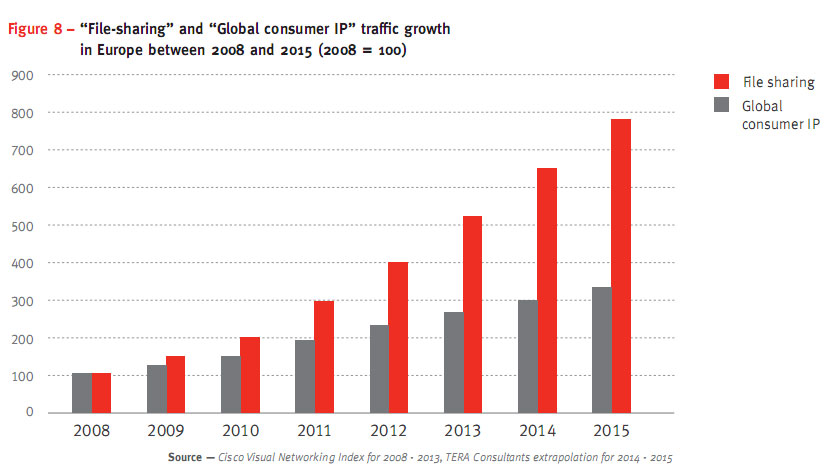
As Expected, Ridiculous, Wrong, Exaggerating And Misleading Report Claims That ‘Piracy’ Is Killing Jobs
As was leaked earlier this week, a study paid for by the International Chamber of Commerce has come out with ridiculously misleading and misguided report about how “piracy” is killing jobs all through Europe. The tagline is that it’s “costing” 1.2 million jobs and about $330 million. And, of course, that sort of report is the kind that the press loves, and so we get a series of headlines:
- Net piracy puts 1.2m EU jobs in peril, study shows
- Internet piracy taking big toll on jobs
- Illegal-file sharing could ‘cost billions’ by 2015
- Piracy threatens Europe’s creative industries
- EU must take ‘urgent’ action on piracy, report warns
And on and on and on and on. Of course, it’s not even close to true. The real story is that for certain companies who refuse to adapt and refuse to embrace what consumers want and what technology allows, modern technology will cause them to fail. However, at the same time, it has already opened up new opportunities and created new jobs while making it easier and more efficient to create, promote, distribute and consume content. Somehow, however, none of that seems to show up in these studies.
Honestly, the claims by this research firm, TERA, read like “automobiles costing buggy makers jobs and money, something must be done!” It’s based on a fundamental misunderstanding of basic economics and the nature of dynamic markets (and, frankly, calls into question anything put out by this particular firm). The only thing “costing” companies money are their own actions. If they are failing to adapt to a changing market, that’s their fault. Don’t try to pin the blame on new technologies and consumers getting better access to content.
Even worse, when you start to dig into the report you find all sorts of highly questionable or downright incorrect assumptions. TorrentFreak put together a starter list of problems (feel free to add more in the comments):
- The report suggests that there’s a direct correlation between Internet traffic growth and lost jobs. That is, the more traffic that is generated on the Internet, the more money will be lost. This correlation is 1 according to the report, which assumes that all growth in Internet traffic will increase piracy at the same rate.
- The report makes another bogus assumption by stating that more traffic will mean more piracy and thus more lost revenue. It does not account for the fact that people might consume higher quality files which are greater in file-size. All projections are based on bandwidth and not the number of pirated goods.
- The report cites some academic literature which suggests that piracy leads to a decrease in sales. Studies that reported the opposite or a null-effect were carefully left out. This bias defines the entire outcome of the report. If they used studies that found a positive effect they would have found that piracy would create hundreds of thousands of jobs in the years to come.
- The report uses fixed substitution rates. They assume that 10 downloaded albums results in one lost sale and this figure is not adjusted for the projected increase in piracy. One would think that the public’s budget for entertainment is limited and that the substitution rate would go down as piracy goes up.
- Related to the previous point, if the industry did indeed lose over €240 billion in revenue by 2015, consumers would have a lot of extra cash to spend. Depending on where this money was spent it might create more jobs than the entertainment industry claims it is losing. As a report commissioned by the Dutch Government showed last year, the overall effect of piracy on the economy might actually be positive.
- It gets even more ridiculous when we take a closer look at the claims. In the UK consumers spent €6.3 on audiovisual products. If the projected trends continued, the ‘lost’ revenue because of piracy would exceed the actual revenue, meaning that the music and movie industries would end up having to pay people for pirating their products.
- Lastly, the researchers seem to have trouble putting a decent report together as they messed up the legend of one of the critical figures. In this figure the bars for “file-sharing” and “global Internet traffic” are switched around. This makes us skeptical about the other statistics that are published in the report.
In other words, it looks like a typical study where the folks who created the study had the answer before they did the study, and then just needed to fill in the blanks carefully to make sure they got the results they wanted. It’s basically a blatant lie. The unwillingness to look at studies that suggest job increases or that look at the positive impacts from greater and easier distribution and promotion is clearly a joke.
Permalink | Comments | Email This Story
-
“Change is inevitable….except from vending machines.” – Steven Wright

I love Steven Wright quotes!
Here are some more of them below!
Wishing you all a happy Thursday, dammit!

I intend to live forever – so far, so good.
If Barbie is so popular, why do you have to buy her friends?
Dancing is a perpendicular expression of a horizontal desire.
When I’m not in my right mind, my left mind gets pretty crowded.
What happens if you get scared half to death twice?
If at first you don’t succeed, then skydiving definitely isn’t for you.
Experience is something you don’t get until just after you need it.
For every action, there is an equal and opposite criticism.
I’d kill for a Nobel Peace Prize.
Bills travel through the mail at twice the speed of checks.
A conscience is what hurts when all your other parts feel so good.
I went to the museum where they had all the heads and arms from the statues that are in all the other museums.
There aren’t enough days in the weekend.
Today I dialed a wrong number… The other person said, “Hello?” and I said, ”Hello, could I speak to Joey?”… They said, “Uh… I don’t think so… he’s only 2 months old.” I said, “I’ll wait.”
I have an answering machine in my car. It says, “I’m home now. But leave a message and I’ll call when I’m out.”
I hate it when my foot falls asleep during the day because that means it’s going to be up all night.
I spilled spot remover on my dog. He’s gone now.
If you’re not part of the solution, you’re part of the precipitate.
del.icio.us · Slashdot · Digg · Facebook · Technorati · Google · StumbleUpon · Yahoo
-
Gartman: Gold Will Remain Strong No Matter Who’s Selling It Off
In today’s letter, analyst Dennis Gartman goes back to gold, noting that the precious metal was looking strong until a seller stepped in yesterday afternoon.
Gartman suggests that GATA will throw their arms up, declaring that some evil secret syndicate was selling off gold to further their needs. But as far as he’s concerned, the general public still loves the stuff, and will keep it going higher.

Join the conversation about this story »
See Also:
- Gartman: China Is Definitely Ramping Up Its Gold Holdings To Catch Up With Other Countries
- Gartman: Gold Just Got Taken To The Woodshed, But You Should Still Hold It
- Gartman: Here’s How To Go Long Gold In Another Currency
-
Rosenberg: The Economy Is “Stabilizing” Not Recovering, And That Won’t Prevent Us From A Deflationary Meltdown
Does it matter if the economy is merely stabilizing and not actually recovering?
David Rosenberg of Gluskin-Sheff says yes, big time.
It would seem that investors are taking comfort in the view that the U.S. labour
market and home prices are stabilizing. The problem with the former is that if it
only stabilizes and does not improve, then a persistent 10% unemployment rate
will, over time, lead to a deflationary environment, which is never good for
equities unless driven by the kind of tech-led productivity gains we saw in the
1990s. This deflation is caused by excess capacity and insufficient aggregate
demand — it’s not the same. Jobless claims have to fall below 400k, not merely
stabilize around 460-470k, before employment growth can resume.A big impediment for the employment outlook is the fact that the State and local
government sector employs 20 million people or 15% of the workforce (versus
less than three million in the federal government) and is in major downsizing
mode. Today’s Investor’s Business Daily (page A2) mentions that more than
25% of Detroit’s public schools are closing their doors in June to stem budgetary
red ink of $219mln. Also see page A8 of the WSJ for how the lower levels of
government are doing all they can to bolster their depleted revenue base (States
Pressure E-Tailers to Collect Sales Tax).As for home prices, we have a total of over 20 months’ supply of total housing
inventory overhanging the residential real estate market when all the shadow
inventory is accounted for; therefore, it is hard to believe that we have hit
bottom in the home price deflation cycle. And, the demand for homes, as we
can see in the continued negative year-over-year readings in mortgage
applications for new purchases and the receding new traffic index in the NAHB
survey, is dormant at best.Meanwhile, a wave of new supply is coming from strategic defaults, which now
account for 35% of all defaults according to research published by the University
of Chicago. To be sure, the Case-Shiller index has emerged as the nonfarm
equivalent to home price measures, and it has yet to roll over. But it has slowed,
and being a three-month average, it may take time to show deflation again. The
LoanPerformance home price index is down for four months running. Freddie
Mac’s conventional home price index fell 0.7% in Q4. RadarLogic’s 25-city
house price index is down for two months in a row and in four of the past five.It would seem that investors are taking comfort in the view that the U.S. labour
market and home prices are stabilizing. The problem with the former is that if it
only stabilizes and does not improve, then a persistent 10% unemployment rate
will, over time, lead to a deflationary environment, which is never good for
equities unless driven by the kind of tech-led productivity gains we saw in the
1990s. This deflation is caused by excess capacity and insufficient aggregate
demand — it’s not the same. Jobless claims have to fall below 400k, not merely
stabilize around 460-470k, before employment growth can resume.
A big impediment for the employment outlook is the fact that the State and local
government sector employs 20 million people or 15% of the workforce (versus
less than three million in the federal government) and is in major downsizing
mode. Today’s Investor’s Business Daily (page A2) mentions that more than
25% of Detroit’s public schools are closing their doors in June to stem budgetary
red ink of $219mln. Also see page A8 of the WSJ for how the lower levels of
government are doing all they can to bolster their depleted revenue base (States
Pressure E-Tailers to Collect Sales Tax).As for home prices, we have a total of over 20 months’ supply of total housing
inventory overhanging the residential real estate market when all the shadow
inventory is accounted for; therefore, it is hard to believe that we have hit
bottom in the home price deflation cycle. And, the demand for homes, as we
can see in the continued negative year-over-year readings in mortgage
applications for new purchases and the receding new traffic index in the NAHB
survey, is dormant at best.Meanwhile, a wave of new supply is coming from strategic defaults, which now
account for 35% of all defaults according to research published by the University
of Chicago. To be sure, the Case-Shiller index has emerged as the nonfarm
equivalent to home price measures, and it has yet to roll over. But it has slowed,
and being a three-month average, it may take time to show deflation again. The
LoanPerformance home price index is down for four months running. Freddie
Mac’s conventional home price index fell 0.7% in Q4. RadarLogic’s 25-city
house price index is down for two months in a row and in four of the past five.
And, the FHFA index, which used to be the market-mover in years past, posted a
1.6% home price slide in December, which was the steepest decline since
November 2008 — at the peak of the mania of the mid-1990s, this index began
to show cracks about four months before the Case-Shiller did. Stay tuned.
It’s not often that we find ourselves in agreement with Larry Kudlow, but his
comment on CNBC yesterday that he “needed a microscope to detect any signs
of meaningful economic recovery” certainly did resonate. From our lens, it’s
more like a telescope, but why quibble?Now: See our case that the economy really is recovering strongly >
Join the conversation about this story »
See Also:
- Rosenberg: The US Housing Market Is "Definitely" Weakening, And You Can’t Just Blame The Weather
- David Rosenberg: You Think Housing Is Recovering? Check Out These Charts
- Rosenberg: The Truth About Retail Sales Is That They Still Stink
-
Special Topics: Philanthropy
Course Description
“Philanthropy can be both a potent vehicle through which public needs are met and an instrument for the expression of private beliefs and commitments” – Peter Frumkin, Strategic Giving, 2006
The roots and impact of philanthropy runs deep in American history and culture and the role of philanthropists and philanthropic organizations is pervasive in contemporary American society. The interplay and interrelationships between donors and nonprofit organizations will be the focus of this course. It will examine trends and issues impacting philanthropy. This will include a critical look at the growth and role of nonprofit institutions, their relevance and whether they are organized appropriately and have the flexibility and temperament to take on significant issues and problems. It will look at the changing relationships corporate, foundation and individual donors seek with nonprofits and the influence and impatience of the charitable donor who is asking for more accountability and documented results.
Increasingly, donors want to be engaged in their funding of nonprofits, have a role in how their contributions are used and see that their contributions have an impact on community need. Discussion will focus on what motivates donors, how results can be measured and what information matters to donors. Key questions to be addressed will be: Does the highly engaged donor have a more positive impact on the institution funded than the more passive giver? Donor rules and regulations: more or less, what works best? Why are donors impatient? Given all that has been invested in services to date, why have community conditions been slow to change? What changes do nonprofits have to make (to program, staff, boards) to meet the changing demands of donors?
Course Objectives
The course has been designed to support students’ acquisition of a range of knowledge and specific skills related to philanthropy and philanthropic practice.
Knowledge
- To understand the role of philanthropy in contemporary American society and how the history of philanthropy has helped shape current practice.
- To understand the trends and issues which are impacting philanthropy and nonprofit organizations.
- To understand the growth and impact of nonprofit institutions.
- To understand how the expectations of corporations, foundations and individual donors for concrete measurable results are impacting the management and governance of nonprofits.
- To understand those principles, standards and practices which can significantly enhance the value, role and impact of nonprofit organizations.
- To understand the value of strategic partnerships among philanthropic and nonprofits organizations.
- To understand the fundamental values and motivations which characterize different donors and philanthropic organizations.
Skills
- To acquire basic skills in building productive relationships with donors, in asking for funds and in managing fundraising appeals.
- To acquire skills in critically examining the contemporary role of nonprofits and to identify those new or modified principles, practices and strategies which could significantly improve the impact of these institutions and increase their competitive advantage in raising funds.
- To acquire basic skills in managing and distributing donated funds. This will include:
- Setting goals, priorities, policies, procedures, forms and process for decision-making and distribution of funds received.
- Development of a “request for proposals” and marketing this with potential nonprofit applicants.
- Development of procedures for assessing and evaluating proposals.
- Notifying recipients of grants.
- Tracking and measuring impact of grants made.
- Protocols for investing funds.
Values
- To help students define their own values, goals and roles as current and future donors and philanthropists and relate this to their own philosophies of service and to their responsibilities, not only “as productive citizens serving in their own society and the greater world community,” but also as members of the one human family “that proceeds from its one Creator.” (Quotations from the Mission Statement of Providence College)
Note on Course Content
This course will be build around a seminar format with maximum emphasis placed on developing a learning community among course participants – instructor and students. Philanthropy 470 was first offered in the spring semester 2008. Last year’s experience has shaped and refined the course for 2009. In addition, the Fidelity/Campus Compact grant (see below) adds a new practical dimension to the course. Because of this Philanthropy 470 is still a work in progress. It is anticipated during the course that syllabus changes will be made based on class discussion, student interests and the decisions made on implementing the grants program and related fund raising. In addition, adjustments will be made in the Course Outline to accommodate schedules of visiting speakers and visits to the United Way of Rhode Island and The Rhode Island Foundation.
The course will balance readings and discussions on philanthropy with practical service-learning skill-development experiences. Because of the grant from Fidelity/Campus Compact, up to $15,000 is available for student-directed grants to community-based nonprofit organizations. In turn, students will be expected to design and begin to implement fund raising plans to sustain this fund. Students will lead planning and decision-making in each of these tasks and will in fact serve as a board of directors of the Making a Difference Fund (MAD).
Required Texts
Wagner, David. What’s Love Got to Do with It? A Critical Look at American Charity. New York. W.W. Norton & Company. 2000
Clinton, Bill. Giving: How Each of Us Can Change the World. New York. Alfred A. Knopf. 2007
A Readings Packet has been prepared and will be distributed to the class. In addition other articles and handouts will be handed out in class or the links to other articles and resources posted on the class website on Angel.
Course Requirements
(1.) Postings on Discussion Forms (15% of grade)
- Periodically throughout the semester students will be asked to post in discussion forms on ANGEL reflections on specific class discussions and readings and answers to specific questions which will later be discussed in class. Students may also be asked to comment on others student postings.
(2.) Essays (30% of grade)
Three essays will be required. Each should be no shorter than four full pages and no longer than six full pages (double- or 1.5-spaced, 12 point, MSWORD).
- Essay #1: Will require that each student research a particular foundation and detail its approach to distributing funds. Details to be announced.
- Essay #2: Will require that each student research a particular nonprofit organization or NGO (nongovernmental organization) and detail its approach to funds development. Details to be announced.
- Essay #3: This will be the final requirement of the course due when final exam would have taken place. Topic and details to be announced.
(3.) Class project (40% of the grade)
- There will be two-part project focuses on planning and implementing a fund distribution program and developing and beginning to implement a fund raising program for the Making a Difference Fund (MAD) in which the whole class will participate. This requirement is focused on supporting students’ acquisition of knowledge and specific skills related to philanthropy and philanthropic practice. The class will be divided into groups to accomplish these tasks.
Fund Distribution:
- Meet with community organizations and residents in the Smith Hill neighborhood.
- Determine priorities for funding, write a request for proposal, and use the network of contacts developed to promote availability of funds.
- Refine criteria and process for judging proposals.
- Determine finalists for grants. Visit these organizations.
- Announce final decisions and work with the college, Campus Compact and Fidelity to promote these decisions.
Fundraising:
- Refine fund raising plans to sustain the MAD donor advised fund.
- Review these plans with the Institute, and PC’s development office and administration and seek their advice and support.
- Meet with Feinstein/Department Alumni Group to seek their support.
- Design and launch an initial fund raising appeal.
Details on this assignment will be presented in class and shaped by class participation and decision-making.
(4.) Seminar Participation (15% of grade)
- The seminar format requires maximum participation of all involved will be required. Discussions will be informed by reading, student research, speakers and exercises in philanthropic practice. To be a true learning community, each participant has a responsibility and obligation to attend and participate fully in the course. Each should come to class every day and should be prepared to discuss the readings assigned for that date. Just showing up to class certainly is important, but active engagement of everyone is expected in discussions, presentations, and exercises, and by asking questions or providing insights.
The following factors are important:
- Attending class regularly.
- Demonstrating familiarity with, understanding of, and thoughtfulness about readings and experiences in discussion.
- Actively participating in and facilitating class discussions.
- Completing special assignments.
- Actively participating in Angel forums.
- Completing all written assignments on time.
- Cooperating fully as a group member in all group assignments.
Course Outline
Date Topic Readings & In class
(Always check Angel for updates) Out of class assignmentsWeek One
Jan. 20 Course Overview, & Background Syllabus
Jan. 22 – Report (to be distributed) and Presentation
– Workshop on Making a Difference Fund- Appointment of Groups
- Design of Grants Process
- Tools & Resources
- Schedule for Grant Review and Grant Making
Week Two
Jan. 27 Perspectives on Charity and Philanthropy
Angel/Lessons/Web Links Readings
– Slate: How to Give Away a Million Dollars
Giving: Chapters 1 & 2 pp 3-31
Reading Packet:
– The Four Traditions of Philanthropy
– Big Gifts: Tax Breaks and a Debate on Charity
– Wealth and Philanthropy: Who Gives and Why Post by 8AM on Jan. 27 on Discussion Forum the answer to these questions: If you had a million dollars to give, who would get it? Why?
Jan. 29 What’s Love Got To Do With It? pp: 1-14 (Intro), 46-115 (Chapters 2, 3 & 4) Post by Jan. 28 at 8AM a reflection on Discussion Forum on this reading.Week Three
Feb. 3 What’s Love Got To Do With It? pp. 117-180 (Chapters 5, 6 & 7) Post by Feb. 2at 8AM a reflection on Discussion Forum on this reading
Feb. 5 Grantmaking: The proposal process and the logic model Angel/Lessons/Web Links Readings:
– Kellogg Foundation Guide to the Logic Model Read Introduction pp 1-14
– The Foundation Center: Proposal Writing Short CourseWeek Four
Feb. 10 FoundationsAngel/Lessons/Web Links Readings/The Foundation Center Readings:
– What is a Foundation?
– Highlights of Foundation Giving TrendsFeb. 12 The Nonprofit Sector Reading Packet:
– The Resilient Sector, The State of Nonprofit America.Giving: Chapters 3,4,5,6 pp 32-87
Angel/Lessons/Web Links Readings:
– Principles for Good Governance and Ethical Practice: A Guide for Charities and Foundations
– Rhode Island’s Nonprofit Sector: More than CharityIn class PowerPoint: Trends and Issues in Nonprofit Sector
Week Five
Feb. 19 Perspectives on Charity and Philanthropy Angel/Lessons/Web Links Readings
Strategic Giving: The Art and Science of Philanthropy, Introduction pp 1-28Donor Advised Funds
Week Six
Feb. 24 Workshop Workshop on Making a Difference Fund- Group Reports
- Refine Plans for Grant-Making/Applications Process
- Review and Approve issuing Request for Proposals
- Review and Approve Lists of Invitees Essay #1 due
(Foundation Report) – Post on Discussion Forum
Post Summary Group Reports Feb 23, 8AM
Feb. 26 Corporate Giving Reading Packet:
– Survey on Wealth and Philanthropy – The Economist
– The New Powers In Giving Reading
– What’s Wrong with ProfitIn class videos:
– Timberline & City Year
– Bill Gates & Warren Buffet on Charlie Rose ShowWeek Seven
March 3 Foundations (continued)
&
Trends in Philanthropy Discussion of student research on foundationsReading Packet:
The Monitor Group: Looking Out for the Future: An Orientation for Twenty-First century Philanthropists
March 5 Visit to RI Foundation (tentative)
SPRING RECESS
Mar. 7 to Mar. 16
Week Eight
March 17 Presentation by Fund Raising Professional (tentative)
March 19 Visit with United Way of Rhode Island (tentative)Week Nine
March 24 Fund Raising Basics Angel/Web Link Readings/Joyaux Associates:
– Creating the Most Effective Fund Development Program in your Organization
– Key Roles in Fund Development
– The Donor-Centric Pledge
Angel/Lessons/Web Link/Readings
– The Secrets of Their SuccessWorkshop: Sustaining the Making a Difference Fund
- Review of Plans to Sustain Making a Difference Fund
March 26 Workshop Grantsmaking Workshop:
- Review of Proposals – Brief summaries presented
- Make initial rankings
- Identify potential questions for applicants
- Plan for visits with finalists Essay #2 due on a nonprofit organization and its development efforts. Post on Discussion Forum
Week Ten
March 31 Current Donor Strategies Giving, Chapters 7,8,9, pp 109-151
Reading Packet:
– Marching with a Mouse
– You, Too, Can Be a Banker to the Poor
– Extra Helping, Kiva.org
April 2 Giving, Chapters 10, 11, 12, pp 152-203
Reading Packet:
– Bracing for Lean Times Ahead
– The Sin in Doing Good DeedsWeek Eleven
April 7 Celebrities as Philanthropists: Does it work? Angel/Lessons/WebLinks/Readings:
– Bono: Commencement Speech at U Penn 5/17/04
– Traub, James. The Statesman, New York Times Magazine, September 18, 2005
– Angelina, Mia and Bono: Celebrities and International DevelopmentWeek Twelve
April 14 Grant Decisions: Report and Recommendations on GrantsApril 16
Week Thirteen
April 21 Grant Decisions: Reports and Recommendations on Grants
April 23
Week Fourteen
April 28 My Role as a Philanthropist Giving, Chapter 13, pp 204-211
April 30 Learning Circle: “Take Aways” -
You Could Not Make It Up: Is global warming the new apocalypse? by Anjana Ahuja, The Times
Article Tags: Brainwashing, CO2 Propaganda, You could not make it up
Interviews by Melanie Reid, Simon de Bruxelles and Anjana Ahuja:
Raphael Rossiter,10, North London
If I was to rate my worry on a scale of one to ten, I’d put myself at six or seven. A politician came to my school and told us how climate change threatened countries with floods. He said the North Pole will melt. I just gasped. I hadn’t thought about it until then. The politician also said we should have less meat and fish on our school menu, because that was more sustainable.
When I think about climate change, I imagine floods and no blue sky. My friend told me that if floods came in the winter, it could create an ice age and you’d have to be as high as a church to be safe. Mum always has BBC News on in the car, and there’s always scientists talking about some update on climate science. I think there’s a 50-50 chance we’ll be OK in the future. People are starting to do something. My family uses as little electricity as possible and recycles everything.
Abigail Burden, 8, Middlesex
I think it’s all to do with the Sun getting warmer and all the ice melting. It doesn’t worry me and I don’t usually talk about it with my friends. The teachers don’t really mention it. Nothing scares me. But I do think about the polar bears. They are dying out because they don’t have enough food and that makes me sad.
I walk to school every day and turn the tap off when I brush my teeth. I turn the lights off when I leave a room and I recycle. I try not to waste anything.
Source: timesonline.co.uk
-
Mozilla Picks Its Favorites in the Home Tab for Firefox 4 Design Challenge
 Over the past few months, Mozilla ran a competition to see what kind of ideas people come up with for the new Home Tab feature, which should be introduced with Firefox 4. After the entry period closed, the organization put it to the vote with users everywhere asked to weigh in and choose their favorite design. Now the Fi… (read more)
 -
World’s oldest known flying car headed for the auction block?
Filed under: Auctions, Etc., Specialty
 1935 Skroback “roadable” aircraft – Click above for image gallery
Going across the block this weekend in Atlanta is a vehicle auction house Red Baron’s Antiques is describing as the oldest original flying car in existence. Built in 1934 or 1935 by designer Frank Skroback, this “roadable aircraft” is truly a sight to behold. Looking a bit like a dirigible that’s been set up for grand prix racing, it has a seven-foot wingspan and enough wings, stabilizers, ailerons and flaps to supply the whole grid in last weekend’s Bahrain GP.
Skroback wasn’t a car builder or a plane builder. He was actually a retired industrial technician and electrician from Syracuse, New York. He was apparently inspired by the concepts of Henri Mignet, the French furniture maker who became an aircraft designer and came up with the tandem-wing monoplane. Skroback wanted to adapt the concept to a vehicle that could be used both on the ground and in the air. It’s hard to believe it could actually fly, with its six fixed seven-foot-wide wings trying to lift that 21-foot long contraption, even if it was actually pretty light. Under its linen outer wrap is a tubular steel fuselage with spruce wind panels.
Red Baron’s Antiques will be selling the flying car this weekend along with an extensive collection of documentation. There’s a small sample in the gallery below. Think of it as the great-grandfather of Rudy Heeman’s flying hovercraft.
Gallery: 1935 Skroback “roadable” aircraft


[Source: Red Baron’s Antiques via Wired | Photo: Red Baron’s Antiques]
World’s oldest known flying car headed for the auction block? originally appeared on Autoblog on Thu, 18 Mar 2010 09:28:00 EST. Please see our terms for use of feeds.
-
Police chief says “human error” may have caused N.Y. Toyota Prius crash

As reported Tuesday, Toyota engineers were on their way to examine the second runaway Prius in Harrison, N.Y. that crashed into a stone wall leaving the driver with minor injuries. After a day of working, six engineers shared their findings with Harrison Police.
Toyota spokesman Wade Hoyt said Tuesday that the engineers will turn over their findings to the police, but will not hold a press conference or share the results with the press. He said the police chief could do whatever he wanted with the results.
Well, after overseeing the investigation of the alleged runaway Prius, police chief of Harrison, Anthony Marraccini, reversed his position and said that “human error may have caused the vehicle to crash into a stone wall.”
On March 8, an unidentified 56-year-old housekeeper was pulling out of her boss’ driveway and said that her 2005 Prius accelerated uncontrollably and sent her into the wall.
Toyota downloaded all the data from the vehicle yesterday and said that a system in the Prius would have prevented such an incident.
“In all of our hybrids, when you step on the brake pedal the engine automatically returns to idle, even if the accelerator pedal would be nailed to the floor,” Hoyt said.
– By: Stephen Calogera
Source: NYPost
-
HIGHLIGHT FOR ABC NEWS “NIGHTLINE” FRIDAY, MARCH 19, 2010
On Friday, “Nightline” will feature interviews with famed chef Jamie Oliver and Canadian pop singer Justin Bieber.
First, correspondent Vicki Mabrey talks exclusively with popular chef, TV personality, and best-selling author Jamie Oliver about his new reality show “Jamie Oliver’s Food Revolution” and the motivation behind the project. The British born chef also discusses the trials and tribulations of being called a “foreign invader” in a small American town. Huntington, West Virginia has been called the country’s most unhealthy city and Oliver explains how his new cooking initiative will hopefully change the city’s stigma.
Then, teen pop sensation Justin Bieber sits down with ABC News correspondent Chris Connelly to discuss his sudden rise from YouTube star to recording star. Bieber opens up about growing up a child of divorce, the musician he would most like to meet, his favorite foods, and pastimes. He shares the story of his first meeting with Usher, who helped get him his start when he introduced him to record executive LA Reid.
For more on Chris Connelly’s interview with Justin Bieber:
http://abcnews.go.com/Nightline/justin-bieber-10-secrets-canadian-teen-pop-singer/story?id=10124348
Slideshow available at: http://abcnews.go.com/Nightline/Celebrity/slideshow/photos-justin-bieber-10126698
*Photos available on Medianet, www.abcmedianet.com or upon request
“Nightline” is anchored by Cynthia McFadden, Terry Moran, and Martin Bashir. James Goldston is the executive producer. “Nightline” airs at 11:35 p.m. (ET/PT) weeknights on the ABC Television Network.