Author: Serkadis

  • Newly formed UCLA center to tackle problems of poverty and health in Latin America

    UCLA has formed the UCLA Blum Center on Poverty and Health in Latin America, where faculty and students from multiple disciplines will work with other institutions to conduct research, develop training programs and promote innovative policy solutions aimed at addressing key social and health-related issues in the region. 
     
    “As a public university, UCLA has a duty to address the world’s challenges, and our cross-disciplinary strengths in medicine, public health, humanities, social sciences, research and public policy position us to make a difference,” said UCLA Executive Vice Chancellor and Provost Scott Waugh. “We have strong ties to Latin America and welcome the opportunity to strengthen our collaborations with other academic institutions, nonprofit groups and nongovernmental organizations in the region. The UCLA Blum Center is a team effort that draws faculty and students from across campus who are committed to redressing issues of poverty and health in Latin America.”     
     
    Dr. Michael Rodriguez, professor and vice chair of research in the department of family medicine at the David Geffen School of Medicine at UCLA, will serve as the center’s director. 
     
    “The programs of this new center reflect our mission to work collaboratively with a wide range of UCLA disciplines, as well as Latin American partnering institutions, to identify and promote solutions in health policy and practice,” Rodriguez said. “We expect to build the center into a preeminent authority in our three focus areas — research, policy and training on the social determinants contributing to health inequalities in Latin American populations.” 
     
    The center’s inaugural event, a symposium titled “Informing Responses to Reduce Poverty and Improve Health in Latin America,” will be held on campus on Wednesday, May 1. The symposium will feature speakers and panels examining the social and economic factors that contribute to stratification and subsequent health inequalities; differences in approaches to
     
    these inequalities; innovative policy and programmatic solutions to reduce poverty and health inequalities; and potential areas for government investments in public health expenditures. 
     
    Symposium details and registration information are available on the UCLA Blum Center website
     
    The center’s educational programs — a core component of its mission — to date include the UCLA Freshman Cluster Program “Poverty and Health in Latin America,” which enrolled more than 70 undergraduates for its three-quarter series that began last fall, and the UCLA Blum Center Summer Intern Scholar Program, which offers eight-week internships for both undergraduate and graduate students, who participate in Los Angeles–based and Latin American–based field experiences. Researchers with the Blum Center are continuing to develop and refine its research programs and policy efforts. 
     
    The new center is named for Richard Blum, a University of California regent whose generosity also made possible the Blum Center for Developing Economies at both UC Berkeley and at UC Davis. Blum provided $1 million to start the UCLA center. 
     
    The UCLA Blum Center on Poverty and Health in Latin America takes an interdisciplinary approach toward analyzing the key factors that influence poverty and the social determinants of health in Latin America, including: government practices and policies, community action, social justice, human rights, race, ethnicity, socioeconomic status, religion, foreign policies and more. The center draws on the expertise of professional schools and academic units across campus, including the divisions of social sciences and humanities in the College of Letters and Science, the David Geffen School of Medicine, the Fielding School of Public Health, the Graduate School of Education and Information Studies, the Luskin School of Public Affairs, the School of Dentistry, the School of Law, the School of Nursing and many others. 
     
    For more news, visit the UCLA Newsroom and follow us on Twitter.

  • How data is changing the car game for Ford

    When most people think about how cars are built, they probably think about assembly lines, manufacturing robots, and batteries of safety and performance simulations on massive supercomputers. But at Ford, big data is having a significant impact on the parts and features of those cars before they’re ever part of a design file. From the cars in stock at the dealership to the performance of the engine in a rainstorm, big data is infiltrating nearly every aspect of the Ford experience and the company itself.

    Obviously, data is nothing new to the automotive industry — companies have been trying to optimize supply chains and analyze sales numbers for decades — but the advent of big data, as well as related technlogies such as sensors and smartphones, is changing how companies are thinking about data. Ford isn’t alone in its quest to take advantage of these new technologies, either. For example, General Motors collects data from its OnStar system to help lower drivers’ insurance premiums, and also collects lots of data on its Chevrolet Volt electric car that it feeds to drivers via a mobile app. We recently noted how a luxury automobile company used big data software from Aster Data Systems to determine the relationships between malfunctions so it could provide a more thorough and beneficial service-department experience.

    But in an industry notoriously unwilling to talk about information technology, Ford’s experiences might shed a lot on what other companies are thinking and doing, as well.

    Building a better experience through data

    According to John Ginder, manager for systems analytics with Ford Research & Innovation, the company has been doing advanced business modeling for about 20 years, but big data is something else. Today’s technologies are allowing Ford to handle larger, more-diverse datasets than ever before possible, and its efforts are already beginning to bear fruit in numerous places — including in the cars themselves.

    The most obvious example of data influencing the driving experience might be the types of data car companies are actually giving back to drivers. At Ford, its Energi line of plug-in hybrid cars generate 25 gigabytes of data per hour that’s then processed and given back to drivers via a mobile app. It tells them about battery life, the nearest charging stations and other data about the vehicle’s performance.

    The MyFord mobile app architecture.

    The MyFord mobile app architecture.

    Ginder said all that data is the result of a “convergence of need and opportunity.” The opportunity is a way to experiment with collecting and presenting vehicle data on a group of early adopters that’s probably more interested in this type of advanced technology. The need has to do with what Ginder calls “range anxiety” — when drivers are getting used to electric vehicles, they need reassurance they’re not going to run out juice.

    However, Ginder said, the company is just scratching the surface of what’s possible, because there aren’t that many of the electric vehicles on the road yet. The goal is to better understand how drivers are using the vehicles and use that information to continuously improve the vehicles and the overall experience. Ford’s Super Duty line of pickup trucks also offers a “crew chief” package that lets bosses monitor the fuel consumption, engine performance and other data about their fleets of vehicles.

    Mike Cavaretta, technical leader for predictive analytics and data mining with Ford Research & Innovation, added that Ford is really interested in collecting more data from more vehicles, but noted there’s also a privacy concern that could come into play. The potential of someone knowing where and how you’re driving might not appeal to the mainstream just yet (just look at all that data Tesla collects about its cars and can present if it really wants to), but as with the Energi, data does present some opportunities to improve the customer experience.

    The test cars in Ford’s research labs are collecting about 250 gigabytes of data per hour from high-resolution cameras and an array of sensors, Cavaretta noted, and the company is trying to find out what data is most useful and how it might be rolled into production vehicles.

    Building betters cars through data

    Of course, sometimes the best data isn’t the stuff you see, but the stuff that just makes your car better. Cavaretta said Ford analyzes a lot of social media and other external data in order to figure out, for example, what customers are saying about their vehicles compared with other makes and what problems they’re having.

    Opens with the touch of a foot. Source: Ford

    Opens with the touch of a foot. Source: Ford

    In one recent case, the product development team was curious as to whether the Ford Escape sport-utility vehicle should have a standard liftgate (i.e., it opens manually and the rear window can flip open) or a power liftgate in which the glass and the gate are one piece. In the latter option, the gate opens automatically by tapping under the rear bumper with your foot, but the window doesn’t open at all. Regular surveys hadn’t addressed the question, so Cavaretta and his team took to social media, where people were actually talking about it quite a bit and seemed to heavily favor the power liftgate in most cases. It’s now a feature.

    Back in 2004, Ford built a self-learning neural network system for its Aston Martin luxury brand that maintains proper engine function by recognizing engine misfires and particular driving conditions and adjusting warnings and performance accordingly.

    Ginder said his team has been improving on that technology ever since and actually expanded its use into a system, called Smart Inventory Management System, that lets dealers ensure they have the optimal stock of vehicles and features on their lots. Historically, he said, some dealers were very sophisticated about inventory management, while others were more reactionary (“They just sold a red Mustang,” he joked, “so they think they need to go order another red Mustang.”) With SIMS, all sorts of data about vehicle sales and other locally relevant data from across the country is aggregated in Ford’s big data platform, and the neural network algorithms learn the current patterns so Ford can make better recommendations — whether or not dealers choose to heed the advice.

    Selling big data internally

    Cavaretta characterizes the division in which he and Ginder work as “an Ernst & Young, but just for Ford,” an internal consultancy (as opposed to Ford’s more-traditional research and development division) in charge of solving business problems via analytics. About 80 percent of those problems come directly from those lines of business, while about 20 percent are the research division’s own ideas. However, although he’s excited about how big data can help his team answer these questions in novel ways, it’s not always an easy sell with other parts of the company.

    Mashing up data sources such as social and sales in order to find insights is a pretty easy sell, Cavaretta explained, but getting people to put sensors in everything and collect data every second or with every transaction can still be a bit challenging. In part, this is just a lingering effect of the constraints that legacy technologies imposed on the company. It wasn’t possible to store all this data, so people just got accustomed to the status quo of summarizing data hourly, for example.

    Source: Ford

    Source: Ford

    Now, however, he’s pushing them to “dial it down” and collect data at the lowest level possible and as often as possible. In manufacturing alone, he explained, there are between 20,000 and 25,000 parts in any given vehicle, and there’s a supply chain that spans from parts suppliers all the way up to dealerships. Getting a complete view of this process could help drive serious efficiencies and, Cavaretta said, “We don’t see anything but big data technologies that can get us there.”

    Other areas where Ford is collecting, or wants to collect, more real-time data is from websites, call centers and the company’s credit-processing arm, he added.

    Building big data internally

    In order to accomplish their lofty goals, the Research & Innovation analytics team relies heavily on open source technologies, most prominently Hadoop. However, Cavaretta said, they’ve been experimenting with a variety of natural-language processing tools, too, and even did a proof-of-concept with SAP’s HANA in-memory analytic database. The NLP tools were first turned on text analysis of internal surveys and dealer network documents, but now are used pretty heavily on social media and other web data.

    Their team has some systems numbering in the dozens of nodes in its own building, but on weekends it’s able to borrow high-performance computing cycles from Ford’s Numerically Intensive Computing Center next door in order to model recommendation engines and other tasks that demand serious computing power.

    But as a part of a specialized research division, the work that Ginder, Cavaretta and their team do on everything from Hadoop to visualization with tools like Tableau isn’t automatically ready for primetime. In fact, Cavaretta said, it looks at “what’s the art of the possible” and tries to show the value of it. It’s like a vanguard, he added, going out and seeing what’s ahead and then reporting back.

    At that point, projects are often handed off to Ford’s central IT team that actually puts the technologies into production. A system that took the research team weeks to deploy and start deriving insights from might take IT months to make production-ready. However, Ginder added, his team can’t just throw stuff over the wall and abandon it — it has to collaborate with the IT team and individual departments throughout the project’s lifecycle.

    An important part of this cross-company relationship — and something many CIOs have likely heard before — is having data scientists on board that can see the world through the eyes of both technologists and businesspeople, two groups that often have different concerns and goals in mind. “We look for people who can bridge those worlds,” Ginder said. “It’s hard to find these people, but they’re hugely important to organizations.”

    Feature image courtesy of Shutterstock user PhotoSmart.

    Related research and analysis from GigaOM Pro:
    Subscriber content. Sign up for a free trial.


  • More Google Glass Specs Revealed As Android Tinkerers Look For Ways To Root It

    glasscloseup

    Google felt it appropriate to highlight some of Glass’ specs earlier this week, but there’s much more to the company’s wearable display than just the 5 megapixel camera and its 16GB of internal storage. In case you were hankering for a taste of what else makes Google Glass tick, Android developer (and Glass Explorer) Jay Lee spent some time tinkering with his preview unit and managed to figure out what kind of hardware it has under the hood.

    Lee managed to confirm that Glass runs Android 4.0.4 Ice Cream Sandwich (CEO Larry Page noted during Google’s most recent earnings call that Glass “obviously” runs on Android), and also determined that it has a Texas Instruments OMAP 4430 chipset. In case you haven’t been keeping abreast of developments in the mobile chipset market, the OMAP 4430 was used in devices like the original Motorola Droid RAZR and Samsung’s 7-inch Galaxy Tab 2.0 — solid devices during their prime, but the chipset that powered them is far from new.

    Sadly, some of the particulars are still shrouded in mystery — Lee wasn’t able to figure out the processor’s clock speed (the 4430 CPU can be clocked between 1 and 1.2 GHz), and the device only reports that it has 682MB of RAM, but Lee suspects the total is actually 1GB. Still, that’s not too shabby a spec sheet for a device that essentially lives on your face, and some recent reports reveal that the ambitious headset may be surprisingly too simple to root to. Liam McLoughin, an intern for Google’s Chrome team, recently tweeted to note that gaining root access to the search giant’s curious head-mounted display seemed simple in theory, a development that prompted Lee to go digging in the first place.

    Meanwhile, Cydia founder and administrator Jay Freeman revealed on Twitter that he too had made progress in gaining access to the device, and even posted a picture to show off how far he’d managed to go. At this point we’ve already seen some companies embrace the Glass platform (Path and the New York Times immediately spring to mind) and others like Evernote are known to be crafting experiences for Glass, but some moderately powerful hardware and seemingly easy rootability could make Glass an even bigger hit for Android tinkerers.

  • Facebook Friends Are Worth $174.17 To Brands [Report]

    A study from Syncapse is generating some attention in the marketing world. Surveying over 2,000 Facebook users, it has determined that a Facebook Page like is worth $174.17.

    Feel free to keep a grain of salt handy, but the abstract says, “Brand marketers are sobering up and asking hard questions around the ROI of social marketing. Perhaps no question is asked more often than ‘What is the value of a Facebook brand Fan?’ According to new Syncapse empirical research, the average value of brand Fans in key consumer categories has increased 28% to $174.17. Not only do they tend to be brand users first, they spend more, engage more, advocate more, and are more loyal. The significant and increasing value of a Facebook brand Fan affirms past social marketing investment and mandates deeper commitment and accountability in the future.”

    You can download the whole thing here.

    This isn’t anywhere close to the first time we’ve seen attempts to attach specific values to Facebook likes. Here’s one from 2011, for example.

    [via CIO]

  • Vermont gets a gigabit network. And it only costs residents $35 a month

    The telephone company that provided the copper service that in 1923 allowed Calvin Coolidge to be sworn in as United States President, at Plymouth Notch in Vermont, is trading its storied copper for fiber. VTel, a telephone company providing service to 21 Vermont communities is upgrading its network to an all-fiber, gigabit-capable network.

    So far, it’s offering about 500 residents gigabit speeds for $35 a month and plans to cover its 17,500 customers by the middle of 2014. That’s about the same time Google plans to start offering gigabit service to its first Austin residents, and means VTel will be hooking up 200 homes to the network each week. So when we counted gigabit homes earlier this week, Vermont likely supplied a few.

    VTel’s transition from POTS (plain old telephone) to photons was made possible in part from the broadband bucks the federal government allocated as part of the American Reinvestment and Recovery Act in 2009. Thanks to ARRA grants totaling $94 million, plus matching grants from the local utility that wanted to use the planned network for smart grid deployments and its own investments, VTel has spent over $150 million building out more than 1,200 miles of fiber.

    VTel uses Alcatel 100 gigabit routers at each of its 14 rural central offices serving its GigE customer base

    VTel uses Alcatel 100 gigabit routers at each of its 14 rural central offices serving its GigE customer base

    VTel also operates a 100 gigabit per second backbone in the North East with peering points in New York City, Boston and Montreal, which supports the network and provides redundancy via alternate routes. Inside the home Vtel has to upgrade the equipment it offers consumers to match the gigabit speeds coming into the house. It purchased Actiontec routers for inside the homes, and now its customers are typically experiencing speeds of 925 Mbps to 950 Mbps.

    VTel CEO Michel Guité, told the Wall Street Journal that the growth of Google Fiber helps him get approvals for the federal grants to upgrade the network. From the article:

    That comes as Google’s Fiber project, which began in Kansas City and is now extending to cities in Utah and Texas, has raised the profile of gigabit broadband and has captured the fancy of many city governments around the country.
    “Google has really given us more encouragement,” Mr. Guité said. Mr. Guité said he was denied federal money for his upgrades the first time he applied, but won it the second time around–after Google had announced plans to build out Fiber.

    Most tellingly however, was Guité’s quote to the Journal where he says it remains to be seen if this is a “sustainable model.” Selling broadband access for $35 may be possible if much of your deployment costs were covered by federal grants, especially in a rural area where homes are spread out. Generally the more dense a population, the lower the broadband deployment costs, which generally translates in higher monthly bills for customers. But since customers aren’t sure why they need a gigabit yet, getting too far ahead of demand can mean VTel spends money to upgrade before customers want to pay money for the product.

    VTel is scheduling community meetings to educate people about the benefits of having a a gigabit network as part of a drive to get customers to sign up. However, for those that are leery about living so far in the future, VTel still offers customers dial up access for $21.95 a month. Now, that makes for a digital divide.

    Related research and analysis from GigaOM Pro:
    Subscriber content. Sign up for a free trial.


  • This Week On The TechCrunch Gadgets Podcast: The Q10 Vs. The One And The Fitbit Flex

    podcast

    This week on the TechCrunch Gadgets Podcast we talk about the Blackberry Q10, The HTC One, and the Fitbit Flex. This time we’re joined by Matt Burns, Darrell Etherington, Chris Velazco, and a tiny thinger that won’t fit into the bracelet. Enjoy!

    We invite you to enjoy our weekly podcasts every Friday at 3pm Eastern and noon Pacific.

    Click here to download an MP3 of this show.
    You can subscribe to the show via RSS.
    Subscribe in iTunes

    Intro Music by Rick Barr.

  • Ultra HD TV might not flop after all

    Ultra HD TV Shipments 2013
    “Ultra HD” TVs from companies like Samsung and LG made a big showing at this past Consumer Electronics Show in January, but even the lead analyst at the Consumer Electronics Association — the group that organizes CES each year — thought ultra HD would be a flop. As it turns out, however, that may not be the case. CEA’s Steve Koenig believed ultra HD TV sales would climb to just 1.6 million units three years from now in 2016, but new data from Digitimes’ unnamed industry sources suggests that shipments of TV panels with “ultra HD” 4K resolution will already fall between 3.5 million and 4 million units in 2013. The report claims top panel OEMs Innolux, AU Optronics and China Star Optoelectronics are all increasing production, and Innolux alone is expected to ship between 2 million and 3 million ultra HD TV displays this year.

  • Free Pretzels Today (That’s Right. It’s National Pretzel Day.)

    For pretzel lovers, today is a really big deal. All across the U.S. pretzel vendors are celebrating National Pretzel Day and giving away free pretzels.

    Still, you may want to check with your pretzel vendor of choice before you make the trip. It’s entirely possible that they’re still trying to make money today.

    Google’s Zagat has provided a slideshow of 11 places to eat soft pretzels today (it helps if you live in Philadelphia). Zagat’s Danya Henninger writes, “According to the Philly Pretzel Factory, Philadelphians consume 12 times the national average of pretzels per year – 18 pounds per person. It makes sense, since this is where German immigrants first brought the ancient snack to American shores. For National Pretzel Day, PPF is giving away a free soft pretzel to each and every customer at all locations.”

    The beloved pretzel brand Snyder’s of Hanover appears to be dominating the Twitter conversation. Here’s the a snapshot of that:

    Regardless of whether or not your’re getting your pretzels for free today, might I suggest a pretzel dog. Bucky knows what I’m talking about:

  • Video: The trends behind the year of clean energy turbulence

    This week I attended Bloomberg’s annual energy conference, and the audience favorite seemed to be the keynote by Bloomberg New Energy Finance CEO Michael Liebreich. If you’re interested in the trends of global finance going into clean energy and energy efficiency, it’s a must watch. Here’s the video:

    Related research and analysis from GigaOM Pro:
    Subscriber content. Sign up for a free trial.


  • HP Slate 7 hits US for $169. How does it stack up against Google’s $199 Nexus 7?

    Months after it was introduced, HP’s Slate 7 is available in the U.S. for $169.99. That’s not a bad price for a 7-inch Android tablet with a 1.6 GHz dual-core processor, but to keep costs down HP had to cut a corner here and there. And that makes it a difficult choice to choose the Slate 7 over Google’s own Nexus 7, even though the latter costs $30 more.

    Nexus 7, tabletsHP is shipping the Slate 7 with Android 4.1. That’s close to current, but of course Google’s own product ships with the latest version: Android 4.2. It’s also very likely to get software updates faster. Both tablets include 1 GB of memory. HP’s Slate 7 has 8 GB of internal storage capacity with support for an additional 32 GB of micro SD expansion. The Nexus 7 with 16 GB of storage doesn’t have a micro SD card slot.

    Both tablets have front-facing video cameras for chatting, but here the Slate 7 one-ups the Nexus: HP added a 3 megapixel camera to the rear of the tablet. HP also included support for Beats Audio sound.  There’s not much difference in the size and weight of the two tablets, which is not surprising given that both have 7-inch screens. The Nexus 7 wins out here, however, using a 1280 x 800 display. HP opted for a 1024 x 600 screen, which is the same low resolution on the 7-inch Samsung Galaxy Tab I bought in 2010.

    Unless you really need a rear camera or micro SD card slot on your 7-inch tablet — or just have to have Beats Audio support — I’d probably spend the extra $30 on the Nexus 7 if you can swing the money. And if you’re in the market for a small slate right now, I’d even consider waiting a few short weeks. Google’s I/O Developer event takes place in mid-May and it was at last year’s event that Google introduced its Nexus 7. A refresh could be in the works, meaning either more tablet for your dollar or last year’s model at a lower price could be coming.

    It’s certainly good to see HP get into the mobile market with a new tablet, especially since the HP TouchPad was a billion-dollar bust. The company needs to step it up though when it comes to hardware. It’s 2013, not 2010 and people are starting to expect higher-resolution displays in their laptops and their tablets to help improve the experience.

    Related research and analysis from GigaOM Pro:
    Subscriber content. Sign up for a free trial.


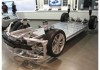
  • The Tesla Model S’ Battery Is Now Covered By A Nearly Unconditional Warranty

    Tesla_Model_S_Chassis_Battery

    Without proper care batteries can wither and die like a delicate tulip roasting in the bright sun from an unseasonably warm spring day — a fact made exponentially worse when the battery in your $60k vehicle no longer functions properly.

    With that in mind, Tesla just unveiled an impressive new warranty for the Model S battery pack. With the notable exception of a vehicle accident or a curious owner opening the battery pack, under this new plan, Tesla will replace the battery pack for any reason including user error and improper maintenance.

    Best of all, users do not have to worry about servicing the vehicle on a regular basis. Annual checkups are now completely optional, meaning the warranty will still be valid if the owner never takes the vehicle in for service.

    Tesla states in a blog post today that the company took great pains in developing a proper battery and therefore if something goes wrong, it’s on them, not the owner.

    If needed, the battery will be replaced with a factory reconditioned unit with an energy capacity equal to or better than the original pack before the failure occurred.

    Sounds like a fair deal for the pricey Model S.

    Better yet, Tesla also announced a service loaner program in which if an owner’s Model S needs to go in for service, the company will deliver a fully decked out Model S as a loaner until the original is repaired. Take a shine to the fancy loaner? No worries, Tesla will let you keep the loaner and pay a price that is lower by 1% per month of age and $1 per mile. As Tesla notes in the announcement, this practice will ensure the loaner fleet is constantly refreshed with new vehicles rather than becoming the equivalent of a rental car fleet.

    If nothing else, Tesla and its billionaire founder are becoming very good at playing the media game. This announcement comes just weeks after the company rolled out a new payment plan (complete with a very shady marketing plan) to make the Model S more affordable. And let’s not forget Musk just not-so-quietly put up $50k of his own cash to speed up construction on LA’s 405 freeway. Why pay for press when you can get it for free?

  • Designer Builds 3D-Printed Headphones That Use No Manufactured Parts

    unboxed

    If the whole of human knowledge were to be wiped out tomorrow, how would you recreate the consumer electronics industry so you can jam out to some rockin’ tunes? Why you’d build these unique 3D-printed headphones. Except for some twists of wire, these cans consist of thin pieces of printed plastic and the speakers are actually plastic with a coil of copper wire embedded, by hand, into a set of tiny traces. Even the audio plug which consists of wire wrapped around a small plastic spindle.

    You can download the project here and print it yourself or marvel at how the creator, designer J.C. Karich was able to use wire and plastic to build a pair of cans that actually work. He obviously had to source the wire and magnets (although, arguably, he could have dug the ore himself, right?) but the rest of the project is completely hand-designed and printed on the fly, an increasingly common feat with today’s 3D printers.

    The audio quality looks surprisingly good, all things considered, and the design is ingeniously primitive. Writes Karich:

    Anyway, the sound quality is very nice against all expectations but will necessitate a power amplifier to be louder when using only portable sources like pods or phones.

    Sadly no one has reported actually being able to build these things yet on Thingiverse but that doesn’t mean we shouldn’t try. Who knows? Maybe this is the future: artisanal headphones.

  • Tesla to offer loaner cars to customers with cars in the shop

    A small bit of news out from electric car maker Tesla on Friday: the company will make 85 cars available as loaners to customers that need to have their cars serviced. Tesla says it will valet the loaner car to you free of charge, and you can also purchase or keep the loaner car if you like it better.

    Tesla Model S

    The announcement is another way that Tesla is trying to innovate around its business model, and also deliver more premium services to its customers. Tesla announced earlier this month that it will turn its first profit in the first quarter of 2013, for both non-GAAP and GAAP (generally accepted accounting principles), and will pay back its loan from the Department of Energy five years ahead of schedule. Tesla’s stock shot up this week and hit a high of $53.74 per share.

    Tesla’s news is contrasted with the ongoing problems with Fisker Automotive, which was the focus of a hearing on Capital Hill this week. Fisker seems to be close to bankruptcy and earlier this week the Department of Energy seized $21 million from a reserve account that Fisker was holding.

    “Our service is O.K., but it needs to be great,” said Tesla CEO Elon Musk on a call. “What is the best service and warranty that we can afford to do and this is it,” said Musk.

    Related research and analysis from GigaOM Pro:
    Subscriber content. Sign up for a free trial.


  • Carriots is building a PaaS for the internet of things

    For the last six years Miguel Castillo (pictured) and his team have built dozens of platforms for connected devices, from connecting garbage cans to adding informatics to solar panels. But in 2012 Castillo realized that he was sick of reinventing the wheel for each machine-to-machine project that Wairbut, his company, accepted.

    So he and his CTO, Alvaro Everlet, spun out a new company to build a platform of software and infrastructure so others could connect devices without having to reinvent the same wheel they had invented so many times before. They called the startup Carriots, and it’s now in the middle of raising a first round of funding.

    Like Electric Imp, Carriots, a Madrid-based company, wants to make it easy for people to build out services for connected devices. Electric Imp provides the cloud service as well as an SD card with built-in connectivity. Carriots provides the cloud service, essentially a platform as a service, or PaaS, for the internet of things.

    Castillo explained that developers can build the physical product and then link it to a software-based service on the Carriots platform using a few lines of Groovy, a Java-based language. Carriots charges companies for the number of devices they connect to the platform, with the first 10 devices being free.

    Carriots has 10 employees and plans to double in size this year, as well as open a U.S.-based office to support growing interest in connected devices and services here. As I see more and more startups eyeing the internet of things, providing some type of back-end platform helps open the field up to a variety of developers who might have an idea but less of a technical background. But I also wonder what devices will work with this type of model.

    For example, a consumer-facing device that sells millions might rack up some huge bills, so the team might be better off building out its own infrastructure, especially if it wants to provide access to data via an API. For companies selling to businesses, or with fewer devices, such as Pantry, the startup I wrote about recently that’s building a connected, refrigerated vending machine, it may make more sense.

    Of course, if Amazon Web Services has taught us anything, it’s that even large companies like Netflix can benefit from outsourcing their infrastructure if it’s not core to their value proposition. Perhaps the growth of platforms for the internet of things will produce similar examples even as it enables new businesses to come to the fore.

    Related research and analysis from GigaOM Pro:
    Subscriber content. Sign up for a free trial.


  • Ashampoo Photo Commander 11 Review [GIVEAWAY]

    Ashampoo Photo Commander 11 comes with a slightly changed interface that increases ease of use by better highlighting the functions for each module available and the utility currently accessed.
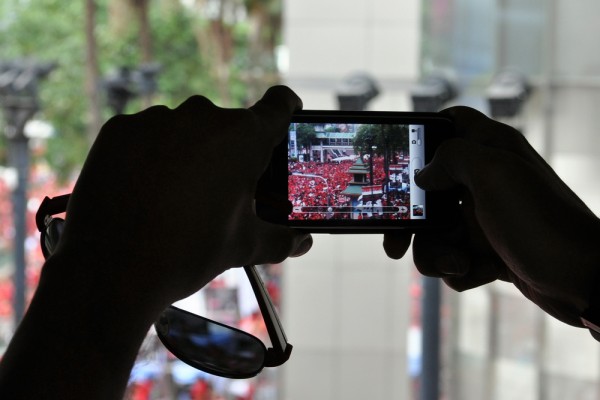
    The newly released Ashampoo Photo Commander 11 went through improvements that touch on both functionality and usability.

    New technology allows… (read more)

  • Marc Andreessen on Google Glass: ‘Oh my God, I have the entire Internet in my vision’

    Marc Andreessen Google Glass
    As a member of the Glass Collective, which looks to fund startups that build apps for Google Glass, venture capital giant Marc Andreessen clearly thinks wearable devices are a growth market. The Andreessen Horowitz co-founder recently shared just how blown away he was the first time he tried Google’s connected eyewear, and he’s banking on the notion that consumers will have the same reaction. “You put it on and you’re like ‘Oh my God, I have the entire internet in my vision. Where have you been all my life?,’ ” Andreessen said during a keynote presentation at the she++ conference, according to TechCrunch. Google Glass is now available to beta testers who were willing to shell out $1,500 for pre-production units, but Glass won’t be available to the general public until 2014.

  • Powerball Jackpot Up To $140 Million

    The Powerball jackpot is currently at $140 million, as nobody won the jackpot prize on Wednesday. The estimated cash value is $91.3 million.

    Wednesday’s winning numbers were: 9,19,31,56,59, Powerball: 2.

    There were no winners for the $2 million Match 5 Power Play prize. The $1 million Match 5 prize saw winners in California, Connecticut and Florida.

    There were a total of 664,631 winners in Wednesday’s drawing. $9,279,075 worth of non-jackpot prizes were won.

    Odds of winning the jackpot, according to the Multi-State Lottery Association, are 1 in 175,223,510.

    The next drawing is on Saturday.

    As usual, people are talking about the drawing on Twitter:

  • As iPhone market share peaks, there’s one direction to go

    You will reads lots of dribble today about Samsung first quarter phone gains compared to Apple. Most will ignore something fundamental to the numbers: What they represent. IDC and Strategy Analytics separately put out data, for shipments, which mean handsets going to carriers, dealers and other sellers. That’s very different from sales to businesses and consumers, Gartner’s measure and the more accurate one (that data isn’t ready yet).

    For few quarters is the difference between shipments and sales likely to be so pronounced, actually even more so in Q2. Apple comes off its second full quarter of iPhone 5 sales and global distribution, and so shipments into the channel, nearly complete. Meanwhile, Samsung ramps up for Galaxy S4’s launch, while achieving full global availability for the S III. Second quarter is the more likely bloodbath for Apple, but actual sales will foreshadow much. Still, shipments hint something now, and iPhone faces serious challenges.

    By Strategy Analytics reckoning, Samsung shipped 106.6 million handsets during Q1, obtaining 28.6 percent global share. Apple ranked third, with 10 percent share from 37.4 million units. IDC puts Samsung shipments higher (115 million) but share lower (27.5 percent). Apple’s number is same as Strategy Analytics but market share less: 8.9 percent.

    “Apple’s global mobile phone market share is approaching a peak”, Woody Oh, Strategy Analytics senior analyst, warns. “Apple will need to launch new models, or partner with additional major carriers like China Mobile, if it wants to expand significantly beyond its current ceiling of 10 percent global volume share”.

    But no new models are coming. Apple chooses not to compete with Samsung, by holding back new phones until autumn. During this week’s Apple earnings conference call, in response to a question about when to expect new products, CEO Tim Cook answers: “We’ve got some really great stuff coming in the fall and across all of 2014”. Don’t expect anything sooner. So Galaxy S4 and other Androids, like HTC One, face no new competition from Apple.

    Smartphone Story

    Global phone shipments actually mask Apple’s broader market situation. The data pits a smartphone against competitors selling handsets of various types. Three things:

    • Smartphone shipments exceeded feature phones in Q1 for the first time, reaching 51.6 percent share, according to IDC.
    • Apple smartphone share declined nearly 7 points, even as unit shipments nudged up.
    • iPhone growth fell way behind the market, reversing trend of exceeding it.

    On a smartphone-to-smartphone basis, in the category now globally more important, Apple struggles for the first time. Meanwhile competitors — Samsung significantly — bring exciting new models to market while the fruit-logo company rests on iPhone 5’s laurels.

    Smartphone shipments grew by 41.6 percent during first quarter, according to IDC. Among the top-five, only Apple grew below the market, and considerably less — just 6.6 percent. By comparison: LG (110.2 percent); Huawei (94.1 percent); Samsung (60.7 percent); ZTE (49.2 percent).

    Top Five Smartphone Vendors Q1 2013 (Units in Millions) 

    Vendor

    1Q13 Unit Shipments

    1Q13 Market Share

    1Q12 Unit Shipments

    1Q12 Market Share

    Year-over-year Change

    Samsung

    70.7

    32.7%

    44.0

    28.8%

    60.7%

    Apple

    37.4

    17.3%

    35.1

    23.0%

    6.6%

    LG

    10.3

    4.8%

    4.9

    3.2%

    110.2%

    Huawei

    9.9

    4.6%

    5.1

    3.3%

    94.1%

    ZTE

    9.1

    4.2%

    6.1

    4.0%

    49.2%

    Others

    78.8

    36.4%

    57.5

    37.7%

    37.0%

    Total

    216.2

    100.0%

    152.7

    100.0%

    41.6%

    Source: IDC Worldwide Mobile Phone Tracker, April 25, 2013

    Clueless Cook

    During this week’s Apple earnings conference call, Bernstein analyst Toni Sacconaghi put forth a 30 percent industry growth estimate (now known to be too low), observing iPhone to be much lower, and looking ahead: “Broadly incorporating your guidance for next quarter and thinking about fiscal Q1, it appears very unlikely that Apple will grow at that market rate of 30 percent or more”.

    Cook’s deflection reveals much. He starts by discussing iPad shipments, rather than iPhone, presenting more positive perspective. Hey, that’s what these execs are taught to do in media training. He continues: “On the phone side, the numbers that you talked about, the sell-in comparisons year over year, you really have to convert that to sell-through to look at the underlying demand”. Cook is right about that, which is why I assert the Gartner numbers matter much more.

    Then Cook concedes: “However, I take your point if the market did grow by 30 percent, we still, after that normalization, we grew less than that. And so I think the question or the — this point is not lost and we do want to grow faster. We don’t view it, however, as the only measure of our health”. He then goes on to customer satisfaction stats and how iPhone 4 and 4S pricing will woo first-time smartphone buyers.

    The first-timers are more likely to purchase from Samsung or, across China and some other parts of Asia, from Huawei and ZTE. Chinese manufacturers “have made significant strides to capture new users with their respective Android smartphones”, Ramon Llamas, IDC research manager, says.

    Assessing Apple

    So I see a few direct takeaways from the data currently available:

    1. Apple’s real world situation isn’t likely as bad as some arm-chair pundits will suggest — not this quarter, and certainly not based on unit shipments.

    2. Gartner’s numbers, for actual sales, are better measure of just how well iPhone is doing, and they’re not available yet.

    3. Second quarter is the one to watch for any Apple bloodbath, measured by either shipments or sales, but better the latter. Apple has nothing new to offer, while the hottest Androids of the year come to market.

    4. China’s rising stars, particularly Huawei, Lenovo and ZTE, will impede Apple’s push into the world’s largest smartphone market.

    Apple is ripe for smartphone troubles. But it’s too early to say how much, or how little.

    Photo Credit: 1000 Words/Shutterstock

  • Google Talk Asks: Do You Fall At Same Rate As Your Mirror Image?

    Theoretical physicist Stephon Alexander gave a Google Tech Talk earlier this week, which Google has now made available for viewing. The talk is called “Do you fall at the same rate as your mirror image?”

    Intrigued yet? Here’s the abstract:

    Over the past decade, based on work pioneered by the speaker, cosmologists have had reason to suspect that Einstein’s gravity has a preferred handedness (chirality). In this talk, after giving an overview of the structure of general relativity, I will explore the cosmological, gravitational wave detection and particle physics consequences of the Chiral Nature of General Relativity. I conclude with an astonishing new direction of unifiying gravity with the weak nuclear interaction, that differs from string theory. At stake potentially is the long elusive goal of physicists to develop a Grand Unified Theory – a coherent model of particle physics, gravitation and cosmology!

    Alexander specializes in the interface between cosmology, particle physics and quantum gravity (String Theory and Loop Quantum Gravity).

  • Kindle For Android Gets Design Update

    Amazon has released a new update for its Kindle for Android app, which has tens of millions of users, according to the company.

    The update includes a new design and interface, and easy access to samples.

    “Customers have told us they love the UI of Kindle Fire and how easy it is to access and navigate their digital content,” a spokesperson for Amazon tells WebProNews “We’re extending this design to Kindle for Android by optimizing the Kindle Store for tablets, improving the library interface, redesigning the home screen, and simplifying navigation through the app.”

    “For customers who are new to Kindle or Kindle apps, we’re making samples of many of the best sellers even easier to find, to help them get started,” the spokesperson adds. “Customers will find the samples on the home screen of their Kindle app.”

    Kindle for Android

    The app gives users acccess to over 1.5 million books in the Kindle Store, including 300,000 exclusive titles.

    The update can be downloaded from the Amazon Appstore for Android or from Google Play.