 |
Pure Almond – Sunshine SPA Bath & Body Oil is an antioxidant rich blend fortified with green tea, vitamin E, and six vitamin rich moisturizing oils that may be useful for massage, spa Favorable Effectss, or after bathing. Sunshine, Nature’s Bodycare. Deep Moisturizing Body Oil. Body, Bath, Massage & Sun. Nature gives us the finest ingredients for body care, and we have gathered its most beneficial treasures to create our Deep Moisturizing Body Oils. |
Author: Serkadis
-
Sunshine Spa Oil, Pure Almond ( 8 Oz )
-
6-In-1 Beared & Skin Shaving Lotion ( 8 Oz )

With Certified Organic Aloe Vera Gel, our shaving lotion lifts the hair shaft and cushions the skin for a close, friction-free shave. Soap-free and propellant-free; conditions and moisturizes. -
Pycnogenol ( 50 mg, 60 Caps )

Pycnogenol is a natural plant extract made from the bark of Pinus Maritima. Natrol Pycnogenol contains proanthocyanidins, powerful compounds that act as antioxidant free-radical scavengers.• Beneficial Antioxidant Properties
• Standardized Pine Bark Extract -
Lemongrass Pure Essential Oil ( 0.5 Oz )

100% Pure Lemongrass Essential Oil .5 oz (15 ml)
Botanical name: Cymbopogon citratus
Extraction process: Steam distillation
Country of Origin: Guatemala -
Essential Oil Eucalyptus ( 0.5 Oz )

Nature’s Alchemy 100% Essential Oil in Eucalyptus {.5 = 15 ml} (Eucalyptus globulus).
These 100% natural essential oils are meticulously extracted from plants by cold
pressing or steam distillation using the same techniques developed by the
medieval Persian physician Avicenna. All Nature’s Alchemy high-quality botanical
oils are scientifically tested for purity and contain no chemical solvents,
added alcohol or other extenders. -
Endurox Excel ( 60 Tabs )

Endurox Excel raises the lactate threshold, decreases lactic acid buildup, and builds endurance while lowering heart rate as athletes maintain the same intensity level of exercise. -
Crystal Rock Body Deodorant ( 3 Oz )

Crystal Body Deodorant Rock contains natural mineral salts. It is free of perfume and chemicals and beneficially affects odorous bacteria from forming. It won’t leave white flakes and is recommended for men and women of all skin types. -
Bee Pollen with Siberian Ginseng ( 90 Caps )

The award winning product popular among active individuals. Referred to as nature’s perfect food, bee pollen is rich in vitamins, minerals, amino acids and other nutrients. We offer only premium, high quality bee pollen in tablets, capsules, and granules. -
Eleuthero Siberian Ginseng ( 1 Oz )

Siberian Ginseng is an adaptogen that improves chi (life force) and may be useful for heart problems, rheumatism, bronchitis, woman’s problems, impotence, memory, physical performance, stress levels, fatigue, Deposition of substances on the wall of blood vessel, Leading to narrowing blood vessel, diabetes, blood pressure abnormalities (high and low), digestion and may offer protection against radiation. -
Wobenzym N ( 200 Tabs )

Wobenzym N is a good combination of specific enzymes for natural enzyme support. Wobenzym N tablets are protected by an enteric-coated shell to ensure optimum absorption and utilization and its precise enzyme formulation provides beneficial effects on maintenance and defense mechanism of body. -
Propolis ( 500 mg, 60 Caps )

Propolis is a natural substance collected by honey bees from poplar trees. For 40 million years, bees have been using propolis in their hives to protect them from contamination. Source Naturals found propolis available in the cold, unpolluted environment of the Northern United States. This propolis is rich in bioflavonoids, vitamins, minerals and organic acids, and is naturally processed, without heat or chemicals. -
YouTube Enables Auto-Captioning for All Videos
 YouTube is moving forward with its goal of close captioning all the videos on the site, not an easy task to say the least. Starting with last week, all the English-language videos on the site have been getting access to the auto-captioning technology Google has been testing and improving for a while now. It will be a while before all the videos get… (read more)
 -
In Denial
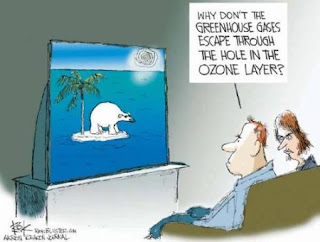 This article effectively tracks the implosion of the global warming promotion. As remarked at the end, it will not go quietly simply because so much has been invested for so long. But go it shallWhen I began this blog I spelled out that I did not accept the linking of global warming with human produced CO2 as a trustworthy hypothesis. In fact I stated that the strategy of linkage was likely to backfire and cause huge damage to related legitimate issues. It never occurred to me that the folks in charge of reporting on the so called linkage were busy cooking the science and suppressing dissent. As time progressed, we were unearthing ample contrary data and plenty of informed dissent.In fact, I was discerning the same pattern of misinformation and paid shills found around the uncovered short selling swindles operated over the past decade in theI never thought that the end would be so catastrophic. In fact, they went from a say ninety percent acceptance of dogma among the press to a ninety percent rejection in almost an eye blink. It is only three months. Four months ago I was digging up bits of science and asking obvious questions to chip away at the difficulties. Now it is all been done for me.The good news is that climate science will be much the better for it. Findings will be debated and speculations will be kicked about. I do not believe that we will have a satisfactory global climate model anytime soon and more importantly, scientists will not have to promise patent computational impossibilities in order to fund more shiny new computers.In DenialThe meltdown of the climate campaign.March 15, 2010, Vol. 15, No. 25It is increasingly clear that the leak of the internal emails and documents of the Climate Research Unit at the University of East Anglia in November has done for the climate change debate what the Pentagon Papers did for the Vietnam war debate 40 years ago—changed the narrative decisively. Additional revelations of unethical behavior, errors, and serial exaggeration in climate science are rolling out on an almost daily basis, and there is good reason to expect more.The U.N.’s Intergovernmental Panel on Climate Change (IPCC), hitherto the gold standard in climate science, is under fire for shoddy work and facing calls for a serious shakeup. TheThe body blows to the climate campaign did not end with the Climategate emails. The IPCC—which has produced four omnibus assessments of climate science since 1992—has issued several embarrassing retractions from its most recent 2007 report, starting with the claim that Himalayan glaciers were in danger of melting as soon as 2035. That such an outlandish claim would be so readily accepted is a sign of the credulity of the climate campaign and the media: Even if extreme global warming occurred over the next century, the one genuine scientific study available estimated that the huge ice fields of the Himalayas would take more than 300 years to melt—a prediction any beginning chemistry student could confirm with a calculator. (The actual evidence is mixed: Some Himalayan glaciers are currently expanding.) The source for the melt-by-2035 claim turned out to be not a peer-reviewed scientific assessment, but a report from an advocacy group, the World Wildlife Fund (WWF), which in turn lifted the figure from a popular magazine article inBut what made this first retraction noteworthy was the way in which it underscored the thuggishness of the climate establishment. The IPCC’s chairman, Rajendra Pachauri (an economist and former railroad engineer who is routinely described as a “climate scientist”), initially said that critics of the Himalayan glacier melt prediction were engaging in “voodoo science,” though it later turned out that Pachauri had been informed of the error in early December—in advance of the U.N.’s climate change conference in Copenhagen—but failed to disclose it. He’s invoking the Charlie Rangel defense: It was my staff’s fault.The Himalayan retraction has touched off a cascade of further retractions and corrections, though the IPCC and other organs of climate alarmism are issuing their corrections sotto voce, hoping the media won’t take notice. The IPCC’s assessment that 40 percent of the Amazonian rain forest was at risk of destruction from climate change was also revealed to be without scientific foundation; the WWF was again the source. The Daily Telegraph identified 20 more claims of ruin in the IPCC’s 2007 report that are based on reports from advocacy groups such as Greenpeace rather than peer-reviewed research, including claims that African agricultural production would be cut in half, estimates of coral reef degradation, and the scale of glacier melt in the Alps and the Andes. Numerous other claims were sourced to unpublished student papers and dissertations, or to misstated or distorted research.Peer reviewers in the formal IPCC process had flagged many of these errors and distortions during the writing of the 2007 report but were ignored. For example, the IPCC claimed that the world is experiencing rapidly rising costs due to extreme weather related events brought on by climate change. But the underlying paper, when finally published in 2008, expressly contradicted this, saying, “We find insufficient evidence to claim a statistical relationship between global temperature increase and catastrophe losses.” Perhaps the most embarrassing walkback was the claim that 55 percent of theThe IPCC isn’t the only important node of the climate campaign having its reputation run through the shredder. The 2006 Stern Review, a British report on the economics of climate change named for its lead author, Lord Nicholas Stern, was revealed to have quietly watered down some of its headline-grabbing claims in its final published report because, as the Telegraph put it, “the scientific evidence on which they were based could not be verified.” Like rats deserting a sinking ship, scientists and economists cited in the Stern Review have disavowed the misuse of their work. Two weeks ago the World Meteorological Association pulled the rug out from under one of Gore’s favorite talking points—that climate change will mean more tropical storms. A new study by the top scientists in the field concluded that although warmer oceans might make for stronger tropical storms in the future, there has been no climate-related trend in tropical storm activity over recent decades and, further, there will likely be significantly fewer tropical storms in a warmer world. “We have come to substantially different conclusions from the IPCC,” said lead author Chris Landsea, a scientist at theIt was a thorough debunking, as Roger Pielke Jr.’s invaluable blog (rogerpielkejr.blogspot.com) noted in highlighting key findings in the study:What about more intense rainfall? “[A] detectable change in tropical-cyclone-related rainfall has not been established by existing studies.” What about changes in location of storm formation, storm motion, lifetime and surge? “There is no conclusive evidence that any observed changes in tropical cyclone genesis, tracks, duration and surge flooding exceed the variability expected from natural causes.” Bottom line? “[W]e cannot at this time conclusively identify anthropogenic signals in past tropical cyclone data.”When Pielke, an expert on hurricane damage at the University of Colorado at Boulder, pointed out defects in the purported global-warming/tropical storm link in a 2005 edition of the Bulletin of the American Meteorological Society, the lead author of the IPCC’s work on tropical storms, Kevin Trenberth, called the article “shameful,” said it should be “withdrawn,” but in typical fashion refused to debate Pielke about the substance of the article.Finally, the original Climategate controversy over the leaked documents from the University of East Anglia’s Climate Research Unit (CRU) (see my “Scientists Behaving Badly,” The Weekly Standard, December 14, 2009) is far from over. The British government has determined that the CRU’s prolonged refusal to release documents sought in 95 Freedom of Information requests is a potential criminal violation.The rout has opened up serious divisions within the formerly closed ranks of the climate campaign. Before Climategate, expressing skepticism about catastrophic global warming typically got the hefty IPCC report thrown in your face along with the mantra that “2,500 of the world’s top scientists all agree” about climate change. Now the IPCC is being disavowed like aRobert Watson, Pachauri’s predecessor as chairman of the IPCC from 1997 to 2002, told the BBC: “In my opinion, Dr. Pachauri has to ask himself, is he still credible, and the governments of the world have to ask themselves, is he still credible.” Not the most ringing endorsement. Yvo de Boer, the head of the U.N.’s Framework Convention on Climate Change (the diplomatic contrivance that produced theThe climate campaign is a movement unable to hide its decline. Skeptics and critics of climate alarmism have long been called “deniers,” with the comparison to Holocaust denial made explicit, but the denier label now more accurately fits the climate campaigners. Their first line of defense was that the acknowledged errors amount to a few isolated and inconsequential points in the report of the IPCC’s Working Group II, which studies the effects of global warming, and not the more important report of the IPCC’s Working Group I, which is about the science of global warming. Working Group I, this argument goes, is where the real action is, as it deals with the computer models and temperature data on which the “consensus” conclusion is based that the Earth has warmed by about 0.8 degrees Celsius over the last century, that human-generated greenhouse gases are overwhelmingly responsible for this rise, and that we may expect up to 4 degrees Celsius of further warming if greenhouse gas emissions aren’t stopped by mid-century. As Gore put it in his February 28 Timesarticle, “the overwhelming consensus on global warming remains unchanged.” I note in passing that the 2007 Working Group I report uses the terms “uncertain” or “uncertainty” more than 1,300 times in its 987 pages, including what it identified as 54 “key uncertainties” limiting our mastery of climate prediction.This central pillar of the climate campaign is unlikely to survive much longer, and each repetition of the “science-is-settled” mantra inflicts more damage on the credibility of the climate science community. The scientist at the center of the Climategate scandal at East Anglia University, Phil (“hide the decline”) Jones dealt the science-is-settled narrative a huge blow with his candid admission in a BBC interview that his surface temperature data are in such disarray they probably cannot be verified or replicated, that the medieval warm period may have been as warm as today, and that he agrees that there has been no statistically significant global warming for the last 15 years—all three points that climate campaigners have been bitterly contesting. And Jones specifically disavowed the “science-is-settled” slogan:BBC: When scientists say “the debate on climate change is over,” what exactly do they mean, and what don’t they mean?Jones: It would be supposition on my behalf to know whether all scientists who say the debate is over are saying that for the same reason. I don’t believe the vast majority of climate scientists think this. This is not my view. There is still much that needs to be undertaken to reduce uncertainties, not just for the future, but for the instrumental (and especially the palaeoclimatic) past as well [emphasis added].Judith Curry, head of the School of Earth and Atmos-pheric Sciences at Georgia Tech and one of the few scientists convinced of the potential for catastrophic global warming who is willing to engage skeptics seriously, wrote February 24: “No one really believes that the ‘science is settled’ or that ‘the debate is over.’ Scientists and others that say this seem to want to advance a particular agenda. There is nothing more detrimental to public trust than such statements.”The next wave of climate revisionism is likely to reopen most of the central questions of “settled science” in the IPCC’s Working Group I, starting with the data purporting to prove how much the Earth has warmed over the last century. AThe puzzle deepens when more accurate satellite temperature records, available starting in 1979, are considered. There is a glaring anomaly: The satellite records, which measure temperatures in the middle and upper atmosphere, show very little warming since 1979 and do not match up with the ground-based measurements. Furthermore, the satellite readings of the middle- and upper-air temperatures fail to record any of the increases the climate models say should be happening in response to rising greenhouse gas concentrations. John Christy of the University of Alabama, a contributing author to the IPCC’s Working Group I chapter on surface and atmospheric climate change, tried to get the IPCC to acknowledge this anomaly in its 2007 report but was ignored. (Christy is responsible for helping to develop the satellite monitoring system that has tracked global temperatures since 1979. He received NASA’s Medal for Exceptional Scientific Achievement for this work.) Bottom line: Expect some surprises to come out of the revisions of the surface temperature records that will take place over the next couple of years.Eventually the climate modeling community is going to have to reconsider the central question: Have the models the IPCC uses for its predictions of catastrophic warming overestimated the climate’s sensitivity to greenhouse gases? Two recently published studies funded by the U.S. Department of Energy, one by Brookhaven Lab scientist Stephen Schwartz in the Journal of Geophysical Research, and one by MIT’s Richard Lindzen and Yong-Sang Choi in Geophysical Research Letters, both argue for vastly lower climate sensitivity to greenhouse gases. The models the IPCC uses for projecting a 3 to 4 degree Celsius increase in temperature all assume large positive (that is, temperature-magnifying) feedbacks from a doubling of carbon dioxide in the atmosphere; Schwartz, Lindzen, and Choi discern strong negative (or temperature-reducing) feedbacks in the climate system, suggesting an upper-bound of future temperature rise of no more than 2 degrees Celsius.If the climate system is less sensitive to greenhouse gases than the climate campaign believes, then what is causing plainly observable changes in the climate, such as earlier arriving springs, receding glaciers, and shrinking Arctic Ocean ice caps? There have been alternative explanations in the scientific literature for several years, ignored by the media and the IPCC alike. The IPCC downplays theories of variations in solar activity, such as sunspot activity and gamma ray bursts, and although there is robust scientific literature on the issue, even the skeptic community is divided about whether solar activity is a primary cause of recent climate variation. Several studies of Arctic warming conclude that changes in ocean currents, cloud formation, and wind patterns in the upper atmosphere may explain the retreat of glaciers and sea ice better than greenhouse gases. Another factor in theThe question going forward is whether the IPCC will allow contrarian scientists and confounding scientific research into its process, and include the opportunity for dissenting scientists to publish a minority report. Last March, John Christy sent a proposal to the 140 authors of IPCC Working Group I asking “that the IPCC allow for well-credentialed climate scientists to craft a chapter on an alternative view presenting evidence for lower climate sensitivity to greenhouse gases than has been the IPCC’s recent message—all based on published information. . . . An alternative view is necessary, one that is not censured for the so-called purpose of consensus. This will present to our policymakers an honest picture of scientific discourse and process.” Christy received no response.In the aftermath of Climategate, Christy proposed in Nature magazine that the IPCC move to a Wikipedia-style format, in which lead authors would mediate an ongoing discussion among scientists, with the caveat that all claims would need to be based on original studies and data. Such a process would produce more timely and digestible information than the huge twice-a-decade reports the IPCC now produces. Christy told me that he does not hold out much hope for serious IPCC reform. Although he was a lead author in the IPCC’s 2001 report and a contributing author for the 2007 report, the Obama administration has not nominated Christy to participate in the next report. IPCC participants are nominated by governments (a “gatekeeping exercise,” Christy rightly notes). The nomination period closes next week.Even a reformed IPCC that offered a more balanced account of climate science would make little difference to the fanatical climate campaigners, whose second line of defense is to double-down on demonizing skeptics and “deniers.” Greenpeace, which should be regarded as the John Birch Society of the environmental movement, is filing its own Freedom of Information Act and state public record act requests to obtain private emails and documents from university-based climate skeptics such as Christy, Pat Michaels (University of Virginia), David Legates (University of Delaware), and Willie Soon (Harvard University/Smithsonian Center for Astrophysics), hoping to stir up a scandal commensurate with Climategate by hyping a supposed nefarious link between such researchers and energy companies. Greenpeace has sent letters to nongovernmental skeptics and organizations requesting that they submit to polygraph examinations about their role in or knowledge of the “illegally hacked” CRU emails. “We want to do our part,” Greenpeace’s letter reads, “to help international law enforcement get to the bottom of this potentially criminal act by putting some basic questions to people whose bank accounts, propaganda efforts or influence peddling interests benefitted from the theft.” One wonders whether Greenpeace has really thought this through, as a successful FOIA request for the emails of American scientists would open the floodgates to further probing of James Hansen at NASA, Michael Mann at Penn State, and other government climate scientists who probably wrote emails as embarrassing or crude as Phil Jones and the CRU circle.Greenpeace is hardly alone in its paranoia. Britain’s former chief government science adviser, Sir David King, popped off to the press in early February that a foreign intelligence service working with American industry lobbyists—he intimated that he had the CIA and ExxonMobil in mind—were responsible for hacking the CRU emails last year. King backed away from this claim the next day, admitting he had no information to back it up.The climate campaign camp followers are exhausting their invective against skeptics. Harvard’s Jeffrey Sachs wrote in the Guardian that climate skeptics are akin to tobacco scientists—some of the same people, in fact, though he gave no names and offered no facts to establish such a claim. In theIn addition to being a sign of desperation, these ad hominem arguments from the climate campaigners also make clear which camp is truly guilty of anti-intellectualism. Gore and the rest of the chorus simply will not discuss any of the scientific anomalies and defects in the conventional climate narrative that scientists such as Christy have pointed out to the IPCC. Perhaps the climate campaign’s most ludicrous contortion is their response to the record snowfall of the easternThe ruckus about “weather is not climate” exposes the greatest problem of the climate campaign. Al Gore and his band of brothers have been happy to point to any weather anomaly—cold winters, warm winters, in-between winters—as proof of climate change. But the climate campaigners cannot name one weather pattern or event that would be inconsistent with their theory. Pretty convenient when your theory works in only one direction.The unraveling of the climate campaign was entirely predictable, though not the dramatic swiftness with which it arrived. The long trajectory of the climate change controversy conforms exactly to the “issue-attention cycle” that political scientist Anthony Downs explained in the Public Interest almost 40 years ago.The third stage is the hinge. As“The previous stage,”A separate Pew poll taken last October, before Climate-gate, reported a precipitous drop in the number of Americans who think there is “solid evidence” of global warming, from 71 percent in 2008 to 57 percent in 2009; the number who think humans are responsible for warming dropped in the Pew poll from 47 to 36 percent. Surveys from Rasmussen and other pollsters find similar declines in public belief in human-caused global warming; European surveys are reporting the same trend. In Gallup’s annual survey of environmental issues, taken last spring, respondents ranked global warming eighth out of eight environmental issues Gallup listed; the number of people who say they “worry a great deal” about climate change has fallen from 41 to 34 percent over the last three years. Gallup’s Lydia Saad commented: “Not only does global warming rank last on the basis of the total percentage concerned either a great deal or a fair amount, but it is the only issue for which public concern dropped significantly in the past year.”“In the final [post-problem] stage,”The lingering question is whether the collapse of the climate campaign is also a sign of a broader collapse in public enthusiasm for environmentalism in general. Ted Nordhaus and Michael Shellenberger, two of the more thoughtful and independent-minded figures in the environmental movement, have been warning their green friends that the public has reached the point of “apocalypse fatigue.” They’ve been met with denunciations from the climate campaign enforcers for their heresy. The climate campaign has no idea that it is on the cusp of becoming as ludicrous and forlorn as the World -Esperanto Association.Steven F. Hayward is the F.K. Weyerhaeuser fellow at the American Enterprise Institute, and author of the forthcoming Almanac of Environmental Trends (Pacific Research Institute).–
 -
Elephant Ivory Trade
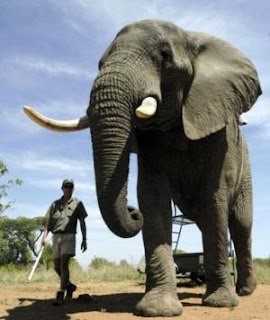 If you have followed my blog for any length of time, you know that I strongly support the active management of all the wild stocks that mankind works with. The alternative is the curse of the commons and when collapse is eminent, criminalization. Since neither properly works, we have a revisit every generation as this item demonstrates once again.Elephants are majestic creatures who truly need to be left alone on ample reserves to live largely in peace. For this to actually happen, much needs to be done. I hate to say it, but tusks need to be harvested from living elephants in order to eliminate the cash value of the animal to a poacher. I do not know if this can be done at all safely to the elephant. An alternative is to discover a treatment that simply renders the tusk worthless. The treatment might be to simply have specific herds owned outright under direct management contracts of sufficient size as to permit active protection.Beyond that, normal herd management will produce a surplus of young males and females that can be culled into the meat and skin supply markets. Otherwise the animals will always outgrow any assigned range. This should also supply young tusks for the market. The elephant could also be introduced into completely new forest ranges where it can be justified. They can even assist in forest management.Elephant herd management is a difficult problem to the present. This may now come to an end with technology that enforces range constraint on large animals of all types. The problem is no different with large carnivores and requires an identical solution.The economic world ofTHE VOTE TO RE-OPEN ELEPHANT IVORY TRADEThe debate surrounding the decision to once again temporarily lift a 20-year ban on the sale of ivory and re-open the ivory trade has pitted conservationists against two African nations.The disagreement hinges on the perceived effect that resurrecting the global ivory trade will have on the African elephant population. Concerns about poaching and destroying the already unstable species prompt conservationists to dismiss the idea as dangerous, but as Tanzania and Zambia point out, the management and conservation of a species is never as simple as banning its sale and a regulated trade may be just the answer to stabilizing the elephant equilibrium. As ivory is no longer available through legal channels, black market sales have escalated and poaching has increased. The two nations insist that having a governmentally regulated trade means the animals are actually more effectively protected due to the reinvestment opportunities it presents as well as the deterrent to black market sales that a more steady input of ivory into a marketplace hungry for the material will yield.CITES (the convention on international trade in endangered species of wild fauna and flora) is an international agreement between governments with over 60 nation members, designed to protect dwindling wildlife populations. Their system indexes species according to their danger of extinction and places restrictions upon the trade of these resources accordingly. Appendix I species are those threatened with extinction and are only tradable in exceptional circumstances. Appendix II species trade within controlled circumstances in order to avoid activities ‘incompatible with their survival’.20 years ago elephants were upgraded to an appendix I species. This was due to staggering declines in African elephant populations and over-hunting of the animal. Since then there have been two one-off auctions of ivory, one in 1997 and one in 2008, designed to meet market demands and reduce black market activity which feeds off illegally harvested ivory.CITES has made it known they are not in favor of the proposed third sale or the downgrading of elephants to Appendix II. Several other African nations have also voiced their disagreement including Rwanda, Ghana, Liberia, The Congo, Sierra Leon, Mali and Kenya, the latter two of which have sent representatives to Brussels to lobby the EU, Tanzania’s Daily Mail reports. TheThe 2004 meeting of CITES notes that the nations asked for permission for this downgrade to Appx II with the caveat that the ivory is sourced exclusively from ‘management related mortalities’. As the populations of elephants grows as a result of conservation projects-in some parts of Africa to the point of overrunning the land, wildlife managers have turned to culling to control growth. Zambian officials are citing the resulting stockpile of ivory as resources from which their country has a right to profit.CITES asserts that the sales may act as an opportunity for illegally obtained ivory to be sold and thus contribute to the slaughter of elephants in Africa. Last week, UN officials began inspecting and testingThis prompts many questions about the ecologic and economic difficulties involved in managing a wildlife population. Bioeconomic modeling-which describes the interactions between commodity markets and biological populations-has been cited by those in favor of the downgrading, as it hypothesizes using economic modeling that banns legal trade of a historically popular material will only serve to increase black market activity and by extension, the illegal hunting of elephants. The two nations maintain that they are working on a longer-term solution to the problem of poaching by re-opening the ivory trade, beginning with this sale, as it will be subject to strict controls and wider-reaching enforcement. Zambia and Tanzania insist that they will be able to safely limit the source of the ivory and can in fact, see conservation benefits to this source of revenue.As several economists have pointed out, the legal harvesting and trade of ivory could very well provide incentive for governments to carefully monitor and protect the resource, even reinvesting in its continued growth and creating such safeguards as habitats or more resources to curb poaching and stricter punishments for those caught poaching.March will reveal whose argument has won more support.
 -
African Poverty Decline
 This report is quite lengthy but the conclusions are noteworthy. Conditions inSo poverty is receding far quicker than anyone ever thought likely. The advent of the cell phone and cell phone supported banking is now finishing the job. The next decade will see an entire globe plugged into the global economy on an instantaneous basis. That is no longer a bold prediction.In fact,African Poverty is Falling…Much Faster than You Think!Maxim Pinkovskiy, Massachusetts Institute of TechnologyXavier Sala‐i‐Martin,Jan 17th, 2010Abstract:The conventional wisdom that8 ConclusionOur main conclusion is thatthought. The growth from the period 1995‐2006, far from benefiting only the elites, has been sufficiently widely spread that both total African inequality and African within‐country inequality actually declined over this period. In particular, the speed at which Africa has reduced poverty since 1995 puts it on track to achieve the Millennium Development Goal of halving poverty relative to 1990 by 2015 on time or, at worst, a couple of years late. If Congo‐Zaire converges toWe also find that the African poverty reduction is remarkably general: it cannot be explained by a large country, or even by a single set of countries possessing some beneficial geographical or historical characteristic. All classes of countries, including those with disadvantageous geography and history, experience reductions in poverty. In particular, poverty fell for both landlocked as well as coastal countries; for mineral‐rich as well as mineral‐poor countries; for countries with favorable or with unfavorable agriculture; for countries regardless of colonial origin; and for countries with below‐ or above‐median slave exports per capita during the African slave trade. This observation is particularly important because it shows that poor geography and history have not posed insurmountable obstacles to poverty reduction. The lesson we draw is largely optimistic: even the most benighted parts of the poorest continent can set themselves firmly on the trend of limiting and even eradicating poverty within the space of a decade.
 -
Climate Changes: Recent Research Reveals a Different Cause — and It’s Already under Control by Robert Sprinkel AB Stanford University and an MBA from Harvard University.
Article Tags: [email protected], Robert Sprinkel
Introduction
Recently published peer-reviewed scientific research offers a new explanation as to the cause of the increase in the earth’s average temperature in the late 20th century, casting doubt on two broadly held assumptions: the first, that it was caused by manmade CO2; and the second, that it was caused by natural phenomena. The research suggests that the increasing temperatures resulted instead from other manmade compounds interacting with natural phenomena.
Significantly, an international environmental agreement in force since 1989 mandates controls on the production and use of the very compounds considered by the new research to be the primary cause of the warmer temperatures. Due to compliance with the mandates on the part of the 191 signatory countries, there has been a decrease in the presence of these compounds in the atmosphere. The new research highlights a tight correlation between this decrease and the decrease in the earth’s average temperature, both of which began in about 2000.
The overwhelming acceptance of the assumption that manmade CO2 was responsible for the earth’s warming has led to laws and regulations that represent a financial threat to government, industry, and the citizens of the world. By suspending the enforcement and future adoption of such laws and regulations until the findings discussed in this report are reviewed, the potential consequences can be averted.
Download PDF file to read FULL report from Robert Sprinkel
File attachment: ClimateAffectedbyCFCs.pdf
-
T-Mobile USA HTC HD2 spotted in the wild


TMoNews brings us the first pictures of the HTC HD2 in the wild, and the smartphone looks reassuringly like its European counterpart.
Unlike that version however the device does come with a generous software bundle, which some have called bloatware. I on the other hand would have appreciated having a BlockBuster movie download services and MP3 store installed in my device out of the box.
The smartphone is still expected to arrive on the 24th this month.
See more pictures after the break


See more pictures at TMoNews here.
-
Watch Out for Sleight-of-Hand by Barry Napier, CanadaFreePress.com
Article Tags: Barry Napier
Green scientists still using trickery, Continue to bamboozle the public with idiotic and unscientific ‘proof’
In previous articles I have shown that correlation does not equal causation. I have shown that an increase in atmospheric CO2 does not prove any connection with weather or climate.
Green scientists already know that correlation does not establish a cause-and-effect relationship between two variables. And, as I said in my last article, now they have dramatically increased the number of variables, such an effect would be impossible to establish because of the complexity of the supposed links! Yet, they continue to bamboozle the public with idiotic and unscientific ‘proof’ that humans cause the increase in CO2 and the increase in CO2 ‘causes’ climate change!
On the other hand, a time series correlation can eliminate a cause-and-effect relationship. To quote scientist Wayne P Kraus (private email):
Source: canadafreepress.com
-
Row over leaked climate emails may undermine reputation of science by Richard Gray Science Correspondent, The Telegraph
Article Tags: ClimateGate
Climate change researchers at the University of East Anglia’s Climatic Research Unit (CRU) are accused of withholding raw data and the computer code they used to generate results despite repeated requests for the information to be released publicly.
The Royal Society of Chemistry (RSC) and the Royal Statistical Society (RSS) have both issued statements declaring that it is essential that scientific data and evidence compiled by researchers be made publicly available for scrutiny.
Their comments come after the Institute of Physics said that emails sent by Professor Phil Jones, head of the CRU, had broken “honourable scientific traditions” about disclosing raw data and methods.
In a written submission to the House of Commons Science and Technology Committee, which is conducting an inquiry into the disclosure of data from the CRU, the RSC said a lack of willingness to disclose research data had “far-reaching consequences”.
Click source for more
Source: telegraph.co.uk


