Author: Serkadis

  • Better Bing blesses Windows 8

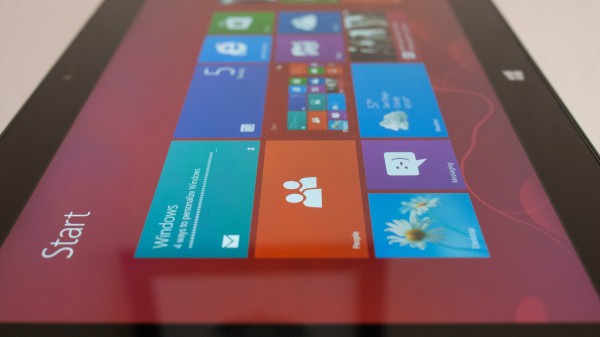
    In case you missed the update, because I nearly did, Microsoft brings better Bing apps to Windows 8. They dropped yesterday, but I’m just getting round to them today. I love `em. The search engine is hugely underrated compared to Google, and the core services look so damn good and feel even better from a touchscreen.

    In a self-aggrandizing post, the Bing team describes core apps Finance, Maps, News, Sports, Travel and Weather as “immersive vertical experiences”. I so totally agree. Modern UI offers the most immersive experience on tablets, for fully-supporting apps. Microsoft claims that they “were designed from the ground up to embrace speed and touch providing you with a fast, fluid and consistent way to delve into your interests and get things done”.

    As a user, three of the updates are most useful — News, Maps and Weather. I don’t invest, have limited sports interest and don’t travel enough.

    News. Bloggers and some news sites obsess over Google News, using every trick imaginable to get placement, hoping for surge that can deliver tens of thousands of pageviews in minutes. Hell, I never look at the thing. Google News is a drug habit. I won’t be addicted.

    But Bing News is fanciful for increasing utility. Just as Google dumps RSS and sends Reader to the executioner, Microsoft supports feeds, and offline reading. Yeah, I’ll give Bing News a look hard looksee.. Oh yeah, there’s support for alerts, something else getting the big Google boot.

    Maps. Google is hard to beat in this area, but Bing is no slouch, either. Microsoft adds more real-time information, which makes getting around lots better — well, I say from first-blush look. I need to get out on the road to say for certain.

    Weather. Microsoft’s app is my favorite from anybody. Weather information is well-presented — and lots of it. The thing is so damn immersive, I get sucked in looking for stuff everytime I open it. The new dynamically roaming weather maps are chock full of useful information.

  • Once the media tells us who carried out the Boston marathon bombing, how can we believe them?

    At some point here in the next few days, the mainstream media is going to announce the culprit behind yesterday’s bombings at the Boston marathon race. The question, though, is how can we believe them? When it comes to reporting the truth about acts of terrorism,…
  • Higher mercury levels increase risk of diabetes

    A new research conducted by the Indiana University School of Public Health-Bloomington has found that young adults consuming higher levels of mercury face a higher risk of type 2 diabetes by 65 percent later in life. Led by the university’s epidemiologist Ka He, the…
  • Gracenote co-founder on ‘iPod day’ and better music through data

    It was April 2000 when the team at Gracenote got a call from Apple that would change its business forever. Apple wouldn’t give Gracenote any specifics, but it did offer up some prescient advice: “You need to buy more servers.”

    A few years into Steve Jobs’s second stint as Apple’s CEO, the company hadn’t yet reinvented itself as one of the world’s most-important technology companies, but it was a big-enough distribution channel for the two-year-old Gracenote. At that point, Gracenote had built a respectable business collecting and providing metadata for the compact discs that people were ripping onto their computers, and it relied on software partners to get in front of the music consumers doing the uploading. One of those partners was a popular Mac jukebox application called SoundJam MP.

    Ty Roberts Source: Gracenote

    Ty Roberts Source: Gracenote

    So, Gracenote Co-founder and CTO Ty Roberts told me during a recent interview, his company heeded Apple’s warning and bought more servers. At some point around that time (details on the date of the acquisition are sketchy), Apple bought SoundJam MP. Then, at MacWorld in January 2001, Apple released the first version of iTunes (based on the SoundJam technology) and grew Gracenote’s footprint by putting it on more machines. In October 2001, Apple released the iPod and changed Gracenote’s life forever.

    The holiday season — particularly Christmas morning — provides a clear example of how stark the change was. “We used to call it iPod day,” Roberts explained, because the company’s servers would go crazy as people opened up their new iPods and immediately began ripping CDs onto their computers. The company’s chief scientist would stay up 20 hours a day for 5 days straight to make sure the database didn’t crash under the load.

    From that point on, Roberts explained, a graph showing the rate at which people were uploading music to Gracenote would go from a steady incline into a vertical line. At one point the company was getting metadata from — by Roberts’s estimate — literally every CD being ripped onto personal computers. There was so much database traffic — both writing and reading — because Apple didn’t release the first version of the iTunes Store until April 2003; if users wanted to use their iPods, they had to upload music first.

    Scaling like the big boys

    Today, of course, Gracenote (which Sony acquired for $260 million in 2008) is pretty much ubiquitous, at least when it comes to metadata. It has metadata for about 130 million songs — and growing — from all over the world and provides metadata to everything from iTunes to Path to your car’s entertainment console. Even if they’re not available for sale as MP3, if someone somewhere at some point ripped a CD and entered its information, Gracenote has data on those artists and songs.

    Its database now gets 15 billion queries a month, or 500 million a day (“We’re probably bigger than Bing,” Roberts joked), and the company’s infrastructure has scaled a few times to meet this demand. What began as a small web database running on a few servers grew into an Oracle environment that provided better performance. And when Oracle became cost-prohibitive because of Gracenote’s expanding scale, it shifted again into a highly optimized system that spans thousands of cores in four global data centers.

    Now, GM and VP of Automatic Content Recognition Michael Jeffrey noted, almost everything from the chip level up is optimized specifically for Gracenote.

    There’s no “world music” when you’re in the “world”

    And this setup lets Gracenote do a lot more than just recognize music listeners’ files and give them the album art. For one, Roberts explained, it lets Gracenote be a global company. “We want to have all the music in the world,” Roberts said, “… because our customers ship their products globally.” In fact, part of the reason it’s now part of Sony is that Sony was distributing Gracenote so widely as part of the music player in its Vaio line of laptops.

    In order to ensure that everyone has a natural experience wherever they’re accessing Gracenote, part of the job of the company’s 100-person editorial team is to categorize music hierarchically by locality. So, when a user in Japan uploads a CD and Gracenote returns the metadata, it’s categorized as “rock and roll,” for example, rather than a catch-all category like “world music” that a U.S. user might see.

    “We want music to feel like a person in your country actually organized it,” Roberts said, “not some dude from California.”

    Better music and television through data science

    All that data also makes Gracenote a natural fit for recommending new music, although right now the company prefers to let partners handle the algorithms because recommendations tend to be highly product-specific. For example, the iTunes Genius feature is a pretty run-of-the-mill recommendation engine, but, Roberts explained, Apple places a premium on accuracy because its recommendations cost users 99 cents (or more) a shot. With a subscription service like Spotify, though, trying new music is risk-free, so it can play a little faster and looser with its algorithms.

    Because Gracenote is present in so many cars — about 35 million — the company has put a lot thought into how to optimally deliver services there, too. Until drivers can bring their interest graphs and music libraries with them to their cars, he explained, any sort of in-car recommendation engine has to be pretty simple and non-distracting — perhaps like thumbs-up or thumbs-down button on the display that will eventually be able to recognize someone’s tastes.

    The company has even developed what Roberts calls “machine listening,” which is the ability of an algorithm to recognize the mood, tempo and other audio attributes of music. This is comparable to what Pandora offers, but Gracenote has data on pretty much any song someone could possibly have, which means it can make even your personal music library that much smarter. One idea the company is tinkering is something Roberts describes as “audio coffee.” Depending on any variety of factors — time of day, location, driving conditions or behavior — the stereo system could pick music that either picks up a driver’s pulse or maybe relaxes him.

    For Gracenote’s next chapter, the company is banking tablets to deliver a kick like the iPod did last decade. Gracenote is already working with television partners on real-time ad-swapping and intelligent content recommendations, and now it wants to dive deep into the second-screen world. Its new product called Entourage uses a tablet’s internal sensors to hear the television show or music playing in a room and then surface related content, perhaps from the web — like what Entourage user Zeebox provides — or perhaps produced, interactive material like the SyFy channel delivers via its Sync app.

    Two ads for two different viewers.

    Two ads for two different viewers.

    Later this year, GM and VP Jeffrey said, Gracenote will be doing pilots with some large sports broadcasters around a “cheer and jeer” feature that measures how hard people in a room are cheering for or booing their favorite sports teams. If you’re elated, you might see an ad for season tickets. If you’re sad, maybe it’s an an for beer.

    Even Roberts is impressed, especially considering that the company’s first use of audio recognition was to make sure users got the right data for their exact version of a song: “I never thought the recognition would break open these kind of new fields.”

    Related research and analysis from GigaOM Pro:
    Subscriber content. Sign up for a free trial.


  • Samsung Galaxy Tab 3 10.1 and Galaxy Tab 3 8.0 specs leak ahead of rumored summer launch

    Samsung Galaxy Tab 3 10.1 and Galaxy Tab 3 8.0 specs leak ahead of rumored summer launch
    Details surrounding Samsung’s next-generation Galaxy Tab tablets may have just leaked, suggesting the company is planning a modest specification bump for its upcoming Galaxy Tab slates. Greek blog Techblog.gr reports that the Galaxy Tab 3 10.1 and Galaxy Tab 3 8.0 are both set to debut in June or July, though neither device seems terribly exciting according to the rumored specs. The blog states that the larger of the two Galaxy Tab 3 slates will feature a 10.1-inch display with 1280 × 800 pixels, a dual-core 1.5GHz processor, 1GB of RAM, a 3-megapixel camera, a 7,000 mAh battery, optional LTE and Android 4.1.2 Jelly Bean. The smaller Galaxy Tab 3 will reportedly include similar specs but with an 8-inch display at the same resolution. The claims contradict a number of earlier reports, which suggested the Galaxy Tab 3 8.0 would debut in September with Samsung’s eight-core Exynos processor and a full HD display.

  • The internet of things gets industrial strength collaboration with GE, Electric Imp & Quirky

    Electric Imp, the startup trying to build hardware that makes it easy to turn any idea into a connected device, has signed a deal to provide its hardware and cloud services to companies participating in a GE-led hardware challenge. The industrial conglomerate said last week that it would team up with industrial product design site, Quirky, to enable people to build new connected devices.

    For Electric Imp the partnership is a validation of its approach to the internet of things and a chance to help bring a proven model of innovation to the hardware hackers trying to build products for the internet of things. It’s also a showcase for the new hardware development model pioneered by Quirky and taken even further by crowdfunding sites such as Kickstarter and Indigogo.

    Last Thursday, GE said it would open up its hardware patents for a Quirky-sponsored design competition. The goal of the competition it to bring a few connected devices from idea to physical product in time for the 2013 holiday season. From the blog post announcing the partnership:

    GE will open thousands of its most promising patents and new technologies to the Quirky community for the development of new consumer products; and a co-branded product development initiative to build a full line of app-enabled connected devices for the home in areas such as health, security, water or air that will be developed using advanced manufacturing tools and technologies. This new line of products will be co-branded Wink: Instantly Connected.

    GE will open up patents in the areas of optical systems, including holographic and fast-focusing lens technologies, GE’s Ultra-High Barrier thin-film technology to protect electronics form the elements and GE’s telematics and asset tracking technology. Add in Electric Imp’s connectivity modules and the cloud backend and inventors can create connected products that could become powerful monitoring applications that could be used for environmental scanning, security and a variety of other purposes.

    The collaboration between GE and Quirky has an April 17 deadline, which is pretty quick, but there will be later iterations of the competition as well. The idea reminds me somewhat of the Innocentive model, where corporations post research challenges online in the Innocentive community and entrepreneurs or researchers post answers.

    The challenge in the research business was in finding ways to crowdsource solutions to complicated problems in a way that enticed people to participate. In the burgeoning hardware development movement there are several challenges, including a possible patent thicket innovators have to clear. There are also the complexities of getting connectivity into devices and then building out services that can use that networked hardware. Designing a physical product for manufacturing is another area where startups can fail.

    Thus, this partnership tries to eliminate as many stumbling blocks as possible, which is why it’s worth watching.

    Related research and analysis from GigaOM Pro:
    Subscriber content. Sign up for a free trial.


  • Google Launches Person Finder For Boston Marathon Explosions

    Google has set up a tool to help people find loved ones after the explosions in Boston today. This is part of Google.org’s Person Finder project. The tool can be used both to try and locate a person and to share info about someone.

    Click the below image to get to the site:

    Person Finder - Boston

    Here are some of the latest tweets on “boston marathon” via Twitter’s widget:


    More on the explosions here.

  • Garth Brooks Sued, Accused Of Fraud

    Television and movie producer Lisa Sanderson is suing Garth Brooks. A complaint was filed on Monday for violation of Labor Code Section 201, breach of oral agreement, breach of implied covenant of good faith and fair dealing, and fraud.

    The complaint begins:

    Country music legend Garth Brooks (“Brooks”) would like his adoring fans to believe that he is a humble and highly principled “everyman,” despite his phenomenal success in the music industry. In reality, however, Brooks is a paranoid, angry, deceitful and vindictive man who will turn against those closest to him on a dime. Brooks is willing to lie to avoid paying his debts, and he revels in using his vast wealth and influence to crush anyone who Brooks believes is standing in the way of him getting what he wants.

    Here’s the complaint in its entirety (via THR):

    Sanderson Complaint by eriq_gardner6833

    Sanderson is looking to get $425,000 in damages, claiming that she worked with Brooks for 20 years, and that she “worked tirelessly” to make his dream of a successful film and television career a reality. The complaint alleges that Brooks failed to pay her money she was promised.

    One interesting nugget from the complaint is an allegation that Brooks turned down a role in “Saving Private Ryan” because “he wanted to be the star and was unwilling to share the limelight” with Tom Hanks, Matt Damon and Edward Burns.

    Image: Garth Brooks alter ego Chris Gaines

  • Windows 8 is the new XP

    Microsoft’s newest and oldest supported PC operating systems share some strange similarities. Windows 8 and XP launched during times of tepid computer sales, forecasts of low adoption and initially weak sales. Neither lifted PC shipments during the launch quarter. Yet the older software went on to be such a workhorse, as much as 40 percent of the install base clings to the OS — nearly 12 years after launch. That’s the future I see. Windows 8 isn’t the new Vista, as so many pundits proclaim, but the new XP.

    I am quite vocal about the changing of computer eras, a position taken up before Apple started selling iPhone in early summer 2007. But the change is a process gradual at first that accelerates over time. In the case of Windows or the typical personal computer set against cloud-connected devices there can be redefinition, and, with it, renewed relevance. No one should underestimate Microsoft or ignore the past when evaluating present trends. The PC and Windows died before and resurrected.

    Two Peas in a Pod

    The PC market in 2001, when XP launched, bears stark similarities to 2012, when Windows 8 debuted. Among them:

    1. PC shipments collapsed — in 2001, falling 4.6 percent globally year over year and by 11.1 percent in the United States, according to Gartner, which called performance the worst since 1985. For 2012, shipments fell 3.5 percent worldwide. IDC says first quarter 2013 was the worst since 1994.

    2. What analysts say is striking. “Economic conditions combined with saturation issues in developed markets continue to impact PC market growth rates”, Gartner’s Charles Smulders says — in January 2002. That should sound familiar to the statements made this year by Gartner and IDC analysts, who fret saturation and slow weak global economies sap PC shipments.

    Predictions are similar: “While there is a mood of optimism in the industry, having made it through the bloodbath that was 2001..we do not expect to see a significant upturn in growth until the fourth quarter of 2002” (Smulders, January 2002).

    “IDC expects the second half of 2013 to regain some marginal momentum partly as a rubber band effect from 2012, and largely thanks to the outcome of industry restructuring, better channel involvement, and potentially greater acceptance of Windows 8” (Rajani Singh, March 2013).

    3. Windows XP and 8 launched during holiday quarters, with high sales expectations. Terrorist attacks and recession muted XP, while cloud-connected device competition and global economic woes hurt Windows 8.

    4. Neither operating system lifted slumped PC shipments. Reasons differ and overlap, and many armchair pundits today fail to recognize the now hugely popular XP had a tough start, just like Windows 8.

    5. Analysts predicted slow sales for both platforms. Concurrent with XP’s October 2001 launch, Gartner predicted sales would not exceed older operating systems for two years.

    Last week, Bob O’Donnell, IDC vice president, made startling proclamation: “At this point, unfortunately, it seems clear that the Windows 8 launch not only failed to provide a positive boost to the PC market, but appears to have slowed the market”.

    Into the Crystal Ball

    Windows XP and 8 are, in their respective release frames, major upgrades. XP brought the NT kernel and true 32-bit computing to Microsoft consumer operating systems along with changes to the user interface. The change caused compatibility problems with many existing apps, with games top of list. Meanwhile, at a time of falling PC prices, XP system requirements demanded costlier computers at a time when many businesses and consumers couldn’t or wouldn’t pay more.

    Fast-forward to 2012-13, Windows 8 brings a new touch-oriented user interface that requires costlier PCs that manufacturers are reluctant to ship and consumers are cagey about buying. For example, touchscreen notebooks accounted for just 3 percent of all models last year, according to NPD DisplaySearch.

    “The majority of consumers remain unwilling to pay the price premium for touchscreen capabilities on PCs at this stage”, Isabelle Durand, Gartner principal research analyst, says. “But, even so, touchscreens and Windows 8 will represent key opportunities for PC manufacturers in the second half of 2013”.

    Something else: “Touch-screen and PC manufacturers are looking carefully at how successful these initial Windows 8 touch-screen notebook models are in the market, as the touch-screen module requirements for Windows 8 increase module costs, and those requirements are difficult to meet in high volume production”, Calvin Hsieh, NPD DisplaySearch research director, says. So, even if consumers would pay, logistical roadblocks prevent rapid rollouts.

    As such, the analyst firm sees just 12 percent penetration for touchscreen PCs this year — remember that’s the sweet spot for truly maximizing Windows 8 benefits. Meanwhile, touch panels have 100 percent penetration on tablets, the majority of which sell for less than PCs with similar capability. That makes Windows 8’s real sales success a 2014 story, like 2003 was for XP.

    But the older operating system’s sales surge came in 2004, after Microsoft released a major service pack that should have been designated a new OS version for all the changes. The software giant isn’t waiting three years to make changes that matter. Windows 8.1 is expected to ship before holiday 2013.

    When I look at XP and Windows 8, I see so many similarities about the state of the PC market, predictions about its future and what pundits say about either platform’s failures. Then there is global economic uncertainty, PC saturation and shifting buying habits — money going during 2001-03 to music players like iPod and big-screen TVs rather than new computers. Consumers displace PC spending for smartphones and tablets today. The devices are different, but the trend is the same.

    Judging these market similarities and just how good is the new OS, my guess is that Windows 8, like XP, will become Microsoft’s workhorse operating system — even more than version 7 looks like today. Critics called Windows XP and Vista failures, but only the latter flopped. Windows 8 is the new XP, and that’s a good place to be.

    Photo Credit: Joe Wilcox

  • Pica8 Launches Open Data Center Framework

    As the Open Networking Summit 2013 gets underway this week in Santa Clara, Pica8 announced its Open Data Center Framework. The framework is designed to provide the essential building blocks toward an eventual transformation to programmable data center networks, including OpenFlow 1.2 and Open vSwitch. Designed for cloud and data center service providers, the framework is an extension of its Open Networking vision, blending the conceptual benefits of the server and conventional networking worlds.

    “Server best practices are now also driving initiatives for networks, in particular, simplifying the planning and execution of upgrade processes,” said Seamus Crehan, President of Crehan Research. “Pica8’s framework for a programmable network strives to lay the foundation for an improved way to upgrade network devices, paralleling what is coined a ‘rip and replace’ model on the server side.”

    The Pica8 Open Data Center Framework will continue to leverage SDN to develop components needed to manage and provision the network. OpenFlow 1.2 and Open vSwitch bring capabilities such as GRE tunneling for overlays, traffic engineering to optimize network resources and SDN-based network taps for ensuring application flow performance.  Software release 1.7 leverages these resources, and is available immediately on all four of Pica8′s 1 GbE and 10 GbE open switches.

    “For many, utilizing SDN in their data center represents the future. And the proof in the proverbial pudding will be when managers can centrally define the application flows as needed so that applications run faster and more efficiently,” said Brad Casemore, Research Director, Datacenter Networks at IDC. “Pica8 is seeking to address this challenge, looking to provide IT shops with reduced operating costs while offering network managers greater control and flexibility.”

  • U.S. State Department To Kick Off Google+ Hangout Series

    Google announced today that the U.S. Department of State is launching a series of Google+ Hangouts, starting Friday, April 19 with one featuring Secretary of State John Kerry.

    The series follows various hangouts this year from members of the Obama administration, including the president himself.

    Google’s Ramya Raghavan writes on the official Google blog:

    Over the past year, Google+ has been used across the globe to connect people and enable free expression—from Syria Deeply, an independent news site which regularly uses Google+ and Hangouts to report about the crisis in Syria to Tom Fletcher, the British Ambassador to Lebanon, who issues dispatches from one country to another via Hangout.

    Today, the U.S. Department of State is building on this trend by announcing a new series of discussions called “Hangouts at State.” Each month, these conversations will bring people together across global boundaries to discuss the most pressing U.S. foreign policy issues, like democracy promotion, human rights, counterterrorism efforts, economic development, climate change and drug interdiction.

    Kerry’s hangout will begin at 1:00 PM E.T. on Friday. You can catch it on the Google Politics and Elections page.

  • Verizon confirms 12-month smartphone payment plans beginning April 21st

    Verizon confirms upcoming 12-month smartphone payment plans
    Following Verizon CEO Lowell McAdam’s comment that his company would happily follow in T-Mobile’s footsteps and offer contract-free smartphones with payments spread out over time, the carrier announced that it is taking the first steps toward that goal — sort of. In an update to Verizon’s original announcement that it will abandon early upgrades, the company has confirmed that beginning April 21st, it will make select smartphones and tablets available on a 12-month payment plan that does not require a new service contract. This is great for customers who plan to upgrade to the latest and greatest each year, but Verizon is the real winner here: The carrier’s service pricing will remain unchanged, which means users who opt for the 12-month payment plan will also still be forking over the device subsidies that are built into the cost of Verizon’s smartphone plans.

  • Bing Rolls Out Updates To Windows 8 Apps

    Microsoft announced that it is rolling out updates across its six Bing apps for Windows 8 (News, Finance, Weather, Sports, Maps Travel). The updates focus on personalization.

    Users can now customize the Bing News app to keep track of specific story categories, topics or news sources. In what is likely a play to become your alternative to Google Reader, it also now supports RSS (and offline reading).

    The Maps app now has improved driving, transit and walking directions and “up-to-the-minute” traffic incident notifications. This even includes construction. You can also save places as favorite or pin them to your start screen.

    With the Finance app now includes an updated watch-list, real-time U.S. stock updates and customizable interactive charts.

    The Sports app had added 29 sports leagues bringing the total to 65.

    The Travel app has additional content from Lonely Planet, Frommer’s and Fodor’s.

    The Weather app now has dynamically moving weather maps for cities and regions in satellite, temperature, precipitation, cloud cover and radar layers. Users can also get weather conditions for ski resorts in 24 countries.

  • Chi Cheng Dies, Mother Shares Statement

    Deftones bassist Chi Cheng has passed away after years of recovery from a car accident. He reportedly died on Sunday morning at the age of 42.

    Cheng’s mother, who goes by the name Mom J on the OneLoveForChi.com site posted the following statement on Sunday:

    This is the hardest thing to write to you. Your love and heart and devotion to Chi was unconditional and amazing.

    I know that you will always remember him as a giant of a man on stage with a heart for every one of you.

    He was taken to the emegency room and at 3 am today his heart just suddenly stopped. He left this world with me singing songs he liked in his ear.

    He fought the good fight.You stood by him sending love daily. He knew that he was very loved and never alone.

    I will write more later. I will be going through the oneloveforchi site and any other information may not be reliable.

    If you have any stories or messages to share please send them to the onelove site. Please hold Mae and Ming and the siblings and especially Chi’s son, Gabriel in your prayers. It is so hard to let go.

    With great love and “Much Respect!” Mom J (and Chi)

    Cheng was involved in a bad car accident in 2008, which left him in a coma. He finally came out of it last year, but continued to have health problems (including pneumonia).

    Cheng was one of the founding member of the Sacramento-based Deftones who rose to stardom in the mid to late nineties with songs like “Bored,” “7 Words,” and “Teething,” which the band performed in the film “The Crow: City of Angels”. From there, the band’s popularity only escalated, with the release of songs like My Own Summer (Shove It), “Be Quiet And Drive (Far Away), and Change (In The House Of Flies).

    In addition to playing bass, Cheng also contributed back-up vocals, which can often be heard clearly in live recordings.

    image: Artisan News (YouTube)

  • Hands-on with the Samsung Galaxy Note 8.0

    Samsung’s Galaxy Note 8.0 arrived on store shelves this weekend and after spending a few minutes with one, I paid $399 and walked out with the new tablet. That price gets you a 16 GB version of the 8-inch tablet running Android 4.1.2, which doesn’t have any mobile broadband connectivity. This is a Wi-Fi only model and unlike the international version, has the cellular voice capabilities stripped out. That means the Galaxy Note 8.0 competes squarely with Apple’s $329 iPad mini.

    The Galaxy Note 8.0 does have some features and hardware components that the iPad mini doesn’t, so I understand the higher price. Is it worth the $70 premium? It’s too early to say as I’ve really only had a solid day to use it. I’ll follow up with an answer to that question, but for now, here are my first impressions, in no particular order, followed by some photos.

    • The look and feel is definitely more like a super-sized Galaxy S 4 than a Note 2.
    • I can grab the device one-handed from the back; it’s not too wide, even with my small hands. In fact, the Note 8.0 is nearly the same width as the iPad mini: just a scant 1.2 millimeters wide. It is thicker than the iPad mini: 7.95 millimeters vs 7.2 millimeters.
    • It’s too early to provide actual battery run-time results, but with limited testing of the integrated 4600 mAh battery I’m expecting at least 10 hours of moderate use.
    • Samsung’s 1.6 GHz quad-core Exynos paired with 2 GB of RAM keeps the device moving along nicely. This isn’t the fastest Android device I’ve experienced, but there’s no noticeable lag.
    • There’s little new here with Samsung’s TouchWiz user interface. If you’ve used a Galaxy S 3, Note 2 or any other recent Samsung phones, the UI is the mostly the same. A few new UI tweaks I saw in the brief hands-on I got with Galaxy S 4 have made their way to the Note 8.0, however: You can configure what settings appear in the Notification pane, for example. The Smart Stay feature — keeping the display on when the tablet detects your face — is also here.
    • I like the rectangular aspect ration of the 1280 x 800 display. As far as the display itself, it has a slightly higher pixel density than the iPad mini, but generally looks the same; maybe a smidge better. Samsung has some nice options to change the fonts and add clarity to text. Running two apps on a display of this size is excellent; better than on my Note 2.0.
    • Like the Galaxy S 4, the Note 8.0 includes a IR-blaster to control your television or set-top box. I haven’t tested this yet. Also included is WatchOn for your local television guide, which correctly showed both my local and FiOS TV stations.
    • Video playback is quite good. Over the weekend I watched The Masters golf tournament, YouTube HD movie trailers and an NHL game.
    • The 5 megapixel rear camera won’t likely replace your smartphone camera, however, it’s handy in a pinch. It captures images and 1080p video. There aren’t many scene modes, however. I haven’t tested the forward-facing 1.2 megapixel camera for video chatting yet.
    • Two speakers at the bottom of the tablet — when held in portrait — are acceptable, but not great.
    • Although the device comes with 16 GB of storage, around 6 are used by the system. Good thing the Note 8.0 has a microSD slot so you can add up to another 64 GB of storage.
    • The S-Pen for the Note 8.0 is barely longer than the one included with the Note 2.0. I actually like taking notes on the tablet more than on my phone due to the larger screen. I can fit far more information on the screen and the writing surface is more like a small notebook. The back and menu button work with the S-Pen.
    • Although the device is designed to be used in portrait mode, the home screen does rotate to landscape.

    Overall, I like the device; not surprising given my long-standing preference for small slates. But I’m already wondering where this device would fit in my life. Since it doesn’t have integrated 3G / 4G nor cellular voice, it can’t take the place of my Note 2.0. However, it does provide a better note-taking experience than my phone and replaces all of the functions of my iPad mini. It has even more functionality thanks to the S-Pen and IR blaster.

    Part of me feels this is more of the same from Samsung, however. I wish the display had a higher resolution of 1920 x 1080 to make it really stand apart from the iPad mini. Again, I’ll follow up with additional thoughts as I spend more time with it. Then I’ll decide if the Galaxy Note 8.0 has a place in my device rotation or if it’s going back to the store.

    Meanwhile, if you have questions about Samsung’s newest tablet, drop ‘em in the comments and I’ll answer as many as I can.

    Related research and analysis from GigaOM Pro:
    Subscriber content. Sign up for a free trial.


  • Amazon’s over-50 store makes me puke

    Back in the 1990s, I coined the phrase “cusper” — or thought I did — to refer to people like me who were born at the end of the Baby Boom era but didn’t share the generation’s values. In January 2001, I registered the .com, .net and .org variants of cusper and cuspers. For a reason. I am a Cusper. But I never properly used the domains (someday! someday!) and later let the .org variants go. This year I re-acquired cusper.org for $3.99 domain registration. Some nutcase wants $3,000 at auction for cuspers.org. Good luck.

    So much aimed at Boomers doesn’t apply to me, or others of my tweener generation. Amazon’s new “50+ Active & Healthy Living“, which opens today, is another affront. If being over 50 is a lifestyle that Boomers boast, or Amazon wants to sell them, let me out of here. I want no part of it. I don’t read their kind of books or listen to their style of music or swallow vitamins like they popped pills of a more illicit type in their youth.

    My first reaction to the new Amazon store: Why would anyone want to shop someplace that makes them feel old? I may be over 50 but identify more with younger folks or those of my generation, like President Barack Obama, who still evoke vitality and youth (surely his daughters’ energy helps there). I don’t obsess about vitamins, don’t want to shop anywhere prominently promoting adult diapers or see model images of the elderly. Hell, describing the store makes me feel old. Yuck. It’s why I would never move to an old folks community or retirement state like Florida. What? To be old?

    Adult Diapers R Us

    “We’re excited to offer customers in the 50+ age range a place to easily discover hundreds of thousands of items that promote active and healthy living”, Amazon’s Chance Wales says. “This is a destination where a customer can purchase anything from vitamins and blood pressure monitors to skin care items and books on traveling the world”.

    The sagging balls this company has. I’m quite shocked that among the benefits touted in the official announcement is category “incontinence”. What’s aspirational about getting old and wearing diapers? Oh, yeah, I so aspire to live that lifestyle.

    Yet, there’s something sadly appropriate about Amazon’s 50+ store, which by generation for now really appeals more to Baby Boomers. The retailer is welcome to them.

    Aren’t Boomers supposed to be the love, peace and protest generation that refused to conform to the stuffy suits of their parents’ generation? Now look at them. They’re geriatric and more like their parents every day.

    Boomers are a huge economic force, and it’s not surprising that Amazon wants to tap the well. But there is another. The generation coming of age now — Millennials/Next-Geners — are about as large a group. They come to adulthood at a time when technology takes knowledge long the propriety of the old and gives it to the young. I watch fascinated as these two cultures clash.

    Boomers Busted

    Baby Boomers, are in my book, the self-centered generation. The freedom their generation craved — to have lots of sex with anyone anywhere, to trip on drugs whenever and wherever and to protest war so they wouldn’t have to serve in it — is all about self. Mottos like “make love, not war” boasted higher ideals but were really about saving themselves first before anyone else. Their do-good persona is undeserved.

    I entered college just as punk rock, and the rebellious lifestyle with it, swept from the United Kingdom across the globe. Cuspers didn’t protest the generation separating their parents but the cultural gulf with their Boomer siblings. Cuspers shook off disco music and polyester clothes for spiked hair, piercings and tattoos — what today is lifestyle for some was rebellion in my teens.

    In my youth, Generation Xers were called Baby Busters, which is hilarious and somewhat appropriate. I claim no affinity with either group, having been born between them. I certainly don’t share those touchy-feely, let’s-not-be-responsible-to-anybody values of the Boomers. However, I share some of their idealism. Likewise, I shine to some of the realistic, work-hard-and-be-successful values of Xers.

    Since I started referring to “cuspers” in the 1990s, and after acquiring the domains in 2001, others caught on — or perhaps had similar ideas around the same time. There are several books and guides available that refer to “cuspers” as a subcategory of Baby Boomers, but there’s some dispute about who belongs in it. Typical range is 1960-65 or 1954-65. Most of the academic literature focuses on the workplace and employee management, but more recently there is increased emphasis on marketing.

    Perhaps Amazon’s over-50 store reflects some of that marketing research. Go back to the books, Jeff Bezos. I won’t shop there.

    Photo Credit: lineartestpilot/Shutterstock

  • $25 Billion Offer From Dish A 13% Premium Over SoftBank’s Sprint Offer

    As previously reported, Dish Network announced a proposal on Monday to merge with Sprint Nextel in a deal worth $25.5 billion. According to Dish, the offer is a 13% premium over the pending acquisition by SoftBank announced last year.

    In a letter to Sprint Nextel Chairman of the Board, James Hance, Jr., Dish chairman Charlie Ergen wrote, “We are offering Sprint shareholders a total consideration of $25.5 billion, consisting of $17.3 billion in cash and $8.2 billion in stock. Sprint shareholders would receive $7.00 per share, based upon DISH’s closing price on Friday, April 12, 2013. This consists of $4.76 per share in cash and 0.05953 DISH shares per Sprint share. The cash portion of our proposal represents an 18% premium over the $4.03 per share implied by the SoftBank proposal, and the equity portion represents approximately 32% ownership in the combined DISH/Sprint versus SoftBank’s proposal of a 30% interest in Sprint alone. Together this represents a 13% premium to the value of the existing SoftBank proposal.”

    “Our proposal provides a highly-compelling and unique opportunity for Sprint shareholders,” he continued. “We are offering an ownership interest in a combined company with a comprehensive product and services suite, a significantly enhanced subscriber base, considerable financial and operating scale, as well as a spectrum portfolio that would lead the industry. As a result, this merger creates sizable cost and CAPEX savings and promises extensive new revenue opportunities.”

    You can read the letter in its entirety here.

    Dish held a conference call this morning discussing the proposal.

    The boards of both Sprint Nextel and Softbank approved the $20.1 billion deal back in October, but the companies noted it was still subject to shareholder and regulatory approval. The deal was expected to close in mid-2013.

    It’s already half way through April, but today’s news gives all parties involved some major new things to consider.

  • Meat Loaf Illness Addressed In Update On Facebook Page (Kind Of)

    Meat Loaf had to postpone a concert in Nottingham on Sunday. According to Reuters, the show was canceled just hours before the band was set to perform.

    The official Meat Loaf Facebook page put out the following statement:

    NOTTINGHAM:
    We are very sorry to announce that tonight’s performance has had to be postponed due to medical reasons afflicting several members of the band

    WE WILL BE BACK THOUGH AND WILL BE BACK MONDAY MAY 20th 2013

    Please retain your original tickets, If for any reason you cannot attend, please contact the point of sale from tomorrow morning Monday 15 April.

    Meat and everyone in the band and crew send love and apologies and thanks you for understanding.

    MLH
    xxx

    As you can see, the statement does not specify which “members of the band” are having medical issues, but that Reuters report indicates Meat Loaf himself is indeed one of them, saying that “health problems continue to dog” him.

    He has canceled a tour due to health issues in the past (when he had a cyst on his vocal cords), and a couple years ago, he reportedly collapsed on stage.

    The current tour is supposed to be Meat Loaf’s farewell tour. It’s called: Last At Bat.

  • Trouble brewing for Apple: Survey says half of iPhone users in China ‘want to own’ Galaxy S4

    Survey says half of iPhone users in China considering switch to Galaxy S4
    Reports suggest Apple will finally make some serious headway in the hugely important China smartphone market this year when China Mobile, the nation’s largest carrier, launches Apple’s next iPhone. According to a recent survey, however, Apple may be poised to lose ground to Samsung in China this year, possibly negating some of the gains it will see if and when China Mobile finally begins carrying the next iPhone.

    Continue reading…

  • Siemens and Teradata team up over grid big data

    Power giant Siemens and data warehouse veteran Teradata have joined hands to sell big data tools to utilities, including a system that can combine data from both smart meters and grid operational data. As GigaOM Pro analyst Adam Lesser wrote recently in his report on energy data, when smart meters are fully deployed they could generate 1,000 petabytes of data a year, about five times the amount of data on AT&T’s network.

    Teradata sells software that can pull together disparate data from different sources and make it available to be analyzed. The company already works with utilities Southern California Edison and Oklahoma Gas and Electric. Utilities can use Teradata’s software tools to analyze data around things like blackouts, power supply and demand, weather conditions, and energy efficiency programs to help them manage the grid better.

    Smart meters for solar panels

    Siemens is one of the largest power grid technology suppliers in the world, and in recent years has been bulking up its grid software assets. That move has included acquiring venture capital-backed eMeter, which manages smart meter data, as well as partnering with some of the leading grid software companies.

    The union between the big data player and the power grid gorilla shows how the power grid is slowly adopting the network technologies of the internet and other IT-based networks. With grid assets like smart meters and substations increasingly becoming connected, the power grid could be one of the largest “internet of things” type networks in the world.

    And to manage those connected things, utilities will need to embrace the most cutting edge data analytics tools.

    Related research and analysis from GigaOM Pro:
    Subscriber content. Sign up for a free trial.