 |
Evidence is increasingly emerging that a Western diet may be a significant risk factor for asthma. Asthma is a growing and serious health problem worldwide. According to the Centers for Disease Control and Prevention, in 2003 asthma was responsible for 4,261 deaths… |
Author: Serkadis
-
Research: Asthma found to be strongly associated to unhealthy Western dietary patterns
-
Study: Fukushima radiation fallout has devastated health of US babies on West Coast and in other areas

New peer-reviewed research published in the Open Journal of Pediatrics raises fresh concerns about the health effects of the Fukushima Daiichi nuclear disaster on American children and babies. As has long been suspected by those with an understanding of the widespread… -
Ridiculous McDonald’s nutritionist claims chain’s fast food is healthy

In some sort of desperate attempt to retain a formidable customer base in this changing nutritional climate, fast food giant McDonald’s has come out publicly with some rather humorous claims about the alleged nutritional value of its food offerings. Speaking at the recent… -
FDA requests $300 million war chest to implement onerous new food safety regulations against farmers, commercial food growers

The U.S. Food and Drug Administration (FDA) has requested nearly $300 million in additional agency funding from Congress in order to implement the oppressive tenets of the so-called Food Safety Modernization Act (FSMA), which will stifle American farmers and commercial… -
Major firearms manufacturers to relocate their operations from gun-hating Connecticut

At three major firearms manufacturers have announced plans to relocate their operations from Connecticut to another more gun-friendly state following the recent passage of what Connecticut legislators say is “the most far-reaching gun-legislation package in the country… -
Can guerrilla gardening save the world? One green renegade is on a mission to do just that – a single edible plot at a time

“If kids grow kale, they eat kale,” Ron Finley, a famed guerrilla gardener, asserts during his 2013 TED talk. He also believes that food gardening is a revolutionary move with the ability to change the world. In an act of rebellion against the food desert of South Central… -
Five lies psychiatry tells for power and profit

The field of psychiatry has succeeded in branding some whoppers into the minds of millions, to the tune of billions, with no accountability. You’d think the Federal Trade Commission would hold psychiatry accountable for blatantly misleading the public, but there is… -
Prostate cancer screening subjects men to ‘substantial harms,’ warns one of its key architects

Presumably in response to the continued release of independent studies that warn about the uselessness of prostate cancer screenings, the American College of Physicians (ACP) has issued its own alert about the questionable practice. In a recent statement published in… -
The sweet taste and deadly effect of mothballs

Mothballs. Remember those smelly little white balls mothers and grandmothers used to store winter sweaters in? And that odor! They gave off an odor that would make the nose and eyes run like Niagara Falls. They looked harmless enough, after all, Grammy used them, the… -
Why you should be concerned about MSG
Consumption of MSG causes numerous side effects, including headaches, migraines, muscle spasms, nausea, rashes, anaphylaxis, seizures, depression and heart irregularities. MSG is known to cause damage to the nervous system. In fact, there are whole classes of chemicals… -
The 8 best herbal home remedies to fight Avian flu or bird flu virus

Avian, or bird flu virus, was confined primarily to birds, mostly chickens, up to the 1990s. Until then it was not considered a health threat to humans. Early cases in humans emerged in Hong Kong in 1997. Although the original bird flu was a rare strain, individuals… -
Microsoft Reportedly Preparing To Jump On The Smartwatch Bandwagon
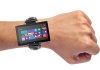
Apple, Google, LG, and Samsung are all reportedly working on wrist-worn computing devices behind closed doors, and it seems like that little club of big companies may soon get another member. If a new report from the Wall Street Journal is to be believed, Microsoft has been in touch with an undisclosed number of suppliers who have apparently been tasked with delivering components for a smartwatch-like device that supports touch input.
Now that’s not to say that such a Microsoft smartwatch is a done deal just yet. The Journal’s sources couldn’t confirm that it would ever actually see the light of day, and I’d wager that’s because the folks in Redmond aren’t exactly sure themselves. After all, some of the company’s most intriguing potential products died ignominious deaths after being stuck in the research and production pipeline. Remember the Courier? The curious dual-screen tablet was apparently very far along (according to CNET, an employee who worked on Courier said it could’ve been completed in “months”) before Microsoft announced its demise in 2010.
It doesn’t help that the nascent smartwatch market has proven to be a tough one to crack. After all, the prospect of delivering a compelling user experience on a wrist-worn gadget isn’t a new one, and only a few of those devices (like the Pebble) could be considered anything close to successful.
Microsoft knows this all too well — the Redmond-based company debuted its SPOT (“Smart Personal Objects Technology”) data delivery service back at CES 2003, and it wasn’t long before watchmakers like Fossil, Suunto, and Tissot began folding SPOT into their own timepieces. Microsoft toyed around with at least one SPOT watch concept of its own, but as a company that was devoted largely to its software endeavors, it seemed more than happy to leave the finicky business of building watches to others before ultimately killing SPOT in 2008.
That’s not exactly the Microsoft we know today though. Early, fruitful hardware projects like the XBOX and its successful successor have paved the way for a Microsoft that’s much more willing to take calculated chances on hardware. One could argue that devices like the Zune and Surface/Surface Pro tablets are more reactions to shifts in the consumer tech industry rather than game-changing innovations in their own right, but that’s not necessarily a problem when it comes to mass market gadgetry. The winner isn’t usually the company that does things first, it’s the company that does things best. For all we know, Microsoft could be the company best equipped to take the smartwatch concept and bring it to the masses, but we’ll have to wait and see if Redmond actually rises to that particular challenge first.
-
Savvy SoCal Students Bring Their Take On Laser Tag To Kickstarter

I was fortunate enough to spend a solid chunk of my adolescence strapped into an ill-fitting vest and shooting lasers at friends of mine, but a group of technically minded youngsters and their mentors in southern California didn’t just want to play laser tag.
No, the crew at San Diego-based ThoughtSTEM wanted to whip up a (slightly) more subtle laser tag system of their own, and they’re just about there — now they’ve kicked off a Kickstarter campaign to help bring it to market.
The wearable sensor the team has cobbled together is rather neat if only because of how unobtrusive it’s meant to be. Rather than go with a traditional (and bulky) vest, ThoughtSTEM has instead put together a small PCB that’s meant to be worn under a layer of clothing so all that’s visible are the six LEDs that change colors to display your remaining hit points.
For better or worse, you won’t have to lug around any plastic guns either. The sensors on the wearable unit can be triggered by any gadget that can emit infrared pulses at 38kHz, which means most of the remote controls currently cluttering up your living room will probably do the trick. That also means that with a little hackery, you could probably rig up a more traditional IR gun without too much trouble (there seems to be more than a few people who’ve already tried doing just that).
Alright fine, it may lack the panache that come with some more expensive, elaborate setups, but it’s a very neat first project for a crew of savvy young students and their college-age mentors. All told, the ThoughtSTEM team is looking for $10,000 in funding to improve the design of the wearable PCBs and produce them on a larger scale, as well as put together an online storefront to sell them from. $75 will net you a fully assembled target unit, but if you’re willing to apply some of your own elbow grease you can pick up the schematics and a pre-programmed processor for $25, or a bag full of parts for $49. While the proceeds of the Kickstarter campaign will help lock down the particulars of production, ThoughtSTEM aims to funnel whatever future money they make into the program’s coffers so those SoCal mentors continue to run workshops and summer camp programs for tech-savvy middle school and high school kids.
-
Facebook TV commercial is a Home run
Perhaps Microsoft Chairman Bill Gates and Facebook CEO Mark Zuckerberg are geeks of similar kind. Gates, along with buddy (and chief executive) Steve Ballmer, is known by us old-timers for a series of self-effacing videos spanning more than a decade — many distributed internally or shown publicly at tech trade shows. Zuck is ignored — gasp, is there a metaphor here — in the first commercial for Facebook Home. The app is now available on Google Play.
While Zuckerberg introduces Home to Facebook employees, he is ignored by one using the Android skin. The video, which is posted to YouTube, had about 7,000 views when I peaked yesterday; the number is nearly a quarter-million today. The commercial spot is fun, festive and does what many of us wish we could do in a room: Ignore Zuck. Something so self-effacing makes him more human, too, less the geek or the privacy-invader critics call him. Put the CEO in more videos, I say.
I had planned to test Facebook Home — actually use it as my the default experience on my Android for a week and write about it. Officially the software supports HTC One, One X and One X+ and Galaxy S III, S4 and Note II. None of my devices are supported. Hehe. So much for the benefits of stock Android. My wife and I both have Nexus 4 and my daughter iPhone 5.
There’s common theme here. Google services are increasingly siloed, not as readily available as they once were, nor are stock Android devices as inviting. Consider the nearly absent Google-provided apps for Amazon Android, BlackBerry 10 or Windows Phone 8, for example.
Is Google blocking the way Home, or did Facebook simply decide not to go there? Either, or both, is sensible. Considering Nexus device owners are presumably Google enthusiasts, Facebook might not want to invest in them first. The search giant has reasons to keep Zuckerberg and Company off its turf.
Increasingly, Google prognostications about openness is more a closed door among rivals. Facebook Home so completely takes over the user experience — homescreen, notifications and messaging — there is little room left for Google+. The search and information giant has big ambitions for its rival social network. Must I buy a HTC or Samsung device to go Home?
-
ICYMI: Bit-conned? IoT Shark Week and can podcasts make money?
From Sharks to Earwolfs it was a fun week of podcasting here at GigaOM HQ. Here’s your chance to catch up in case you missed any:
- Bitcoins bite the dust? Uh-oh, Aereo and Austin’s fiber
(Download the news wrap up) - Shark Week for the Internet of Things
(Download the IoT show) - Who’s afraid of podcasts as a business? Not Earwolf
(Download the paidContent show) - Why the world needs wearable computing
(Download the GigaOM Research show)
Subscribe to GigaOM Podcasts:
Subscribe to RSS
Related research and analysis from GigaOM Pro:
Subscriber content. Sign up for a free trial.- GigaOM Research highs and lows from CES 2013
- How HR can make the case for workforce analytics
- The 2013 task management tools market


- Bitcoins bite the dust? Uh-oh, Aereo and Austin’s fiber
-
Pushing the pandemic: FDA criminalizes secret Chinese medicine formula that blocks bird flu

A bird flu pandemic has been sparked in China, where 60 people have so far been infected and 13 have died from various new strains of bird flu (including H7N9). Across China and Taiwan, people are in a panic over the spread of bird flu, and the media there is reporting… -
Fisker lawsuits piling up, another from its web designer over alleged unpaid bills
Following a lawsuit over not paying rent for the month of April, electric startup Fisker Automotive was hit with another lawsuit on Friday. Filed in Orange County Superior Court, Fisker’s web site and mobile designer Ignited is suing Fisker over an alleged $535K in unpaid bills (embedded below).
Ignited says it provided Fisker with creative services, advertising, web design, and creative and media buying services. Along with the lawsuit from Fisker’s landlord, the company was also served a class action lawsuit for laying off 75 percent of its workforce, and allegedly not giving the former employees 60 days notice (which would violate the WARN Act). So that’s three lawsuits filed against Fisker this month, and I have a hunch there’ll be more coming.

Fisker appears to be close to bankruptcy and according to Reuters last week, the company hired a firm to look into bankruptcy, and could file at any time. Fisker’s founders have also been asked to attend a hearing on April 24 in Washington D.C., organized by House Republicans. Fisker drew down on close to $200 million in a government loan from the Advanced Technology Vehicle Manufacturing Program.
Fisker raised at least $1.2 billion in funds over the company’s five and half year lifetime. Fisker was backed by venture firms Kleiner Perkins (Ray Lane was a board member) and NEA, and worked with now-defunct broker Advanced Equities.

Related research and analysis from GigaOM Pro:
Subscriber content. Sign up for a free trial.- Ups and downs for cleantech in Q1
- Tesla’s Model X could make the electric SUV a hit
- Green IT Q4: solar, subsidies and the outlook for EVs

-
View Comprehensive Weather Details in Animated Landscapes
 Most weather applications focus only on relaying information about the meteorological conditions, but YoWindow proposes a more lively approach that shows the weather in real-time, with animated landscapes.
At the moment the developer makes it available in two editions, one free and one paid ($19.98/€16.60). Obviously, the free version comes with a few cutbacks … (read more)
-
Revel Body Is A Crowdfunded Personal Massager

Do you suffer from “sore elbows, wrists and hands from having to hold small and awkward shapes?” Have you found that “products are confusing to impossible to control?” Do you know what a phthalates is and are you embarrassed by the packaging of your favorite personal massager products? Has Revel Body got a product for you.
This crowdfunded project aims to make your alone time (or time spent with friends) more rewarding. The product, essentially a sonic vibrator, is designed for ladies and, presumably, men. The team, led by Robin Elenga, has created a high-frequency system for offering a better “buzz” during those moments when you’re visiting the Palms Hotel.
The product offers “50 percent more power” and “400 percent vibration range” and reduces the vibrations felt in the hand and focuses those vibrations on sore muscles and/or your vagina.
The product uses a resonating motor to offer a larger range of vibration speeds and sensations and it’s shaped like a tennis ball to reduce the strain on wrists and other body parts. It’s run on a rechargeable battery that connects to any USB port and offers nearly silent operation, unlike similar linear-motor-powered vibrators. Because it doesn’t exactly look like a traditional vibrator you could even put it in a place of honor on your bedside table or office desk.
The vibrator comes (to your house) for a pledge of $140. You can get two for $220. They are hoping to raise $50,000 and are nearly there so they just need that extra push to get them over the edge. I suppose, given the circumstances, we should probably help them out.
-
Top 5 Data Center Stories, Week of April 13

View of sunset over the exterior of Google’s data center in St. Ghislain, Belgium. (Photo: Connie Zhou for Google)
For your weekend reading, here’s a recap of five noteworthy stories that appeared on Data Center Knowledge this past week. Enjoy!
Google Invests $390 Million to Expand Belgium Facility » Data Center Knowledge – Google continues to make big infrastructure investments, in this case in a key facility powering European services. The company is investing 300 million Euros ($390 million in U.S. dollars) to expand its data center in Belgium. Its the latest in a series of expansion announcements for Google, which sees its data centers as the technology engine powering its online search and advertising platform.
HP Project Moonshot: Low-Power Chips To Increase Density – HP is now selling its first Project Moonshot systems. The Moonshot 1500 is using a low-power processor–specifically Intel’s Atom 1260 processor found in cell phones–that uses less energy, less space and reduces complexity and cost.
Intel Continues to Rethink the Rack of the Future – Intel is continuing to advance its vision for new data center designs that rethink the traditional placement of components within the server and rack. After unveiling a prototype at the Open Compute Summit in January, Intel today offered details on a similar initiative by China’s largest Internet companies, and promised to release reference designs to help OEMs and end users deploy these designs.
Inside Microsoft’s European Cloud Hub – If there’s a poster child for Ireland’s ideal climate for free cooling, it would be the huge data center in Dublin that powers Microsoft’s online services in Europe. Our photo feature, Inside Microsoft’s European Cloud Hub, examines how Microsoft has optimized its data center design to make efficient use of fresh air, and follows the path of the air through the giant facility.
CoreSite Leases Entire Data Center in Santa Clara – It’s not every day you see a company lease an entire data center building in one shot. But that’s what CoreSite Realty has accomplished with its newest project in Silicon Valley, where it is nearing completion on a 101,250 square foot build-to-suit project that has been pre-leased by a single large customer.
Stay current on Data Center Knowledge’s data center news by subscribing to our RSS feed and daily e-mail updates, or by following us on Twitter or Facebook or join our LinkedIn Group – Data Center Knowledge.