 |
Apparently discontent with its more than $13.5 billion-plus in annual sales, genetic modification kingpin Monsanto has been trying for the past four-or-so years to extract billions more dollars from rival DuPont for alleged patent infringements involving its genetically… |
Author: Serkadis
-
Monsanto wins patent battle with DuPont corporation to seize full rights of GM seed patents
-
Palm oil health craze may push animals to extinction while destroying the environment

Red palm oil has burst onto the health scene as a miracle food, helping to heal everything from cardiovascular disease to Alzheimer’s to cancer. However, as it becomes more popular worldwide, a dark secret has come to light. Due to its lucrative value, rainforests in… -
Dennis Crowley and the cycle of second-guessing
It was a lovely spring day in San Francisco, which is why it made sense for me to meet up with Dennis Crowley, co-founder of Foursquare to catch up on some sun and talk about the 6.0 version of his software. We sat in an atrium, watched the world go by and talked about the new release.
Crowley, who like all founders is running a million miles a minute, took a moment to bask in the glow of positive reviews for the new version of the software. Obviously, not everyone likes it, but as a long-time member of Foursquare, I like the simpler interface that marries discovery, search and check-ins for a glance-able and quick interaction.
There are doubters — actually, there are many who are convinced about the inevitable failure of Foursquare. I am not one of them. I actually like using the service. I am a believer, and I’m not afraid to say it. Because it is indeed the way of the future. Sure, Dennis gets spanked publicly for not doing a good job, but that doesn’t mean he is wrong about the marriage of digital and physical.

While some people may have been surprised by this new Foursquare, Crowley and his cohorts have been fairly consistent about their vision of the world and what Foursquare has to do. He and I talked about this three years ago, and it has taken them a long time to get there. There is a ways to go before Dennis can get to his “Harry Potter’s Map” dream.
The positive reviews and the buzz of the new release are going to last a few days, and then it will be back to the grind for him. The grind that consumes all founders completely. The grind that means managing a big company. The grind that means parting ways with your co-founder. The grind that means dealing with constant naysaying, haters and giants who exist to copy your ideas, poach your people and generally make you miserable.
Those of you who have started a company know what I am talking about — the constant, daily upheaval of emotions. There are days when you don’t want to get out of bed, when you whimper without tears and then shake it all off because deep down you know you would rather be doing this than something else. Founders live to capture lightening in the bottle: sometimes it works, sometimes it doesn’t, but we still keep trying. And that is the part the non-builders don’t get.
Building things that are different, inventing the future and creating a real business is a long and often very lonely slog. But you don’t hear about that. Instead what you get is a lot of babble about startups from so-called mentors, advisors and startup gurus. Peel away their sharkskin and you find they have never started a company, and they continue to live in the reflective glory of the company that once employed them. Others are the creation of social media, having struck a pose. And some are born consultants. They find willing listeners among a growing army of entrepreneurs who like enterprenuership as a lifestyle. Sorry guys, entrepreneurship isn’t a lifestyle, it is life.
This spectacle of technology has attracted fake messiahs, and every day I see this mockery of entreprenuership. I overhear it in coffee shops. I am forced to confront it on social media. And I have to remind myself of Pandora founder Tim Westergren, who sacrificed it all to see his bet finally pay off after more than a decade of struggle. I like to think of Aaron Levie, who returns my email at 3:52 a.m. — a minute after I’ve pinged him. And I think of my friend Paul Evans, who has gambled it all on his company, Shareband.
Ask Dennis what it is all about, and he will tell you: seeing someone check into a location, finding a tip and then acting on it.
That moment is what gets you ready for tomorrow — when all hell breaks loose and the second guessing starts all over again.

Related research and analysis from GigaOM Pro:
Subscriber content. Sign up for a free trial.- Facebook’s IPO filing: ideas and implications
- 12 tech leaders’ resolutions for 2012
- Q4 Wrap-up: SOPA and the future of digital content


-
Microsoft brings 3D maps to Excel users
The PC market might be a hot mess right now, but anyone using a Windows machine for data analysis might be rejoicing a bit thanks to a new Excel add-on called GeoFlow. It’s a tool for visualizing geospatial and temporal data, a use case that’s only going to become more common as the internet of things becomes more real and sensors make when and where are as critical as how much.
And now, if you have up to a million rows of these types of data and are on a newish Windows machine, GeoFlow will let you plot the data over Bing Maps. The visualizations actually look pretty good, and time lapse capabilities are always good when time is a variable.

I also like Microsoft’s focus on using the tool for storytelling, citing the ability to share findings through “cinematic, guided video tours.” Even though visualizations are getting much better, more impressive and interactive — especially online — telling a good story with complex data is still pretty difficult.
Of course, GeoFlow is only in Preview mode, so it’s possible there are kinks to work out. And, who knows, maybe early users will roundly dismiss it.

One of California ISO’s massive control rooms
But it’s definitely trying to solve an increasingly important problem — something you can see at a far greater scale in the work the California ISO is doing with a startup called Space-Time Insight. Other startups — like TempoDB and SpaceCurve (see disclosure)– are even dedicated to building databases to address the oncoming deluge of this data.
GeoFlow actually comes from much larger-scale project, too, for what it’s worth. In a Microsoft Research blog post on Thursday, the company talks about its roots as part of the Worldwide Telescope project that let users explore a high-resolution, interactive map of the universe.
Disclosure: Reed Elsevier, the parent company of science publisher Elsevier, is an investor in SpaceCurve as well as Giga Omni Media, the company that publishes GigaOM.

Related research and analysis from GigaOM Pro:
Subscriber content. Sign up for a free trial.- The importance of putting the U and I in visualization
- Infrastructure Q1: Cloud and big data woo enterprises
- The 2013 task management tools market

-
Why I have issues with Mark Zuckerberg’s FWD.us
Facebook founder and chief executive Mark Zuckerberg launched Fwd.us in a Washington Post opinion piece Thursday, a new group that is lobbying for a new approach to immigration in the U.S. He is joined by some Silicon Valley power houses — John Doerr of Kleiner Perkins Caufield & Byers, Yahoo CEO Marissa Mayer, Dropbox’s Drew Houston and scores of others, including many Facebook alumni. In a carefully crafted piece for our capital city’s home paper, Zuckerberg told the story of his family. He talks about U.S. being left behind. Bring out the violins!
FWD.us is an organization started by key leaders in the tech community to promote policies to keep the United States and its citizens competitive in a global economy—including comprehensive immigration reform and education reform.

I admire that Zuckerberg and his merry band of do-gooders for embarking on this quest. I also respect the idea of education reform and applaud the leadership position this group is taking here. And I also applaud the efforts the group will devote to science and innovation.
However, what I hate is the focus put on a specific immigration issue; but I am getting ahead of myself. This is from an op-ed currently on the FWD.us website:
The economy of the last century was primarily based on natural resources, industrial machines and manual labor. It was an economy where many of these resources were zero sum and controlled by companies. If someone else had an oil field, then you did not. There are only so many oil fields, and there is only so much wealth that can be created from them for society. Today’s economy is very different. It is primarily based on knowledge and ideas — resources that are renewable and available to everyone.
Yup, ideas and knowledge are renewable and available. But do they lay the bricks for the data centers that house Facebook’s servers? Do “ideas” — as Zuckerberg & Co describe — actually build the dams that in turn produce the electricity that helps you poke Mark? The food on your plate, it too is just bits and bytes?
Yup, those things don’t need people. They crop up magically. No natural resources, no machines, no manual labor, just …. ideas and knowledge!
What that snippet from FWD.us tells me that when it comes to our Silicon Valley leadership, there is a disconnect in understanding the real world that exists beyond the browser or the mobile phone. We don’t do empathy and human interactions very well in the Valley, especially companies whose raison d’être is social and people. You know, like Facebook.
The problem with this effort is that many of those leaders live in a bubble that is of their own making and have little interaction with the real world. The fact is that any immigration reform needs to dovetail with the domestic reality of the 21st century America. In order to change the world and wanting new policies, there needs to be a deeper understanding of the world around us.
The Flyover Nation
Between Sand Hill Road and Wall Street lies a big country that is going to bear the brunt of the coming connected age. Sorry Mark, but in the age of data, Facebook is Standard Oil and you are Rockefeller. And unfortunately, you have the data and we don’t. If we did, there would be naked transparency on data and privacy from Facebook. But I am digressing again.
Any immigration debate has to start with the education and re-education of the American workforce. With the coming connected age and continued proliferation of technology into our physical world, we are beginning to see disruption and massive displacement on a large scale. We don’t have the mechanisms in place to train people for this quantified society, where data looks to become the ultimate arbiter. How can we have any talk of immigration and a knowledge economy that doesn’t acknowledge that there is a silent desperation outside of Silicon Valley and New York and Washington, D.C.?
People talk about robot-helpers and an army of drones, but I don’t hear how the factory workers and farmers will actually learn how to use them, as well as tame the data these gizmos will throw up and then will put it to work. What is going to happen to millions of people who will be replaced by those drones and robots? After all, they are as much a part of the capitalist food chain that makes the world go around. Damn … if we are going to continue to be an innovation economy, then it has to be about more than a couple of million people.
The Invisibles

Now let’s talk about immigration issues, because when I see FWD.us and the focus of its charter, I see the same old self-serving argument the technology industry serves up when it comes to immigration reform. In my years of writing about technology, I have seen pretty much the same argument made every single time — just change the billionaire or the company clamoring for this change.
Every discussion is about getting startup visas, or visas for engineers and knowledge workers and experts and how we need to get these people to stay in the U.S. after they are done with college. Let’s not trivialize the challenges facing our society and the reality of immigration and job creation in today’s world.
As an immigrant, I see any such discussion as limited. We can’t have a discussion about immigration reform unless we talk about other immigrants — the invisibles who do a lot of the work in the offices of Facebook and Yahoo, but never get invited to the IPO party or are handed an iPhone. How can we have a lobby group which has no representation from those people? Instead we have this:
Across America, creative, hardworking people in coffee shops, dorm rooms and garages are creating the next era of growth. Let’s embrace our future as a knowledge economy and help them — and all of us — reach our full potential.
If Mark and others really cared deeply about immigration reform on a holistic level then the conversation would involve a whole lot of other people — members of non-engineering and non-technology corps. So, no, I don’t buy that just because an immigrant works on an algorithm make her more important.
I know, because I am one. Perhaps FWD.us and Zuckerberg should start actually learning about the whole and real problem: a society disrupted in connected age.

Related research and analysis from GigaOM Pro:
Subscriber content. Sign up for a free trial.- Facebook’s IPO filing: ideas and implications
- The state of cross-platform media measurement
- Social third-quarter 2012: analysis and outlook

-
Jay-Z Song ‘Open Letter’ Hits SoundCloud
Jay-Z has been in the headlines a lot this week for more than one reason. Reports came out that he was looking to divest his ownership share of the Brooklyn Nets. His trip (with Beyonce) to Cuba has also been talked about a lot in on political sites.
The couple took a trip to the country to celebrate their anniversary. Senator Marco Rubio said the cuban government was using the trip for “propaganda purposes”. He put out a statement saying the Obama Administration should “clarify its enforcement policy on Americans that travel to cuba:
“U.S. law clearly bans tourism to Cuba by American citizens because it provides money to a cruel, repressive and murderous regime. Since their inception, the Obama Administration’s ‘people to people’ cultural exchange programs have been abused by tourists who have no interest in the Cuban people’s freedom and either don’t realize or don’t care that they’re essentially funding the regime’s systematic trampling of people’s human rights.
“According to recent news reports, Jay-Z and Beyonce’s Cuba trip, which the regime seized on for propaganda purposes, was fully licensed by the Treasury Department. If true, the Obama Administration should explain exactly how trips like these comply with U.S. law and regulations governing travel to Cuba and it should disclose how many more of these trips they have licensed.”
Well, Jay-Z has responded to critics with a song called “Open Letter,” which is available on SoundCloud:
Jay-Z mentions Obama in the song, but the White House is distancing itself from the whole thing, saying the President had nothing to do with the trip.
-
You likely will buy Samsung Galaxy S4
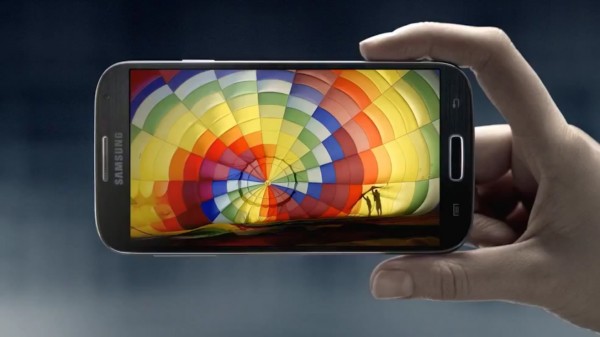
Last week I asked if you would buy Samsung’s newest smartphone, which goes on sale later this month. With a large enough sample size — 1,700 responses so far — time is come to share the results. Seventy percent say they will buy Galaxy S4, although not all immediately. Just 20 percent answer flat-out “No”.
I should qualify the headline: “You likely will buy Samsung Galaxy S4, if you’re not American. Over here, more people are bugaboo about iPhone. Apple had 38.9 percent smartphone subscriber share in February compared to 21.3 percent for its South Korean rival, according to comScore. Elsewhere, Samsung rules, selling more general handsets and smartphones than any other manufacturer, according to Gartner. (Woe to damn provincial Americans!)
Polls like this reflect potential trends and shouldn’t be treated as applying to a whole category of buyers. We don’t qualify respondents and presume the majority are BetaNews readers — or at least gadget geeks. Something else, and this applies to buying polls everywhere: What people say they will do isn’t often what they do. The poll captures sentiments about buying intentions.
Continuing, 18 percent of poll respondents say they will preorder (some international carriers take them already), while 28 percent plan to buy as soon as the S4 is available. “I have already ordered my S4”, BetaNews reader Lawrence Jolly says. “I currently use an S2 that I am very happy with, happy enough to stay with if I am honest however, it is on a contract and the 2 years is up. I am also very keen to go to 4g when that becomes available, something I cannot do on my S2”.
Jolly is “very happy with Android, the S2 was my first Android phone. If the S4 serves me half as well I will be delighted. In truth there is not a lot between all the high-end phones, I like the choice I get with Android though”.
That’s a sentiment Glenn Hughes shares. “I think we have reached the ‘good enough’ point, at least with current technology. I’m much more interested in low-cost phones on pre-paid carriers like Virgin than I am in gimmicky new features. This will probably hold true until the next truly revolutionary new feature-set comes along, which I’m guessing, will be either a big leap in voice interface technology, or some other form of intuitive human interface, along the lines of Google’s project glass, or some such”.
“Meh” is a reaction too commonly expressed around the InterWebs about iPhone 5 and Galaxy S4 (hey, just read BetaNews comments). Both are supposed to be flagship, cutting-edge smartphones that the geek crowd looks at with some disdain. The original iPhone was a remarkable advance n handset user interfaces, unmatched by anything that followed. Hughes isn’t alone putting pre-paid before features. According to NPD, all the growth in U.S. smartphone sales is pre-paid.
Long-time BetaNews reader extremely_well is “getting two Galaxy S4s. One for the wife — I’ll take her S2 to replace my aging Nexus One — and one to ship overseas. I’ll probably get the Galaxy Note 3 for myself in 6 months, too. With T-Mobile’s new plans…it really makes sense to own top-end models; they lose only $25-$30 of their value monthly”.
“I’m waiting another year for the S5”, John Crane shares. “My 2-year contract will be up and AT&T will be in the mood to deal. I hope” Larry Brown “just bought a Note 2 and I am very happy with it”.
-
Beaver Kills Man Who Tried To Take Its Picture [Report]
A Beaver killed a man in Belarus, after the man tried to take its picture, according to a report from Sky News.
The man, who was on a fishing trip with some friends approached the animal, which bit him on the leg, severing a main artery and causing him to bleed to death.
The unusual nature of this story has drawn a lot of attention to it on the web, and serves as a reminder that nature (and the animal kingdom in particular) can be quite unpredictable. The report cites unnamed “experts” who say that beaver attacks are rare and that “those animals that do go for humans are usually rabid”.
Interestingly, since the incident was reported, other tales of agressive beavers have surfaced.
Sky News itself points to a video of a beaver attack in Russia:
A report from Daily Freeman back in 2010 describes beavers getting agressive in the Catskills. Jay Braman reported at the time:
On July 13, at least one beaver attacked and bit two swimmers and two people tubing in the creek about a mile upstream from the Shandaken hamlet of Phoenicia. Reports indicate that two boys between the ages of 10 and 13 were been bitten — the younger boy twice and the older boy seven times.
Around the same time, the Calgary Sun put out a report: Killer Beaver Has Dog Walkers On Guard in Red Deer, saying:
On Monday, the city’s parks department received a complaint from Alberta Animal Services that a beaver in Three Mile Bend in northeast Red Deer had fatally attacked a dog while it was swimming in the water, said parks superintendent Trevor Poth.
Poth said it’s believed the same beaver is responsible for injuring another dog that was also swimming at the time a couple weeks earlier.
Beavers are territorial creatures, who will not hesitate to defend their homes.
-
With negative surveys, high return rates, BlackBerry 10 software improvements may be on the way
BlackBerry’s next software update could arrive with the company’s second handset, the BlackBerry Q10. Pre-orders for the smartphone with physical keyboard have already started and now a BlackBerry enthusiast site claims to have information on the updated software, which will also be pushed to the currently available BlackBerry Z10.
Some of the expected improvements, says the BBNews blog, are support for sending PIN-based text messages in the BlackBerry Hub, an update to the camera to support HDR photos, and BlackBerry Link, which is a way to browse data files on a remote computer. The blog, based in Poland, isn’t one I’ve followed prior, but the reported features don’t sound far-fetched. Even if these functions do arrive on BlackBerry 10 devices soon, they can’t come soon enough.
 A survey by Raymond James, reported by AllThingsD on Thursday, show that 71 percent of survey participants would never use a BlackBerry. That compares to 31.3 percent who have no interest in using Android, while 19.7 percent say nothing would get them to buy an iPhone.
Additionally, analysts are starting to dig deeper in BlackBerry 10 sales figures and finding that return rates are rising. “In several cases, returns are now exceeding sales, a phenomenon we have never seen before,” noted analyst Detwiler Fenton in statement to Bloomberg. Fenton says the unintuitive interface is a barrier, which could be the case, although there are only a handful of gestures needed to use the phone in my experience.
The bigger issue in my mind? Marketing. I haven’t seen the type of media blitz on television or elsewhere that Samsung and Apple typically use to promote their products. Software improvements are welcome — as are more native apps from top-tier development shops — but even the best products on the planet will never reach their sales potential without good old marketing.

Related research and analysis from GigaOM Pro:
Subscriber content. Sign up for a free trial.- Analyzing the wearable computing market
- LTE changes everything; LTE changes nothing
- Updated: Forecast: global mobile subscribers, 2010-2015

-
Jameson’s ‘iPhone Knuckles’ Look Pretty Brutal
Weaponized iPhone accessories are nothing new, but it’s rare that we get to hear about them in cases involving celebrity assaults. Web entrepreneur and former porn star Jenna Jameson has been making headlines this week after being arrested on assault charges.
Jameson was reportedly accused of hitting someone at a house in Newport Beach, California on Saturday. Since then, new details have emerged. TMZ reports:
Jameson allegedly went all Naomi Campbell on the transgender gofer, but with a dangerous twist … a BRASS KNUCKLES CASE on her iPhone 5 … according to legal docs.
Shocking details of the arrest have now emerged in Britney Markham’s restraining order request, filed by attorney Adam Krolikowski. She claims Jameson barged into a Newport Beach salon and started bitching at her, and eventually punched her in the stomach and back with the weaponized device.
Yep, iPhone knuckles. Photos of them have appeared on Instagram (via TMZ):


Like what you see? Google Shopping appears to offer a wide range of “iPhone knuckles” despite removing some weapons last year.

Jameson has also posted a stun gun photo on her Instagram account:

Last year, Jameson was arrested for D.U.I.
-
Microsoft exec resigns after telling users to ‘deal with it’ regarding always-on Xbox controversy

-
Technology and Teens and Bad Ideas
 Here’s an idea that makes a even the biggest broadband advocate in the world question the role of technology in the world of teens. According to the Washington Post…
The photo-sharing site Instagram has become wildly popular as a way to trade pictures of pets and friends. But a new trend on the site is making parents cringe: beauty pageants, in which thousands of young girls — many appearing no older than 12 or 13 — submit photographs of themselves for others to judge.
As the parent of three girls, I’m more than cringing! Especially since the article continues…
Although users can keep their Instagram accounts private or use pseudonyms, they can expose themselves to the public once they share their photos with others.
The girls in the beauty contests often did not take care to keep their identities and locations private. Some dressed in shirts embroidered with their schools’ names, others provided a link to their Twitter, Facebook or Tumblr accounts containing information about who they are and where they live.
I have full access to my grade-school kids’ Facebook accounts, so I see the pictures that their friends post online. Let’s just say that some seem to forget that old adage – don’t post anything online you wouldn’t want your grandma to see. I can only imagine what’s on the Instagram contests.
A similar tool is SnapChat; I wrote about SnapChat on a different blog. It’s an app that allows you to take a picture and send it to a friend with the idea that it shows up only for a few seconds. I found an interesting article from The DePaulia (school newspaper from DePaul) that talks about why the author uses SnapChat and why she admits it’s “Possibly our generation’s self-destructive addiction.” The author alludes to the very dark side of SnapChat…
Anna Brenoff of The Huffington Post wrote, “Certainly, it is the perfect tool for sexting. You get to show off your privates and there’s no evidence left for extortion later. It also means that your Mom, who is doing her best to police what you do online, doesn’t get to see what you send your friends.”
Although she also seems to dismiss the impact…
Internet privacy is a common topic, and I believe more teens know how to deal with it than in the past. Snapchat is for friends, not enemies.
Unfortunately she seems to have forgotten that for a teen, today’s friend may be tomorrow’s enemy. And that for teens alliance to your besties may be stronger the deep-roots of teen romance. (Hacks for saving the temporary pictures are not difficult.)
So what’s a concerned grown up to do?
The Washington Post article alludes to recent steps taken at the federal level to improve online security for kids – but they also admit it’s not enough…
In December, federal officials strengthened privacy rules for children. But analysts say regulators are not keeping abreast of new technological trends that present fresh questions about the safety of children on the Internet.
Threat of legal action has also been an effective tactic. I’ve heard of stories in Minnesota involving inappropriate SnapChat pictures have benched a few athletes – both the original SnapChat sender, the recipient quick enough to do a screen save and the recipients of those captured pictures. And the results were minimized considerably because the original SnapChatter was over 18. According to Mashable, students in New Jersey may be looking at more serious consequences.
Students at one New Jersey high school could face child pornography charges if found in possession of nude photos of classmates.
Explicit images sent via Snapchat prompted a police investigation after two freshman girls shared pictures on the controversial app and later found them posted on Instagram. The Ridgewood High School students sent photos to at least one male classmate who took screenshots in order to save them to a gallery.
In a letter to parents on Wednesday, Superintendent Daniel Fishbein said school officials were working in conjunction with local police to educate the community about “legal and psychosocial implications of this activity.” Fishbein shared the letter with students in sixth through twelfth grade to address the app’s popular use among middle schoolers.
I think the key in the following example is education. Education in the community, with parents and with students. I’m amazed at how many fellow parents are not aware of what their kids are doing online – and fearful of how much I don’t know. (At least I know that nothing makes technology less cool than your mom using it!) For parents and teachers, the roadblock is often keeping up on technology. Common Sense Media is a helpful source to try to keep up on what’s happening and how you can parent to support better use of technology. Earlier today I wrote about TechTECs, an organization that provides training to communities on topics such as online privacy.
Talking about it at the community level helps too. Bringing it up at broadband meetings and PTA events. Finding ways to get adults connected with what’s happening and helping both adults and teens get the tools they need to navigate through digital opportunities. I wouldn’t trade the safety of being offline for the new worlds my kids enjoy online – but I’m interested in mitigating risks.

-
Blocking a key protein boosts immune system’s ability to clear chronic infection
UCLA scientists have shown that temporarily blocking a protein critical to immune response actually helps the body clear itself of chronic infection. Published in the April 12 edition of the journal Science, the finding suggests new approaches to treating persistent viral infections like HIV and hepatitis C.The research team studied type-1 interferons (IFN-1), proteins released by cells in response to disease-causing organisms. These proteins enable cells to talk to each other and orchestrate an immune response against infection. Constant IFN-1 signaling is also a trademark of chronic viral infection and disease progression, particularly in HIV.“When cells confront viruses, they produce type-1 interferons, which trigger the immune system’s protective defenses and set off an alarm to notify surrounding cells,” said principal investigator David Brooks, an assistant professor of microbiology, immunology and molecular genetics at UCLA’s David Geffen School of Medicine and the UCLA College of Letters and Science. “Type-1 interferon is like the guy in the watchtower yelling ‘red alert’ when the marauders try to raid the castle.”Scientists have long viewed IFN-1 as beneficial, because it stimulates antiviral immunity and helps control acute infection. Blocking IFN-1 activity, they reasoned, would allow infection to run rampant through the immune system.On the other hand, prolonged IFN-1 signaling is linked to many chronic immune problems. The research team wondered whether obstructing the signaling pathway would enable the immune system to recover enough to fight off chronic infection.To test this theory, Brooks and his colleagues injected mice suffering from chronic viral infection with an antibody that temporarily blocked IFN-1 activity.Much to their surprise, they discovered that giving the immune system a holiday from IFN-1 boosted the body’s ability to fight the virus. Stunningly, the respite also reversed many of the immune problems that result from chronic infection, such as a rise in proteins that suppress immune response, continuous activation of the immune system and disruption of lymph tissue.The findings fly in the face of past studies that suggest eliminating IFN-1 activity in mice leads to severe, lifelong infection.“What we saw was entirely illogical,” Brooks admitted. “We’d blocked something critical for infection control and expected the immune system to lose the fight against infection. Instead, the temporary break in IFN-1 signaling improved the immune system’s ability to control infection. Our next step will be to figure out why and how to harness it for therapies to treat humans.”“We suspect that halting IFN-1 activity is like pushing the refresh button,” said first author Elizabeth Wilson, a UCLA postdoctoral researcher. “It gives the immune system time to reprogram itself and control the infection.”Uncovering this mechanism could offer potential for new therapies to tackle viruses like HIV and hepatitis C, according to Brooks. The team’s next step will be to pinpoint how to sustain IFN-1’s control of the virus while blocking the negative impact that chronic IFN-1 activity wreaks on the immune system.The National Institute of Allergy and Infectious Diseases and the UCLA Center for AIDS Research supported the research.Additional co-authors included Douglas Yamada, Heidi Elsaesser, Jonathan Herskovitz, Jane Deng and Genhong Cheng, all of UCLA; Bruce Aronow of the University of Cincinnati; and Christopher Karp of the University of Cincinnati and the Bill and Melinda Gates Foundation.For more news, visit the UCLA Newsroom and follow us on Twitter. -
Watch This Google Hangout On Improving Your Site (For AdSense)
Google recently held a Google+ hangout sharing tips for improving the user experience on your site, which it uploaded to its AdSense YouTube channel. This week, Google shared the video on the AdSense blog bringing it to our attention.
The video discusses how to better understand your users, increase engagement, and measure the success of changes you make.
-
Network News: Hurricane Picks Zayo for 100G Backbone
Here’s a roundup of some of some of this week’s headlines from the network industry:
Zayo selected by Hurricane Electric for 100G backbone. Zayo Group announced that Hurricane Electric Internet Services has purchased 100G wavelength services on Zayo’s newly installed 100G routes. The upgraded routes include New York to Washington, D.C. and Chicago to Memphis. Hurricane Electric is connected to 60 major exchange points and exchanges traffic directly with more than 2,700 different networks, and the 100G routes will help create greater per Gigabit cost efficiencies relative to prior service deployments. “Installation of our newly implemented 100G Wave system along major U.S. routes allows Zayo to leverage the latest generation technology to meet the capacity demands of customers like Hurricane Electric,” says Zach Nebergall, Vice President of Waves Product Group at Zayo. “This service delivers increased capacity and cost efficiency, as well as improved latency through the latest technology.”
Ciena selected by XO for video transport solution. Ciena (CIEN) announced that XO Communications will use Ciena’s Digital Video Transport solution to deliver native digital video transport services to media and entertainment customers across the XO nationwide network. With XO Communications’ coast-to-coast 100G network, the Ciena solution will allow XO to cost-effectively transport high-definition video content for its customers without affecting original quality. The solution includes the 565 Advanced Services Platform, a compact and cost-optimized metro WDM platform that enables a variety of data, storage and video services to be cost-efficiently aggregated onto an optical wavelength-based network or service.The Digital Video Transport solution will be deployed in conjunction with other Ciena platforms in the XO network. “In the media and entertainment industry, uptime, video quality, and secure, high-speed service delivery are critical,” said Francois Locoh-Donou, senior vice president, Global Products group at Ciena. “Ciena’s highly reliable, scalable and flexible optical platforms, part of our OPN programmable network architecture, address the specific requirements of native digital video transport. We’re pleased to help XO Communications deliver a secure and reliable solution so that they can quickly and cost-effectively send bandwidth-intensive, high quality video between geographically dispersed teams.”
Alcatel-Lucent and Shaw trial 400G. Alcatel-Lucent (ALU) and Canadian operator Shaw Communications have achieved a milestone with the successful first field trial in North America of 400 Gigabit-per-second (Gbps) data transmission over an existing optical link carrying live network traffic. The trial ran over a 400 kilometre route between Calgary and Edmonton in Alberta, Canada, using Shaw’s current high-capacity transport network, designed for speeds up to 100 Gbps. Using Alcatel-Lucent’s 400 Gbps technology, the trial demonstrated the ability of an existing optical network carrying up to 17.6 Terabits-per-second (Tbps). “With the growing appetite for services and the proliferation over many different devices, including tablets and connected devices, we were looking for next-generation technologies to help us build a world-leading infrastructure capable of keeping up with broadband demands,” said Peter Bissonnette, President, Shaw Communications Inc. ”Alcatel-Lucent’s 400 Gbps technology enables us to continue our leadership within the telecommunications industry and reinforce our commitment to maintaining leading-edge high-speed Internet capability.”
-
Cisco, Microsoft Team to Target the Data Center
Cisco (CSCO) announced a range of new joint technologies and integrated solutions targeting data centers that use Microsoft’s Cloud OS technologies. With those customers in mind the two companies are combining the Cisco Unified Data Center architecture with Microsoft Fast Track architecture solutions.
Microsoft Fast Track 3.0 solutions simplify the management of combined Cisco and Microsoft data centers by giving Microsoft customers programmatic access to the Cisco Unified Computing System (Cisco UCS). Both Cisco and EMC and Cisco and NetApp reference architectures have been validated for the Microsoft Fast Track 3.0 program. The Cisco Nexus 1000V series virtual and cloud networking platform, combined with Windows Server 2012 Hyper-V Extensible Switch and System Center Virtual Machine Manager allow customers who wish to virtualize certain aspects of their data center networks can do so alongside physical networking and cloud computing infrastructure. The Cisco UCS UI Extension Add-in for System Center 2012 SP1 Virtual Machine Manager provides centralized management of Cisco UCS by allowing access to Cisco UCS management controls from within System Center Virtual Machine Manager.
“Microsoft’s Cloud OS approach, based on Windows Server 2012 and System Center 2012 SP1, gives customers a comprehensive platform for implementing their infrastructure on premises, with a hosting service provider, and in the cloud,” said Brad Anderson, corporate vice president, Windows Server and System Center at Microsoft. ”Combining the proven Microsoft Fast Track architecture with Cisco’s innovative Unified Data Center architecture provides partners and customers with a first-class option for navigating their way through today’s new age of data center deployment and management.”
Cisco and Microsoft intend to roll out targeted channel initiatives in select countries to enable alignment in selling Microsoft Fast Track 3.0 architecture solutions.
“Cisco and Microsoft are focused on helping customers realize a new business vision for the cloud era, and Scalability Experts has become a key leader in advancing this vision by leveraging scalable and high-performance platforms,” said Raj Gill, founder and chief technology officer, Scalability Experts. ”Increasing the performance of database operations, lowering IT costs and improving business decision-making capabilities is what we focus on delivering to each of our clients. Microsoft solutions and Cisco’s UCS compute family are key strategic platforms for enabling us to consistently exceed our customer’s expectations.”
-
OK, now I’m convinced Facebook is trying to be creepy
What if Facebook is just trolling us, carrying out the biggest social experiment in history by testing the limits of how much privacy-invading creepiness we’ll take before we actually quit using it?
I ask because Facebook’s newest attempt to boost ad revenues — it’s “partner categories” program — seems too dunderheaded a move to be real. A company that’s regularly lambasted and has even been sanctioned by the government for privacy indiscretions is now going to let advertisers place ads based on what users have purchased offline, or at least off of Facebook? And, worse yet, based on public records such as the type of car someone drives?
This type of advertising happens all the time, of course, but I just can’t believe it’s for real from Facebook. Is it oblivious to public opinion about its privacy record (a recent study, for example, ranked it 42nd in overall reputation, far behind Google, which is 4th, and even behind Verizon and AT&T)? Or how ineffective this type af advertising might be, especially on a platform where people are trying to interact rather than look at ads for things they already buy or have bought?

But here’s the catch: If Facebook wants more people to click on ads and still doesn’t want to be called a creep, it probably isn’t doing enough data mining. I think some of the best ideas we’ve covered have to do with intent — that is, serving up ads that are in line with what users are actually expecting, or at least receptive to, from the data they’re already giving Facebook. Surely, Facebook’s highly talented data scientists are aware of these methods.
Intent-based targeting might be a bit creepy, but it’s not blunt-force creepy like a peeping tom staring in your bedroom window. It’s more like a cute co-worker whose pickup lines are so on-target you know he’s been researching you, but you’re in the mood to go on a date and he’s there and speaking your language, so …
Solariat Founder and CEO Jeffrey Davitz explained the concept to me last year as mining “big, sucky data” in order to put ads in front of users at the right times on the right topics. It’s a 180-degree difference from showing someone a sponsored story every time a friend “likes” something, placing sidebar ads based on someone’s stated — and static — interests, or even the new partner categories method of advertising for things people might have already purchased and might not want Facebook to know about.
Here’s how I described it then:
Davitz thinks there’s a way for social platforms to overcome this problem by using techniques such as natural-language processing and machine learning to identify those instances where users really are expressing “query-like intent.” It will never be as clear as entering “best hiking shoes” into a search engine, but, for example, someone certainly might note in a wall post or a tweet that he’s going hiking and needs new shoes. He might specifically ask friends which shoes they prefer. If you sell hiking shoes, there’s your signal. Rather than simply peppering someone’s page with ads about hiking because he listed it as an interest, now he’s actually in the market for gear and might pay attention.
This approach could help get Facebook ads heard above the noise that’s surrounding users and coming from their intended purpose for visiting Facebook — social interaction — as well as external sources like Twitter, email and text messages. And if timed right, Davitz noted, users might notice the utility rather than the creepiness. An ad for hiking boots that comes hours later, for example, might be more like a guy gracefully playing the rebound rather than asking a woman out the second he heard she broke up with her boyfriend.
It’s some extra work, yes, but a little nuance might make Facebook seem like it’s not just trying to push our privacy buttons as much as it can before we crack.
NYU Stern School of Business professor Arun Sundararajan nicely summed up the risks of ignoring user intent leading up to Facebook’s IPO last year. He compared annoying — and possibly offending — users with ads at every possible turn with playing the stock market and only thinking about making money. “[I]f you’re investing in the stock market and you’re only thinking about returns and not risk,” he said, “at some point you’re going to lose your shirt.”
Feature image courtesy of Shutterstock user Steven Frame.

Related research and analysis from GigaOM Pro:
Subscriber content. Sign up for a free trial.- NewNet Q4: Platform mania and social commerce shakeout
- NewNet Q4: Platform mania and social commerce shakeout
- Connected world: the consumer technology revolution

-
Consumers could pay higher switching costs in a data driven world
How many people do you know that only fly on one airline, even if they hate it beyond reason? They put up with poor service or inconvenient flight times all because they’ve racked up status or miles with the company. They can’t switch or they start over from square one with a new airline that might only be marginally better; the switching costs are too high.
As we bring more data into all aspects of our shopping lives, consumers may suddenly face the same conundrum in restaurants or stores. As data collection and predictions improve, stores are better able to anticipate the value of a customer and reward them accordingly. This leads me to wonder two things, how does this change customer service? And will it drive consumers to greater loyalty by making the cost of switching providers higher?
I spoke yesterday with a company called Swipely that provides a payment system to small businesses. The company is now managing more than $500 million in annual sales — a number that has grown 100 percent the last three months in part because its customers get a side order of data with the payment processing.

One of the metrics Swipely offers is an estimated customer lifetime value (based on demographic data and the amount the customer has already spent). Seeing this gave me a bit of a chill, in part because it took the concept of customer service and turned it from a basic expectation to a cold calculation based on your potential worth as a customer.
That’s not to say that clerks or managers at restaurants will suddenly turn into jerks for customers who don’t shop there often, or will play it cool with new customers until the vendor determines how much that individual might be worth to the business. Heck, in many ways that already happens: shopkeepers often assess your likely purchasing habits by your demeanor, dress and other physical attributes.
But putting a number on your worth as a customer and cloaking it as data turns it from a hunch into something that feels rational and scientific, even if the algorithm behind that metric is unproven. And believing they are behaving rationally can drive businesses to make really inhumane decisions about humans. In an ideal world this data would be used to reward loyal shoppers (perhaps in the same way the Ritz Carlton rewards its loyal customers already), but what happens when this experience trickles down from a high-end hotel to a local toy store?

It’s one thing to eat every week at a nearby Mexican restaurant and have the manager know your name and set aside a table for you. It’s another when based on a few visits to an establishment, you’re lumped into a certain class of customer based on predicted spend than gives you substantial benefits. Can vendors offer enough perks to those “whales” that they might ignore a lapse in service to keep their free queso coming?
Does this added layer of data start to boost customer retention to the point where it’s harder for another restaurant to win business? This may seem almost silly, but in the cell phone industry things like early termination fees, contracts and (formerly) the inability to port a telephone number created such high switching costs that there are concerns about those practices making the market less competitive.
I would like to think that better data in loyalty programs wouldn’t distort the market for local goods and services, but I am curious if it will. Human nature is such that a free bowl of queso and someone knowing your name can overcome mediocre enchiladas and the occasional service lapse.
And if you’re opening a taqueria down the street getting those customers in the door might prove to be more expensive and have little to do with your fabulous tomatillo sauce.

Related research and analysis from GigaOM Pro:
Subscriber content. Sign up for a free trial.- 4 iPad apps to help wrangle data
- Connected world: the consumer technology revolution
- Podcast: Mobile winners and losers in 2012 and what to expect in 2013

-
UCLA first on West Coast to perform new procedure to open blocked carotid arteries
Doctors at Ronald Reagan UCLA Medical Center have become the first on the West Coast to perform a new, less-invasive procedure to help clear plaque-ridden carotid arteries. The procedure, which is part of a clinical trial, took place on March 28.Just as arteries to the heart can become clogged with plaque, causing a blockage, so can the two carotid arteries that supply blood to the brain. Every year, more than 300,000 people in the U.S. are diagnosed with such blockages, which, if left untreated, can reduce or even stop blood flow to the brain, causing a potentially disabling stroke.Current treatment options include the traditional “open” surgery approach to clean out the carotid artery and a minimally invasive alternative that uses a stent to keep the artery open.Each of these options has some limitations. Traditional surgery involves making a large incision along the neck and carries the risk of surgical complications. While less invasive, the stent procedure requires the insertion of a catheter through an artery in the groin to guide the stent into place, which can potentially dislodge plaque; loose plaque can travel through the bloodstream and cause a blockage. Some studies have indicated that the stent procedure carries a higher risk of stroke than the surgical procedure.The new technique and device system being tested at UCLA is called transcarotid stenting with dynamic flow reversal, or the Silk Road Procedure, which allows physicians to deliver a stent directly into the carotid artery from the neck, offering a shorter, potentially safer route than the typical stent procedure.A unique aspect of the new system is the ability to temporarily divert blood flow away from the plaque during the procedure to help ensure that a patient’s brain is fully protected from plaque debris at all times. Physicians redirect blood flow from the carotid artery where the team is working into tubing set up outside the body and then back into the body through the femoral vein, near the groin.Ronald Reagan UCLA Medical Center is one of 25 centers around the world participating in the clinical study, called the ROADSTER trial, which is designed for high–surgical risk patients who may be older or have especially narrowed arteries.“We’re always seeking new options for patients with the ultimate goal of treating these carotid artery blockages with the least procedural risk,” said Dr. Wesley Moore, UCLA study investigator and a professor emeritus of vascular surgery at the David Geffen School of Medicine at UCLA. “We look forward to contributing to this important research.”The study is funded by Silk Road Medical, developers of the transcarotid stenting with dynamic flow reversal system.For more information on the clinical trial at UCLA, please call 310-206-1115.For more news, visit the UCLA Newsroom and follow us on Twitter. -
Google Launches New Death Tool
Google wants to know what you want it to do with your stuff when you die. The company has launched a new feature called Inactive Account Manager (not as grim as it could have been, I guess).
“Not a great name, we know,” product manager Andreas Tuerk even admits.
Google Death would probably raise a few eyebrows.
With the feature, you can tell Google what you want it to do with your Gmail messages and data from other Google services.
“For example, you can choose to have your data deleted — after three, six, nine or 12 months of inactivity,” says Tuerk. “Or you can select trusted contacts to receive data from some or all of the following services: +1s; Blogger; Contacts and Circles; Drive; Gmail; Google+ Profiles, Pages and Streams; Picasa Web Albums; Google Voice and YouTube. Before our systems take any action, we’ll first warn you by sending a text message to your cellphone and email to the secondary address you’ve provided.”

This really is an important issue that more web companies should be dealing with as more and more aspects of our lives go digital. For more on what happens to you online when you die, check this out.


