
Author: Serkadis
-
iPhone 5S, Retina iPad mini launches reportedly delayed
-
Dropbox Announces Dropbox For Business With Single Sign-On
Dropbox announced “Dropbox for Business” on Wednesday. The company says that it’s making a lot of changes to make Dropbox better for companies of all sizes, so it’s rebranding “Dropbox For Teams” as “Dropbox For Business”.
One of the upcoming features is single sign-on (SSO). Dropbox’s Anand Subramani explains:
SSO works behind the scenes to let users sign in just once to a central identity provider, like Active Directory, and securely access all their business apps, like Dropbox. With SSO, companies can put their existing trusted identity provider in charge of the authentication process.
For users, SSO means ease — one fewer password to remember and one fewer step to get to your work. Once logged in to your system, there’s no need to sign in to Dropbox separately. For IT admins, SSO means additional security and administrative management. Single sign-on gives you complete ownership of the authentication process and works with your company’s existing password policies. It also easily ties into the existing Dropbox provisioning and de-provisioning API to provide further Active Directory integration.
The company is working with various identity providers on single sign-on. These include Ping Identity, Okta, OneLogin, Centrify, and Symplified. The feature is coming next month. It will take advantage of the industry standard Security Assertion Markup Language (SAML).
Dropbox claims to be used by 2 million businesses and 95% of the Fortune 500.
-
A solar booster shot for natural gas power plants
Natural gas power plants can use about 20 percent less fuel when the sun is shining by injecting solar energy into natural gas with a new system being developed by the Department of Energy’s Pacific Northwest National Laboratory. The system converts natural gas and sunlight into a more energy-rich fuel called syngas, which power plants can burn to make electricity.
“Our system will enable power plants to use less natural gas to produce the same amount of electricity they already make,” said PNNL engineer Bob Wegeng, who is leading the project. “At the same time, the system lowers a power plant’s greenhouse gas emissions at a cost that’s competitive with traditional fossil fuel power.”
PNNL will conduct field tests of the system at its sunny campus in Richland, Wash., this summer.
With the U.S. increasingly relying on inexpensive natural gas for energy, this system can reduce the carbon footprint of power generation. DOE’s Energy Information Administration estimates natural gas will make up 27 percent of the nation’s electricity by 2020. Wegeng noted PNNL’s system is best suited for power plants located in sunshine-drenched areas such as the American Southwest.
Installing PNNL’s system in front of natural gas power plants turns them into hybrid solar-gas power plants. The system uses solar heat to convert natural gas into syngas, a fuel containing hydrogen and carbon monoxide. Because syngas has a higher energy content, a power plant equipped with the system can consume about 20 percent less natural gas while producing the same amount of electricity.
This decreased fuel usage is made possible with concentrating solar power, which uses a reflecting surface to concentrate the sun’s rays like a magnifying glass. PNNL’s system uses a mirrored parabolic dish to direct sunbeams to a central point, where a PNNL-developed device absorbs the solar heat to make syngas.
Macro savings, micro technology
About four feet long and two feet wide, the device contains a chemical reactor and several heat exchangers. The reactor has narrow channels that are as wide as six dimes stacked on top of each other. Concentrated sunlight heats up the natural gas flowing through the reactor’s channels, which hold a catalyst that helps turn natural gas into syngas.
The heat exchanger features narrower channels that are a couple times thicker than a strand of human hair. The exchanger’s channels help recycle heat left over from the chemical reaction gas. By reusing the heat, solar energy is used more efficiently to convert natural gas into syngas. Tests on an earlier prototype of the device showed more than 60 percent of the solar energy that hit the system’s mirrored dish was converted into chemical energy contained in the syngas.
Lower-carbon cousin to traditional power plants
PNNL is refining the earlier prototype to increase its efficiency while creating a design that can be made at a reasonable price. The project includes developing cost-effective manufacturing techniques that could be used for the mass production. The manufacturing methods will be developed by PNNL staff at the Microproducts Breakthrough Institute, a research and development facility in Corvallis, Ore., that is jointly managed by PNNL and Oregon State University.
Wegeng’s team aims to keep the system’s overall cost low enough so that the electricity produced by a natural gas power plant equipped with the system would cost no more than 6 cents per kilowatt-hour by 2020. Such a price tag would make hybrid solar-gas power plants competitive with conventional, fossil fuel-burning power plants while also reducing greenhouse gas emissions.
The system is adaptable to a large range of natural gas power plant sizes. The number of PNNL devices needed depends on a particular power plant’s size. For example, a 500 MW plant would need roughly 3,000 dishes equipped with PNNL’s device.
Unlike many other solar technologies, PNNL’s system doesn’t require power plants to cease operations when the sun sets or clouds cover the sky. Power plants can bypass the system and burn natural gas directly.
Though outside the scope of the current project, Wegeng also envisions a day when PNNL’s solar-driven system could be used to create transportation fuels. Syngas can also be used to make synthetic crude oil, which can be refined into diesel and gasoline than runs our cars.
The current project is receiving about $4.3 million combined from DOE’s SunShot Initiative, which aims to advance American-made solar technologies, and industrial partner SolarThermoChemical LLC of Santa Maria, Calif. SolarThermoChemcial has a Cooperative Research and Development Agreement for the project and plans to manufacture and sell the system after the project ends.
More information about PNNL’s concentrating solar power system for natural gas power plants.
REFERENCE: RS Wegeng, DR Palo, RA Dagle, PH Humble, JA Lizarazo-Adarme, SK, SD Leith, CJ Pestak, S Qiu, B Boler, J Modrell, G McFadden, “Development and Demonstration of a Prototype Solar Methane Reforming System for Thermochemical Energy Storage — Including Preliminary Shakedown Testing Results,” 9th Annual International Energy Conversion Engineering Conference, July-August 2011, http://arc.aiaa.org/doi/abs/10.2514/6.2011-5899.
-
Google On Buying Spammy Domains: Don’t Be The Guy Left Holding The Bag
In the latest Webmaster Help video from Google, Matt Cutts takes on an interesting topic. Can you buy a domain that has been penalized by Google for spam, clean it up and recover rankings?
Well, it depends, and Cutts explains why.
“This is a tricky question because on the one hand there’s algorithmic spam, and then there’s manual spam, and all manual spam does have an eventual time out, so if you were to completely clean up all the content on the domain, [and] do a reconsideration request, in theory, that domain can recover,” says Cutts. “However, on the algorithmic side, if there are a ton of spammy links that the previous owner built up, that can be a little bit hard to go through, and try to clean up and get all those links taken down, and make a list of all those links.”
He continues, “The way to think about it is, there are a lot of spammers out there that do basically what’s known as a ‘churn and burn’ tactic, where they just use as many techniques to try and make a domain rank as they can, and then as soon as that domain is awful or bad, or Google has caught it, then they sort of movie on, and they go on to some other exploit, and they try to tackle it with another domain. Now what you don’t want to do is be the guy who gets caught left holding the bag.”
Long story short: how bad do you really want this domain?
-
Apple needs an ‘iPhad’ to combat phablets, according to biggest Apple bull

-
Google Map Maker Heads To The UK
Google announced the launch of Google Map Maker in the UK, kicking it off with a MapUp workshop in Bletchley Park.
Program Manager Satish Mavuri writes in a post on the Google Maps blog:
More than 40,000 people around the world are making contributions and improving Google Maps through Google Map Maker each month. Now it’s your turn to help, whether marking the trails throughBrecon Beacons National Park in Wales, adding all your favorite shops in London’s Soho Square, or improving driving directions to St Ives in Cornwall. Drawing from your knowledge about world famous tourist destinations or the streets of your hometown, you can now use Google Map Maker to make the map of the United Kingdom (along with Isle of Man, Jersey and Guernsey) more comprehensive and accurate than ever before. Once approved, these improvements will appear across Google Maps,Google Earth, and Google Maps for Mobile.
…
Krzysztof Przygoda, a Poland native who’s actively contributed to the map of that country via Map Maker, has since relocated with his family to the UK. Now, he’s looking forward to enriching the maps of both his homeland and his new stomping grounds. Krzysztof is particularly eager to map the narrow network of paths that wind through his new neighborhood, with the goal of improving directions and navigation for local cyclists and pedestrians in Gloucester.
Google is calling upon people familiar with particular places in the UK to join Map Maker and engage with the community.
-
Don’t blame Windows 8 for weak PC shipments
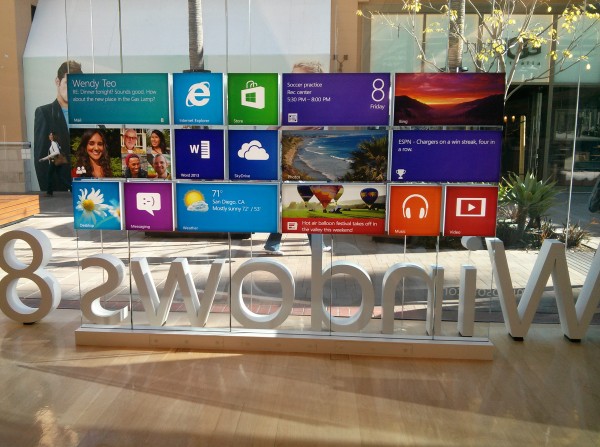
Well, well, perhaps Windows 8 isn’t cause for all the PC market’s woes, as IDC strongly stated yesterday. Gartner’s first-quarter assessment is grim but no reaper. The analyst firm lays blame partly on consumers unwillingness to pay more for touchscreen models and asserts that the business market actually grows. Also, the firms released contradictory data, with Apple showing glaring and shocking differences.
Mikako Kitagawa, Gartner principal analyst, doesn’t blame Windows 8: “Consumers are migrating content consumption from PCs to other connected devices, such as tablets and smartphones”. The first factor pulling down PC shipments, which by Gartner estimates fell 11.2 percent globally during Q1, is tablet competition, then. Not Windows 8.
Cause and Effect
“Touchscreen-based Ultramobiles offer PC manufacturers an opportunity to recover market share from media tablets, but Windows 8 PCs with touchscreens accounted for only a small percentage of consumer PC shipments in the first quarter of 2013”, Isabelle Durand, Gartner principal research analyst, says. Microsoft Surface Pro is in this category.
The problem: “The majority of consumers remain unwilling to pay the price premium for touchscreen capabilities on PCs at this stage”, Durand says. “But, even so, touchscreens and Windows 8 will represent key opportunities for PC manufacturers in the second half of 2013”.
Gartner’s read is remarkably different from IDC’s. “At this point, unfortunately, it seems clear that the Windows 8 launch not only failed to provide a positive boost to the PC market, but appears to have slowed the market”, Bob O’Donnell, IDC vice president, asserts.
“While some consumers appreciate the new form factors and touch capabilities of Windows 8, the radical changes to the UI, removal of the familiar Start button, and the costs associated with touch have made PCs a less attractive alternative to dedicated tablets and other competitive devices”, he asserts.
IDC blames Windows 8, singling out Modern UI, while Gartner focuses on price competition. As someone who really likes the new operating system — and never expected to — and who worked as an analyst, Gartner’s assessment is more credible. That’s something Microsoft’s leadership should consider while developing Windows 8.1 and its successors. Windows 8 isn’t a bad operating system, but backpedaling could make it one.
Demand for traditional PCs is weak, which makes sense given it’s a mature product category. Touchscreen models, whether true tablet or hybrids, offer something different, but not necessarily more enough. They compete with media tablets like Apple’s iPad that offer similar top-line functionality for hundreds of dollars less. For many consumers, iPad, or even smaller tablets, is good enough. So on a touchscreen-to-touchscreen comparison, media slates win, and that phenomenon has little to do with Windows 8 or changes Microsoft made to the user interface.
Preliminary Worldwide PC Vendor Unit Shipment Estimates for 1Q13 (Units)
Company 1Q13 Shipments
1Q13 Market Share (%)
1Q12 Shipments
1Q12 Market Share (%)
1Q12-1Q13 Growth (%)
HP 11,687,778
14.8
15,301,906
17.2
-23.6
Lenovo 11,666,400
14.7
11,652,664
13.1
0.1
Dell 8,734,892
11.0
9,838,121
11.0
-11.2
Acer Group 6,843,184
8.6
9,582,046
10.9
-29.3
Asus 5,360,470
6.8
5,552,329
6.2
-3.5
Others 34,914,286
44.1
37,170,712
41.7
-6.1
Total 79,207,010
100.0
89,197,778
100.0
-11.2
Note: Data includes desk-based PCs and mobile PCs, including mini-notebooks but not media tablets such as the iPad.
Source: Gartner (April 2013)Emerging Woes
But the PC isn’t a mature product category everywhere. “Even emerging markets, where PC penetration is low, are not expected to be a strong growth area for PC vendors”, Kitagawa says. The trend among emerging markets is most disturbing for computer manufacturers and Microsoft, which had banked on continued growth there to offset sluggish refresh cycles elsewhere.
“Consumers’ content consumption was, and still is, moving from PCs to other types of connected devices”, Durand says. “Even in Central and Eastern Europe and the Middle East and Africa, where PC penetration is low, growth in PC shipments was down as first-time device buyers chose other devices”.
Price sensitivity is even greater in most emerging markets, where a low-cost touchscreen media tablet or smartphone has more obvious utility than costlier — and more-stationary — PCs. Surface RT competes in that category, but is a costly alternative to smaller slates, like Google Nexus 7.
Preliminary U.S. PC Vendor Unit Shipment Estimates for 1Q13 (Units)
Company 1Q13 Shipments
1Q13 Market Share (%)
1Q12 Shipments
1Q12 Market Share (%)
1Q13-1Q12 Growth (%)
HP 3,447,894
24.2
4,493,572
28.5
-23.3
Dell 2,956,661
20.8
3,459,925
22.0
-14.5
Apple 1,650,012
11.6
1,535,951
9.8
7.4
Toshiba 1,278,883
9.0
1,349,900
8.6
-5.3
Lenovo 1,265,902
8.9
1,112,582
7.1
13.8
Others 3,623,468
25.5 3,788,927
24.1 -4.4 Total 14,222,820
100.0 15,740,856
100.0 -9.6 Note: Data includes desk-based PCs and mobile PCs, including mini-notebooks but not media tablets such as the iPad.
Source: Gartner (April 2013)The measure is always this: What’s good enough for the lowest price — among most buyers. There is always a smaller percentage of people willing to pay more, as they do for Macs. Tablets’ big benefit is touch; apps the other.
While the broader PC market is in crisis, there is a bright spot that is hugely important to Microsoft and Windows. “Unlike the consumer PC segment, the professional PC market, which accounts for about half of overall PC shipments, has seen growth, driven by continuing PC refreshes”, Kitagawa says. “Despite the fact that some regions already passed the peak of PC refresh, overall professional PC demand continued to grow”. Businesses are Microsoft’s core market.
This difference in emphasis — tablets and price as decline’s cause and business PC demand — isn’t all that separates Gartner and IDC assessments of Q1 shipments. IDC says they declined the most ever, since the firm starting tabulating numbers in 1994. EMEA — Europe, Middle East and Africa — is the worst by Gartner’s reckoning, rather than the whole world. The firm sees an 11.2 percent year-over-year decline, while IDC claims 13.9 percent. U.S. market contradiction is 9.6 percent according to Gartner, while IDC sees a 12.7 percent decline.
But nowhere do the differences stand out more than for Apple. IDC reports U.S. shipments falling 7.5 percent year over year, while Gartner sees them increasing by 7.4 percent. As such, market share estimates don’t jive either — 11.6 percent (Gartner) and 10 percent (IDC). Fifteen points separate growth estimates, which is huge and raises legitimate concerns that one of these analyst firms makes grave mistakes counting and interpreting the data’s meaning. Whom do you believe?
Photo Credit: Joe Wilcox
-
Apple reportedly prepping new ‘killer app’ and another new service for 2013 launch

-
Super-size me: Samsung Mega phone tops 6 inches in size
Confirming leaks and rumors from last month, Samsung officially introduced two new Android smartphones on Thursday, the Galaxy Mega 5.8 and Galaxy Mega 6.3. The Galaxy brand tells you they’re going to look like most other Galaxy phones and the numbers actually indicate the screen sizes. I guess Samsung didn’t read how some people are leaving Android because the phones are getting too large!
Both devices share design cues with the new Samsung Galaxy S 4, so most of the differences are on the inside. Here’s a quick rundown of the specs on each:
The Galaxy Mega 5.8 uses a 960 x 540 display, 1.4 GHz dual-core chip, 8 GB of internal storage expandable up to another 64 GB, 1.5 GB of memory, a 2600 mAh battery and the typical assortment of wireless connectivity. Samsung’s Galaxy Mega 6.3 bumps the display to 720p resolution, uses a 1.7 GHz dual-core chip, 8 or 16 GB of internal storage plus the microSD slot, 1.5 GB of memory and a 3200 mAh battery. It also adds NFC and support for 802.11 a/c Wi-Fi, which the Mega 5.8 doesn’t have.

At this point, there are few screen sizes Samsung’s Galaxy brand doesn’t have covered. And while some disagree with the strategy of similar smartphones in a dizzying array of sizes, I can understand Samsung’s approach.
One of the appeals of the Android market as a whole is the choice of phone design and size. Samsung is not only taking over Android with its own TouchWiz interface, software and stores, but it mimics one of the best qualities of Android: a phone in the size that fits you best.

Related research and analysis from GigaOM Pro:
Subscriber content. Sign up for a free trial.- The big theme of MWC: How to live in a connected world
- What the Google-Motorola deal means for Android, Microsoft and the mobile industry
- The fourth quarter of 2012 in mobile


-
Tour A Creepy, Abandoned Shark Museum With Google Street View
Google is really onto something with Street View, and the company is really just getting started, now that it’s got the Trekker out on missions. Still, while Google has had a tremendous amount of outdoor imagery for quite sometime, the indoor imagery is a more recent endeavor, and as we’re seeing, Google is taking us inside all kinds of interesting places.
Reddit user RMartinChi pointed out this abandoned shark museum in Japan that Google lets you virtually walk through. Here are a few shots from within:


Also spotted on reddit: Google Maps Street View Captures Couple Having Sex On The Side Of The Road.
-
What it means to get a gig: Austin sees more productivity and better Netflix
Earlier this week Austin learned that it would get a gigabit network provided by Google with the first customer getting online around the middle of 2014. One of the best parts for the startup community is that Google will also have a small business option, meaning that entrepreneurs will have a chance to get their hands on a gig as well. Judging by an informal survey of locals, most can’t wait.
I asked several people in town for their reaction and thoughts on the news, and I’ve collected the responses here. Here’s what Austin businesses are saying about Google Fiber:
Luis Esteban Caffesse, co-founder of the video production shop Pitch Productions, can’t wait to watch Netflix while uploading client videos after hours:
I can tell you this — the single biggest bottleneck in my work everyday is my internet speed. It’s not my productivity, it’s not my computer’s render times. It is simply the amount of time it takes me to get video content to my clients. Having something with the kind of speed that Google Fiber offers can make the difference between hitting a deadline or not… or between getting a client a copy of their video today or tomorrow.
Internet service is the ONE service in my life that I am more than willing to pay for… but there simply isn’t anything fast enough, even if there were someone willing to take our money.

Brazos Hall in Austin where Google made its announcement.
Joshua Baer, the executive director of the Capital Factory incubator and Chief Innovation Officer at Return Path, is looking forward to the day he can stop waiting on the network to catch up to today’s hardware and software:
To geeks and creatives, having a fast internet connection is right up there with a big monitor and a nice chair. It’s one of the most important factors in job satisfaction and productivity for knowledge workers. At Capital Factory we have one of the fastest Internet connections around. It’s half as fast as Google Fiber and costs $4,000/month compared to $70/month for Google Fiber.
There are three direct benefits Austin will see from Google Fiber. One, Google Fiber will attract more talented workers and innovative entrepreneurs. Two, companies will choose to launch innovative new products in Austin where the market is most receptive and consumers have the infrastructure needed. This means more marketing dollars spent in Austin, more press and attention, and early access to technology for our residents. And finally, the next generation of technology that takes advantage of this new infrastructure will be conceived and developed in Austin.

Austin streets during SXSW 2013.
Kyle Fox, the director of the Austin Technology Incubator‘s IT and Wireless Portfolios, thought more about the bigger picture of a gigabit:
Google Fiber replaces MoPac as Austinites’ quickest route to work. We could no longer have a work commute, nor would we have to wait at the doctor’s office. This will dramatically change how we as humans interact with each other and with the core infrastructure we interact with on a daily basis.
Zach Richardson, a co-founder and CTO at the Daily Dot, an online publication based in Austin, thinks it will make his staff more productive and help recruit developers to town:
Almost everything in my life is somehow connected: workout logging with Map My Fitness, scanned physical mail delivery with Outbox, or HD streaming for TV. Right now I can’t watch TV in HD (streaming) and do some of my work at home at the same time. I had already been looking at multiplexing UVerse and TimeWarner to squeeze a little bit more bandwidth at home.
For any tech-focused business, recruiting and finding talent is one of the hardest things to do. I regularly look at ways I can squeeze every little bit of productivity out of the already existing team we have. This means eliminating non-break idle time. Fast computers and good tools are a large part it, but one of the main bottlenecks (and hardest to solve) is internet speed. It will also help with recruiting in Austin. Engineers want to live and work where they can focus on code and solving interesting problems, not waiting on the internet.
I’d say that personally and professionally these people are excited. I am too.

Related research and analysis from GigaOM Pro:
Subscriber content. Sign up for a free trial.- GigaOM Research highs and lows from CES 2013
- How HR can make the case for workforce analytics
- The 2013 task management tools market

-
CoreSite Leases Entire Data Center in Santa Clara

The server hall of a data center operated by CoreSite, which recently leased an entire build-to-suit building in Santa Clara.
It’s not every day you see a company lease an entire data center building in one shot. But that’s what CoreSite Realty has accomplished with its newest project in Silicon Valley, where it is nearing completion on a 101,250 square foot build-to-suit project that has been pre-leased by a single large customer.
The new building is part of the growing CoreSite campus in Santa Clara, the Valley’s leading data center hub. The lease was discussed by CoreSite CEO Thomas Ray on the company’s earnings call last month.
“On our Santa Clara campus, we expect to commence and complete SV5, the 100,000-square foot powered-shell build-to-suit,” said Ray. “This pre-leased development enables us to serve a strategic customer and accelerate the monetization of a portion of the land we own on the campus.”
In a powered shell property, the developer builds the structure and mechanical and electrical infrastructure, but the tenant builds out the data center environment. That differs from the wholesale model, in which the landlord builds the complete plug-and-play data center environment, including raised floor space. CoreSite said its construction costs on the project were $19 million, with projected annual rent of $3.2 million a year.
Key Customer May Boost Campus
“We are helping a customer that’s very, very important to us across North America and just furthering and deepening a good relationship with that customer,” said Ray. “What we believe that customer will be doing on our campus will make the campus even more attractive to other networks and cloud service providers and enterprises.”
Santa Clara is one of the nation’s most competitive markets, with nearly all leading data center and colocation companies maintaining facilities. The CoreSite campus has space for two additional buildings, one currently approved for 210,000 square feet of development, and a second site that will support between 100,000 and 300,000 square feet. The company also leased a previous building on the campus to a single large tenant.
The deal continues the market momentum for CoreSite (COR), a publicly-held real estate investment trust (REIT) which has been one of the industry’s strongest performers on Wall Street, where its shares soared 55 percent in 2012 and added another 26 percent gain in the first quarter of 2013.
Silicon Valley isn’t the only major market where CoreSite is building, as the company has new projects underway in both northern Virginia and New Jersey.
- In Reston, Virginia, CoreSite is building a 200,000 square foot greenfield data center. The company says it will invest $60 million in the facility, commencing construction in the first half of 2013 and delivering finished customer space in early 2014.
- In Secaucus, New Jersey the company has purchased a 280,000 square foot building for a new data center, and expects to invest $65 million to buy the facility and redevelop the initial phase of 65,000 square feet of data center space. NY2 will offer 4.5 megawatts of capacity in the fourth quarter of this year.
The Secaucus facility will be the company’s first data center in New Jersey. CoreSite has a site in New York City at 32 Avenue of the Americas, and the Secaucus facility will mark an important expansion into the suburban New Jersey market, which offers larger footprints for wholesale data center providers like CoreSite, as well as better economics than Manhattan.it
Secaucus vs. Central New Jersey
“We have high expectations for our NY2 expansion as we enter what we believe is one of the fastest-growing and most profitable submarkets in the U.S. for our targeted applications and customers,” said Ray.
Ray said CoreSite opted to build in Secaucus in northern New Jersey rather than central New Jersey, where three of its competitors in the wholesale market have built their data centers.
“Two of the leading colocation and IT services companies have experienced consistent, robust and highly profitable growth in Secaucus in the Meadowlands,” said Ray. “Additionally, the Secaucus submarket is the leading location in the region for financial services firms, and provides robust, diverse, low-latency network access to Manhattan. These factors differentiate the Secaucus area from the outer submarkets of Somerset and Middlesex counties, which offer the same cost of power but significantly longer and less diverse fiber routes to Manhattan and subsea cable landing stations, access to which is often a key requirement for performance-sensitive colocation applications. We see strong opportunity in Secaucus, and look forward to bringing our NY2 facility online at the end of this year.”
-
Samsung spent billions to ‘change the game on Apple’

-
Facebook Acquires Mobile Startup Osmeta
Facebook has quietly acquired mobile software startup Osmeta, according to TechCrunch, which claims to have confirmation from the company.
Facebook isn’t talking about its plans for the acquisition, and Osmeta doesn’t actually have a product that’s available. Apparently it’s been working on some “really, really interesting software” though, according the startup’s website. I’m intrigued by that second “really”.
Apparently it’s something for the following devices, which are listed on Osmeta’s Devices page: Velocity Micro Cruz, Barnes & Noble NOOK, Nexus S, Acer Iconia Tab A700, HP TouchPad, Ematic eGlide Prism, Motorola Xoom, Nexus 7, Kindle Fire, Samsung Series 5 550 Chromebook, WeTab, Galaxy Nexus, Some ThinkPad, iPod Touch, Ainol Novo, Paladin, Asus Transformer Infinity, Nexus One, Samsung Series 5 Chromebook, PandaBoard, iPad, Samsung Slate 7 Windows Tablet, iPhone 4, Some x86 PC, HP Mini 210 Netbook and MacBook Air.
On the “About Us” page, Osmeta says the following about is team (which may be the main point of the acquisition):
We have the most formidable programming talent density imaginable under a startup’s roof, or any other roof for that matter.
Our 19-person engineering team consists of world-renowned hackers and highly accomplished researchers capable of herculean software engineering. The breadth and depth of computer science knowledge contained within the brains of our team is remarkable. Most of us have had illustrious careers at places such as Google, IBM Research, Yahoo Research, and VMware.
Our programming experience is even more impressive—both quantitatively and qualitatively. Between us, over the years, we have done pretty much “everything” in terms of software creation, including several first-in-the-world type of magical things. (Examples: Android, Chrome for Android, Chrome OS, Google Crawling, AdWords, ZooKeeper, BookKeeper, Pig (Hadoop), OSGi, Linux kernel control groups, network and other device drivers, cognitive computing, massive storage systems, unusual file systems, various types of virtualization, video game console emulation, and many, many others.)
And yet, what we are doing at osmeta is the coolest, most fun-to-work-on, and most ambitious endeavor any of us has ever been involved in. It’s the significance and meaningfulness of this endeavor that brought us together at osmeta.
We believe that with discipline and focus, a small group of talented people can change the world.
-
With a 7-inch Surface tablet, Microsoft can finally deliver on its UMPC concept
After hearing much chatter about how bad the PC industry is doing, including some comments that Windows 8 is actually killing the PC market’s growth, it’s not surprising to see reports today that Microsoft is planning to build a 7-inch tablet. People familiar with Microsoft plans told the Wall Street Journal on Thursday that Microsoft will have new Surface hardware for sale by year end, with one model being a 7-inch tablet.
Anyone remember the UMPC?
 If the report is true — and I suspect it is — this won’t actually be the first time we’ll see 7-inch slates running Microsoft Windows. I know because I still have a few old UMPCs, or ultra mobile portable computers, from a half-dozen years ago. Microsoft didn’t make the devices, but worked with hardware vendors to improve touch support for the operating system. Tablets hit the market from vendors such as TabletKiosk, OQO, Acer, Samsung and Asus to name a few. In fact, the Asus model ended up spawning the Eee PC netbook and starting a whole new market.
These small slates were chunky, only ran for three or four hours on a charge, and used inefficient resistive touchscreens. But there was niche appeal to geeks like me that valued mobility. I actually used a Samsung model paired with a 3G phone and folding Bluetooth keyboard as my primary computing device for months. Long before the tablets of today, I was able to get work done anywhere and I didn’t have to tote a large laptop with me. Remember, this was long before the light and thin laptops we have today.
What was wrong with those small slates
 While the solution worked for me, it had definite downsides, many of which Microsoft is now in a position to overcome. Look at Microsoft’s Surface hardware and you’ll see great design in a thin package. Capacitive touchscreens have replaced junky resistive options. And instead of dealing with Windows XP crammed into a screen size it isn’t meant for, Microsoft’s Windows 8 touch interface could be a joy to use on a 7-inch tablet.
That last point may be the most important because the idea behind UMPCs are much the same as the tablets of today: a touch-friendly portable computer with access to hundreds of thousands of software titles. Microsoft and its hardware partners couldn’t deliver on that promise back in 2006, however. Hardware limitations were part of the problem, but the bigger issue was one of user experience: the Windows of yesteryear simply wasn’t designed for a low-resolution small screen.
The new Windows could address much of what was wrong with UMPCs
The “modern” — or what used to be called Metro — interface can work on a 7-inch tablet, however. That’s evidenced by Windows Phone 8, which uses the same interface on smartphones that are even smaller.
 And that makes me think that a small Surface tablet has much to do with the Windows Blue effort, which is meant to bring more unification to Windows 8 and Windows Phone 8. It’s even possible that Microsoft will opt to use Windows Phone 8 for a small slate, given that it will support 1080p resolution screens in the future. That’s an outside chance, though: I’d expect the Surface RT software on a 7-inch tablet.
What took you so long, Microsoft?
If Microsoft does create a 7-inch Surface, I’ll surely be interested; after all, I’m a fan of the UMPC concept as well as an early evangelist for the 7-inch slate size. But it’s disappointing that Microsoft is only just now realizing what some of us did in 2010: there’s a potentially big market for small slates. Again, from the WSJ report:
” … 7-inch tablets weren’t part of the company’s strategy last year, but Microsoft executives realized they needed a response to the rapidly growing popularity of smaller tablets like Google Inc.’s 7-inch Nexus, which was announced last summer, and the 7.9-inch iPad Mini introduced by Apple Inc. last October.”
Microsoft had the right idea with UMPCs, but it didn’t tweak the user interface enough. Sure, the devices were expensive and built with typical PC hardware, not components optimized for tablets. That barrier is long gone now, though. Had Microsoft put some serious effort into its new touch interface in a small form factor Surface sooner, the tablet market — and maybe even the PC market — might look different today.

Related research and analysis from GigaOM Pro:
Subscriber content. Sign up for a free trial.- Takeaways from connected consumer’s second quarter
- The fourth quarter of 2012 in mobile
- A look back at mobile in the third quarter

-
Broadband adoption through end user training
 Last week I had the pleasure of talking with Carissa Swenson, the Owner and Technology Specialist of TechTECS, a technology training, education, consulting and support company based out of North Dakota. She and I connected indirectly through the recent Minnesota Telecom Alliance Conference.
Carissa recently started a business to promote broadband adoption through digital literacy training. Here is a list of current training topics:
- iPads for Directors
- Digital Citizenship
- Cloud Productivity Tools
I suspect that list is growing as new topics come up and as she posts more online. I know we discussed topics such as cyber bullying and child safety. (I mention those topics because of another post I’m working on.)
Carissa has worked with/through local providers. I think it’s a great way to get local investment and local involvement. Her approach is a train-the-trainer model. The goal being to increase local capacity for future training and support for ongoing digital literacy. I’ll borrow from her site to explain her process…
Broadband adoption is the focus of many rural telecommunication companies. Fiber-to-the-home initiatives are expensive so you want to make sure your rural customers are utilizing the high speed connections. The connections are there but why would they adopt broadband if they don’t really know how it can help them? Your future customers need someone to show them how a broadband connection can help to improve their lives. TechTECS has developed a program to help telecommunications companies educate their communities on the many benefits of broadband.
Before starting out on her own, Carissa worked for a state program that provided training to teachers with the expectation that they would become the local experts and trainers to support and increase local digital literacy. I loved the program idea. The idea was to bring in the teachers, pay they for their time (key point!), train them on the digital literacy issues and ask them to pay back with 12 hours of training back in their community.
The innovation comes from the opportunity to get funding for schools. So they got creative with a great way to expand opportunity beyond the school.
Sounded like some programs worth mentioning as Minnesota communities tackle broadband adoption and digital literacy.

-
Oracle Expands Big Data Appliance Family
To help jump start customer projects for big data, Oracle (ORCL) announced new additions to its Big Data Appliance product family, promising faster performance for all Oracle applications. The announcements were made in Denver this week from Collaborate13, the technology and applications forum for the Oracle community.
Big Data Appliance Enhancements
Oracle announced the availability of Oracle Big Data Appliance X3-2 Starter Rack and X3-2 In-Rack Expansion. This allows customers to select an optimally sized appliance, and the expansion helps them easily and cost-effectively scale their footprint as their data grows. These new configurations contain six Oracle Sun servers within a full-sized rack with redundant Infiniband switches and power distribution units; as well as Oracle Big Data Appliance X3-2 In-Rack Expansion, which includes a pack of six additional servers to expand the above configuration to 12 nodes and then to a full rack of 18 nodes. Both systems include Cloudera’s Distribution Including Apache Hadoop (CDH), Cloudera Manager and Oracle NoSQL Database.
The Oracle Big Data Appliance X3-2 in a full rack configuration is now available through Oracle Infrastructure as a Service (IaaS), offered as on-premise, behind a customer firewall, or for a monthly fee. The X3-2 product family is comprised of Engineered Systems that simplify the implementation and management of Big Data by integrating hardware and software to acquire, organize and analyze Big Data.
Oracle In-Memory Applications
Oracle announced new In-Memory applications for Oracle Engineered Systems, leveraging DRAM, flash memories and the near zero latency InfiniBand network fabric. Many applications within PeopleSoft, JD Edwards, Oracle Supply Chain Management and Siebel product families are now available as Oracle In-Memory applications. Existing Oracle Applications run as much as 16X faster on Oracle Engineered Systems and deliver tangible business benefits for customers by providing extreme performance, energy efficiency, lower total cost of ownership, reliability and scalability.
“Oracle continues to demonstrate its commitment to innovation that produces business results and value for Oracle Applications running on Oracle Engineered Systems,” said Steve Miranda, Oracle Executive Vice President of Application Development. “The release of Oracle In-Memory Applications will help organizations not only complete load runs faster, but also discover new insights for efficiencies that would have been previously overlooked.”
-
Photo of purported entry-level iPhone part leaks for first time

-
Google Glass Gets An ‘Investment Syndicate’
Google Ventures announced the launch of an “investment syndicate” aimed at funding entrepreneurs building interesting ideas for Google Glass. It’s called the Glass Collective, and includes partners at Google Ventures, Andreessen Horowitz and Kleiner Perkins Caufield & Byers.
In a a blog post, Google Ventures VP Bill Maris wrote, “Glass is a potentially transformative technology. It’s a window into the world’s information, and a new way to share experiences with those you care about. Here at Google Ventures, my partners and I thought the potential for Glass was significant enough to invite our friends at Andreessen Horowitz and Kleiner Perkins Caufield & Byers to join us in exploring this big opportunity.”
“Smart entrepreneurs and engineers are going to develop amazing experiences through Glass,” he added.
“This is a platform so new, so unlike anything before, that we can’t guess what the killer apps will be,” says John Doerr from KPCB. “But, believe me, they’re coming. The best ideas for the Glass platform will come from entrepreneurs — they always do.”
“The thesis of Glass is profoundly transformational,” says Marc Andreessen from Andreessen Horowitz. “And as with the Internet and smartphones, a huge amount of work will be done by third-party developers to fully realize the Glass vision. Glass brings developers a new springboard for creativity and an amazing new platform to build the defining applications of the future.”
Those building for Google Glass (and this might be a good place to start) are encouraged to contact the Glass Collective partners. Investing partners from each fund will review startup pitches together.
The Glass Collective notes that they’re not only looking for services, but also hardware for Glass.
-
WSJ: Microsoft is prepping a 7-inch Surface tablet


