Author: Ann Treacy

  • End of the Broadband Task Force

    The Minnesota Ultra High Speed Task Force is happily closing up shop. Rick King, the Task Force Chair , has posted a nice parting note on the Task Force web site. Here’s an excerpt…

    Well, we did it. And today, almost two years after its inception, the Ultra High-Speed Broadband Task Force ceases to exist. In what seems like the perfect farewell gift, the Minnesota Legislature will very likely approve a bill capturing our recommendations, and the Governor will sign it into law in the next two weeks.

    The Task Force studied broadband in Minnesota and came up with recommendations for the State. As Rick’s note indicates, the bill is currently at the Legislature. It has passed in the House about a week ago and the Senate is expected to look at it after the break.

    I had the unusual pleasure of attending almost all of the Task Force’s monthly meetings as a blogging fly on the wall. I think Rick and the whole Task Force did an amazing job. There were some strange bedfellows in the room but the goal was a consensus report and that is what they were able to present. I remember the first meeting I attended and there was a lot of discussion on use of technology, transparency, data practices and open meetings. They’ve come a long way! There were a couple of meetings where the discussion got passionate, but almost disappointingly for those of us who attended every daylong meeting, the sparks were few and far between.

    There were a few wrong roads or false starts in the process. The opportunity brought about by ARRA funding led to a diversion in the discussion but I think the group wisely decided that they couldn’t take on the stimulus funds as well as complete recommendations in the time allowed. The team focused and accomplished the goal by being realistic and pragmatic – and I think that has carried through to the recommendations, which are also realistic and pragmatic.

  • Minnesota Telecommunications Bill

    Chris Mitchell from the Institute from Local Self Reliance, has been following the Municipal Telecommunications Services bill. The quick review is that the bill’s original changes would make it easier for local governments to provide telecommunications services to the local community. As it stands, the bill requires interested local governments to allow residents to vote of whether or not the local government should provide telecommunications services – but it requires a super majority of 65 percent. So this year there was a proposal to eliminate the super majority and allow the idea to pass with a simple majority. However in session that proposal was change to include some other contingencies being placed on the vote.

    Chris promotes making it easier for local governments to provide telecommunications services; today the Minneapolis Star Tribune features another opinion. Tom Steward, investigative director for the Freedom Foundation of Minnesota promotes keeping barriers in place to reduce risk for tax payers…

    The fact is that the telecommunications business is a risky venture for private providers and even more so for a local government — a far cry from providing water or sewer services, where there is no other option for consumers.

  • Libraries offer technology opportunities

    Thanks to Mary Ann Van Cura for sending me the US IMPACT Public Library Study, which studies the use and results of this use in libraries throughout the nation. In the spirit of full disclosure, I’m a former librarian. So I’m predisposed to think they’re great – but now I have a study to back me up. Or as the study reports…

    In a world increasingly defined by technology, the public library is one of the widest bridges to the Internet and computers, not only for those who cannot afford their own connection, but for those who find the library is an easier, faster, friendlier, or more effective way to use these tools. In 1996 only 28 percent of libraries had public Internet access, now, thanks in large part to public policy, almost all libraries offer Internet access to patrons.

    Who’s online at the library?

    It also reports that 45 percent of the 169 million visitors to public libraries connected to the Internet using a library computer or wireless network during their visit and 44 percent of people in households living below the federal poverty line ($22,000 a year for a family of four) used public library computers and Internet access. Nearly everyone goes online at the library. Some folks have an Internet connection, even broadband, at home – but maybe it’s not fast enough, or there aren’t enough computers at home or the patron wants help from the librarian. Some folks don’t have access at home. Youth (ages 14-24) make up the greatest user base – but adults (ages 45-54) and seniors (65 and older) are catching up.

    What are they doing?

    The study also looks at what patrons are doing online. Here is the rank of library Internet use by subject (tracking how many patrons participate in the following):

    Social connection – 60%
    Education – 42%
    Employment – 40%
    Health & Wellness – 37%
    Government & Legal – 34%
    Community Engagement – 33%
    Managing Finances – 25%
    Entrepreneurship – 7%

    One thing the report notes is that the role of librarian has expended as people do more and more online and therefore more and more in the library. Librarians teach you how to use the tools, how to assess information (information literacy) but they also help you find a job, get medical information and do homework. It’s been a while but I’ve spent enough time on a reference desk to know that you provide these services and more. So if you’re a community leader it makes sense both to make sure your local librarians and well informed (so if you have program targeting patrons, tell your local librarian) and to make sure that you’re talking to your librarians about patron trends. The report recommendations reflect this dual role of librarians.

    Recommendations

    • State and local government should include libraries in comprehensive broadband deployment and adoption strategies.
    • Business and government agencies should engage libraries in economic and workforce development strategies.
      State and local education reform initiatives should partner with and invest in public libraries to broaden educational opportunities for K-12 students and adults.
    • Public and private health officials and organizations should support the public library as a partner in disseminating health and wellness information and as a resource for future health communications research.
    • Federal, state, and local government agencies should support libraries as points of access for eGovernment services.
    • Support technology services that build communities.

  • Minnesota Google hopefuls

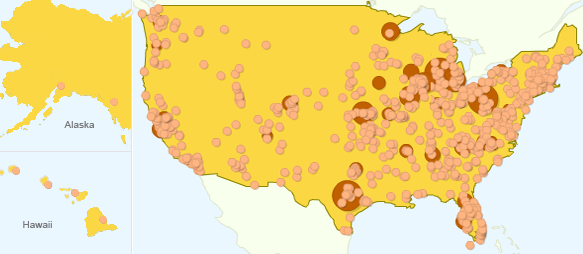
    According to Google, they received more than 1,100 community responses and more than 194,000 responses from individuals interested in Google Fiber for Communities. (The deadline was yesterday.) They have created a map that shows where the communities are located and pinpoints areas that had more than 1,000 individual responses. It looks as if Duluth/Twin Ports was one of a dozen or so communities to reach that level of community response.

    So who applied from Minnesota? I don’t have a definitive list, but with some help from Ann Higgins, I have compiled a list: (I’ve tried to include links to the applicants themselves where I could find a web site. If someone has a link or community to add please send it my way.)

    Additions sent to me (thanks for sending!)

    It seems as if almost everyone has been getting into the game. Governor Pawlenty announced that yesterday (the deadline for the Google application) was Google Twin Ports Day. There are a few folks who wonder why cities are wasting their time (at tax payers’ expense). It’s been fun to watch from the sidelines. But the big question is – now what?

    According to Google

    Over the coming months, we’ll be reviewing the responses to determine where to build. As we narrow down our choices, we’ll be conducting site visits, meeting with local officials and consulting with third-party organizations. Based on a rigorous review of the data, we will announce our target community or communities by the end of the year.

    Of course, we’re not going to be able to build in every interested community — our plan is to reach a total of at least 50,000 and potentially up to 500,000 people with this experiment. Wherever we decide to build, we hope to learn lessons that will help improve Internet access everywhere. After all, you shouldn’t have to jump into frozen lakes and shark tanks to get ultra high-speed broadband

    They note that we’re the huge response has already demonstrated that “people across the country are hungry for better and faster Internet access”.

  • Qwest ARRA application

    Qwest has submitted an ARRA broadband stimulus application for Round Two funding. The goal is to extend broadband at speeds of 12 to 40 Mbps to rural communities throughout its local service region. They are requesting a grant of $350 million for a project with a total cost of $467 million.

    According to Qwest, here is how Qwest’s application would benefit Minnesota:

    Total Network Investment: $54.5M
    Number of New Sites: 228
    Number of Newly Served/Upgraded Living Units: 47,793

    The Proposed Deployment Would Reach:
    • Business: 4,505
    • Community Support Organizations: 257
    • Government Facilities: 108
    • Institutions of Higher Education: 12
    • Libraries: 1
    • Medical and Healthcare Providers: 103
    • Public Safety Entities: 22
    • Schools (K-12): 42

    Economic Impact:
    • Create/Retain 2,725 jobs
    • Increased State Income Tax Revenue: $8.6M1

    Areas Included in the Proposed Deployment:
    Adolph, Anoka, Avon, Barnum, Battle Lake, Bovey, Braham, Brainerd, Buffalo, Cambridge, Carlton, Cloquet, Cohasset, Cold Spring, Dalbo, Detroit Lakes, Dover, Duluth, Elk River, Esko, Eveleth, Eyota, Faribault, Fergus Falls, Gilbert, Grand Marais, Grand Rapids, Grasston, Harris, Hastings, Henning, Hermantown, Iron, Kilkenny, Kimball, Lake Elmo, Litchfield, Little Falls, Lutsen, Mahtowa,, Merrifield, Moorhead, Moose Lake, Mora, Morristown, Nashwauk, Nisswa, North, Branch, Northfield, Ogilvie, Oronoco, Park Rapids, Pengilly, Pillager, Pine City, Princeton, Proctor, Rice, Richwood, Rochert, Rochester, Rush City, Saginaw, Saint Augusta, Saint Cloud, Saint Joseph, Sartell, Sauk Centre, Sauk Rapids, Stanchfield, Stillwater, Sturgeon Lake, Swanville, Twig, Welch, West Lakeland, Wrenshall and Zimmerman.

    1 This assumes each job has an annual salary of $45,000. Taxes are at the “married, filing jointly” rate.

  • Another Minnesota ARRA award

    Well it’s been a big day for Blandin, as Bernadine Joselyn announced today, Blandin was award ARRA broadband stimulus funds. It’s exciting and we’ll be sure to post update on the MIRC project on the blog. I wanted to give a quick mention to the other grant announced today that will help boost broadband in Minnesota…

    Arizona, California, Colorado, Idaho, Maryland, Minnesota, Missouri, New Mexico, Pennsylvania, and Texas – Mission Economic Development Agency: $3.7 million public computer center grant with an additional $2.5 million applicant-provided match to create 12 new public computer centers and expand five existing ones in Phoenix, Ariz.; Canoga Park, Los Angeles, and San Francisco, Calif.; Del Norte, Colo.; Blackfoot, Idaho; Wheaton, Md.; Minneapolis, Minn.; Kansas City, Mo.; Anthony, NM; Philadelphia, Pa.; and San Antonio and Laredo, Texas. Each center expects to operate on the project’s centrally managed network and provide computer training and adult education to a low broadband adoption, high unemployment target population through a standardized English-Spanish training curriculum.

    So we’ve got a nice addition for rural and urban Minnesota.

  • Minnesota Broadband Bill Passes!

    I don’t have a ton more to say about it but the Minnesota broadband passed today. The vote was 118 to 15.

    Here’s the text…

    1.6 Section 1. [237.012] BROADBAND GOALS.
    1.7 Subdivision 1. Universal access and high-speed goal. It is the goal of this state
    1.8that, no later than 2015, all state residents and businesses have access to broadband that
    1.9provides download speeds of no less than ten megabits per second and upload speeds
    1.10of no less than five megabits per second.
    1.11 Subd. 2. State broadband leadership position. It is the goal of this state that by
    1.122015, and continuing thereafter:
    1.13(1) the proportion of Minnesota residents and businesses having access to broadband
    1.14ranks among the five states in the United States and the 15 nations globally that have the
    1.15highest proportion of that measure; and
    1.16(2) Minnesota ranks among the five states in the United States with the highest
    1.17broadband speed that is universally accessible to state residents and businesses.
    1.18 Subd. 3. Annual reports. By February 10, 2011, and each year thereafter, the
    1.19commissioner of commerce shall submit a report to the chairs and ranking minority
    1.20members of the house of representatives and senate committees with primary jurisdiction
    1.21over telecommunications policy measuring the progress made towards achieving the
    1.22goals under subdivisions 1 and 2. The report must identify any barriers impeding the
    1.23achievement of the goals, suggest strategies to overcome those barriers, and estimate
    1.24the cost of implementing those strategies.
    2.1 Subd. 4. Advisory group. By July 1, 2010, the commissioner of commerce shall
    2.2appoint and convene a broadband advisory group consisting of no more than 15 members
    2.3representing suppliers and users of broadband goods and services. Members serve without
    2.4compensation at the pleasure of the commissioner. The broadband advisory group shall
    2.5meet at the call of the chair, and shall seek public input. The broadband advisory group
    2.6shall advise the commissioner of commerce and the house of representatives and senate
    2.7committees with primary jurisdiction over telecommunications policy regarding strategies
    2.8to achieve the goals under subdivision 1. This subdivision expires June 30, 2015.
    2.9EFFECTIVE DATE.This section is effective the day following final enactment.

  • Broadband breeds broadband

    There is so much going on these days in the Minnesota legislature, the ARRA grants, the National Broadband Plan, Google network… It can seem overwhelming but it’s really a great opportunity and excuse to partner because while the options are more numerous than I ever remember, the actual resources available are still fewer than we need to get in line with the Federal or State broadband goals. Minnesota Public Radio’s piece on the recent story on the Northeast Service Cooperative and their recent announcement on their ARRA broadband stimulus award is one example. They received $43 million in federal funding, which is great – but the article points out…

    “This particular project does not provide any funding for last-mile service support,” [director of information technology for Northeast Service Cooperative Lyle] MacVey said. “However, we have a lot of inquiries coming in from both incumbents and prospective carriers that we see are going to serve those areas.”

    I’ve seen a couple of good stories lately on the need for broadband – especially in Minnesota. I think those of us how are steeped in technology can forget about the other end of the digital divide, which is why I particularly enjoyed Minnesota Ultra High-Speed Broadband Task Force member Jack Geller’s article on Joining the Underserved, a move he made when recently moving to a new location just outside Crookston. The Center for Rural Policy and Development wrote an article about broadband as a means for encouraging younger folks to stay in rural communities. As they point out, good jobs are now only a broadband link away, which is opening doors that weren’t there years ago. So the need for deployment and adoption is there.

    Also I see the opportunities for funding and change are raising awareness. The Google network opportunity is perhaps just the most glaring example. Google has shined an amazing light on broadband. Duluth/Twin Ports is one of the top publicity getters in that game. They even got a mention (and video link) in Vanity Fair! People are talking – and it’s people that don’t usually care about broadband (or at least don’t know that they care.) That conversation is helping build interest, adoption and the door to partnerships. Blandin just wrote a letter of support for the Twin Ports project – expressing an interest in partnering with the community regardless of what happens with Google funding or the Blandin NTIA grant.

    I won’t go so far as to say that partnership is more valuable than either award – but it’s made the process of applying for funds more valuable regardless of the outcome.

  • Two more MN projects get ARRA funding

    Great news for two more Minnesota regions! One project is fiber, one is wireless. One is Northeast, one is South Central. Here’s the info from the press release, I’ve included only the most pertinent parts for the Minnesota readers – you can get details on other states’ projects on the release…

    Agriculture Secretary Vilsack Announces Rural Broadband Projects to Bring Economic Opportunity to Communities In Eight States

    WASHINGTON, March 23, 2010 – Agriculture Secretary Tom Vilsack today announced the selection of broadband infrastructure projects to give rural residents in 8 states access to improved economic and educational opportunities. Funding for the projects is being provided through the American Recovery and Reinvestment Act.

    “The broadband projects announced today will give rural Americans access to the tools they need to attract new businesses, educational opportunities and jobs,” Vilsack said. “The Obama Administration understands that bringing broadband to rural America provides a gateway for businesses and key anchor institutions – such as libraries, schools, public buildings and community centers to provide services to thousands of Americans. These projects will create jobs building these networks, and the completed systems will provide a platform for rural economic growth for years to come.”

    In all, $150 million will be invested in 12 projects through funding made available by Congress in the American Recovery and Reinvestment Act. An additional $68.2 million in private investment will be provided in matching funds, bringing the total funds invested to $218.2 million. To date, $1.05 billion has been provided to construct 67 broadband projects in 30 states and one territory.

    Minnesota
    • Northeast Service Cooperative: The Northeast Minnesota Middle Mile Project; $21,749,110 loan and $21,749,110 grant. The funding will provide middle-mile, dark fiber, wavelength services to private-sector providers in rural areas of northeast Minnesota.
    • Minnesota Valley Television Improvement Corporation: The Minnesota Wireless Expansion Project; $562,776 loan and $562,776 grant, and $281,388 of private investment. The funding will provide a two-way broadband internet network to unserved and underserved areas of west central and south central Minnesota, providing 34 additional wireless (WiMAX) access points.

    Here’s a little more info on each project:

    Applicant Northeast Service Cooperative
      Mountain Iron, MN
    Contact Lyle MacVey
       218-748-7623 
    Project title Northeast Minnesota Middle Mile Project
    Program BIP/BTOP
    Project type Middle Mile
    Grant request* $ 32,135,681
    Loan request $ 11,362,539
    Status Received
    Description The Northeast Service Cooperative in partnership with state & local agencies, schools & health care organizations will implement a middle mile project to make dark fiber, wavelength services available to private sector providers in rural areas of northeast Minnesota. The project will improve access to critical education & health care services to 20,000 households which lack broadband services.
    Applicant Minnesota Valley Television Improvement Corporation
      GRANITE FALLS, MN
    Contact Daniel Richter
       320-564-4970 
    Project title Minnesota Wireless Expansion
    Program BIP
    Project type Last Mile Non-Remote Area
    Grant request $ 562,776
    Loan request $ 562,776
    Status Received
    Description MVTV Wireless is proposing to continue building out it’s two-way broadband internet network to un-served and underserved areas of west central and south central Minnesota. The proposed project will add 34 additional WIMAX Access Points in 34 un-served and underserved communities adjacent and contiguous to its current service area.

    Sorry this is a little slow off the mark. I have learned a valuable lesson about working remotely – it saves time and hassles. It took me 37 hours to get from Dublin to St Paul this week. I’m in town for a presentation. Next time I think I’ll offer to present online. (Although sunshine wise I picked a great week to come home!)

  • Minnesota Idea Open

    Minnesota Idea Open is mostly a web-based contest for good ideas. It seems as if they will be tackling different issues. They pick an issue, ask Minnesotans to submit solutions, pick a winner. There are prizes to be won for your community and yourself. The first issue: What is your idea for addressing obesity in Minnesota?

    You can track (or participate in) the contest through the web site, Facebook page, Twitter or YouTube. The medium is the reason that I’m posting about the project here – although I decided that the connection was tenuous enough to wait for the weekend to post. But I think it’s great to see how the Internet is being used to generate civic discussion and engagement.

    Could this idea work offline? Probably, but at a much more local level. The contest opened March 18 and I can see that there are already 40+ submissions and they are 500+ fans on Facebook. Now if I can just think of a way that broadband can address obesity!

  • Bemidji supports the National Broadband Plan

    I’ve been waiting to see what the mainstream media – especially outside the big metropolitan areas would think of the National Broadband Plan. When the Minnesota Ultra High-Speed Broadband Task Force unveiled recommendations there was a wide range of opinions. Some thought it was too lofty; others were pleased with the direction. So what are people saying about the National Broadband Plan?

    The Bemidji Pioneer calls it a plus. They praise the proposed “goal of connecting 100 million households to affordable 100-megabits-per-second service” and quote President Obama…

    “America today is on the verge of a broadband-driven Internet era that will unleash innovation, create new jobs and industries, provide consumers with new powerful sources of information, enhance American safety and security, and connect communities in ways that strengthen our democracy. Just as past generations of Americans met the great infrastructure challenges of the day, such as building the Transcontinental railroad and the Interstate highways, so too must we harness the potential of the Internet. Expanding broadband across the nation will build a foundation of sustained economic growth and the widely shared prosperity we all seek,” President Barack Obama said Tuesday about the report.

    The article also gives a nod to local providers, especial Paul Bunyan who are already on their way to serving the local community both in terms of pre- and post- National Broadband Plan standards.

  • Klobuchar introduces bill for broadband consumer protection

    On March 15, Senator Amy Klobuchar filed the Broadband Service Consumer Protection Act, a bill requiring Internet Service Providers (ISPs) to accurately advertise their delivered broadband speeds. Here’s the short description from the bill: (You can find a draft version of the bill on the StimulatingBroadband site.)

    To improve consumer protection for purchasers of broadband services by requiring consistent use of broadband service terminology by providers, requiring clear and conspicuous disclosure to consumers about the actual broadband speed that may reasonably be expected, and for other purposes.

    And a slightly more fleshed out version from Senator Klobuchar’s web site:

    The Broadband Service Consumer Protection Act calls on the Federal Communications Commission (FCC) to develop uniform performance standards so consumers can more easily compare service offers before purchase and find out if they are receiving the high-speed service they are paying for each month. This legislation, cosponsored by Senators Kirsten Gillibrand (D-NY) and Mark Begich (D-AK), responds to the practice of internet providers regularly advertising internet service speeds that are often much higher than the actual speed the average consumer receives.

    According to StimulatingBroadband

    The Klobuchar bill is the first legislative effort to implement the consumer protection recommendations of the NBP. More significantly, the proposed Act is the leading federal effort of the last several years to seeking to provide ‘truth in advertising’ protection for broadband subscribers, irrespective of their chosen delivery platform.

    It will be interesting to see how this is received by various sectors. It’s tough to challenge truth in advertising – but there are a lot of moving pieces to a broadband connection. It will also be interesting to see what changes suggested by the National Broadband Plan are so quickly put into action.

  • Why is the US slower?

    You know that broadband has made the mainstream cut when it makes WCCO’s Good Question of the Day! Jason DeRusha asked Christ Mitchell (from Institute for Local Self Reliance) about it this week, “Why Is Our Internet So Slow?”

    Here’s a quick excerpt from the show:

    In Europe, it’s a different set-up.

    “They have greater competition in the broadband market and that all comes from government policies,” said Mitchell.

    In Europe, there’s often one company that builds the network (often a non-profit cooperative or a government-run agency), and separate competing companies that are allowed to pay for the right to sell service to customers.

    That creates a market for innovation and lower prices.

    He does a good job of explaining the open access network  and more for a wide range of audiences. You can watch or read the story online.