Author: arclein

  • Janosh and Saïe Share


    I share this item from Janosh.  He is an artist based in the Nederland` who has produced a number of images inspired by crop circle images and apparently his muse who tells of a coming transition of human consciousness.
    I suspect most readers find this style of discourse difficult and even annoying.  Yet the hard ideas presented do fit nicely into the substantive paradigm we have step by step developed regarding a prior rise of humanity before the Pleistocene Nonconformity and the then advent of space adapted humanity.
    The obvious conclusion to be drawn from these ideas is that this coming generation will lift Earth’s quarantine and establish contact with our cousins in space habitats.
    With those thoughts in mind, it is easier to read this material even if the author does not share the same insights.
    Saïe wishes to share other important information with you.
    • The most important points are:
    • We are entering into frequencies of Reverse Strength
    • Earth is in the Biosphere-Noösphere transition
    • Earth and humanity are quickly withdrawn from their quarantine
    A new electro-magnetic grid is being made
    This simplifies our evolution process
    Binds us with each other and the cosmic community
    It equals the electro-magnetic grid from the Old Atlantis.
    Re-awakening your own strength
    It’s now to time to reawaken your own strength. In the new, higher frequencies you are obliged to let go of the past and also the negative energies where a lot of people are trapped at the moment. I call this the old matrix, the energy field around the earth, which is full of negative, constraining programming. If you can break away from this, then you will be able to make contact with the mission, which you as a soul had already planned. Your personal blueprint, the task you set yourself on earth becomes clear. That can be confusing, but it is important, particularly at this moment and taking into account what is going to happen, to believe in your own strength, trust and remain close to your own truth. In this way you will inspire those close to you and be able to help others in their own transformation process. Saïe says: “Convincing others or wanting to be right, often works completely in the opposite way”.
    Reversing Force
    The frequencies that we will work with in the future will have a reversing power, which will bring us back to our authentic self. We will become re-joined to the power we had pre-birth, which is connected to the power of insight of the Universe. This may feel strange. Old patterns, deep-rooted negative beliefs and certain reluctance from old fears may come to the surface. However, just know: these are the last few hurdles. Synchronization will increase. Watch out for things that suddenly cross your path, because they will show you the way.
    Biosphere – Noösphere Transition
    Let’s just look at the whole picture (1). According to one of the Mayan prophets (The Law of Time) we must be ready before 2012 to shift into the next phase of evolution. Because the vibration frequencies within the universe automatically change with the procession of the stars and planets, human consciousness follows suite. It just vibrates naturally with the rest. Consciousness is actually the foundation for everything, which exits. This universal star parade happens on Earth, something which Mayan expert, José Argüelles calls the Biosphere-Noösphere transition. In other words this means the point when combined field of planetary consciousness exists. (Noösphere). The noösphere is the most recent phase of development of Earth and follows the biosphere (the part of the earth where life is difficult and polluted –J).
    On-going project
    Our current day problems began in the old Atlantis. Drunvalo Melchizedek announced that he would reveal an important message in May 2010. He is going to tell that there is an on-going project to bring people back to their trusted consciousness levels. In a preview he said: “Long ago, approximately 13,000 years ago, the human grids of consciousness fell apart and people began to loose their higher consciousness. It’s called “The Fall “in the Bible. Their Mer-ka-ba fields or in other words, their light bodies were extinguished, which exposed them to the effects of the earth-magnetic fields, which were also shut off. The memories of humanity were erased”. The earth and humanity were put into quarantine. Shut off from the rest of the universe. Now we live in a time and EVERYTHING will quickly be restored.
    The electro-magnetic grid
    Through the centuries certain people came forth to keep “Earth’s light burning” and just “to be” spiritual wise men, or make (r)evolutionary discoveries. Think about Buddha, Socrates, Jesus, and Tesla etc. Drunvalo says;” Work was performed at a deeper level to develop/repair the enormous network of lines around earth and therefore to create a specific human grid of consciousness, in order that humanity could return to their higher consciousness, just like it used to be”.
    In Atlantis the influence of the spirit over matter was well known they knew that Spirit thinking/thoughts (consciousness) was where the Light came from. Everything was created from Light. People were conscious of the electro-magnetic grid – a sort of energy matrix – under the earth’s surface.
    Cosmic Community
    The remains of this very impressive energy matrix can still be found on earth in the form of leylines. You could say that Heaven and Earth were joined through this matrix. This grid gave people the opportunity to, for example, telepathically be in contact with one another, to heal, to have access to very advanced technologies, to journey through the corridors of time and also to be in contact with above, the star people. Nowadays the majority of people have little of no affiliation to this, but in former times people were very well aware of their role in the universe, and thus the cosmic community. In the times that are coming an opportunity to reconnect with other life forms in the universe will be repaired. But before this can take place on a larger scale, we will have to take care of ourselves and make ourselves “one” with the universe.
    The greater plan for Earth
    In this context I have to think about the “100th monkey” effect. The more people open themselves to contact for life within the higher dimensions, how quicker a critical mass will be achieved that will show full openness. Really, taking the challenges before us into account at this moment means that contact with extra-terrestrial life on a larger scale is not the first and most important priority. It is more a logical consequence of a development, which is already underway, and which cannot be stopped. Our attention should be Earth and everything that lives on it. That is also the point for the cosmic community. I often ask myself why Saïe takes so much interest in my personal development, and now it seems much clearer. It’s nothing to do with me personally, but it is all part of a much larger plan for Earth and her role in the universe.
    Cosmic Mirrors
    The way, in which we treat ourselves, has great impact on the universe. The universe is one big hologram. People are like cosmic mirrors. So like each part of a hologram, which contains all the information about everything, so can a human cell contain a complete blueprint of the person. And that is why humans have a complete blueprint of the universe within themselves. It is now time to renew our consciousness of our role in the universe. Saïe calls us crazy “Gods in exile” He teaches me that the Earth in a central planet within our universe. The Earth is a melting pot of races, which have come from the whole cosmos. Nowhere else in the universe is there so much variation as on our planet.
    War of the Heavens
    On our planet something has been worked out which has effect on the total universe. According to Mayan prophets (The Telektonon) the current planetary crisis is a climax of inter-dimensional, inter-planetary Time Wars, the war of the heavens. It too complicated to go into in depth, but there will be many surprises from within the totally immeasurable depth from the galactic consciousness. In fact the cosmic community will also benefit from Earth’s transformation process into the 5th Dimension, the dimension of thought from oneness. The dimension in which we consciously co-create with the Source and use our full potential as “Gods” – or in other words multi-dimensional beings – . Not only Earth but also the entire universe will move to a higher frequency.
    Partytime!
    It is a fact that for example, crop circles are becoming more complex, the number of UFO sightings increasing dramatically, volcanic eruptions and earthquakes take place more frequently and amongst other things, political and economic systems collapse and more and more people use the rest of their DNA, form the evidence that a new matrix is in the making. The new electro-magnetic Earth grid is increasing in frequency, to the same strength as in the time of Atlantis. The new grid facilitates the process in which we find ourselves. Personal growth no longer needs to be a painful process if we so choose. I am a great believer that we should create a great party. Isn’t it marvelous what is happening? It’s taken 10.000 years to reach the current level of frequency. Plus the fact that there is a miraculous galactic equality of our universe on the programme.And you and I live NOW!
    Choosing for Liberation
    This process is unstoppable and we will enter – like the Mayan called – the 6th world, and it is and remains important that as many people as possible wake up and prepare themselves inwardly. On earth as on the outside, is an enormous feeling of urgency in these desperate times. A clear tidy consciousness is necessary to bring the higher energies from the cosmos into and through someone’s body. If we want to escape from this destructive effect of the current negative matrix, we need to step outside of our thinking. We will have to synchronize both halves of our brains and make a connection with our heart centre so that we are able to make a direct connection with the new grid.
    The language of Atlantis
    Don’t be afraid if you see that the chaos is increasing. Don’t judge in words of “good” or “bad”. Don’t let yourself be carried away in the river of fear. You can choose for liberation. Something, which can enable us to find peace and something to inspire our sub-consciousness, is the language of Atlantis. By this I mean the Sacred Geometry codes, which played a great part during this time. This is the language of our soul, the building blocks of our creation and you and are are geometry. The power of geometry can inspire us to re-find our inner strength. The frequency of the last code, Ultimate Return, can help you in your reverse strength to come back to the authentic you, before you were born, joined together with the strength and power of the insight of the Universe. We are on the way to deep routed awakening!
    Heart to Heart,
    Janosh
    Copyright Notice:

    Copyright 2010 Janosh Art. www.janosh.com This information is meant to circulate and may be freely disseminated, in whole or in part with the following conditions: Use of this material signifies that the user aggress to the following conditions: 1. The words “Copyright 2010 Janosh. www.janosh.com” will be included with all published material. 2. User agrees that all rights, including copyrights of translated material, remain the property of Janosh Art. If you translate this material we reserve the right to share that translation with credit to you as translator, on the Janosh site to make it available to all.
  • Everybody out of the Water


    The great technological achievement was to learn how to drill a well one mile down.
    Except they did not bother to develop the hardware to properly shut down after an accident that was all but inevitable.
    Even the blind, dumb and stupid now knows that this must be done.  That it was not done should mean an industry wide shutdown and general assessment of costs until this problem is satisfactorily fixed.
    And do not even think of putting one of these suckers in the Arctic.
    It is clear that a number of things went wrong.  It is also clear that that is inevitable and assigning blame is a cheap human exercise.  The prospect of failure should have been imagined at the next level and countered and so on up the top.  Just as that is impossible in the airline industry, it is impossible in this industry.
    Yes the signals were there and they were dismissed.  They died.
    We need technology that allows the shutting in of a runaway well.  If that means installing a temporary large enclosure over top of the well head that permits the escape of excess fluids in an accident, then so be it.  There is a safe time to install such a rig before the well is spudded and a safe time to extract the rig once the well is complete and fully rigged for production.
    The blow out preventers need to be rigged in a fail safe mode.  This one failed merely because of a loss of hydraulic pressure which was a completely predictable failure mode.  Other modes may also have been in play here but this was the one up front.
    BP’s New Legacy: Everyone Out of the Water!
    By Nick Hodge | Thursday, May 27th, 2010
    Michael Steele’s having a bad year.
    The embattled Republican National Committee Chairman has had to battle opposition to his leadership within his own party, defend his organization’s $2,000 tab at a Hollywood strip club, and explain away his use of the term “honest injun” to Native American groups…
    But when BP’s Deepwater Horizon oil rig exploded in the Gulf of Mexico last month and began what’s now looking to be the worst environmental disaster in American history, Steele’s year got a whole lot worse.
    That’s because Steele is the guy who’s forever immortalized on tape leading the 2008 Republican Convention crowd of over 20,000 in a resounding chant of “Drill Baby Drill!” — an image that clearly resounds from the last presidential race.
    So imagine how he’s feeling today.
    Every corner of Washington can’t distance themselves from the offshore drilling industry fast enough.
    The industry that was once celebrated as perhaps the savior of domestic energy production is now public enemy # 1 in almost every corner of the country.
    Washington to Wasilla… Wall Street to Main Street… Everywhere you turn, politicians and pundits are falling over themselves trying to get as far away as possible from deep sea drilling.
    And every time CNN or MSNBC or Fox News — yes, even Fox News — wants to show viewers how much lawmakers and talking heads were in love with offshore oil just a short time ago, they’ll cut right to the clip of Michael Steele.
    “Drill Baby Drill!”
    This guy can’t catch a break.
    And if you think it’s only Democrats who are vilifying deep sea drilling, think again…
    Just check out this quote by a prominent U.S. politician:
    …this tragedy should remind us that America needs a real, comprehensive energy plan… which includes more of everything: more clean and renewable sources of energy such as nuclear power, wind, and solar energy, more alternative fuels, more conservation, and more environmentally responsible development of America‘s energy resources.
    Want to take a guess at which tree-hugging liberal said it?
    Al Gore? Nancy Pelosi? John Kerry?
    Nope. These words belong to House Minority Leader John Boehner, a Republican from Ohio.
    And how about this assessment of the aftermath of the BP Spill by a leading cable news commentator:
    …it’s not a matter of if they’ll be a disaster of some kind resulting of this kind of offshore drilling, it’s only a matter of when. This verifies that argument and becomes a powerful factor in the debate over what to do next. I don’t see any way around the political reality that this will set back the cause of offshore drilling in the United States
    Which member of the left-leaning media said this?
    Anderson Cooper? Rachel Maddow? Keith Olberman?
    Think again — this statement was uttered by none other than Fox News’ ultra-conservative Brit Hume…
    It seems like we’ve finally found something to unite the parties.
    On both sides of the aisle, the tide has turned shockingly fast. Gov. Schwarzenegger of California — who had supported deep sea drilling off his state’s coast — has now recently changed his mind and spoken out against it.
    President Obama — who, in late March, finally relented against increasing pressure to approve more offshore oil projects and gave the OK to rigs in Alaska, the Eastern United States, and the Gulf — is now backpedaling and freezing all new permits for the time being.
    And a CNN public opinion poll shows that support for offshore drilling has dropped 17% nationally between August 2008 and May 2010.
    It’s clear that the oil game is about to change… possibly forever.
    But what does that mean?
    Well, first of all, it means that deep sea oil will take a hit — a hard hit — for quite a while.
    But it won’t die; there’s simply too much oil in the ocean to let it all go, no matter how many disasters occur.
    “An oil spill here or there hasn’t gotten in the way of oil extraction anywhere,” states Peter Maass, journalist and author of the 2009 book Crude World: The Violent Twilight of Oil.
    In the short term, don’t expect to see many new rigs popping up from your beach chair this summer; at least in the short term, oil companies are going to be forced to move inland.
    That means outlets like the oil sands in Utah are going to see increased attention and exploration. So far, 32 billion barrels have been identified. Oil companies undoubtedly will start sending in teams looking for more.
    But perhaps the greatest beneficiary from the BP disaster will be oil shale deposits — particularly ones in North Dakota‘s Bakken region.
    The good news just keeps on coming out of this domestic oil hot spot. Brigham Exploration Co. announced yesterday positive results from two more of its wells in its core Bakken acreage.
    That was enough to send its share price up 11% on Wednesday.
    Every day, the barrel estimates just keep going up in the Bakken region. And with oil companies staying out of the water for the time being, odds are we’ll be seeing a lineup at the North Dakota state border as the petro barons fight for a piece of what’s bubbling up from the shale.
    So then what’s the play?
    Well in the coming weeks, stay tuned to Energy and Capital for a new report detailing three small American companies making big moves into the Bakken region.
    This is, without a doubt, one of the rarest opportunities to exploit public sentiment for profit that I’ve ever come across.
    You’ve heard it before, but it bears repeating: Crisis breeds opportunity.
    We’ve got the crisis — now prepare for the opportunity.
    Watch for this new report appearing soon. 
    Call it like you see it,
  • Lake Tanganyika Warms


    I find the arguments trotted out here to be unconvincing.  In fact the proxy measures the lakes productivity and we are arguing that the control variable is temperature.  A far more important variable in the twentieth century must be local population which has steadily risen and surely surpasses anything over the past 1500 years.
    The information is valuable but the causation argument is at best specious.  Throw that away and we have an increasing impact of human development inducing productivity changes and that is hardly a surprise.  This looks like an international grant application written before Climategate and dreams of international funding to manage so called global warming.
    It is also a reminder of the extraordinary productivity of lakes in the tropics.
    Actually this reminds me that artificially inducing inversion is an excellent strategy for optimizing the productivity of these lakes.  It would also be far more practical to do just that here than on the open ocean.
    The idea is to induce the deep nutrient rich water to rise to the surface and blend with surface waters.  An artificial tube of neutral buoyancy can make that happen and once the flow is established, it should be self sustaining provided the tube is large enough to provide little friction or resistance to the flow.
    In this way the surface water productivity and volume can be strongly increased.  Perhaps air can also be injected into the base of these columns to assist in increasing the oxygen content of the lake.
    20th-Century Warming In Lake Tanganyika Is Unprecedented
    by Staff Writers
    Tucson AZ (SPX) May 25, 2010
    Lake Tanganyika’s surface waters are currently warmer than at any time in the previous 1,500 years, a University of Arizona researcher and his colleagues report online in Nature Geoscience.

    The rise in temperature during the 20th century is driving a decline in the productivity of the lake, which hosts the second-largest inland fishery in Africa.

    “People throughout south-central Africa depend on the fish from Lake Tanganyika as a crucial source of protein,” said study co-author Andrew S. Cohen, a UA professor of geosciences. “This resource is likely threatened by the lake’s unprecedented warming since the late 19th century and the associated loss of lake productivity.”

    This is the first detailed record of temperature and its impacts on a tropical African ecosystem that allows scientists to compare the last 100 years with the previous 1,400 years, Cohen said.

    The team attributes the lake’s increased temperature and the decreased productivity during the 20th century to human-caused global warming.

    “We’ve got a global phenomenon driving something local that has a huge potential impact on the people that live in the region and on the animals that live in the lake,” he said.

    The annual catch of the Lake Tanganyika fishery is estimated at about 198,000 tons per year, more than 20 times greater than the U.S. commercial fishery in the Great Lakes, he said. The nations of Burundi, Tanzania, Zambia and the Democratic Republic of Congo border the lake, which is the longest lake in the world and the second deepest.

    The surface waters of Lake Tanganyika are the most biologically productive part of the lake. For the 1,400 years before 1900, those waters were no warmer than 75.7 F (24.3 degrees C). Since 1900, the lake’s surface waters warmed 3 degrees F, reaching 78.8 degrees F (26 degrees C) in 2003, the date of the researchers’ last measurement.

    The researchers used sediment cores from the lake bed to reconstruct the 1,500-year history of the lake. The scientists analyzed the cores for chemicals produced by microbes and left in the sediments to determine the lake’s past temperature and productivity.

    Because sediment is deposited in the lake in annual layers, the cores provide a detailed record of Lake Tanganyika‘s past temperatures and productivity and of the regional wildfires.

    The instrument record of lake temperatures from the 20th century agrees with the temperature analyses from the cores, Cohen said.

    The cores were extracted as part of the UA’s Nyanza Project, a research training program that brought together U.S. and African scientists and students to study tropical lakes. The National Science Foundation funded the project.

    “A big part of our mandate for the Nyanza Project was looking at the interconnectivity between climate, human activity, resources and biodiversity,” said Cohen, who directed the multi-year project.
    Lake Tanganyika and similar tropical lakes are divided into two general levels. Most of the fish and other organisms live in the upper 300 feet (about 100 meters). At depths below that, the lake waters contain less and less oxygen. Below approximately 600 feet, the lake water, although nutrient-rich, has no oxygen and fish cannot live there.

    During the region’s windy season, the winds make the lake’s surface waters slosh back and forth, mixing some of the deep water with the upper layers. This annual mixing resupplies the lake’s food web with nutrients and drives the lake’s productivity cycle, Cohen said.

    However, as Lake Tanganyika warms, the upper waters of the lake become less dense. Therefore, stronger winds are required to churn the lake waters enough to mix the deeper waters with the upper layer. As a result, the upper layers of the lake are becoming increasingly nutrient-poor, reducing the lake’s productivity.

    In addition, warmer water contains less dissolved oxygen, reducing the quality of the habitat for some fish species.

    Other lakes in Africa are showing similar effects to those the team found in Lake Tanganyika, he said.
    The finding has implications for lakes in more temperate climates.

    “Increasingly, lakes in the U.S. are warming and they’re behaving more like these African lakes,” Cohen said. “There’s a potential for learning a lot about where we’re going by seeing where those lakes already are.”
  • Fossilized Egg Shells Yield DNA

    I am optimistic that we are going to be able so substantially restore a wide range of presently extinct bird species wiped out over the past two centuries.  First of we actually have great collections of dried eggs collected by naturalists during those times.  This can provide the necessary DNA.  Thus while replicating older DNA will be a profound challenge, our lost Moa and Dodos and passenger pigeons are really the low hanging fruit.
    These can all be replicated and cloned out using skills already in place or presently soon to be available.  It is not a gimme but it is seemingly in striking range.
    We have a wide range of extinct birds that we want to see restored and present knowhow is telling us that it is all possible.
    Most of the chatter has been about dinosaurs and of course mammoths.  Yet we have inflicted real extinction on a wide range of critters ourselves just in the past two centuries. Restoring some of the populations seems reasonable and we may do a lot better this time.  Perhaps we can really discover just how the passenger pigeon got wiped out.
    Somehow we will not be restoring the North American locust anytime soon though.
    I also think that a lot of money and resources will be available.
    FOSSILIZED EGGSHELLS YIELD DNA
    These ancient DNA samples could open the door to cloning long-extinct species.
    By Jennifer Viegas Tue Mar 9, 2010
    DNA samples from the eggshells of extinct birds, like this elephant bird egg, could provide valuable insight into the evolutionary histories of a number of animal species.
    Natural History Museum, London 
    THE GIST:
    For the first time, scientists have successfully extracted DNA from fossilized eggshells.
    Since many of the eggshells belonged to extinct birds, it may now be possible to learn more about mysterious prehistoric species.
    Eggs retrieved from cold climates could lead to recovery of very ancient DNA.
    In a scientific breakthrough that opens a window to now-extinct animals from the prehistoric past, researchers have just successfully recovered DNA from several fossilized eggshells collected from Australia, New Zealand and Madagascar, according to a new study in the latest Proceedings of the Royal Society B.
    While dinosaur eggs remain a challenge, the scientists have already collected DNA for the largest bird that ever lived — the elephant bird Aepyornis — that stood around 10 feet tall and weighed around 880 pounds. Attempts to retrieve DNA from elephant bird bone previously failed, so eggshells may prove to be a more reliable source.
    In the future, everything from prehistoric penguin eggshells to those of tiny birds could be mined for DNA, particularly since few research limitations seem to exist.
    “Furthermore, we were able to isolate DNA from eggshells from three countries, each with very different climate conditions,” added Oskam, a researcher at Murdoch University‘s Ancient DNA Lab.
    She and her colleagues obtained DNA from extinct moas and ducks from New Zealand, extinct elephant birds from Madagascar, and an emu and owl from Australia. The oldest eggshell belonged to an emu that lived 19,000 years ago.
    Basic materials within eggshells — calcium carbonate and an organic matrix — break down very slowly, helping to explain why shells don’t compost well. The structure wards off decay, which protects contents right after the egg is first laid, but then facilitates preservation of the eggshell itself over millennia.
    Oskam explained that the “moa eggshell has 125 times lower microbial contamination when compared to moa bone. This highlights eggshells as an attractive substrate for ancient DNA work, especially whole genome studies.”
    She believes that reviving an extinct animal is unethical, so cloning of now-extinct birds is unlikely. She hopes, however, that the gathered genetic information might provide better evolutionary histories for extinct species. It could also enable researchers to non-invasively investigate the past biodiversity of many birds, including modern ones, like penguins.
    Oskam suspects eggs retrieved from cold environments, such as in the Arctic and Antarctica, could lead to “DNA of much greater antiquity.”
    Many dinosaur eggs have been found, including entire nests full of eggs. “It would be extremely exciting to extract DNA from a dinosaur egg,” Oskam added. But she also suspects that completely mineralized fossils, meaning those that have turned into rocks, pose challenges not yet possible to overcome.
    “Since the last dinosaurs died out 65 million years ago, it is safe to say we are nowhere near approaching these sorts of ages,” she said.
    “It’s wonderful that nearly three decades after the first successful analysis of ‘ancient’ DNA, we are still discovering new sources of paleogenetic data,” Beth Shapiro, an assistant professor of biology at Pennsylvania State University, told Discovery News.
    “It’s particularly exciting that DNA appears to survive for a relatively long time in eggshells preserved in warm environments,” Shapiro added. “There is no doubt this discovery will expand both the geographic and taxonomic range of research in our field, and as such will make a considerable impact.”
    Oskam and her team are already using eggshells to study how people interacted with the giant moa when the Polynesians first came to New Zealand about 800 years ago. The large bird unfortunately may have been an easy dinner on legs, since it went extinct just 300 years later
  • STM type Junctions Harvest Solar Energy


    I think this is something we might get a bit excited about.   It appears to be a new and novel approach to collecting and converting solar energy into direct current.  Real world efficiency is not even attempted yet, but this promises to be interesting.
    The device concept started out as a rectifier and that is also important.
    What screams at me is the prospect of converting infrared into solar energy and generally broadening the consumed spectrum.  This can result in a gross jump in general solar cell energy efficiencies.  We always drew from too narrow a band of the spectrum and simply left most of the energy alone. This approach promises change.
    STM-type junctions harvest solar energy
    May 18, 2010
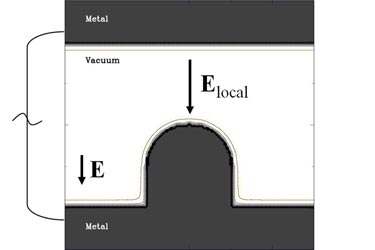
    Researchers from Belgium, Korea and the US are investigating the possibility of using metal-vacuum-metal junctions of a type similar to those found in a Scanning Tunnelling Microscope to harvest solar energy. In the design, two metals are separated by a vacuum gap of a few nanometres. One metal is extended by a sharp tip, while the other is essentially flat.
    The group has found that these junctions can be used to rectify AC voltages for frequencies that go from the infrared up to the visible. This opens up the possibility of building optical diodes to couple photonic and electronic circuits. It also provides a solution for converting the energy of solar radiation into useful DC current.
    The rectification properties of the junctions considered in this work can be traced to their geometrical asymmetry. The electric field of the incident radiation is magnified by the sharp tip, which results in a significant circulation of current in the junction when the field is oriented downwards. The flat metal that faces the tip, however, does not magnify the field of the incident radiation and a smaller circulation of current is achieved when the field is oriented upwards. There is therefore a net flow of DC current when these junctions are subject to an oscillating field.
    This idea works as long as the electrons can cross the junction before the field present in the junction changes sign. When the gap spacing is of a few nanometres only, the time taken by electrons to cross the junction is of the order of a femtosecond (this is the typical estimate of tunnelling times). This makes it possible to rectify radiation with frequencies up to 1015 Hz.
    Simulation and analysis
    To explore the concept in more detail, the researchers performed quantum-mechanical simulations of asymmetric metal-vacuum-metal junctions. They considered the rectification of monochromatic radiation as well as the rectification of a full distribution of frequencies in order to simulate a focused beam of solar radiation. The scientists found that a significant rectification of incident radiation does indeed occur for frequencies ranging from the infrared up to the visible.
    The team also analysed the efficiency with which the energy of incident radiation is converted by the device. They obtained quantum efficiencies as high as 25% for this energy conversion and the results suggest that even better performances can be expected if larger protrusions are considered.
    The occurrence of polarization resonances in the tip also improves the rectification properties of the junction. Therefore, it appears that the dependence of these polarization resonances on the material and the physical dimensions of the tip could be used to control the frequencies at which the device is especially efficient for the energy conversion of electromagnetic radiation. This opens up the possibility to build diodes of the type presented in this study for the rectification and energy conversion of infrared and optical radiations.
    Further details can be found in Nanotechnology.
    About the author
    Dr Alexandre Mayer is a research associate in the Department of Physics at the University of Namur-FUNDP, Belgium. He is sponsored by the National Fund for Scientific Research (FNRS) of Belgium. Moon S Chung is professor of physics at the Ulsan University, Korea. Brock L Weiss is assistant professor of physics at Pennsylvania State University, US. Nicholas M Miskovsky and Paul H Cutler are professor Emeritus of physics at Pennsylvania State University. This work results from a long collaboration between these different authors. The numerical simulations discussed in this work were achieved using the Inter-university Scientific Computing Facility (ISCF) of Namur.
  • Green LED Solved

    This problem has bedeviled LED technology from the first successful demonstration though they developed work arounds.  Well it is really solved and it all becomes bone simple.
    The next generation of LED lighting will be efficient and well managed.  Possibly the future light bulb will not be hot at all.  I notice that my present energy efficient devices are still hotter than is comfortable for my hand after a couple of seconds.
    This likely makes LED the dominant lighting tech from now on.  It will be cool and easily upgraded over its present levels of output to accommodate the bulk of our needs.
    First green LED means a lighting revolution is fast approaching
    18:03 April 8, 2010
    When scientists at the National Renewable Energy Laboratory (NREL) tried to apply their expertise in solar cell technology to build a green LED light from the ground up, they surprisingly centered the objective at their very first try. In doing so they solved a long-standing technological problem and paved the way for the large-scale employment of white LEDs for public and domestic illumination over the course of the next few years.
    What’s wrong with your good ol’ tungsten bulbs, you may ask? The problem is that they produce light by incandescence, which is about the least efficient way to produce light — it wastes the majority of energy to produce useless heat, which inevitably ends up inflating your electrical bill. To a lesser extent, compact-fluorescent lights also share this inefficiency problem, which has led the U.S. Department of Energy to predict that both kinds will be phased out in the space of only four and ten years respectively, leaving LEDs virtually the only player in the market.
    LED lights are unanimously regarded as a vast improvement over previous light bulbs because of their much longer lifespan and higher efficiency, which ends up saving us money in the long run, even when the higher initial cost is taken into account.
    But to create a white LED, red, blue and green light need to be combined. While the first two colors have been relatively easy to manufacture, researchers have struggled to produce a green LED. The LED-based lights available today circumvent the problem by aiming the blue light at a phosphor, which then emits green light. This does produce white light, but it is still wasteful compared to a white light that makes use of three distinct, all-LED components.
    NREL researcher Angelo Mascarenhas, who holds patents in solar cell technology, realized that a LED can be thought of as the reverse of a solar panel, since one takes electricity and turns it into light, while the other takes (sun)light and turns it into electricity.
    Mascarenhas used the knowledge gathered by NREL when they created a world-record inverted metamorphic solar cell by combining layers of different lattice sizes to optimally capture solar energy across the visible spectrum. The researchers had already tackled the problem of how to absorb sunlight in the green spectral region, and Mascarenhas built on this knowledge to reverse the process in order to manufacture a green LED.
    Absorbing green light is technically challenging because of the way the different layers of lattice that should absorb it are manufactured: if the layers don’t match up with the layer below, leaving too big a gap, the efficiency plummets to next to zero. NREL’s solution was essentially to insert extra layers of lattice that gradually bridge the gap, improving the cell’s efficiency.
    Mascarenhas’s idea was to reverse the process — that is, making a current flow between appropriately spaced layers of lattice to obtain green light – and reportedly managed to produce a radiant deep green light on the very first try.
    NREL is now trying to produce a fourth color to make the white light even whiter. They plan to arrange the four colors in a beehive structure, each cell being an LED of a specific color, so that the light will look white when seen from a distance.
    The researchers also plan to make their LED light “intelligent,” dynamically matching the percentage of the four colors to the time of the day – for instance, increasing the blue component during daylight, or the reddish-yellow during the night.
    Further predictions from the Department of Energy estimate that the move toward LEDs for both public and domestic lighting could save the U.S. as much as US$120 billion over the course of the next 20 years, as well as 246 million metric tons of carbon (approx. 5 percent of U.S. total emissions during the period 1850 through 2000) that would otherwise be released into the Earth’s atmosphere.
  • EL Chupacabras

    These articles are posted in cryptomundo and include a large number of illustrations that will be well worth perusing once the text has been read and conclusions formed.  This is still a great deal of material to read.
    It maps what we know of the creature we call ‘el chupacabras’ with some additional speculation.  The distribution is sufficiently broad that it is likely that several sub species are been described to add to the confusion.
    Once again, the most important aspect of the creature is that it is nocturnal.  This immediately makes systemic observation and captures a problem.  We have already posted on several other such creatures and all are nocturnal.  The nocturnal aspect provides a completely separate ecological niche that easily avoids contact with humanity.  Tie that into woodlands with minimal human penetration and contact is at best sporadic and fleeting.
    The most famous such creature is the Sasquatch where such direct contacts presently exceed 10,000 and has attracted faithful logging.  Others have also been posted on in this blog.
    So we can approach el C with an open mind at least.  The present situation consists of many observations and many examples of this predator’s victims.  It is possible to construct a table of conforming evidence.
    1                    Size and weight of a dog or around forty pounds.
    2                    Powerful rear legs possibly allowing it to bound somewhat like a Kangeroo and obviously able to leap onto the back of a victim.
    3                    Grey coloration predominant and some suggestion of a furless type.
    4                    Narrow snout with two fangs at end that appear too be hollow and likely replaceable.
    5                    Nocturnal predator that knocks down its prey and uses its fangs to open a vein or artery from which the blood is pumped by the victim.  Killing the victim is undesirable. Depending on access, most of the blood will flow into the attacker in as little as two minutes or so.
    6                    The creature is apparently winged in the same way as a bat.  This part is somewhat troublesome because we have no experience with creatures this size that can fly using the flight methods of a bat.  However the size is at the same range as our largest birds and general lightness must be assumed.
    7                    Yet in other locales the same apparent behavior is shown by unwinged dog like creatures that are hairless. And has odd more primitive jaws.  These have apparently been killed and inspected although it seems unremarked by specialists in taxonomy.  Most likely this is a case of unusual wild dogs been blamed for the victims.  The animals themselves need to be properly studied.
    The speed of ingesting the blood is a huge advantage because the El C becomes both the first at the victim and is long gone before other predators show up.  In fact, other predators have every reason to merely sit back and let El C finish his quick meal because their interest is in the rest of the carcass about to be abandoned in any event.
    It is possible that some meat may also be taken but the size suggests little if any.
    It is worth recalling that pastoralists in Africa do harvest blood from their animals as a food source.  The animals themselves are simply too valuable.  It is just that we are not overly used to the concept.
    I can now make some comments.  This animal appears to be very kangaroo-like and conforms to our knowledge of fossilized carnivorous kangaroos.  It is reasonable to speculate that this animal is a marsupial which frees it from maintaining a den for its young and provides continual mobility.  It can easily hole up in a different place every day and be very difficult to run down.  It does not need to be particularly territorial.  After all, how territorial are kangaroos?
    The feeding strategy is not only effective and the victim is quickly overcome, but the blood is drained so quickly, that the creature can leave the scene long before any other carnivore shows up. That is a great survival plan.
    The observations describe an animal that could be in some cases a reptile, in others a marsupial and also plausibly mammal.  After all a giant bat would be a mammal.
    We come back to a giant vampire bat that is nocturnal and normally hunts deer by dropping down on them or even bounding on to them with its powerful legs needed for getting airborne on its wings.  It could well hunt with others which would explain the taking of quite large animals such as cattle.  Too many times far more blood was consumed than readily explained by one sole animal.  Thus a giant bat is our most plausible prospect.
    The hunting method consists of sinking fangs deep into the neck area of the victim and preferably intersecting the main artery.  Also there is evidence that the animal first penetrates the cerebrum to kill the animal.  I would like to see a simple accessing of the artery while blood is still circulating.  If done that way, the victims own heart will swiftly pump out the blood.
    Other reports claim removal of internal organs which is possible, yet unsubstantiated.  I am seeing little in the way of good technical work in areas with ample evidentiary material.  Animals drained of blood provide good bodies for autopsy.  Autopsy discovers missing organs.
    This giant bat appears to have a distribution through the Americas but is not common in areas of human development which is not surprising considering how slow other wild game has been to interact.
    TEN-YEAR CHUPACABRAS STUDY RESULTS: DNA UNKNOWN
    Submitted by Javier Ortega on February 24, 2010.
    Remember the “Chupacabras craze” of the mid 90s? Shirts, songs, cartoons and toys were helping the Chupcabras become a household word.
    Originally reported in Puerto Rico, the news of this strange and scary creature spread like wildfire through the Americas. As the Spanish speaking media started to disseminate the first reports and detailed description of the creature, the reports came flooding in.
    From Brazil to the United States, most of the reports came from farmers who inexplicably had found their livestock either torn apart, or had their blood completely “sucked” dry. Many theories sprang up as well. Could this be a case of mass hysteria and local predators to blame? Did it come from a UFO or were government forces to blame for a godforsaken project gone awry? Who knows. What is known is that most of the descriptions of this creature were similar. An animal that resembled a cross between a kangaroo, a rat, and some sort of reptile. Many reported big red eyes, forked tongue and “quills” running down its back. Not tall, the creature is supposed to stand a mere 3 feet in length and is bipedal.
    The 90s are long gone and so are the flooding reports of the creature. What became of all the reports of Chupacabras sightings? Nothing really. Many unexplained animal deaths, some eyewitness accounts and random news reports is what eventually ebbed.
    Reported sightings still occur, some as recent as a few months ago in Texas. After some proper research they all turn out to be wild dogs with mange.
    Virgilio Sanchez-Ocejo from the Miami UFO Center has come forward with the results of a 10 year study on biological samples of an unknown creature thought to be the infamous Chupacabras. Virgilio released a PR statement on the popular website Rense.com
    This month marks 15 years of the beginning of a wave of attacks by the so-called Chupacabras – an unfortunate misnomer – on February 1995 in Puerto Rico. The attacks continued on into the US. We subsequently received reports from Homestead and Miami in February 1996, followed almost simultaneously by reports from California, Texas and Mexico, also in Costa Rica, Guatemala, El Salvador and Brazil. This also marks 10 years since the second wave of attacks began in March 2,000 in Calama, Chile, and continued on until the end of 2003. 
    [Cryptozoologist’s Note: Calling the creature(s) originally sighted in Puerto Rico “El Chupacabras” (the goat sucker) is only a misnomer if one ignores the method of killing used in most of the attacks (the animals’ blood was drained) as well as the fact that goats seemed to be a predominant item in the creatures’ diet!] 
    These attacks have left a toll of thousands of dead domestic animals such as chickens, ducks, doves, dogs, cats, goats pigs, and even cows (which) were attacked by the Chupacabras, leaving them all without blood…all removed through a small puncture, usually around the neck of its victims. Moreover, we received UFO sightings reports before, during and after the attacks. Also, we registered paranormal phenomena in most of the attack area. 
    In our field investigations we have accumulated: witness interviews, photos of dead animals, UFO reports, autopsies on animals, hair samples, plaster molds of the footprints, a tooth, sketch by witnesses, etc. None of this would have been possible without the help of our associates in Miami, or without our contacts in Calama: Jaime Ferrer, Arturo Menay (EPD) who was director of Radio Coya in Maria Elena, Juan Vega director of the Montessori School, Claudio Castellon, director of the Museum of Maria Elena and local young people who joined us in our investigation. 
    The laboratory analysis, of the collected samples, was done, first at the Autonomous University of Mexico by Dr. Zoar Gutierrez and Rodolfo Garrido Cotham, with the help of journalist Daniel Munoz. After several years, the samples were taken to the University of Granada by UFO researcher and writer J. J. Benitez. 
    We received the final results of a tooth analysis in December 2, 2009 by the Laboratory of Genetic Identification, Department of Legal Medicine, it was signed by Professor José Antonio Lorente Acosta. As a result of a DNA process, it was determined that the tooth does not belong to any human being, making it compatible with an animal that could not be genetically defined. 
    In conclusion, the Chupacabras is an unknown physical animal. 
    The Chupacabra’s investigation was not easy. We had to surmount innumerable obstacles, including assertions by the authorities in different countries that the attacks were caused by stray dogs or known predators and the reluctance of some scientists to even analyze samples. In one case, they wanted to keep the sample because they were surprised by not being able to identify it, and so on. 
    It took almost 10 years to receive the latest laboratory tests, a long wait. We suffered through periods of high…and low…expectations. It was not easy, but everything worked out in the end. 
    We do not think of the work as finished, and we now have a database which clearly presents the characteristics of an animal as yet unknown to science. We have a solid guide for future scientific study…and/or of further attacks. 
    Virgilio Sanchez-Ocejo
    Miami UFO Center 
    Virgilio was kind enough to forward me the faxed DNA results of the tested hair, tooth and skin samples of the “unknown” creature. 
    To: Javier Ortega
    Date: Thu, Feb 11, 2010 at 10:48 AM
    Subject Re: Chupacabras Article 
    Attach(ed) is:
    1) Lab. de Identificacion Genetica (Document in PDF)
    2) Diente1 (The tooth)
    3) Craneo (The tooth’s Skull) 
    Also:
    4) a) – DNA b) – DNA hair2 (Analysis of hair samples)
    The first image is that of the tooth. 
    According to Virgilio the tooth is naturally hollow like a hypodermic needle, which he says the animal uses to either inject or spray its victim with a toxin. According to the DNA test done by (the) Medical Dept. in the University of Granada, Spain (ugr.es) the extracted DNA from the tooth is neither human, nor from a dog or cat. The University did examine the tooth’s hollowness. According to what Virgilio said, the results of the examination were that the hole was not made by a drill and was natural forming.

    The above document shows (in Spanish) the results from the DNA extraction test. It states: 

    Through the process of DNA extraction we were able to extract genetic material, however, we were not able to match said DNA with any human DNA markers, therefore making it compatible with animal DNA. We were not able to map it genetically to a known animal due to not having a previous study so that we can properly compare the study in a more approximate manner. 
    The results are obvious. It’s not human DNA, but it is animal DNA. Naturally we ask, “If it’s not human, then what kind of animal is it genetically mapped to?”
    Well, here is where it gets vague and ambiguous. 
    When I emailed Virgilio about the ambiguous results from the DNA testing, I explained that the University’s test only proves that it’s not of human origin. Meaning it could be from any of the other thousands of animal species on earth. Virgilio said that it was, in fact, compared against an animal database, but a database that included only dog and cat DNA. 
    So excluding cats and dogs, it still leaves us open to thousands of other species. Running the DNA test amongst such a huge database would take a long, long time. 
    So next we move onto the hair samples taken from the skull. 
    Not surprisingly the results are as anticlimactic as the tooth DNA results. The hair samples also state that the extracted DNA is not of human origin. The skull itself has not been submitted to scientific study. Virgilio had told me that taking such an object outside of the U.S. proves to be a difficult process with U.S. Customs. 
    So what does the “10 year Chupacabras Study” yield in the end? 
    A strange hypodermic-like tooth and hair evidence, the DNA of which is not human, cat or dog’s. 
    Virgilio has spent the last decade or so working hard in investigating these strange Chupacabras reports. Donating much of his own money and countless hours to his plight, only to end up with ambiguous evidence. The cryptic fields of science (paranormal / Cryptozoology) are not glamorous ones. There is a lot of hard work, research, disappointment and ridicule that comes with the territory. One must always stay on his or her toes when presenting evidence to the scientific community or risk facing public humiliation. 
    I know Virgilio has done his homework in the investigation of the Chupacabras, but with such inconclusive evidence as his 10-year study has produced, one can’t help but to be upset that the results were not more concrete. 
    In the end, Virgilio (as well as other Chupacabras investigators) can only hope that these results of “unknown animal DNA” could be from an animal unknown to science, but for now he must continue on with his sisyphean plight. 
    Good luck!
    [Cryptozoologist’s Note: While the results of this study are interesting, they basically do nothing to enlighten us as to the identity of the first two kinds of El Chupacabras, which were originally sighted in Puerto Rico (see the links to my three blogs on El Chupacabras below). As a matter of fact, the author barely mentions the existence of more than one kind of creature having been identified by the same name. Nor, in my opinion, does it completely resolve the identity of all the dog-like creatures which have been sighted, often photographed, and even collected as specimens. As far as I am concerned, the most intriguing thing about this tooth is that, regardless of its DNA, its physical characteristics do not match the tooth of any mammal known to science!] 
    THE CRYPTOZOOLOGIST’S EL CHUPACABRAS LINKS
    Comment by Crystal

    I cannot help but think that el chupacabra would debilitate by suffocation whilst injecting a venom or poison, since their activity seems to be performed in a relatively short amount of time.  I have noticed that many of the initial bite marks are on the neck or inner thighs, which suggests to me that the el chupacabra may have thermo receptors in the nose region and/or cranial infrared receptors to detect veins close to their prey’s skin. 

    I feel that it is possible that various animals that have been found dead and purported to be el chupacabra, may have been feasting on the carrion of the original attack, became ill and died due to contact with particularly virulent strains of bacteria or septic pathogens left behind by the el chupacabra that performed the initial kill and blood draining.  Has anyone in forensics been able to calculate the actual amount of time taken by an el chupacabra to kill and drain a victim?  Obviously, if the prey has been disturbed by other animal’s contact, the initial body-line position for blood draining purposes will have changed, so I would consider that to be a detriment for a blood-drain timeline.

    Feeding off of an original bite that still retained a possible active secreted venom and saliva combination containing several different toxic proteins that might contain functions that included anticoagulants that inhibit blood clotting, several compounds that prolong bleeding, compounds that prevent the constriction of blood vessels near the wound, lowering of blood pressure, muscle paralysis, and the induction of hypothermia, would lead to shock and loss of consciousness and eventual death.  The carrion feeding habits of other animals after the initial kill for blood, could describe a reason for  many of the mutilation scenarios.  Has a study been performed for these possible detections?  

    If the tooth pictured here is a hollowed out incisor with injection capabilities, I would expect it to be razor sharp and lack enamel.  Unfortunately, this article does not state what material the tooth actually is, although they refer to it as being compatible to animal DNA.  I would think that residual venom or saliva samples would be present for further DNA testing.  I would think that the internal bore pattern of the tooth pit would also be of considerable value for further comparison with known animals whether considered extinct or not.

    An intriguing article and well written, Randy!


    EL CHUPACABRAS: BLOOD-SUCKING CREATURE FROM THE NETHERWORLD, PART 1

    There are more things in heaven and earth, Horatio,
    Than are dreamt of in your philosophy
    William Shakespeare, Hamlet Act 1, scene 5

    August 25, 2002. The full moon rose above the mountain in the cloudless night, shining like a pale yellow lantern into the farmer’s bedroom. But that is not what awoke him. It was the chickens. Their panicked cries had awoken him before, and it meant they were under attack. Wild dogs had gotten into the coop, the farmer thought, or perhaps a wolf. He leapt from bed, grabbed his shotgun from the bedroom corner and hurried outside. He checked the gun for cartridges as he jogged barefoot past the long, soft shadows cast by the moonlight toward the chicken coop. The predator will die tonight, he thought, as he pushed open the small door to the coop. He burst in and took aim. But he did not shoot. Instead, he froze, his senses overwhelmed by the sight before him. Several chickens lay dead in the dirt around the clawed feet of a creature the farmer had never seen before. This was no dog, no wolf. It stood on two feet at about the height of a small child. It had dark, scaly skin and a ridge of porcupine-like spines running across its head and down its back. In its short arms ending in sharp claw-like hands, the creature held a chicken to its mouth. It was not eating its prey, but seemed to be sucking the life from it. It turned to face the farmer, its red eyes blazing, and dropped the chicken to the ground. It hissed, baring its large blood-stained fangs. Then it screeched—an unearthly, terrifying noise that drove the farmer backward into the doorway. The creature, with its front claws dangling, hopped like some mutant kangaroo toward the farmer. Dumbstruck, he stumbled backward out of the coop as the creature hopped past him with another deafening shriek. The farmer was knocked to the ground, and he could feel rough, scaly skin of the creature as it passed, and felt the warm, sickening smell of its putrid breath on his face. The creature sprung onto the roof of the coop, spread short, dark, bat-like wings, and with two bounding hops flew away into the darkness. It was only then that the farmer remembered he had his shotgun. He brought it to bear, but it was too late. The creature from hell had disappeared with one last shriek that echoed off the distant mountains.

    Although this might sound like some horror story fantasy, it is actually based on the eyewitness accounts and experiences of those who have encountered the enigmatic creature known as el chupacabras—”the goatsucker.”
    INTRODUCTION

    As I have written previously in these pages, not all the ‘creatures’ which are reported to me and other researchers around the world are truly flesh and blood in form, nor are they all really animate, at least in the conventional sense of the word. Such “creatures” are known as zooform phenomena and are often reported in conjunction with other, sometimes diverse, paranormal phenomena, including ghosts, poltergeists and UFOs. Consequently, they are often more in the realm of paracryptozoology, which deals with cryptids that don’t seem to fit within the animal kingdom as we know it; or cryptids that exhibit “paranormal” attributes. This list includes the Chupacabras—at least with respect to two of the three forms in which it is commonly reported.

    The Goat Sucker, El Chupacabra, is one of the most interesting of these “things” (as the legendary UFOlogist Ivan T. Sanderson used to refer to them), a winged phantom—originally of the Hispanic world—which is causing consternation worldwide amongst zoologists, UFOlogists and the farming community alike. It is my intention in this article to focus primarily on those sightings and reported forms which lend themselves to natural rather than supernatural or paranormal explanations.

    ORIGINS

    THE HISPANIC CONNECTION

    Puerto Rico is an island in the Caribbean to the east of the island of Hispianiola (which contains both the voodoo republic of Haiti, and the slightly less fearsome Dominican Republic). It was discovered in 1493 by Christopher Columbus and has been a self governing “commonwealth” of the United States of America since the Spanish-American war of 1898. Although since 1917 its inhabitants have been U.S citizens, they are predominantly Spanish speakers of Hispanic or mixed race descent. Both politically and geographically, therefore, it is located midway between the Houngan-led, voodoo infested, high strangeness of Haiti and the long established Colonial ethos of the British Virgin and Leeward Islands to the East. This has established a sort of cultural schizophrenia which may be important when investigating the quasi-vampiric events chronicled in this article.

    The “Moca Vampire”

    During the 1970s there were a series of mysterious attacks on domestic livestock in the area around the town of Moca, Puerto Rico. Ducks, geese, rabbits and goats were attacked. Writing in The Hispanic magazine during August 1996, Lalo Lopez noted:

    “In the 1970’s the ‘Moca Vampire’ myth emerged as mauled carcasses of animals were suddenly being found throughout the countryside near the small town of Moca. The ‘vampire’ turned out to be real—sort of. Someone had illegally introduced alligators into the delicate Puerto Rico ecosystem. The alligators mauled animals as they approached watering holes. Because alligators weren’t native to the island, residents had never seen these types of maulings and a myth regarding the ‘vampires’ was born”. 
    However, the descriptions of the mutilated animals do not sound like the work of crocodilians. All members of that family crush their prey with their huge jaws, or, conversely rip out chunks of living flesh from larger prey animals.

    While at first it was suspected that the killings were done randomly by some members of a Satanic cult, eventually these killings spread around the island, and many farms reported loss of animal life. The killings had one pattern in common: each of the victims of El Vampiro de Moca (The Vampire of Moca) had two puncture holes around its neck.

    During the 1975 wave, Salvador Freixedo observed that the smallness of Puerto Rico allowed any investigator to hop into a car and drive to the scene of the events in an hour or two—something that would be difficult to do in his native Spain, much less in the United States. It was this closeness that enabled him to be one of the first people on the scene at Moca. According to Freixedo, “two ducks, three goats, a pair of geese, and a large hog were found slain one morning on a small farm near the town of Moca. The owner was going insane, wondering who in the world could have visited this ruin upon him. The animals betrayed the wounds that have become typical of this kind of attack, and of course, they were all done with incredible precision. I did not doubt for one moment who could have been responsible for the crime… I got in my car and visited the area immediately, and realized what was filling the animals’ owner with wonder and fear: there wasn’t a trace of blood in any of the animals, and in spite of the fact that the dead geese had snow-white feathers, upon which the slightest speck of blood would have shown up immediately.”

    “Over the next few days, the newspapers continued reporting on the growing number of dead animals found in the region. No explanation could be found for these mysterious deaths. During one of my forays, I was able to see a black and white cow spread out in the middle of the field. I got out of the car and tried to reach the cow, which wasn’t easy. The dead beast had characteristic wounds on its neck and on its head. Skin had been pulled back on one side of its head, as if by using a scalpel, and the opening to one of its nasal orifices was missing, although there was no indication of rending. In spite of the whiteness of its head, there wasn’t a single drop of blood to be seen. The farmer who escorted me could not stop wondering what had caused his cow’s death. He related how that very same night he had heard his dogs barking furiously, and that a blind elderly woman who lived on the edge of the field had told him that the cattle, which ordinarily spend the night outdoors, had kept her from getting a good night’s sleep due to their frantic, maddened running from one end of the field to another.”

    THE NAME

    As sightings intensified in the 1990s, the chupacabras’ appetite seemed to grow. Researchers, investigating UFO sightings in Puerto Rico, stumbled upon reports by local residents of a strange, dog-like creature who would attack its prey and suck the blood dry. In some cases, farmers reported that literally hundreds of their animals were inexplicably slaughtered. Invariably, the animals were not eaten by any predator, but were horribly mutilated or drained of blood—hence the name, “Chupacabra”, roughly translated as “goat-sucker.” The name derives from its penchant for drawing the blood not only out of goats, but also rabbits, chickens and household pets, through small circular orifices in the animal’s body. More often than not, the most important of these wounds is located on the hapless animal’s head, where the creature’s sucking organ pierces deep into the cerebellum, slaying its victim painlessly before consuming its vital fluids. In 1991, a male dog was found dead, with nothing inside. “It was as if all had been sucked out through the eyes,” the report said. “It had empty eye sockets and all the internal organs had disappeared.” As the concept of animal mutilations was being investigated at the time—and remains an ongoing mystery—they reported their findings to other researchers back in the US.

    Known as both “chupacabras” and “chupacabra” throughout the Americas—with the former probably being the original word, and the latter a better regularization of it—the name can be preceded by the masculine definite article (“el chupacabras”), or the plural masculine article (“los chupacabras”). The term was supposedly coined by Puerto Rican television personality Silverio Pérez, who intended the name to be a joke. The actual meaning of the word “chypacabra” is goat eater.

    DESCRIPTIONS

    Physical descriptions of the creature vary. Since the first sightings in Puerto Rico in the early 1990s, there have been reports from as far north as the Carolinas and as far south as Chile. Though some argue that the chupacabra may be a real creature, mainstream scientists and experts generally contend that the chupacabra is a legendary creature, or a type of urban legend.

    Descriptions of the physical appearance of each specimen can resemble descriptions of other reports, or be completely different from other chupacabra descriptions. Differences in descriptions are too wide to be attributed to differences in the perceptions of the observers, causing cryptozoologists to speculate that chupacabra reports may in fact be attributable to several species. Although they have different appearances, chupacabra descriptions have several common traits. They are typically described as being 3 ft. (1 m) or taller, and roughly humanoid in shape.

    Three Forms

    Usually, chupacabras are said to appear in three specific forms:

    The first and most common form is a lizard-like being, appearing to have leathery or scaly greenish-gray skin and sharp spines or quills running down its back. This form stands approximately 3 to 4 feet (1 to 1.2 m) high, and stands and hops in a similar fashion to a kangaroo. In at least one sighting, the creature hopped 20 feet (6 m). This variety is said to have a dog or panther-like nose and face, a forked tongue protruding from it, large fangs, and to hiss and screech when alarmed, as well as leave a sulfuric stench behind. When it screeches, some reports note that the chupacabra’s eyes glow an unusual red, then give the witnesses nausea.

    The second variety bears a resemblance to a wallaby or dog standing on its hind legs. It stands and hops as a kangaroo, and it has coarse fur with greyish facial hair. The head is similar to a dog’s, and its mouth has large teeth.

    The third form is described as a strange breed of wild dog. This form is mostly hairless, has a pronounced spinal ridge, unusually pronounced eye sockets, teeth, and claws. This animal is said to be the result of interbreeding between several populations of wild dogs, though enthusiasts claim that it might be an example of a dog-like reptile. The account during the year 2001 in Nicaragua of a chupacabra’s corpse being found supports the conclusion that it is simply a strange breed of wild dog. The alleged corpse of the animal was found in Tolapa, Nicaragua, and forensically analyzed at UNAN-Leon. Pathologists at the University found that it was just an unusual-looking dog. There are very striking morphological differences between different breeds of dog, which can easily account for the strange characteristics.

    Some reports claim the chupacabra’s red eyes have the ability to hypnotize and paralyze their prey, leaving the prey animal mentally stunned, allowing the chupacabra to suck the animal’s blood at its leisure. The effect is similar to the bite of the vampire bat, or of certain snakes or spiders that stun their prey with venom. Unlike conventional predators, the chupacabras sucks all the animal’s blood (and sometimes organs) through a single hole or two holes.

    Many residents of South America have reported sightings of El Chupacabras, and although divergent, the descriptions share some significant likenesses. Many accounts include the visible inflation of the stomach region after El Chupacabras has been feeding. The appearance of the animal changes when an internal bladder-like organ fills with the blood of its prey. Furthermore, with almost all the sightings witnesses have reported large protruding fangs. These fangs are suspected to be hollow and be the vehicles for the blood on which it feeds.

    The chupacabra is generally treated as a product of mass hysteria, though the animal mutilations are frequently real. Like many cases of such mutilations, however, it has been argued that they are often not as mysterious as they might first appear, and in fact, a series of tests showcased by the National Geographic Channel in a show about the chupacabra pointed to the obvious conclusion that every single “animal mutilation” can be explained by either people killing them or, more likely, other animals eating them. The loss of blood may be explained by insects drinking it.

    CHUPACABRAS IN PUERTO RICO

    Since a still-unexplained subterranean explosion in the Cabo Rojo area during 1987, Puerto Rico has been the site of numerous appearances of El Chupacabras. The legend of cipi chupacabra began in about 1992, when Puerto Rican newspapers El Vocero and El Nuevo Dia began reporting the killings of many different types of animals, such as birds, horses, and as its name implies, goats. The early months of 1995 brought more sporadic sightings and reports of the Goatsucker.

    A police officer was sent to investigate an animal which had been found mutilated. When he arrived at the scene he discovered a mutilated sheep, and while examining the body, he became aware of something watching him from the shadows. He was staggered to see a creature about five feet tall with dark skin and orange-yellow eyes. When the creature left the scene the police officer chased it only to be quickly overcome with a severe headache and nausea. He soon collapsed.

    But the situation did not pick up again until the focus of activity had shifted from the town of Orocovis, deep in the mountains of the island, to the coastal town of  CanovanasCanovanas is a prosperous community that benefits from its location on Route 3, which handles the heavy traffic between San Juan on one end and Fajardo on the other. The majestic, mist-enshrouded peaks of El Yunque are only a stone’s throw away, and the excellent beaches of Luquillo attract thousands of local and foreign tourists. Canovanas also boasts the spectacular El Comandante, one of the finest race tracks in the entire world. It was this fortunate piece of real estate that the gargoylesque creature called the Chupacabras would select as its own.

    In October 1995, Luis Guadaloupe walked into his local police station in the town of Canovanas. He had an unusual story to report to the police—while going about his normal business for the day, he had a strange experience. Luis had encountered a bizarre creature:

    “It was really ugly, like a demon, around four to five feet tall with huge elongated red eyes. It moved like a kangaroo—jumping on its powerful back legs. It had a long pointed tongue which moved in and out of its mouth. It was gray but its back seemed to change colour—it gave off a foul “sulphuric-like stench”.

    Lucy Batista, residing in the Alturas de Campo Rico neighborhood, commented on the curious noises associated with the Chupacabras—inhuman screams resembling the combined sounds of a cat yowling and a goat’s braying. Not only did it frighten her, it also caused all of her animals to panic. One night, she heard the sound of an animal running behind her house. She thought it was a horse until the terrifying cackle filled the air, causing her to fear for the safety of the children in her household. Other residents of her area refer to the creature jokingly as “The Rabbit” on account of the shape of its hind legs, or “The Kangaroo,” for its ability to take prodigious leaps with its powerful legs.

    In the light of all the commotion the creature’s antics caused in Canovanas, many of the locals were surprised that no agencies aside from elements of the Civil Defense had chosen to look into the matter. “The Department of Natural Resources was called, but no one was sent to investigate. Perhaps they thought this situation was something cooked up by the townsfolk,” one local grumbled.

    The fact of the matter is that the witnesses were subjected not to the negative influence of MIBs or hostile government agents, but to the scorn of their own peers. A young woman named Mariane, interviewed by Martin, indicated that her husband’s co-workers had taken to teasing him by calling him Goatsucker all the time. Other members of their family, who had also expressed their belief in the existence of this creature, or had seen it with their own eyes, had also been subjected to ridicule. “This creature isn’t a joke,” she said angrily. “I didn’t make it up, either. It’s real.”

    Canovanas‘ Mayor, the Hon. Jose “Chemo” Soto, could not have agreed more with the young woman’s assessment of the situation, and decided to take measures aimed at capturing the Goatsucker: together with his band of cammo-clad hunters, a 200-man unarmed militia, the mayor patrolled his municipality at night in hopes of reducing whatever had been slaughtering the area’s livestock. Mayor Soto and his cadres used a cage built from welded iron fencing with a goat as bait.

    Mayor Soto was clearly pleased at the response elicited by his nocturnal patrols in search of the winged intruder: news of the Chupacabras and its nefarious deeds had made worldwide headlines. According to the mayor, one of his constituents had described the beast as a creature some three feet tall, which could increase its height suddenly, and was endowed with either a crest or horns on its head. It also had large hind legs resembling those of a kangaroo. This matter, stressed Mayor Soto, was a very serious one; his patrols served the added purpose of calming the citizens of Canovanas. His political opponent, Melba Rivera, hoping to unseat Soto in the 1996 elections, went on record saying that the incumbent mayor was doing his level best to discredit the city by his ridiculous antics.

    Meanwhile, the Chupacabras’ attacks were increasing exponentially. While its regular “beat” still remained Canovanas and the surrounding municipalities, the trail of bloodless animals led to sites on the other side of the island. It was then that people expressed the belief that there surely must be more than a single Goatsucker at work. By November 1995, the situation had reached a fever pitch—not a day went by without the elusive predator making its presence felt, as this chronology attests:

    On Wednesday, November 1, 1995 the predatory gargoyle descended upon the community of Sabana Grande. A report filed by police officer Abraham Baez of the Sabana Seca police noted that a Nubian goat belonging to Jose Vega Lugo was found in a lot adjacent to Route 167, which leads to Barrio La Torre. The officer’s report states that the animal was found missing an eye and displayed a curious wound on its neck. The carcass gave no indications of having been attacked by dogs, but the goat’s innards were outside its body. The animal had also been rendered bloodless by it nameless attacker.

    Jose Vega Lugo discovered that his goat had been slain at 3:00 p.m. in a lot near his property. Neighbors found several black hairs entwined in a barbed wire fence.

    Lt. Medina, the interim chief of the Sabana Grande district, noted that the wounds inflicted on the hapless goat “were precise and without any rending.” Perhaps to keep at bay the more fanciful explanations for the goat’s demise, he promptly added that there had been reports concerning the presence of feral monkeys in the area. Three years earlier, an unknown assailant had decimated a flock of sheep belonging to a doctor from the nearby city of Yauco. The dead animals presented the same throat punctures and had inexplicably lost all their blood.

    Mayor Jose “Chemo” Soto’s paramilitary antics may have been scorned by his political opponents in Canovanas, but were hailed as pro-active by Carlos De Jesus, manager of “Junker Correa,” an auto salvage lot located on the main highway running from Caguas to Rio Piedras. Mr. De Jesus insisted that the course of action taken by the mayor of Canovanas was neither foolish nor futile.

    De Jesus’ junkyard had just been the Chupacabras’ latest lunch stop. Upon opening for business at 7:00 a.m., he was puzzled that the five sheep and four geese he kept on the premises had not come out to greet him, demanding their morning meal. Manuel Correa, the junkyard’s proprietor, accompanied De Jesus in search of the animals, only to find they were all dead.

    “The Chupacabras is a serious matter, not a cause for levity,” De Jesus declared emphatically to reporter Ruben Dario Rodriguez from El Vocero. “The government should pay greater attention to this weird situation. Right now, only farm animals are being killed, but in the future, it could well be our own children or grandchildren.”

    On Thursday, November 2, 1995 the Goatsucker hit the big time. An Associated Press writer picked up the story and broadcast it on the news wires. This time, it was residents of Ponce who had the dubious pleasure of the visit. The Chupacabras feasted on four cats and five dogs in the Lajes and Bellavista neighborhoods of the city.

    Angela Lajes told the press that she woke up in the morning and found that her dog, who had been put outside in perfect health the previous evening, was dead. Aside from a trickle of blood around its anus, the dog was described as being desiccated and with a few viscera exposed. Mrs. Lajes ran to her neighbor, her sister Angela Santiago, who told her that two cats on her property had been found entirely dry, as if they had nothing inside them. “I heard the sounds of a fierce fight last night, but I felt afraid to come outside, but the fact of the matter is that a number of animals have been slain without any explanation whatsoever.”

    Other reports continued coming in, including that twenty parakeets—hardly containing enough blood for a creature the size of the Goatsucker—had been found slain in the coastal town of Yabucoa, down the road from the prestigious Palmas del Mar resort. Not satisfied with killing the parakeets in their cage, the bloodthirsty creature topped the night off by relieving five goats of their vital fluids.

    Mr. William Rodriguez’s five goats were inspected by Officers Lozada and Ortiz of the Yabucoaprecinct, who noted that the animals had been slain in a manner identical to the other deaths reported all over the island.

    Monday, November 6, 1995: So far the victims had only been animals, but the fear behind every single mind on the island was that the Goatsucker would give human hemoglobin a try. Two fishermen who had cast their hooks by the banks of the Canovanas River almost became an entree, according to Obed Betancourt, a writer for El Vocero.

    The two men had been fishing buruquenas (a sort of Caribbean shad or sunfish) in the early evening (7:30-8:30 p.m.) in the Barrio Palmasola section of Canovanas, when they suddenly became aware of a sound in the vegetation behind them. Luis Angel Guadalupe and Carlos Carrillo, his brother in law, were convinced that the thing which interrupted their nocturnal fishing was none other than the Chupacabras itself. Guadalupe observed that it was “horrible—like the devil himself,” proceeding to describe the creature as a having large ears, luminous oval eyes alternating between orange and red, claws, and wings. The nightmarish intruder stood between four and five feet tall.

    This close encounter prompted both men to run faster than either of them had ever run, while the Chupacabras pursued them flying above the treetops. Upon reaching his house after the mad foot race, Guadalupe grabbed a machete and turned to see the Goatsucker, ready to pounce, perched on a nearby hutch. But battle wasn’t joined—the gargoyle jumped to the ground, leaving deep prints in the earth, and dashed back into the woods, tearing down the hutch, fences, and other structures in its path. Perhaps it wasn’t hungry. It was later learned that earlier that evening, the winged terror had slaughtered fifteen peacocks and a heifer belonging to one Miguel Dominguez.

    Mayor Jose “Chemo” Soto and thirty of his “Ramboes”—the militia-like posse of fearless Goatsucker hunters—patrolled the areas in question in search of the creature. Mayor Soto expressed a belief at one point that the Chupacabras prowls the riverbanks to drink water after killing its prey.

    The Chupacabras struck again: this time choosing to add a cat to its monotonous goat and lamb diet. Striking at a junkyard, it killed a cat, a sheep, and apparently swallowed an entire lamb, since the third animal being kept by the junkyard owner never turned up again.

    The junkyard, known as “Junker Tito”, was located on Route 1 between Caguas and Rio Piedras, a heavily-trafficked urban corridor. Perhaps the solitude that reigns over these used auto parts cemeteries is perfect for the creature’s depredations, since this was its second strike at a junkyard. “Junker Correa” and the sheep it held were victims to the Goatsucker a few days earlier.

    Victor Ortiz, owner of “Junker Tito”, had this to say to the press: “We have no idea if it all happened on Sunday night or in the early morning hours of Monday. When we opened for business on Monday morning, we were surprised that the animals hadn’t come looking for us as was their custom. A short while later, we found the dead cat, two almost-dead sheep and a missing lamb.”

    Ortiz went on to add that in spite of the muddiness of the junkyard’s terrain, there were no footprints to be found anywhere. However, there were signs that a fierce fight had ensued between the animals and the attacker, who vanquished them in the end. The dead animals had the characteristic circular puncture marks around their necks.

    The Chupacabras, now believed to be merely one of many creatures, continued its killing spree throughout the island’s central municipalities, this time leaving fifteen guinea hens completely bloodless. The dead birds exhibited bizarre stinger marks, as if they had been attacked by a swarm of bees. This event transpired in the locality of Cidra, at a body shop owned by Juan R. Colon.

    A few days earlier, a Cidra mechanic had seen a very strange creature land on a tree branch. Not willing to risk ridicule, he confided his experience to a cousin. The mechanic repeatedly stated that he had never seen anything similar in his life, and believed that he had quite possibly seen the notorious Chupacabras.

    The undercurrent of fear caused by the Chupacabras spread throughout the city of Caguas and its outlying suburbs as a result of the mind-bending killing of a large horse and four goats belonging to Efrain Rojas, Jr. The animals, kept at Mr. Rojas’ property off Route 183, which links San Lorenzo toCaguas, were found with deep incisions in their chests, one of them leading directly to the heart. No stains of blood spillage were found on the ground, nor was any blood left within the carcasses. Jonathan Rojas, a high school student, claims to have wakened from a deep sleep at 2:30 a.m. after hearing the noise made by the horse kicking the door to its paddock. Upon taking a quick look through his bedroom window, he was amazed to see an odd, pyramidal object some sixteen feet tall by twenty feet wide floating amid the heavy fog.

    Rojas added that the object seemed to have a sort of entrance or doorway, and was hovering over a small brook some three hundred feet away from his house, as if supplying itself with water. He fell asleep once more, awakening at five in the morning to see the same object in place. This time he alerted his uncle, who was only able to distinguish an intense glow departing from the area as he looked out the window.

    Thursday, November 9, 1995 it was reported that Mrs. Ada Arroyo, identified as the assistant director of the Mount Sion Nursing Home outside Barrio Turabo Arriba in the city of Caguas, fell victim to a nervous breakdown after seeing the infamous Chupacabras. According to the story, the event took place at 7 p.m. Mount Sion is a peaceful and inviting facility, equipped with a large and modern swimming facility.

    Mrs. Arroyo was quoted as saying: “I heard screams similar to those made by a lamb being slaughtered. I went out to the patio and managed to see a strange hairy figure, grayish in color, covering its body with a pair of wings. It had a flattened, vulpine face, with enormous red eyes.” Mrs. Arroyo added that the creature held her gaze with its mesmerizing eyes before taking off into the air, vanishing from sight immediately. It was later learned that the noises identified by the nursing home director came from a herd of cattle downhill from the place where she spotted the winged oddity. No dead animals were discovered.

    Other animals in Rio Piedras weren’t so fortunate: two sheep, a goose, and a turkey were found dead the following day. It was rumored that the Chupacabras had been active in the area only days before, when a 150 lb. sheep was found dead and drained of all its blood. No footprints were found around any of the victims.

    Word on the streets had it that the Chupacabras was hiding out in the vast natural cave systems that riddle Puerto Rico like a piece of Swiss cheese. Hundreds of residents of the town of Aguas Buenas, famous for being the birthplace of Luis Munoz Marin, the Commonwealth’s founder and first governor, believed that the renowned bat-infested caves of their region were providing shelter for the Chupacabras. Mayor Carlos Aponte, taking a page from Mayor Soto’s book, decided to organize a posse and go after the creature, which had already left its calling card in Aguas Buenas. The entity appeared in broad daylight and killed a rooster and two hens at a private farm located at Barrio Camino Verde, before being scared away by the screams of local residents who witnessed its deeds. Those self-same residents allegedly saw it enter the gloomy caves. The police, members of the Civil Defense, and dozens of townsfolk headed to the cave area, but none dared venture into them for fear of cornering the creature.
    Gun control is a non-issue in Puerto Rico. Not only is it a citizen’s right to bear arms, but it is safe to say that one of every three island residents owns a weapon, registered or not. This freewheeling ownership of sidearms enabled farmer Elliot Feliciano to open fire against a nocturnal predator which turned out to be the hellish Goatsucker. On Saturday, November 11, 1995 it was reported by Feliciano that a large animal jumped the fence surrounding his home, prompting the armed response. While he cannot say for sure if he scored a hit, the farmer believes that the sizable creature may well have been the Chupacabras. He described the beast as being some 3 to 4 feet tall, endowed with large eyes, and with what appeared to be wings. Police report 95-5-050-15435, filed by police officers Gonzalo Tubens and Jose Toro, states that an animal making a noise that the complainant could not identify was shot at on the property. A search by both officers revealed no trace of the Goatsucker.

    The El Rosario sector, located between Mayaguez and San German, was gripped by fear since the first sightings of the gargoyle-like creature began, prompting farmers to safeguard their animals. Elements of the local police found an eighty-pound goat which had been killed by means of strange wounds to its throat, and rendered bloodless.

    A society raised on “Friday the 13th” movies, the exploits of Freddy Kruger, and splattergore films is usually immune to monster stories. But what happens when a creature that could well be an escapee from one of these celluloid nightmares sticks an arm through an open window?

    Ask the wife of Bernardo Gomez, who lives in Caguas. According to a report on Wednesday, November 15, 1995, she saw with her own eyes how a clawed hand belonging to a long, thin, hairy arm entered through her bedroom window just as she was getting ready for bed. The claw seized a teddy bear sitting on a counter top and shredded it in seconds. Mrs. Gomez claimed to have hurled a coffee cup at the sinister appendage, which withdrew immediately. She managed to see a single red eye and the left side of the intruder’s face, which promptly vanished into the heavily wooded area behind the house.

    These events took place in the city of Caguas, directly south of San Juan. Agents of the police, Civil Defense, and the Municipal Guards responded to the emergency phone call, finding a slimy substance deposited against the torn window, as well as an unidentifiable piece of rancid flesh that had apparently been left behind as the creature beat a retreat. The Technical Services Division of the local CIC agency dusted the window for fingerprints, but were unable to find any. A thorough search of the nearby wilderness failed to reveal any sign of the mysterious intruder.

    Thus far, city dwellers had felt safe from the attacks of this elusive creature or creatures. Yet the same evening that Mrs. Gomez underwent her harrowing experience, two hens and their chicks had their blood drained by a Chupacabras-like creature in the heart of San Juan‘s Puerto Nuevo neighborhood, a heavily built-up area filled with shops, restaurants, and main avenues. The owner of the slain hens had gone to nearby Dorado for the day, and returned to find the hair-raising scene.

    This prompted the long-suffering citizenry to fight back. Neither monster, nor alien, nor gargoyle will ever crush the human spirit: the residents of Barrio Cain Alto in the town of San German chased the Chupacabras away as it was poised to kill three fighting roosters belonging to one of the neighbors.

     This foiled attack took place in the afternoon, when the people of Barrio Cain Alto heard the commotion taking place in the area where the cockfighting roosters were kept. Three of the neighbors ran into the nightmarish attacker, who appeared to hesitate at the sudden appearance of the humans, whose fear was overcome by intense rage: they began throwing stones at the Chupacabras, who rose to its full height and sprang upwards into the air, flying off in the direction of a nearby hill. The three rock-slinging witnesses described the intruder as being a grayish brown simian creature with large, almond-shaped eyes, an oval face, and small hands protruding from its shoulders.

    In his regular column on UFOs, Julio Victor Ramirez, who reported most of the UFO incidents taking place during the 1991-92 sightings, observed that area residents did not link the Chupacabras with UFO activity. He pointed out that farmers in Western Puerto Rico linked the Goatsucker with giant vampire bats which may have been introduced deliberately or not from their habitats in South America.

    Ruben Dario Rodriguez observed in a column that elements of the Department of Natural Resources had completed tests on a number of dead rabbits which showed deep puncture marks. They returned a stunning verdict: the wounds on the hapless bunnies could not have been produced by anything native to Puerto Rico. The investigators thought it strange that the dead rabbits had been found outside their cages, which showed no signs of having been forced open. One of the rabbits had punctures in its paws and was covered in a slimy substance (which would later be found at a number of sites). The slime also underwent analysis, but no report on the findings was ever issued.

    Coincidentally (but perhaps not), the rabbit killings took place in the town of Gurabo, where the vampire bird had been discovered in 1989.

    Reason enough to panic, yet no one did: The Chupacabras’ depredations were coming closer to the urban sprawl of San Juan. This time it struck in Carolina, a municipality bordering the island capital. A small mongrel dog belonging to Demetrio Rivera was found dead.

    According to Mr. Rivera’s testimony, his dog was tied out in the backyard, as was customary, when it suddenly began barking furiously. But the barks soon turned to pitiful moans, as if something were suffocating the small pet. This prompted Demetrio and his daughter Ivette to turn on the patio lights and take a look. They purportedly heard the strong fluttering of a winged thing flying away: their dog, near death, was covered with a strange slime, like the goo found on the Vega Baja cattle. The canine was so terrified by what it had seen and experienced that it refused to let its owners come closer. After a while, the Riveras were able to pour water on their beloved pet and remove the curious slime that covered it.
    Maribel Arroyo, a resident of the same neighborhood as the Riveras, also had a visit. Mrs. Arroyo, who runs a chicken farm, stated that she heard the cries of large birds over her farm. The following day she discovered that thirty of her hens had been slain and rendered bloodless. The unfortunate fowl had puncture marks in their throats and bellies.

    According to a report dated Friday, November 24, 1995, the possibility that witchcraft could be at the root of these mysterious killings was aired in the media for the first time, just as a UFO connection to the Chupacabras situation was reinforced by a close encounter near Toa Baja. A resident of this town, less than half an hour from San Juan (in light traffic, that is), told the media that he had a close encounter with a creature about four feet tall.

    A slight whiff of high strangeness accompanied this case in Toa Baja: policeman Jose Matos, sent to investigate, found a number of dead heifers lying in a perfect row down the middle of a lonely road in the Hoyos sector of Toa Baja. The oddity was that no heifers of the kind slaughtered can be found anywhere for miles around the area. No one claimed the carcasses, leading to the belief that they were slain elsewhere and deposited in Toa Baja for some reason. The eerie disposition of the carcasses was captured in a photograph taken by Baltazar Vazquez of El Vocero. It led many residents of the area to speculate about the possibility that a warlock or witch was making use of the animal’s blood.

    By Monday, November 27, 1995, the Chupacabras (whether singular or plural) had appeared once again, this time in Rincon, a small seaside town which may have been Columbus’ landing site during his discovery of Puerto Rico in 1493 (an honor disputed by the neighboring cities of Aguadilla and Mayaguez).

    Five goats, described as “costly” by reporter Tomas de Jesus Mangal, were found comatose and bloodless out of a flock of 29 such animals. One of the goats died, but as of November 27, the other four remained between life and death. A local veterinary had kept them alive by means of judicious injections of a coagulant known as Azium, which stanched the bleeding caused by the creature’s trademark single puncture to the animal’s jugular. The owner of the flock, Edwin Lorenzo Feneguez, was beside himself at his considerable loss.

    Things took a darker turn when elements of the research group NOVA appeared on the scene. The leader of this organization declared that the remaining goats, the ones that had not been attacked by the Goatsucker, would die anyway. His questionable explanation? They had been injected with a poisonous substance that would bring about death within a matter of days. This hardly comforted Mr. Feneguez. The elements of the NOVA group aired their unfounded theory that the bloodsucking creature was one of twenty which had descended to Earth to conduct experiments with human blood in order to produce blood viruses aimed at eliminating humanity.

    An official from the Commonwealth agriculture department, Hector Lopez, visited the Feneguez farm and asked the distraught owner to touch neither the dead goat nor the 4 dying ones until his agency had an opportunity to run a number of tests on them.
    Proof of the Goatsucker’s existence? Hardly. The papers reported the discovery of a footprint or handprint—the very first found since this rash of animal mutilations began—at the site of an attack near Vega Baja. Photographs showed a splayed, six-fingered (or six-toed?) print in the clay-like ground. More impressive was the viscous slime left around the neck of a wounded cow.

    The bloodsucker was only steps away from becoming a victim itself. Police sergeant Jesus Medina Montes regretted not being able to take a few shots against a “being” shaped like a bird, which fluttered while making a loud noise with its mouth. The Chupacabras would have paid dearly for the wounds inflicted upon a number of steers, among them a large Zebu bull. Sergeant Medina told El Vocero that a local landlord, Anselmo Rodriguez, toured the property after the Goatsucker’s attack, only to discover that much of his herd was bleeding from their humps. Some of the beasts were covered by a slime that could not be properly described. Irene Mercado and her 9 year-old niece allegedly saw the creature “fly away” from the area that night.
    Some researchers have suggested that the Chupacabras are the result of some kind of covert genetic experiment conducted by the military. These points are valid because there is ample evidence of the US military using Puerto Rico for experiments involving illegal weapons and a whole variety of top-secret projects—such as Agent Orange and Thalidomide. Also experiments using “radiation weapons” have been carried out on the island.

    Meanwhile Chupacabra events continued to be reported—Juan Collazo, a policeman, shot a Chupacabra at close range with no apparent effect. Jesus Sanchez, resident of Gurabo, discovered the dead bodies of his rabbits in his backyard and decided to mount a vigil, waiting for the creature to return. Several days later Sanchez found himself face to face with a Chupacabra. He dazzled it with a powerful flashlight and gave it two blows with his machete. He remarked “The blows sounded like I had struck a hollow drum”. The creature escaped, apparently unharmed.

    Update: 1996-1998

    Whatever it is, chupacabras’ appetite for blood had not been satisfied. From 1996 through 1998, reports of their ghastly attacks continued to make their way into the press. Sightings were made in the Dominican Republic, Tucson, Arizona, and continued on the island of Puerto Rico. Hardly a month goes by without an assault on some helpless animals by the chupacabras:

    In November, 1996, a Mexican rancher near San Antonio, Texas, claimed to have captured the chupacabras with a coyote trap—and produced the photographs to prove it. The rancher had set the trap to capture whatever was killing his goats, chickens, and a donkey. What he caught was something he could not recognize. Allegedly, the body of the strange creature was taken to a major Texas university for identification, although this cannot be verified.

    In November, 1997, chupacabras was back in its original stomping grounds where it killed two goats, bled another dry, and made off with a small kid from a small farm near Loíza, Puerto Rico.

    Investigating police believe that attack took place around 2 a.m., about the time a farm hand heard the “flutter of wings” and saw frightened horses and cows running “as if the devil were in pursuit.”

    Thirty-four hogs were found dead with the trademark puncture marks on November 17, 1997, nearAricibo, Puerto Rico. The pigs were being raised by inmates of the Sabana Hoyos prison who had planned to feast on the animals for Christmas dinner.

    Near Hesperia in Southern California, a creature matching the description of the “goat sucker” attacked another pig in December, 1997. “I encountered something trying to get to my pig that was unbelievable,” said the owner. “When I came around the corner, it stopped and looked up at me. My dogs seemed to be afraid of it. It then disappeared into the bushes.”

    On January 26, 1998, chupacabras was blamed for the mutilation of three cats at the home of Melvin Rosado in La Parguera, Puerto Rico. According the report, “one of the cats had its skin separated by a precise, bloodless incision.”

    It would be easier to discount all of these accounts as peculiar attacks by a variety of different predators if it weren’t for the consistent eyewitness descriptions of the chupacabras. Is it just possible that this is some kind of creature, like Bigfoot or the Loch Ness Monster, that has not yet been classified by science? Or is it just another myth perpetuated by fanciful human imagination?

    Epilogue: Government Calls for Action

    The senseless slaughter of animals of all sizes prompted certain politicians—against the wishes of party leaders and the government currently in office—to call for decisive action to be taken against whatever animal or entity was responsible for the mutilated carcasses. On November 9, 1995, congressmen Jose Nunez Gonzalez and Juan “Kike” Lopez presented a resolution in the Commonwealth of Puerto Rico‘s House of Representatives calling for an official investigation into the matter. RC 5012 requested “an in-depth and thorough investigation of the unknown phenomenon and an accounting of the damages visited upon the country’s farmers by the so-called Chupacabras.”

     Congressman Lopez voiced his dissatisfaction with the apathy evinced by his colleagues on Jorge Martin’s Ovnis Confidencial radio program:

    “We’re dealing with a situation in which hundreds of animals are turning up mutilated, dead, slaughtered… which is highly uncommon. If we all know that something unusual is going on, why isn’t anybody doing anything about it? The government does nothing, the legislature does nothing, federal and local agencies do nothing. The Department of Agriculture has done nothing, the Department of Natural Resources has done nothing, yet this situation has already affected enough farmers who’ve experienced losses which may be considerable in the end… This cannot be. What are we waiting for?”
    EL CHUPACABRAS: BLOOD-SUCKING CREATURE FROM THE NETHERWORLD, PART 2

    CHILE

    In April 2000 El Chupacabra was up and running again, this time in Calama, a mining town in northern Chile. Farmers woke up one morning to find their livestock had been decimated. Common sense blamed the puma, or any number of smaller predators that inhabited the wilderness bordering the town. But common sense can’t hold a candle to El Chupacabras. Seasoned observers suspected Nasa involvement, even suggesting that El Chupacabras was some kind of eccentric field trial in genetic engineering. Though the Chilean government concluded that wild dogs were responsible for the attacks, it didn’t stop the rumours. Three El Chupacabras “eggs” had been discovered in the desert.

    But the most common of the reports described a creature known as a “Grey” alien humanoid, mainly because of the shape of its head and eyes, and what most eye witnesses relate as the body of a bipedal, erect dinosaur, but with no tail. Its head is oval in shape and has an elongated jaw. Two elongated red eyes have been reported, together with small holes in the nostril area, a small, slit-like mouth with fang-type teeth protruding upwards and downwards from the jaw. The creature has two small arms, each with a three-fingered clawed hand and two strong hind legs, again with three claws.
    The Chilean chupacabra is reported to have a strong, course coat of hair, the color varying from sighting to sighting. However, the colors are consistent with the times of the sighting (same colors during the day, different colors at night). This leads many to believe the Chupacabra can change like a chameleon, to blend in with its surroundings and avoid detection.

    The Chupacabra hunts mainly at night (although there have been several daylight sightings) and the attacks show that the creature exhibits some kind of intelligence beyond that of the average night stalker. Its victims have a regular pattern of wounds, a triangular series of punctures into the neck and jaw bone that pierce the brain and reach the cerebellum, which instantly kills the victim. This is a euthanasia technique. Less intelligent predators would not even be able to make these kinds of attacks with such precision. Also, the wounds are cauterized, some think to keep blood loss of the victim to a minimum. Some animals have identical punctures on their bellies, but other than these wounds, there is no other trauma, abrasion, scratch, or bruise to be found.

    As one might expect, the Government of Chile has attributed this unusual and horrific find to a ‘pack of wild dogs.’ They explain further that the canines must have been separated from their normal food supply and ventured into unknown territory. Of course, this is always a possibility. However, this explanation does not account for the fact that the goats and sheep were not consumed, nor does it justify the reason all blood was drained from each corpse.

    Another theory originates from a veterinarian, “Dawn Ramirez” who examined 15 of the dead stock. Her analysis? She feels this is the work of, “A mutated bat of great size.” She added that in the 40 years she has been caring for the animal world, she has never seen anything like this. She contends that the possibility exists that this bat could be the end result of genetic and biotechnological creation.
    Just what NASA doesn’t need is a connection to this event in Chile. Some of the local population contends that the military and NASA are involved. NOTE: NASA denies any connection in this regard, totally.

    In April 2001, local residents formed a neighborhood watch to protect livestock that was being attacked by these strange creatures. The farmers’ dogs, which are usually fierce and do not hesitate to attack strangers, are afraid and would rather hide when the creature is near. It has also been observed that the “Chupacabra” is afraid of light and will run away if lights are turned on.

    The following report took place in Calama—it has may similarities to other reports in the area. Initially the “Chupacabra” was observed on the roofs of houses adjacent to another property where domestic animals are kept.

    Thursday, June 20, 2002. A “close encounter” with one of these mysterious beasts was reported by Maria Gavia, a local day care worker, living in the area of Manual Rodriguez—in the town of Calama. Maria lives in a housing complex on San Antonio street and was badly shaken by her experience which took place in the middle of the night. The creature was making loud noises and woke up a number of local residents, Maria remarked:

    “It was not a man; it did not look like a person. It resembled an ape and it jumped all over the roof. It passed right in front of my window and then it came back making all sorts of noise. I didn’t want to turn on the light because I was very afraid and my windows don’t have screens. I was afraid the animal would break in. I cannot explain exactly what happened—all I know is I was very scared”.

    Twelve hours after her strange experience, Maria was still very nervous and concerned about the event and continued:

    “It was after midnight. Suddenly I heard loud noises from the roof. The creature went by my window. It jumped a lot—making very long jumps, unlike the way a person jumps. Suddenly I saw my father coming out of the door on the first floor and the creature jumped. It jumped so far that it landed on top of the neighbour’s house. No person jumps so long without running and gaining momentum. Then it finally left. I was able to listen to the neighbour yelling “There it is, there it is”. It finally ended up across the street. I knew that because the dogs across the street began barking and howling. Moments later there was nothing but silence”.

    Maria’s father is of the opinion that the creature could have been on their property for some time before they were aware of its presence. Much earlier their two dogs had been acting strangely—they failed to meet him in the entrance and, when they didn’t come out to the patio, he had to call them. Her father said:

    “One of the dogs seemed scared; it was hiding and did not want to go anywhere. The other one was nowhere to be found.”

    He also remarked about the strange creature:

    “I have never seen anything like that, as if it was a monkey that jumped on two legs and sometimes three. It was about 1.5 metres tall, perhaps more, but it was stocky. It made a lot of noise. I could not sleep during the entire night”.

    Maria’s father mentioned that someone had been seen chasing the creature as it was leaving but despite all the noise there was no damage to the sheet metal roof. He added:

    “The noise was definitely made by something heavy but it left no track or trace of itself”.

    Although none of the farm animals were harmed, the local residents were left living in fear.

    CHUPACABRAS IN MEXICO

    Hundreds of attacks have been reported in Mexico and in some cases more than 60 animals have been slaughtered—all of them had circular holes, usually in the neck. Whereas Chupacabra attacks in Puerto Rico were limited to animal mutilation, in Mexico it has been claimed that the creature has attacked people.

    On March 4, 1996, Armando Gutierrez of Tampico, Tamaulipus State mentioned the puzzling attacks on dozens of hens, four goats and fifteen chickens in the tiny village of Altamira, located about 2km from Tampico. The animals had wounds on their necks and had been left completely drained of blood.
    Teodosio Mendez Menza, owner of the Amecuaca Ranch, lost sixteen sheep, while at the same time, Bernadino Rodriguez of La Barranca de San Miguel experienced the loss of a further four from their pen. Barragan remained unmoved, repeating that some natural cause, (pumas, feral dogs etc), was behind these incidents.

    By May 3, 1996, the death list had continued to rise, particularly in Tlalixcoyan, Veracruz. On May 3 six dead sheep were found with marks on their necks and in the vertebral region. According to a witness from El Nido, a dog like creature harassed his flock, and when he attempted to shoot the intruder, it crossed a barbed wire fence without either wounding itself or making a noise. This is frighteningly reminiscent of certain attacks on sheep in Cornwall during 1978.

    Townspeople armed with rifles and machetes took to the countryside the following day in the hopes of finding the predator. No trace was found, but some witnesses claimed to have seen an enormous bat flying at a low altitude. Humberto Cota Gil, chief investigator for the Universidad Autonoma de Sinaloa claimed that the killings were the responsibility of a tiny Brazilian vampire bat and conveniently ignored all the eyewitness testimony to the contrary. In Los Mochis, Topolobampo , forty sheep were killed at Rancho La Remolacha This prompted a massive mobilization of soldiers and armed police equipped with infrared lights, shotguns, electrical equipment, helmets and riot shields.

    Another report says that thirty sheep were slain by a Mandrill-like creature in the state of Hidalgo.

    One strange evening the village of La Loma, Jalisco suffered a series of bizarre attacks. Ten sheep were killed and a local man named Jose Angel Pulido claimed to have been attacked by the “Chupacabras”. He described the strange predator as a monster, over 80 cm (2 1/2 ft) tall, and weighing approximately 30 kg (66 lbs), with ashen-dark “feathers” and sizable wings.

    In the spring of 1996 the first killings were reported from the mainland United States. A goat was killed in Donna, Texas on May 15 and at about the same time 69 goats, chickens, geese and ducks were killed in the heavily Hispanic Sweetwater district of South Miami.

    CHUPACABRA INVADES THE U.S.

    El Chupacabras has succeeded in blazing a horrific northward migration: the mysterious predator originated in Puerto Rico, tore across Mexico in a bloody swath, and has now, with great fanfare, attacked the United States of America—as a wildfire icon of modern folklore, if not an actual menace of unknown taxonomy with a thirst for goat blood.

    How the Chupacabra managed to migrate from Puerto Rico to the U.S. mainland is not clear—the two countries are separated by 1000 miles of water. But it is clear that descriptions of creatures seen in California are the same as the Puerto Rican Chupacabra. Full-fledged U.S. sightings of the Goatsucker have only been reported in recent years, although there are antecedents that some have retroactively linked to El Chupacabras. As long ago as the 1950s there were reports of a “vampire kangaroo” creature in the Southwest, the Midwest and the Southeast. This beast has generally been described as a large mammal with powerful hind legs, looking like a cross between a kangaroo and a rat, which kills animals and sucks out their blood—all in all, a remarkably familiar characterization. Variant descriptions of this creature as a flying, pterodactyl-like reptile have also circulated in the Southwest.
    The first major American sighting of the Goatsucker took place In March 1996 in Miami, Florida. In the predominantly Hispanic south Miami neighborhood of Sweetwater, 69 various animals were slain overnight. The massacre included goats, geese, ducks and chickens, all of which had wounds that looked like bite marks. The livestock were not drained of their blood, though, and police and investigating zoologists felt that the attacker was a large dog. The animals’ wounds were consistent with canine bites, dog hair and dog footprints were found, and an entryway had been dug under a fence just as a dog would do. Still, there was at least one eyewitness to El Chupacabras in Sweetwater. An elderly woman in the area described seeing a large, doglike creature. “It stood up on two legs and was hunched over like this with big arms and looked at me with these red eyes,” she said before a phalanx of TV news cameras.

    One young man saw Chupacabra from a balcony and gave authorities the common description of 3 to 4 feet in height, spikes along the spine, glowing eyes, wings and long fangs. Chupa had stepped in to the backyard of the young man’s home and attacked and killed the family’s goat. The goat had been gutted and drained of blood.

    Some 15 people in and around the same neighborhood have reported sightings of Chupacabra. The reports have been significant enough that the local Hispanic television station devoted a full hour to coverage on the beast.

    Although authorities feel that Chupacabra is alive only in the imaginations of frightened people they are still treating the reports of any sightings with monitored respect. The slaughter of goats, chickens and family pets has increased at an alarming rate in many areas. Until the perpetrator of these crimes is captured and identified one cannot rule out the possibility of the heinous creature known as Chupacabra.

    In Coleman, Texas, a farmer named Reggie Lagow caught an unknown animal in a trap he set up after the deaths of a number of his chickens and turkeys. The animal appeared to be a mix between a hairless dog, a rat and a kangaroo. The mystery animal was reported to Texas Parks and Wildlife in hopes of determining what it was, but Lagow said in a September 17, 2006, phone interview with John Adolfi, founder of the Lost World Museum, that the “critter was caught on a Tuesday and thrown out in Thursday’s trash.”
    In November of 2005 , A motocross racer named Kolt Jarrett spotted a medium-sized to small-sized creature in Floresville, Texas, At the Cycle Ranch Motocross Park. He was with seven other friends in a golf cart on trails near the back of the park. Kolt spotted it in tall grass and small saplings which it was folding over like it was as strong as an ox. Kolt described it as having spikes down its back with a wierd shaped head, with possibly having horns. It was a brownish red and had wierd shaped objects, possibly wings, on its sides. Kolt belived it to be the El Chupacabra.

    In April of 2006, MosNews reported that the chupacabra was spotted in Russia for the first time. Reports from Central Russia beginning in March 2005 tell of a beast that kills animals and sucks out their blood. Thirty-two turkeys were killed and drained overnight. Reports later came from neighboring villages where 30 sheep were killed and had their blood drained. Finally eyewitnesses were able to describe the chupacabra. In May of 2006, experts were determined to track the animal down.

    In mid-August 2006, Michelle O’Donnell of Turner, Maine, described an “evil looking” dog-like creature with fangs found alongside a road, apparently struck by a car, but it was otherwise unidentifiable. Photographs were taken and several witness reports seem to be in relative agreement that the creature was canine in appearance, but unlike any dog or wolf in the area. The carcass was picked clean by vultures before experts could examine it. For years, residents of Maine have reported a mysterious creature and a string of dog maulings.

    On September 2006, the Lost World Museum acquired the remains of what may be a Chupacabra. Spotted, hunted and killed in late August 2006, 15-year-old Geordie Decker and 16-year-old Josh Underwood of Berkshire, New York handed over the bones of a small fox-like beast that hopped, had yellow eyes and an orange strip of hair going down its almost bald gray back, to Museum owner John Adolfi. Its bones are currently on display on the Lost World Museum‘s web site while further examination and investigation continues.

    The Elmendorf beast is a strange, hairless dog-looking creature with a blue-gray color and strangely-shaped teeth. Macanally says, “First thing that came to my mind, is surely everybody’s gonna think this is a Chupacabra. But it’s so odd because it has no hair.” One woman who saw a photo of it says it’s exactly how her grandmother described the Chupacabras she saw.
    When the rancher took the skull to experts at the San Antonio Zoo, biologists could not identify it. The zoo’s Terry DeRosa said he thought “It may be one of the hairless dogs that perhaps you see in Mexico.” Mexican hairless dogs are generally much smaller. This animal is believed to have weighed around twenty pounds. Some experts who have observed photos of the corpse feel that the animal was afflicted by sarcoptic mange, and had not originally been hairless. Another expert expressed the opinion that the animal’s condition represented some sort of unrecognized environmental catastrophe, that other small predators with sarcoptic mange have been observed elsewhere in the country recently, and that the subject needs urgent study.
    The condition of the Elmendorf Beast’s jaw is not a result of disease process. John Gramieri, the San Antonio Zoo’s Mammal Curator thinks it’s a mix between a dog and a coyote—a coydog—with very strange teeth. He says, “It’s clearly a member of the dog family, a family candidate. For whatever reason, this animal had a very poor fusion in the [jaw area]…so it allowed that lower jaw to spread in a way that is not normal for any mammal, actually…It apparently had some very bad skin ailment, and that skin ailment made it go bald except for the top of its body.” Gramieri, as well as area ranchers, believes that there are more of the creatures out there. Area ranchers believe that they are breeding.
    The jaw structure is not a deformity in the usual sense because it is symmetrical. It is not a mammalian jaw at all, but appears more akin to the jaw of a reptile. There is nothing in the genetic code of the mammal that would enable a jaw structure such as this. This raises the possibility that intentional genetic manipulation, or a highly unusual natural mutation, has been involved in the emergence of this species.

    The rancher says, “I want this one to be a new species—or at least something that somebody has never seen in a cross between two different ones.”

    In October 2004, two animals which closely resemble the Elmendorf Creature were observed in the same area. The first was dead, and a local zoologist who was called to identify the animal noticed the second while she was traveling to the location where the first was found. Specimens were studied by biologists in Texas. The creatures are thought to have been canines of undetermined species with skin problems and facial deformities.

    These sightings occurred only one-quarter mile away from the site where the Elmendorf animal was shot on October 8. It was at the Pollok, Texas, home of the Womack family. Mrs. Womack’s daughter, Stacey Womack, lives twenty miles away in Lufkin where she worked for 20 years as a vet technician and three years in the early 1990s as a zoo keeper at the Ellen Trout Zoo in Lufkin. Today she is a dog breeder. Stacey has a lot of experience with animals around Lufkin and Pollok and could not understand what her mother meant when she called Tracey in a very emotional state on Friday afternoon, October 8, asking her daughter to come help because there was a strange animal under the house.

    Report from Stacey Womack, dog breeder and former veterinarian tech assistant, Lufkin, Texas:
    “My mother was just sort of hysterical because they had killed something under the house and they did not know what it was. I thought, ‘This is the most ridiculous thing I’ve ever heard.’ They don’t know whether it’s a coyote or a dog?! I told my mother I would come out there and bring my digital camera. About one-quarter mile from my mother’s house, I had to hit my breaks because an animal crossed the road in front of me and it was running with its head down and its tail down and it did not have any hair. It was a strange looking sight and my daughter-in-law was with me and she wanted to know if it was a wolf. I told her it wasn’t a wolf and it was too large for a fox. So, we went on to my mother’s house and went around to the back and there was the same animal an animal identical to what ran across the road. It was on the ground after they had just killed it and there was almost no blood. It was just red where the shot had went in (the eye). I was just totally dumbfounded when I saw it. At first glance, you would think of a deer’s head on a kangaroo’s body. The ears were real thick and large. It did not have any hair on it. The skin tissue was necrotic. It was just awful. I did not know what it was.

    In Albuquerque, New Mexico, A 42 year old woman (Rebecca Tuggle) was on the way to her car when she heard a mysterious hissing noise. As she turned around she was terrified to see a creature partially resembling a lizard, a kangaroo, and a bat, with “rainbow-colored” spines running down its back. The creature stood 3-4′ tall and grunted at her. The creature’s hissing noise nauseated her and she nearly fainted. As with other sightings, the eyes were said to glow red and the animal smelled of a sulfuric substance.

    The chupacabra has often been spotted in Michigan. A recent sighting occurred in Grand Haven, when a 42-year-old man claimed he saw it suck the blood out of a cat.

    A famous appearance in the city of Varginha, Brazil, (the “Varginha incident”) is sometimes attributed to the chupacabra, although cryptozoologists more frequently associate the incident with extraterrestrials. In 1997, an explosion of chupacabra sightings in Brazil was reported in Brazilian newspapers. One report came from a police officer, who claimed to get a nauseous feeling when he saw a dog-like chupacabra in a tree.

    Recently, there has been a surge of chupacabra sightings in the United States, specifically in the suburbs of Washington, D.C., and outside of the Philadelphia, Pennsylvania area. However, controversy exists whether these chupacabra sightings are legitimate. To this day, its rampage of gruesome slayings has continued and spread to many parts of the world, including the United States, Mexico, even as far away as Australia.

    The Goatsucker reportedly struck Texas‘s Rio Grande Valley in early May. A goat belonging to Sylvia Ybarra was found dead with three puncture wounds on its neck. It was the pet of 19-year-old Ybarra, who called it Nena. Ybarra had recently seen news reports of El Chupacabras and was convinced that it was responsible for the killing, although no one saw the creature in this case. A veterinarian who examined the goat believed that it was killed by a dog.

    Soon afterwards, in the predawn hours of May 9, the Espinoza family of Tucson, Arizona reported encountering El Chupacabras at their home. Joe Espinoza claims to have found the creature outside his door, gesturing and mumbling and smelling terrible, “like a wet dog.” It then entered the house through an open window and briefly sat atop Espinoza’s seven-year-old son. The Chupa did not harm the boy, nor any animals, but the Espinozas claimed to find its footprints afterwards. Tuscon police, brought to the scene by a 911 call, believed the prints were actually those of one of the young Espinoza boys.

    Other notable sightings in the United States include one reported by multiple eyewitnesses in Calaveras County, California, and at a recent birthday celebration of a Development Team member of a local charity in Houston, Texas. According to these reports, the creature was sighted for the first time in the early to mid 1990s, harming animals of different species. However, it is now thought that the people did this themselves.

    EL CHUPACABRAS: BLOOD-SUCKING CREATURE FROM THE NETHERWORLD, PART 3

    SO WHAT IS IT?

    More Cases of Cattle Mutilation?

    Despite the odd circumstances surrounding the creature deaths attributed to El Chupacabra, many authorities could only attribute the killings to a known predator—a fox, perhaps. Others, however, recognized the similarities in these deaths to the enigmatic cattle mutilations which had been taking place in the American southwest with increasing regularity. Was there a connection?

    Cattle Mutilation, as the phenomenon is usually described—despite the fact that ponies, sheep, dogs, cats and smaller domestic animals are just as likely to be attacked as cattle themselves—is a worldwide phenomenon which, justifiably causes quite a lot of concern to those individuals and organizations responsible for animal welfare. The bodies are often exsanguinated (totally drained of blood), but there is seldom any sign of blood on the ground below the corpse, which has also often been mutilated with surgical precision. The tongue and sexual organs are often completely removed and other parts of the body are often attacked, seemingly with a scalpel.
    However, as the attacks have intensified they have become more bizarre than any cattle mutilation. For example, in August, 1995, as many as 150 farm animals and pets were killed by a mysterious predator in and around the Puerto Rican town of Canóvanas. In most cases, like the sheep, the animals were drained of blood through small holes. A definite pattern of unexplained killing had developed. this day, the rampage of gruesome slayings has continued and spread to many parts of the world, including the United States, Mexico, even as far away as Australia.

    The Gargoyle Connection

    Based on reliefs found in Europe and Mesoamerica, some researchers equate the appearance of the chupacabras to that of a gargoyle, leading one to believe the creatures were also part of the history of Medieval Europe and linked to evil spirits. Is it possible that before El Chupacabras came to be known by its present name, it was known by those in ancient times as the Gargoyle? In contemporary fiction, gargoyles are typically depicted as a winged humanoid race with demonic features: generally horns, a tail, and talons. These fictional gargoyles can usually use their wings to fly or glide, and are often depicted as having a rocky hide, or being capable of turning into stone in one way or another.

    Following is a summary of the Gargoyle Myth and how gargoyles drive off evil:

    They can stand guard and ward off unwanted spirits and other creatures. If they’re hideous and frightening they can scare off all sorts of things.

    They come alive at night when everyone’s asleep (and you can’t see them to prove that they don’t) so they can protect you when you’re vulnerable.

    Those with wings can fly round the whole area and cover the village or town as well as the church. (And if someone does see something, who’s to say whether it was just a bat or one of the gargoyles on the wing?)

    They return to their places when the sun comes up (and no one can prove that they weren’t out and about, and no one respectable who rises and sets with the sun is going to be mistaken by them for an enemy and be dealt with).

    If you want to see an example of the kind of gargoyle that fits the myth, look at the ones on Woburn church.

    The Mosquito Man Connection

    Certain South American rain forest natives believe in the “mosquito man”, a mythical creature of their folklore that predates modern chupacabra sightings. The mosquito-man sucks the blood from animals through his long nose, like a big mosquito. Some say mosquito-man and the chupacabra are one and the same.

    One story states that in September of 2006, a hotel employee named Valerie Pauls ofAlbuquerque, New Mexico was startled by a hissing noise upon arriving for work at about 7:00 in the morning. She glanced up to the sixth floor roof of the Amerisuites Hotel. She saw two glowing red eyes peering down upon her. The creature resembled a gargoyle, and smelled of sulfur. The creature terrified Ms. Pauls as it continued hissing and flashing neon colors. She became dizzy and disoriented. She managed to return to her vehicle as the alleged Chupacabra descended upon her it. The creature broke the windshield before leaping back up unto the roof of the hotel and vanishing.

    Notable sightings in the United States include one reported by multiple eyewitnesses in Calaveras County, California, and at a recent birthday celebration of a Development Team member of a local charity in Houston, Texas. According to these reports, the creature was sighted for the first time in the early to mid 1990s, harming animals of different species. However, it is now thought that the people did this themselves.

    In 2005, Isaac Espinoza spent close to $6 million of his own money trying to track down the chupacabra. He lived in the jungles of South America for eight months with a team of researchers, video and print journalists and local guides. During the course of the expedition the team had several close encounters with a creature that the researchers were not able to identify. The team was able to capture several of their encounters with the creature on film and it has all been turned over to the University of Texas for analysis. Hugo Mata, a professor of cryptozoology at the University of Texas, has said the hair and skin samples submitted by the team do not match any known species for that part of the world.

    A Carnivorous Kangaroo?

    On the night of November 12, 1997, near Perth, Australia, two friends investigating what sounded like the squealing of a wild pig, encountered a creature with large, piercing red eyes, a body covered with stringy matted hair, large teeth, and a distinctive sulfur-like odor. “It was about three feet high when on all fours,” said the witness, “and about five feet when trying to stand up. In its mouth was part of a kangaroo. Within a split second, it leapt straight up—dinner and all—as if it had springs for legs.”

    Could El Chupacabras be a surviving species of Australian megafauna, the “carnivorous kangaroo”? While the term ‘carnivore’ might seem to indicate that creatures such as Propleopus oscillans hunted, it merely means that they could eat meat. Studies of the fossils of this large rat-kangaroo suggest that it was an opportunistic carnivore and ate insects, vertebrates, fruits and soft leaves. The kangaroo-like Propleopus might have weighed 70 or so kilograms (154 lb.) while the rat-kangaroos of today are only 3 or 4 kilos (6-9 lb.) in weight. To call him a carnivore is not so bizarre when you think that the modern Musky Rat-kangaroo eats insects and the Burrowing Bettong sometimes scavenge sheep carcasses. Propleopus all had large shearing and very stout grinding teeth so they would have been able to cope with some meat in their diet. Whether they hunted for it is not certain

    Paleontologists digging in northern Australia claim to have found the fossilized remains of another carnivorous kangaroo, the ultimate fighting marsupial – a flesh eating “killer kangaroo” that had wolf-like fangs and once walked the earth thousands of years ago. The team from the University of New South Wales made the discovery along with 20 other previously unknown species in northern Queensland, including the carnivorous kangaroo, known as Ekaltadeta, and a large predatory bird described by the team as a “demon duck of doom”.
    The vertebrate paleontologist Sue Hand said the meat-eaters would have looked remarkably different from kangaroos around today. “These things had slicing crests that could have crunched through bone and sliced off flesh,” she said.

    Professor Michael Archer, another team member, described the remains of two kangaroo species, one with wolf-like fangs and another with long forearms that was unable to hop like a modern kangaroo. “Because they didn’t hop, these were galloping kangaroos, with big, powerful forelimbs. Some of them had long canines like wolves,” he said.

    The animals’ remains were found in the Riversleigh Fossil Fields, the World Heritage listed site in Queensland. Recent discoveries in the 50 sq. km area have included a club-tailed turtle with cow-like horns and a large flightless prehistoric bird.

    Bizarre “Horned” Kangaroos

    The first complete skulls of a bizarre “horned” kangaroo are the star finds in the cache of fossils newly unearthed from caves in the Nullarbor Plain, Australia. John Long at the Western Australian Museum in Perth and colleagues first excavated the site in 2002. They found an astonishing collection of megafauna fossils, including partial skull fragments of a horned kangaroo, and the first complete skeletons of the thylacoleo, a giant marsupial lion. The 2003 dig uncovered two complete horned kangaroo skulls and their partial skeletons, as well as two more thylacoleo skeletons and fossils of three species that the team believes are new to science.

    “The kangaroo really is bizarre. It doesn’t look like any other living or fossil kangaroo yet discovered,” Long told New Scientist. “The bony projections right above the eyes stick out laterally, and it has a strange bulbous snout.” The researchers suspect that the bony horn-like protrusions might have served to guard the kangaroo’s eyes. “These animals might have lived in arid environments, eating fairly hard saltbush or spiky bush. So the projections might have been to protect the eyes—but that’s just a theory at this stage,” says Long.

    The team also found fossilized remains of Procoptodon goliah, the world’s biggest kangaroo, bandicoots, and unidentified birds, which are slightly smaller than a modern emu.

    Phantom Kangaroos in the United States?

    It’s hard to believe that Australian kangaroos could be hopping around all over the United States. But what’s even harder to imagine is that these out-of-place marsupials appear to posses supernatural abilities as they rummage through the backyards of bewildered people in California, Illinois, Wisconsin, Tennessee, Minnesota, Oklahoma, Ohio, and Indiana, to name a few. Phantom kangaroos have been spotted in a variety of urban and rural settings and are said to be particularly hostile. They are described to be 3.5 – 5.5 feet tall with glowing eyes and ghostly characteristics. They have been blamed for slaughtering numerous dogs, cats, rabbits, birds, and other small animals in areas with high kangaroo activity.

    According to W. Haden Blackman’s Field Guide to North American Monsters, the first reported phantom kangaroo sighting was on June 12, 1899 in Richmond, Wisconsin. Interestingly, the phantom kangaroo activity appears to occur in waves in both urban and rural areas. Several witnesses in South Pittsburgh, Tennessee, including a Reverend W. J. Hancock, spotted the creature in January of 1934. The sightings coincided with mysterious killings of a dog and several chickens. The Kangaroo was allegedly seen fleeing the scene carrying a sheep.

    From 1957 to 1967, phantom kangaroos haunted Coon Rapids, Minnesota and were spotted by numerous startled witnesses who dubbed it “Big Bunny”. Hundreds of people witnessed a phantom kangaroo in Chicago, Illinois, on October 18, 1974. It kept people away with viscous displays and vanished over a fence before police could capture it. In 1980, a kangaroo was said to haunt San Francisco’s Golden Gate Park.

    On October 18, 1974, two police officers in Chicago answered a call from a resident who claimed that a kangaroo was sitting on his front porch. Patrolmen Byrne and Ciagi were astonished to find a 5-foot kangaroo in a dark alley around 3:30 am. Not knowing what else to do, Byrne tried to handcuff it. With this, the kangaroo suddenly started screeching and became vicious. It punched the officers in the face. Then Ciagi was kicked in the shins and the kangaroo escaped down the street. The officers backed off and awaited reinforcements. Additional squad cars arrived and the kangaroo hopped down the street, jumped a fence and vanished.

    That was not the only sighting in Illinois. A couple of weeks later on November 2, in Plano, Illinois, two separate groups of witnesses reported seeing a kangaroo almost at the exact same time. Within another couple of weeks, sightings have occurred in Lansing, Illinois, and Rensselaer andCarmel, Indiana. Then on November 15, back in Chicago, a kangaroo was seen in a vacant lot. The witness said it was 5-feet tall and “black all over, except for the stomach and face, which were brown.” The last known sighting took place on November 25 in Sheridan, Indiana, when a farmer, Donald Johnson, spotted a kangaroo on a deserted rural road. Johnson stated ” It was running on all four feet down the middle of the road.” When it noticed Johnson, it leaped over a barb-wire fence and into the field.

    And a fuzzy photograph taken on April 24, 1978, shows a slumping figure (which resembles a kangaroo) in Waukesha, Wisconsin. The picture is admittedly not very good, but clear enough to make out the creature. The kangaroo was first spotted in Waukesha on April 5, 1978.

    On April 24, there were other sightings at Pewaukee Township, Brookfield Township, and aroundWaukesha. Near Menomeonee Falls, two men had taken two pictures of a kangaroo, and it was said that this creature could possibly have been an escapee from a private animal collections or zoo, living wild.

    Out-of-place animals, such as kangaroos, are rarely captured and they seem to disappear as mysteriously as they appear. It seems only few citizens see them and it is usually from a distance. However, in May of 1979, a kangaroo seen in Nashua, New Hampshire was caught and found to be a wallaby (an Australian marsupial similar to a kangaroo, but smaller) that had escaped from a carnival that had recently left town.

    Other sightings of kangaroos, outside of their habitat, were also seen in New Brunswick, Nova Scotia and Ontario, Canada; around Morange-Silverange in France, and on the northern border of Hungary. Evidence of these phantom kangaroos is severely limited. One of the mysterious marsupials was allegedly hit by a car and killed on August 31, 1981. However, both the corpse and the anonymous driver disappeared before they could be investigated.

    So what are these phantom kangaroos? Are they ghostly apparitions of Australian wildlife? Or are they zoo escapees? The latter is the most likely explanation, but local zoos were contacted during a number of these mass sightings and none reported missing their kangaroos. The problem is that in all the cases, no kangaroos were reported missing, and known species of kangaroos do not act as these vicious meat eating creatures do, nor do they have the ability to suddenly appear and vanish as these creatures appear to have. Whatever these ghostly apparitions are, they have caught the attention of many Fortean researchers, startled numerous eyewitnesses, and avoided police officials who attempt to capture them.

    A Conventional Predator or a Mythological Vampire?

    In cases of Goatsucker attacks, people are always offering conventional explanations for the physical evidence left behind: the slain animals were most likely attacked by dogs, wolves, vampire bats, feral monkeys, or large cats. Some have even noted that Chupacabras sightings have migrated north along the same path as South American killer bee swarms.

    Although the eyewitness accounts make it extremely difficult to categorize the creature as any known predator, the idea receiving the most credence from authorities is that the attacks are made by hungry, stray dogs. Yet it’s an odd hungry dog indeed that doesn’t eat its victims but merely lacerates them with its canine teeth and drinks their blood. Other authorities have ventured that chupacabras may actually be a large vampire bat. But vampire bats do not directly kill their victims; they stealthily creep up on their sleeping prey, make painless incisions, and lap up the dripping blood. Although they can infect their victims with rabies, they by no means drain even small animals of all their blood.

    There have been stories of bloodsucking creatures in Latin America for centuries, long predating the European image of vampires. Their origins may partly involve the presence of real-life vampire bats in the region; the only three species of bats that do suck blood are all indigenous to the warm areas of Latin America. Encounters with these creatures could have inspired vampire deities and tales of man-sized beasts that feed on the blood of their victims.

    A witness from the city of Canovanas described the animal as about four feet tall, and resembling a monkey with no tail. Local skeptics claimed that wild monkeys had attacked the livestock. There are no indigenous simians on the islands, but it is said that Rhesus Macaques (an Asian species widely used in medical research) have been liberated on the island and have quickly become established. Ironically, however, some of the more recent Chupacabras attacks have been on these monkeys themselves, and so the high strangeness continues.
    If other, better known predators are in fact responsible for the deeds attributed to the Goatsucker, how can we account for the widespread mythology that surrounds the creature? There are a number of factors present in the Hispanic culture from which the Chupa was spawned, both historical and of recent vintage, that could explain how this particular legend came into being.
    A Symbol of the Anxieties of Underdeveloped Societies?

    Some anthropologists see a socioeconomic element to the bloodsucker mythology. They believe the bloodsucking creature symbolizes the anxieties of underdeveloped societies who feel exploited by wealthier nations. Like an unwelcome colonial intruder, the Chupacabras sucks out what precious little life there is in the local resources, and leaves nothing in return. The bloodsucker is often equated with the perceived evils of capitalism. Analysts acknowledge that this folklore has been a part of these cultures long before their modern economic hardships, but still believe that one reinforces the other.

    In an explicit illustration of this theory, there are Mexicans who feel that El Chupacabras is part of a sinister conspiracy perpetrated on their nation from without. “It’s from the neighboring country,” one poor farmer has asserted, using a common Mexican term of derision for the United States.

    In a similar frame of mind Professor Richard Grinker of George Washington University wrote:

    “There are a certain number of these legends of bloodsucking animals in South and Latin America. They are usually analyzed as anti-capitalist, an unconscious means of rebellion by country people who believe that capitalism is sucking dry the earth and their entire being”.

    A more publicized Mexican view of El Chupacabras is that it is an invader not from north of the border, but from east of the Milky Way. Latin American nations have long been hotbeds of UFO sightings, and they are generally more accepting of the existence of alien life than many parts of the world are. The Goatsucker as an extraterrestrial is a reasonable scenario for a great number of Hispanics.

    A final cultural situation that may be shaping the Chupacabras phenomenon is the spread of AIDS. Puerto Rico, where the creature seems to have originated, is one of the areas hardest hit by the virus. Some think that El Chupacabras may be a manifestation of collective fear of the blood-carried illness that has touched the lives of most people in Latin America. It is worth noting the predatory bloodsucker in Bram Stoker’s “Dracula” novel captured the public imagination in the time of a terrible plague of syphilis.

    A NASA Creation

    Some people in the island of Puerto Rico believe that the chupacabras were a genetic experiment from some United States’ government agency, which escaped from a secret laboratory in El Yunque, a mountain in the east part of the island when the laboratory was damaged during a severe storm in the early 1990’s. The US military have had a large presence across Puerto Rico since the 1930’s, with bases on the island used as Research and Development facilities (among other things) up to the present day. The lethal “agent orange” chemicals were tested by the US on the crops of Puerto Rico in widespread crop-spraying operations, all performed without notifying local people or farmers, and the efficacy and safety of contraceptive medicines was also secretly tested on islanders who had no knowledge of their “guinea pig” status at all. (“UFO’s Strangest Mysteries”, Discovery Science) This may explain some of this alleged paranoia.

    Jorge Martin, editor of Evidencia OVNI—Puerto Rica’s UFO magazine—stated:

    “I believe there is a strong connection between the Chupacabras and UFO activity in this area. Many people who witness the Chupacabra also report some sort of aerial phenomena. These witnesses—separated socially as well as geographically, give remarkably similar UFO descriptions. I don’t think this can be ignored when trying to understand the Chupacabra phenomenon. At first I believed these animals to be the result of some genetic or bionic experiment, but I now believe that they are not of terrestrial origin.

    I have confidential sources that have informed me that two Chupacabras have been captured by the authorities here and are being studied in conjunction with U.S. investigators—there is a possibility that someone, somewhere knows exactly what is going on. Right now, I would say the situation is out of control. It’s happening everywhere and government officials who are elected by us to solve our problems are not doing this at the moment”.

    Chileans Believe Chupacabras to be a NASA Creation. “The gringos had at least three genetic experiments run away from them and they’ve only been able to capture two of them,” states Dagoberto Corante, a Chilean architect.

    Residents of the city of Calama and nearby communities are blaming NASA, the U.S. space agency for the apparitions and attacks of the mysterious Chupacabras, which has caused ruin among farm animals in the region and in other parts of Chile. Several dozen goats, pigs, chickens, rabbits and other animals turned up dead in northern Calama and its environs last April–their bodies completely exanguinated and undevoured by the mysterious predator.

    Among the Chupacabras’ alleged characteristics are the ability of leaping over three meter tall walls and walking unmolested among dogs, while police and volunteer patrols who have set out after it only find some scattered footprints which are nearly impossible to identify in the areas desert terrain, some 1500 km from Santiago.

    An investigation ordered by the authorities concluded that the slayings were the product of attacks by packs of wild dogs, but no one believed this version while claims of new Chupacabras attacks developed in different parts of central and southern Chile.

    According to Dagoberto Corante, one such creature was captured by elements of a local regiment in an operation that resulted in the death of a soldier, but the military have allegedly refused to discuss the matter. “It is said that the captured animal was kept all day at the regiment’s [barracks] until NASA experts arrived to take it away.” observed Corante, who is well known and respected in the area in which the Chupacabras has feasted on blood and spread fear among the population. “The day that the events transpired, the military even closed the airport for several hours to enable the landing of a helicopter conveying American scientists.” he added, “although no one is quite sure why they had to close an airport in order for a helicopter to function—these are devices able to land anywhere, and the fact has given rise to much speculation and rumor.” Mario Ramos, a respected resident of San Pedro de Atacama, where he owns a butcher shop, largely agrees with the Corante’s story and concerns, and while he doesn’t care to discuss the subject, agreed that a soldier had indeed perished during the Chupacabras’ capture.

    An Embodiment of Social, Political, or Moral Impoverishment?

    Writing in 1996 Professor Rafael A Lara-Palmeros drew comparisons between the Mexican chupacabra and political terrorism in the country:

    “Since its first appearance in the national media, the ‘Chupacabras’, has captured the attention of everyone, from musicians to intellectuals. Numerous references to the creature have appeared in Mexico’s printed media presenting an entity which has been variously linked to Subcomandante Marcos of the EZLN, with the myth of ‘La Llorona’ (‘The Weeping One’), and to the poverty and lack of education affecting the country. The real ‘Chupacabras’, so to speak—is the drought and the hunger affecting the country, along with the current political crisis, unemployment and lawlessness. Delirious minds have created their own myths and legends as a result of the privation which has engulfed Mexico as a nation”.

    Dr. Neftali Olmo-Terron MD, the Director of the Puerto Rican State Psychiatric Hospital noted,

    “Chupa cabras. Female-goat sucker. In Spanish, the female goat is a name for promiscuous females, prostitutes included. In a time of AIDS, herpes, chlamydia, warts and other sexually transmitted disease even erotic fantasy could be considered dangerous. There really is no safe sex. The only acceptable way to chupar la cabra, and accomplish it with certain degree of primitive excitement is for someone else to do it…”

    Fear of the Chupacabra has grown to such proportions, in Mexico, that some of the people have been trying to burn the creatures out of the caves, in which it is suspected they live. There is some concern that these fires could cause damage to the Ecco system around these caves.

    The Mexican Government has taken the stand that the Chupacabra is the result of the over active imaginations of a frightened people. In spite of the numerous reports telling of the carnage wrought by the blood sucking beast government officials stand firm in their belief that the actual attackers are dogs.

    Some of the information provided by the victims of the blood-loving predator is less believable than others (i.e., that it had come through an open bedroom window and attacked a stuffed animal). A more startling account came from a young woman who claimed she had been attacked by a creature with horns, and wings. She went to the local police station and showed them teeth marks on her neck she claimed were made by Chupacabra. However, the police doubt her story.

    Due to the outcry from people of her village a 15 person team was set up to try and capture the vicious blood sucker. They went to a farm where it was thought that the Goat Sucker had visited. However, the only predators captured that night and taken in as evidence were a couple of dogs. In spite of the capture of the two dogs the citizenry of Mexico believes that Chupacabra does exist and is still roaming the mountains and valleys looking for more blood.

    An Otherworldly Alien Creature?

    Some cryptozoologists speculate that chupacabras are alien creatures. They are widely described as otherworldly, and, according to one eyewitness report, NASA may be involved with this particular alien’s residency on earth. The witness reported that NASA passed through an area in Latin America, with a trailer that was thought to contain an incarcerated creature. UFOs have occasionally been reported seen where chupacabras have been at the same time. Others speculate that the creature is an escaped pet of alien visitors that wandered off while its master was visiting Earth. The Chupacabra does have a slight resemblance to the “Greys”, which could mean that they are somehow related.

    The Chupacabras. A denizen of intergalactic spacecraft? A symbol for the sexual repression of one country? An equally potent symbol of political repression in another? The work of terrorists? An unknown animal from the dark swamps of Puerto Rico? A zooform phenomenon? Something else entirely?

    One thing is obvious: El Chupacabras originated as something peculiarly Hispanic.

    Marvette Perez, curator of Hispanic History at the Smithsonian Institute notes the similarity between the chupacabras and the garadiablo, a mythical and devilish creepy-crawly from the swamplands of Puerto Rico:

    “This seems to be a very Caribbean phenomenon, especially of the Spanish-speaking islands. It’s part of our folklore. It’s interesting that the chupacabras has not been found on the English speaking islands, but has migrated only in places where people speak Spanish”.

    However, since Dr. Perez wrote that in May 1996, the phenomenon has not only invaded the other Spanish speaking parts of the New World, such as Argentina, Venezuela and areas of mainland South America, but there have even been a few reports of what sound suspiciously like chupacabra attacks from Spain and its offshore islands in the Atlantic and Mediterranean, as well as from such faraway countries as Russia.

    Meanwhile, sightings of the Goatsucker continue to come in—some quite fascinating: the industrial complex that couldn’t find any security guards to work the graveyard shift, because three Goatsucker-like creatures had been seen at the same time; the people waiting for the bus in broad daylight who saw the Chupacabras walking down the street; the driver waiting at a stoplight who thought a dog was crossing the street in front of him, only to realize that it was a creature he had never seen before; the woman who looked out the window in the midst of Hurricane Luis only to see the Chupacabras standing at a distance, impervious to the rain, wind, and lightning; the man with the machine gun who fired a hail of hot lead against the creature, but was too scared to report his case on account of his illegal firepower.

    But what is it? The connections and the lexilinks are many and various, but only serve to confuse an already abominably confused subject even further. The chupacabras files present an unwinking visage of high strangeness, which stands out fearsomely even against the rest of what is, after all, a spectacularly strange science. While some may criticize the time spent on documenting the testimony of eyewitnesses with such a vengeance, others realize that the human component of the phenomenon is the only facet over which we can truly exercise any control, or claim any absolute knowledge. It is also better than returning home empty-handed after outfitting a massive hunt. Ultimately this article, like the chupacabras itself, will probably raise more questions than it answers…. but no one said it was going to be easy.

    REFERENCES

    http://www.cfz.org.uk/expeditions/98mexico/index.htm
    http://www.crystalinks.com/chupacabras.html
    http://www.fastdog.karoo.net/chupacabra.htm
    http://www.channel4.com/culture/microsites/W/weirdworlds/last_dragon/chupacabra.html
    http://www.blueroadrunner.com/chupacabra.htm
    http://www.mysticaluniverse.com/mystical_creatures/chupacabra/chupacabra.html
    http://www.forteanzoology.com/faq/search.asp?keyword=chupacabra&Search=Search
    http://paranormal.about.com/library/weekly/aa051898.htm
  • LiDAR Used to Map Maya


    What is extraordinary about Mayan civilization is that it ended so completely.  Perhaps remnants existed to greet the Spaniards but those remnants were no different that that of dark age Western Europe.
    There is no later overlay and the whole civilization can be mapped in fine detail today and perhaps even partially restored with careful reintegration of population’s revitalizing the agricultural base.
    This item reports on the success of radar work in now properly mapping the region and Caracol in particular.
    Four days was sufficient to map out the urban complex around Caracol.  Obviously big budgets can do it all wonderfully today and provide scholars with data for decades of work.
    I expect that the economy of the Maya will emerge again as we learn how to modernize the agricultural protocols.  Ditch and Bank in particular screams for modern methods to restore activity.
    Space technology used to study the Maya
    by Staff Writers

    Orlando, Fla. (UPI) May 18, 2010 

    University of Central Florida scientists say they have used laser technology to collect 25 years worth of archaeological data on the Maya in four days.

    The researchers said a flyover of Belize‘s thick jungles using LiDAR (Light Detection and Ranging) equipment has revolutionized archaeology, illustrating the complex urban centers developed by one of the most-studied ancient civilizations — the Maya.

    Aboard a Cessna 337, the scientists used LiDAR to bounce laser beams to sensors on the ground, penetrating the thick tree canopy and producing images of the ancient settlement and environmental modifications made by the inhabitants of the Maya city of Caracol.

    The researchers said the technology detected thousands of new structures, 11 new causeways, tens of thousands of agricultural terraces and many hidden caves.

    “It’s very exciting,” said UCF anthropology Professor Arlen Chase. “The images not only reveal topography and built features, but also demonstrate the integration of residential groups, monumental architecture, roadways and agricultural terraces, vividly illustrating a complete communication, transportation and subsistence system.”

    UCF Biology Professor John Weishampel, who designed the unique LiDAR approach, said it was the first time the specific technology fully recorded an archaeological ruin under a tropical rainforest.

    “Further applications of airborne LiDAR undoubtedly will Â… effectively render obsolete traditional methods of surveying,” Chase said.
  • South Atlantic Claims


    It is high time that a general international system was established to determine subsea rights beyond the established 200 mile zone that generally captures the continental shelf.
    I think that the 200 mile zone should be modified to include to the edge of the continental shelf for simple practical reasons of management jurisdiction.
    Then we have the problem of the intervening sub sea and high seas jurisdiction.  First of, I think it should all be directly managed by the UN as one entity under regulations established independently and ratified by the equivalent of a global vote determined by population.  In that way it is settled however arranged.
    The new regime to be administered can establish title for subsea surface blocks and also for specific exploited marine fish stocks.  Some integration will be needed with land based states, but is likely to be in the form of small groups.
    The main thing is to separate the creation of title under a rule of law from its administration and to open the door for ownership and compliance.
    Otherwise, the present unsatisfactory situation will continue to arise were we afraid to expand national interests.
    South Atlantic Map Plots Falklands Claims
    by Staff Writers

    Durham, UK (SPX) May 17, 2010


    Researchers at Durham University have drawn up new maps to show the competing claims of Argentina and the UK for resources in the South Atlantic and Southern Oceans.

    The publication of the maps follows the discovery of oil south of theFalkland Islands by a British company, Rockhopper Exploration, and a series of historical arguments about sovereignty and the rights to resources in the South Atlantic.

    Argentina and Britain went to war over sovereignty of the Falklands in 1982, and despite the former’s surrender, the South American state has maintained its territorial claims to the islands.

    In December 2009, Argentina passed a law declaring its sovereignty of the islands and other British overseas territories in the region.

    The Durham map was compiled using data from a variety of sources, including the submissions of the two states to the United Nations Commission on the Limits of the Continental Shelf. Specialist mapping software (CARIS LOTS) was used to construct the jurisdictional limits depicted on the map.

    The decision by Durham University to comprehensively map the claims in the area highlights the complicated issues that remain following the British defeat of the Argentineans almost 30 years ago. The information is the first ever comparative map of resource claims in the region.

    The Durham map shows:

    + where Argentina claims rights over marine resources
    + where UK claims rights over marine resources
    + competing claims

    Director of Research at Durham University‘s International Boundaries Research Unit (IBRU), Martin Pratt said: “The map is designed to show the extent of the competing claims between the UK and Argentina and highlights the complications that exist in determining the claims for resources in the South Atlantic and Southern Oceans.

    “The islands generate rights over the resources of more than 2.5 million square kilometres of sea and seabed in the South Atlantic Ocean alone, and both countries have recently defined the areas over which they claim sovereign rights. IBRU’s maps highlight the nature of those claims and identify the areas in which the claims overlap.

    With the search for oil in this area continuing to intensify, the potential for conflict over the sovereignty of the waters between Argentina and the UK remains high.

    Some oil companies estimate a potential 3.5 billion barrels of oil and nine trillion cubic feet of natural gas exist under the South Atlantic waiting to be extracted. A study by the British Geological Society suggested that up to 60 billion barrels of oil could lie beneath the seas to the north of the Falklands – a similar-sized deposit to that in the North Sea.

    Martin Pratt said: “The discovery of oil in the North Falkland Basin is likely to exacerbate tensions between the UK and Argentina concerning sovereignty over the Falkland Islands, South Georgia and the South Sandwich Islands.

    “Although sovereignty over the islands remains the key issue, determining maritime jurisdiction around the islands – and off disputed territory in Antarctica – will be a complex and challenging task.”
    Following British claims on the potentially highly lucrative deep sea oil fields within the islands’ 200-mile economic zone, Argentinean officials have revived the country’s claims to sovereignty over the Falkland Islands.

    In February 2010, British warships were on standby in response to rising tensions in the area over British firms exploring for oil. Argentina demanded a halt to the drilling which it deemed was illegal and imposed a permit restriction on ships approaching the islands.

  • North Korea Mobilizes


    I do not know what the next few weeks will bring, but assuming common sense will prevail in the North has always been scary.  These guys also know how to take brinkmanship to the wall and slightly over to extort value.
    They seem to thrive on sitting eyeball to eyeball for months on end.
    And how can you trust an old fool who may believe he can win a hundred meter sprint if he holds the starter’s pistol.
    Right now, he holds the initiative.  He brought on the confrontation and because of the loud noises out of Seoul he is now mobilizing his army.  This puts him in a position to launch a surprise attack that can devastate Seoul.
    What little uncertainty that exists in terms of the final outcome is ample to drag South Korea and the USA to the negotiating table in order to present demands for economic support.
    The fastest way to end this circus is to ask China to mobilize a million men on the Chinese Korean border.
    That is not going to happen.  Instead we see a return to the treat of eminent surprise attack as a negotiating ploy.  Long enough and the South will see value in triggering the event themselves.
    The real calculation behind all this that the North may see Obama as a push over.
    The New Korean War
    Posted by Stephen Brown on May 26th, 2010
    President Obama may soon discover his predecessor, George Bush, was more than correct in designating North Korea an “Axis of Evil” state.
    As the United States announced on Monday it would conduct joint naval exercises with the South Korean navy in response to the sinking of a South Korean warship two months ago, North Korea, the nation deemed responsible for the disaster that cost 46 lives, raised tensions by putting its military forces on a war footing.
    Asia Times reported yesterday that North Korean leader Kim Jong-il, in a military broadcast, placed his million plus armed forces on “combat readiness,” causing concern worldwide about North Korean intentions as well as a drop in major stock markets.
    “We do not hope for war but if South Korea, with the United States and Japan on its back, tries to attack us, Kim Jong-il has ordered us to finish the task of unification left undone during the…(Korean) war (in 1953),” the military broadcast stated.
    North Korea, of course, denies that it sank the South Korean corvette, Cheonan, on March 26, but the evidence states otherwise. An international commission made up of experts from Australia, America and Sweden investigated the sinking and concluded North Korea was guilty of the atrocity after finding North Korean torpedo parts in the wreckage raised from the sea bottom.
    “The evidence is quite compelling,” said Ban Ki-moon, United Nations secretary general. “There is no controversy.”
    North Korea also has a long history of committing terrorist acts against South Korea. In 1983, North Korean agents bombed a South Korean delegation in Burma, killing several members. In 1987, North Korea was also blamed for blowing up a South Korean airliner in flight. In another naval incident in 2002, four South Korean sailors were killed in an exchange of gunfire with North Korean patrol boats.
    Besides joint naval exercises with the United States, the South Korean government has responded with punitive measures. All trade with North Korea will be cut off as well as access to shipping lanes through South Korean waters that North Korean ships use to shorten voyages to China.
    South Korea will also again name North Korea as its “principal enemy”, a designation dropped in 2004 during a warming of relations. According to a New York Times story, North Korea was first named a “principal enemy” in 1994 after threatening “to turn Seoul into a ‘sea of fire’ ” during the crisis over its nuclear weapons program.” After the Cheonan incident, Kim Jong-il has threatened South Korea with “all-out war” if sanctions are applied.
    The world is now waiting to see whether Kim Jong-il will actually carry out his threat to engulf the two countries in war or whether he is simply staging a tantrum to extort aid from Western countries as he has done in the past.
    Although the two Koreas are still technically at war, outwardly, the war scenario appears the most unlikely one. Both North and South Korea know the latter is not going to initiate any military action against the North over the Cheonan incident. As columnist Donald Kirk states, South Korea is doing so well economically, possessing one of the world’s fastest growing economies, it does not want to risk its hard-earned prosperity and high living standards in a destructive war. Kirk and other military analysts have pointed out a further reason for South Korea’s avoiding war over North Korean provocations like the Cheonan: Seoul would bear the brunt of any North Korean attack due to its location close to the North Korean border.
    “The North still has thousands of artillery pieces within range of metropolitan Seoul and the nearby port of Inchon as well as missiles with the range to reach anywhere in the South, and nobody in South Korea really wants to challenge that,” Kirk writes.
    For North Korea’s part, war also does not appear to be an option. Its army is in a very dilapidated condition. Years of sanctions and a ramshackle economy have left the North Korean armed forces with no money for training, maintenance or for purchasing new equipment. North Korea’s biggest military threat is its 60,000 commando troops, many of whom have been moved close to the border. In case of war, it is thought the North Koreans’ plan, due to their army’s movement limitations, would be to occupy Seoul and then seek a ceasefire.
    Analysts, like the military news publication Strategy Page, state that the modern, well-equipped South Korean army, which produces many of its own weapons and is supported by a strong economy, has a plan to throw back such an invasion and then move into the North. Such a plan to cross the border would also be implemented if the North Korean state ever collapsed. American forces in South Korea, which numbered 42,000 before 9/11, now stand at about 30,000 and would come under South Korean command in case of a conflict.
    But common sense may play no part in a Stalinist dictatorship’s decision to go to war, especially one struggling to survive. Reports have been coming out of North Korea that the people are again facing starvation like in the 1990s when an estimated two million died. A poor harvest this year, the failure of a currency reform scheme last year and the repressing of private farmer’s markets have again left the long-suffering North Koreans destitute.
    North Korea also cannot look to China, its main ally, for help. China, like other countries, has refused food aid as long as North Korea refuses to give up its nuclear weapons program. Not wishing to support an economic cripple, China also vainly wanted North Korea to adopt free market reforms and become self-sufficient like it did. Like South Korea, China fears a North Korean collapse and the millions of hungry Korean refugees that would flood over its border seeking food.
    Unlike in the 1990s though, North Korean citizens are reported to be more restless regarding their cruel, state-sponsored fate. The underground black market is reported as thriving, indicating a disregard for the government, as the people are becoming more aware of what is happening outside their country, especially on the North Korean-Chinese border, where smuggling and Chinese cell phones, although illegal, have connected North Koreans with the modern world.
    To block this unrest from becoming a popular uprising and detract people’s attention from their misery, the North Korean government may do what the Argentinean military junta did in 1982 when faced with a similar disastrous economic situation and restless population: launch a military adventure. And with the 60th anniversary of the start of the Korean War next month, Kim Jong-il may see that as a sign to “finish the task” of reuniting the Koreas, especially while his government still controls the population.

    N.Korea makes new threats as tensions rise

    SEOUL (AFP) – North Korea threatened Wednesday to shut a border crossing and open fire on loudspeakers if South Korea makes good on its vow to blare out propaganda across the frontier in revenge for the sinking of a warship.
    US Secretary of State Hillary Clinton flew to Seoul to show Washington‘s “rock-solid” support for its ally amid the rising tensions, and said the world had a duty to respond to the North’s torpedo attack.
    After a weeks-long multinational probe into the sinking of a South Korean corvette on March 26, investigators said they found overwhelming evidence that a North Korean submarine was to blame.
    The findings into the attack which killed 46 young sailors sparked strong international condemnation of the hardline communist state.
    The South Monday announced a package of reprisals, including a halt to most trade and a resumption of the loudspeaker broadcasts suspended six years ago.
    It is also mounting a diplomatic drive to punish the North through the United Nations Security Council, although veto-wielding member China, the North’s sole major ally, is reluctant to sign up.
    The North says the South faked evidence of its involvement in the sinking in an attempt to fuel confrontation for domestic political reasons. It threatens “all-out war” against any punitive moves.
    The regime announced late Tuesday it was breaking all links in protest at Seoul‘s “smear campaign” and would ban South Korean ships and planes from its territorial waters and airspace.
    It said relations would remain severed while conservative President Lee Myung-Bak remains in power in Seoul.
    The South’s decision to wage “psychological warfare” appears to have sparked particular fury.
    It has begun installing loudspeakers along the frontier, and has also resumed FM radio broadcasts to the North. In addition, it plans to scatter propaganda leaflets across the border.
    The campaign aims to “push the daily aggravating inter-Korean relations to the brink of war”, the North’s military said Wednesday, repeating an earlier threat to open fire.
    “If the south side sets up even loudspeakers in the frontline area to resume the broadcasting…the KPA (North Korean army) will take military steps to blow up one by one the moment they appear by firing sighting shots.”
    The North also threatened to ban South Korean personnel and vehicles from a railway and road leading to the Kaesong jointly-run industrial estate just north of the border — a move which would effectively shut it down.
    It ordered eight Seoul government officials on Wednesday to leave the estate and switched off two cross-border communications line, Seoul‘s unification ministry said.
    Clinton warned the North to halt its “provocations and policy of threats and belligerence” against neighbours and backed Seoul‘s moves to take the attack to the Security Council.
    “This was an unacceptable provocation by North Korea and the international community has a responsibility and a duty to respond,” she told a news conference.
    The chief US diplomat said Washington, which stations 28,500 troops in the South, would consider enhancing its defence posture to deter future attacks.
    The Pentagon is already planning joint anti-submarine and other naval exercises with South Korea.
    “The United States is also reviewing additional options and authorities to hold North Korea and its leaders accountable,” Clinton said without elaborating.
    The US is considering its own sanctions that would hit the North’s finances and money flow, a South Korean official told Yonhap news agency on condition of anonymity.
    Clinton arrived in Seoul from two days of talks in Beijing, at which she pressed China to take a tougher line with the North. So far it has merely urged restraint on all parties.
    Clinton gave no indication China was ready to accept Security Council action, but said she expected it to listen to US and South Korean concerns.
    “We expect to be working with China as we move forward in fashioning a response to this provocation by North Korea.”
  • One in Three Chance of Quake in Fifty Years in NorthWest

    This article provides a good analysis of likely quake risks along the North West subduction zone.  We have some real numbers for once that are much more accurate.  The bad news is that the quakes occur at such great intervals that human memory is lost.  However risk analysis refines it enough to show that the biggest quakes will occur toward the northern end and that we are now preparing to break records in terms of longetivity between quakes.  That is not good news.

    The good news, if we may call it that is that no large communities are actually fronting the Pacific until you hit LA.  In fact they are all situated behind the first coastal range and this possibly acts as a damper also.

    This means rather clearly that a quake will be at the top of the scale and approach that of the big one that hit Anchorage forty years ago.  The geography itself will be badly disturbed.

    Also, building codes have been steadily improving and establishing a high standard for quake resistance.  Even the past thirty years has seen a progressive conversion of the building stock to where quake resistance now dominates.  I would like to see stress skin panel technology implemented but an extra decade or two will make little difference.
    However, present trends will see the building stock largely replaced in fifty years and thoroughly rebuilt within a century to meet ever improving standards. 

    I do not think it is possible to make a building bullet proof but it certainly can make it survivable for all but the very unlucky.

    1 In 3 Chance That A Huge Quake Will Hit Northwest In Next 50 Years
    by Staff Writers

    Corvallis OR (SPX) May 25, 2010

    The major earthquakes that devastated Chile earlier this year and which triggered the catastrophic Indonesian tsunami of 2004 are more than just a distinct possibility to strike the Pacific Northwest coast of the United States, scientists say.

    There is more than a one-in-three chance that it will happen within the next 50 years.

    New analyses by Oregon State University marine geologist Chris Goldfinger and his colleagues have provided fresh insights into the Northwest’s turbulent seismic history – where magnitude 8.2 (or higher) earthquakes have occurred 41 times during the past 10,000 years.

    Those earthquakes were thought to generally occur every 500 years, but as scientists delve more deeply into the offshore sediments and other evidence, they have discovered a great deal more complexity to the Cascadia Subduction Zone.

    “What we’ve found is that Cascadia isn’t one big subduction zone when it comes to major earthquakes,” Goldfinger said. “It actually has several segments – at least four – and the earthquake activity is different depending on where a quake originates. The largest earthquakes occur in the north and usually rupture the entire fault. These are quakes of about magnitude-9 and they are just huge – but they don’t happen as frequently.

    “At the southern end of the fault, the earthquakes tend to be a bit smaller, but more frequent,” he added. “These are still magnitude-8 or greater events, which is similar to what took place in Chile, so the potential for damage is quite real.”

    Based on historical averages, Goldfinger says the southern end of the fault – from about Newport, Ore., to northern California – has a 37 percent chance of producing a major earthquake in the next 50 years. The odds that a mega-quake will hit the northern segment, from Seaside, Ore., to Vancouver Island in British Columbia, are more like 10 to 15 percent.

    “Perhaps more striking than the probability numbers is that we can now say that we have already gone longer without an earthquake than 75 percent of the known times between earthquakes in the last 10,000 years,” Goldfinger said. “And 50 years from now, that number will rise to 85 percent.”

    Understanding the Cascadia Subduction Zone history is further complicated by the possibility that major earthquakes in the northern segment have occurred in “clusters.” A thousand years may go by without a major event, and then an earthquake would occur every 250 years or so.

    “We’re just starting to understand the whole idea of clusters and there isn’t consensus on whether we are in one or not,” Goldfinger said, “but that possibility does exist, which further suggests that we may experience a major earthquake sooner than later.”

    The last major earthquake to hit the Cascadia Subduction Zone was in January of 1700, and scientists are aware of the impact because of written records from Japan documenting the damage caused by the ensuing 30-foot tsunami. Their knowledge about what happened in Oregon and Washington is more speculative, but the consensus – gleaned from studies of coastal estuaries, land formations, and river channels – is that the physical alteration to the coast was stunning.

    Goldfinger, who is a professor in OSU’s College of Oceanic and Atmospheric Sciences, is one of the leading experts on the Cascadia Subduction Zone and his comparative studies have taken him to the Indian Ocean and, most recently to Chile. In 2007, he led the first American research ship into Sumatra waters in nearly 30 years to study similarities between the Indian Ocean subduction zone and that off the Northwest coast.

    When a major offshore earthquake occurs, Goldfinger says, the disturbance causes mud and sand to begin streaming down the continental margins and into the undersea canyons. Coarse sediments called turbidites run out onto the abyssal plain; these sediments stand out distinctly from the fine particulate matter that accumulates on a regular basis between major tectonic events.

    By dating the fine particles through carbon-14 analysis and other methods, Goldfinger and colleagues can estimate with a great deal of accuracy when major earthquakes have occurred.

    Goldfinger has used the technique to recreate the seismic history of the Cascadia Subduction Zone over the past 10,000 years. Going back further than 10,000 years has been difficult because the sea level used to be lower and West Coast rivers emptied directly into offshore canyons, he pointed out. Because of that, it was difficult to distinguish between storms debris and earthquake turbidites.

    The OSU professor is convinced that the Pacific Northwest is at risk for an earthquake that could meet – or exceed – the power of seismic events that took place in Chile, as well as Haiti. If a magnitude-9 earthquake does strike Cascadia, he says, the ground could shake for several minutes. Highways could be torn to pieces, bridges may collapse, and buildings would be damaged or even crumble. If the epicenter is just offshore, coastal residents could have as little as 15 minutes of warning before a tsunami could strike.

    That immediacy is why engineering and coastal communities are exploring different ways of evacuating low-lying areas, including the construction of high-rise, tsunami-resistant facilities.

    “It is not a question of if a major earthquake will strike,” Goldfinger said, “it is a matter of when. And the ‘when’ is looking like it may not be that far in the future.”
  • Trail of Oldest Man Made Structure Part I

    This is one of ten articles introducing the ideas developed by Mike Tellinger in part inspired by the work of Zachery Sitchen.  This work specifically predicted the existence of a large urban complex related to gold mining in this region.
    Essentially, the claim made here is that this complex has been found.
    We will all look forward to the present state of the evidence itself.
    A key claim made here is that humanity arose 260,000 years ago.  There is little evidence one way or the other to support commentary except to say that our best dates are at least 70,000 years and that alone opens up the prospect of a much deeper antiquity.  The first 150,000 years need only have been concentrated in South Africa to prevent such evidence arising elsewhere.
    We all mistake published dates as meaning more that merely as the earliest known.
    I look forward to seeing how dating is established.
    Hello Bob

    I have compiled a detailed article about our discoveries. Please enjoy the first of ten.

    Discovering the Oldest Man-made Structures on Earth.


    A 10-part article by Michael Tellinger                                  June 2009

    Part 1 of 10

    Exposing the Lost City of ENKI
    Scholars have told us that the first civilization on Earth emerged between the rivers Tigris and Euphrates in a land called Sumer some 6000 years ago. Recent archaeological findings suggest that the Sumerians may have inherited some of their knowledge and symbolisms from an earlier civilization that emerged many thousands of years earlier in southern Africa – the cradle of humankind. The constant references to southern Africa in the Sumerian texts as a ‘time before time’ leaves very little doubt that this was the case.
    Why have we been so resistant to this information?

    Is it our arrogance?

    Or are we just scared of change?
    The discovery of the oldest statue of the Hawk Head of Horus, about 260,000 years old; petroglyphs of winged disks with a cross, and two pyramids aligned to Adam’s Calendar and the rise of Orion, are forcing us to rewrite human history. Let us cast the dogma of our existing knowledge aside and embrace the new evidence.

    Adam’s Calendar – Should actually  be called ENKI’s calendar. The flagship ruin at the centre of the largest and most mysterious ancient city on Earth.. The Sumerian tablets tell us that this was a special place of observation built by ENKI in the deep ABZU (South Africa) around 260,000 years ago. Before the ADAMU was created.
    When I wrote and released ‘Slave Species of god’ I never realised the kind of impact it would have on people all over the world. I am quite overwhelmed to have received feedback from readers in over 20 countries, describing how it has changed their lives and allowed them to question without fear of being punished by some invisible old man in the sky. But the biggest surprise has been meeting Johan Heine at one of my talks which opened up the floodgates of the next phase of my research.
    When Johan first introduced me to the ancient stone ruins of southern Africa, I had no idea of the incredible discoveries we would make in the year or two that followed. The photographs, artifacts and evidence we have accumulated points unquestionably to a lost and never-before-seen civilization that predates all others – not by just a few hundred years, or a few thousand years… but many thousands of years. These discoveries are so staggering that they will not be easily digested by the mainstream historical and archaeological fraternity, as we have already experienced. It will require a complete paradigm shift in how we view our human history.
    I see myself as a fairly open-minded chap but I will admit that it took me well over a year for the penny to drop, and for me to realize that we are actually dealing with the oldest structures ever built by humans on Earth.
    The main reason for this is that we have been taught that nothing of significance has ever come from southern Africa. That the powerful civilizations all emerged in Samaria and Egypt and other places. We are told that until the settlement of the BANTU people from the north, which was supposed to have started sometime in the 12th century AD, this part of the world was filled by hunter gatherers and so-called Bushmen, who did not make any major contributions in technology or civilization.
    Little did we realize that long before Egypt and long before Sumaria, there was a huge ancient city in what the Sumerian tablets call the ABZU (southern Africa). The lost and the first city of ENKI – the Sumerian deity and creator of humankind who was responsible for cloning the species we call Homo sapiens. ABZU is often incorrectly translated as “HELL” by those who grapple with the true meaning of mythology. This is far from the truth because the ABZU was simply known as the land below the equator, where the gold came from. Sumerian tablets tell us clearly that ENKI established a base in the ABZU (southern Africa). This base grew into a very large ancient city occupied by the early human slaves who toiled in the gold mines.
    We believe we have now discovered this large city he created. At its peak it was larger than modern-day Johannesburg, covering over 20,000 square kilometres. It consists of well over 100,000 stone ruins still today. These were linked by ancient roads and places of work and worship. ENKI controlled his gold mining operations from here and the fortress of Great Zimbabwe was his headquarters. The evidence of gold mining is everywhere in this part of the world and not only do historic records point to this as being the first place that gold was extracted by humans, new scientific research is there to support it.
    Our research has shown that the ancient ruins of South Africa and Zimbabwe go back to around 260,000 years the very first appearance of humans on Earth. I will take you on a journey of discovery as we experienced it over the past 2 years, since late 2007.
    End of part 1.
    Please click here to share my articles with your friends who you know will appreciate them.
    Keep exploring – spread the word.

    Michael Tellinger
  • Thirty Two States Borrow to Fund Unemployment Insurance


    As I have posted, the present regime is incapable of taking fruitful steps to turn any of this around. In fact, besides preventing the banking system from simply collapsing and producing an outright depression, nothing is even been attempted yet.
    The actual economy is still tracking the shape of the Great Depression.  A massive loss of employment is not been remedied.  This is mostly because industry itself and the economy remains weak and possibly lacking credit and credit takes a long time to build naturally.
    Again, our best and perhaps only route that can be easily inspired by government action is the housing and mortgage industry through a direct reform of the mortgage laws and the decision to backstop the whole system through the banking system.
    The politicians are all pretending the problem is going away.  That is an interesting experiment and it will be curious to see how it works out.  Recall that Japan has not yet properly recovered from the collapse of 1990 and it is twenty years later.
    My most pressing concern is not the steady increase in unfunded government and private liabilities because the act of creating new cash offsets those problems.  It is the ten mill or so individuals who are presently lacking employment.  Their benefits are disappearing and they are not paying any taxes at all.  Thus tax revenues are shrinking still and no one is addressing it at all.
    There are solutions, but unfortunately,  Barrack Obama looks to be the least able to grasp the options of anyone, just when a president’s leadership is needed.
    FRIDAY, MAY 21, 2010
    EconomicPolicyJournal.com has learned that 32 states have run out funds to make unemployment benefit payments and that the federal government has been supplying these states with funds so that they can make their  payments to the unemployed. In some cases, states have borrowed billions. As of May 20, the total balance outstanding by 32 states (and the Virgin Islands) is $37.8 billion.

    The state of California has borrowed $6.9 billion. Michigan has borrowed $3.9 billion, Illinois $2.2 billion.

    Below is the full list of the 32 states (and the Virgin Islands) that have borrowed from the federal government  to make unemployment payments, and the amounts that remain borrowed as of May 20 . (Numbers in red are billions)
    Alabama      $ 283 million
    Arkansas        330 million
    California        6.9 billion
    Colorado       253 million
    Connecticut    498 million
    Delaware         12 million
    Florida           1.6 billion
    Georgia         416 million
    Idaho            202 million
    Illinois            2.2 billion
    Indiana           1.7 billion
    Kansas           88 million
    Kentucky     795 million
    Maryland     133 million
    Mass.          387 million
    Michigan        3.9 billion
    Minnesota    477 million
    Missouri       722 million
    Nevada        397 million
    New Jersey   1.7 billion
    New York     3.2 billion
    N.C.              2.1 billion
    Ohio             2.3 billion
    Penn.            3.0 billion
    R.I.              225 million
    S.C.            886 million
    S.D.              24 million
    Tennessee     21 million
    Texas           1.0 billion
    Vermont        33 million
    Virginia       346 million
    Virgin Islands 13 million
    Wisconsin     1.4 billion
    Total         $37.8 billion
    Posted by Robert Wenzel at 3:02 PM
  • Super Disc Advance


    Good old Titanium Oxide is coming through again.  This puts the next generation of optical storage three orders of magnitude superior to present capacity.  We will be able to put thousands of movies on a disc, or more likely, begin real development of holography as an active movie making method.
    I suspect we are still a bit short there but not so far away either that we cannot begin developing tools.
    This use of TiO2 assures us that product cost will be generally low as we stop using rare earths named for just that feature.
    Japanese team finds material that could make super disc
    by Staff Writers

    Tokyo (AFP) May 24, 2010

    A Japanese research team has found a material that could be used to make a low-price super disc with data storage capacity thousands of times greater than a DVD, the lead scientist said Monday.

    The material transforms from a black-colour metal state that conducts electricity into a brown semiconductor when hit by light, according to Shin-ichi Ohkoshi, chemistry professor at the University of Tokyo.

    The material, a new crystal form of titanium oxide, can switch back and forth between the metal and semiconductor states at room temperature when exposed to light, creating an effective on-off function for data storage.

    It is “promising as a material for a next-generation optical storage device,” Ohkoshi told AFP by telephone.

    A material that changes colour with light can be used in storage devices as colours reflect light differently to contain different information.

    His team has succeeded in creating the material in particles measuring five-to-20 nanometres (a five-billionth to 20-billionth of a metre) in diameter.

    If the smallest particle is used, the new disc could hold more than 1,000 times as much information as a Blu-ray disc, provided that matching data-writing and reading equipment are developed.

    A single-layer Blu-ray disc can hold five times as much data as a conventional DVD.

    Titanium oxide’s market price is about one-hundredth of the rare element — germanium-antimony-tellurium — that is currently used in rewritable Blu-ray discs and DVDs, Ohkoshi said.

    “You don’t have to worry about procuring rare metals. Titanium oxide is cheap and safe, already being used in many products ranging from face powder to white paint,” the professor said.

    Ohkoshi said it was not known when a disc with the material would be manufactured and put to practical use, adding that he would start talks with private-sector companies for commercialisation.

    The study was published in the advance online edition of the British magazine Nature Chemistry.
  • Arctic Sea Ice Decline Ahead of Record


    I threw in the link to a map and comparison map.  Everything is in place for the 2007 levels to be met although wind is supposed to have a lot to do with it all.
    The reality is that we have been and continuing to lose roughly the same amount of ice each year.  Because so much has now been destroyed the impact of each year is rapidly accelerating.
    I predicted now almost three years ago that the loss rate strongly supported a general wipe out by 2012.  I even made a bit of noise about it.  A couple of months later, someone over at NASA came out and said the same thing.  I suspected that they already knew as much and did not want to get caught out looking like idiots in four years.
    I actually predicted the present deteriation long before it became apparent that 2007 was going to be decisive year in ice loss.
    This story informs us just now rotten the ice presently is and just how little this winter’s weather affected the Arctic.
    My only surprise is over how few among the media or anyone else even understands what is happening.  Recall every scientist was calling for a loss of ice safely in the distant future and generally well outside the likely time lines of their career.   It was apparent that no one appreciated the trend lines except in the most simplistic terms conforming to linear assumptions in a clearly non linear process.
    At this point their worst expectations are turning out to be ridiculously conservative and obviously misleading.  The Arctic is opening up to global shipping and will now be open for perhaps four hundred years.
    I am been aggressive on this and my reasons are sound.  The warming that is hitting into the Arctic is ocean based and is part of a millennial cycle.  It will actually get much warmer before this is all done.
    Arctic sea ice heading for new record low
    Coverage at 2007 level now, and declining faster, making ice-free northern summers possible soon
           
    Bob Weber
    The Canadian PressPublished on Thursday, May. 20, 2010
    Arctic sea ice is on track to recede to a record low this year, suggesting that northern waters free of summer ice are coming faster than anyone thought.
    The latest satellite information shows ice coverage is equal to what it was in 2007, the lowest year on record, and is declining faster than it did that year.
    “Could we break another record this year? I think it’s quite possible,” said Mark Serreze of the National Snow and Ice Data Center in Boulder, Colo.
    “We are going to lose the summer sea-ice cover. We can’t go back.”
    In April, the centre published data showing that sea ice had almost recovered to the 20-year average. That ignited a flurry of interest on climate change skeptic blogs.
    But much of that ice was thin and new. The warmest April on record in the Arctic made short work of it.
    Ice cover has already fallen back to where it was in 2007 at this time of year and is disappearing at a faster pace than it did then. Dr. Serreze said winds, cloud cover or other weather conditions could slow the melt, but he points out that the decline is likely to speed up even more in June and July.
    “Will [thawing] this year be particularly fast?” he asked. “We don’t know. We really don’t know.”
    One of Canada‘s top sea-ice experts suggests things might even be worse than Dr. Serreze thinks. His data could be underestimating the collapse of summer ice cover, said David Barber of the University of Manitoba. Researchers can’t learn anything from satellite data about the state or thickness of the ice.
    “What we think is thick multiyear ice late in the summer is in fact not,” he said. “It’s heavily decayed first-year ice. When that stuff starts to reform in the fall, we think it’s multiyear ice, but it’s not.”
    Arctic explorers and scientific expeditions are finding more open water and untrustworthy ice ever, Prof. Barber said.
    He pointed out the Arctic continued to lose multiyear ice even in 2008 and 2009, when total ice coverage rebounded somewhat.
    True multiyear ice – the thick, hard stuff that stops ships – now comprises about 18 per cent of the Arctic ice pack. In 1981, when Prof. Barber first went north, that figure was 90 per cent.
    “This is all just part of a trajectory moving toward a seasonally ice-free Arctic,” he said. “That’s happening more quickly than we thought it would happen.”
    Once northern waters are clear in the summer, there will be little difference between navigating the Northwest Passage and the Gulf of St. Lawrence, he suggested.
    He recounts sailing through degraded ice in an icebreaker. The ship’s top speed in open water was 13.7 knots. Its speed through the decayed ice was 13 knots.
  • Taking Back the Money Power


    Like Ellen, I support this approach completely.  This maps out a lot of the fine detail and she is well into that in her own research.  This supports current initiatives in this direction in several States.
    The need to redistribute the powers of banking away from Wall Street could hardly be more apparent.  California today must go begging to New York to salvage a banking system and credit system ravaged by decisions made in New York.
    Even with a newly launched State bank, California will still be a long ways from been out of the woods.  Yet the tools and the reshaped political ecology brought about by such a change will shift momentum in the right direction.
    In fact, the capacity of the governor to influence the economy will be hugely strengthened for the better.
    Importantly, all stakeholders will face transparency regarding the decisions they influence and get direct feedback from other stakeholders.  This can only be healthy.
    Taking Back the Money Power: How Hidden Pools of Government Money Could Help Save the Economy
    By Ellen Brown
    For over a decade, accountant Walter Burien has been trying to rouse the public over what he contends is a massive conspiracy and cover-up, involving trillions of dollars squirreled away in funds maintained at every level of  government.  His numbers may be disputed, but these funds definitely exist, as evidenced by the Comprehensive Annual Financial Reports (CAFRs) required of every government agency.  If they don’t represent a concerted government conspiracy, what are they for?  And how can they be harnessed more efficiently to help allay the financial crises of state and local governments? 
    The Elusive CAFR Money
    Burien is a former commodity trading adviser who has spent many years peering into government books.  He notes that the government is composed of 54,000 different state, county, and local government entities, including school districts, public authorities, and the like; and that these entities all keep their financial assets in liquid investment funds, bond financing accounts and corporate stock portfolios. The only income that must be reported in government budgets is that from taxes, fines and fees; but the investments of government entities can be found in official annual reports (CAFRs), which must be filed with the federal government by local, county and state governments.  These annual reports show that virtually every U.S. city, county, and state has vast amounts of money stashed away in surplus funds.  Burien maintains that these slush funds have been kept concealed from taxpayers, even as taxes are being raised and citizens are being told to expect fewer government services. 
       
    Burien was originally alerted to this information by Lt. Col. Gerald Klatt, who evidently died in 2004 under mysterious circumstances, adding fuel to claims of conspiracy and cover-up.  Klatt was a an Air Force auditor and federal accountant, and it’s not impossible that he may have gotten too close to some military stash being used for nefarious ends.  But it is hard to envision how all the municipal governments hording their excess money in separate funds could be complicit in a massive government conspiracy.  Still, if that is not what is going on, why such an inefficient use of public monies?
    A Simpler Explanation
    I got a chance to ask that question in April, when I was invited to speak at a conference of Government Finance Officers in Missouri.  The friendly public servants at the conference explained that maintaining large “rainy day” funds is simply how local governments must operate.  Unlike private businesses, which have bank credit lines they can draw on if they miscalculate their expenses, local governments are required by law to balance their budgets; and if they come up short, public services and government payrolls may be frozen until the voters get around to approving a new bond issue.  This has actually happened, bringing local government to a standstill.  In emergencies, government officials can try to borrow short-term through “certificates of participation” or tax participation loans, but the interest rates are prohibitively high; and in today’s tight credit market, finding willing lenders is difficult. 
    To avoid those unpredictable contingencies, municipal governments will keep a cushion of from 20%  to 75% more than their budgets actually require.  This money is invested, but not necessarily lucratively.  One finance officer, for example, said that her city had just bid out $2 million as a 30-day certificate of deposit (CD) to two large banks at a meager annual interest of 0.11%.  It was a nice spread for the banks, which could leverage the money into loans at 6% or so; but it was a pretty sparse deal for the city.  
    Meanwhile, Back in California
    That was in Missouri, but the figures I was particularly interested were for my own state of California, which was struggling with a budget deficit of $26.3 billion as of April 2010.  Yet the State Treasurer’s website says that he manages a Pooled Money Investment Account (PMIA) tallying in at nearly $71 billion as of the same date, including a Local Agency Investment Fund (LAIF) of $24 billion.  Why isn’t this money being used toward the state’s deficit?  The Treasurer’s answer to this question, which he evidently gets frequently, is that legislation forbids it.  His website states:
    “Can the State borrow LAIF dollars to resolve the budget deficit?
    “No. California Government Code 16429.3 states that monies placed with the Treasurer for deposit in the LAIF by cities, counties, special districts, nonprofit corporations, or qualified quasi-governmental agencies shall not be subject to either of the following:

    “(a) Transfer or loan pursuant to Sections 16310, 16312, or 16313.
    “(b) Impoundment or seizure by any state official or state agency.”
    The non-LAIF money in the pool can’t be spent either.  It can be borrowed, but it has to be paid back.  When Governor Schwarzenegger tried to raid the Public Transportation Account for the state budget, the California Transit Association took him to court and won.  The Third District Court of Appeals ruled in June 2009 that diversions from the Public Transportation Account to fill non-transit holes in the General Fund violated a series of statutory and constitutional amendments enacted by voters via four statewide initiatives dating back to 1990. 
    In short, the use of these funds for the state budget has been blocked by the voters themselves.  Bond issues are approved for particular purposes.  When excess funds are collected, they are not handed over to the State toward next year’s budget.  They just sit idly in an earmarked fund, drawing a modest interest.
    What’s Wrong with This Picture?
    California’s budget problems have caused its credit rating to be downgraded to just above that of Greece, driving the state’s interest tab skyward.  In November 2009, the state sold 30-year taxable securities carrying an interest rate of 7.26%.  Yet California has never defaulted on its bonds.  Meanwhile, the too-big-to-fail banks, which would have defaulted on hundreds of billions of dollars of debt if they had not been bailed out by the states and their citizens, are able to borrow from each other at the extremely low federal funds rate, currently set at 0 to .25% (one quarter of one percent).  The banks are also paying the states quite minimal rates for the use of their public monies, and turning around and relending this money, leveraged many times over, to the states and their citizens at much higher rates.  That is assuming they lend at all, something they are increasingly reluctant to do, since speculating with the money is more lucrative, and investing it in federal securities is more secure. 
    Private banks clearly have the upper hand in this game.  Local governments have been forced to horde funds in very inefficient ways, building excessive reserves while slashing services, because they do not have the extensive credit lines available to the private banking system.  States cannot easily incur new debt without voter approval, a process that is cumbersome, time-consuming and uncertain.  Banks, on the other hand, need to keep only the slimmest of reserves, because they are backstopped by a central bank with the power to create all the reserves necessary for its member banks, as well as by Congress and the taxpayers themselves, who have been arm-twisted into repeated bailouts of the Wall Street behemoths.
    How the CAFR Money Could Be Used Without Spending It
    California, then, is in the anomalous position of being $26 billion in the red and plunging toward bankruptcy, while it has over $70 billion stashed away in an investment pool that it cannot touch.  Those are just the funds managed by the Treasurer.  According to California’s latest CAFR, the California Public Employees’ Retirement Fund (CalPERS) has total investments of $360 billion, including nearly $144 billion in “equity securities” and $37 billion in “private equity.”  See the State of California Comprehensive Annual Financial Report for the Fiscal Year Ended June 30, 2009, pages 83-84.
       
    This money cannot be spent, but it can be invested — and it can be invested not just in conservative federal securities but in equity, or stocks.  Rather than turning this hidden gold mine over to Wall Street banks to earn a very meager interest, California could leverage its excess funds itself, turning the money into much-needed low-interest credit for its own use.  How?  It could do this by owning its own bank.  
    Only one state currently does this — North Dakota.  North Dakota is also the only state projected to have a budget surplus by 2011.  It has not fallen into the Wall Street debt trap afflicting other states, because it has been able to generate its own credit
    through its own state-owned Bank of North Dakota (BND). 
    An investment in the State Bank of California would not be at risk unless the bank became insolvent, a highly unlikely result since the state has the power to tax.  In North Dakota, the BND is a dba of the state itself: it is set up as “the State of North Dakota doing business as the Bank of North Dakota.”  That means the bank cannot go bankrupt unless the state goes bankrupt. 
    The capital requirement for bank loans is a complicated matter, but it generally works out to be about 7%.  (According to Standard & Poor’s, the worldwide average risk-adjusted capital ratio stood at 6.7 per cent as of June 30, 2009; but for some major U.S. banks it was much lower: Citigroup’s was 2.1 per cent; Bank of America’s was 5.8 per cent.)  At 7%, $7 of capital can back $100 in loans.  Thus if $7 billion in CAFR funds were invested as capital in a California state development bank, the bank could generate $100 billion in loans. 
    This $100 billion credit line would allow California to finance its $26 billion deficit at very minimal interest rates, with $74 billion left over for infrastructure and other sorely needed projects.  Studies have shown that eliminating the interest burden can cut the cost of public projects in half.  The loans could be repaid from the profits generated by the projects themselves.  Public transportation, low-cost housing, alternative energy sources and the like all generate fees.  Meanwhile, the jobs created by these projects would produce additional taxes and stimulate the economy.  Commercial loans could also be made, generating interest income that would return to state coffers.
    Building a Deposit Base
    To start a bank requires not just capital but deposits.  Banks can create all the loans they can find creditworthy borrowers for, up to the limit of their capital base; but when the loans leave the bank as checks, the bank needs to replace the deposits taken from its reserve pool in order for the checks to clear.  Where would a state-owned bank get the deposits necessary for this purpose? 
    In North Dakota, all the state’s revenues are deposited in the BND by law.  Compare California, which has expected revenues for 2010-11 of $89 billion.  The Treasurer’s website reports that as of June 30, 2009, the state held over $18 billion on deposit as demand accounts and demand NOW accounts (basically demand accounts carrying a very small interest).  These deposits were held in seven commercial banks, most of them Wall Street banks: Bank of America, Union Bank, Bank of the West, U.S. Bank, Wells Fargo Bank, Westamerica Bank, and Citibank.  Besides these deposits, the $64 billion or so left in the Treasurer’s investment pool could be invested in State Bank of California CDs.  Again, most of the bank CDs in which these funds are now invested are Wall Street or foreign banks.  Many private depositors would no doubt choose to bank at the State Bank of California as well, keeping California’s money in California.  There is already a movement afoot to transfer funds out of Wall Street banks into local banks.   
    While the new state-owned bank is waiting to accumulate sufficient deposits to clear its outgoing checks, it can do what other startup banks do – borrow deposits from the interbank lending market at the very modest federal funds rate (0 to .25%). 
    To avoid hurting California’s local banks, any state monies held on deposit with local banks could remain there, since the State Bank of California should have plenty of potential deposits without these funds.  In North Dakota, local banks are not only not threatened by the BND but are actually served by it, since the BND partners with them, engaging in “participation loans” that help local banks with their capital requirements.
    Taking Back the Money Power
    We have too long delegated the power to create our money and our credit to private profiteers, who have plundered and exploited the privilege in ways that are increasingly being exposed in the media.  Wall Street may own Congress, but it does not yet own the states.  We can take the money power back at the state level, by setting up our own publicly-owned banks.  We can “spend” our money while conserving it, by leveraging it into the credit urgently needed to get the wheels of local production turning once again. 
    Ellen Brown developed her research skills as an attorney practicing civil litigation in Los Angeles. In Web of Debt, her latest of eleven books, she turns those skills to an analysis of the Federal Reserve and “the money trust.” She shows how this private cartel has usurped the power to create money from the people themselves, and how we the people can get it back. Her websites arewww.webofdebt.comwww.ellenbrown.com, and www.public-banking.com.
    Thanks to Carl Herman for discovering the CalPERS figures.
  • General Ocean Warming Confirmed

    There is nothing more wonderful in science than data that is creditable.  This confirms that over the past two decades or so, that the ocean is storing more heat that breakeven.  It does not tell us why and it could have more to do with a switch over in the global current system than say the sun itself which is not obviously warmer.
    Of course we merely may not be able to measure the obvious.  All I know for sure is that any given hypothesis has its champions and detractors and no consensus exists.
    Obviously if there is simply more heat been stored in the ocean perhaps reflecting a slower movement rate for some obscure reason or perhaps a lower volume rate, then an obvious consequence is a larger injection of warmer water into the Arctic and we have at least clarified what is going on there.
    Since the bronze age found surface temperatures in the Atlantic as much as two degrees warmer we also know that this process is unlikely to be temporary.
    So why is the ocean warming?  Or perhaps more accurately, why is more sunlight been absorbed than what we have previously understood or have we have we simply missed important information?
    Perhaps the Antarctic is presently not consuming as much heat as in the past.  That is the mechanism that I think able to make the necessary shifts we have been seeing.  If the Antarctic simply does not draw warm surface water in or alternately not push a lot of cold water out then we have the necessary influence that could shift over the centuries and act like a switch by abruptly dumping a lot of deep cold water into the rest of the ocean once every thousand years or so.
    Yet present warming appears to be reflecting a strengthening that is superior to what has preceded it.  Since we know that a two degree is in fact possible in the north Atlantic this is evidence conforming to a restoration of the warm climate of the known warm eras.
    Integrating it all is still some ways off.
    New Study Finds Ocean Warmed Significantly Since 1993
    The international science team analyzed nine different estimates of heat content in the upper ocean, based on ocean temperature data from a global array of more than 3,200 Argo free-floating profiling floats and longer data records from expendable bathythermographs dropped from ships. Image credit: International Argo Project
    by Staff Writers

    Washington DC (SPX) May 21, 2010

    The upper layer of Earth’s ocean has warmed since 1993, indicating a strong climatechange signal, according to a new international study co-authored by oceanographer Josh Willis of NASA’s Jet Propulsion Laboratory, Pasadena, Calif. The energy stored is enough to power nearly 500 100-watt light bulbs for each of the roughly 6.7 billion people on the planet.

    “We are seeing the global ocean store more heat than it gives off,” said John Lyman, an oceanographer at the National Oceanic and Atmospheric Administration’s Joint Institute for Marine and Atmospheric Research, who led the study that analyzed nine different estimates of heat content in the upper ocean from 1993 to 2008.

    The team combined the estimates to assess the size and certainty of growing heat storage in the ocean. Their findings will be published in the May 20 edition of the journal Nature. The scientists are from NASA, NOAA, the Met Office Hadley Centre in the United Kingdom, the University of Hamburg in Germany and the Meteorological Research Institute in Japan.

    “The ocean is the biggest reservoir for heat in the climate system,” said Willis. “So as the planet warms, we’re finding that 80 to 90 percent of the increased heat ends up in the ocean.”

    A warming ocean is a direct cause of global sea level rise, since seawater expands and takes up more space as it heats up. The scientists say that this expansion accounts for about one-third to one-half of global sea level rise.

    Combining multiple estimates of heat in the upper ocean – from the surface to about 610 meters (2,000 feet) down – the team found a strong multi-year warming trend throughout the world’s ocean.

    According to measurements by an array of autonomous free-floating ocean floats called Argo, as well as by earlier devices called expendable bathythermographs, or XBTs, that were dropped from ships to obtain temperature data, ocean heat content has increased over the last 16 years.

    The team notes that there are still some uncertainties and some biases.

    “The XBT data give us vital information about past changes in the ocean, but they are not as accurate as the more recent Argo data,” said Gregory Johnson, an oceanographer at NOAA’s Pacific Marine Environmental Laboratory. “However, our analysis of these data gives us confidence that on average, the ocean has warmed over the past decade and a half, signaling a climate imbalance.”

    Data from the array of Argo floats – deployed by NOAA and other U.S. and international partners – greatly reduce the uncertainties in estimates of ocean heat content over the past several years, the team said. There are now more than 3,200 Argo floats distributed throughout the world’s ocean sending back information via satellite on temperature, salinity, currents and other ocean properties.
  • Our Brain’s Operating System


    This is a neat description of the architectural differences between the organic brain and the digital computer that we know so well.  This is a case of asking an interesting question driven by our experience with hardware.  Why does ours work so well?
    It is worth the read for that insight.  I am sure this will find itself into textbooks.
     The interesting question is whether we could use these strategic insights to produce a new operating system framework.  I would like to see a development team try but few are likely to see much profit when we are talking about completely new code all the way through to get it all right.
    So we will continue to practice crash and burn.
    Wonder why we don’t crash like computers? Yale explains
    16:55 May 11, 2010
    the control network of bacterium E. Coli. Left, and the Linux operating system, right
    Whether right or for wrong, the human brain is often compared to a computer, and vice-versa. They both receive data, process it, store it, and output new data. Unlike computers, however, the human brain doesn’t crash. Yes, people have nervous breakdowns, but that has more to do with psychological stress than with data management. Now, researchers from Yale University have figured out why our brains succeed where computers fail.
    The research team compared the genome of E coli bacteria with the Linux operating system. Both of the control networks, it turns out, are arranged in hierarchies. In E coli, the molecular networks are arranged in a pyramid. A limited number of master regulatory genes sit at the top, controlling a wide range of specialized functions beneath them.
    By contrast, Linux is more like an inverted pyramid – numerous routines are at the top, controlling a few generic functions at the bottom. This is because software engineers save time and money by building on existing routines, instead of starting systems from scratch. Such an approach makes the system vulnerable to breakdowns, however, as even simple changes to a generic routine can be very disruptive. To minimize problems, the generic components need to be continually fine-tuned by software designers.
    The Yale scientists noted that in a living organism, generic components that need to be constantly updated would not be a good survival trait. Instead, over billions of years of evolution, the E coli bacteria has evolved many highly specialized modules. Together, these modules are ready to handle most eventualities, resulting in a much more robust network.
  • 60 Minutes Transcript on the Inferno


    For those who missed the broadcast, this is a transcript of the 60 minutes report on the deepwater Horizon a few weeks back.  What is reported bodes rather ill for the chain of command established by BP.  The Blow out preventer was clearly damaged and this was not sufficient to initiate extreme caution.   A first step would have been to set the final plug to seal of the risk of a blow out and then to even replace the BOP.
    There are always times when projects do not behave and the time must be spent to do it right.  The signals reported here were obvious.  Why did the managers choose to not heed them?  Did the managers even know about the BOP?
    An unreported accident could have lulled BP management into thinking that the fast approach was safe.
    I suspect that this will be a very expensive accident for BP before it is all over, and it is not as if BP cannot be made to pay.  It has huge holdings in the USA including a huge stake in Alaska.
    ’60 Minutes’ Investigates:
    BLOWOUT: THE DEEPWATER HORIZON DISASTER

    A SURVIVOR RECALLS HIS HARROWING ESCAPE; PLUS, A FORMER BP INSIDER WARNS OF ANOTHER POTENTIAL DISASTER! –  60 Minutes, Monday, May 16, 2010


    The gusher unleashed in the Gulf of Mexico continues to spew crude oil. There are no reliable estimates of how much oil is pouring into the gulf. But it comes to many millions of gallons since the catastrophic blowout. Eleven men were killed in the explosions that sank one of the most sophisticated drilling rigs in the world, the “Deepwater Horizon.”

    This week Congress continues its investigation, but Capitol Hill has not heard from the man “60 Minutes” correspondent Scott Pelley met: Mike Williams, one of the last crewmembers to escape the inferno.

    He says the destruction of the Deepwater Horizon had been building for weeks in a series of mishaps. The night of the disaster, he was in his workshop when he heard the rig’s engines suddenly run wild. That was the moment that explosive gas was shooting across the decks, being sucked into the engines that powered the rig’s generators.

    “I hear the engines revving. The lights are glowing. I’m hearing the alarms. I mean, they’re at a constant state now. It’s just, ‘Beep, beep, beep, beep, beep.’ It doesn’t stop. But even that’s starting to get drowned out by the sound of the engine increasing in speed. And my lights get so incredibly bright that they physically explode. I’m pushing my way back from the desk when my computer monitor exploded,” Williams told Pelley.

    The rig was destroyed on the night of April 20. Ironically, the end was coming only months after the rig’s greatest achievement. Mike Williams was the chief electronics technician in charge of the rig’s computers and electrical systems. And seven months before, he had helped the crew drill the deepest oil well in history, 35,000 feet.

    “It was special. There’s no way around it. Everyone was talking about it. The congratulations that were flowing around, it made you feel proud to work there,” he remembered. Williams worked for the owner, Transocean, the largest offshore drilling company. Like its sister rigs, the Deepwater Horizon cost $350 million, rose 378 feet from bottom to top. Both advanced and safe, none of her 126 crew had been seriously injured in seven years.

    The safety record was remarkable, because offshore drilling today pushes technology with challenges matched only by the space program. Deepwater Horizon was in 5,000 feet of water and would drill another 13,000 feet, a total of three miles. The oil and gas down there are under enormous pressure. And the key to keeping that pressure under control is this fluid that drillers call “mud.”

    “Mud” is a manmade drilling fluid that’s pumped down the well and back up the sides in continuous circulation. The sheer weight of this fluid keeps the oil and gas down and the well under control. The tension in every drilling operation is between doing things safely and doing them fast; time is money and this job was costing BP a million dollars a day. But Williams says there was trouble from the start — getting to the oil was taking too long.

    Williams said they were told it would take 21 days; according to him, it actually took six weeks. With the schedule slipping, Williams says a BP manager ordered a faster pace. 

    “And he requested to the driller, ‘Hey, let’s bump it up. Let’s bump it up.’ And what he was talking about there is he’s bumping up the rate of penetration. How fast the drill bit is going down,” Williams said. Williams says going faster caused the bottom of the well to split open, swallowing tools and that drilling fluid called “mud.”

    “We actually got stuck. And we got stuck so bad we had to send tools down into the drill pipe and sever the pipe,” Williams explained. That well was abandoned and Deepwater Horizon had to drill a new route to the oil. It cost BP more than two weeks and millions of dollars.

    “We were informed of this during one of the safety meetings, that somewhere in the neighborhood of $25 million was lost in bottom hole assembly and ‘mud.’ And you always kind of knew that in the back of your mind when they start throwing these big numbers around that there was gonna be a push coming, you know? A push to pick up production and pick up the pace,” Williams said. 

    Asked if there was pressure on the crew after this happened, Williams told Pelley, “There’s always pressure, but yes, the pressure was increased.” But the trouble was just beginning: when drilling resumed, Williams says there was an accident on the rig that has not been reported before. He says, four weeks before the explosion, the rig’s most vital piece of safety equipment was damaged.

    Down near the seabed is the blowout preventer, or BOP. It’s used to seal the well shut in order to test the pressure and integrity of the well, and, in case of a blowout, it’s the crew’s only hope. A key component is a rubber gasket at the top called an “annular,” which can close tightly around the drill pipe. Williams says, during a test, they closed the gasket. 

    But while it was shut tight, a crewman on deck accidentally nudged a joystick, applying hundreds of thousands of pounds of force, and moving 15 feet of drill pipe through the closed blowout preventer. Later, a man monitoring drilling fluid rising to the top made a troubling find.

    “He discovered chunks of rubber in the drilling fluid. He thought it was important enough to gather this double handful of chunks of rubber and bring them into the driller shack. I recall asking the supervisor if this was out of the ordinary. And he says, ‘Oh, it’s no big deal.’ And I thought, ‘How can it be not a big deal? There’s chunks of our seal is now missing,’” Williams told Pelley.

    And, Williams says, he knew about another problem with the blowout preventer. The BOP is operated from the surface by wires connected to two control pods; one is a back-up. Williams says one pod lost some of its function weeks before. Transocean tells us the BOP was tested by remote control after these incidents and passed. But nearly a mile below, there was no way to know how much damage there was or whether the pod was unreliable.

    In the hours before the disaster, Deepwater Horizon’s work was nearly done. All that was left was to seal the well closed. The oil would be pumped out by another rig later. Williams says, that during a safety meeting, the manager for the rig owner, Transocean, was explaining how they were going to close the well when the manager from BP interrupted.

    “I had the BP company man sitting directly beside me. And he literally perked up and said ‘Well my process is different. And I think we’re gonna do it this way.’ And they kind of lined out how he thought it should go that day. So there was short of a chest-bumping kind of deal. The communication seemed to break down as to who was ultimately in charge,” Williams said.


    On the day of the accident, several BP managers were on the Deepwater Horizon for a ceremony to congratulate the crew for seven years without an injury. While they where there, a surge of explosive gas came flying up the well from three miles below. The rig’s diesel engines which power its electric generators sucked in the gas and began to run wild.

    “I’m hearing hissing. Engines are over-revving. And then all of a sudden, all the lights in my shop just started getting brighter and brighter and brighter. And I knew then something bad was getting ready to happen,” Williams told Pelley.

    It was almost 10 at night. And directly under the Deepwater Horizon there were four men in a fishing boat, Albert Andry, Dustin King, Ryan Chaisson and Westley Bourg. 

    “When I heard the gas comin’ out, I knew exactly what it was almost immediately, ” Bourg recalled. 

    “When the gas cloud was descending on you, what was that like?” Pelley asked. 

    “It was scary. And when I looked at it, it burned my eyes. And I knew we had to get out of there,” Andry recalled. Andry said he knew the gas was methane. On the rig, Mike Williams was reaching for a door to investigate the engine noise. 

    “These are three inch thick, steel, fire-rated doors with six stainless steel hinges supporting ’em on the frame. As I reach for the handle, I heard this awful hissing noise, this whoosh. And at the height of the hiss, a huge explosion. The explosion literally rips the door from the hinges, hits, impacts me and takes me to the other side of the shop. And I’m up against a wall, when I finally come around, with a door on top of me. And I remember thinking to myself, ‘You know, this, this is it. I’m gonna die right here,’” Williams remembered.

    Meanwhile, the men on the fishing boat had a camera, capturing the flames on the water. 

    “I began to crawl across the floor. As I got to the next door, it exploded. And took me, the door, and slid me about 35 feet backwards again. And planted me up against another wall. At that point, I actually got angry. I was mad at the doors. I was mad that these fire doors that are supposed to protect me are hurting me. 

    And at that point, I made a decision. ‘I’m going to get outside. I may die out there, but I’m gonna get outside.’ So I crawl across the grid work of the floor and make my way to that opening, where I see the light. I made it out the door and I thought to myself, ‘I’ve accomplished what I set out to accomplish. I made it outside. At least now I can breathe. I may die out here, but I can breathe,’” Williams said. Williams couldn’t see; something was pouring into his eyes and nm that’s when he noticed a gash in his forehead.

    “I didn’t know if it was blood. I didn’t know if it was brains. I didn’t know if it was flesh. I didn’t know what it was. I just knew there was, I was, I was in trouble. At that point I grabbed a lifejacket, I was on the aft lifeboat deck there were two functioning lifeboats at my disposal right there. But I knew I couldn’t board them. I had responsibilities, ” he remembered. 

    His responsibility was to report to the bridge, the rig’s command center. “I’m hearing alarms. I’m hearing radio chatter, ‘May day! May day! We’ve lost propulsion! We’ve lost power! We have a fire! Man overboard on the starboard forward deck,’” Williams remembered.

    Williams says that, on the bridge, he watched them try to activate emergency systems. “The BOP that was supposed to protect us and keep us from the blowout obviously had failed. And now, the emergency disconnect to get us away from this fuel source has failed. We have no communications to the BOP,” he explained.

    “And I see one of the lifeboats in the water, and it’s motoring away from the vessel. I looked at the captain and asked him. I said, ‘What’s going on?’ He said, ‘I’ve given the order to abandon ship,’” Williams said. Every Sunday they had practiced lifeboat drills and the procedure for making sure everyone was accounted for. But in the panic all that went to hell. The lifeboats were leaving.

    “They’re leaving without you?” Pelley asked.

    “They have left, without the captain and without knowing that they had everyone that had survived all this onboard. I’ve been left now by two lifeboats. And I look at the captain and I said, ‘What do we do now? By now, the fire is not only on the derrick, it’s starting to spread to the deck. At that point, there were several more explosions, large, intense explosions,” Williams said. 

    Asked what they felt and sounded like, Williams said, “It’s just take-your-breath- away type explosions, shake your body to the core explosions. Take your vision away from the percussion of the explosions.” About eight survivors were left on the rig. They dropped an inflatable raft from a crane, but with only a few survivors on the raft, it was launched, leaving Williams, another man, and a crewwoman named Andrea.

    “I remember looking at Andrea and seeing that look in her eyes. She had quit. She had given up. I remember her saying, ‘I’m scared.’ And I said, ‘It’s OK to be scared. I’m scared too.’ She said, ‘What are we gonna do?’ I said, ‘We’re gonna burn up. Or we’re gonna jump,’” Williams remembered. Williams estimates it was a 90-100 foot jump down. In the middle of the night, with blood in his eyes, fire at his back and the sea ten stories below, Williams made his choice.

    “I remember closing my eyes and sayin’ a prayer, and asking God to tell my wife and my little girl that Daddy did everything he could and if, if I survive this, it’s for a reason. I made those three steps, and I pushed off the end of the rig. And I fell for what seemed like forever. A lotta things go through your mind,” he remembered.

    With a lifejacket, Williams jumped feet first off the deck and away from the inferno. He had witnessed key events before the disaster. But if he was going to tell anyone, he would have to survive a ten-story drop into the sea. 

    “I went down way, way below the surface, obviously. And when I popped back up, I felt like, ‘OK, I’ve made it.’ But I feel this God-awful burning all over me. And I’m thinking, ‘Am I on fire?’ You know, I just don’t know. So I start doin’ the only thing I know to do, swim. I gotta start swimmin’, I gotta get away from this thing. I could tell I was floatin’ in oil and grease and, and diesel fuel. I mean, it’s just the smell and the feel of it,” Williams remembered.

    “And I remember lookin’ under the rig and seein’ the water on fire. And I thought, ‘What have you done? You were dry, and you weren’t covered in oil up there, now you’ve jumped and you’ve made this, and you’ve landed in oil. The fire’s gonna come across the water, and you’re gonna burn up.’ And I thought, ‘You just gotta swim harder.’ So I swam, and I kicked and I swam and I kicked and I swam as hard as I could until I remember not feelin’ any more pain, and I didn’t hear anything. 

    “And I thought, ‘Well, I must have burned up, ’cause I don’t feel anything, I don’t hear anything, I don’t smell anything. I must be dead.’ And I remember a real faint voice of, ‘Over here, over here.’ I thought, ‘What in the world is that?’ And the next thing I know, he grabbed my lifejacket and flipped me over into this small open bow boat. I didn’t know who he was, I didn’t know where he’d come from, I didn’t care. I was now out of the water,” he added.

    Williams’ survival may be critical to the investigation. We took his story to Dr. Bob Bea, a professor of engineering at the University of California, Berkeley.

    Last week, the White House asked Bea to help analyze the Deepwater Horizon accident. Bea investigated the Columbia Space Shuttle disaster for NASA and the Hurricane Katrina disaster for the National Science Foundation. Bea’s voice never completely recovered from the weeks he spent in the flood in New Orleans. But as the White House found, he’s among the nation’s best, having investigated more than 20 offshore rig disasters.

    “Mr. Williams comes forward with these very detailed elements from his viewpoint on a rig. That’s a brave and intelligent man,” Bea told Pelley. “What he’s saying is very important to this investigation, you believe?” Pelley asked. 

    “It is,” the professor replied.

    What strikes Bea is Williams’ description of the blowout preventer. Williams says in a drilling accident four weeks before the explosion, the critical rubber gasket, called an “annular,” was damaged and pieces of it started coming out of the well.

    “According to Williams, when parts of the annular start coming up on the deck someone from Transocean says, ŒLook, don’t worry about it.’ What does that tell you?” Pelley asked.

    “Houston we have a problem,” Bea replied.

    Here’s why that’s so important: the annular is used to seal the well for pressure tests. And those tests determine whether dangerous gas is seeping in. 

    “So if the annular is damaged, if I understand you correctly, you can’t do the pressure tests in a reliable way?” Pelley asked.

    “That’s correct. You may get pressure test recordings, but because you’re leaking pressure, they are not reliable,” Bea explained. Williams also told us that a backup control system to the blowout preventer called a pod had lost some of its functions.

    “What is the standard operating procedure if you lose one of the control pods?” Pelley asked.

    “Reestablish it, fix it. It’s like losing one of your legs,” Bea said.

    “The morning of the disaster, according to Williams, there was an argument in front of all the men on the ship between the Transocean manager and the BP manager. Do you know what that argument is about?” Pelley asked.

    Bea replied, “Yes,” telling Pelley the argument was about who was the boss. In finishing the well, the plan was to have a subcontractor, Halliburton, place three concrete plugs, like corks, in the column. 

    The Transocean manager wanted to do this with the column full of heavy drilling fluid — what drillers call “mud” — to keep the pressure down below contained. But the BP manager wanted to begin to remove the “mud” before the last plug was set. That would reduce the pressure controlling the well before the plugs were finished. 

    Asked why BP would do that, Bea told Pelley, “It expedites the subsequent steps.” 

    “It’s a matter of going faster,” Pelley remarked.

    “Faster, sure,” Bea replied.

    Bea said BP had won that argument. “If the ‘mud’ had been left in the column, would there have been a blowout?” Pelley asked. 

    “It doesn’t look like it,” Bea replied.

    To do it BP’s way, they had to be absolutely certain that the first two plugs were keeping the pressure down. That life or death test was done using the blowout preventer which Mike Williams says had a damaged gasket. Investigators have also found the BOP had a hydraulic leak and a weak battery. 

    “Weeks before the disaster they know they are drilling in a dangerous formation, the formation has told them that,” Pelley remarked. “Correct,” Bea replied.

    “And has cost them millions of dollars. And the blowout preventer is broken in a number of ways,” Pelley remarked.

    “Correct,” Bea replied.

    Asked what would be the right thing to do at that point, Bea said, “I express it to my students this way, ‘Stop, think, don’t do something stupid.’” 

    They didn’t stop. As the drilling fluid was removed, downward pressure was relieved; the bottom plug failed. The blowout preventer didn’t work. And 11 men were incinerated; 115 crewmembers survived. And two days later, the Deepwater Horizon sank to the bottom.

    This was just the latest disaster for a company that is the largest oil producer in the United States. BP, once known as British Petroleum, was found willfully negligent in a 2005 Texas refinery explosion that killed of its 15 workers. BP was hit with $108 million in fines — the highest workplace safety fines in U.S. history.

    Now, there is new concern about another BP facility in the Gulf: a former BP insider tells us the platform “Atlantis” is a greater threat than the Deepwater Horizon.  Ken Abbott has worked for Shell and GE. And in 2008 he was hired by BP to manage thousands of engineering drawings for the Atlantis platform. “They serve as blueprints and also as a operator manual, if you will, on how to make this work, and more importantly how to shut it down in an emergency,” Abbott explained.

    But he says he found that 89%of those critical drawings had not been inspected and approved by BP engineers. Even worse, he says 95% of the underwater welding plans had never been approved either.

    “Are these welding procedures supposed to be approved in the paperwork before the welds are done?” Pelley asked.  


     “Absolutely. Yeah,” Abbott replied. “They¹re critical.”

    Abbott’s charges are backed up by BP internal e-mails. In 2008, BP manager Barry Duff wrote that the lack of approved drawings could result in “catastrophic operator errors,” and “currently there are hundreds if not thousands of Subsea documents that have never been finalized.”

    Duff called the practice “fundamentally wrong.”

    “I’ve never seen this kind of attitude, where safety doesn’t seem to matter and when you complain of a problem like Barry did and like I did and try to fix it, you’re just criticized and pushed aside,” Abbott said.

    Abbott was laid off. He took his concerns to a consumer advocacy group called Food & Water Watch. They’re asking Congress to investigate. And he is filing suit in an attempt to force the federal government to shut down Atlantis. 

    “The Atlantis is still pumping away out there, 200,000 barrels a day, and it will be four times that in a year or two when they put in all 16 wells. If something happens there, it will make the Deepwater Horizon look like a bubble in the water by comparison,” Abbott said. In an e-mail, BP told us the Atlantis crew has all the documents it needs to run the platform safely. We also wanted BP’s perspective on the Deepwater Horizon disaster.


    The company scheduled an interview with its CEO, Tony Hayward. Then, they cancelled, saying no one at BP could sit down with “60 Minutes” for this report.  In other interviews, Hayward says this about Transocean, the owner of the Deepwater Horizon: “The responsibility for safety on the drilling rig is with Transocean. It is their rig, their equipment, their people, their systems, their safety processes.”

    “When BP’s chief executive Tony Hayward says, ‘This is Transocean?s accident,’ what do you say?” Pelley asked Professor Bea.

    “I get sick. This kind of division in the industry is a killer. The industry is comprised of many organizations. And they all share the responsibility for successful operations. And to start placing, we’ll call it these barriers, and pointing fingers at each other, is totally destructive, ” he replied. 

    Asked who is responsible for the Deepwater Horizon accident, Bea said, “BP.”

    We went out on the Gulf and found mats of thick floating oil. No one has a fix on how much oil is shooting out of the well. But some of the best estimates suggest it’s the equivalent of the Exxon Valdez spill everyfour to seven days. Scientists are now reporting vast plumes of oil up to 10 miles long under the surface. The spill has cost BP about $500 million so far. But consider, in just the first three months this year, BP made profits of $6 billion.

    There are plenty of accusations to go around that BP pressed for speed, Halliburton’ s cement plugs failed, and Transocean damaged the blowout preventer.  Through all the red flags, they pressed ahead. It was, after all, the Deepwater Horizon, the world record holder, celebrated as among the safest in the fleet. 

    “Men lost their lives,” survivor Mike Williams told Pelley. “I don’t know how else to say it. All the things that they told us could never happen happened.”


    ———— ——— ——— ——— —

    Copyright © 2010 CBS News ’60 Minutes’