Author: Big Gav

  • Ocean waves — our new electricity supplier

    The University of Uppsala is promoting a new wave power design – Ocean waves — our new electricity supplier.

    Uppsala researchers have developed an entirely unique energy technology that is adapted to the slow movements of waves. Now this technology is to be deployed in the world’s first commercial wave power array.

    – The future looks very bright. It’s gratifying to be able to say that our concept – which is based on simple and robust technology – actually works, says Mats Leijon, professor of electricity at Uppsala University, whose research team developed the technology.

    What’s special about this wave power facility is that it is driven by a so-called linear generator, to which a buoy is attached with a line. An ordinary generator converts rotation energy to electricity and needs to spin at more than a thousand revolutions per minute to be efficient, but the linear generator can produce electricity from the slow movements of the buoy as it rides the waves up and down.

    The technology has been tested in an experimental facility outside of Lysekil on the west coast of Sweden and then been further developed by the spin-out company Seabased, with support from several energy companies, among others. …

    Now the energy company Fortum wants to use the technology to expand its green electricity production with a commercial wave power array on the west coast. It will be the first wave power station in the world to supply electricity to private individuals.

    – It’s calculated that Swedish wave power should be able to provide about ten percent of Sweden’s energy needs, but along the Atlantic coast the conditions are much better. If wave power was developed along the Norwegian coast, it would be able to supp


  • Coal Seam Gas In Indonesia ?

    The Jakarta Post reports that Indonesia is looking to become the first coal seam gas to LNG producer – Gas, coal to play bigger role .

    BP had good news for Indonesia recently. It announced that it, along with Italian firm Eni, will start producing coal bed methane (CBM) from the Sanga-Sanga block in East Kalimantan in “a few years”.

    It will be the first production of CBM in Indonesia. The gas will be supplied to the Bontang LNG plant located in the province and thus enable Indonesia to become the world’s first CBM-to-LNG producer.

    CBM or coal seam gas (CSG) is natural gas that is extracted from coal beds. Indonesia is estimated to have a potential CBM resources of 450 trillion cubic feet, about three times as much as the country’s potential and proven natural gas resources, which now stands at around 165 trillion cubic feet.

    The discovery of CBM by BP and partner underlines that Indonesia has much gas underground and, given its abundance, gas will become one of the primary energy sources in Indonesia, replacing oil, where reserves have fast declined over the past decade.

    Indonesia, formerly a member of the Organization of the Petroleum Exporting Countries (OPEC), has been a net oil importer since 2004. The national oil and condensate production has dropped to about 950,000 barrels per day (bpd) at present from 1.4 million bpd in 2000, while the national oil consumption has continued to increase and now reaches around 1.5 million bpd.

    Efforts aimed at increasing the national oil production haven’t thus far brought much fruit. Most, if not all, the country’s giant fields have been discovered, exploited and now see their production decline due to natural depletion of reserves. The biggest oil field to be discovered over the past decade is the Cepu block in border areas of Central Java and East Java, which now produces around 13,000 bpd of oil.


  • Iraq Could Delay Peak Oil a Decade

    Stuart Staniford at Early Warning has a post on potential Iraqi oil production – Iraq Could Delay Peak Oil a Decade.

    With the emphasis on the could.

    I have been associated with the view that the stagnation of oil supply growth from late 2004 on was likely to be the onset of a “bumpy plateau” of oil production – that oil production would not go too much higher, although it wouldn’t decline quickly either. You can see articulation of this point of view, for example, at old Oil Drum pieces like Why Peak Oil is Probably About Now, and Hubbert Theory says Peak is Probably Slow Squeeze.

    Generally, events of the past few years have been reasonably kind to this point of view. The major producers (eg Russia and Saudi Arabia) seemed to have more-or-less reached production plateaus. Overall global production bumped up a little in late 2007 and early 2008 in response to the very high prices, but not much. Similarly it fell in 2009 in response to the great recession, but not much. Bumps on the bumpy plateau, it has seemed to me (and this would be even more true if you looked at the data ex-biofuels). Now production is going up again. Here’s what the latest data for global liquid fuel production looks like (with the monthly price on the right axis):

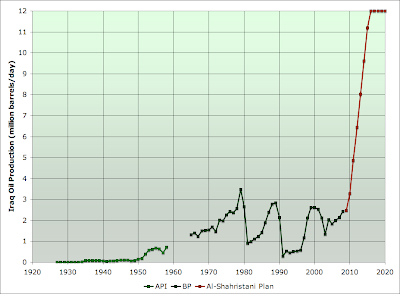
    However, I think it’s important to note that a potential game-changer has developed recently that could render that point of view obsolete (which is a kinder, gentler way of saying “wrong” :-). A couple of years ago, Iraqi oil production was declining and it didn’t seem too likely the country would stabilize any time soon to allow that to change. However, the post-surge stabilization of Iraq has now allowed Iraqi oil production to start creeping up, and in 2009 the Iraqi oil ministry has announced large numbers of contracts with major oil companies to bring production up from the current 2.5mbd or so to 12 mbd over the course of the next 6-7 years. It is also announcing a series of projects to increase the physical export capacity of the country in line with these oil production projects.

    It seems to me that the possibility that Iraq may actually succeed in doing this should be taken seriously. If it did succeed, that would act to delay the final plateau of oil production by a decade (ballpark), make that plateau be at a higher level (95-100mbd ballpark), and significantly moderate oil prices in the meantime, with even some possibility of causing a serious breakdown of OPEC discipline and a period of significantly lower prices akin to the 1980s-1990s lull (though probably not as long or as deep a lull as that). If that were to occur, it would likely have profound consequences for alternative energy projects, biofuel companies, and automobile fuel efficiency. A period of lower oil prices will put adaptation projects on hold for the duration.

    At the same time, even in this scenario, there’s a real chance of another oil price shock before the main rise in Iraqi oil production arrives.

    At this stage, it seems too soon to say the Iraqis definitely will succeed. But the scenario that they might seems worth serious consideration. In this post, I’d like to take a first look at the situation, including:

    * Status of Iraqi oil reserves
    * History of Iraqi oil production
    * Shape of the announced oil production plans
    * Character of the architect of the Iraqi plans, oil minister Hussain al-Shahristani
    * Indications of the improving stability of Iraq.
    * Implications and conclusions.


  • Climate Change – Those hacked e-mails

    Nice video on the “climategate” “scandal” – Climate Change — Those hacked e-mails. I love the Alex Jones clips.


  • The Lithium Rush

    Technology Review has a look at Bolivia, where the Andes contains “a vast salt flat that may shape the future of transportation” – The Lithium Rush

    Nearly four kilometers above sea level in the Bolivian Andes lies the Salar de Uyuni, the world’s largest salt flat. But there is more to this ­surreal, moonlike landscape than meets the eye. Flowing in salt-water ­channels beneath the surface is the world’s largest supply of lithium–and, possibly, the future of transportation. Lithium is the key ingredient in the lithium-ion batteries that will power the electric vehicles that will soon be rolling off production lines worldwide. Demand for the metal is expected to double in the next 10 years, and Bolivia, with an untapped resource estimated at nine million tons by the U.S. Geological Survey, is being called a potential “Saudi Arabia of lithium.”


  • Sun, wind and wave-powered: Europe unites to build renewable energy ‘supergrid’

    The Guardian reports that north sea countries are planning a “vast clean energy project” – Sun, wind and wave-powered: Europe unites to build renewable energy ‘supergrid’.

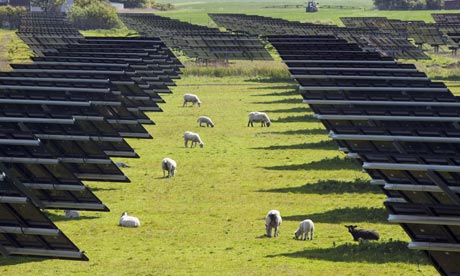
    It would connect turbines off the wind-lashed north coast of Scotland with Germany’s vast arrays of solar panels, and join the power of waves crashing on to the Belgian and Danish coasts with the hydro-electric dams nestled in Norway’s fjords: Europe’s first electricity grid dedicated to renewable power will become a political reality this month, as nine countries formally draw up plans to link their clean energy projects around the North Sea.

    The network, made up of thousands of kilometres of highly efficient undersea cables that could cost up to €30bn (£26.5bn), would solve one of the biggest criticisms faced by renewable power – that unpredictable weather means it is unreliable.

    With a renewables supergrid, electricity can be supplied across the continent from wherever the wind is blowing, the sun is shining or the waves are crashing.

    Connected to Norway’s many hydro-electric power stations, it could act as a giant 30GW battery for Europe’s clean energy, storing electricity when demand is low and be a major step towards a continent-wide supergrid that could link into the vast potential of solar power farms in North Africa.

    By autumn, the nine governments involved – Germany, France, Belgium, the Netherlands, Luxembourg, Denmark, Sweden and Ireland and the UK – hope to have a plan to begin building a high-voltage direct current network within the next decade. It will be an important step in achieving the European Union’s pledge that, by 2020, 20% of its energy will come from renewable sources.

    “We recognise that the North Sea has huge resources, we are exploiting those in the UK quite intensively at the moment,” said the UK’s energy and climate change minister, Lord Hunt. “But there are projects where it might make sense to join up with other countries, so this comes at a very good time for us.”

    More than 100GW of offshore wind projects are under development in Europe, around 10% of the EU’s electricity demand, and equivalent to about 100 large coal-fired plants. The surge in wind power means the continent’s grid needs to be adapted, according to Justin Wilkes of the European Wind Energy Association (EWEA). An EWEA study last year outlined where these cables might be built and this is likely to be a starting point for the discussions by the nine countries.


  • Inhabitat’s top 5 green energy stories of 2009

    Continuing the ‘best of 2009″ series, here’s Inhabitat’s top energy stories – TOP 5 GREEN ENERGY STORIES OF 2009.

    As the world energy crisis mounts and the threat of catastrophic climate change looms near, the need for clean and green energy sources has never been greater. Fortunately, the future is bright and 2009 saw no shortage of sustainable energy solutions! From space-age solar power beamed down from above to glitter-sized solar sequins to power producing plasma plants, check out our top 5 energy stories from 2009 and vote for your favorite!


  • Aruba’s New Windfarm

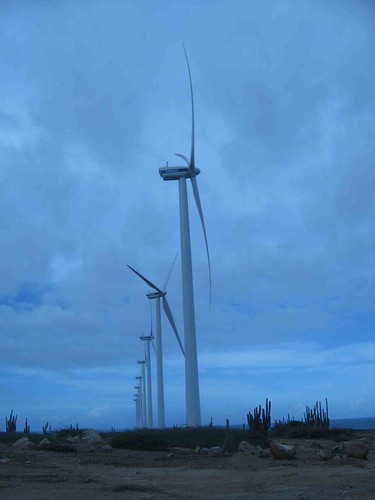
    Jerome a Paris has a post at TOD on a wind farm in the Caribbean that he helped finance – Aruba’s New Windfarm.

    As Copenhagen ended, unsurprisingly, in confusion, I have the opportunity to give you a more positive tale, and show you it is possible for people – including even bankers amongst them – to work towards a more sustainable future without necessarily endangering our way of life.

    In this case, it involves the construction of a windfarm in a place where it will directly replace fuel-oil-burning power plants. As you’ll be able to see below, this wind farm is quite remarkable in a number of ways which means that this experience will not be replicable as easily everywhere, but it shows that there are many places and energy systems which it is possible to materially improve under almost all criterai using renewable energy.

    Amongst notable features, one can find:

    * at around 60%, it has one of the highest capacity factors in the world, with 50% more power output per turbine than European offshore windfarms…; located on the Eastern coast of the island, it is exposed directly to the trade winds, which are highly regular and almost always in the same direction (allowing to put the turbines very close to one another); their almost constant strength also mean that tear and wear is actually likely to be less than usual, as there are very few brutal changes in regime and torque;

    * it is now providing 20% of the island’s overall electricity needs, replacing dirty and expensive fuel-oil in the process. At night, it will produce up to 60% of the demand. And thanks to the highly regular wind regime, this is very stable and predictable production; (even though they pushed for this project to happen, the local power company had quite a shock to see ‘for real’ how big a portion of their system the windfarm has suddenly become – as is still frequent, utilities have trouble taking wind seriously, but it this case the reality was quite compelling);

    * the utility will save money on fuel imports and, more importantly, will actually end up with cheaper power: it buys the electricity from the wind farm at a fixed price over 15 years which is roughly equivalent to what it costs to produce electricity from their traditional oil-fired generators with oil prices at $45/bbl. Who wants to bet on oil being consistently under $45 for the next 15 years? In fact, the prime minister of the island, who was present at the inauguration, used the opportunity of that ceremony to announce lower power prices for the poorest households on the island…


  • Copenhagen has given us the chance to face climate change with honesty

    James Hansen has an article in The Guardian welcoming the demise of the Copenhagen conference – Copenhagen has given us the chance to face climate change with honesty. Points awarded to anyone who knew what “fugacious” meant before reading this…

    Last weekend’s minimalist Copenhagen global climate accord provides a great opportunity. The old deceitful, ineffectual approach is severely wounded and must die. Now there is a chance for the world to get on to an honest, effective path to an agreement.

    The centrepiece of the old approach was a “cap-and-trade” scheme, festooned with offsets and bribes – bribes that purportedly, but hardly, reduced carbon emissions. It was analogous to the indulgences scheme of the Middle Ages, whereby sinners paid the Church for forgiveness.

    In today’s indulgences the sinners, developed countries, buy off developing countries by paying for “offsets” to their own emissions and providing reparation money for adaptation to climate change. But such hush money won’t work. Yes, some developing country leaders salivated over the proffered $100 billion per year. But by buying in, they would cheat their children and ours. Besides, even the $100 billion hush money is fugacious. The US, based on its proportion of the fossil fuel carbon in the air today, would owe $27 billion per year. Chance of Congress providing that: dead zero. Maybe the UK will cough up its $6 billion per year and Germany its $7 billion per year. But who will collect Russia’s $7 billion per year?

    Most purchased “offsets” to fossil fuel carbon dioxide emissions are hokey. But there is no need to flagellate the details of this modern indulgences scheme. Science provides an unambiguous fact that our leaders continue to ignore: carbon dioxide from fossil fuel burning remains in the climate system for millennia. The only solution is to move promptly to a clean energy future.

    The difficulty is that fossil fuels are the cheapest energy, if the price does not include the damage they do to human health, the planet, and the future of our children. “Goals” for future emission reductions, whether “legally binding” or not, are utter nonsense as long as fossil fuels are the cheapest energy. The Kyoto Protocol illustrates the deceit of our governments, which have not screwed up their courage to face down the fossil fuel industry. As the graph here shows, global fossil fuel emissions were increasing 1.5% per year prior to the 1997 Kyoto accord. After “Kyoto” emission growth accelerated to 3% per year. A few developed countries reduced their fossil fuel use. The only important effect of that was to slightly reduce demand for fuel, helping to keep its price down. The fuel was burned in other places, and products made were shipped back to developed countries.

    As far as the planet is concerned, agreements to “cap” emissions, such as the Kyoto Protocol and the imagined Copenhagen Protocol, are worthless scraps of paper. As long as fossil fuels are the cheapest energy, they will be burned somewhere.


  • The New Population Bomb

    Foreign Affairs has an article on “The Four Megatrends That Will Change the World”, including the population bomb
    The New Population Bomb.

    Forty-two years ago, the biologist Paul Ehrlich warned in The Population Bomb that mass starvation would strike in the 1970s and 1980s, with the world’s population growth outpacing the production of food and other critical resources. Thanks to innovations and efforts such as the “green revolution” in farming and the widespread adoption of family planning, Ehrlich’s worst fears did not come to pass. In fact, since the 1970s, global economic output has increased and fertility has fallen dramatically, especially in developing countries.

    The United Nations Population Division now projects that global population growth will nearly halt by 2050. By that date, the world’s population will have stabilized at 9.15 billion people, according to the “medium growth” variant of the UN’s authoritative population database World Population Prospects: The 2008 Revision. (Today’s global population is 6.83 billion.) Barring a cataclysmic climate crisis or a complete failure to recover from the current economic malaise, global economic output is expected to increase by two to three percent per year, meaning that global income will increase far more than population over the next four decades.

    But twenty-first-century international security will depend less on how many people inhabit the world than on how the global population is composed and distributed: where populations are declining and where they are growing, which countries are relatively older and which are more youthful, and how demographics will influence population movements across regions.


  • California’s renewable pipeline nearly 70 GW

    Reuters has a report on California’s burgeoning pipeline of renewable energy projects – California’s renewable pipeline hits nearly 70 GW.

    Renewable energy projects proposed in California total nearly 70 gigawatts, Governor Arnold Schwarzenegger said on Tuesday, a large pipeline that could help the state meet its renewable energy goals.

    California has a mandate to obtain a third of its electricity by 2020 from clean power, spurring utilities and the clean power industry to develop new projects.

    The 244 proposed projects in the state include solar, wind, geothermal, biomass and hydro technologies. In order to be built, renewable energy projects must win regulatory approval.

    About 50 projects in California hope to break ground by the end of 2010 in order to receive federal stimulus funds.


  • Origin steps up gas search

    The SMH has an article on the search for more coal seam gas in Queensland – Origin steps up gas search.

    ORIGIN ENERGY and its joint-venture partner ConocoPhillips have taken another step in the race to export Queensland’s coal-seam gas reserves, awarding a $220 million drilling contract to the US firm Savanna Energy Services.

    Under the contract, Savanna will supply two drilling rigs for five years from September next year, helping in the extensive drilling needed to extract gas from underground coal seams.

    The move comes amid growing market concern that Origin and Conoco are losing ground to rival projects also planning to export liquefied natural gas from the region. …

    The contract will create 50 jobs and is a milestone for Origin, which is responsible for extracting the gas from coal deposits across southern Queensland. Coal-seam gas is dispersed across a large area, and for each LNG project that goes ahead, the proponents will have to drill approximately one hole a day to supply enough gas over the life of the project.

    “This contract is designed to provide the very latest in drilling and rig technology, supplement our existing drilling operations, and help us to meet our target of between 300 and 500 wells a year over the life of the project,” Origin’s executive general manager of upstream oil and gas, Paul Zealand, said.


  • The sinister powers of crowdsourcing

    New Scientist has a look at some of the misuses crowdsourcing can be put to – The sinister powers of crowdsourcing.

    When an ad hoc team of 5000 people who assembled in just two hours found 10 weather balloons hidden across the US by the Pentagon’s research agency earlier this month, it was just another demonstration of the power of crowdsourcing – solving a task by appealing to a large undefined group of web users to each do a small chunk of it.

    So far crowdsourcing has been associated with well-meaning altruism, such as the creation and maintenance of Wikipedia or searching for lost aviators. But crowdsourcing of a different flavour has started to emerge.

    Law enforcement officials in Texas have installed a network of CCTV cameras to monitor key areas along that state’s 1900-kilometre-long border with Mexico. To help screen the footage, a website lets anyone log in to watch a live feed from a border camera and report suspicious activity. A similar system called Internet Eyes, which pays online viewers to spot shoplifters from in-store camera feeds, is set to launch in the UK in 2010. An Iranian website is offering rewards for identifying people in photos taken during protests over June’s elections.

    Some people have declared those examples chilling. Now Jonathan Zittrain, a Harvard University law professor and co-founder of the Berkman Center for Internet and Society, says the next step may be for such efforts to get web users to help out covertly.

    In a recent talk, “Minds for Sale”, at the Computer History Museum in Mountain View, California, he pointed out that this could be done right away, using Amazon’s Mechanical Turk, a service that provides a platform for anyone to farm out simple tasks.

    In a speculative example, Zittrain has calculated that, assuming a population in Iran of around 72 million people, it would cost around $17,000 for the government to use Mechanical Turk to identify any arbitrary person’s picture, without the users that are doing it realising the cause they have enlisted in.


  • Lets all drink to Russian gas

    Just when you thought you’d seen everything – an ode to Russian gas, “which never runs out” – The Gazprom Song.


  • The Nude Bomb

    Chris Floyd has a look at the recent “underpants bomber” episode – Balance of Terror: From Detroit City to Ghazi Khan.

    A lone man on an airliner makes a badly botched attempt to ignite what appears to be some kind of hastily cobbled-together device that might or might not have caused some kind of unspecified but apparently non-crippling damage to the plane. The plane lands safely; no one is killed.

    Yet the reverberations from this half-baked enterprise quickly roiled the entire world. Within hours, a whole range of new, even more intrusive and draconian security procedures were imposed on travelers across the globe. Governments hastened to launch “security reviews,” and promise “tough new measures” not only to thwart terrorists but to root out nests of agitators and “radicalizers” clinging to the soft underbelly of our all-too-tolerant, too-nice-for-its-own-good Western world.

    Perhaps most significantly, the non-igniting of the homemade device has “rejuvenated [the] debate … over the proper balance between security and privacy,” the New York Times informs us — while quoting several “experts” who let us know just which way this “balance” is now going to tilt. These “experts” include Bush retreads like ex-Homeland Security commissar Michael Chertoff, who now dabbles profitably in the “risk management and security consulting” industry — yet another of our great and good for whom every act of terror (real or imagined, successful or unsuccessful) means boffo box office.

    The sudden insertion of Chertoff into the story gives us another example of a grim, enduring truth: the construction of “conventional wisdom” among our media and political elites is always driven, in large part or in whole, by raw, brutal self-interest. The new CW now being assembled before our eyes is a “rejuvenation” of one of the ruling tropes of the 21st century: “Liberty bad, security good.”

    Lew Rockwell has a column pondering whether or not this is a scheme to make us all remove our underwear when we pass through airports – The Old ‘False-Flag Trick’.

    You know, Chief, this nude bomb might solve a lot of problems. For one thing, flashers…. And there’d be no more trouble with concealed weapons. I mean, if everyone were nude, there’d be no place to hide a gun or knife. Well, there is a place, but it could be painful.

    Maxwell Smart, the redoubtable Agent 86, finding the upside to KAOS’s terrorist threat to destroy the world’s clothing with its dreaded Nude Bomb.*

    In an utterly predictable response to an unsuccessful attempt by a would-be Jihadist to emasculate himself in mid-air by detonating a small explosive charge (a very small one, of course), the Regime is moving, slowly but inexorably, in the direction of requiring airline passengers to strip nude.

    There is plentiful evidence to suggest that the same Regime acted as an accomplice – most likely a passive one – in that same failed bombing attempt. Call it a delayed-action nude bomb: One Nigerian nutcase conceals a firecracker in his wedding tackle, and before long everybody will have to strip nude in order to fly.

    Granted, the nudity would be “virtual,” temporary, and limited in its exposure. Passengers would be violated one at a time by the same thoughtful people who have made a career out of rifling through other people’s dirty underwear.

    Airport security screeners have “got to have some way of detecting things in parts of the body that aren’t easy to get at,” insists former Homeland Security Commissar Michael Chertoff. “It’s either pat-downs or imaging.”

    A third alternative is to avoid commercial aviation outright whenever possible. I suspect an ever-larger number of Americans are going to join me in choosing what’s behind door number three.

    Government is the only human enterprise that profits from failure. Once that principle is understood, many otherwise inexplicable choices made by ruling elites and their servants can be made intelligible.

    For instance, we can begin to understand the perverse persistence governments display in courting preventable catastrophes, and then capitalizing on such incidents to enhance their power to do exactly the same things that resulted in disaster. In this case, in addition to requiring the helotry to undergo unconscionable personal violations before flying, the Regime is exploiting the incident aboard Northwest Flight 253 to escalate the ongoing military assault on Yemen, thereby increasing the human misery that helps propel international terrorism.

    And so it is that the Regime – which has squandered trillions of debased dollars in the name of “fighting terrorism” (hundreds of billions to build a domestic garrison state, and even greater sums to conduct wars of aggression overseas) – will continue to do exactly the same thing following an episode that demonstrates, beyond serious dispute, that the “war on terror” has done exactly nothing to make Americans safer.

    While it’s not clear that the flight was in mortal danger, it is clear that the plot failed because a detonator failed to ignite, and a group of passengers shed the shackles of government-imposed docility to subdue the terrorist suspect. The attempt to massacre the passengers of Flight 253 was stopped without the Regime’s help – and in spite of what has to be considered, at very best, the Regime’s criminal negligence.

    Owing to what must have been an anguished report from his father, Umar Abdulmutallab was known to the CIA and the State Department as a potential terrorist. Umar Abdulutallab the elder, a banking official from Nigeria, met personally with CIA officials to express concerns that his son – who had gone to Yemen for the supposed purpose of studying Arabic – was falling into the company of suspected terrorists.

    U.S. officials took this valuable intelligence and promptly buried Abdulmutallab’s name in an official database. Yet it was not placed on the official “no-fly list”; apparently, that status is reserved for people who make themselves troublesome to the Executive Branch without actually posing a threat to innocent people.


  • A 26 Mile Long Glut Of Idle Oil Tankers

    Mike Shedlock has a post on the oil tanker storage situation, with futures prices indicating that the days of storing oil at sea while waiting for future prices rises seem to be coming to an end – 26 Mile Long Glut Of Idle Oil Tankers.

    Bloomberg is reporting Tanker Glut Signals 25% Drop on 26-Mile Line of Ships.

    A 26-mile-long line of idled oil tankers, enough to blockade the English Channel, may signal a 25 percent slump in freight rates next year.

    The ships will unload 26 percent of the crude and oil products they are storing in six months, adding to vessel supply and pushing rates for supertankers down to an average of $30,000 a day next year, compared with $40,212 now, according to the median estimate in a Bloomberg News survey of 15 analysts, traders and shipbrokers.

    That’s below what Frontline Ltd., the biggest operator of the ships, says it needs to break even.

    Traders booked a record number of ships for storage this year, seeking to profit from longer-dated energy futures trading at a premium to contracts for immediate delivery, according to SSY Consultancy & Research Ltd., a unit of the world’s second- largest shipbroker. Ships taken out of that trade would return to compete for cargoes just as deliveries from shipyards’ largest-ever order book swell the global fleet.

    “The tanker market has been defying gravity,” said Martin Stopford, a London-based director at Clarkson Plc, the world’s largest shipbroker. Stopford has covered shipping since 1971.

    More than half of the ships are in European waters, with the rest spread out across Asia, the U.S. and West Africa. Lined up end to end, they would stretch for about 26 miles.

    Storing Crude

    Traders are storing enough crude at sea to supply the 27- nation European Union for more than three days. Royal Dutch Shell Plc, Europe’s biggest oil company; London-based BP Plc; JPMorgan Chase & Co.; and Morgan Stanley were among those that sought vessels for storage.

    The storage trade is profitable so long as the spread between energy contracts exceeds ship rental, insurance and financing costs. A year ago, the spread between the first and sixth Brent crude-oil contracts traded on the London-based ICE Futures Europe exchange was 23 percent. Now, it’s 4 percent.

    Speculation is one of the things propping up energy prices. Belief in a sustainable recovery is another, and rampant money supply growth in China is a third.

    Regardless, with contango spreads tightening, demand for 26 miles of oil tankers will collapse.

    The FT (which has the dubious privilege of being the only publication to ever ask me not to quote their material) also has a look at the immediate future for oil prices – The coming oil glut that will force prices to drop sharply.


  • RenewableEnergyWorld.com’s Most-read Stories of 2009

    Another “best of” for 2009 – this time from REW – RenewableEnergyWorld.com’s Most-read Stories of 2009.

    With sales slumping, many companies used 2009 as a year to focus on improving technology and cutting manufacturing costs. Our most read-stories of the year indicate that this was a hot topic for companies and readers alike.

    In Burning Issues: An Update on the Wood Pellet Market, which was first published in our UK print edition, Renewable Energy World magazine, Christiane Egger and Christine Oehlinger explained how burning wood pellets for heat and power is becoming common across central and northern Europe. While not a solely technology-focused piece, the authors describe the entire wood pellet market in Europe and detail how pellets are manufactured and describe the various technologies that use pellets as a source of renewable heat and power.

    Readers are always hungry to learn about cutting-edge technologies and this feature, The Next Solar Frontier: Distributed Inverter Architecture, gave them exactly what the needed to know in the distributed inverter space. Written by RenewableEnergyWorld.com contributing writer, Justin Moresco, this story looked at one of the most talked-about technology topics of the year: how to harvest the most electricity from a solar panel in the simplest, most elegant way.

    On that same topic of technology that harvests more energy from a solar panel, we brought you Solar Trackers: Facing the Sun, by UK Associate Editor, David Appleyard. In his piece, Appleyard explained how tracking systems that adjust the position of PV modules to follow the sun can boost yields from solar installations by 40% or more. This article showed what trackers are available and who is building them.

    Our Dutch Wind Technology expert Eize de Vries was on the scene checking out new wind turbine technologies this year. In Wind Turbine Technology Gets Bigger and Better, he traveled to the Hannover Messe, an industry technology fair that boasted more than 6,000 exhibitors and 210,000 visitors. From the fair, he brought us insights into many of the newest wind turbine technology trends to watch out for as companies in this space continue to create more massive and more efficient turbines.

    Readers were also interested in BIPV, another hot topic in 2009 and something we expect to see much more of in the coming years. In February, we brought you Jennifer Kho’s story, Energy Conversion Devices’ Turnaround: Is BIPV Finally Ready To Take Off? In this article, Kho detailed how ECD Ovonics emerged as a leader in the building-integrated photovoltaic market.

    Biofuels also proved to be something readers were interested in hearing about, with algae-based biofuels stealing the show. In Blooming Biofuel: How Algae Could Provide the Solution, Jeffrey Decker showed us how interest is growing exponentially in this field. He wrote about the handful of companies that are planning to make the leap from research to commercial production of algae-based fuels in the near future.


  • Australia’s coal addiction set in train 30 years ago

    The ABC has a report on how the energy crisis of the 1970’s set in train Australia’s modern day coal dependency – Australia’s coal addiction set in train 30 years ago.

    As the world battles to secure a low-carbon future, secret cabinet documents from 1979 show that before global warming was on the radar, Canberra acted to lock in Australia’s coal-based energy future.

    It was the year of the second oil shock, when Iranian oil supplies slumped and crude prices skyrocketed on the back of Iran’s Islamic revolution and nations scrambled for policies to reduce their dependence on foreign oil.

    Global politics were volatile in 1979 and included the Soviet invasion of Afghanistan on Christmas Eve of that year, which was also seen in significant part through the lens of energy security.

    US president Jimmy Carter made his view clear in a speech in January the following year. “Let our position be absolutely clear. An attempt by any outside force to gain control of the Persian Gulf region will be regarded as an assault on the vital interests of the United States of America, and such an assault will be repelled by any means necessary, including military force,” he said to deafening and repeated applause.

    But the fallout from Iran’s political upheaval was the more direct threat to energy security.

    In January 1979, the Shah of Iran had fled his country, followed in February by the tumultuous return from exile of Ayatollah Ruhollah Khomeini, who embarked on the Islamic revolution.

    The chaos of the transition saw Iran’s oil industry grind to a virtual halt, and even when supplies resumed, they were at much lower levels to which the world was accustomed. Global oil prices soared with the supply constraint. OPEC countries reaped the financial windfall and in turn restricted output, further cashing in.

    In the West, there was panic and stockpiling. Crude prices rose by about 250 per cent. The talk was of reducing reliance on foreign oil.

    For the Fraser government in Australia, that set in train policy considerations which in some areas echo responses to the imperative of climate change. But other considerations stand in contrast to energy-policy thinking in the current context, according to 1979 cabinet documents released by the National Archives of Australia.

    “In June, cabinet approved a range of measures to reduce dependence on imported oil,” Dr Jim Stokes, historical consultant to the National Archives of Australia, told Radio Australia.

    “These included a reduction in fuel octane ratings, suspension of tougher standards on lead additives and vehicle emissions and encouragement of the use of LPG.”


  • Liquid Natural Gas — A Specious Climate Solution ?

    TOD ANZ has a post pondering the pros and cons of LNG vs gas pipelines for exporting Australian natural gas – Liquid Natural Gas — A Specious Climate Solution?.

    Nearly US$80 billion of investment is slated for developing liquid natural gas (LNG) projects in Australia and the Timor Sea. More are planned for Southeast Asia.

    The good news is that these LNG developments are aimed are replacing dirty coal-fired power in Japan, China and South Korea with a cleaner fuel: natural gas.

    The bad news is that LNG’s environmental benefits are potentially so illusory that Asia might be better served by a common carrier natural gas pipeline.

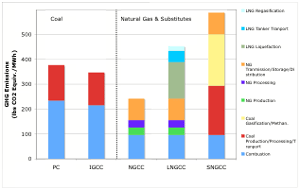
    LNG is natural gas compressed 600 times. It is then shipped in pressurised ocean-going tankers. This front-end compression process burns up roughly 10% of the original energy. The pressurised tankers then draw off more energy for each day at sea. At the far end, regasification consumes even more energy

    The cumulative losses are so great that LNG-based natural gas supplies may not be much better than coal as a future energy source, according to researchers at Carnegie Mellon University in the United States.

    Worse, shipping LNG requires huge investment in expensive, inflexible, single-purpose infrastructure. It’s a recipe for long-term financial waste.

    With nearly a dozen LNG trains slated for development in Australia’s Northwest Shelf, northern Queensland, the Timor Sea and Papua New Guinea, this infrastructure could take Asia’s climate change battle backwards for decades to come.

    Given the huge volumes of gas now involved in this burgeoning trade (nearly 60 billion cubic meters per year), a pipeline connecting Australia to China, Japan and South Korea may be a better deal.

    Instead of insular, ‘go-it-alone’ buyer-seller LNG microeconomics, a common-carrier pipeline would enhance competition, lower prices and encourage development of smaller natural gas fields through increasing confidence in downstream market access.

    Better yet, a pipeline could carry future fuels like hydrogen. LNG trains, tankers and regasification plants simply don’t have this flexibility. They risk becoming ‘stranded assets’ if future carbon pricing exposes their financial shortcomings.

    If the LNG industry gets entrenched, it could doom Asia to a generation of suboptimal infrastructure. This, at at a time when trillions of dollars must be spent to battle climate change. Getting poor value for investment dollars is a bad way to fight global warming.


  • Ten Clean Energy Stocks for 2010

    Tom Konrad has a look at some of his favoured clean energy companies for the upcoming year – Ten Clean Energy Stocks for 2010. Its interesting that none of these companies generate power (or build equipment for generating power).

    In late 2008, when I was putting together my list for 2009, I had a relatively easy time. Fear was rampant, and there were many great companies selling for single-digit multiples of earnings. Today, complacency and greed have returned to the markets, and good values are very hard to come by. The following 10 are mostly the result of culling through our Alternative Energy Stock lists for companies in my favored sectors that look ready for the premature end of the recovery: Companies with strong balance sheets, good cash flow and profitability at not-too-expensive multiples.

    Electric Grid & Electricity Storage (30%)

    * General Cable (BGC)
    * MasTec (MTZ)
    * C&D Technologies (CHP)

    -or-

    * Smart Grid Infrastructure Index Fund (GRID)

    Efficient/Clean Transportation (30%)

    * New Flyer Industries (NFI-UN.TO, NFYIF.PK)
    * Firstgroup PLC (FGP.L)
    * Portec Rail Products (PRPX)

    -or-

    * Powershares Global Progressive Transport ETF (PTRP)

    Energy Efficiency (30%)

    * Waterfurnace, Inc. (WFI.TO, WFFIF.PK)
    * Linear Technology Corp (LLTC)
    * Flir Systems, Inc. (FLIR)

    Biomass, Waste to Energy, Recycling – 10%

    * Waste Management (WM)