
Author: Brad Reed
-
The Pirate Bay claims move to North Korea, but evidence shows it’s a hoax
Abandoned by its allies in Sweden and Norway, the Pirate Bay has decided to set sail for a new virtual home in the well-known bastion of Internet freedom known as North Korea… except that it hasn’t. Although the notorious file-sharing site claimed to have found “virtual asylum” in North Korea this week, there’s a good chance it was joking around while trying to make an ironic point about Internet freedom. Will’s Blog, a German tech blog run by an experienced hacker, has done some detective work and has found no evidence that the Pirate Bay has shifted its hosting responsibilities to North Korean networks. Instead, it has merely ” ‘hijacked’ 2 IPs from the North Korean network” in an effort to spoof traceroutes and make it look as though the site’s traffic is originating in North Korea.
-
Smartphones’ malware-free glory days may soon be over
One downside of shifting to a post-PC world is the inevitable development and refinement of post-PC malware. Technology Review this week spoke with security researchers who say that they’re seeing an upgrade in both the quantity and sophistication of mobile malware attacks as hackers try to create a winning formula for distributing malware to mobile devices. At the moment, the researchers say that cybercriminals are experimenting with injecting malware into popular mobile websites and quietly installing it onto users’ devices whenever they visit compromised pages.
-
IDC: Smartphone shipments to top feature phone shipments for first time ever in 2013
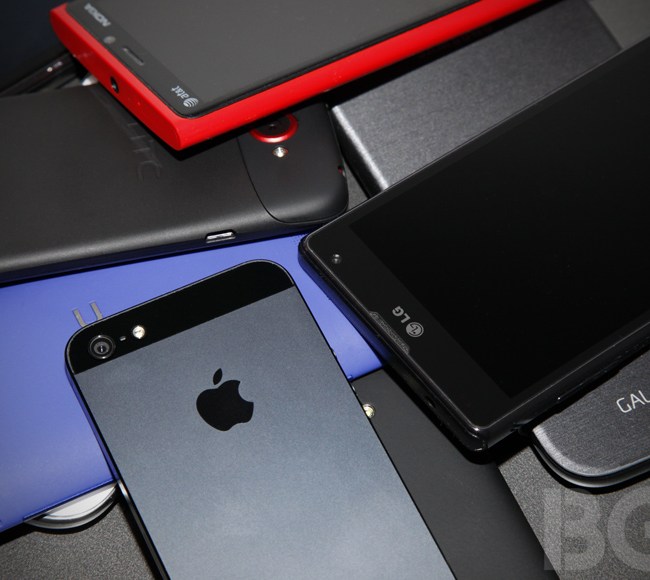
We’re rapidly approaching a time when we can start referring to smartphones as simply “phones.” According to the latest projections from market research firm IDC, smartphone shipments will top feature phone shipments for the first time ever this year, with China accounting for nearly one-third of all smartphones projected to ship in 2013. According to IDC, vendors will sell 918.6 million smartphones into channels in 2013, including 301.2 million devices shipped to China, 137.5 million shipped to the United States and 35.5 million shipped to the United Kingdom.
-
Time Warner Cable’s arrogance perfectly illustrates why the cable industry is so disliked
By now you’ve probably read the comments from Time Warner Cable (TWC) CTO Irene Esteves explaining that her company doesn’t plan to build out fiber to the home because there’s no evidence that American consumers actually want super-fast networks. While a lot of people expressed surprise in response to this attitude, it’s actually been a common refrain from the cable industry and its defenders for quite some time now — let’s recall that National Cable & Telecommunications Association CEO Michael Powell recently described achieving gigabit speeds as an “irrelevant exercise in bragging rights.” That this attitude isn’t just consigned to one company but is apparently held by the entire industry indicates that the market for home broadband in the United States is horrendously uncompetitive and is in desperate need of a shakeup.
-
Apple ‘hipsters’ lament that the company was better before it became cool
If you want to read an article featuring a bunch of Apple (AAPL) fans who sound like “hipsters” whining that their favorite band has “sold out” by becoming popular, look no further than Lydia DePillis’s piece in the New Republic this week. In an overview of the angst that many long-time Apple lovers feel about their favorite company’s massive success over the past several years, DePillis finds that many Apple fans think the company is focussing less on the quality of user experience that helped build its brand and is instead simply trying to cash in by churning out inferior products aimed at the mass market.
-
Samsung plans to conquer the workplace with KNOX mobile security suite
Samsung (005930) has set up a very ambitious goal for itself: It wants to become the Android vendor that corporate America can trust. At Mobile World Congress on Monday, Samsung announced it was further bolstering its mobile enterprise credentials by releasing KNOX, a comprehensive package of mobile security services that will be integrated into its SAFE (Samsung for Enterprise) brand. Among KNOX’s many features are an application container that works similarly to the BlackBerry (BBRY) Balance feature that separates work application data from personal application data; the ability to implement separate VPNs to individual applications rather than relying on one VPN for the entire device; and a security-enhanced version of Android that’s been customized to help IT departments enforce more than 300 IT policies and have access to more than 700 mobile device management APIs.
-
White House petition to legalize cell phone unlocking gets 100,000 signatures
In a surprising development, it seems that a lot of people don’t like being told they can’t unlock their cell phones. NPR reports that a petition posted on the White House website asking the Obama administration to “champion a bill that makes [cell phone] unlocking permanently legal” has garnered more than 100,000 signatures, which means that the White House by its own rules must now issue a formal response.
-
Sprint still scrounging for more spectrum despite vast potential holdings
Even though Sprint (S) could soon have a commanding advantage over its rivals in terms of spectrum holdings, CEO Dan Hesse still isn’t satisfied. Bloomberg reports that Hesse and Sprint are still plotting ways grab more spectrum even if the company succeeds in fully purchasing Clearwire and boosting its total mobile data spectrum portfolio to an industry-leading 184MHz.
-
Google adds speech recognition API to latest version of Chrome
Google (GOOG) has officially taken the training wheels off the Web Speech application programming interface it first launched as part of a Chrome beta release last month. Google announced on Thursday that the latest version of Chrome now includes the Web Speech API that it says will help developers “integrate speech recognition capabilities into their web apps” so that users can use their voices for functions traditionally covered by mouse and keyboard, such as composing email. Google’s efforts to give Chrome web apps more speech recognition capabilities come after some developers late last year started a new Chromium project dedicated to bringing the voice-enabled Google Now personal assistant to the Chrome browser.
-
Forget the Surface Pro: Consumer Reports finds plenty of great low-cost Windows 8 laptops
If you think the $899 Surface Pro is too rich for your blood, don’t sweat it: there are plenty of cheaper quality alternatives out there. Consumer Reports has been testing out several low-cost Windows 8 laptops and has found that they aren’t just priced well but that they perform well too. Among the winners were ASUS’s (2357) S56CA-DH51, a 15-inch laptop that costs $650 and that Consumer Reports praises for “very good performance and excellent ergonomics”; Sony’s (SNE) VAIO SVT-13122CXS, a 13-inch ultrabook that costs $625; and Acer’s (2353) M5-581T-6807, a $600, 15.6-inch laptop that Consumer Reports says has “excellent performance and respectable battery life.” With so many quality laptops priced under $700, Consumer Reports hopes that it’s a sign that “more inexpensive touch screen laptops are coming soon.”
-
Google I/O registration date set for March 13th
It looks as though Google (GOOG) is almost ready to start taking registration applications for its 2013 Google I/O conference. The company’s official I/O website on Friday posted a notice that registration for this year’s I/O will start March 13th and 10:00 a.m. EST, or just over two months before the conference is slated to kick off in San Francisco on May 15th. The announcement also urges prospective attendees to set up both Google+ and Google Wallet accounts, although it’s not clear if signing up for both of these services is a requirement for attending.
-
Sorry, but there’s no defense for the Chromebook Pixel
I had originally decided not to write about how ridiculous Google’s (GOOG) Chromebook Pixel pricing was on Thursday because I figured it was so self-evident that I’d just be repeating what everyone else was already saying. But today I’ve found two contrarian pieces, one from Quartz and one from ZDNet, that make the case that the Chromebook Pixel actually is a brilliant move on Google’s part even if nobody actually ends up buying it. While both pieces do their best to paint a happy picture of the Chromebook Pixel, they both neglect to mention that Google’s strategy with the Pixel seems to fly in the face of everything it’s been trying to accomplish not only with Chromebooks, but with consumer electronics as a whole.
-
Parts of Google’s Mountain View headquarters recently plagued by toxic vapors
Google (GOOG) employees recently got a scare when toxic vapors were found seeping into areas of the company’s Mountain View headquarters, the Mountain View Voice reports. According to the Voice, two of Google’s recently constructed buildings “were found for the first time to have TCE (trichloroethylene) vapors above the Environmental Protection Agency’s indoor screening level” this past December, which prompted Google to act quickly to fix the potential health problem. A Google spokesperson told the Voice that the sources of the TCE emissions were “promptly identified and fixed” and that “the health of our Googlers was not put at risk in any way at any time.” The toxic emissions are apparently the legacy of older Mountain View-based tech companies that allegedly dumped TCE into the soil while working on early versions of silicon chips in the early 1980s.
-
Analyst sees cheaper ‘iPhone mini’ as no-brainer following meeting with Apple CFO
A lot of talk about Apple (AAPL) releasing a cheaper version of the iPhone has revolved around whether the company will be able to maintain its traditionally high margins and brand integrity while delving into the mid-tier device market. But per Business Insider, Morgan Stanley analyst Katy Huberty has issued a new note with some new insights following a one-on-one meeting she had recently with Apple CFO Peter Oppenheimer.
-
Nokia reportedly plans wave of cheap phones to combat Chinese upstarts
Nokia (NOK) may be planning to go back to its roots by producing a lot more cheap phones that can compete with upstart Chinese vendors Huawei and ZTE. Unnamed sources have told Reuters that after spending the past year trying to compete with high-end devices like the iPhone and the Galaxy S III, Nokia “is set to launch cheaper handset models in an attempt to fend off growing competition” in the market for low-end devices. Apparently Nokia plans to launch both “cut-price basic phones” and “a new, lower-price model of its Lumia smartphones running on Windows Phone 8 software” at Mobile World Congress in Barcelona next week. Now would certainly be a good time for Nokia to refocus on budget devices because Samsung (005930) just launched its own line of budget phones that is meant to attack Nokia’s turf in the feature phone market.
-
‘Anonymous’ becomes latest victim in Twitter hacking spree
Anyone who’s ever had their website hacked and defaced by hacker collective Anonymous can have a good laugh at their expense, because it looks as though they aren’t immune to security breaches either. BBC News reports that Anonymous this week “has suffered an embarrassing breach, as one of its popular Twitter feeds is taken over by rival hacktivists.” The Anonymous Twitter hack follows other high-profile Twitter hacks that have occurred over the past few days, including the Twitter accounts for both Burger King and Jeep. Graham Cluley, a senior consultant at security firm Sophos, tells BBC News that the hacks likely resulted from poor password practices, such as either using weak passwords or using the same password across multiple different accounts across the web.
-
RIAA stamps its feet, demands Google do more to stop piracy
The Recording Industry Association of America is not easy to please. The Verge reports that the RIAA is once again bashing Google (GOOG) over its allegedly half-hearted efforts to combat online piracy by claiming that it has “found no evidence that Google’s policy has had a demonstrable impact on demoting sites with large amounts of piracy.” Google announced this past summer that it would start demoting websites that were repeatedly flagged for copyright violations and the company is reportedly in talks with major credit card companies to cut off funds to websites frequently accused of piracy. But the RIAA has found that “well-known, authorized download sites, such as iTunes, Amazon and eMusic” aren’t being featured prominently enough in Google searches for songs. The bottom line, says the RIAA, is that “whatever Google has done to its search algorithms to change the ranking of infringing sites, it doesn’t appear to be working.”
-
Goldman: PlayStation 4 could send Sony into a ‘downward spiral’
Count Goldman Sachs analyst Takashi Watanabe as being pessimistic on the PlayStation 4’s chances for success. Per Business Insider, Watanabe has penned a new research note that casts doubt not only on Sony’s (SNE) new console specifically, but on the gaming console business as a whole. Specifically, Watanabe thinks that smartphones and tablets are poised to erode consoles’ installed base because more people can get their gaming fix through cheap games such as Angry Birds and Cut the Rope rather than spending $60 to buy the latest version of Call of Duty. This lower installation base leads to negative reinforcement where developers are less likely to invest in developing top-notch games for the platform, which further erodes consumers’ willingness to shell out cash for the console.
-
Analysts slap sky-high $1,000 price target on Google
Remember the heady days of 2012, when analysts would issue price targets in above $1,111 on Apple (AAPL) shares and everybody took them seriously? Well those days may be gone for Apple, but Business Insider notes that Street analysts have picked a new golden goose to bless (or curse) with sky-high price targets: Google (GOOG). CLSA was the first to get in on the action by raising its target to $1,000 based on Google’s “ability to charge more for clicks on its ads,” Business Insider writes. And per Forbes, Bernstein Research analyst Carlos Kirjner has also raised his price target to $1,000 because he thinks that “mass adoption of smart phones, tablets and the mobile Web is a large value creation opportunity for Google.”
-
Apple releases second beta for iOS 6.1.3
After releasing several different patches for assorted bugs in iOS 6.1, Apple (AAPL) has now gotten around to releasing a second beta for iOS 6.1.3, the operating system that had previously been called iOS 6.1.1. 9to5Mac says that the new beta is an updated version of the first iOS 6.1.1 beta, which was notable for its enhancement of iOS Maps for Japanese users, including turn-by-turn navigation improvements such as a preference for highways over smaller roads and notifications for upcoming toll roads.