
Author: Brad Reed
-
iFixit tags Surface Pro as a total nightmare to repair: ‘You risk killing your tablet by trying to open it’
If you accidentally drop your Surface Pro while breakdancing with it, you probably shouldn’t try to open it up to repair it yourself. The repair gurus at iFixit have found that the Surface Pro is one of the least repairable devices they’ve ever encountered, with a whopping 90 screws to untangle and a case construction that makes it nearly impossible to open your tablet without irreparably harming it. In fact, iFixit says that “unless you perform the opening procedure 100% correctly, chances are you’ll shear one of the four cables surrounding the display perimeter,” which means that “you risk killing your tablet by trying to open it.”
-
Apple to reportedly start building the iPhone 5S in March, launch set for June
Jefferies & Co. analyst Peter Misek packed a ton of Apple (AAPL) information in his latest research note, including updates on Apple’s long-rumored television set and its more recently rumored “iPhablet.” On tidbit that we shouldn’t overlook, however, is that Misek’s supply chain sources say that they’re slowing down iPhone 5 production to prepare for production of the next-generation iPhone 5S starting in March. Per Barron’s, Misek says that Apple is aiming to launch the newest version of the iPhone in June, likely during its annual Worldwide Developers Conference. Although there is a chance that the 5S could be delayed until July, Misek thinks this is unlikely because components-wise there are “few changes for the iPhone 5S vs. the iPhone 5.”
-
Google chairman plans to sell major portion of his stake in company
Google (GOOG) chairman Eric Schmidt, recently seen tromping around North Korea, plans to sell a significant portion of his stake in the company that he’s been with since 2001, Bloomberg reports. In a filing with the Securities and Exchange Commission this week, Google disclosed that Schmidt plans to sell “as many as 3.2 million shares” that are worth an estimated $2.5 billion and represent 42% of his stake in the company. A Google spokesperson tells Bloomberg that Schmidt is still “completely committed to Google” and that selling off the shares represents nothing more than a “routine diversification of assets.”
-
Microsoft plans to completely unify Windows, Windows Phone app development platforms
One of the most appealing things about the direction Microsoft (MSFT) has been taking with Windows 8 is the prospect that applications downloaded on the PC platform could be transferred seamlessly to tablet and smartphone form factors. Or put another way, imagine how cool it would be to download a new Angry Birds game onto your smartphone and have it automatically downloaded onto your Windows-based tablet and PC as well. And according to a Microsoft job posting spotted by WMPoweruser, it seems that Microsoft is hard at work at making this sort of cross-platform unity a reality.
-
Amazing but true: AOL’s dial up business still makes over $150 million in quarterly operating income
We were surprised last summer when we learned that there were still 3 million lost souls who were trapped in AOL dial-up hell, since we figured that dial-up Internet service had gone the way of POGs and Beanie Babies as ’90s trends that had been mercifully relegated to the dustbin of history. But as Business Insider’s Henry Blodget points out, AOL’s (AOL) dial-up subscription service is still the company’s major money maker and produced an operating income before depreciation and amortization of $158.7 million in the fourth quarter of 2012. Blodget notes that even though AOL’s dial-up business is still shrinking, it’s still producing “about $500 million a year… that AOL can use and is using to invest in other cool businesses (content and an ad network).” So take comfort, AOL dial-up subscribers: Your willingness to wait 45 minutes to watch a three-minute YouTube video is powering AOL’s other businesses to new and exciting heights.
-
Michael Dell posts open letter to Dell customers, says buyout is best way to innovate for the future
Current Dell (DELL) customers may be worried about continued support for their products in the wake of Dell’s $24.4 billion deal to go private, but company founder Michael Dell is trying to set their minds at ease. In an open letter written to Dell customers on Friday, Dell said that his company’s “unwavering focus” would still be on “delivering a fantastic customer experience and creating value for your organization.” That said, Dell added that taking the company private was the easiest way to make sure that it would be able to “innovate, invest for growth and accelerate our transformation strategy.” Dell is reportedly planning to reinvent itself by developing a computer the size of a USB stick that’s capable of giving users access to every major operating system, from Windows to Mac OS X to Google’s (GOOG) Chrome OS.
-
Skype ‘closely collaborating with BlackBerry’ to make sure ported Android app runs well on BB10
The bad news for BlackBerry (BBRY) fans: The BlackBerry 10 Skype app is an Android port and not a native app. The good news: Skype has told CrackBerry that it is “closely collaborating with BlackBerry” to make sure that the ported app runs smoothly on the new platform. Among other things, Skype says it plans to “open up some of the integration points available to native apps in the OS so that they can also be used by the Skype application” and thus “allow Skype users to see notifications, to start the app from the Hub, and to see their Skype contacts in the native phone book.” Although BlackBerry’s first BlackBerry 10 device is reportedly off to a hot start so far in terms of sales, the company is still finding it hard to get some key apps natively onto its platform. CrackBerry’s Bla1ze, for one, comments that he’d “just rather see Skype go native” since “Skype isn’t hurting for any development money and creating a native BlackBerry 10 app isn’t hard.”
-
HTC’s new M7 flagship phone may just be called the ‘HTC One’
Despite past lackluster sales, HTC (2498) apparently just can’t quit its “One” branding. Twitter user Evleaks, who has a very solid history of providing information on yet-to-be-released smartphones, writes today that HTC’s newest flagship smartphone will not be named the M7 but will instead simply be called the HTC One. This seems like a pretty questionable decision on HTC’s part since the company already has several phones with the “One” branding, including the One X and the One S, and the company risks creating confusion by adding yet another One to the mix. What’s more, none of HTC’s One devices have been top sellers and HTC is hoping that its newest flagship smartphone will be a breakout device that will put the company back in competition with rivals Samsung (005930) and LG (066570). Needless to say, simply recycling the “One” brand again may make HTC’s efforts to make its new device stand out more difficult.
-
Driverless cars could be the big thing that vaults Google over Apple
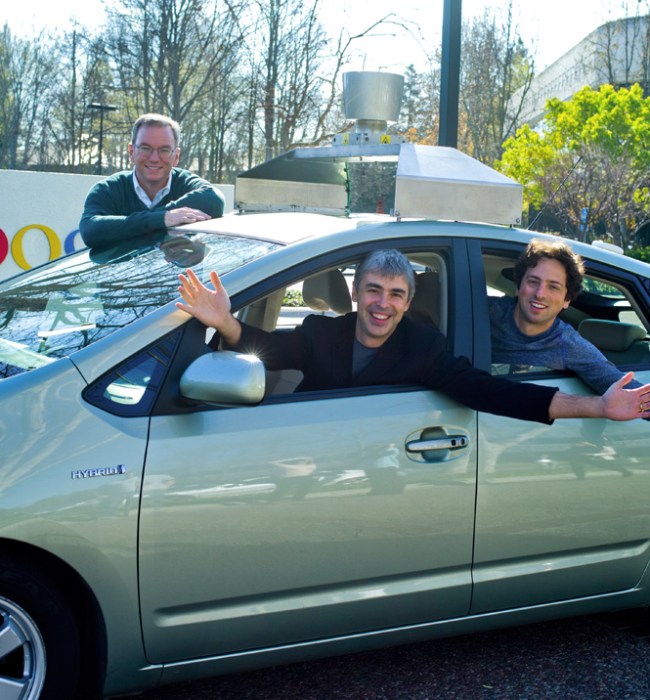
Apple (AAPL) may not be the most valuable over company in the world anymore, but it’s still by far the most valuable tech company, as its market cap of around $416 billion easily tops Google’s (GOOG) $248 billion valuation and Microsoft’s (MSFT) $233 billion valuation. Over at Forbes, Chunka Mui makes an interesting case that Google’s investment in driverless car technology will be an absolute goldmine for the company in the coming years that could even vault it past its rivals in Cupertino.
-
Apple’s slowed growth has blown the future of the mobile industry wide open… and that’s very exciting
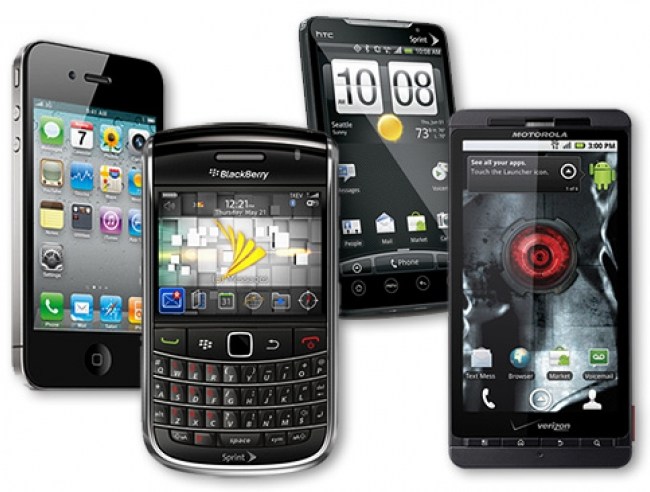
What a difference just a few months makes. If you don’t recall, it was only last September when Apple’s (AAPL) share prices were blasting past $700 and bullish analysts were proclaiming that the company was well be on its way to having a $1 trillion valuation and dominating the tech industry for years to come. All that’s changed now as Apple has lost its spot as the world’s most valuable company and investors are panicking that the company’s growth rate may have peaked. This isn’t to say that Apple is doomed (and sorry, Apple haters, but it isn’t) or that it can’t return to the lofty heights it achieved last summer, but for the time being it no longer seems destined to mop the floor with its competitors for years to come.
-
Kim Dotcom says the Obama White House used his arrest to rake in Hollywood campaign cash
Kim Dotcom made his triumphant comeback last week, but that doesn’t mean he’s toning down his accusations against the Obama administration and its connections to the 2012 raid on his mansion that led to his arrest. In an interview with RT, the Mega founder said it was no coincidence that the American government directed the raid of his mansion just as the campaign season was rolling around last year. What’s more, Dotcom accused the Obama administration of using his arrest as a major fundraising chip to raise campaign cash for the president’s reelection campaign.
-
Apple has enough cash on hand to buy Visa, Cisco or Intel
Despite concerns about its future growth, Apple (AAPL) is still a cash cow. Benzinga, noting that Apple’s most recent earnings report shows that the company has a whopping $137 billion in cash and cash equivalents, has some fun by making a list of all the companies that Apple could buy just by using the cash it has on hand. Among the top contenders are credit card giant Visa, with a market cap of $106 billion; networking equipment titan Cisco (CSCO), with a $112.13 billion market cap; semiconductor manufacturer Qualcomm (QCOM), with a $110.6 billion market cap; and chip vendor Intel (INTC), with a $104.58 billion market cap. Unfortunately for Apple, Google’s (GOOG) $247 billion market cap puts it out of the company’s range, as does Microsoft’s (MSFT) $233 billion market cap.
-
Apple axes contract with supplier that employed underage workers
Apple (AAPL) has come under a lot of criticism for the labor practices of its suppliers, but the company has always at least maintained that it will not tolerate any child laborers building its devices. The company made good on that vow again this week, as AppleInsider reports that the company has terminated a contract with a supplier that it found “responsible for 74 underage labor violations.” While Apple gets the most attention for its suppliers’ dodgy labor practices, rival Samsung (005930) has also admitted that some of its own suppliers have been guilty of mistreating workers, although it officially denies that any of them employ children.
-
Samsung warns that competitive pressures will decimate smartphones’ profitability
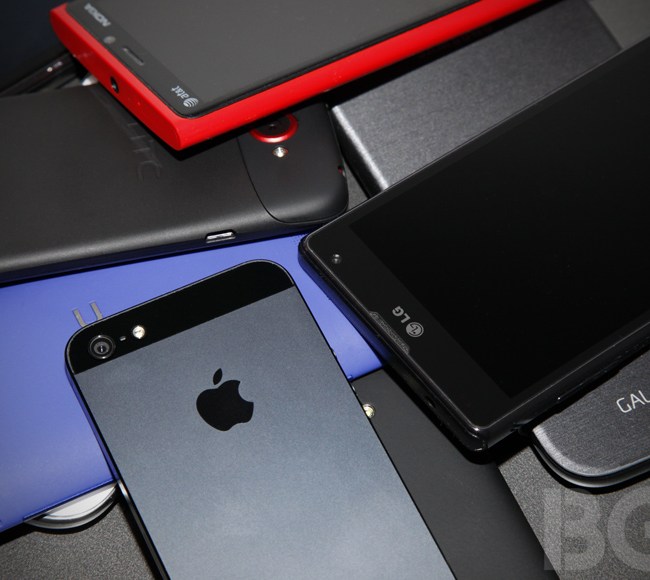
Remember the good old days when smartphones were seen as the most surefire way to make a quick profit? Well, those days may be gone for good. As The Telegraph notes, Samsung (005930) put out a warning in its earnings guidance on Friday that may signal the end of sky-high smartphone margins. Overall, Samsung projects that “demand for smartphones in developed countries is expected to decelerate, while their emerging counterparts will see their markets escalate with the introduction of more affordable smartphones,” meaning that manufacturers will be competing fiercely with one another to see which one can move the most low-cost smartphones into emerging markets.
-
Apple may have finally fixed its iMac manufacturing problems
Apple’s (AAPL) new 27-inch iMacs are truly terrific all-in-one desktops, but the company has so far had trouble manufacturing enough of them to start shipping. But now BrightWire is citing a report in the China Times claiming that Apple and its supply chain partners late last year finally figured out how to get more consistent manufacturing yields on the 27-inch iMac and started mass producing the computer in December. What this means, says BrightWire, is that new iMac shipments will get a boost to start the new year and “are expected to remain stable through Q1 2013.”
-
Verizon sells AT&T $1.9 billion worth of valuable 700MHz spectrum
Give Verizon (VZ) some credit — it seems willing to spread the spectrum wealth around. Verizon on Friday announced a deal to sell rival AT&T (T) several spectrum licenses on the valuable 700MHz band for a total of $1.9 billion. In addition to paying almost $2 billion in cash, AT&T will also give Verizon some of its AWS spectrum band licenses in “certain western markets, including Los Angeles, Phoenix, Fresno and Portland, Oregon.” Quartz late last year estimated that Verizon had slightly more mobile data spectrum on hand than AT&T, although it noted that both companies could potentially be dwarfed by rival Sprint (S) if it completes its proposed acquisition of Clearwire.