Author: Brett Walton

  • Singapore Will Cut Water Imports from Malaysia, Pursue Self-Sufficiency

    Plans are underway to replace imported water with recycled wastewater and desalinated water in Singapore.

    Singapore Will Cut Water ImportsSingapore is building water supply infrastructure to become self-sufficient and end a water import agreement with Malaysia when it expires in 2011, the country’s water minister said last month according to the Straits Times.

    Singapore, a small island off the southern tip of the Malay peninsula, currently imports nearly 40 percent of its 300-million-gallon daily demand from its neighbor. In addition to the agreement expiring next year, the two countries have another supply contract that expires in 2061. According these agreements, Singapore pays three Malaysian sen (US$.01) per 1,000 gallons of raw water, as well as rent for the land. Singapore also pays to maintain the waterworks in Johor State, where the water is withdrawn, and provides Johor with subsidized, treated water.

    However, with the construction of new domestic supply systems, Singapore–home to nearly five million people–plans to meet its own demands.

    In 2003 the country opened its first wastewater recycling plant–a supply source that has been rebranded as NEWater–and now four plants provide 15 percent of the island’s water demand. A fifth plant opening this month will increase NEWater’s supply share to 30 percent, adding a treatment capacity of 50 million gallons per day. The reclaimed water will be blended with water in reservoirs before entering the public system.

    The country’s second strategy for weaning off water imports is to invest in desalination plants. The first such plant opened in 2005 and supplies 10 percent of Singapore’s demand. A larger, second plant is under construction and expected to be completed in 20 months.

    “With these new sources, we have diversified our water supply and built up a robust system,” said Environment and Water Minister Yaacob Ibrahim said to the Straits Times.

    New reservoirs are also being built to collect rainwater. In order to maximize the catchment area of the island, a series of pipes and canals divert precipitation to 17 reservoirs.

    Malaysia has long used Singapore’s water dependency as a political tool, and Singapore’s move to self-sufficiency, though potentially more expensive than imports, is an attempt to counterbalance the situation.

    Source: Straits Times, Singapore Public Utility Board

  • Higher Water Prices Needed Globally, OECD Says

    A report from 30 of the richest countries in the world says raising water rates will help protect and maintain the precious resource for the future.

    Water prices should rise to encourage less waste and pollution as well as to fund improvements to supply systems, according to three studies released by the Organization for Economic Cooperation and Development.

    As fast-growing cities are expanding beyond the limits of their water supply, some experts argue that higher prices will delay the cost of expensive system expansions and maintain existing supply lines.

    “Putting a price on water will increase the awareness of the scarcity and make us take better care of it,” said OECD Secretary-General Angel Gurria.

    The OECD, a network of high-income economy countries, surveyed residential and agricultural water prices in each of its 30 members. A 2008 Global Water Intelligence/OECD survey of water prices in 261 cities found that Copenhagen had the highest combined water and sewer rates globally.

    Though higher prices can lead residents to conserve, it can also bring financial instability to a water utility if price increases are poorly implemented. Many cities in the U.S. are facing revenue shortfalls because customers are conserving too much, according to a Circle of Blue survey.

    Because price increases are publicly and politically unpopular, conservation education programs and rebates for water-wasteful appliances are common alternative measures utilities take. However, water conservation is not the only justification for higher prices. Many utilities need to replace aging infrastructure or install new treatment plants, but insufficient funding is a major obstacle.

    This creates what is known as the low-level service trap.

    Governments charge too little for water, leaving the utility short of cash to invest in the water system. Meanwhile customers are reluctant to pay for poor service and resist price increases, forcing the price to stay low. As a result, revenues are low and the government cannot improve the service.

    “We were in a vicious cycle,” said Virgilio Rivera, a director of Manila Water, to the Guardian.

    Manila Water, a private company, took over the water supply system in the Philippine capital in 1997 when the government service was privatized. The company raised prices to 30 pesos per cubic meter, up from 4.5, according to the Guardian. There was public anger at first, but Manila Water doubled the number of connections in the city by 2003. The city’s poorest residents, who used to buy expensive water from tanker trucks, now pay one-tenth of what they used to for water.

    The OECD says that farmers also need to pay more. Agriculture uses roughly 70 percent of global water supplies and much of that is wasted through leaky pipes and inefficient irrigation techniques. Infrastructure improvements and conservation will be needed to double agricultural production by 2050–an increase in output necessary to feed the world’s growing population, the report states.

    Source: OECD, Guardian

    Read more from Circle of Blue about water prices and water usage in the U.S.

  • UN Claims of Greater Access to Drinking Water Are ‘Baloney,’ Water Expert Says

    Water quality is a serious problem that is not properly acknowledged, says top water expert and adviser Asit Biswas.

    An award-winning water and sanitation expert is challenging United Nations agencies that claim the world is on track to achieve safe drinking water goals.

    The March 2010 update from the World Health Organization on global progress toward meeting the UN Millennium Development Goals (MDG) declared that countries would surpass the drinking water goal, but fall short of the sanitation target by more than a billion people. The progress report estimated that 1.7 billion people had gained access to improved sources since 1990. The MDG for water is to reduce the number of people without access to improved water sources by half.

    But the U.N. figures are being disputed by Asit Biswas, president of the global water management think tank, Third World Centre for Water Management. The problem with the recent assessment is that it measures infrastructure development instead of improvements to water quality, according to Biswas, who won the Stockholm Water Prize in 2006, the top award for the water field.

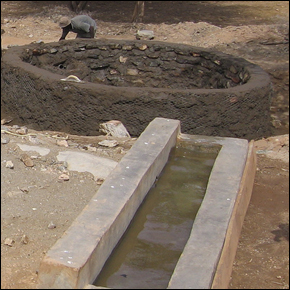
    “If somebody has a well in a town or village in the developing world and we put concrete around the well – nothing else – it becomes an ‘improved source of water’. The quality is the same but you have ‘improved’ the physical structure, which has no impact,” said Biswas in an interview with the Guardian. “They are not only underestimating the problem, they are giving the impression the problem is being solved. What I’m trying to say is that’s a bunch of baloney.”

    While the MDGs focus on protecting water sources from local contamination, the water quality from that source is not part of the metric.

    Biswas, who has advised the governments of India and Egypt on water issues, said inadequate municipal water supply systems often stem from mismanagement and corruption rather than physical water scarcity. Meanwhile, the WHO progress report acknowledged that measuring water quality was difficult and expensive.

    A forthcoming WHO/UNICEF pilot study of country-level water quality testing found that 90 percent of piped systems met WHO microbial standards, but only 40 to 70 percent of other improved sources were in compliance.

    “We know how many people have access to water,” said the Prince of Orange at World Water Day in Nairobi, Kenya, “but we don’t know how many have safe water.”

    Source: Guardian

  • The Price of Water: A Comparison of Water Rates, Usage in 30 U.S. Cities

    Across the country there is wide variation in use and price for water consumption in major urban areas, with residential rates being lowest in the Great Lakes region, according to a Circle of Blue survey.

    Milwaukee is actually looking to increase water use because of its spare infrastructure capacity and ample supply.By Brett Walton
    Circle of Blue

    A first of its kind survey of residential water use and prices in 30 metropolitan regions in the United States has found that some cities in rain-scarce regions have the lowest residential water rates and the highest level of water use. A family of four using 100 gallons per person each day will pay on average $34.29 a month in Phoenix compared to $65.47 for the same amount in Boston.

    The survey, conducted by Circle of Blue over the last several months, also found that average daily residential water use ranged from a low of 41 gallons per person in Boston to a high of 211 gallons per person in Fresno, Calif.

    The Circle of Blue survey includes data on water rates and water usage from the 20 largest U.S. cities, according to the 2000 Census, and ten regionally representative cities to gain a broad view of urban water pricing. The survey comes as municipal water departments and their customers across the country contend with the ironic and unintended consequence of the economic recession and water conservation. In most major cities water use is declining while rates charged to residential customers are rising.

    The effect of the crossing trends is less severe in Chicago, Detroit and Milwaukee, where municipal water is supplied by the lakes and prices range from $24.12 to $28.36.

    “The reason why rates are so low in the Great Lakes region is proximity to abundant water,” said Nick Schroeck, executive director of the Great Lakes Environmental Law Center in Detroit. “Moving water takes an extraordinary amount of energy. Energy costs are higher in arid regions where water has to be brought from far away. For us, you look at the larger cities, and they are right on one of the lakes. It’s easy to get water to the population centers.”

    Even though prices are comparatively low, rates in the Great Lakes region have increased in recent years because of declining consumption. Most of that decrease is attributed to the loss of industrial activity, though shrinking urban populations and personal frugality are also factors.

    “For more than 20 years industry has been moving south looking for cheaper labor, I’m hoping that now they’ll start coming back looking for cheaper water.”
    -Richard Meeusen, WAVE Founder

    Falling demand is a concern for Carrie Lewis, the superintendent of Milwaukee Water Works, because the utility’s revenue comes from water sales, so less use means higher rates. In an interview, Lewis described a downward-sloping graph showing the decrease in water sales over the last three decades. Sales in Milwaukee dropped 41 percent from 1976 to 2008, primarily because water-intensive breweries and tanneries went out of business or left town.

    “That’s a frightening graph if you make money selling water,” Lewis said.

    As a result, water conservation is not a big part of Milwaukee’s agenda. Milwaukee Water Works (MWW) rejected a suggestion from the state public service commission to institute a block tariff rate structure, which would have raised prices for high-volume users to encourage using less water. The city is actually looking to increase water use because of its spare infrastructure capacity and ample supply.

    “MWW could double its customer base without having to build new facilities,” Lewis said. “There’s no capital cost to avoid by increasing water use.”

    To that end, some Milwaukee businesses want the city to fish for industry with the lure of cheap water, according to an article from the American Water Works Association. Business owner Richard Meeusen started the group Water Attracting Valued Employers (WAVE) to lobby for a discounted industrial water rate.

    “For more than 20 years industry has been moving south looking for cheaper labor, I’m hoping that now they’ll start coming back looking for cheaper water,” Meeusen told the AWWA.

    Water demand in Milwaukee is similar to urban areas across the United States. Per capita water use is dropping in nearly every city surveyed, and total water use has fallen or remains steady in some cities despite population bulges.

    Infographic: Water Use Comparison of 5 U.S. Cities

    BarGraphs590

    Graphic by Trevor Seela

    Water in the Southwest
    Declines in demand are especially notable in arid cities of the Southwest and southern California. These regions binged in the 20th century on relatively abundant supplies brought from afar, using water to leverage growth. But as populations have disproportionately grown in comparison to the available supply, cities are cutting back to avoid building costly desalination plants, investing in diversion schemes or buying expensive water through market exchanges.

    Per capita use in Santa Fe has dropped 42 percent since 1995 and total use is down nearly 30 percent, while Phoenix consumes the same amount of water now as it did 10 years ago despite adding roughly 400,000 residents. Figures released two weeks ago from the Los Angeles Department of Water and Power show that it supplied less water in February than any time in the last three decades, according to the Los Angeles Times.

    Las Vegas has significantly cut outdoor water use by prohibiting front lawns for new houses since 2003. As a result, water deliveries from the Southern Nevada Water Authority, which supplies Las Vegas, dropped by 20 billion gallons from 2002 to 2003–enough water to cover the annual residential needs of a city of 150,000.

    People living in the Southwest are often excoriated for their water use, but critics neglect the necessity for water, argues Stephanie Duer, water conservation program coordinator for Salt Lake City Public Utilities.

    “I never hear people complain about Alaska or Connecticut using too much heating oil,” Duer said in an interview. “It seems to me that since we’re in a dry region we will be using more water.”

    Water use needs to be weighed against the other benefits it provides, Duer added. “I hear people say ‘Why don’t you plant native species’ Well, We don’t have a single shade tree that would grow at this elevation. Do you want to live in a city without trees? We want to keep the urban forest for quality of life and keeping shade helps to reduce energy use in the summer. We’re working hard to find that balance in water use.”

    “Water use is generally not publicized much outside of droughts. Water sort of has a technical side that often doesn’t get communicated well to the public.”
    -Drew Beckwith

    Though water supplies are precious in these places, the price of water for residential customers is relatively cheap. A family of four using 100 gallons per person each day will pay on average $32.93 a month in Las Vegas compared to $72.95 for the same amount in Atlanta, which has more than ten times the amount of average annual rainfall as Las Vegas, according to National Weather Service statistics. While many factors contribute to water pricing, such as the energy used to pump water, the price of chemicals for treatment costs, recent infrastructure projects and operations efficiency–the difference in several Western cities can partly be explained by government subsidy.

    “In the West there was massive federal investment in major water infrastructure,” said Heather Cooley, a researcher for the Pacific Institute’s water program. “Those states and cities didn’t have to pay the capital cost. California’s Central Valley Project is an example of that. The capital cost not including interest still hasn’t been paid, and that was built over 50 years ago. The subsidies create an artificial price.”

    Water delivered via the Central Valley Project, a federal initiative led by the Bureau of Reclamation, is primarily directed toward agriculture. The same federal support helped build the Central Arizona Project, a canal that connects water from the Colorado River to Phoenix, Tucson and other cities in three Arizona counties.

    Residents of those cities who benefit from this lifeline channeled through the Sonoran Desert are paying only 45 percent of the project’s $3.6 billion cost. The difference is a national burden.

    The Central Arizona Project, Hoover Dam, California’s State Water Project, Colorado’s Big Thompson Project are all water supply diversions paid for in part by federal or state tax funds. But when new supply projects are financed by customers directly, higher water rates are the consequence.

    Take Santa Fe, for example.

    The city has the highest overall rates in the survey and the highest rates for high-volume users. Because water is scarce and current groundwater use is unsustainable, the city is building the $217 million Buckman Direct Diversion to tap water from the San Juan-Chama diversion. It is a non-federal project, and the $187 million after-grant cost is being jointly paid by the city and the county.

    Full Survey Graphics
    allstats-165

    While Santa Fe’s supply project meets current needs, high-growth areas typically levy a one-time connection fee on new development to place the burden on newcomers for acquiring anticipated supplies or building treatment. In Las Vegas, for example, residents buying new houses would pay $1,440 to the Las Vegas Valley Water District and $4,870 to the regional supplier, the Southern Nevada Water Authority.

    “Most of the infrastructure is paid for by new customers,” said Doug Bennett, SNWA’s conservation manager. “There’s not a lot of infrastructure dollars in the water rate.”

    Growth in Las Vegas has slowed in the last few years because of the economic crisis and the housing bubble implosion. Water utilities are not getting many connection fees-–down to 1,139 in 2008 from a high of just over 24,000 in 2005. Slower expansion means the city does not have to worry about meeting constantly rising demand.

    “Instead of worrying about meeting next year’s capacity, now there’s plenty,” said Matt Thorley, principal financial manager for LVVWD.

    The Future of Water Prices
    In many cities, residents lean on infrastructure investments made in the years following World War II. The strain shows. According to the Environmental Protection Agency, 240,000 water main breaks occur each year. Leaky pipes lose billions of dollars of treated water annually, and sewer overflows cause outbreaks of disease.

    Last year the EPA estimated that $335 billion would be needed to fix the country’s aging water supply system in the next few decades, according to the New York Times. But where that money will come from is unknown.

    According to Jack Moss, an advisor to Aquafed, the international water industry association, cities have to decide whether to make improvements through taxes or tariffs. The problem is that neither government spending nor higher water bills gather much voting support.

    Despite the hand wringing over prices, water in the U.S. remains cheap. In most cities surveyed by Circle of Blue a family of four can buy enough water for its indoor needs–50 gallons per person per day for washing, drinking, cooking and flushing–for less than $25 per month, which is a relatively small portion of a family budget.

    “Water is very reasonably priced,” said Doug Bennett, conservation manager for the Southern Nevada Water Authority. “[As a result], it’s not a major expense on people’s radar screen.”

    Meanwhile when prices come up for discussion there are always social justice concerns about access for the poor. However, with a few exceptions such as Detroit, most cities have adequate financial assistance programs to ensure in-home access for all.

    One barrier to better water management is communication between utilities and customers–a common chorus amongst water rate researchers interviewed for this article.

    “Water use is generally not publicized much outside of droughts,” said Drew Beckwith, a water specialist with Western Resource Advocates. “Water sort of has a technical side that often doesn’t get communicated well to the public.”

    Another problem may be habit. Water has generally been so cheap for so long, that people have become anchored to the past price, not realizing that sustainability costs money to achieve.

    Prices will undoubtedly rise in the near future. But the question of whether the increase comes via higher taxes or tariffs remains because bearing the price of doing nothing would be much worse.

    Note: Water rate information was gathered from the website of each city’s water utility and based on single-family residential rates. It is current as of April 1. Average prices for cities with seasonal rates were calculated using seasonal weighting. For water use information, Circle of Blue asked water departments directly the daily per capita usage for single- and multi-family residential customers.

    Brett Walton is a reporter for Circle of Blue. This is the second part of his investigation on U.S. urban water rates–read the first installment here as well as a profile on water pricing issues in Detroit here. Reach Walton at [email protected]. All graphics were created by Trevor Seela. Reach Seela at [email protected].

  • Pakistan Installs Country’s First Urban Rainwater Harvesting System

    The project will be used to recharge local aquifers and provide clean drinking water.

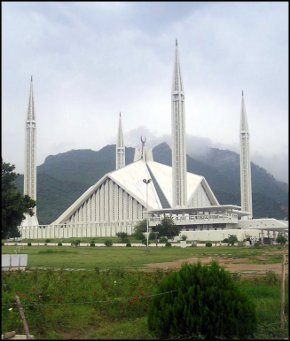
    Pakistan’s first urban rainwater harvesting system has been installed in the capital city Islamabad, the Daily Times reports.

    The collection tanks at the Faisal Mosque complex were funded by the city’s Capital Development Authority, and will provide clean drinking water while recharging the local water table for the city’s nearly 1 million residents.

    Known as the Pilot Rainwater Harvesting Project, the initiative was developed in collaboration with the United Nations Development Program and the Pakistan Council of Research for Water Resources.

    The CDA hopes to increase the number of rainwater harvesting systems in the capital. Meanwhile Islamabad’s building code has been amended to include design specifications for buildings with a footprint that is greater than 400 square yards, according to a press release from CDA chairman Imtiaz Inayat Elahi.

    Rainwater harvesting projects are already in use in the eastern Thar and Cholistan deserts along the Indian border. Few rivers flow year-round in these areas, requiring residents to store water from the rainy season for use during the dry months.

    One project in the Sindh Province coordinated by the Thardeep Rural Development Program, a local NGO, uses several methods to collect rainwater.

    “At the moment, we have three types of projects, which include rain water harvesting at household levels, also known as cisterns or tankas,” Jhuman Lalchandani, the project manager, told IRIN.

    “At hamlet level, ponds are used for saving water for the community, and at the village level we have delay action dams. Also, in low-lying areas, flood protection walls not only save houses from getting flooded but also allow for water to pool up and be used for other purposes,” Lalchandani said.

    Across the border, rainwater harvesting in India is increasingly popular. In 18 of the country’s 28 states it is mandatory to include collection systems in new buildings. Cities such as Mumbai and Bangalore are using the small-scale technology to endure water shortages.

    Source: Daily Times, IRIN

  • Bolivian Village Wants Compensation for Climate Change Adaptation

    Alternative climate summit opens April 20 in Bolivia to address concerns of the world’s poor.

    Bolivian AndesBolivian villagers, with government encouragement, are proposing an international court to adjudicate claims for compensation from communities whose lives have been affected by climate change, but do not have the money to adapt, the BBC reports. Their announcement comes as the country kicks off the People’s Summit on Climate Change this week.

    Approximately 18,000 people will attend the conference in Cochabamba, which addresses social issues that were ignored by world powers during the United Nations climate conference in Copenhagen last December.

    Delegates will consolidate ideas from the meeting for submission to the next U.N. climate conference in Mexico in December. Indigenous populations in Bolivia are using this conference to ensure the upcoming talks will include their concerns.

    Adaptation to climate change is a pressing issue for the 40 or so Aymara who live in Khapi village in the Bolivian Andes. Two million Aymara inhabit the Andean region, and are scattered across Bolivia, Peru and Chile. In the Khapi village, they depend on the run-off from the Illimani glacier to sustain their agricultural way of life, but scientists predict the glacier will disappear in seven to 10 years.

    “We want those countries to compensate us for all the damage they have done to nature,” said Alivio Aruquipa, the group’s leader, to the BBC.

    “We don’t know how to calculate the compensation because we are not professionals, we are simply farmers,” Aruquipa added. “But we would like assistance, and then to receive some money and, with that money, to build dykes to store the water, improve the water canals.”

    Aruquipa attended the Copenhagen climate summit to raise awareness about the fate of the Khapi community if the Illimani glacier disappears.

    “We don’t know where we are going to go. Like the ice, the source of our lives will be disappearing too. Where are we going to go?”

    Bolivia’s president Evo Morales would like to see the activists lobby for the creation of an international environmental court of justice, which would hear cases involving compensation for poor people suffering from the effects of climate change.

    Specific details about the composition of the court, how it would decide which cases to hear and its position in the international justice system have yet to be determined.

    Source: BBC

  • In Detroit: No Money, No Water

    Water Department cuts connections to thousands of city’s poor

    Detroit Utility Protest

    In 2006 the Michigan Welfare Rights Organization picketed the houses of Detroit city council members to protest the water department’s decision to shut off water connections to people who could not afford to pay their bills.

    By Brett Walton
    Circle of Blue

    Detroit’s water utility supplied 20 percent less water in 2009 than it did in 2003. The obvious reasons why are a steep decline in Industrial activity and population. Michigan’s largest city–home to 820,000 residents, 1 million less than in 1950–is losing 10,000 residents annually.

    But a third important source of the department’s diminishing market is that many poor residents simply can’t afford the basic service. Thousands of Detroit residents have had their water connections cut by the city, forcing people to adopt informal methods to gain access to drinking water.

    “I’ve been to some neighborhoods where they run a hose through the window from their neighbor’s house,” said Maureen Taylor, chair of the Michigan Welfare Rights Organization (MWRO), which educates low-income workers and welfare recipients on social services rights.

    “I’ve seen hoses from house to house. I’ve seen people with big water canisters getting water from the neighbors. Most folks understand the situation and give a hand.”

    More than 42,000 residences in 2005 lost their connection to the city’s water system, according to figures provided by the Detroit Water and Sewerage Department, Taylor said. The number of homes without access has decreased since then but, according to Taylor, the exact figure remains unknown because DWSD is reluctant to provide data about the shut offs.

    DWSD officials, despite requests from Circle of Blue, were not available for comment.

    The drop in Detroit’s water has prompted the city’s water utility to increase rates to compensate for lost revenue, a response that is almost certain to accelerate the decline in water demand as homeowners and businesses cut water use to save money. In 2008 the average annual bill increased by almost $55. Last year, the average annual bill rose to almost $83. The DWSD is considering another 9.2 percent increase in July.

    Even with these changes, Detroit still has some of the least expensive water of the 20 major U.S. cities surveyed by Circle of Blue.

    While many U.S. cities would see a decline in water consumption as an indication that conservation and efficiency programs are working, the drop in Detroit is one more measure of a city in peril. On average one in six Detroit workers is jobless and in some areas half of the population is out of work, according to Taylor, who has led MWRO since 1993. Many people who lost their job have not been able to keep up with their utility bills, even with city and state financial assistance.

    As a result, DWSD–-the third largest municipal water department in the country–suffered a $50 million shortfall in projected revenue before the last rate increase in July 2009. Meanwhile rising costs for treatment chemicals, interest rates on debt the utility already owes, and a legal settlement requiring the city’s residents to fix sewer overflows that contaminated regional waterways have added to the utility’s financial woes.

    The finance crisis will take years to solve. The Southeast Michigan Council of Governments, the regional research and planning agency, predicts that Detroit’s population will hit bottom in 2020. Meanwhile, some city officials and academics think Detroit’s recovery can only start when it becomes smaller.

    Mayor Dave Bing talked in February about the need to relocate people within the city. “If they stay where they are I absolutely cannot give them all the services they require,” Bing said according to Detroit News.

    But the creative possibilities for reimagining the urban space are no consolation for those without access to water now. “The economy has wreaked absolute havoc in Detroit,” Taylor said. “We have tens of thousands of people in the city right now without water. It is unreal.”

    Brett Walton is a reporter for Circle of Blue. Read the part one of his investigation on U.S. urban water rates here. Reach Walton at [email protected].

  • U.S. Urban Residents Cut Water Usage; Utilities are Forced to Raise Prices

    As municipal water consumption declines, cities raise rates and civic ire.

    Las Vegas, Nevada

    By Brett Walton
    Circle of Blue

    Last week the Metropolitan Water District of Southern California, one of the nation’s largest municipal water suppliers, announced that along with requiring its customers to use less water under mandatory conservation measures it also would hike up the price for water by 15 percent over the next two years.

    The board of the Los Angeles-based water district, which supplies drinking water to nearly 19 million people in parts of Ventura, Los Angeles, Orange, San Diego, Riverside and San Bernardino counties, anticipates a public push back.

    Indeed as water sales have declined because of the recession and conservation, water utility boards all across the country have raised rates, prompting civic dismay. A growing number of raucous council meetings, street protests and petition drives in opposition to higher water prices have occurred in cities large and small–Detroit; San Diego; Joplin, Mo.; Prairie Township, Ohio.

    In effect, in too many American cities to count, water consumers are dramatically reducing the amount they use only to be hit with higher water rates. Existing designs for deciding water rates are the culprits. A handful of cities are restructuring their billing systems to benefit conservation-minded consumers who deserve to be rewarded rather than penalized.

    “With a deductive reasoning applicable only to a public service monopoly, the answer is to punish the consumers’ conservation efforts with a rate increase”
    –Kevin Bakley

    The trend favors even more water conservation. A recent report from the Denver-based Water Research Foundation found that the recession has bottled up water demand in many areas of the country-–particularly in regions hard hit by unemployment and foreclosures. And since the mid-1990s, federal law has required new fixtures to be low-flow, meaning they use less water. Showerheads, for instance, are limited to a flow of 2.5 gallons per minute. And toilets can only use 1.6 gallons per flush, down from the 3.5 gallons that were standard in the 1980s.

    The unintended consequence of using less in most cities is that ratepayers pay more. The Cleveland region has increased water rates 45 percent to 80 percent since 2007. Cleveland Water Commissioner Chris Nielson explained to the The Plain Dealer last week that “revenue was $25 million below projections last year because of a decrease in consumption.”

    “With a deductive reasoning applicable only to a public service monopoly, the answer is to punish the consumers’ conservation efforts with a rate increase,” said Kevin Bakley, a resident and water customer from Strongsville, in a letter to the editor. “At least the return of spring will allow completion of road repairs for the continual, unimpeded egress of corporations and citizens leaving Northeast Ohio.”

    Water consumption in St. Charles, Illinois dropped to 1.5 billion gallons last year from 1.68 billion gallons in 2008. John Lamb, the director of the city water department, is preparing a recommendation to the St. Charles City Council to raise rates 4 percent. It would be the third increase in as many years.

    “It’s funny, in the sense that it’s a double-edged sword,” Lamb told the Kane County Chronicle. “We tell people all the time to conserve water, conserve water. But then we, as the municipality providing the water, suffer because there’s less money coming in to maintain that system.”

    Well, it’s not so funny to thousands of water customers. Ratepayer protests are erupting, many of them in California, a state entering the fourth year of drought. Residents of San Diego submitted 14,000 written protests to the city clerk’s office in November 2009 opposing a new rate–the sixth since 2007–that would have increased the average monthly bill by $4.73.

    To a large extent, say some authorities, water conservation should not necessarily translate into higher prices. Rather the system for deciding water rates needs to be redesigned to reward customers who conserve, not lash them.

    “There’s no reason why municipalities who implement conservation programs should have to raise their rates,” said Peter Gleick, president of the Pacific Institute. “If that happens it’s a failure of rate design.”

    Conservative Conservation and the Death Spiral

    Las Vegas Rate Structure

    Graphic by Trevor Seela.
    An example of a water rates implemented by the Las Vegas Utility.

    Las Vegas water officials call the tradeoff between saving water and raising rates the conservation death spiral. Water utilities are natural monopolies–the cost of delivering water is lowest when there is just one supplier. In the U.S. water utilities are generally publicly–owned and the rules governing each utility differ by city, with most not allowed to make a profit. Any rate increase, even for investor-owned water companies, usually has to be approved by a public service commission. The interjection of public policy and politics is ostensibly to keep the water supplier from gouging the customer, but it has the consequence of affecting a utility’s business incentives.

    “Water agencies in the past have tried to keep rates low, in part because of political pressure,” said Heather Cooley, a researcher at the Pacific Institute’s water program. “Members of the board are often elected. It does create problems in the long term, namely failure to adequately invest in infrastructure. Part of the reason utilities are not making those investments is the pressure to keep rates low.”

    As a result, cities are often playing catch-up with rates, burning through cash reserves and ignoring system improvements until a rate increase becomes absolutely necessary. Historically, to keep revenue stable, public utilities charged a flat fee for water regardless of how much was used. With the introduction of water meters in the early 20th century, some cities began charging based on the volume of water used, sometimes $2.00 per 1,000 gallons.

    The use of meters, however, varied widely around the country. By 1927, 100 percent of the water connections in Portland, Ore. were metered, but this isn’t the case for all cities. To date, Sacramento still has meters in only 25 percent of its houses.

    A big shift in pricing occurred in the arid Southwest in the late 1970s. Because of rising use and declining water supply, Tucson, Ariz. instituted an increasing block tariff to encourage conservation. Under an increasing block tariff the cost for a unit of water gets more expensive the more a customer uses. For example, the first eight 1,000 gallon-units might cost $2.00 each, but every 1,000 gallons over that limit would cost $5.00 each, with potentially more tiers added to the rate, depending on the price agenda of the utility.
    Fernando Molina, conservation manager at Tucson Water, the city’s utility, explained the circumstances prompting the rate changes in Tucson.

    “The 1970s is when the strong conservation movement emerged,” Molina told Circle of Blue. “Back then infrastructure had not kept up with growth. During peak times in summer the utility had trouble meeting demand, especially in the higher elevations in the city. There was a lack of distribution lines and reservoir capacity. When the block rate was introduced it caused a lot of controversy.”

    Businesses accused the council of being anti-growth while residents gathered signatures to recall the council. At a special election that fall, every council member who voted for the price increase was voted out of office.

    The political fallout in Tucson did not stop the inevitable spread of block tariffs. Cities in which water was scarce had kept the price of water too low and needed to cut rampant use. In areas with limited water supply, block tariffs encouraged conservation by raising the price of consumption for high-volume users. Certain municipalities dealt with the peak demand problems by ordering seasonal rates, which are higher in dry seasons. Though tiered pricing was slow to take hold and poorly implemented where it did, the shift in rates was clear–prices were now a tool to steer conservation.

    This is often when death spirals, which are products of utilities allocating costs, occur. Mention conservation and water rates to water managers using a block tariff and they will give you a similar version of the story told by Doug Bennett, conservation manager for the Southern Nevada Water Authority:

    “Water agencies have a disincentive to conservation because if customers cut use, it cuts sales.”

    “You say [to the customer] we want you to conserve. No rate changes, just a call for conservation. If people react more strongly than you thought they would, then suddenly there’s a revenue shortfall. Now we have to increase rates to recover that. Sometimes we raise rates in upper tiers, but that just increases conservation. The wise thing to do is put it in a service charge or lower tiers, but that sours the relationship with the public.”

    Utilities face two major categories of cost: fixed and variable. Fixed costs do not change regardless of whether the utility sells any water or not, such as system maintenance and staff salaries. Variable costs–energy, purchased water, chemicals for treatment–change depending on demand.

    Most utilities charge all customers a fixed monthly service fee in order to pay for fixed costs, but most utilities have a serious imbalance in assigning revenues to costs. While 72 percent of the Las Vegas Valley Water District’s costs are fixed, the utility’s fixed fee covers only 18 percent of its fixed costs. The balance is covered by charges on consumption, so if water use goes down too rapidly the utility gets into financial trouble.

    “Water agencies have a disincentive to conservation because if customers cut use, it cuts sales,” Cooley told Circle of Blue.

    In essence, water utilities make money selling water. And since selling less water decreases revenue, utilities develop a perverse incentive that welcomes dry periods because people will use more water on their lawns and generate more income for the utility.

    Interactive Graphic: Water Data by Selected Cities

    Graphic by Trevor Seela.

    “Rising conservation has contributed to revenue volatility,” said Rusty Cobern, budget and finance manager for the Austin Water Utility. “We would have expected a revenue windfall during the [recent] drought. Aggressive conservation pricing model can eliminate windfall opportunities.”

    Phoenix is contemplating the same problem. Price increases and education programs have kept water usage stable for the past decade despite a 28 percent increase in population. But now the utility wonders how much conservation is too much.

    “How low can we go?” asks Steve Rossi, the principal water resources planner for Phoenix. “From a revenue standpoint, our capital obligations are pretty substantial. Assumptions were made in the past made about revenue flows. We are looking at how things balance down the road if you reduce demand.”

    Because publicly-owned utilities are often barred from making a profit, they go through detailed budgeting when setting rates so that they can cover their costs while keeping rates low. Included in these budgets are estimates for how much the customers will conserve. The Marin Municipal Water District in California based its 2009 budget on a projected three-percent decline in sales due to conservation, said Libby Pischel, the district’s public information officer.

    As it turned out, customers responded too well to conservation requests, cutting back water use by eight percent, leaving the utility short of cash and forcing an unwelcomed rate increase.

    Utilities could avoid the problem by shifting some of their revenue from consumption to fixed charges, but that increases the cost for low-volume customers.

    Conservation Instinct Still Strong

    Despite the perils of the death spiral, the argument for conservation is strong. Developing new sources of water is expensive, especially as the distance to untapped rivers and reservoirs increases. In Seattle conservation methods has led water managers to predict that the two water supply reservoirs the utility operates will meet the city’s demands until well after 2060.

    Conservation can also prevent supply problems during dry periods.

    “Long-term conservation improves the supply reliability of system,” said Drew Beckwith, a water specialist with Western Resources Advocates. “If you conserve now, when there’s a drought there will be water in the reservoirs.”

    “When I was young I always wanted a rate increase, an aggressive rate structure,” added Bennett in an interview with Circle of Blue. “I wasn’t aware of what the finance people do. It’s really a fine art. What is terrifying to finance people is to throw out rate structure completely and try something new. It’s like cooking — you turn up or turn down the burner. If you throw something big in there it can turn ugly fast.”

    “There’s not a lot of benefit to achieving conservation goals ahead of schedule,” he said.

    The Irvine Model
    Several water utilities have figured out how to resolve the conflict between conservation and revenue.

    Irvine Ranch Water District in Orange County, Calif. pioneered a new model when it instituted an allocation-based rate structure in 1991.

    “Water agencies should be communicating to customers that yes, rates went up in the short term, but it is far less than if we had to build new facilities for a new water source. I don’t think agencies have been good in communicating.”

    Every household is given an allocation based on personal use needs of 55 gallons per person per day and lawn needs based on efficient watering. Customers can apply for an adjustment if there are more people in the house than the utility assumes. A base price is set for the allocation. If a household exceeds its allocated use, it is penalized with rates up to eight times higher than the base rate. On the other hand, if a household is water-frugal it receives a discounted rate.

    “Our water rates are the second lowest in our county,” said Fiona Sanchez, IRWD’s conservation manager. “Customers who use water efficiently are rewarded with low rates.”

    Not only are rates low, but use is low too. The average customer served by Irvine Ranch uses 52 percent less water per day than the average person served by other Orange County utilities. Efficient use helps to keep prices low by reducing the need to buy water imported from the Colorado River.

    IRWD’s success stems from a prudent division of costs and allocation of revenues.

    “The key to revenue stability is that we separated fixed and volumetric charges,” Sanchez told Circle of Blue. “We know what our operating costs are and that’s distributed across all customers. If our volumetric sales go down, we’ve got our fixed costs covered.”

    IRWD also separated its capital costs from its operations costs. Capital projects to build or maintain water infrastructure are paid for by property taxes and one-time connection fees charged to new users in the system. This keeps water bills in check, but transfers the costs of expansion and repair to a resident’s tax bill.

    IRWD customers seemed to be pleased with the system. The utility earns extremely high customer satisfaction scores, and its board members get re-elected, Sanchez said.

    Irvine Ranch has conservation, lower prices and customer satisfaction. A handful of utilities in California, because of drought and pumping restrictions, have shifted to allocation-based pricing in the last year and a few others are considering it, Sanchez said.

    So why aren’t more following this model?

    Data needs are one problem, Sanchez said. The utility needs information about each household’s irrigated acreage. Allocations for lawns are based on micro-climates within the service area and the water requirements from plant use and evaporation.

    Another problem is antiquated billing systems, which are often expensive to upgrade.

    While there are certainly technical issues to be sorted out, utilities can avoid the backlash from rate increases by improving communication with their customers, the Pacific Institute’s Cooley said.

    “Water agencies should be communicating to customers that yes, rates went up in the short term, but it is far less than if we had to build new facilities for a new water source. I don’t think agencies have been good in communicating.”

    “I think it’s a failure across the board to engage people,” she added. “It’s a missed opportunity. Most people don’t understand what it takes to provide a clean water supply. When you explain it to them, the utility is able to better maintain a functioning system.”

    Residents are looking for leadership from their utilities. At the water rate hearing in Marin County, Calif., board members were urged to make the case for why rate increases were necessary.

    “Stop penalizing homeowners who conserve and start rewarding them,” said one resident, the Marin Independent Journal reported.

    Brett Walton is a reporter for Circle of Blue. Read the part one of his investigation on U.S. urban water rates here. Reach Walton at [email protected]. All graphics were created by Trevor Seela. Reach Seela at [email protected].

  • British Company Creates Cheap, Small-Scale Desalination for Agriculture

    The new system, which uses sub-surface pipes to remove salts and deliver water to plants on demand, grew 200 prosopis trees in the United Arab Emirates’ desert during a test-run.

    field-290

    Photo courtesy bookgrl

    A British company has developed an irrigation system that allows saline and brackish water, which contains more salinity than freshwater, to be used for growing crops, Wired reports.

    The Dutyion Root Hydration System uses a network of underground pipes to deliver water directly to a plant’s roots. Water then diffuses through the walls of the polymer pipe because of differences in moisture levels, which act as filters and leave contaminates behind. Almost any water source can be used–-even industrial wastewater–-without the need for secondary purification.

    “What we’re looking to do is take our irrigation system and move to places where it’s not possible to irrigate today,” said the system’s designer Mark Tonkin of Design Technology and Irrigation. “[We] stumbled across a way of effectively desalinating water. We put pipe in the ground which lets water vapor to escape and the waste element is what gets left in the pipe.”

    The overall system is gravity fed and needs minimal maintenance while the pipes must be periodically flushed to clean out accumulated salts and dirt, Tonkin told Wired.

    Approximately 70 percent of the world’s freshwater is used for agriculture. Wide use of salt water for irrigation would free freshwater for other uses and increase food security for people living in dry coastal areas.

    Brackish water is already being used to grow saltwater-tolerant plants for biofuels, but DTI is growing plants to eat–such as tomatoes, strawberries, peppers and beans as well as cherry and olive trees.

    “There are no plants that we’ve tried to grow that can’t survive simply by using water vapor as opposed to having wet water put on them, and that is a major change,” Tonkin said in a promotional video for LAUNCH, a forum for innovation. “It’s made it possible to put an irrigation system in the ground where there is no freshwater and no likelihood of anybody building a desalination plant and grow plants where you couldn’t grow them today.”

    Pilot projects were carried out in the U.S. and the United Kingdom. DTI chose an extreme environment for its first field-scale trial–the raw desert in the United Arab Emirates, Tonkin told Circle of Blue via email. The company grew 200 prosopis trees–a species that thrives in arid places–from saline groundwater.

    DTI is now in the transition phase between testing and commercialization, Tonkin wrote. It is setting up supply chains and forming local partnerships for manufacturing component parts, marketing and installation.

    Source: Wired

  • Prospect of New Indian State Creates Water Allocation Concerns

    The proposed Telangana state would require re-allocation of two of India’s largest rivers.

    Indian State Creates Water Allocation ConcernsThe push to create a new state in southern India has caused concern about how current water resources would be divided, Al Jazeera reports.

    Following decades of protest and recent agitation by independence activists, India’s central government started the state-formation process in December 2009 that would section off the Telangana region of Andhra Pradesh. But the new state could change the allocation of the state’s two major rivers, the Krishna and the Godavari, and cause tension in the area, according to several news reports from the region.

    Farmers from both regions who spoke with Al Jazeera were already thinking about what the new state would mean for them.

    One farmer, Shankar Reddy, who cultivates four acres in the Andhra region, had a strong crop this year, but said he’s looking toward an uncertain future.

    “I’m worried,” Reddy told Al Jazeera. “There is talk of stopping the water to us. That would be disastrous as we rely on the river. We can’t just depend on the rain. We need this water source.”

    Across the river in Telangana, the problem is a current shortage, not an anticipated one.

    Kas Ghani Muthai owns four acres, but can farm only one and a half now because of drought and poor water supply infrastructure. The last rains came in June 2009, and the region does not have the irrigation canals its neighbor does.

    “When Telangana is formed we will get all of the water,” Muthai said to Al Jazeera. “Our water should not be going to the Andhra region.”

    Unequal allocation of resources is one reason many in Telangana desire their own state. The Krishna River enters Andhra Pradesh through Telangana and forms most of the border between the two regions. Yet, Telangana’s share of the water is less than 12 percent, according to the Times of India. The same case holds for the Godavari. Telangana is allocated less than 20 percent of that river even though 70 percent of its catchment lies in the region.

    As a new state, though, Telangana would negotiate for no less than double those amounts, according to a Telangana activist speaking to the Times of India.

    To complicate matters, some leaders from the third region of Andhra Pradesh – Rayalaseema – propose to unite with Telangana if it becomes independent to guarantee a source of water.

    “It is in our interest if Rayalaseema is merged with Telangana. Otherwise, we won’t have any water in case Telangana refuses to share,” said J C Diwakar Reddy, a member of the state legislative assembly, to the Indian Express.

    A decision on Telangana’s fate most likely will not come until next year. A committee formed by the ruling Congress party to study the issue will submit its report by December 31, 2010.

    Source: al-Jazeera, Times of India, Indian Express

  • Biofuels that Save Water and Land

    Flushing For Fuel: Wastewater grows energy-rich plants and algae

    Biofuels that Save Water and Land

    Photo © Aubrey Parker
    Students at the University of Michigan are working to create algae-based water treatment and bio-energy systems, like this photobioreactor shown above. As the algae grows and takes up nutrients from its surroundings, it accumulates lipids that are later converted into biodiesel.

    By Brett Walton
    Circle of Blue

    Though liquid fuels derived from plants have the potential to shift energy production to much cleaner products and practices, to date the environmental benefits do not yet surpass the risks, according to a number of influential studies including a 2009 United Nations report.

    That tilt may soon be righted by researchers at the University of Virginia and the Seawater Foundation, who discovered that the most important source of the risk-benefit imbalance was the heavy reliance on fresh water and the need for petroleum-based fertilizer to improve plant productivity. Researchers at both organizations substituted wastewater rich in organic material and developed much cleaner and efficient practices for biofuels development.

    Andres Clarens and colleagues in the Civil Engineering Department at the University of Virginia found that algae production could be cleaner and municipal wastewater treatment costs could be reduced if the two processes worked together symbiotically.

    One option studied by Claren’s team includes growing algae in nutrient-rich wastewater, which reduces the need for synthetic fertilizer. In turn, the algae remove nutrients from the water and save energy by doing part of the treatment plant’s work. The consequence of scaling up the team’s work is potentially immense.

    Removing nutrients from wastewater uses 60 to 80 percent of a treatment plant’s energy budget, said Clarens.

    “The nice thing about partnering with a wastewater treatment facility is the financial incentive for them. And it’s a win-win by reducing the algae’s footprint,” Clarens said.

    A recent study by Clarens and his colleagues at the University of Virginia found that algae fares worse than switchgrass, canola and corn in energy use, greenhouse gas emissions as well as water use. “Indirect water use is the real contribution, having to produce a lot of things upstream of the cultivation,” Clarens told Circle of Blue. “There’s the power to run the plant, making the fertilizers – this is where we saw a lot of the impact.”

    This systematic view of energy also underlies the production process for another biofuel for jet aircraft.

    Carl Hodges, an atmospheric scientists and founder of The Seawater Foundation, has pioneered a multi-stage form of agriculture called integrated seawater farming. The goal is to use waste material from one crop as a productive input to grow something else.

    Hodges conducted his research in arid, coastal regions where high-quality land and freshwater supplies were limited. He piloted the program in Africa and has since launched a second farm in Mexico.

    His system begins with a canal dug inland from the ocean. Seawater fills aquaculture ponds for raising shrimp, fish, and seaweed. Wastewater from the ponds is then diverted to fields planted with salicornia, a saltwater-tolerant plant that grows in sandy desert soils. Salicornia is harvested for its oil, which is refined into a biofuel.
    The water then flows to mangrove wetlands, which are full of trees and plants that grow in saline coastal habitats. The trees can be monetized as carbon credits, while their wood is used for timber.

    The biofuel component has drawn the attention of several large corporations.

    Boeing, Honeywell and Etihad Airways announced in January that they would partner with the Masdar Institute of Science and Technology in Abu Dhabi to develop saltwater-tolerant biofuels on a commercial scale through the Sustainable Bioenergy Research Project. The project will use Hodges’ integrated seawater farming system to produce jet fuel.

    Hodges, who could not be reached for comment, has been named a special advisor to the project.

    “We are forging our energy future by developing a renewable fuel supply now, not when fossil fuels are depleted,” said Jim Albaugh, president and CEO of Boeing Commercial Airplanes, in a news release. “Developing and commercializing these low-carbon energy sources is the right thing for our industry, for our customers and for future generations.”

    Brett Walton is a reporter for Circle of Blue. Reach Walton at [email protected], and read more of our Water+Climate: Energy coverage here.

  • 2009 California Water Plan Published

    Report recommends upgrading the state’s information base to better user understanding of the water system.

    2009 California Water Plan Published

    California needs to improve its collection of water data and communication between water agencies to reduce uncertainty in its water management planning according to the 2009 state water plan, released this week.

    The plan, which is updated every five years, states that, “investment in our analytical capabilities lags far behind the growing challenges facing water managers.”

    The latest water strategy highlights wide data gaps and poor methods of exchanging information between different water management agencies in the state. While the quality of data collected varies by region, the plan notes the lack of broad knowledge about groundwater recharge rates, surface water flows, consumptive use by natural vegetation and soil moisture properties.

    Some of these deficiencies have already been recognized by officials.

    A package of water bills on the November ballot includes legislation that will require groundwater monitoring.

    Meanwhile better data needs to be combined with common standards for reporting and measurement. According to the report, there are four separate statewide surveys assess urban water use, which needlessly wasting state resources and resulting in inconsistent data reporting.

    To facilitate communication between state, regional and local agencies, the state is developing the Water Planning Information Exchange–a centralized Web site for water data. A trial version of the site, called the Integrated Water Resource Information System, was launched in May 2008.

    For the first time, the state water plan incorporated multiple growth scenarios to get a better understanding of the range of possible water needs. One scenario projected from current trends in population growth, land use changes and conservation targets while the other two used high-growth and low-growth models.

    All of the scenarios predict a decrease in agricultural use as farmland is developed by urban areas and on-farm water efficiency increases. The biggest variables, however, are climate change and unmet environmental requirements. Extreme shifts in precipitation patterns could reduce the overall water supply and require more water be left in rivers to support fish and aquatic life.

    “Our new reality is one in which we must manage a resource characterized by uncertainty and vulnerability due to climate change and changing ecosystem needs,” Lester Snow, Secretary for Natural Resources, said in a press release.

    The state water plan can recommend courses of action, but the 21 state agencies involved in creating the plan do not have the power to mandate actions or authorize spending.

    Among the plan’s other recommendations are more efficient water use, improvements to water quality, investments in new technology and restoration of the Sacramento-San Joaquin Delta.

    Read more from Circle of Blue about the Pacific Institute’s recommendations for improving agricultural water efficiency using existing technology.

  • Drinking-Water Access on Target for Millennium Development Goals, while Sanitation Falls Short, Report Says

    Even though access to drinking water is on the rise, the safety of those sources is in question.

    Drinking-Water ReportBy Brett Walton
    Circle of Blue

    A new assessment report by the World Health Organization and UNICEF has found that the world is on track to surpass the Millennium Development Goal for drinking water access, but will fall short by one billion people for sanitation if current trends continue. The report also notes that access to an improved water source does not mean access to a quality water source.

    The Progress on Sanitation and Drinking Water: 2010 Update finds that 2.6 billion people, more than one-third of the world’s population, do not use improved sanitation. Progress has been made in northern Africa, Southeast Asia and East Asia, but large parts of South Asia and Sub-Saharan Africa go without proper restroom facilities.

    In 2000 the United Nations set goals for increasing access to safe drinking water and basic sanitation among the world’s poorest people. Known as the Millennium Development Goals (MDGs), they created quantified targets for improving life for these people by 2015.

    The goals focused on poverty, health, hunger, education and gender equality, with the water and sanitation target aiming to half the proportion of people without access to safe drinking water and basic sanitation. This goal uses 1990 as a baseline year for comparison.

    According to the UN definition, improved sanitation ensures that people do not come in contact with feces. Examples of such systems include flush and pour-flush toilets, ventilated pit latrines and composting toilets. Open defecation, the most unsanitary behavior, is declining, the WHO/UNICEF report states.

    The report also found wide gaps between coverage in rural and urban areas for both drinking water and sanitation. More than eight out of ten people without improved water sources and seven out of ten people without adequate sanitation live in rural areas, according to the report.

    People familiar with the report, which uses data gathered between 2007 and 2008, said it should be a call to action as the MDG deadline approaches.

    “With only five more years to go until 2015, a major leap in efforts and investments in sanitation is needed today in order to have an impact by the time we carry out our end-of-MDG evaluation,” said Robert Bos, coordinator of Water, Sanitation, Hygiene and Health at WHO, in a press release.

    But lack of investment in sanitation is often a matter of priority, said Maurice Bernard, head of the Water and Sanitation Department of the French Development Agency.

    “No policymaker will tell you sanitation comes before drinking water,” Bernard said at World Water Day in Nairobi, Kenya. “In developing countries we are trying to solve many problems at same time with few financial resources.”

    This emphasis on drinking water has led to an expansion in coverage, according to data in the report. Global access to an improved water source, defined as being protected from outside contamination, exceeds MDG targets. Nearly 1.7 billion people have gained new access since 1990. Improved sources include piped household connections, protected wells and springs, public taps, and boreholes.

    However, the report acknowledges that there is no way of knowing whether the water coming from improved sources is actually higher in quality.

    The requirements for an improved drinking water source assess the infrastructure used to access the water, while water source quality is another matter. The WHO allows its guidelines for microbial and chemical contamination to be modified by each country, so there is no global standard in place.

    In an attempt to draw attention to this problem, the theme of World Water Day this year was water quality.

    “We know how many people have access to water,” said the Prince of Orange during the event, “but we don’t know how many have safe water.”

    A forthcoming WHO/UNICEF pilot study of country-level water quality testing found that 90 percent of piped systems met WHO microbial standards, but only 40 to 70 percent of other improved sources were in compliance.

    The study also found that such water quality tests on a global scale were too expensive, especially considering the other ways in which the money could be spent.

    Brett Walton is a reporter for Circle of Blue. Reach Walton at [email protected] and follow more of his World Water Day coverage here.

  • Analysis: World Water Day Promises Much, but We’ve Been Here Before

    Global leaders lay out steps to improved water quality, but much of the implementation is beyond their control.

    Water crisis in Mombasa

    Photo © Brett Walton/Circle of Blue
    MOMBASA, KENYA, MARCH 2010: Prison guards stand on top of the old septic system at Shimo-La-Tewa prison in Mtwapa, Kenya. Circle of Blue reported on the prison’s constructed wetland on World Water Day.

    By Brett Walton
    Circle of Blue

    The economics of improving water quality was a major theme during the program at World Water Day last week, so an economic maxim is appropriate to summarize the day: talk is cheap. Rather, more specifically, scripted talk is cheap.

    Global leaders attending events in Nairobi, Kenya were nearly unanimous in their message about the need for new water supply paradigms, action plans and investments in water quality. Several United Nations member organizations released reports at the event with statistics aiming to shock and alarm. To wit,

    • over half of the world’s hospital beds are occupied with people suffering from water-related illnesses
    • nearly 90 percent of the wastewater in developing countries is dumped untreated into rivers, lakes and oceans
    • close to 2.6 billion people lack access to basic sanitation facilities

    Along with the statistics, officials recommended three approaches to preserving water quality. To begin with, pollution should be prevented in the first place, because doing so is cheaper than cleaning existing contamination. Wastewater that is discharged to water bodies needs to be treated. Ecosystems also need to be valued better according to the services they provide. Wetlands, forests and river banks can filter waste at a fraction of the cost of a treatment plant.

    All of this made for a very polished, repetitive set of speeches. The most valuable, revealing statements happened late in the day during a high-level panel when officials were not using prepared comments.

    Historically what we have done is stay focused specifically on water issues, water quality, on monitoring and doing research, but to relate it to people’s lives and to relate it to policies is something we have not done very well before.”

    – Zafar Adeel

    The key remark, as is often the case, was brief and direct, without the padding used in government-speak to hide meaning. Panel moderator Achim Steiner, the executive director of the United Nations Environment Program, was posing a question about wastewater management.

    “This is a simple problem,” Steiner said. “You either filter water before it is consumed, or treat it before discharging it.”

    Woah. Hold on, and let’s shine a light on this statement.

    Water quality and wastewater management are not simple problems. Simple problems are easily solved – that’s what makes them simple. Many people assume that water quality is a simple problem because it seems that is the case, as Steiner shows in the second part of his statement. Better water quality? Just filter or treat it. Any task reduced to this level can be made ludicrously straightforward. Can you climb Mt. Everest? Of course you can! Just put one foot in front of the other.

    This is not to attack Mr. Steiner. He was not available for comment after the panel, so I cannot say whether this was unpolished truth or a hasty off-the-cuff remark. However, comments made by his colleague, Zafar Adeel, show that the simplistic view of water quality used to be the operating principle for the sector.

    Adeel, the head of UN-Water which coordinates water activities among the UN’s 27 member organizations, said that in the past, water quality improvement had focused on the technical side of the equation.

    “Historically what we have done is stay focused specifically on water issues, water quality, on monitoring and doing research, but to relate it to people’s lives and to relate it to policies is something we have not done very well before,” Adeel told Circle of Blue.

    Discussing water quality as a simple problem leads to the promotion of simple solutions – Steiner’s filter or treat dichotomy. This approach has been tried before. The decade 1980-1990 was declared by the UN as the International Decade for Drinking Water and Sanitation. We are currently in our second decade of dedication to these goals. The years 2005-2015 are the UN’s International Decade for Action – Water for Life. There’s a reason for this repetition: we failed the first time.

    And you know what? That’s understandable. As we have found out, providing clean drinking water and adequate sanitation is a difficult task, and the UN does not have ultimate responsibility for the world’s drinking water. Experts in Nairobi repeatedly pointed out the UN’s limitations and the need for local and national governments to emphasize water quality in their budgets. The important thing is that all the agencies involved in the water sector have learned from past mistakes.

    Judging from the many press conferences and panel discussions, that does seem to be the case. Speakers underscored the necessity of financial sustainability, locally-adapted solutions and better training and management. More emphasis was placed on natural systems than engineered systems, and the consensus was that money alone cannot solve the problem.

    The buzzphrase in Nairobi was ecosystem services. That is, the things the environment does naturally to support human life – things like trees scrubbing carbon dioxide from the air or wetlands filtering pollutants out of the water. Protecting these areas can eliminate the need for people to build more expensive mechanical systems.

    “Water quality should start in rural areas,” said Christian Nellemann of the United Nations Environment Program. “The best bet is restoration of ecosystems that we are destroying. They are the first step in the waste water process.”

    However, notable obstacles prevent more widespread benefit from ecosystem services. For one, the value of the environment is not adequately incorporated into the international market system.

    “Investing in nature’s capacity to provide fertile soils, clean water and clean air is something the economic system has to integrate,” Steiner said.

    Broadly speaking, this entails paying for natural services – a mindset that is alien to most of the world’s people and unthinkable to others. The former president of Mozambique Joaquim Chissano spoke on the high-level panel about this problem.

    Chissano talked about his government’s attempts to get people to pay for the country’s water supply infrastructure. “This water comes from the Limpopo River,” he said the citizens replied. “It was not put here by the state. Why should we have to pay?”

    One successful example of payment for ecosystem restoration was highlighted by Pavan Sukdhev, a UN advisor leading The Economics of Ecosystems and Biodiversity study. Sukdhev said the water quality at the bottling sites of water companies Evian and Vittel was deteriorating because of pesticides from upstream farms. The two companies struck a deal with the farmers to pay them to use organic fertilizers and pesticides.

    Several experts acknowledged that new regulatory systems need to be in place to put market value on ecosystem services. Countries can receive payment for protecting their forests through the Reducing Emissions from Deforestation and Degradation scheme approved in Copenhagen in December 2009, but wetlands, which are as important for water quality, do not have a similar financial mechanism.

    The story to follow coming out of Nairobi will be how governments respond to the call for a re-valuation of the environment and the services it provides. The UNEP calls it the Green Economy Initiative – sustainable economic growth that does not create an expensive ecological mess. Any market-based scheme must be examined to see if real gains are made, or if it produces paper successes. The plan seems like a win-win – better water quality at cheaper cost.

    But another economic adage applies here: there’s no such thing as a free lunch. Someone will have to pay, and that might be tricky.

    World Water Day Read more of Circle of Blue’s coverage from World Water Day: A New Mindset for Wastewater Treatment, A Conversation with Zafar Adeel, Kenyan Prison Uses Constructed Wetland, Economics of Water Quality Need Greater Emphasis
  • World Water Day Panelists Urge New Mindset for Wastewater Treatment

    Newly-released UNEP report details challenges, benefits of expanding wastewater treatment coverage.

    Sick Water: Access to Sanitation Facilities

    Photo © UNEP/GRID-Arendal
    MARCH 2010: Access to improved sanitation remains a pressing issue in many regions. Green columns indicate improvement, brown indicates open defecation facilities.

    By Brett Walton
    Circle of Blue

    NAIROBI, KENYA – Water and sanitation experts, policy makers and government officials who gathered here at World Water Day urged national governments to emphasize wastewater management and ecosystem restoration. Foreign aid money alone, they said, cannot improve the world’s water quality problems.

    “If I had $10 billion to spend on improving water quality, I would put it toward capacity building,” said Maurice Bernard, head of the Water and Sanitation Department of the French Development Agency, “because even though development assistance can achieve much, it is far from being the solution to the problem.”

    “Problems often are solved by national governments,” he added.

    A theme repeated throughout the annual event — organized to raise awareness about water issues — was that improved water quality begins with rehabilitation of natural filters like wetlands and coastal mangrove forests.

    “Investing in nature’s capacity to provide fertile soils, clean water and clean air is something the economic system has to integrate,” said Achim Steiner, executive director of the United Nations Environment Program (UNEP).

    A UNEP report released today also highlighted wastewater management investment as one of the best financial decisions a government can make.

    “There are few, if any, areas where investments in integrated planning can sustainably provide greater returns across multiple sectors than the development of water infrastructure and the promotion of improved wastewater management,” according to the report, Sick Water? The Central Role of Wastewater Management in Sustainable Development.

    Countries need to act quickly and plan for future needs, because the wastewater challenge is only going to grow larger, said Christian Nellemann, one of the report’s co-authors.

    “What historically we have done is to stay focused on water quality, on monitoring and research, but relating it to people’s lives and policies is something that we have not done very well before.”

    — Zafar Adeel, director of UN-Water

    “Over 90 percent of wastewater from developing cities goes untreated directly into the oceans,” Nellemann said. “At the same time we see a rising urbanization worldwide. In less than 40 years we are going to see half of the world’s population today, an additional three billion people, moving into cities. We have not considered restroom facilities for three billion people entering cities.”

    Presenters at the many panel discussions during the day called for a new way of thinking about how to address water quality problems.

    “What historically we have done is to stay focused on water quality, on monitoring and research, but relating it to people’s lives and policies is something that we have not done very well before,” Zafar Adeel, director of UN-Water, told Circle of Blue.

    Others called for solutions on a smaller scale with innovative financing techniques that are more adaptable to local conditions.

    “We need a twenty-first century model,” said Prince Willem-Alexander of the Netherlands. “Business as usual for wastewater treatment is no longer a solution. Massive trunk and branch systems that are prone to breakdowns are not the answer. We need a wholesale paradigm shift and we need it now.”

    The good news is that the technology needed to make these changes already exists, said Peter Gleick, president of the Pacific Institute.

    “This doesn’t require the invention of magical new technologies,” Gleick said. “We know how to solve water quality problems, we just have to do more of what we know how to do.”

    Read more Circle of Blue coverage from World Water Day in Nairobi: Constructed Wetlands in a Kenyan Prison and The Economics of Water Quality

  • Kenyan Prison Uses Constructed Wetland to Improve Sanitation

    The low cost, low maintenance system proves better for small communities than traditional waste water treatment.

    Water crisis in Mombasa

    Photo © Brett Walton/Circle of Blue
    MOMBASA, KENYA, MARCH 2010: Prison guards stand on top of the old septic system at Shimo-La-Tewa prison in Mtwapa, Kenya. It is being replaced with a constructed wetland that will filter pollutants in the waste water.

    By Brett Walton
    Circle of Blue

    NAIROBI, KENYA – Two manmade streams flow across the grounds at Shimo la Tewa prison near Mombasa, Kenya. Though the temperature has pushed past 90 degrees Fahrenheit in this balmy tropical region, these are not cooling waters to wade into.

    One stream is greywater from the prison’s kitchen and showers, which is channeled into a concrete culvert. The other is untreated human waste discharged from the collapsed pump system along the ocean side of the exterior wall.

    “The smell is very bad,” Senior Sergeant Paul Cheruiyot told Circle of Blue. “It was hard to work near here. People passing on the road outside the fence complained too. There was public outcry.”

    Public concern was so great that Kenya’s National Environmental Management Authority sued the prison in 2008 for polluting surface waters, said Cheruiyot, who has worked at Shimo la Tewa for five years.

    The prison’s location on emerald-tinted Mtwapa Creek is only 500 meters from the Indian Ocean. The polluted water was beginning to affect human health and the vitality of fish stocks essential to the local economy, said Francis Kipkech, acting director of the Coast Development Authority.

    The managers of Shimo la Tewa, who oversee 2,500 maximum security prisoners and 1,500 staff, had already recognized the damage the untreated waste water caused. Just before the lawsuit was filed, prison officials had started a project to replace the pumped system with a constructed wetland.

    The phrase might sound like an oxymoron, but constructed wetlands are an increasingly popular sanitation technique for improving water quality. Environmental economics experts are emphasizing the benefits a healthy ecosystem provides, which was one of the main themes at a United Nations Environmental Program conference on Saturday.

    UNEP hosted the conference in anticipation of today’s World Water Day events in Nairobi. The gathering is one of several periodic high-level summits held to draw attention to the role that freshwater plays in the world.

    However, the constructed wetland takes the idea a step farther: creating a natural ecosystem where one does not already exist. The wetland’s appeal rests in its capacity to clean water with lower costs and less maintenance than systems with pumps and chemical treatment.

    “Annual operating and maintenance costs for the constructed wetland are roughly $50 per person served, compared to $300-$500 per person for the pumped systems,” said Dr. Johnson Kitheka, a project officer for UNEP, which is contributing nearly half of the project’s $430,000 cost.

    Shimo la Tewa’s new system uses gravity to pipe waste water 200 meters away from the main prison buildings to a screen that traps the solid waste. The remaining effluent enters a septic tank to break down anaerobically before it flows through the wetland, which is filled with plants that naturally filter pollutants, such as water hyacinth.

    When the wetland is completed in April 2010 it will provide the added benefit of recycled water that the prison can put to economic use. Shimo la Tewa will install aquaculture ponds that will create work for prisoners at a neighboring minimum security facility, Cheruiyot said. Any excess water will irrigate plants on the prison grounds.

    Not everything in the prison’s plan is perfect, though. Several water quality experts visiting the site said that the solid waste should be removed earlier in the system, and some wondered why costs to remove waste while the project is being built were not included in the budget.

    Despite this, many people hope that constructed wetlands can become another viable tool to manage sanitation. Because this is the first project of its kind in Kenya, it is being modeled after two successful wetlands in Tanzania.

    But for the project beneficiaries, the gains are more immediate.

    “When it’s complete, we will have a lot of what we didn’t have before,” Kipkech said. “The effluent will not get to the ocean, and the prison grounds will be cleaner.”

  • The Economics of Water Quality Need Greater Emphasis, UN Experts Say

    Waste water treatment costs and ecosystem services are often not properly accounted for.

    Brett Walton
    Circle of Blue

    NAIROBI, KENYA —The costs for building water supply systems should include the expense to treat the waste water, according to several experts at a conference on water quality hosted by the United Nations Environmental Program (UNEP) in conjunction with World Water Day.
    World Water Day
    The 24-hour event is one of several periodic high-level gatherings held to draw attention to the role that freshwater plays in the world.

    “Even if you declare water a human right, there should be someone footing the bill for the service,” said Dr. Janos Bogardi from the United Nations University. “We may not have to pay for water but we have to pay for the service, for cleaning it, for disposing of it.”

    David Osborn from the UNEP compared the lack of investment in waste water treatment to a family not washing its dishes after eating and letting them pile up on the counter.

    “Dinner is not really finished until the dishes are cleaned and put back in the cupboard,” he said. “The cost of treating waste water should be captured in the cost to provide water.”

    Poor water quality is a global problem. Raw sewage and industrial and agricultural waste pollute water bodies everywhere people live. Waterborne diseases such as diarrhea are the number one killer of children under age five, and more than one-third of all people do not have adequate sanitation.

    The water quality situation in countries with widespread waste water treatment stands in stark contrast. Water from rivers is used multiple times in its journey from highlands to the sea, but the treated waste water is often a higher quality than when it was withdrawn.

    Osborn estimates that every glass of water a Londoner drinks has been through eight other stomachs – though treatment removes the chemicals and waterborne diseases that kill millions in developing countries every year.

    Yet, expensive treatment plants are not the only solution.

    The Economics of Ecosystems and Biodiversity project (TEEB) is a UNEP program to study the economic benefits of a healthy ecosystem. Restoring environmental quality has proved to be one of the cheapest ways to improving water quality.

    Pavan Sukdhev, TEEB project leader, pointed to a case study from India. Evian and Vittel, both bottled water companies, saw the water quality at their Indian bottling plants decline from excessive agricultural runoff upstream.

    The two companies decided to pay farmers for better management of the upstream ecosystem. They struck long-term agreements with farmers so that they used organic pesticides in order not to pollute the water supply, Sukdhev said. The farmers were paid a certain amount of money per hectare to offset the higher cost of organic pesticides.

    New York City took a similar approach two decades ago with its drinking water supply system. To comply with Clean Water Act regulations, the city was forced to improve its water quality. Rather than build the $8 billion treatment plants, officials initiated a watershed restoration program.

    The city purchased land in the upper reaches of the watershed and worked with farmers to reduce agricultural waste. New York met its water quality targets, spending less than $1 billion on land acquisition and better management practices.

    Even if you declare water a human right, there should be someone footing the bill for the service. We may not have to pay for water but we have to pay for the service, for cleaning it, for disposing of it.”
    — Dr. Janos Bogardi, United Nations University

    These benefits are often overlooked because they are not traded in markets. This is forcing environmental policy experts to find better ways to account for the services ecosystems provide. Sukdhev’s TEEB project is a part of the UNEP’s Green Economy Initiative, which is trying to understand the economic benefits of items included in GDP figures, such as ecosystem services.

    The results from the India case study show that a healthy ecosystem is a significant asset.

    Restoring freshwater quality in the most polluted states in India costs over one-sixth of what the state earns, Sukdhev said.

    But just because these services are not market-based, does not mean they are free, according to Sukdhev.

    “If you don’t reward the services you receive, the supplier will stop them,” he said.

  • Senate Committee to Vote on Clean Drinking Water Bill

    The bill emphasizes the importance of water and sanitation in U.S. foreign aid.

    Senate Committee to Vote on Clean Drinking Water BillThe Senate Foreign Relations Committee will vote at its next business meeting on a bill to provide safe drinking water to 100 million people, according to a committee staff member.

    The meeting is tentatively scheduled for March 23, the staff member told Circle of Blue.

    The Paul Simon Water for the World Act was introduced nearly one year ago, but has not been acted on by the Foreign Relations Committee.

    “Our bill will reestablish U.S. leadership on water around the world,” said the bill’s sponsor, Senator Richard Durbin, Democrat of Illinois, at a press conference in 2009.

    “By bringing safe water and basic sanitation to 100 million of the world’s poorest people, the Paul Simon Water for the World Act will make America safer by reaffirming our standing as a leader in the fight to end global poverty,” Durbin said. “It will help prevent humanitarian catastrophes and dangerous conflicts around the world.”

    To help provide clean drinking water, the bill would create an Office of Water within the U.S. Agency for International Development and a diplomatic position in the State Department to increase the importance of water and sanitation for U.S. foreign policy.

    Currently, water policy at USAID is managed across several offices and bureaus.

    Members of both political parties are among the 30 co-sponsors. Similar legislation — the Water for the Poor Act — was passed in 2005, establishing the United Nations Millennium Development Goal targets for water and sanitation as key elements of U.S. foreign assistance programs. The current bill gives more detailed guidance on how to achieve those goals.

    Meanwhile, the House version of the bill is being held up in the Foreign Affairs Committee because it is part of a larger overhaul of foreign aid legislation, according to committee communications director Lynne Weil.

    In order to restructure the U.S. water policy bureaucracy, both Senate and House versions of the bill would amend the Foreign Assistance Act of 1961. The chair of the House Foreign Affairs Committee, Representative Howard Berman, Democrat of California, is working on re-writing that act, which guides how the U.S. conducts its foreign aid programs.

    “Any legislation that amends the Foreign Assistance Act is being considered for inclusion in the foreign assistance reform bill,” Weil told Circle of Blue. “That’s why individual pieces haven’t been considered separately.”

    Berman’s bill, the Foreign Assistance Reform Act, would require the President to submit a national strategy for reducing global poverty and assisting economic growth in developing countries. The legislation would create an advisory council to complete annual assessments of the effectiveness of foreign aid programs.

    Weil said that Berman intends to introduce the bill later this year.

  • Midwestern Cities Sue Chemical Company for Polluting Water Supply

    New research has found that atrazine, a chemical used in pesticides, causes infertility and sex changes in frogs.

    New research has found that atrazine, a chemical used in pesticides, causes infertility and sex changes in frogsA group of Midwestern communities and water districts has filed a federal lawsuit against Swiss corporation Syngenta AG and its American subsidiary, to force the company to pay for removing the chemical atrazine from public water supplies, the Iowa Independent reports.

    Atrazine is a weedkiller widely used by farmers in the U.S., but was banned by the European Union in 2004.

    The lawsuit, filed in a U.S. District Court, claims that Syngenta knew that atrazine would contaminate public water supplies, but left local communities with the clean-up costs.

    Stephen Tillery, the lawyer for the 16 cities named in the lawsuit, told the Huffington Post that the cities have spent nearly $350 million to filter the chemical.

    Syngenta’s lawyer argued that the company has worked with communities to ensure that atrazine levels are kept below Environmental Protection Agency limits.

    “As a hallmark of good stewardship, my client worked voluntarily with stakeholders for years and since then also with EPA to monitor the water systems where minute detections of atrazine may occasionally occur,” said Syngenta attorney Kurtis B. Reeg in a press release.  “Since 2005, no water system has had an annual average atrazine level in its drinking water greater than the EPA standard, which itself carries a 1000-fold safety factor.”

    However, a Natural Resources Defense Council study found atrazine levels in two Iowa watersheds greater than three times the EPA limit of 3.0 parts per billion, the Iowa Independent reports.

    Reeg called the lawsuit frivolous and argued that it would only hurt U.S. farmers.

    “This suit is no surprise, as the same plaintiffs’ attorneys who have been trying a wasteful case in Madison County, Ill., have been shopping this around for years,” said Reeg.

    “Just last month, plaintiffs in Illinois voluntarily dismissed numerous damage and liability claims they had made in their case.  With that disarray, it appears attorneys are scrambling to another venue in which to waste scarce taxpayer resources with junk science and false allegations for personal gain at the expense of U.S. agriculture.”

    Syngenta estimates that atrazine is used on half of the corn acres, two-thirds of sorghum acres and up to 90 percent of sugar cane acres in the U.S.

    The lawsuit comes at a time when the safety of atrazine is being called into question.

    A study from researchers at the University of California-Berkeley found that exposure to atrazine levels lower than the EPA limit caused hormonal imbalances in male frogs that chemically castrated them or changed their sex to female, according to Science Daily.

    Three-fourths of the 40 test frogs were rendered infertile and 10 percent changed sex.

    Syngenta disputes the results of the study, arguing that the researchers used inadequate control methods, but other studies provide increasing evidence that atrazine may play a role in disrupting endocrine systems in mammals as well as amphibians and fish.

    “What people have to realize is that, just as with taking pharmaceuticals, they have to decide whether the benefits outweigh the costs,” said lead author and professor of integrative biology Tyrone Hayes, Science Daily reports.

    “Not every frog or every human will be affected by atrazine, but do you want to take a chance, what with all the other things that we know atrazine does, not just to humans but to rodents and frogs and fish?”

    The EPA announced in October it would study the effects of atrazine. The agency’s most recent approval for the 50-year-old chemical was in 2006.

    Source: Iowa Independent, Huffington Post, Science Daily

  • Drought in the Mekong Basin Hampers Southeast Asia Economy

    A short monsoon and low rainfall have cut the region’s economic lifeblood to a trickle

    Stretching from the southern border of Laos to just north of the Cambodian city of Stoeng Treng, Ramsar Site #999, along the Mekong River, is a thriving wetland of braiding sandbars and open river forests.

    Images by Paul Stewart/Mouth to Source
    Stretching from the southern border of Laos to just north of the Cambodian city of Stoeng Treng, Ramsar Site #999, along the Mekong River, is a thriving wetland of braiding sandbars and open river forests.

    One of the worst droughts in Southeast Asia in decades has lowered water levels in the Mekong River, cutting people off from the source of their livelihood and hampering the regional economy, the Bangkok Post reports.

    “Severe drought will have an impact on agriculture, food security, access to clean water and river transport and will affect the economic development of people already facing serious poverty. The northern provinces are amongst the poorest areas for both Lao PDR and Thailand,” according to a press release by the Mekong River Commission (MRC), a forum for joint development of the river basin.

    With some areas of the river left only 35 centimeters deep, Thai officials halted barge traffic and ferries.

    While the Mekong is a vital regional transport link, trade activity is now being shifted to highways. Thailand’s Chiang Rai customs office said truck traffic on the road to Yunnan has recently increased from 50 trailers per month to 50 per day, the Bangkok Post reports.

    Agriculture and tourism are other industries relying on the river. Some tour operators have stopped running ferries around the tourist area of Luang Prabang, according to the MRC release.

    Thailand’s Irrigation Department has started emergency conservation measures, the Pattaya Daily News reports. The department is using mobile pumps for water distribution and emphasizing the need to conserve water. Rice farmers are being urged to plant crops that require less water and to refrain from planting a second rice crop.

    The people most affected are subsistence farmers, according to a lecturer at Ubon Ratchathani University.

    “When farmers cannot rely on water from the Mekong, many of them will have to seek new jobs and change their way of life,” Kanokwan Manorom told the Pattaya Daily News.

    The drought was caused by an early end to the monsoon season coupled with lower-than-average rainfalls since September, according to a preliminary assessment by the MRC.

    Although Chinese dams have been popular scapegoats for problems of water quantity on the Mekong, the MRC’s assessment focused on climatic factors.

    Meanwhile, the Thai government is trying to raise concerns about more coordinated river management with China, which is not a part of the MRC.

    “We can see the level of the water is getting lower,” said Thai premier Abhisit Vejjajiva, AFP reports. “We will ask the foreign ministry to talk with a representative from China in terms of co-operation and in terms of management systems in the region.”

    Water levels are expected to continue to drop until late April, according to the MRC report.

    More on the Mekong River from Circle of Blue: Visioning Flowing Waters, From Laos to Cambodia

    Source: Bangkok Post, Pattaya Daily News, AFP