Author: Brett Walton

  • Drought in Philippines Forces Blackouts

    Low reservoir levels have caused several hydroelectric plants to shut down or cut operations in the Southeast Asian country.

    Philippines’ President Gloria Arroyo declared a power crisis in the southern island of Mindanao because hydroelectric plants are providing only half of the electricity demanded in the area, the Manila Times reports.

    “Capacities of hydroelectric power plants continue to be limited in Mindanao due to a very low water inflow to their reservoirs brought about by El Niño,” a spokesperson for National Grid Corp, which oversees electrical transmission, told the Manila Standard Today.

    Luzon, the country’s largest island, is also starting to be affected by the drought. The Magat hydroelectric plant stopped operations on Thursday because of low reservoir levels, and several other facilities were forced to curtail operations, according to MST.

    The capital city of Manila, which is located on Luzon, was subjected to hour-long rolling blackouts Thursday, as were cities in seven neighboring provinces.

    To increase generating capacity, Arroyo would need Congress to pass a special resolution that grants her emergency powers through the Electric Power Industry Reform Act of 2001, which deregulates electrical supply.

    Emergency powers would allow the government to lease large generating units and enter into short-term power supply contracts with two diesel plants, the Manila Times reports.

    But some politicians say that government provision of electricity would be a regression.

    The government should let private companies provide the power with rate regulation from the Department of Energy, Liberal Party campaign manager Florencio Abad told the Philippine Star. Others critical of the administration say the power outages are the result of Arroyo’s poor planning during her decade-long rule.

    “This is criminal negligence,” said Sen. Benigno Aquino III to the Philippine Star. “We know that El Niño was going to visit the country. [The national government] knew that Mindanao was going to have a power supply problem. They should have mapped out a plan earlier on.”

    Both the climatic conditions and the criticisms of the government echo the current situation in Venezuela. Reservoirs levels there have fallen to critical levels, causing power rationing and periodic blackouts.

    Such risks occur when countries rely heavily on hydroelectric power without adequate backup generating capacity.

    Source: Manila Times, Manila Standard Today, Philippine Star

  • California Farmers Can Save Water, Money, Says Pacific Institute Report

    The water-scarce state can overhaul its agricultural water management by implementing clearer water targets, better economic incentives, and more direct communication systems, according to a Pacific Institute report.
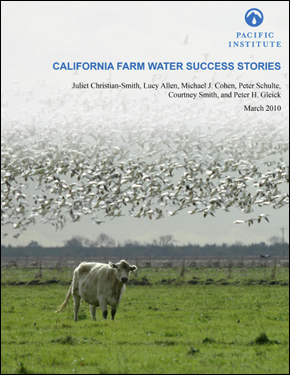
    Photo Courtesy Pacific Institute
    This new Pacific Institute report highlights seven examples of innovations in agriculture that save water and provide multiple other benefits.

    By Brett Walton
    Circle of Blue

    California’s agricultural system, which already faces numerous obstacles because of the state’s limited water supply, can be improved if farmers are given better information, clearer water reduction targets and more funding for programs that implement water-efficient technology, according to a report released Wednesday by the Pacific Institute.

    The report, California Farm Water Success Stories, analyzes seven case studies of innovative farm management techniques used in the state. These case studies provide context for a 2009 Pacific Institute report that found California’s agricultural water use could be overhauled using existing technologies.

    Supplying the right amount of water for agriculture in the state is difficult. Farmers waste water if they do not know how much or when the crops need it, while lengthy lag times between water orders and deliveries from the canals compound the problem. It takes water six days to travel the 453 miles between the Hoover Dam and the Coachella Valley Water District in southern California.

    A key component of any water management upgrade is increasing access to accurate data, said Dr. Juliet Christian-Smith, a senior researcher at the Pacific Institute and lead author for the report.

    “Accurate measurement and monitoring is a core principle for any system,” Christian-Smith told Circle of Blue. “It’s not happening statewide due to the lack of regulation of groundwater. For things we don’t measure directly we use proxy measurements. To make matters worse, agriculture use surveys are outdated, some more than five years.”

    Christian-Smith pointed to the state-wide irrigation survey, which was last completed in 2001. While the state has ordered that on-farm irrigation techniques be assessed every 10 years, Christian-Smith argues that it is financially possible to compile data annually or bi-monthly. Collecting the data only costs $10,000, she says.

    Two case studies from the report highlight the gains from improving the flow of information.

    One study involves Tom Rogers and his brother, who are almond growers in Madera County, located in the center of the state. They use smart irrigation scheduling–a combination of weather station data, soil probes and devices that measure a plant’s water uptake–to help decide when to irrigate and how much water to apply.

    Rogers estimates that this scientific approach has reduced water use by 20 percent in some of his fields, according to the report. Tracking weather patterns has been a key component to the conservation success.

    Some farmers, like Rogers, operate their own weather stations, while the state also provides data through the California Irrigation Management Information System (CIMIS). The system tracks precipitation, wind speed, air temperature, soil temperature and humidity from 130 stations around the state. These variables, combined with specific crop information make irrigation more precise.

    Yet Christian-Smith acknowledges that use of CIMIS is limited, with mostly non-farmers signed up for the service.

    “We need to get the word out. We need to expand the system so it’s more applicable to regional variations–to specific fields and elevations.”

    Farmland Success Stories
    [See post to watch Flash video]

    Video by the Pacific Institute
    The water-scarce state can overhaul its agricultural water management by implementing clearer water targets, better economic incentives, and more direct communication systems, according to a Pacific Institute report.

    Meanwhile improving the communications system in the Coachella Valley Water District (CVWD) is the focus of another case study.

    The CVWD moved from a radio-based system to a wireless system in 2005. The upgrade allows the zanjeros, who manage the irrigation canals, to deliver water to users with less waste. Orders are now documented instantly, which has lead to more accurate billing and fewer spills from releasing more water than was requested. As a result, leaks and other maintenance problems are also identified and repaired faster.

    “The improved communications system has had more benefits than I can list,” said Eric Urban, zanjero supervisor at CVWD, in the report. “It used to be that when you were in the field, you wished you were back at your desk where you could look up information. Now, we can be in the field and behind the computer at the same time.”

    Implementing these changes statewide will be expensive, but the money is potentially available already, Christian-Smith said. California will be voting on an $11 billion water bond in November.

    The transition to more water-efficient farming techniques will save money in the long term, but significant immediate costs are often an obstacle. Installing drip irrigation systems can cost $2,000 per acre, the report states.

    Federal, state and district funding programs exist, but high demand for the low-interest loans means most applications are rejected, according to the report.

    Meanwhile the California water bond doesn’t identify specific projects, just general spending goals, Christian-Smith said. This makes it difficult to know if more money will be available to finance on-farm efficiency improvements.

    “[Water management] is not rocket science. People have known about these techniques for a while, but there’s been no political will. It’s time we get serious about large-scale transition for water use, farmers and the environment.”

    Brett Walton is a reporter for Circle of Blue. Reach him at [email protected]. Read more on water problems in California here. Watch video interviews with Californian farmers and water managers from the report at the Pacific Institute Web site.

  • Pakistan Raises Water Issue During Diplomatic Talks with India

    Pakistan argues that India’s dam-building and water diversions violate the Indus River Treaty.

    Pakistani officials raised concerns about India’s alleged misuse of the Indus River during diplomatic talks between the two countries Thursday, the Hindustan Times reports.

    India denied that it has violated the Indus River Treaty and asserts that Pakistan’s water problems come from disputes between its own provinces, according to the Hindustan Times.

    Officials came together to discuss terrorism in the region. The meeting between foreign secretaries was the first diplomatic talk the two countries have had since the November 2008 Mumbai attacks. The Indian delegation presented evidence to Pakistani officials that the attackers were based in Pakistan, according to the Guardian.

    “India’s engagement with Pakistan will be predicated, as it has been since the Mumbai attack, on the response of Pakistan to our core concerns on terrorism,” said External Affairs Minister S.M. Krishna to the Hindu.

    Yet Pakistan observers argue that the water issue is a recruitment tool for terrorist groups in their country. The leadership of Lashkar-e-Taiba, which carried out the Mumbai attacks, has warned that “Muslims dying of thirst would drink the blood of India,” according to the Hindustan Times.

    While the U.S. has urged cooperation from both sides, it may be taking a more active role. Pakistan’s Daily Times reported that U.S. Special Representative Richard Holbrooke said the U.S. was mediating water negotiations between India and Pakistan.

    A U.S. State Department spokesperson was not able to confirm or deny the claims, and asserted that the U.S. did not participate in Thursday’s meeting.

    “Our position is we applaud the governments for holding talks,” the spokesperson told Circle of Blue. “This is an opportunity for exploring items on their agenda and a chance for progress to be made. The U.S. is not participating.”

    Pakistan is concerned about India’s dam-building on rivers in the disputed Kashmir region. Under the Indus River Treaty, India is granted exclusive use of the eastern tributaries of the Indus, while Pakistan is given the western tributaries. India has been permitted non-consumptive use of the western rivers, hence the dams in Kashmir.

    However, Pakistan argues that the reservoirs are larger in size than what the treaty designates and that India has not provided enough information about these projects.

    Source: Hindustan Times, Hindu, Daily Times

  • Water is a Key Issue in Iraqi Election, U.S. General Odierno Says

    With sectarian violence on the decline, Iraqi citizens expect service improvements to take shape in the coming elections.

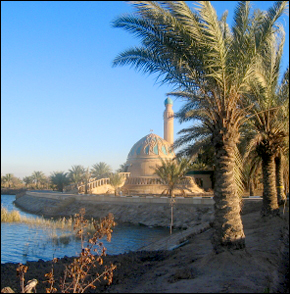
    Iraqi MosqueOpinion polls show that basic services such as water and electricity are top issues for Iraqis in the March 7 parliamentary elections, the United States’ commanding general in Iraq said last week.

    “There’s many polls being conducted in Iraq, and all the polls are very clear to them what’s important–number one is the economy, is jobs. Number two, although a bit different, is basic services, electricity, water. Number three becomes something like a better Iraq for my children,” said Gen. Ray Odierno, speaking at the Institute for the Study of War in Washington, DC.

    Water supply problems because of war, under-investment, poor management and drought are evident throughout Iraq. In Baghdad, where nearly 15 percent of its 8 million residents do not have access to potable water, officials are trying to gain control over the distribution system.

    “There is no management of water distribution and many of the distribution networks were constructed without planning,” said Haider Mohammed, the city’s chief water engineer, DVIDS Media reports. “The city of Baghdad also lacks adequate reservoirs, which results in the pumping of water from the production plant directly into the distribution system.”

    The Baghdad Water Authority loses money and half of its water supplies from leaky pipes and illegal connections to the system.

    Approximately $1 billion has been invested invested in expanding the city’s supply network, which is scheduled to be completed in 2012, according to Radio Free Europe/Radio Liberty. The project includes 16 water storage facilities and will supply Baghdad’s needs through 2030, according to RFE/RL.

    Meanwhile, the southern province of Basra recently opened eight desalination plants to help cope with supply shortages, Middle East North Africa Financial Network reports.

    Last fall nearly two million people in Basra lacked drinking water because of persistent drought and low river levels that caused sea water to spoil aquifers. Iran began shipping water by tanker to the province to alleviate the crisis.

    Source: Institute for the Study of War, DVIDS Media, Radio Free Europe/Radio Liberty, Middle East North Africa Financial Network

  • Water, Not al-Qaeda, Is Yemen’s Main Domestic Concern, Experts Say

    Yemen faces water crisis that is compounded by limited supply, unregulated use and future population boom, which will double in 20 years.

    Yemen's Old CityYemen made headlines last Christmas as the training ground for the man who attempted to blow up an airplane two months ago, but a more immediate concern for the people living in the country is a rapidly dwindling supply of freshwater, Reuters reports.
    Sanaa, Yemen’s capital, might become the first large city to run out of water because of the country’s booming population, unregulated groundwater withdrawals, subsidized diesel fuel and heavy agricultural use.

    “If we continue like this, Sanaa will be a ghost city in 20 years,” said Anwer Sahooly, a water specialist with a German development agency, to Reuters.

    The water table is shrinking two meters per year, according to a 2009 report by the Carnegie Endowment for International Peace. Wells are being drilled deeper each year to reach the receding water, with some penetrating 800 to 1,000 meters, according to Reuters. Fuel for the pumps is subsidized by the government, making drilling easier than it should be.

    Wells are essentially unregulated, leading to a concern that Sanaa-–a city with with seven percent annual population growth–will soon be dry.

    The groundwater feeding Sanaa “will be exhausted in 2015 or 2017, one cannot say exactly,” said Dierk Schlutter, a water specialist with the German Development Service, in an interview with the AFP.

    Despite such pronouncements, the lack of accurate groundwater monitoring makes assessments of an aquifer’s depletion timeline imprecise at best. A workshop on environmental security at the Woodrow Wilson Center in Washington, DC in 2000 included the statement that Sanaa’s aquifer was estimated to run out of water in 2005.

    Sanaa’s current supply gaps are filled by tanker truck operations that deliver water to the city from rural wells, but even those suppliers are feeling pinched.

    Mohammad Maayad, a 27-year-old private driller, told the AFP that “now I drill at depths of 480 meters, but when I started I only used to drill down to 400 meters.”

    Though one provincial capital recently discovered a new aquifer with a 50-year supply, the rest of Yemen outside of Sanaa also struggles with water availability.

    World Resources Institute estimated the per capita freshwater resources for Yemen at 183 cubic meters–well below the 500 cubic meter threshold that is required to maintain economic development and human health.

    Other water-scarce Middle Eastern countries have relied on desalinated water, but Sanaa is located 2,500 meters above sea level. Massive amounts of energy would be needed to lift water to that height and Yemen’s oil reserves are anticipated to run out within 10 to 15 years.

    A professor from the University of Sanaa proposed using solar power to desalinate and pump water to Sanaa in a paper he co-authored with colleagues in Yemen and Germany.

    Other experts argue that water savings could come from the agricultural sector, which uses 90 percent of the country’s water. The crop many outside experts target is qat–-a slightly narcotic plant chewed by most Yemeni adults that accounts for 40 to 50 percent of agricultural water use.

    But reducing qat cultivation will not be easy and might exacerbate urban water problems. A report by the World Bank noted that qat provides rural employment and prevents mass migrations to the cities.

    “Qat fetches four times more than coffee, and the plantations are often in the hands of tribal chiefs or the so-called ‘qat mafia,’ who are too powerful for the government to go after,” said Schlutter to the AFP.

    The importance of qat to Yemeni social culture should not be overlooked, he added.

    “It’s like trying to ban beer in Germany or wine in France,” he said.

    Source: Reuters, AFP

    Read more about qat here.

  • Drought, Climate Change Jeopardize and Complicate Hydropower Policies Around the World

    Climate change is expected to bring less precipitation and more extreme droughts to certain parts of the world, causing electricity shortages in hydro-reliant countries.

    Countries Relying on HydropowerOn Tuesday Venezuela’s Energy Minister, Ali Rodriguez, said the government would consider purchasing electricity from Colombia, contradicting a statement from the country’s Vice President Elias Jaua given earlier this week. One day before Rodriguez’s announcement, Jaua said he’d reject the Colombian proposal because Venezuela would “power up its own electricity system,” according to Business Week.
    These conflicting statements reflect the already confused and poorly managed policies officials have attempted to implement against the country’s worst drought in nearly a century.

    In January, electricity rationing in Caracas was suspended after one day because of the chaos created by the power cuts to traffic signals and protests. As a result, energy consumption decreased by only two percent compared to last year–-far short of the goal of a 20 percent reduction, Bloomberg reports.

    The source of 70 percent of Venezuela’s electricity is the Guri dam. Low reservoir levels have forced power generation to be curtailed. At its current rate, the water level will drop to critical lows by the summer, in which case all power generation would stop.

    Critics argue that if the government had invested more money in the energy sector, Venezuela would have other sources available during the crisis.

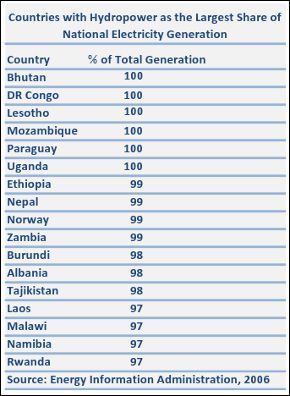
    The country’s energy struggles mirror problems in the rest of the hydro-reliant world. Many countries, especially in Africa, use hydroelectric dams to produce nearly all their electricity.

    The threat of more extreme drought from climate change is an uncertain variable for many hydroelectric producers. Climate models predict an overall decrease in precipitation and river runoff for the mid-latitude, sub-tropic and dry-tropic areas-–where hydropower is currently the primary source of electricity.

    Persistent low water levels in rivers and reservoir cause power cuts, which hinder economic growth and reduce revenue from electricity sales, limiting the ability of an electric utility to maintain the dam.

    Some countries have recognized the risk and are already moving toward a more diversified energy future.

    After a 2009 drought that led to two months of power rationing, Kenyan Prime Minister Raila Odinga said “the country can no longer continue to rely on hydro-electric power supply,” Business Week reported. Nearly 70 percent of its electricity comes from hydropower.

    Kenya is seeking up to $1 billion from international bond markets to finance geothermal and wind energy projects, Business Week reports.

    Source: Business Week, Bloomberg

  • States Seek Profit, Regulation from Natural Gas Drilling

    Leasing rights to drill for natural gas has plugged budget holes, but opponents argue the fracking process pollutes water supplies.

    The U.S. House Energy and Commerce Committee will partner with the Environmental Protection Agency to investigate the effects of hydraulic fracturing on drinking water supplies, Reuters reports. The committee is requesting information from eight energy companies that use the method to drill for natural gas.

    Meanwhile the latest budget proposal from Pa. Gov. Ed Rendell includes a tax on energy firms that tap the state’s shale gas reserves, the Philadelphia Inquirer reports. Pennsylvania also plans to earn $180 million for leasing state forest land for natural gas drilling rights, the proposal states.

    The tax on the volume and value of the gas produced would raise an estimated $1.8 billion over five years, according to the Inquirer. A similar tax was proposed last year, but the governor removed it because of pressure from the energy industry.

    Energy companies are eager to access the large gas reserves trapped in the Marcellus Shale Formation that runs from eastern Kentucky to New York. Reserve estimates range from 168 to 516 trillion cubic feet of gas.

    While the tax measure was lauded by environmental groups, the proposed land lease expansion for drilling rights has been less popular. The budget proposal does not specify how many acres would be leased.

    “Leasing state forests to balance the budget is the wrong way to go,” Rep. Greg Vitali told the Inquirer.

    This would be the third time the state opened its forests to drilling rights in the last three years. The state earned $166 million from leasing 74,000 acres in 2008, and $128 million from leasing 32,000 acres in January 2010, according to the Inquirer. About 692,000 acres of state forest are already leased for gas drilling.

    The hydraulic fracturing, also known as fracking, method of releasing natural gas trapped in shale has raised public concern regarding its effect on water supplies. Fracking injects a high-pressure mixture of water, chemicals and sand into wells to break the shale and increase the gas flow. Critics of the process argue that it uses a large volume of water and the wastewater contaminates neighboring wells.

    In New York, the Department of Environmental Conservation has banned fracking until it can review the environmental effects. New York City officials have urged a ban on drilling in its watershed because of water pollution risks and new infiltration plant costs.

    “The consequences are so severe that it is not a risk that I think we should run,” Mayor Michael Bloomberg said to Reuters. “I do not think that we should allow fractured drilling anywhere near our water supply.”

    One New York county has already enacted its own ban. The Onondaga County legislature voted in early February to prohibit drilling until more is known about the environmental consequences, the Post-Standard reports.

    Fracking is largely regulated by the state. Energy companies are not required by national law to report the chemical makeup of the fracking fluid-–an exemption to the Clean Water Act and Safe Drinking Water Act granted by the Energy Policy Act of 2005.

    But as the issue has gained national attention, Congressional bills have been proposed to regulate the industry.

    The Fracturing Responsibility and Awareness of Chemicals Act was introduced in Congress last year, but neither the House nor Senate version has made it out of committee.

    If passed, the bill might not have much of an effect because under the Safe Drinking Water Act states have the right to establish their own standards, said Steve Heare, director of the EPA’s Drinking Water Protection Division, to the Wall Street Journal.

    Source: Philadelphia Inquirer, Reuters, Post-Standard, Wall Street Journal

  • Everglades Restoration Program Pays Ranchers to Protect Water

    Ranchers would be paid to use their land as a system of natural wetlands.

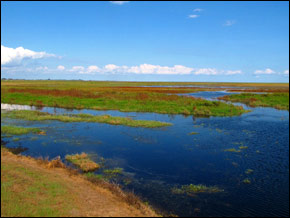
    Lake Okeechobee

    Photo by RiverBk/ / CC BY 2.0

    A program that pays ranchers to use pastures as water-retention ponds could provide one-sixth of the water needed to restore the Everglades for a fraction of the cost of current treatments, according to program proponents the Palm Beach Post reports.

    The plan presently in place is a multi-billion dollar system of reservoirs and storage wells.

    The pilot program run by the Worldwide Fund for Nature (WWF) involves eight ranchers in the lands surrounding the Kissimmee River north of Lake Okeechobee. The goal is to turn low-lying pastures into wetlands through a system of pumps and ponds. Ranchers would collect wet season rains in their fields and release the water southward in the dry season.

    In 2010 the ranchers will be paid $660,000 to use 10,000 acres. Expanding the program to a proposed 250,000 acres would cost $16.5 million per year for land use, plus several million more in infrastructure costs, according to the Post.

    Setting the proper price is one concern for the project. The ranchers are currently paid a premium for their participation, but the program’s director envisions a future bidding process that would lower prices.

    However, ranchers must have enough financial incentive to buy into the program.

    “Ranchers have the capacity to store water if — and it’s a big ‘if’ — it becomes profitable to do so,” Sarah Lynch, who leads the project for WWF, told the Post.

    Despite uncertainty over the future price of ecosystem services, the cost is far less than the system of reservoirs currently on the table. The South Florida Water Management District, which leads the Everglades restoration, increased reservoir cost estimates by 10 percent this week to account for wildlife protection, the Olympian reports. Those redesigns will add $50 million to the cost of the largest planned reservoir.

    Critics of the WWF program argue that the plan doesn’t prevent ranchers from selling land to a developer once their storage contract expires.

    “The bad thing is that you don’t have permanent conservation,” said Keith Fountain, land protection director for the Nature Conservancy in Florida, to the Post. “We want to achieve permanent conservation.”

    That was idea Florida Governor Charlie Crist had when he signed a $536 million land deal with U.S. Sugar Corp. in 2008.

    The 73,000 acres–reduced from 180,00 because of the financial crisis–would be used to construct the reservoirs in the state’s plan to restore natural flows between Lake Okeechobee and south Florida. The deal is opposed by rival sugar company Florida Crystals and the Miccosukee Indian Tribe, which lives on a reservation in the Everglades. They argue that the deal is a waste of tax dollars and that the state does not have the funds to build the reservoirs. Both are plaintiffs in a lawsuit brought against the state.

    The Florida Supreme Court said it will give a final ruling on the case at the beginning of April, the Miami Herald reports.

    Source: Palm Beach Post, Olympian

  • Water-intensive Companies Fail to Disclose Water Risks, Report Says

    Investor network recommends companies provide more specific, quantifiable data on water risk.

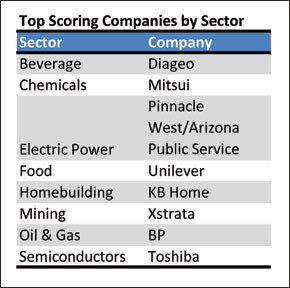
    Ceres ReportLarge companies in water-intensive industries are poorly managing and reporting water-related risks, according to a study from a coalition of investment funds and environmental groups.

    The Ceres report criticizes companies for using vague, non-quantified language about water risk and recommends water risk information be included in mandatory financial filings with the U.S. Securities and Exchange Commission.

    “The combination of rising global populations, rapid economic growth in developing countries, and climate change is triggering enormous water availability challenges around the world. Electric power generators, food producers, and other water-intensive industries are especially vulnerable, both in their operations and their extensive supply chains,” the report states.

    Data from regulated financial filings and voluntary corporate reports from the 2008 fiscal year were used to rank 100 of the largest publicly-traded companies in eight industrial sectors, based on their water-risk disclosure and management.

    Sectors evaluated include beverage, chemicals, electric power, food, home building, mining, oil & gas, and semiconductors.

    The report found that companies are neglecting two important pieces of information: site-specific water use and supply chain risk.

    The report recommends that companies

    • 1)      Include water risk and performance data in regulated financial filings
    • 2)      Include facility-level water use information for water-stressed areas
    • 3)      Set quantifiable targets for reducing water use
    • 4)      Disclose water-related risks in their supply chains
    • 5)      Make products suitable for a water-constrained world

    Even though 73 percent of the companies that were surveyed reported some level of physical risk in their financial filings, the information needs to be less generic, said Brooke Barton, the report’s lead author and a senior manager for Ceres’ water program.

    “One useful global metric is the percentage of facilities or revenue that comes from water-stressed regions,” Barton told Circle of Blue. “There are companies beginning to talk about this but not enough. Not every facility should be highlighted, but certain areas need more detail.”

    Two-thirds of the companies reported total water use, but less than 20 percent of them break down the information by site or region.

    The beverage and mining industries rated the highest in the survey-–a result of the high level of public scrutiny these industries face, Barton said.

    “A loss of community consent has had serious bottom line impacts for some companies,” Barton said.

    “Ore is a fixed asset – you can’t move it. Companies have had to find a way to work with local communities. There is a reputational impact if something goes wrong. Companies need to own this issue and communicate about it. There has also been a lot of local regulation for mining.”

    Swiss mining firm Xstrata-–the top scorer for its sector-–is one of three companies surveyed that set water reduction targets based on the level of water scarcity in each of its operating regions.

    Companies without effective management policies did not fare well. Computer chip maker Micron ranked last in the semiconductor industry and scored the fewest points overall in the survey. Company representatives did not return phone messages seeking comment by the time this article was published.

  • New Protected Status for Lake Chad Highlights World Wetlands Day

    New sites have been added to a treaty protecting the world’s wetlands.

    Lake ChadCountries across the globe celebrated World Wetlands Day on February 2 by designating national preserves and vowing to protect wetlands from climate change and maintain biodiversity.

    Cameroon declared its portion of Lake Chad an internationally significant wetland, bringing the entire lake under the protection of the Ramsar Convention for the protection of wetlands, WWF reports.

    The other three countries bordering the lake-–Niger, Chad and Nigeria–granted protected status last decade. Cameroon’s announcement will make joint management programs for the lake easier, according to WWF.

    “Lake Chad’s inscription as only the 13th transboundary formally recognized wetland is highly significant as 11 of the areas so far declared are in Europe,” said Denis Landenbergue, WWF International’s wetlands conservation manager in a press release. “Lake Chad joins the Saloum Delta shared by Senegal and Gambia as only the second such site in Africa.”

    Better management of Lake Chad is needed to save the shallow lake from disappearing. Its surface area has shrunk by nearly 90 percent since 1963.

    Other countries took similar action in honor of World Wetlands Day.

    South Africa, Algeria and the Seychelles designated wetland sites for protection, joining new preserves that were announced in January in the United States, Brazil and El Salvador.

    Pakistan created a program through its Ministry of Environment to catalogue and study Himalayan wetlands.

    World Wetlands Day celebrates the adoption of the Ramsar Convention in 1971 in the Iranian city of Ramsar. Almost 1900 wetlands have been declared areas of international importance since the treaty was adopted. In the coming year, member countries will focus on the effects of climate change on wetlands.

    “This year’s theme – Wetlands, Biodiversity and Climate Change – with the slogan ‘Caring for wetlands: an answer to climate change,’ captures the sense of urgency we all feel about the need to address the potentially disastrous consequences of global climate change as quickly as possible, particularly in the wake of the Copenhagen meeting of the UNFCCC back in December,” said Anada Tiega, secretary general of the Ramsar Secretariat.

    Wetlands serve important ecological functions such as climate regulation, flood control, erosion protection and water purification. Most migratory birds use wetlands as a resting place on their annual journeys.

    Source: WWF

    Learn more about the Ramsar Convention

  • Chinese Farms Generate More Water Pollution than Factories, Government Report States

    Comprehensive government study shows agriculture to be the country’s biggest water polluter.

    China’s government released its most in-depth domestic water pollution study Tuesday, showing discharges in 2007 to be twice as high as previous estimates, the New York Times reports.

    China FarmingThis was the first time the Chinese government included agricultural effluent in the survey. Previously the Ministry of Environmental Protection calculated water pollution from a narrower list of sources that did not include fertilizers or pesticides, according to the NYT.

    The two-year study analyzed 1.1 billion pieces of data from six million sources of pollution to create the most complete picture of China’s pollution problem to date. Sources surveyed included factories, farms, homes and pollution-treatment plants.

    “Fertilizers and pesticides have played an important role in enhancing productivity but in certain areas improper use has had a grave impact on the environment,” said Wang Yangliang of the Ministry of Agriculture at a press conference for the study’s release, the Guardian reports.

    “The fast development of livestock breeding and aquaculture has produced a lot of food but they are also major sources of pollution in our lives.”

    The study showed that chemical oxygen demand-–a key pollution indicator-–more than doubled when farm runoff was taken into account. Agriculture contributes 43 percent of China’s chemical oxygen demand, 67 percent of phosphorus and 57 percent of nitrogen discharges, according to the study.

    Sources inside the Chinese government said the report’s release was delayed by the agriculture ministry, which had insisted that farming contributed little pollution, according to the Guardian.

    The study has provided a new perspective of water pollution in China. But old figures will still be used to evaluate the government’s success in meeting pollution targets, said Zhang Lijun, vice minister of environmental protection, according to the NYT.

    “Current results of the census will not be linked to environmental performance,” he said at the press conference.

    The Chinese government has a stated goal of reducing chemical oxygen demand by 10 percent between 2005 and 2010. Data from the study shows a decrease of 3 percent from 2006 to 2007, if agricultural effluent is excluded.

    Reducing agricultural pollution will be difficult, says Ma Jun, director of the Beijing-based Institute of Public and Environmental Affairs.

    “When it’s millions of farmers, it’s more difficult to bring it under control,” Ma told the NYT.

    The government report supports the results of a study released earlier this year by Renmin University in China and Greenpeace, which found that Chinese farmers use 40 percent more fertilizer than necessary.

    Source: New York Times, Guardian

    Read more about Chinese water issues in Circle of Blue’s special report Hidden Waters, Dragons in the Deep

  • Pakistan Negotiates Domestic, International Water Disputes

    Pakistan’s Punjab and Sindh provinces disagree on water flows while a farmers’ union wants the Pakistani government to address India’s dam building.

    Pakistan’s Indus River System Authority will discuss the Sindh province’s accusation that Punjab province is stealing its water on Thursday at its advisory committee meeting, the Daily Times of Pakistan reports.

    Persistent drought has left the country with 30 percent less irrigation water than average for the spring crop. Meanwhile representatives from the Sindh government have accused their Punjabi counterparts of diverting more water than they are allocated. But officials in Punjab, which is situated upstream of Sindh in the Indus Canal System, argue that the water deficits come from high system losses.

    Pakistan doesn’t have a national monitoring system for canal water flow, making verification of the claims more difficult.

    The Indus Basin irrigation system is the largest in the world, with the Pakistani system including 12 river-linking canals and 45 main irrigation canals. Pakistan shares the system with India through a 50-year-old treaty that divides control of the Indus tributaries between the two countries.

    And critics in Pakistan are complaining that drought conditions are exacerbated by new dams being built in India.

    The president of the farmers’ organization Muttahida Kisan Mahaz criticized the government’s silence over India dams and promised peaceful protests throughout the spring, Dawn reports.

    India has already completed the Baglihar dam on the Chenab River-–a tributary of the Indus granted to Pakistan through the 1960 treaty. However, India does have the right to construct a run-of-the-river dam, a model that doesn’t create a large reservoir. But dam opponents in Pakistan are accusing India of planning to hold back more water than is allowed.

    A new dam under construction on the Chenab–-the Swalkot-–has also raised anger, especially given its location in contested Kashmir.

    Pakistan’s the Nation newspaper ran an editorial this week calling India’s dam projects “water terrorism.”

    Acute shortages from dams and drought are severely affecting Pakistan’s farmers. A survey in December 2009 by the Punjab Agriculture Department determined that 50 percent fewer crops were planted during the autumn season, the Nation also reported.

    Meanwhile there is also some concern that radical Islamic groups will use water shortages and the government’s perceived inaction as a recruiting tool, according to a report from the National, an Abu Dhabi newspaper.

    Source: Daily Times, Dawn