Author: Discover Main Feed

  • Tiny “CubeSail” Could Ease the Clutter of Space Junk in Earth’s Orbit | 80beats

    CubesailEvery time a space shuttle or the International Space Station has a near miss with a piece of space junk, we’re reminded just how much of the stuff litters the area around our planet—millions of total pieces amounting to more than 5,500 tons. The orbital debris includes everything from old rocket stages to shed paint flakes, and the situation worsened last year when two satellites collided, sending forth showers of debris. It’s a problem that grows steadily worse without an apparent solution, but now University of Surrey scientists say they’ve developed a possible solution: a tiny clean-up device with sails.

    To help tidy up Earth’s orbit, the device could be attached to any piece of space-going technology. The CubeSail, which would measure more than 16 feet square when unfolded, is packed into a compartment that measures 4 inches wide and deep, and a foot long. When the sail is deployed, metal strips that are wound up inside the container straighten out and pull the sail flat. Despite its small size, the system could deorbit an object of up to 1,100 pounds, Surrey scientists say. CubeSail works by pulling against the small amounts of atmospheric gases present at orbital heights. Although the density of air molecules is low, it’s enough to make the sail act like a parachute, slowing it down, dragging the dead satellite to a fiery reentry much sooner than it would have done otherwise [Discovery News].

    CubeSail’s makers want to test it by the end of next year, testing the drag as the satellite orbits pole to pole. Their ultimate goal is for the sail to one day become an indispensable part of satellite missions. Says Martin Sweeting of Surrey Satellite Technology Limited: “We want this to be a standard, essential bolt-on item for a spacecraft; and that’s why it’s very important to make it small, because if it’s too big it will interfere with the rest of the spacecraft” [BBC News].

    But CubeSails could also launch into space and operate on their own, using the tiny force of falling sunlight to operate a solar sail propulsion system. That has some imagining more exotic uses for the technology. Perhaps anti-satellite weaponry could be more passive, sending ground-controlled CubeSails into orbit, seeking out, attaching to, and ultimately destroying enemy satellites but without the mess [Discovery News]?

    Related Content:
    80beats: Space Junk, Spacewalks, and Pee Trouble: News from the ISS
    80beats: Space Junk Near-Miss Sends Astronauts Scrambling Into Escape Pod
    80beats: Experts Declare War on Space Junk… So What Do We Do Now?
    80beats: Satellites Collide Over Siberia, Creating Showers of Space Debris
    DISCOVER: Map: Space Junk
    DISCOVER: Watch the Skies—For Junk

    Image: Univ. of Surrey/Astrium

  • Famous Babies | The Intersection

    The film ‘Babies’ debuts in April, following four babies for one year from Namibia, Mongolia, Tokyo, and San Francisco. Rep. John Shadegg explains how baby Maddy believes in freedom.


  • LHC Physics Begins! | Cosmic Variance

    Just after 1 pm European time today, the LHC at CERN collided two beams of protons with a total center-of-mass energy of 7 TeV (seven trillion electron volts), three and a half times more energy than the proton-antiproton collisions at the Tevatron at Fermilab, and far greater than the 2.4 TeV achieved by the LHC in December 2009. This milestone clearly marks the beginning, at long last, of the first major physics run of the new accelerator.

    We’ve been waiting a very long time for this. In the 1980s the field had its eyes fixed firmly on the SSC, the Superconducting Supercollider to be constructed in Waxahachie, Texas. After years of design, the go-ahead was given by President Bush in 1988 shortly after his election to construct the huge machine, which was to collide protons with 40 TeV energy. Alas, changes to the design sent costs rising, and, after spending over 2 billion dollars on tunnel boring and lab construction in Texas, the project was canceled by Congress in October 1993.

    Those were dark days for particle physics. Any hope of pushing to higher energies seemed to lie in pushing ahead with the design of the LHC at CERN, which had been simmering along but was looking like it would be too little too late if the SSC came on line first. Nevertheless, the Tevatron was just starting to gather significant physics data, and the CDF and D0 experiments would soon discover the top quark, completing the picture of the standard model quarks.

    With the SSC out of the picture work on the LHC really began in earnest. The magnet design was finalized and plans for constructing the machine began to gel. It would take many years to complete the engineering, prototyping, and industrialization of the magnet production, and a lot of money. In 1997 the US and CERN reached an agreement (brokered in part by Rep. Sensenbrenner of Wisconsin) whereby the US would contribute about $50 million per year over ten years to the machine itself. This was precedent-setting: never before had the cost of machine construction at CERN, or Fermilab, or SLAC been borne in such large part by a foreign entity. It was essentially the price of admission for the US community to participate in the large experiments ATLAS and CMS, to which the US has committed about half a billion dollars. So though the LHC and the experiments are in Europe, the US has a billion dollar investment in the projects. And now it is time to begin to reap the rewards.

    In 1997 it was foreseen to have circulating beams in the LHC by 2005. Construction of the detectors was steady, and it is arguably the case that the experiments were ready before the accelerator. But the completion date of both sets of projects slipped, to 2006, then 2007, and then finally in 2008 all was ready. And, as we all know, in September 2008, after one week of beam commissioning, the LHC suffered a major magnet quench accident which damaged over a kilometer of the machine, necessitating a year-long repair campaign, and a reassessment of the path to the full design energy of 14 TeV.

    A large portion if the machine has yet to be retrofit to prevent the type of accident experienced in 2008, but it was decided to operate the collider at 7 TeV and gather physics data in the next year. The energy will open up a new regime to explore for physics beyond the standard model, and we are ready and eager to do just that!

    More on the physics in the next post…


  • Wocka wocka wocka Mimas wocka wocka | Bad Astronomy

    New data from Cassini were just released, showing a thermal map of Saturn’s “Death Star” moon Mimas. This map shows where the smallish moon is warmer than in other places, and can reveal a lot about its surface. The scientists expected to see it being warmest pretty much in the middle of the map, since the Sun was shining down on that spot at the time the map was made. As you go progressively farther from that spot, it would get cooler.

    What they got, though, was this:

    cassini_titan_pacman

    Um. That looks familiar. If the warm part eats that dot in the middle, will the other moons of Saturn turn into ghosts so Mimas can eat them and get points?

    Anyway, on the left is the visible light view of Mimas, and on the right is the temperature map. Yellow is warm (well, 92 Kelvin or -290 F) and blue is cooler (77 K or -320 F). That’s not at all what was expected! The parts that should be warmest are actually cool, and the cold spots are too warm! Worse, perhaps, is the shape of the boundary. You’d expect a smooth transition from warm to cold, and it would be circular in pattern. Instead, we get this sharp, V-shaped thing!

    It’s not known why things are so messed up on Mimas. Maybe the distribution of materials on the surface is uneven, causing an odd heating pattern. The warm spots might be covered in a material that is slow to lose heat (so it stays warm long after the Sun sets), and the cooler spots are covered in a material that is very slow to heat up (so they remain cool when the Sun is high in the sky). Maybe the cooler stuff is just coated with something that reflects a lot of heat from the Sun, so it never warms up. I imagine more temperature maps like this one, taken at different parts of the Mimas day, may help sort that out. Emily Lakdawalla at The Planetary Society has a far more in-depth description of this.

    This map makes me very happy. Not because a gigantic PacMan hundreds of kilometers across is wocka-wocka-ing across a moon of Saturn (though that helps). It’s because this is a complete surprise. No one expected this! Now we have scientists scrambling to figure it out, and that makes scientists happy.

    After all, folks, if we had all the answers, and no surprises were left, we wouldn’t call it exploration, would we?


  • What Quirk of the Brain Turns People Into Compulsive Hoarders?

    We could have found the apartment just by following the powerful musty odor that hit us as we stepped out of the elevator. When we got to the door, my guide knocked. No answer. She knocked again, then a third time. Finally, a small voice inside said,

    “Who’s there?”

    “It’s Susan, the social worker. We’re here with the cleaning crew. They’re here to clean out your apartment.”

    “Daniel’s not here,” the voice behind the door told us. “He went to get us breakfast.”

    “That’s OK. He doesn’t have to be here.”

    She opened the door a crack, and the door frame moved, almost imperceptibly. Yet it didn’t really move. The world seemed to shift, and I felt off balance for a moment. The door opened a bit wider, and then I saw them: cockroaches, thousands of them, scurrying along the top of the door to get out of the way.

    The door opened the rest of the way. The apartment was dark, and it took a moment to appreciate what was inside. No floor was visible, only a layer of dirty papers, food wrappers, and urine-stained rags. A rottweiler bolted out of the back to see what was going on. He jumped over a pile of dirty clothes—at least they looked like clothes. From the edge of the door, the massive pile of junk rose precipitously to the ceiling, like a giant sea wave. It could have been part of a landfill: papers, boxes, shopping carts, paper bags, dirty clothing, lamps—anything that could be easily collected from the street or fished out of a Dumpster. It was one solid wall of trash 20 feet deep, all the way to the back of the apartment. There must have been windows on the far wall, but they were darkened by the broken fans, boxes, and clothing covering them.

  • NCBI ROFL: The pyrophysiology and sexuality of dragons. | Discoblog

    dragon“To examine the means whereby dragons produce fire and steam, we have studied a related species, the desert-lizard Lacerta pyrophorus. Morphological studies showed that there were in the snout three distinctive features: (1) a dorsal swelling in the pharynx, the Organ of Feuerwerk, consisting of brown adipose tissue with an extensive sympathetic innervation; (2) greatly enlarged lachrymonasal ducts, the Ducts of Kwentsch; and (3) asbestos deposits in the nasal skin, the Bestos Bodies. Physiological studies show that the Organ of Feuerwerk can, when the animal is excited, produce extremely high temperatures. We discuss how these mechanisms can produce steam and fire, and how the snout is protected. We also discuss and offer a solution to the problem of how, since dragons are invariably male, the species can be propagated.”
    fig 2

    “Fig. 2. Laboratory photograph showing S.T.G. performing an experiment on a specimen of L. pyrophorus. The microthermistor is in position. Note S.T.G.’s protective clothing (courtesy of Amourplating plc, UK), and his macromanipulator (especially developed by Equus Probes Ltd., UK). The demure appearance of the technician (Miss Virginia Young) may not be typical; at the time she was into bondage, and shortly afterwards left to marry S.T.G. Photograph by courtesy of U. Cello.”

    dragons

    Thanks to Per for today’s ROFL!

    Image: flickr/Beverly & Pack

    Related content:
    Discoblog: NCBI ROFL: Does garlic protect against vampires? An experimental study.
    Discoblog: NCBI ROFL: Phase 1: Build army of alligators that can run on land. Phase 2: Take over the world!
    Discoblog: NCBI ROFL: Study proves dolphin tattoos lame.


  • Sam Harris Responds | Cosmic Variance

    Update and reboot: Sam Harris has responded to my blog post reacting to his TED talk. In the initial version of this response-to-the-response-to-the-response-to-the-talk, I let myself get carried away with irritation at this tweet, and thereby contributed to the distraction from substantive conversation. Bad blogger.

    In any event, Sam elaborates his position in some detail, so I encourage you to have a look if you are interested, although it didn’t change my mind on any issue of consequence. There are a number of posts out there by people who know what they are talking about and surely articulate it better than I do, including Russell Blackford and Julian Sanchez (who, one must admit, has a flair for titles), and I should add Chris Schoen.

    But I wanted to try to clarify my own view on two particular points, so I put them below the fold. I went on longer than I intended to (funny how that happens). The whole thing was written in a matter of minutes — have to get back to real work — so grains of salt are prescribed.

    First, the role of consensus. In formal reasoning, we all recognize the difference between axioms and deductions. We start by assuming some axioms, and the laws of logic allow us to draw certain conclusions from them. It’s not helpful to argue that the axioms are “wrong” — all we are saying is that if these assumptions hold, then we can safely draw certain conclusions.

    A similar (although not precisely analogous) situation holds in other areas of human reason, including both science and morality. Within a certain community of like-minded reasoners, a set of assumptions is taken for granted, from which we can draw conclusions. When we do natural science, we assume that our sense data is more or less reliable, that we are not being misled by an evil demon, that simpler theories are preferable to complicated theories when all else is equal, and so forth. Given those assumptions, we can go ahead and do science, and when we disagree — which scientists certainly do — we can usually assume that the disagreements will ultimately be overcome by appeal to phenomena in the natural world, since as like-minded reasoners we share common criteria for adjudicating disputes. Of course there might be some people who refuse to accept those assumptions, and become believers in astrology or creationism or radical epistemological skepticism or what have you. We can’t persuade those people that they’re wrong by using the standards of conventional science, because they don’t accept those standards (even when they say they do). Nevertheless, we science-lovers can get on with our lives, pleased that we have a system that works by our lights, and in particular one that is pragmatically successful at helping us deal with the world we live in.

    When it comes to morality, we indeed have a very similar situation. If we all agree on a set of starting moral assumptions, then we constitute a functioning community that can set about figuring out how to pass moral judgments. And, as I emphasized in the original post, the methods and results of science can be extremely helpful in that project, which is the important and interesting thing that we all agree on, which is why it’s a shame to muddy the waters by denying the fact/value distinction or stooping to insults. But I digress.

    The problem, obviously, is that we don’t all agree on the assumptions, as far as morality is concerned. Saying that everyone, or at least all right-thinking people, really want to increase human well-being seems pretty reasonable, but when you take the real world seriously it falls to pieces. And to see that, we don’t have to contrast the values of fine upstanding bourgeois Americans with those of Hitler or Jeffrey Dahmer. There are plenty of fine upstanding people — you can easily find them on the internet! — who think that human well-being is maximized by an absolute respect for individual autonomy, where people have equal access to primary goods but are given the chance to succeed or fail in life on their own. Other people think that a more collective approach is called for, and it is appropriate for some people to cede part of their personal autonomy — for example, by paying higher taxes — in the name of the greater good.

    Now, we might choose to marshall arguments in favor of one or another of these viewpoints. But those arguments would not reduce to simple facts about the world that we could in principle point to; they would be appeals to the underlying moral sentiments of the individuals, which may very well end up being radically incompatible. Let’s say that killing a seventy-year-old person (against their will) and transplanting their heart into the body of a twenty-year old patient might add more years to the young person’s life than the older person might be expected to have left. Despite the fact that a naive utility-counting would argue in favor of the operation, most people (not all) would judge that not to be moral. But what if a deadly virus threatened to wipe out all of humanity, and (somehow) the cure required killing an unwilling victim? Most people (not all) would argue that we should reluctantly take that step. (Think of how many people are in favor of involuntary conscription.) Does anyone think that empirical research, in neuroscience or anywhere else, is going to produce a quantitative answer to the question of exactly how much harm would need to be averted to justify sacrificing someone’s life? “I have scientifically proven that if we can save the life of 1,634 people, it’s morally right to sacrifice this one victim; but if it’s only 1,633, we shouldn’t do it.”

    At bottom, the issue is this: there exist real moral questions that no amount of empirical research alone will help us solve. If you think that it’s immoral to eat meat, and I think it’s perfectly okay, neither one of us is making a mistake, in the sense that Fred Hoyle was making a mistake when he believed that conditions in the universe have been essentially unchanging over time. We’re just starting from different premises.

    The crucial point is that the difference between sets of incompatible moral assumptions is not analogous to the difference between believing in the Big Bang vs. believing in the Steady State model; but it is analogous to believing in science vs. being a radical epistemological skeptic who claims not to trust their sense data. In the cosmological-models case, we trust that we agree on the underlying norms of science and together we form a functioning community; in the epistemological case, we don’t agree on the underlying assumptions, and we have to hope to agree to disagree and work out social structures that let us live together in peace. None of which means that those of us who do share common moral assumptions shouldn’t set about the hard work of articulating those assumptions and figuring out how to maximize their realization, a project of which science is undoubtedly going to be an important part. Which is what we should be talking about all along.

    The second point I wanted to mention was the justification we might have for passing moral judgments over others. Not to be uncharitable, but it seems that the biggest motivation most people have for insisting that morals can be grounded in facts is that they want it to be true — because if it’s not true, how can we say the Taliban are bad people?

    That’s easy: the same way I can say radical epistemological skepticism is wrong. Even if there is no metaphysically certain grounding from which I can rationally argue with a hard-core skeptic or a Taliban supporter, nothing stops me from using the fundamental assumptions that I do accept, and acting accordingly. There is a weird sort of backwards-logic that gets deployed at this juncture: “if you don’t believe that morals are objectively true, you can’t condemn the morality of the Taliban.” Why not? Watch me: “the morality of the Taliban is loathsome and should be resisted.” See? I did it!

    The only difference is that I can only present logical reasons to support that conclusion to other members of my morality community who proceed from similar assumptions. For people who don’t, I can’t prove that the Taliban is immoral. But so what? What exactly is the advantage of being in possession of a rigorous empirical argument that the Taliban is immoral? Does anyone think they will be persuaded? How we actually act in the world in the face of things we perceive to be immoral seems to depend in absolutely no way on whether I pretend that morality is grounded in facts about Nature. (Of course there exist people who will argue that the Taliban should be left alone because we shouldn’t pass our parochial Western judgment on their way of life — and I disagree with those people, because we clearly do not share underlying moral assumptions.)

    Needless to say, it doesn’t matter what the advantage of a hypothetical objective morality would be — even if the world would be a better place if morals were objective, that doesn’t make it true. That’s the most disappointing part of the whole discussion, to see people purportedly devoted to reason try to concoct arguments in favor of a state of affairs because they want it to be true, rather than because it is.


  • Could Turning the Oceans Into a Giant Bubble Bath Cool the Planet? | 80beats

    3163703464_6c86794de2As heated global warming debates continue, scientists are also investigating ways to get our planet to cool off if the politicians can’t figure out how to reduce greenhouse gas emissions. The latest geoengineering scheme involves turning the world’s oceans into a giant bubble bath, with hundreds of millions of tiny bubbles pumped into the seas. This would increase the water’s reflectivity and bring down ocean temperatures, according to Harvard University physicist Russell Seitz. As the creative physicist said to the assembled crowd at an international meeting on geoengineering research: “Since water covers most of the earth, don’t dim the sun…. Brighten the water.”

    Seitz explained that micro-bubbles already occur naturally, with bubbles under the ocean’s surface reflecting sunlight back into space and mildly brightening the planet. What Seitz imagines doing now is artificially pumping many more bubbles into the sea. These additional micro-bubbles would each be one five-hundredth of a millimeter and would essentially serve as “mirrors made of air.” The scientists say they could be created off boats by using devices that mix water supercharged with compressed air into swirling jets of water. “I’m emulating a natural ocean phenomenon and amplifying it just by changing the physics—the ingredients remain the same” [ScienceNOW], Seitz said.

    Using a computer model that simulated how air, light, and water interacted, Seitz found that the micro-bubbles could have a profound cooling effect on our planet–suggesting that temperatures could cool as much as 5.4 degrees Fahrenheit. Along with the reflectivity of the added bubbles, previously published reports show that they may improve fuel efficiency of cargo ships, allowing them to virtually float on air [Treehugger]. Seitz has submitted a paper on the concept he calls “Bright Water” to the journal Climatic Change [ScienceNOW].

    While Seitz is excited at the possibility of creating “bubble patches” to reduce the effects of global warming, it still needs to be seen what sort of infrastructure would be required to create these giant bubble baths. And as with all geoengineering schemes, there’s that pesky question of whether hacking planet-wide systems will have any pesky side effects.

    Related Content:
    80beats: Study: Climate Hacking Scheme Could Load the Ocean With Neurotoxins
    80beats: With $4.5M of Pocket Change, Bill Gates Funds Geoengineering Research
    80beats: If We Can’t Stop Emitting CO2, What’s Our Plan B?
    80beats: Fighting Global Warming: Artificial Trees and Slime-Covered Buildings
    DISCOVER: 5 Most Radical Ways to Squelch a Climate Crisis (slide show)

    Image:Flickr/gog1_1gog


  • Math Is Beautiful | The Intersection

    I found this incredible film by Cristobal Villa (via Eterea Studios) at Cocktail Party Physics. There’s also a terrific list featuring some of Jennifer’s favorite math books for popular audiences so go visit!


  • Two new blogs for you to Discover | Bad Astronomy

    The Hive Overmind has assimilated two new blogs: Gene Expression by Razib Khan and Not Exactly Rocket Science by Ed Yong. The former focuses on the squishy science (though, like the rest of us, isn’t afraid to post strong opinions), and the latter covers science in general.

    Please welcome these blogs to our collective brain!


  • Rats Fed on Bacon, Cheesecake, and Ding-Dongs Become Addicted to Junk Food | 80beats

    Chocolate_cupcakes

    Do you often feel the need for a sweet sugar rush or a moment of bacon-induced bliss? A new study offers evidence that that surge of pleasure is similar to a heroin high, and that eating junk food regularly can significantly change the brain’s chemical make-up, creating junk food addicts who are driven to overeat.

    Lead researcher Paul Kenny says it had previously been unclear whether extreme overeating was initiated by a chemical irregularity in the brain or if the behavior itself was changing the brain’s biochemical makeup. The new research by Kenny and his colleague Paul Johnson, a graduate student, shows that both conditions are possible [Scientific American].

    For the study, published online in Nature Neuroscience, Kenny and colleagues headed to the grocery store. “We basically bought all of the stuff that people really like — Ding-Dongs, cheesecake, bacon, sausage, the stuff that you enjoy, but you really shouldn’t eat too often,” he said [Reuters]. One set of lab rats was allowed unfettered access to these high-calorie foods, while another rat group was allowed just one hour of access to the junk food per day. Both sets of rats also had the option of eating standard healthy lab rat fare. Finally, a control group of rats were kept on a healthy diet.

    Scientists found that rats with unlimited access to junk food quickly became addicted. They constantly munched on the junk food through the day, becoming substantially overweight and turning into compulsive overeaters. Meanwhile, the rats with limited access to the food held their hunger, preferring to binge-eat in a limited time than consume healthy rat food. These rats gorged for 60 minutes, consuming 66 percent of their daily calorific intake in just one hour and soon developed a pattern of compulsive binge eating.

    The researchers found that rats that overate had altered brain chemistry. Initially, each time they ate a Ding-Dong or rasher of bacon, they got a shot of the feel-good chemical dopamine. But just like human drug addicts, they soon had to increase their dosage to get the same dopamine rush. As the pleasure centers in the brain became more and more blasé, and less responsive, the rats quickly turned into compulsive overeaters. They were motivated to keep eating to get their fix [The Vancouver Sun]. Specifically, Kenny and his colleagues found that overeating decreased levels of the dopamine 2 receptor in the rats’ brains; human drug addicts have also been showed to have reduced levels of dopamine 2 receptors.

    The altered brain chemistry also seemed to make it difficult for the rats to switch away their unhealthy eating habits–in other words, they were hooked. When the rats were eventually barred from eating junk food and given only what researchers called “the salad bar option,” they took an average of 14 days before they would even consider eating healthy food. “I was really shocked at the magnitude of the effect,” Kenny says. “They basically don’t eat anything. If that translates over to us as a species, that’s a major problem” [Scientific American].

    The findings in a study of animals cannot be directly applied to human obesity, but may help in understanding the condition and in developing therapies to treat it [Reuters]. But Kenny says it’s possible that some people may be born with a predisposition to have lower D2 levels. “That may be why they’re more likely to gain weight. They’re already halfway down that road, if you will” [The Vancouver Sun].

    Related Content:
    80beats: Cheesecake Is Like Heroin to Rats on a Junk-Food Diet
    Not Exactly Rocket Science: Making Sense of Obesity Genes
    Cosmic Variance: Cheap, Crappy Calories
    Discoblog: Just Like Humans, Crows Embrace Junk Food… and Pay the Price

    Image: Wikimedia


  • Shell Eco-Marathon: Meet the 1,000-MPG Cars of the Future | Discoblog

    High school and college engineers can do a lot with a lawn trimmer engine, bicycle wheels and a few wires—like build prototype cars that get in the thousands of miles per gallon. Here we bring you the best images from this weekend’s Shell Eco-marathon Americas competition.

    NEXT>

    A Powerful Prototype

    1-L-Marymount

    All weekend long, prototype cars built by students around the country and shipped down to Texas battled it out. They ran 10-lap races around the 0.6 course of city streets in downtown Houston, striving to be top dog in miles per gallon.

    The cars in the prototype division, like this one from Loyola-Marymount University, didn’t have many of the luxuries of the normal cars driving by and wondering what was going on. But those normal cars also don’t run at more than 1,000 miles per gallon, as many racers achieved.

    The winning team in the prototype category, from Universite Laval in Canada, achieved nearly 2,500 MPG. (See a full list of winners here.)


    NEXT>


  • Sherlock Holmes Blu-ray DVD Giveaway | Discoblog

    We here at DISCOVER have managed to score 9 Blu-ray DVD copies of the recent Warner Bros production of Sherlock Holmes. (Let’s just say they fell off a truck.) Anybody out there want ‘em? We’re going to post a tweet in mere moments about the giveaway; the first 9 people to comment here or retweet our message will find themselves the lucky—and fast—winners. Here’s the official description of this Holmes re-boot:

    The action-adventure mystery “Sherlock Holmes” is helmed by acclaimed filmmaker Guy Ritchie. Robert Downey Jr. brings the legendary detective to life, and Jude Law stars as Holmes’ trusted colleague, Watson. Revealing fighting skills as lethal as his legendary intellect, Holmes will battle as never before to bring down a new nemesis and unravel a deadly plot that could destroy the country.

    holmes-610

    Buy it on Blu-ray™ Combo Pack, DVD and For Download 3/30

    Sherlock Holmes © 2009 Warner Bros. Entertainment Inc. All rights reserved.


  • Crazy Pseudoscience Theory of the Day: Cell Phone Ringtone Can Cure Your Allergies! | Discoblog

    Japanese-woman-cell-phoneAre spring allergies making you feel a little stuffed up? No problem–a small outlay of cash and a lot of faith in crackpot science should soon set you straight. Just invest in one of the new “healing ringtones” available in Japan; then the next time your phone rings, stick your cell phone close to your nose and let the ringtone work its magic.

    According to Japan Ringing Tone Laboratory, each downloadable therapeutic ringtone can heal a certain ailment. From weight loss to hay fever, creator Matsumi Suzuki is confident that his ringtones can perk you up. (His previous innovation was the “Bow-lingual,” a device that he claimed could translate dog barks into human-speak.)

    Explaining how a healing ringtone can fight hay fever, for example, Suzuki said the sound waves produced by the ringing phone dislodge stuck pollen in the nose, thus clearing the airway and making the allergen-crazed individual feel better.

    While healing ring tones sound entertaining, it seems pretty obvious that they won’t save you a trip to the doctor. The BBC cautions:

    Index, the mobile phone content provider which markets the therapeutic ring tones, admits the technology behind them is perhaps a little unproven but insists the number of downloads suggests they may be working.

    Related Content:
    Discoblog: Can an iPhone App Clear up Your Acne?
    Discoblog:: Worst Science Article of the Week: Use a Cell Phone, Damage Your Baby
    Discoblog: In Hospitals, If Your Disease Doesn’t Kill You, a Cell Phone Might
    80beats: Surprise! Study Suggests Cell Phone Use Could Actually Fight Alzheimer’s

    Image: iStockphoto


  • SMBC on science, again | Bad Astronomy

    smbc_1810I swear, Zach is reading my mind. Click to read the punch line.

    But I imagine what would really happen is that this would only get fully funded as long as the LHC had an abstinence-only provision on daughter particles.


  • Chimp Bones & Monkey Blood: Folk Medicine Threatens 101 Primates | 80beats

    gorilla-2Last week’s meeting of the Convention on International Trade in Endangered Species (CITES) put the spotlight on marine species like the bluefin tuna and some endangered sharks, as the meeting failed to protect them from being overfished to extinction. But a new survey published in the UK journal Mammal Review reminds us that it’s not just marine animals that are endangered by humans, but also primates.

    The survey showed that despite CITES’ tight trade regulations for primates, more than a hundred primate species, from gorillas to monkeys to tiny lorises, are endangered by traditional medicine. The survey found that animals across the world were being hunted and killed for their perceived magical or medicinal values–of the 390 species studied, 101, or more than a quarter, are regularly killed for their body parts, with 47 species being used for their supposed medicinal properties, 34 for use in magical or religious practices, and 20 for both purposes [BBC].

    The survey found that people still use primate parts to treat a wide variety of ailments. In Bolivia, spider monkey parts are used to cure snake bites, spider bites, fever, coughs, colds, shoulder pain, and sleeping problems; in India, the survey found that many people believe that macaque blood is a cure for asthma. Other monkeys or lorises have their bones or skulls ground up into powder administered with tea, or have their gall bladders ingested or blood or fat used as ointments [BBC]. Monkeys are also valued in Sierra Leone, where a small piece of chimpanzee bone is tied to a child’s waist or wrist, as parents believe it will make the child stronger as he grows older.

    But even as primate body parts are considered valuable, local customs and beliefs can sometimes be instrumental in helping save the species, the survey found. In parts of Asia, Hindu beliefs help protect species such as long-tailed macaques (Macaca fascicularis) in Bali or grey langurs (Semnopithecus spp) in India. While in the village of Bossou in the Republic of Guinea, the Manon people consider chimpanzees sacred [BBC].

    Apart from the indiscriminate hunting, the survey noted that other pressures like loss of habitat, subsistence hunting, and trade in bush meat are also leading to the decline in primate numbers. Of the 101 primate species studied in detail, the researchers found that 12 were classified by the International Union for the Conservation of Nature as being critically endangered, 23 as endangered, and 22 as vulnerable.

    The survey comes even as the World Federation of Chinese Medicine Societies (WFCMS) issued a statement this month urging its members not to use tiger bone or any other parts from endangered wildlife, as they had no proven medicinal value. The use of tiger bones was also removed from the traditional Chinese medicine pharmacopeia in 1993 when China instituted a domestic trade ban on tiger parts. But despite, the internal ban, the survey notes, trade in tiger bones still continued.

    Related Content:
    80beats: It’s Hard Out Here for a Tiger, World Bank Says
    80beats: Bushmeat Debate: How Can We Save Gorillas Without Starving People?
    80beats: New Threat to Primates Worldwide: Being “Eaten Into Extinction”
    DISCOVER: Extinction—It’s What’s for Dinner

    Image: iStockphoto


  • Imagine a World Where Everyone Typed in CAPS LOCK | Cosmic Variance

    There used to be a Twitter account called Best of Wikipedia — it was a wonderful source for quirky things you might not have chanced upon in your normal browsing. Alas, it’s been quiet since November, so we’re left to our own devices. For some reason or another I was reading about Scholasticism, the dominant approach to teaching and learning in medieval Europe. Its early days came to pass during the Carolingian Renaissance in the late 700’s under Charlemagne.

    Besides uniting Central Europe, Charlemagne was also a patron of learning, and used his influence to bring scholars from across the continent to his court. Most importantly, he recognized that the decline of literacy and the splintering of Latin into mutually incomprehensible regional dialects caused difficulties for the administration of an empire, so he ordered that every abbey in his domain should start a school. The idea of widespread schooling was a novel one at the time, and the long-term impact of this decision is probably incalculable. Sure, most of the scholarship may have been devoted to the interpretation of classic texts rather than the production of new knowledge, but you have to think that all that learning helped lay the groundwork for the eventual climb out of the Dark Ages. Start people thinking, and you never know where they will go.

    Alcuin So I was especially fascinated to read about Alcuin of York, one of Charlemagne’s greatest scholars. He was a respected teacher in Northumbria before being brought to court, where he had an enormous effect on the scholarship — establishing the liberal arts (the trivium and quadrivium) as the basis for the curriculum, and convincing Charlemagne not to put pagans to death if they refused to convert. He also produced a textbook of math problems with solutions, from which we learn that medieval word problems were more colorful than those we have today — these include the problem of the three jealous husbands and the problem of the wolf, goat and cabbage.

    But it’s clear to me what Alcuin’s greatest achievement really was: he’s the guy who invented lower case letters. Can you imagine a world in which everything was written in ALL CAPS? Every time we read a crazy person ranting on the internet, we should give thanks to Alcuin that not everybody sounds like that.

  • How Big Is Your Water Footprint?

    Calculating how much water is used to make consumer products is a complicated but crucial task.

  • The New Energy Policy | The Intersection

    In these difficult economic times, cap and trade couldn’t survive. Wall Street, massive industry opposition, and political polarization were among the leading factors that killed the bill by Waxman and Markey. Now what? Senators Cantwell and Collins have proposed a 39-page plan called “cap and dividend.” It’s very similar to what Obama discussed during his campaign and would auction 100 percent of pollution permits to producers and fossil fuel wholesalers and return three-quarters of revenue to consumers for high energy costs. Not bad. Additionally, Senators Kerry and Graham are working on a new bill. According to The New York Times, it would:
    include a cap on greenhouse gas emissions only for utilities, at least at first, with other industries phased in perhaps years later. It is also said to include a modest tax on gasoline, diesel fuel and aviation fuel, accompanied by new incentives for oil and gas drilling, nuclear power plant construction, carbon capture and storage, and renewable energy sources like wind and solar.
    I’ll be following the energy policy discussion as it continues with great interest. What do you want to see in the bill?


  • One of the newest craters on the Moon | Bad Astronomy

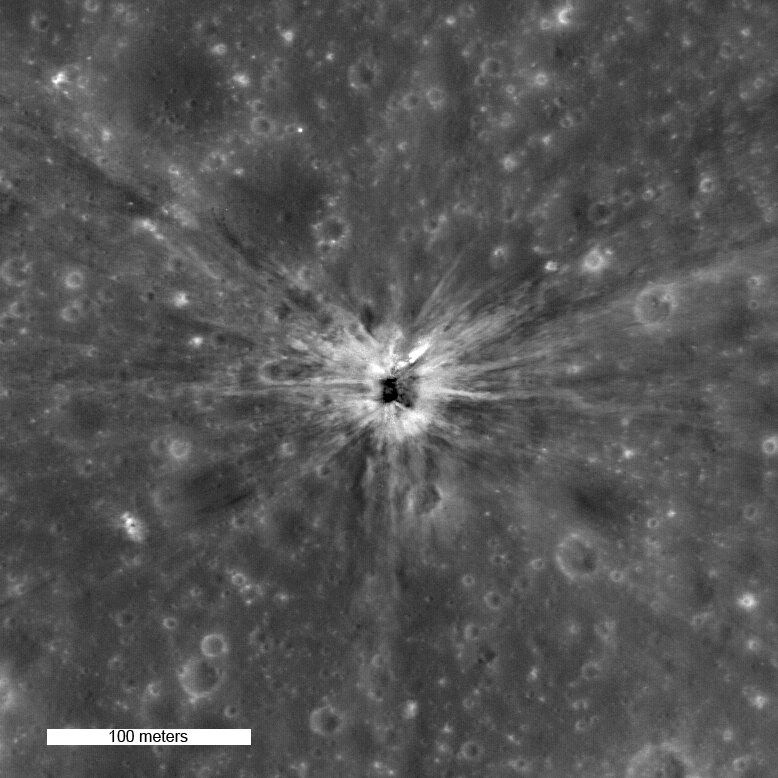
    On April 14th, 1970, a new crater was carved into the surface of the Moon:

    LRO_apolloimpact

    How do we know it’s new? Because we made it.

    That’s the impact scar of the third stage of the Saturn V rocket (technically designated S-IVB) that carried Apollo 13 to — but sadly, not on — the Moon. Earlier missions had placed seismic instruments on the lunar surface to measure if the Moon had any activity. They found it did, and in fact several moonquakes were big enough that had you been standing there, you would have felt them quite strongly (and probably been knocked on your spacesuit’s backside).

    apollo7_sivbThe S-IVB upper stage accelerated the astronauts to the Moon from Earth orbit. Once that was done, they had one final mission: in Apollos 13 – 17 the stages were aimed at the Moon itself, and impacted a few days later. The impacts were detected by the seismometers and could be used to determine how seismic waves travel through the lunar surface, a trick that’s been used on Earth for a long time. This information can be used to figure out what the lunar subsurface structure is like.

    The crater image above is from the Lunar Reconnaissance Orbiter, and shows the Apollo 13 booster impact. The crater itself is a few dozen meters across, and the material ejected forms a blanket around it for many meters more. The bright material indicates this is a fresh crater; note how gray the more distant undisturbed material around the crater is.

    The impact site looks obvious in that picture, doesn’t it? But try finding it in the original full-resolution image returned from LRO and see if you can locate it, then! I found it relatively quickly starting at the top, and was shocked at how far I could trace the rays — the linear ejected debris features around the crater — from the impact site. One of them is clearly about a kilometer long… that’s over half a mile! Those rays are from plumes of material ejected from the impact site, a common feature. They also indicate the crater’s youth: over time, cosmic rays, the solar wind, and even thermal stress from the Moon’s day/night cycle slowly erase the rays. Any crater with such extensive rays has to be young.

    Some of the other S-IVB impact sites have been identified; the LRO blog has an image of the Apollo 14 S-IVB crater, for example. Knowing where these impact sites are helps scientists understand the Moon better, since it a more precise location means the data from the old Apollo missions can be interpreted more clearly. I wonder if future colonists may visit those sites the way we do Plymouth Rock, or Jamestown, or other early exploration and colony sites on Earth?

    Credit: NASA, NASA/GSFC/Arizona State University