Author: Harvard Gazette Online

  • Donations that make a difference

    Carmelite Delvas saw more than she could bear.

    The Harvard employee, a native of Haiti, rushed to her devastated homeland after the massive earthquake to search for her 79-year-old mother, who uses a wheelchair.

    Delvas found her mother living on the street in Port-au-Prince, without food, water, or access to her heart medication, surrounded by destruction and death.

    “I was crying, crying, crying. I’ve never seen anything like that in my life,” said the Harvard custodian. “I saw too much over there. I saw too much.”

    Together, mother and daughter spent five days on the street. A couple of hours a night of sleep was all that Delvas, a 48-year-old who suffers from diabetes and high blood pressure, would allow herself, fearful of robbers who were roaming the ruined capital.

    In a desperate attempt to return to the United States, she made her case at the airport in Haiti, but officials refused to let the pair travel together. Delvas could leave the country, but without the documentation required, her mother would have to remain.

    Finally, after an eight-hour bus ride over rough mountain roads to the Dominican Republic, the pair were able to fly to Boston.

    For the past month, Delvas has been helping her mother to recover, struggling with the complicated process of securing for her a visa and trying to find her a place to stay. Fortunately, with help from the Harvard University community, Delvas’ rough road has gotten a little smoother.

    Like nearly 100 other Harvard employees with direct ties to Haiti, Delvas recently received assistance from the Harvard Haiti Emergency Relief Fund for Employees. The fund was created to provide financial support for emergency or unanticipated expenses arising from the quake, and was initially established with gifts from the University and the Harvard University Employees Credit Union. It is currently accepting donations from the Harvard community.

    “I say, thank you to Harvard, thank you to everyone. I didn’t expect [anything],” said Delvas. “But the money is going to help. I can get food for my mom, I can get clothes for my mom.”

    “The University has responded in the most compassionate and practical ways,” said Carol Kolenik, director of Harvard’s Bridge Program, which helped employees with the fund’s application process. She mentioned a few: setting up the fund, bringing in grief counselors, and holding a heartfelt memorial service.

    Haiti no longer makes the headlines, said Kolenik, “but the tragedies continue for the people in Haiti every minute of the day.”

    “So many wanted to help our colleagues who were touched by this tragedy,” said Marilyn Hausammann, Harvard’s vice president for human resources. “We’re grateful that so many Harvard employees contributed to the fund, ensuring that it would make a real contribution. We hope that the community will continue to demonstrate its generosity.”

    Another fund recipient, Jean Bellevue, was home watching the news when he learned of the quake. He spent the next two days trying to call family and friends, and crying with his wife, also a Haiti native. On the third day, he learned that his mother-in-law was dead. His cousin and his cousin’s wife, eight months pregnant, also perished. His brother, Bellevue was told, had been crushed by cinderblocks and was unable to walk.

    In addition to losing loved ones, Bellevue learned that his retirement home in Port-au-Prince had been turned to rubble.

    For weeks, he and his wife have been sending money back to family and friends for basic necessities, like food.

    “I am not keeping one penny,” he said. “Everybody I talk to is doing the same thing.”

    Bellevue said that the money he received from the Harvard fund is helping his relatives to survive. He has been deeply touched by the outpouring of support from the Harvard community.

    In addition to a direct grant from the fund, Bellevue, custodial crew chief at Leverett House, also took advantage of the Credit Union’s zero percent interest loan program, which he can reimburse in small monthly installments. The day he received the loan, he sent the money to Haiti, where relatives are building a home for his mother, whose house was also destroyed in the earthquake.

    “I really appreciate it,” he said, “but I still need a lot of money.”

    For information about how to donate to the Harvard Haiti Emergency Relief Fund for Employees, visit the Harvard University Credit Union Web site.

  • Alfred P. Sloan Foundation taps seven from Harvard

    Seven Harvard faculty members are among the 118 outstanding early career scientists, mathematicians, and economists recently awarded Alfred P. Sloan Research Fellowships by the Alfred P. Sloan Foundation.

    Fellowships are awarded to faculty colleges and universities in the United States and Canada who are conducting research at the frontiers of physics, chemistry, computational and evolutionary molecular biology, computer science, economics, mathematics, and neuroscience.

    The fellowships have been awarded since 1955, and 38 Sloan Research Fellows have gone on to win the Nobel Prize in their fields, 57 have received the National Medal of Science, and 14 have been awarded the Fields Medal, the top honor in mathematics. Although Sloan Research Fellowships in economics began only in 1983, Sloan Fellows have subsequently accounted for nine of the 14 winners of the John Bates Clark Medal, considered the most prestigious honor for young economists.

    Harvard recipients include Sandeep R. Datta, neuroscience; Emmanuel Farhi, economics; Peter J. Park, molecular biology; Tobias Ritter, chemistry; Alkes L. Price, molecular biology; Jennifer E. Hoffman, physics; and Marko Lončar, physics.

  • Undefeated, and national champions

    Perfection is never easy to achieve, but the No. 1-ranked Harvard women’s squash team surely made it look that way.

    After decimating No. 8 Williams on Feb. 26, 9-0, in the opening round of the College Squash Association’s (CSA) Team Championships at Yale, and then pounding No. 5 Yale, 7-2, on Feb. 27 in the semifinal match, the Crimson cruised to perfection in the championship final with a 6-3 victory over No. 3 Penn. The Crimson complete the season with an undefeated 11-0 record.

    The championship is the Crimson’s 12th in program history, and their first since 2001. It is also the first national team championship at Harvard since 2006 (in fencing).

    Last February, the Crimson fell to back-to-back champion Princeton in the national title game, 5-4.

    In the win, Laura Gemmell ‘13, who won in three straight sets, improved to 11-0 on the year and has taken over the top spot in the country. Gemmell and a number of Crimson players will compete in the CSA Individual Championships in Hartford, Conn., March 5-7.

  • The lizard king

    It’s a dirty job studying the anole lizard in, oh, Jamaica.

    Jonathan Losos has made numerous trips to the Caribbean, and now Central and South America, to study the colorful, and oddly cute, anole lizard, a species in the genus Anolis.

    Losos, an evolutionary biologist and the Monique and Philip Lehner Professor for the Study of Latin America and curator in herpetology at the Museum of Comparative Zoology (MCZ), has compiled decades of research into his new book, “Lizards in an Evolutionary Tree: Ecology and Adaptive Radiation of Anoles.”

    It was Ernest E. Williams, the MCZ’s late curator of herpetology, who passed down his interest and regard for the lizard to Losos, then a Harvard undergraduate. Williams was a leader in the field — “the one who is really responsible for putting these lizards on the scientific map,” said Losos.

    “Anoles are an extremely abundant group of lizards,” he explained, with about 400 species. “They’ve become a widely studied group to understand evolutionary diversity: How and why do some types of organisms become so diverse?”

    A number of Harvard-trained biologists, whose interest was also jump-started by Williams, have been instrumental in advancing work on anoles by studying them intensely for the past 30 to 40 years. The amassed research spurred Losos to “write a book to synthesize this enormous literature” and to make it available to the biodiversity community.

    “In any one place, these lizards have diversified greatly,” said Losos. “What’s remarkable, however, is that the independent evolutionary radiations on each of the larger islands in the Caribbean have produced pretty much the same set of habitat specialists. Convergence — the independent evolution of similar features by species occupying similar environments — is quite common, but convergence of entire communities is very rare.”

    Now readying for a return trip to Central America for more research, Losos is gearing up for a possible new book. Scientists have recently sequenced the genome of one Anolis species, and Losos is excited about what’s to come.

    But there was a time, Losos recalled, when he was intent on no longer studying anoles. That was after he graduated from Harvard, and the lizards were so popular among evolutionary biologists that, “I thought we had it all figured out.”

    “It took me a few years to realize how foolish that was. Because, of course, the more you know, the more you don’t know.”

  • Electronic ‘iShoe’ aims to prevent falls

    Erez Lieberman-Aiden had a nagging feeling that his grandmother’s death, which occurred after a hard fall, could have been prevented.

    But the 30-year-old graduate student at MIT and Harvard did more than fret. He tried to prevent something similar from happening to other older people.

    To read more

  • An education that works on two levels

    Coming to the Harvard Kennedy School (HKS), I knew that I would find an intellectually rich environment, one at the cutting edge of policy and development discourse. A friend of mine had finished the program two years ago and had told me how great she found it. Yet I wasn’t clear about what makes Harvard and the Kennedy School stand out.

    I’m a Palestinian enrolled in the Mid-Career Master in Public Administration (MC/M.P.A.) program as a Mason Fellow. In my previous life, I worked as an adviser to Palestinian negotiators on border issues. I did that for five years, and before that spent three years with a nongovernmental organization that monitored Israeli settlement activities in the occupied territories.

    At HKS, I’m taking courses that focus on communications and leadership, areas in which I have hands-on experience. I’m interested in learning some of the theories behind those areas to attain deeper and broader knowledge.

    When I arrived at HKS, I wondered how much of its fame was borne out of the historical reputation of the place and how much came on its own merit. Being a prestigious school in itself attracts great scholars, and arguably that could be enough to sustain a reputation.

    But whether they taught international relations, development economics, or power in the 21st century, the HKS professors demonstrated an impressive grasp on their disciplines. While these professors have strong opinions, they still manage to present and explain thoroughly other schools of thought, with their accompanying strengths and weaknesses. That gives students ample room to dive deeper in the causeways that are most useful to them and what they want to get out of their Harvard education. That approach makes for a substantially richer discussion of topics in class and out, and allows students to get the most out of courses. It’s an approach that’s often lacking in institutions that take a one-size-fits-all approach.

    In addition, the professors have experience in their fields that’s grounded in the real world. Having work experience myself, and having gone through the transformative process of realizing the difference between theory and practice, I’ve learned to appreciate the opinions of those who spent considerable time tackling problems far from academia. Moreover, the professors’ hold on theory is so substantive that they can convey the relationships, both strong and weak, between theory and practice. For example, when Ricardo Hausmann, professor of the practice of economic development, talks about an economic theory and its application in a development setting, he can decouple elements that are useful for the policy situation from those that have to do with theoretical or more philosophical and ethical aspects. The ability to navigate both realms with ease is what I think students most appreciate in the learning that happens at the Kennedy School.

    I found my public narrative course especially insightful. It’s providing me with a rich set of lenses through which to see and analyze what’s happening back home. I also find the discussion in class and outside it helpful in generating ideas and imagining alternative futures for my country. I had left my job because I felt that it was not effective in changing the situation at home. I’m hoping my year here will give me a few ideas on how to help to do that.

    Another special thing about the School is the kind of people who come to study there. I don’t think it’s an exaggeration to say that it would be almost impossible to find another place that brings together so many people with such diverse backgrounds (professionally, geographically, and in years of experience) and yet with the same attitudes toward their responsibility to make this world a better place. They come from many countries, from nonprofits, for-profits, and government sectors, and with 10, 20, and 30 years of experience. Since they have backgrounds varying from energy, health, education, politics, and business, one would be hard-pressed to find a conversation uninteresting.

    The wealth of knowledge and experience that such diverse students bring to class enhances discussions. Professors are often challenged when they present examples from a country or a sector, since classes usually include someone with substantive knowledge of that specific example that exceeds the instructor’s. In the end, we learn as much from each other as we do from the professors.

    The combination of the two, the extensive knowledge that the professors bring and the richness of the cohort of students, creates a multiplier effect that makes for an intense and effective learning experience. The saying I once heard about Harvard has proven true: “Learning at Harvard is like trying to drink from a fire hydrant.”

    If you’re an undergraduate or graduate student and have an essay to share about life at Harvard, please e-mail your ideas to Jim Concannon, the Gazette’s news editor, at [email protected].

  • Nieman Foundation awards Worth Bingham Prize to Raquel Rutledge

    Raquel Rutledge, from the Milwaukee Journal Sentinel, has been chosen as winner of the Nieman Foundation’s Worth Bingham Prize, awarded annually to honor investigative reporting of stories of national significance where the public interest is being ill-served.

    Her yearlong series, “Cashing in on Kids,” single handedly exposed massive fraud in Wisconsin’s taxpayer-subsidized child-care program and ultimately led to criminal probes, indictments, and new laws designed to strengthen supervision of the failed system. In the course of her reporting, she identified hundreds of providers with criminal records and helped uncover more than $20 million in suspicious payments to child-care providers.

    Rutledge will receive a $20,000 prize at the Nieman Foundation for Journalism at Harvard on March 4 at a dinner and award ceremony in honor of journalist Worth Bingham ’54, a Harvard graduate who died tragically at the age of 34, after achieving prominence as an investigative journalist. His family and friends created the prize in his memory. It has been given annually since 1967 to recognize stories that expose an “atmosphere of easy tolerance,” similar to what Bingham himself once described in his reporting on the nation’s capital.

    To read more, visit the Neiman Foundation Web site.

  • Around the Schools: Radcliffe Institute

    Radcliffe Magazine, the signature publication of the Radcliffe Institute for Advanced Study and successor to the Radcliffe Quarterly, debuted in late February. The publication’s previous design had been in place since 2002, a year after Drew Faust became dean of the institute.

    Planning for the new publication began following the appointment of Barbara J. Grosz as dean in 2008, and the updated magazine launched during the institute’s 10th anniversary year.

    Design director Ronn Campisi, who also designs the Harvard Law Bulletin and Smith Alumnae Quarterly, has enlivened the look and feel of the Radcliffe publication by using distinguished photography and inviting headlines and teasers. He also moved the institute’s event coverage from the back of the magazine to the front.

    In the interests of sustaining the environment, the magazine is shorter now and no longer includes class notes in the print version. From now on, class notes will be posted on the Radcliffe Web site, appear in Harvard Magazine, or be posted online on the Harvard Alumni Affairs and Development Web site. The magazine is also available on the Radcliffe Web site.

    — Pat Harrison

    ­If you have an item for Around the Schools, please e-mail your write-up (150-200 words) to [email protected].

  • Around the Schools: Harvard Law School

    Harvard Law School is losing a faculty member to the federal government, even as it regains one.

    Laurence Tribe ’66, the Carl M. Loeb University Professor at Harvard, has been named senior counselor for access to justice in the Department of Justice, and he will lead an initiative aimed at improving access to civil and criminal legal services.

    Justice Department officials say they hope the initiative will elevate the importance of legal access issues and help prompt concrete steps to address them. The primary focus of the initiative will be to improve indigent defense, enhance the delivery of legal services to the poor and middle class, and identify and promote alternatives to court-intensive and lawyer-intensive solutions.

    In another development, Jody Freeman returns to the School’s faculty this month, after serving in the White House as counselor for energy and climate change for more than a year.

    Freeman, a leading scholar of administrative and environmental law, will be appointed to an endowed chair in public law named for former Solicitor General and Watergate special prosecutor Archibald Cox Jr. She will work at the School and across the University to harness Harvard’s talents and resources toward shaping global energy policy. The professor will also resume her role as director of the School’s Environmental Law Program, which she founded in 2006.


    ­If you have an item for Around the Schools, please e-mail your write-up (150-200 words) to [email protected].

  • Stephen Dupont named Robert Gardner Fellow in Photography

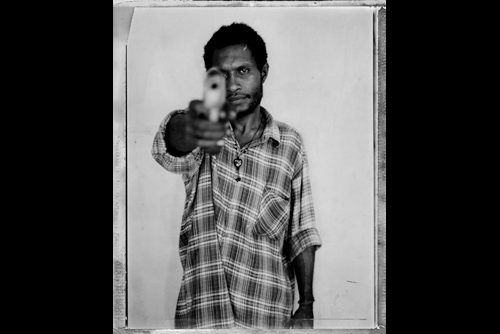
    The Peabody Museum of Archaeology and Ethnology has named Stephen Dupont, a prize-winning Australian photographer whose work has appeared in The New Yorker, Vanity Fair magazine, Time magazine, and Rolling Stone, the 2010 Robert Gardner Fellow in Photography. At the Peabody Museum, Dupont will work on a project titled “Guns and Arrows: The Detribalization of Papua New Guinea.”

    Over the past six years, Dupont has traveled to Papua New Guinea to photographically document its changing face and the powerful impact of globalization on the fabric of its traditional Melanesian society. “Guns and Arrows” will continue this work. From the recasting of tribal society into an urban proletariat and the effects of violence and lawlessness in Port Moresby to the westernization of traditional society in the Highlands, it will be an in-depth study of cultural erosion as well as a celebration of an ancient people.

    Dupont plans to use 35 mm, 6×6, panoramic, and Polaroid formats for documentary street photography, landscapes, and portraiture. He intends to weave single images, contact sheets, composites, and video grabs into multiple forms: a traditional exhibition at the Peabody Museum, a book with the Peabody Museum Press, and an interactive Web presentation.

    For the complete press release, visit the Peabody Museum Web site.

    Suspect

    Suspect

    A ‘rental extortion’ suspect taken in for questioning at Gerahu Police Station (Port Moresby, Papua New Guinea, Feb. 20, 2009)

    Church in the PNG Highlands

    Church in the PNG Highlands

    An isolated church perched up in the hills surrounding Mount Hagen (Central Highlands, Papua New Guinea, 2004)

    Mando Tribesman

    Mando Tribesman

    Asoro Mudman from the Mando Tribe (Eastern Highlands Province, Papua New Guinea, 2004)

    Constable

    Constable

    Polaroid portrait of Senior Assistant Constable Richard Lakarno of East Boroko police station (Port Moresby, Papua New Guinea, 2009)

    Raskol

    Raskol

    Polaroid portrait of raskol (“criminal” in Tok Pison) Samson Maipe inside the Kips Kaboni (Red Devils) safe house in Kaugare Settlement (Port Moresby, Papua New Guinea, 2004)

    Children playing

    Children playing

    Children playing in the garbage dump at Baruni (Port Moresby, Papua New Guinea, 2009)

    Children hanging out

    Children hanging out

    Children hanging out near the entrance to the garbage dump at Baruni (Port Moresby, Papua New Guinea, 2009)

    Photo slideshow: Stephen Dupont: 2010 Gardner Photography Fellow

    All photos © Stephen Dupont

  • Waxman, Adams will lead Harvard Overseers

    Seth P. Waxman ’73, former U.S. solicitor general and one of the nation’s leading lawyers, has been elected president of Harvard’s Board of Overseers for 2010-11.

    Mitchell L. Adams ’66, M.B.A. ’69, executive director of the Massachusetts Technology Collaborative, will become vice chair of the board’s executive committee.

    Both Waxman and Adams will be serving the final year of their overseer terms in 2010-11.  They will assume their new roles following Commencement this spring, succeeding Merrick B. Garland ’74, J.D. ’77, a judge on the U.S. Court of Appeals for the District of Columbia Circuit, and Ann M. Fudge, M.B.A. ’77, former chair and chief executive officer of Young & Rubicam Brands.

    “Seth Waxman and Mitch Adams exemplify the dedication, insight, energy, and constant concern for Harvard’s well-being that our overseers bring to their work on the University’s behalf,” said President Drew Faust.  “I look forward to their leadership and to working even more closely with them next year.”

    Waxman is a partner in the Washington, D.C., office of the law firm Wilmer Cutler Pickering Hale and Dorr and is a member of the faculty of the Georgetown University Law Center.  He has litigated several of the most consequential cases of the past two decades and is widely recognized for his deep commitment to pro bono legal representation.  Among other distinctions, he is among the few practicing lawyers elected to the American Academy of Arts and Sciences.

    Born and raised in Connecticut, Waxman graduated from Harvard College, summa cum laude, in 1973.  After graduation, he spent a year as a Rockefeller Fellow in a small village in Kenya.  He then studied at Yale Law School, where he was managing editor of the Yale Law Journal and received his J.D. in 1977.

    Following a judicial clerkship, Waxman spent 19 years in private practice before holding several senior positions in the U.S. Department of Justice from 1994 to 1997.  He served as solicitor general from 1997 to 2001, with responsibility for conducting all litigation on behalf of the United States in the nation’s highest court.

    “The past few years have been challenging ones for Harvard, no less than other institutions of higher education, but these challenges present real opportunities for innovation, collaboration, and leadership,” Waxman  said. “All of us on the board are deeply committed to helping Harvard realize those opportunities, in service of its highest ideals.”

    Elected an overseer in 2005, Waxman has served on the board’s executive committee since 2008.  He chairs the board’s social sciences committee and is past chair of its committee on institutional policy.  A member of the visiting committees to the College, the Government Department, and the Peabody Museum, Waxman was an elected director of the Harvard Alumni Association from 2000 to 2003.  He and his wife, Debra Goldberg, have three children.

    Mitchell Adams has served since 2001 as executive director of the Massachusetts Technology Collaborative, an independent public agency dedicated to the formation, retention, and expansion of technology-related enterprises in Massachusetts. He received both his bachelor’s degree (1966) and his M.B.A. (1969) from Harvard.

    Early in his career, he was the budget director of the Beth Israel Hospital in Boston (1975-78), then dean for finance and administration at Harvard Medical School (1978-82), before becoming vice chancellor for administration and finance at the University of Massachusetts Medical Center (1982-88).  He went on to serve as the commissioner of revenue for the Commonwealth of Massachusetts during the administration of Gov. William F. Weld from 1991 to 1998.  He later served as chair and CEO of HTW Inc., a developer of advanced data-mining tools for health care payment systems, before joining the Massachusetts Technology Collaborative in 2001.

    As a Harvard overseer, Adams is a member of the board’s executive committee, as well as vice chair of its committee on Schools, the College, and continuing education.  He is a past member of the Harvard Alumni Association executive committee, and has served on the visiting committees to the Business School, the College, the Medical School, and information technology.

    His past board service includes chairing the board of the Handel and Haydn Society and the finance committee of the board of trustees of Harvard Vanguard Medical Associates.

    Adams lives in Dedham and is married to Kevin M. Smith ’76.

    First created as the “Committee as to the colledg at New Towne” by order of the General Court of the Colony of Massachusetts Bay in 1637, the Board of Overseers dates to the earliest days of Harvard College.  It is the larger of Harvard’s two governing boards, the other being the President and Fellows of Harvard College (also known as the Harvard Corporation).  Members of the Board of Overseers are elected annually by holders of Harvard degrees; typically, five Overseers are elected each year to six-year terms.   Drawing on the diverse experience of its members, the board exerts broad influence over Harvard’s strategic directions, provides counsel to the University’s leadership on priorities and plans, has the power of consent to certain actions of the Corporation, and directs the visitation process by which various Harvard Schools and departments are periodically reviewed and assessed.

  • Researcher receives grant to study Haiti-American emergency preparedness

    Researcher Linda Marc has received a grant from the Harvard School of Public Health to examine public health and emergency preparedness in Haitian-Americans. Marc is based at the Center for Multicultural Mental Health Research at Cambridge Health Alliance, a Harvard-affiliated health system.

    The study will investigate how persons of Haitian ancestry in the U.S. are exposed to messages pertaining to public health emergencies, infectious disease outbreaks, and epidemics. It will be conducted in three U.S. cities (Boston, Miami, and New York), and Mg Marketing Research Services, a Haitian-owned company in New York, has been retained to identify, screen, and recruit Haitian participants…

    To read more

  • Heart test debate heats up

    Two studies published yesterday are expected to reignite an emotionally charged debate about whether young athletes should be screened with a heart test to reduce the small risk of sudden death from an undiagnosed heart problem.

    In the first, researchers at Massachusetts General Hospital and Harvard University added an electrocardiogram, known as an ECG, to a routine physical for students. This strategy doubled the number of students with heart disease who were detected, compared with those who did not receive an ECG with their physical.

    To read more

  • The many beats of Cultural Rhythms

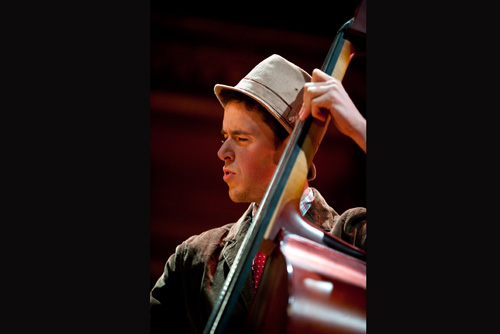
    Performers from Harvard University’s ethnically diverse student groups gather each year at Sanders Theatre to participate in the annual Cultural Rhythms showcase. This year’s event, hosted by the Harvard Foundation for Intercultural and Race Relations, marked the 25th anniversary of bringing dance and music from around the world to one stage during the daylong festival.

    The Indian Classical Dance Troupe opened the Feb. 27 show, and was followed by everything from bluegrass music to break dancing and mariachi.

    “Whether we’re in the audience, backstage, or performing, for a short time this show brings us together as one community on a shared experience,” said the co-director of the afternoon show, Kevin Liu ’11.

    Kelly Fitzgerald ’10, a member of Corcairdhearg, an Irish step dancing troupe, said that performing in Cultural Rhythms is a way to be part of a storied tradition.

    “I think it’s a really crucial way to show all that Harvard has, because there are so many different cultural groups here,” she said.

    S. Allen Counter, director of the Harvard Foundation, joined Dean of Harvard College Evelynn M. Hammonds to present the annual Artist of the Year Award to musician Wyclef Jean. Jean was honored for his creativity as a musician, fusing musical styles from around the world, as well as his efforts on behalf of the people of Haiti. He emceed the event, joking around with performers between acts, asking them to teach him headstands and back flips, singing along with the bands, and making cameo appearances in dances.

    For Hammonds, the event symbolizes the diversity of the Harvard community and helps to bring people of many different backgrounds together.

    “I think it’s one of the events people look forward to every year,” Hammonds said. “I think it’s just an extraordinary effort on the part of the foundation and the students involved. I can’t say enough good about it. It’s just great.”

    Drop it like it's hot

    Drop it like it’s hot

    Members of the Harvard Breakers get down and dirty with a gymnastic performance during the 25th Annual Cultural Rhythms event held inside Sanders Theatre.

    A big fan

    A big fan

    A fan-wielding beauty from the Harvard Philippine Forum sashays across the stage in full costume and headdress.

    On fire

    On fire

    With their yellow and red outfits, coupled with good lighting, dancers from the Asian American Dance Troupe appear to be licked by flames.

    Stomp

    Stomp

    Barefooted, breathless, and joyous: The Pan-African Dance and Music Ensemble stomps across the stage with utter delight.

    Footloose

    Footloose

    The poised feet of a dancer from the Indian Classical Dance Troupe slow down enough to be captured in photograph.

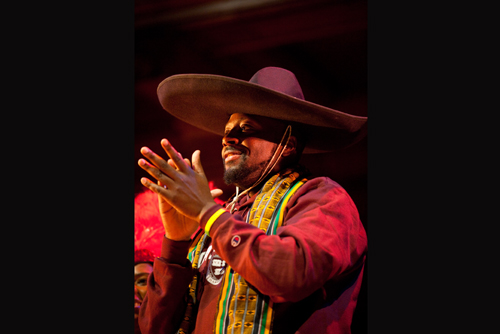
    Viva la mariachi

    Viva la mariachi

    Players from the Mariachi Veritas de Harvard wow the crowd. The self-taught group is the only mariachi student group on the east coast.

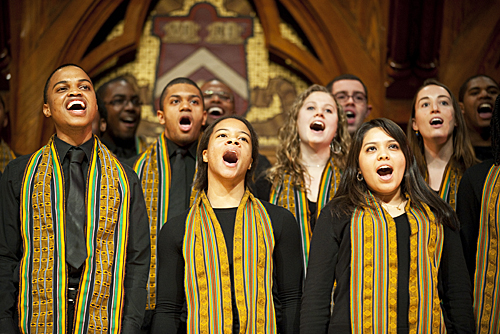
    Rejoice!

    Rejoice!

    The Kuumba Singers of Harvard College uplift and inspire with their musical numbers.

    Ready, set ...

    Ready, set …

    A dancer from the Indian Classical Dance Troupe awaits her cue.

    All together now

    All together now

    Representatives from each of the performance groups gathered for an eclectic and exuberant finale.

    In position

    In position

    Members of the Harvard Breakers use their hands to lift off from the stage while using their feet to spin their bodies around. This feat of contemporary dance is known as break dancing!

    Pick it good

    Pick it good

    Here, a picker from Bluegrass, a five-piece Appalachian-inspired ensemble, gets down with the music.

    Wyclef, why not?

    Wyclef, why not?

    Musician Wyclef Jean was Cultural Rhythms’ guest of honor. Here he is seen after joining in on the finale and donning some of the students’ gear.

    Photo slideshow: 2010 Cultural Rhythms

    Kristyn Ulanday/Harvard Staff Photographer

  • Reforming public education

    U.S. Secretary of Education Arne Duncan told a large Harvard crowd Friday (Feb. 26) that the country’s public school system needs massive reform.

    Duncan, who was on campus for a discussion sponsored by the Harvard Graduate School of Education (HGSE) and the Harvard chapter of Phi Delta Kappa, cited the nation’s high dropout rates and the persistent achievement gap between white students and their minority counterparts as clear evidence of the nation’s failing school system.

    “Where we are at today is not good enough for our nation’s children, it’s not good enough for our cities and states, and it’s not good enough for our nation’s economy,” said Duncan. “We have to educate our way to a better economy.”

    Increasing access to education, particularly in disadvantaged communities, and improving educational quality are the administration’s top public education priorities, said the secretary.

    Getting the “hardest-working and most-committed” teachers to the communities that need the most help is a big part of the challenge, noted Duncan, who said the Obama administration would commit a “huge” amount of resources toward “correcting that imbalance.”

    Learning from and emulating high-performance schools, developing better teacher assessment tools, simplifying college application forms, and supporting financial aid programs to help students pay for higher education are all part of the solution, Duncan said.

    “Some form of higher education has to be the goal for every single one of our students,” said Duncan, who called education the “civil rights issue of our generation.”

    In her introductory remarks, HGSE Dean Kathleen McCartney, who is also Gerald S. Lesser Professor in Early Childhood Development, noted that Duncan has “described education as the only sure path out of poverty and the only way to achieve a more equal and just society.”

    Duncan, who graduated from Harvard College in 1986, said he drew inspiration from his parents. (His father was a college professor, and his mother ran a tutoring program for inner-city children in Chicago.) As a young boy, Duncan began working afternoons and evenings with students as part of his mother’s after-school program and quickly realized the importance and impact of good teachers.

    “So often, I felt what we were doing … was [making] up for what wasn’t happening during the school day.”

    Prior to joining the Obama administration, Duncan served as chief executive officer of the Chicago Public Schools, where he implemented a series of reforms, including the expansion of after-school and summer learning programs, increased access to early childhood education programs and higher education, as well as the improvement of teacher quality.

    “This is a very important moment for education in the United States,” said Harvard President Drew Faust, who opened the afternoon discussion with brief remarks. “We are really proud that one of our own is taking the leadership at this time.”

    Monica Higgins, HGSE associate professor of education, moderated the event.

  • $100,000 more for Allston-Brighton

    The Harvard Allston Skating Rink, a former car dealership turned temporary ice rink on Western Avenue, was buzzing Friday evening (Feb. 26), as Harvard President Drew Faust, Boston Mayor Thomas M. Menino, and a crowd of more than 150 gathered to celebrate another $100,000 in Harvard grants for local nonprofit groups.

    It was the award ceremony for the second round of  grants from the Harvard Allston Partnership Fund, a University-city-community collaboration that has infused about $200,000 over the past two years into 14 organizations that serve the Allston-Brighton community.

    Menino and Faust took turns at the podium in front of the standing-room-only crowd in the community room, as die-hard local skaters took advantage of the free ice rink in the garage.

    “Without the availability of these resources, these programs would not be able to fulfill their missions during these difficult economic times,” said Menino, who underscored the important work each organization does.  “With Harvard’s assistance, we’re able to continue great programming that nurtures kids and keeps them busy, just like this skating rink.” In introducing Faust, Menino thanked her for being so available to Boston and Allston.

    “Supporting local organizations that have an immediate and lasting impact on families in Allston-Brighton is just one way Harvard is actively engaged in the community,” said Faust. “We are committed to these important neighborhood partnerships, and to working together to enhance the quality of life for residents.”

    Menino and Faust took turns reading the names and activities of the organizations receiving Harvard Allston Partnership Fund (HAPF) grants.  Recipients included the Gardner Pilot Academy (GPA), Allston Brighton Youth Hockey, the Family Nurturing Center of Massachusetts, the Friends of the Honan-Allston Library, the Brighton-Allston Historical Society and Heritage Museum, the Big Sister Association of Greater Boston, the Fishing Academy, the West End House Boys Camp, and the West End House Girls Camp.

    The grants will help local nonprofits to provide Allston-Brighton children and families with a range of programs and services, including after-school, summer enrichment, and mentoring experiences for young people; computer training and parenting classes for adults; “Learn to Skate” lessons for youth hockey players; and initiatives that celebrate the rich history of the neighborhood.

    “Whether it’s giving every child who wants to the opportunity to skate for free or hop in a boat and learn to fish, these programs are opening up opportunities for our children and keeping them safe,” said John Bruno, a member of the resident-based Harvard Allston Partnership Fund board. “These grants are directly beneficial and provide a link between Harvard and the community that’s tangible and really makes a difference.”

    The $500,000 Harvard Allston Partnership Fund was created in 2008 by Harvard University and the City of Boston, in collaboration with the Allston community, to support neighborhood improvement projects, cultural enrichment, and educational programming. To date, the $200,000 in grants has assisted 14 community organizations in beautifying the neighborhood, expanding existing community programs, and helping to broaden access to those programs through community-based scholarships. Last year, the grants also helped to launch a new community organization, the Allston Brighton Arts Bridge.

    “It’s a real struggle in a downturn economy to sustain our program model of serving the whole child, which includes academic enrichment and social support for children and their families,” said Lauren Fogarty, director of Extended Learning Time at the Gardner Pilot Academy, which received funding this winter. “Taking any of the pieces we offer away will keep us from reaching our mission, and these grants will make a huge difference to sustain the programs, as well as close opportunity gaps for North Allston-North Brighton students.”

  • Second opinions, anywhere

    Rwanda has 10 million people, but no cancer specialists.

    A recent collaboration between a Waltham medical information company and a Harvard University research institute aims to reduce such professional isolation – and to learn from the medical knowledge and resourcefulness of doctors in the developing world.

    The company, UpToDate Inc., is working with Harvard’s Global Health Delivery Project to provide better access to its digital information service in countries such as Rwanda.

    To read more

  • Jean at Harvard, with honors

    “Where’s the chair Will Smith sat in when he was here?’’ wondered Wyclef Jean, casting an eye around the empty stage. “Man, I want the same chair Will Smith had.’’ Of course, the Haitian-American musician and producer was just kidding. Honored Saturday as the Harvard Foundation’s Artist of the Year, the former Fugee was gracious and funny as he celebrated with student groups at Sanders Theatre. (Previous winners of the award include Sharon Stone, Andy Garcia, Halle Berry, Jackie Chan, Denzel Washington, Salma Hayek and, yes, Smith.)

    To read more

  • Helping heal survivors

    For nearly 30 years, Dr. Richard F. Mollica has been helping people cope with the worst catastrophes imaginable. The longtime director of the Harvard Program in Refugee Trauma at Massachusetts General Hospital has worked with survivors of the brutal Pol Pot regime in Cambodia, 9/11 in New York, and, most recently, the earthquake in Haiti. Despite witnessing so much tragedy – or perhaps because of it – Dr. Mollica is an optimistic man. He has watched people recover from torture, loss of family members, and, what he considers the worst possible tragedy: the disappearance of loved ones. Like you, he feels empathy for the people of Haiti – but he doesn’t want you to feel too much.

    http://www.boston.com/news/health/articles/2010/03/01/dr_richard_f_mollica_focuses_on_psychology_following_disaster/